





Lester, a ginger tabby of inimitable size, suns himself on the courtyard wall. He’s been out carousing all night long; a week ago, he left a full-size hare, a token of appreciation, on the terrace.
Lester is free-ranging and good at what he does. He’s an expert killer. It’s not something he was taught or learned from watching YouTube. He’s a feline and natural predator.
Although Lester consumes most of his kills, he’s fed a healthy diet of quality protein-rich cat food. So, his penchant for killing anything that moves, flutters, or slithers is ingrained in his DNA. He’s an outdoor cat and a danger to native animals.
Sadly, though he’s so charming, he’s a menace to the bird population, and his feline cousins kill 2.4 billion birds in the United States annually.
Multiply that by the world population of cats, somewhere between 600 million and 1 billion, and it’s not looking good for avian populations anywhere or the free-ranging cats that animal shelters euthanize.
Top 6 Most Shocking Stats
- In the US Alone, 2.4 Billion Birds Are Killed by Outdoor Cats Annually
- Two-thirds of Bird Deaths in the US Are Attributed to Feral Cats
- One-quarter to One-third of the US Cats Are Murderers
- Cats on Islands Have Contributed to 14% of the Modern Bird, Mammal, and Reptile Extinction
- On Average, Feral Felines Kill 3 times More Animals than Pet Cats
- Domestic Cats Are Listed as One of the World’s Most Non-native Invasive Species
How Many Birds Do Cats Kill Annually
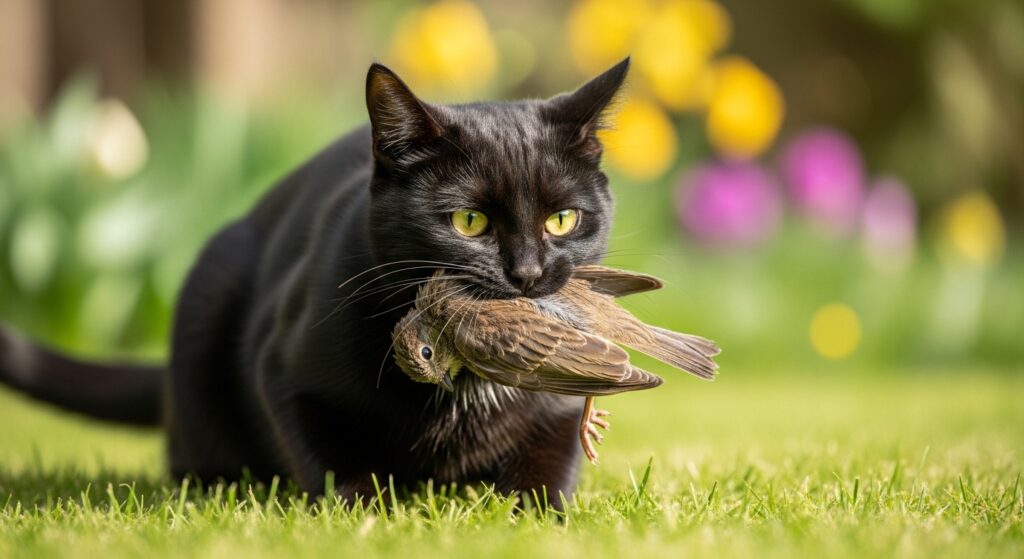
This article isn’t about dissing cats. It’s about informing cat owners how they can contribute and help the bird populations regain their footing–because there’s nothing like hearing birds chirping in a tree.
Cats contribute to the state of species extinction, and there’s no way to defend this. Over 63 birds, mammals, and reptiles are gone because of cats.
The Union for Conservation of Nature (IUCN) lists domestic cats as one of the world’s top 100 worst non-native invasive species. That means Lester is a very bad cat, even if he’s the most lovable. (It’s kind of like loving a criminal.)
In the US Alone, 2.4 Billion Birds Are Killed by Outdoor Cats Annually (ABC Birds)
A study revealed that almost 1.3 to 4 billion birds are killed by cats annually. Not too long ago, we talked about numbers in millions. Today, we’ve moved beyond that. Even if we take the low spectrum of numbers from the world cat population and, say, 600 million cats, and if only a quarter of those cats catch a bird each day, that number is astronomical over a year at 54.8 billion.
Lester and his domestic cats typically do more damage than that in a day.
In the US, Two-thirds of Bird Deaths Are Attributed to Feral Cats (Smithsonian Institution and US Fish and Wildlife Service)
The debate over cats vs. birds, domestic indoor and outdoor cats, and stray cats can start an argument. Some bird lovers outright hate cats; there is merit to both animals, and hate is always a misplaced emotion that solves nothing.
Smithsonian Migratory Bird Center department head Peter Marra would agree. In his book, Cat Wars, he tries to find an ethical solution to the problem, which sadly includes the merciful killing of stray cats, as it is believed that 69% of all bird deaths in the United States are attributed to cats.
Marra doesn’t hate Felis catus as a species, and as a wildlife ecologist, he has the research to back his claims. The question, do we sacrifice the life of cats for other animals, is a big one.
There is also a need to discuss that domestic cats and outdoor cats not only bring other animal species to extinction levels, but they also spread diseases (like rabies and Toxoplasmosis).
Wild cats are the burden created by stray or abandoned cats that have not been spayed or neutered by previous irresponsible cat owners for thousands of years.
Stats of Combined Studies Show in the US and Canada, 1,768 Million Birds Are Killed Each Year by Stray Cats (National Geographic)
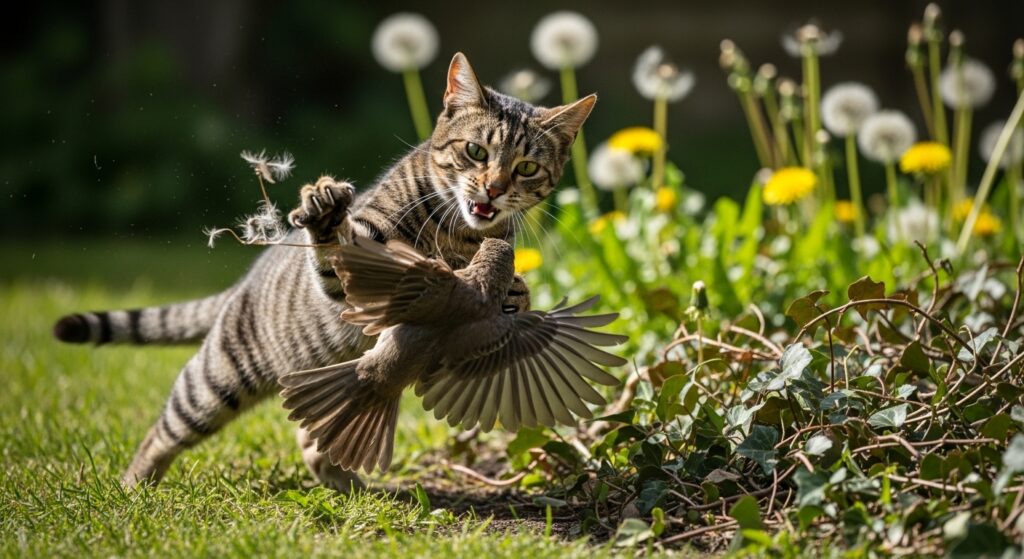
As per National Geographic, around 1,768 million birds in the US and Canada are killed by cats annually. Cats kill between 19 and 197 million birds per year in Canada, 71% lower than the earlier estimate.
Many cat defenders will hiss at anyone suggesting that any society or organization accuses only owned cats for the death of local bird populations, and they’re partly right. Birds are under constant bombardment besides feline warriors.
Sterilizing cats is one way to combat the population problem, potentially, but it’s a massive undertaking, and a sterile cat can still kill.
Birds Battle Enemies on All Fronts:
- Pesticides and pollution
- Windmills
- Vehicles and road death
- Habitat destruction
- Glasshouses
- Irresponsible cat owners
Glass houses are a massive problem for migratory birds. Glass houses are skyscrapers and office towers in cities that kill millions of birds. In Canada, as many as 42 million birds collide with these glass houses annually.
But cats contributed to the death of about two-thirds of all bird deaths (excluding habitat loss, though that is debatable).
- 🐈⬛ Feral felines kill 1768 million birds
- 😻 Domestic felines kill 764 million birds
- 🏢 Glass houses kill 624 million birds
- 🚗 Cars kill 213 million birds
- ⚡ Power lines kill 55 million birds
- 🤦 Humans still consume birds like Ambelopoulia
Pet Felines Kill 764 Million Birds Annually in the US and Canada (Annual Reviews)
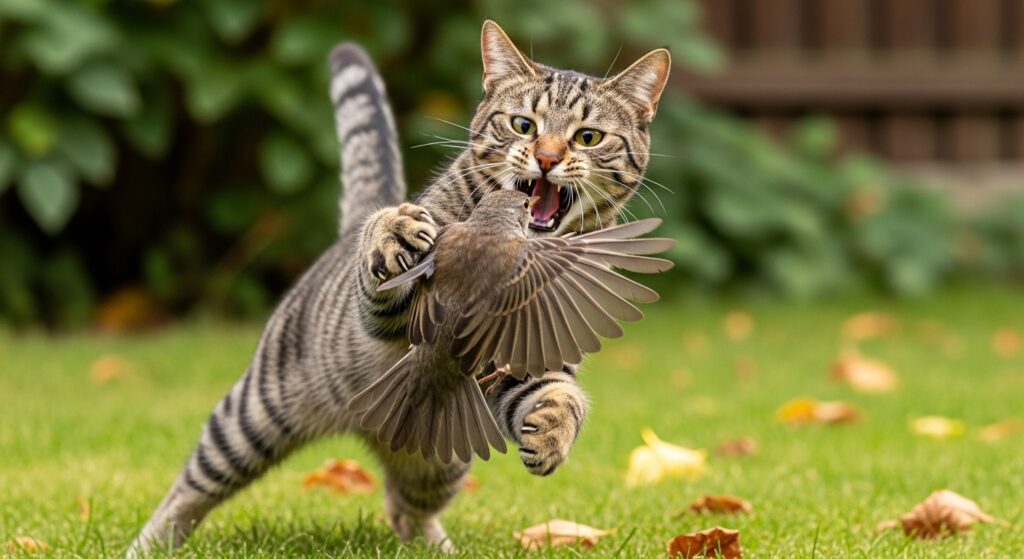
The problem isn’t about being anti-cat. Cats are incredibly cool animals. They can be cute, cuddly, fun, and playful. But, like Lester, even domestic cats are natural-born killers, and wild cats have to eat something.
The problem highlights that for hundreds of years, we’ve allowed the feral cat problem to get out of hand. We went after stray dogs and locked them up, and ignored the feral cat population
Canada and the USA are only a tiny part of the world. Remember, there are an estimated 600 million to 1 billion cats worldwide. And the real number of unowned cats is challenging to extrapolate.
Instead of getting our backs up about who is right or wrong, birds are dying by the billions from cat predation, and even well-fed cats contribute to the problem. That is the point.
By implementing creative strategies to keep birds safe from cats, we can ensure that our feathered friends can thrive and flourish without the constant threat of predation.
In the 1700s, the Introduction of Cats to the Hawaiian Island Has Resulted in the Destruction of Unique Bird Species (ABC Birds)
Lester, Fluffy, Felix, and Morris are natural and indiscriminate killers. That means they don’t care if the yellow-colored songbird chirping in the tree is a rare breed or a common sparrow (not that there’s anything wrong with sparrows).
Cats see them as prey—end of story! Cat predation killed off iconic Hawaiian species like the I’iwi and Maui Parrotbill once cats boarded the ship in the 1700s.
Cats flourished in Hawaii (who wouldn’t). It was free of predators, so cats thrived and contaminated the wildlife. It’s not the cats’ fault–true. But cats introduced the Toxoplasmosis that has even spread to marine mammals like the Hawaiian Monk Seals, aside from killing and endangering many other species.
Male feral cats in Mauna Kea had much larger home ranges—up to 2,050 hectares—among the largest ever recorded. (Research Gate)
Male feral cats in Mauna Kea roam much larger areas than females—up to 2,050 hectares, one of the largest ranges ever recorded.
Because they travel so widely, they pose a serious threat to endangered Hawaiian birds, which is why conservation plans focus on trap placement and protective buffer zones.
Cats Prey on Endangered Bird Species, Including Hawaiian Petrel, Palila, and Nene (ABC Birds)
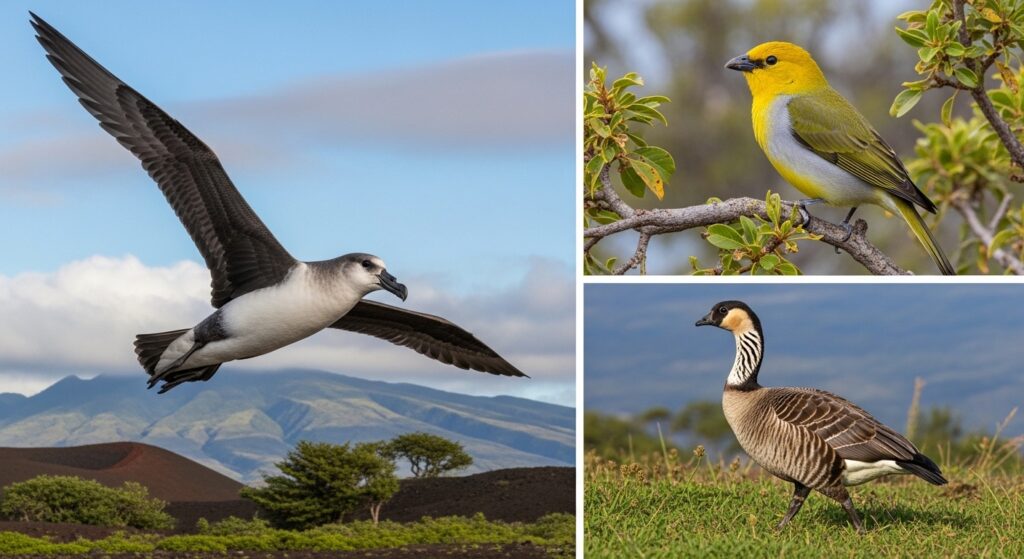
Infrared cameras on Mauna Loa showed that feral cats hunt Hawaiian Petrel chicks, often waiting outside their burrows for hours. Today, the bird’s population is estimated at only about 15,000 individuals.
The question is, do we allow domestic and alley cats free rein to destroy other animals? And what do cats contribute back to the environment? Do the Hawaiian Petrel or Ua’u and Palila, and Nene, not have the same right to exist since the arrival of cats shifted the balance of nature?
Fun Fact: The Nene is a distant relative of Canada’s ambassador, the Canada Goose (not the jacket).
Video monitoring on Mauna Kea confirmed that feral cats are the main daytime predators of Palila chicks. (E Scholarship)
Video monitoring on Mauna Kea showed that feral cats are the main daytime predators of Palila chicks, highlighting the need for better predator control. Right now, feral cats are removed using a large network of live traps.
The death of a nēnē gosling in Hilo Park has been linked to a disease carried by feral cats. (DLNR)
Toxoplasmosis, a disease spread through the feces of feral cats, likely caused the death of a nēnē gosling in Liliʻuokalani Park and Gardens. This sad event shows the risk of having feral cat colonies in areas where endangered species live.
Another study shows that a bird population once estimated at 25,000 in the mid-1800s dropped to just 30 birds by 1949, surviving only in the uplands of the Big Island.
According to an Estimate, Domestic Felines Kill 6.3 to 22.3 Billion Mammals Annually (Nature)
There’s no beating around the bush. Please keep your free-ranging domestic cats indoors. There isn’t an argument strong enough to say your cat has the right to prey on innocent animals. How would you feel if your neighbor’s dog sat in wait for your cat every day and killed every cat and kitten you ever brought home?
Field experts are trying to bring awareness to the massive scale of cat predation problems and the numbers to substantiate the facts that are based on complex formulas.
The vast difference between 6.3 and 22.3 billion comes from mortality scenarios based on predation data from the USA, Europe, and other temperate regions. Bird mortality and endangered species aren’t a joke.
How Many Species Have Cats Made Extinct
Sadly, this sounds so anti-cat. Cat owners have a right to voice their concerns, no doubt, but denying the problem isn’t going to solve it. Cats are incredible animals and a survivor species. They belong to the 38 species of felines, including the big cats like tigers, lions, cheetahs, and leopards that wildlife advocates always try to save.
However, free-ranging domestic cats and wild cats have contributed, if not solely responsible, to making many species extinct. Here are the sad facts that pet owners, feline friends, and conservation biologists must face! 🙁
Domestic Cats Are Listed as One of the World’s Most Non-native Invasive Species (IUCN)
The domestic cat is a part of the top 100 list of the worst alien invaders, right up there with the fire ant, gypsy moth, and ship rat. It’s nothing to be proud of. Domestic and wild felines kill billions of other animals yearly through killing and through disease.
According to the IUCN Red List, Cats on Islands Have Contributed to 14% of the Modern Bird, Mammal, and Reptile Extinction (Online Library)
Felis catus stems from wild cats Felis silvestris lybica, from ancient Egypt, giving it ample time to multiply. Cats now live on 179,000 islands, though they are not native to those places. Cats prey on native species and impact terrestrial biodiversity.
A recent study found that wild cats can devastate endemic species. They destroyed 14% of global birds, mammals, and reptiles, and continue to be a threat to 8% of endangered animals.
In the Wild, 63+ Species of Birds, Reptiles, and Mammals Have Become Extinct Because of Cats (Nēnē org)
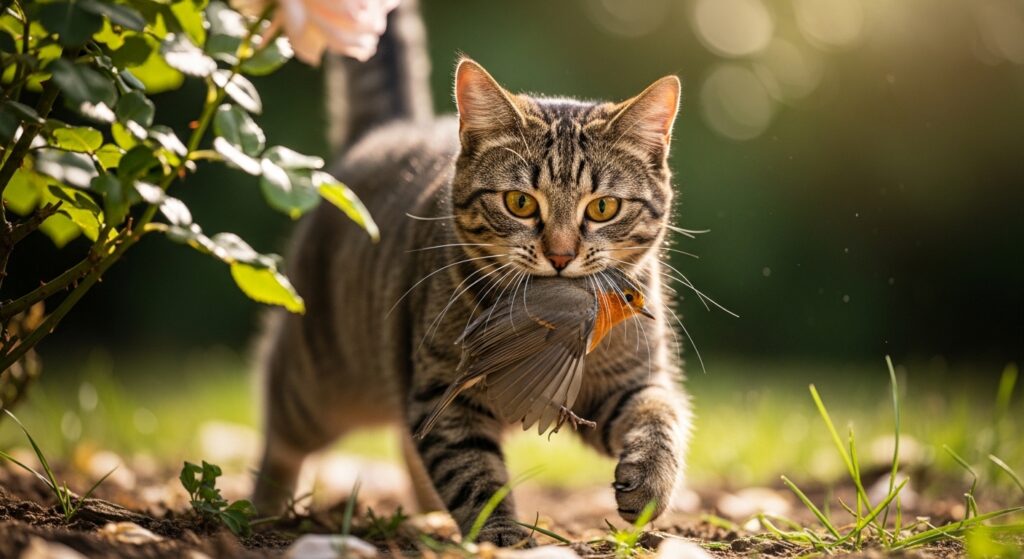
It’s sad to admit that cats, though we love ’em, have threatened global biodiversity. Cats prey on more than 2,000 different species. About 14% of modern vertebrate extinctions are linked to cats, and hundreds of other species are still at risk because of them.
Killing off 63+ wild species makes cats experts in the mammalian predatory gang. This gang is further responsible for endangering 596 species, while felines alone pushed 63 animals to extinction or the brink.
Keeping cats indoors will help prevent lost animals and protect endangered species from cat populations, and even a cat person should see sense in saving other wildlife and native birds.
Piping Plover Is at Risk of Extinction (ABC Birds)
You’re not alone if you’ve never seen the Plover’s foot trembling dance. Few will get to witness this unique spectacle. This darling beachgoer bird has many enemies, including domestic animals like cats, humans, and off-road vehicles that crush its nets.
Piping Plover has unique needs and breeds on beaches and sand flats in Canada and the USA from the Atlantic coast to the Great Lakes. It’s unnecessary to have these birds killed by outdoor cats, which are non-native species.
Cats Have Contaminated the Hawaiian Environment and Indirectly Killed Hawaiian Monk Seals (Fisheriws NOAA)
No one is suggesting that free-roaming cats are on a mission to kill for fun. Still, it’s proven that feral cat poop from cat colonies is loaded with Toxoplasmosis and is infecting the already small Hawaiian Monk Seal population.
A survey estimates the seal population at about 1,600, with nearly 1,200 in Papahānaumokuākea and around 400 in the main Hawaiian Islands.
The effects of this single-cell parasite were first observed by scientists in 2001 and have now been attributed to 12 Hawaiian Monk Seal deaths, though it’s believed the number is higher.
Moral Cost of Keeping a Cat
Writing this isn’t easy on many levels. Acknowledging that my family is also to blame since we always had farm cats that no one bothered to sterilize, and kittens are so darn cute.
But we now face the tune of the piper, and we must, as a collective society, atone for this neglect. It’s not about demonizing cats; it’s about addressing the problem and spreading awareness.
Stats Reveal Cats Have the Potential to Spread Rabies and Toxoplasmosis (The Atlantic)
Toxoplasma gondii, or Toxo, is a microbe that infects people and animals through cat poop. Pregnant women have been told to steer clear of the cat litter box for over a century.
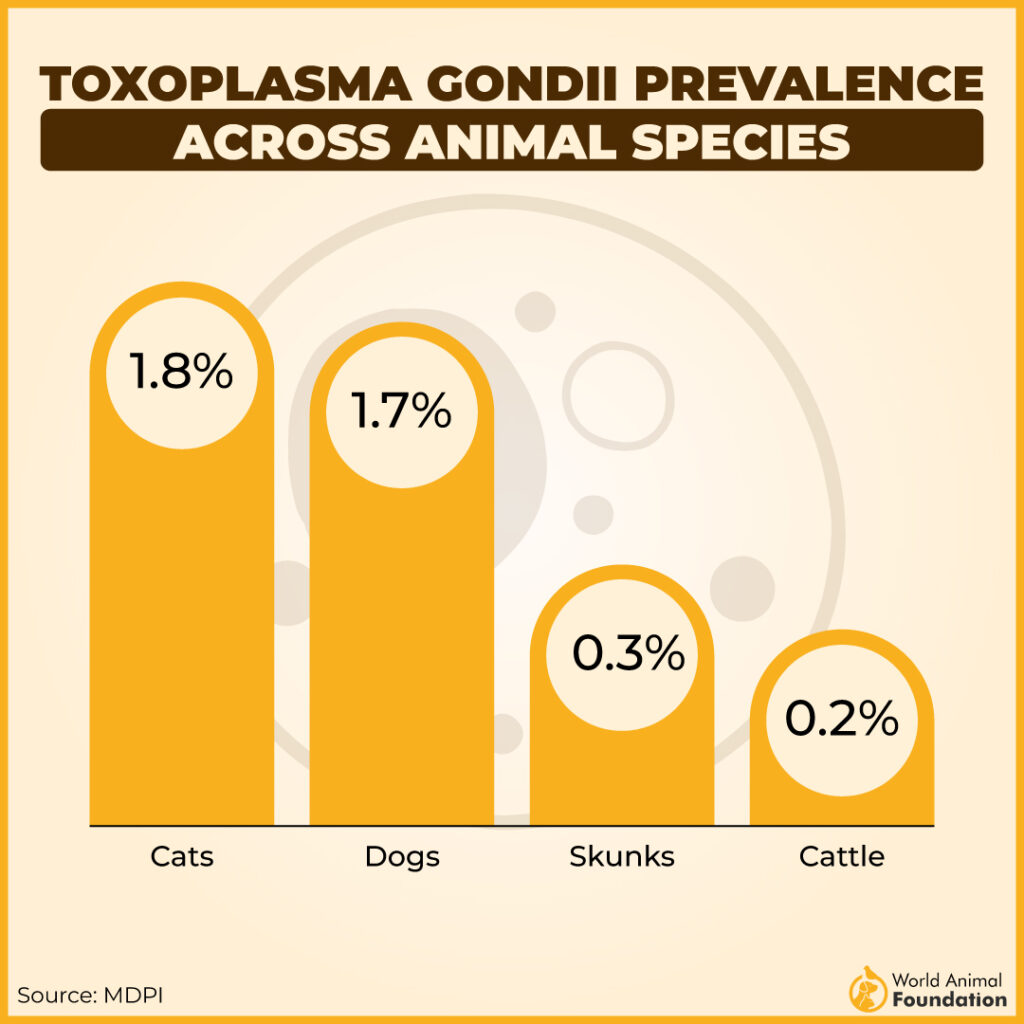
Toxo can affect the brain and behavior of individuals as the protozoan lies dormant. But it’s not that simple, and much more research on how Toxoplasma gondii affects people is ongoing.
According to Jaroslav Flegr, an introverted Czech scientist, the parasite and the little bit of medical data scientists have studied reveal the tip of an enormous iceberg. Flegr believes that Toxo, a single-cell parasite, is responsible for as many, if not more, deaths than malaria, adding cats to the list of most dangerous animals.
One-quarter to One-third of the US Cats Are Murderers (Vetstreet)
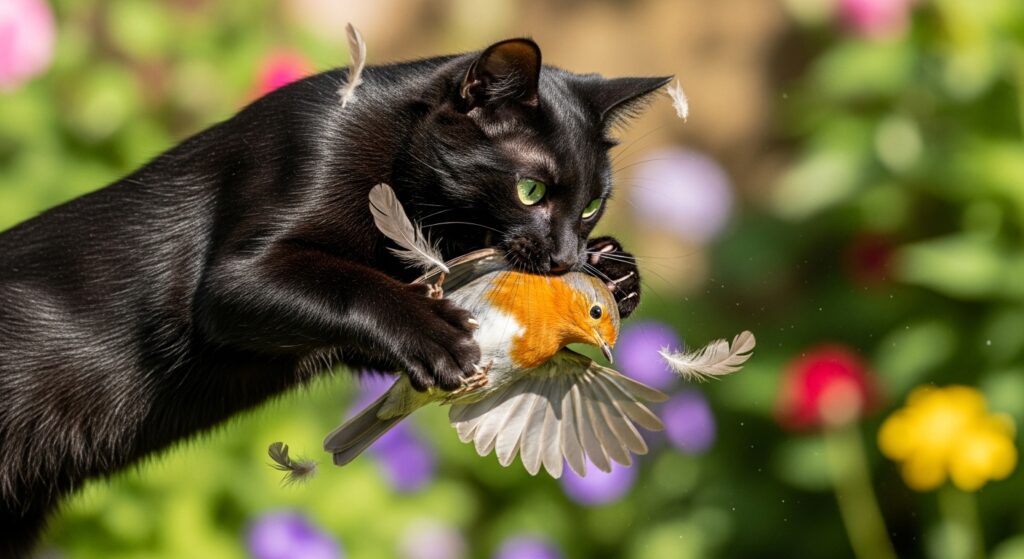
Animals kill; it’s how nature designed them. Saying that domestic or alley cats commit murder rests on a temperamental moral compass, and it’s an entirely different conversation. Cats attack birds, small mammals, and reptiles, and who hasn’t seen a cat take down a giant insect that catches its attention?
Nature Communications did a study and found that free-ranging felines kill between 1.4 and 3.7 billion birds and 6.9 to 20.7 billion mammals annually.
On Average, the Outdoor Cat Can Kill 3 Animals per Week (Invasives org)
It’s no joke or something to scoff at. Cats are eradicating entire species and killing billions of reptiles and amphibians (almost as fast as humans). As per the Wildlife Management Institute, cats kill 3 animals per week.
Outdoor cats, domestic or wild cats, are killing billions of animals, and since their numbers keep climbing higher, there won’t be anything left if they continue to kill two animals per week—time to confine Fluffy!
On Average, Feral or Strays Felines Kill 3 times More Animals than Pet Cats (Nature)
That only makes sense. Feral kittens eat to live. Domestic cats often kill because that is in their nature. And who hasn’t been gifted a mouse, a bird, or a lizard that the cat stalked but had no intention of eating? A cat’s natural instinct is to hunt, chase, and kill–no point in sugar-coating the truth.
Pet ownership behavior or irresponsibility has a significant impact on free-ranging cats.
However, even Trap-Neuter-Return programs still have a massive negative impact on wildlife populations, and more has to be done to educate people and prevent cats from killing wildlife.
FAQs
Cats are prolific killers, and you’d be amazed to know that a New Zealand village planned to ban domestic cats to safeguard its indigenous wildlife. Here is a list of animals that are killed by cats outdoors through cat predation.
What Is the Impact of Free-ranging Cats on US Wildlife?
Free-ranging cats, whether feral or domestic house cats, have a catastrophic effect on native wildlife through predation, competition, and disease. So far, cats are responsible for decimating at least 63 species.
Why Do Cats Kill Birds?
Cats are natural predators. Wild felines kill to eat, and domestic cats draw on their instinct to hunt as is in their inherited DNA. Even though cats belong to the same cat family as lions, tigers, and cougars, predation is part of their instinct to hunt.
Do Birds Attack Cats?
Birds of prey like owls, hawks, or raptors might attack cats if they think they’re an easy meal. Sometimes, nesting birds will swoop at cats to direct them away from vulnerable baby birds in nests. Birds also can’t tell the difference between owned cats and simply recognize them as predators.
What 33 Species Have Cats Made Extinct?
Outdoor cats are responsible for decimating modern birds 14%, mammals, and reptiles. Cats have an even more significant ecological effect on the bird and mammal populations of islands. Cats are known to have impacted 63 species to the detriment of their existence.
What Can Be Done to Prevent Bird Killing by Cats?
Keeping domestic cats in is one way, or having a bell on their collar to alert their victims. If you want your indoor cat to experience the outdoors, invest in a mesh tent or other outdoor enclosure that allows the pet to experience nature but not have direct contact.
However, the problem with owned or unowned cats is much larger. It requires more drastic measures to sterilize feral cats to prevent substantial wildlife mortality in native birds.
Conclusion
Human-caused factors, such as allowing cats to roam freely, have intensified cat predation on birds, threatening many avian species.
We have a problem with cats. There is just no other way of putting it. Lester is fictional, but he’s a poster child for how many domestic cats roam and contribute to the problem. As a cat owner, our domestic cats must stay indoors–no ifs, ands, or buts.
Scientific evidence proves that cats are an invasive species that threaten birds and are responsible for multiple wildlife extinctions. Cat predation and the problem feral cats pose doesn’t just impact bird populations. To save birds, we have to discuss free-ranging cats and where your domestic kitten goes when you let it outside.
Bird mortality from allowing Felis catus outdoors leads to cat predation rates, and there’s no defending a pet cat, for the birds killed needlessly by even well-fed cats.
