




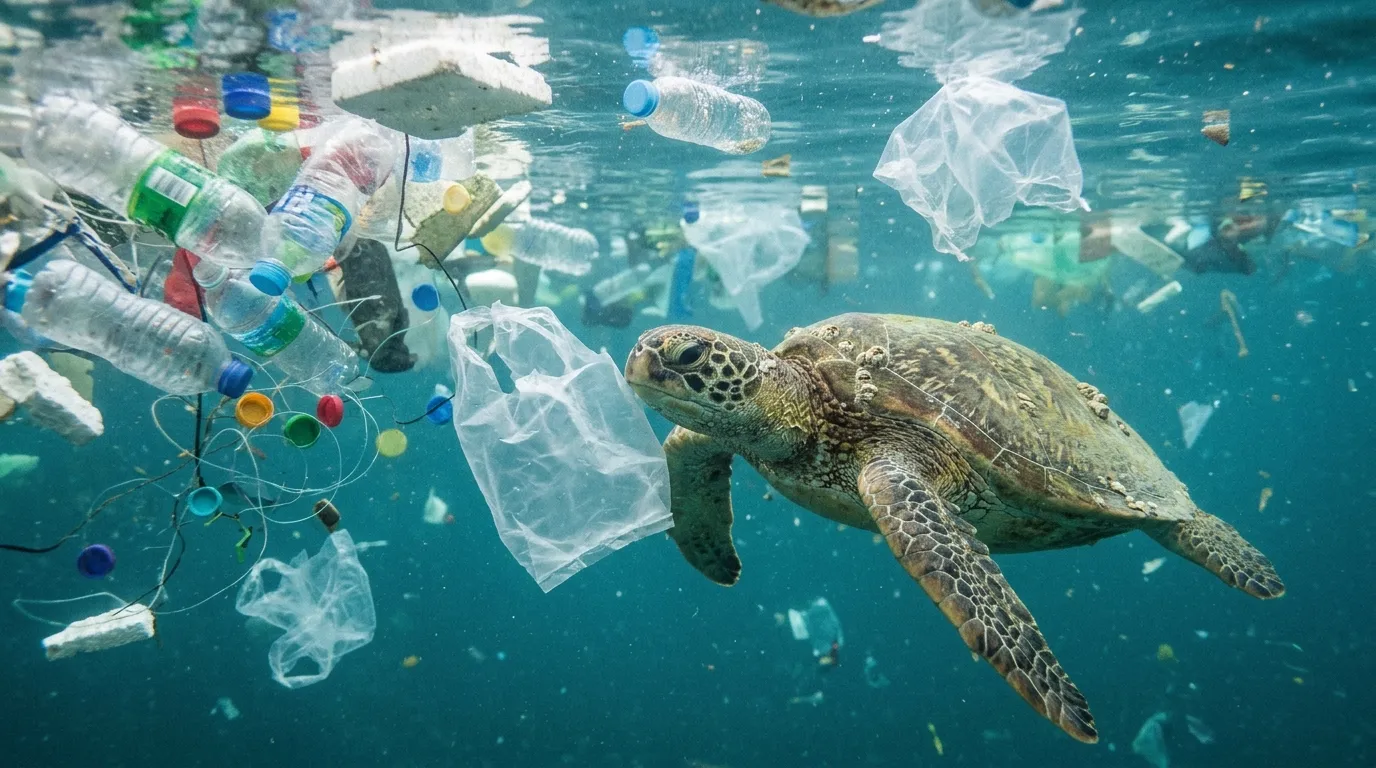
The ocean’s vastness, life, and mysteries all inspire. So why is ocean pollution such an issue? Laziness? Wastefulness? Greediness? Yes, yes, and yes. Plastic in our oceans has created havoc on marine life and its environment.
Ocean pollution affects everything on the planet, including human beings. Every year, billions of pounds of trash and other pollutants saturate our waters.
It’s not due to ignorance that our oceans are in the shape they’re in today; It’s due to stupidity. We know the basic facts… ingested plastic kills ocean life, and waste is taking over vital resources. But let’s get down and dirty and talk about the state of the open waters in ways you may not have heard.
Follow me to dive into the deep.
Top 10 Most Nerve-Wracking Stats
- Almost 12.7 Million Metric Tons of Plastic Materials Are Dumped Into the Ocean annually
- There are 8 million Pieces of Plastic Waste in the World’s Oceans
- There are 4 Billion Plastic Microfibers per square kilometer in the Ocean
- Almost 70% of the Debris Sinks in the Ocean Ecosystem
- 5 Formed Giant Garbage Patches Are in the Oceans globally
- The Number of Dead Zones in the World’s Oceans Is around 700
- It takes 20 to 500 years to degrade Plastic
- The Philippines Is the Largest Contributor to Plastic in the Ocean
- Almost 100,000 Animals Die Each Year From Plastic Pollution
- Annually, Around 250 Million Clinical Cases/Human Disease Is Attributed to Ocean Pollution
The Plight of Our Oceans
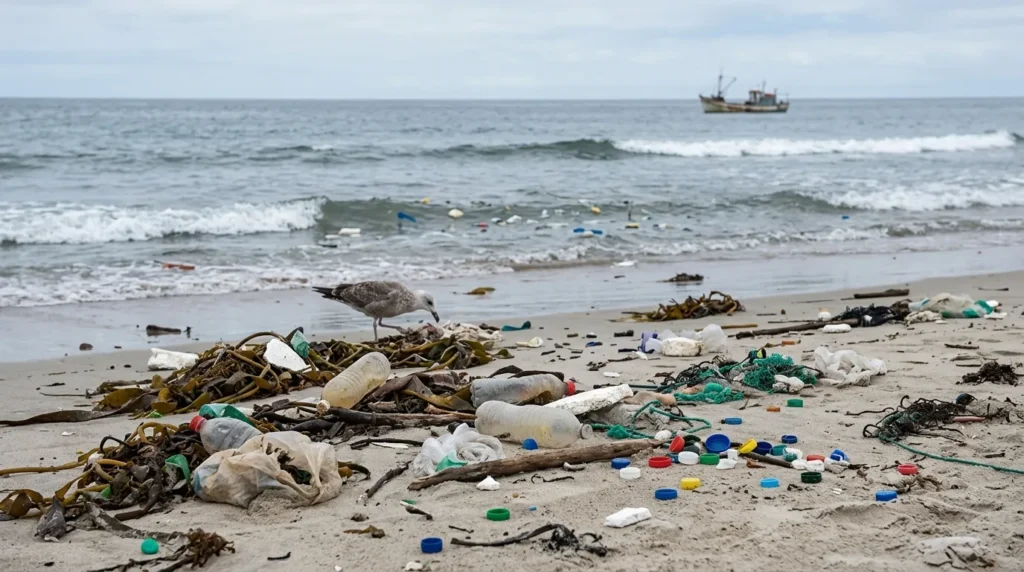
The ocean has always been a haven for me. Whenever I’m standing on the sand surveying its beauty, I can breathe more deeply than I ever do. I also have a healthy fear of it due to its depth and the life that could be held within. (I’m not talking of “Loch Ness,” but we really don’t know the totality of what’s down there.)
The deep blue seas bring life, so why are we fighting against them? There are several reasons why, and a lot of it boils down to thoughtlessness. This one little plastic bottle can’t do much in the grand scheme of things. Oh, but it can.
It’s the combined pieces of plastic that contribute to the predicament we’re in today. When billions of people each throw away items that aren’t biodegradable, our oceans suffer.
Another significant factor that causes ocean pollution is runoff, or water that doesn’t seep into the ground when it rains. The EPA (Environmental Protection Agency) explains further:
“Runoff picks up fertilizer, oil, pesticides, dirt, bacteria, and other pollutants as it makes its way through storm drains and ditches – untreated – to our streams, rivers, clear water lakes, and the ocean.”
Let’s jump into some specifics and learn more facts about ocean pollution. All of us need to play a part in stopping this runaway train so the Earth and its inhabitants can live with the bounties the waters bring.
Ocean Pollution Facts
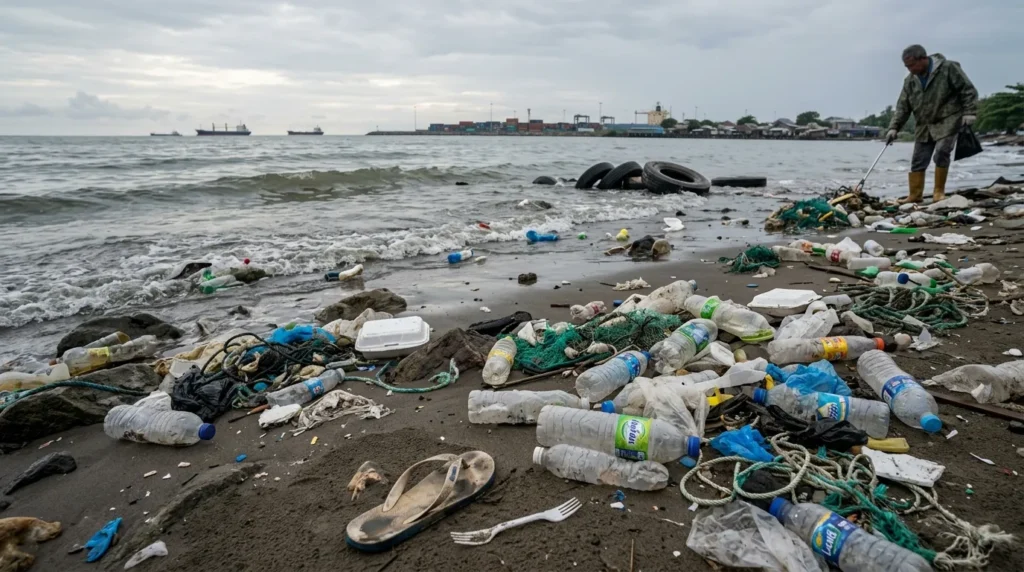
Every Year, Almost 12.7 Million Metric Tons of Plastic Materials Are Dumped Into the Ocean.
One metric ton is 2204.62 lbs., which would equal roughly 28 billion pounds of single-use plastics entering the ocean. Simply put, it can’t take it. There has to be a stopping point, so we’ll have oceans and people left. (source)
25 trillion macroplastic pieces and 51 trillion microplastic particles are floating in the World’s Oceans.
Our oceans are now estimated to contain around 25 trillion macroplastic pieces and 51 trillion microplastic particles. In total, this adds up to approximately 5.25 trillion floating plastic pieces circulating across marine environments.
On average, this equals about 46,000 plastic fragments per square mile of ocean, with a combined weight reaching up to 269,000 tonnes. Even then, a large proportion of the oceans in our world have not been surveyed. (source)
5 Formed Giant Garbage Patches Are Globally in the Oceans, and the Greatest One Is the ‘Great Pacific Garbage Patch’ With 8 Trillion Pieces of Trash.
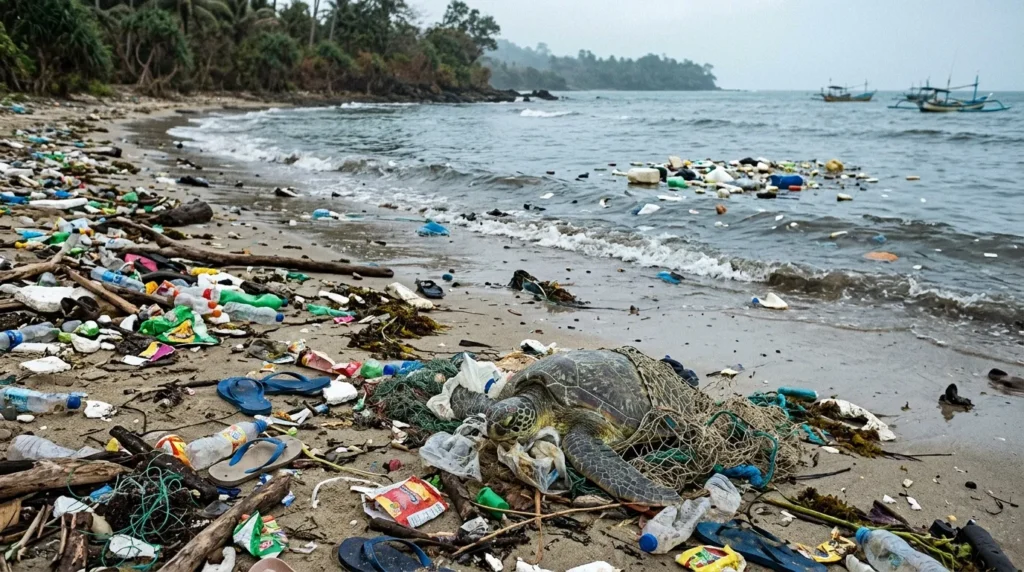
The areas (two large ones) are located in subtropical waters between California and Hawaii. They’re also called the Pacific Trash Vortex. The areas move and change due to tides and winds, so there’s not one location on which to focus cleanup.
It is estimated to contain around 8 trillion pieces of plastic, weighing more than 80,000 tonnes in total. The Great Pacific Garbage Patch alone is believed to hold approximately 234.8 million pounds of plastic waste. The garbage outnumbers sea life 6 to 1. (source)
There are five gyres (rotating ocean currents) of varying sizes in our world today, including one in the Indian Ocean, two in the Atlantic, and two in the Pacific.
According to the Latest Stats, the Number of Dead Zones in the World’s Oceans Is More Than 700.
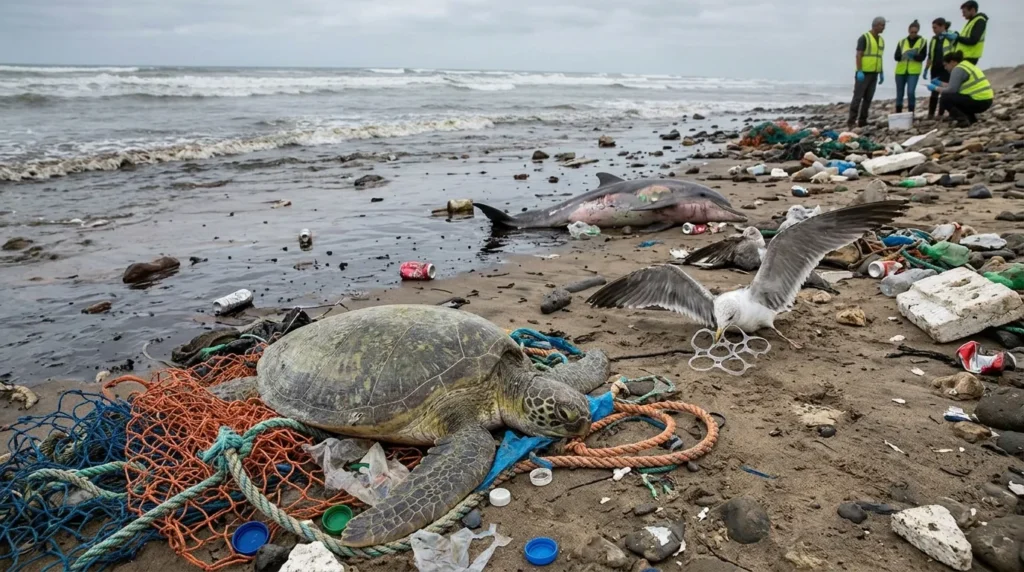
The number of “dead zones” worldwide—areas of water with too little oxygen to support marine life—has increased significantly over time, rising from about 400 in 2008 to approximately 700 in 2019. (source)
Hypoxic zones, areas with low to no oxygen, can happen naturally, but the areas created by humans are the ones of concern. The US is home to the second-largest dead zone in the world – the northern Gulf of Mexico.
12% of the Oil in the Ocean Comes From Oil Spills, and the Rest of it leaks in from drains and rivers.
Oil spills are vastly dangerous to the oceans. Oil seeping does occur naturally from the ocean floor, but that oil slowly enters its atmosphere, whereas oil spills can overtake aquatic life with their speed of influx.
Almost 1.5 Million Tons of nitrogenous pollution travel from the Mississippi River to the Gulf of Mexico.
This fact was recorded from the years 1980 to 2016. Humans, plants, and animals need nitrogen, but too much is being created. This is mostly due to fertilizer runoff and the breakdown of high volumes of animal manure from agricultural farming. (source)
The Ocean Noise Pollution Caused by Ships Affects the Fish Habitats and Also Causes Injury to Them.
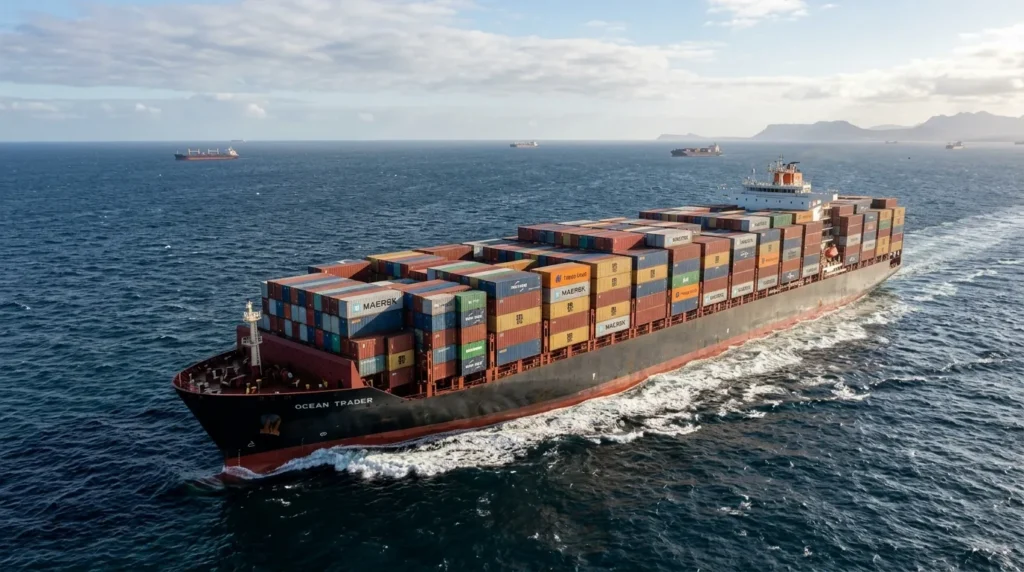
Aquatic animals are extremely sensitive to sound. Since noise from boat/ship engines travels long distances underwater, the disruption can hinder their ability to communicate, navigate, and more.
Ocean Pollution Statistics
Latest Stat Revealed We Produce Almost 460 Million Tons of Plastic Annually, of Which 50% Is for Single Use.
Industries are involved in plastic production, which causes air pollution; then, the plastic that’s created becomes ocean pollution. The seas are getting hit from all sides in all ways at all times.
Hopefully, it will shock you as much as it did me into changing our selfish ways.
Keep reading to learn more about what we can do to help the situation we’re in.
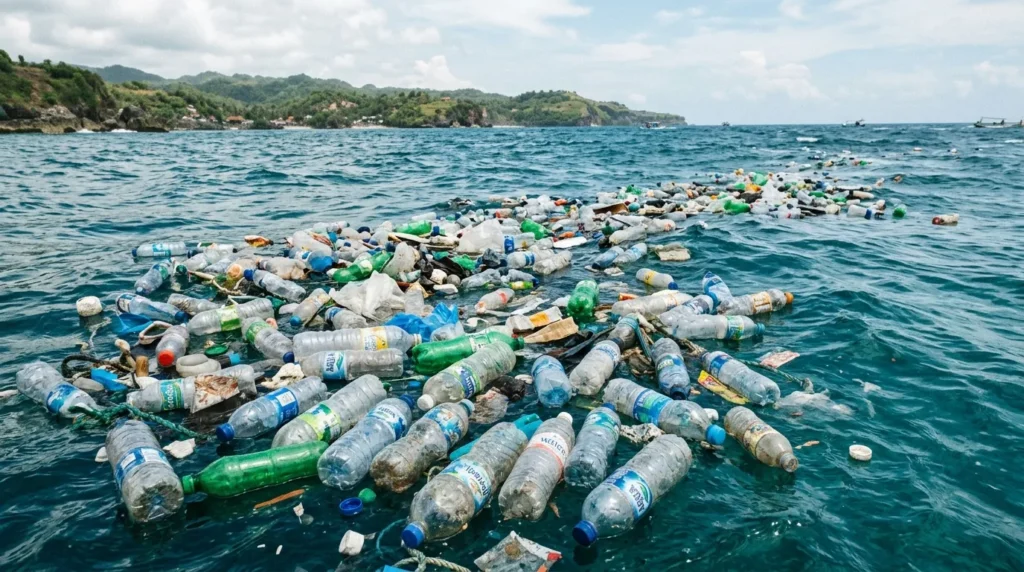
According to the Latest Stats, the Philippines Is the Largest Contributor to Plastic in the Ocean.
The Philippines has a mismanaged waste index of 55.56% in 2025, placing it in the “Very High” risk category for plastic pollution. (source)
In the Philippines, there’s a lack of landfills with severe restrictions on constructing new ones. So, the dominoes keep falling…
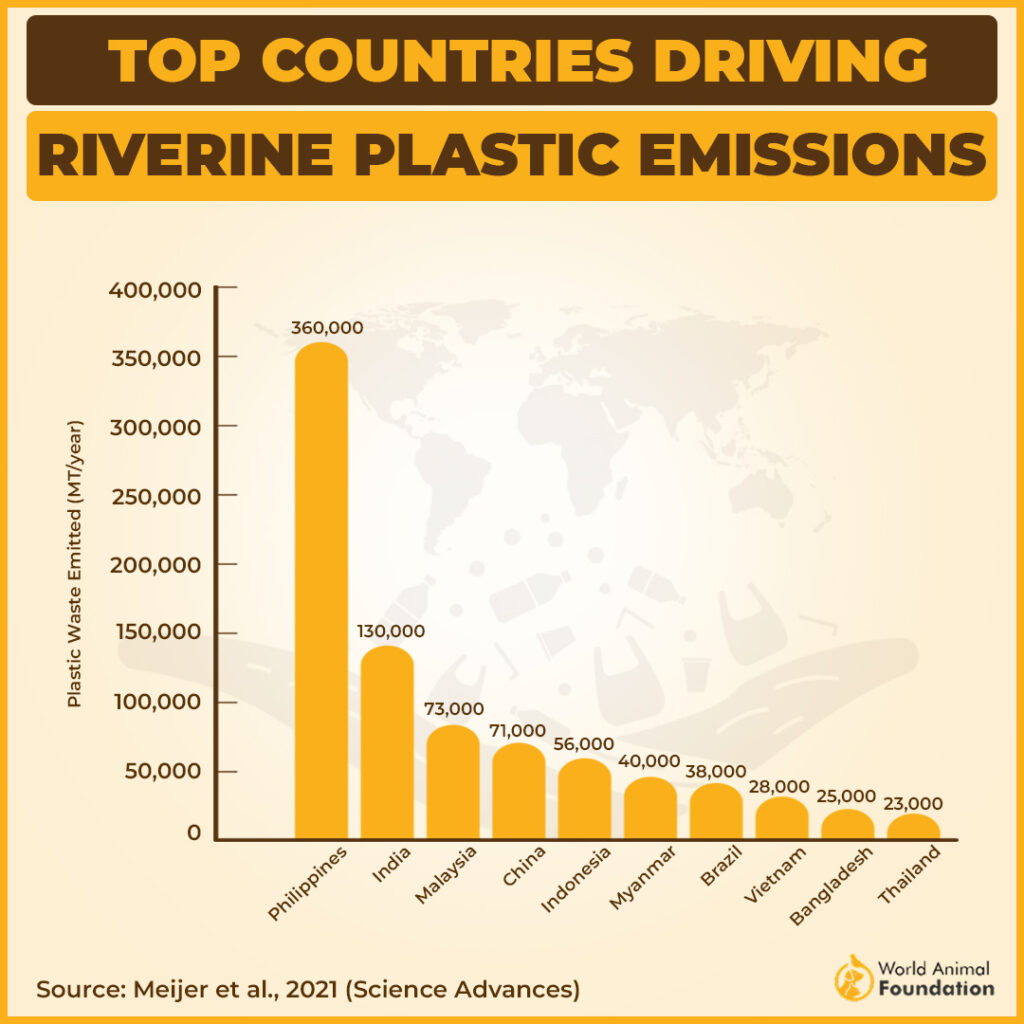
According to a 2021 study report, it is also identified as one of the largest contributors to riverine plastic emissions, with an estimated 4,820 rivers releasing around 356,371 metric tons of plastic per year into the environment.
Central African Republic Tops Global Plastic Pollution Risk Rankings with 95.66% Waste Index.
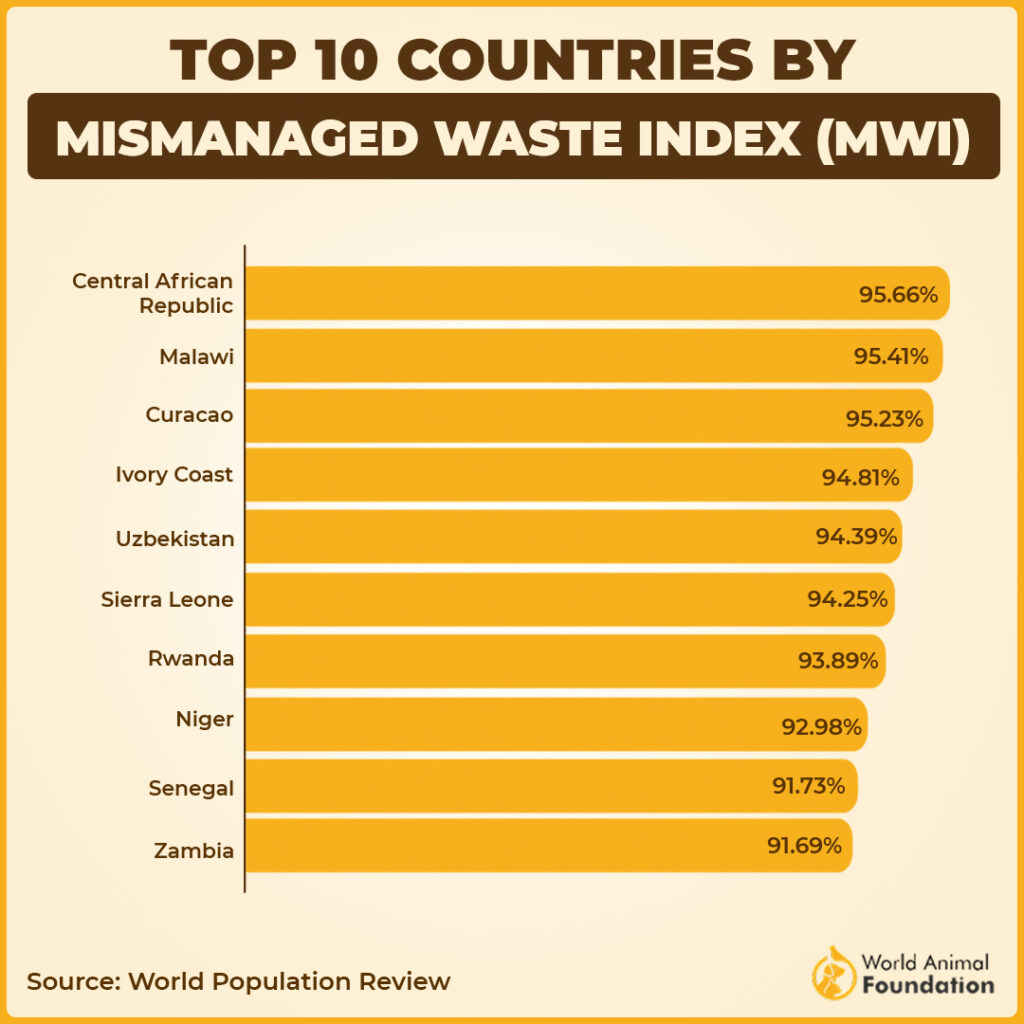
With a mismanaged waste index of 95.66% in 2025, the Central African Republic ranks the highest among all countries. This places it firmly in the “Very High” risk category for plastic pollution, highlighting severe challenges in waste management and environmental protection.
China is the world’s largest producer of plastics, accounting for 34.5% of global output in 2024.
China is the world’s largest producer of plastics, accounting for approximately 34.5% of global output in 2024, which is about 149 million tonnes. It also leads in the production of recycled and bio-based plastics, reflecting both its dominant role in global manufacturing and its increasing focus on sustainability efforts.
It Takes Almost 20 to 500 Years To Degrade Plastic.
According to a study, it is estimated that plastic takes 20 to 500 years to degrade. It’s worth it to read that again. And again. I know this article will definitely change the way I look at plastic from now on; plus, there will be some changes in my lifestyle in the near future.
Aluminum Takes 200 Years, and Styrofoam, Unfortunately, Is Non-Biodegradable.
Almost 80 to 200 years are required for aluminum to degrade in landfills. I think you and I should make a pact right now. Unless it’s an emergency (and when’s the last time we had a Styrofoam emergency?), we will never use Styrofoam again.
Almost 10 Rivers Are Responsible for 88% to 95% of Ocean Debris (Including Plastic) Worldwide.
Eight of those rivers are in Asia, and two are in Africa – the Nile and the Niger. More waste can accumulate in larger bodies of water.
Agriculture Runoff, Untreated Sewage, and the Discharge of Pesticides Are Responsible for 80% of Global Marine Pollution.
It’s called nonpoint source pollution, which can be anything from a car or a boat to a farm or a forest. Agricultural farming is also a major source of runoff.
80% of the Sewage that enters the Mediterranean Sea Is Untreated.
The LBS Protocol (1983) was adopted under the Barcelona Convention to legally control and reduce land-based pollution sources, which account for over 80% of the Mediterranean Sea’s total pollution load.
How Many Sea Animals Die From Plastic
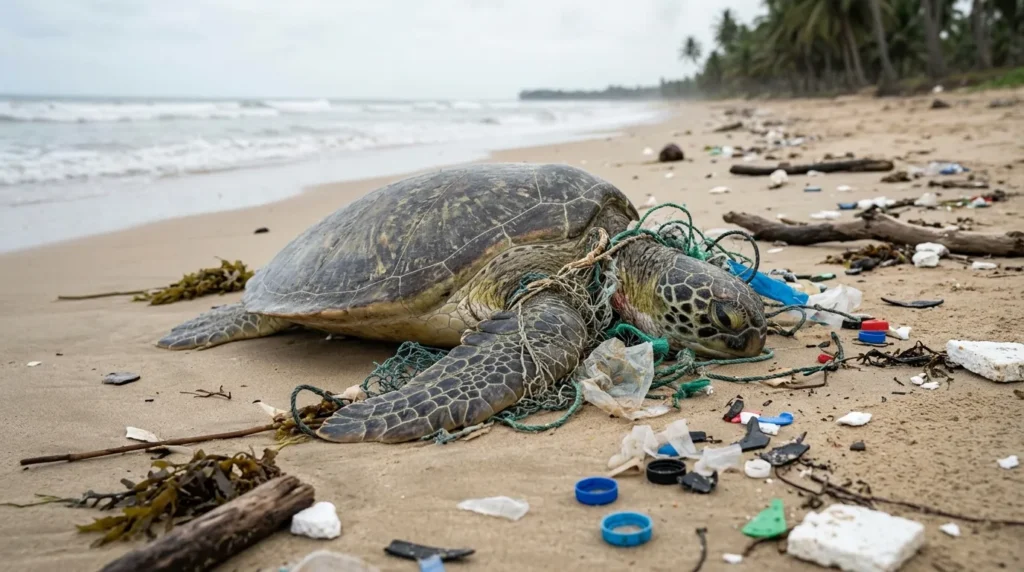
Almost 100,000 Animals Die Each Year From Plastic Pollution.
Approximately 100,000 marine animals are estimated to die each year due to plastic pollution alone. In addition, countless more are affected through entanglement, ingestion of plastic debris, and the ongoing disruption of their natural habitats. (source)
Eighty-eight percent of marine species have had a devastating impact from what’s occurring. All seven sea turtle species are affected by marine plastic pollution. We must do better.
81 out of 123 marine mammal species are known to have ingested plastic or become trapped in it.
Even rare species are affected. For example, the humpback dolphin, found in waters around Australia and New Guinea, has been observed with marine debris tightly wrapped around its body. If the plastic is not removed, it can cut deeply into the skin, leaving the animal vulnerable to severe injuries and potentially fatal infections. (source)
Ocean Pollution Has Negatively Impacted One-Third of the Atlantic Ocean Inhabited by Shellfish.
Plankton and mollusks are adversely affected as well. Corals have difficulty creating their skeletal structures due to rising acidity. (source)
Shellfish Generate More Than 60% of the Fishery Revenue in the US.
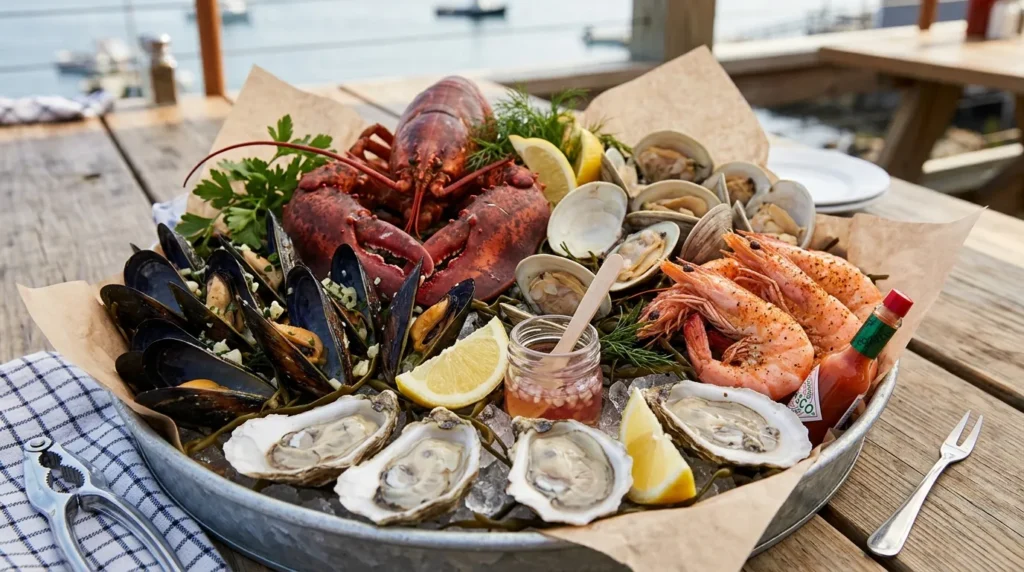
List of shellfish from Healthline includes:
- Shrimp
- Crayfish
- Crab
- Lobster
- Clams
- Scallops
- Oysters
- Mussels.
More Than 72% of the Amphipods (Crustaceans) Tested From All Six Trenches (including the Mariana Trench) Had Plastic Fragments in Their Gut.
Trenches = The deepest parts of the ocean. What this means is that plastic has infiltrated one of the most untouched, natural, and sacred places our world has. (source)
It Is Estimated That Annually 12,000 to 14,000 Tons of plastic are ingested by North Pacific Fish.
Does the Great Pacific Garbage Patch sound familiar? These fish have no choice but to ingest plastic by thinking of it as food. The pollutant has saturated the area. (source)
Most of the Creatures in the Marine Environment Are Unable To Differentiate Between Food and Plastic.
Life in marine ecosystems isn’t known for its excellent visual skills. They communicate and travel using mostly sound/vibration and movement.
Recent Studies Show That 7 Sea Turtle species, 56% of Whales, and 67% of Seals Are Affected by Ocean Plastic Pollution.
These stats are extremely alarming. The more I write, the more I realize some of my actions need to drastically change, like buying less plastic and properly getting rid of it to avoid plastic pollution. We must all be involved to save our creatures if nothing else. (source)
About 74%-90% of All Seabirds Have Plastic in Their Stomachs.
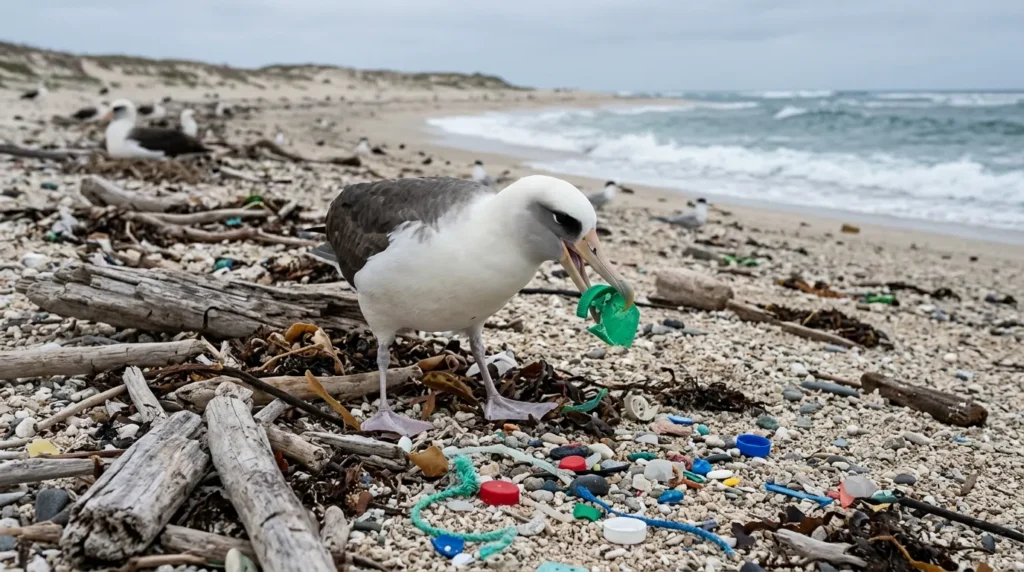
Seabirds are a varied group of almost 350 bird species. There are many more than just pelicans. (Think penguins, albatrosses, and puffins.)
How Much Pollution Is in the Ocean
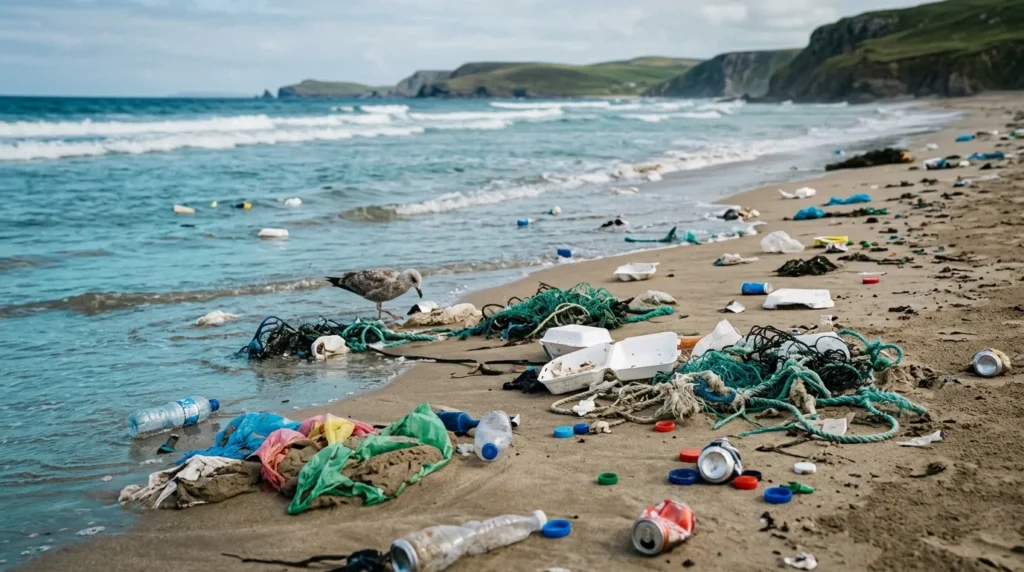
It Is Estimated There Are 4 Billion Plastic Microfibers (or Microplastics) per square kilometer in the Ocean.
Plastic debris is of different sizes, but those less than five millimeters in length are called “microplastics.” (And for us Americans, a kilometer is over ½ mile, and a millimeter is .039 of an inch.)
Microplastics enter the ocean through various sources, including the breakdown of larger plastic items, the shedding of synthetic fibers from textiles, and the release of microbeads found in personal care products.
Almost 700,000 Microplastic Fibers Come Off Into the Ocean Water With Every Laundry Wash.
This is equal to 700,000 fibers that become runoff into the ocean. It’s easy to be disturbed by the fact that plastic has infiltrated every area of our lives, but we can make a difference if we try. (Keep reading to find out how.)
Annually, 33 billion pounds of Trash and Other Pollutants Enter the Oceans.
The dangers of broken glass extend far beyond human safety, as it poses a significant risk to animals. The shards of broken glass can inflict severe harm and injuries on animals. In particular, broken bottles create treacherous death traps that can claim the lives of unsuspecting creatures.
I’m adopting a new mantra. Right now. “Reduce. Reuse, Recycle.” I now fully understand how important it is to ocean life and to our planet.
Almost 70% of the Debris Sinks in the Ocean Ecosystem.
Just because we don’t see it doesn’t mean it’s not there. Most of it is at the bottom of our oceans.
This sinking process can be attributed to various factors, including the weight and density of the debris, as well as the influence of ocean currents and natural sedimentation processes. Additionally, some debris may become entangled in underwater structures or settle in deep-sea trenches.
The Effect of Climate Change Has Drastically Been Increased by Plastic.
It’s a frenzied, nightmarish cycle… Sun exposure/heat causes the plastic to release greenhouse gases into the atmosphere, which makes the climate warmer (global warming). Plastic breaks down into methane and ethylene, which increases the rate of climate change.
As big and strong as our world is, it’s just as fragile and delicate when entire ecosystems are battered. It can only take so much.
Plastic in the Ocean Facts
According to UNESCO, 80% of All Marine Pollution Is Attributed to Plastics.
As per UNESCO’s findings, plastic is the reason behind 80% of all marine plastic pollution. We’ve produced more plastic in the last ten years than in the previous century. This isn’t progress. It’s hindering and killing oceanic life.
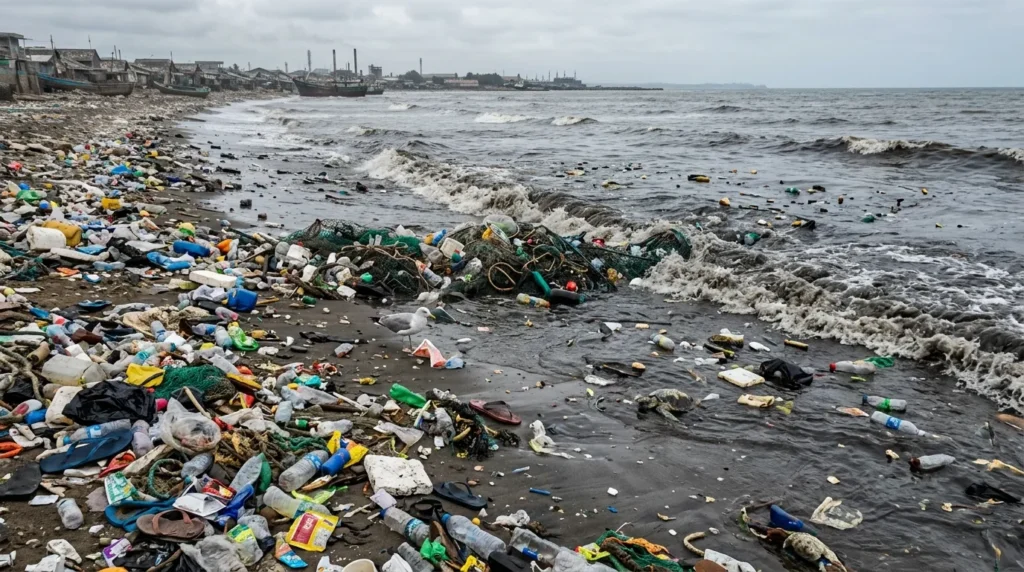
It Is Estimated That There Are 8 million Pieces of Plastic Waste in the World’s Oceans.
There’s no exact way to count every piece of plastic, obviously, but scientists base the research on more than guesstimates. These are based on scientific studies and data collection from ocean monitoring programs, satellite imagery, beach cleanups, and oceanographic surveys.
These pieces of junk choke both marine and plant life. Plastic debris poses a serious threat to marine animals, causing entanglement, ingestion, and suffocation. It also harms coral reefs, seagrass beds, and other habitats vital for the survival of marine ecosystems.
Seventy-three Percent (73%) of All Beach Litter Is Plastic.
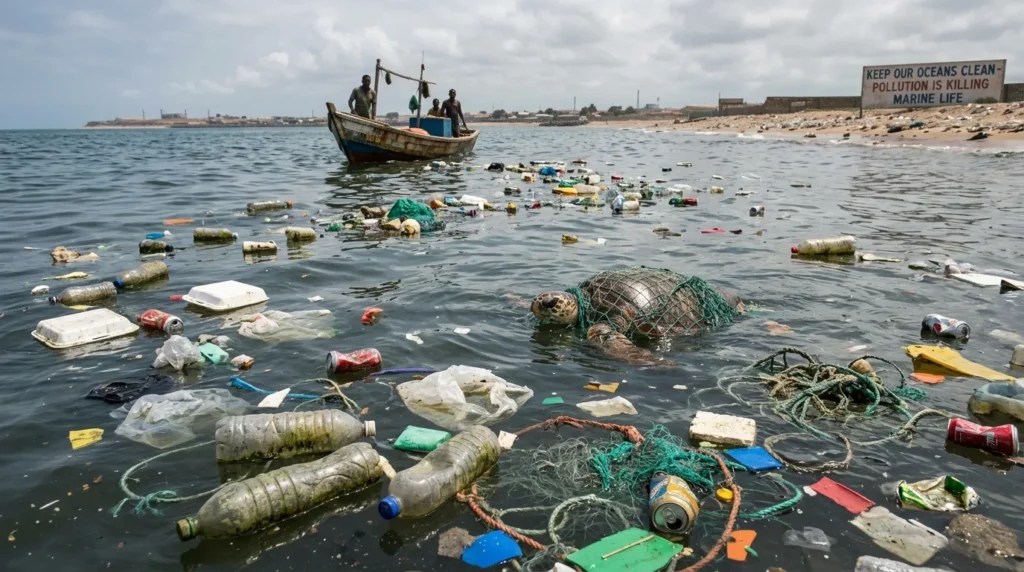
73% of all beach litter around the world is plastic. Between the ‘70s and ‘90s, plastic waste more than tripled. Although we appeared to have it under control before that time, single-use plastic bottles and the like were gaining in popularity.
The Amount of Plastic Present in the Oceans Can Circle the Earth 400 Times.
Worldwide, a million plastic bottles are purchased every minute, and five trillion plastic bags are used yearly. And 91% of all plastic is not recycled.
Every Sixty Seconds, a Truckload of plastic enters the Ocean.
A truckload of plastics entering the ocean every minute underscores the critical issue of plastic pollution in our waters.
The sun does melt plastic; however, it’s a painstakingly slow process, and even then, tiny pieces are left over to choke the smaller creatures of oceanic life.
The Most Plastic-Polluted Island Recorded to Date Is Henderson Island in the South Pacific.
Henderson Island currently holds an average of 53 plastic items per square meter, with an annual accumulation rate of 16.8 g/m² after the 2019 cleanup. The uninhabited island is a magnet for plastic. (source)
Scientists have even traveled there to research (and clean up) what is happening. Eighteen tons of plastic have accumulated across a 37.3 km² (14.4 square miles) stretch of beach.
Types of Ocean Pollution
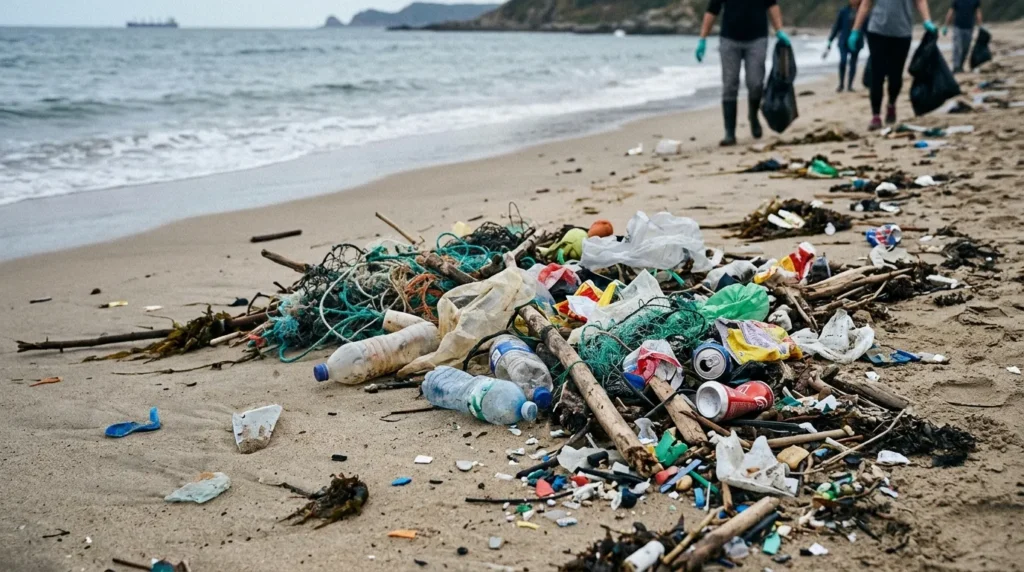
Cigarette butts, medium-sized plastic fragments, and straws were among the most frequent contributors to marine litter.
Coastal surveys conducted on Asparuhovo Beach in 2019 identified the top 10 most commonly found plastic items. The findings showed that cigarette butts, medium-sized plastic fragments, and straws were among the most frequent contributors to marine litter.
These results highlight the dominance of everyday single-use plastic items in coastal pollution, emphasizing how routine human consumption continues to drive environmental contamination.
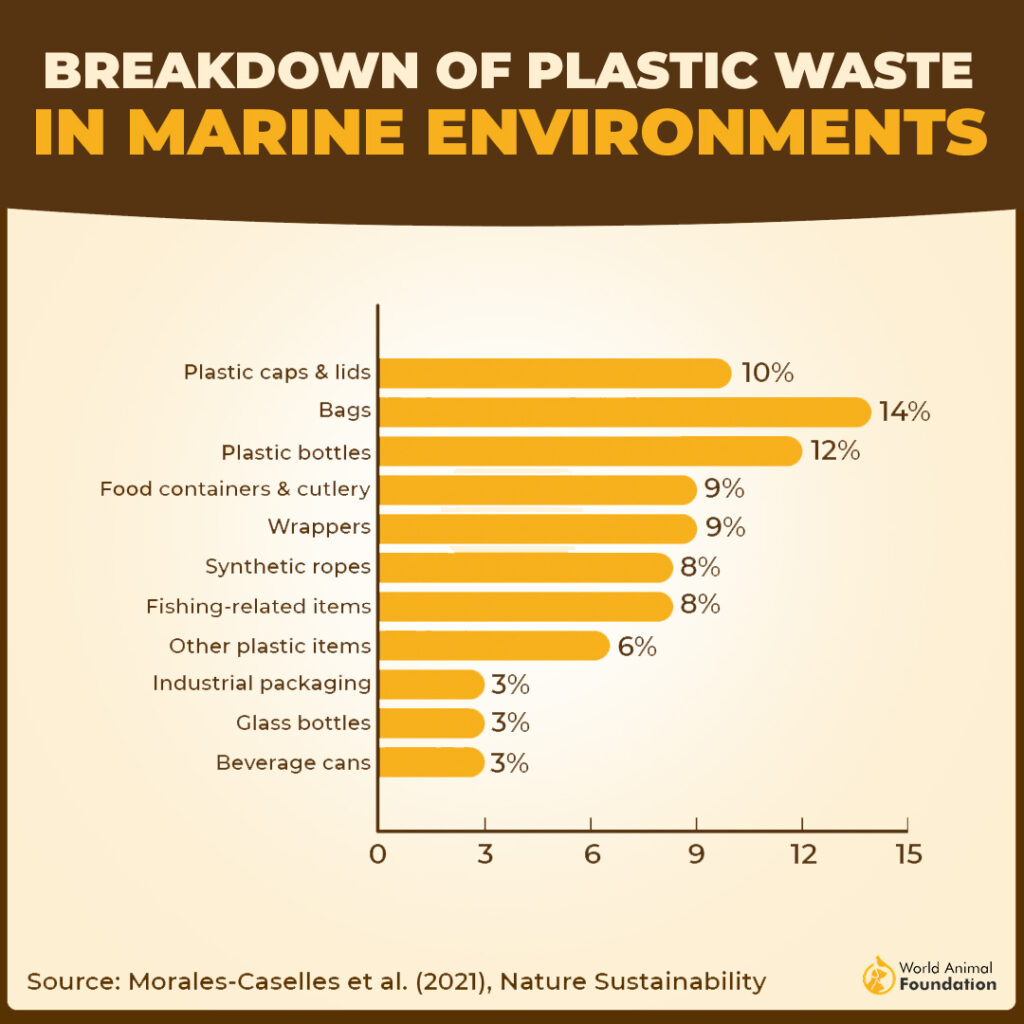
The majority of plastic pollution is found in surface waters (95%), followed by shorelines (83%).
The most commonly found litter items include plastic caps and lids, plastic bags, bottles, food containers and cutlery, wrappers, synthetic ropes, fishing gear, straws and stirrers, industrial packaging, glass bottles, and beverage cans. (source)
And the recycling process only catches so much, while straws, cutlery, and smaller pieces of plastic escape machinery.
Annually, 4.4 Billion Plastic Straws Are Thrown Away in the UK Alone.
Ocean pollution isn’t the problem of just one country. Every country in the world contributes to it, as the UK alone throws 4.4 billion plastic straws, and it’s why the UN focuses on it so much.
During a Five-Year Clean-Up Program, Almost 7.5 Million Plastic Straws Pollute the Coastlines of the US.
Over a five-year clean-up program, nearly 7.5 million plastic straws have polluted the coastlines of the United States.
The US Disposes of 27.4 Billion Diapers in the Oceans Annually.
In terms of sales, disposable diapers make up the largest market share of absorbent hygiene products. I have a daughter and understand how convenient they are. It would be difficult to change the behavior of many millions of parents, so hopefully, progress will be made in creating an Earth-friendly diaper.
The US Discards 2 Billion Razors and 1 Billion Toothbrushes Annually in the Ocean Waters.
Electric shavers, disposable recycled razors, and electric toothbrushes are a few of the alternatives. Unless you choose to go razor-free. (More power to you!) Just don’t throw out your toothbrush. Please.
Impact of Ocean Pollution on Humans
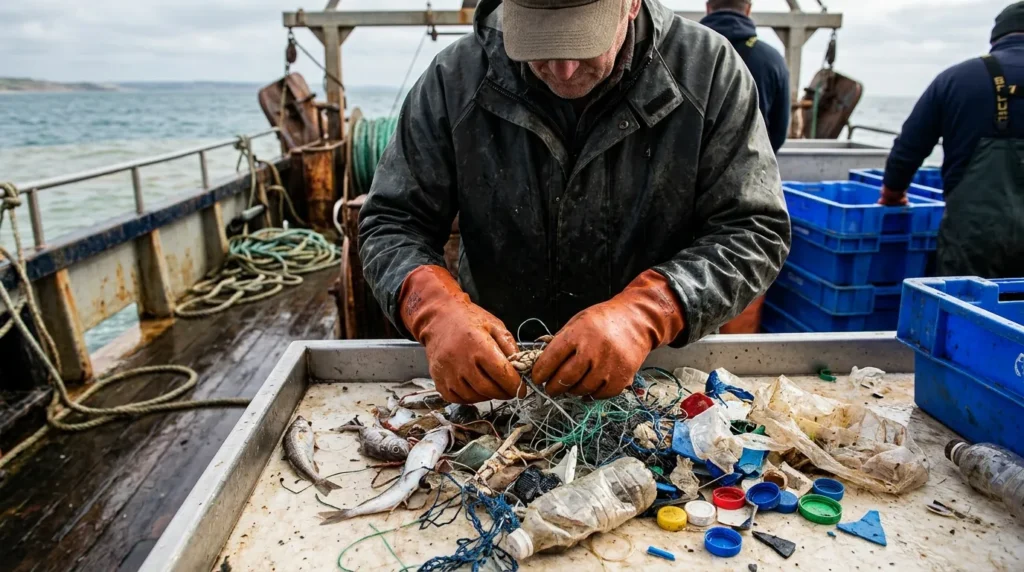
Annually, Around 250 Million Clinical Cases/Human Diseases Are Attributed to Ocean Pollution.
Ocean pollution encompasses various sources, including plastic waste, chemical contaminants, sewage, oil spills, and other harmful substances.
Since we can’t even see microscopic pieces of plastic, we have no way of knowing the true number of people who are adversely affected.
50 to 80% of Oxygen Inhaled by Living Beings Comes From Marine Plants.
Fact of life: Human beings can’t survive without the ocean. It’s horribly ironic that every plastic bottle we drink from and throw away without recycling is killing us. (source)
An Average Person Eats 70,000 Particles of Microplastics Annually.
This equals around 100 bits of microplastics over the course of a meal. Additionally, people who drink only bottled water could be ingesting an additional 90,000 microplastic particles yearly. Plastic is in our food and even in the atmosphere.
It Is Estimated That by the End of This Century, the Ocean Waters Will Become 150% More Acidic.
Global warming, combined with carbon emissions, is the main cause of increased ocean acidification. Although the ocean has protected us from the awful effects of climate change by absorbing almost ⅓ of atmospheric carbon dioxide, it can’t do it all. (source)
The Contaminated Shellfish Is Responsible for 50,000 to 100,000 Deaths Annually.
Shellfish is usually eaten raw, and so on top of the fact above, it’s also the culprit in the illnesses of 100,000 people yearly.
People whose primary dietary source is seafood are found to be affected by POPs.
Persistent Organic Pollutants (POPs) are toxic chemicals that affect human health and the environment worldwide. They’re transported by wind and water and pass from species to species through the food chain.
In East Greenland, an Alarming Number (92%) of the Population Has Contaminated Blood.
Their diets largely consist of plant matter, fish, and terrestrial and marine mammals due to their location in the world. Since oceanic wildlife is highly contaminated with pollutants, toxins are being transferred from animal to human. (source)
Annually, the Medical and Health Costs Associated With Pollution, Including Air, Soil, and Water, Are $4.6 Trillion Globally.
There are 9 (nine) million premature deaths yearly worldwide due to pollution. Air pollution ranks as the number one cause and was responsible for 6.5 million deaths in 2015. Water pollution caused 1.8 million deaths. People are affected by pollution in the ocean, leading to higher healthcare costs.
The Introduction of Alien Species Into the Ocean Is Causing an Economic Loss of Billions of Dollars Annually.
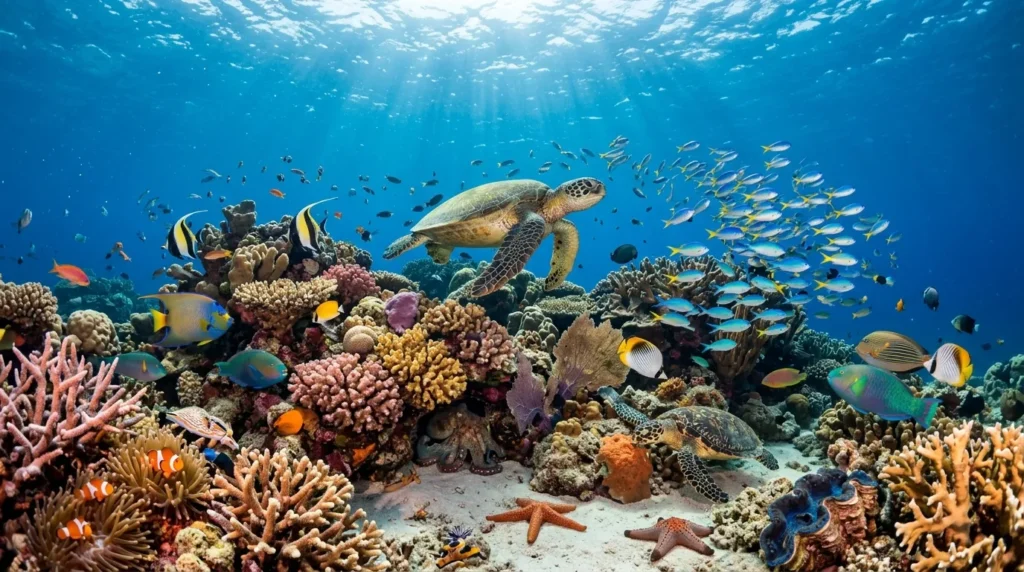
Invasive alien fish are species that are introduced to ocean areas, accidentally or intentionally, outside of their natural geographic range. They’re increasing in number globally due to ocean pollution, global warming, et al., and have caused:
- The displacement and extinction of native species
- Disruption of ecosystem functioning
- Transmission of new pathogens
- Threatens native species’ genetic diversity
What You Can Do to Stop Ocean Pollution
Something to smile about is that we can do so much in our daily lives to help our oceans. We can keep things out of landfills by bartering or going without. Here’s a short list, but do some research and find some ways you can get on board.
- Recycle
- Re-use… This includes re-gifting. Yay!
- Replace – Plastic straws with others made from different materials; Plastic bags with cloth bags, as unlike natural materials, plastic is not easily degradable.
- Only buy products that have the green recycling emblem on them and help reduce plastic waste.
- If you must buy a six-pack of soda, cut up the plastic packaging it comes in so there are no holes to kill turtles and other sea life. I’ve seen a turtle killed by some, and the disfiguration is grotesque.
- Use less water so the excess won’t be able to flow into the ocean.
- Choose sustainable seafood.
- Don’t fish, which saves fish and possibly your own life if it’s contaminated and you eat it.
- Become a vegan/vegetarian. This completely stops the need to manufacture and produce meat (which produces runoff and pollution).
FAQs
How Much Litter Is in the Ocean?
There are 5.25 trillion pieces of plastic waste estimated to be in our oceans.
- 269,000 tons float
- 4 billion microfibers per km are below the surface
- 70% sinks into the ocean’s ecosystem
- 15% is on our beaches.
What Percent of the Ocean Is Polluted?
About 40% of the ocean’s surface is polluted.
Why Is Ocean Pollution a Problem?
Simply put, we/human beings are the reason why… Animal agriculture (the meat industry), our purchasing habits, and the way we dispose of things, runoff due to our need for comfort (selfishness), and deforestation are major contributors to ocean pollution.
How Does Pollution Affect the Ocean?
- Total marine life swallows or is entangled by plastic debris, which causes severe injuries and death. The plastic in their stomachs suffocates them.
- As plastic melts, it creates noxious fumes that aid in the climate change process.
- Kills plant life and entire ecosystems that live there, which threatens mankind at an alarming rate.
Name the Most Polluted Oceans.
- North Pacific Ocean
- Indian Ocean
- North Atlantic
- South Pacific
- South Atlantic
Conclusion
Up until this time in our history, each form of civilization has been created on top of the other to make it bigger, better, and faster. Supposedly. Along with this questionable progress came gluttony, greed, and destruction.
The overuse of plastics has become, quite frankly, evil. It has done irreparable damage to our world, including the ocean. We’ll never have what the great waters were before pollution, but we can make it stop.
More people than ever have recognized what’s happening, changed their ways, and are helping to make it right. Here at WAF, we believe that together, we can do miraculous things. So join us…To create a clean world where our oceans can thrive.
And leave the plastic where it needs to remain – unsold, unbought, and out of existence. Let’s get our lives back to where they once were. Now that would be progress!
