




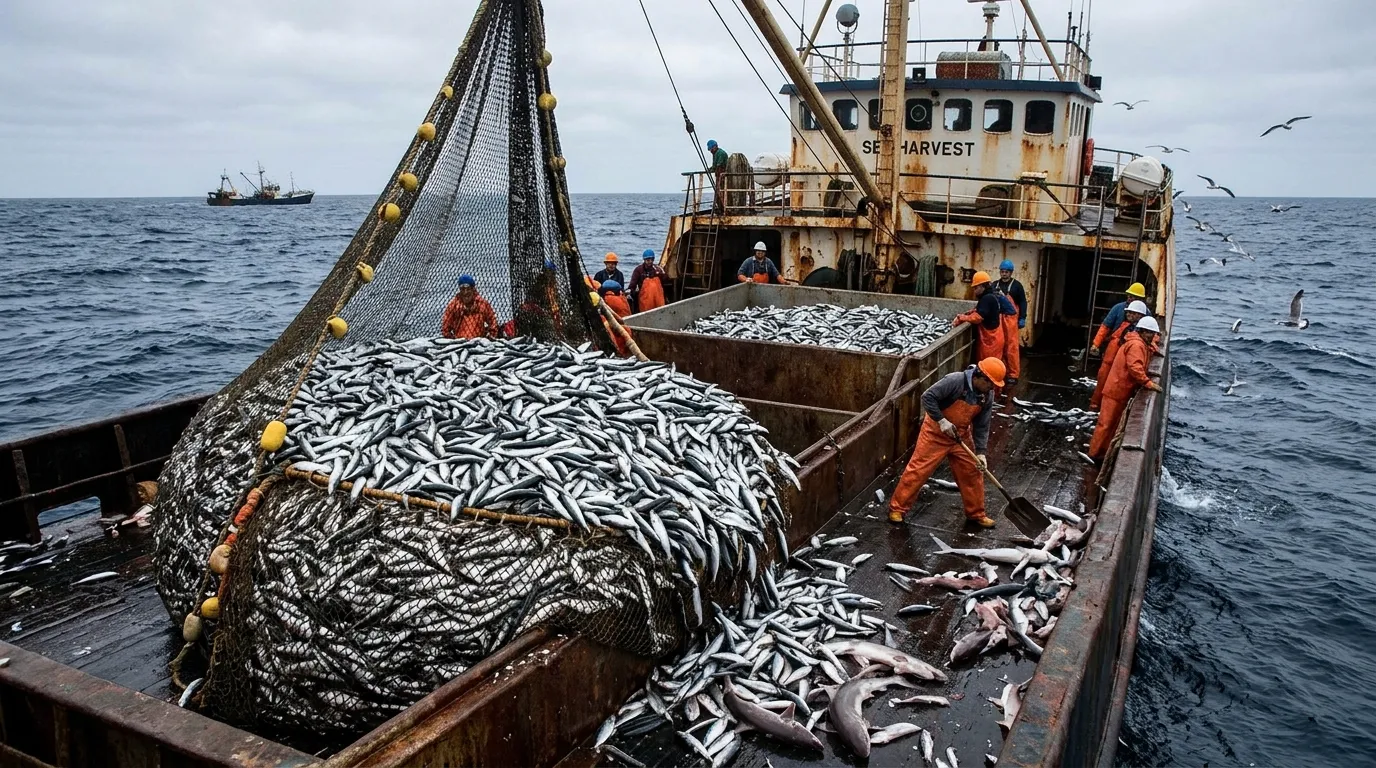
Overfishing is a serious problem that is causing consequential damage to the oceans all over the world.
By looking at overfishing statistics, we can get an idea of how overfishing is harming our planet, the effects it has on fish and other marine life, and what will inevitably happen if we continue to push past the maximum sustainable yield.
From the amount of seafood we consume to the bycatch that fishermen throw away as waste, the figures that the human race is taking from the ocean are alarming, and if nothing changes, the world as we know it will be no more!
Fish and seafood are some of the most affordable animal proteins on the planet, and with their low cost come high consumption figures. In record-breaking years, humans fished up to 235 million tons of seafood from the oceans in 2024, but what effect has that had on the sea life?
If overfishing continues, we could entirely wipe the oceans clean. Some predictions even suggest that global fish and seafood stocks could collapse by 2048, which is only about 22 years from now.
And even if you aren’t here to see it, your children and your children’s children will suffer the effects of our generation.
Top 10 Most Disturbing Stats
- Almost 223.2 Million Tons of Fish and seafood are produced annually around the World
- Almost 80% of the World’s Fisheries Are Already Depleted
- Top 7 Fisheries Producing Countries Account for 50% of the Total Fish Capturing
- 15% of Protein Sources Come From Fish
- Eastern Bluefin Tuna has Increased by 22%, and Western Bluefin Tuna Has Declined by 82%
- Almost 71% of the Shark and Ray Population Has Decreased Due to Fishing
- If No Measures Are Taken, the World’s Oceans Will Become Empty by 2048
- One-fourth of the Fish Catch Occurs Due to Trawling
- Asia Is Home to Many Fishers and Fish Farmers, Providing 85% Jobs
- Fishing Subsidies Were Banned by WTO in July 2022
Fish Production Statistics
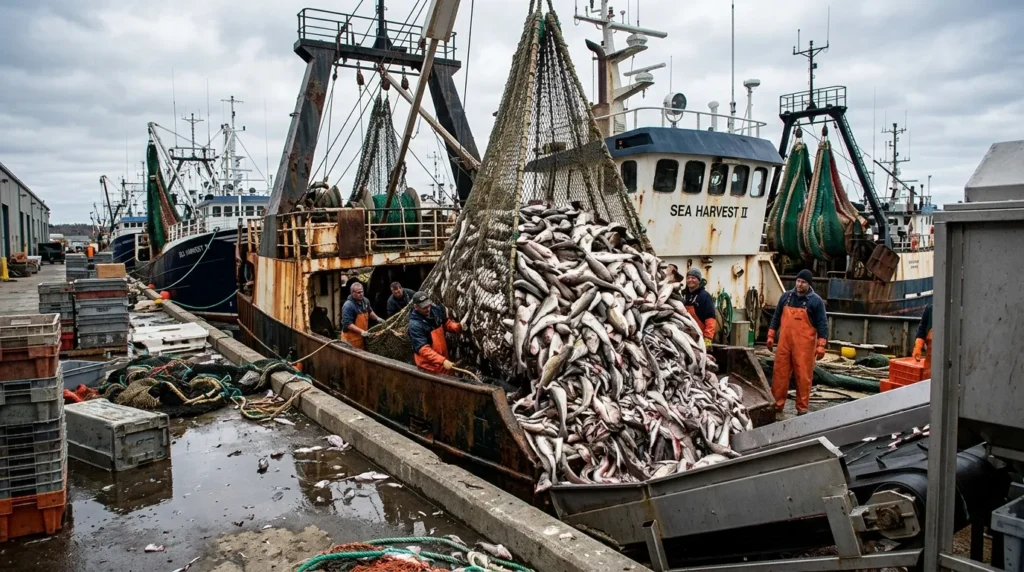
Almost 80% of the World’s Fisheries Are Already Depleted (The World Counts)
Humans are draining the world’s oceans at an alarming rate, and The World Counts estimates that we’ve already depleted almost 80% of the world’s fisheries. Fisheries management is crucial now more than ever if we don’t want to drain our oceans entirely of fish.
On top of that, about 40% of what’s caught isn’t even the intended fish—it’s bycatch, meaning other marine animals get trapped by mistake. Each year, around 650,000 whales, dolphins, and seals are killed after getting caught in fishing nets.
Fish Production Statistics from 2007 to 2016 Revealed Fisheries Captured 790 to 2,300 billion tons of Fish (FAO)
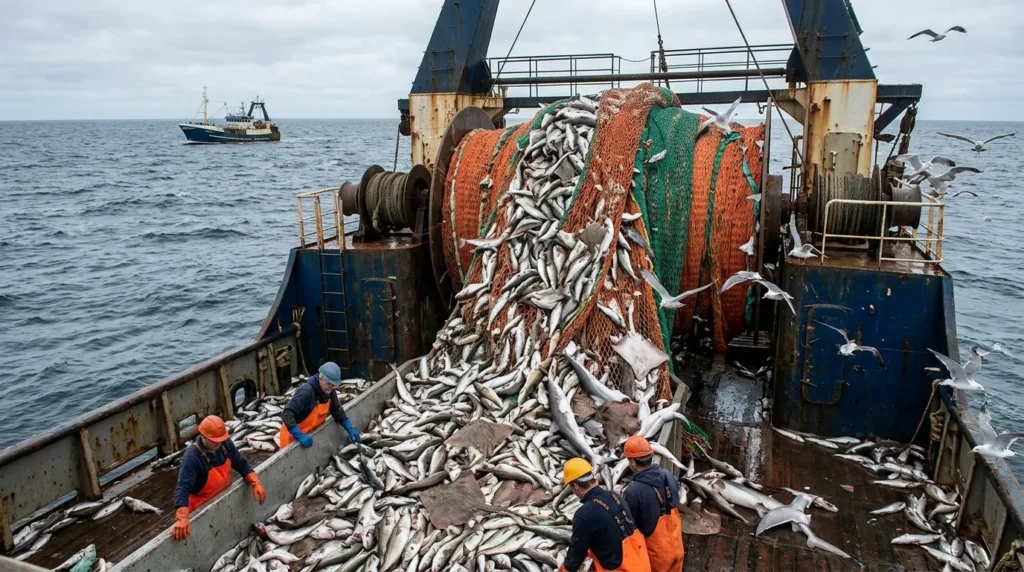
According to Fish Count, from the years 2007 to 2016, fisheries captured 790 to 2,300 billion tons of fish from the wild.
The Volume of Global Fish Production in 2024 Reached $190 Million Metric Tons (FAO, Statista)
In 2024, global fish production reached about 190 million metric tons.
As of 2022, the volume of global fish production crossed 184 million metric tons. In 2018, global fish production hit an all-time record as the FAO estimated that the world produced a whopping 179 million metric tons of fish. Just under half of the total figure, 82 million tons, came from aquaculture alone.
310 to 950 Billion Crustaceans Were Killed in 2022 for Food (Fishcounts)
On top of the substantial amount of fish that we took out of the ocean in 2022, Fish Count also approximated that we additionally removed 310 to 950 billion farmed crustaceans simply for human consumption. In 2022, it’s estimated that 82 to 170 billion crayfish, crabs, and lobsters were killed, along with 230 to 780 billion shrimp and prawns.
I think it’s easy to forget about crustaceans when discussing overfishing, but the damage and excessive catching we do to the invertebrates of the ocean are equally alarming.
As per the 2022 report of FAO, 223.2 Million Tons of Fish and seafood are produced annually around the World (FAO)
It’s hard to think about how much fish and seafood are actually produced each year, but according to FAO, 223.2 million tons (including 185.4 million tons from aquatic animals and 37.8 million tons from algae) of seafood are produced annually.
According to Our World in Data, by a combination of wild fish catch and fish farming, the total is around 200 million tons worldwide. To put it into perspective, that’s the equivalent of 4 million male adult African elephants.
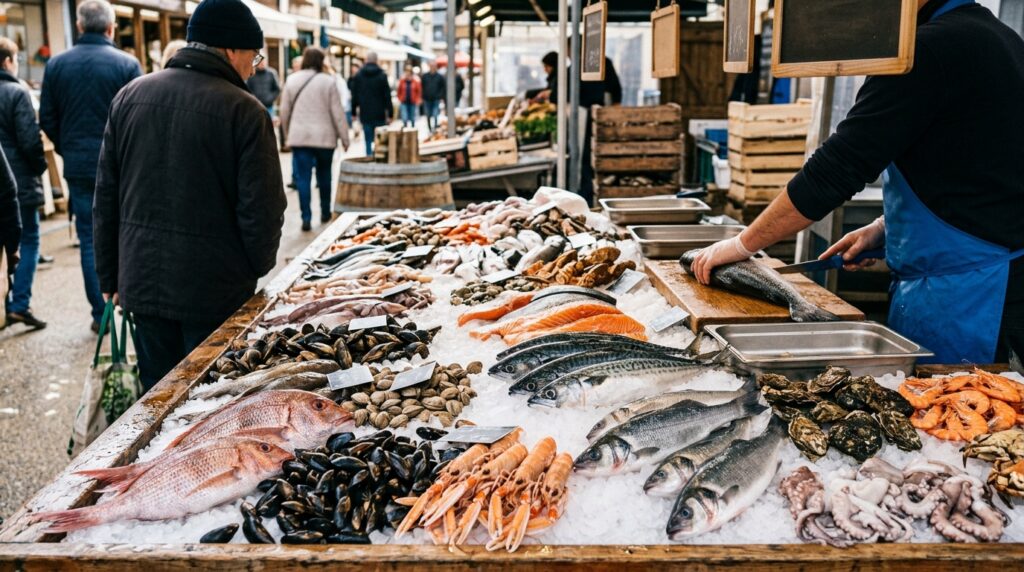
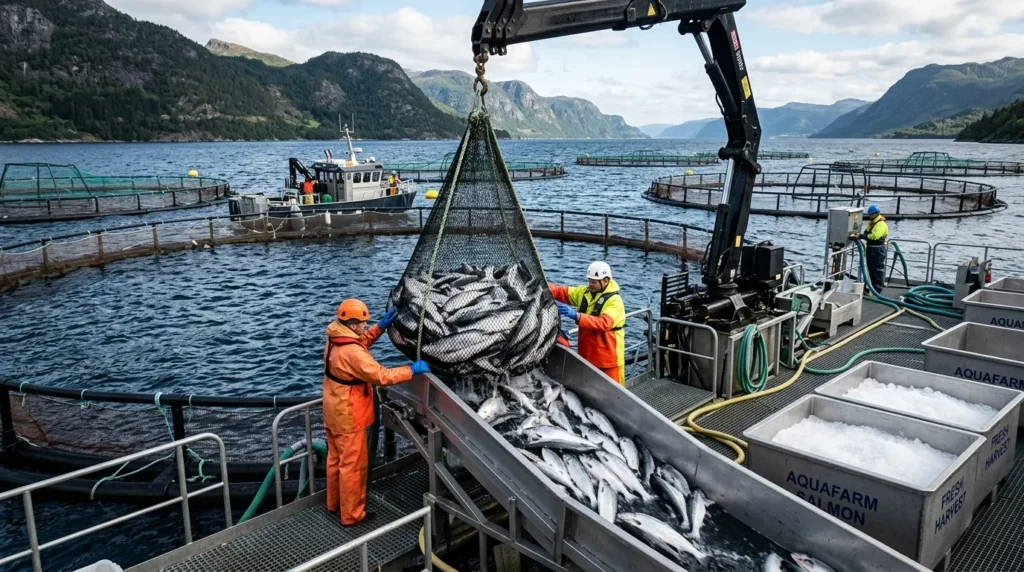
The most shocking part of it all, however, is that fish farms contribute a far greater percentage than fisheries. Aquaculture has accelerated rapidly over the past few decades, and we now get more fish from controlled cultivation than from the open ocean.
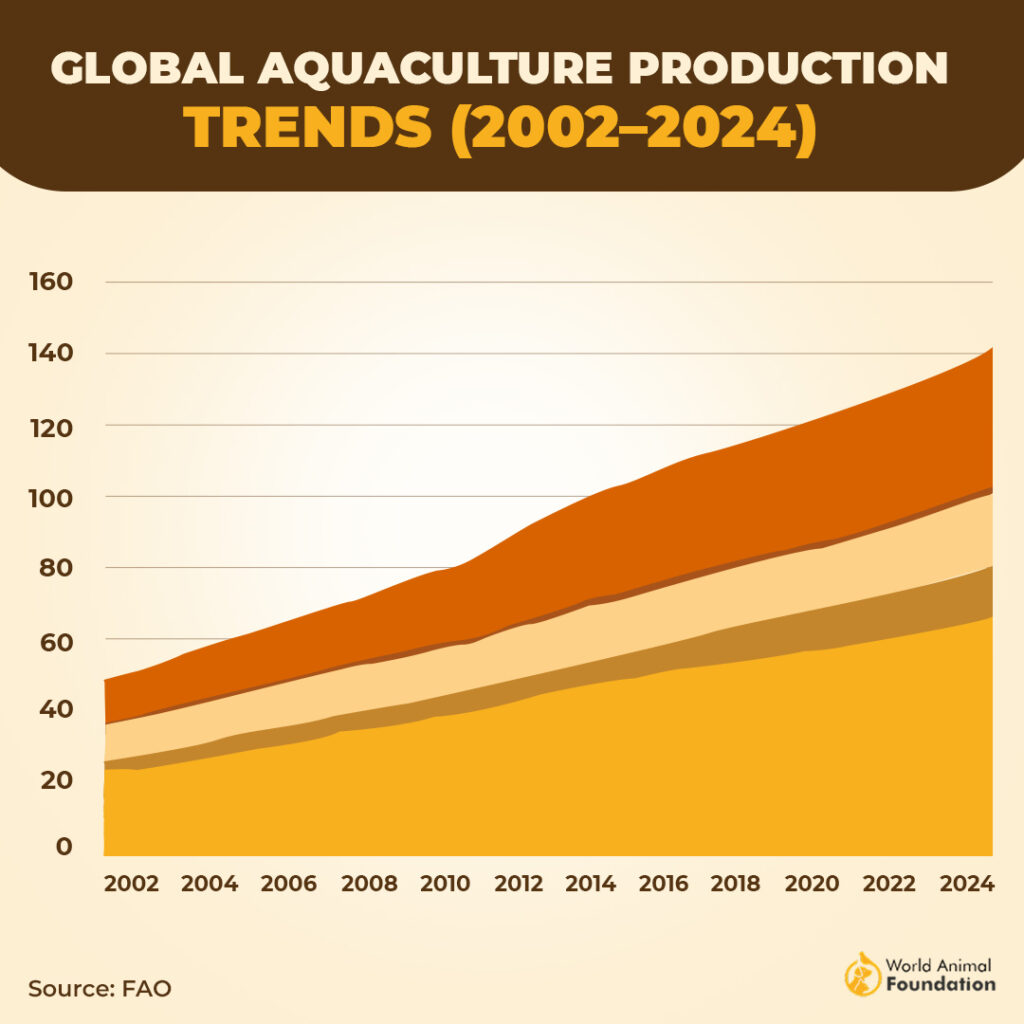
In 2024, global aquaculture production reached a new record at 142 million tonnes. (FAO)
In 2024, global aquaculture reached a record 142 million tonnes with an estimated first-sale value of USD 391 billion.
The top five fisheries-producing countries account for 41% of the total fish captured (FAO)
It’s crazy to think that only five of the 195 countries in the world account for 41% of the global fish captures, but surprisingly, that’s the reality. The FAO ranks the top fishery-producing countries, with the world’s most populous country, China, taking the top spot with an astonishing 15%.
Following China are Indonesia, which contributes 9%, Peru with 7%, the Russian Federation with 6%, and India with 5%.
The Top 7 Fisheries Producing Countries Account for 50% of the total fish captured in 2024 (FAO)
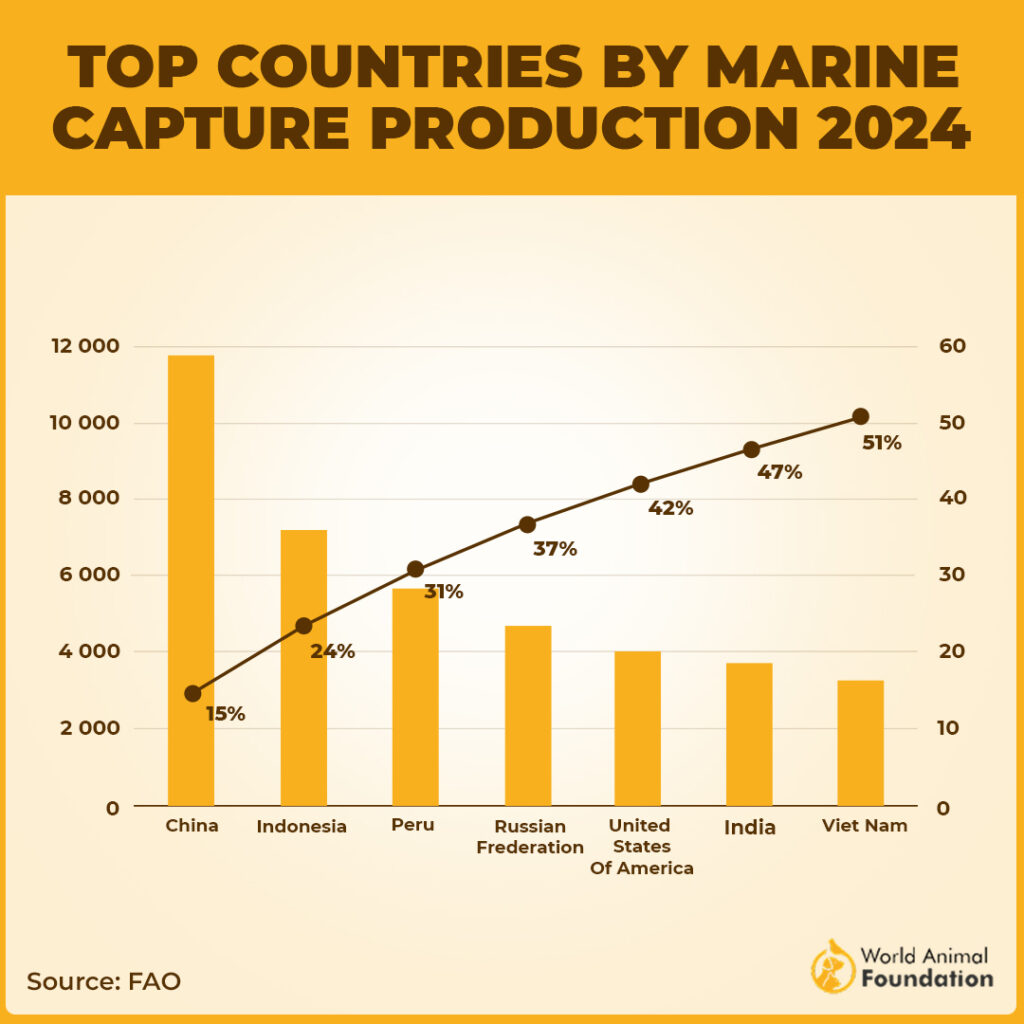
Although 41% of the total fish we capture around the world comes from five countries, the FAO further highlights an additional 2 countries that contribute an extra 9%. This means that these seven countries accounted for 50% of the world’s inland capture fisheries production in 2024.
Countrywide Fish and Seafood Production Statistics
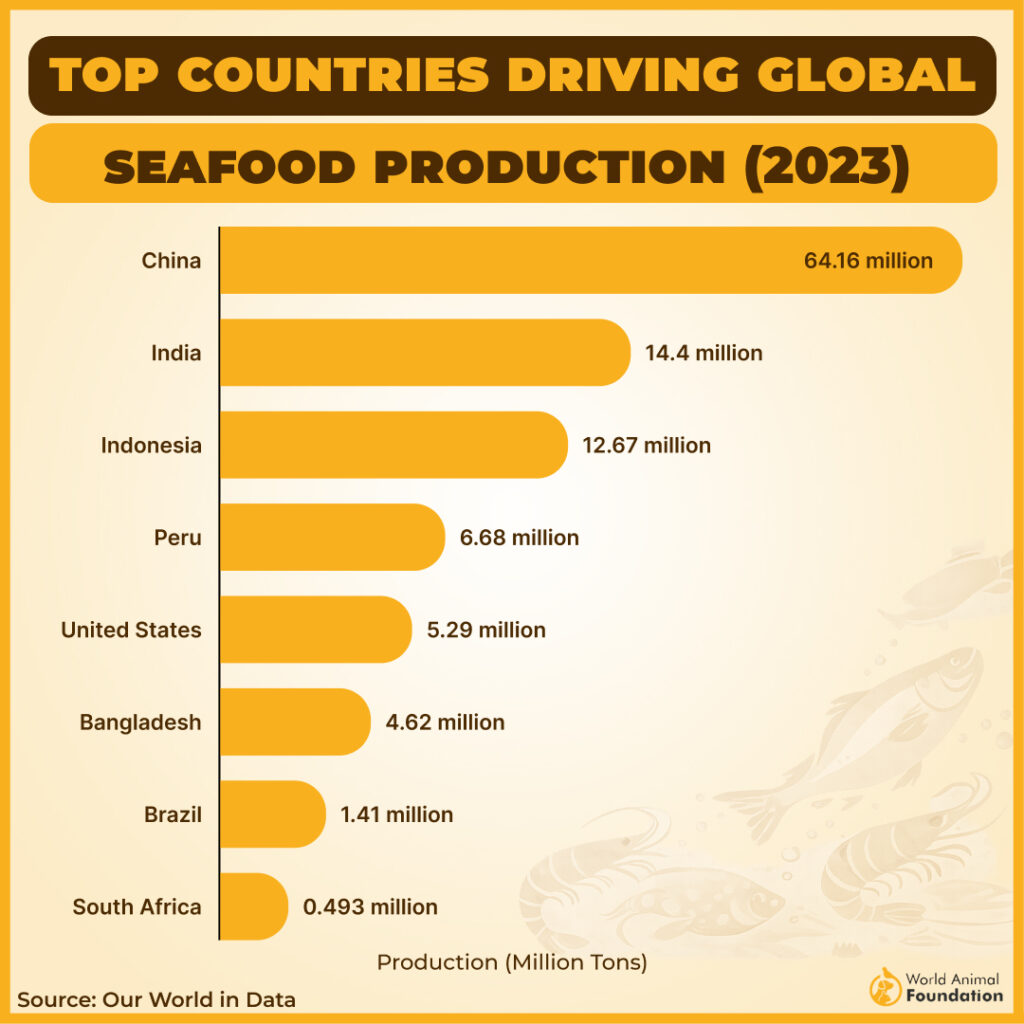
Our world produces an astounding amount of around 200 million tonnes of fish and seafood every year.
In 2023, China produced about 64.16 million metric tons of fish and seafood, making it the world’s largest producer by a wide margin.
Fish Consumption Statistics
You may not think you personally eat a lot of seafood, but globally, fish consumption is on the rise, with people eating more seafood now than ever.
Since 1961, global fish consumption has increased at an Annual Rate of 3% (FAO)
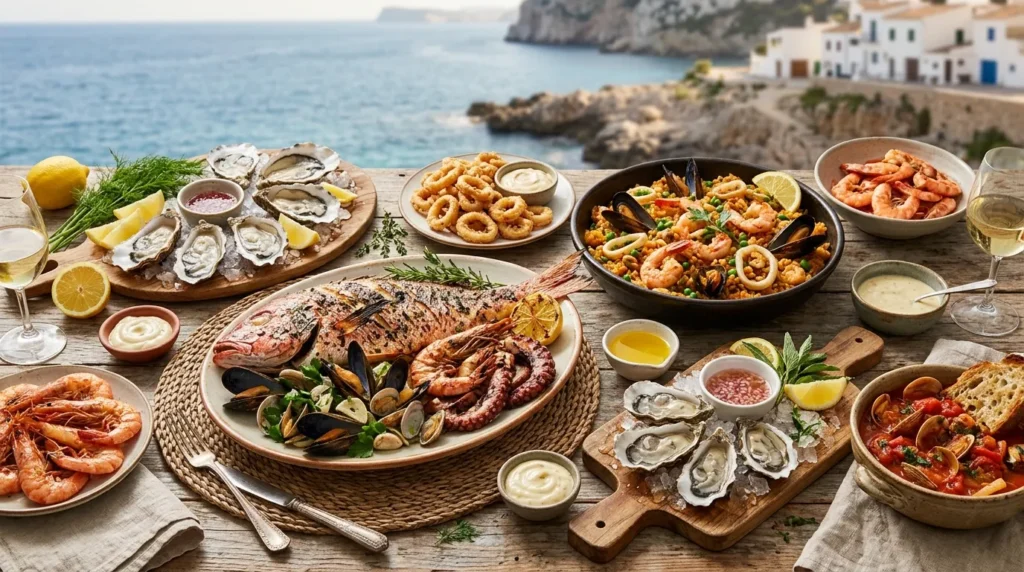
Global apparent consumption of aquatic animal foods was 162.5 million tonnes in 2021.
Humans are consuming more fish than ever, and the FAO has pointed out that the annual rate has increased by 3.0% per year since 1961. If we continue this way, there will soon be no fish left to catch.
Food Fish Consumption Increased From 9.1 Kgs in 1961 to 20.6 Kgs Per Capita in 2021 (FAO)
It’s no secret that people all over the world love to eat fish, but would you believe that in just over half a century, the FAO estimates that the average human’s fish consumption more than doubled from 9.1 kilograms in 1961 to 20.6 kilograms in 2021.

In 2023, each person had an average of 21.1 kg of aquatic animal food available. This is expected to increase slightly to 21.3 kg per person in 2024. (FAO)
A few reasons why fish consumption has increased are the health benefits that come with eating fish, the lower cost of fish compared to meat, and religious beliefs.
In 2024, 174 Million Tons Were Consumed by Humans (FAO)
In 2024, about 174 million tonnes of aquatic animals were used as food for people. This was around 89% of the total 195 million tonnes produced worldwide.
2018 saw a record for global fish production, with aquaculture and fisheries producing 179 million tons of fish throughout the year. The FAO estimates that 164.6 million tonnes (89 percent) were destined for human consumption, which we humans consume as food in 2022.
The Remaining 21 Million (about 11%) Were Used for Fishmeal and Fish Oil Production (FAO)
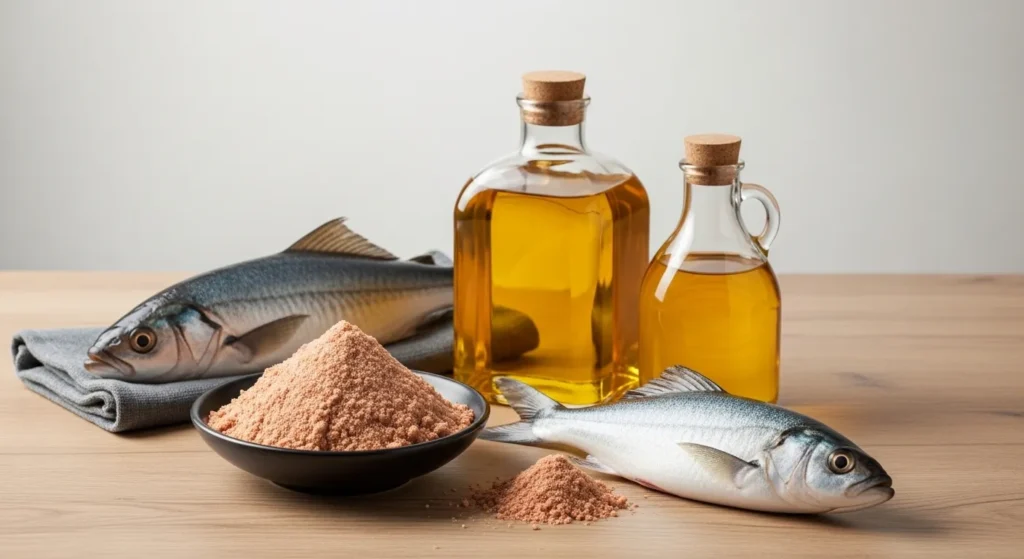
Aquaculture and fisheries produced 195 million tonnes of fish in 2024, and humans consumed 174 million tonnes, so where did the remaining 21 million tonnes go? Well, the FAO estimates that we used the remaining 21 million tonnes to create non-food items like fish oil and fish meal.
The Average Person Eats Nearly Twice As Much Seafood as a Half Century Ago (Earth org)
Over the past 50 years, global fish and seafood production has increased by four times. According to reported data, the health benefits and cost of seafood have resulted in people eating nearly twice as much as those a century ago. This huge increase in demand for seafood has ultimately upped fishing pressure and reduced global fish stocks.
15% of Protein Sources Come From Fish (FAO)
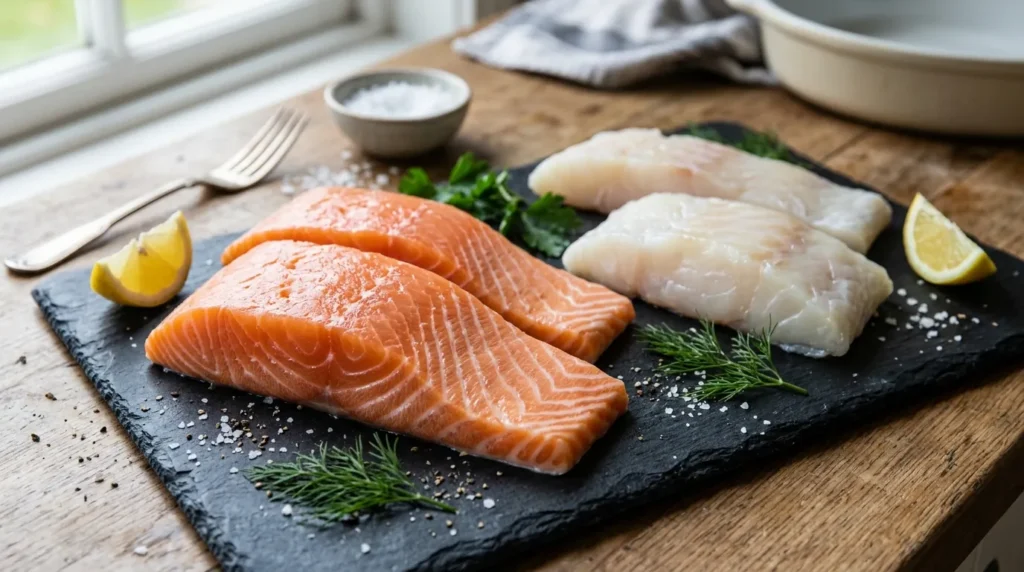
Globally, according to the FAO, 15% of animal proteins and 6% of total protein that humans consume come from fish, making it one of the leading protein choices.
In 2023, about 3.1 billion people got at least 20% of their animal protein from aquatic foods. That is more than 40% of the world’s population.
19% of the Animal Protein in Africa Comes From Seafood (FAO)
A report by FAO suggests that in some countries in Africa, the vast majority of people rely on seafood to make up for their total animal protein intake. Some of them are low-income countries, so it’s no surprise that the cheapest form of animal protein is their go-to source.
In 2023, Africa had the world’s lowest aquatic food availability at just 9.1 kg per person. Even so, aquatic foods provided about 19% of the continent’s animal protein intake.
60% and 72% of the Animal Protein in Bangladesh and the Maldives, respectively, Comes From Seafood (SAC)
In South Asia, countries like the Maldives and Bangladesh rely heavily on fish for protein. Fish makes up about 72% of animal protein intake in the Maldives and around 60% in Bangladesh.
The people of Bangladesh have lower incomes, making seafood an affordable animal protein source. Whereas for the Maldives, on the other hand, their high levels of seafood consumption are largely due to the fact that the inhabited Maldivian islands are completely surrounded by water, making seafood extremely accessible.
Most Threatened Fish Statistics
Atlantic Bluefin Tuna Has Been Classified As Endangered by the International Union for Conservation of Nature (IUCN)
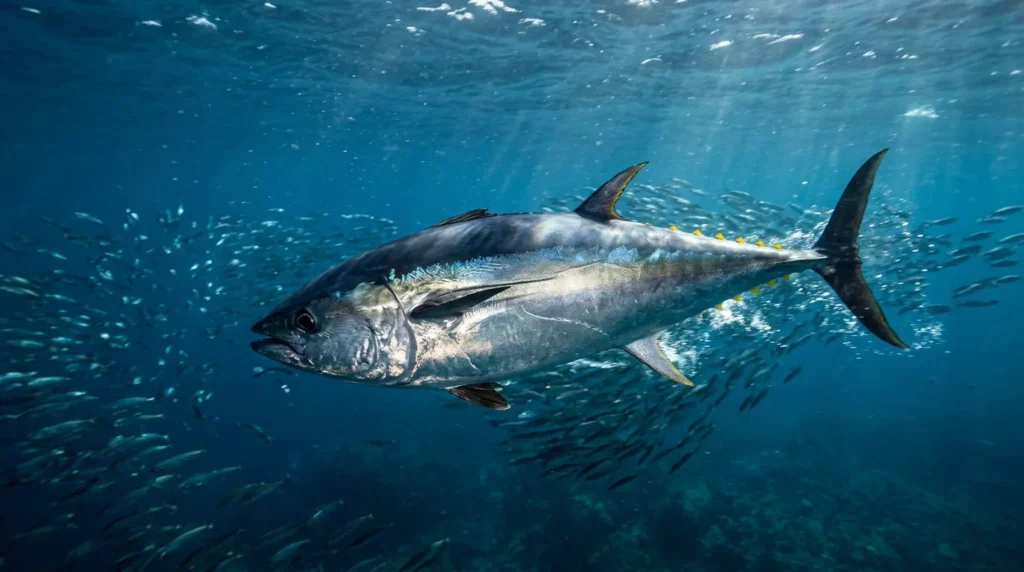
Many aquatic species have made their way onto the endangered list due to overfishing, and in 2011, the International Union for Conservation of Nature officially declared the Atlantic Bluefin Tuna an endangered species.
Luckily, the IUCN now states that tuna species are recovering, and their numbers are slowly on the rise.
Eastern Bluefin Tuna has increased by 22%, and Western Bluefin Tuna Stock Has Declined by More Than 82% (IUCN)
Bluefin Tuna is the most expensive fish in the world, with many people considering it a delicacy. Sadly, thanks to its extremely high status all over the globe, Eastern and Western Bluefin Tuna fish stocks have decreased since 1970.
The latest (2022) ICCAT assessment of the eastern population shows a strong recovery trend, with spawning stock biomass (SSB) reaching its highest level since the 1960s. Efforts have recovered the eastern bluefin tuna by 22%.
Studies indicate that the western Atlantic Bluefin Tuna population has dropped by about 82% since 1970.
The IUCN ‘Red List’ Also Included the European Eel in Its Critically Endangered Species (IUCN)
Shockingly, there are more than 172,600 species on the International Union for the Conservation of Nature red list, and more than 48,600 species are threatened with extinction.
In 2009, they declared the European Eel a critically endangered species, largely due to unregulated fishing and illegal exporting.
Almost 71% of the Shark and Ray Population Has Decreased Due to Fishing (Nature)
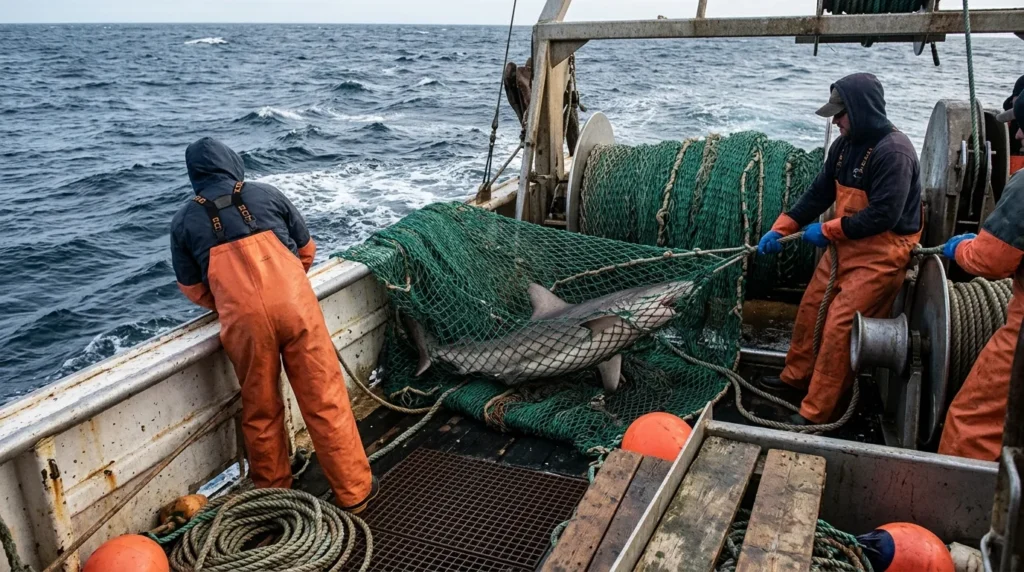
A study finds that overfishing and illegal finning of sharks and rays has seen a staggering 71% of the entire population decrease. This decline is largely linked to an 18-fold increase in fishing pressure over the same period. And if you thought that figure was shocking enough, it gets even worse when you understand the reason behind the substantial decrease.
All over Southeast Asia, people consider Shark Fin soup a status symbol, so fishermen capture sharks of all species, cut off their fins, and throw the finless sharks back into the water to die a slow and painful death.
About 33% of Sharks, Rays, and Skates Are Currently Threatened With Extinction, according to the IUCN Report of 2024 (IUCN)
According to the latest 2024 IUCN global assessment, about one-third of all sharks, rays, and chimaeras—around 33%—are now considered threatened with extinction.
Overfishing, bycatch, and the demand for shark fin soup have led to over 33% of skate, ray, and shark species being threatened with extinction, according to the IUCN. Once we lose these species, there is no getting them back, and eventually, we will throw off the ocean’s food supply chain entirely.
If No Measures Are Taken, Then by 2048, the World Oceans Will Become Empty (the World Counts)
The World Counts estimates that by 2048, if we keep fishing the way that we are, the human race could have completely emptied the oceans, wiping out seafood populations completely.
And I know that sounds crazy, right? Well, it is, and we need to act now to ensure that marine life can flourish and continue to sustainably feed generations for centuries to come.
Methods Acquired for Fishing Statistics
Fishing is no longer a man with a rod sitting for hours hoping to catch fish. Today, fishers catch a high percentage of fish populations through damaging fishing practices like trawling and the deployment of large nets.
One-fourth of the Fish Catch Occurs Due to Trawling (NCBI)
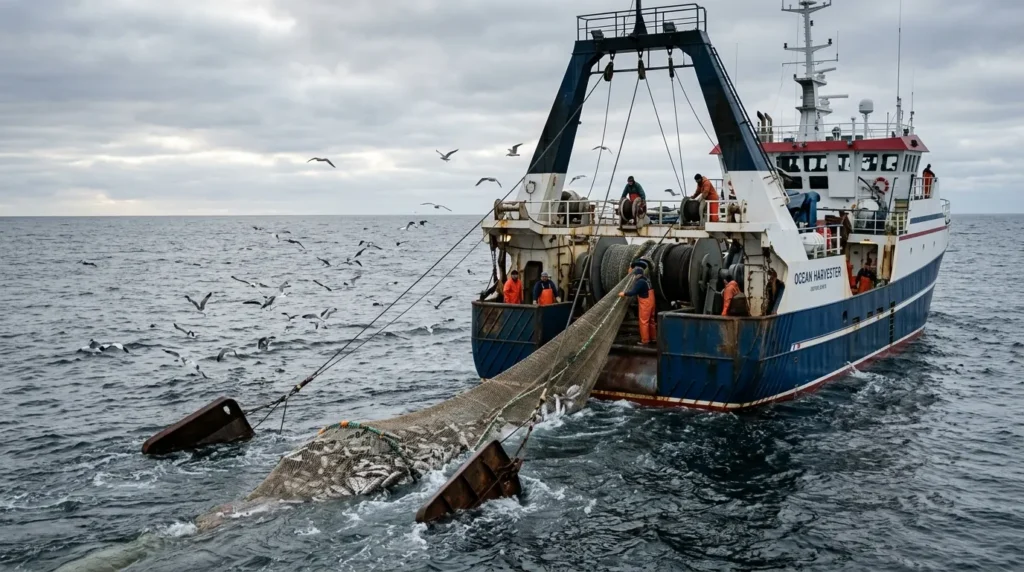
Trawling is by far one of the most harmful types of fishing, as boats drag heavy nets across the ocean floor in order to catch fish. Sadly, it is estimated that one-quarter (25%) of the world’s fish catch comes from trawling, which in turn only encourages the practice further.
Pelagic Trawling Accounts for an Additional 10% (Online Library Wiley)
Pelagic trawling is slightly different from standard bottom trawling, as instead of dragging nets across the ocean floor, they drag the nets through the water to catch fish swimming in the mid and surface levels of the ocean.
Although the nets for pelagic trawling aren’t damaging the ocean floor, they’re substantially bigger than bottom trawling nets, meaning they have the ability to catch larger amounts of fish at one time.
Purse Seining Accounts for More than 25% of Catch (Academic OUP)
Purse seining is where fishing boats use large walls of netting to capture an entire school of fish, and of all the world’s fish catch, this practice makes up for more than 25%, making it one of the most important and impactful fishing methods globally, according to Academic OUP.
Gillnets and Longlines Account for Much Less of Global Fish Catch (Our World in Data)
Compared to trawling and purse seining practices, which capture extreme volumes of seafood at one time, gillnets, a vertical panel of netting, and longlines, a large number of hooked short lines attached to a longer main line, account for only a small portion of the global fish catch.
But, in saying that, gillnets and longline fishing methods are by no means better ways to fish, as both capture considerable amounts of bycatch, like sea turtles, sharks, and seals.
Employment in Fisheries and Aquaculture
Throughout countries all over the world, millions of people are employed in the fishing industry, whether that be in aquaculture or fisheries.
It Is Estimated That 62 Million People Globally Were Employed Either as Fishers or in fish farming in 2022 (FAO)
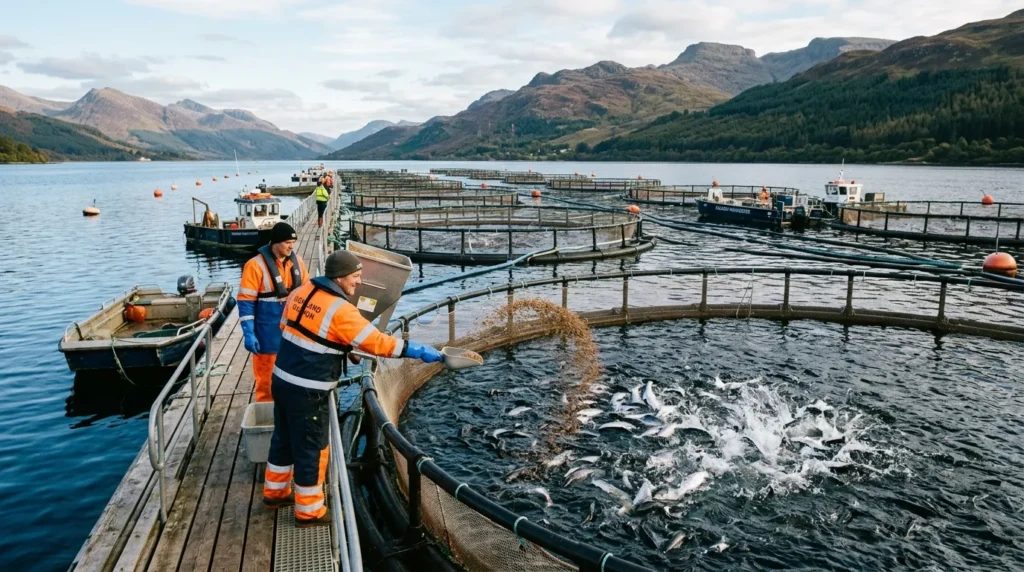
I’m sure it comes as no surprise, with the number of fish humans eat, that the industry has supplied millions of jobs to people all over the world. FAO approximates that a staggering 62 million people, in 2022 alone, were engaged in the primary sector of fisheries and aquaculture as full-time, part-time, occasional, or unspecified workers.
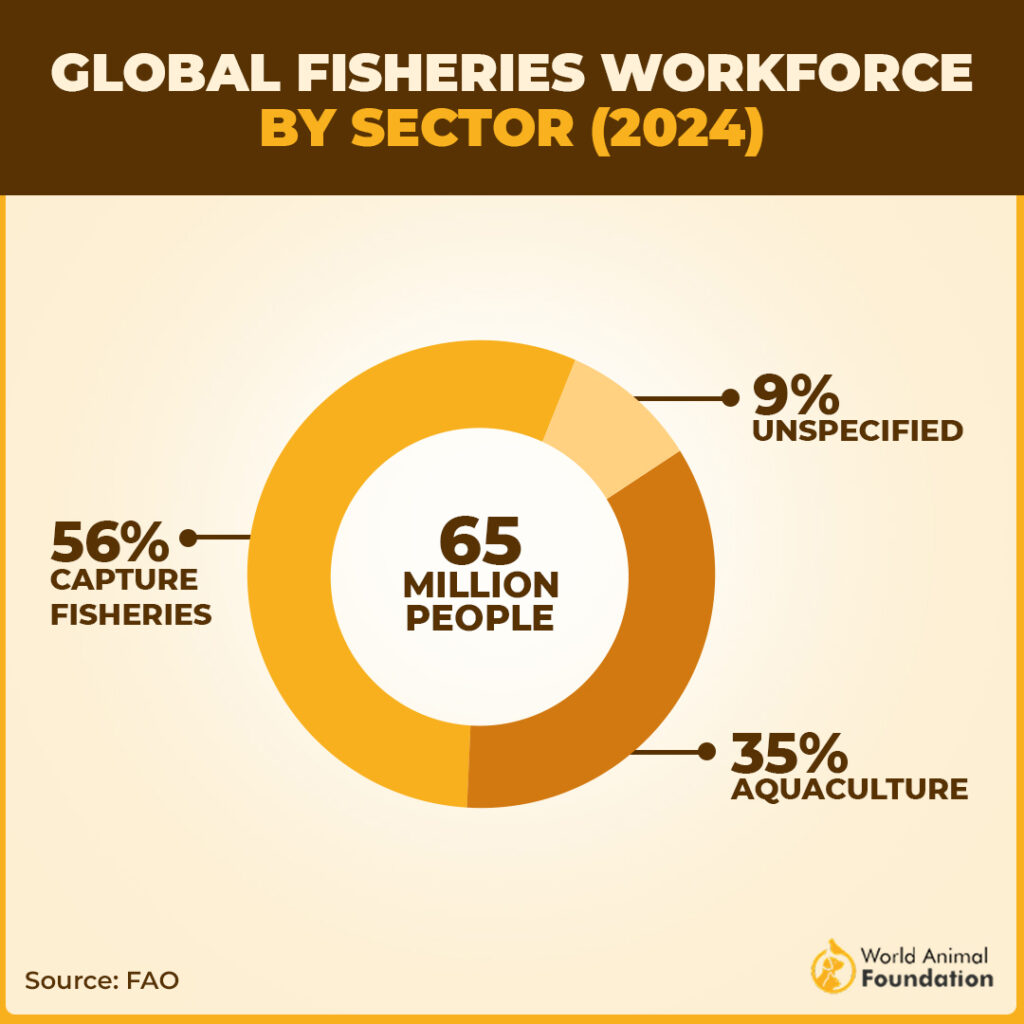
In 2022, the primary sector of fisheries and aquaculture employed around 61.8 million people.
Asia Is Home to Many Fishers and Fish Farmers, Providing More Than 85% of Jobs (FAO)
Asia dominates employment in the seafood sector. It accounts for about 85% of all jobs in aquaculture, with Africa following at around 10%. Overall, most aquaculture workers—roughly 95%—are based in Asia. In fisheries as well, Asia makes up about 77% of the global workforce.
More People Are Employed in Wild Catch than in Fish Farming, with a Difference of 39 Million to 21 Million (Our World in Data)
Although nearly half of the global fish production comes from fish farms, there is a significant difference in the number of people who work in aquaculture and the number who fish for wild catch. Wild catch fishing employs 39 million people, whereas aquaculture employs considerably fewer, with 21 million people worldwide.
The Number of Fishers Across Europe Has Markedly Declined since Its Peak in 2000 (Global Fish Industry)
European employed fishers hit an all-time peak in 2000; however, since then, fishing communities across Europe have dwindled, and the number of European employed fishers has declined.
Europe has dropped markedly from 5.4 percent in 1970 to 3.6 percent in 1980, 2.3 percent in 1990 to 1.6 percent in 2004.
Overfishing Regulation Statistics
Regulating overfishing is no easy task, but organizations are coming together to implement sustainable fishing practices in an effort to save the world’s oceans and the species that call it home.
UN and FAO Are Working Together in Maintaining Sustainable Levels of Fish (UNO)
Luckily for the oceans and their aquatic inhabitants, the United Nations and the Food and Agriculture Organization have come together to devise a plan that will hopefully maintain a sustainable level of fish going forward.
While 64.5 percent of fishery stocks are sustainably fished, 35.5 percent are overfished. (FAO)
Taking a look at global fish stocks from FAO data can give us insight into how our fishing is affecting fish species. About 64.5% of fish stocks are currently fished sustainably, while 35.5% are considered overfished. However, when weighted by production, around 77.2% of global marine fish landings come from stocks that are still biologically sustainable.
Fishing Subsidies Were Banned by the WTO in July 2022 (WTO)
In an effort to reduce and discourage global overfishing and ultimately preserve the world’s oceans, in July of 2022, the World Trade Organization banned all fishing subsidies.
FAQs
What Is the Impact of Overfishing on Wildlife?
The biggest impact that overfishing has on wildlife is that by draining the ocean of fish, we create an imbalance and throw off the ocean’s food chain completely. Taking large amounts of certain fish species out of the ocean can lead to the extinction of more vulnerable aquatic animals, like sea turtles, for example.
Subsequently, losing species like sea turtles due to starvation then makes room for invasive species like jellyfish to take over the oceans.
How Much of the Seafloor Is Trawled?
It’s estimated that 14% of the seafloor is trawled, with trawlers continuing to churn up roughly 1.3% of the seafloor each year. Seafloor trawling, or bottom trawling, is when fishing vessels drag heavy nets and chains over the seafloor in order to catch fish.
Trawling not only directly diminishes the world’s fish stocks, but it also damages the coral and the habitats of marine species, causing further decline in fish populations.
What Can Be Done to Reduce the Impacts of Trawling?
The simplest and most effective way to reduce the impacts of trawling is to make trawling illegal, and some countries have even begun to put in place laws that prohibit trawling in marine protected areas in the hope of helping marine life and the seabed recover.
But, as implementing laws on such a wide scale doesn’t happen overnight, there are a few ways we can reduce the impacts in an effort to make trawling more sustainable.
Putting in place management measures that ensure fishing gear modifications, limitations on the areas in which trawlers can fish, and the amount of fish they can catch will ultimately help reduce the overall impact of trawling.
How Much Feed for Aquaculture Comes From Fish?
A vast majority of the feed for Aquaculture comes from fish. Fish oil and fish meal make up most of the fish in a fish farm’s diet. Aquaculture also feeds off plants and animal trimmings; however, this is less common.
How Much Fish Is Used for Animal Feed?
On average, we take 18.9 million tons of wild-caught fish and create products like fish oil and fish meal, which we then feed to aquaculture, poultry, swine, and even household pets.
How Much Fish Is Discarded Yearly?
The Food and Agriculture Organization (FAO) estimates that 35% of the global fish, mollusks, and crustaceans that the fishing industry catches from the ocean, lakes, rivers, and fish farms are discarded each year.
How Can Fish Discards Be Reduced?
Fishers discard fish for various reasons, with the most common being that the fish is smaller than the legal size, the fishermen have gone over their quota, the fish is damaged in some way, or it is prohibited to catch the fish species.
In order to reduce fish discards, there are a few things we can do, starting with implementing bycatch management planning.
Improving fishing gear to ensure fishers only capture a certain species, closing fisheries where fishermen discard a high percentage of unwanted marine life, implementing catch limits to control how much seafood is being caught, and monitoring all boats that commercial fisheries use are other ways that can significantly reduce fish discards.
How Much of the World’s Ocean Is Protected?
The ocean covers roughly 70% of the Earth’s surface, and of that 70%, just over 8% is protected.
Conclusion
Overfishing is a serious issue that we need to address, and by taking just one look at overfishing statistics, anyone can see the harm we’re doing to the oceans and their fish stocks.
Global seafood production is increasing at alarming rates, and the damage we’re doing to our oceans and their vital ecosystems is guaranteed to have detrimental effects not just on marine life but also on the human race. Without seafood, people will starve, and ultimately, the world as we know it will no longer be sustainable.
