




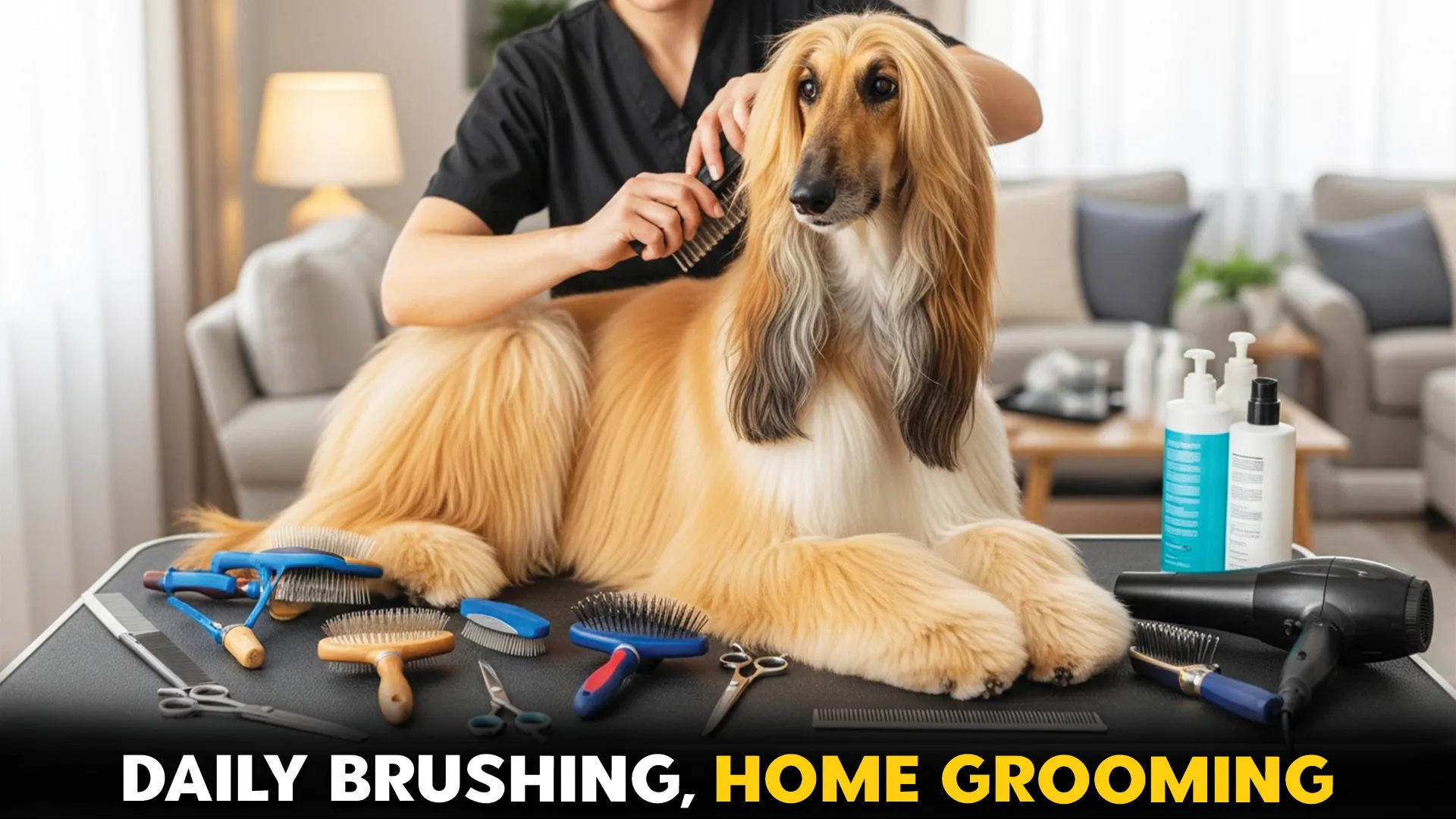
Caring for a dog extends far beyond food and shelter; grooming is a vital part of keeping our furry friends healthy and happy.
Certain breeds demand extra attention due to the unique nature of their coats, and skipping regular care can lead to discomfort, tangles, and even skin issues. Understanding these needs is key to ensuring your dog thrives.
Long-haired breeds require daily brushing to prevent mats and keep their luxurious coats manageable. Dogs with dense undercoats need frequent attention during shedding seasons to maintain skin health and reduce shedding in the home.
Regular grooming does more than enhance appearance—it strengthens the bond between pet and owner while allowing early detection of health issues. With patience and routine care, even the most high-maintenance breeds can flourish at home.
Some dogs demand daily grooming, but the effort is worth every wag and cuddle.
Dog Breeds Requiring Extensive Home Grooming
1. Afghan Hound
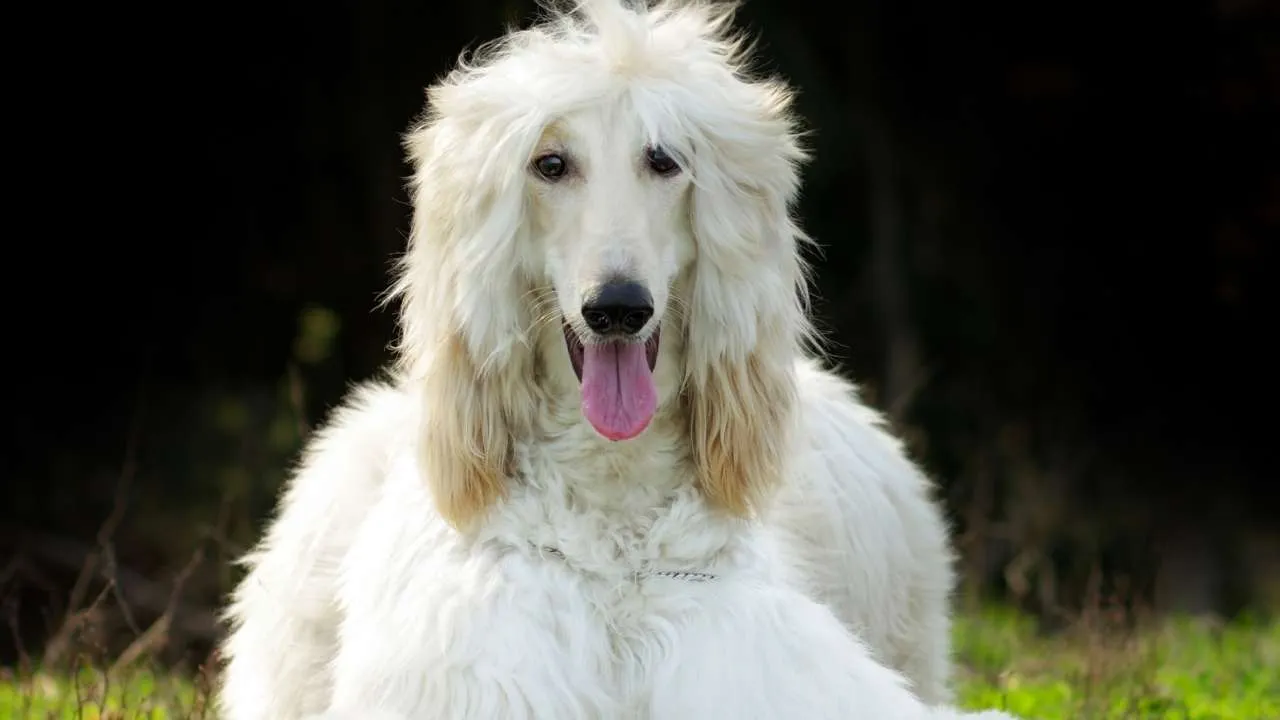
The Afghan Hound is a breathtakingly elegant breed with a history stretching back thousands of years in the mountainous regions of Afghanistan, India, and Pakistan. Originally bred as hunting dogs for royalty and tribal leaders, these sighthounds relied on speed, agility, and sharp eyesight to track prey.
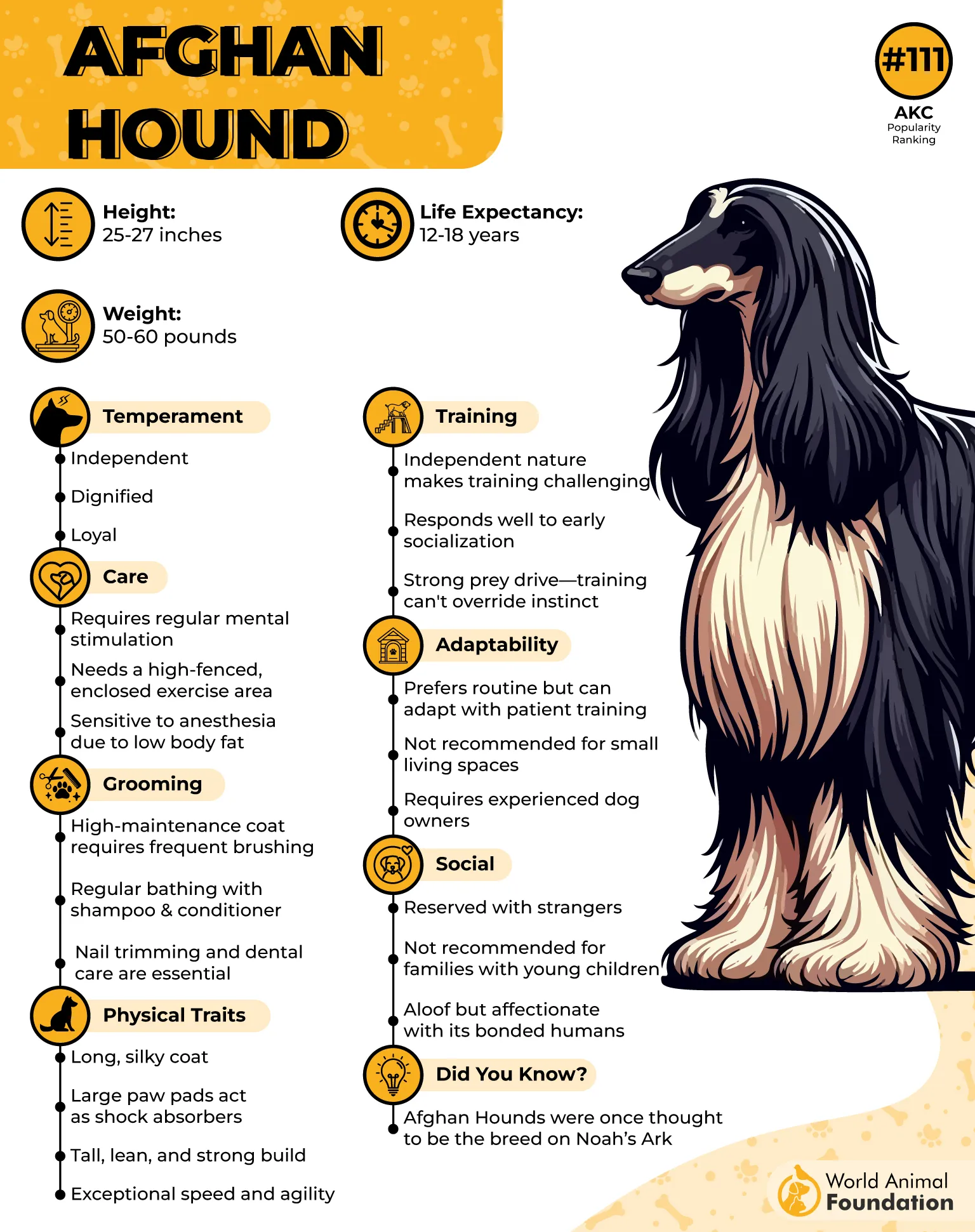
Personality, Poise, and Playfulness
Beneath their aloof and dignified exterior, Afghan Hounds have a playful streak and deep loyalty toward their family. Early socialization with children, pets, and new environments ensures they remain well-adjusted and safe companions.
Training, Care, and Daily Maintenance
Afghan Hounds excel with consistent, positive training that appeals to their intelligence and independence. Grooming is a major commitment: their long, silky coat, flowing topknot, and feathered tail need frequent brushing, bathing, and occasional professional care to prevent mats and tangles.
Why Afghan Hounds Demand Intensive Home Grooming
Long, flowing coat tangles easily without daily brushing
Fine, silky hair mats quickly around the ears and topknot
Thick undercoat traps dirt and debris if neglected
Frequent baths and blow-drying maintain coat elegance
Professional grooming is often needed for show-quality upkeep
2. Old English Sheepdog
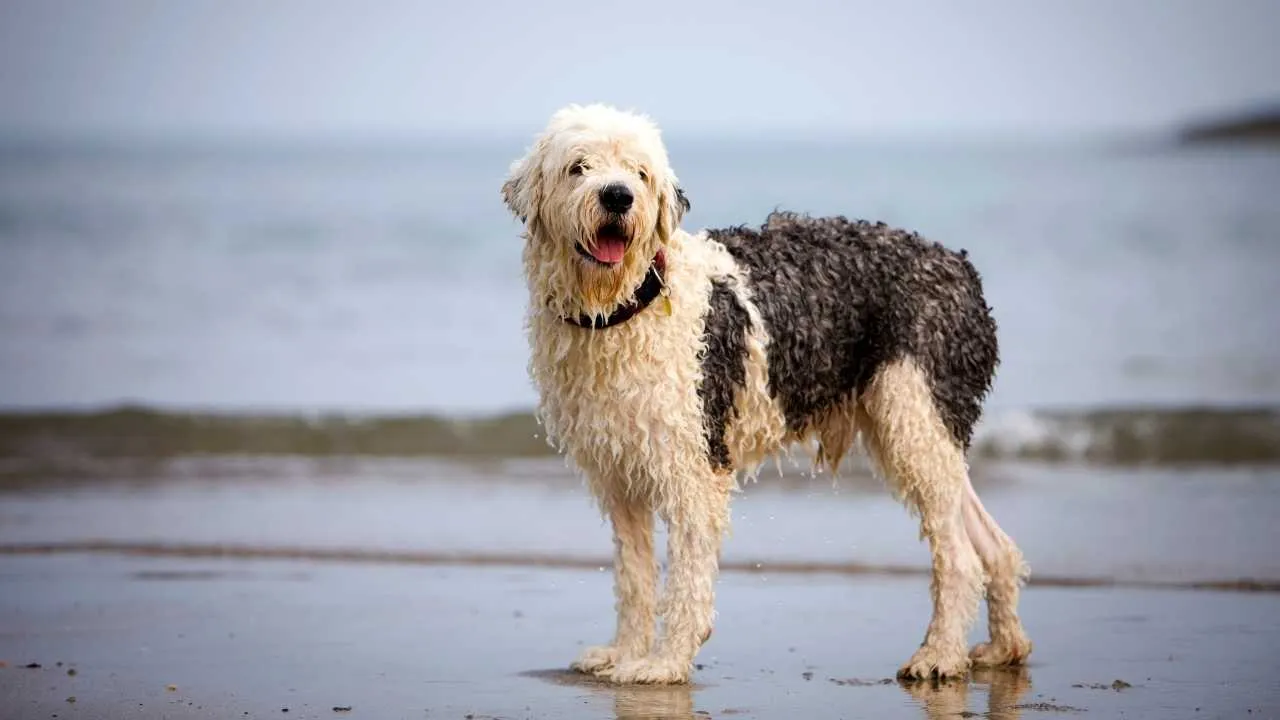
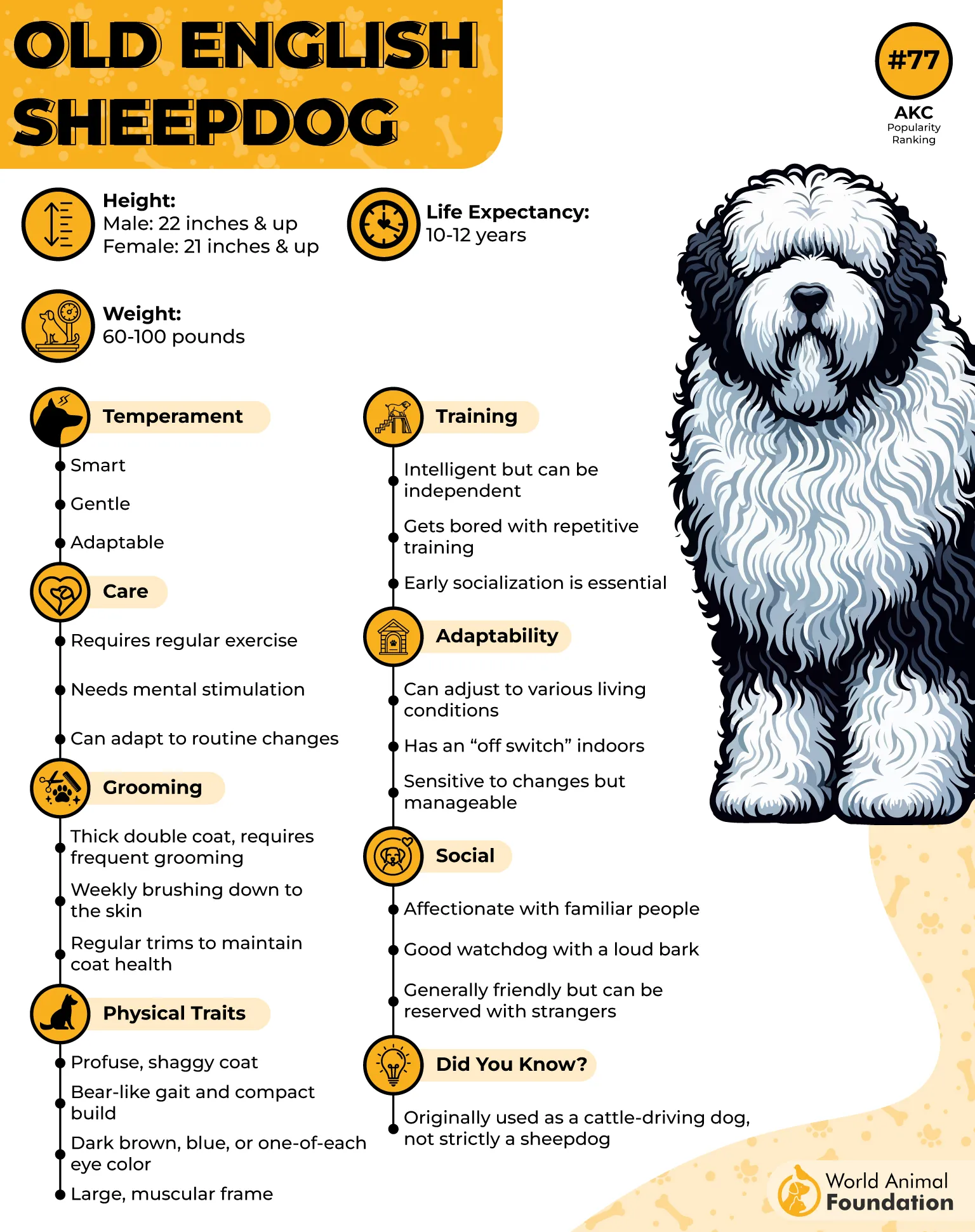
The Old English Sheepdog is instantly recognizable with its iconic shaggy coat and bobtail, earning fame as the “Dulux Dog” in advertising campaigns. Emerging in 1800s England, these dogs were hardy drover dogs, driving livestock to market and pulling carts with stamina and courage, as per WebMD.
Cheerful Companions with a Watchful Eye
Beneath the mop of fur, Old English Sheepdogs are playful, intelligent, and fiercely loyal. They thrive as family pets, forming strong bonds with children and other animals when socialized early. While cheerful and extroverted, they can be boisterous and need consistent training and daily exercise to channel their energy productively.
Grooming, Training, and Care Essentials
Daily brushing prevents mats, tangles, and dirt buildup, while regular baths and occasional professional grooming keep them healthy and comfortable. Training is best approached with patience and firm consistency, as these independent thinkers respond well to positive reinforcement but can assert their own ideas.
Why Old English Sheepdogs Require Intensive Home Grooming
Thick, shaggy coat prone to tangling and matting
Long hair traps dirt, debris, and moisture if neglected
Hair can obscure vision, requiring regular trimming
Daily brushing reduces heavy shedding and prevents mats
Professional grooming may be necessary for full coat maintenance
3. Cocker Spaniel
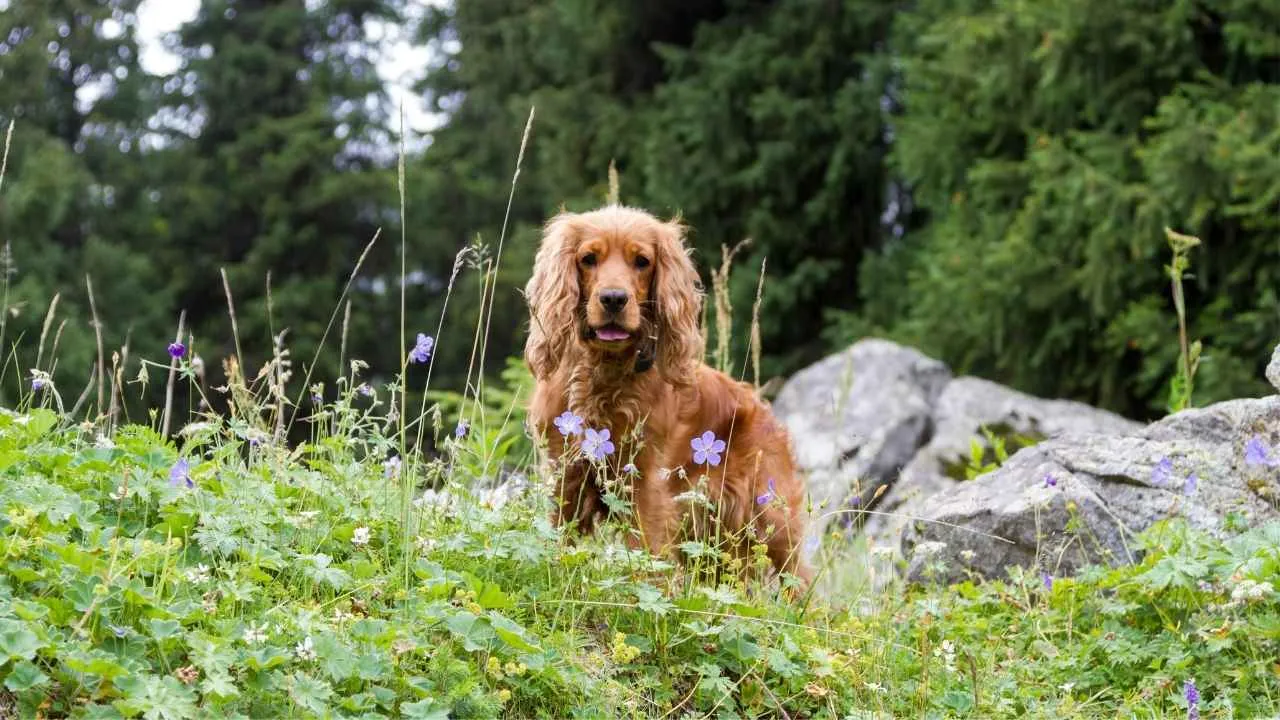
Cocker Spaniels are cheerful, energetic dogs originally bred as gun dogs for flushing woodcock and other small game. Introduced to the United States in the late 1800s, American breeders refined the breed for smaller size, a fuller coat, and a rounded head, as per Purina.
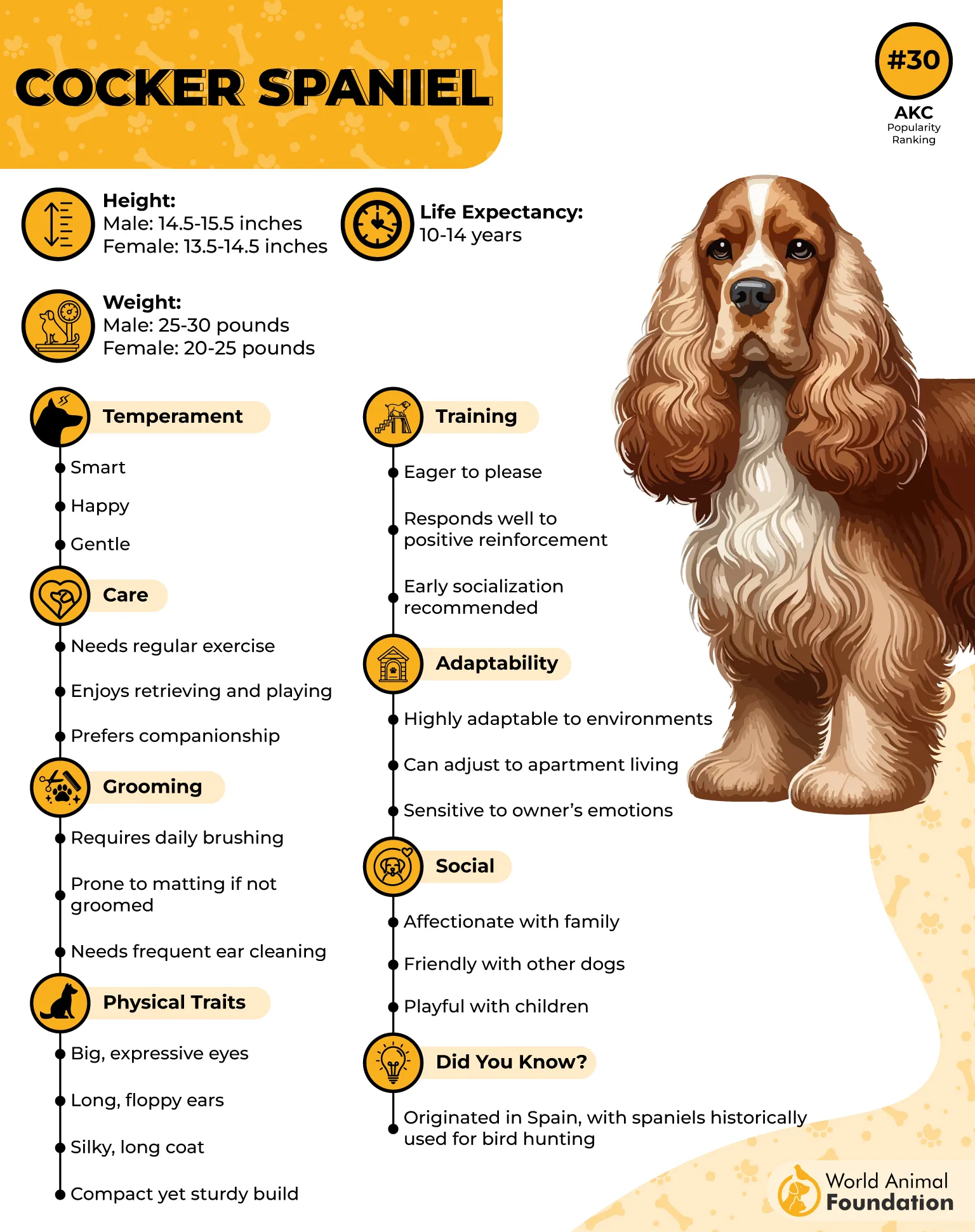
Friendly Temperament and Social Personality
Cocker Spaniels are people-oriented, affectionate, and sociable, thriving on attention and companionship. Early socialization helps them develop confidence, while consistent, reward-based training keeps their intelligence and agility sharp.
Grooming and Care Essentials
Despite their smaller size, Cocker Spaniels are high-maintenance when it comes to grooming. Professional trimming every few months keeps them comfortable, especially for show dogs. Alongside grooming, consistent training, exercise, and socialization ensure they remain happy, well-behaved, and healthy throughout their lives.

Why Cocker Spaniels Require Extensive Home Grooming
Long, silky coat prone to tangling and matting
Feathers on ears, legs, chest, and underside collect dirt
Occasional professional trimming keeps the coat manageable
Daily brushing reduces shedding and prevents knots
Careful attention after walks prevents burrs and debris from tangling hair
4. Maltese
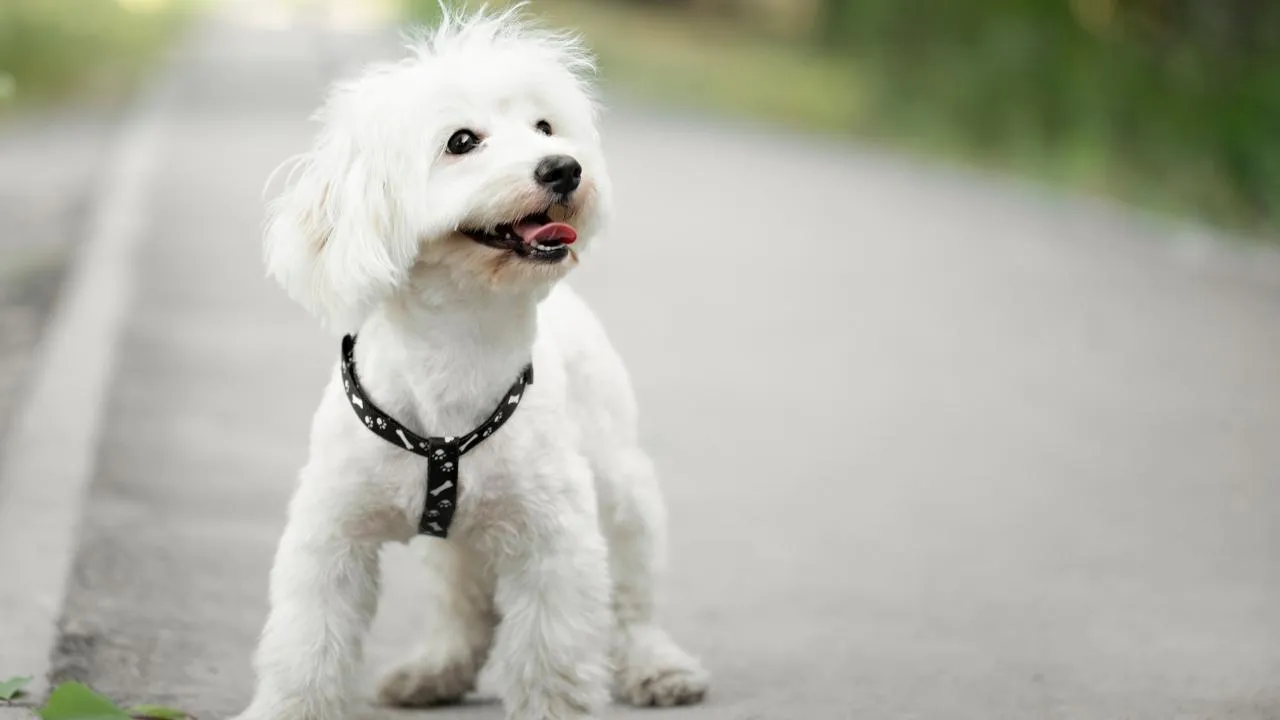
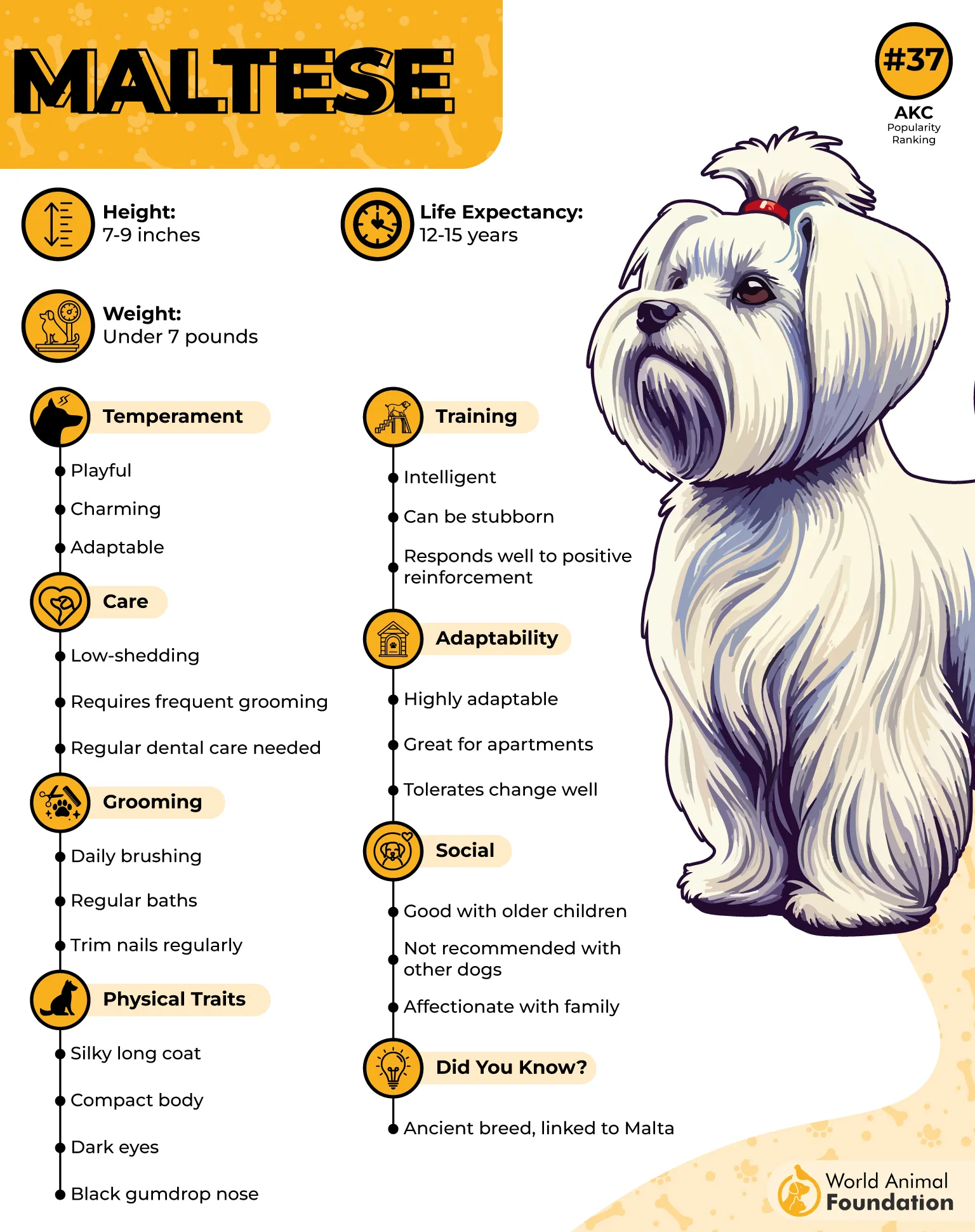
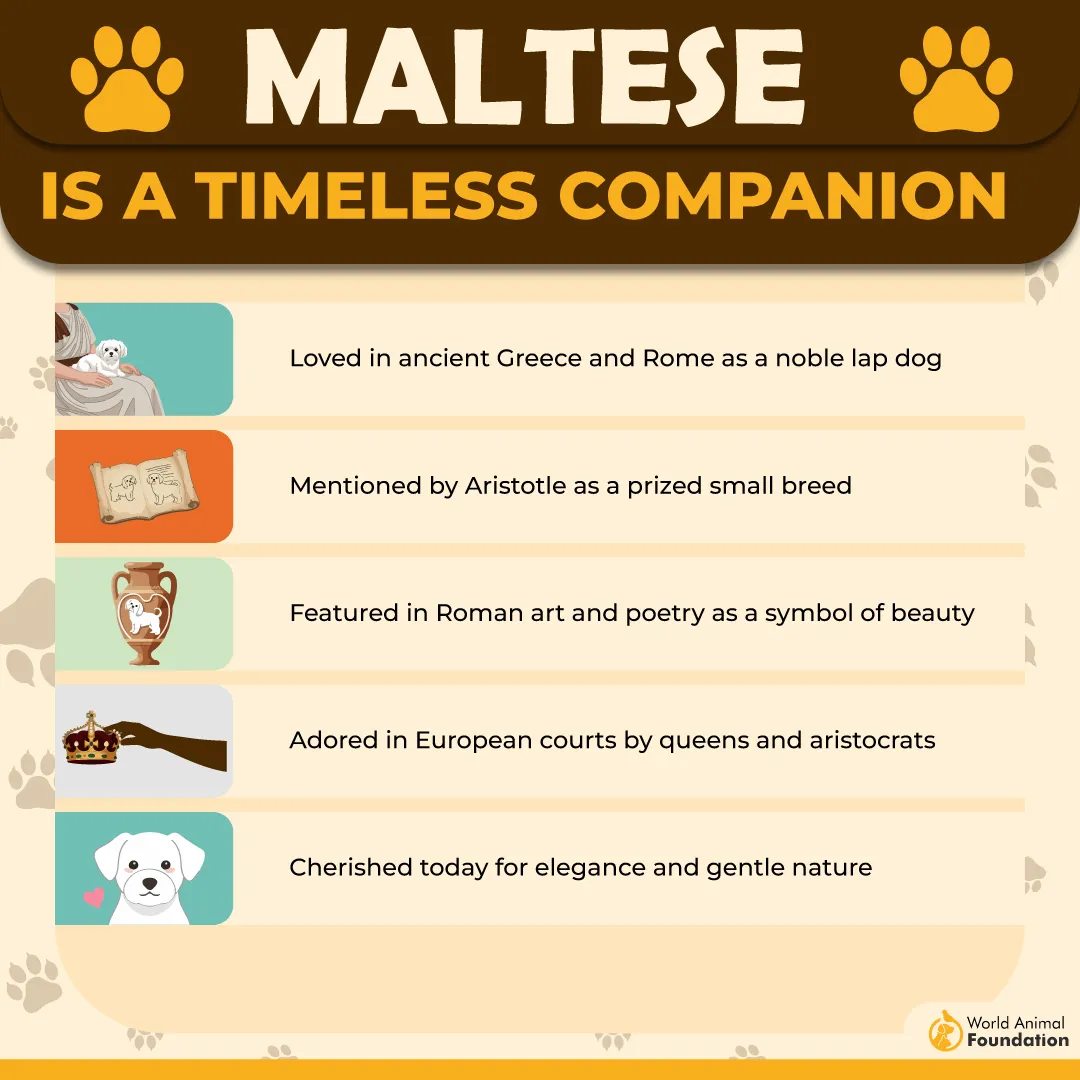
The Maltese is a glamorous toy breed with roots tracing back over 2,000 years on the island of Malta. Beloved by Roman aristocrats and featured in ancient Greek and Roman art, this small dog became a symbol of loyalty, elegance, and nobility.
Over centuries, breeders in China and Europe refined the Maltese, preserving its delicate size, flowing coat, and ornamental appeal.
Playful Personality and Loyal Companionship
Despite its petite frame, the Maltese is bold, lively, and highly intelligent. This affectionate breed thrives on attention, enjoys learning tricks, and forms strong bonds with its family. Socialization from a young age helps ensure it is confident around children and other pets while maintaining its gentle, playful temperament.
Grooming and Care Essentials
The Maltese’s signature long, silky white coat is as high-maintenance as it is beautiful. Daily brushing prevents tangles and mats, while occasional baths keep the coat clean and flowing. Many owners tie the hair in a topknot for practicality, but professional grooming may still be necessary to maintain the coat’s ornamental look.
Why Maltese Require Intensive Home Grooming
Long, silky coat tangles and mats easily without daily brushing
Hair around the face and ears collects debris and dirt
Occasional professional trimming helps maintain ornamental appearance
Coat is prone to matting near joints and underbelly
Regular grooming prevents skin irritation and keeps the coat flowing
5. Bichon Frise
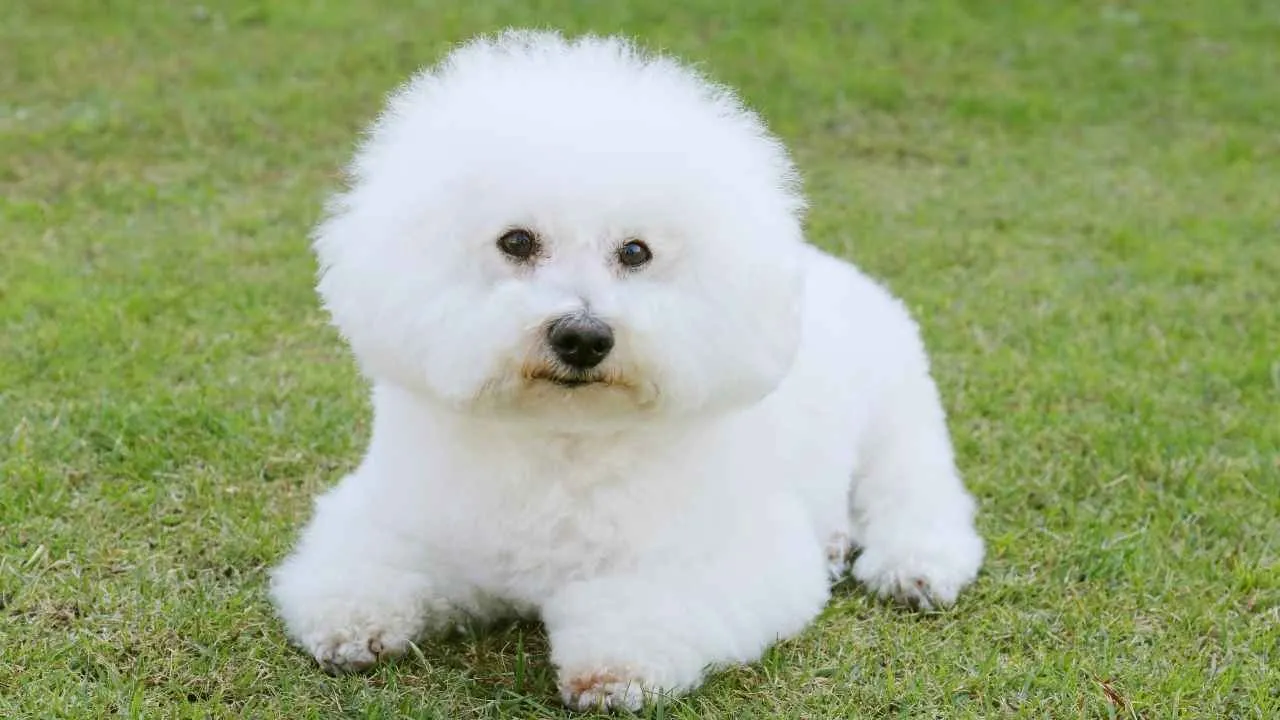
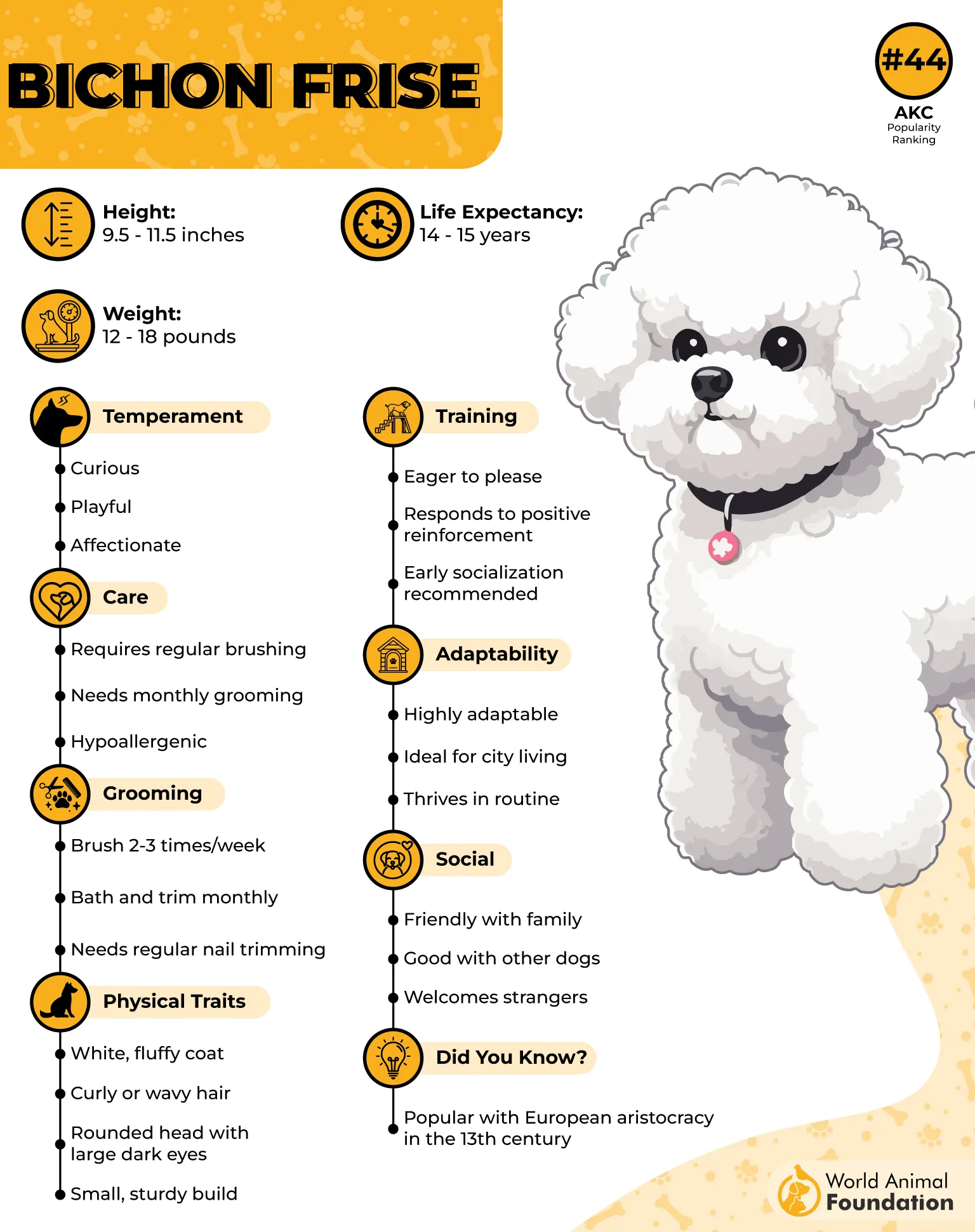
The Bichon Frise is a cheerful, compact breed with roots around the Mediterranean, beloved by sailors, Renaissance royalty, and even artists like Francisco de Goya. From Tenerife to France and eventually the United States, this small dog has charmed generations with its snow-white, curly coat and playful personality.
Cheerful Temperament and Social Nature
Bichons are lively, affectionate, and outgoing, thriving on human attention and interaction, as per PDSA. Intelligent and responsive, they excel with positive, reward-based training and delight in learning tricks, making them engaging companions for both first-time owners and seasoned dog lovers.
Grooming and Care Essentials
Daily brushing prevents mats and removes debris, while occasional professional grooming ensures the coat maintains its plush, springy texture. Along with regular exercise and mental stimulation, consistent grooming is essential to keep the Bichon looking its best and feeling comfortable, highlighting its signature powder-puff charm.
Why Bichon Frises Require Intensive Home Grooming
Curly, dense coat mats and tangles easily without daily brushing
Hair around the ears, paws, and the underside collects dirt and debris
Professional grooming is recommended to maintain a plush, springy coat
Regular baths help keep the coat clean and prevent odor
Daily maintenance reduces the risk of skin irritation and keeps the coat hypoallergenic
6. Shih Tzu
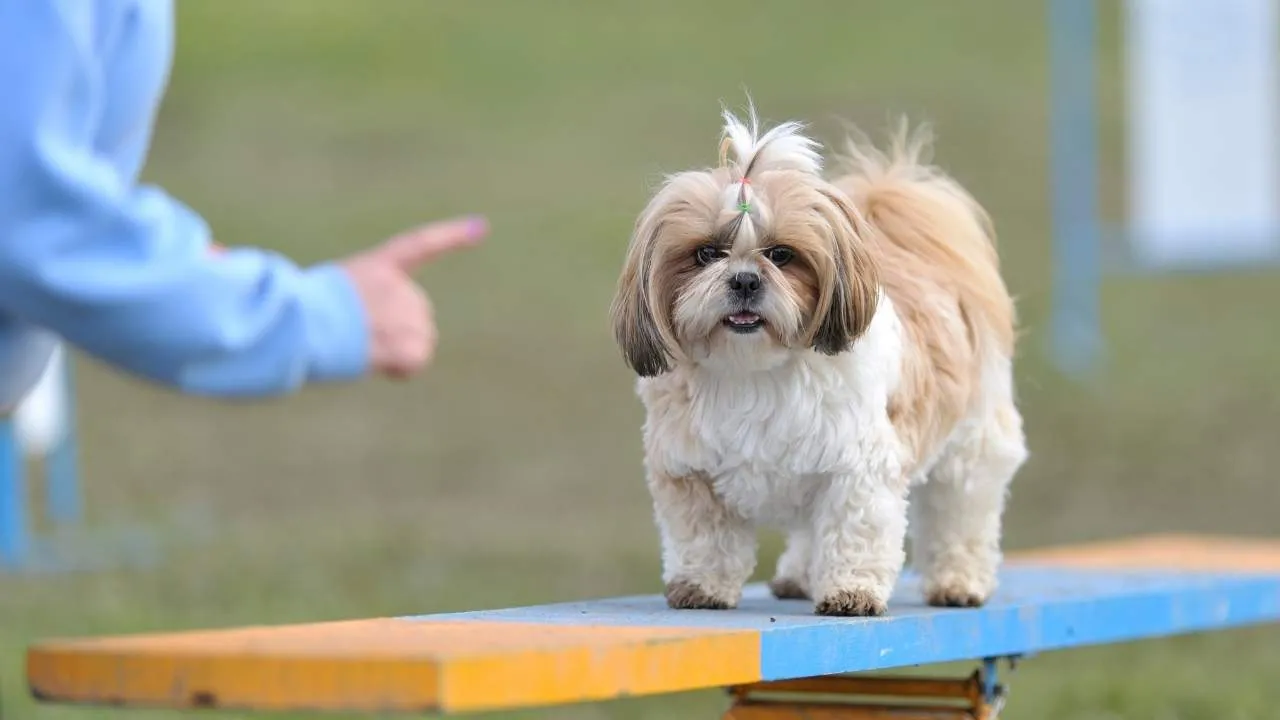
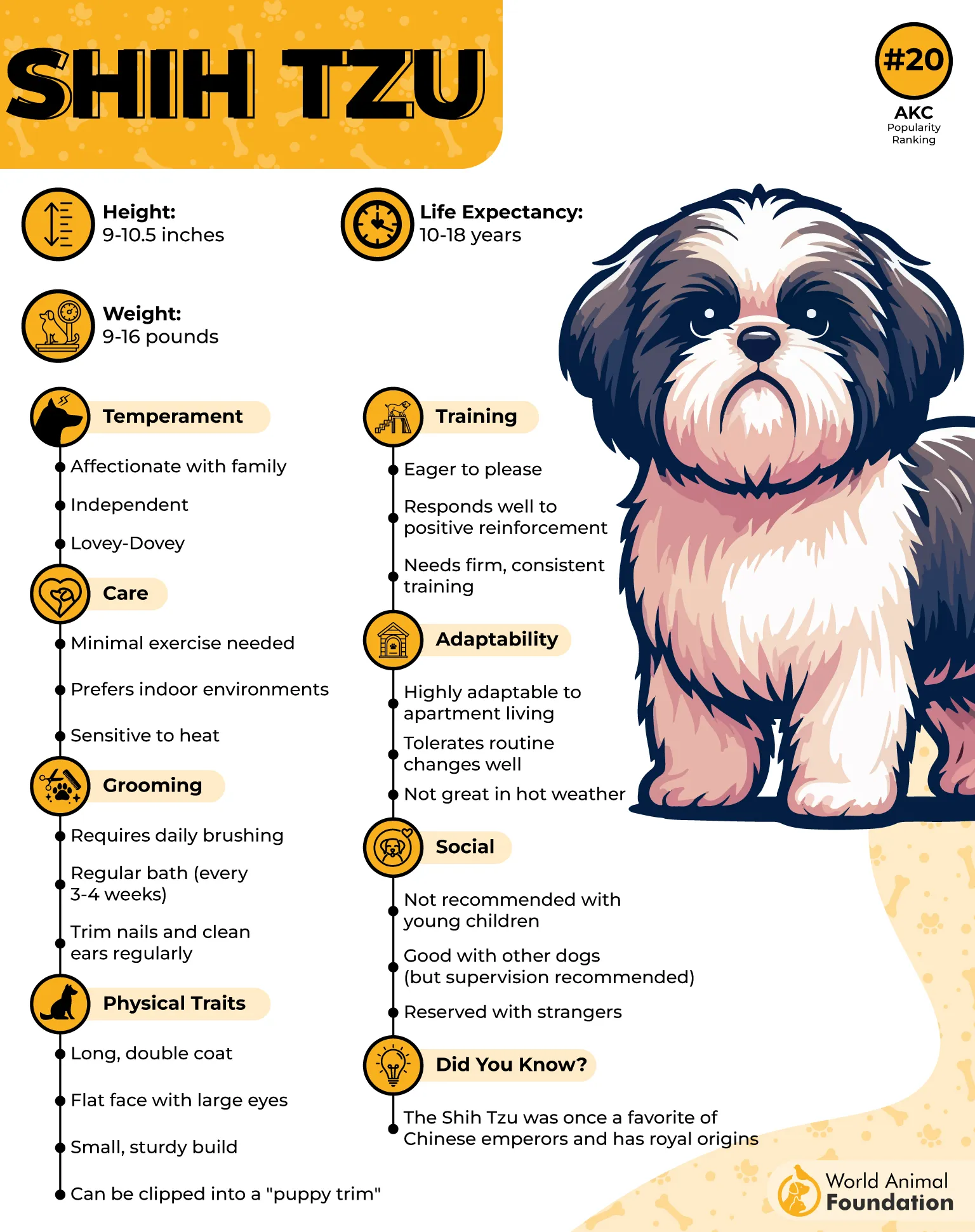
The Shih Tzu is a beautiful dog breed that traces its roots back over 1,000 years to Tibetan monasteries, where it was bred as a companion and watchdog for royalty. Known as the “lion dog” for its flowing mane-like coat, the Shih Tzu was gifted to Chinese emperors and nearly vanished during political upheavals.
Playful Personality and Companion Spirit
Despite its small stature, the Shih Tzu is energetic, alert, and sociable, thriving on human attention and participation in family life. Socialization from a young age ensures confidence around children, other pets, and strangers, making it an ideal pet for first-time owners and apartment dwellers alike.
Grooming and Care Essentials
The Shih Tzu’s long, dense double coat is beautiful but high-maintenance, requiring daily brushing to prevent mats and tangles. Regular baths, conditioning, and occasional professional grooming help maintain a healthy coat and prevent irritation around the eyes, ears, and muzzle.
Why Shih Tzus Require Intensive Home Grooming
Long, thick double coat prone to tangling and mats
Hair around the eyes, mouth, and ears collects dirt and moisture
Regular trimming or clipping keeps the coat manageable
Frequent baths and conditioning prevent skin irritation
Daily brushing protects the hair from matting and keeps the dog comfortable
7. Yorkshire Terrier
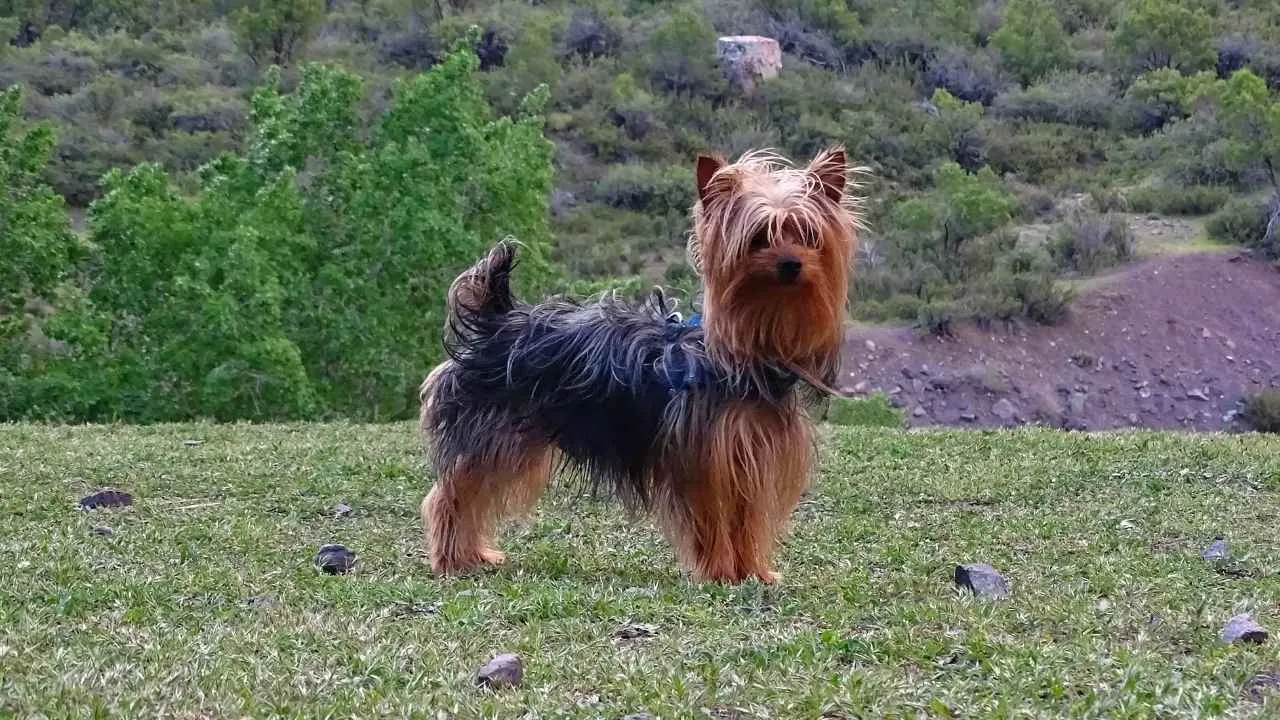
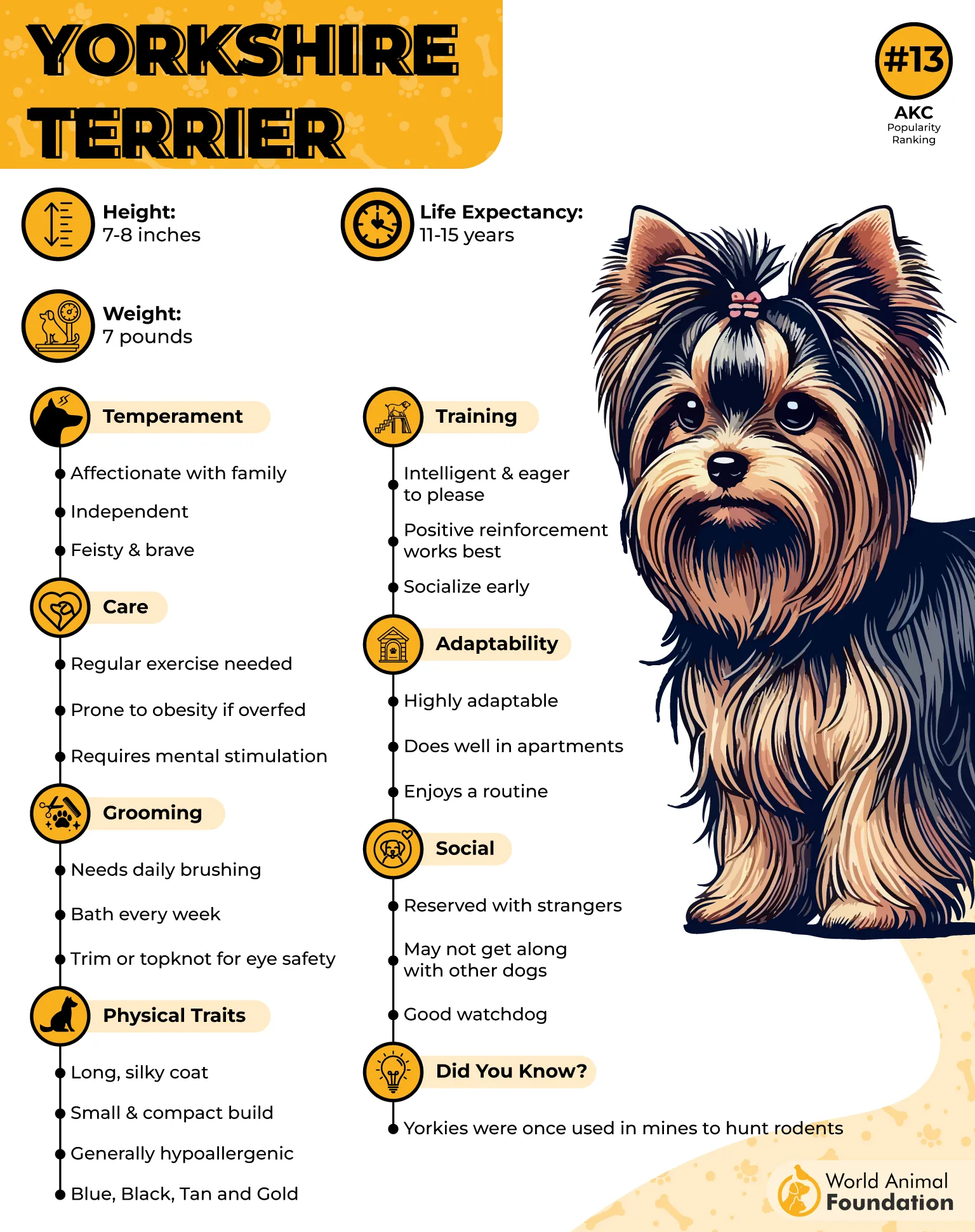
The Yorkshire Terrier, or Yorkie, began as a scrappy little ratter in the textile mills and coal mines of 19th-century northern England, as per Britannica. Bred by Scottish weavers, these tiny terriers were fearless hunters of rodents long before they became the pampered companions of Victorian ladies.
Bold Personality in a Tiny Package
Their intelligence and curiosity make them entertaining and lively companions, though they often display bossy tendencies. Yorkies are affectionate with their families, alert watchdogs, and thrive when socialized early, balancing boldness with devotion to their humans.
High-Maintenance Glamour
The Yorkie’s floor-length, silky coat is both a crowning glory and a grooming challenge. Daily brushing is essential to prevent tangles and mats, while periodic baths and trims keep the coat healthy and manageable. Even a short “puppy cut” requires regular attention, and extra care for teeth, ears, and skin ensures this tiny dog stays comfortable and stylish.
Why Yorkshire Terriers Demand Daily Grooming
Long, silky hair prone to tangling and matting
Coat texture similar to human hair, requiring gentle brushing
Regular trims or “puppy cuts” help maintain coat length and cleanliness
Hair around the eyes and ears collects debris and moisture
Daily maintenance prevents skin irritation and keeps the dog comfortable
Conclusion
Keeping a dog’s coat healthy and tangle-free is more than just a cosmetic task—it’s a key part of their overall well-being.
Regular grooming prevents mats, skin issues, and discomfort, while also keeping your pet looking their absolute best. Understanding the needs of higher-maintenance coats can make a huge difference in your dog’s daily comfort.
Grooming isn’t just about appearance; it’s a chance to bond, check for early signs of health issues, and even reduce stress for both you and your dog. While some breeds are easier to manage, others demand patience, skill, and consistent care to thrive.
Embracing the routine can turn a once-daunting chore into a rewarding ritual for both of you.
If you’re ready to commit to regular grooming, you’ll find the effort pays off in a happier, healthier companion. Learning techniques at home or working with professionals can make the process enjoyable and efficient.
With dedication and love, even the most high-maintenance coats become manageable—and immensely satisfying to care for.
