




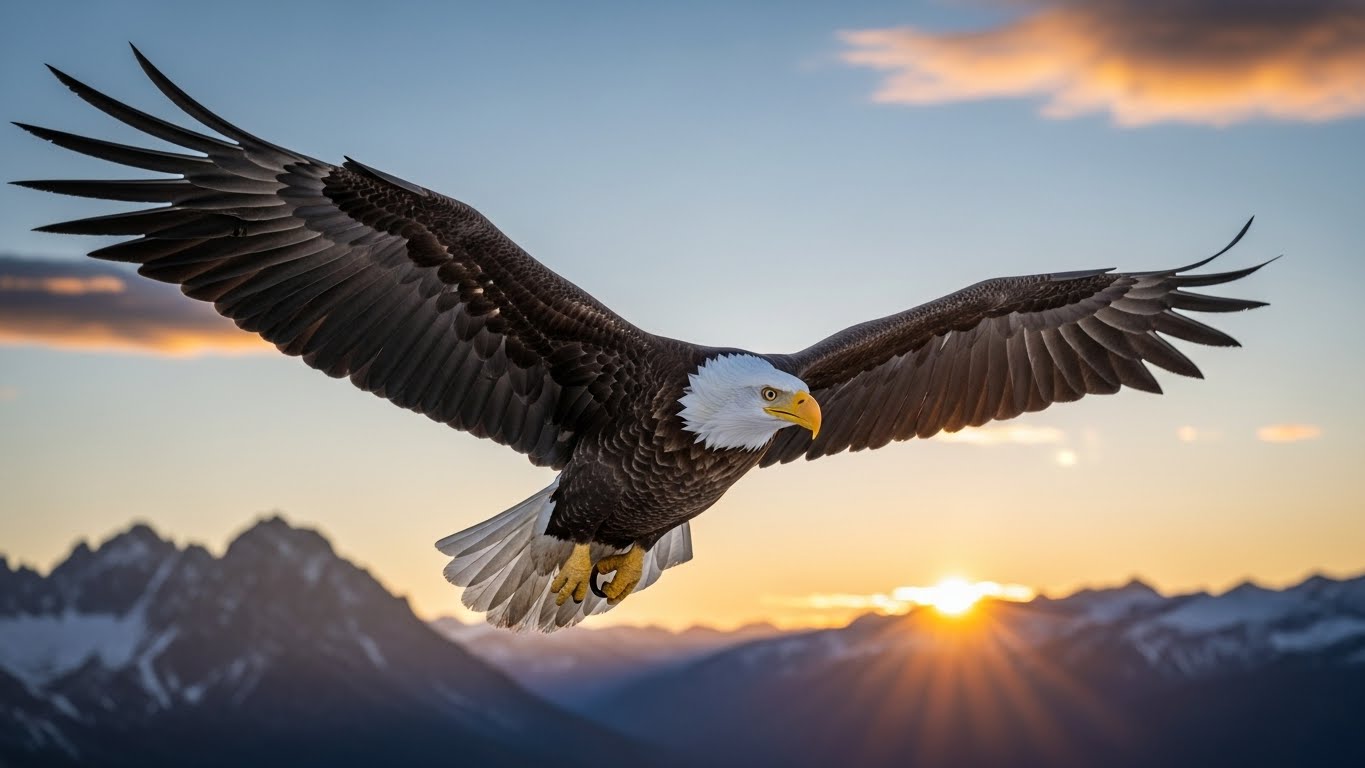
Birds have been mastering the skies for millions of years, displaying flight patterns that are nothing short of spectacular. Their incredible ability to soar, dive, and navigate vast distances is a true marvel of nature.
Some birds fly thousands of miles nonstop, crossing oceans and continents with seemingly endless stamina. While humans have built airplanes and jets to conquer the skies, no machine can quite match the natural skill and elegance of these feathered flyers.
From high-speed hunters to effortless gliders, every species has its own unique way of ruling the air. Their flight styles reveal not just beauty, but intelligence, endurance, and remarkable adaptation.
Get ready to discover the fascinating flight patterns that make these birds legends of the sky—majestic, powerful, and awe-inspiring.
Key Takeaways
See how Bald Eagles and Peregrine Falcons rule the skies with speed and power.
Follow the epic migrations of Bar-headed Geese and Common Cranes.
Uncover the Grey-headed Albatross’s record-breaking flight and flamingo’s stunning grace.
Meet the Black Kite, a smart flyer thriving in cities and wildlands.
Birds Known for Their Majestic Flight Patterns
1. Bald Eagle
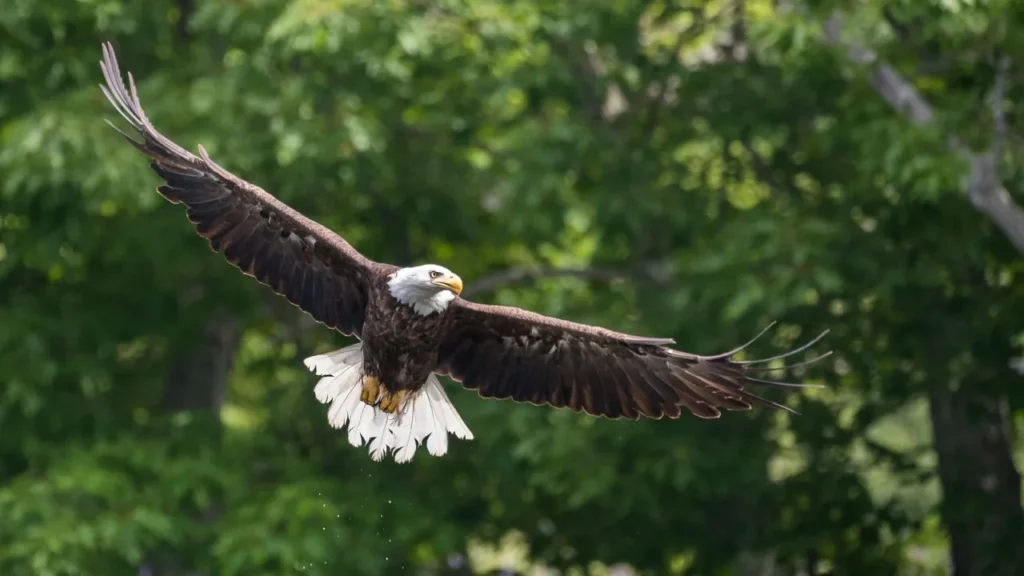
The Bald Eagle needs no introduction. Known as a symbol of strength and freedom, this bird commands attention with its striking appearance.
Adults have dark brown bodies and wings, topped with bright white heads and tails. Their yellow legs and bills add a bold contrast, making them easy to spot soaring through the skies.
Flight and Hunting Style
Bald Eagles are usually seen gliding slowly on thermal currents, scanning the water below for fish or small mammals.
But when diving for prey or defending their territory, they can reach impressive speeds of up to 99 mph (160 kph). Their large wingspan lets them soar effortlessly for long periods, conserving energy while covering wide areas.
Fascinating Facts at a Glance
Once endangered due to hunting, habitat loss, and pesticides like DDT
Population recovery thanks to strong conservation efforts
Build enormous nests weighing over a ton, reused and expanded yearly
Soar alone or gather in large groups during the winter months
Juveniles have mottled brown and white feathers, gaining full adult plumage by 4 to 5 years old
2. Peregrine Falcon
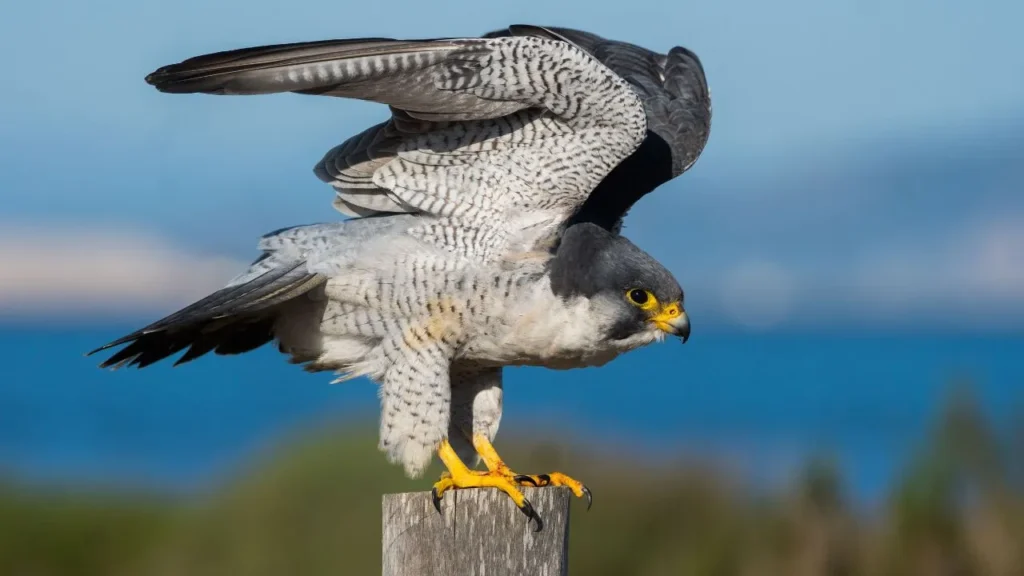
The Peregrine Falcon is famous for being the fastest animal on the planet. Known for its incredible speed, this bird can dive toward prey at over 200 miles per hour (320 km/h), making it a true master of aerial hunting. Its sleek, aerodynamic body and strong wings help it reach these breathtaking speeds.
Flight and Hunting Skills
During a hunting dive, called a stoop, the Peregrine soars to great heights and then plunges toward its target with stunning precision, according to the United Hunters Application.
Specialized nostrils control airflow to protect its lungs from damage during these high-speed dives. Its sharp eyesight and powerful heart make it a top predator, striking birds mid-air to catch or stun them.
Key Facts About the Peregrine Falcon
Blue-gray feathers on top with a blackish head and distinctive black “mustache.”
Fine barred patterns on its white breast
Adapted to many habitats, including cities and coastal areas worldwide
Once endangered due to pesticides like DDT, but it has made a strong comeback
Protected by laws to prevent illegal hunting and egg collection
3. Bar-headed Goose

The Bar-headed Goose is famous for one of the most extraordinary migrations in the bird world. This species breeds in Central Asia and is best known for flying over the towering Himalayas during its long journey. Its special adaptations allow it to survive and thrive at extremely high altitudes where oxygen is scarce.
Flight Adaptations and Migration
This goose has an exceptionally efficient respiratory system and can process oxygen quickly. These traits help it fly above 27,000 feet, making its migration one of the toughest air routes any bird faces.
Bar-headed Geese travel thousands of miles between their breeding grounds and wintering areas, crossing some of the world’s highest mountain ranges.
Key Facts About the Bar-headed Goose
Distinctive black-and-white bars on the back of its white head
Gray body with broad black trailing edges on the wings
Pink, orange, or yellow bill and legs add to its unique look
Breeds near mountain lakes and marshes in Central Asia
Winters in wetlands and fields in South Asia, including India and Bangladesh
4. Common Crane
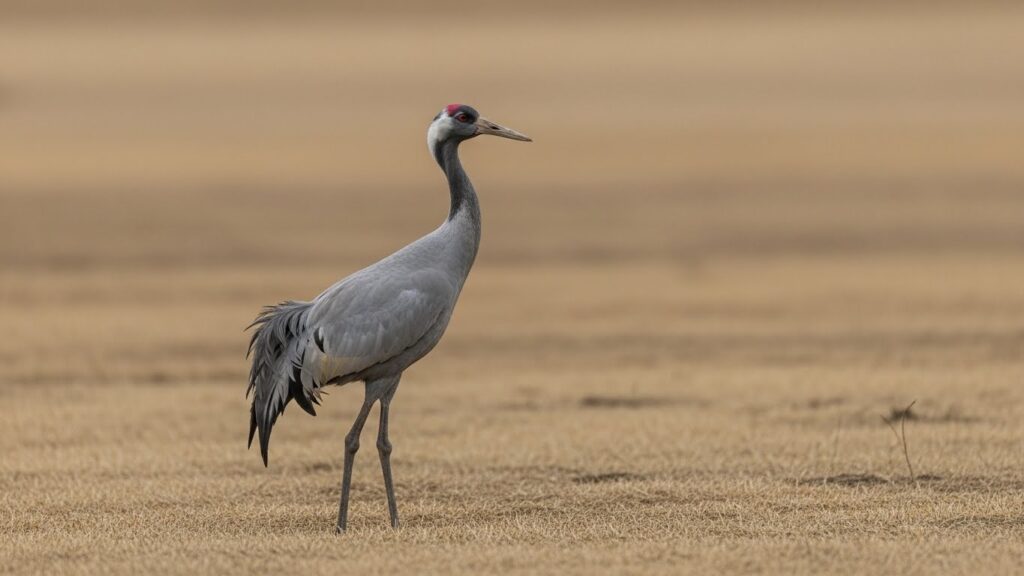
The Common Crane is well known for its long and challenging migrations. It travels vast distances from northern Europe to Africa, often flying at very high altitudes to avoid predators and navigate diverse landscapes. Its strong and steady flight makes it a remarkable sight in the sky.
Flight Behavior and Patterns
eBird mentions that Common Cranes fly with their necks fully extended, unlike herons, and use stiff, powerful wingbeats.
They often travel in large groups, flying in a classic V-formation, which helps them conserve energy during long journeys. Their flight may look calm, but it covers incredible distances with great endurance.
Key Facts About the Common Crane
Distinctive grey body with a black-and-white patterned head and neck
A bright red patch on the crown adds a splash of color
Breeds near lakes and boggy forests; winters in wetlands and farmland
Known for loud, rolling calls that carry over long distances
Occasionally visits North America by joining flocks of other cranes during migration
5. Grey-Headed Albatross
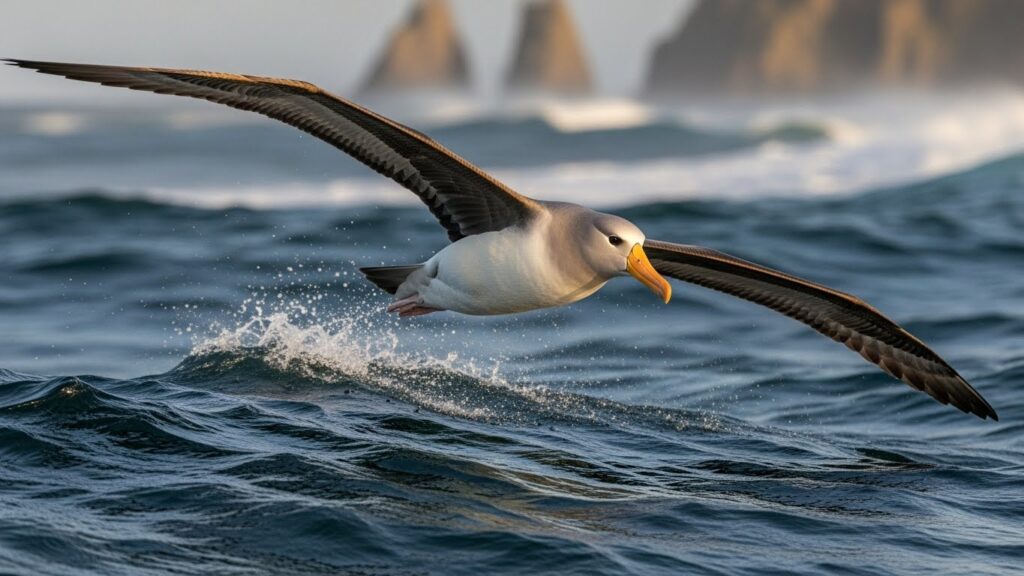
The Grey-headed Albatross holds the Guinness World Record for horizontal flight speed, reaching nearly 79 miles per hour (127 km/h).
This seabird is famous for its long-distance flights across the open ocean, where it glides effortlessly using wind currents to travel great distances with minimal effort. Its ashy-gray head and striking plumage make it a beautiful sight over the Southern Ocean.
Flight Style and Hunting
Using a technique called dynamic soaring, the Grey-headed Albatross exploits wind gradients above the waves to glide for hours without flapping its wings.
This energy-saving flight lets it cover vast areas in search of squid and fish. The bird often follows ships to scavenge scraps and breeds on remote sub-Antarctic islands, nesting on steep cliffs and slopes.
Key Facts About the Grey-headed Albatross
Known as the gray-headed mollymawk in some regions
Has a wide circumpolar range around the Southern Ocean
Listed as endangered due to threats from longline fishing
Nests mainly on isolated sub-Antarctic islands
Feeds primarily on squid and fish, often scavenging near ships
6. Flamingo
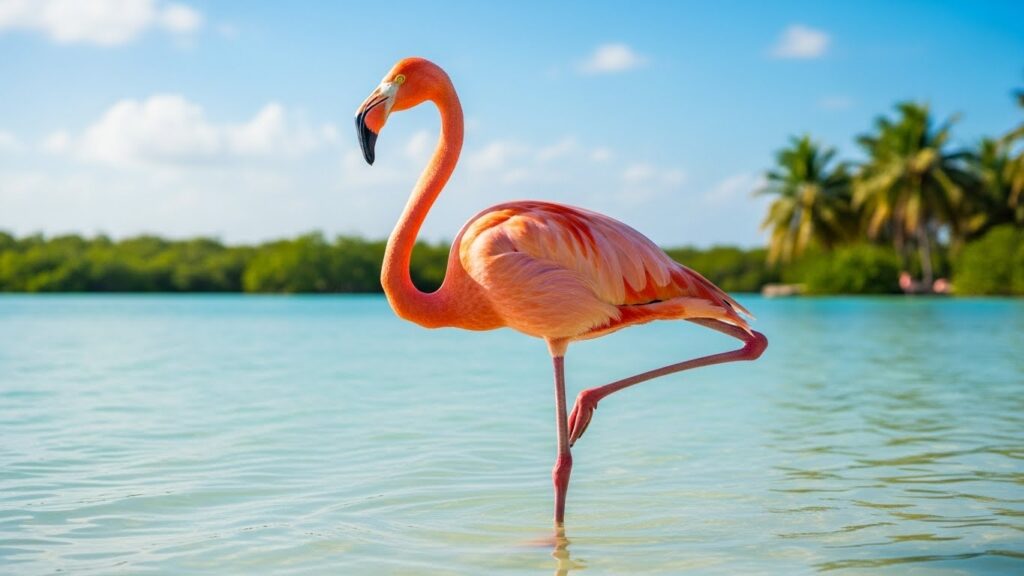
Known for their vibrant pink feathers and elegant presence, Flamingos are truly captivating in flight. Their long, slender legs and distinctive S-shaped neck give them a unique silhouette as they glide gracefully through the sky. These birds stand out not just for their beauty but also for their expert flying abilities.
Flight and Unique Features
Britannica says that Flamingos gain their bright pink color from carotenoid pigments found in the algae, brine shrimp, and brine fly larvae they eat. They often stand on one leg to conserve body heat while resting.
Their flexible necks, with 19 vertebrae, allow them to preen their feathers with ease. When flying, their large wings carry them smoothly over long distances, showcasing their natural grace.
Key Facts About Greater Flamingos
Bright pink plumage comes from their carotenoid-rich diet
Known for standing on one leg to keep warm
Have long, graceful necks and large wings for steady flight
Found in parts of South America, Africa, and Asia
American flamingos, a subspecies, show the brightest red and pink shades
7. Black Kite
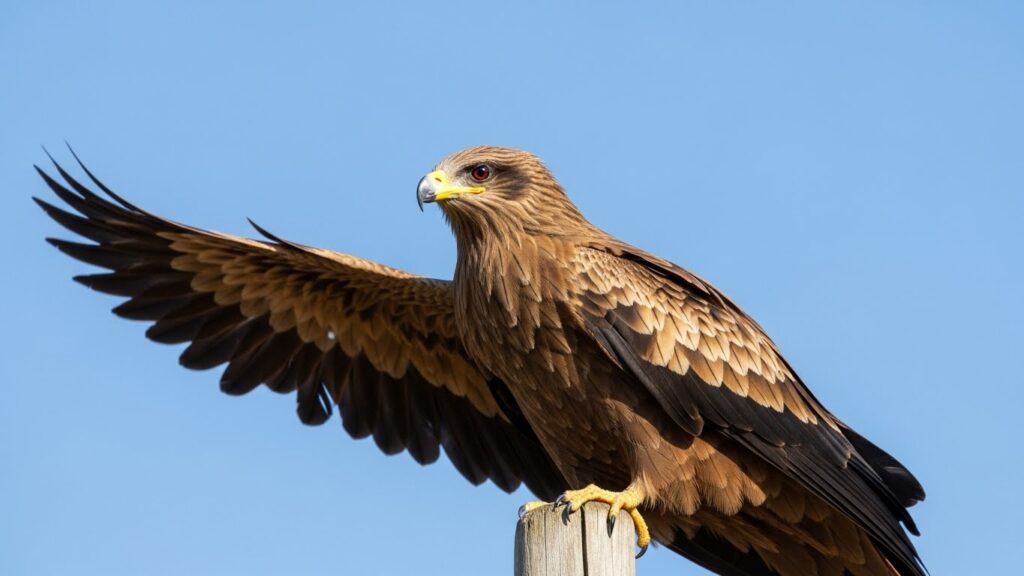
The Black Kite is one of the most common and widespread birds of prey, found across Australia, Africa, and Asia.
Known for its adaptability, this raptor often gathers in large flocks, especially near cattle yards, refuse dumps, and other feeding spots. Its dark plumage and distinctive forked tail make it easy to recognize as it soars gracefully above.
Flight Style and Feeding Habits
Black Kites are excellent soarers, using buoyant glides and quick changes in direction to navigate the skies with ease. They often scavenge for food but also hunt small birds, insects, and mammals.
These birds are comfortable in urban areas, sometimes even stealing food from markets or other birds. Their ability to glide for long periods helps them conserve energy while searching for meals.
Key Facts About the Black Kite
Widespread across Europe, Asia, Africa, and Australia
Dark brown plumage with lighter markings on the head and neck
Noted for its forked tail, giving it the nickname “Fork-tailed Kite.”
Often migrates in large flocks, especially near Gibraltar
Highly adaptable to human environments with stable populations
Conclusion
Birds show us the true complexity of life in the sky. Their flight styles vary greatly, and many birds rely on air currents to glide long distances without using too much energy.
Others reach speeds that seem impossible, using the advantage of sharp reflexes and darting movements to survive over land and sea. These remarkable differences highlight how wildlife adapts to every challenge nature creates.
As birds move toward their wintering sites, they tend to travel in massive groups, frequently crossing from one side of the world to the other side. Their ability to maintain direction while maintaining stamina is a perfect example of what happens when evolution and instinct work together.
No matter the region—Atlantic, Pacific, or beyond—birds remind us to focus on the beauty and resilience that can happen when species rely on air currents and use more energy only when needed.
