





You may not have woken up this morning and thought, “How many vegans are in the world?” But the way of life has certainly gained interest since the 2010s. When you learn about everything our animals live through and die from due to the meat industry, veganism may not be so “I would never!” to you.
I can hear some of you omnivores saying, “No way!” but look at this article to learn more about these space creatures known as vegans.
(I can say that and get away with it since I was one for 15 years and am currently a pescatarian. I still live a vegan lifestyle, but we’ll get to that later.)
Let’s take a look at the entire world to see where vegans live and who has the most of them. Bet you don’t know what Veganuary is, so we’ll talk about that, too. Who knows? Maybe you’ll slip some more veggies into your diet. Just some food for thought.
Top 8 Most Inspiring Stats
- There Are Approximately 88 Million Vegans in the World
- 67% of the Vegan Population Is Covered by Females
- In India, 10% of the People Are Vegans
- In the US, there are more than 13.4 Million Vegans
- Almost 1–2% of the World’s Population Is Vegan
- Dairy Alternatives Are Used by 51% of Consumers
- 25.8 million attempted to adopt vegan lifestyle in the Veganuary Campaign 2025
- A Vegan Diet Is Lower in Cholesterol and Higher in Fiber
The State of Veganism Around the World
As a former founder/director of an animal sanctuary, I also knew I couldn’t eat animals and try to find loving homes for them simultaneously. It just wasn’t right. And so started my journey.

We’ll start with the basics. “Us vegans/vegetarians/pescatarians and there’s more(!) are accustomed to people rolling their eyes when we say what our diets are. But if you could think about it this way… It’s part of who I am. I strongly believe in the way of life I’ve chosen, and that’s what veganism is: A way of life.
So let’s begin with the basics and learn what the heck these words mean:
OMNIVORE – “feeding on food of both plant and animal origin.” (It’s easy to think humans are carnivorous when, in reality, we’re omnivores.)
CARNIVORE – “an animal that feeds on flesh.” (No human, except for my Uncle Brutus, eats only meat, and it’s why the definition pertains to an animal.)
VEGAN – “a person who does not eat any food derived from animals and who typically does not use other animal products, especially for moral, religious, or health reasons.” (Products made from leather, feathers, fur, etc., and products tested on animals are off-limits for vegans/non-meat eaters – For me as well.)
VEGETARIAN – “a person who does not eat meat, and sometimes other animal products, especially for moral, religious, or health reasons.”
PESCATARIAN – “a person who does not eat meat but does eat fish.” (Fish IS meat, but some don’t see it as such.)
FLEXITARIAN – “a person who has a primarily vegetarian diet but occasionally eats meat or fish.”
Although veganism doesn’t have fans in a frenzy lining up at the door to become one, it has gained popularity in the last ten years. In the ’60s, only a couple of hundred vegans were in the UK.
And in the ’70s, you couldn’t throw a rock without hitting an American’s home who was having meatloaf for dinner.
In the last ten years, people have begun to scratch their heads and say, ‘Wait a minute. There could be something to this vegan thing.’ And with good reason. Meat, with its additives, preservatives, bacteria, parts of animals, random organs, excrement, and such (I wish I were kidding), is not very good for humans.

So, what are vegan products made of? They’re made with soy protein, mushrooms, rice, lentils, and wheat gluten and treated with flavor additives, which makes a finished product that mimics real meat and can be used as a meat alternative.
A person might choose to go vegan for several reasons:
- To stop giving the meat industry money while they’re slaughtering our farmed animals in horrific ways (My reason)
- For their health (Eating meat can lead to heart disease, diabetes, and high cholesterol.)
- To help save the environment (Factory farming is one of the biggest reasons for climate warming.)
- Having concerns about what meat consists of due to additives/chemicals (Most of us don’t even know what they put in there.)
- And then there are always those who do it because everybody else is doing it.
Before we continue, we want you to know that the purpose of this article is not to influence you to become vegan. I’ve never even asked someone to change their diet to something better for them. We’re providing this article so you can be aware of the facts.
How Many Vegans Are in the World

According to the stats of 2023, there were approximately 88 Million Vegans in the World. (NCBI)
There are about 88 million vegans around the world. Since there are over 8.3 billion people in the world in 2026, that’s around 1.1%. It was sort of a drop in the bucket, but it was hopeful.
Based on YouGov survey data and current population estimates, around 25.8 million people worldwide decided to try a vegan diet in January 2025.
It suggests that these individuals can serve as a source of inspiration and catalysts for broader shifts in attitudes and behaviors. Over time, the impact of their actions and their ability to influence others may lead to more significant changes and a greater collective impact.
Almost 1–2 Percent of the World Population Is Vegan. (The Vegan Society)
A study by the University of Oxford in 2016 noted the following if the world went vegan:
- By 2050, 8 million human lives could be saved.
- It could reduce 2/3 of greenhouse gas emissions due to factory farming, which would lead to healthcare-related savings.
- It could save climate damages of $1.5 trillion.
Vegans create only about 30% of the environmental impact caused by people who eat a lot of meat. (Science Alert)
Meat production has a major impact on the environment, while plant-based diets are much more sustainable.
A study of 55,000 people in the UK found that vegan diets create only about 30% of the environmental impact of high-meat diets. This includes lower greenhouse gas emissions, less land and water use, and reduced water pollution and biodiversity loss.
Global modeling shows that shifting to plant‑based diets could reduce agricultural labor needs. (The Lancet)
Global studies show that switching to plant-based diets could lower agricultural labor needs by 22–28% by 2030 compared to current trends. This shift could also reduce labor costs by about 0.2–0.6% of GDP each year.
Going Vegan Could Cut Your Carbon Footprint by Nearly Half (Science News Today)
The more plant-based your diet is, the lower its impact on the environment. Moving from a Mediterranean-style diet to a fully vegan diet can cut daily carbon emissions by about 46%—almost half the climate impact of your food each day.
Research also shows that switching from a typical Western diet to a vegan diet may lower the risk of early death from chronic diseases by 18% to 21%.
Females constitute 67% of the Vegan Population. (Vegan Bits)
A study found that 67% of vegans are women. It also showed that vegans are most commonly females under the age of 35. A 2022 study of 1,143 adults in Saudi Arabia found that 79.6% of the vegans surveyed were women.
Hopefully, this doesn’t sound archaic, but men have been meat-eaters since the beginning of time. How often do you see a man getting the salad and a woman getting the steak at a restaurant?
I think it’s also based on how morals intertwine with food consumption. More women than men see it as a perfectly reasonable thing to do for the farmed animals, for the planet, or both. Also, males are significantly more likely to be omnivorous.
In India, 10% of the People Are Vegans. (Statista)
India is the market that stands out the most when it comes to a person’s chosen diet. Ten percent follow a vegan diet; previously, this number was 13 % in 2022.
It’s the second most common diet in India. India ranks first in the world for vegetarianism, with about 25% of its population following a vegetarian diet. Both diets are significantly higher than in all other areas of the world.
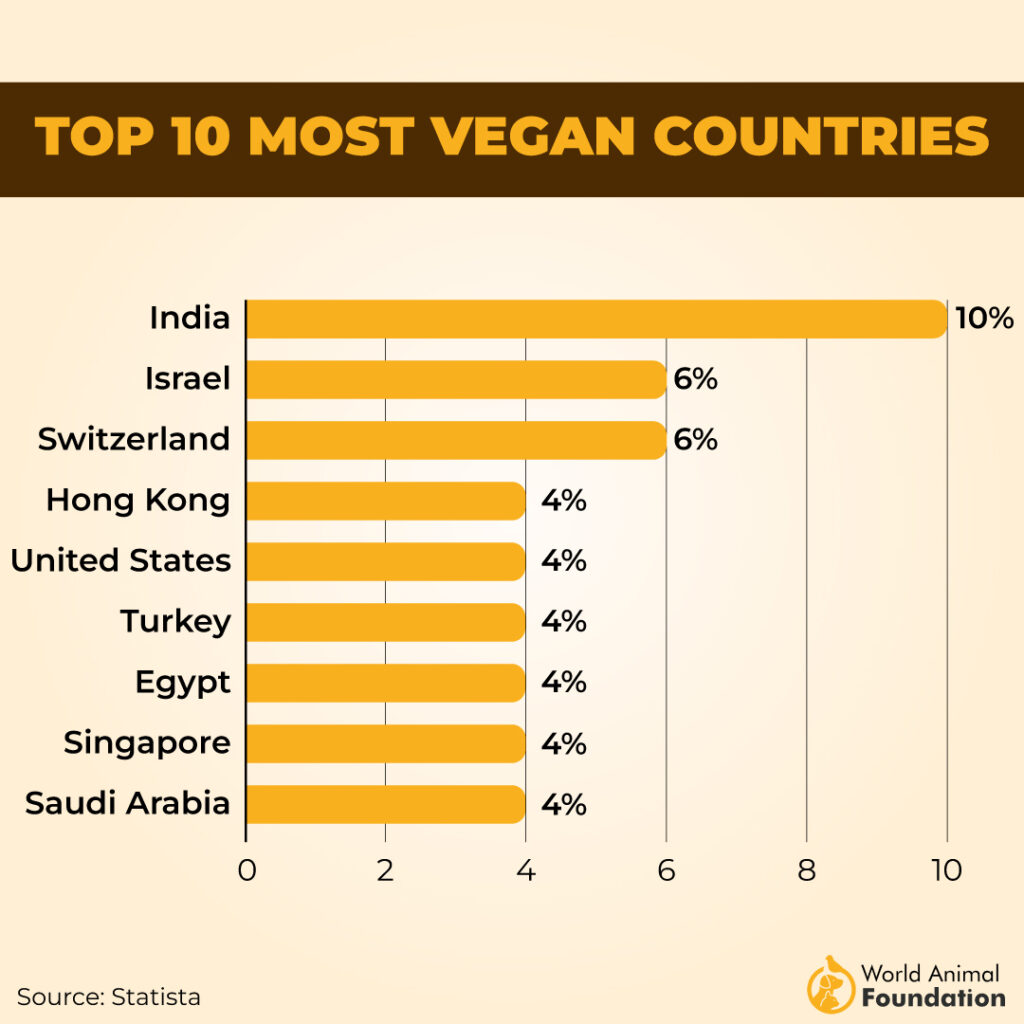
Israel Is Second, With 6% Vegan Population (Statista)
According to recent estimates, more than 5% of Israel’s population is vegan. In 2022, fifteen hundred (1,500) Israeli restaurants and 6,500 products had the Vegan-Friendly logo. Approximately 1 of every 18 soldiers is vegan, making them the world’s most vegan army.
The Vegan Share of China in Selected Countries in 2024 Is 4%. (Statista Consumer Insights)
There are steadily more people in China getting on the vegan bandwagon. Statista reports that 4% of people in China are vegan. With a population of over 1.4 billion, this means there are about 56 to 70 million vegetarians and vegans in China. The percentage of China that’s rural, where it may be hard to be vegan, is 34.4%.
There are 2% vegans in Canada. (Statista)
Canadians are seeking more animal- and environment-friendly options in their diets and other products. Since 2016, internet searches for plant-based alternatives and vegan options in Canada have increased by 113%. Plus, searches for vegan cosmetics grew by 14.6% between 2018 and 2019.
Almost 3.5 million (6.3%) People in the United Kingdom are planning to follow a vegan diet in 2026. (Finder)
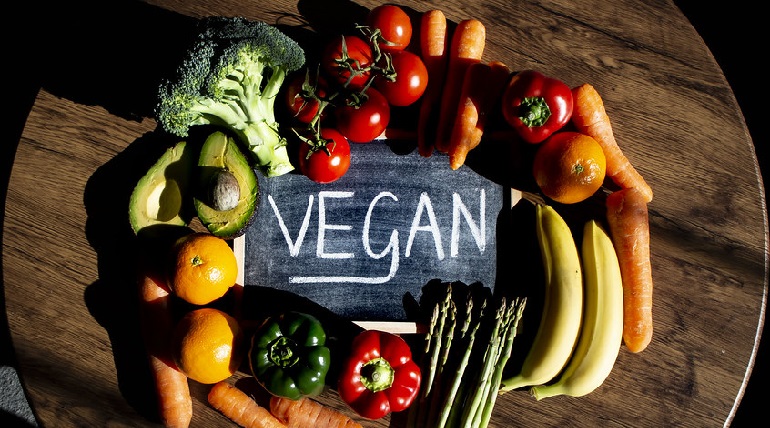
Finder’s research shows that 6.3% of UK adults plan to follow a vegan diet in 2026 — about 3.5 million people. This includes 3.1% who are already vegan and another 3.2% who were not vegan at the end of 2025 but plan to start in 2026.
In 2019, a newspaper article from the UK was uncovered that described a family who lived as vegans. The writer of the original article said, “[It was] the staple diet of one Hitchin couple, Mr. and Mrs. F. Howard, who are among the country’s few hundred vegans.”
The article wasn’t dated, but suffice it to say, it was probably written in the late 60s or 70s, since it says the couple met in the early 60s. So, the vegan population has increased literally by millions in the UK. It has taken 50 years, but they’re still way ahead of the US.
In Canada, Almost 850,000 People Are Vegan. People Under 35 (Younger Adults) Are More Likely To Be Vegan Than Older Ones. (Statista Global Consumer Survey)
Younger generations are always learning new and better ways to do something. It’s the way of the world. Older generations have lived a certain way for a longer period of time, so it’s more difficult to change directions. Of Canadian adults, 10% are vegan.
In 2022, India showed the Highest Percentage (13%) of Vegan Shares in Selected Countries. (Statista)
Vegetarianism/Veganism is strongly linked to dietary restrictions and the number of practicing religions in India, including Jainism (less than 1%), Hinduism (80%), and Buddhism (1%).
Jainism promotes strict vegetarianism and non-violence, with a significant number of Jains following a vegan lifestyle. Hinduism, the majority religion in India, also encourages vegetarianism as a means of practicing ahimsa (non-violence) and respecting all forms of life.
Buddhism, another significant religion in India, often promotes vegetarianism as a compassionate way of living.

By 2040, It Is Anticipated That Only 40% of the World’s Population Will Consume Meat. (Kearney)
As plant-based and lab-grown meat become more popular, global consulting firm AT Kearney estimates that by 2040, 35% of all meat will be cultured (lab-grown) and 25% will be plant-based alternatives.
IMARC Group anticipates the plant-based meat market to hit US$ 87.9 billion by 2032. The world is beginning to believe the facts – That meat and its production are killing us and our environment, and we must make major changes in order to stop it.
How Many Vegans in the US

There are More than 13.4 Million Vegans in the US, & The Vegan Share of the US in Selected Countries in 2024 Is 4%. (Statista)
As of 2023, around 4% of the US population, roughly 13.4 million people, are vegan. Plant Protein data suggests that over 6% of US consumers, or more than 15.5 million individuals, follow a vegan lifestyle. A recent survey of 11,000 individuals aged 17 and older found that 2% are vegetarian, with a quarter of them being vegan, making up 0.5% of the total population.
This number is expected to grow exponentially in the next decade. Plant-based foods have gained popularity; in 2024, $9.87 billion was spent on them in the US, and is expected to reach US$ 26.72 billion in 2033.
The research firm Nielsen reported that a huge percentage of Americans (39%) want to be vegan and try to integrate more plant-based foods into their diets.
As a developed nation like the US, we should be leading the way towards eating a plant-based diet. I can only hope we’ll catch up with the world’s “Indias” and “Europes.”
From a Total Vegan Population, Females Cover 78% of the US. (Vegan Bits)

There has been a 1% decrease, bringing this figure down from 79% to 78%; women are more likely to be vegan than men. Studies have also shown that vegetarians/vegans in the US lean towards liberal politics, with 52% identifying as liberal and 14% identifying as conservative. Also, vegetarians/vegans are hesitant to say whether they do or don’t practice a religion.
Males Cover a Total of 22% of the Vegan Population in the US. (Vegan Bits)
Men and women are much more likely to cite health reasons as the number one reason for going vegan. Some male celebrities like Joaquin Phoenix, Moby, Woody Harrelson, and Paul McCartney have been vegan for decades.
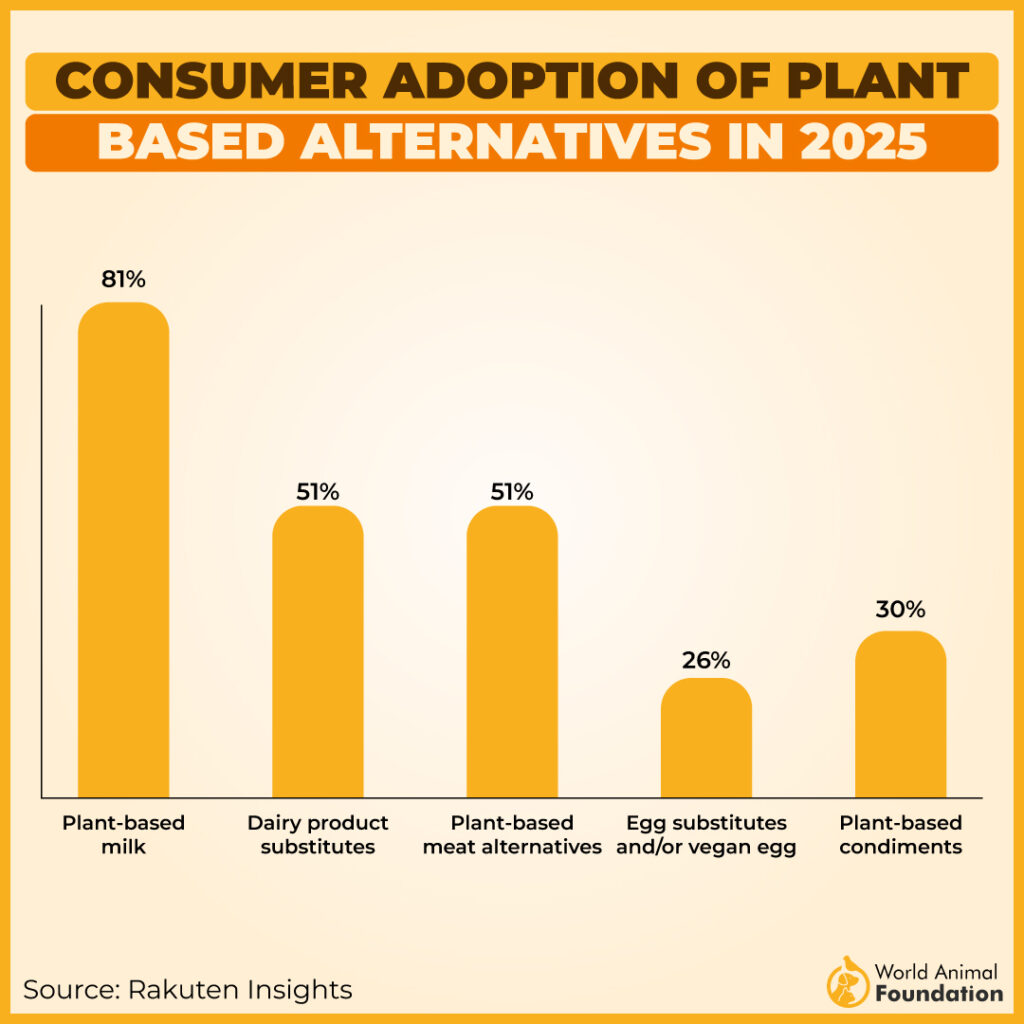
Plant-Based Milk Was Tried by 81% of Consumers. (Rakuten Insights)
When looking at specific products, plant-based milk remains the most popular starting point, with 81% of consumers having tried it in 2025. Plant-based meat alternatives are also growing in popularity, with 51% of people trying them in 2025, up from 48% in 2024.
I have only drunk soy milk for the last 25 years. To me, it tastes infinitely better than milk (although I was never a big milk drinker). According to research, there are numerous types of soy milk (vegan milk) to choose from, including almond-flavored, low-fat, or nonfat.
Dairy Alternatives Are Used by 51% of Consumers. (Rakuten Insights)
On the other hand, every vegan cheese I’ve ever tried has been, how can I put it lightly…unappetizing. Someone in the world needs to create delicious and affordable vegan cheese.
51% Tried Vegan or Plant-Based Meat Alternatives. (Rakuten Insights)
When Burger King launched the Incredible Burger, I could hear the angels singing. It’s absolutely delicious, and I encourage every reader to try one (they also sell them at grocery stores) to decide for themselves.
The Incredible Burger has no hormones or antibiotics. Currently, their products are accessible in countries like Hong Kong, Singapore, and the US.
26% Tried Vegan Egg Substitutes. (Rakuten Insights)
Um… Houston. We have a problem. Obviously, it’s extremely difficult to create these plant-based alternatives. Hopefully, sometime in the near future, we’ll have a solution.
Most Vegan Countries
According to Stats for 2024, Around 2% of Belgium’s Population Is Vegan. (Statista)
Plant-based diets/Flexitarianism have/has been recognized in Belgium for the last few years. In a Belgian survey, 2% of the people identified as vegans, and around 5% of people responded they were almost vegetarian.
Austria has seen a notable increase in its vegan population, rising from 3% to 5% since 2021. (Vegconomist)

Austria, along with the rest of the world, is also moving towards a more vegan diet and less meat consumption. A recent survey revealed a significant dietary shift in Austria, where the proportion of people identifying as vegan has increased by 2% since 2021.
Additionally, over half of Austrians have actively reduced their meat consumption during this period. This shift highlights a growing trend toward plant-based diets in the country.
Meat-free diet Consumers in New Zealand Make Up 2% of the Total Population. (Statista)
A survey conducted between 2018 and 2021 showed that more New Zealanders adopted plant-based vegetarian or vegan diets in 2021. There was a 19 percent increase in people following these diets compared to the previous year.
In Brazil, China, and Mexico, 2%, 4%, and 2% of the population, respectively, are vegan. (Statista)
- China’s current population – Around 1.4 billion
- Brazil’s current population – Almost 217 million
- Mexico’s current population – Close to 135 million.
Of these numbers, only 2-4% of people follow vegan and vegetarian diets, but the number is rising. A vegan restaurant in Mexico City called Viko is located in an underground tunnel.
The Most Vegan-Friendly Canadian Province Is Ontario, 6.9% of the vegan people (Made in CA)
Ontario is the second most vegan-friendly city in Canada, with a population of 94,415 and 70 vegan restaurants, which gives it a ratio of 7.41 vegan restaurants per 10,000 people.
In addition to Canadians who are already vegans or vegetarians, many more are thinking about reducing their meat consumption. About 40% of Canadian adults are ready to cut back on meat. Of these, 18% said they plan to do so soon, and 9% have definitely decided to reduce their meat intake.
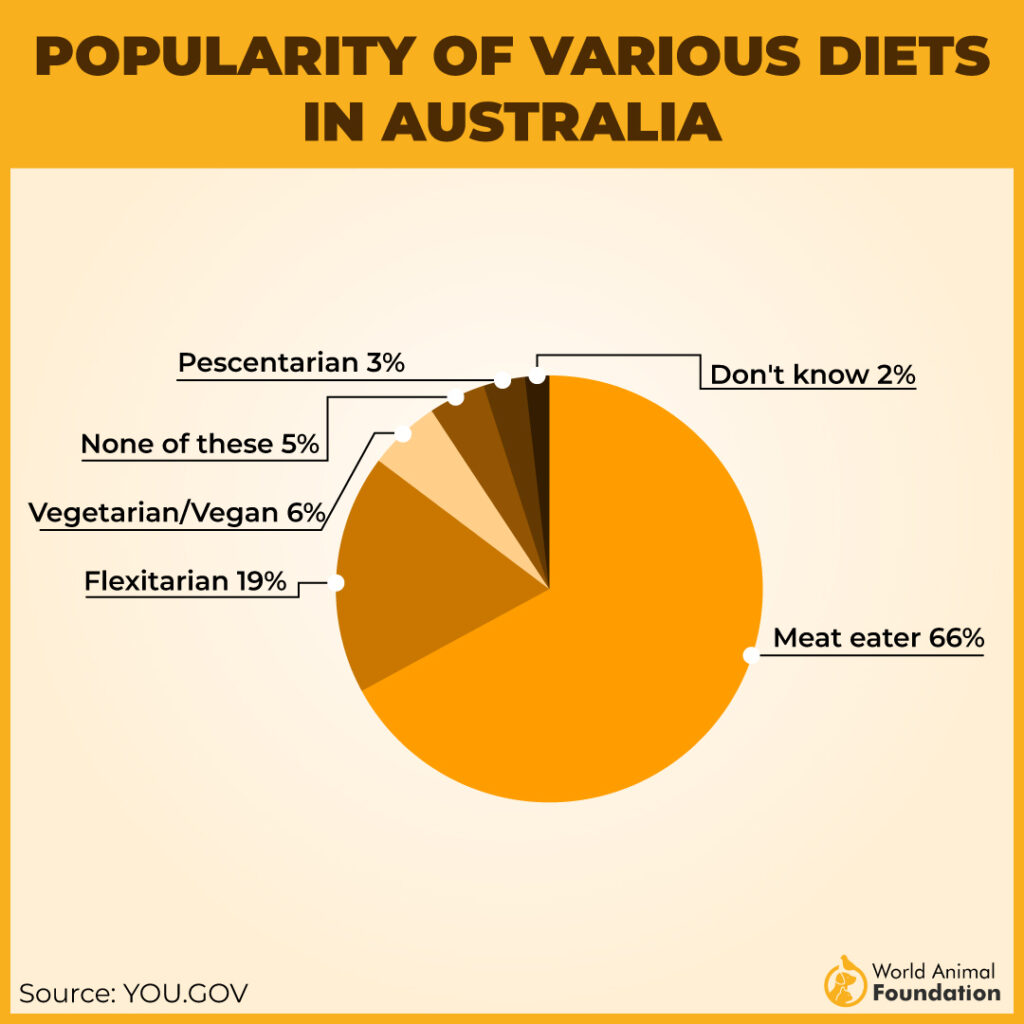
According to Stats for 2023, the combined percentage of pescatarians, vegans, and vegetarians in Australia is 9%. (YouGov)
New market research studies have shown Australians are decreasing their meat intake. And that the momentum is rising for plant-based alternatives.
A Survey in 2021 Revealed That 3.4% of Europeans Are Vegans. (Euromonitor International)
Europe is usually ahead of the curve when it comes to social issues. They will continue to be the leaders of the vegan movement as time goes on.
Is Veganism Growing

A Recent Global Survey From Rakuten Insights Revealed a Higher Percentage of the veganism trend. (Rakuten Insights)
In 2025, 49% of respondents — slightly down from 51% in 2024 — said health benefits are a main reason for choosing vegan products, showing that health remains a key selling point.
Health is the number one reason why people anywhere in the world are choosing to go vegan. The next reason is animal activism and preventing animal cruelty.
In the United States, 59% of people consume plant-based alternatives. (GFI)
A 2024 study by GFI found that 59% of U.S. households bought plant-based foods, about the same as the year before. It also showed that nearly three-quarters of Americans aged 18 to 59 are open to trying plant-based meat or dairy products in the future.
This suggests that these alternatives will continue to have a lasting place in our diets.
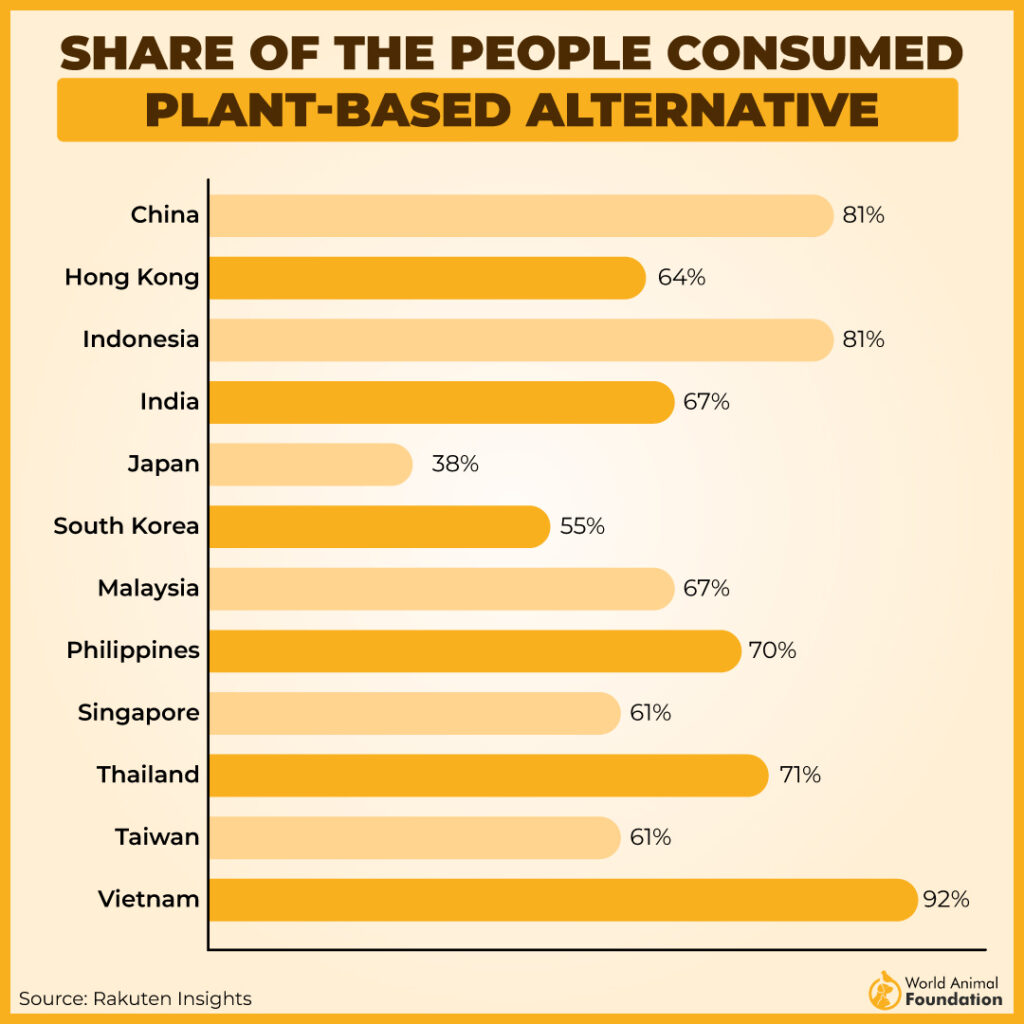
Among the Population of China, 81% Have Consumed Plant-Based Alternatives. (Rakuten Insights)
China, as the world’s largest meat consumer, holds significant potential for the artificial meat market. However, according to a recent study, nearly half of Chinese consumers are still unwilling to accept artificial meat, indicating that promoting it poses a significant challenge.
92% of People in Vietnam Consume Plant-Based Alternatives. (Rakuten Insights)
Vietnam is a fantastic destination for vegans. Meat-free diets have long been a part of Vietnamese culture.
Iceland Was the Leading Source of Searches About Veganism, Followed by St Helena and the UK. (Google Trends)
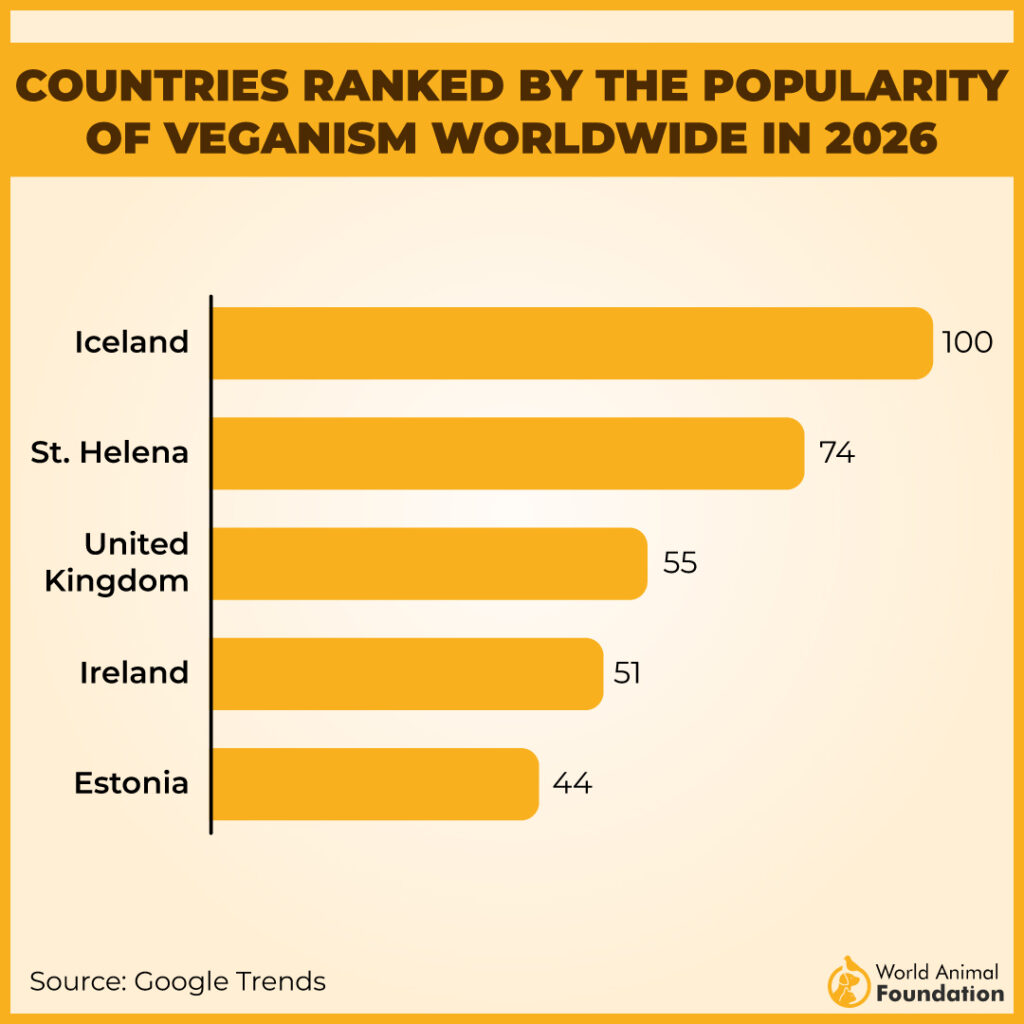
As you’ve seen from the numbers above, this all makes sense. People are searching for information on plant-based diets/vegetarian alternatives. You can also check out vegetarian statistics to learn more about people’s shifting attitudes.
In 2025, the Alternative Protein Industry Raised $26.66 Billion in Investments. (Fortune Business Insight)
If you want a surefire winner, I’d bet on plant-based diet alternatives. The world’s statistics prove the industry is only getting more popular. This industry has experienced substantial investment growth.
The global protein alternatives market was worth $26.66 billion in 2025. It is expected to grow from $30.48 billion in 2026 to $88.8 billion by 2034, with an annual growth rate of 14.3% during this period.
The Plant-Based Protein Market, is Projected to reach a Value of USD 22 Billion in 2026. (FMI)
The plant-based protein market is expected to reach $22 billion by 2026 and grow to $49.9 billion by 2036.
The plant-based protein market is being driven by increasing health consciousness, environmental concerns about animal agriculture, and a growing demand for vegan and vegetarian alternatives.
The plant-based food market reached $64.14 billion in 2025. (The Business Research Company)
The plant-based food market reached $64.14 billion in 2025. It is expected to grow to $68.4 billion by 2026. More people are choosing vegan diets and looking for ethical food options. At the same time, improvements in technology have led to better-tasting meat and dairy alternatives, solving past concerns about flavor and texture.
Due to the Growth of the Vegan Population, the Vegan Food Market is expected to Expand From $42.24 Billion in 2025 to $132.21 Billion in 2034. (Fortune Business Insight)
The global vegan food market was worth $42.24 billion in 2025. It is expected to grow from $47.79 billion in 2026 to $132.21 billion by 2034. In 2025, Asia Pacific led the market, holding 43.10% of the global share.
Many companies are creating plant-based alternatives, but these products are often more expensive than animal-based foods, which may slow their adoption in low- and middle-income countries.
The Plant-Based Milk Market size was valued at USD 22.66 billion in 2025.
(FMI)
The global plant-based milk market was valued at $22.66 billion in 2025. It is expected to grow from $24.36 billion in 2026 to $43.46 billion by 2034. Among the various products, almond milk stands out as the most profitable segment and is expected to experience the fastest growth in the coming years.
Increased awareness of animal abuse on dairy farms has led many consumers to avoid animal-based products, boosting the demand for vegan milk.
The Vegan Cosmetic Industry was Vaalued at $20.48 Billion in 2025. (FBI)

The global vegan cosmetics market was worth $20.48 billion in 2025. It is expected to grow from $21.88 billion in 2026 to $37.43 billion by 2034.
In 2025, Europe led the market with a 33.63% share, driven by strong demand for cruelty-free, organic products and the growing clean beauty trend. Vegan skincare is expected to hold the largest market share in 2025, driven by strong demand for plant-based and sustainable ingredients like algae, phytoglycogen, and peptides.
The Global Plant-Based Leather Market Was Valued at USD 216.24 milllion in 2025 and Is Forecasted To Grow to USD 355.23 million by 2032. (Research and Markets)
According to this report, the vegan leather market is expected to grow from $216.24 million in 2025 to $234.12 million in 2026. With an annual growth rate of 7.34%, it is projected to reach $355.23 million by 2032.
I don’t wear any material that is supposed to cover an animal and not me. There’s horrific abuse in those industries, and it’s too easy to buy vegan alternatives. I also don’t eat honey since our bees are continuing to disappear.
Vegan Population Growth

From 2004 to 2019, the Vegan Population Tripled in the US. (SMR)
Approximately 1.5 billion people worldwide avoid meat and meat-based products. Although millions of Americans know what the catastrophic results can be from eating an omnivorous diet, they don’t change; people are coming around.
The Number of People Recognized As Vegans in 2016 Has Increased by 360% in the UK. (The Telegraph)
Within 10 years, the number of vegans has increased by 360% in the UK. In 2021, both major and smaller businesses started doing more to offer Brits options for plant-based products or vegan foods.
Product Availability in Australia reached 487 plant-based products in 2025. (Food & Drink Business)
Over the past few years, Australia has experienced a surge in the introduction of food items with a vegan label. Several celebrity chefs have introduced vegan restaurants there, and society has taken notice.
A 2025 audit by the Grains & Legumes Nutrition Council found that plant-based products in Australia have dropped by 33% since 2022. Meat alternatives decreased by 51%, while plant-based milk options fell by 22%.
By 2031, the Global Market for Plant-based Foods and Drinks was Expected to Grow to about $166.43 Billion. (Mordor Intelligence)
In 2025, the global market for plant-based foods and drinks was worth around $85 billion. The plant-based food and beverage market is projected to grow from $95.07 billion in 2026 to $166.43 billion by 2031. This significant growth is driven by the increasing popularity of vegetarian and vegan diets and the use of plant-based proteins by food and beverage companies.
The vegan world wants good (tasty) food and beverage choices in their own backyards. Plant-based foods and drinks are made entirely or mainly from ingredients like grains, legumes, nuts, fruits, and vegetables.
Veganuary Countries

In January 2025, 25.8 Million People Worldwide Attempted To Adopt a Vegan Lifestyle. (Veganuary)
The Veganuary website inspires people to “Join the Plant-Based Revolution” every January (and beyond). Over 25.8 million people have tried veganism in 2025 with their support. Their mission? To have a vegan world, you can also check out the list of the most Vegetarian Countries leading the way to sustainable & healthy eating.
Meat sales declined by 12.5% in January 2024 Sparing Millions of Animals From Suffering. (Veganuary)
During the last two campaigns, meat sales dropped by 12.5% in January 2024 and 14.3% in January 2023 compared to the yearly average of the previous years. This suggests that Veganuary is not only raising awareness but also changing buying habits and encouraging long-term shifts toward plant-based options.
There are no exact numbers for how many animals a vegan saves, but even if it saves one a month, it’s so worth it.
In a Single Month, a Minimum of 1,480 New Vegan Products and Menu Items Were Launched Globally. (Veganuary)

During January 2025, 1,480 new vegan products and vegan dishes options were launched globally. People should be jumping on the bandwagon. It’s a profitable one, and the demand is there already.
Over 12,286 Veganuary Stories Were Published by International Media. (Veganuary)
I’ll admit, fewer people look at me like I’m a circus freak now when I say I’m a vegetarian. People are open to learning about ways to go meatless via traditional and social media.
Why People Are Vegan
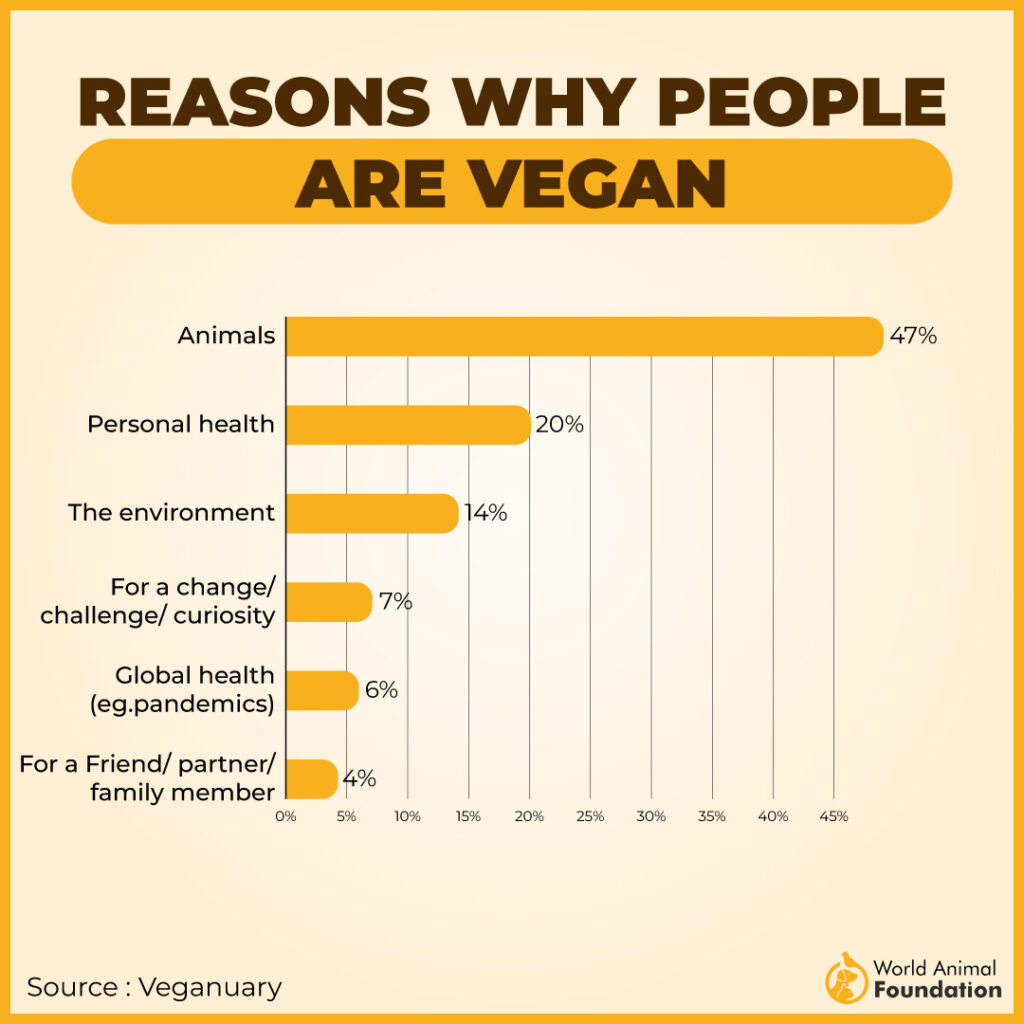
A Global Survey Suggested that 47% of Vegans Are Motivated by Animals (Animal Welfare), and Around 20% Adopt a Vegan Lifestyle Because of Health Concerns. (Veganuary)
Overall, 81% of participants who were not already vegan said they plan to permanently change their diet after taking part. Nearly half (47%) said concern for animals was their main reason for going vegan. Personal health came next at 20%, followed by the environmental reasons at 14%.
Vegan Statistics

There Are More Than 70,000 Products Registered With the Vegan Society, Among Which 30,000 Are Cosmetic Products. (The Vegan Society)
The Vegan Society’s Vegan Trademark has reached a major milestone, surpassing 70,000 registered products across 68 countries. These products are registered across 2,500 companies worldwide. Except for cosmetics, it also includes 18,000 food and beverage items. Major cosmetics companies, like Cover Girl, are now cruelty-free as well.
For decades, those in the beauty business cruelly tested on animals, and some still do (like MAC and Maybelline). PETA has a cohesive list to help you decide where to spend your money.
The global meat substitutes market size was valued at USD 7.87 billion in 2025. (Fortune Business Insight)
The global meat substitutes market was worth $7.87 billion in 2025. It is expected to grow from $8.63 billion in 2026 to $20.7 billion by 2034, with an annual growth rate of 11.55% during this period.
In Terms of Access to Vegan Food, London, Berlin, Los Angeles, Portland, and Lisbon Are the Top Vegan Cities. (Happy Cow)

These are culturally progressive areas, so it’s understandable that they’re leading the way toward veganism.
- London and Berlin have kept the top spot for the fourth year in a row.
- In North America, Los Angeles and Portland continue to lead.
- In Europe, Lisbon and Barcelona rank just behind London and Berlin.
- New cities added to the list this year include Mexico City and Ho Chi Minh City.
Does Veganism Offer Health Benefits?
Study on 48,188 Adults: Vegans, Vegetarians Have 22% Lower Heart Disease Risk but 20% Higher Stroke Risk. (BMJ)

According to this study, fish eaters and vegetarians had lower rates of ischemic heart disease compared to meat eaters. However, vegetarians had higher rates of hemorrhagic and total stroke.
Greenhouse Gas Emissions Were Reduced by 46% Due to Veganism. (Frontiers In)
Farm emissions increased by 21% between 2000 and 2023. More than half of these emissions (53%) came from livestock. A vegan diet was shown to reduce carbon emissions by 46%, water use by 7%, and land use by 33%.
A Modeling Study Determined That Decreasing Animal Product Consumption Could Lower Global Green and Blue Water Usage by 21% and 14%, respectively. (NCBI)
Current agricultural practices account for up to 30% of global human-caused greenhouse gas emissions and 70% of freshwater use while occupying approximately 40% of Earth’s land.
Studies on Diabetes Demonstrate That Adopting a Vegan Diet Can Reduce Blood Sugar Levels by 1.2%. (Diabetes Journals)
People who follow plant-based and vegetarian diets tend to have lower rates of diabetes. Clinical trials have demonstrated that these diets can lead to better blood sugar control and improved cardiovascular health.
The vegan group saw their blood sugar (HbA1c) levels drop by about 1.2 percentage points, compared to just 0.4 points in the ADA diet group, when medication changes were not included.
Veganism Can Lower the Risk of Prostate Cancer by 35%. (WCRF)
Prostate cancer is the most common cancer among men in the UK, with over 47,000 new cases each year and more than 10,000 annual deaths. Globally, it is the second most common cancer in men.
A Vegan Diet Is Lower in Cholesterol and Higher in Fiber. (NCBI)
This stat is from a government source. Who wouldn’t benefit from less cholesterol and more fiber from following a vegan or vegetarian diet? Common sense urges us to go plant-based.

A Study Revealed That Vegans and Vegetarians Experienced a 16% Less Chance of Cardiovascular Diseases Than Meat Eaters. (Springer)
Eating a plant-based diet improves the health of your gut. It acts so you can absorb more nutrients from food. Going meat-free can also reduce inflammation.
They had a 16% lower risk of cardiovascular disease, an 18% lower risk of coronary heart disease, and a 14% lower risk of death from any cause.
FAQs
What percent of Americans are vegan?
Recent studies indicate that approximately 4% of Americans identify as vegan, and this number is increasing.
How Many People Are Vegans?
In 2023, the vegan population worldwide was approximately 88 to 90 million.
Is Being Vegan Better for the Environment?
Absolutely. In fact, if the world went vegan, even part-time, there would be millions of trees saved, which is infinitely better for our planet.
Why Is Veganism on the Rise?
The short answer is that people have become clearer about what animal agriculture/farming (i.e., the meat and dairy industry) does to our animals and the planet. They realize the benefits of eating a primarily plant-based diet.
What Are Vegan Products?
A vegan product does not contain any animal ingredients or animal-derived ingredients. This includes honey, beeswax, gelatin, and many other ingredients. And remember, “vegan” and “cruelty-free” don’t mean the same thing.
What Is the Difference Between a Vegetarian and a Vegan?
A vegan eats no meat products at all. A vegetarian eats no meat but may eat dairy products and other animal products.
Conclusion
I have been made to feel quite uncomfortable, even shamed, at meals, either out and about or in someone’s home. Restaurant servers, family members, and even strangers have been the culprits.
I’ve also been verbally attacked by a stranger when in line with him at a restaurant (just imagine a mean Barney Fife) and told snidely by my ex-mother-in-law repeatedly that she had no idea what to cook for me if I didn’t eat meat.
Having said that, I’m proud to be a pescatarian since I’m contributing to the solution and not the problem that permeates the meat industry.
If you’d like to watch a documentary about our situation, check out Food Inc., Cowspiracy, or Earthlings. These films show the uncomfortable truth about agricultural farming and exactly what it does to our world. Forewarning: There are extremely graphic scenes/images. Use discretion.
If you’d like to become a vegan for the free-living animals, your health, or just for the heck of it, research it and learn everything you can about it. (The reason I’m not vegan anymore is that my doctor suggested I needed to eat fish.)
Check with your doctor or, if possible, a nutritionist to see if it’s the right move for you. And hopefully, I’ll see you in Veganuary!
