




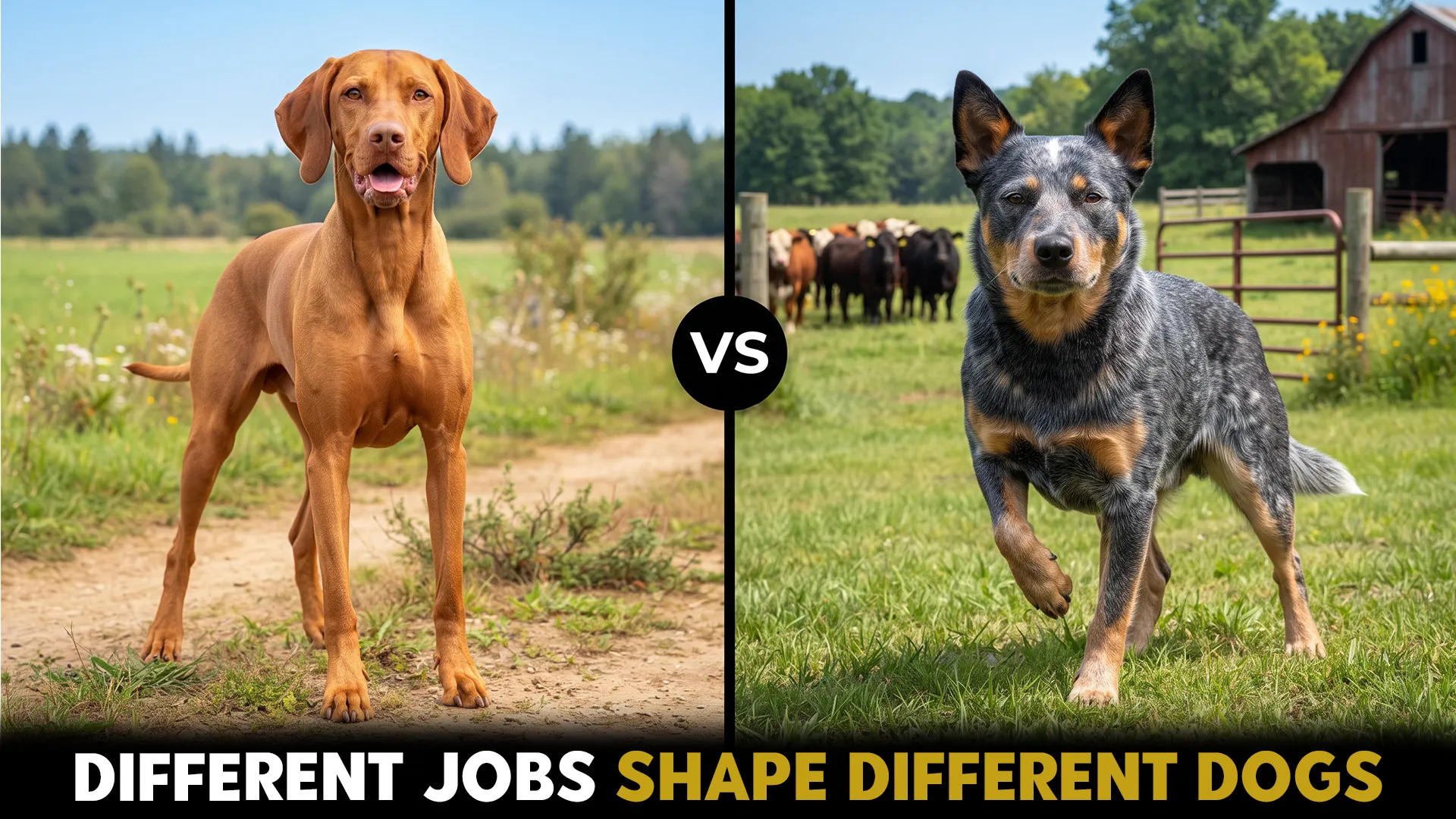
Choosing between a Vizsla and an Australian Cattle Dog is not a small decision. Both are active, smart, and athletic, but living with them can feel completely different.
One dog may happily stick to your side during a hike and follow you around the house afterwards. The other can finish the same hike with plenty of energy left, already ready for the next adventure.
The Vizsla is an affectionate sporting dog with a strong love for human company. The Australian Cattle Dog, also known as a Blue Heeler or Red Heeler, comes from a world of demanding work and busy minds. Both need committed owners, but the kind of commitment they ask for is not quite the same.
Before bringing home a puppy, it helps to picture ordinary life with each breed. This comparison explores the key differences between the Vizsla and Australian Cattle Dog that every owner should know, so you can find the dog that actually fits your routine rather than simply falling for a cute face.
Vizsla vs. Australian Cattle Dog: Key Differences Every Owner Should Know
1. Origins & Purpose
These two dogs were not created for the same kind of work, and their history still shows up in everyday life.
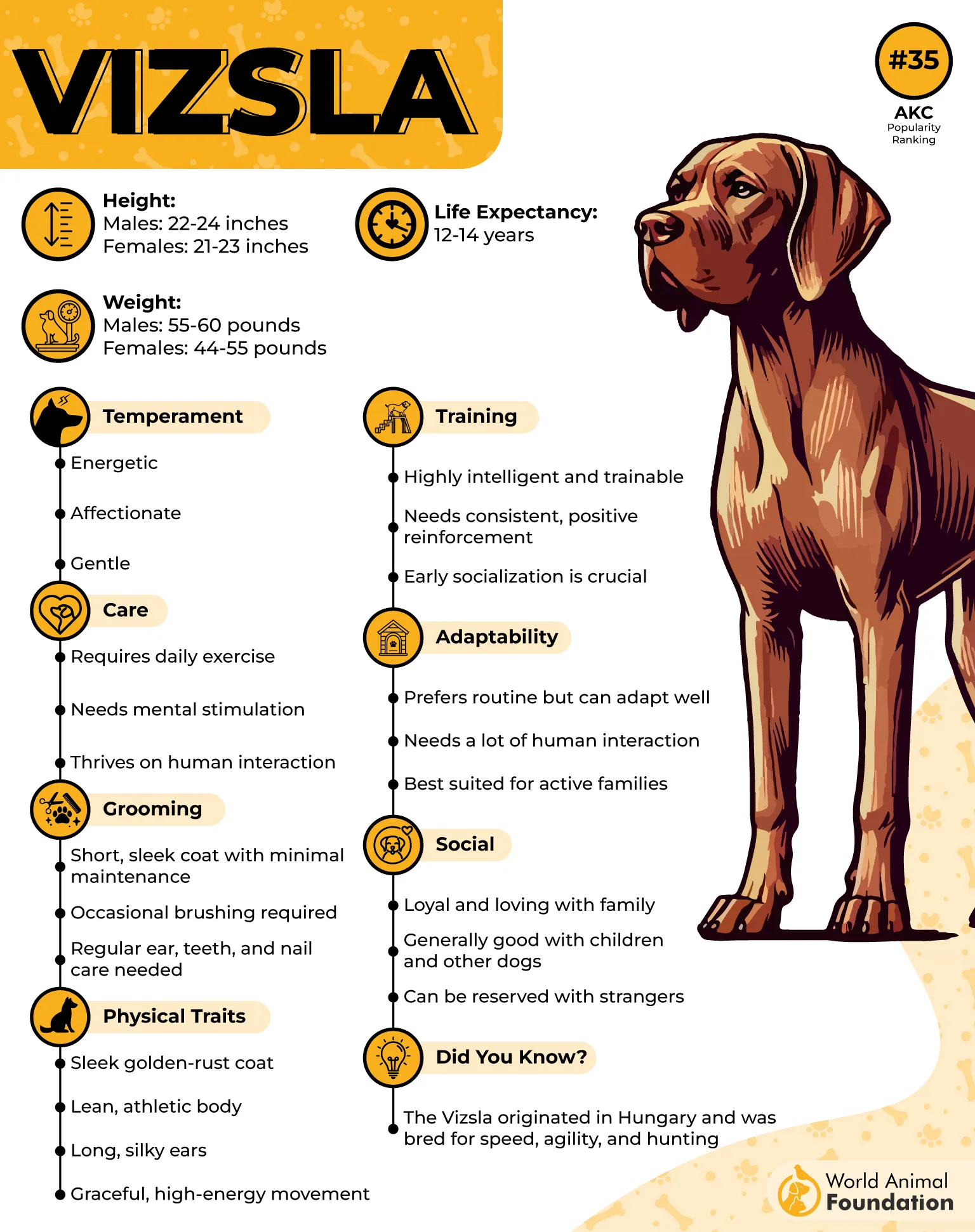
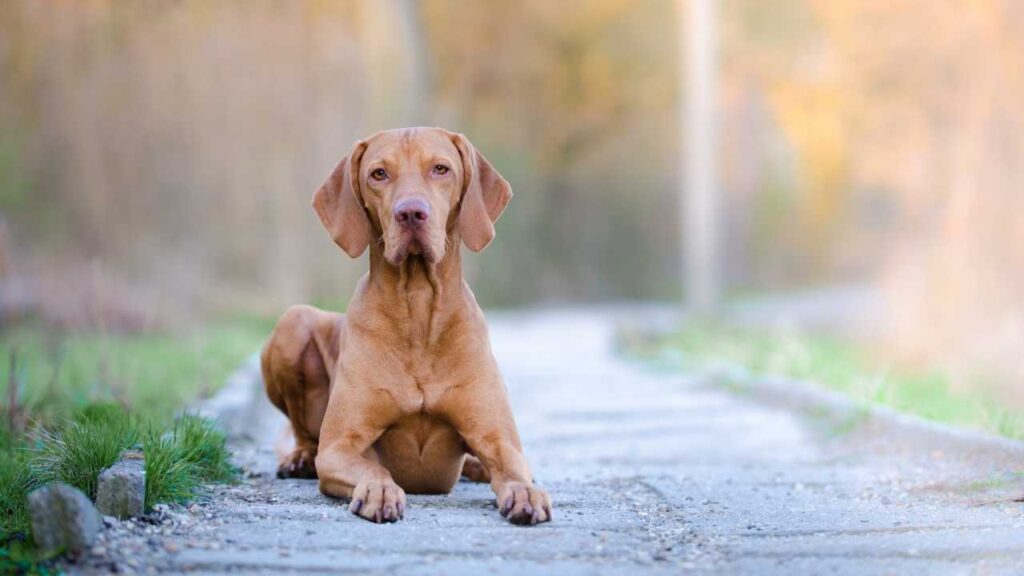
The Vizsla comes from Hungary, where it developed as a versatile hunting companion. It worked closely with people to locate and retrieve game, which helps explain why today’s Vizsla enjoys staying physically and emotionally close to its family. Give one an outdoor adventure with its favorite person, and it is usually very happy with the arrangement.
The Australian Cattle Dog has a tougher job history. It was developed in Australia to move livestock across difficult conditions, covering long distances while dealing with stubborn cattle. Its development involved several working dogs and the Australian dingo, helping create a hardy breed built for endurance.
That working instinct did not simply disappear when cattle dogs moved into suburban homes. Some still feel an urge to herd moving things, including other animals, bicycles, and even attempts to herd small children. Yes, your running toddler may occasionally look less like a family member and more like a tiny creature that needs organizing.
The biggest difference lies in their original partnership with people. The Vizsla was shaped to work closely alongside a hunter, while the Australian Cattle Dog needs enough independence to make quick decisions around unpredictable livestock.
2. Size & Build
Standing beside each other, these two breeds have very different ways of carrying themselves.
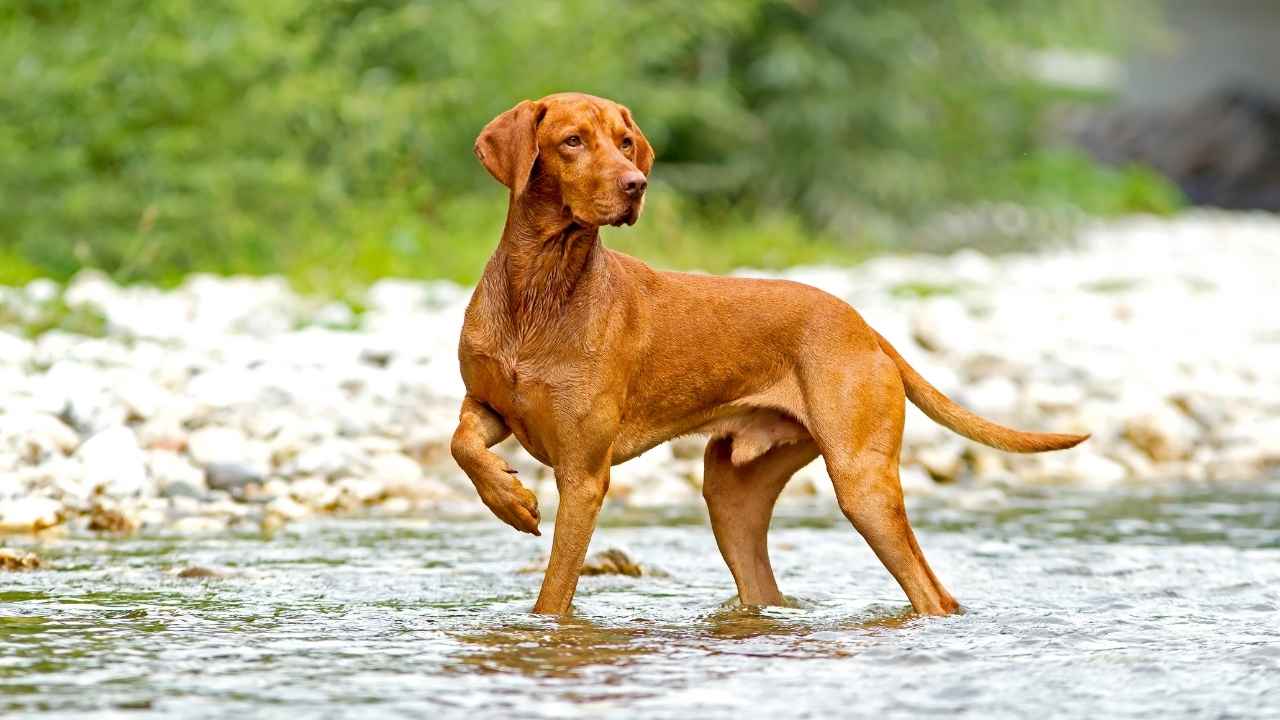
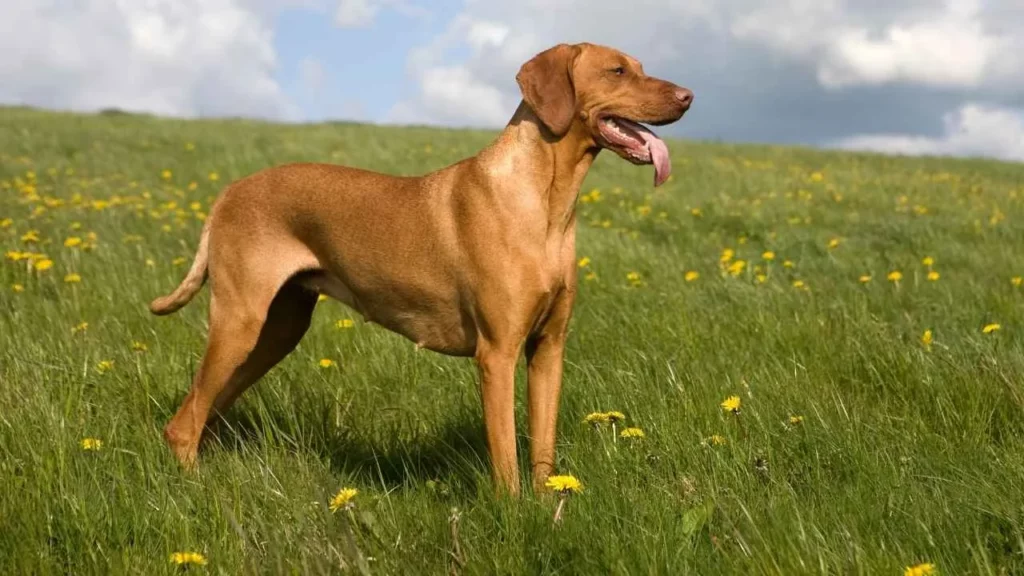
The Vizsla is taller, leaner, and built like a dog that would happily keep going when the trail starts getting interesting. Adult males generally stand around 22 to 24 inches at the shoulder, while females are usually slightly smaller.
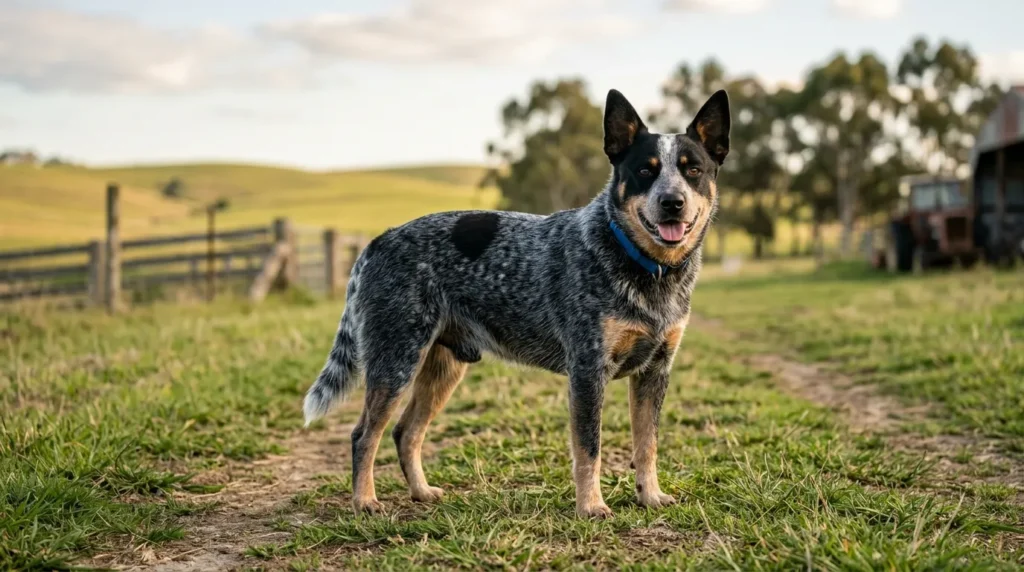
The Australian Cattle Dog is more compact and muscular. Its sturdy frame was built for turning quickly, changing direction, and handling demanding work without losing steam.
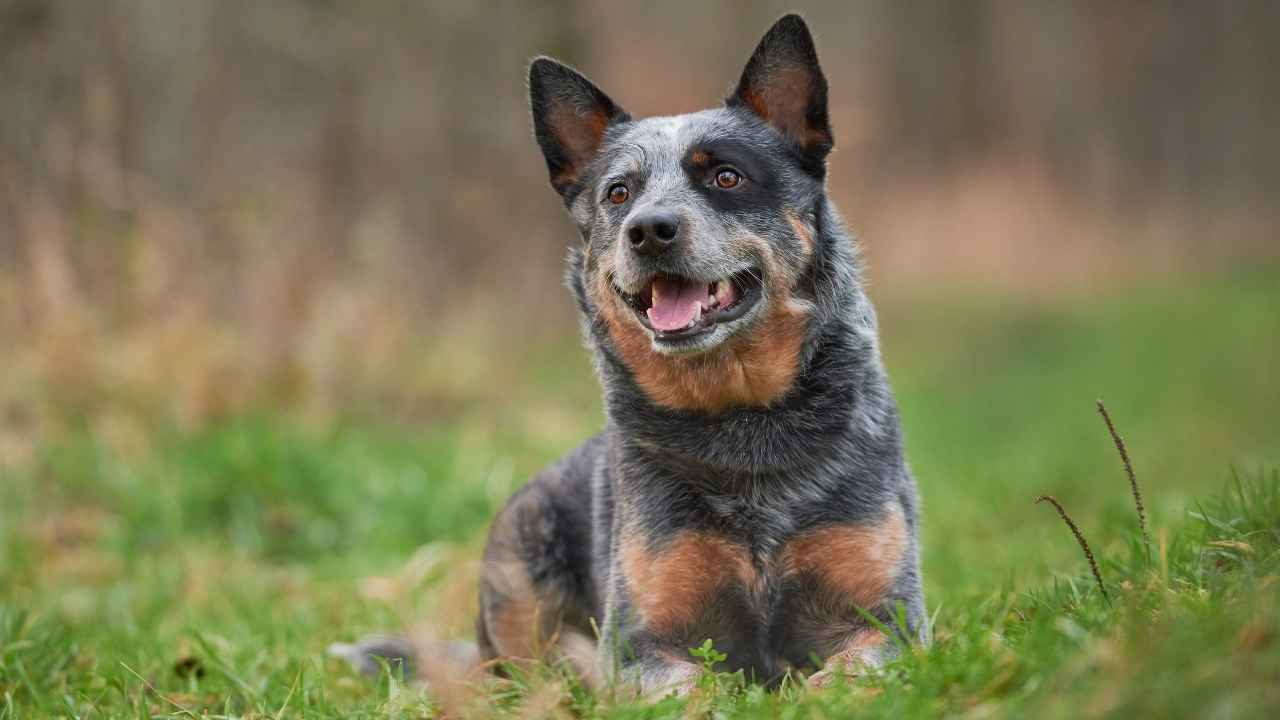
Their appearance also creates plenty of visual personality. Many Australian Cattle Dogs have a speckled coat with blue or red coloring. The blue and red varieties may look different, but a Blue Heeler and Red Heeler are simply names used for the same breed.
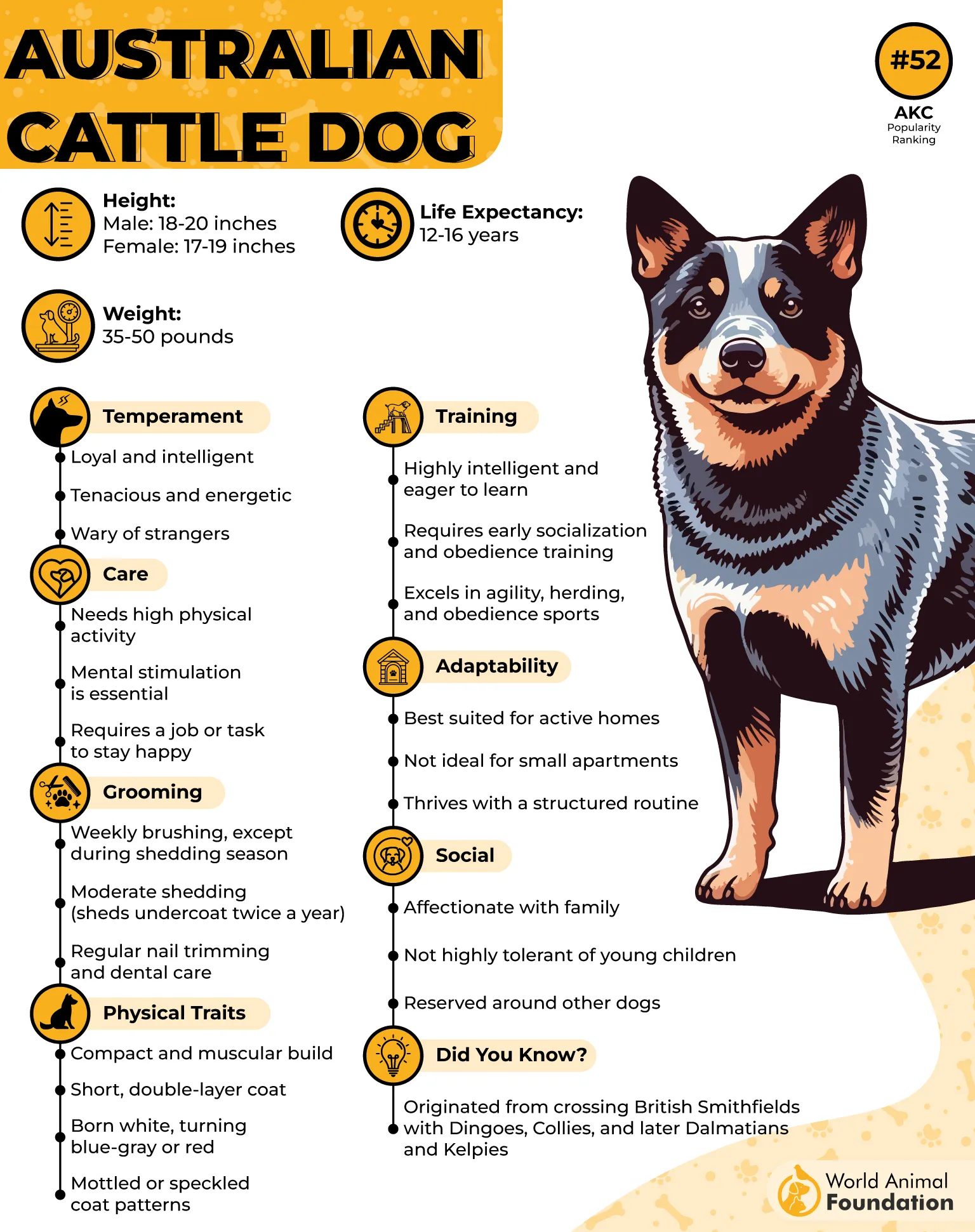
Both are medium-sized dogs, yet the Vizsla feels larger because of its height and longer body. The Australian Cattle Dog may be shorter, but its solid build packs plenty of physical strength into a smaller frame.
3. Pricing & Availability
Finding either of these breeds should never become a race to grab the first available puppy.
Prices vary depending on location, breeder reputation, bloodline, and health testing. Availability can also differ from place to place. You may see more cattle dogs in areas where their working history remains popular, while a Vizsla may require a longer search.
A lower price may look like a tempting deal, but the cost of a dog goes far beyond bringing it home. Food, veterinary care, supplies, training, and unexpected health expenses all become part of the picture.
Before choosing a breeder, ask about the health history of the parents. Depending on the condition and breed line, a DNA test may be part of responsible health screening.
Do not forget that this is a commitment that continues long after the puppy stage. The tiny, curious young dog you bring home will eventually become a full-grown companion with daily needs, opinions, and enough energy to keep you busy.
4. Temperament & Personality
Here is where the choice can start feeling personal.
A Vizsla loves being close to its people. This affectionate breed may follow its favorite person from one room to another simply because being near you feels better than being elsewhere. Some Vizsla owners jokingly call them Velcro dogs, and honestly, the nickname makes sense.
The Australian Cattle Dog tends to approach relationships differently. It is deeply loyal, but it may not feel the need to constantly sit in your lap or follow you around for cuddles. Instead, its loyalty appears through intense attention and a strong connection to its family.
Around strangers, the breed can be more reserved or wary. Early socialization helps it learn that every unfamiliar face is not automatically a situation that needs investigation.
Its instincts make it more protective and alert. This does not mean the dog is automatically aggressive, but Orvis mentions that poor training or lack of guidance allows unwanted behavior to grow.
The Vizsla wears its feelings openly. The Australian Cattle Dog makes you earn access to its softer side. Both can form powerful bonds, but they express them in their own way.
5. Exercise Needs & Energy Levels
Neither of these dogs is here for a five-minute walk and a quiet evening.
The Vizsla has high energy and needs regular exercise that gets its body moving. Long walks, hiking, retrieving games, and running can all help satisfy its athletic nature. Even better? Doing those things with you.
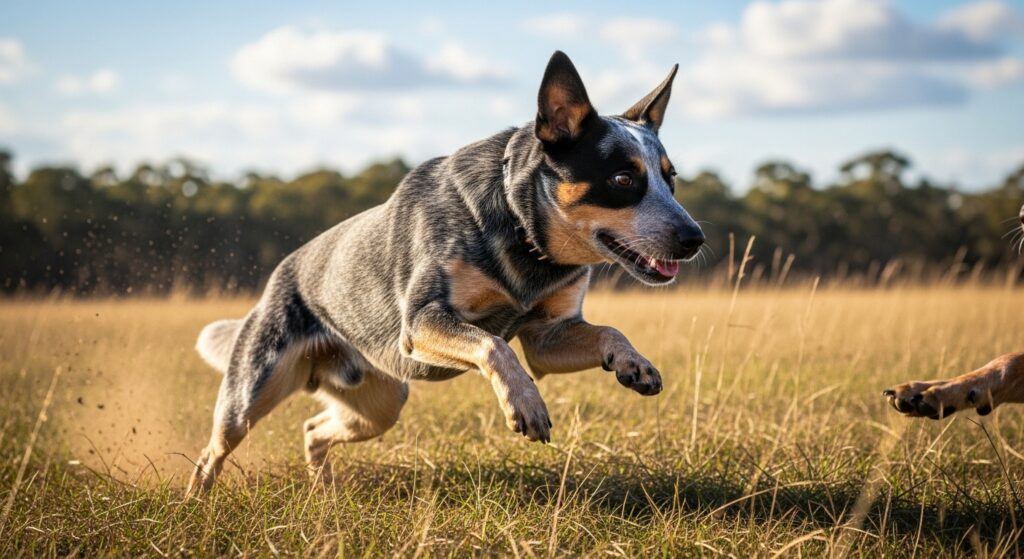
The Australian Cattle Dog also has plenty of energy, as Greencross Vets describes, but simply wearing out its legs is not always enough. This intelligent worker needs mental stimulation, too. Give its brain nothing to do, and it may decide to create a job of its own. Unfortunately, that job might involve rearranging your garden or investigating every corner of the house.
Training games, problem-solving activities, and structured tasks give this dog a healthy outlet for its busy mind.
Both breeds need active homes, but their motivation feels different. The Vizsla wants shared adventures. The Australian Cattle Dog usually wants a mission.
6. Training & Obedience
A smart dog sounds wonderful until it learns exactly which rules you are not enforcing.
The Vizsla is intelligent and eager to work with its owner. It enjoys learning new tricks, especially when training feels positive and rewarding. Because the breed can be sensitive, harsh methods may affect its confidence and the bond you are trying to build, as Omlet says.
The Australian Cattle Dog is highly intelligent, but it also has a strong independent streak. It needs clear boundaries and consistent training. If the rules keep changing, the dog may become genuinely confused about what you expect.
Early obedience training gives both breeds a useful foundation. For the Australian Cattle Dog, advanced activities can keep lessons from becoming boring. It may also excel at agility training, where physical movement and quick thinking come together.
Do not expect every lesson to stick within a week. Some dogs learn quickly, while others need more repetition. The real goal is steady progress, not turning your dog into a tiny genius overnight.
7. Grooming Needs & Shedding
If you want a dog with a complicated beauty routine, neither of these breeds is applying for the job.
Purina notes that the Vizsla has a short, smooth coat with relatively simple grooming needs. Basic care includes checking the ears, trimming the nails, and keeping its skin and coat in good condition.
The Australian Cattle Dog has a weather-resistant double coat and tends to shed more heavily. Regular brushing helps remove loose fur, particularly during seasonal shedding periods when your floor may suddenly develop a new personality.
Neither dog needs elaborate styling, but the Australian Cattle Dog generally requires more cleanup around the home.
Your routine may also change as the dog’s age increases. A lively youngster may not need the same level of care or activity as an adult or senior dog, so paying attention to changing needs matters.
8. Outdoor Adventure & Exploration
If your idea of a good weekend involves leaving the house and actually doing something, these dogs are ready.
The Vizsla makes an excellent outdoor companion. Its athletic body and hunting background make hiking and running natural choices. However, interesting scents or smaller creatures may quickly grab its attention, so reliable recall and safe spaces are important.
The Australian Cattle Dog brings a more serious attitude to adventure. It may enjoy a long trail, but it especially thrives when there is something to think about along the way. Hiking, dog sports, and agility give its body and mind something useful to do.
Its working background involved managing sheep and cattle across large areas, so endurance is rarely the problem. Keeping up with it might be your bigger challenge.
Structured outdoor activity is highly recommended for either breed. A secure environment, good recall, and proper training can help you handle their enthusiasm safely.
9. Health & Lifespan
Both breeds are generally active and healthy, but every breed comes with potential health concerns.
Vizslas may be prone to conditions such as hip dysplasia and certain eye problems. Australian Cattle Dogs may also face inherited health issues, including deafness and progressive retinal atrophy.
Some breeding lines may also be tested for primary lens luxation, another inherited eye condition. This is why asking breeders about health testing is so important. A healthy-looking puppy does not tell you everything about its genetic background.
A balanced diet, routine veterinary care, and appropriate activity all support long-term health. As your dog grows, its needs will change, so regular checkups help you stay aware of issues before they become more serious.
Both breeds can live well into their teens, although genetics, care, and individual health all play a role.
10. Which Active Breed Fits Your Lifestyle?
This is the part where you need to be completely honest with yourself.
The Vizsla may suit you if you want an athletic dog that also craves human connection. It enjoys being part of whatever its family is doing and may be happiest when activity and togetherness go hand in hand.
The Australian Cattle Dog may suit you if you enjoy structure, challenging training, and a dog with a serious working mindset. Its instincts and energy can be more difficult to handle, especially for inexperienced owners.
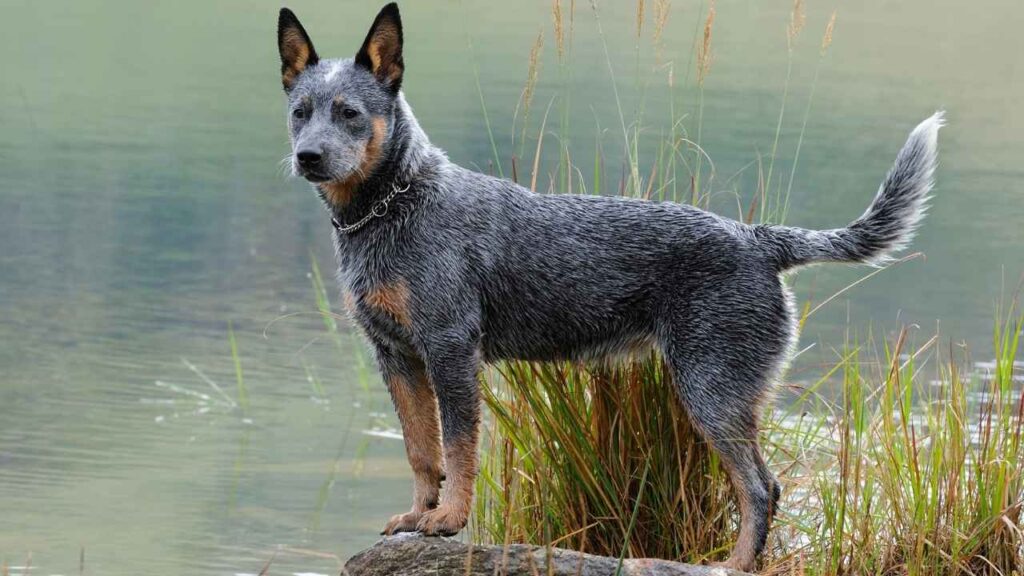
If you have children or other pets, think carefully about the Australian Cattle Dog’s tendency to control movement. Proper training and supervision matter, particularly in homes with active small children.
Your daily lifestyle matters far more than which breed looks more appealing online. Ask yourself how much time you truly have for exercise, training, socialization, and companionship.
The Vizsla may be the better match for someone looking for an emotionally connected adventure partner. The Australian Cattle Dog may appeal to someone who enjoys the challenge of working with an exceptionally focused and intelligent dog.
Conclusion
The Vizsla and Australian Cattle Dog may both be active breeds, but they ask for different things from the people who bring them home.
Neither choice is simply about picking the more athletic dog. Think about your schedule, your experience, and the amount of time you can realistically give every day.
A dog is part of your life through busy mornings, lazy Sundays, stressful weeks, and everything in between. Choose the one whose natural needs make sense for your real routine, not the routine you hope you might have one day.
