




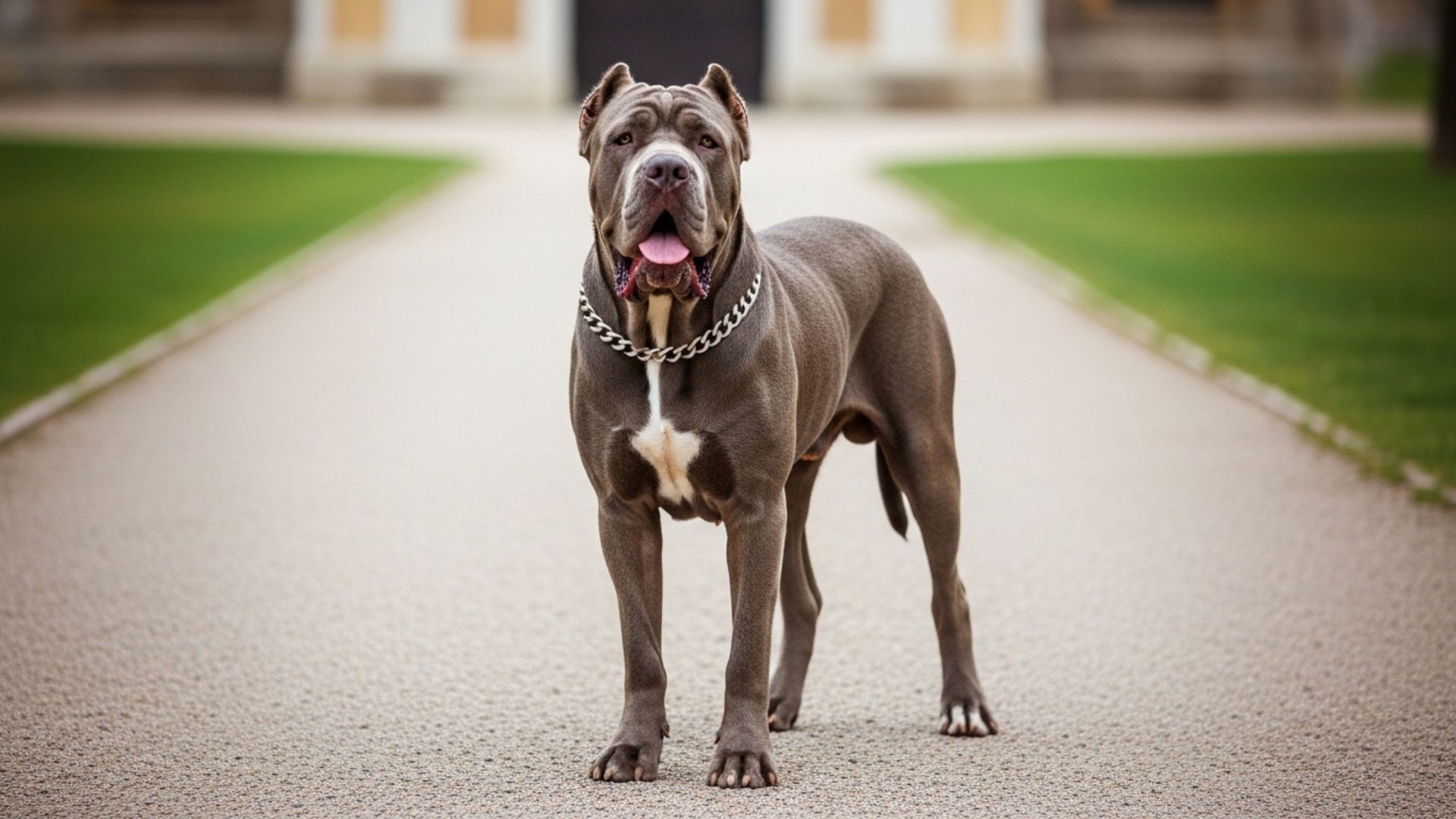
When most people think of giant dog breeds, names like the Great Dane, Saint Bernard, or Newfoundland probably come to mind. But beyond these familiar giants exists a world of rare dog breeds that few people ever encounter—especially in the United States.
These dogs aren’t just large in size; they’re larger-than-life companions whose presence can completely transform a home, garden, or even a neighborhood. What makes these largest dog breeds so fascinating isn’t just their impressive stature—it’s the unique mix of strength, intelligence, and gentle temperament they bring to the table.
Owning one of these rare giants isn’t just about having a pet; it’s about welcoming a loyal, one-of-a-kind companion whose personality is as grand as its size.
Whether you’re a dog lover, a breeder, or simply curious about the most extraordinary canines in the world, we will introduce you to rare giant breeds you’ve likely never heard of—and why they deserve a place in the hearts of dog enthusiasts everywhere.
Unique and Rare Giant Dog Breeds: A Breed Guide
1. Leonberger
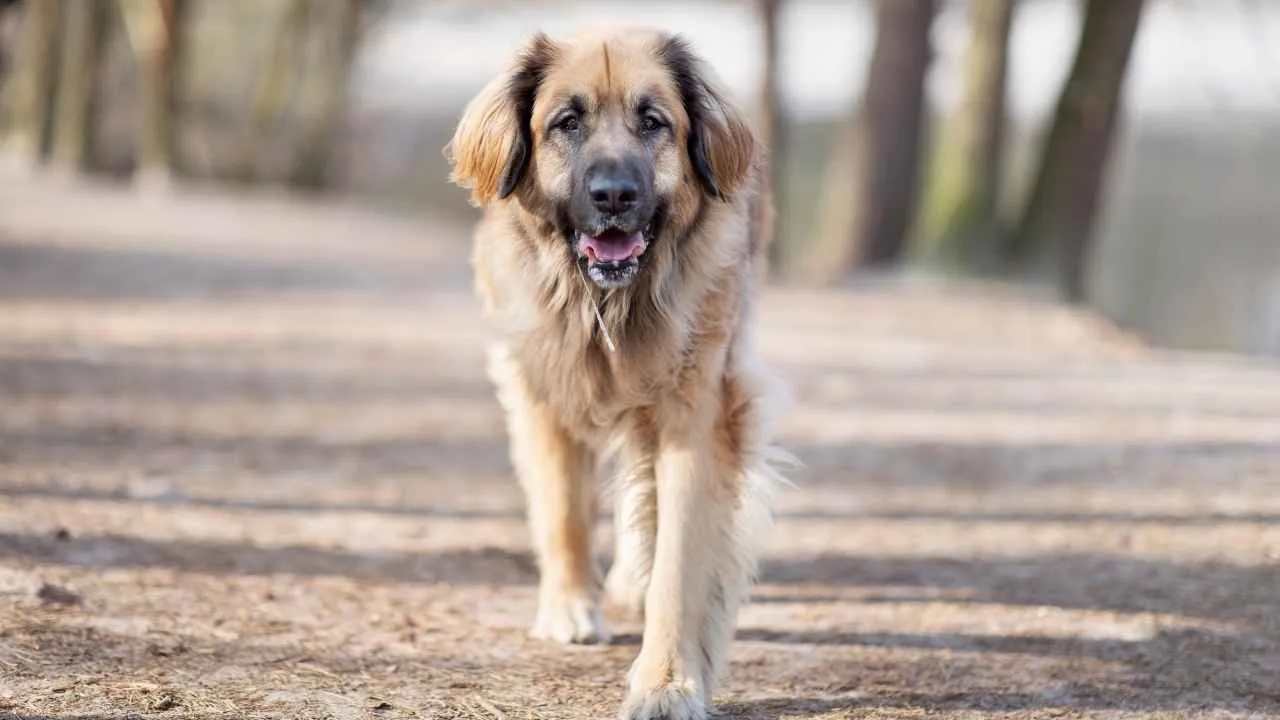
Originally developed in Germany, this gentle giant descends from powerhouse breeds like the St. Bernard and the Newfoundland, which explains the size. And by size, we mean “Did that dog just block out the sun?” size. Leonbergers frequently tip the scales at well over 100 pounds, with some males pushing 170+.
The Leonberger nearly vanished during World War I and World War II, when food shortages and economic hardship made maintaining giant breeds incredibly difficult, as mentioned by Leonberger Life. Thankfully, devoted breeders brought them back from the brink.
Today, they’re thriving—though still considered rare compared to other big breeds.
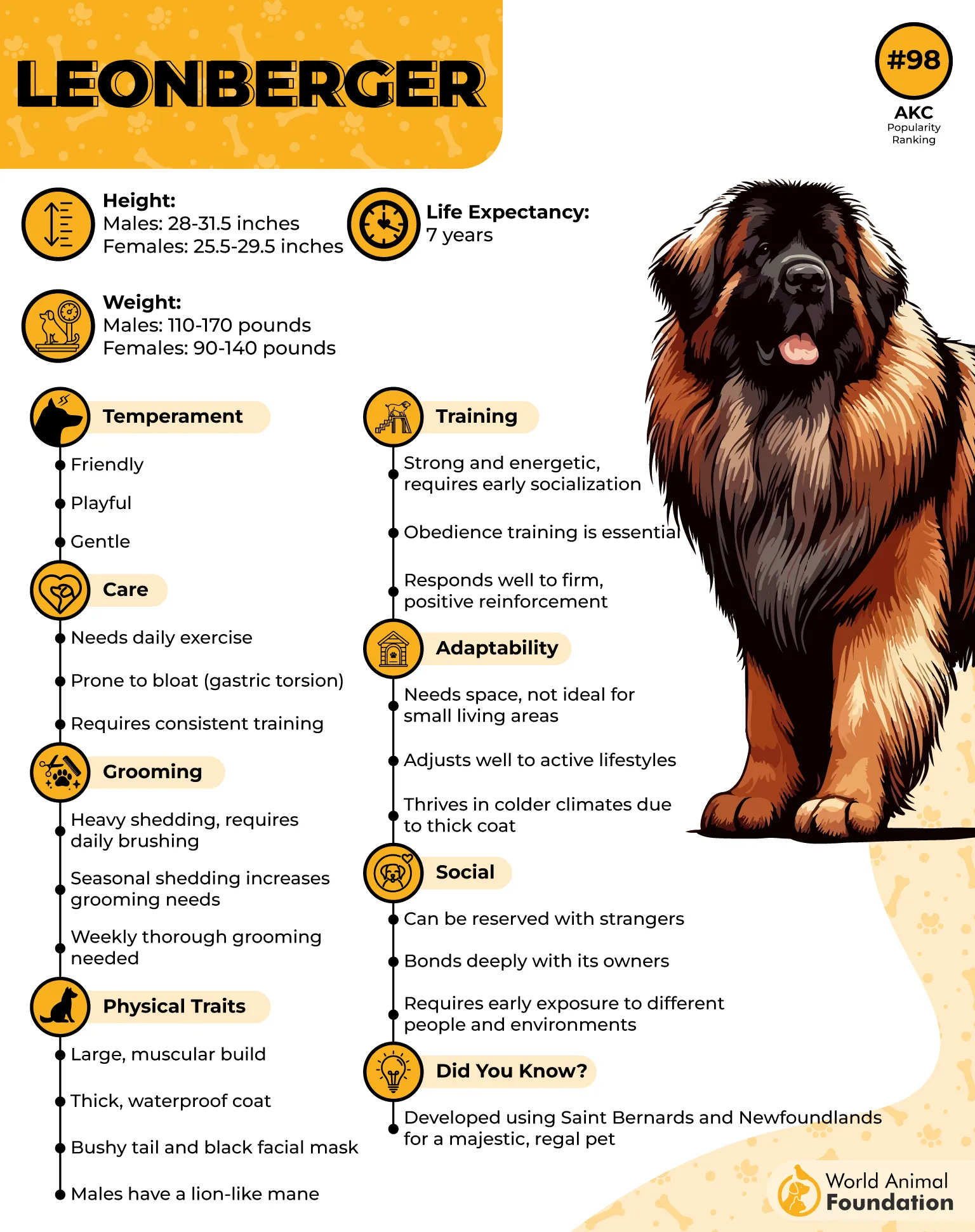
Despite their imposing size, Leonbergers are famously affectionate and family-oriented. They adore children, are deeply loyal, and prefer to be wherever their humans are. Cooking dinner? They’ll supervise. Folding laundry? They’ll “help.” Trying to use the bathroom alone? Absolutely not.
They’re often used in search-and-rescue work thanks to their intelligence and calm, steady temperament. But at home, they’re basically oversized lap dogs who didn’t get the memo about personal space.
They require:
Consistent training (they’re smart—but also strong!)
Daily exercise
Regular grooming (that mane doesn’t brush itself)
Plenty of human interaction
Leonbergers typically live around 8–9 years. Like many giant breeds, they’re prone to certain health issues and benefit from responsible breeding, regular vet care, and controlled growth during puppyhood.
And you don’t mind sharing your couch, your yard, and occasionally your entire living room. The Leonberger might just be your mythical match.
2. Komondor
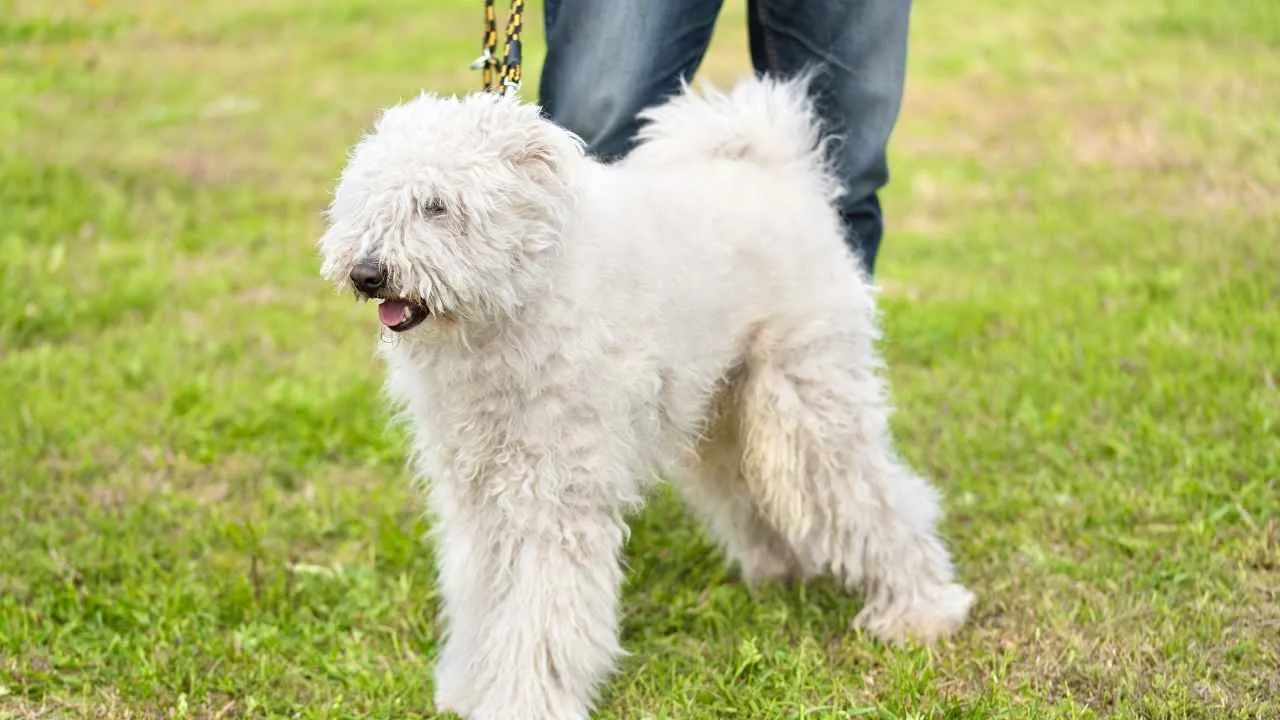
With its dramatic white cords cascading from head to tail, this Hungarian guardian is one of the most visually distinctive breeds on the planet. According to the American Kennel Club (AKC), the Komondor stands out not just for size, but for style.
Originally bred to guard livestock in Hungary, Komondors were designed to blend in with sheep—until a predator showed up. Then? Surprise! The “sheep” fights back.
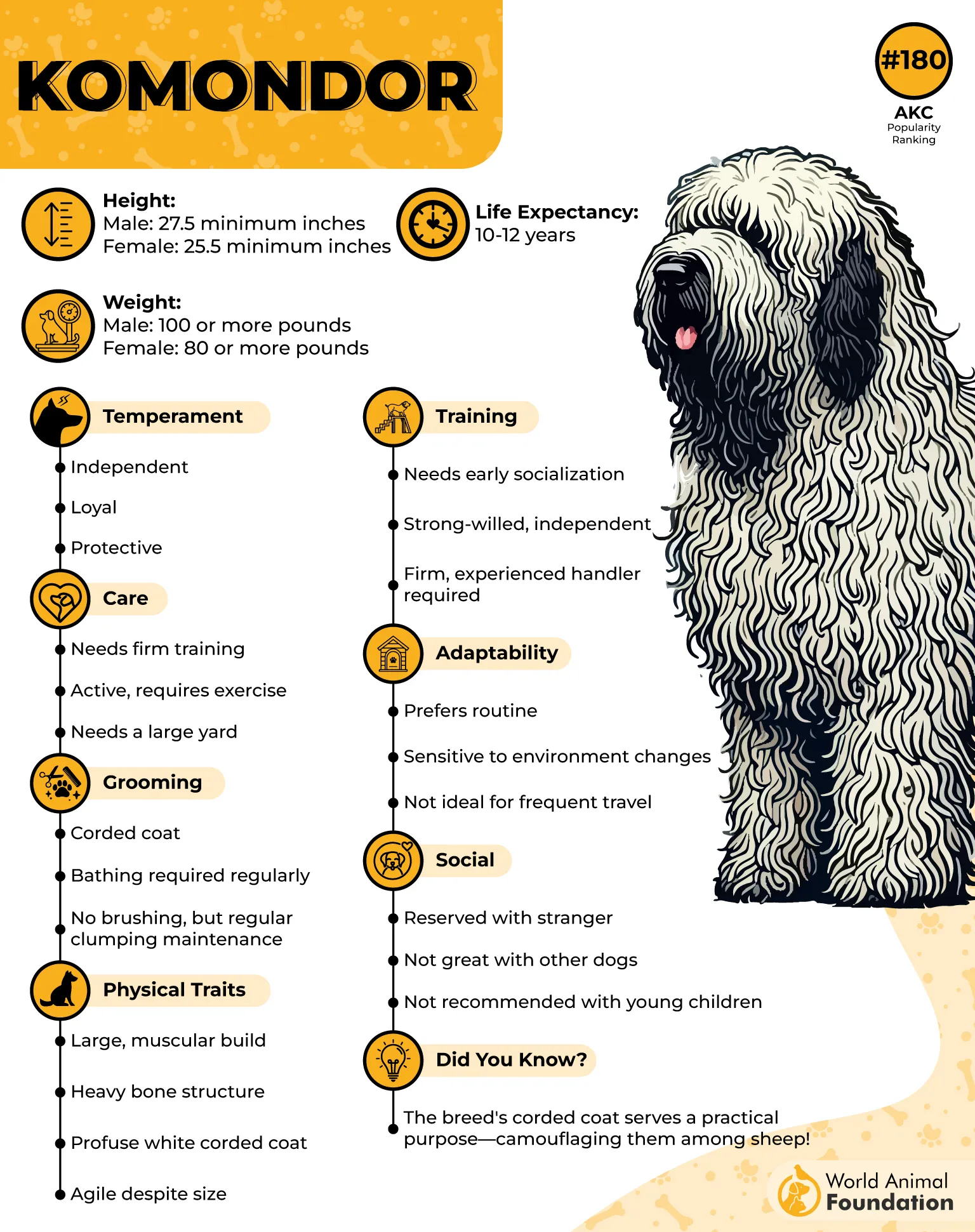
The Komondor’s bravery isn’t just a legend. During World War II, many Komondors were killed because of their fierce loyalty and protective instincts. Soldiers attempting to occupy farms or properties often had to confront these vigilant guardians first. The dogs simply refused to back down.
It’s a somber chapter in the breed’s history—but also a powerful testament to their unwavering dedication. The Komondor isn’t your typical social butterfly. This is a dog with:
Strong guarding instincts
Fierce loyalty to family
Natural suspicion of strangers
Independent thinkers
Early training and socialization are essential. With proper guidance, they become calm, steady protectors. Without it? You may find yourself being supervised in your own home by a dog that looks like a walking shag carpet.
Though still rare outside Hungary, the Komondor has dedicated fans worldwide. They thrive in rural settings with space to patrol and a job to do. Apartment living? Not ideal—unless your apartment includes 200 sheep and a mountain range.
3. Irish Wolfhound
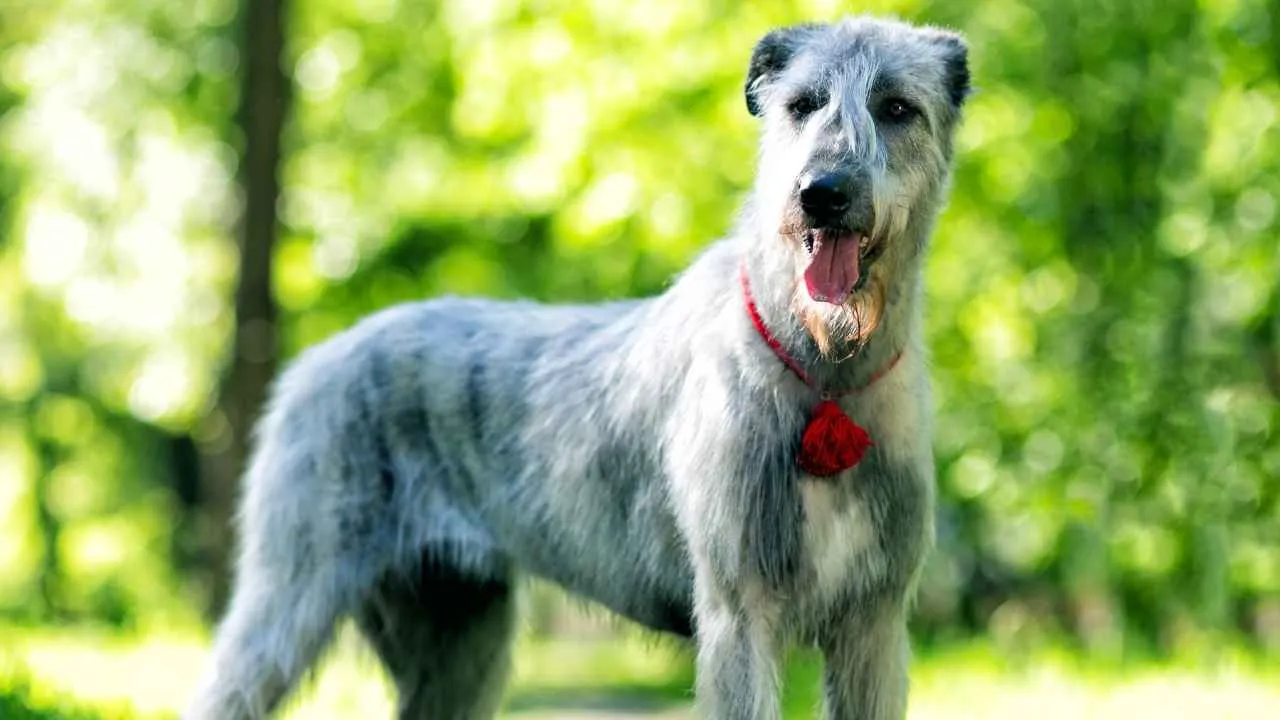
Often cited as the tallest dog breed in the world, some Irish Wolfhounds stand close to 3 feet tall at the shoulder — and that’s on all four paws. When they stretch up to greet you? Let’s just say eye contact is no problem.
Bred in Ireland centuries ago, these towering hounds were originally used to hunt wolves and protect homesteads. Their size wasn’t for show — it was for survival. Today, thankfully, their biggest hunt is usually for the coziest couch cushion.
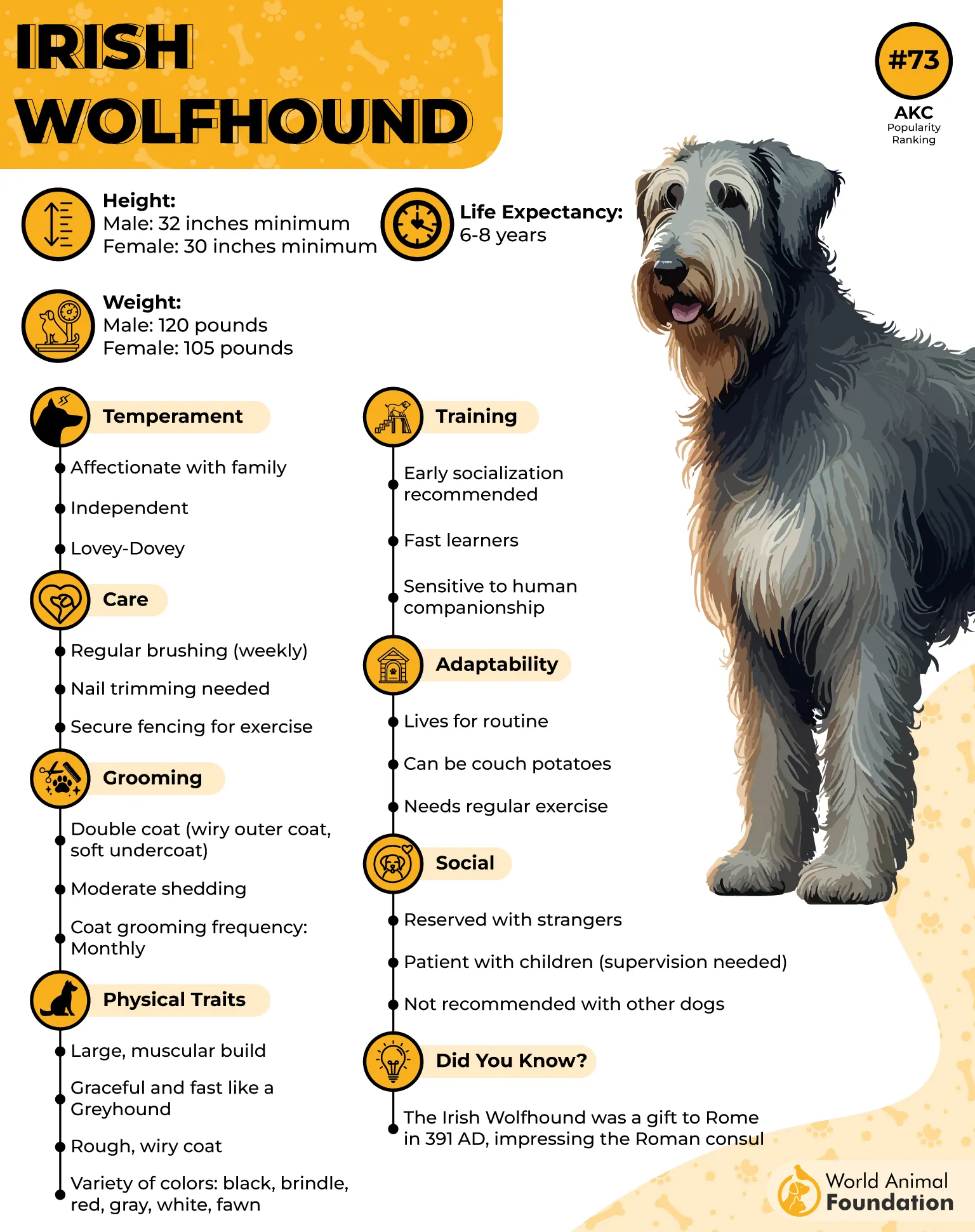
Despite their warrior past, modern Wolfhounds are famously gentle, dignified, and affectionate. Think “ancient Celtic hero”… who secretly wants belly rubs. Irish Wolfhounds tend to have soft, sensitive personalities. They bond deeply with their people and don’t respond well to harsh training.
And you’ll have a happy 150-pound student eager to please. (Yes, 150 pounds. That’s not a typo.) They thrive on encouragement and calm leadership. Yelling? Not effective. Treats? Extremely effective.
Their lifespan is typically around 6–8 years, which is heartbreakingly short. Owning a Wolfhound means loving deeply and knowing your time together may be briefer than you’d like.
They do need:
Space to stretch those long legs
Moderate daily exercise
Soft bedding (those joints deserve it)
Close companionship
They’re not excessive barkers, not hyper, and not aggressive by nature. Mostly, they’re giant, shaggy shadows who want to be near their humans.
4. Neapolitan Mastiff
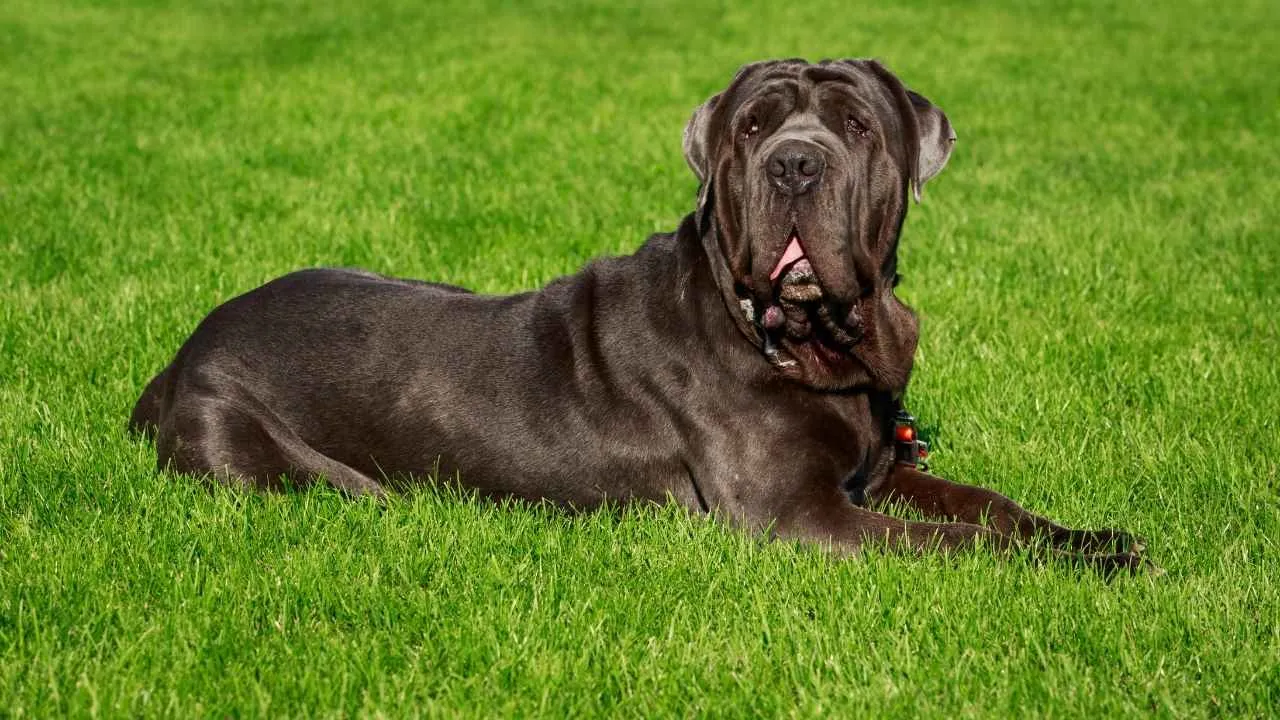
Often described as the Italian (slightly) smaller cousin of the English Mastiff, the Neapolitan Mastiff may weigh “only” half as much as some of their English relatives — but don’t be fooled. These dogs are still absolutely massive.
Thick-boned, broad-headed, and gloriously wrinkled, they look like they were sculpted out of extra clay… and then given a personality upgrade.
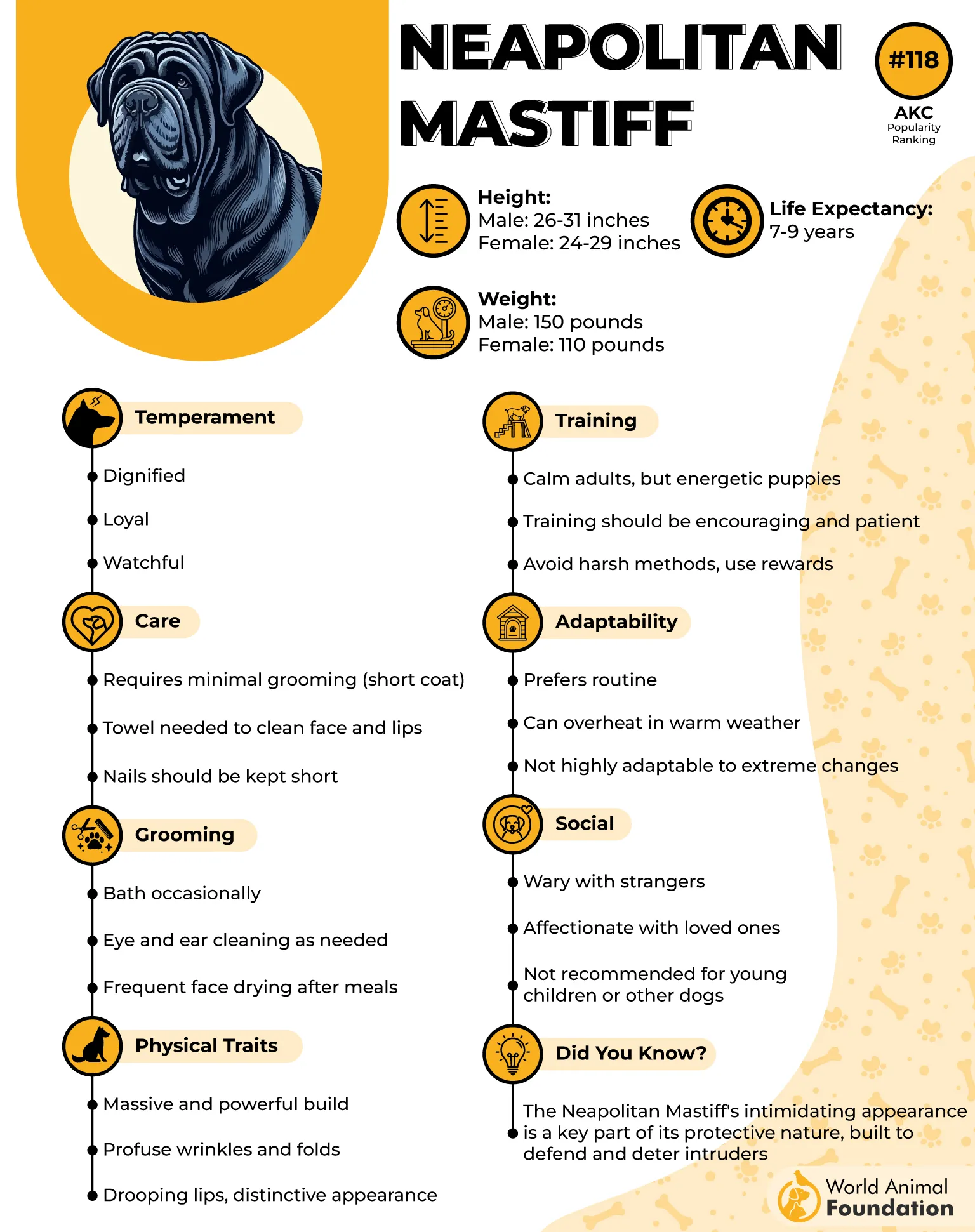
As per Wikipedia, though the Mastino Napoletano has ancient roots, modern breeding efforts began in 1947 thanks to Italian journalist and breed enthusiast Piero Scanziani. After seeing one at a 1946 exhibition in Naples, he helped establish the first breed standard.
By 1949, the breed was officially recognized by the Ente Nazionale della Cinofilia Italiana. From there, this wrinkled guardian slowly gained admirers around the world. Despite their intimidating appearance, Neapolitan Mastiffs are famously low-energy. Think:
Professional sunbathers
Dedicated couch warmers
Security guards who prefer the night shift
They are naturally protective and devoted to their families, but not hyper or overly active. In fact, you may have to encourage them to go for walks. If left to their own devices, they’d happily nap through most of the afternoon — and possibly the evening.
Their wrinkles require regular care. Moisture and debris can get trapped between folds, especially around the face. Grooming wipes and routine cleaning are essential to prevent irritation and infection. If you love spotless black clothing… this may not be your breed.
Like many giant breeds, they have a relatively short lifespan (often around 7–9 years) and can be prone to joint issues and other large-breed health concerns. Responsible breeding and attentive veterinary care are crucial.
5. Scottish Deerhound

Often called the “Royal Dog of Scotland,” this noble sighthound has been admired for centuries for its grace, speed, and quiet dignity. If elegance could grow a beard and sprint 40 mph, it would look like this.
The Scottish Deerhound made its way to the United States in the late 19th century and was officially admitted to the Hound Group by the American Kennel Club in 1886. That’s right — this breed has been turning heads in America for well over a century.
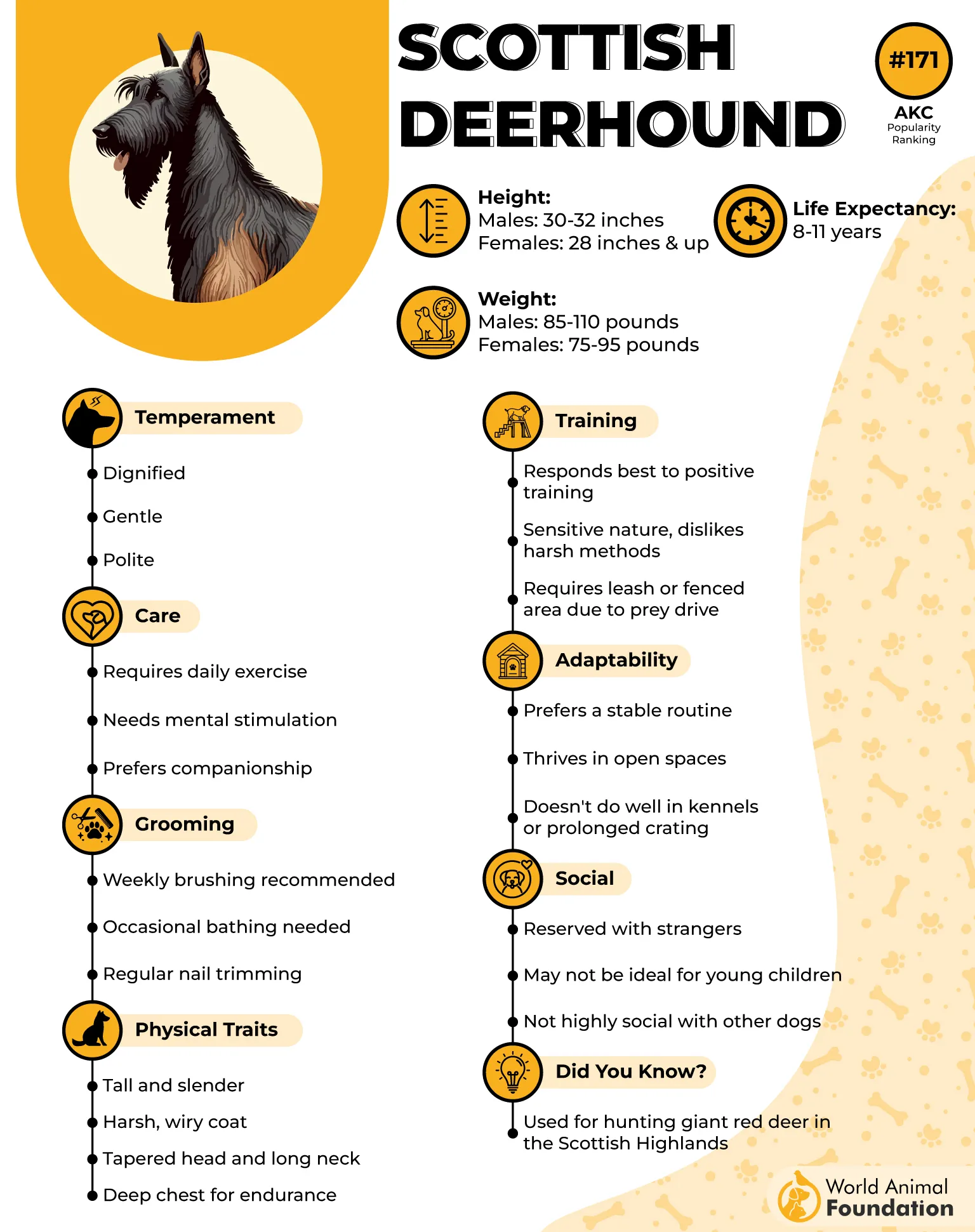
Despite its long history, the Deerhound remains relatively rare and highly valued today. Owning one feels a bit like belonging to an exclusive (and very tall) club.
With a long, lean physique similar to that of the Greyhound, the Scottish Deerhound is one of the tallest dog breeds in the world. These big dogs are athletic and powerful but carry themselves with calm composure rather than hyper energy.
Despite their impressive size, Scottish Deerhounds are affectionate, loyal, and surprisingly sensitive. They bond deeply with their families and tend to have a gentle nature with children.
They thrive with:
Positive reinforcement training
Regular exercise (room to run is ideal)
Close companionship
And while they love a good sprint, indoors they’re typically calm and relaxed. Giant outside. Gentleman inside. They’re not aggressive guard dogs — more like polite observers.
Like many giant breeds, Scottish Deerhounds have a relatively short lifespan (typically around 8–11 years) and can be prone to heart issues, bone cancer, and bloat. Responsible breeding and attentive veterinary care are key.
6. Greater Swiss Mountain Dog
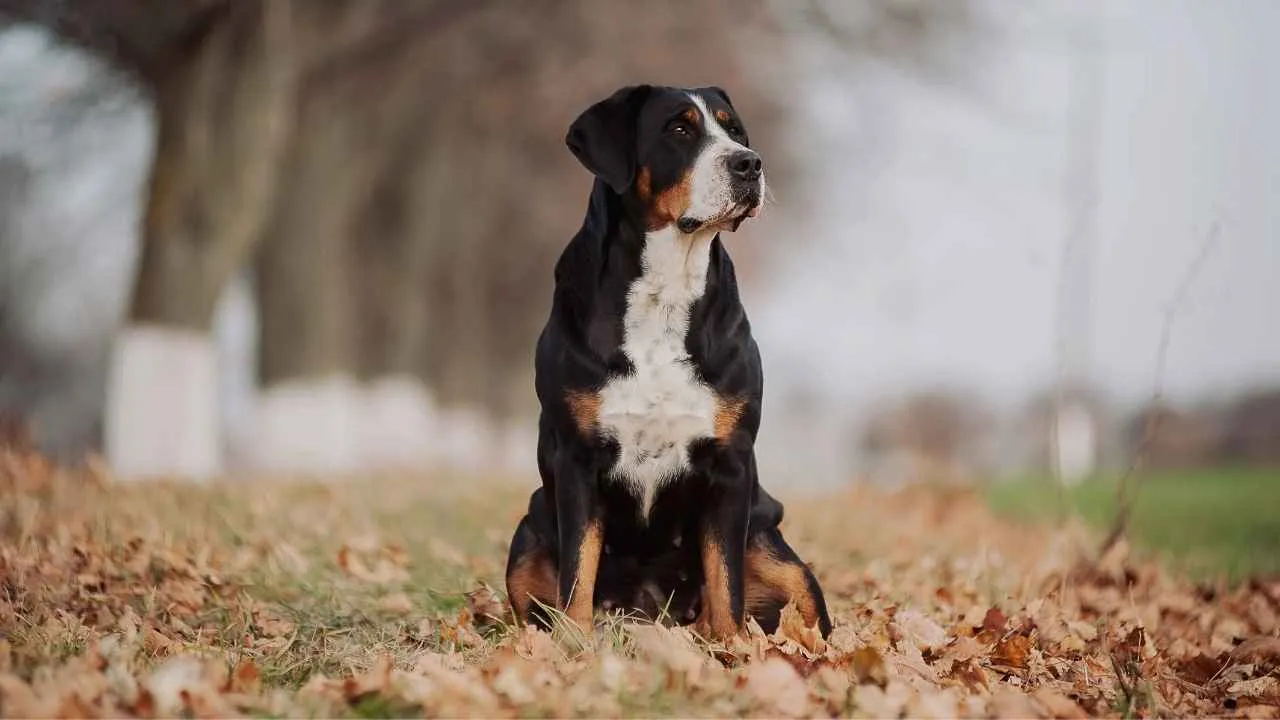
The Greater Swiss Mountain Dog — lovingly nicknamed the “Swissy” — is one of Switzerland’s oldest working breeds. With their striking black, white, and rust coat and powerful build, they look like they just clocked out from a shift in the Alps.
Originally bred to draft carts, guard farms, and drive cattle through mountainous terrain, the Swissy is strength wrapped in good manners. Before tractors were a thing, these dogs were basically furry pickup trucks.
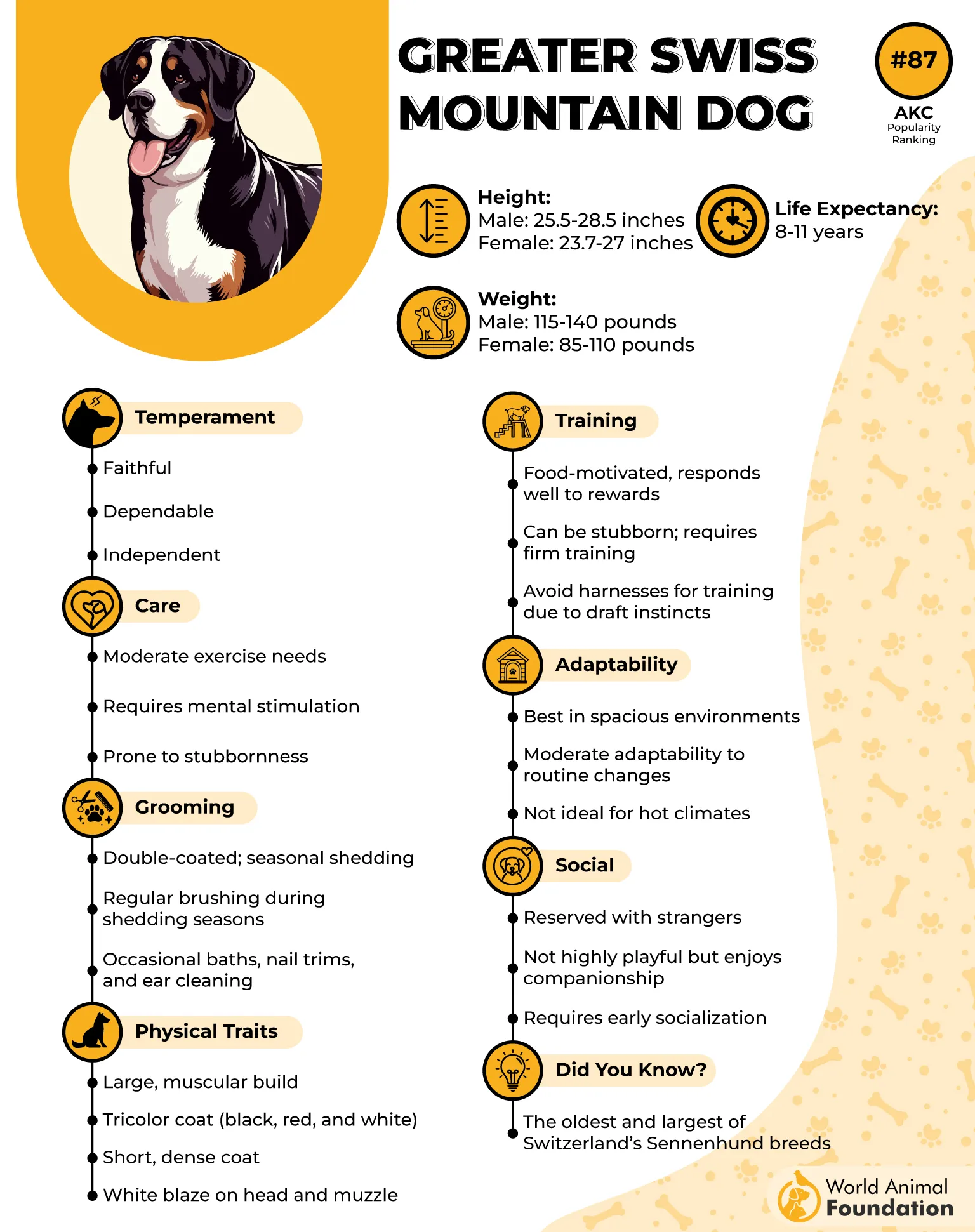
They’re one of four Swiss mountain breeds and the largest of the group — meaning they didn’t just help on the farm… they were the heavy machinery. They’re muscular, sturdy, and surprisingly agile for their size. Watching one move is like seeing a linebacker with ballet lessons.
Greater Swiss Mountain Dogs are:
- Deeply devoted to their families
Naturally protective
Gentle companions with children
Alert without being overly aggressive
They form strong bonds and don’t love being left alone for long periods. In fact, they may follow you from room to room just to make sure you’re safe from… absolutely nothing. They’re also known for being vocal. Not barky in a frantic way — more like conversational.
They thrive in homes with space and purpose. Apartment life isn’t impossible — but you’ll need commitment to exercise and mental stimulation. Like many large and giant breeds, the Greater Swiss Mountain Dog has a lifespan of around 8–11 years.
The Greater Swiss Mountain Dog is proof that strength and sweetness can absolutely live in the same 130-pound body.
7. Estrela Mountain Dog
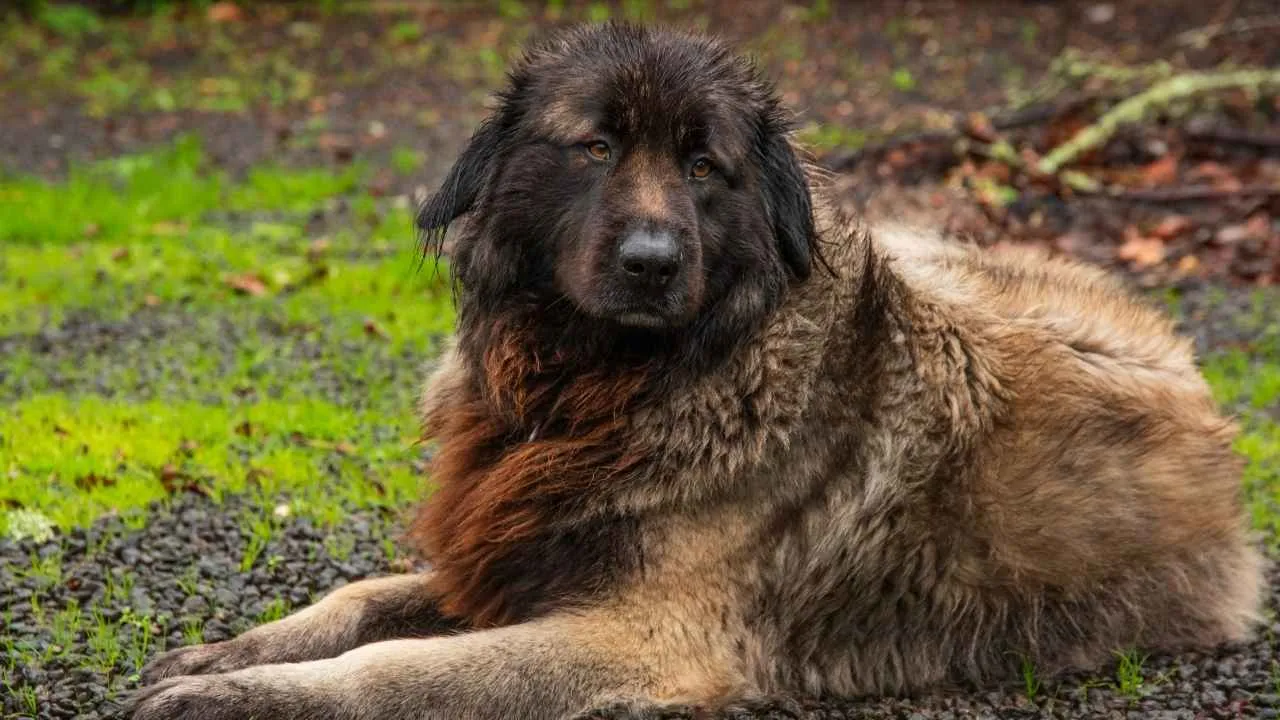
Straight from the rugged peaks of Portugal comes the Estrela Mountain Dog — a fluffy fortress with a heart of gold. Named after the Serra da Estrela mountains, this ancient guardian has been protecting livestock for centuries.
Wolves? Handled. Harsh weather? No problem. Suspicious strangers? Politely evaluated… from a distance. The Estrela is one of Portugal’s oldest native breeds, developed to guard flocks in high-altitude terrain. That means they’re:
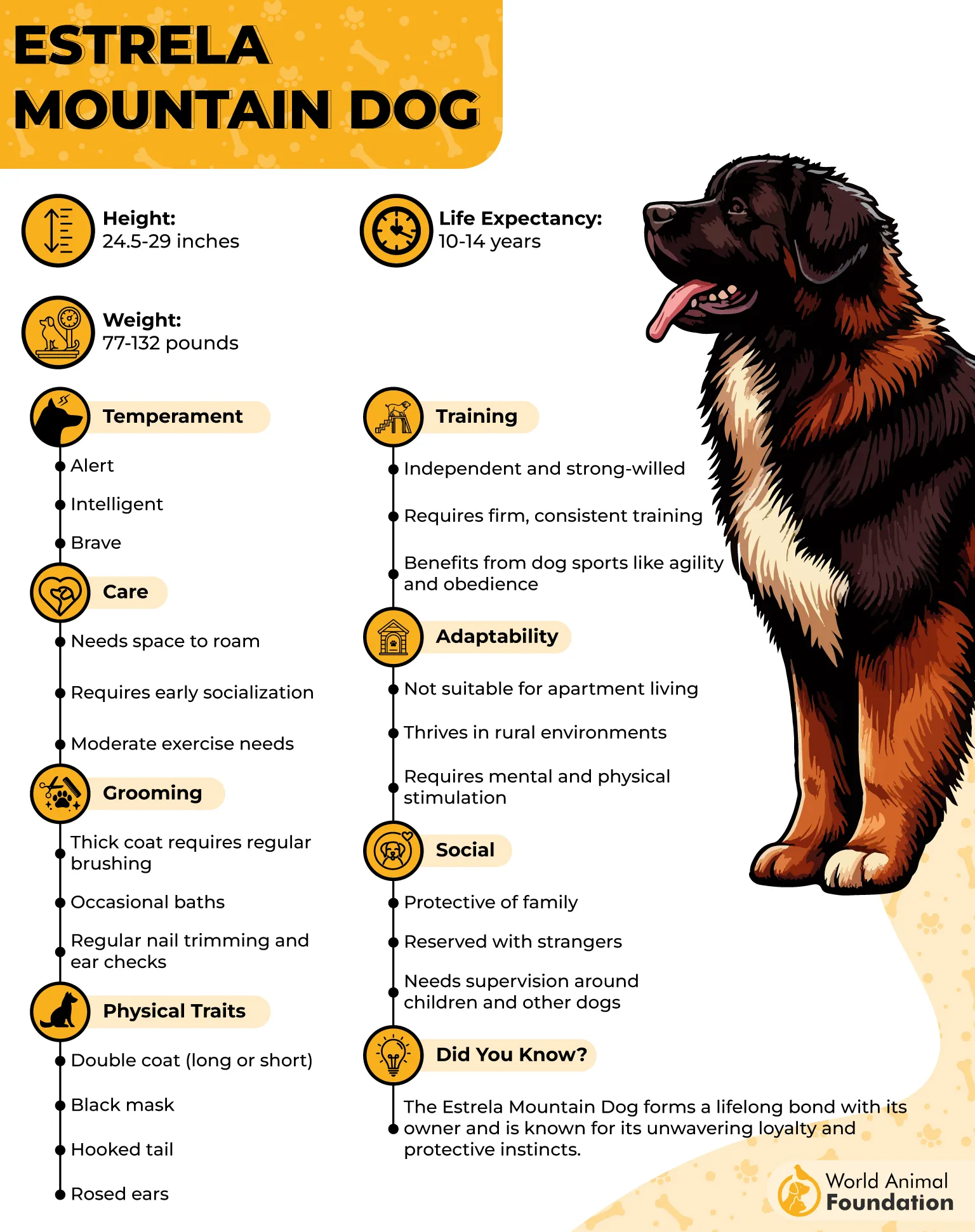
In other words, this is not a “yes, whatever you say” kind of dog. This is a “I’ve assessed the situation and made a decision” kind of dog.
Their thick double coat protects them from cold mountain climates — and also makes them look like royalty posing for a Renaissance painting. Estrelas form incredibly strong bonds with their families. They’ve affectionate nature and are gentle with those they trust, especially children. But their guardian instincts run deep.
That means:
Early socialization is essential
Consistent, confident leadership matters
They take their “watchdog” duties seriously
They thrive in homes with yards or rural settings. Apartment living? Only if you’re very committed — and possibly very persuasive.
The Estrela Mountain Dog generally lives around 10–14 years, which is relatively long for a large breed. They can be prone to hip dysplasia and some joint issues, but overall, they’re considered a hardy breed thanks to their mountain origins.
Just remember: this is a thinker. A protector. A loyal companion who will love you deeply — and possibly position themselves between you and the vacuum cleaner.
Conclusion
Exploring unique and rare giant dog breeds reveals a fascinating variety of temperaments, appearances, and care requirements.
Breeds like the Great Pyrenees, Saint Bernards, Dogue de Bordeaux, Anatolian Shepherd, Tibetan Mastiff, and Bernese Mountain Dog are known for their large stature, making them imposing yet gentle companions.
While some, such as the Cesky Terrier or Finnish Spitz, may be smaller in size, they still offer incredible loyalty and excellent companionship. When considering these breeds, first-time owners should pay attention to mental exercise and family life, as many giants thrive on interaction and activity.
Understanding the balance between their short coat, temperament, exercise, and socialization needs ensures that these magnificent dogs can thrive in loving homes.
Ultimately, whether you’re drawn to a towering Great Dane or a majestic Tibetan Mastiff, these rare breeds offer a unique blend of loyalty, charm, and presence that few dogs can match.
