




This is something nobody tells you before getting a giant dog breed.
Your furniture becomes a suggestion. Your personal space is a negotiation. And your lap, apparently community property now. Even though this dog weighs 140+ pounds and is physically incapable of fitting on your lap.
These are the truly giant dog breeds; size and personality are just awe-inspiring for these dogs. They don’t adapt to your life; you adapt to theirs. Joyfully, completely, without any regrets whatsoever.
Because nothing, we repeat, nothing prepares you for how much personality these large dog breeds hold inside.
These gentle giants of the dog world are NOT merely big versions of regular dogs. They are their own category entirely. Calm, more emotionally intuitive. More present.
Fun Fact!
Did you know the English Mastiff holds the world record for heaviest dog ever recorded?
As per USA Today, A Mastiff named Aicama Zorba of La-Susa, documented as the heaviest dog in 1989, weighed an almost incomprehensible 343 pounds of weight and measured 8 feet from nose to tail
THREE HUNDERED & FORTY-THREE POUNDS!!
For reference, that is heavier than most NFL linebackers. The English Mastiff casually breaking records, one enormous nap at a time.
Truly Giant Dog Breeds: Size and Personality
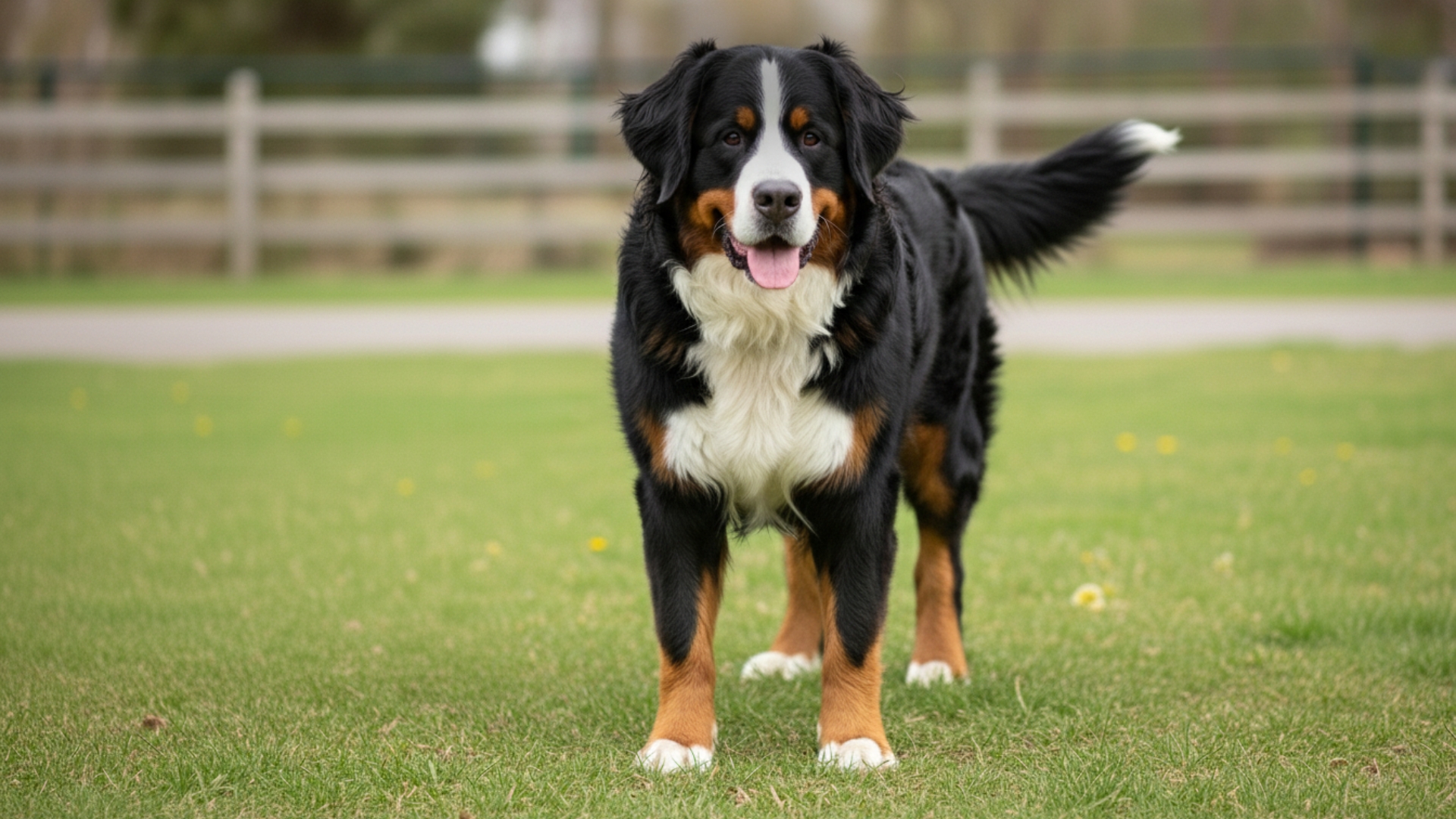
1. Bernese Mountain Dog
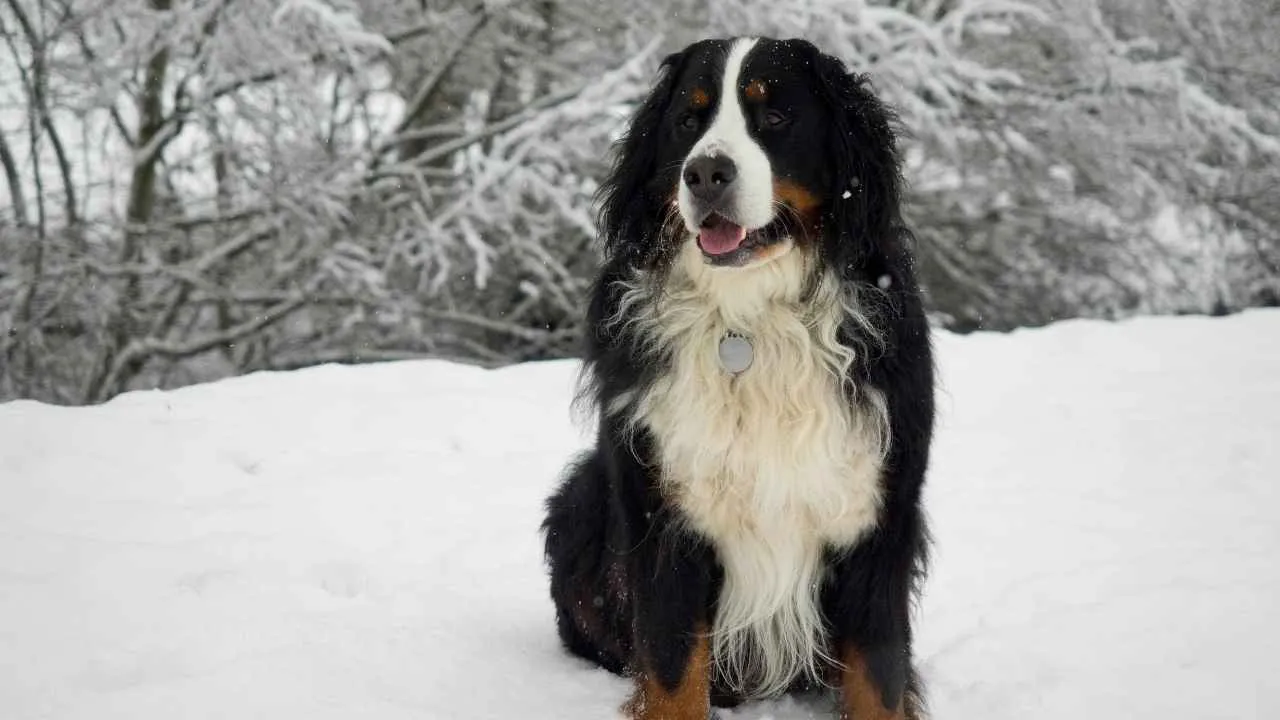
The Bernese Mountain Dog is a giant dog breed that makes people pull their cars over. Yeah!
Not exaggerating. That tri-colored coat, jet black, rust, and bright white, on a 115+ pounds frame that moves with surprising grace… people stop. They stare. They ask to pet it, and then they crouch down and have a whole moment.
Originally bred in the Swiss Alps to pull carts, herd cattle, and work alongside farmers in brutal cold weather conditions, these BIG fluffy dogs are a working dog underneath all that beauty. Their history shows up in their personality as a calm and purposeful steadiness that makes them exceptional family dogs.
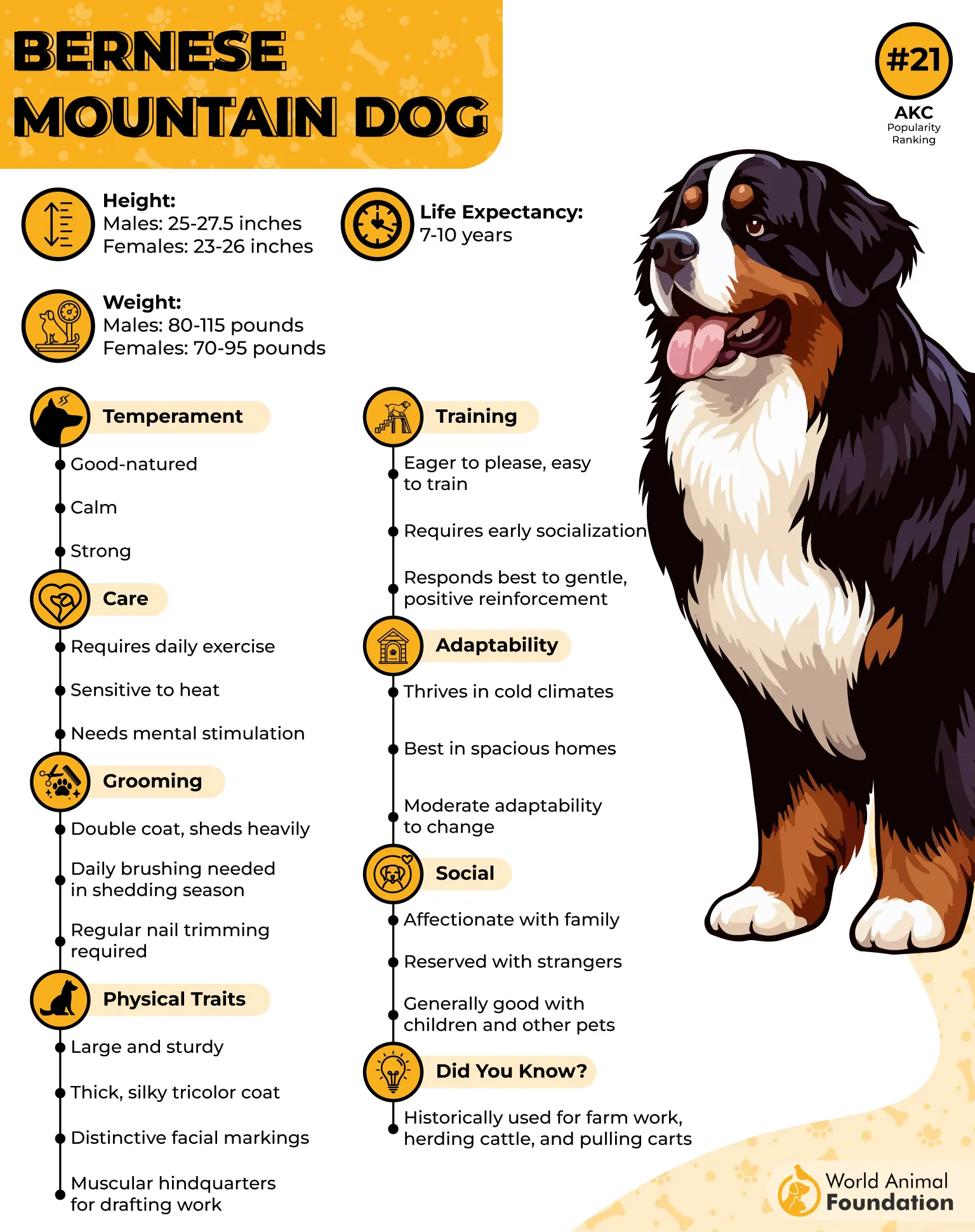
The #1 thing to know about caring for a Bernese Mountain Dog: the coat is a commitment. That thick double coat sheds aggressively, seasonally, and sometimes, seemingly continually. You need to work on regular brushing to stay healthy and manageable.
Health concerns are real with this breed.
As per PetMD, they are prone to Hip Dysplasia and heart disease. Their life expectancy is shorter than that of most large dog breeds, at 7 to 10 years.
So, the care approach with a Berner is not just daily exercise and grooming. It is a protective veterinary partnership from day one. More vet visits, earlier. Every year with a Berner is worth protecting.
2. Great Dane
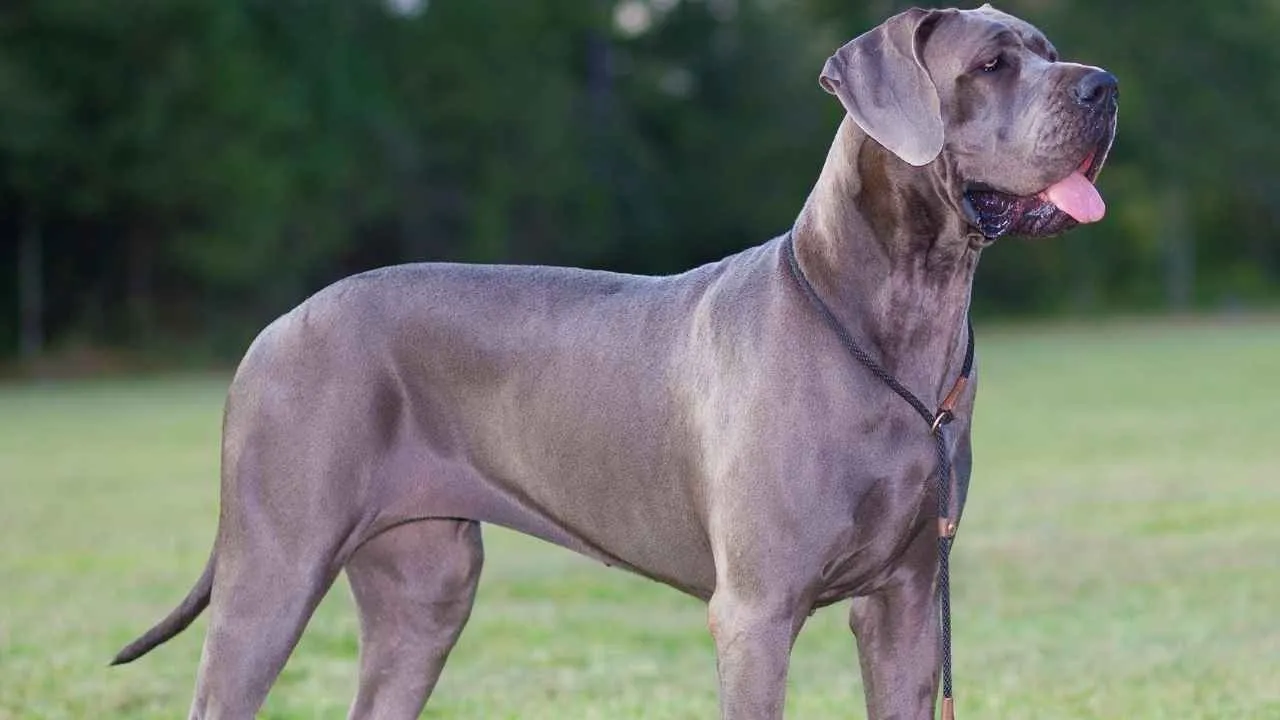
The Great Dane looks like a big dog, but it is a land situation!
Standing up to 32 inches tall at the shoulder and clearing most kitchen counters without trying, Great Danes operate in a physical dimension that reorganizes every room. Causally.
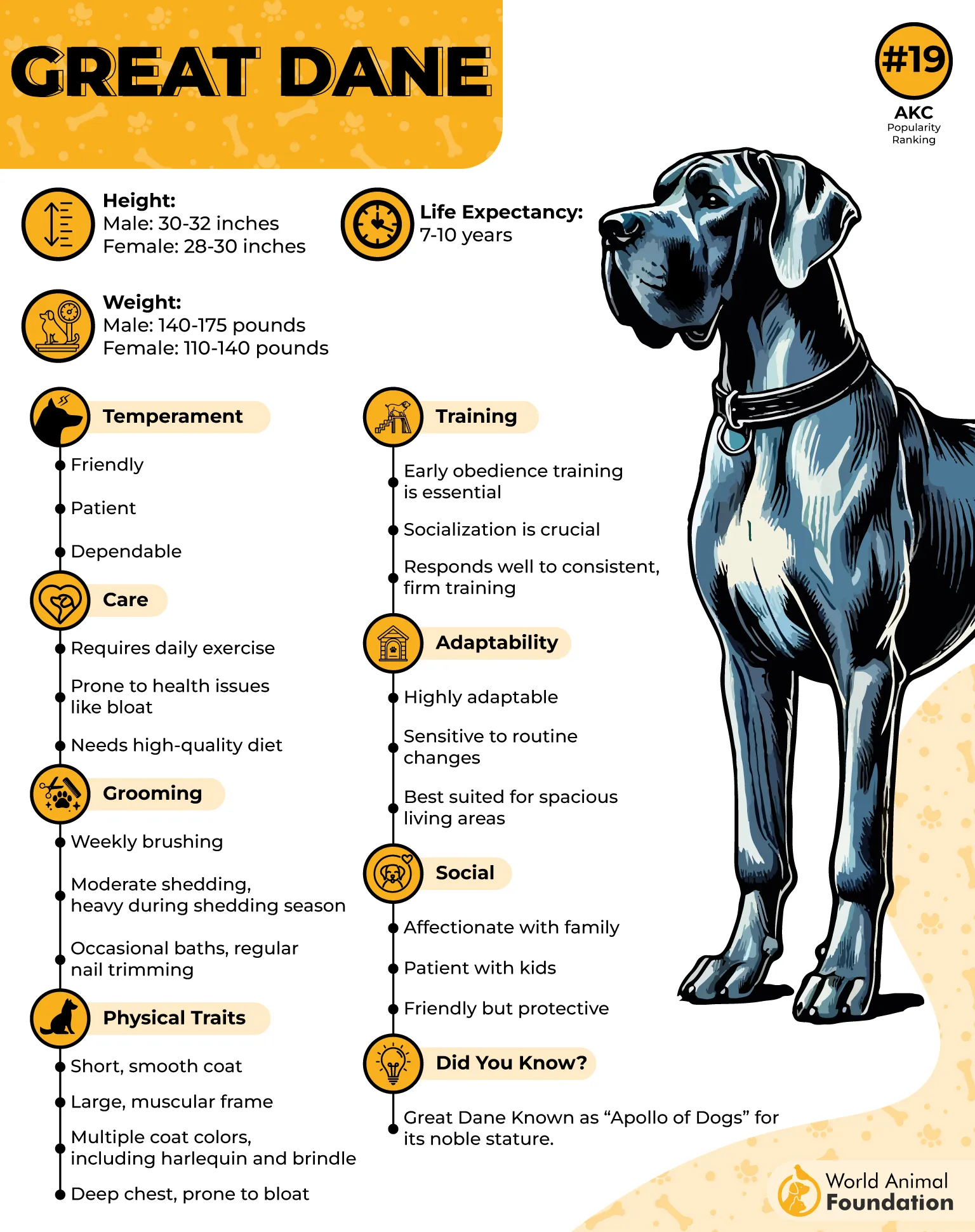
Things get knocked off tables, not out of clumsiness but just geometry.
And yet somehow, they have ZERO idea they are this large. Purina confirms they think they are lap dogs, with that 175+ pounds.
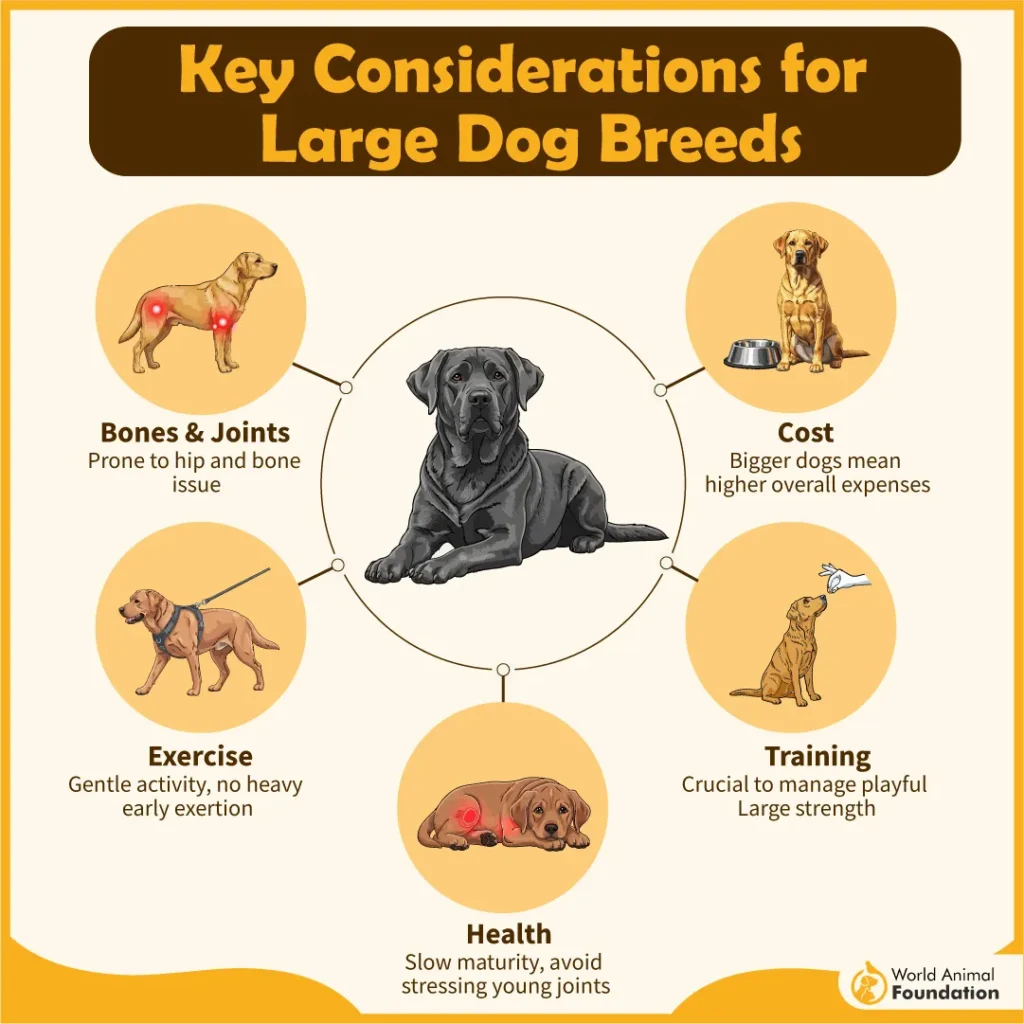
Great Danes are gentle giants who will attempt to sit in your lap with the same confident energy as a Chihuahua. They bond closely with their families.
Plus, they are generally gentle with children (though pet parents of toddlers should know a wagging Great Dane tail can accidentally knock a small human clean over).
Third, they have a calm and affectionate personality that makes them excellent family pets despite the square footage they require.
Care for a Great Dane means understanding one critical thing: bloat, or GDV, is a life-threatening emergency for this breed, as noted by Britannica.
Feeding smaller meals, avoiding vigorous daily exercise right after eating, and recognizing the signs of bloat is not bonus knowledge. It is essential.
Beyond that, daily exercise, more space than a studio apartment, and regular vet checks for heart disease keep a Great Dane living their best life.
3. Newfoundland
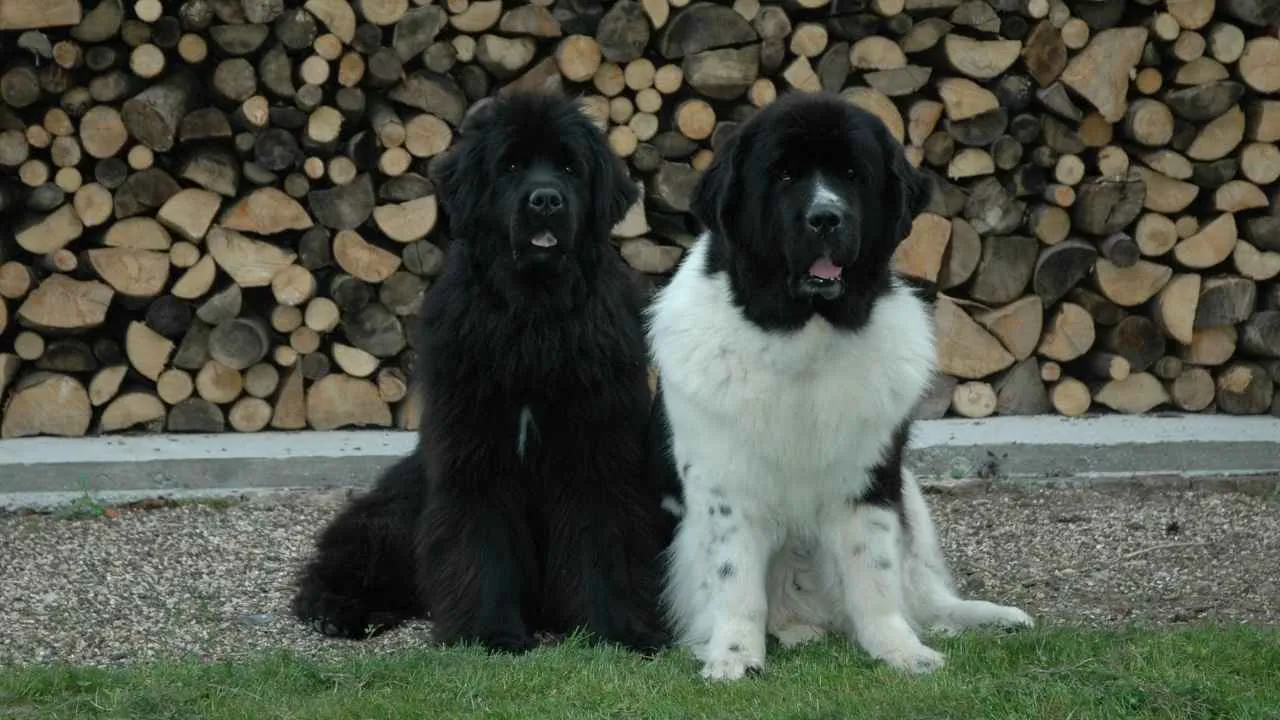
The Newfoundland has webbed feet.
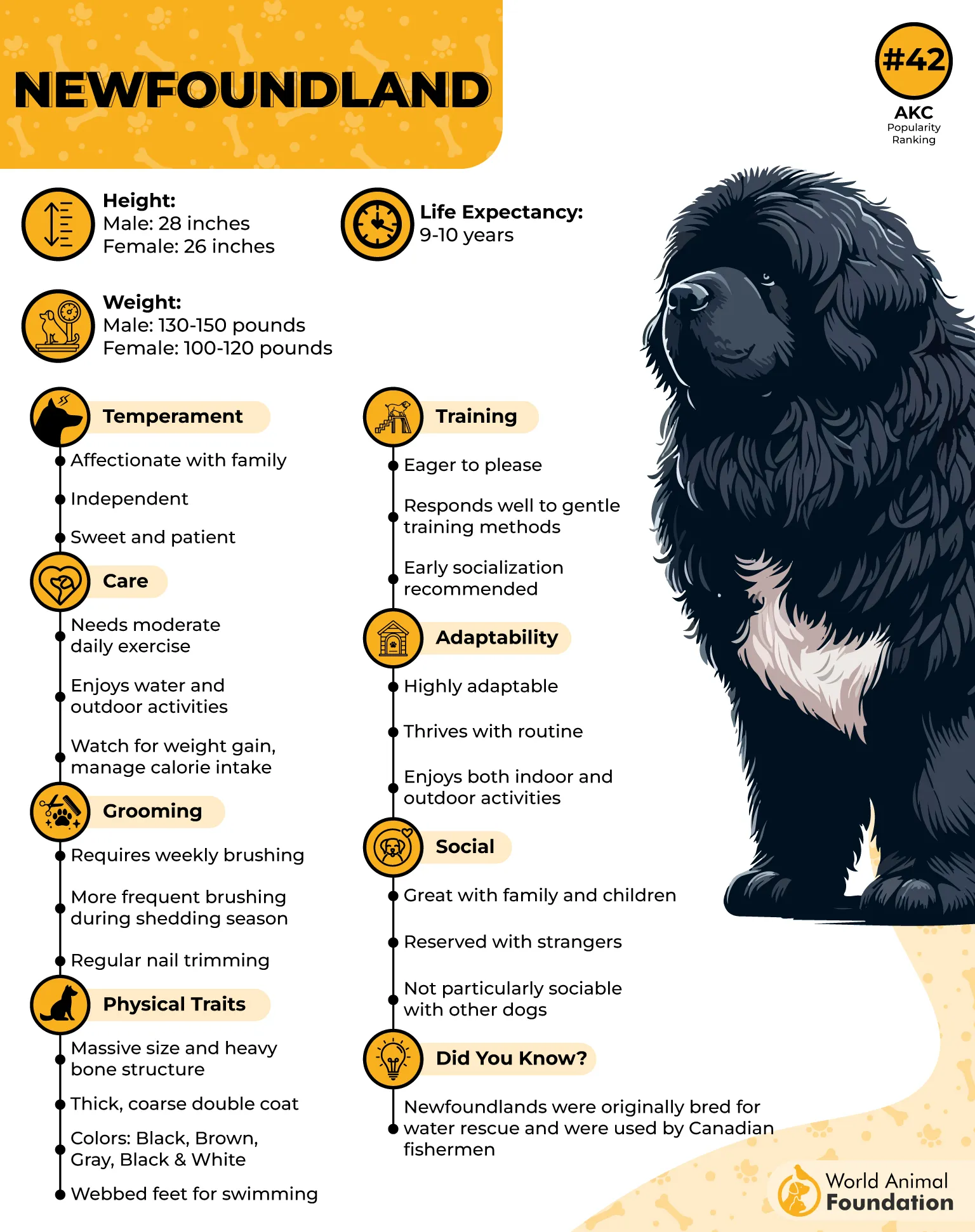
Let that land for a moment. This giant dog, up to 150 pounds with a thick coat and patient temperament, has actual webbed feet. Because it was originally bred to jump off fishing boats in the North Atlantic and haul drowning people back to shore.
There are documented historical accounts of Newfoundland dogs rescuing multiple people from Shipwrecks in a single event. Real water rescue dogs. In cold weather. This dog just… swam out and brought people back.
These water dogs apply that same energy to being your constant companion at home. Minus the drowning situations, hopefully.
They are among the most patient, gentle giants, loving companions in the giant dog category.
Great with children, great with other dogs, basically, great family dogs. Because they are super-famous as “nanny dogs.”
That massive, thick double coat of these massive dogs needs serious regular brushing. Plus, Newfoundland dogs tend to be prone to hip dysplasia and heart issues, like most large breed dogs.
They also drool. Significantly. Keep a towel by the door, the couch, the kitchen, actually just keep towels everywhere.
4. Irish Wolfhound
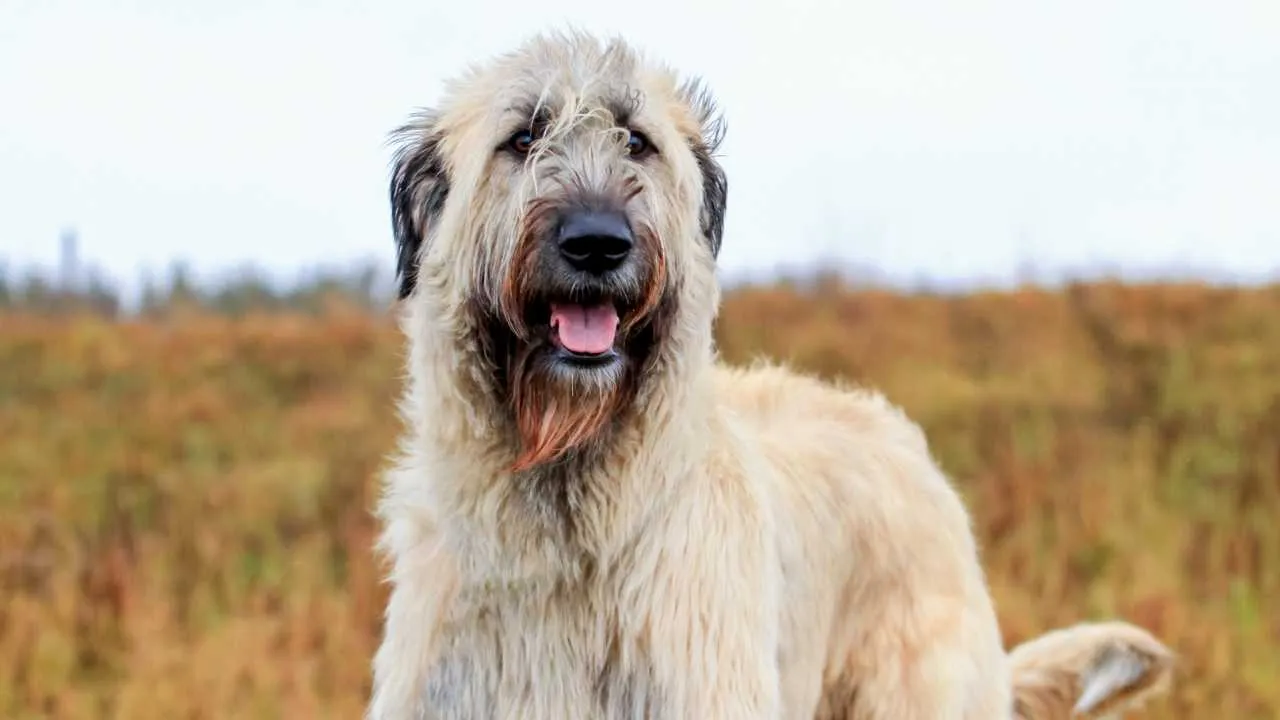
The Irish Wolfhound is the tallest dog breed in the world. Not the heaviest, the tallest. Standing on their hind legs, they can reach up to 7 feet.
SEVEN FEET!! Taller than all NBA players. That too a dog.
This breed originated in Ireland to hunt wolves, which they did by running them down in open terrain by using terrifying speed. The Irish Wolfhound has a history that does not match their current personality. As per PDSA, they are never in a hurry to do anything. But, don’t take that as laziness; they need daily exercise.
Because today, this ancient giant breed is one of the softest, most sensitive, most emotionally aware big dog breeds alive.
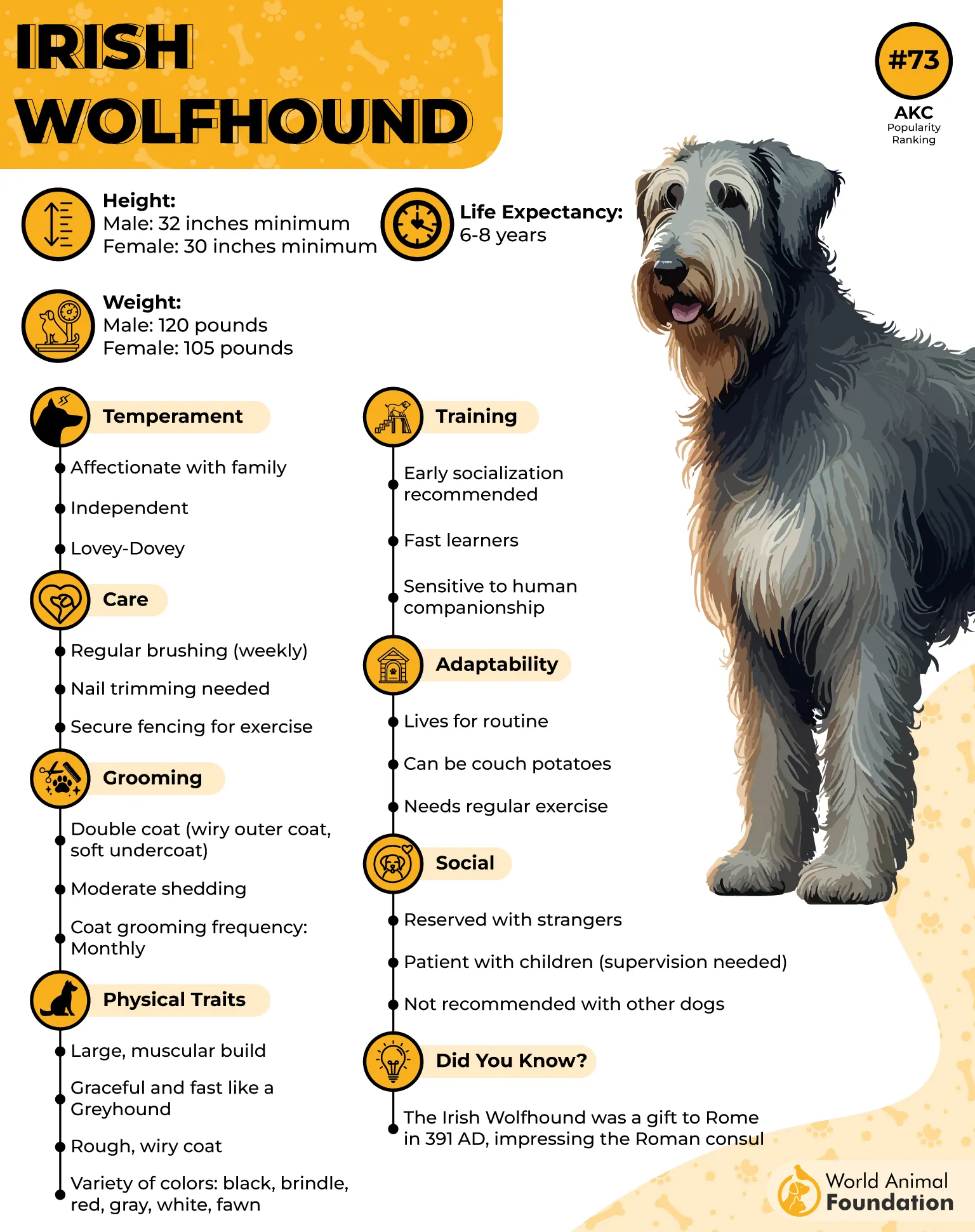
Irish Wolfhounds feel things deeply. They pick up on their owner’s mood, and they don’t do well with tension in the house. They form bonds with their pet parents that are, given their short lifespan of 6-8 years, profound.
Caring for an Irish Wolfhound means matching that emotional sensitivity of these hunting dogs with calm and as much quality daily exercise as you can.
They don’t need to be the most active breed. They need to be with you. That is the whole care philosophy, really.
5. Saint Bernard
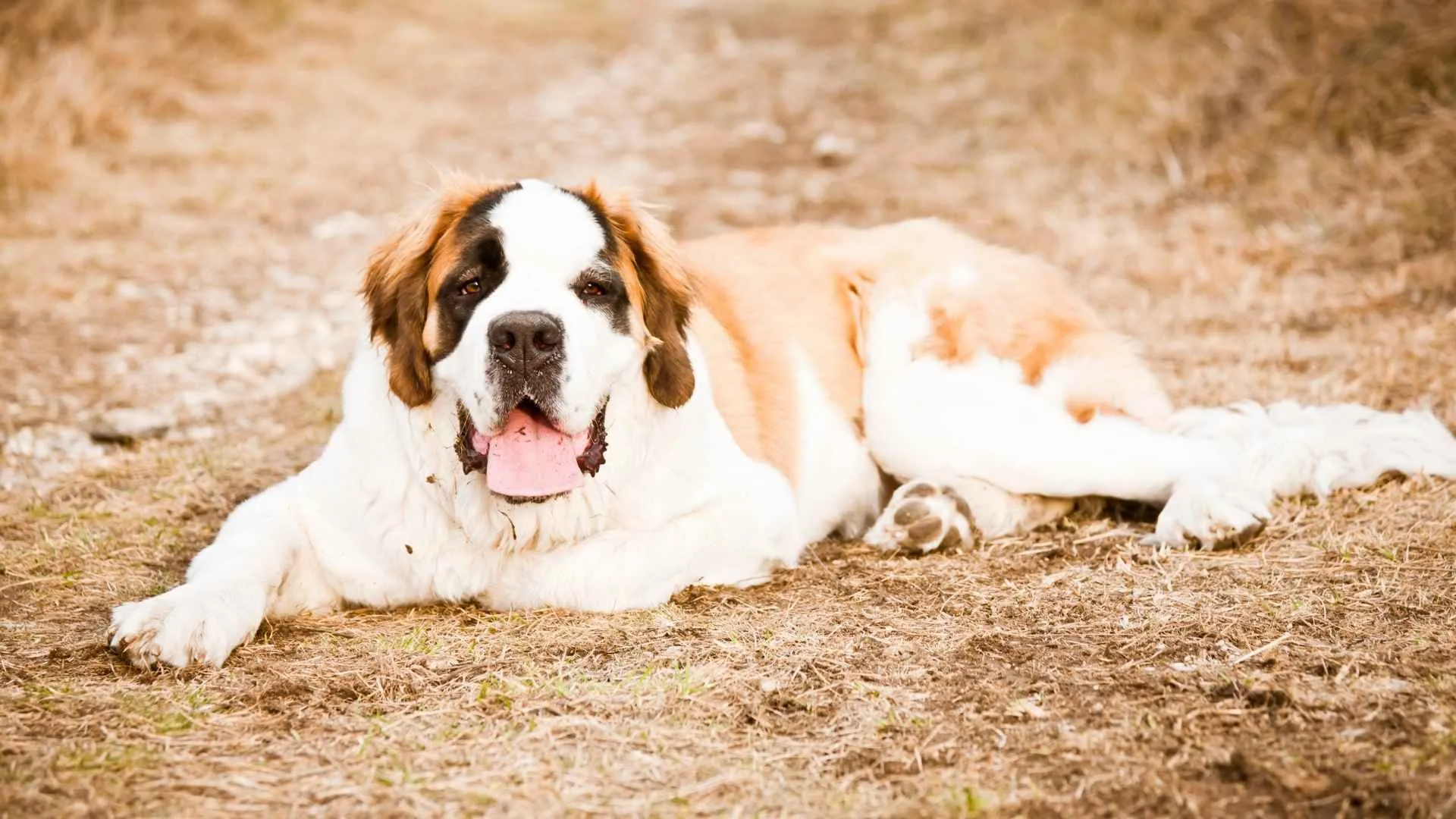
The Saint Bernard is a dog that rescues people in the Alps. That is either their greatest legacy or the reason they developed their most prominent personality trait: an absolute refusal to rush anything.
These dogs move at their own pace. Always.
There is no urgent Saint Bernard. There is only a Saint Bernard that will get there when it gets there.
As per Orvis, they were originally bred by the Monks at Great St. Bernard Hospice to find and rescue lost travelers buried in Alpine snow. The Saint Bernard has an almost supernatural sense of navigation. Plus, a calm under pressure that became its defining character.
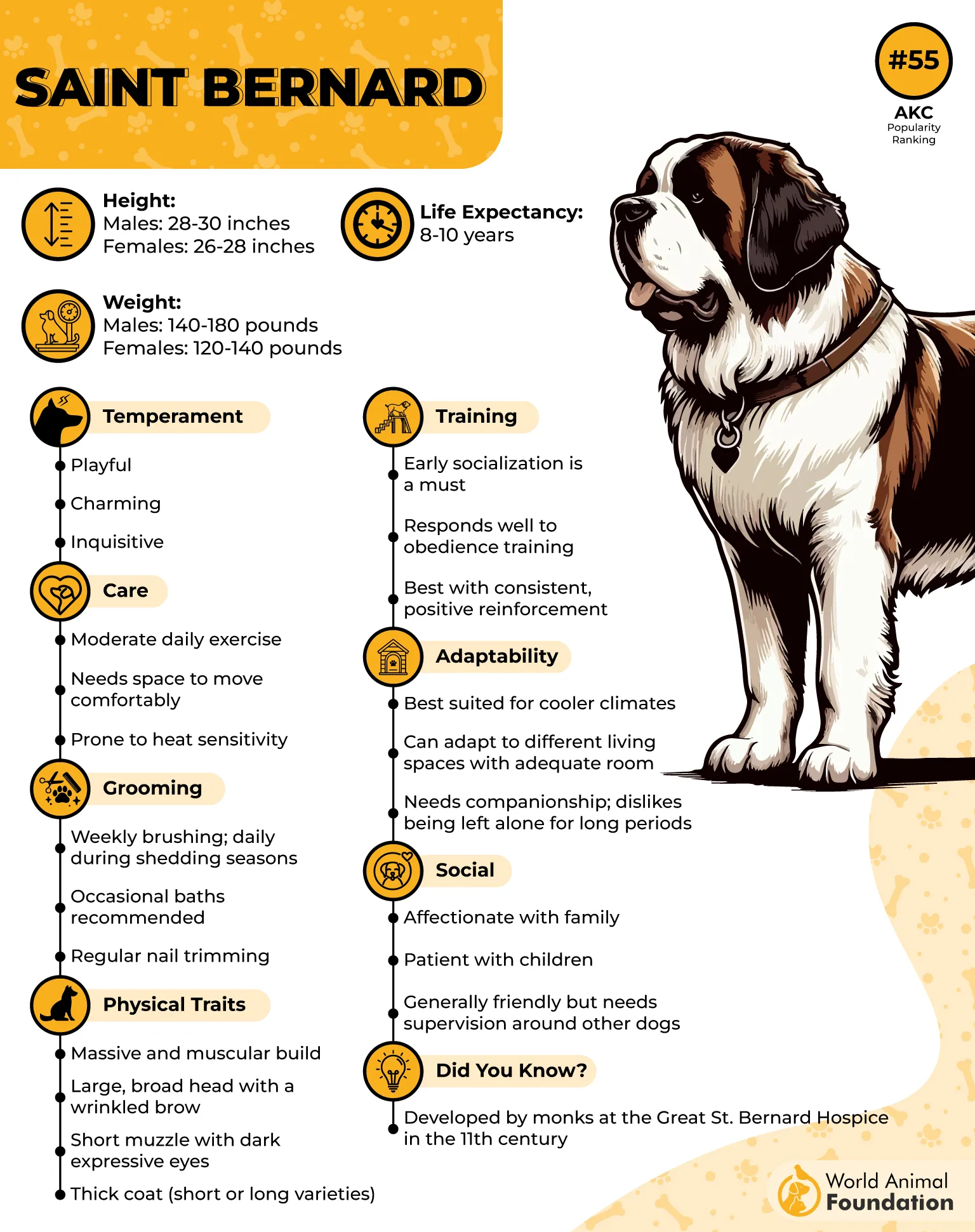
Saint Bernards are massive dogs. Up to 180 pounds… with health concerns that require attention: hip dysplasia, heart disease, and bloat are all real issues for this large breed. Their life expectancy runs 8 to 10 years. Proactive vet care from an early age can help.
The drool situation is, if anything, worse than the Newfoundland.
Pet parents of Saint Bernards develop a Zen-like acceptance of this within the first week. The trade-off is a big dog of such gentle temperament, such warmth, and such unhurried affection that most Saint Bernard owners say they can’t imagine life with a smaller dog anymore.
6. Mastiff
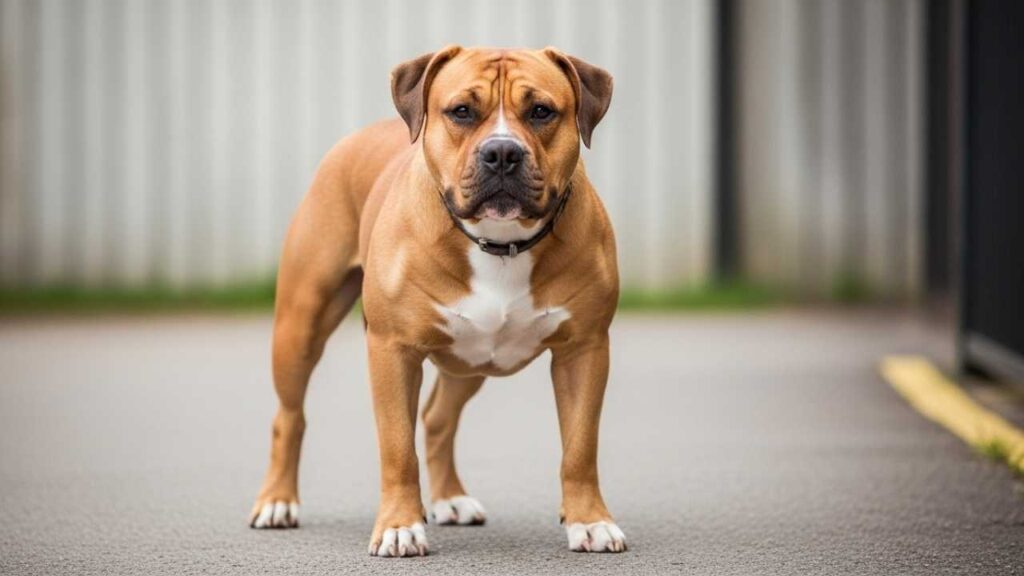
The Mastiff is the heaviest dog breed on earth.
Not the tallest. The heaviest. A fully grown male Mastiff can exceed 230 pounds. And they carry it all with authority that makes you instinctively lower your voice when they walk in.
These are ancient dogs. Mastiffs appear in Egyptian art from 3000 BC, as per Britannica. They fought alongside Roman legions. They have been guarding and protecting humans longer than most civilizations have existed.
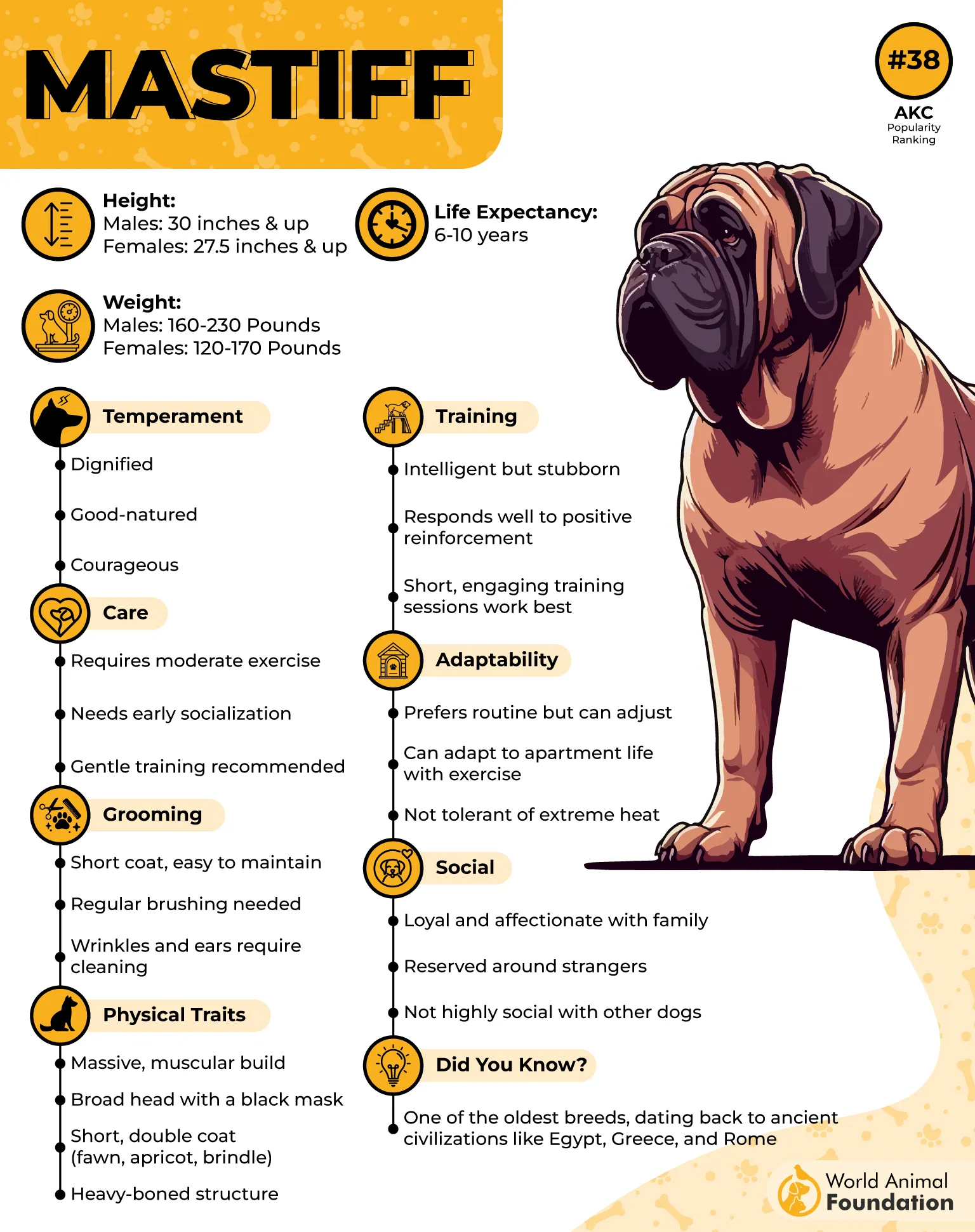
And now these guard dogs sleep 16 hours a day on your couch and need help getting up sometimes.
The care for a Mastiff is substantial. Not in activity (their daily exercise needs are actually moderate for their size), but in everything else. Yep, they get enough exercise from a daily walk.
Food costs are normal. Vet costs for a large breed dog this size scale accordingly. Hip dysplasia, heart disease, and bloat are all health problems you should get checked for.
But the personality is calm. Devoted. Completely loyal dogs in a way that feels protective without being intense.
The Mastiff does not make a fuss. It simply decides you are its person and acts accordingly for the rest of its life. So, they do make good family dogs.
7. Great Pyrenees
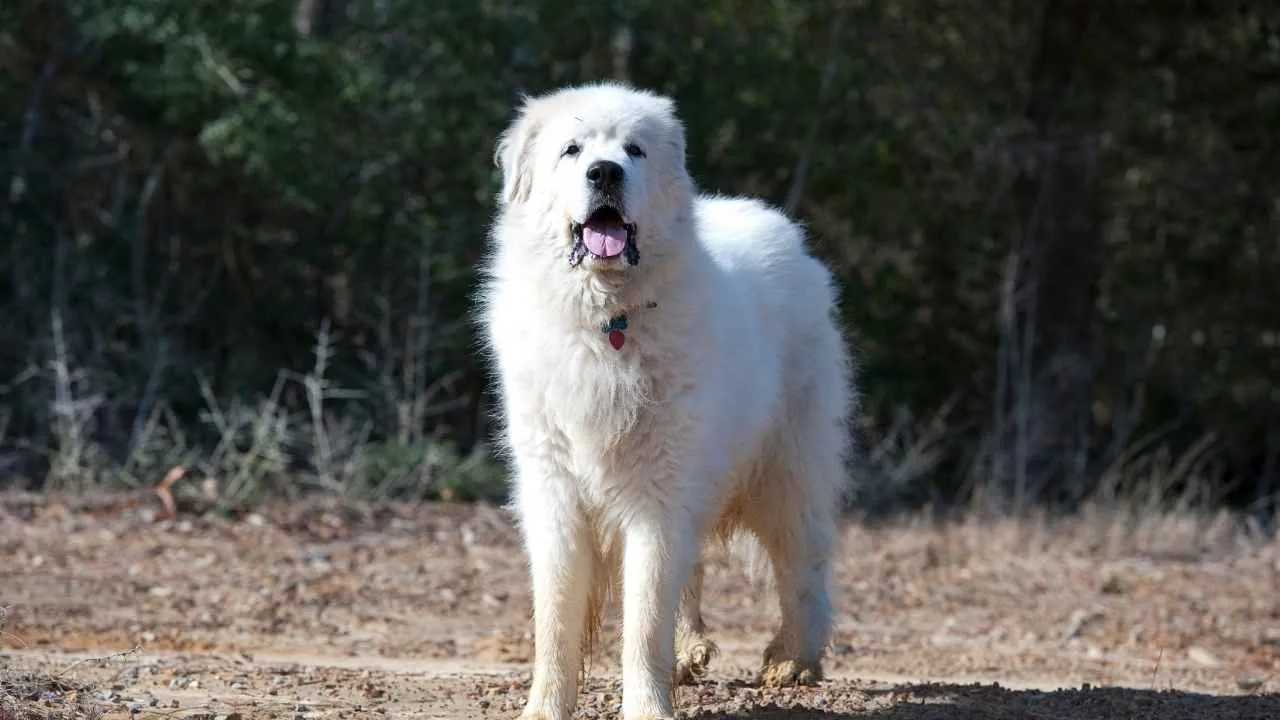
The Great Pyrenees has a strong will and an independent streak that is, frankly, impressive. A rare breed out in the Pyrenees mountains.
This is a giant dog breed that was developed to spend months alone on mountain slopes guarding livestock from wolves and bears. Without a single human giving instructions. The Great Pyrenees made decisions.
Big, important, life-or-death decisions. Alone. In the dark. In cold weather.
That independence does NOT disappear in a suburban home, but just redirects because they are friendly dogs with a protective nature.
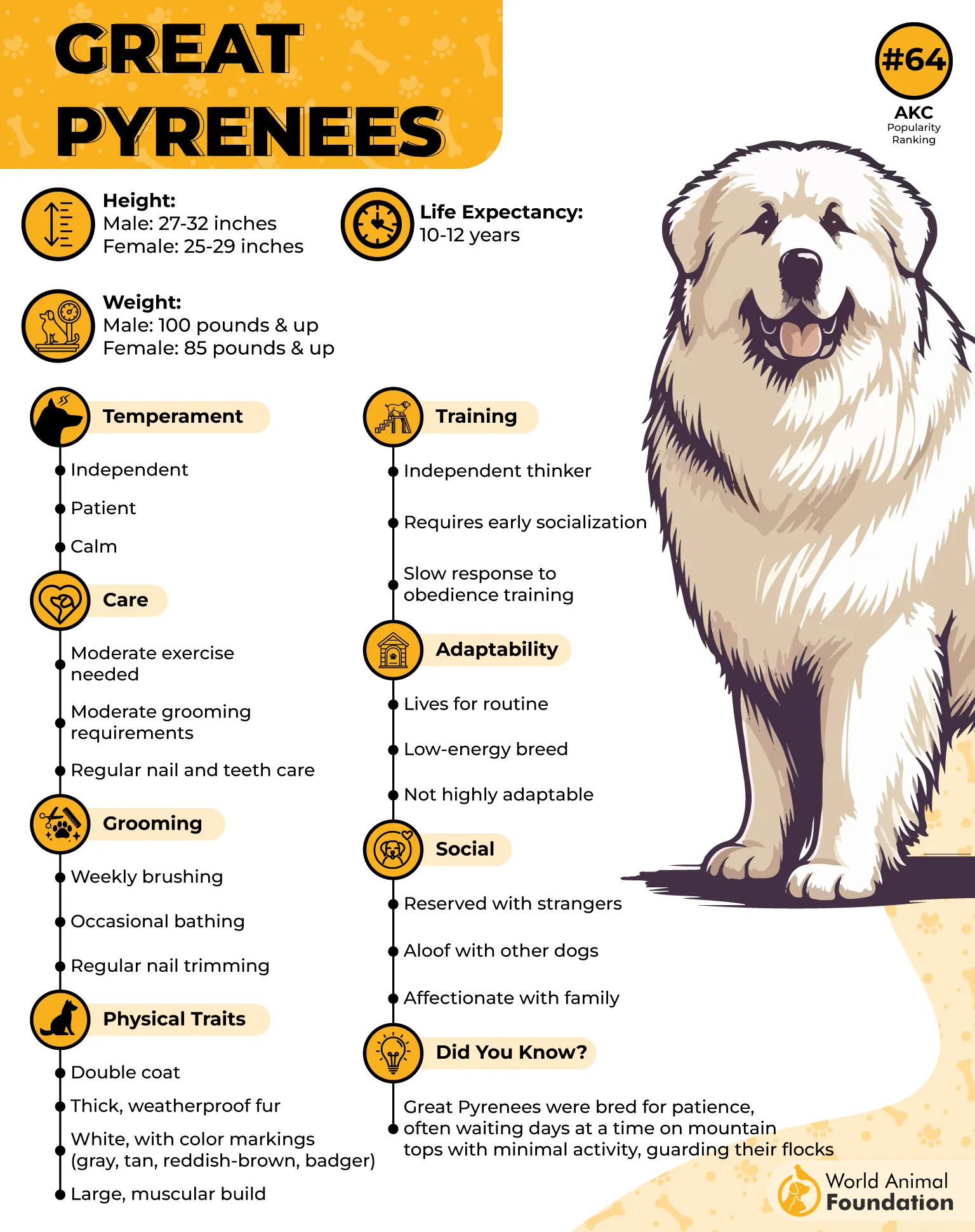
These beautiful white dogs are loving companions and fiercely protective of their families.
But they are not the eager-to-please type. They assess situations and decide their own response. It means training and regular exercise need patience and a genuine respect for their intelligence.
They are nocturnal by nature. Bred to patrol at night. It means they can be vocal after dark. Neighbors should be briefed.
Their thick coat needs regular brushing, and they shed with enthusiasm. But they handle cold weather beautifully. Health issues include eye disorders, bone and joint issues, etc.
For pet parents who want a gentle giant with a mind of its own and loyalty that’s been tested against wolves….
The Great Pyrenees delivers.
On its own schedule.
Conclusion
Giant dog breeds are not for everyone.
They need more space, food, and vet investment. And, more of your square footage than you will ever fully get back.
But they also give more than you expect. More presence, calm, more of that feeling of having a truly enormous creature decide… completely, without condition that you are the most important thing in its world.
GO GIANT!!
You won’t regret a single enormous pound of it. Because these dogs choose their loved ones.
