




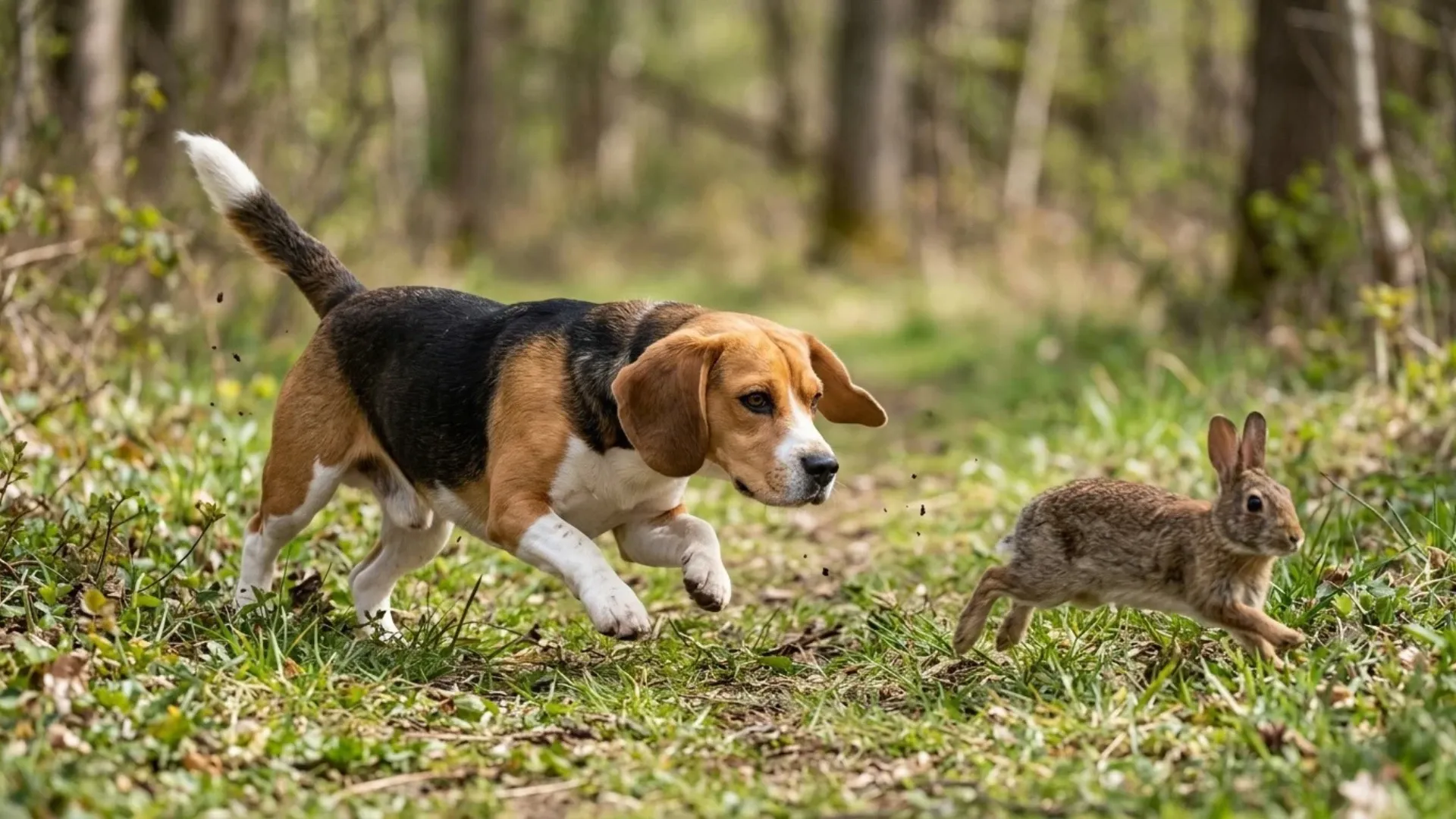
Have you ever seen a dog freeze at the sight of a small animal? That reaction can be triggered by its prey drive, an instinct that is associated with the act of chasing and hunting.
Some dogs have a greater drive to follow, chase, or catch small animals. This is frequently a reflection of their forebears’ jobs. Sighthounds would track down their prey, Terriers would catch small animals, and scenthounds would follow a scent for miles.
While some of these specific behaviors can be rewarding, there are also obligations. Recall training can be difficult if the breed has an interest in something.
If you’re looking for dogs with a high prey drive, then you’ll need to know about these seven breeds and their distinctive traits and needs.
High-Prey Drive Dog Breeds Every Owner Should Know
1. Greyhound
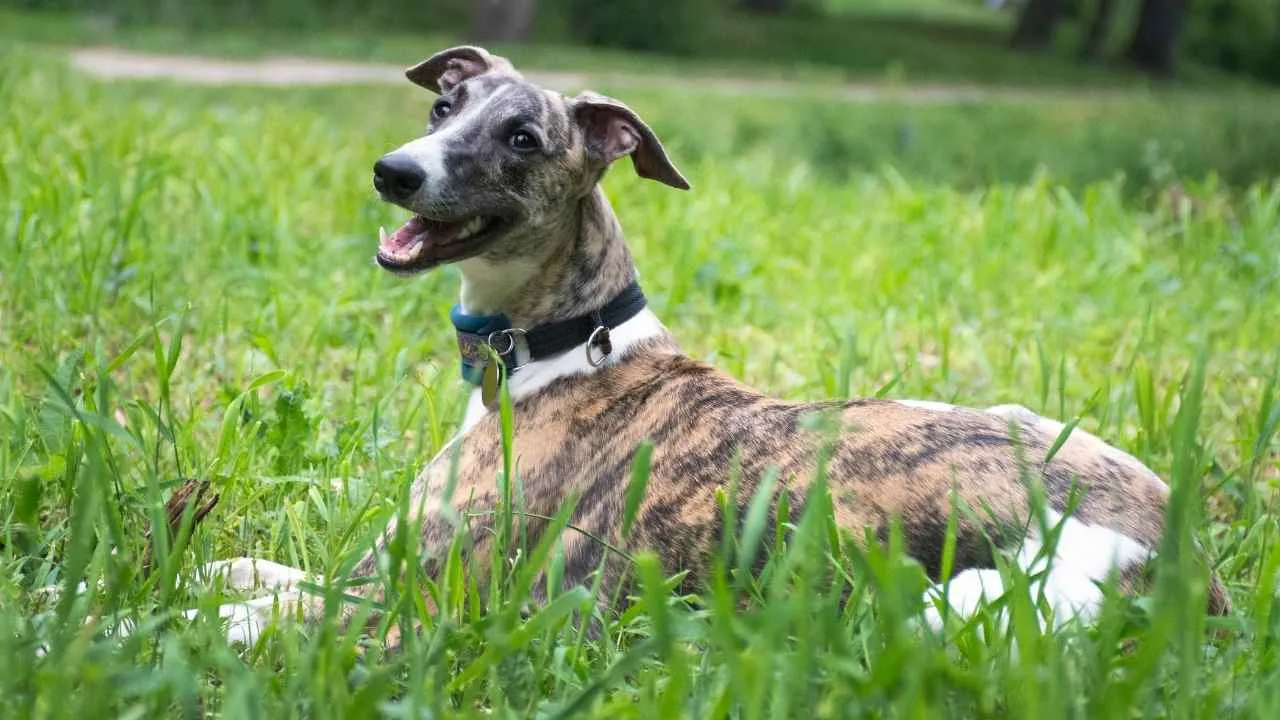
It is well-known that the Greyhound can run at amazing speeds, but it is just as important to know that this dog can also chase moving animals. Bred for coursing, it has a keen sense of sight and lightning-quick acceleration to catch prey in open spaces.
If other animals like rabbits are detected by a Greyhound, it can respond almost instantly. For instance, it can range from laid-back to running at its target in mere seconds. This means there’s a need for secure fencing and careful leash handling, as PetMD states this breed has a very strong prey drive.
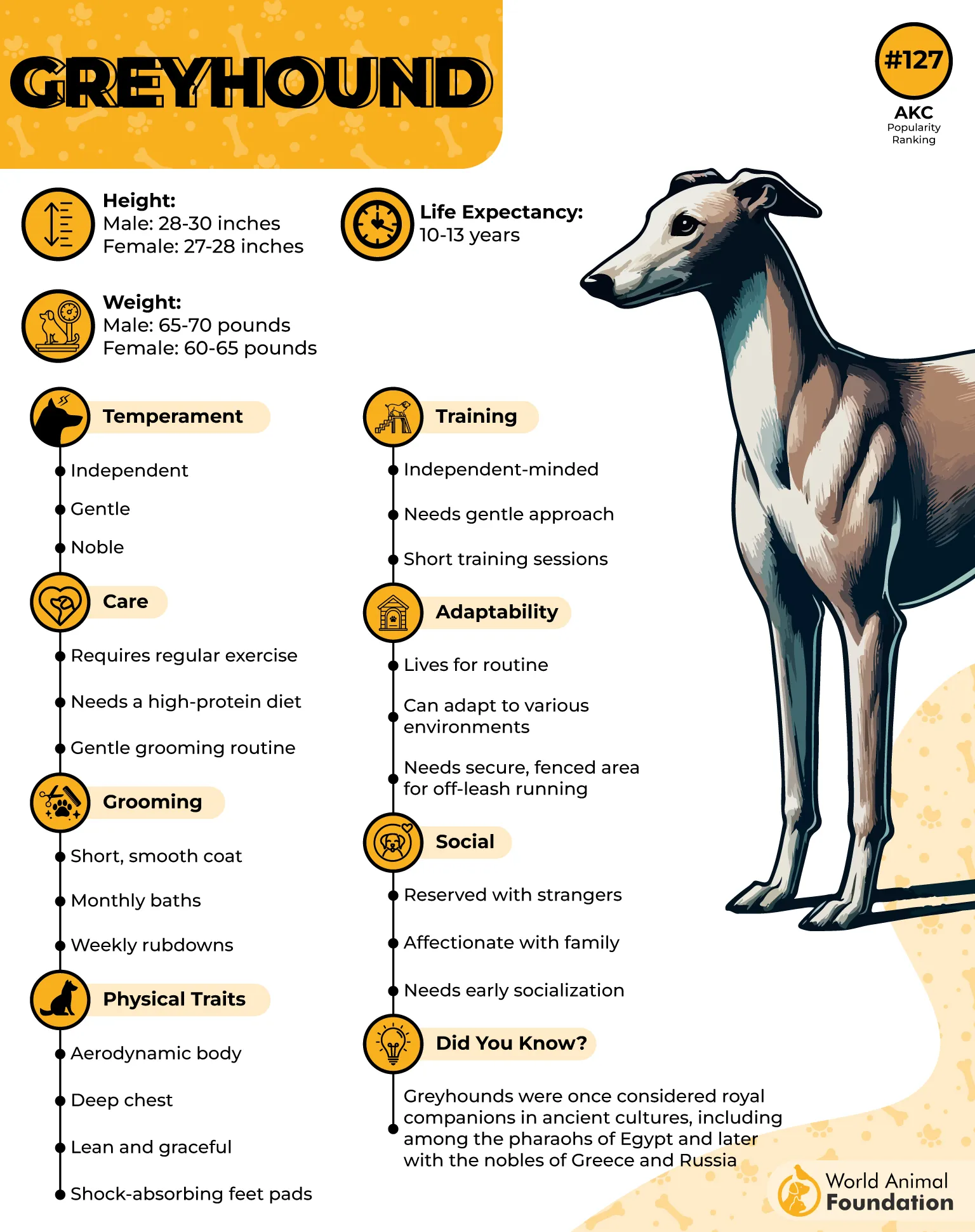
You’d be interested to know that many Greyhounds are quiet house dogs. They tend to be comfortable when sleeping and spending time with their families. However, they are not necessarily out of the game when home, and moving objects may still catch their attention.
A securely fenced area can provide this breed with space to run without getting lost.
Greyhounds do not require much grooming and have short coats. They still need moderate exercise, appropriate to their age and health. Some Greyhounds may be able to live in harmony with smaller pets; others may not. Inquire about the breed’s history before adopting it.
2. Beagle
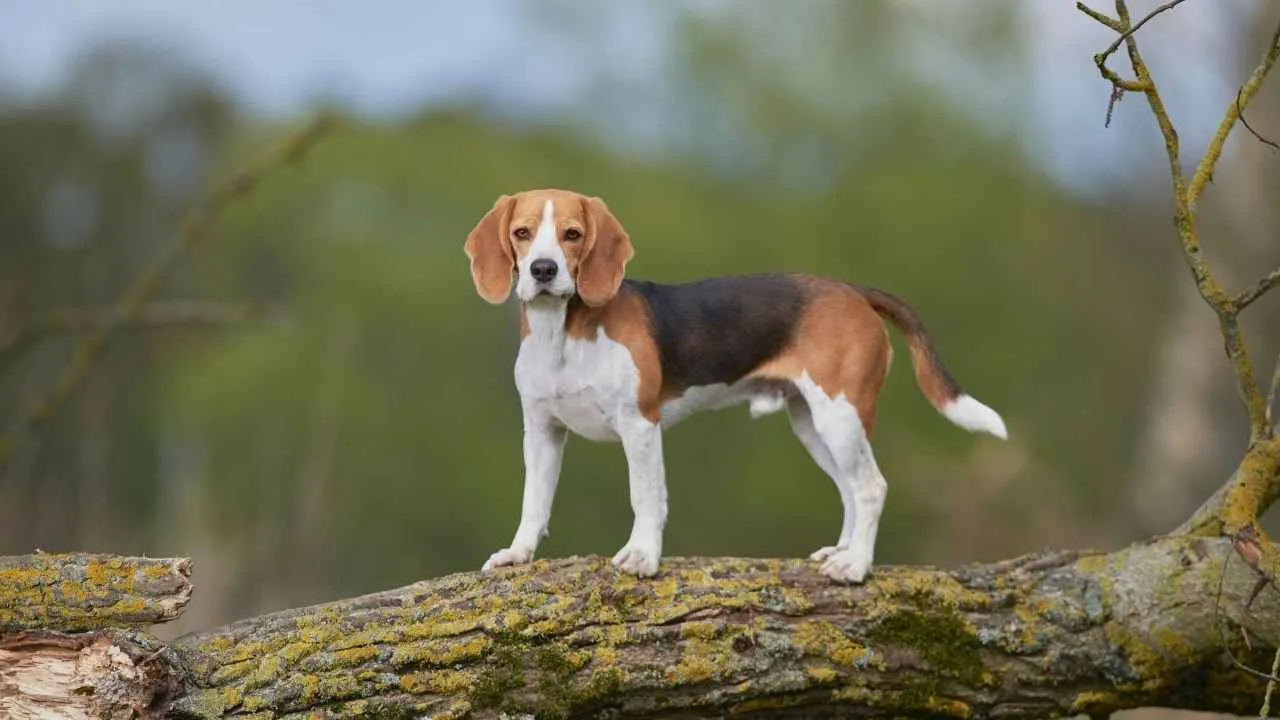
When it comes to hunting, the Beagle has no time for speed or sight, but rather uses its nose. This little hound is employed to hunt rabbits and other small animals, and can become lost in scent tracks.
If a Beagle finds a scent interesting, it’s difficult to get it to pay attention to the owner and recall. It may stroll along a sidewalk or through bushes, across a field as it aims to find the source.
Beagles tend to be social and like people. According to Orvis, they are even-tempered, playful, curious, and noisy.
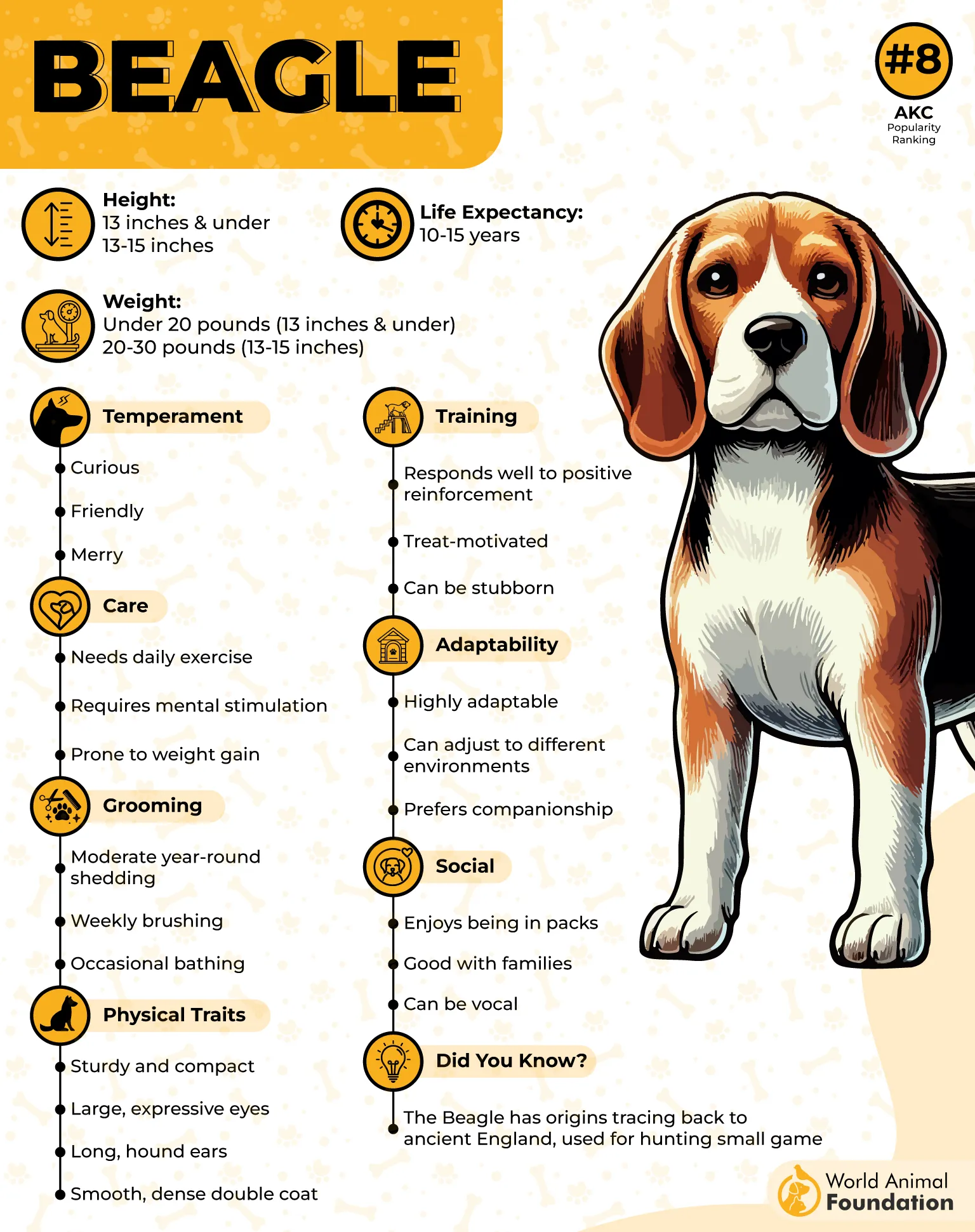
The Beagle is an inquisitive dog that enjoys following the trail of an investigation in an environment that is free from danger. A few food puzzles and scent games will stimulate the mind.
Beagles are not to be underestimated for their hunting skills. They are able to track over long distances, especially if the scent is new. Secure food waste, use a leash in areas where wildlife might be present, and ensure outdoor areas are securely fenced.
This is a dog that is driven by scent, and if the owner wishes to have an active dog that likes to use its nose, the Beagle is a good and fun choice.
3. Weimaraner
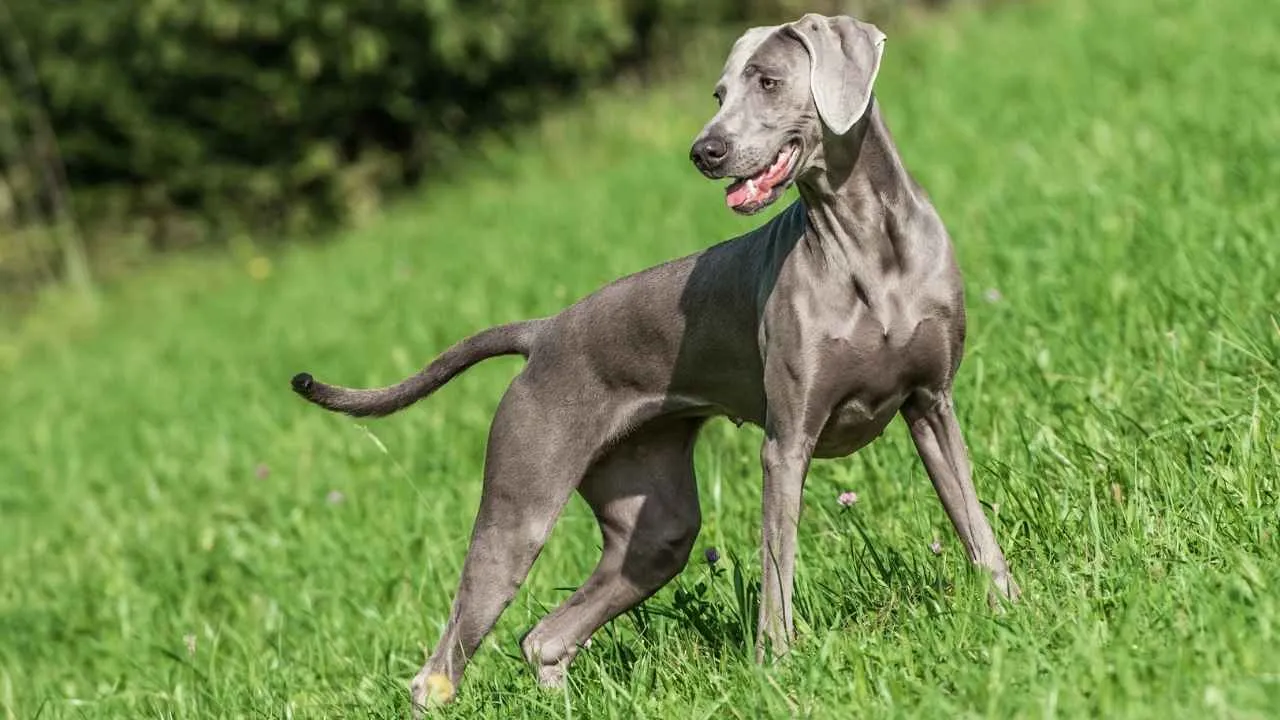
Weimaraners were originally developed in Germany as a hunting dog. The breed is still noted for its athleticism, alertness, and eagerness to follow moving animals.
Weimaraners are very active dogs and need lots of exercise and mental stimulation. Just walking around the block may not be enough for these healthy pups. Structured retrieving games and scent work can be used to help direct their energy.
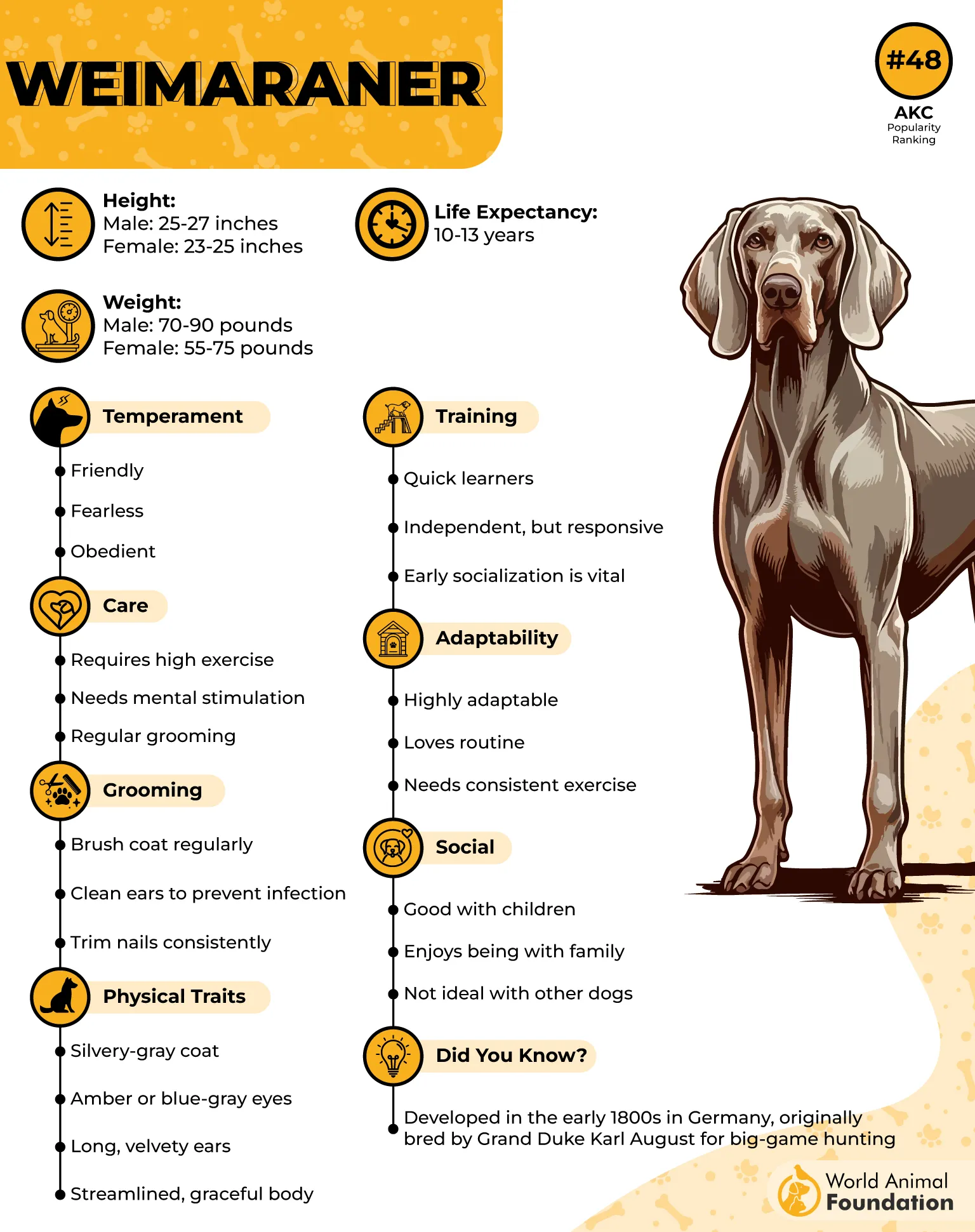
They can show their prey instincts when making eye contact with a small animal. A Weimaraner can be fixed on an animal when the animal is its prey and lose control of the commands.
Such dogs are quite family-oriented. May become hyperactive when not exercised or engaged in family activities. A consistent schedule eliminates boredom and eliminates unwanted behaviors.
The Weimaraner has a short coat and is low on grooming requirements, but has a high exercise requirement. It has a hunting past that must be managed in planning walks, games, and interactions.
4. Jack Russell Terrier
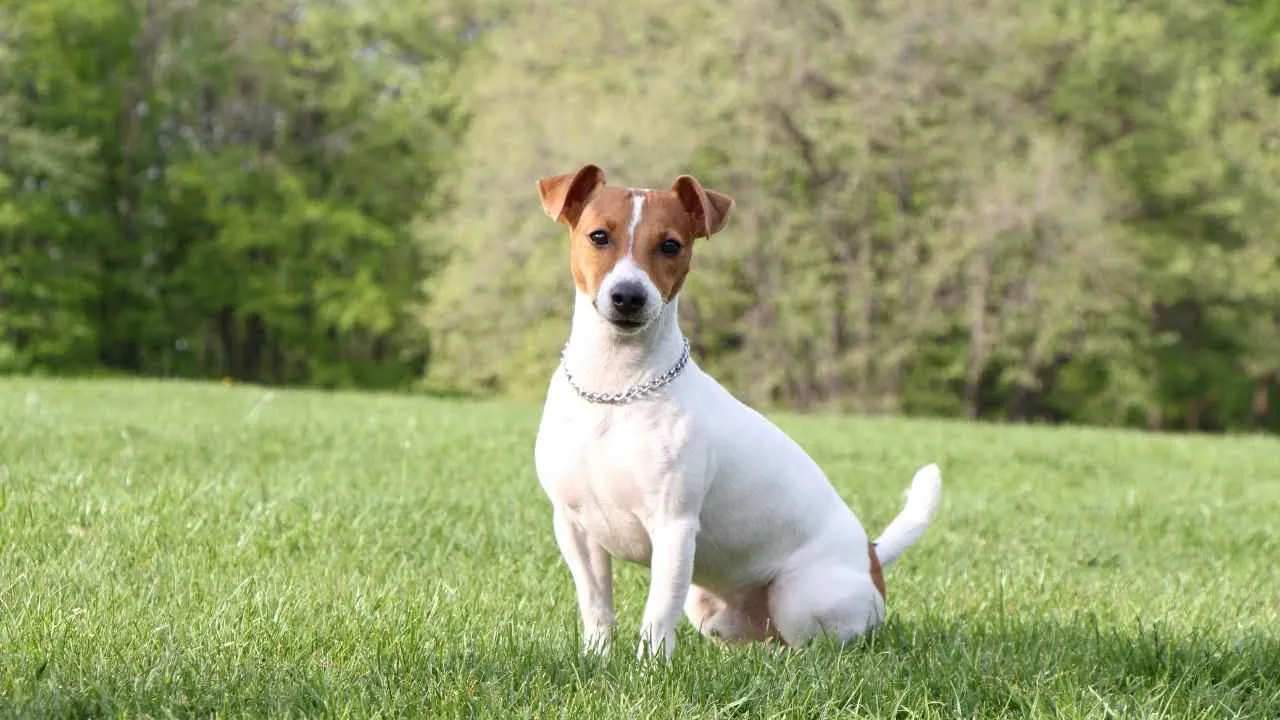
The Jack Russell Terrier was bred to hunt foxes and run into fox burrows. It is small enough to maneuver in confined areas, and fast enough to persevere in the field.
This is why a Jack Russell is so excited about chasing cats, squirrels, birds, and even toys. A quick chase can occur if the owner is not given time to react to a sudden movement in the environment.
Jack Russells are smart and active dogs. They like to play games including searching, chasing toys, solving puzzles, learning new commands, etc. They need regular exercise to use their energy constructively, but it may not be enough for their mental stimulation needs.
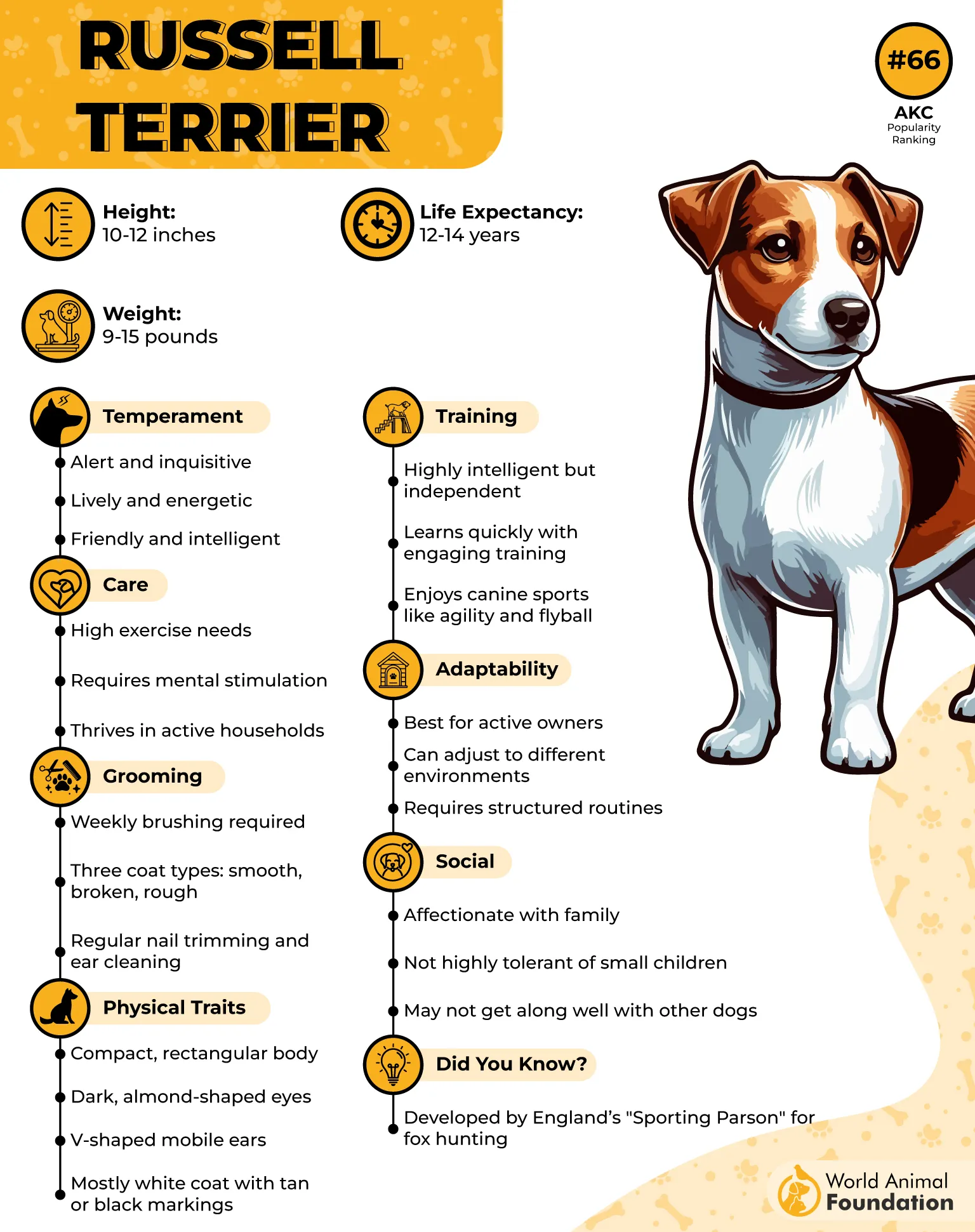
Rabbits, hamsters, or other small animals might not be the best pets to keep around this breed. Good separation may be required even if raised together. Close supervision is also needed when interacting with cats.
If you decide to adopt a dog that prefers both physical and mental stimulation, the Jack Russell Terrier is the choice to make it happen.
5. Saluki
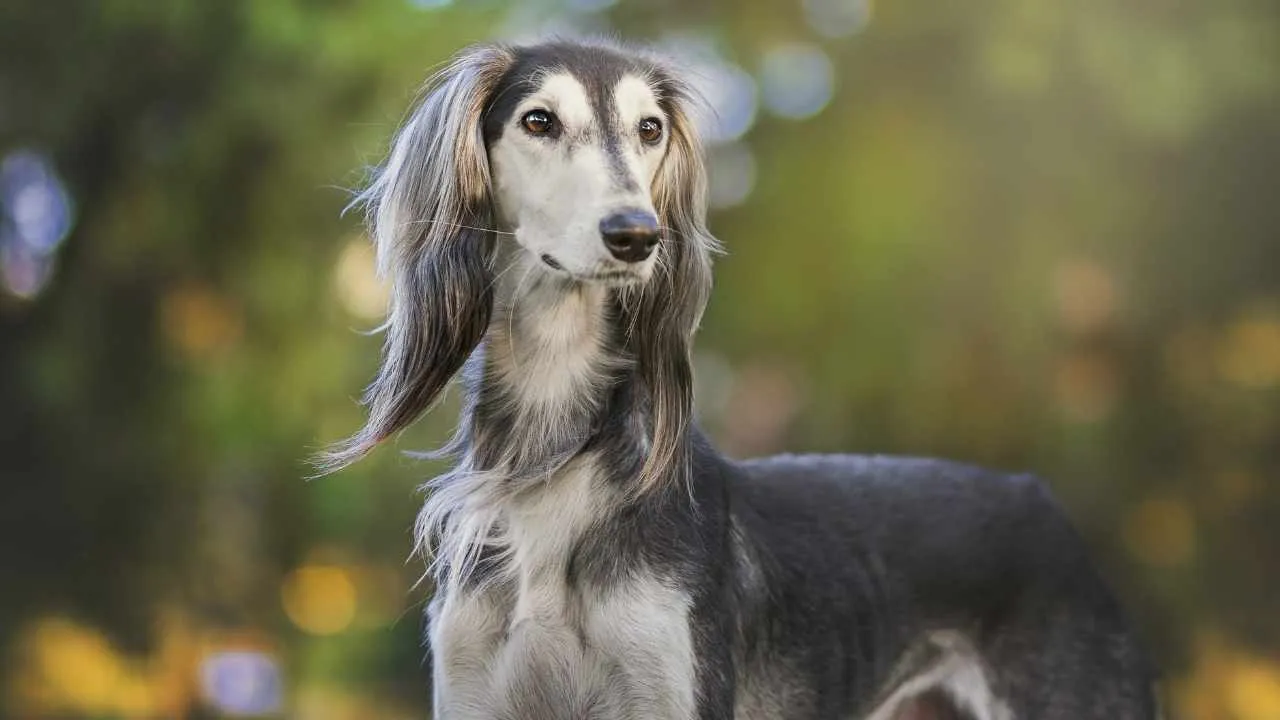
The Saluki is an old sighthound that is a hunter on open terrain. It moves swiftly and quickly gets to the ground thanks to its slender build, long legs, and effective gait. It may be sensitive to motion, as are other sighthound breeds.
When a Saluki spots a rabbit or another fast-moving animal at a distance, its visual hunting instincts may trigger a chase. Described as an avid hunter by Purina, its independence is related to its hunting instincts and not necessarily disobedience or hostility. If a fast pursuit has begun, it may be hard to recall the dog.
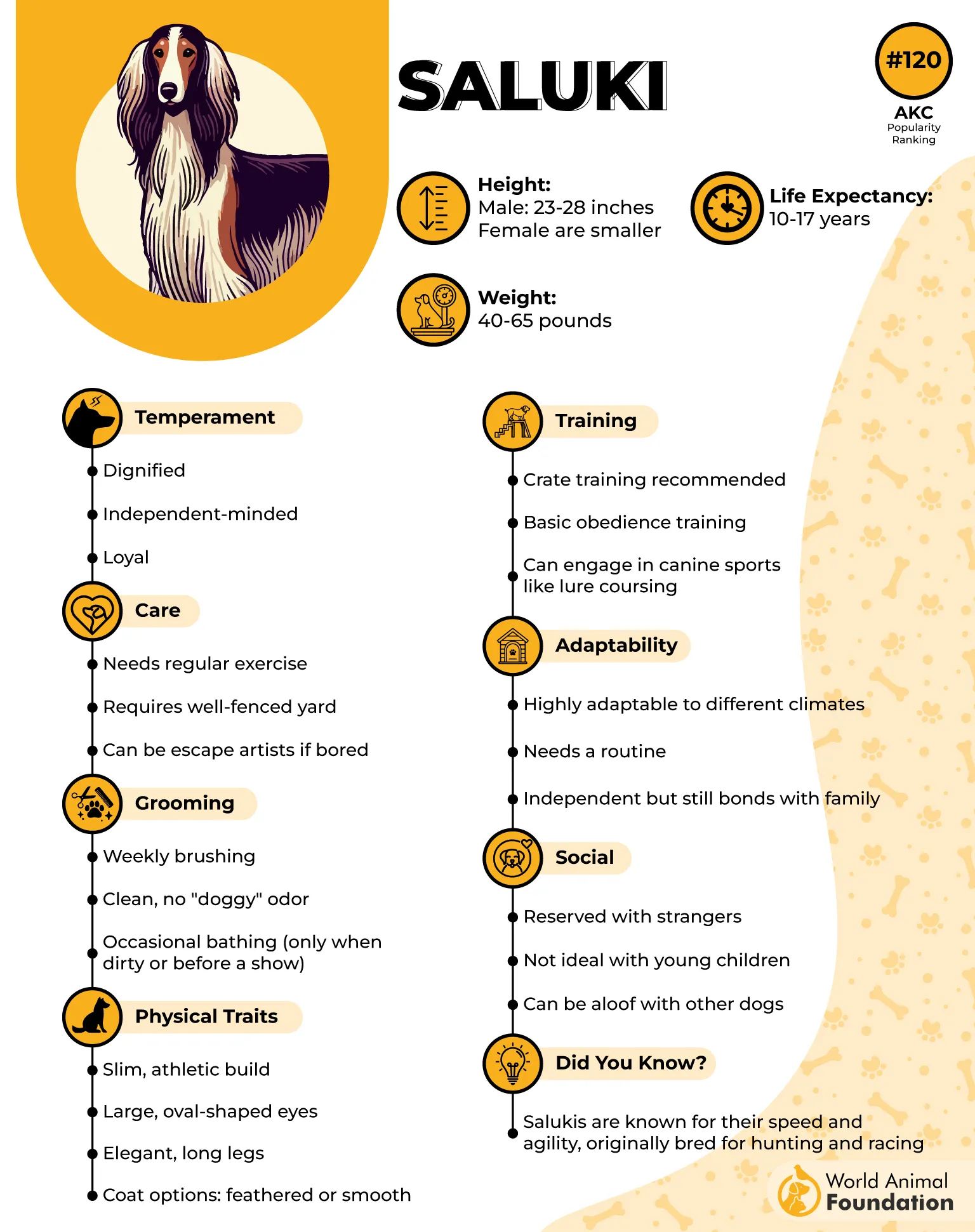
Salukis are usually shy and tame at home. They might have favorite spots to lie around during free hours but require a safe space to walk around. A well-fenced running area is especially useful.
They have a very fine coat that requires regular care. In some varieties, feathering is also taken into account. Avoid over-exercising young dogs and ensure they have access to appropriate exercise and mental stimulation.
6. Rhodesian Ridgeback
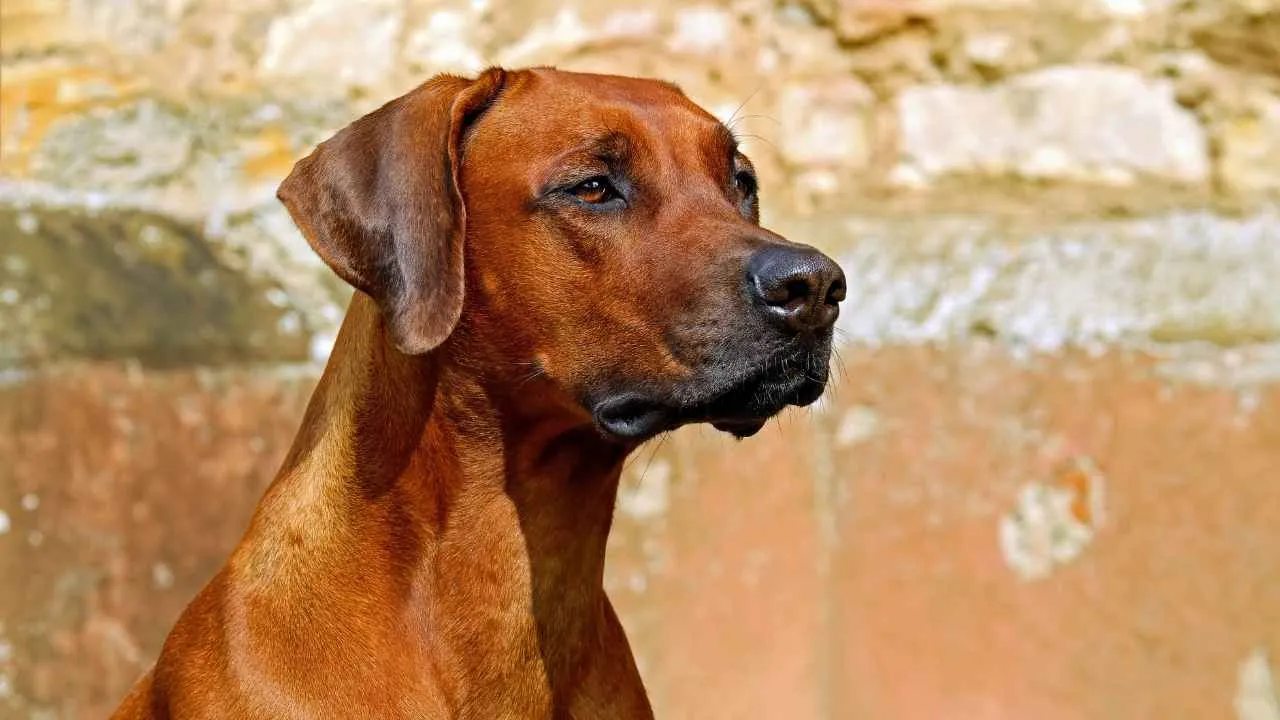
The Rhodesian Ridgeback is a breed that was developed in Southern Africa and is a versatile hunting and tracking dog. It has a long tradition of hunting big game, and many of the current-day “Ridgebacks” are still interested in hunting.
This breed is active, robust, and self-reliant. If it has the opportunity, it will follow a scent or chase a moving animal if the scent is interesting.
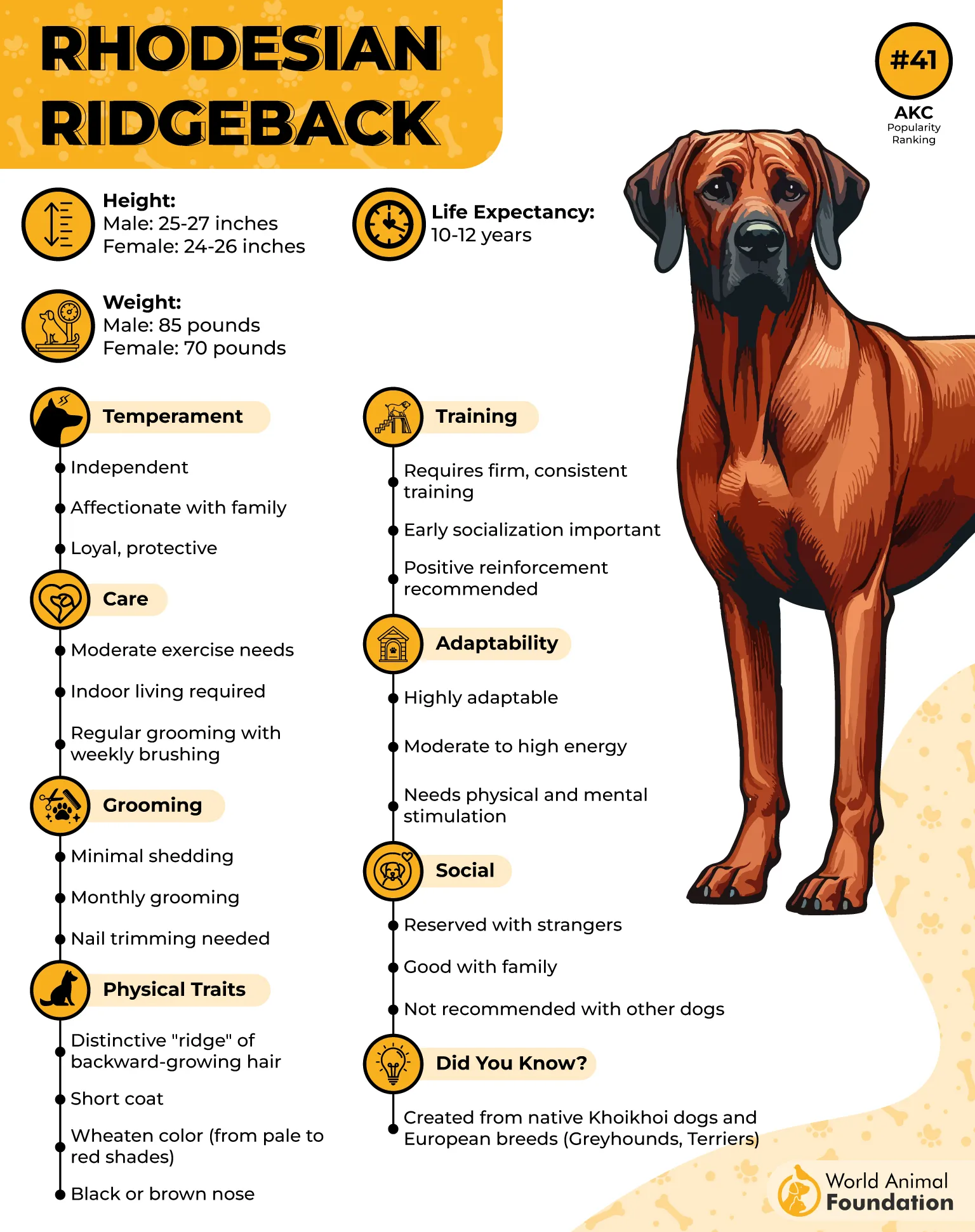
Ridgebacks are strong, large dogs that may be difficult to control when they suddenly chase an animal. Early lessons in loose-leash walking and calm handling should be taught.
Ridgebacks make excellent dogs for families, but are unsuitable with other small pets due to their prey drive. A few Ridgebacks are able to live with cats, particularly with proper introductions, but it’s not always possible. Safe separation and supervision should be continued as appropriate.
7. Australian Cattle Dog
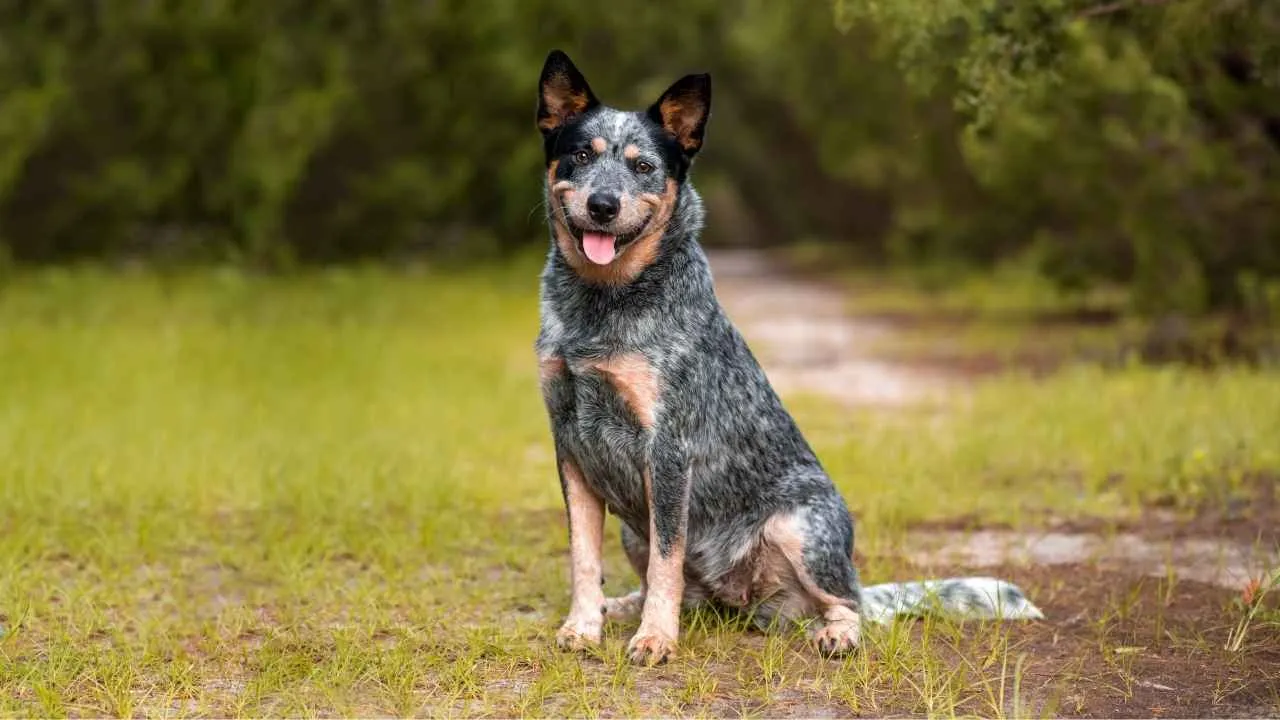
The Australian Cattle Dog was developed as a herding breed for the purpose of moving cattle over tough Australian ranches. Like the Border Collie, this breed was used for this job as it demanded stamina, instant reaction, and an ability to respond to movement.
While herding and hunting are not the same activity, both may involve the same components of the predatory sequence such as watching, stalking, and chasing.
An Australian Cattle Dog can be seen running after bicycles, running cats, or squirrels. It will also try to control a child or other animal by chasing and biting at their heels. These behaviors should be channeled in a positive manner through positive training techniques.
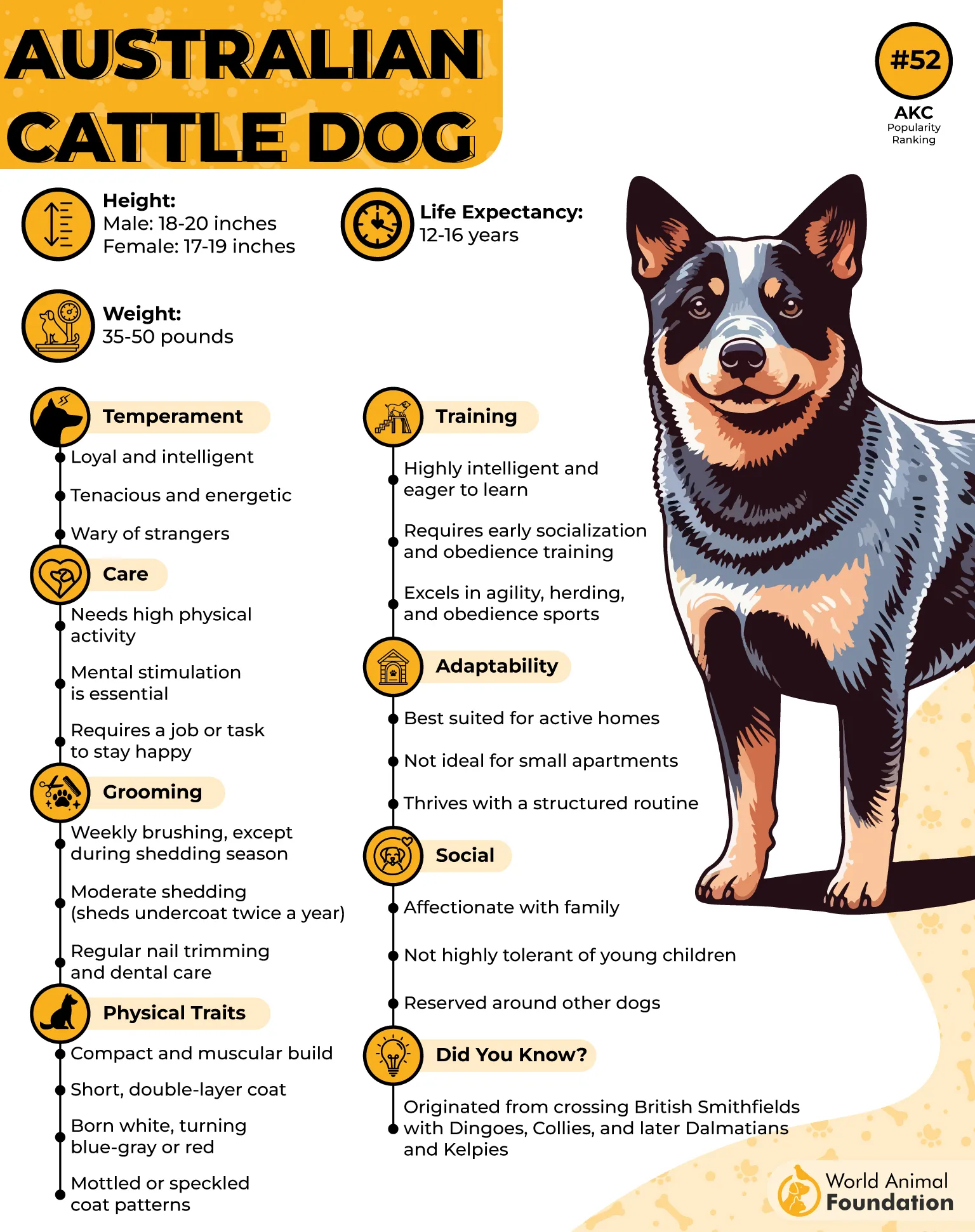
It is an alert, intelligent, and energetic breed. It is accustomed to farm life and will thrive when there is something useful for it to do. Its actions can be channeled into beneficial activity in the form of herding games, obedience, and interactive games, etc.
It’s a good breed for both active and training owners. Without adequate stimulation, an Australian Cattle Dog may become excitable and develop undesirable behaviors.
Conclusion
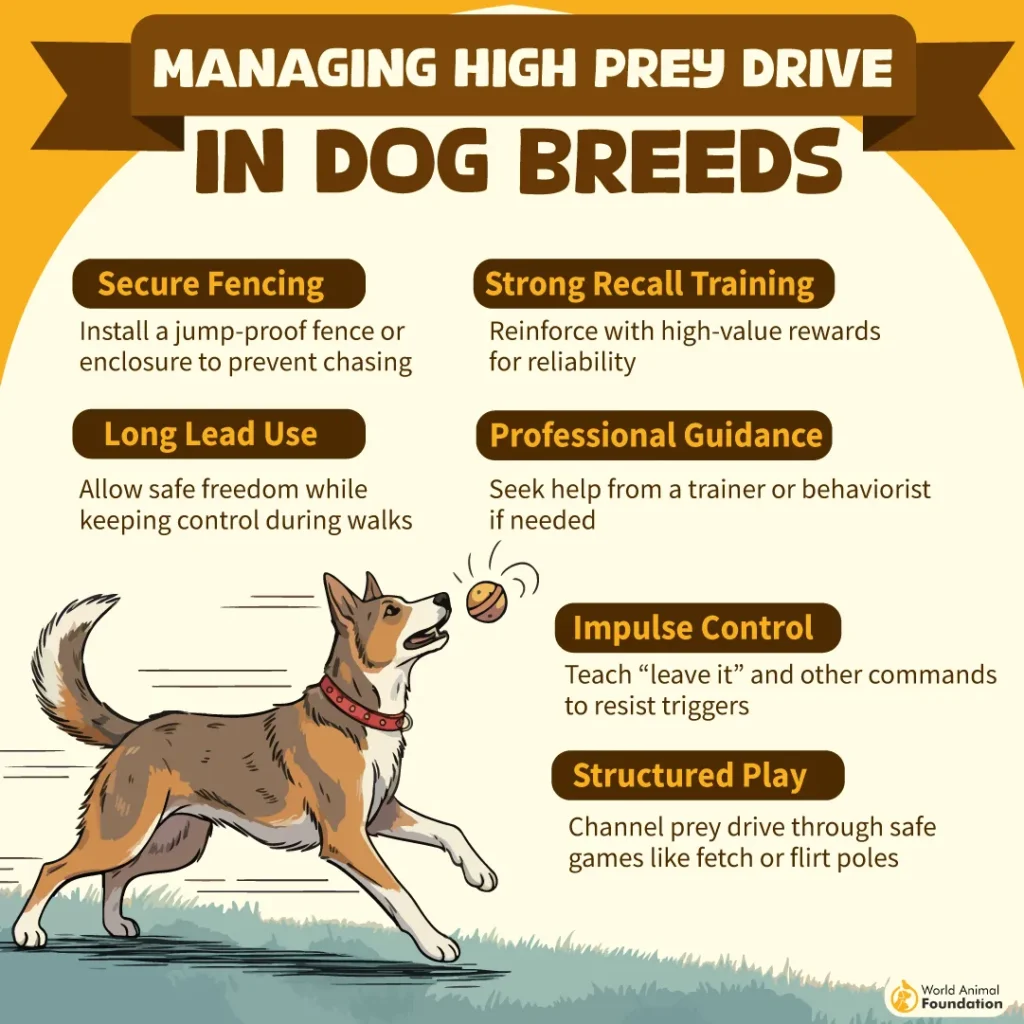
These breeds can be safer to live with if you use a secure yard, a well-managed leash, reward-based training, and adequate enrichment.
It’s not a character fault if a dog has a high prey drive. It is part of a dog’s usefulness in the role in which it was bred. The challenge is to be aware of when this instinct can surface, to be ready for its appearance, and to be able to harness it in ways that are less disruptive, before a chase has begun.
When selecting a breed, take into account the amount of time available for training, exercise, and management. While a strong prey drive does not make a breed undesirable, it requires an owner who respects this instinct.
