




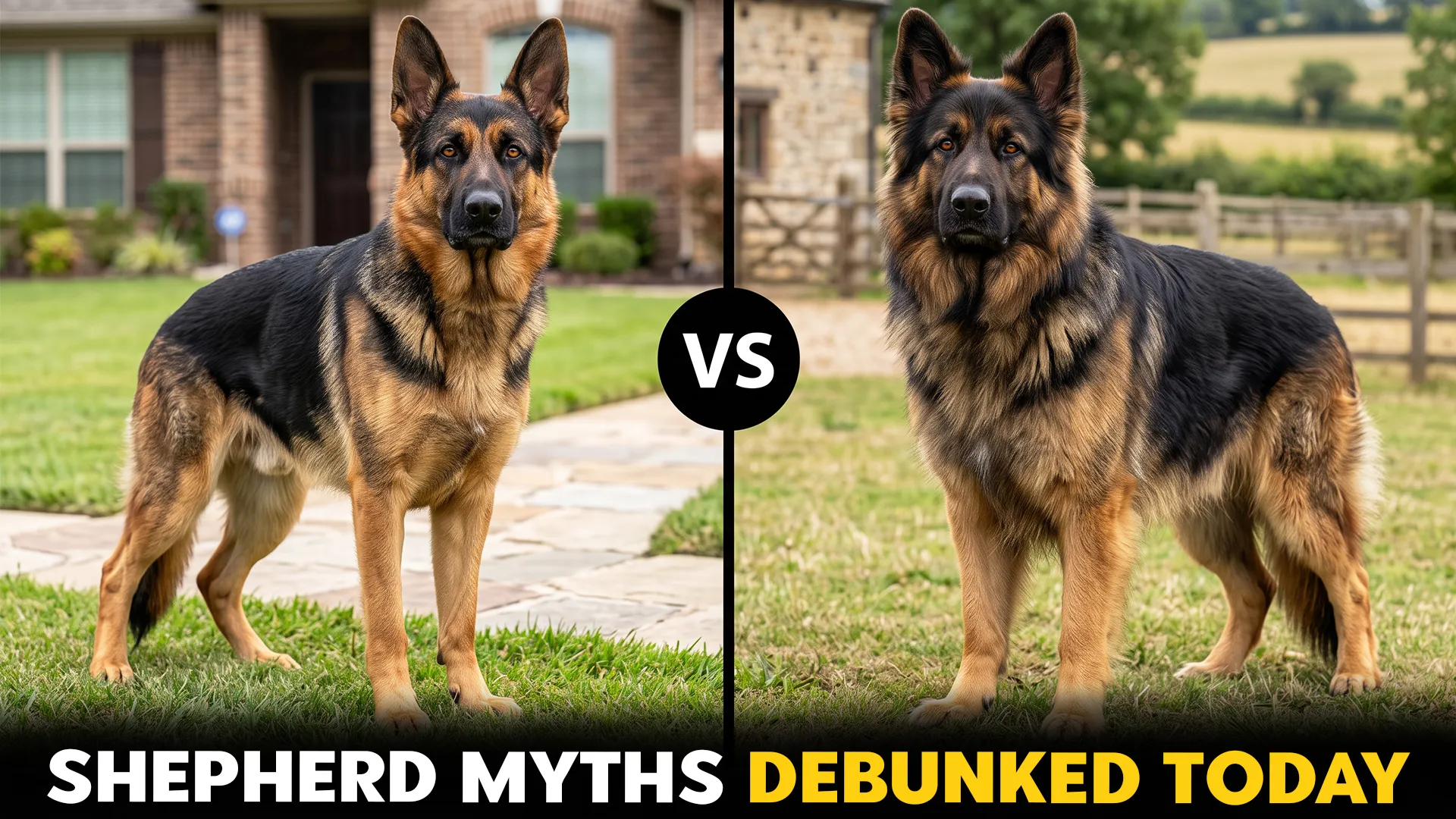
The German Shepherd and the King Shepherd look like twins at first, but they have different temperaments, working styles, genetic makeup, and purposes.
As the King Shepherd comes from the German Shepherd, it does share some characteristics with the breed, but its other parent breeds have also contributed to the calmer and more relaxed posture.
Compared to the German Shepherd, the King Shepherd has moderate energy levels. But both are ideal for families with an active lifestyle. Both have an independent streak, which may sometimes lead to stubborn behavior; however, both are gentle with their owners.
This article covers the differences between the breeds to finally find which breed is ideal for your home. Let us dive in.
German Shepherd vs. King Shepherd: Common Myths Explained
From claims about aggression to confusion over their coat types and lineage, misinformation about these two breeds is everywhere. Let’s set the record straight on what actually sets the German Shepherd apart from the King Shepherd.
Origins & Purpose
German Shepherd was bred purely as a herding dog, while the King Shepherd was bred from the GSD almost 100 years later as a bigger family companion.
German Shepherd: This protective breed was developed by Max von Stephanitz in 1899 in Germany as a herding dog, but because of its versatility, it is widely used in disability assistance, search-and-rescue, police work, and warfare, according to Wikipedia.
King Shepherd: This large dog breed was developed in the United States in 1990 by breeders Shelley Watts-Cross and David Turkheimer.
They crossed American and European German Shepherds with other giant breeds, such as Shiloh Shepherd, Alaskan Malamute, and Great Pyrenees, to create a larger, robust, and healthier counterpart to the traditional GSD.
Size & Physical Build
The King Shepherd is a significantly larger and heavier canine than the traditional German Shepherd. The GSD features an athletic and agile body, while the King Shepherd has a bear-like, heavy-boned build.
German Shepherd: It has an elongated body with a strong back and a sloping topline. The wedge-shaped head and a strong muzzle enable a strong bite force of 238 PSI.
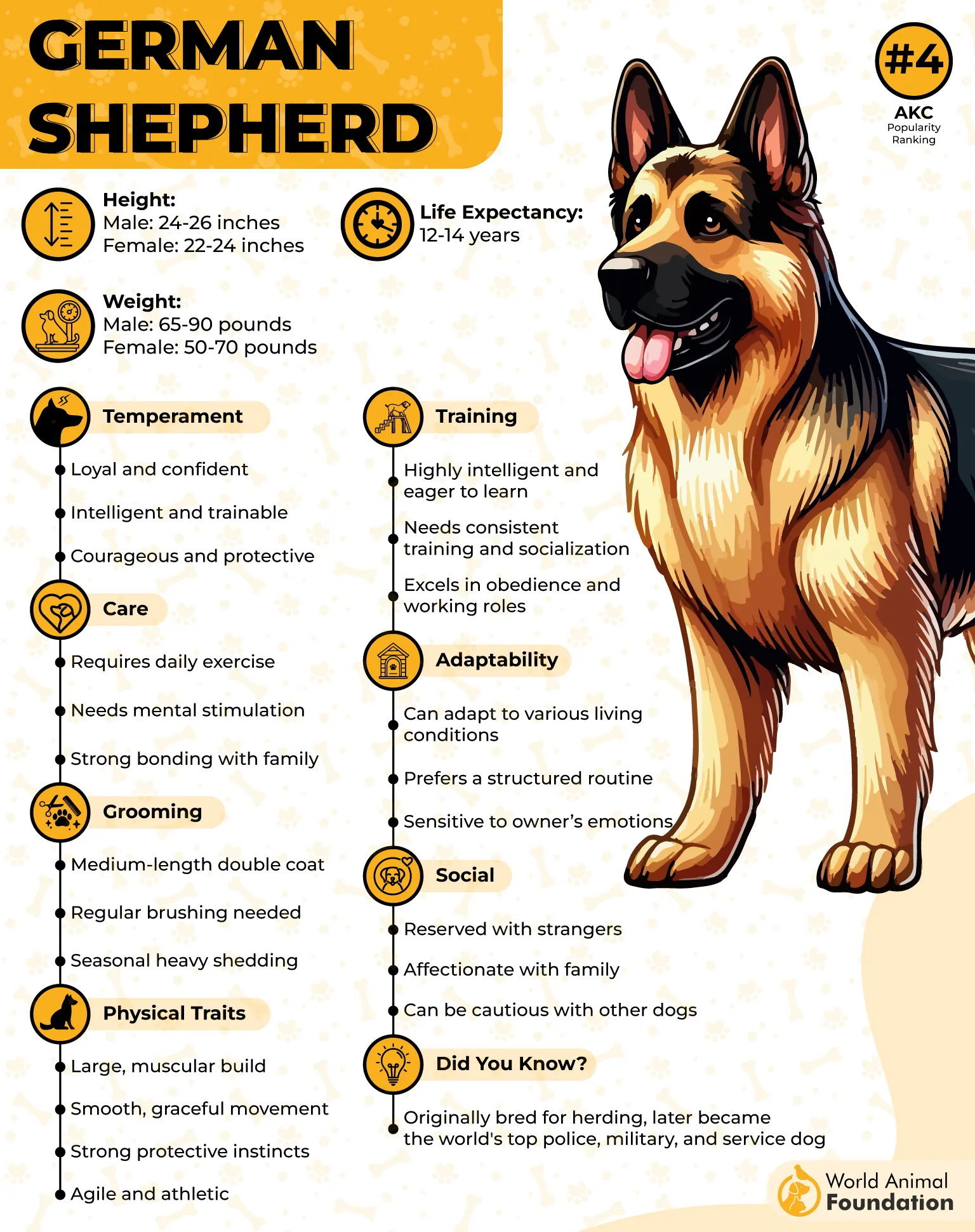
The pointed and erect ears act as a radar system and move in the direction of the noise source. It has a medium double coat. The breed exhibits a smooth and effortless trot to effectively catch the prey.
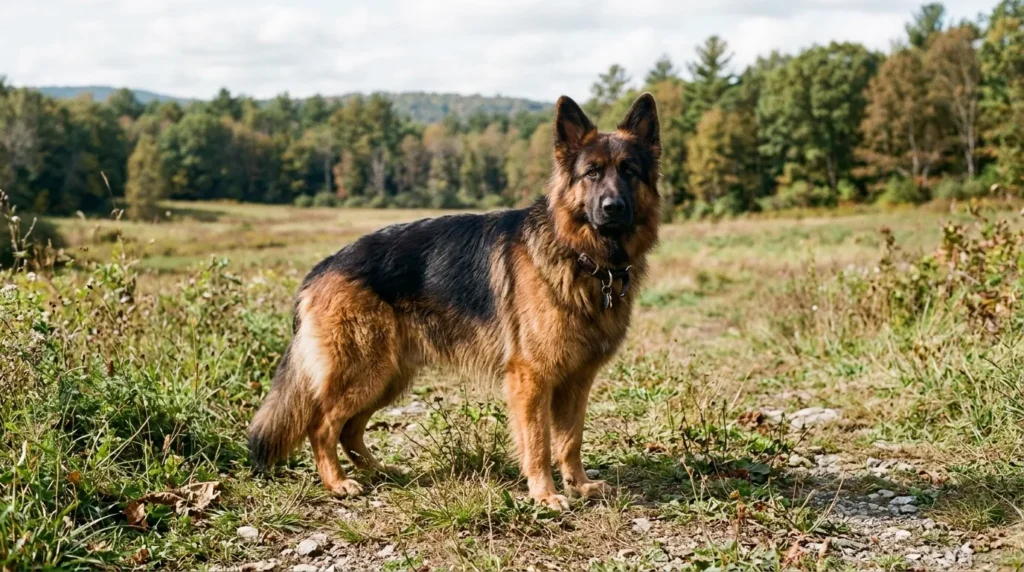
King Shepherd: The heavy bones provide immense power to travel rugged terrain. The tail carries a low and straight (or slightly curved), reaching past the hock. The long and thick coat comes in classic black, tan, and sable to striking red combinations.
Temperament & Personality
The GSD is a highly active, focused, and protective working dog breed, while the King Shepherd is a larger gentle giant, family-oriented, relaxed, and less reactive.
German Shepherd: The loyal dog forms strong bonds with the owner and is aloof with strangers. It is highly trainable because of its working instincts and desire to have a constant job.
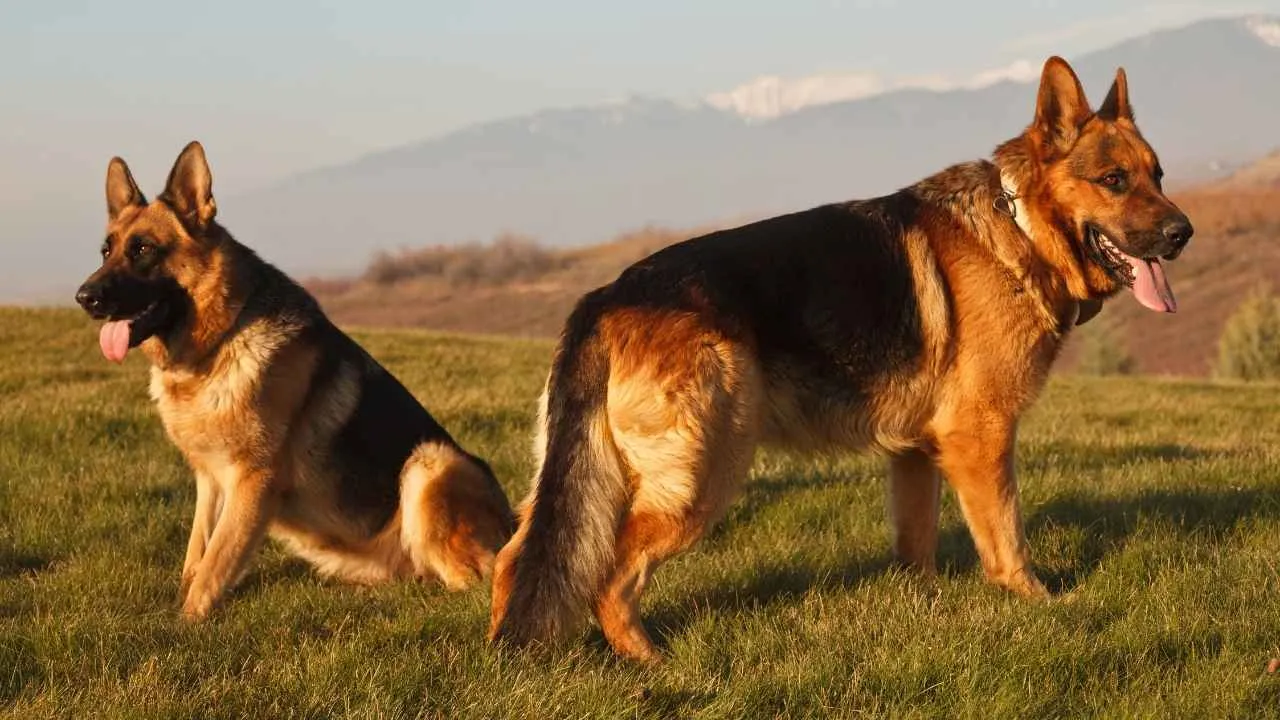
It tends to remain alert and active, making it an excellent watchdog. It can become restless, anxious, or destructive when left without enough physical activity.
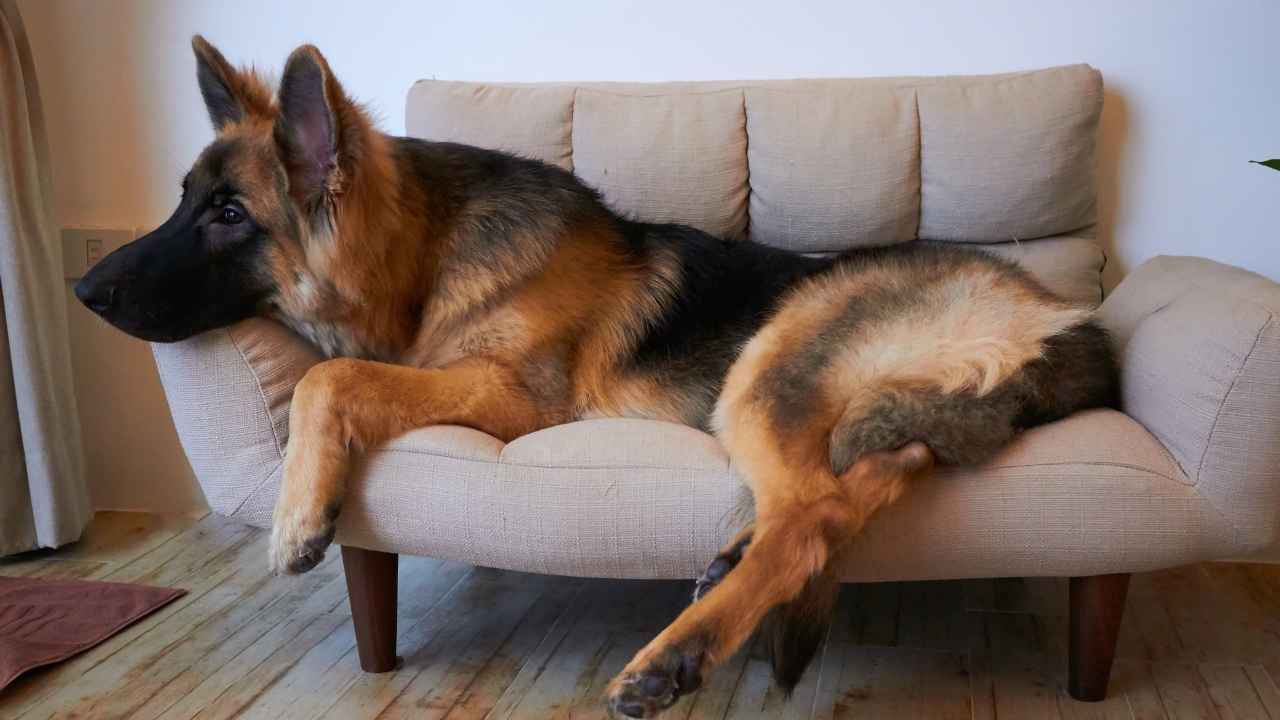
King Shepherd: It bonds closely with family members and is gentle with children. The breed has a calm demeanor but also needs enough exercise before going back to the couch to prevent boredom, as per CKCUSA. It responds well to positive reinforcement and early socialization.
Exercise & Energy Levels
German Shepherd possesses an intense, high-drive working energy, whereas King Shepherd is a larger, “gentle giant” with a slightly calmer demeanor and more endurance for steady activity.
German Shepherd: The breed requires 1.5-2 hours of daily exercise and mental stimulation. Puppies (2-6 months) need daily short sessions (split into 2-3 sessions) to protect developing joints.
Young adults (6-12 months) need moderate exercise: hiking, jogging, and running. Adults (1.5-7 years) need vigorous physical activities.
King Shepherd: It is a high-energy breed that requires 60-90 minutes of daily exercise (a mix of physical activities like long walks, jogging, and hiking, with mental stimulation such as obedience training and puzzle toys).
Training & Intelligence
Both dogs are smart, but they operate at different energy levels and intensities. The German Shepherd is a high-drive, intense working dog, while the King Shepherd is intentionally bred to be calmer, gentler, and a more laid-back family companion.
German Shepherd: It is the third most intelligent dog breed. It closely observes environments, body language, and subtle changes in its handler’s routine. Being a natural problem solver, it can solve complex puzzles, navigate obstacles, or even learn how to open doors. Basic obedience training, followed by short sessions (5-10 minutes each), is recommended.
King Shepherd: It requires constant mental stimulation. Being a quick learner, it excels in obedience, search-and-rescue, tracking, and therapy work. Since it has an independent streak, it does not require repetitive tasks. Positive reinforcement and early socialization are non-negotiable.
Health & Lifespan
The GSD has a lifespan of 7–14 years and is prone to genetic issues like hip and elbow dysplasia. King Shepherd lives 10–11 years, but enjoys slightly more robust vitality.
German Shepherd: While one can not change the genetics, there are a few factors that can prolong the lifespan of the breed: weight management, preventive veterinary care, and regular exercise.
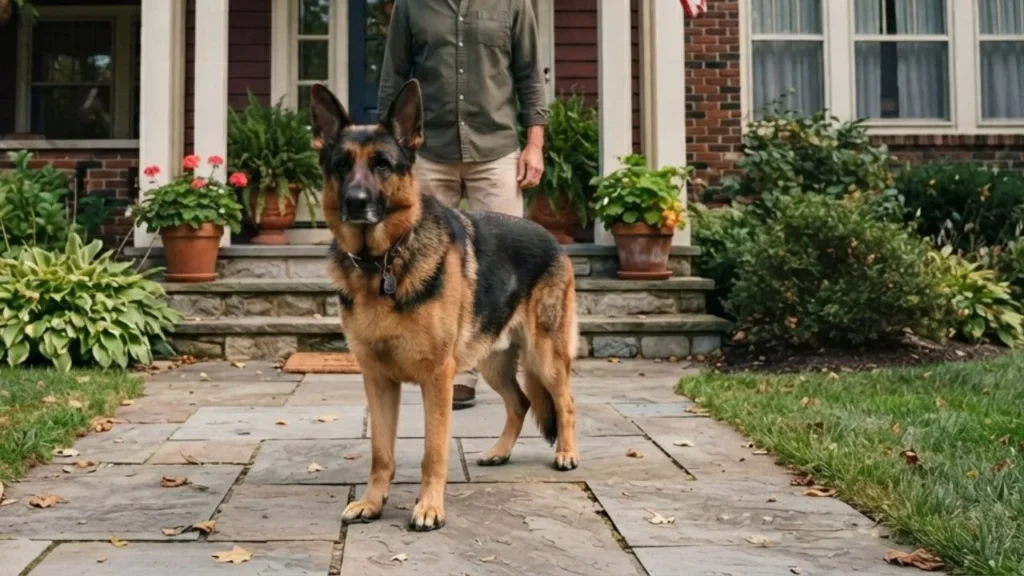
The comparatively healthy dog breed is prone to Degenerative Myelopathy (hind leg weakness and paralysis), bloating (stomach fills with gas and twists), and EPI (inability to digest food properly).
King Shepherd: Because of the genetic contribution from the Alaskan Malamutes and the Great Pyrenees, the breed has fewer health issues: joint health (osteoarthritis), bloating, and degenerative myelopathy. Regular veterinary visits and maintaining a consistent joint and dietary routine are crucial.
Suitability as Family Pets vs. Guard Dogs
The GSD is the superior choice for formal guarding, boasting elite protection instincts and high drive. King Shepherd excels as a family pet due to its calmer, more easygoing temperament.
German Shepherd: Inherently gentle with its own family but aloof to strangers if not socialized properly. The activity level is high and needs daily stimulation to prevent destructive behavior, such as chewing and digging.
It is great with older kids and needs supervision around young kids. It makes an excellent watchdog by barking to alert owners to unusual sounds or strangers.
King Shepherd: The breed shows great affection to the human family. It makes great friends with the owner family, children, and even other pets. The breed lacks the aggressive and territorial drive required for true protection work, but makes a great watchdog because of the loud bark and intimidating size.
Conclusion
The German Shepherd vs. King Shepherd debate isn’t really about which breed is “better.” It’s about figuring out which one fits your lifestyle, experience, and expectations. A GSD shines in training and exercise thanks to its strong working history. The King Shepherd, on the other hand, suits families looking for a calmer, quieter living environment.
Both breeds are great choices for the right kind of owner. Before bringing home either one, do your research: look into the breed’s characteristics, check the breeder’s background, and think about what age of dog will make training easiest for your household.
