




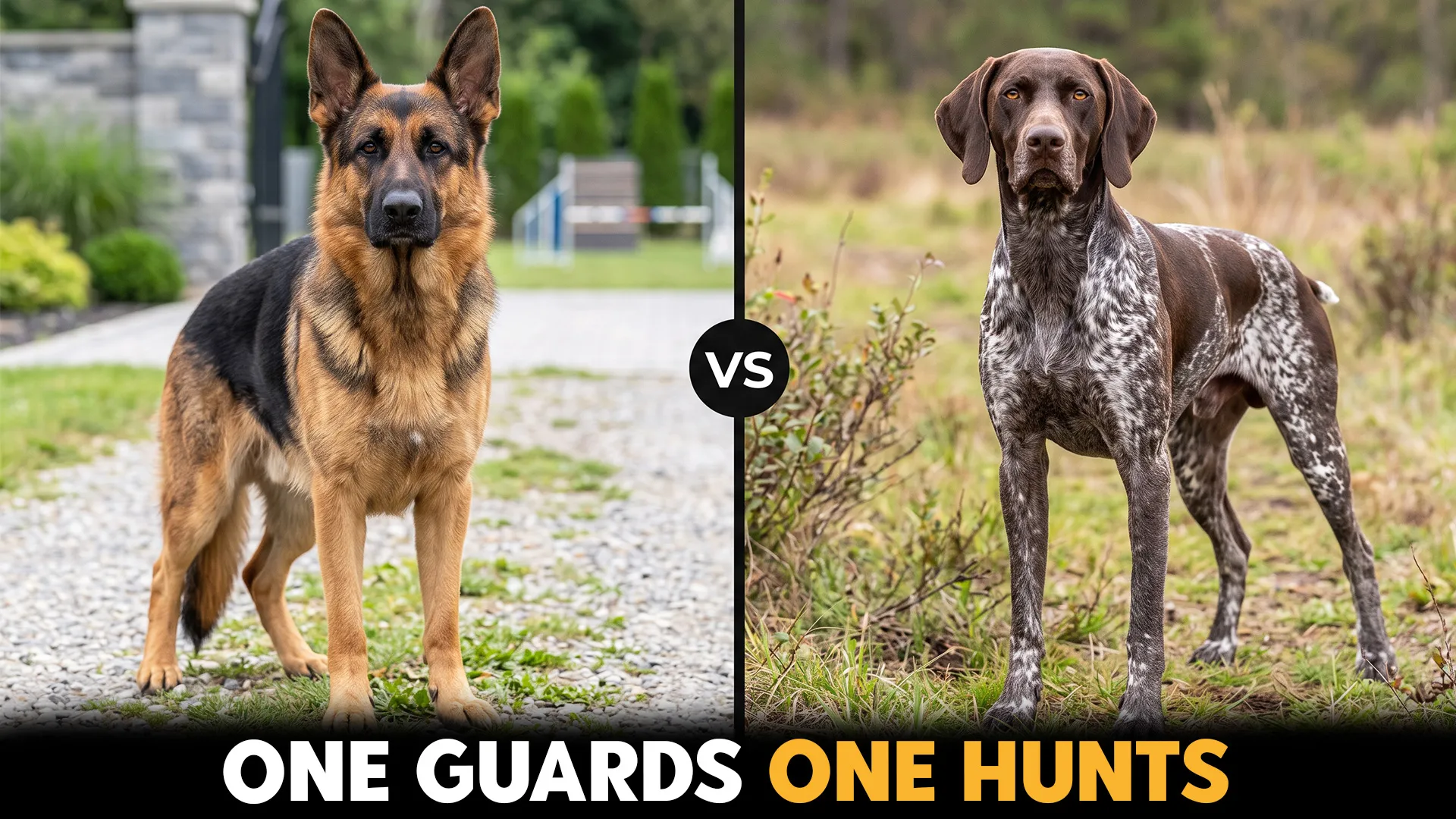
German Shepherd or German Shorthaired Pointer. Two dogs born in the same country, built for different lives, and both convinced they are the right choice for your home.
Walk into any dog park, and the difference is obvious before either animal even moves. One stands like it is on duty, scanning the gate for trouble. The other looks ready to sprint toward the nearest bird, tail already in motion.
Shared homeland, shared intelligence, and almost nothing else in common once you look past the passport. One breed guards, the other hunts, and that single fact shapes everything from their energy to their personality to how much fur ends up on your sofa.
This guide lines them up side by side, category by category, so the choice stops feeling like a guessing game.
By the time you finish reading, you will know exactly which dog deserves the leash in your home.
German Shepherd vs. German Shorthaired Pointer Dog Breeds
Breed Origins & Functional Background
Both breeds trace their roots to 19th-century Germany, yet they were built for entirely different jobs. The German Shepherd emerged as a flock guardian, shaped largely by Max von Stephanitz from working herding and farm dogs, as Britannica records. Its original brief was simple: watch the flock, read the terrain, and never let a predator get close.
The German Shorthaired Pointer had a different assignment. Hunters wanted a dog that could point game on land and swim after it in water. Orvis traces the breed to Charles Thornton of Montana, who imported the first GSP to the United States in 1925, with the AKC recognizing it 5 years later.
That split in purpose still shows up today. The Shepherd carries a guarding instinct bred over generations of protecting livestock. The Pointer carries a retrieving instinct bred for partnership in the field.
One dog was built to hold ground. The other Pointer was built to cover it, nose down and tail up.
Physical Characteristics & Body Structure
How different can 2 German working breeds really look when compared side by side? Quite a lot, it turns out.
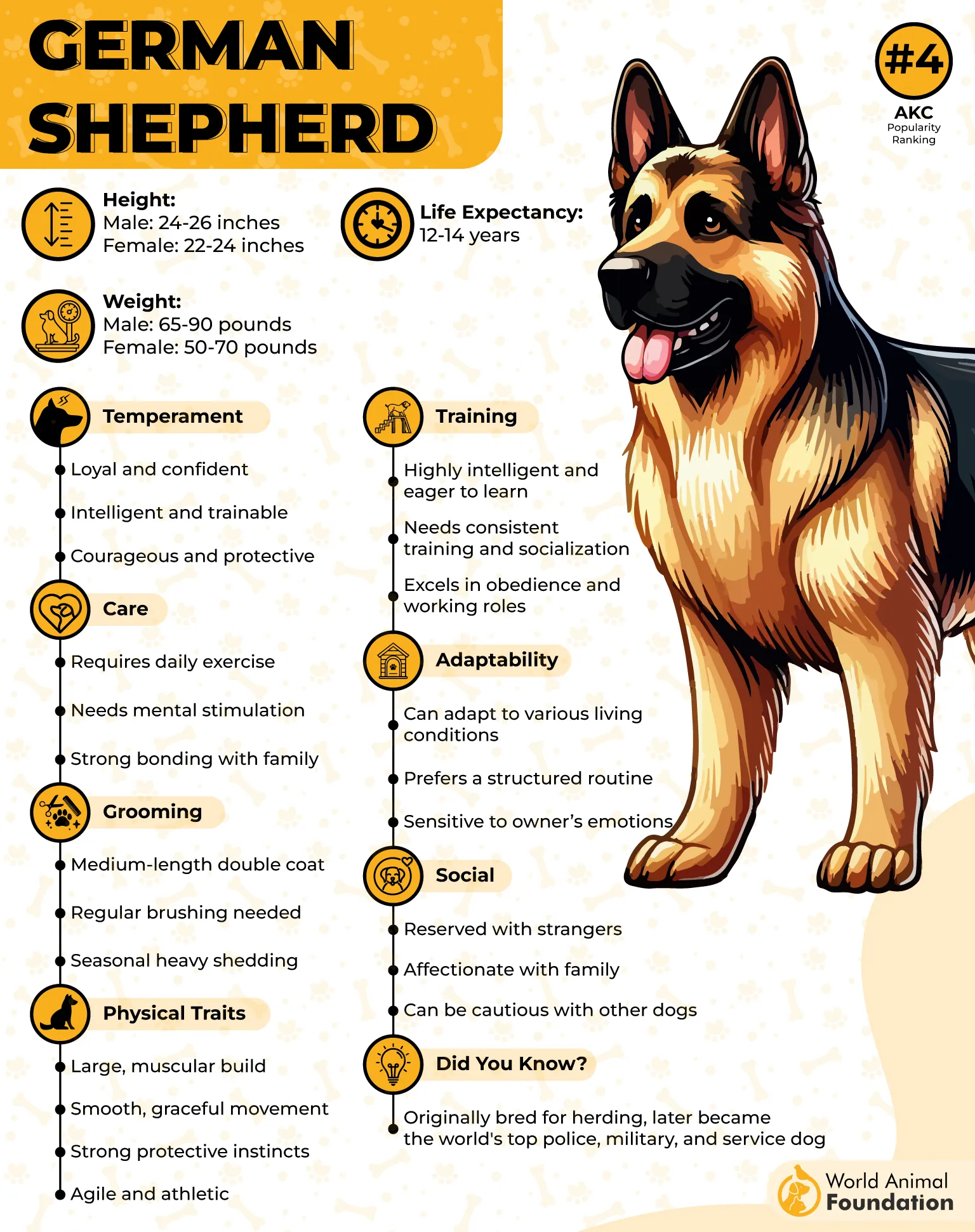
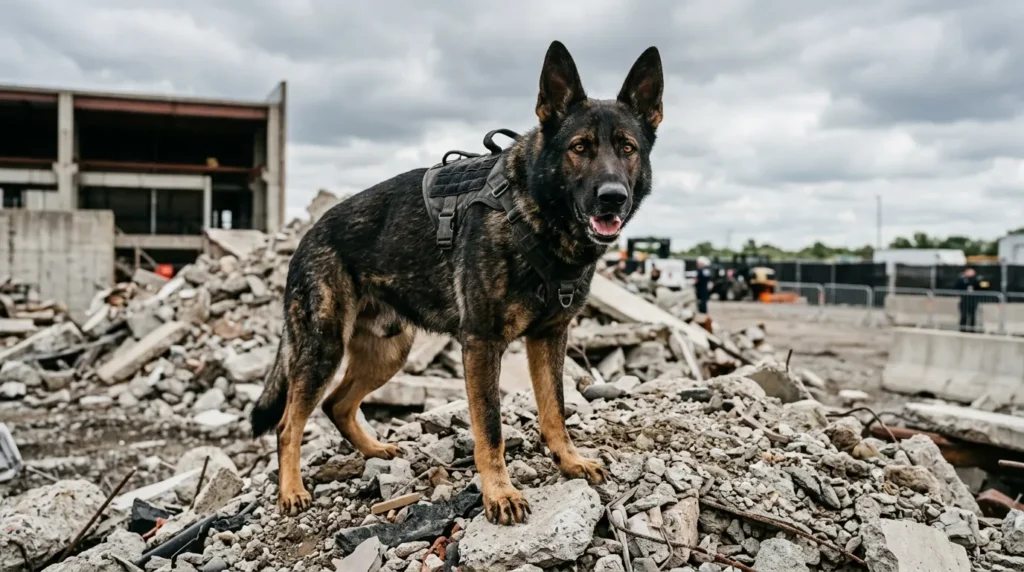
The German Shepherd stands 24 to 26 inches at the shoulder for males and carries a muscular, sloped frame built for sustained trotting. Its coat comes in black and tan, sable, and solid black, with a double layer of fur underneath.
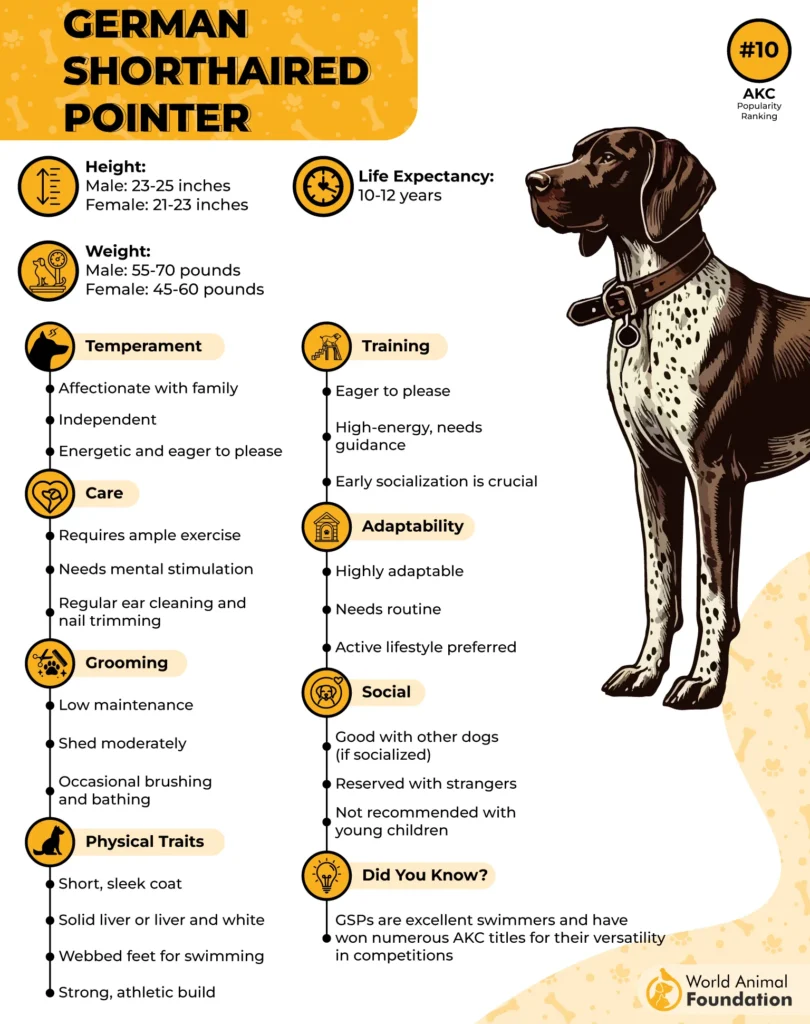
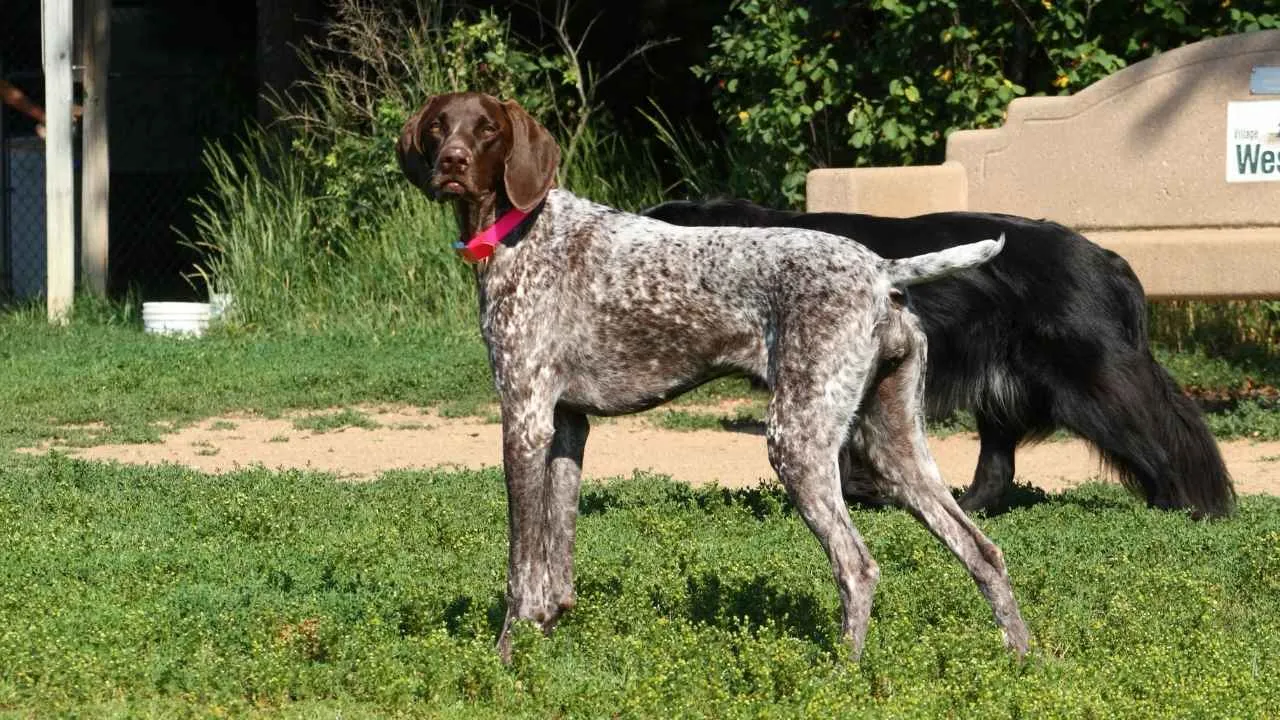
The German Shorthaired Pointer is leaner and a touch shorter, with males reaching roughly 23 to 25 inches. Where the Shepherd looks built for standing guard, the GSP looks built to run all day without tiring. Its coat is famous for one color in particular: liver, often paired with white ticking or patches.
Size overlaps more than most owners expect, but silhouette gives the game away instantly. The Shepherd reads as substantial and square. The Pointer reads as athletic and streamlined, every line pointed toward speed rather than mass.
Temperament & Behavioral Profile
Here is a blunt truth every breeder will tell you. These 2 dogs share a nationality and almost nothing else in personality. The German Shepherd’s temperament is confident, watchful, and deeply loyal to its own household, often aloof with strangers until it decides otherwise on its own terms.
The German Shorthaired Pointer flips that script entirely. It greets new people the way it greets new birds in a field, with enthusiasm and zero suspicion. Independence shows up too, since the GSP was bred to make split-second decisions in the field without waiting on a handler’s cue every time.
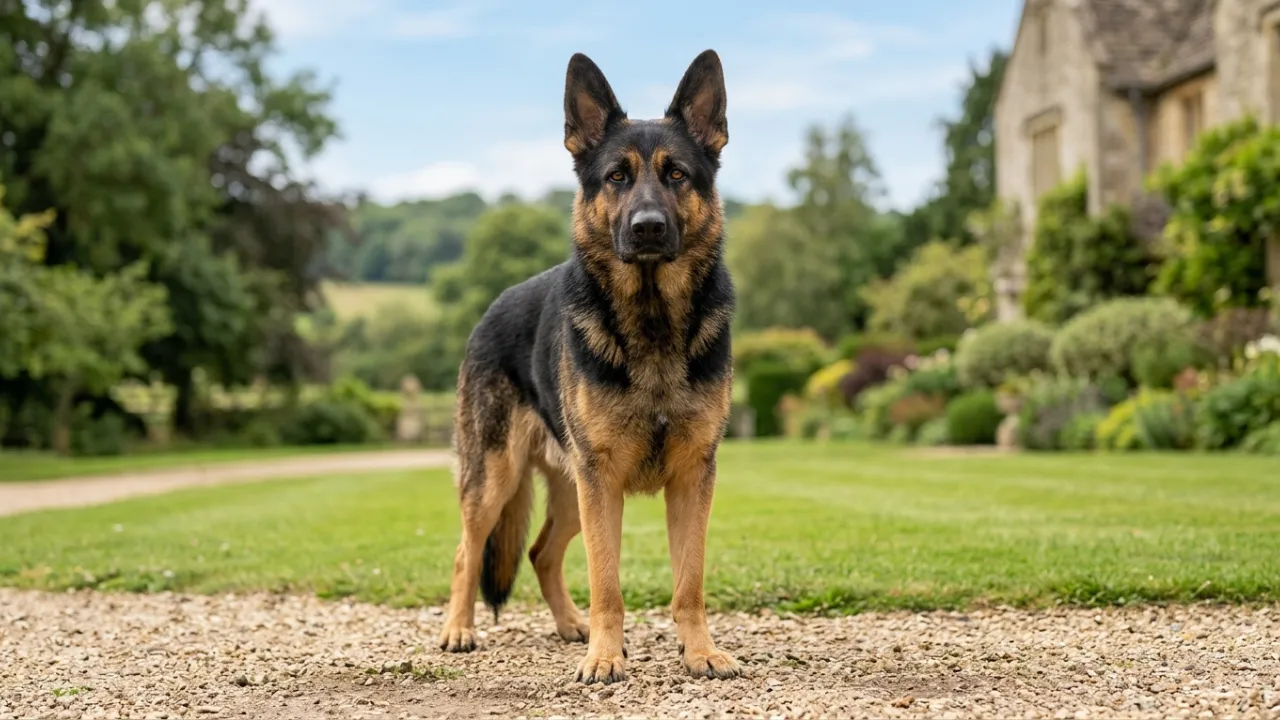
Protectiveness separates the 2 most clearly. A Shepherd’s territorial streak toward the home is practically the point of the breed. A Pointer’s personality leans social and forgiving instead, which makes it a poor natural watchdog but a warm, affectionate companion for an active household.
Neither temperament is better than the other. They simply serve different households, different routines, and different expectations entirely.
Activity Requirements & Energy Levels
90 minutes. That is roughly the daily activity gap between a merely tired German Shepherd and a genuinely exercised one. Hill’s Pet puts the breed’s minimum at more than 40 minutes of dedicated exercise a day, plus mental work like training drills or puzzle toys to avoid restlessness and mischief indoors.
The German Shorthaired Pointer asks for even more than that. VCA Animal Hospitals describes a breed that needs daily exercise in the form of a long walk, or preferably a long jog, and states plainly that this is not a breed for an inactive owner.
GSD daily minimum: Over 40 minutes of structured activity plus mental stimulation
GSP daily minimum: A long jog or equivalent, ideally split across 2 sessions.
Both dogs punish boredom with destructive habits around the house, but the Pointer’s energy ceiling sits noticeably higher than the Shepherd’s does.
Trainability, Intelligence & Learning Ability
Which breed learns faster? It depends entirely on what you are teaching and how patient the household happens to be. The German Shepherd ranks among the most trainable breeds alive, prized by police and military units precisely because it reads handler cues with unusual precision and retains structured commands for years without much refreshing.
The German Shorthaired Pointer is just as intelligent, but its brain runs on a different operating system. Field instinct often overrides obedience the moment a scent trail crosses its path, so training works best when it channels that drive into a task rather than fighting it head-on.

Consistency wins with both breeds, yet patience looks different for each one. A Shepherd rewards firm, repetitive structure built around clear routines. A Pointer rewards variety, since repetition alone can bore a dog built for constantly changing terrain.
Pick the Shepherd for obedience trials. Pick the Pointer for scent work, agility, and anything that rewards a quick nose.
Coat Maintenance & Grooming Needs
Grooming is where this matchup gets genuinely lopsided. The German Shepherd carries a dense double coat that sheds year-round and blows out twice a year, in spring and fall, dropping fur in handfuls across the floor. The experts recommend brushing every other day to keep that loose hair under control.
The German Shorthaired Pointer carries a short, dense, single-layer coat that sheds lightly and never mats or tangles. A weekly brush and the occasional bath cover nearly everything this low-maintenance breed needs year-round.
GSD grooming: Brush every other day, more often during seasonal coat blow in spring and fall.
GSP grooming: A once-weekly brush is typically enough to keep the coat tidy.
Anyone sensitive to loose hair and fur around the house will find the Pointer dramatically easier to live with than the Shepherd.
Average Lifespan & Longevity
Over 10 years. That is the floor both breeds are expected to clear with reasonable care, though the path there looks different for each. The German Shepherd’s average lifespan runs roughly 10 to 12 years, sometimes shortened by joint strain from its heavier, sloped build.
PDSA lists an average lifespan of over 10 years for the German Shorthaired Pointer as well, and its leaner, lighter frame generally puts less ongoing stress on hips and joints across those years.
Hip dysplasia remains a shared risk for both large, athletic breeds, which is why responsible breeders screen hips before pairing dogs together. Weight management and steady exercise do more for longevity in both breeds than any supplement sitting on a shelf.
Genetics set the ceiling on how long either dog can live, but daily care decides how close that dog actually gets to it.
German Shepherd vs. German Shorthaired Pointer: Suitability for Family Life vs. Guard Duties
So which dog actually belongs in your living room? That depends on what you are asking the dog to do once it gets there.
The German Shepherd was bred to guard, and that instinct has not faded with a few generations of city living. It bonds hard with its family and treats strangers at the door with calculated suspicion, which is exactly why police forces and home security-minded owners still favor the breed.
The German Shorthaired Pointer was never bred to guard anything except a bird in tall grass. Its friendliness toward strangers makes it a poor deterrent and a wonderful fit for active families who want a running partner rather than a sentry.
Families chasing a dependable watchdog should lean Shepherd. Families chasing an energetic, affectionate companion for hiking and field sports should lean Pointer. Both are excellent dogs. They simply answer different questions.
Conclusion
Neither breed wins this matchup outright, because the matchup was never fair. One dog was built to guard a yard, the other to cover a field, and that 19th-century split still shapes every chapter of this comparison.
Pick the German Shepherd for loyalty, protection, and a trainable mind that takes direction seriously. Pick the German Shorthaired Pointer for boundless energy, a low-maintenance coat, and a tail that never stops.
The real question was never which breed is better. It is which lifestyle you are living, a watchful household or an active one, and which dog actually matches it.
