




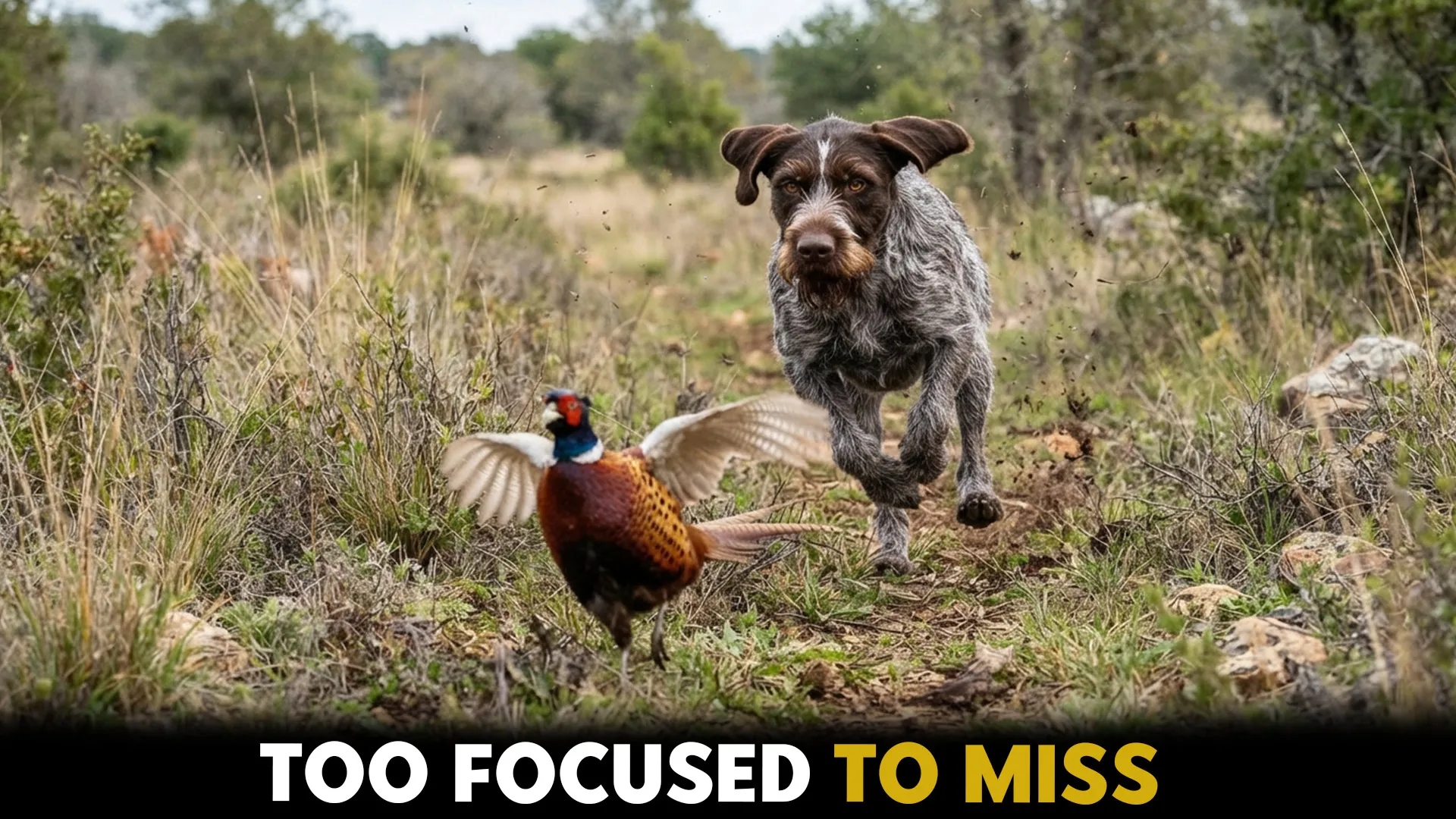
“Dogs and people have been living and working together for thousands of years,” with many breeds specifically developed to locate, chase, point toward, or retrieve game.
Their hunting abilities can involve remarkably different skills: some follow scent trails across long distances, while others rely on sharp eyesight, speed, or an exceptional ability to work alongside a human handler.
High prey drive describes a strong natural motivation to notice and pursue animals or other moving targets.
In a household, however, the same behavior may send a dog racing after a squirrel, fixating on a bird, or following an intriguing scent instead of responding immediately to its owner.
Their backgrounds range from specialized rabbit and raccoon work to versatile field duties involving pointing and retrieving. While genetics strongly influence their instincts, training, socialization, exercise, and individual temperament all affect how those characteristics appear in daily life.
Dog Breeds That Excel at Hunting – High Prey Drive Explained
1. Bluetick Coonhound
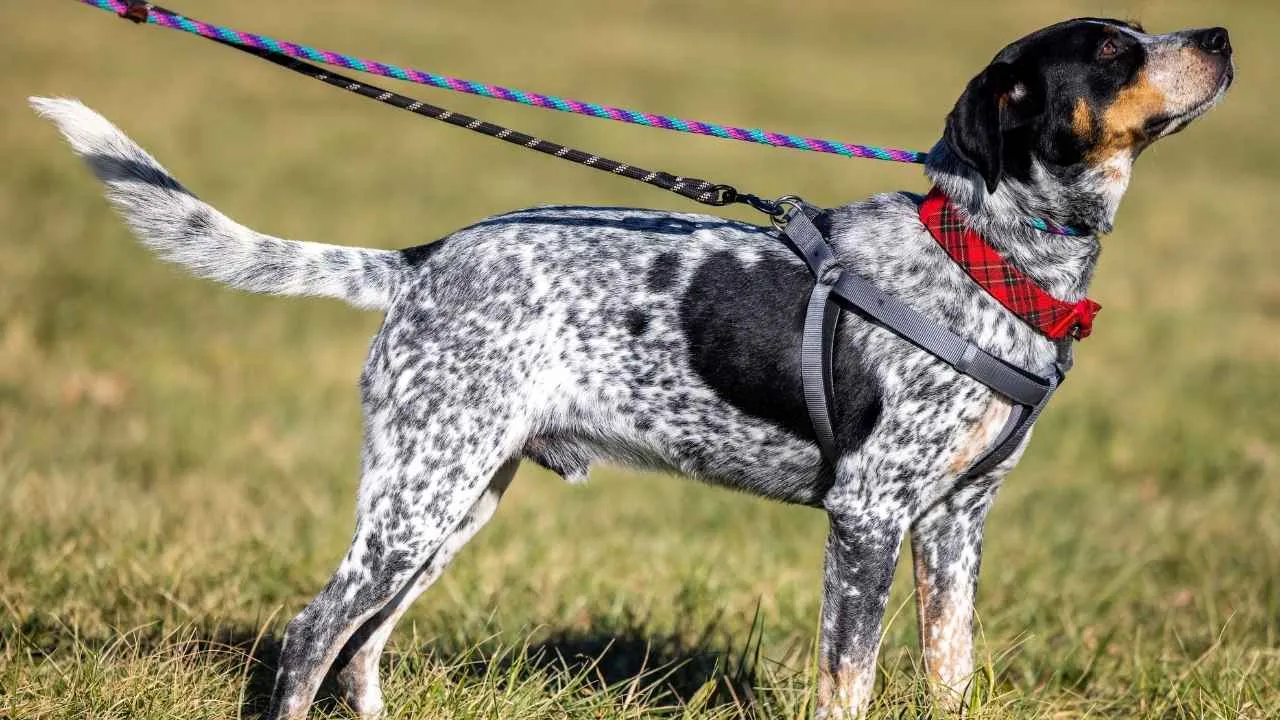
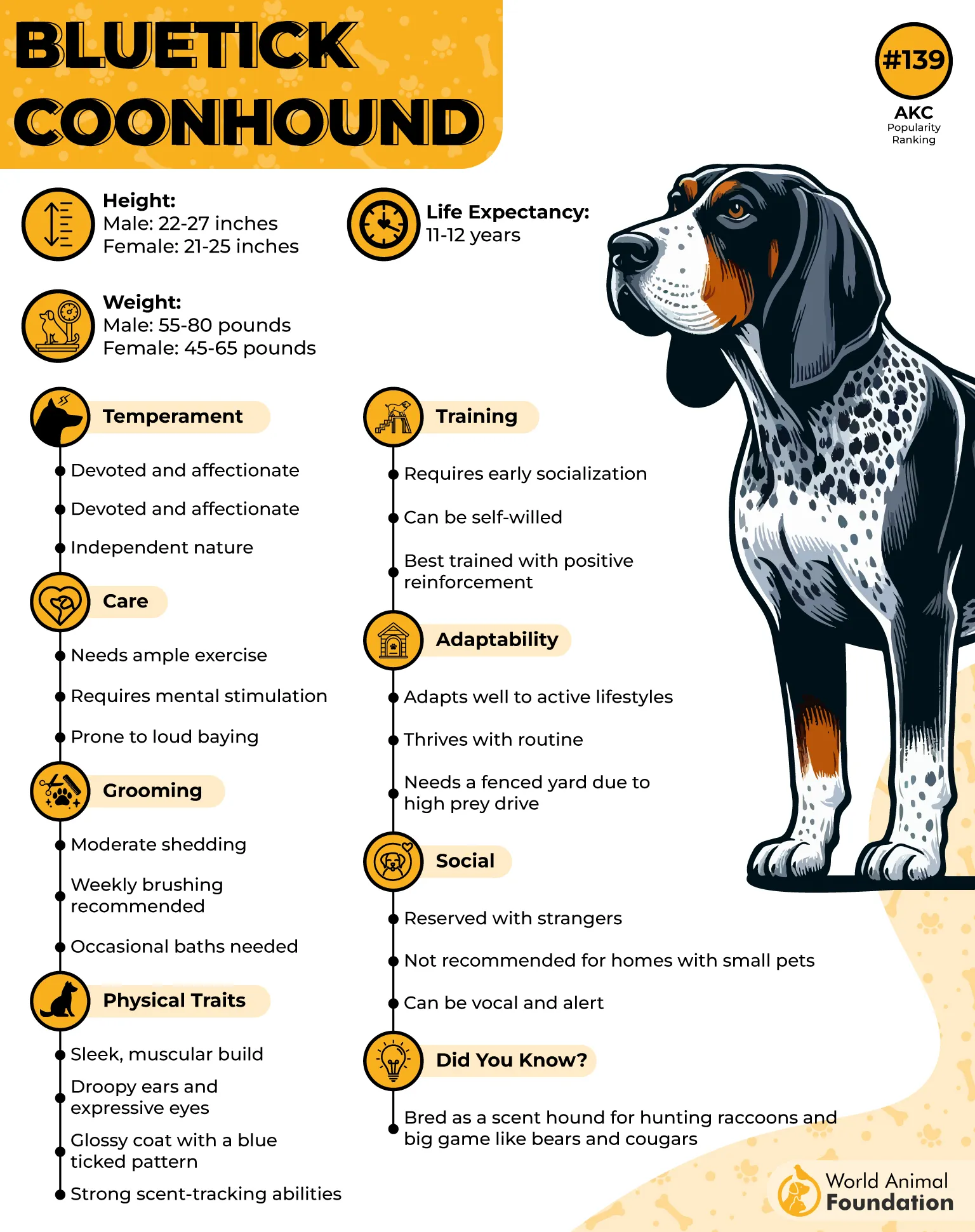
Bluetick Coonhounds are American hunting dogs particularly associated with tracking raccoons. Their working heritage emphasizes scent detection, endurance, determination, and the ability to remain focused while following quarry through difficult surroundings. The breed’s strong nose allows it to investigate trails that would be virtually undetectable to humans.
Their distinctive mottled coat is only part of their appeal. Beneath that recognizable appearance is a persistent hound that was developed to continue working even when the trail becomes complicated, or the quarry travels considerable distances.
Give Their Nose a Purpose Through Active Training
Bluetick Coonhounds need more than occasional neighborhood walks to remain satisfied. Long exploratory outings, scent games, tracking exercises, and supervised adventures can give them opportunities to use their natural abilities.
Training should concentrate on recall, leash control, impulse management, and responding despite distractions. A Bluetick that has discovered an exciting scent may become deeply absorbed, so owners should practice obedience in environments that gradually become more challenging.
A Determined Tracker With a Powerful Prey Drive
The Bluetick’s prey drive is closely connected to its extraordinary scenting instinct. Once an appealing trail captures its attention, following that odor can become the dog’s immediate priority.
This persistence is precisely what makes the breed valuable in appropriate hunting and scent-work settings. For companion owners, activities such as tracking games and scent competitions can provide a safer way to satisfy an instinct that might otherwise lead the dog away from home in pursuit of wildlife.
2. Pharaoh Hound
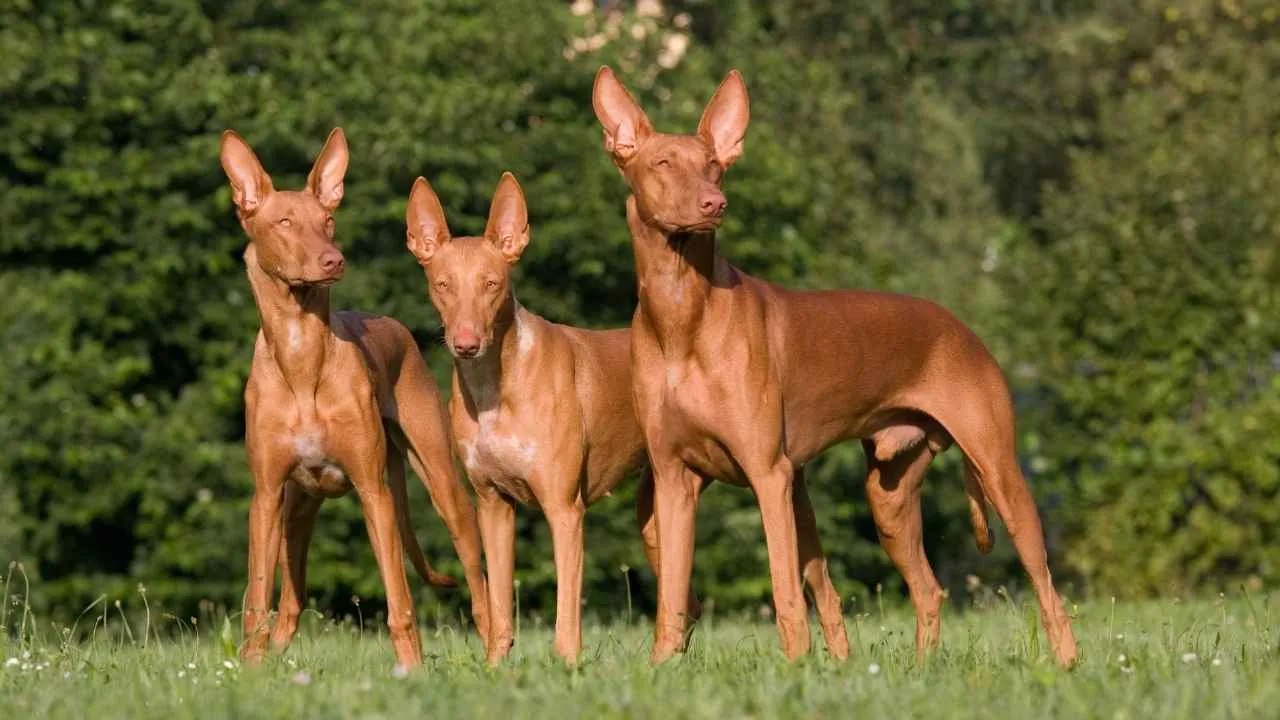
The Pharaoh Hound is closely associated with Malta, where it became known as a hunting and companion breed. It represents a different approach from traditional scent-focused hounds because it can use sight, scent, speed, and agility when pursuing small game. The American Kennel Club identifies it as a fast hunter particularly suited to rabbit work.

Its athletic silhouette reflects its working background. Long legs, a streamlined frame, and considerable agility allow the Pharaoh Hound to react quickly when something catches its attention.
Turn Their Athleticism Into Structured Daily Work
Pharaoh Hounds generally need plenty of movement and stimulation. Running in safe areas, hiking, active games, lure coursing, and obedience exercises can help meet their physical and mental requirements.
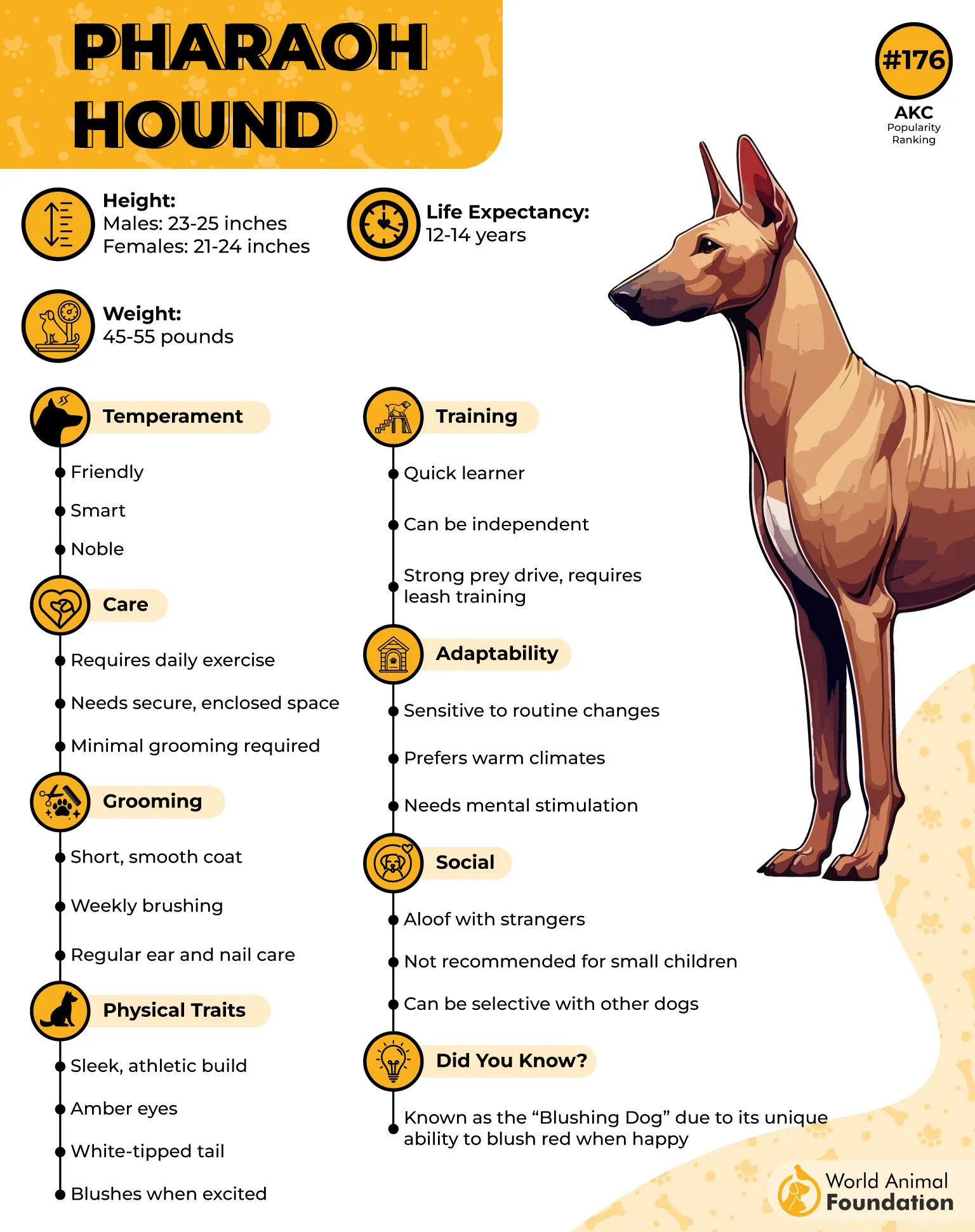
Recall training deserves special attention. A dog capable of rapidly switching from calm observation to a high-speed chase should not be given unrestricted off-leash access simply because it appears obedient in quiet surroundings.
A Swift Hunter Driven by Movement
Their prey drive can become especially obvious when the dog spots something running. Rabbits and other fast-moving animals can trigger an immediate pursuit response, allowing the breed’s impressive speed to take over.
Owners can work with this instinct rather than constantly fighting it by providing controlled chase-oriented activities. Secure exercise areas and structured sporting outlets allow a Pharaoh Hound to express its natural athleticism without turning neighborhood wildlife into a target.
3. Treeing Walker Coonhound
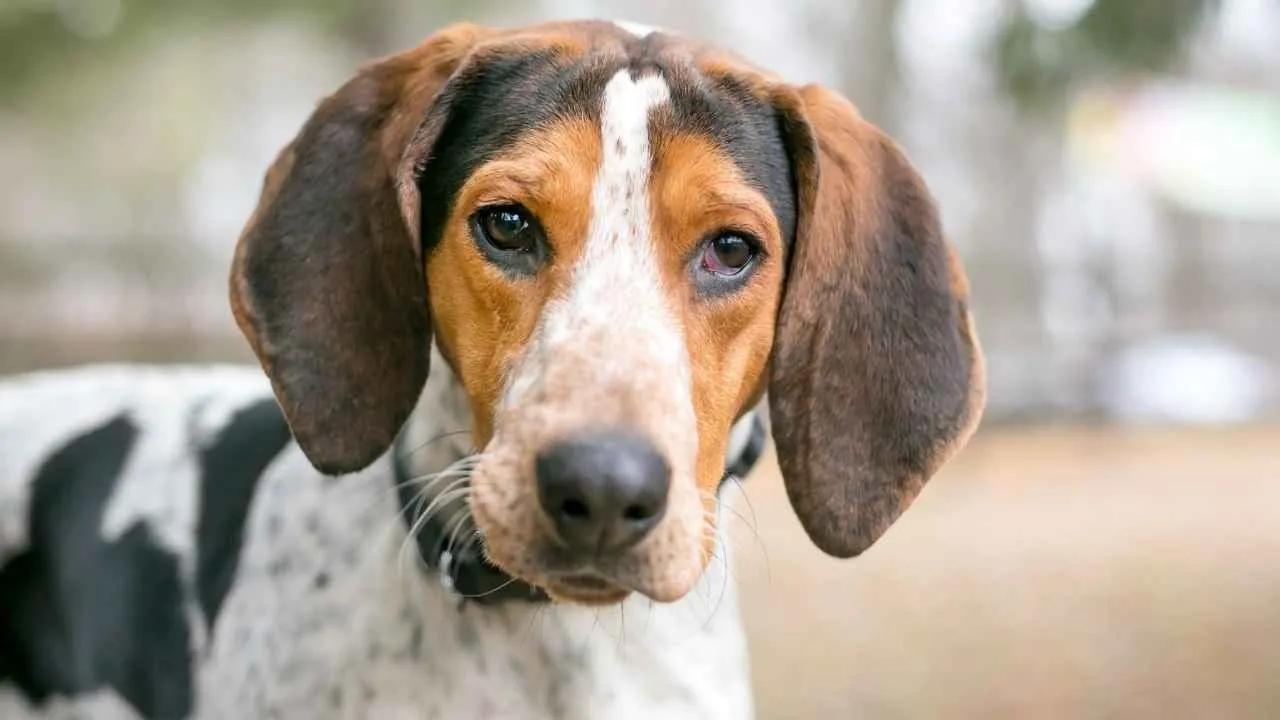
The Treeing Walker Coonhound developed in the United States as a fast, determined hunting hound. Its traditional work involved following game scent and pursuing quarry into trees, where the dog would remain nearby and alert the hunter through its voice.
Speed is another defining feature. Despite being primarily known for scent work, the breed can cover ground quickly and efficiently, making it well suited to demanding outdoor pursuits, as per VCA.
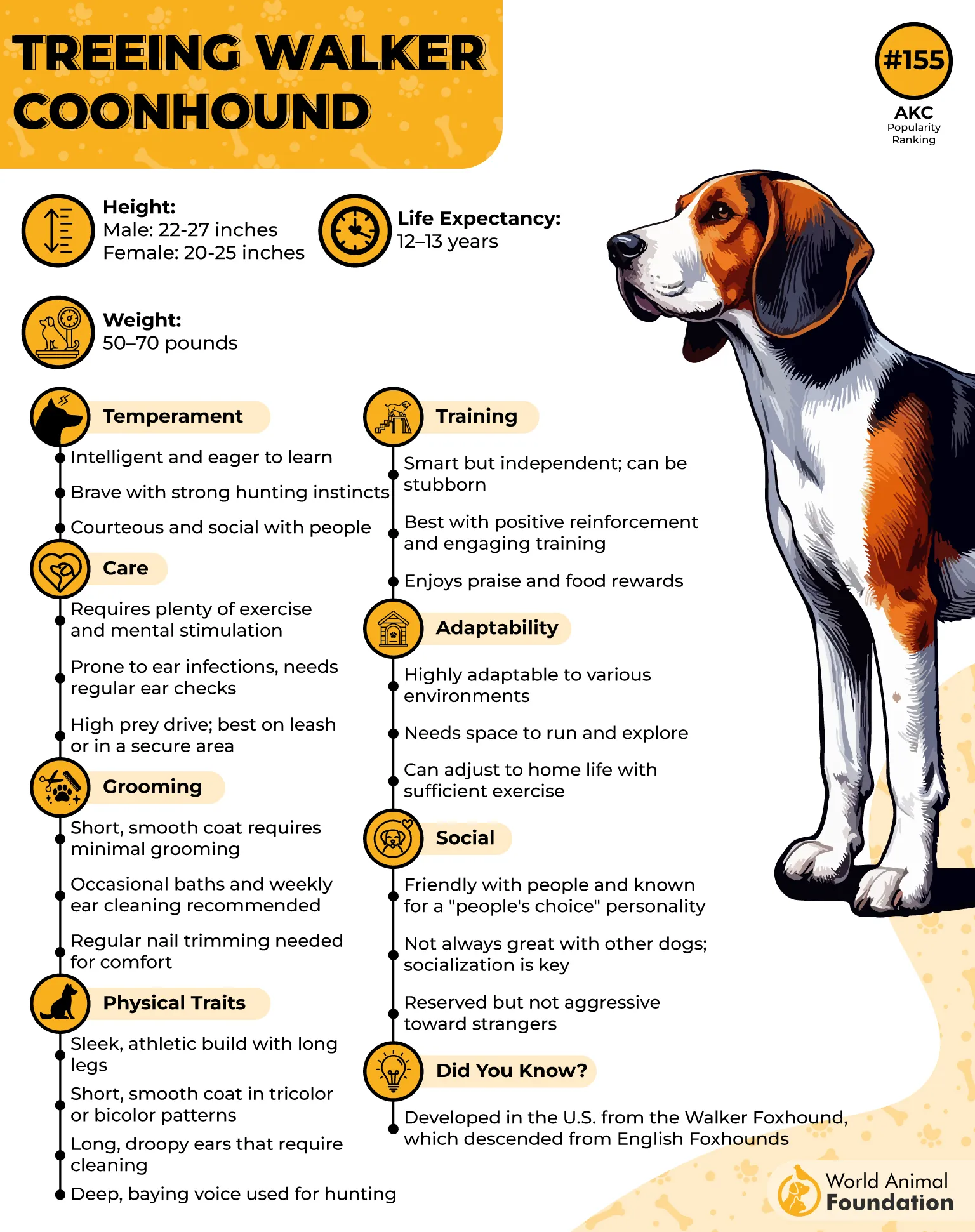
Combine Long-Range Exercise With Reliable Recall
Treeing Walker Coonhounds tend to flourish when they receive substantial daily activity. Hiking, extended walks, tracking games, controlled running, and scent-based challenges can help prevent unused energy from becoming a behavioral problem.
Training should make returning to the handler highly rewarding. Because an intriguing trail can compete strongly for the dog’s attention, owners should practice recall with progressively greater distractions and maintain secure control around wildlife.
A Relentless Pursuer Once the Trail Begins
The Treeing Walker’s prey drive is strongly tied to its tracking heritage. Detecting the scent of quarry can trigger an intense investigative sequence in which the dog follows the trail with remarkable persistence.
That determination can be a major asset in hunting and scent sports. In a household setting, owners should provide legal and controlled outlets for tracking while ensuring that the dog’s enthusiasm does not translate into unsupervised pursuit.
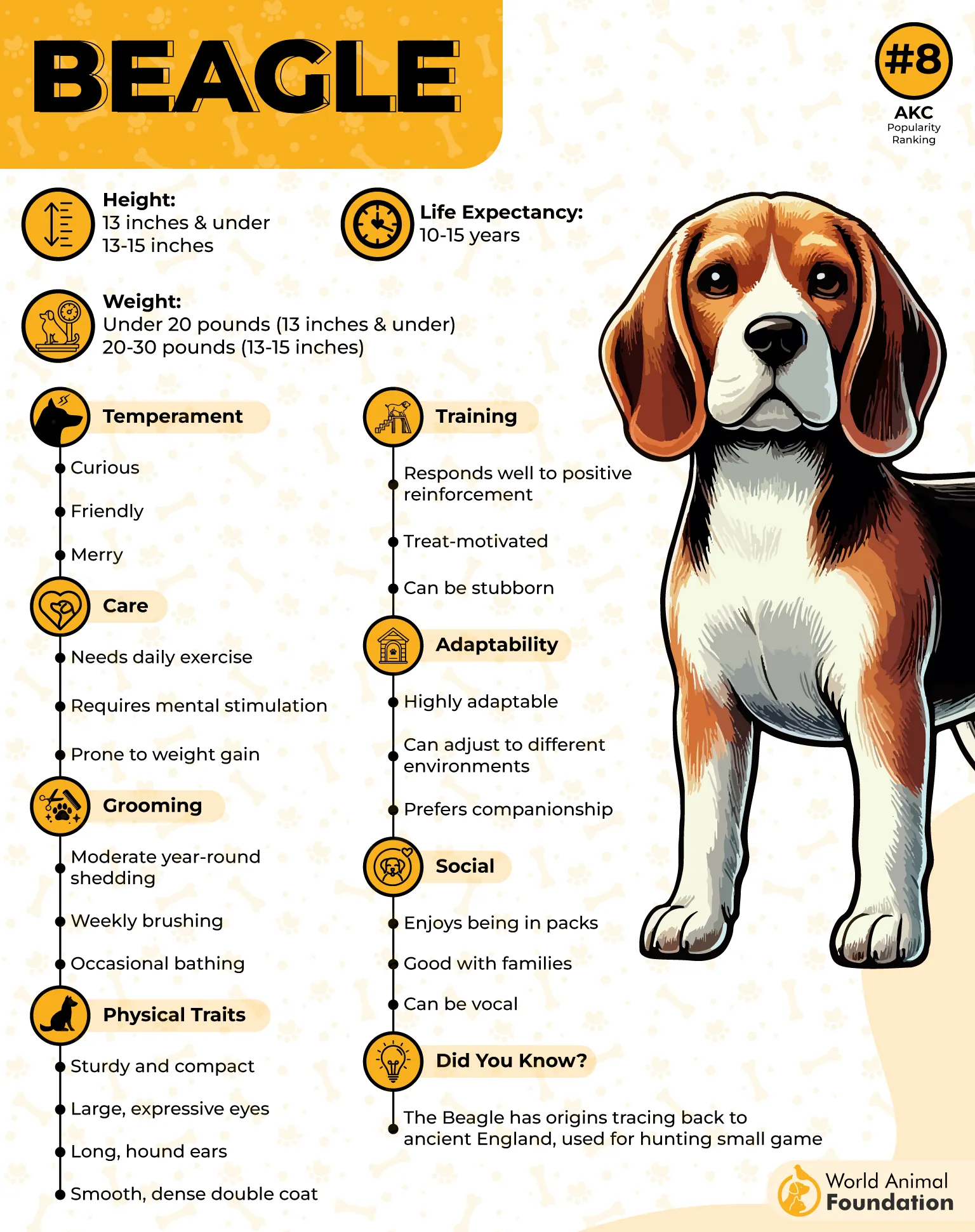
4. Beagle
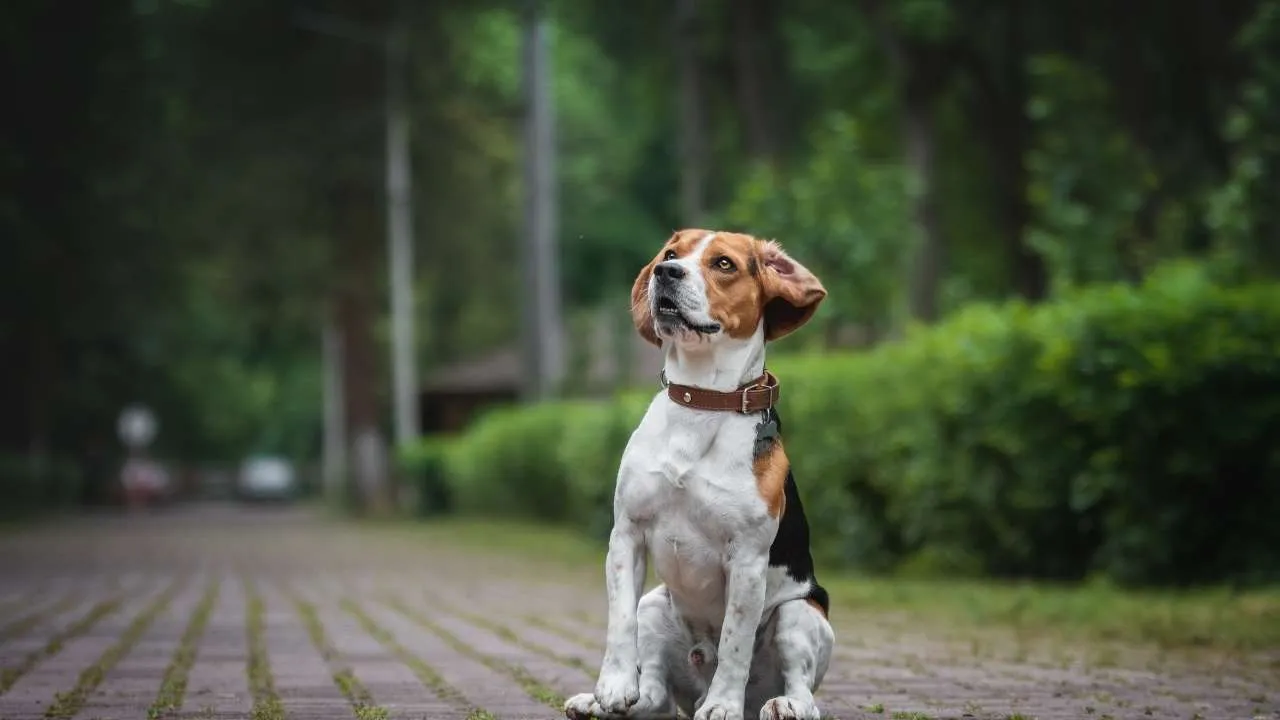
Beagles were bred as scent hounds for tracking small game, especially rabbits and hares. Their compact bodies, stamina, curiosity, and exceptional noses made them effective hunting companions, and the breed continues to demonstrate these qualities in organized field activities.
Their friendly appearance can make it easy to underestimate their working instincts. A Beagle may look like an easygoing family pet one moment and become completely absorbed in a fascinating scent the next.
Make Everyday Exercise a Chance to Explore
Beagles benefit from walks that allow appropriate sniffing and investigation rather than simply covering a predetermined distance. Scent puzzles, food-search games, supervised tracking, and interactive play can provide additional mental stimulation.
Training should be patient and consistent. Their independence can make them less responsive when something interesting has captured their nose, so secure fencing and careful leash use are important components of responsible ownership.
A Compact Scenthound With Remarkable Hunting Focus
A Beagle’s prey drive often expresses itself through tracking rather than explosive speed. The discovery of a rabbit trail or another compelling scent can lead to prolonged investigation as the dog attempts to determine where the odor goes.
This instinct can become a strength when channeled into nose work and scent games. Rather than expecting the Beagle to ignore its strongest natural ability, owners can build training around appropriate opportunities to search and investigate.
5. German Wirehaired Pointer
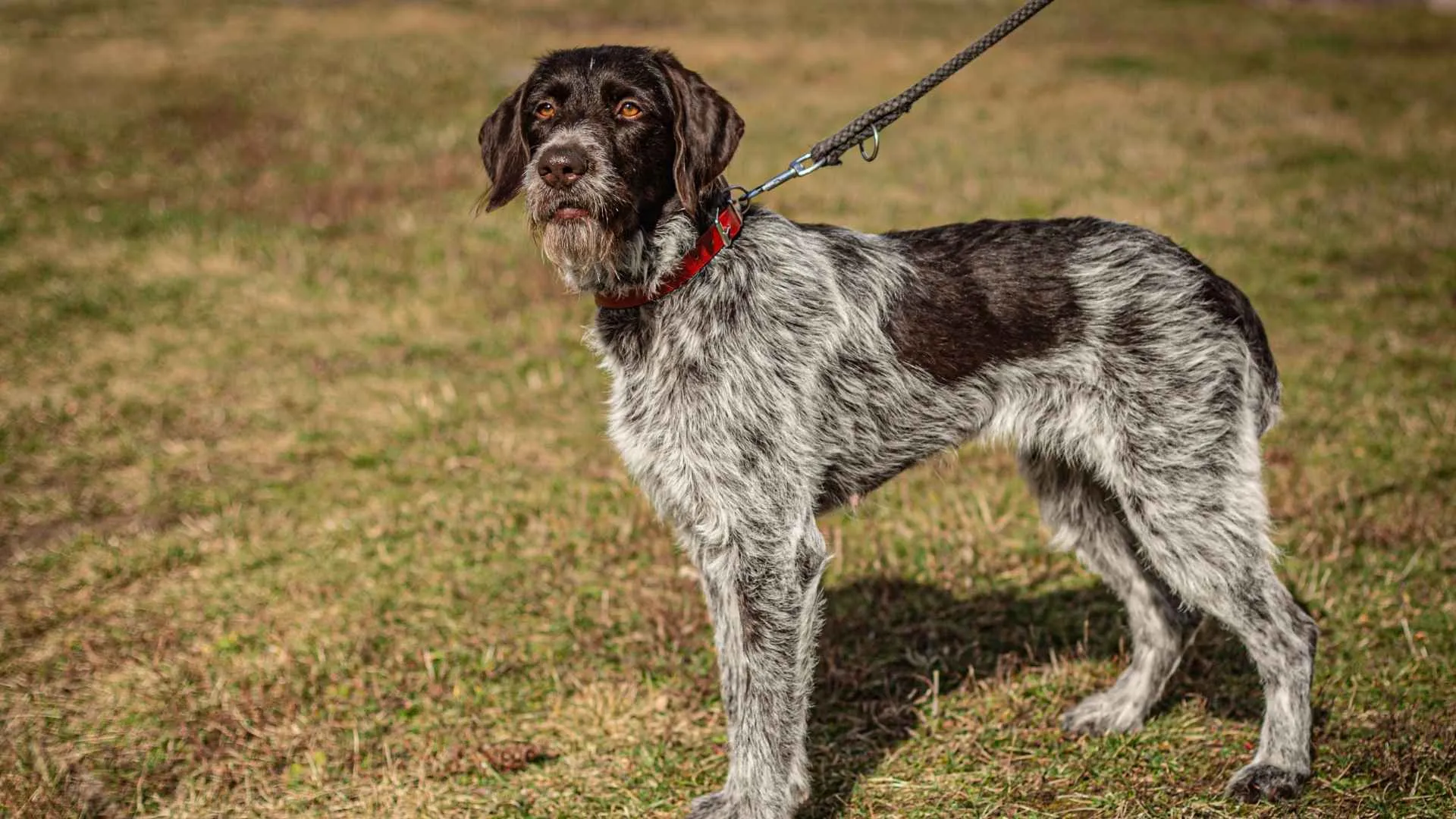
German Wirehaired Pointers were developed in Germany as versatile hunting companions. Their working role required them to handle different terrain and weather while locating and retrieving game, and their wiry, water-repellent coat provides useful protection during outdoor work.
The muscular breed combines athletic ability with intelligence and a willingness to cooperate with people. Unlike a hound primarily specialized for following a trail, the German Wirehaired Pointer was designed to perform several hunting tasks.
Give a Working Breed Meaningful Physical Challenges
German Wirehaired Pointers require substantial activity. Running, hiking, retrieving, swimming, field exercises, and advanced obedience can help satisfy both their physical stamina and their need for purposeful engagement.
Training should be varied and progressive. These intelligent dogs can learn complex behaviors, but they are unlikely to thrive if their daily routine consists only of brief walks and little interaction.
A Versatile Hunter With Intense Prey Motivation
Their prey drive can appear through interest in birds, small mammals, and other potential quarry. Depending on training and circumstances, the dog may search, point, pursue, or retrieve.
This versatility is valuable for sporting activities and organized fieldwork. Companion owners can also redirect the same instincts into retrieving games, scent exercises, swimming, and structured outdoor challenges that provide an acceptable alternative to chasing wildlife.
6. Vizsla
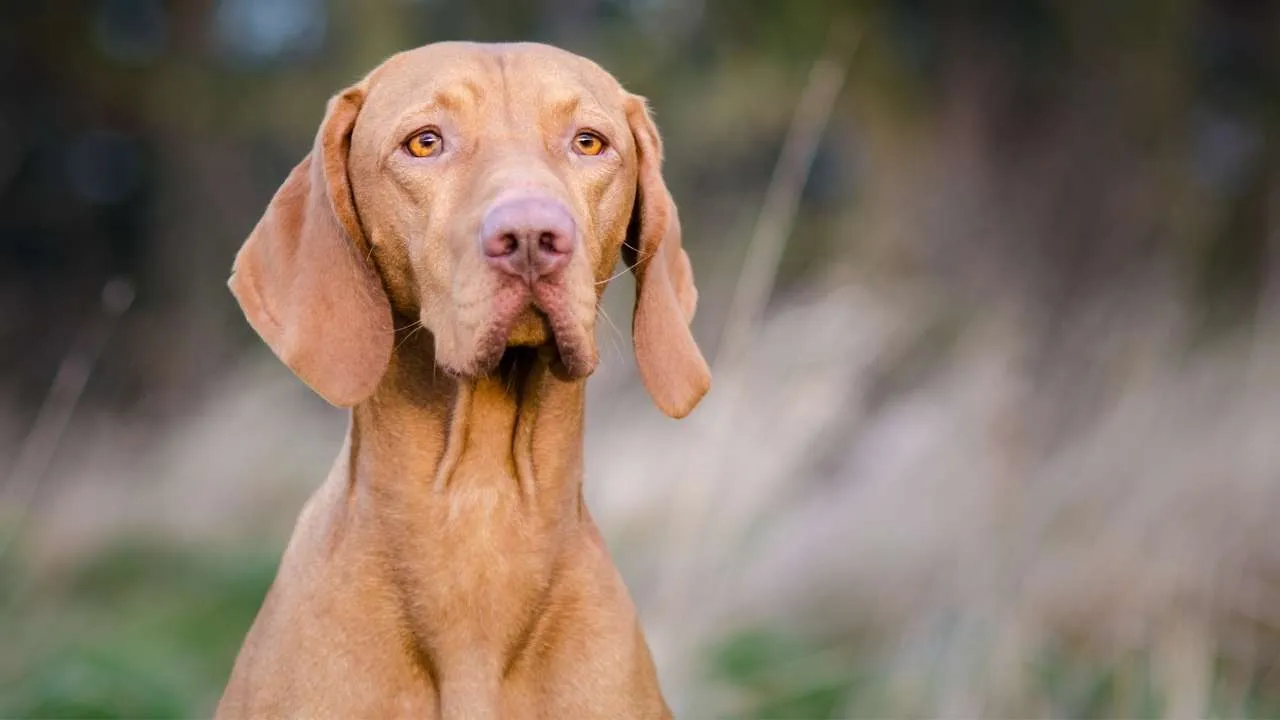
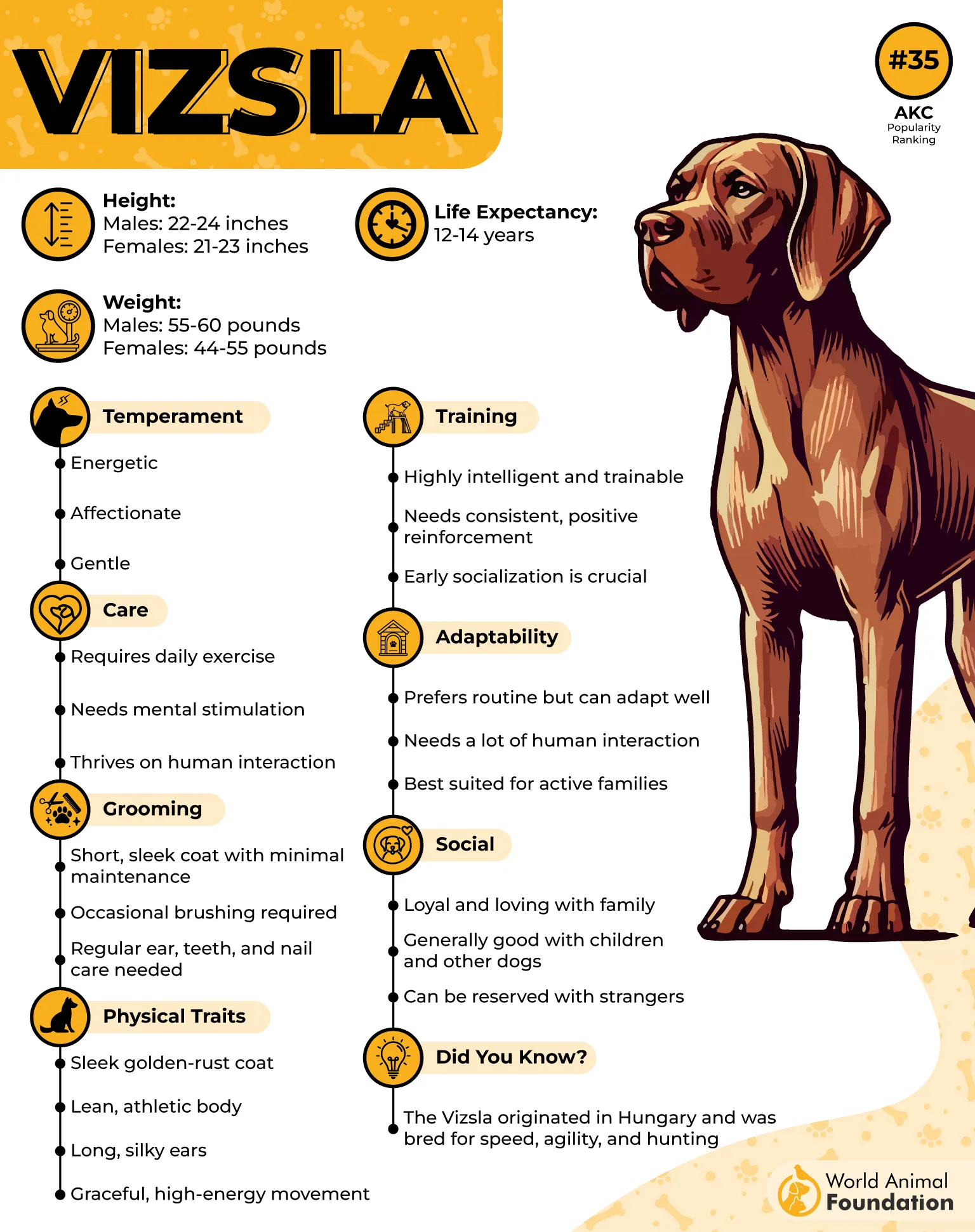
The Vizsla is a Hungarian sporting breed developed for versatile hunting work. Its traditional abilities include finding game, pointing, and retrieving, while its close relationship with human handlers has contributed to its reputation as an attentive and cooperative field companion.
The breed is athletic, energetic, and highly people-oriented. Its combination of sensitivity and working enthusiasm means it generally performs best when exercise and companionship are both incorporated into its routine.
Pair Vigorous Exercise With Cooperative Training
Vizslas need considerable daily activity and mental engagement. Hiking, running, retrieving, swimming, scent work, and field-style exercises can help them use their energy constructively, as per PetMD.
Training should emphasize recall, impulse control, leash skills, and responsiveness around distractions. Positive reinforcement and varied lessons can keep these intelligent dogs engaged while strengthening their connection with their handlers.
An Athletic Companion With a Strong Chase Instinct
A Vizsla may become highly focused when it detects birds or other potential quarry. Its sporting background gives it a natural inclination to search and pursue, particularly when movement or an interesting scent enters the environment.
The goal for companion owners is not to eliminate that instinct but to teach the dog where and when it can express it. Appropriate retrieving games, scent activities, and controlled outdoor work can turn a powerful hunting tendency into productive engagement.
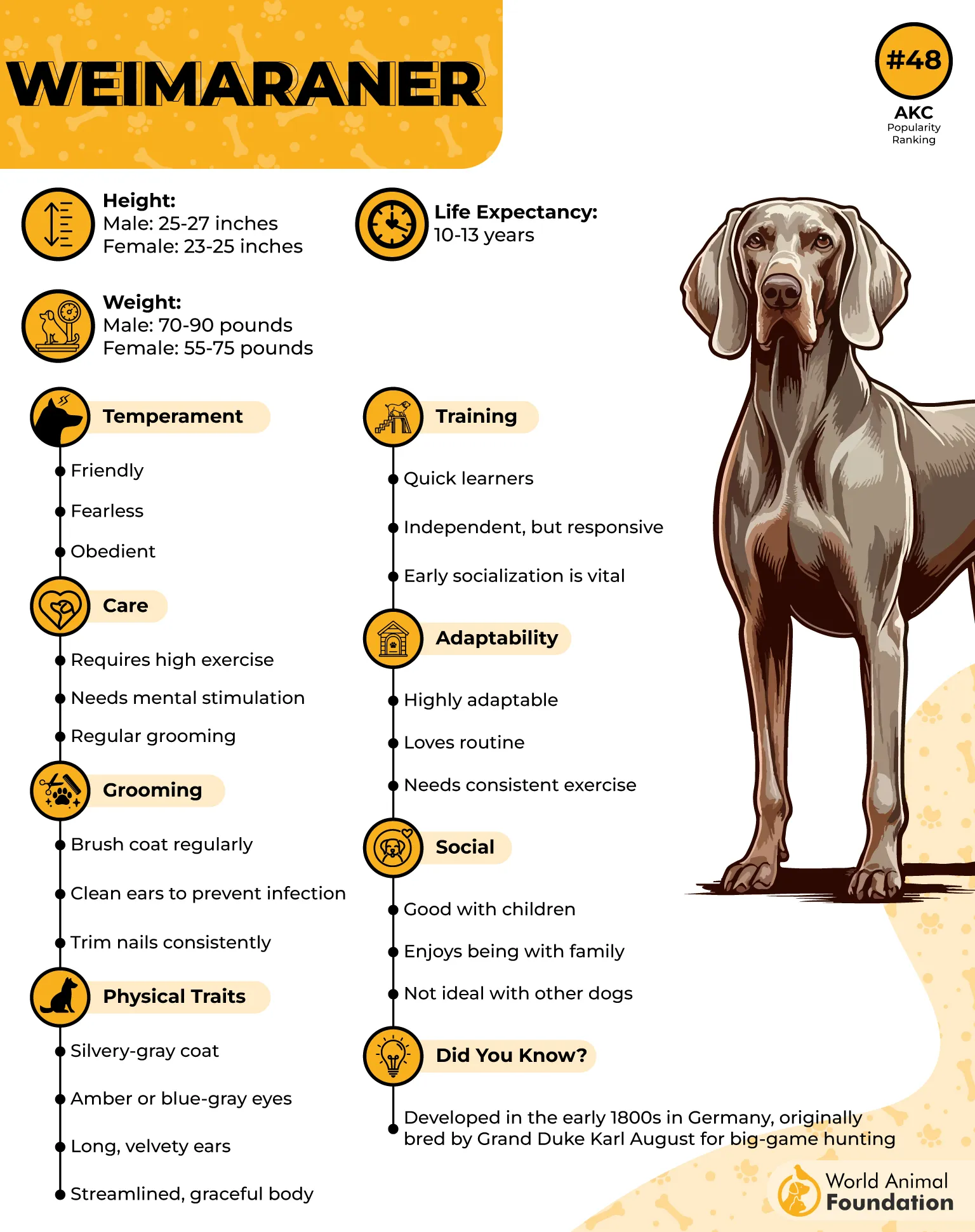
7. Weimaraner
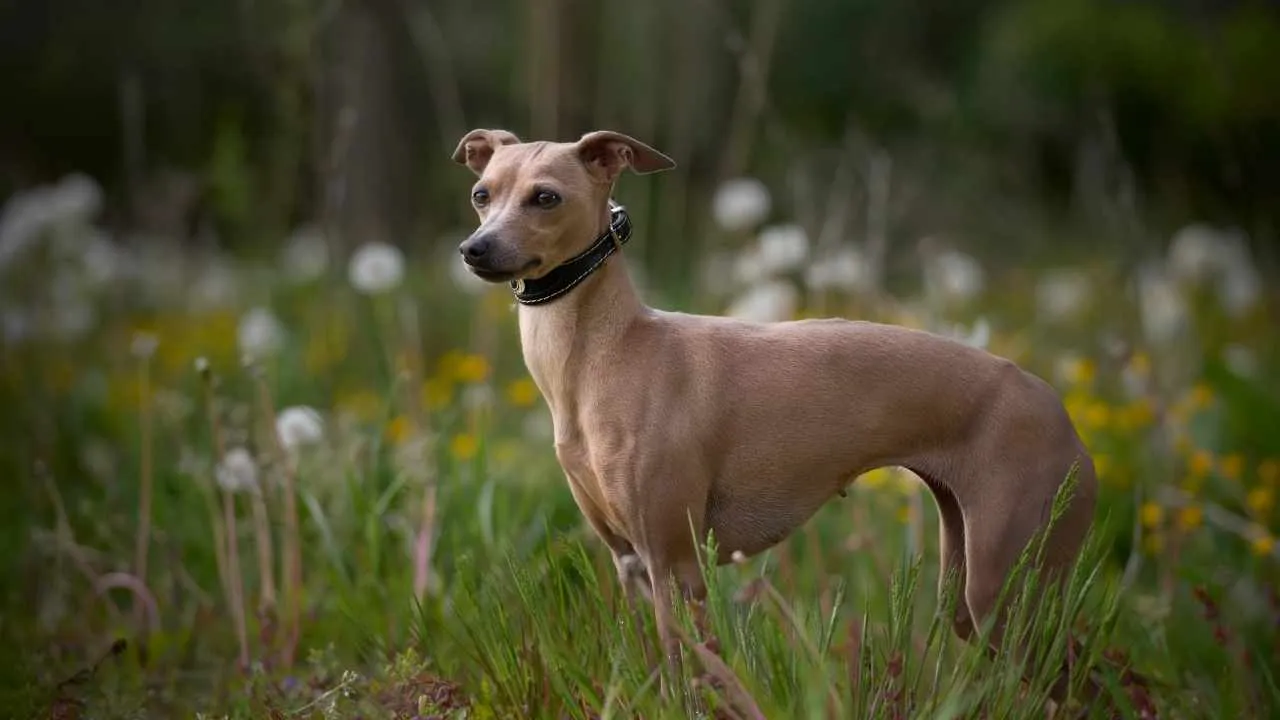
The Weimaraner originated in Germany and was developed as a versatile hunting dog. Its athletic frame, stamina, intelligence, and determination made it capable of participating in demanding field work involving different types of game.
Today, this beautiful breed remains known for its striking appearance and strong attachment to its people. However, its elegant silver coat should not obscure the fact that this is an energetic working breed with substantial physical and mental requirements.
Build a Routine Around Exercise and Purpose
Weimaraners generally need extensive daily activity. Running, hiking, retrieving, scent games, advanced obedience, and other demanding pursuits can help prevent frustration caused by insufficient stimulation.
Training should begin early and emphasize calm behavior, impulse control, reliable recall, and appropriate responses to distractions. Their size and enthusiasm make good manners particularly important in everyday situations.
A Driven Hunter With a Powerful Prey Drive
Weimaraners can show considerable interest in animals that move quickly. Their athleticism can make pursuit remarkably fast, while their determination may make it difficult to interrupt the chase once it has begun.
For this reason, owners should use secure areas and thoughtful supervision around wildlife. Structured sporting activities can provide an appropriate channel for their natural desire to search, pursue, and work, allowing their hunting heritage to become an asset rather than a constant management challenge.
Conclusion
Bluetick Coonhounds, Pharaoh Hounds, Treeing Walker Coonhounds, Beagles, German Wirehaired Pointers, Vizslas, and Weimaraners illustrate how differently canine hunting instincts can develop. Scent hounds may become absorbed in an invisible trail, sighthound-influenced breeds can react dramatically to movement, and sporting dogs may combine searching, pointing, and retrieving abilities.
High prey drive is fundamentally an inherited motivation shaped by generations of selective breeding. It is not automatically a behavioral flaw. The challenge for owners is understanding what activates that instinct and providing safe, purposeful alternatives.
A hunting breed is usually at its best when its physical energy, intelligence, and natural abilities have somewhere appropriate to go. With consistent training, adequate exercise, secure management, and activities that mimic elements of its original work, these remarkable dogs can channel their prey drive into productive and rewarding behavior.
