




A dog’s nose is not simply a stronger version of ours; it is an entire information-gathering system that can separate overlapping odours, detect faint chemical traces, and follow scent movement through changing terrain.
So yes, PubMed says your dog probably knows somebody opened the snack cupboard before the cupboard itself does.
A dog’s sense of smell is legendary, but a select group of breeds possesses nose hardware so refined they can follow cold trails through dense forests, assist in high-stakes search missions, and map the world entirely through scent.
The dog breeds that smell better than any other mentioned below include traditional hunting hounds, versatile sporting dogs, and modern working K-9 favourites.
Dog Breeds That Smell Better Than Almost Any Other
1. Bloodhound
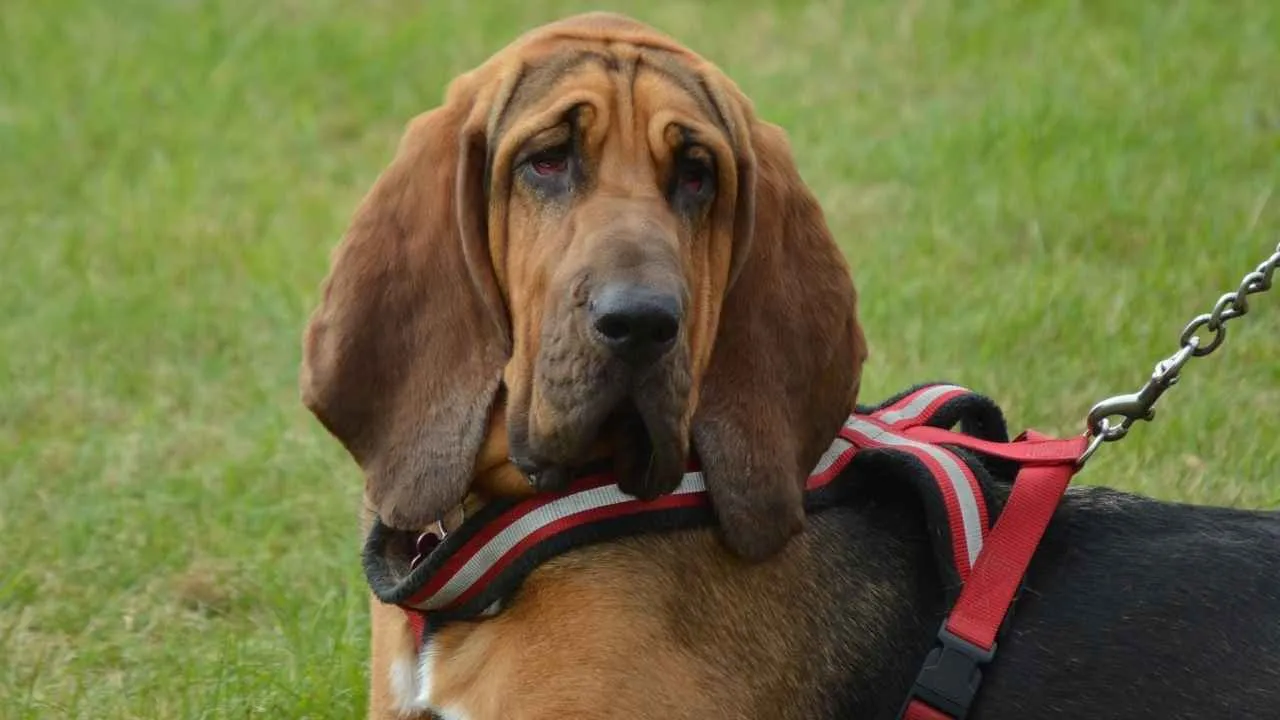
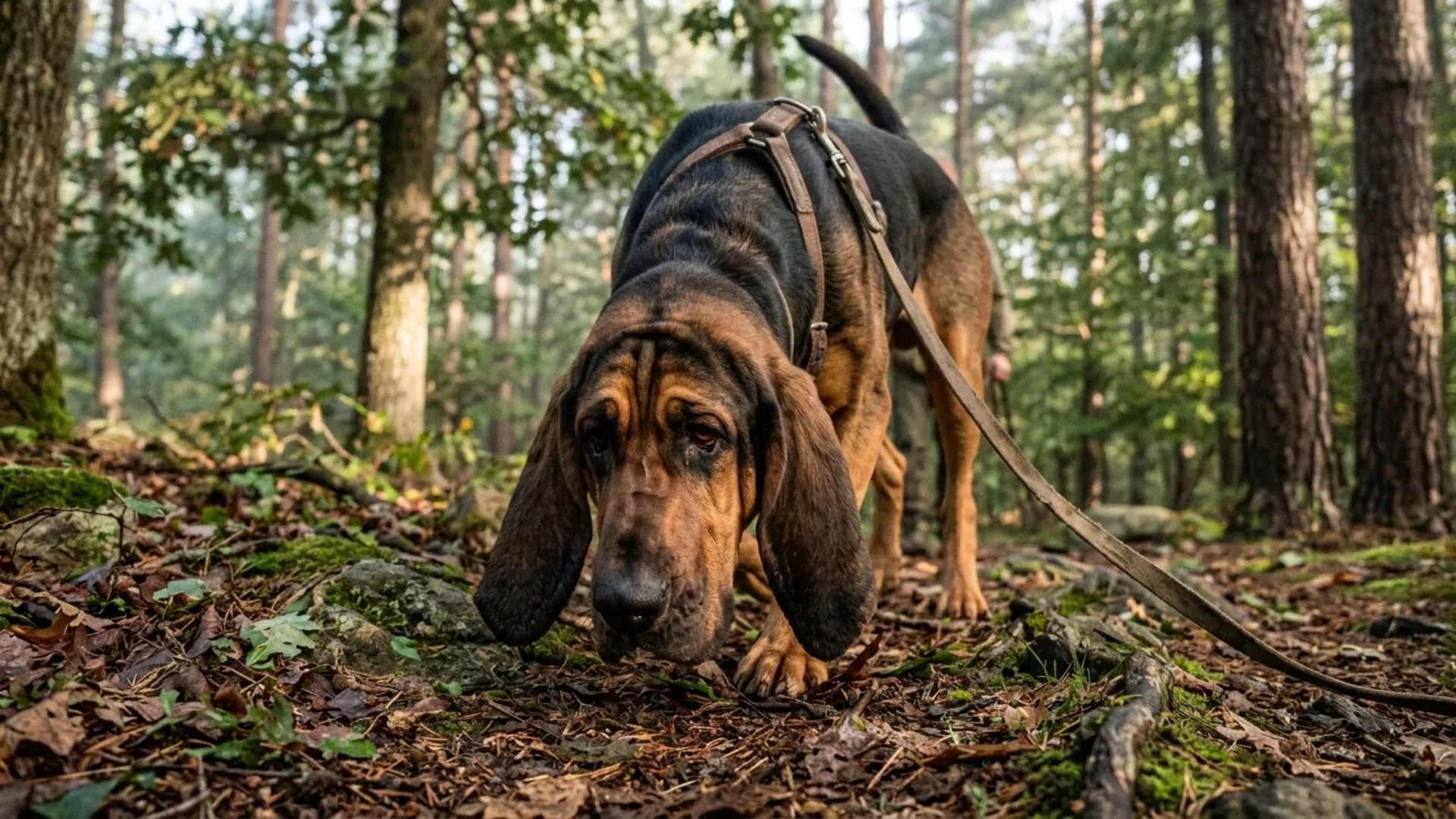
The Bloodhound is the celebrity detective of the scent-hound world, with a tracking history stretching back centuries. Its reputation comes from the ability to follow a particular human or animal trail while ignoring an overwhelming amount of unrelated environmental information.
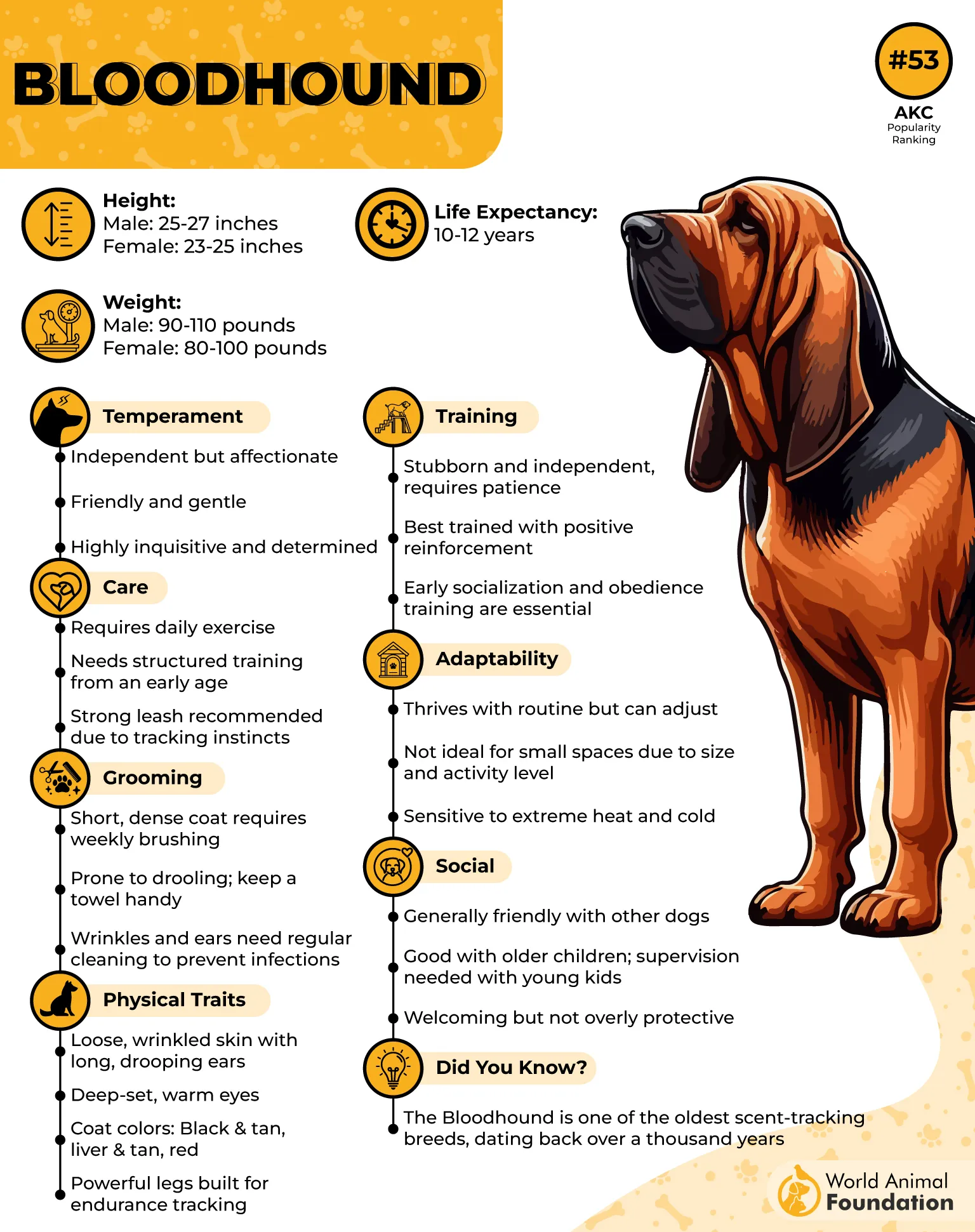
Royal Kennel Club says that a trained Bloodhound begins with a scent article such as clothing or another object carrying the subject’s odour. It builds a working scent picture from microscopic biological material, then searches for the matching trail among footprints, vegetation, air currents, roads, and scent left by other people.
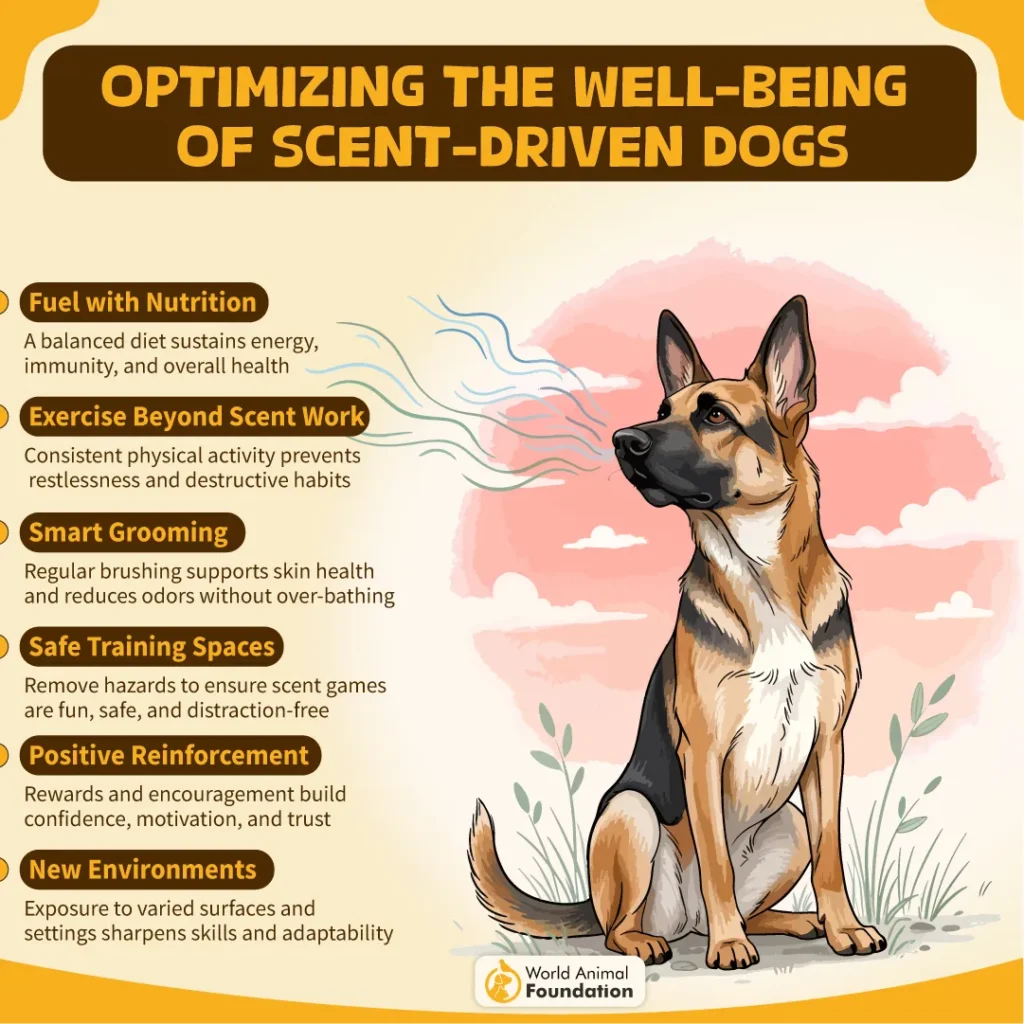
Secure fencing, harness work, patient reinforcement, and controlled tracking games are essential because this furry friend absorbed in a trail may temporarily ignore normal recall.
Phenomenal Ways They Use Their Smelling Sense
Individual scent discrimination: Bloodhounds can be trained to separate one person’s odour from the scent clouds left by crowds, animals, vehicles, and the surrounding environment.
Cold-trail reconstruction: They methodically work aged scent along roads, woodland, grass, buildings, and difficult junctions where the subject changed direction.
Missing-person tracking: Search teams can use them to establish a person’s likely route from a last-known location, helping narrow an otherwise enormous search zone.
2. Beagle
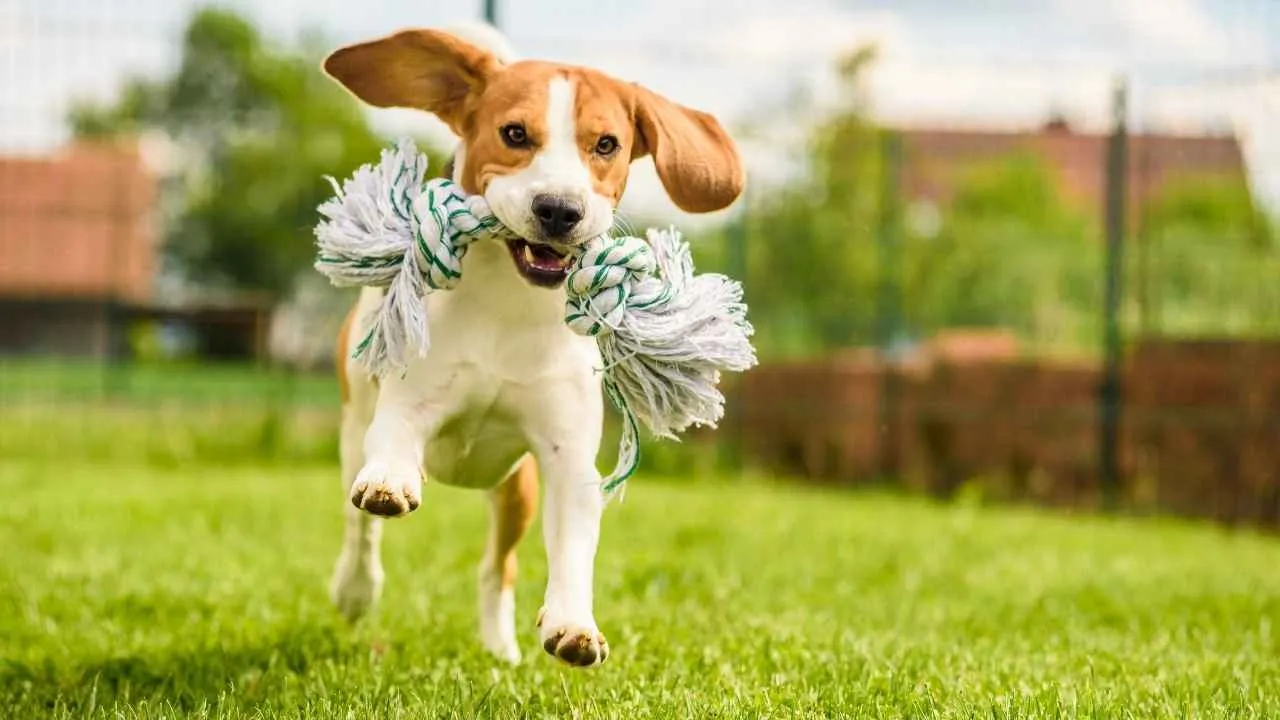
The Beagle was developed as a compact pack hound capable of following rabbits and hares through fields, hedges, and uneven countryside. Its smaller body allowed hunters travelling on foot to keep up, while stamina helped the dog remain on a twisting trail for longer than its cute proportions might suggest.
Long ears can sweep through grass and disturb particles while the Beagle follows scent with its head lowered. Its broad, moist nose provides substantial surface area for sampling odour, while centuries of selection encouraged concentration on scent even when the quarry was out of view.
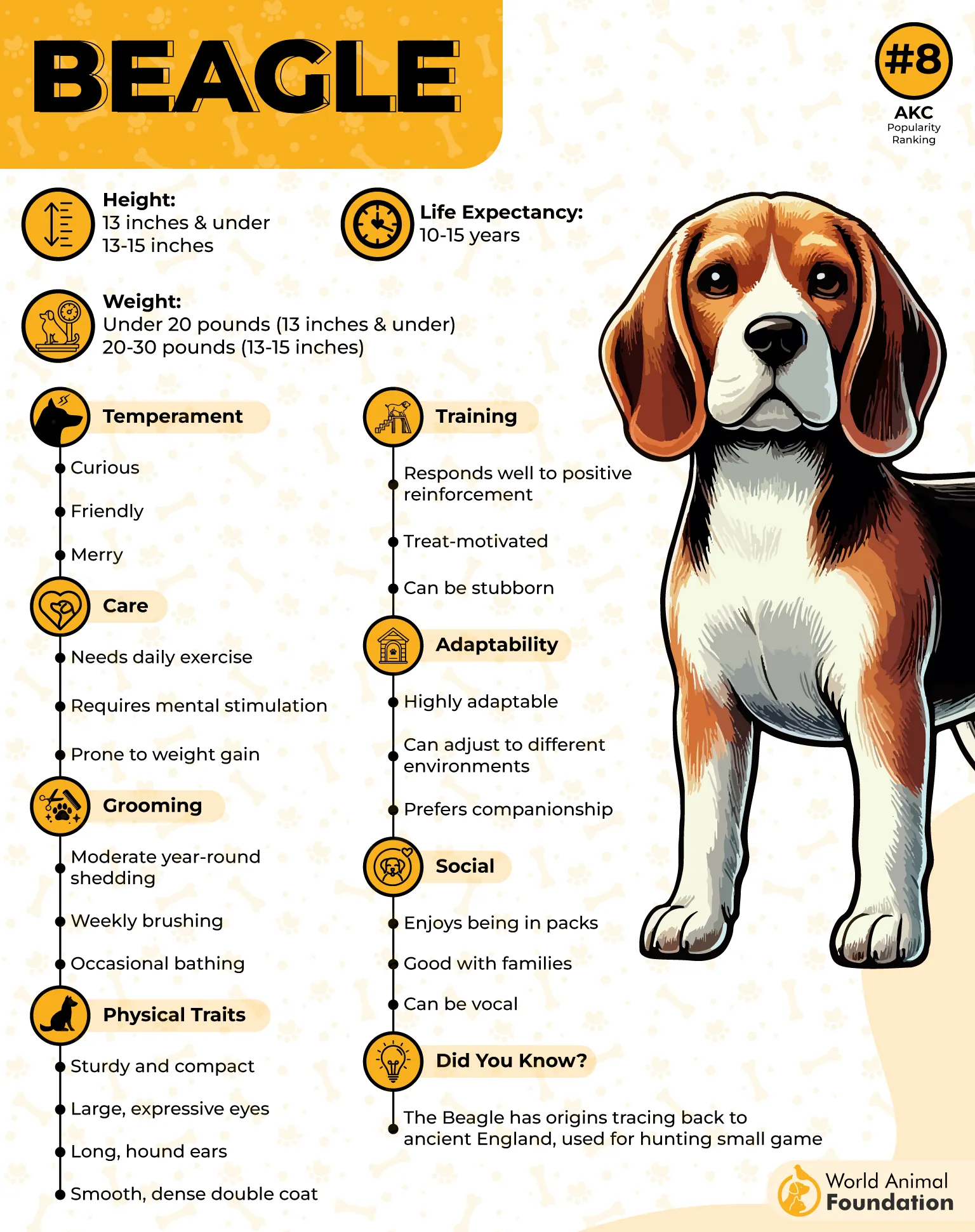
Their performance is not limited to wildlife because trained Beagles can recognise target odours hidden inside luggage, parcels, vehicles, furnishings, and other cluttered environments. Also, this dog is surprisingly low maintenance!
Leashes, secure gardens, recall practice, and daily sniffing activities let the dog use its genetic equipment without turning every walk into an unscheduled expedition.
Phenomenal Ways They Use Their Smelling Sense
Agricultural inspection: Beagles identify prohibited meat, fruit, vegetables, and plant material concealed among passengers’ belongings.
Pest location: Properly conditioned dogs can pinpoint bedbugs and similar targets hidden in furniture, cracks, luggage, and walls.
Rabbit-trail analysis: They follow ground scent in packs, using persistence and vocal communication when visual contact is impossible.
3. Bluetick Coonhound
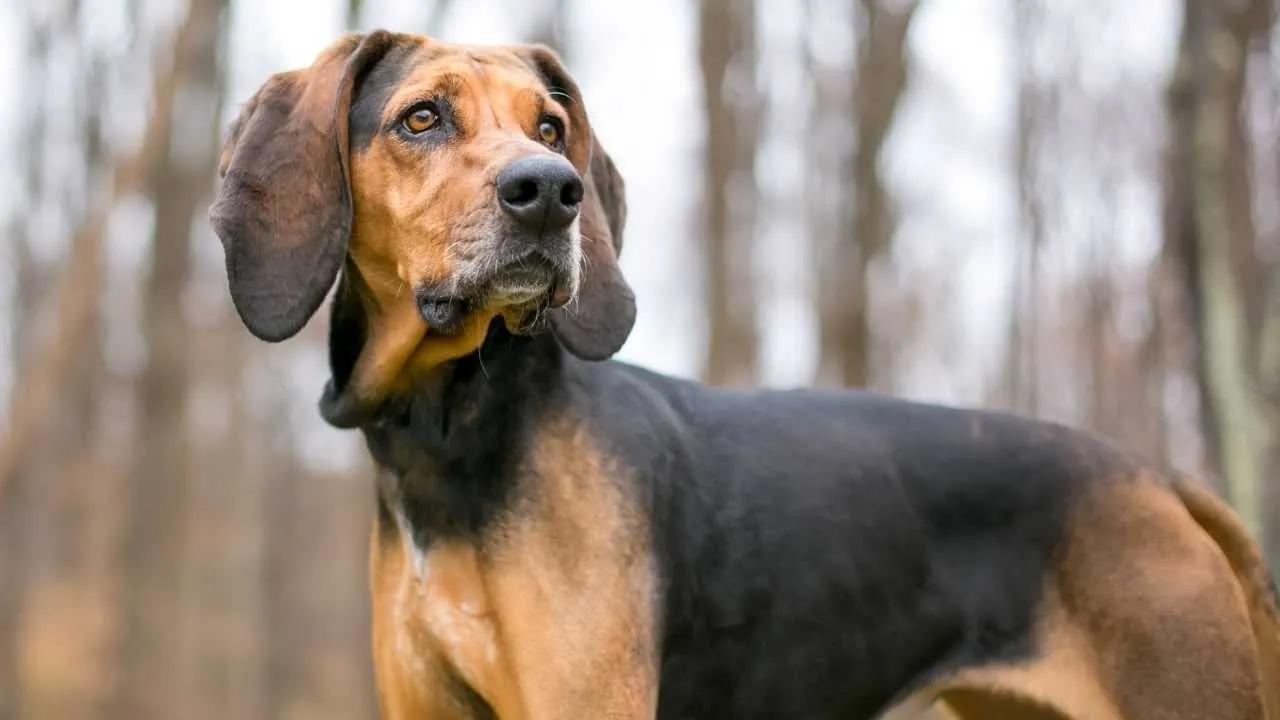
The Bluetick Coonhound is a large American scent hound whose dark-blue ticking looks elegant until the dog discovers an exciting woodland trail and activates full wilderness mode.
American Kennel Club claims that Blueticks are particularly associated with cold trailing, meaning they can investigate older scent rather than requiring an animal to have passed moments earlier. Their development favoured dogs capable of following day-old trails, a skill requiring patience when scent has weakened, drifted, or become mixed with newer animal traffic.
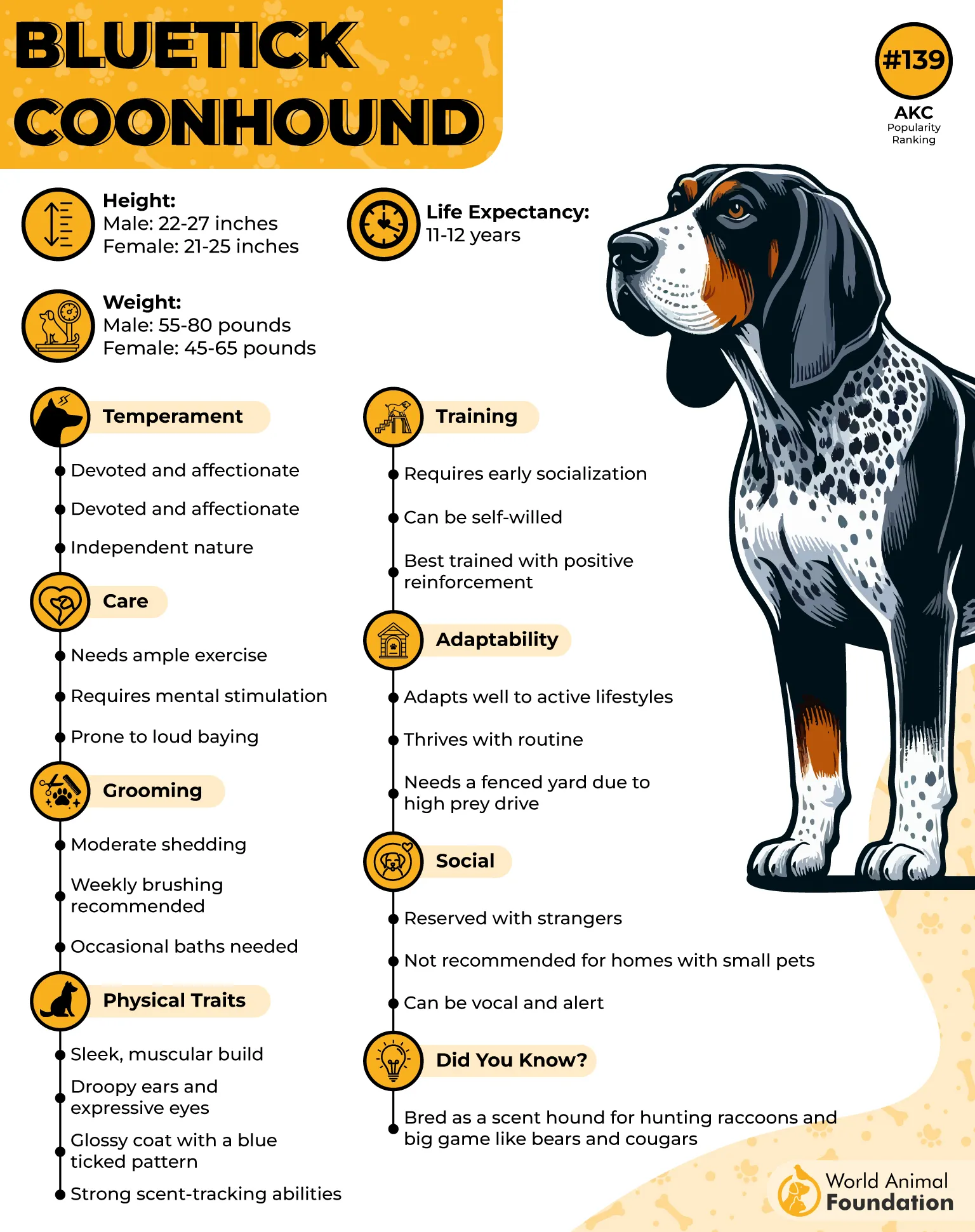
Once scent is located by its keen nose, the dog may alternate between slow investigation and faster pursuit as the trail becomes stronger. Distinctive bawls, bays, and chopping barks communicate progress to a handler who may be unable to see through trees, darkness, or thick vegetation.
The breed can remain on complicated tracks involving creek crossings, rocky ground, overlapping animal routes, and major direction changes.
Phenomenal Ways They Use Their Smelling Sense
Cold-trail recovery: Blueticks examine scent that may be many hours old, searching patiently until they locate a dependable direction.
Nocturnal tracking: Their noses and vocal style let them pursue wildlife through darkness when human vision contributes almost nothing.
Trail-strength communication: Changes in speed, posture, and baying tell experienced handlers whether scent is scattered, improving, or concentrated at the quarry’s location.
4. Black and Tan Coonhound
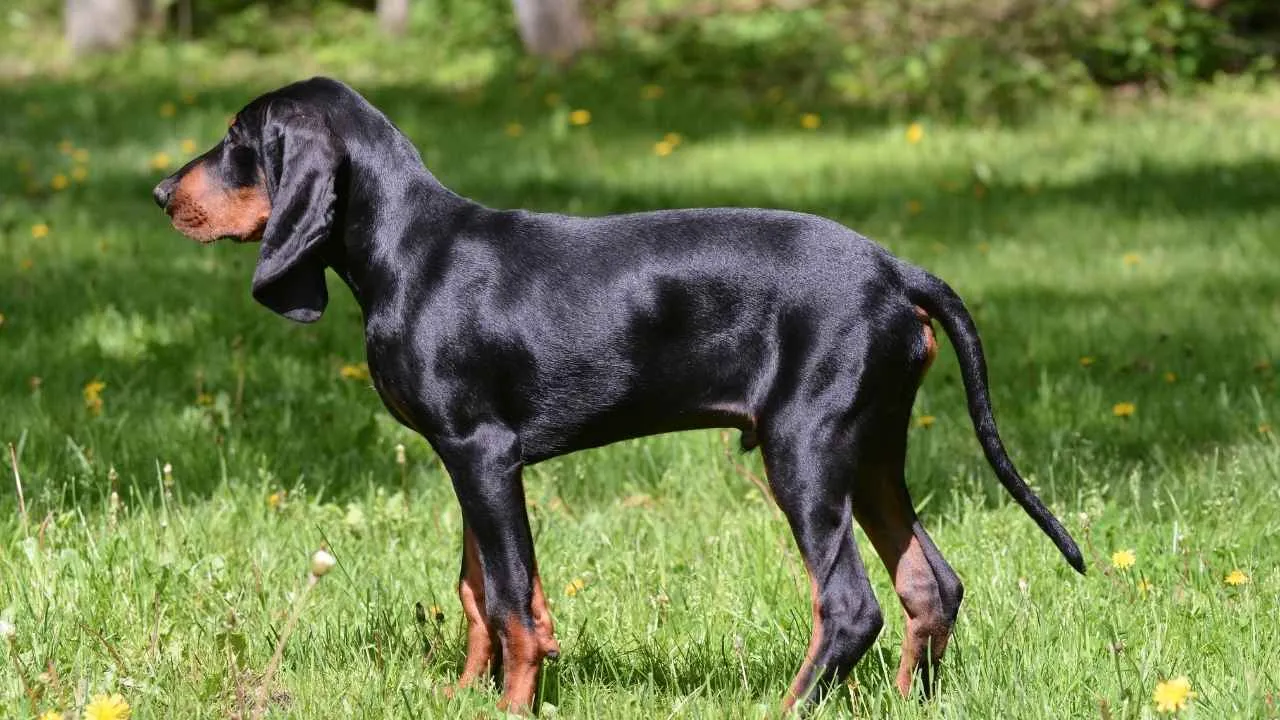
The Black and Tan Coonhound is a substantial American hound influenced by Bloodhound and Foxhound ancestry. Unlike hounds that race along newer trails, it is known for a deliberate, nose-down style that prioritises accuracy and persistence over dramatic speed.
Purina says that this breed is commonly labelled “cold-nosed” because it can detect and work odour that has aged after the animal passed through.
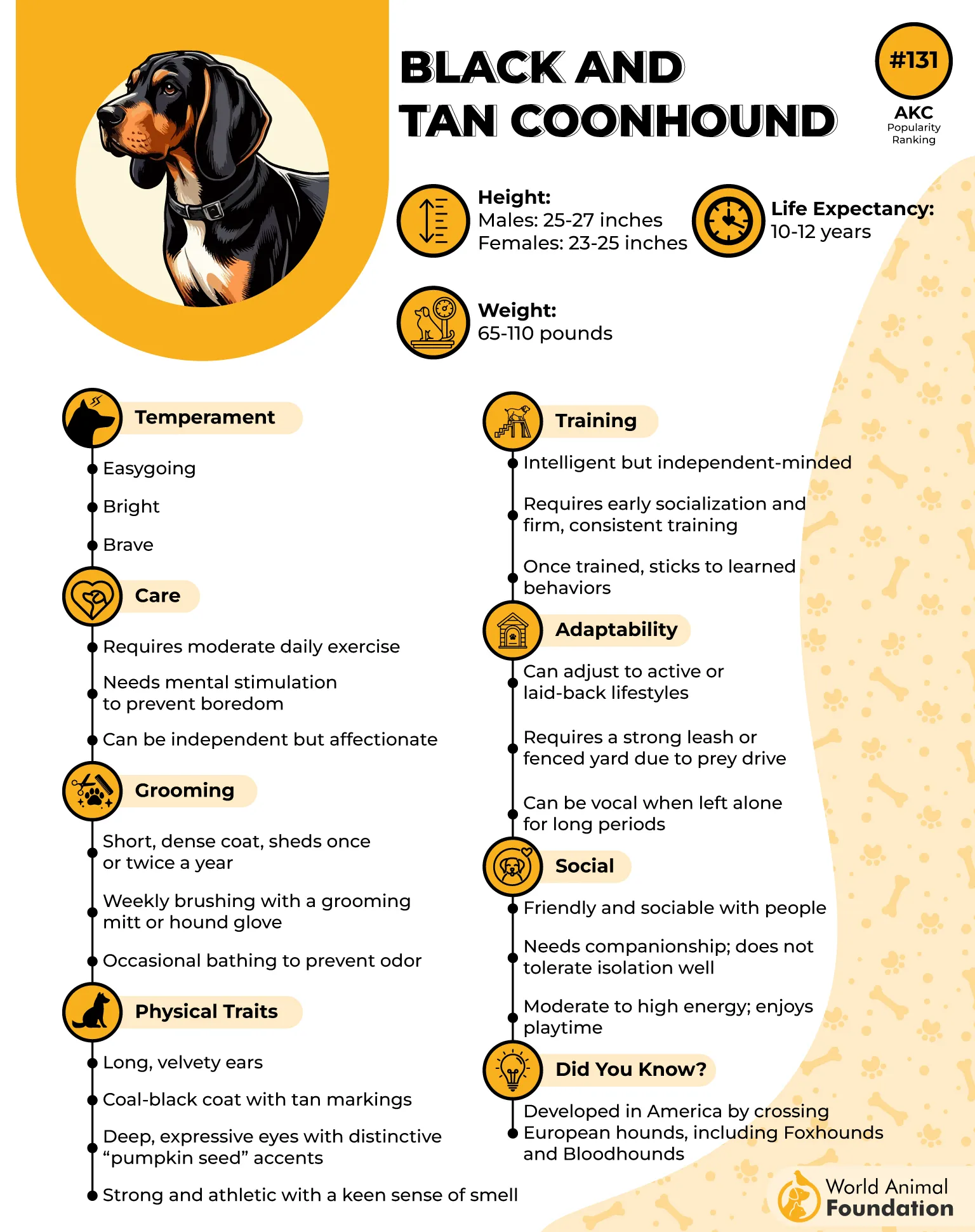
Its traditional quarry is the raccoon, but the breed has also been used on deer, bears, mountain lions, and other game. Strong limbs and endurance allow it to stay on scent through rough conditions, while a deep bay informs handlers after the quarry has been located or treed.
Independence is useful when a hound must solve trail problems beyond the handler’s view, yet that same quality can make household obedience an extended negotiation.
Phenomenal Ways They Use Their Smelling Sense
Wildlife tracking: Black and Tans patiently follow degraded odour across terrain where the animal is already far ahead.
Ground-level scent mapping: Their low-headed working style helps them read scent trapped in soil, leaves, footprints, and crushed plants.
Big-game trailing: Strength and endurance let them maintain a difficult scent line involving deer or other large animals across extensive distances.
5. English Foxhound
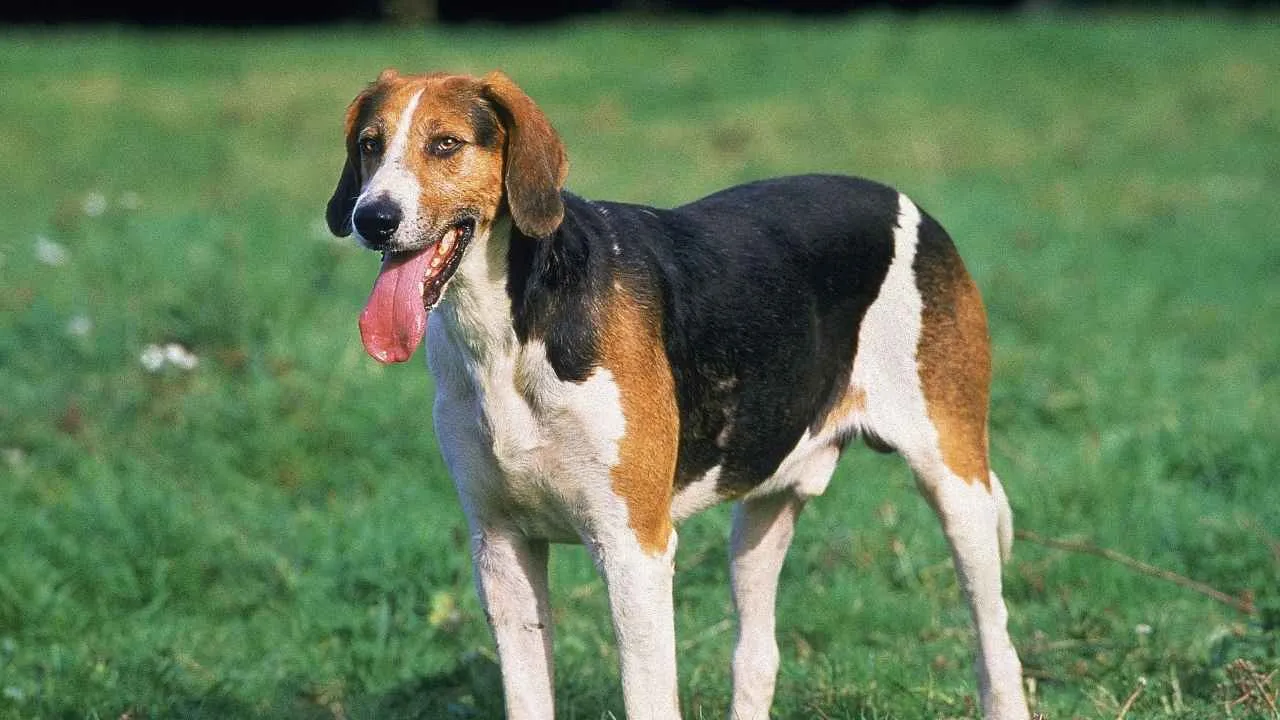
The English Foxhound was purposefully developed for pack hunting, where dozens of hounds could work together across large rural landscapes.
Its nose specialises in locating and following the scent trail left by foxes or similar ground-dwelling quarry. Pack work allows several dogs to examine different pieces of the scent picture, with individuals spreading out when the line becomes uncertain and converging once one hound confidently recovers it.
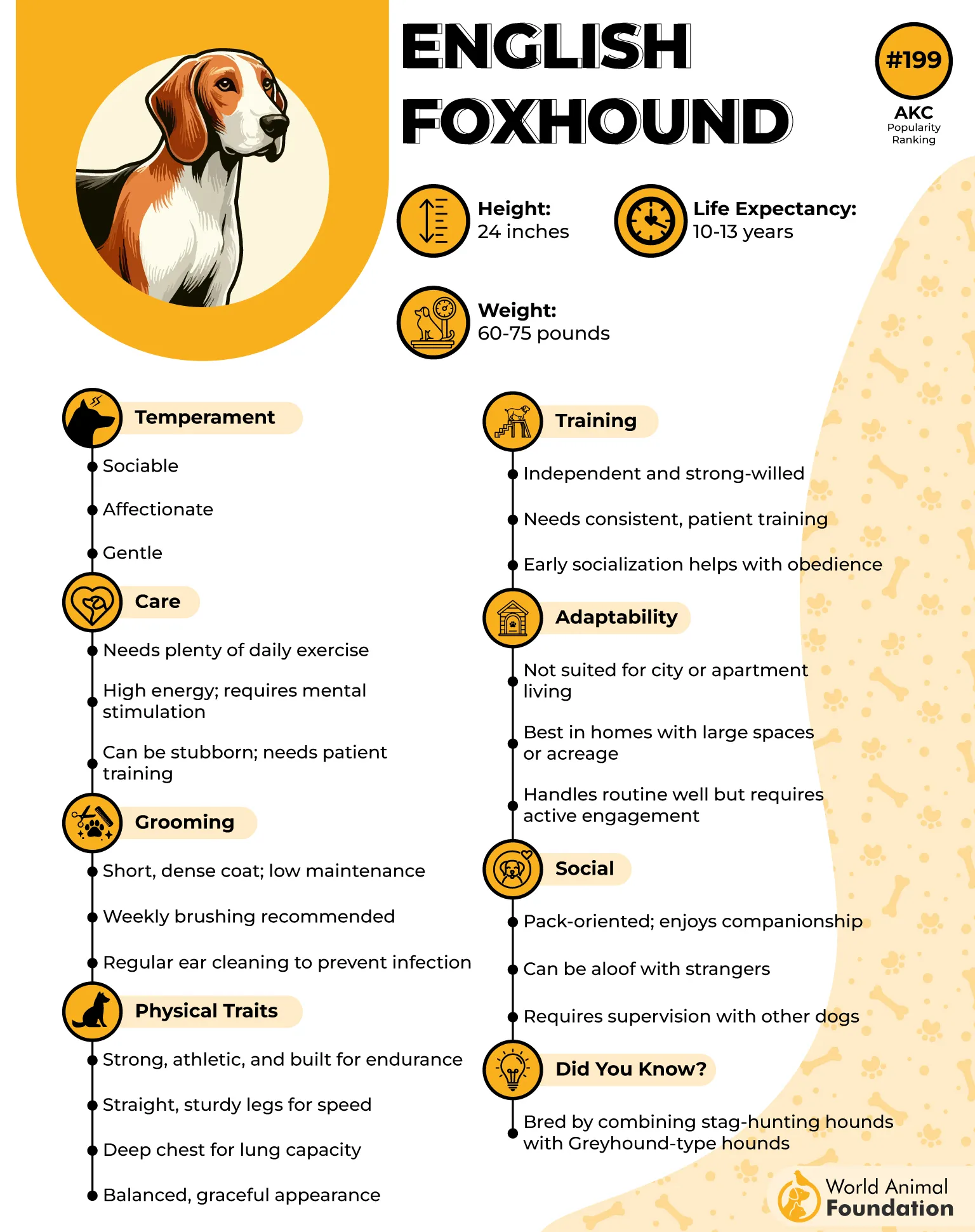
A clear, carrying voice lets mounted hunters follow the pack even when hedges, woodland, hills, or distance block visual contact. Experienced listeners can distinguish changes in the chorus as the hounds search, recover the line, or enter a faster pursuit. The breed’s tremendous stamina allows it to remain scent-focused.
Phenomenal Ways They Use Their Smelling Sense
Collaborative trail recovery: Pack members spread out to search for scattered scent, then reunite when one dog finds the strongest continuation.
Long-distance pursuit: Foxhounds combine nasal concentration with cardiovascular endurance to stay connected to quarry over many miles.
Voice-based updates: Their musical cry communicates scent progress to hunters and neighbouring hounds even when the pack has disappeared from sight.
6. Treeing Walker Coonhound
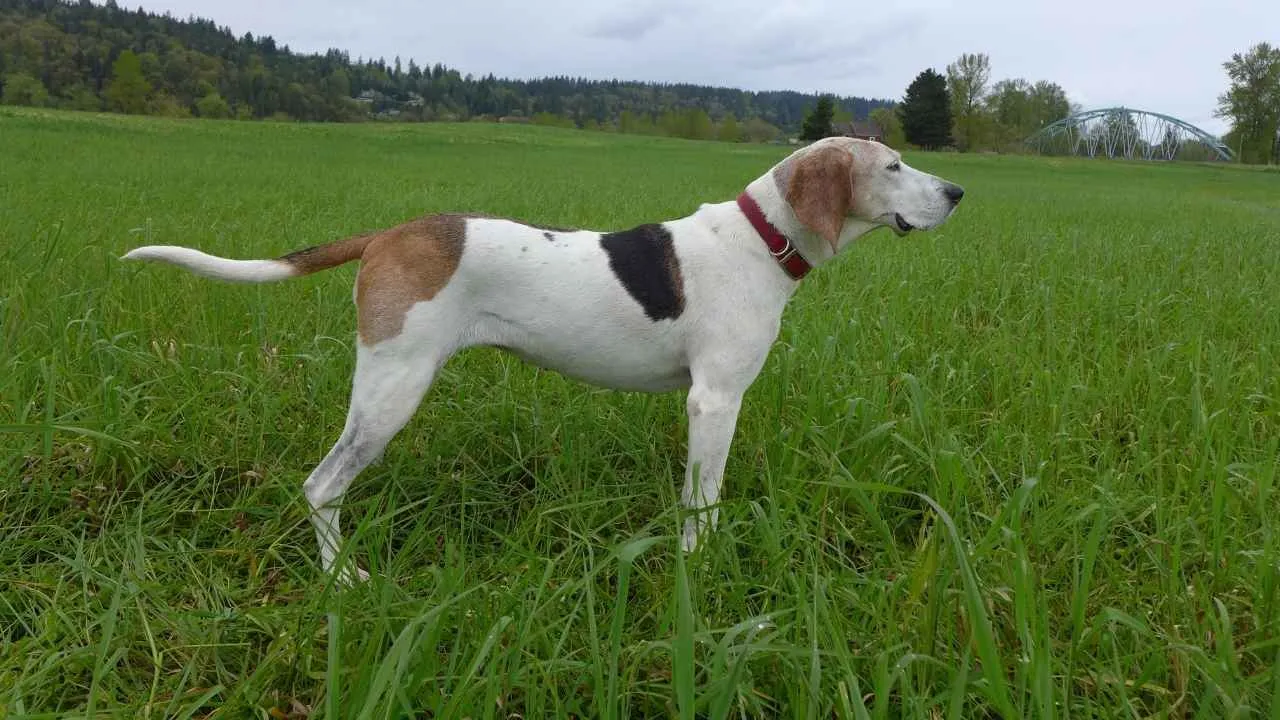
Despite the word “Walker” in its name, the Treeing Walker Coonhound is one of the faster members of the coonhound family. Long muscular legs, powerful hindquarters, and a streamlined frame let it cover substantial ground with minimal wasted effort.
Treeing Walkers are frequently described as hot-nosed, meaning many individuals favour fresher trails rather than spending excessive time untangling a much older route.
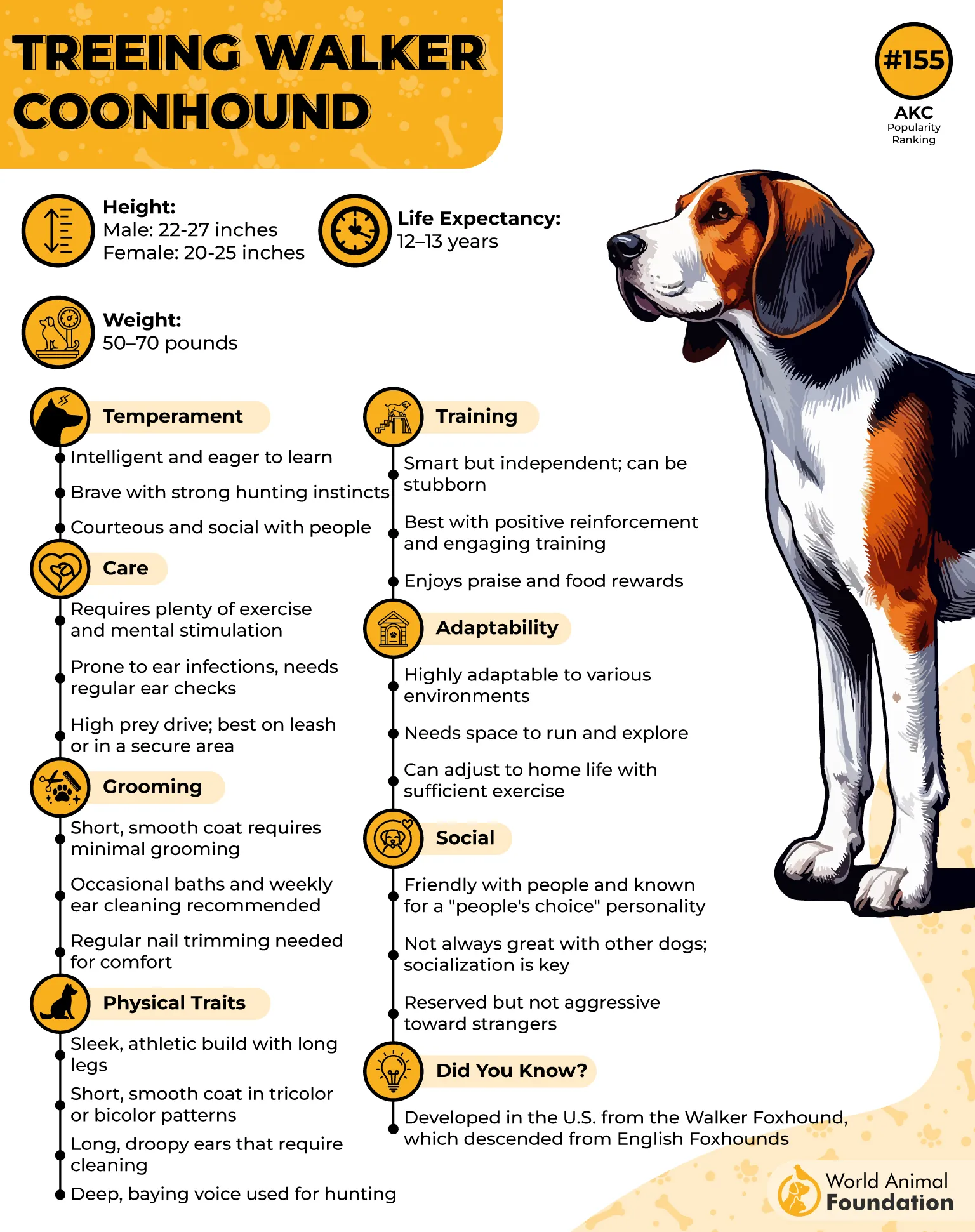
When a raccoon climbs, the Treeing Walker remains below and announces the result through a bay that may shift into a rapid chopping bark. Its nose first solves the route, its speed applies pressure, and its voice then marks the final location for the handler.
The breed can hunt independently or cooperate with other hounds, adapting its movements to the quarry and terrain.
Phenomenal Ways They Use Their Smelling Sense
Fresh-trail selection: Many Treeing Walkers prioritise newer scent, allowing them to close the gap more rapidly on moving quarry.
High-speed scent pursuit: They retain enough nasal focus to follow a twisting route while travelling at a faster pace than heavier hounds.
Tree confirmation: After locating the final scent concentration, they remain below the tree and vocalise until their handler arrives.
7. German Shepherd Dog
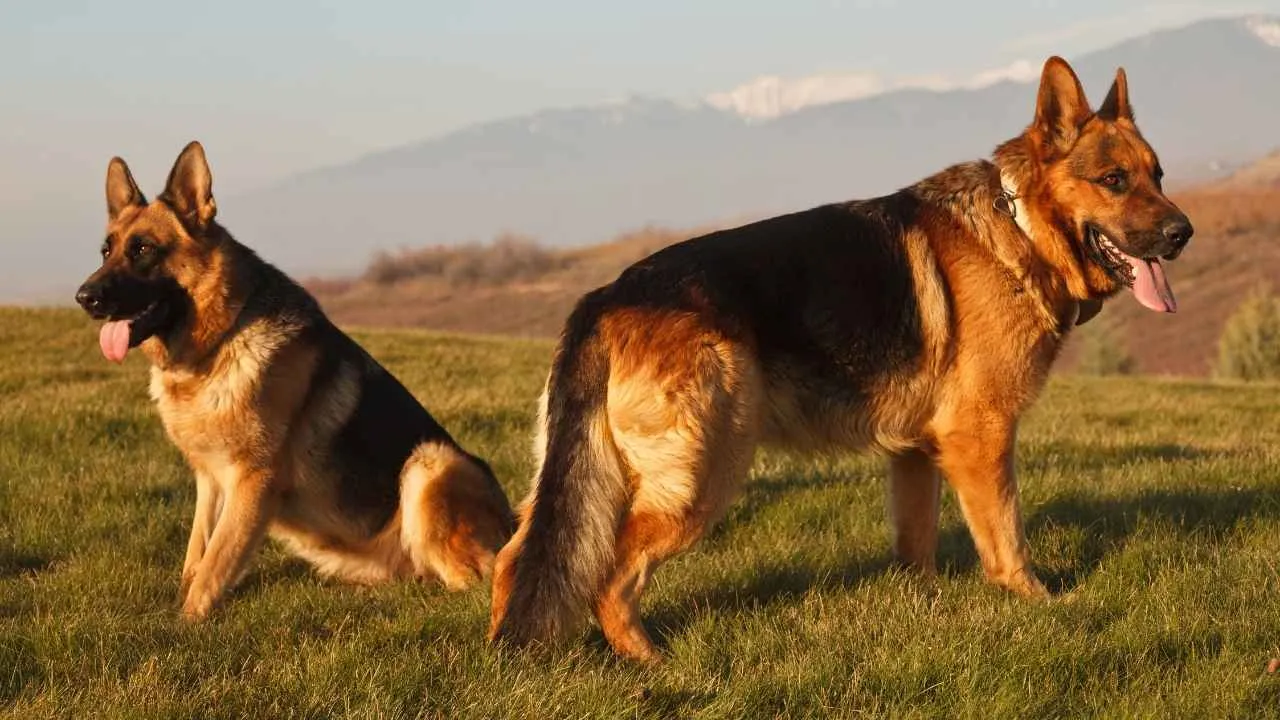
The German Shepherd Dog began as a versatile herding breed but became globally recognised for police work, military service, tracking, search and rescue, and detection. Its value comes from the partnership between a strong nose and a highly trainable, handler-oriented mind.
Tracking work asks the dog to follow human odour and environmental disturbance along a travelled route. A skilled German Shepherd can notice scent from skin cells, footwear, damaged vegetation, compressed earth, and objects the subject touched while remaining committed across changing surfaces.
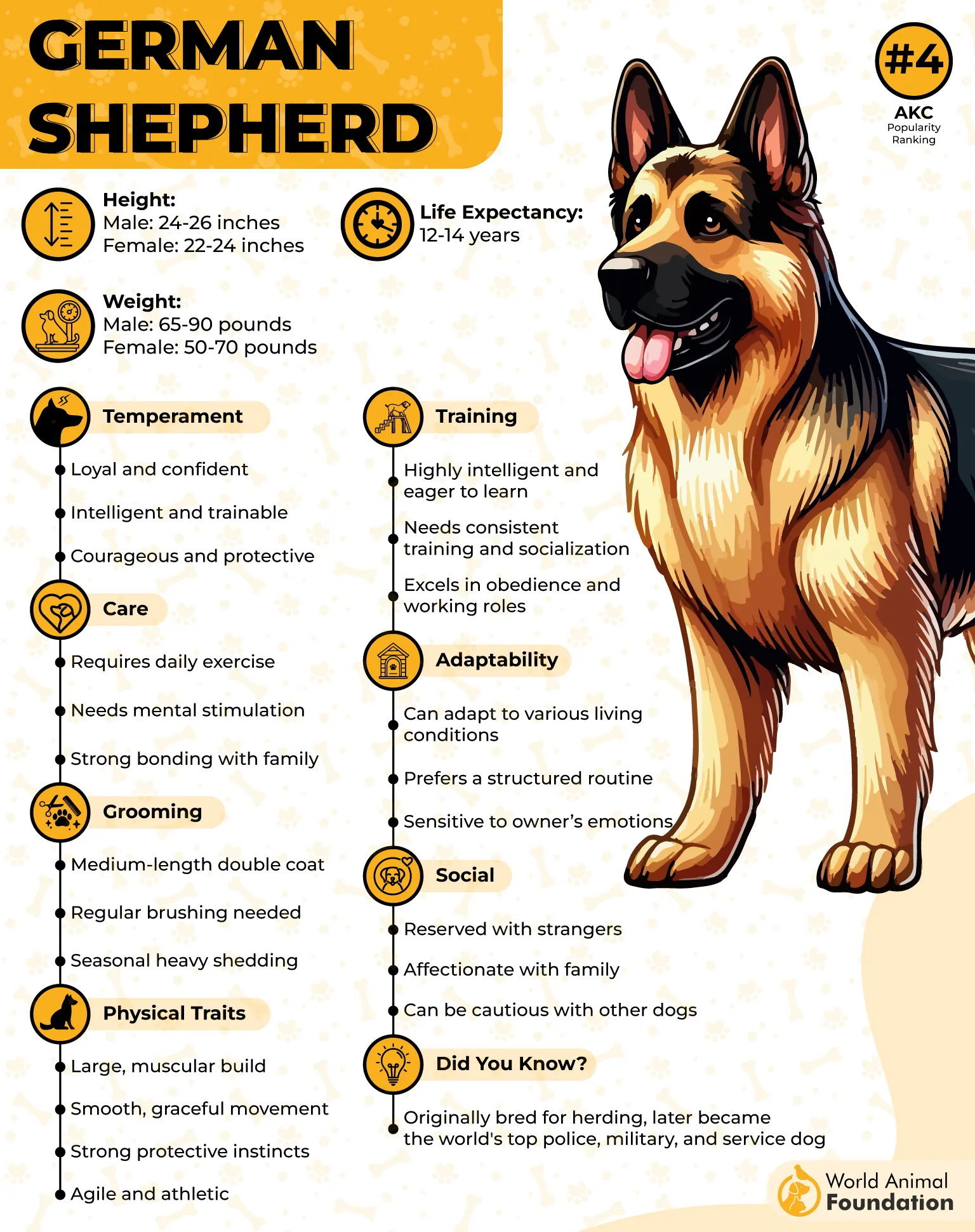
Search work can demand a different technique because the dog may raise its head and sample airborne human scent rather than follow every footstep. Wind creates an odour cone that shifts around obstacles, so the dog moves strategically until the smell intensifies and leads towards its source.
They also perform detection tasks involving explosives, narcotics, evidence, and specific target odours. Their intelligence helps them distinguish the trained smell from food, people, packaging, cleaning products, and background contamination.
Phenomenal Ways They Use Their Smelling Sense
Footstep tracking: German Shepherds follow human scent and physical ground disturbance through fields, streets, woodland, and mixed surfaces.
Area search: They range through large spaces to locate airborne scent from missing or concealed people without needing an exact trail.
Target-odour detection: Police and security teams train them to identify explosives, narcotics, evidence, and other specific substances among distractions.
8. Belgian Malinois
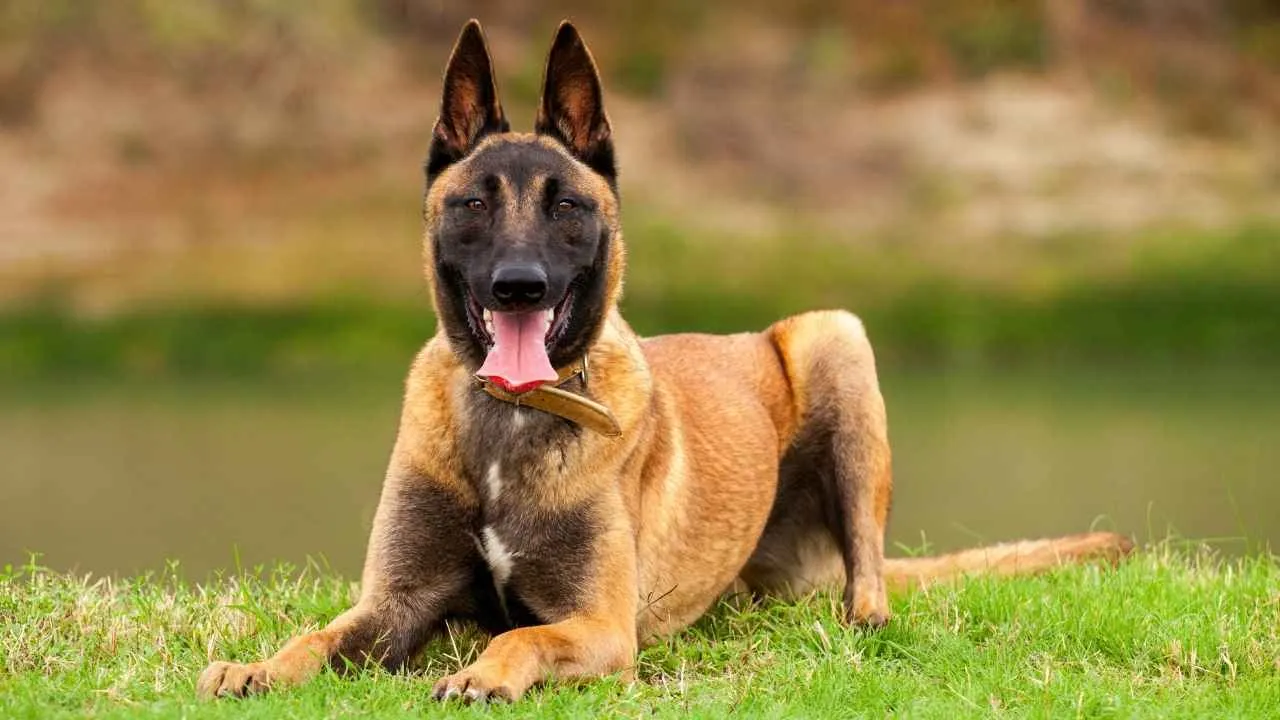
The Belgian Malinois was developed around the Belgian city of Malines as an energetic livestock-herding dog. Its speed, intelligence, agility, intense working drive, and close connection to handlers later opened careers in law enforcement, military service, scent detection, and search and rescue.
It is generally lighter and more squarely built, allowing quicker changes of direction in confined or unstable spaces. This physical efficiency helps a detection dog inspect vehicles, luggage, rooms, platforms, and debris without losing momentum.
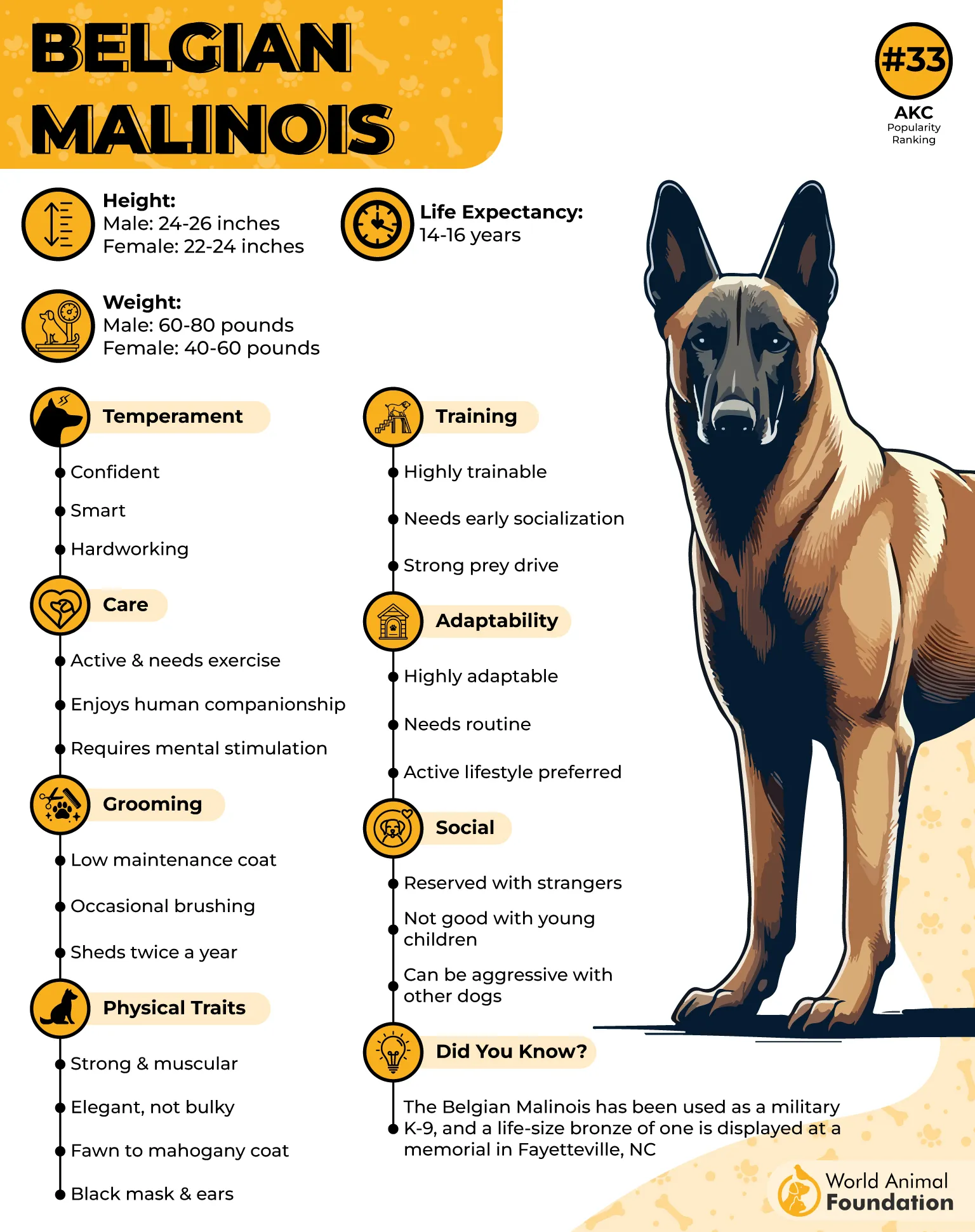
Scent-trained Malinois work in airports, railway stations, military environments, disaster scenes, and criminal investigations. They may be conditioned to detect explosives, drugs, human remains, living people, or another precisely defined odour, then perform a passive or active indication after reaching the source.
Search-and-rescue teams benefit from the Malinois’s tenacity because disaster environments can involve noise, unstable footing, dust, unfamiliar people, and hours of repeated work.
Phenomenal Ways They Use Their Smelling Sense
Rapid tactical searching: Malinois efficiently inspect rooms, vehicles, transport hubs, and outdoor zones while staying responsive to handler direction.
Precise source localisation: After catching target odour, they work towards its strongest concentration and give a trained final indication.
Disaster-area detection: Their agility and persistence help them search rubble, confined gaps, and unstable environments for traces of living people.
9. German Shorthaired Pointer
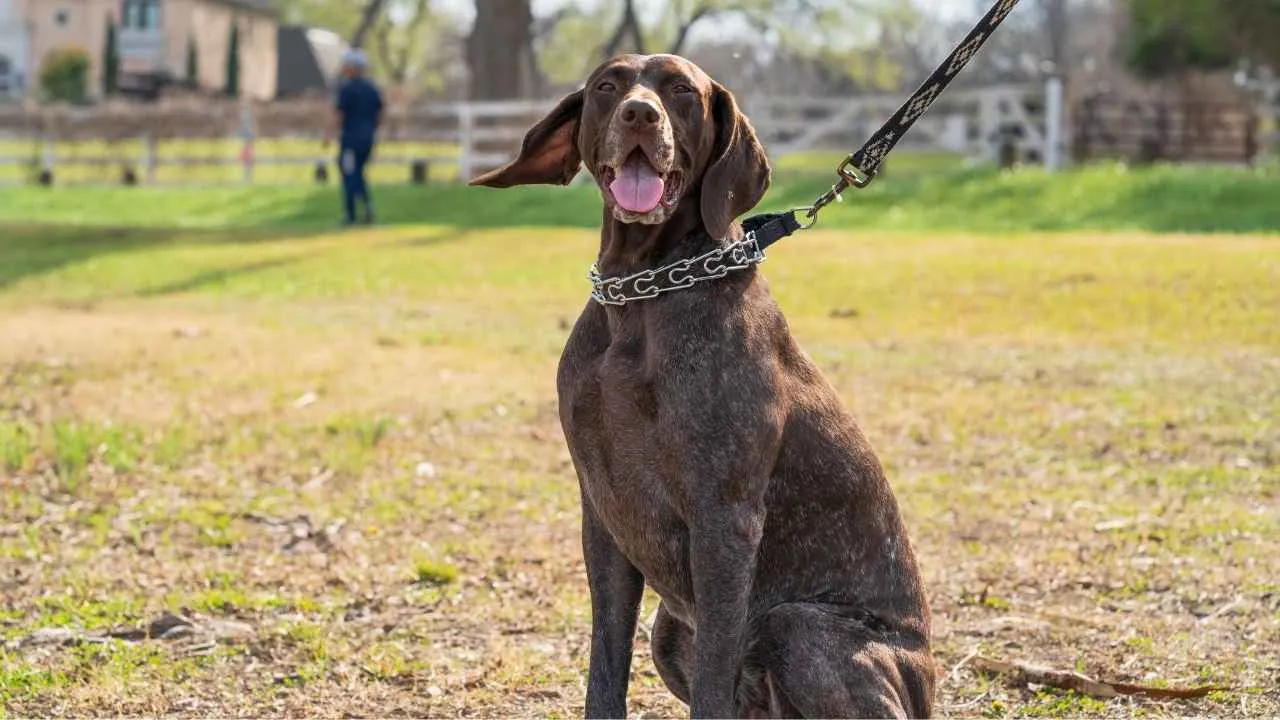
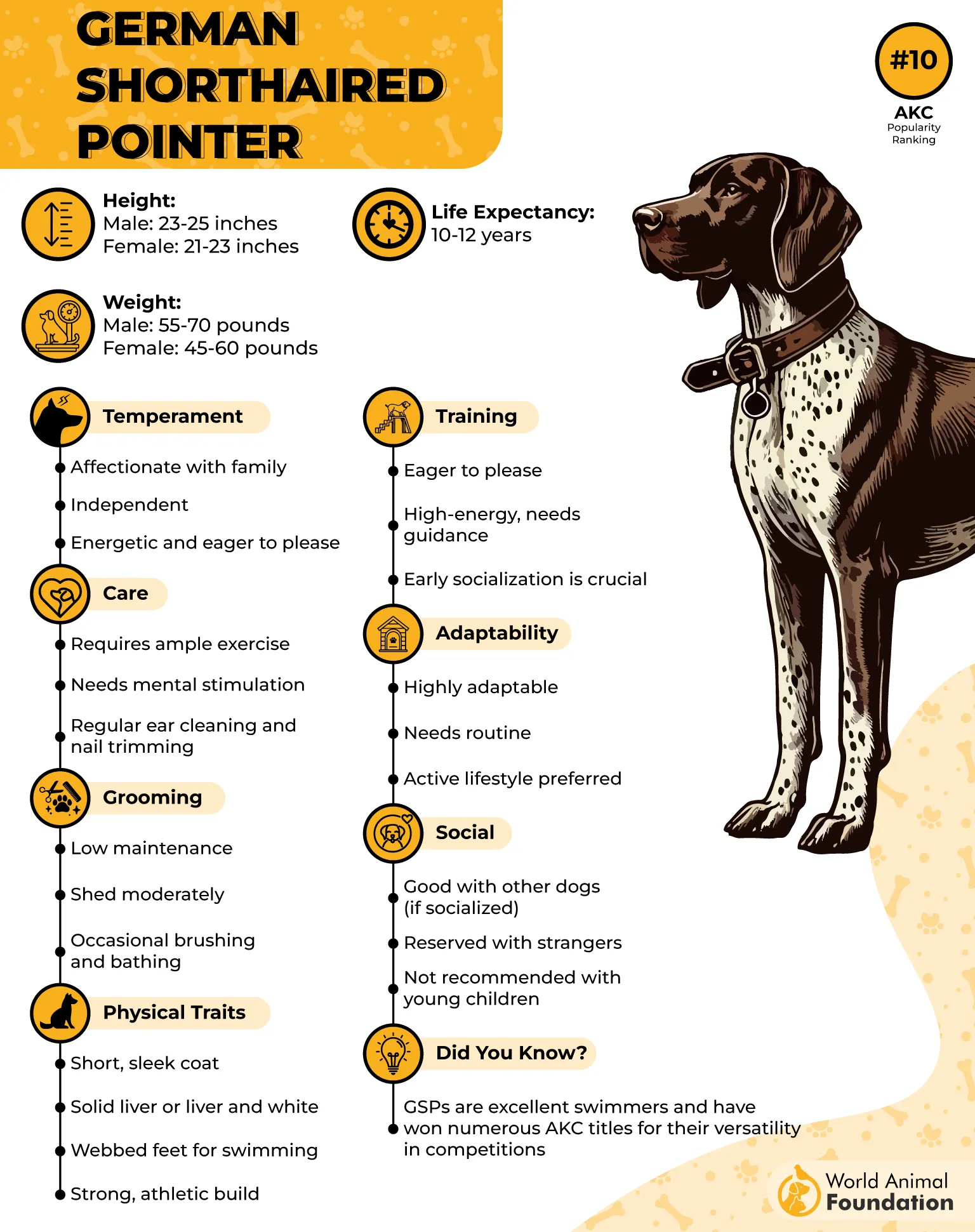
The German Shorthaired Pointer was developed as an all-purpose gundog capable of hunting, pointing, tracking, and retrieving across land and water. Its deep muzzle, open nostrils, athletic body, and enormous enthusiasm let it process scent while covering considerable territory.
A GSP can work ground scent with its head lowered or carry its head higher to sample odour drifting on the wind. Air scenting lets the dog search broad areas by moving across the breeze until it encounters the scent cone flowing away from hidden game.
Speed gives the breed another advantage because it can quarter through open ground, woodland edges, marsh, and farmland without wasting time. A disciplined dog does not simply run in random circles; it moves in planned arcs that place its nose across different streams of air.
Webbed feet and a water-repellent coat support swimming and retrieving, allowing scent work to continue around lakes, reeds, and wetlands.
Phenomenal Ways They Use Their Smelling Sense
Wide air-scent searches: GSPs quarter across the wind to intercept odour carried from hidden birds, animals, or people.
Scent-to-point conversion: They follow increasing odour intensity and freeze into a recognisable posture that reveals the quarry’s location.
Land-and-water versatility: Their noses remain useful across fields, woodland, marshes, shorelines, and swimming retrieves.
Conclusion
There is no single “best nose” for every mission because each role demands a different mixture of sensitivity, motivation, endurance, independence, mobility, and communication.
Whether finding a missing person, protecting agriculture, following wildlife, locating contraband, or discovering treats under a plant pot, these breeds demonstrate how powerfully dogs experience the world through scent.
