




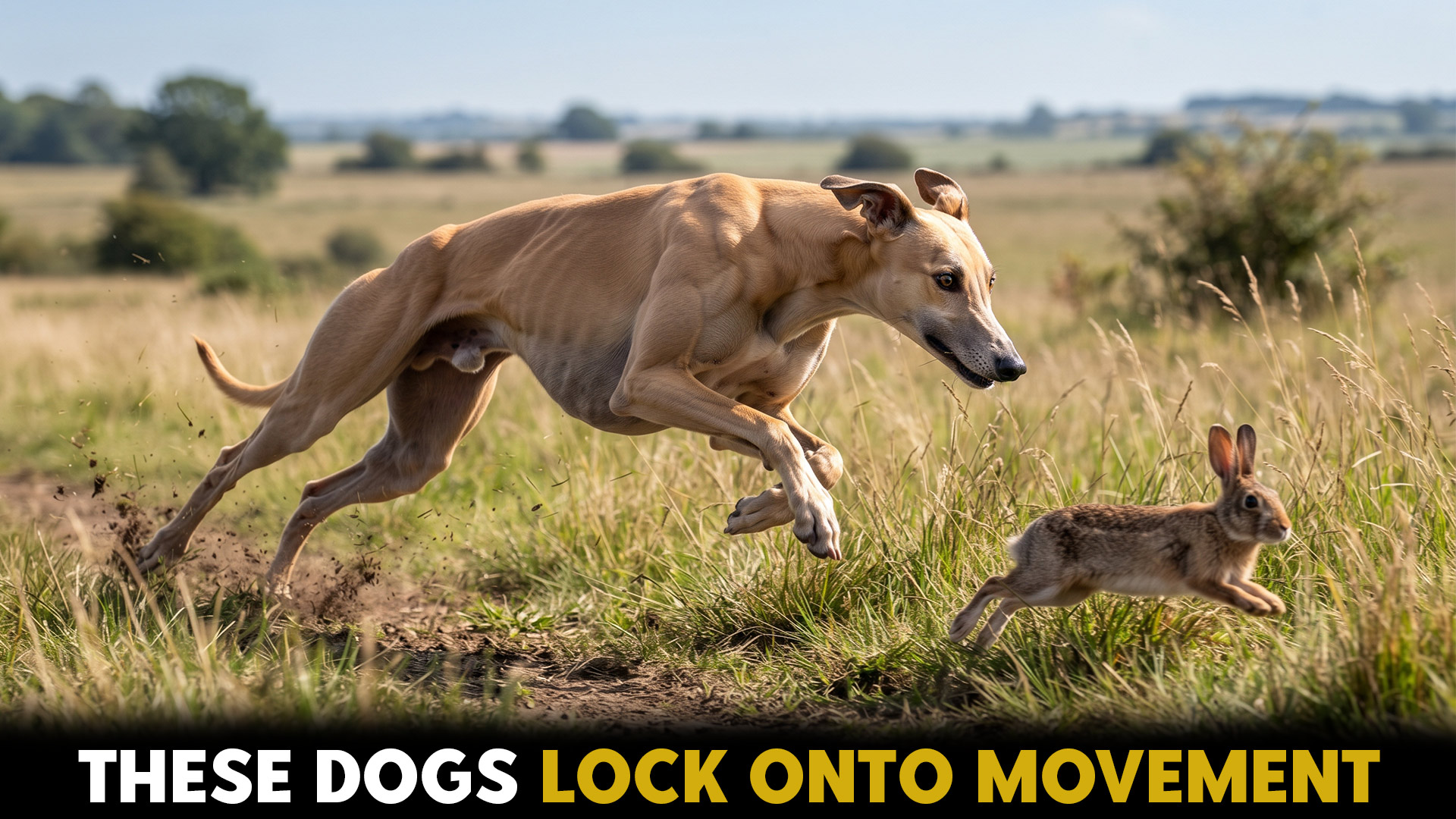
Ever seen a dog lock eyes on a squirrel and just… completely check out of reality?
That’s prey drive.
And it’s not bad behavior.
It’s not your dog being stubborn or ignoring you on purpose, but it is an ancient instinct baked deep into certain breeds. The same instinct that once helped dogs hunt, herd, and survive alongside humans for thousands of years.
But… a dog’s prey drive can also turn into a real challenge if you don’t understand it. Some dogs will chase, stalk, and even try to kill prey given the chance. That could be a squirrel in the yard or, honestly, a small pet inside the house.
So today, we are breaking down seven dog breeds with a high prey drive, what causes it, and what it actually looks like day-to-day.
Did You Know?
Prey drive isn’t one single behavior. According to PetMD, it is a chain of instincts researchers break into stages: searching, stalking, chasing, grabbing, and killing. Different breeds were bred to stop at different points in that chain. Border Collies, for example, were bred to stalk and chase (herding) but not to grab or kill. Terriers, on the other hand, were bred to go all the way through.
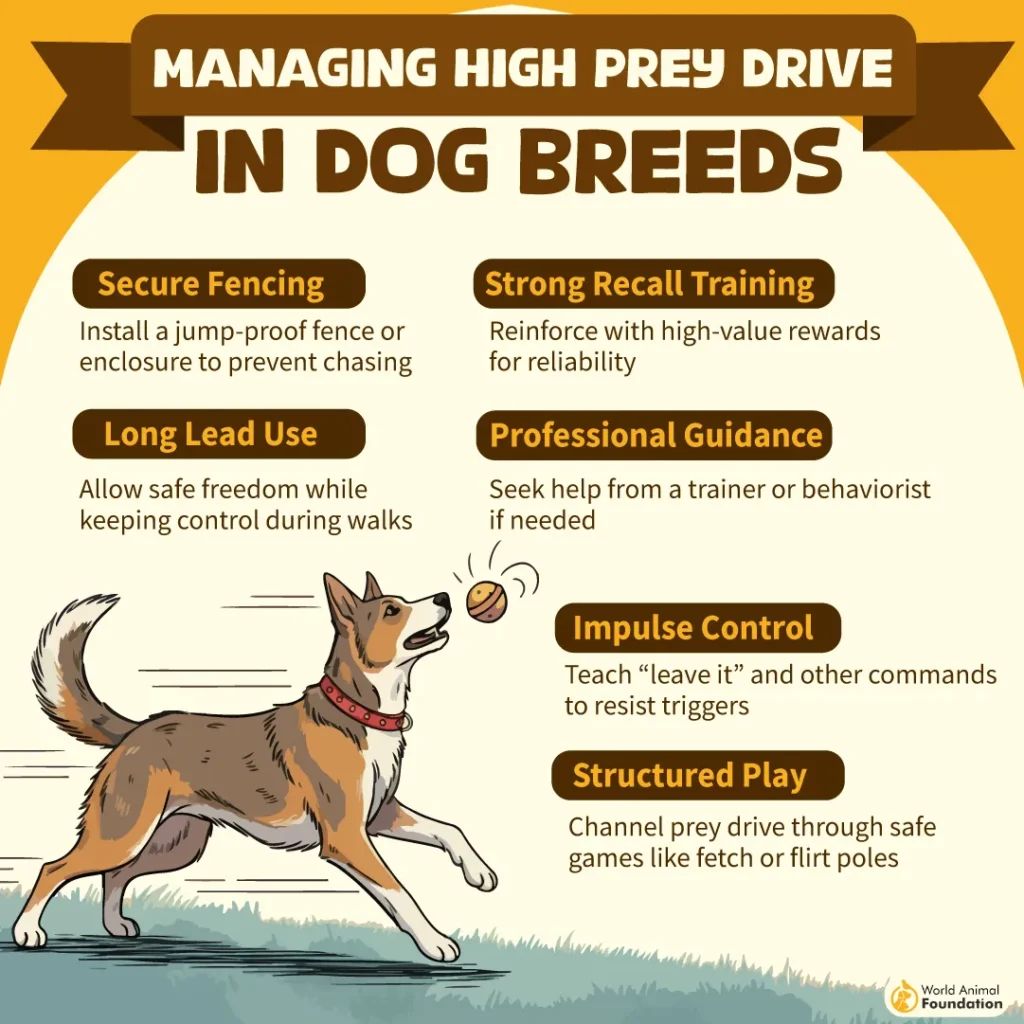
We should also mention that a physical or electric fence may not stop these high prey drive dogs during a chase. So, take care of secure containment and training sessions. Impulse control training is another vital factor.
Dog Breeds: A Guide to High Prey Drive Characteristics
1. Irish Setter
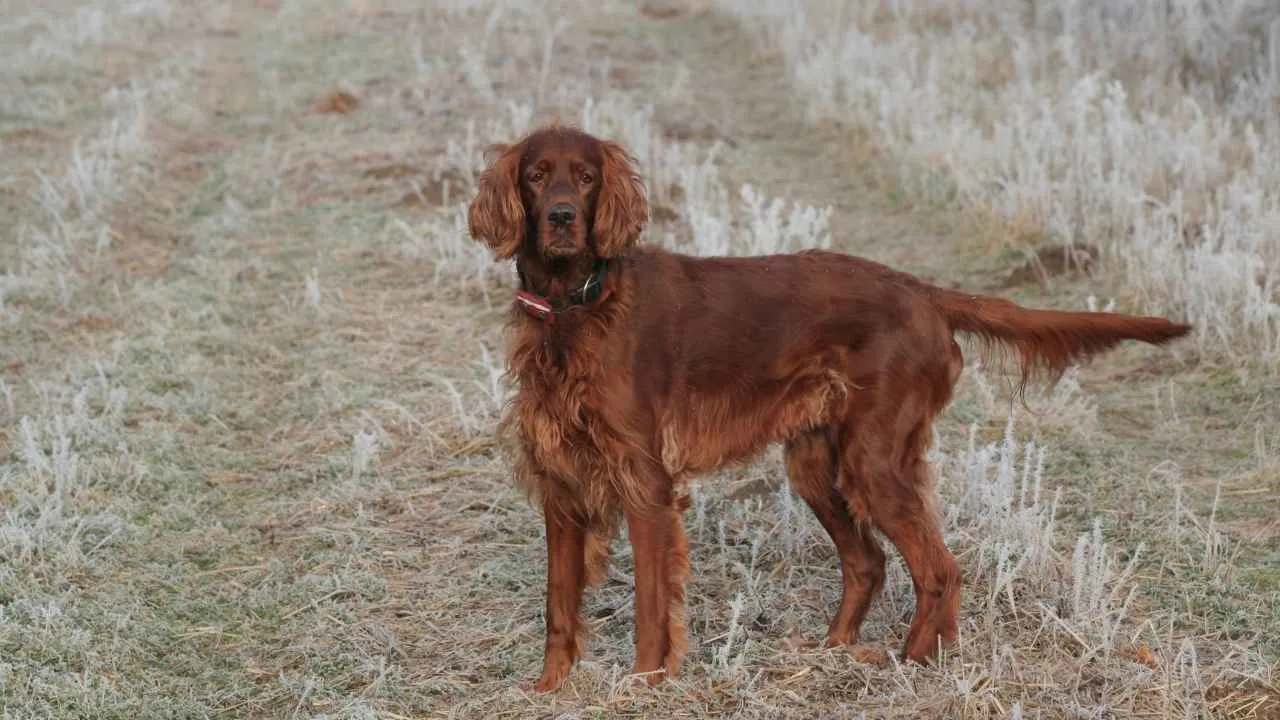
The Irish Setter looks elegant and a little goofy. All long legs and flowing red coats.
But underneath that pretty exterior is a dog bred for one job: bird hunting.
These dogs have a strong prey drive tied to birds. Their intense focus kicks in the moment something flushes out of the grass, and their instinct is to freeze, point, and then chase.
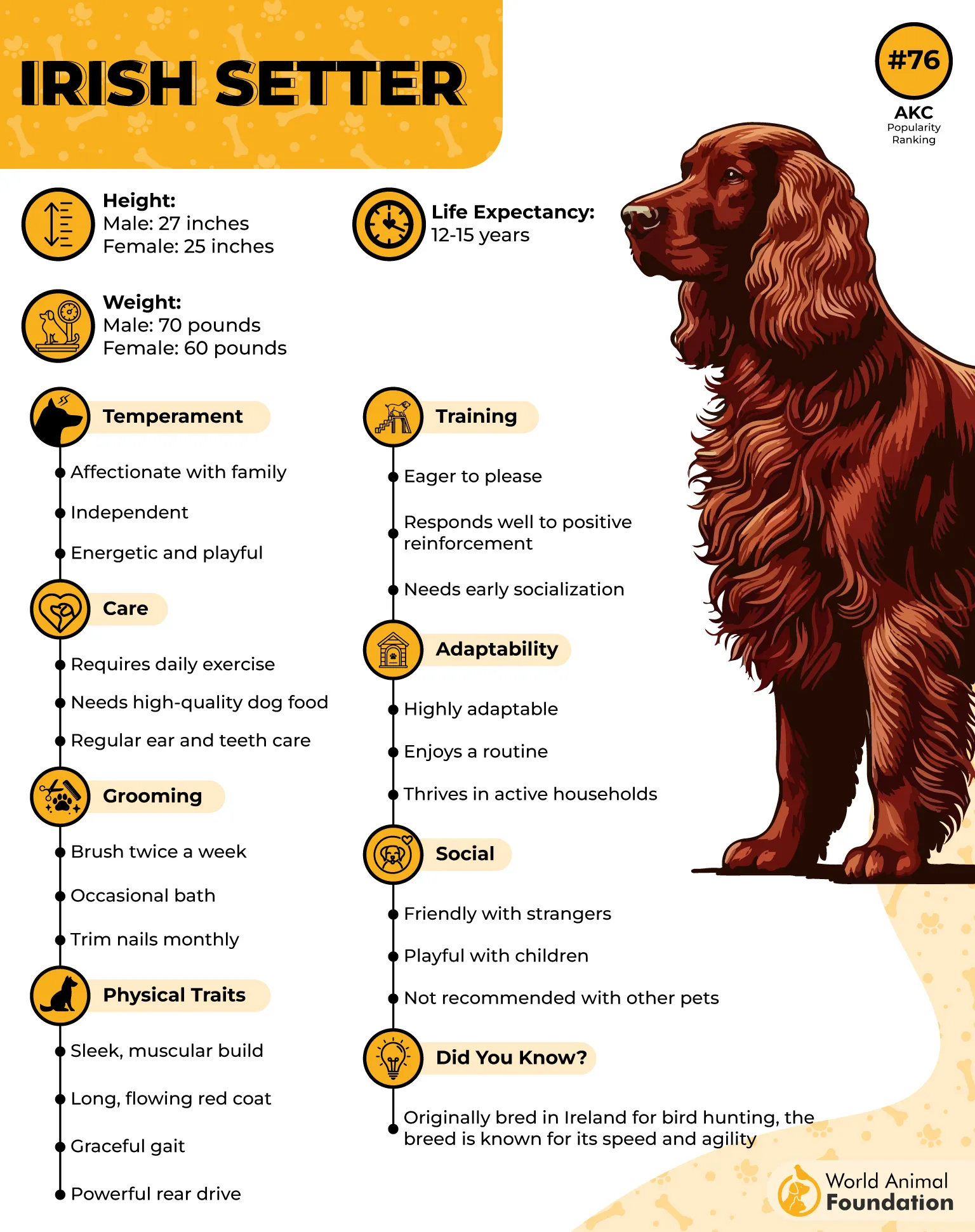
Irish Setters do best with an escape-proof yard and a solid leash routine. Off-leash walks in unfenced areas can turn into a full sprint after birds or small animals before you even realize what’s happening.
Training helps a ton with these ravishing red dogs.
Teaching “leave it” and building a good release cue for when they do catch something (like a toy during playing fetch) gives that drive a healthy outlet.
Agility and scent work are also great ways to burn off that intense focus in a controlled way.
2. Border Collie
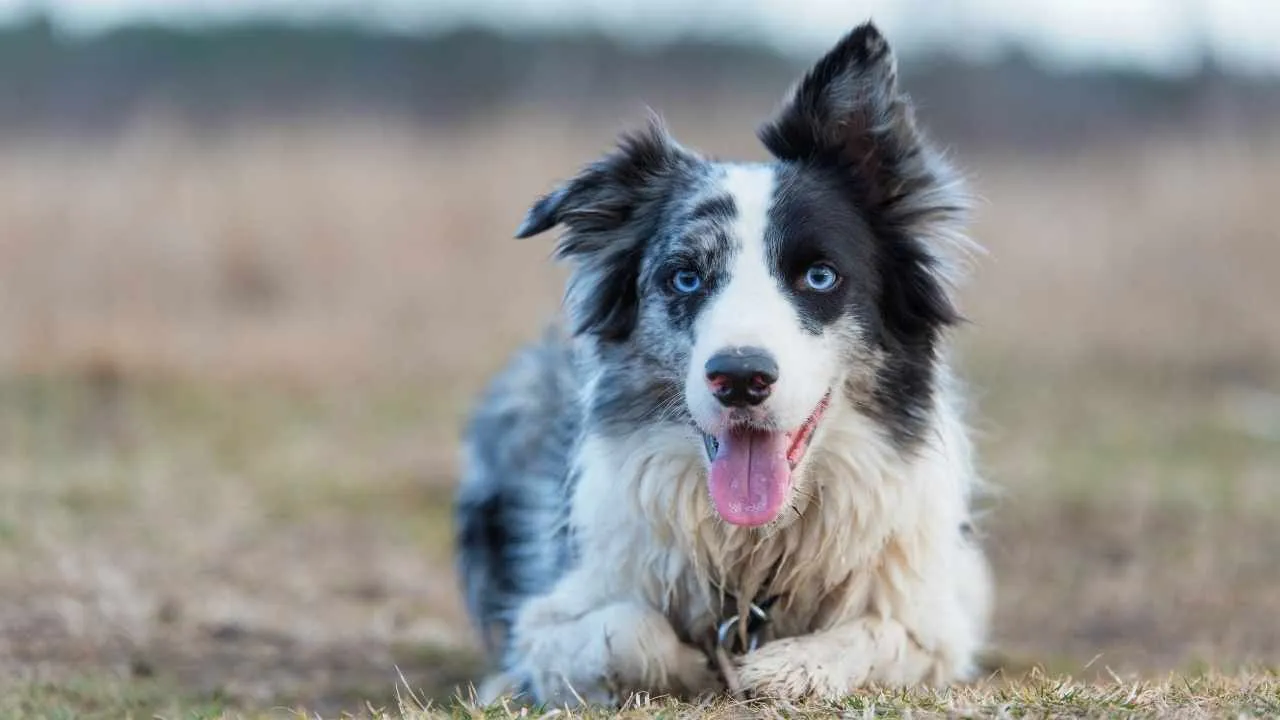
Border Collies are famous for being one of the smartest dog breeds. But those herding instincts of these herding breeds are to die for.
It is really just prey drive with the “kill prey” part bred out.
These herding dogs stalk, chase, and control movement, whether that’s sheep, other animals, or, let’s be honest, your kids running around the yard.
It is NEVER aggression, but merely instinct doing what it was bred to do, like most dogs on this list.
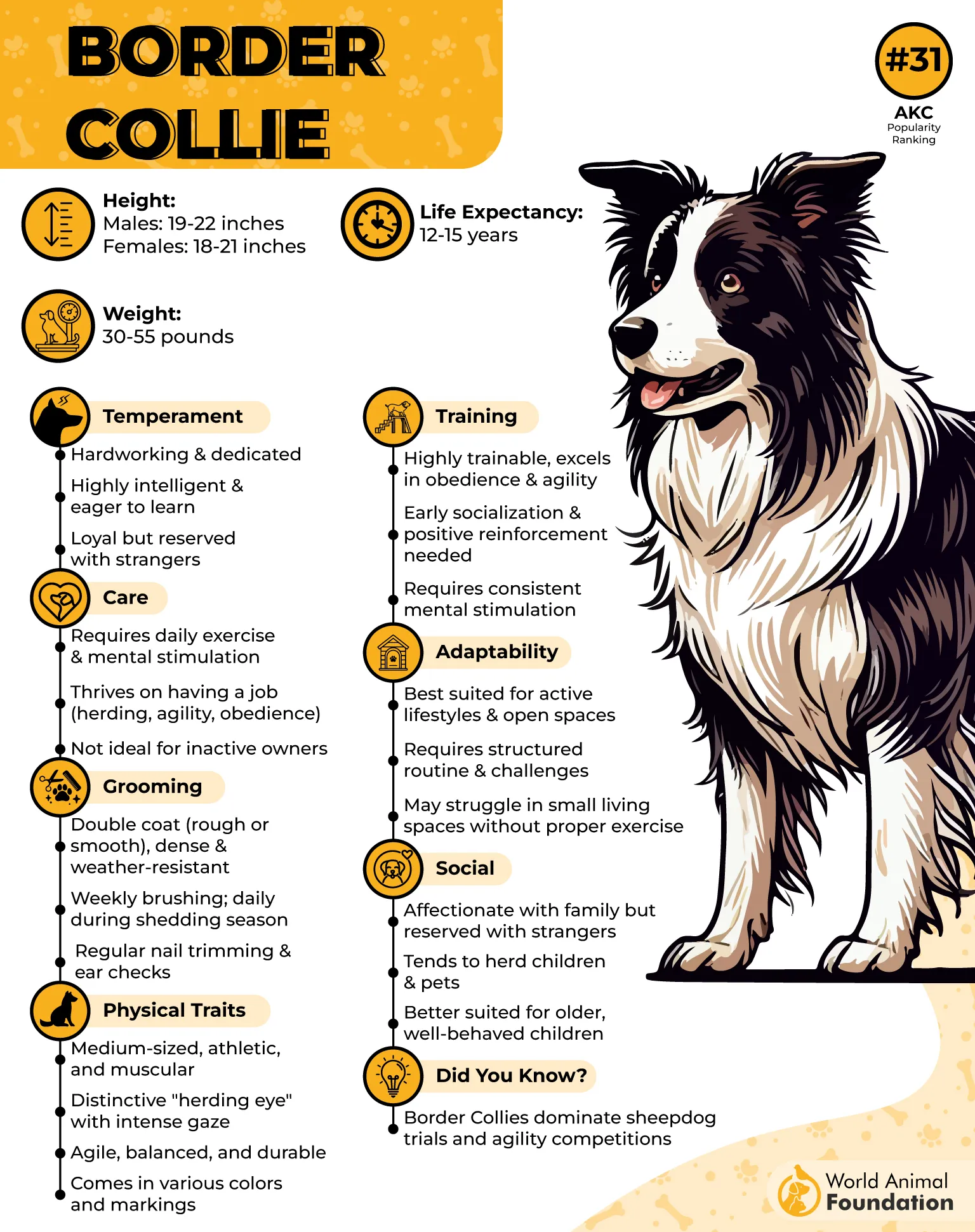
Border Collies need serious mental stimulation and physical outlets. Without a job, that prey drive can turn into obsessive behavior, chasing cars, bikes, or anything that moves fast.
Structured training sessions, herding balls, and agility courses work wonders. A tired Border Collie with a purpose is a happy dog.
A bored one… well, that’s when dangerous behavior around traffic or livestock can creep in.
3. Greyhound
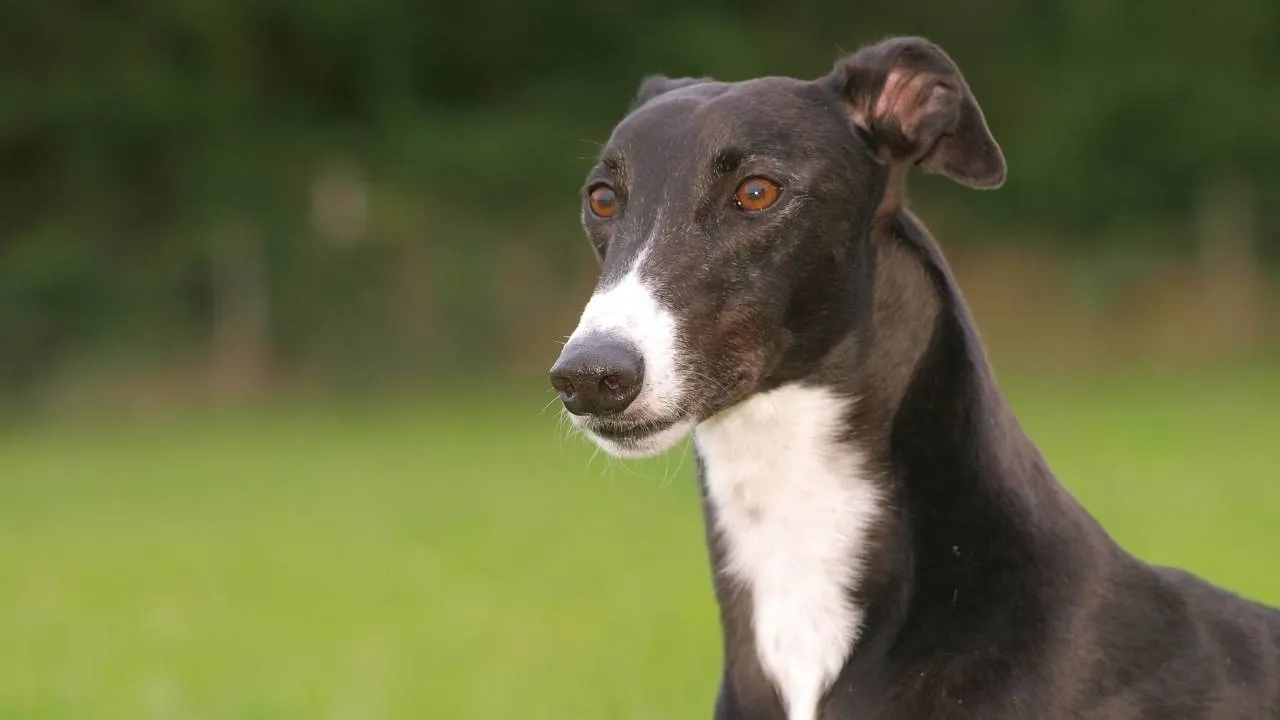
Greyhounds are basically prey drive dogs on four legs.
These hounds were specifically bred to chase and catch fast-moving game, and even generations removed from actual hunting, that instinct has not gone away.
Oh, and they are one of the fastest dog breeds around.
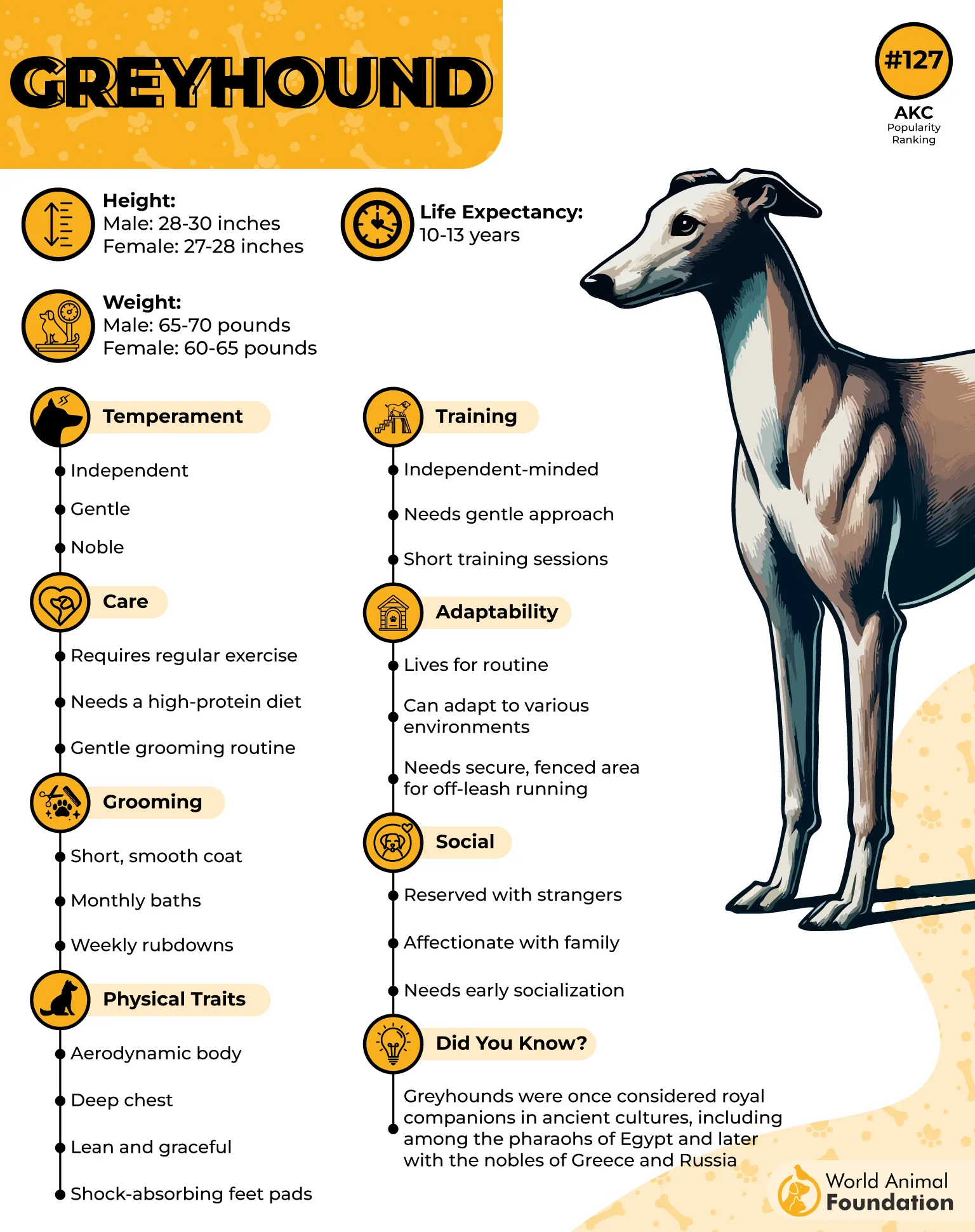
Greyhounds have incredible focus once their chase instinct is triggered.
A running rabbit, a fleeing cat, even a plastic bag blowing across the yard can set them off in an instant.
Because of this, off-leash time should happen in a secure, fully fenced area, recommends Britannica. A no-pull harness and sturdy leash are non-negotiable for walks, since a Greyhound in full sprint is nearly impossible to catch or control.
Interestingly, many dogs of this Hound breed do best with small dogs and even cats. “Kill” instinct is more often about the chase itself.
But new, unfamiliar small pets can still trigger that strong prey drive.
4. Bluetick Coonhound
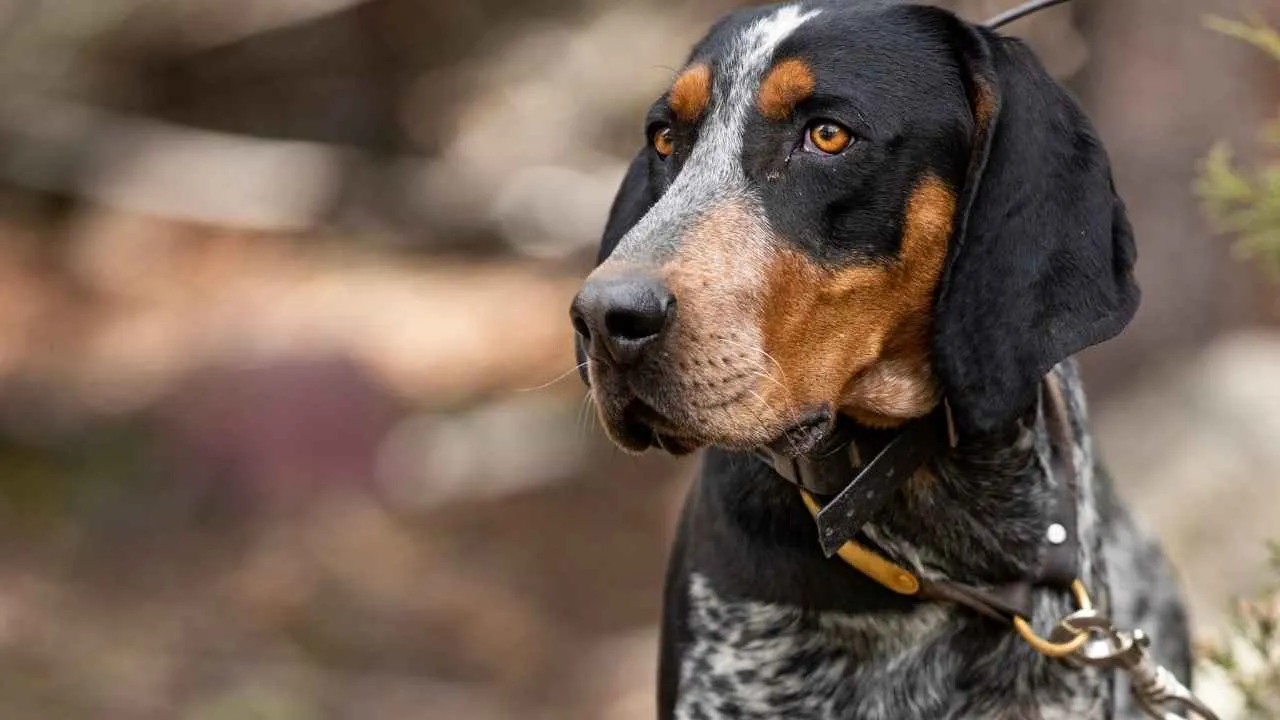
Loud, determined, and born with a nose that just doesn’t quit.
Bluetick Coonhounds were bred to track and tree raccoons and other game, and that hunting drive runs deep, quite LITERALLY, in their DNA.
Once a Bluetick Coonhound catches a scent, that’s it. Their entire world narrows down to the hunt. This is a tracking dog breed known for intense focus and persistence once on the trail.
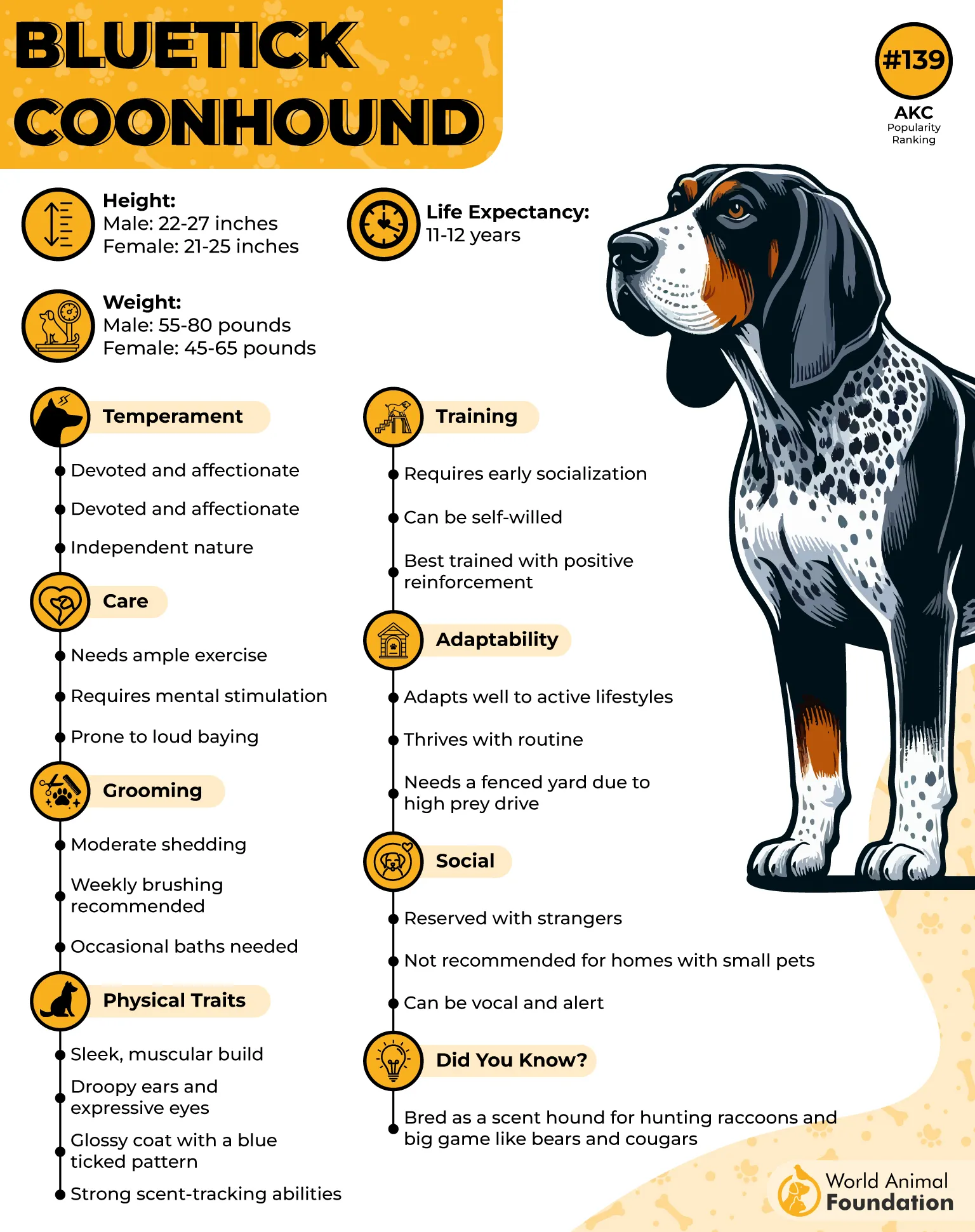
These dogs do best with consistent leash use and a securely fenced yard. Off-leash freedom is risky, since their nose can lead them miles away before they even register they have wandered off.
Training a Coonhound takes patience.
Positive reinforcement, treats, and consistent commands help redirect that hunting drive toward structured activities like tracking games rather than unsupervised roaming.
5. Rhodesian Ridgeback
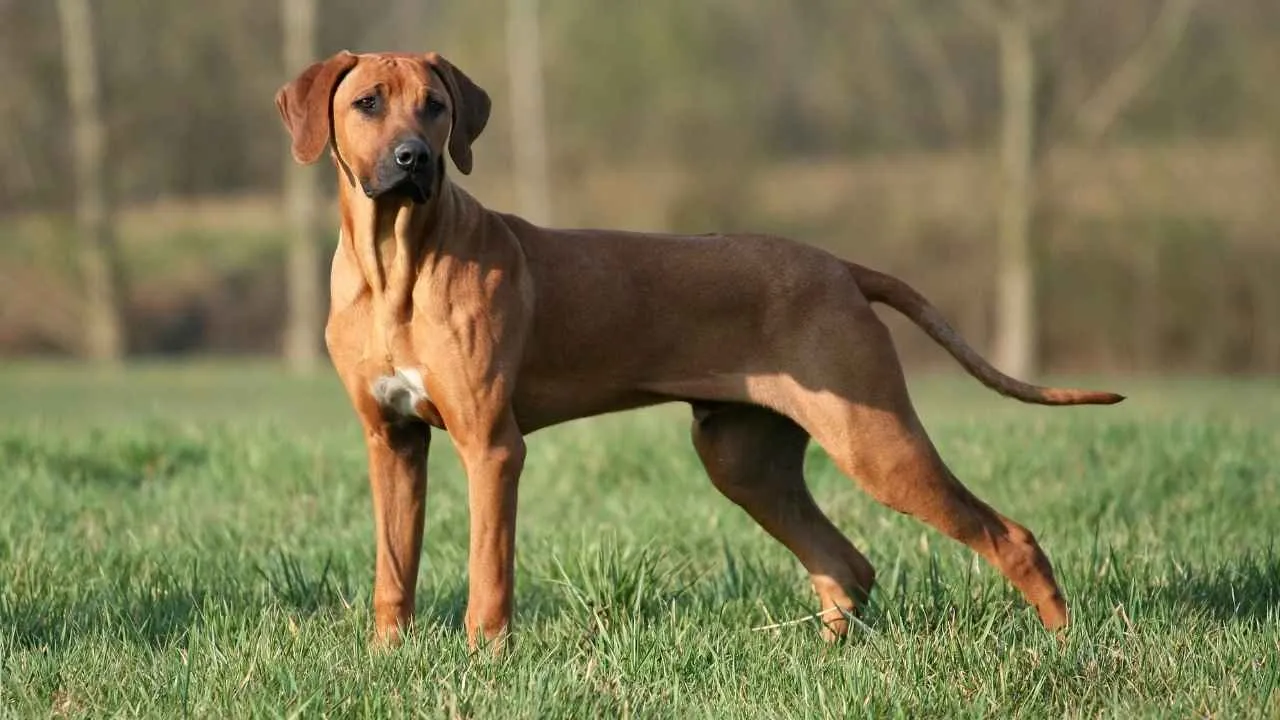
Rhodesian Ridgebacks were originally bred in Africa to help hunters track large game, including lions. Yeah. Lions.
These hunting dogs are confident and powerful with a strong prey drive.
Ridgebacks have a calm demeanor most of the time. But their instinct kicks in fast around smaller animals. Cats, rabbits, squirrels, anything with a quick escape route can trigger their chase response.
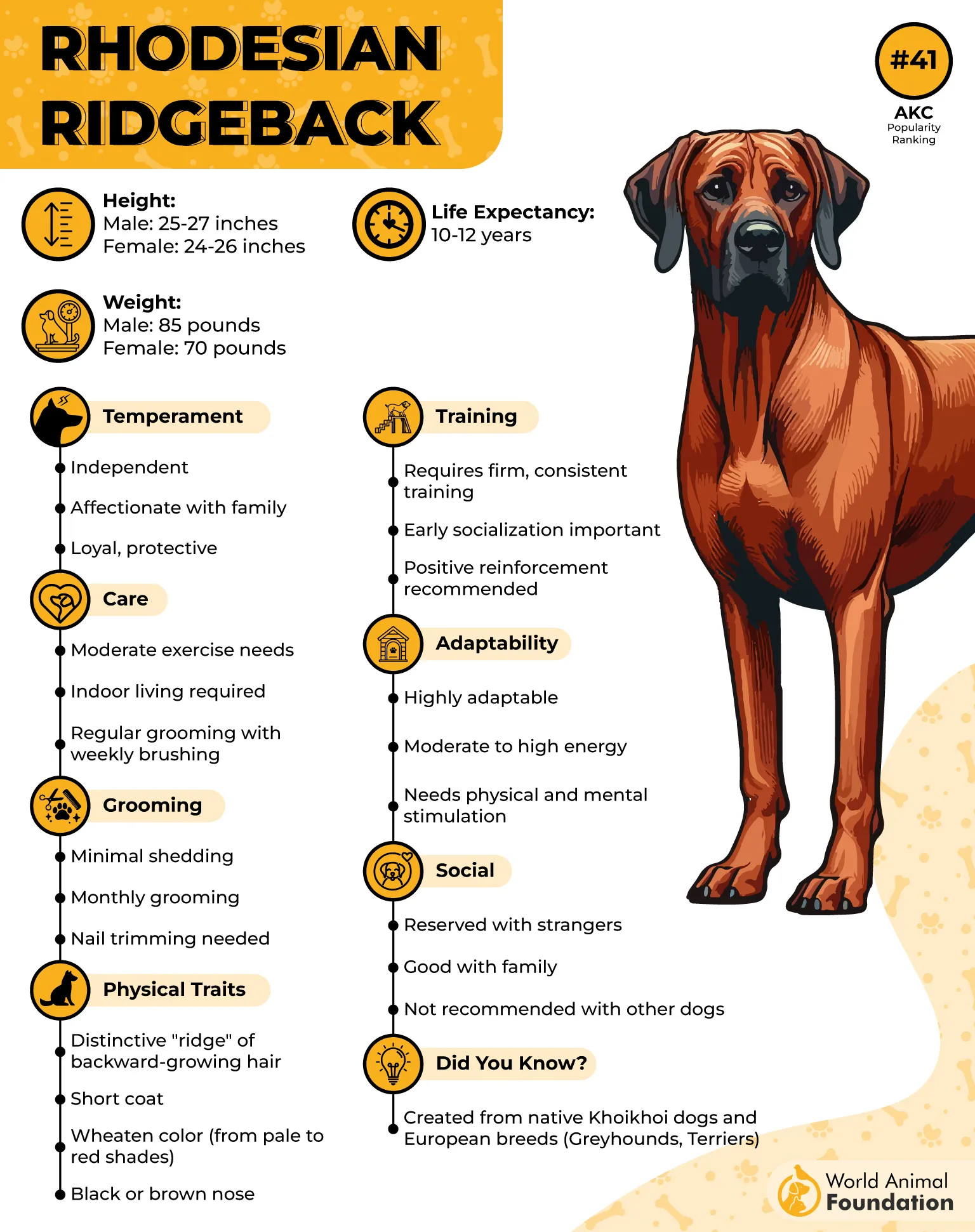
Early socialization is important with this breed.
Introducing them to other pets young helps manage how their prey drive shows up later in life.
These large dogs need firm training and plenty of physical activity. PetMD recommends spending 45 minutes daily (at least) for exercise to manage the dog’s behavior. This dog learns quickly.
A well-exercised Ridgeback with clear boundaries is a wonderful family dog.
An under-stimulated hunting dog can develop more dangerous behavior around smaller animals or strangers.
6. Basenji
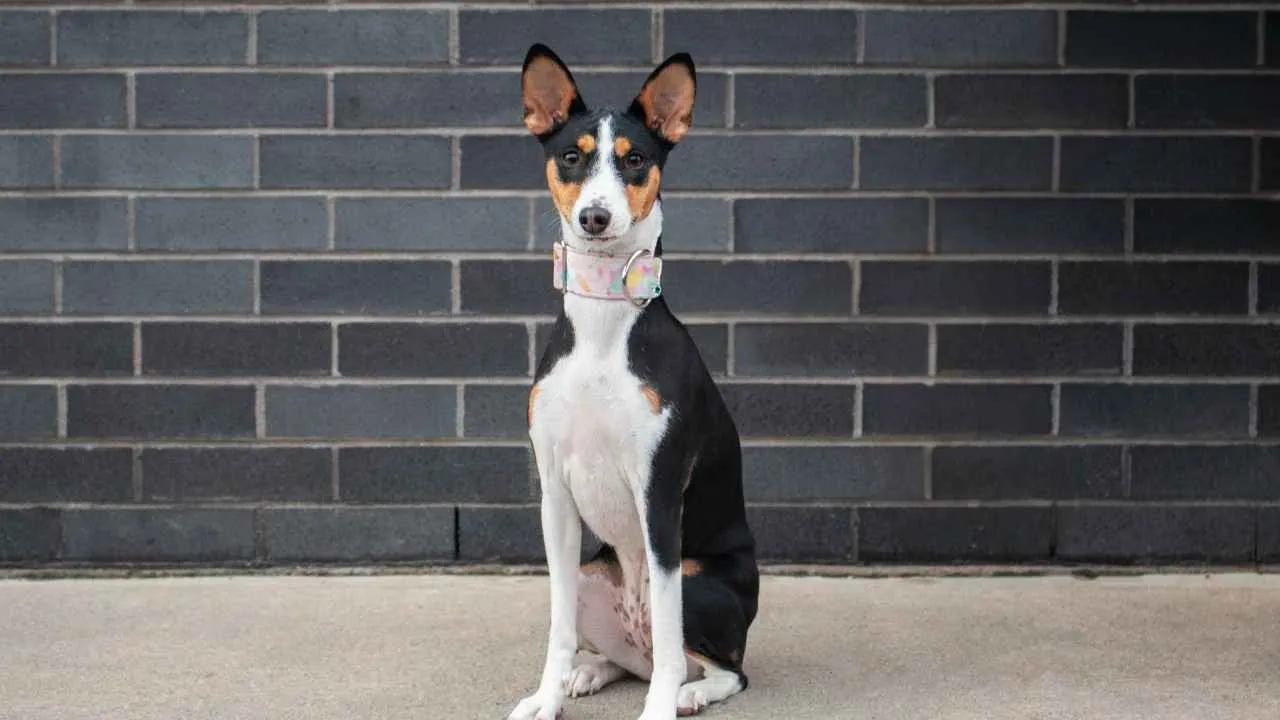
Basenjis are the “barkless” dog breed, but don’t let that quiet reputation fool you.
Underneath is a dog bred for hunting.
Originally bred in central Africa to flush and retrieve game, Basenjis have an independent, sharp hunting instinct that differs from that of most dogs.
These dogs have a high prey drive and a notoriously strong independent streak, says Omlet. Unlike breeds that look to humans for directions, Basenjis act on instinct first and think about training second.
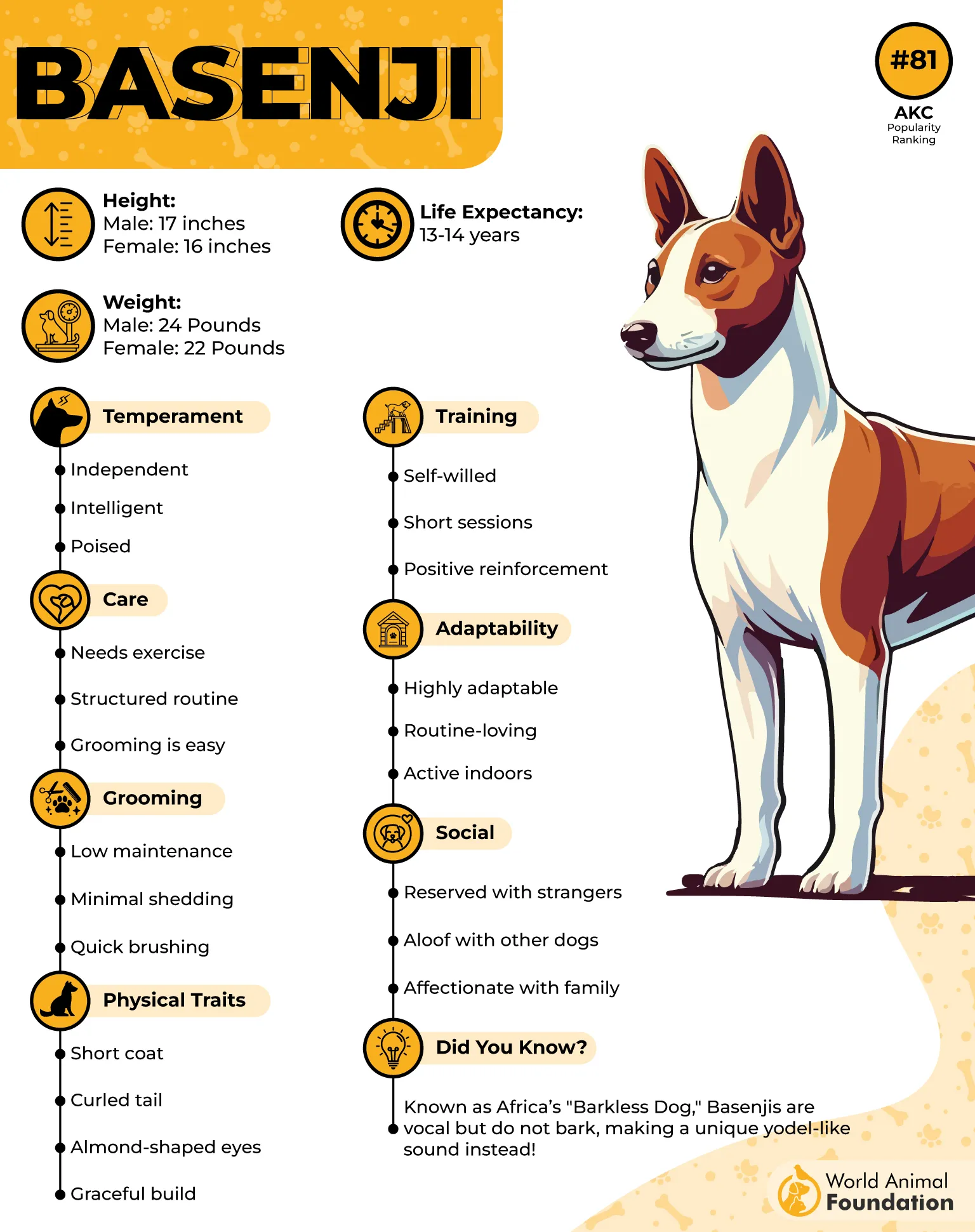
These dogs need secure containment. A dog confined to an open yard without solid fencing can find an escape route. Off-leash walks are risky with this breed. This dog’s prey drive is that STRONG! Yes.
Basenjis respond best to short, engaging training sessions with high-value treats.
Puzzle toys and scent games help satisfy that hunting instinct without chasing down the neighbor’s cat.
7. Siberian Husky
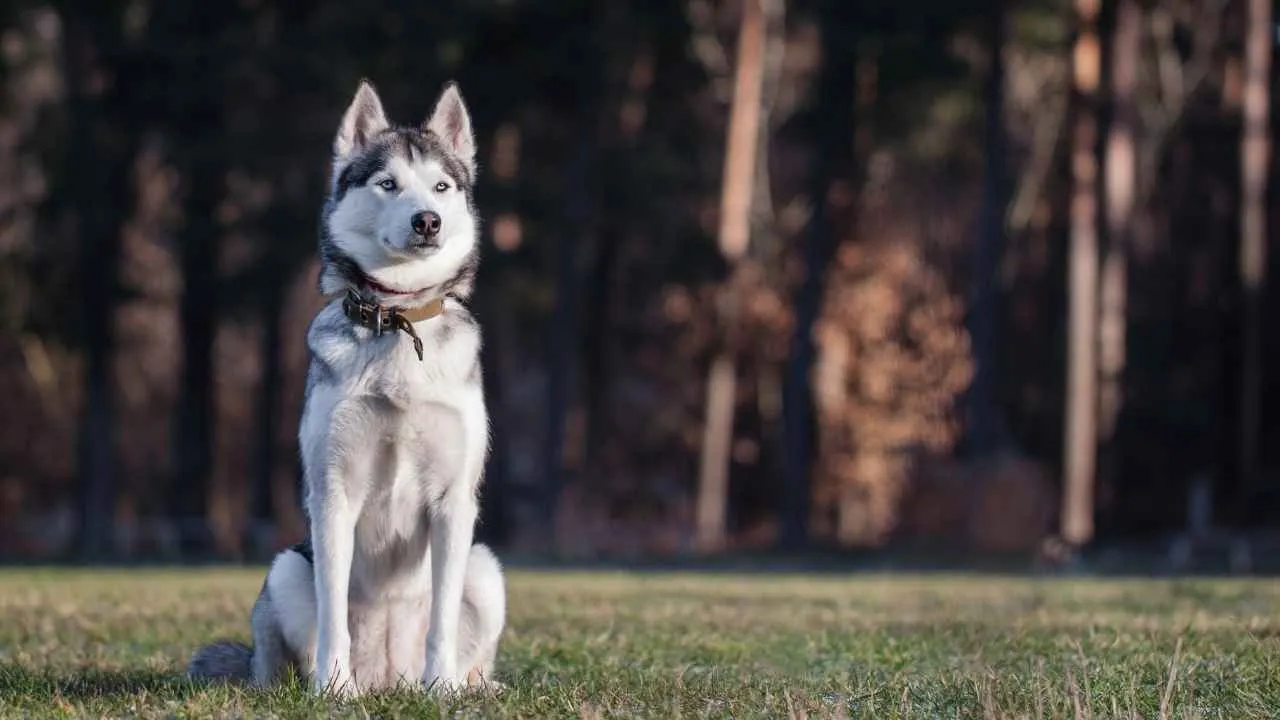
Siberian Huskies are stunning, athletic, and yeah, they have a strong prey drive under all that fluff.
Bred for endurance and pack work in harsh Arctic conditions, these Husky dogs carry deep instincts tied to chasing and catching small animals for survival.
Many dogs with high prey drive will chase, but Siberian Huskies are known for following children, birds, rabbits, and small pets; if it runs, the instinct to chase is strong.
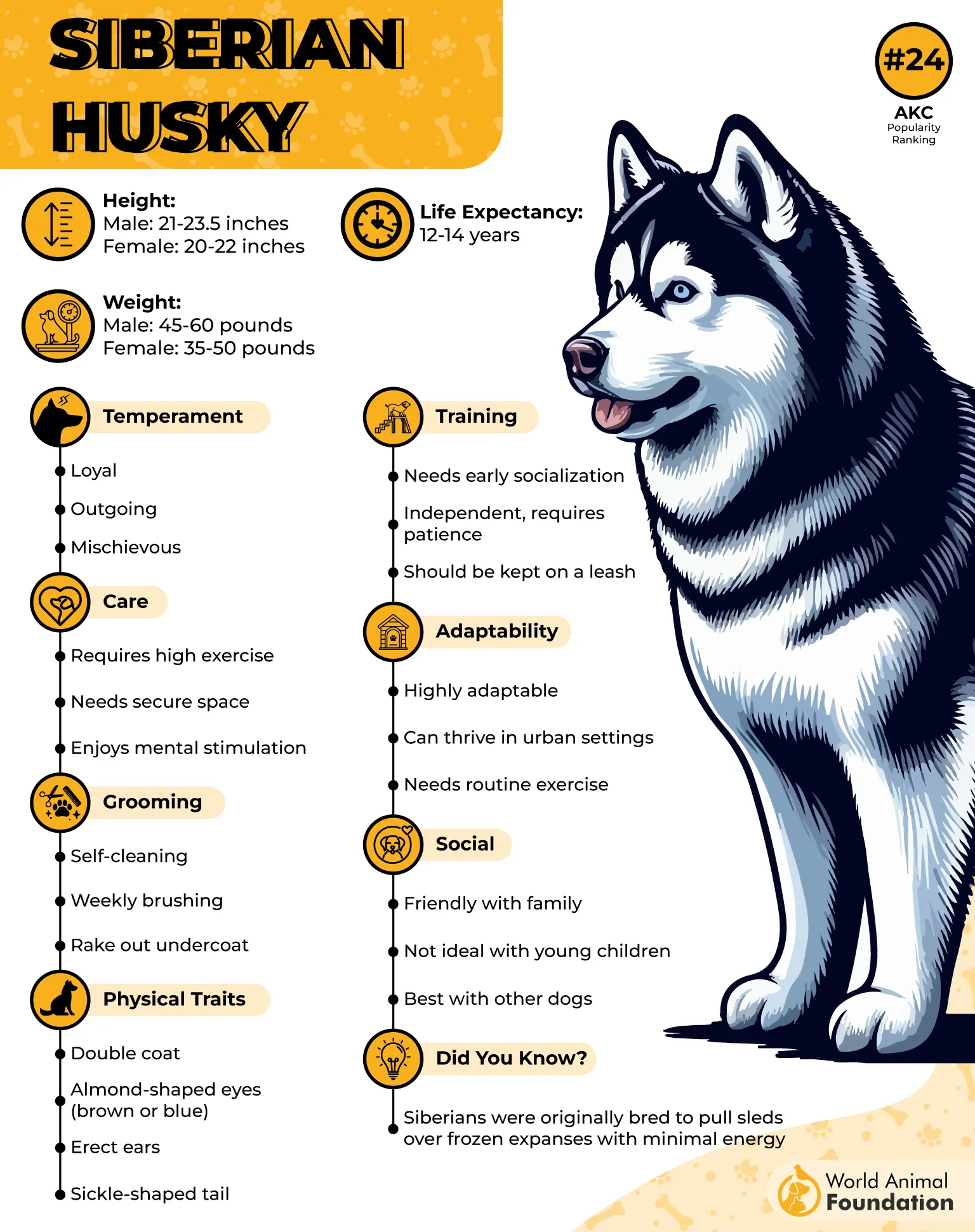
This beautiful dog breed absolutely needs secure fencing and a reliable leash for every walk.
Huskies are also notorious escape artists, so yard security has to be airtight.
Positive training, structured exercise, and mental stimulation through agility or sledding activities give Huskies a healthy way to burn off that energy.
It is a good thing when that drive gets channeled into fun things instead of an unexpected chase down the road.
Conclusion
Prey drive is NOT a flaw. It’s instinct, deeply wired, and honestly kind of fascinating once you understand where it comes from.
These breeds all carry that instinct in different ways. Some stalk. Some chase. And some go all the way through to the catch.
With the right training, secure fencing, leash habits, and plenty of outlets like agility or fetch, even the most prey-driven dog can thrive as a loving family companion.
The instinct doesn’t go away.
But with guidance, it doesn’t have to be a problem either.
