




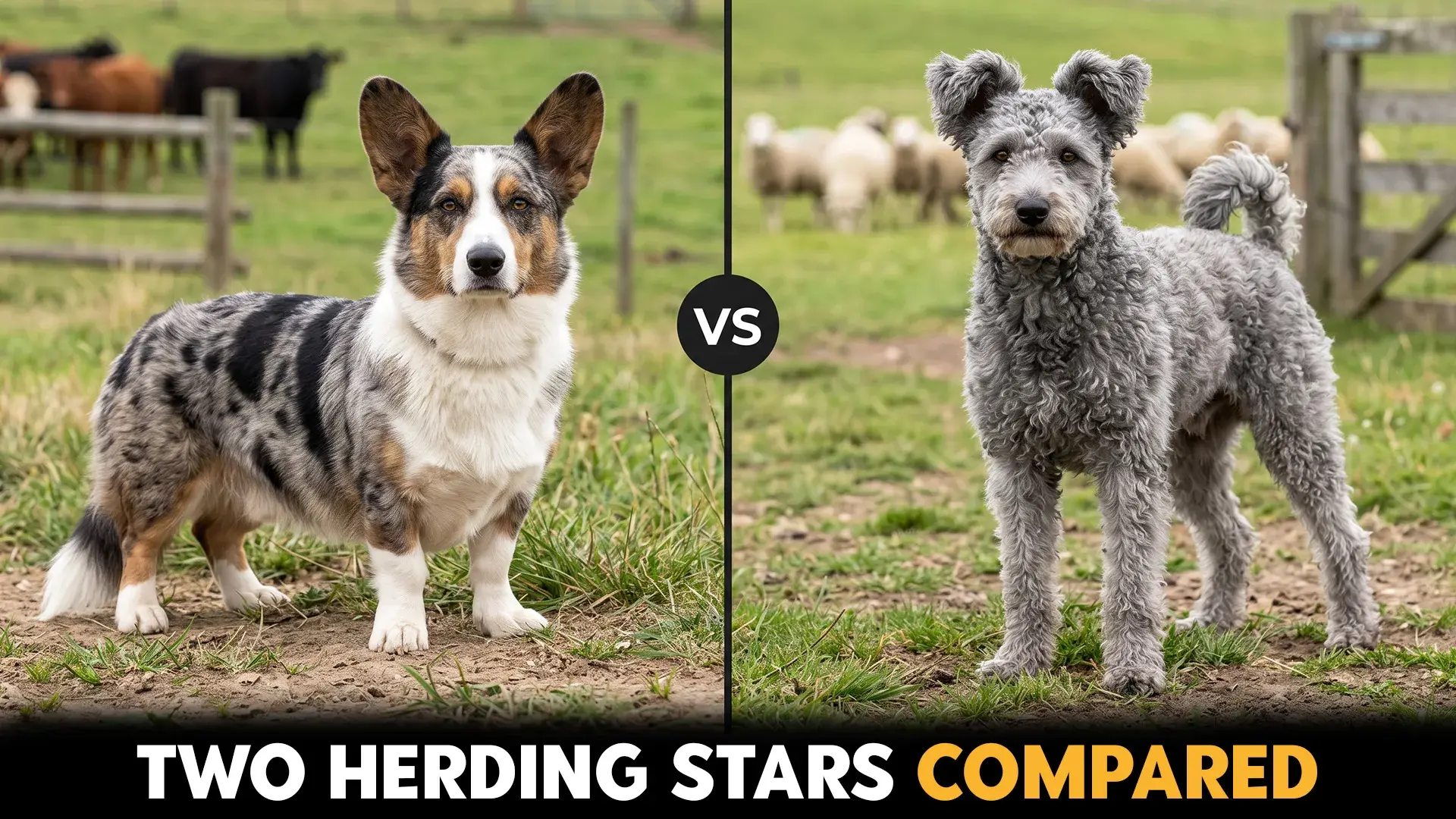
So you want a herding dog, but you don’t want the “typical” herding dog everyone else has.
Fair enough.
Welcome to the Cardigan Welsh Corgi vs. Pumi debate, one of those matchups that doesn’t get talked about nearly enough, honestly.
Both of these breeds are smart. Both are seriously underrated. And both come with a lot of personality packed into a body that’s way smaller than you’d expect from a “real” working dog.
The Cardigan Welsh Corgi is one of the oldest breeds in the herding world, doing its job in Wales for thousands of years before it ever became internet-famous. The Pumi, on the other hand, is this quirky, curly-coated herder out of Central Europe that most Americans have genuinely never heard of. Like, ever.
But the thing is … they are NOT interchangeable.
Not even a little.
Sure, they are both small dog herding breeds with a strong desire to work, a sharp brain, and an independent streak a mile wide. But their history, their energy levels, their appearance, even how they bark and boss around other animals… totally different vibes.
Cardigan Welsh Corgi vs. Pumi: Top Qualities When Choosing a Herding Dog
1. Origins & Purpose
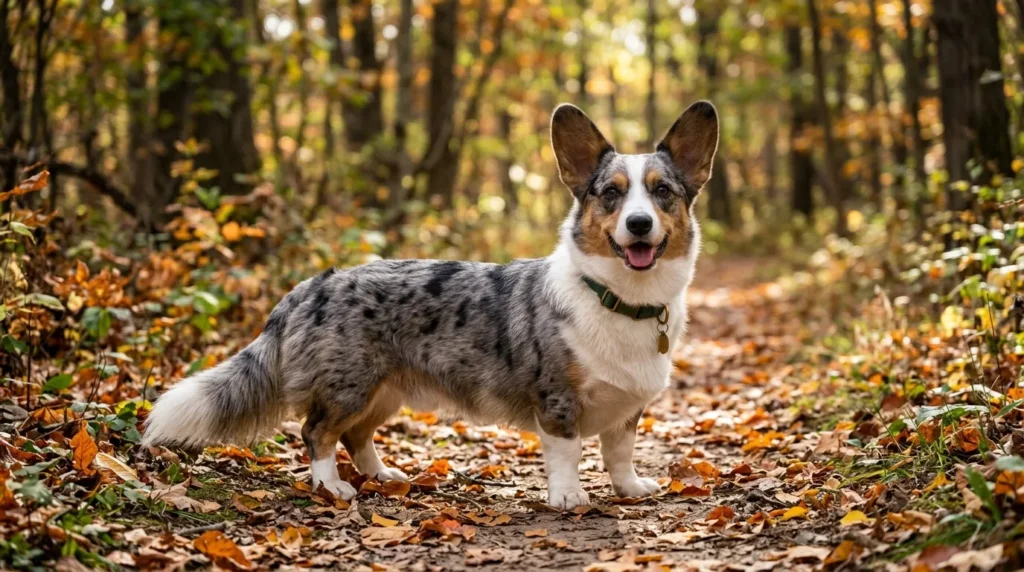
The Cardigan Welsh Corgi originated in Wales, brought over by Celtic settlers who needed a low-to-the-ground dog that could nip at cattle heels without getting kicked. Their short legs and long tail (a big way to distinguish them from Pembroke Welsh Corgi, whose tails are naturally short) made them perfect for driving livestock while staying out of reach of dangerous hooves.
According to the American Kennel Club (AKC), the Cardigan Welsh Corgi is one of the oldest dog breeds in Britain. Pembroke Welsh Corgi came along much later and became the more famous of the two, thanks to a certain British royal family.
The Pumi originated in Hungary, developed by farmers in Central Europe who needed a herding breed that could handle sheep and hunt small vermin on the side.
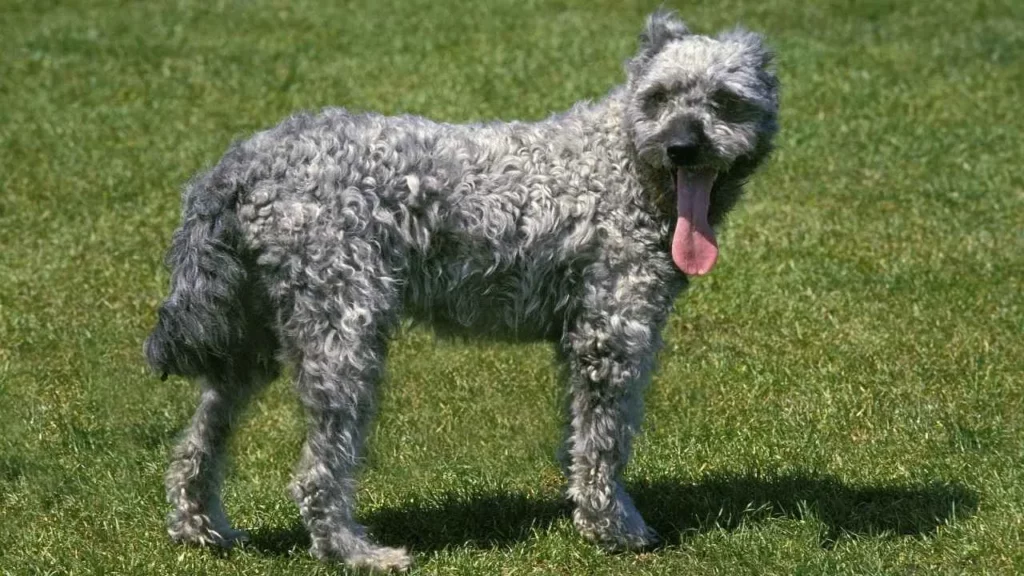
It is a mix of older Hungarian herding dogs, with a wiry coat, alert, rounded ears that fold forward at the tips, and an energetic personality.
The AKC only officially recognized the Pumi in 2016, so it’s still a rare breed here. Although, AGAIN, they are one of the oldest breeds.
BOTTOM LINE! Cardigans come from centuries of steady cattle work. Pumiks come from a scrappier, do-everything farm background. Both are working dogs at heart, but neither one started life as a lap dog.
2. Size & Build
The Cardigan is a true dwarf dog. These short legs are due to a genetic condition, not just small dog genetics. Average weight runs 25-28 pounds, standing 10.5-12.5 inches tall. Sturdy, solid little tanks with that unmistakable fox-like long tail as their calling card.
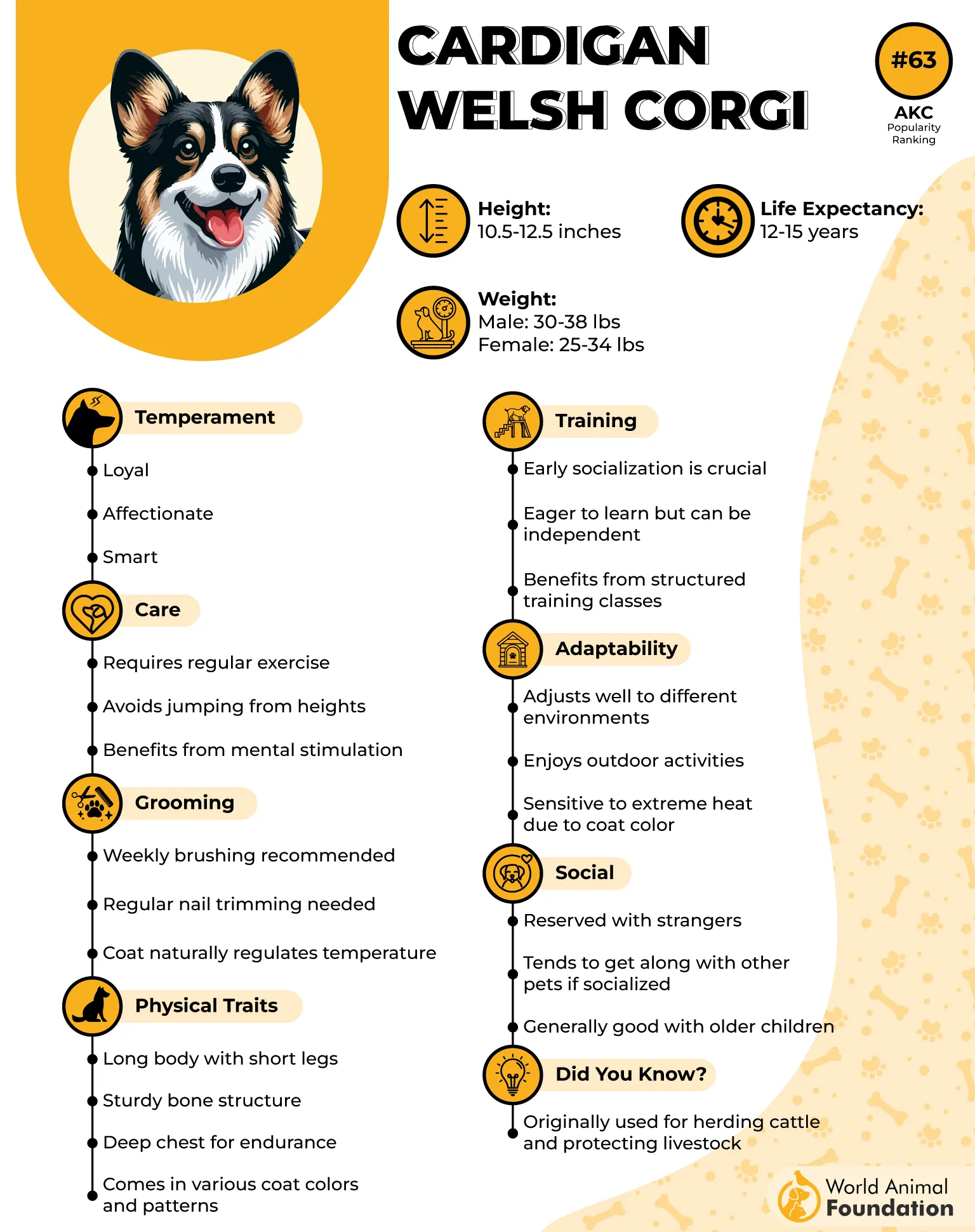
Coat colors include the gorgeous blue merle pattern, brindle points, red, sable, and black-and-white. No two Cardigans look quite the same, according to Orvis.
The Pumi is leaner and leggier, averaging 22-29 pounds and standing 15-18.5 inches. They are tall but far less heavy than the Cardigan Welsh Corgi.
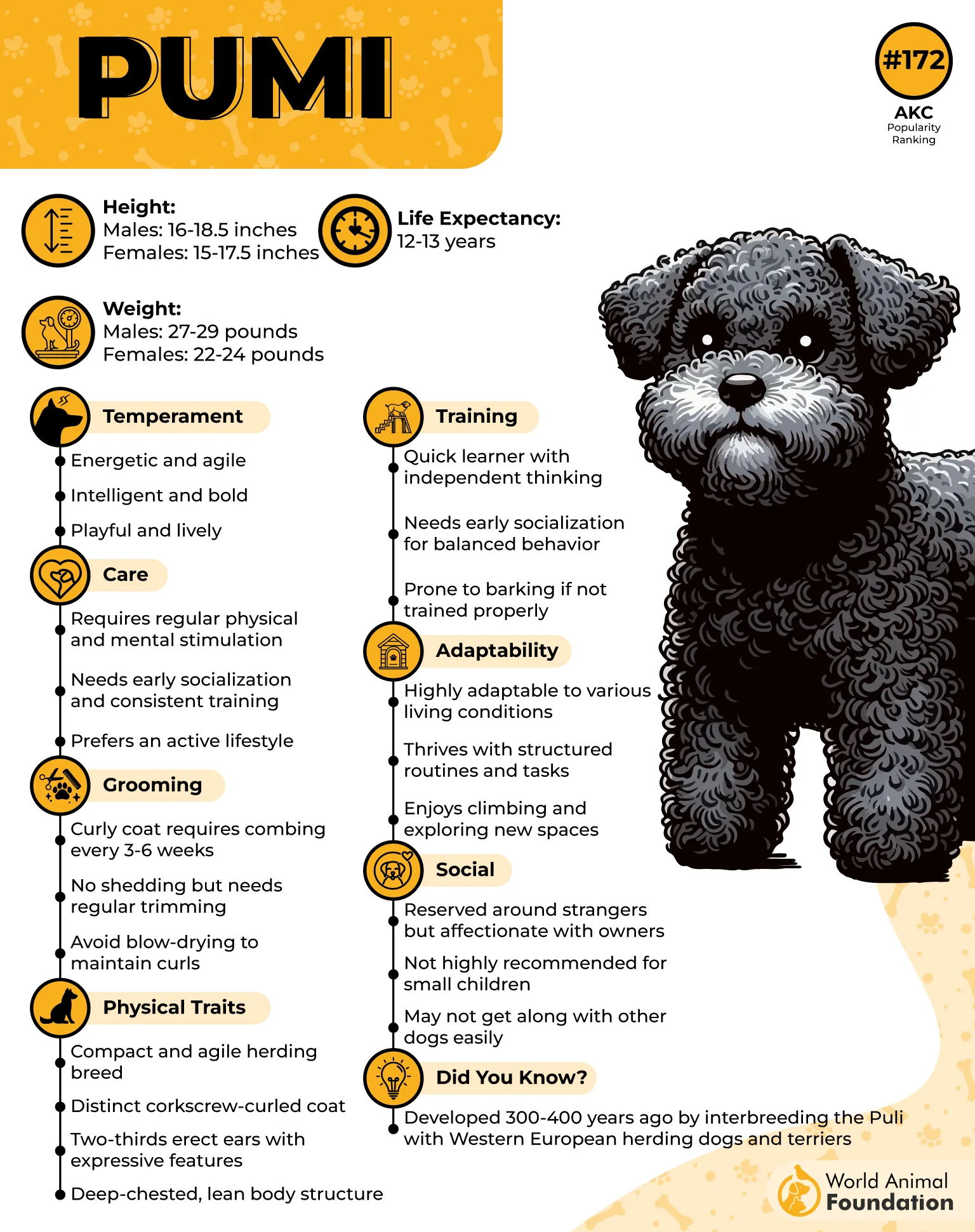
Their curly double coat and alert, more rounded ears give them a scruffy, always-listening charm entirely their own.
BOTTOM LINE! For a short dog with a stocky build and a striking tail, Cardigan and Pembroke fans will probably notice the difference right away.
For a leaner, curlier “who IS this dog” look, go Pumi.
3. Pricing & Availability
Cardigan Welsh Corgis are still uncommon but far easier to find than Pumi. Expect $1,200-$2,500 from a reputable breeder. They are less trendy than Pembrokes.
The Pumi is a different story. Rare in the U.S., often a year-plus wait, with prices from $1,500-$3,500 or more. The prices vary with imported Hungarian lines.
Either way, purchase only through a reputable breeder who health tests. Rescue is an option too, though rarer for the Pumi given how uncommon the breed still is.
4. Temperament & Personality Style
Cardigans are affectionate, loyal, and protective for such a small dog, sometimes acting as a self-appointed protector of the house when strangers show up.
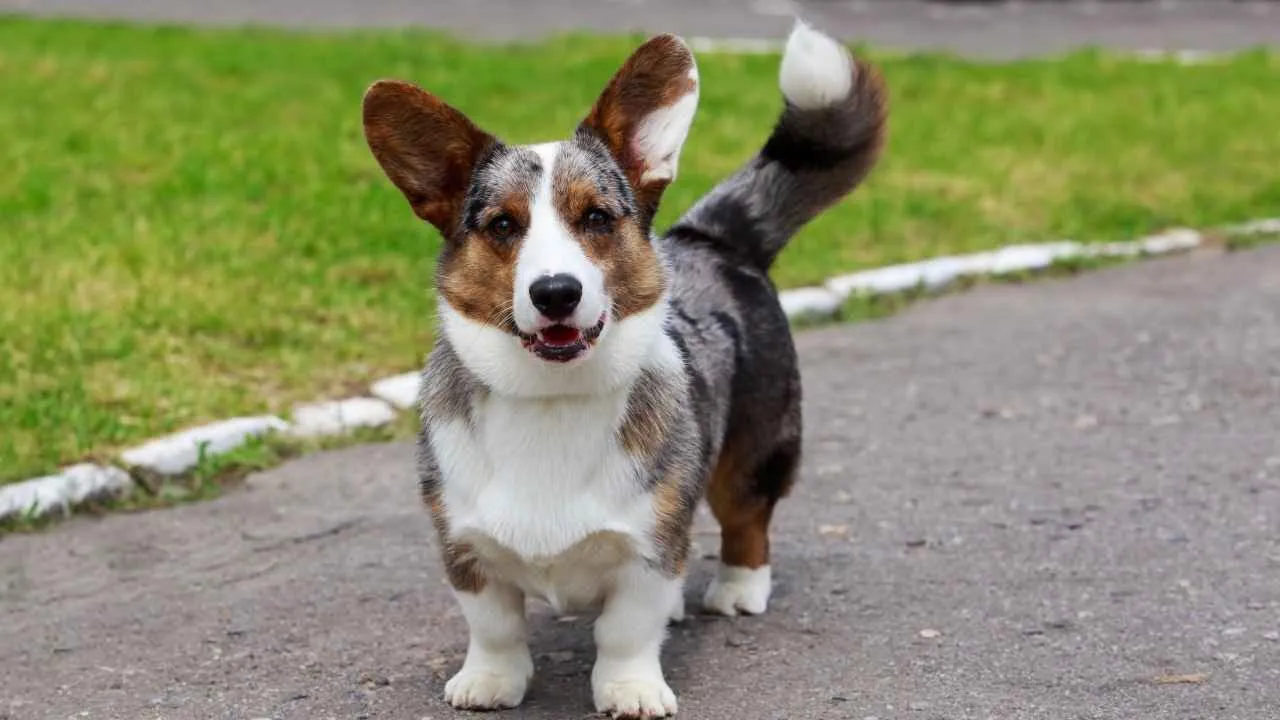
They are NOT aggressive. Just alert and independent, with a natural guard instinct that shows up even in a dog this small. Cardigan Welsh Corgi needs early socialization between 8 and 16 weeks.
Most Corgi breeds are big personalities in small packages, confident and a little sassy, fully convinced they run the house.
The Pumi brings intensity.
Hyper-alert, vocal, constantly “on.” They bark a lot, as mentioned by PetMD. They are also strong-willed, affectionate, and famously Velcro with their people, wanting to be wherever you are.
Both breeds get along fine with kids and other pets when socialized early. Both have herding instincts, so they might try to herd your children, cats, or other animals at a backyard party. It is not dominance or bad behavior, just centuries of breeding at work.
Start socialization as a puppy, and most of this sorts itself out naturally.
BOTTOM LINE! Cardigans lean steady and watchful. Pumik lean loud and expensive.
5. Exercise Needs & Energy Levels
Neither of these herding dogs wants to live outdoors as a backyard ornament. Both need enough exercise to stay sane, but the intensity differs.
Cardigan Welsh Corgis need daily exercise and mental stimulation. But they are manageable: a couple of walks, some yard time, maybe a training session. These are active dogs, not maniacs.
The Pumi needs way more. Long walks are the bare minimum. This loyal dog craves exercise and mental stimulation on another level. Try agility and puzzle toys. Skip it, and boredom turns into barking and chaos fast.

If you are an adventure-seeking owner, the Pumi matches your energy stride for stride. Want something more balanced that still loves the outdoors, the Cardigan fits better.
6. Trainability & Obedience
Both breeds are sharp. Cardigans learn quickly and enjoy training sessions. They respond beautifully to positive reinforcement. But that independent streak means they will test boundaries if bored.
Try to give your Cardigan a chance to indulge in dog sports like obedience and agility.
The Pumi takes intelligence further. These smart dogs excel in dog sports like agility and obedience. But that same intelligence breeds boredom, and a bored Pumi lets you know.
BOTTOM LINE! Both are excellent learners, but if training feels like an actual sport, the Pumi is unmatched.
7. Grooming Needs & Shedding
Cardigans have a thick, water-resistant double coat that sheds year-round, with heavier shedding twice a year.
A couple of brushings 2 or 3 times a week help keep things manageable, more during shedding season. Use a deshedding tool during seasonal coat blows.
Occasional baths keep Cardigans looking their best.
The Pumi’s curly, wiry double coat sheds less than most other breeds in the herding category, which surprises people, though it mats easily without regular brushing and occasional trims.
8. Herding & Work Drive
This is where the shared DNA as herding dogs really shows in these cute breeds.
Cardigan Welsh Corgis have a strong, steady herding instinct historically used for cattle rather than sheep. They work confidently by using body pressure and heel-nipping to move livestock.
The Pumi is a livelier, more vocal herder. They are traditionally used for sheep, barking commands almost as much as using body movement to move a flock. Pumis rely on agility and vocalization, a trait that carries straight into home life.
Both still compete in herding trials across the U.S. and make adaptable, capable working dog partners for anyone with livestock.
Both of these dogs enjoy herding games, fetch, and agility training.
9. Health & Lifespan
Every breed comes with common health issues, and these two are no exceptions.
Most Corgis typically live 12-15 years. Their dwarf-like build makes them prone to back and spinal injuries, intervertebral disc disease, hip dysplasia, obesity, and eye conditions like progressive retinal atrophy.
Pumi generally live 12-13 years and are a fairly healthy breed. However, they are prone to hip dysplasia, patellar luxation, degenerative myelopathy, and certain eye issues.
In both cases, a reputable breeder who health tests makes a MASSIVE difference. Regular vet visits and a good diet go a long way toward a long, happy life.
10. Cardigan Welsh Corgi vs. Pumi: Which Smart Herding Dog Is Right for You?
Both the Cardigan Welsh Corgi and the Pumi are incredible herding breeds, built for different owners and different paces of family life.
If you want a steady, affectionate, protective companion with old-world history and a manageable routine, the Cardigan Welsh Corgi is the best dog.
If you want a hyper-intelligent, energetic adventure partner who thrives on constant companionship and doesn’t mind extra barking, the Pumi will keep you on your toes for years.
Conclusion
Both breeds are loyal, whip-smart, friendly once they trust you, and deserve more recognition here in the U.S.
Right training, socialization, and enough exercise burn off that herding energy. Both dogs can become an intelligent companion for life.
Just know what you are choosing, and take your time to choose the dog that matches your pace of life.
Whichever breed you pick, you are not just bringing home a small dog.
You will get a working dog with a giant personality stuffed into a compact frame, and that’s EXACTLY the opportunity that makes them so special.
