




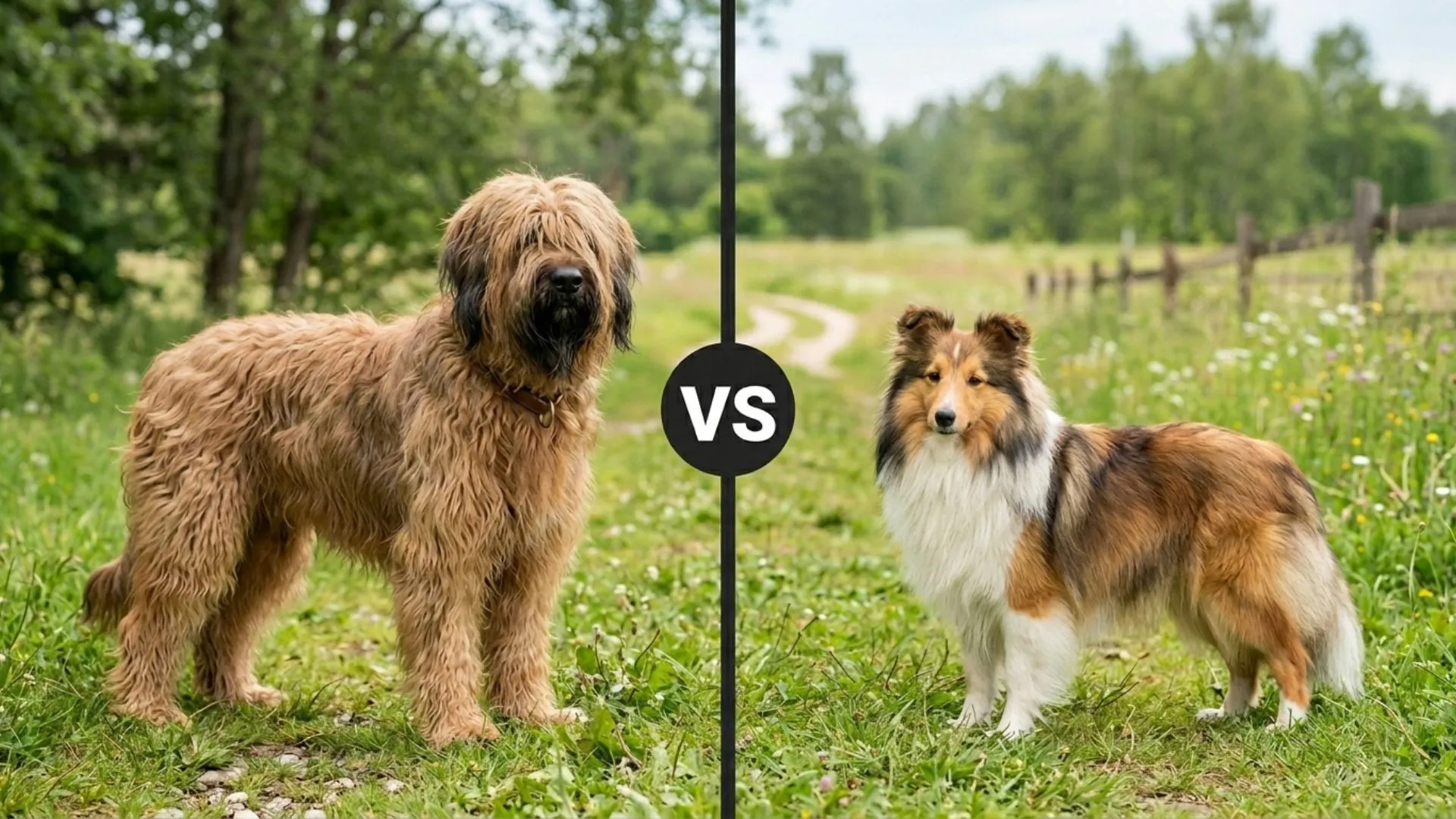
Most Americans have never heard of a Briard.
And that is a CRIME.
Because this dog is an absolute legend. A big, shaggy, fearless French herding dog with a history so cool.
Meanwhile, the Shetland Sheepdog, the “Sheltie”, is sitting right there being adorable, fast, and just a little bit dramatic.
Two herding breeds. Two totally different vibes. Both wildly underrated.
At first glance, you might think, okay, they are both fluffy herding dogs; how different can they really be?
Very.
VERY different.
One is a large, brave French guardian who once helped locate wounded soldiers on World War I battlefields.
The other is a compact, sensitive, lightning-fast little herder from a tiny island off Scotland who communicates mostly through enthusiasm and a bark that could wake up an entire neighborhood.
So yeah. Let’s get into it.
Did You Know?
Thomas Jefferson… yes, THAT Thomas Jefferson, the third President of the United States, is credited with bringing Briards to America. He imported a Pregnant Briard first from France in the late 1700s and bring many more to help manage sheep at Monticello, noted the American Kennel Club (AKC).
Founding Father. President. Briard guy.
Respect.
Briard vs. Shetland Sheepdog: Quick Comparison Before You Choose
Looking for a fluffy herding hero but can’t decide between a majestic, heavy-duty French classic or a pint-sized, quick-witted Scottish powerhouse? You’re in the right place.
Origins & Background
Where a dog comes from explains almost everything about who they are today.
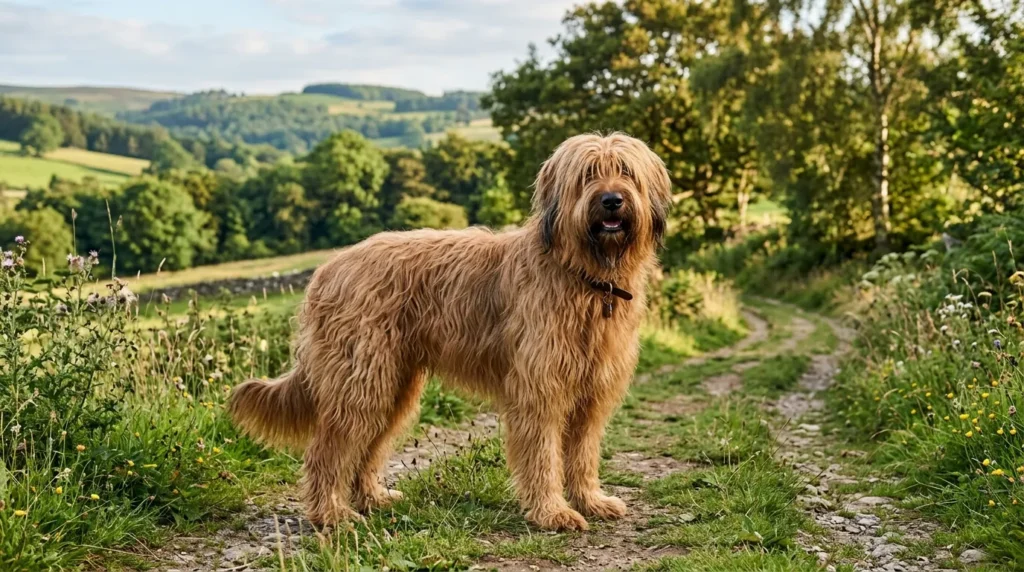
The Briard, also called the Chien Berger de Brie, is one of France’s oldest herding breeds. These dogs were originally bred to both herd and guard sheep. Most herding dogs had one job. Briards had two.
Herd the flock. Protect sheep.
No DAYS OFF!
That background made these herding dogs bold, independent, and deeply protective. Napoleon loved them. The French Army used them. Thomas Jefferson imported them to Virginia because good taste is timeless.
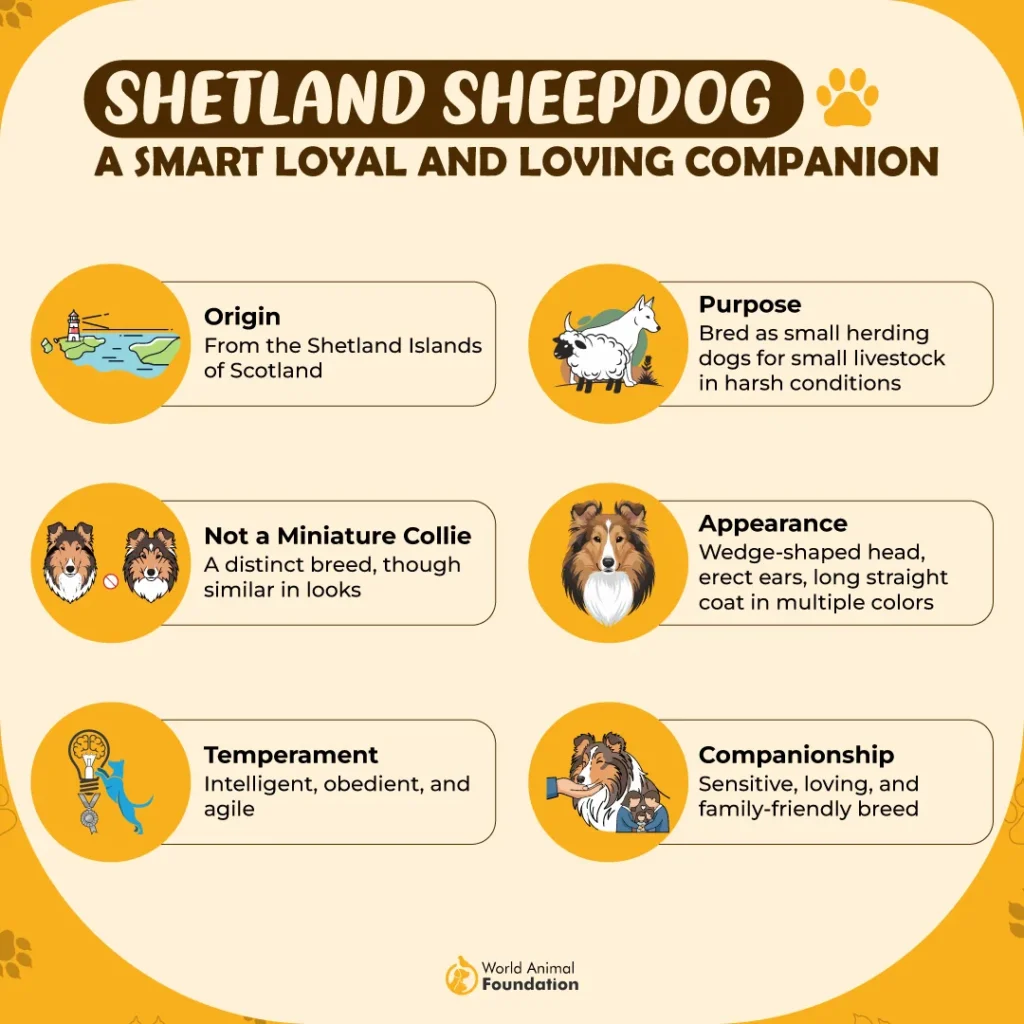
The Shetland Sheepdog came from the cold, remote Shetland Islands between Scotland and Norway. Farmers there needed a small, efficient herding breed that could work hard without eating too many resources.
The result was a compact, super smart, incredibly agile little dog that became one of the most beloved family breeds in America.
The American Kennel Club officially recognized the breed in 1911.
Different countries, different sizes, same core mission.
Keep the sheep safe.
Size & Physical Build
This is one of the biggest differences between these two breeds.
Briards are large dogs. An adult dog typically has a weight between 55 and 100 pounds. They are muscular, sturdy, and born with enough physical appearance to stand up to predators threatening their flocks.
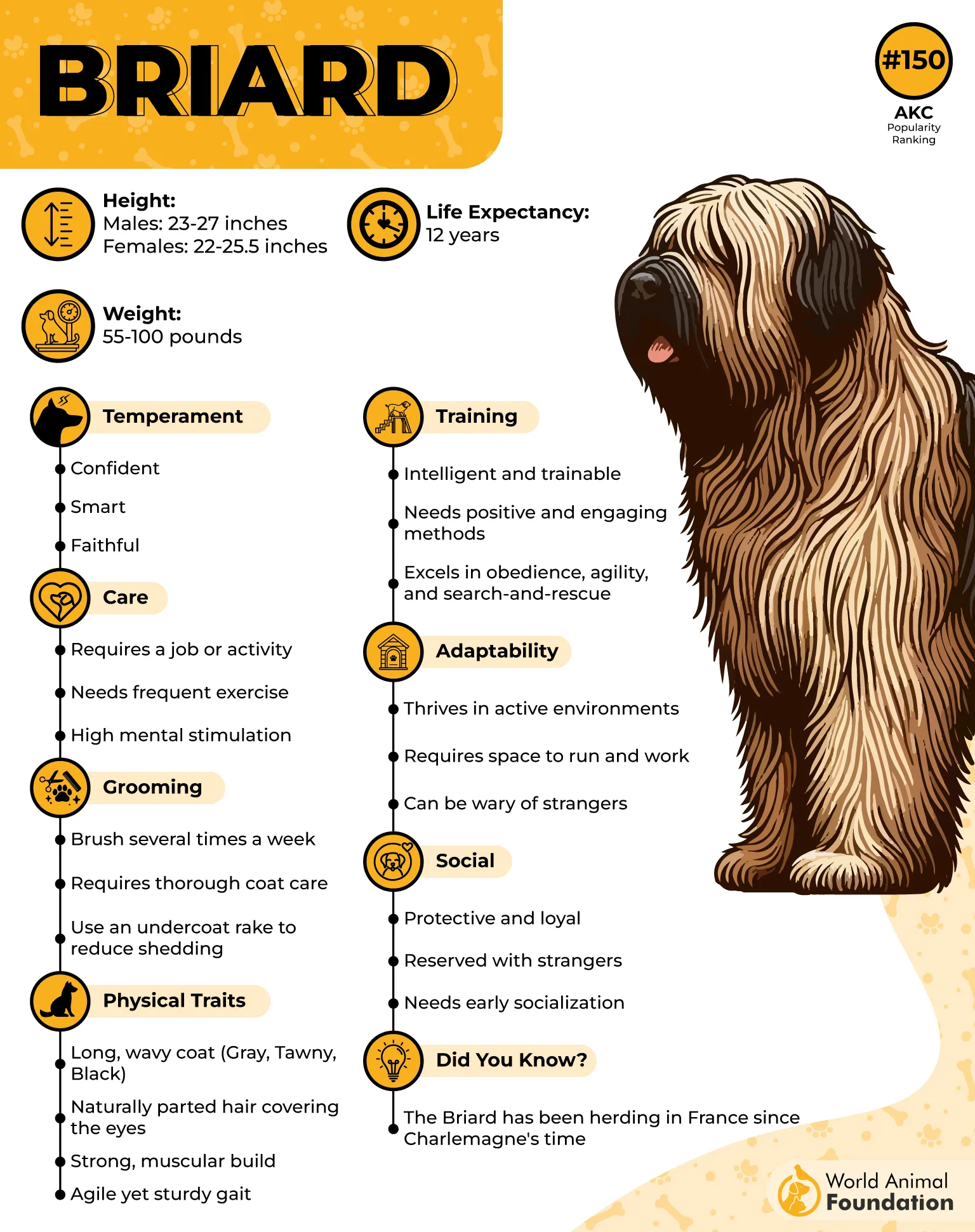
Everything about them says serious working dogs.
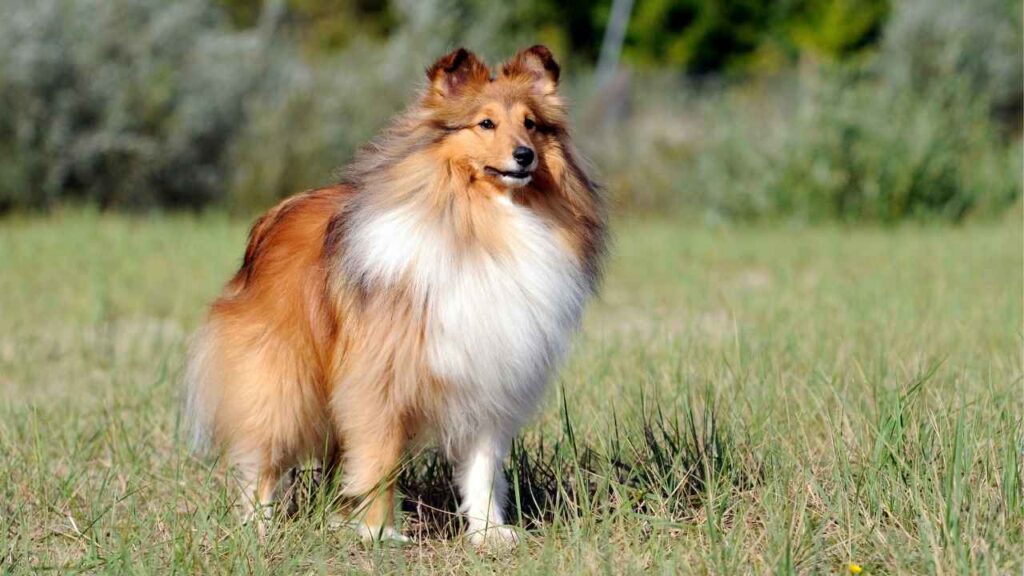
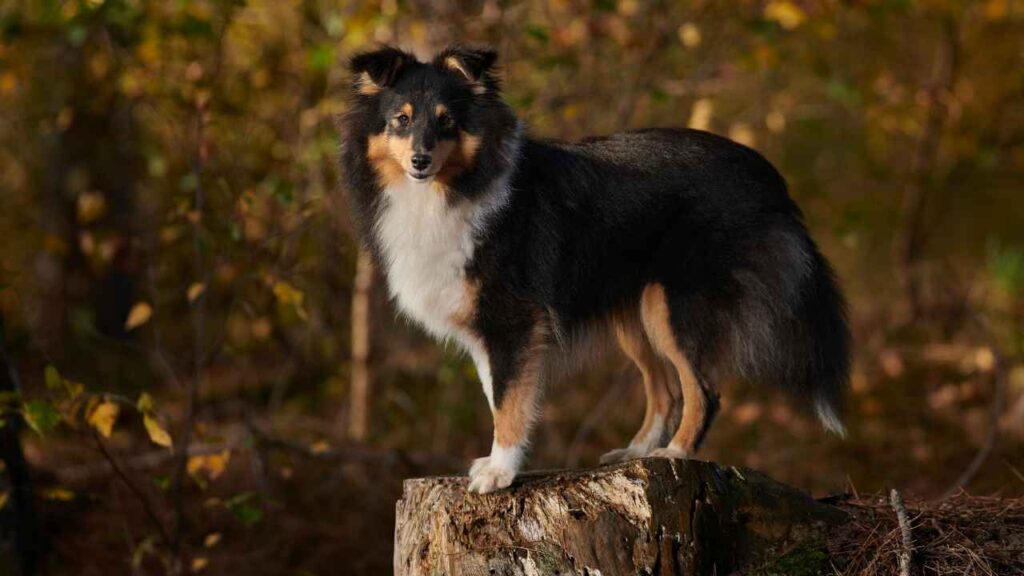
Shetland Sheepdogs are much smaller. Most Shelties weigh between 15 and 25 pounds. They are compact, light, and built for speed rather than size.
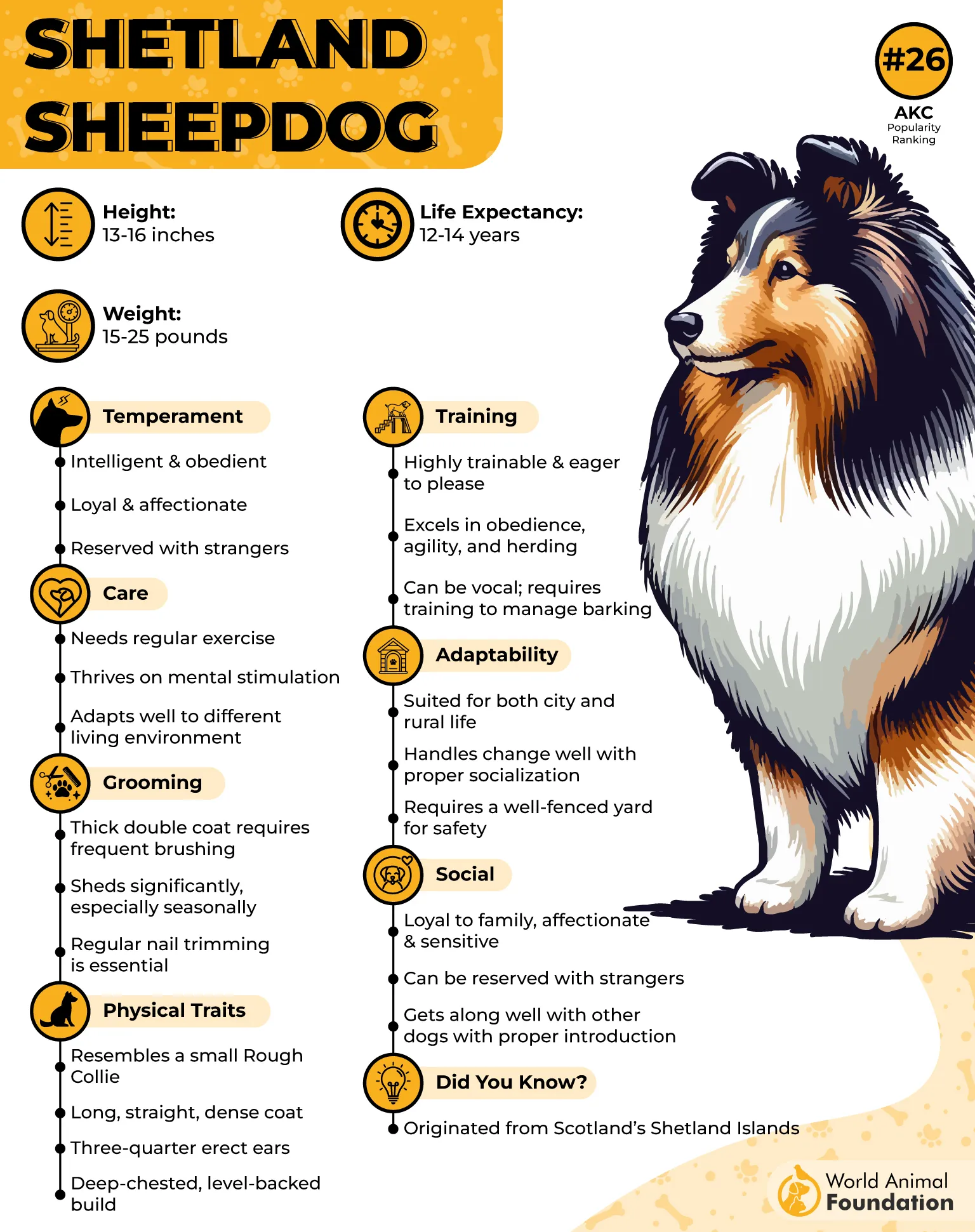
Standing next to a Briard, a Sheltie looks like a fun-sized version of the same idea.
One fun fact worth mentioning about the Briard. Briards have double dewclaws on both hind legs. It is a breed trademark that helped them grip rough terrain on French farms, as noted by Purina.
Unique, a little quirky, and very on-brand for such an interesting dog.
Coat Type & Maintenance
Both of these dogs have A LOT of hair.
The Briard has a long, wavy, slightly coarse coat that falls in a way that looks like gorgeous, flowing curtains of fur. It comes in colors like black, tawny, and gray.
It is beautiful.
But it is also a serious commitment.
Briards, being long-haired dogs, need brushing several times a week to prevent matting. Their face fur, those famous eyebrows, and beard need regular attention, too.
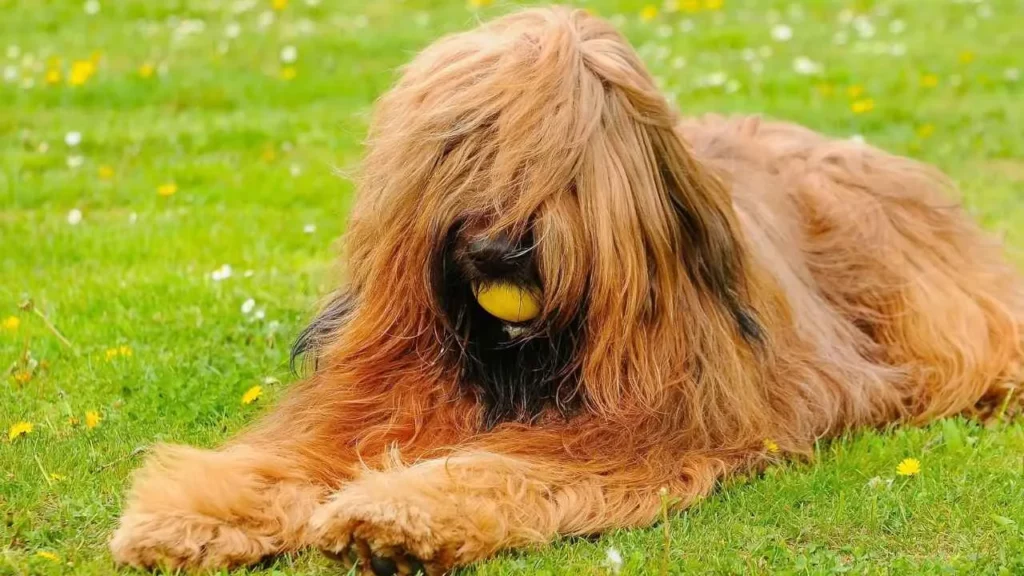
Skip the grooming routine, and things get messy.
Shetland Sheepdogs have a thick double coat with a full, fluffy mane around the neck and chest that is HONESTLY one of the prettiest coats in all of dog breeds.
Shelties shed heavily during seasonal blowouts.
You WILL find Sheltie hair everywhere.
Couch, clothes, and somehow in your coffee.
But compared to the Briard, Sheltie grooming is slightly more manageable for most owners.
Either way, invest in a really good brush.
Temperament & Personality
Briards are loyal, protective, and fearless. They bond deeply with their family and take the guardian role seriously.
With the people they love, these large dogs are warm, affectionate, and goofy. Around strangers, they are watchful and reserved.
They don’t rush to make friends.
They observe, evaluate, and decide.
That is not aggression, but who they are. Briards were bred to protect sheep from real threats. That instinct naturally carries over into family life.
Shelties are sweet, sensitive, and incredibly loyal dogs. They love being close to their people and want to be involved in everything going on in the house.
But like the Briard, they can be shy or cautious around strangers at first.
Shelties are also famously vocal.
These small dogs will alert you to the mailman, a passing car, a squirrel, and maybe a vibe they did not like. Early training helps. But fair warning: if you love a quiet house.
Both breeds are deeply loving with their families and children.
Both need good socialization early on to stay confident and calm around other animals and new people.
Intelligence & Trainability
Both of these dogs are super smart.
Briards can make independent decisions out in the field without waiting for human direction. That independence makes them fascinating but also a little tricky to train.
They respond well to owners who are warm, consistent, and clear.
But be harsh or inconsistent…
A Briard will decide you are not worth listening to.
Treats, patience, and genuine respect go a long way with this breed.
Shelties are eager, bright, and genuinely love learning new things. They rank among the top intelligent breeds for obedience and trainability.
Plus, they are sensitive dogs, so harsh corrections can really knock their confidence.
Keep sessions fun, positive, and reward-heavy, and this small dog will learn practically anything, under any circumstances.
Both breeds also need mental stimulation beyond walks. Puzzle toys, training games, dog sports, or agility work- these intelligent dogs need their brains challenged just as much as their bodies.
Energy Levels & Activity Needs
Neither of these dogs is made for the couch.
Not even a little.
Briards need solid daily exercise. Long walks, running, off-leash play in a fenced yard, and mentally engaging activities are all part of the deal.
A Briard without enough outlets becomes restless, and a restless Briard in your house is… a lot.
Shelties are high-energy in a more zippy way. These small dogs are fast, agile, and love to move and show off their skills. Daily exercise is a must. But their smaller size means the workload feels a little more manageable than a large herding breed.
Both pets thrive with active families who love being outdoors.
Both will absolutely let you know, LOUDLY, if their needs are not being met.
Health & Lifespan
Every breed has health things to watch for.
Briards are sturdy dogs, but, like most large dogs, they are prone to hip dysplasia and elbow dysplasia as they age, Pedigree mentions.
Bloat is also a serious risk for large, deep-chested breeds, and something every Briard owner should learn about early.
Their typical life expectancy is around 12 years.

Shetland Sheepdogs are prone to eye problems, including a condition called Collie Eye Anomaly, according to PDSA. It is an inherited issue affecting vision development. Hip dysplasia can also appear in Shelties.
Shelties generally live longer, around 12 to 14 years.
Good nutrition, regular vet visits, and responsible breeders make a HUGE difference for both breeds.
Always do your research before choosing a breeder, or think about giving a rescue pup a forever home.
Working Roles & Behaviour
Briards did it all on French farms. They herded sheep, guarded livestock against predators, and during World War I and II, they acted as messengers, carried supplies, and helped locate wounded soldiers on the battlefield, Orvis notes.
That is legendary.
Shelties were bred to herd and protect sheep on small Shetland farms. Their style is precise, quick, and responsive. That same skill set is exactly why Shelties dominate in dog sports like agility and obedience today.
Both breeds have serious working credentials, traits, and instincts.
They are not just pretty dogs with nice coats.
Not even close.
Best Lifestyle Fit
Briards are best-suited for experienced owners who are ready for a large, independent, and energetic breed.
They need space, training, regular grooming, and an active lifestyle. Plus, they can be wonderful with older kids and make incredible loyal companions for the right family.
Not ideal for first-time owners. Not ideal for small spaces.
Shetland Sheepdogs are a more flexible fit for different families. Their size, trainability, affection, and sweet nature are great for active households, according to the American Kennel Club (AKC). They are great with other pets, as well.
Neither breed belongs in a low-activity home.
Both give everything to their families.
They need you to meet them halfway.
Conclusion
Briard vs. Shetland Sheepdog.
It is not really a competition.
It is just a question of which dog breed fits YOUR life.
The Briard is bold, beautiful, and one of the most fascinating herding breeds. The Sheltie is smart, sweet, fast, and loves you with every single fibre of their fluffy little body.
Both are incredible.
Pick the one that matches your energy, space, and lifestyle.
Do that, and you will end up with more than just a dog.
You will have a best friend.
A very fluffy, slightly bossy best friend.
