




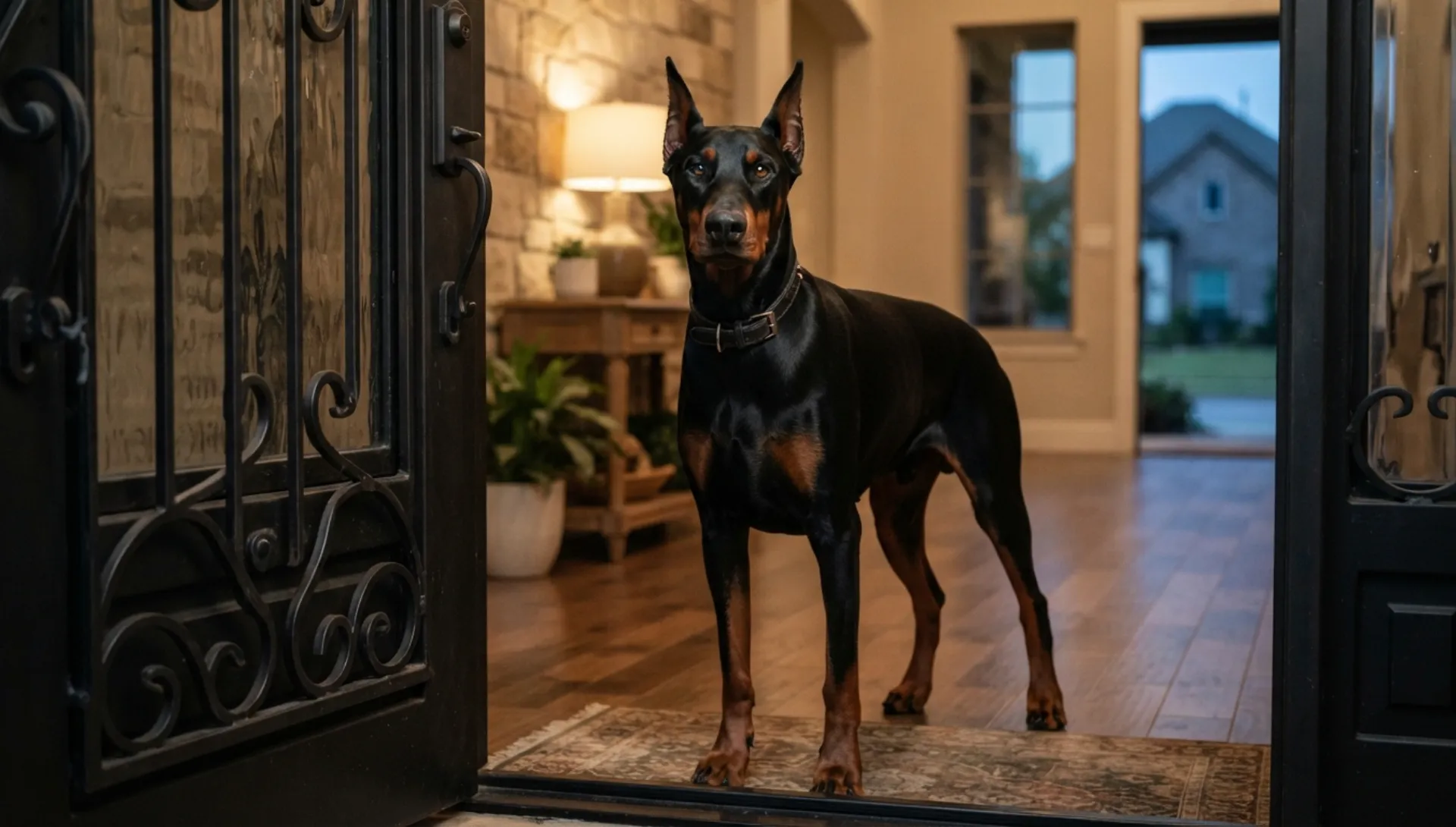
For someone living alone, a protection dog can provide companionship, structure, and a reassuring presence around the home.
Certain smart breeds are particularly known for their alertness, loyalty, confidence, and protective instincts, making them popular choices among owners who want a canine capable of noticing unfamiliar activity.
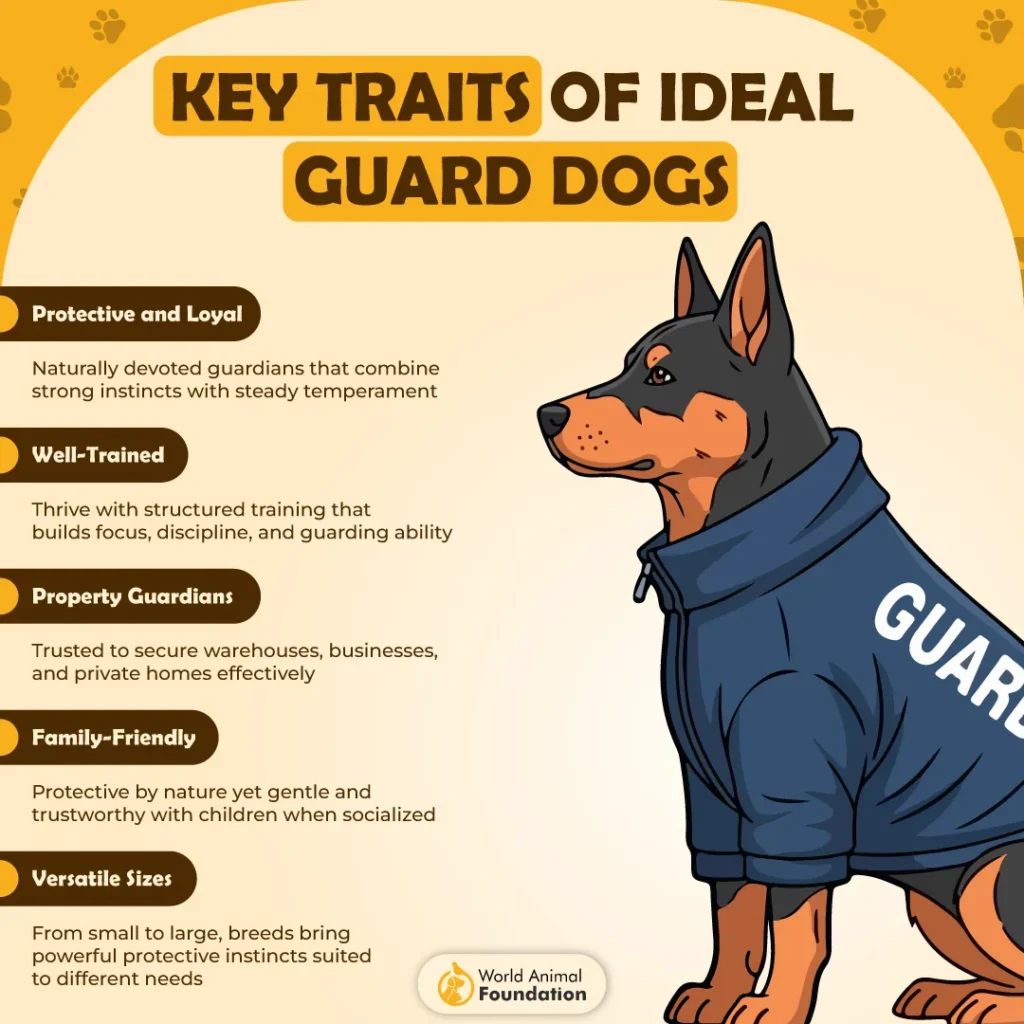
A protective breed, however, is not automatically an excellent guard dog. Stable temperament, obedience, socialization, responsible ownership, and the ability to remain calm around ordinary visitors are essential.
A well-trained guardian should be responsive to its owner rather than reacting unpredictably to every unfamiliar person or sound.
Their sizes and personalities differ considerably, so prospective owners should consider exercise requirements, training ability, living arrangements, and previous experience with strong dogs before making a decision.
Best Guard Dog Breeds for Single People Seeking Confidence
1. German Shepherd
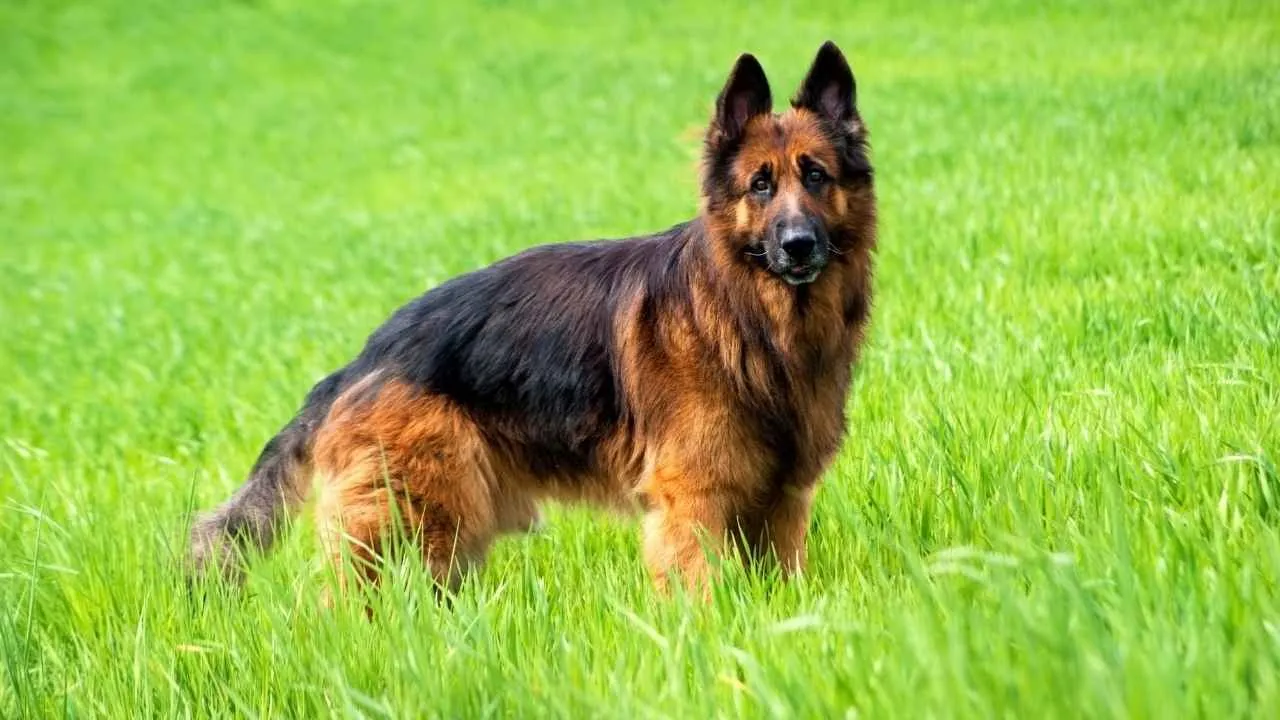
German Shepherds originated in Germany through the efforts of breeders who sought versatile working and herding dogs. Their intelligence, physical ability, responsiveness, and willingness to cooperate eventually allowed them to move beyond herding into police, military, search-and-rescue, assistance, and personal protection roles.
Their versatility is one of their defining qualities. A well-bred and properly socialized German Shepherd can be both a devoted household companion and an attentive watchdog.
Intelligent, Loyal, and Naturally Watchful
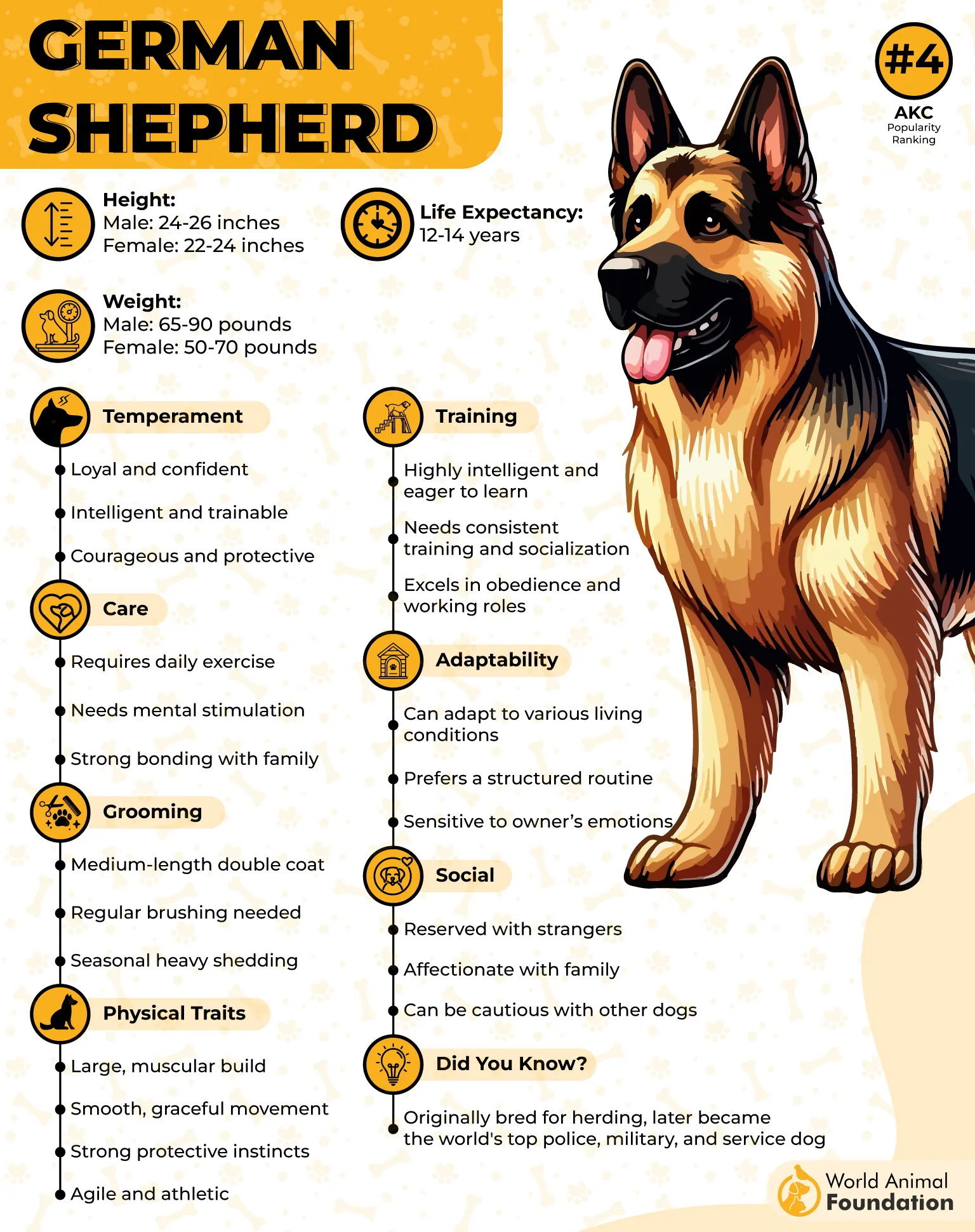
German Shepherds are often confident, alert, and deeply connected to their handlers. They tend to notice changes in their surroundings and can be naturally protective of their families.
Their intelligence makes structured training especially important. Obedience, impulse control, recall, calm greetings, and appropriate socialization can help ensure that protective instincts remain under the owner’s direction.
Give Their Double Coat and Working Body Proper Care
German Shepherds have a dense double coat that sheds throughout the year, often becoming heavier during seasonal changes. Regular brushing helps remove loose fur and keeps the coat and skin in good condition.
They also need substantial physical and mental activity. Balanced nutrition, healthy weight management, nail care, dental hygiene, and routine veterinary examinations are important for supporting their joints and overall health.
2. Doberman Pinscher
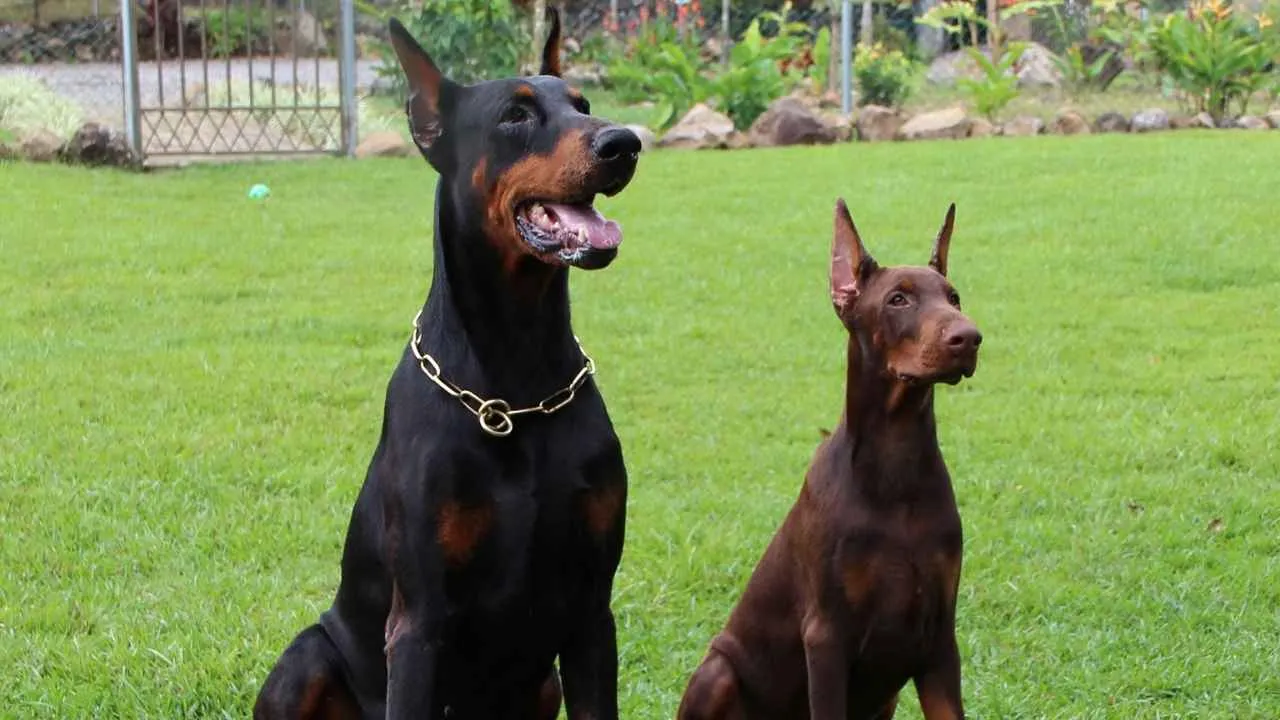
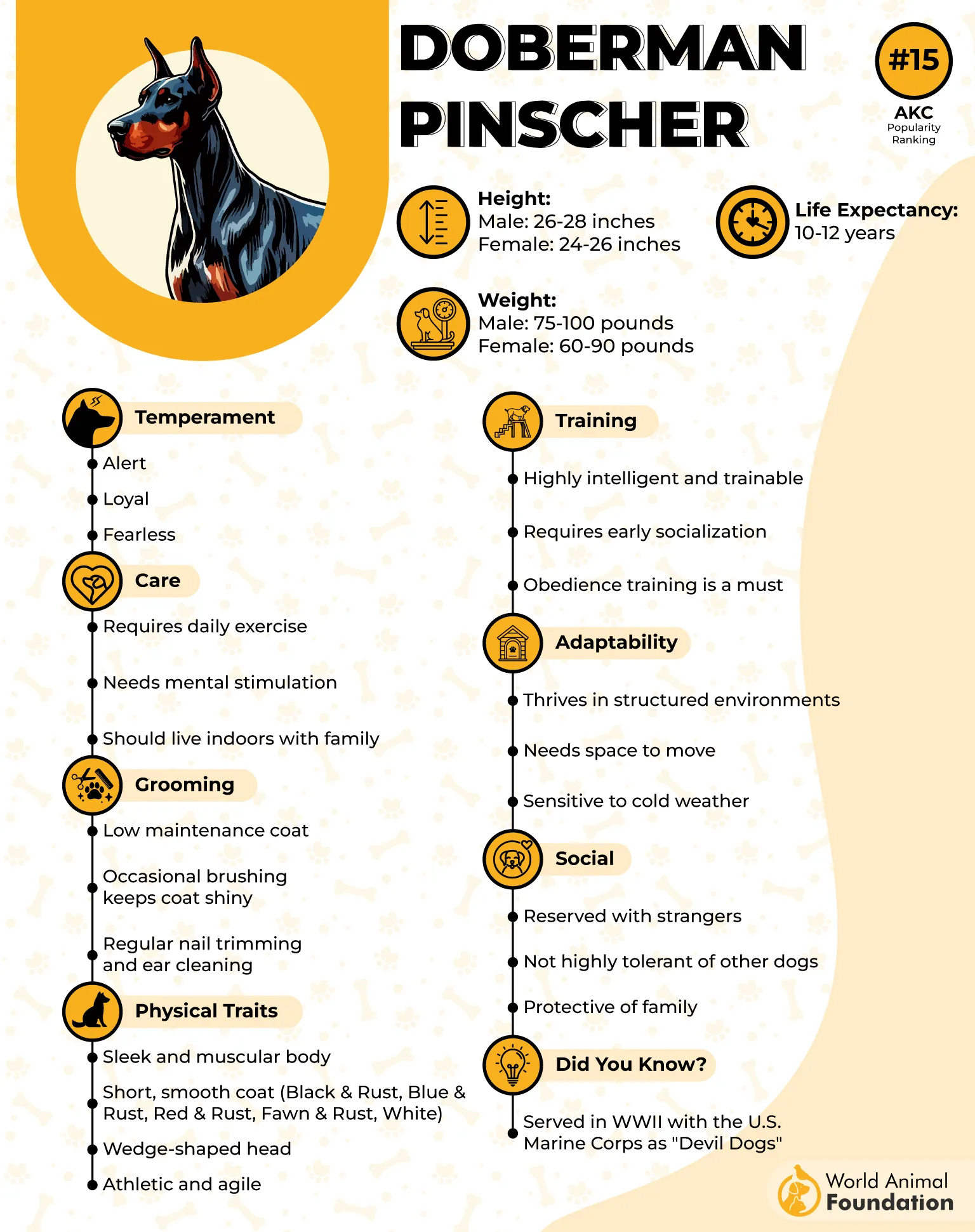
The Doberman Pinscher was developed in Germany by Louis Dobermann, a tax collector who wanted a dependable dog capable of accompanying him while providing protection. The breed was subsequently refined into an athletic, intelligent, and highly responsive working dog.
Its sleek body, alert expression, and close relationship with its handler give the Doberman a distinctive presence. It can be particularly appealing to an experienced owner who wants an attentive and loyal companion, as per DPCA.
Alert, Devoted, and Highly Responsive
Dobermans are commonly known for their loyalty and awareness of their surroundings. They often form strong bonds with their owners and can be exceptionally attentive during training.
Their sensitivity and intelligence make consistent instruction essential. Early exposure to different people, environments, animals, and everyday situations can help produce a confident adult who can distinguish normal activity from genuine concerns.
A Sleek Coat With Straightforward Maintenance
The Doberman’s short, smooth coat requires little grooming compared with many working breeds. Regular brushing can remove loose hair and support healthy skin.
Their care routine should still include dental hygiene, nail trimming, ear checks, appropriate exercise, and preventive veterinary care. Because Dobermans have little body fat and a thin coat, cold weather can be particularly uncomfortable for some individuals.
3. Cane Corso
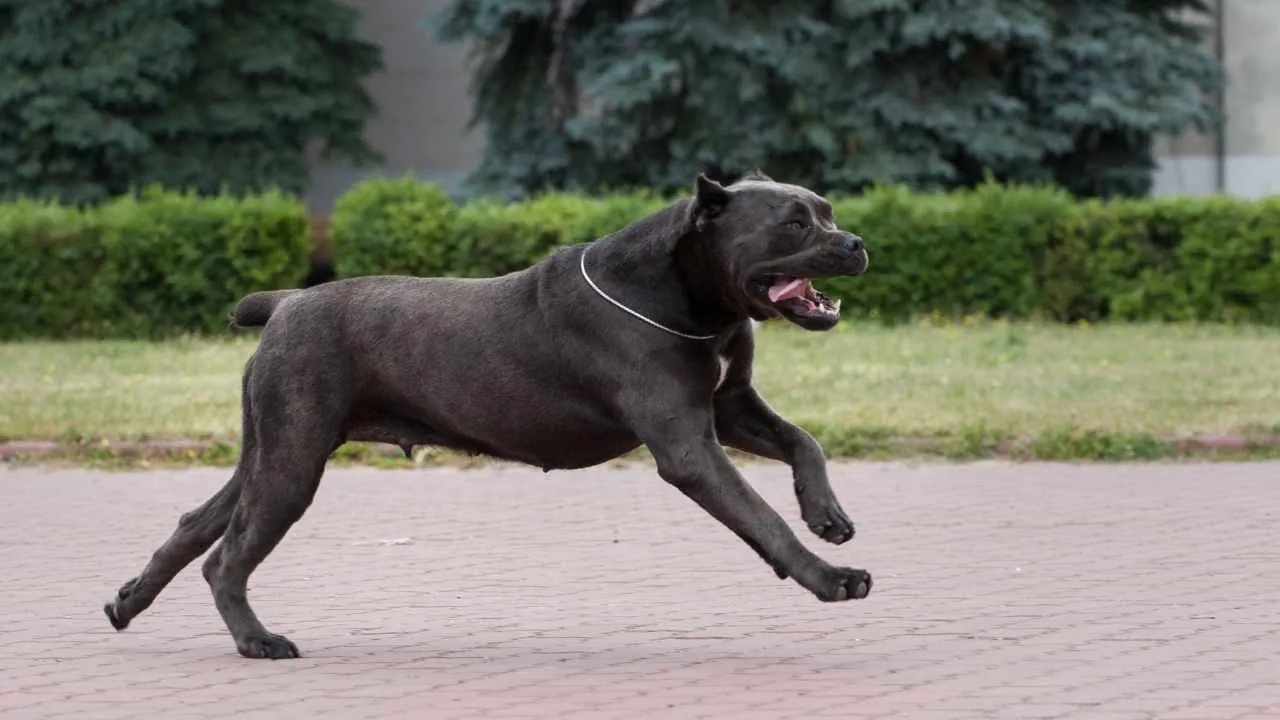
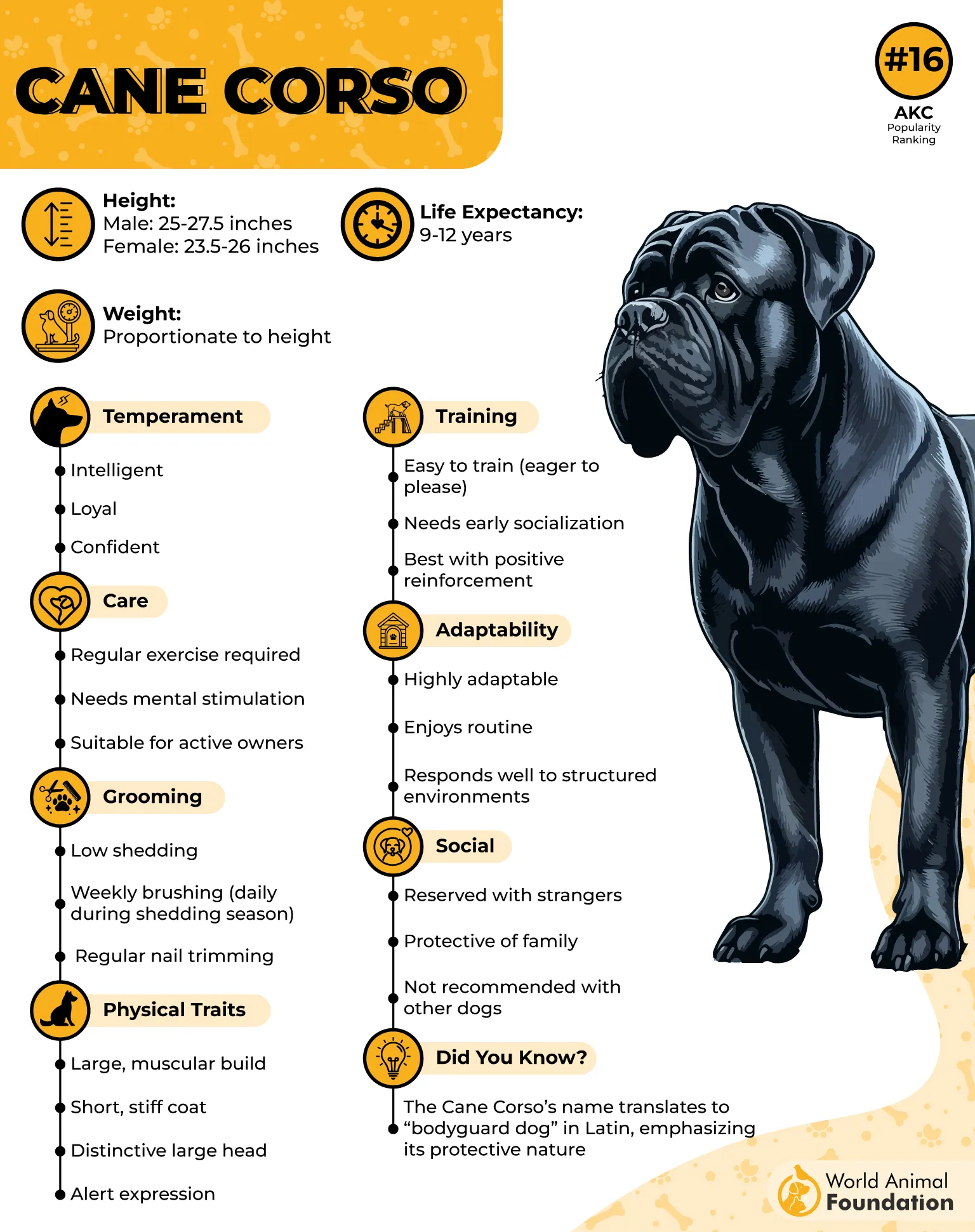
The Cane Corso is an Italian mastiff breed with historical roots in property protection, farm work, and guarding. Its powerful build and confident demeanor reflect a background in which dogs were expected to manage demanding tasks around rural properties.
Modern Cane Corsos can be devoted family companions when carefully bred, socialized, and trained. Their considerable strength means responsible ownership is especially important.
Confident, Protective, and Closely Attached to Family
Cane Corsos can be reserved with unfamiliar people while remaining affectionate toward those they know. Their natural awareness may make them effective watchdogs, but that instinct needs thoughtful management.
Early socialization and obedience training are essential. Owners should teach reliable responses and calm behavior rather than encouraging unnecessary suspicion or aggressive reactions.
Maintain Their Short Coat and Support Their Large Frames
The Cane Corso’s short coat is relatively easy to maintain. Weekly brushing can remove loose hair, while occasional bathing keeps the skin and coat clean.
Their large bodies require appropriate nutrition and sensible exercise. Maintaining a healthy weight is important for minimizing unnecessary strain on joints, while regular dental care, nail trimming, ear checks, and veterinary examinations support overall wellness.
4. Rottweiler
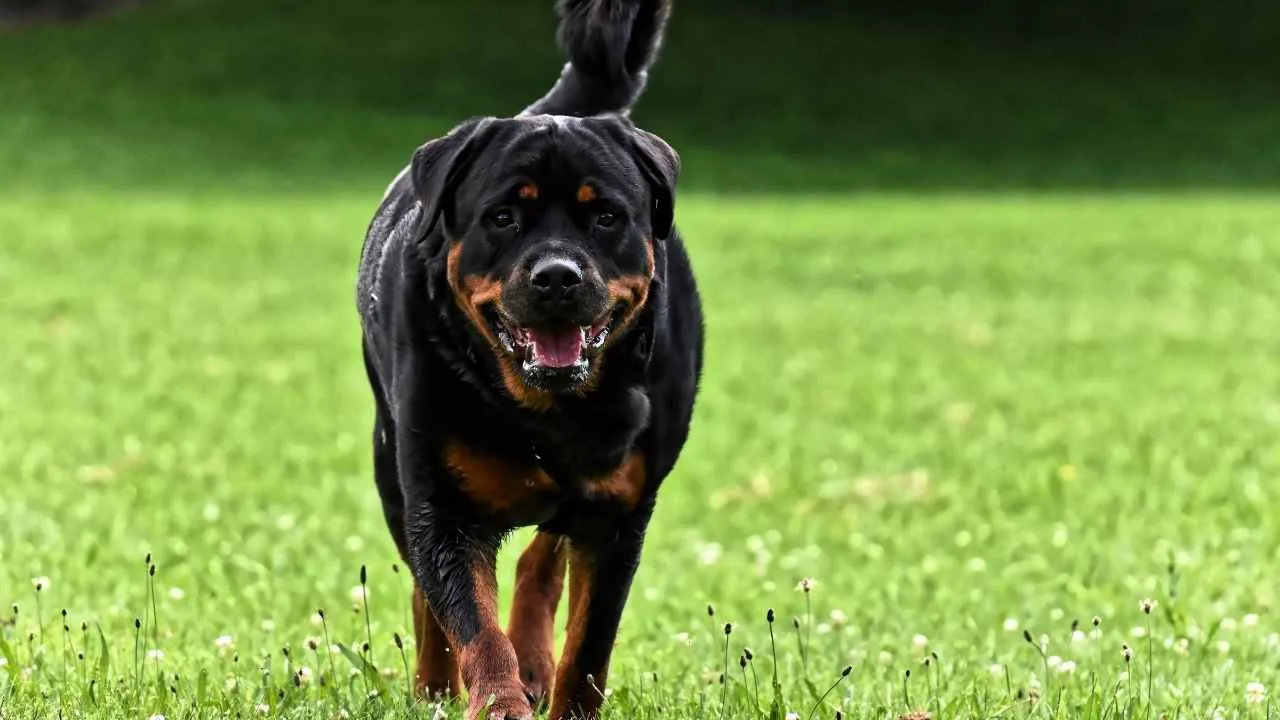
Rottweilers trace their history to Germany, where they became associated with driving livestock, guarding property, and performing various working tasks, as per PetMD. Their strength and versatility later helped them transition into roles involving service, assistance, and protection.
Their muscular appearance can be imposing, but temperament varies between individuals. Proper breeding, socialization, and training play a major role in determining how a Rottweiler behaves around people and other animals.
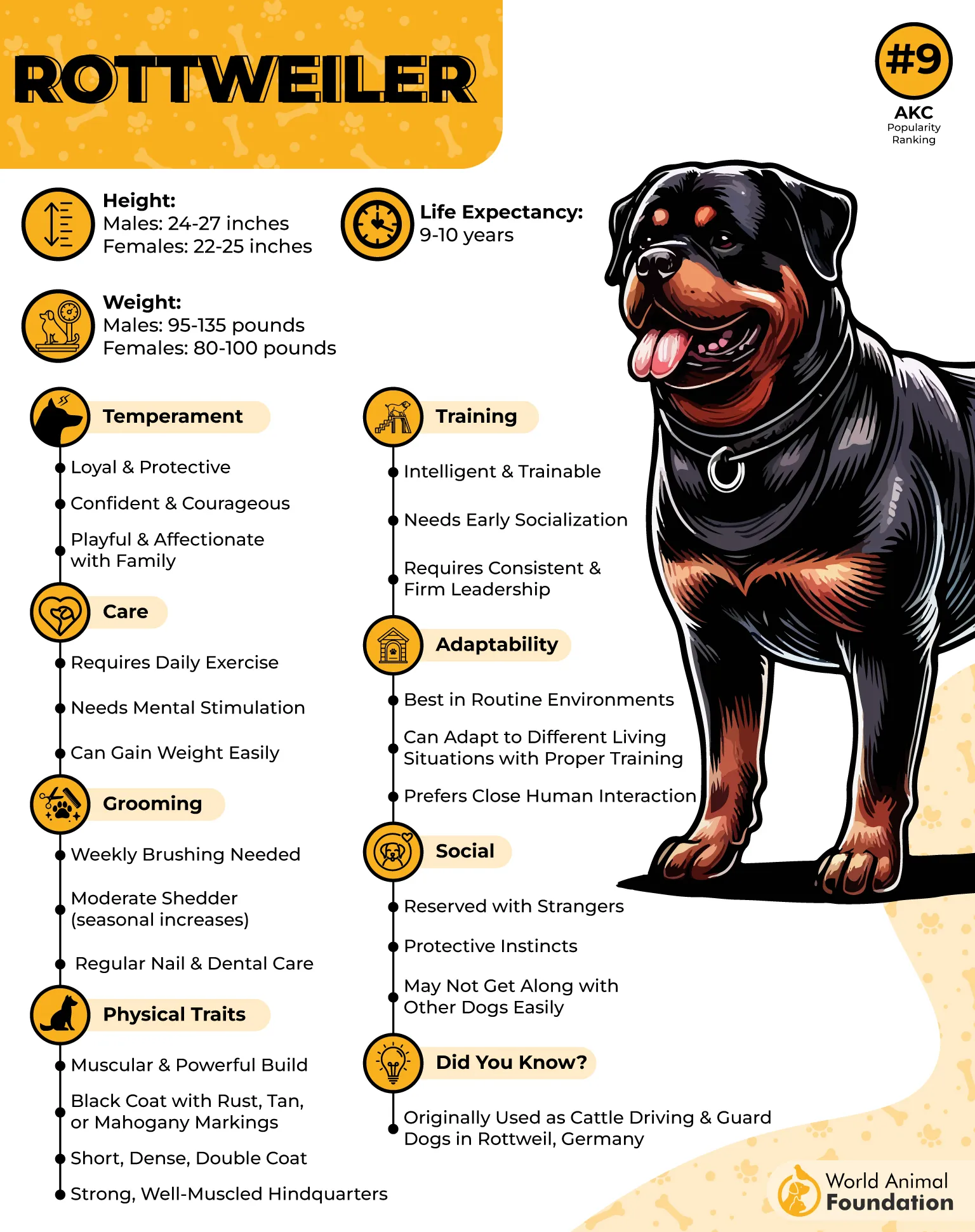
Self-Assured, Devoted, and Attentive
Rottweilers are often loyal dogs that develop strong attachments to their families. They can be observant without needing to react to every unfamiliar sound or person.
Because of their size and strength, obedience should begin early and continue throughout their lives. Teaching controlled greetings, reliable recall, loose-leash walking, and appropriate responses to visitors can make their protective nature much easier to manage.
A Dense Coat That Needs Only Moderate Grooming
Rottweilers have a short double coat that generally requires straightforward maintenance. Regular brushing can reduce loose hair and help keep the coat healthy.
Their physical care should include regular exercise, controlled portions, dental hygiene, nail maintenance, and veterinary monitoring. Keeping them at a healthy weight is especially valuable for supporting their substantial frame and mobility.
5. Akita
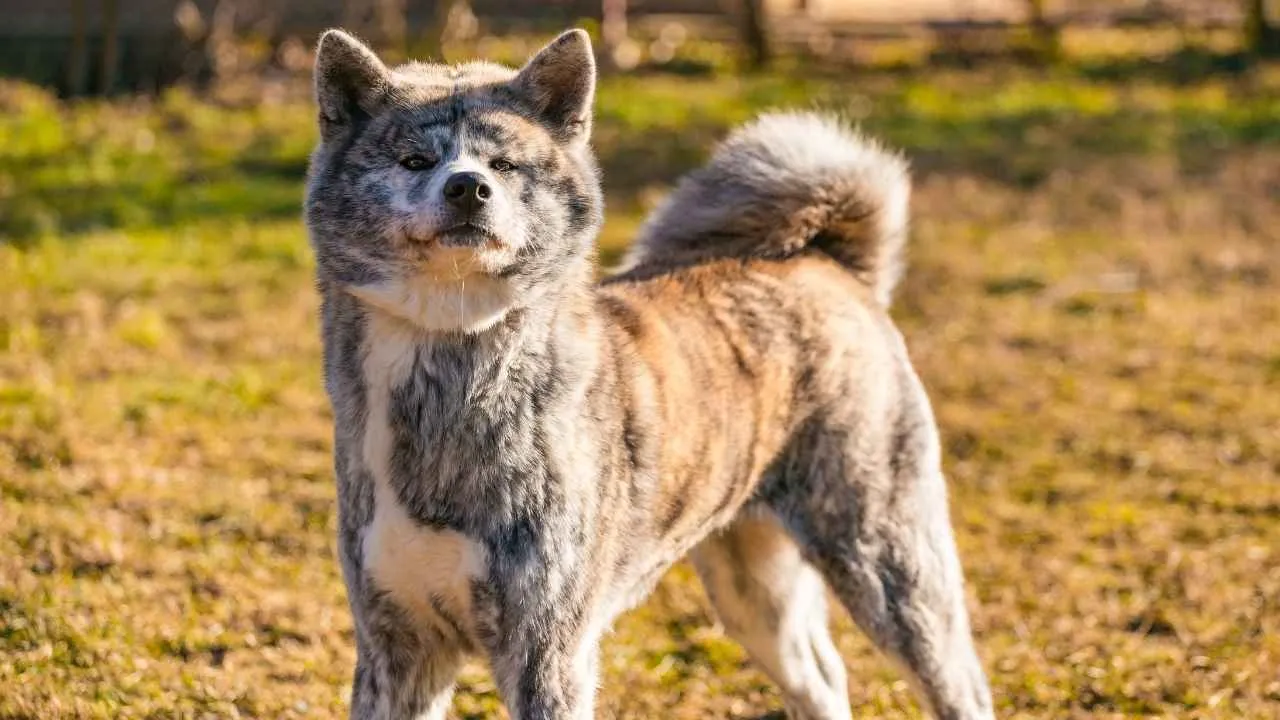
The Akita originated in Japan and has a long history as a powerful guarding and hunting breed. The Japanese Akita was developed from northern Japanese dogs and became associated with hunting large game as well as protecting households.
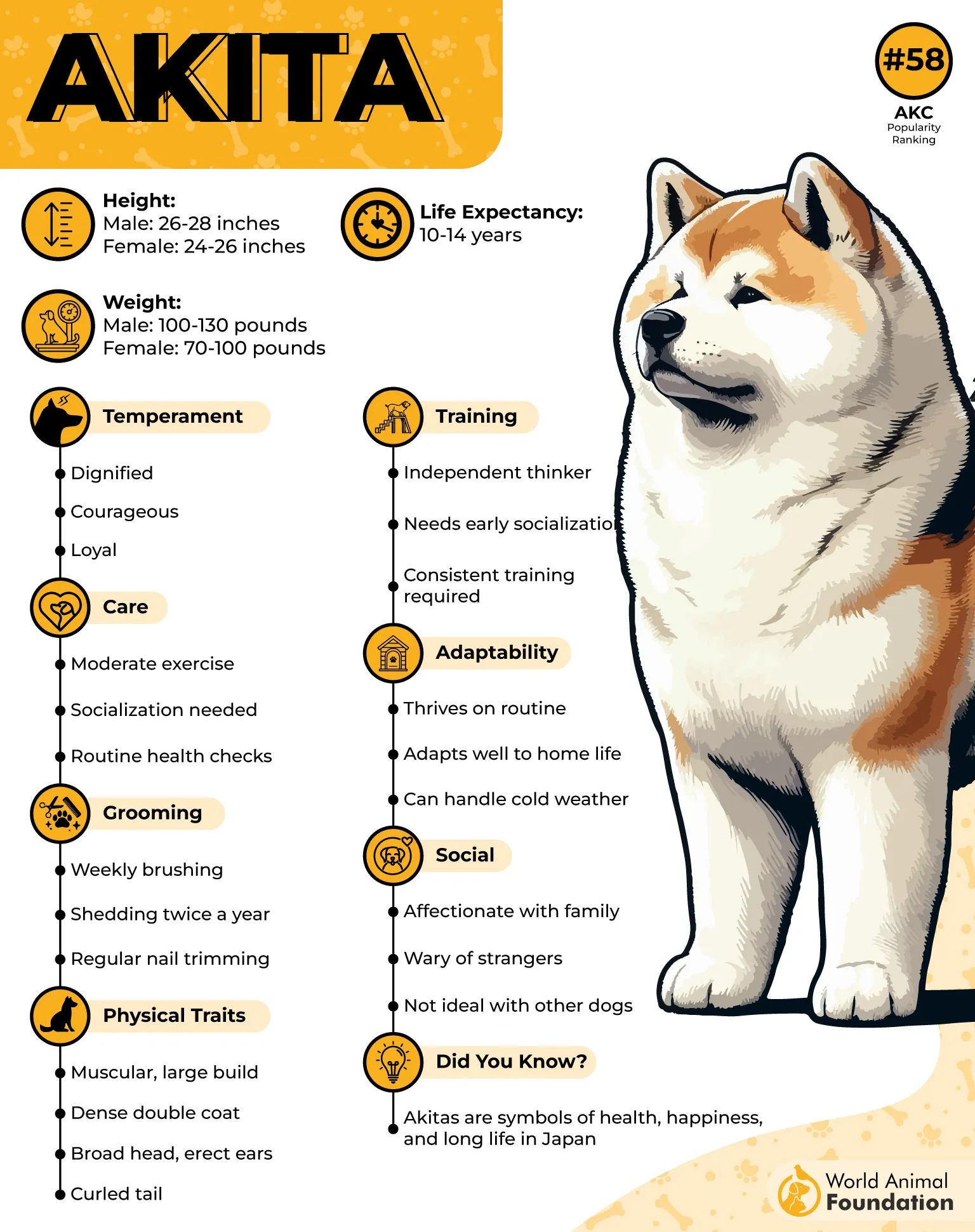
Akitas have a dignified appearance and an independent personality. They can be devoted to their families while remaining reserved toward unfamiliar people.
Dignified, Independent, and Naturally Protective
Akitas are often calm and self-possessed rather than constantly seeking attention. Their loyalty can be profound, but their independent nature means they may not approach training with the eagerness of highly handler-focused breeds.
Early socialization is particularly important. Owners should establish clear household expectations while teaching the dog to respond reliably without attempting to encourage unnecessary confrontational behavior.
Their Thick Coat Demands Seasonal Grooming
Akitas have a dense double coat that can shed heavily during seasonal coat changes. Frequent brushing during these periods can help remove the undercoat and keep shedding under control.
They also benefit from regular exercise without requiring constant high-intensity activity. Nail trimming, dental care, ear checks, balanced nutrition, and routine veterinary visits complete their basic care needs.
6. Boxer
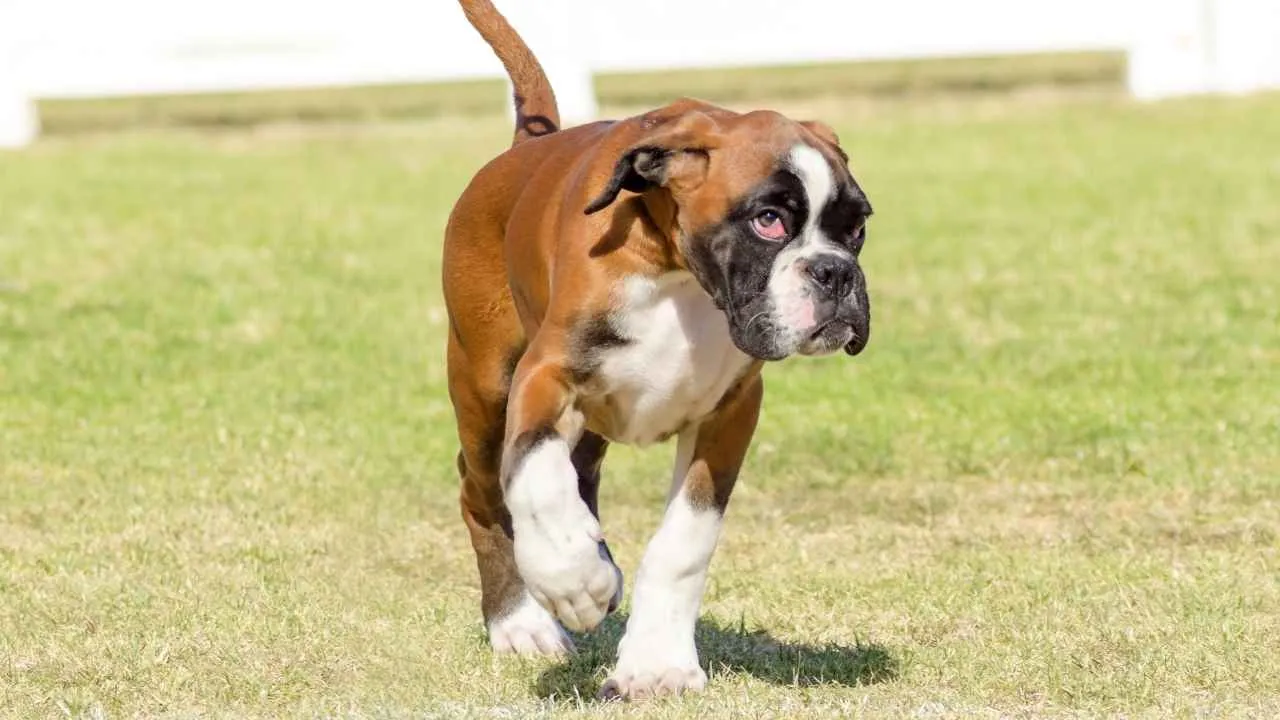
Boxers originated in Germany and descended from working dogs with connections to hunting and guarding. Over generations, breeders developed an athletic, muscular dog with courage, intelligence, and a strong relationship with people.
Their playful expression can make them seem less imposing than some mastiff-type guardians, but their athletic build and alertness give them a substantial presence.
Playful, Courageous, and Family-Focused
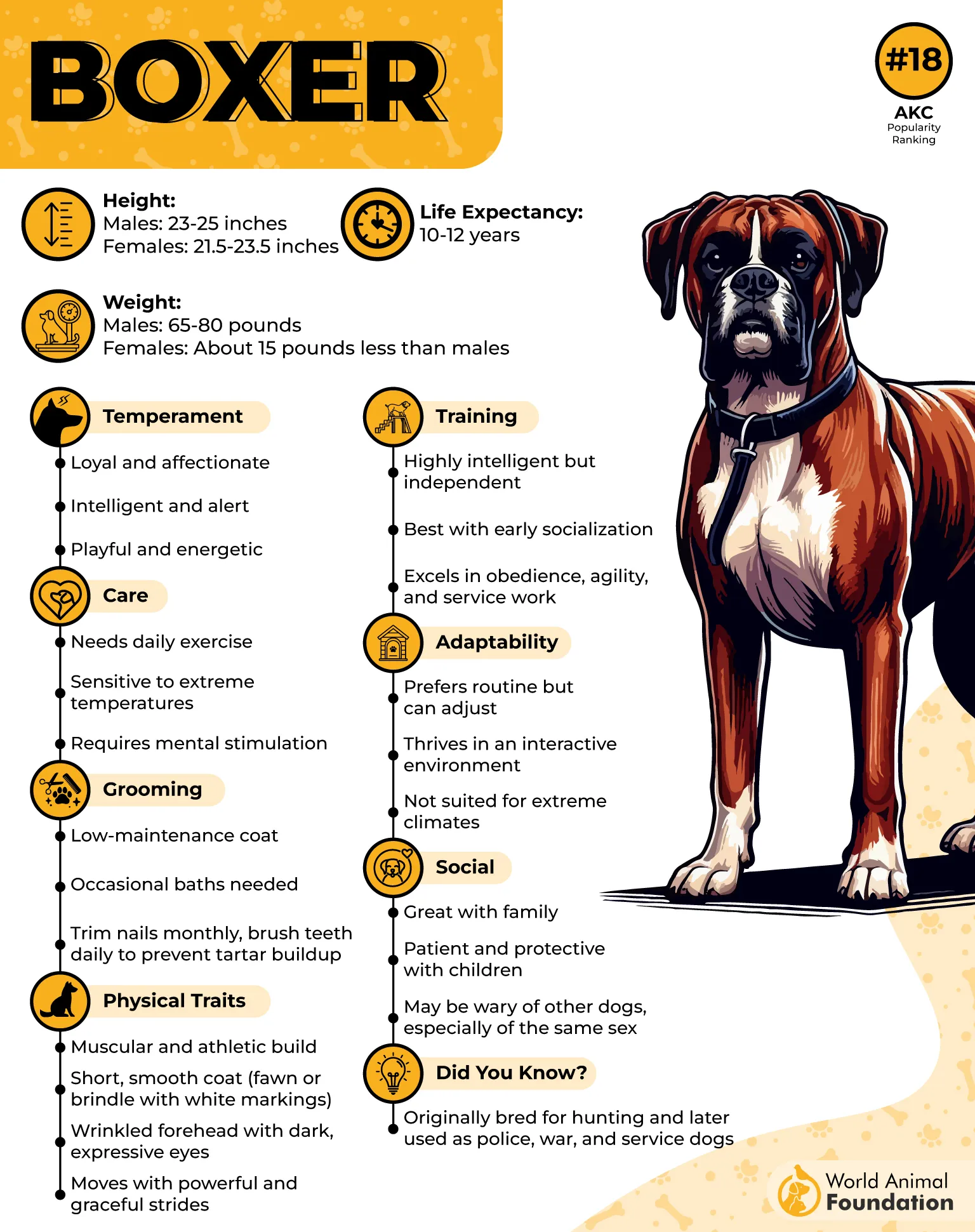
Boxers are generally energetic dogs that enjoy interacting with their owners. They can be attentive to unfamiliar activity and may naturally alert their families when something seems unusual.
Their enthusiasm needs direction, particularly during adolescence. Consistent training, socialization, and impulse-control exercises can help a Boxer learn to distinguish energetic play from situations requiring calm behavior.
A Short Coat With Simple Grooming Requirements
Boxers have a short, smooth coat that is easy to maintain. Regular brushing helps remove loose hairs and keeps the skin in good condition.
They need daily activity and mental stimulation to remain content. Because their short muzzle can make heat and strenuous exercise more challenging, owners should be cautious during hot weather and provide suitable conditions for activity and rest.
7. Giant Schnauzer
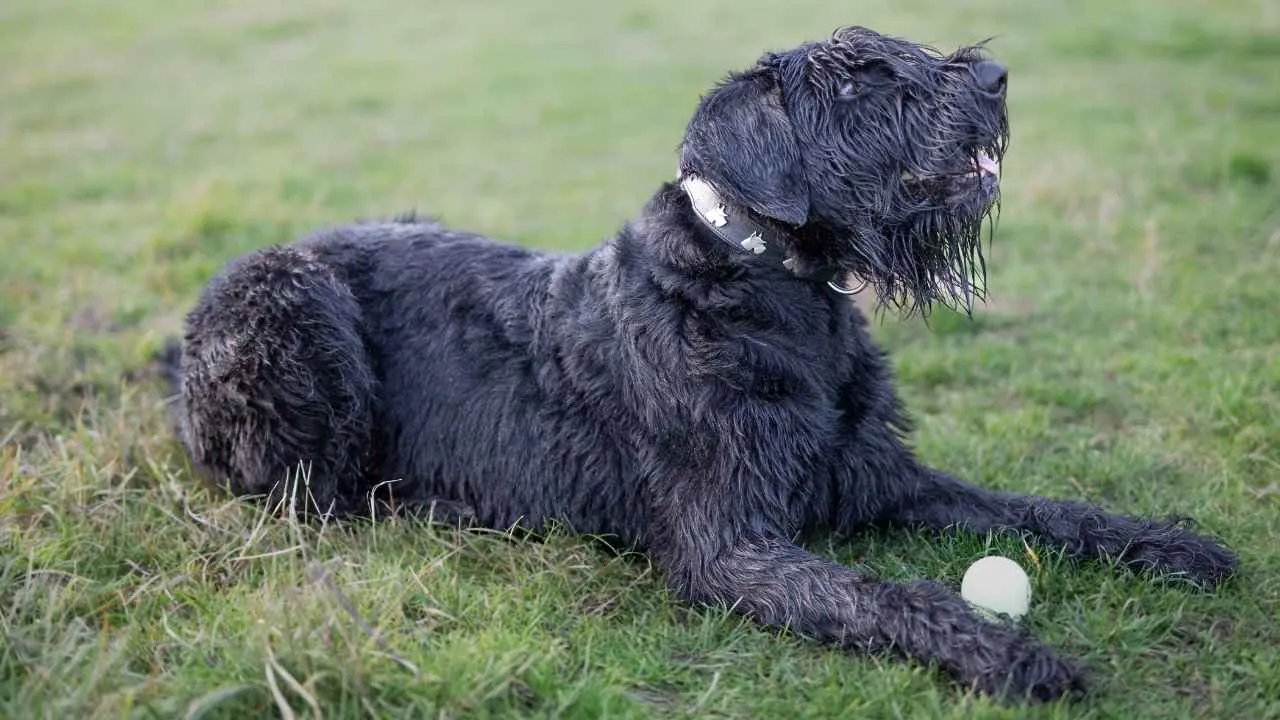
The Giant Schnauzer developed in Germany and was used for demanding working tasks, including driving livestock and guarding property, as per The Kennel Club. Its intelligence, strength, and imposing appearance made it well suited to roles requiring confidence and attentiveness.
Unlike many smooth-coated guardians, the Giant Schnauzer has a distinctive wiry coat and beard. Its working background also means that it generally needs considerable engagement from its owner.
Confident, Alert, and Eager to Have a Purpose
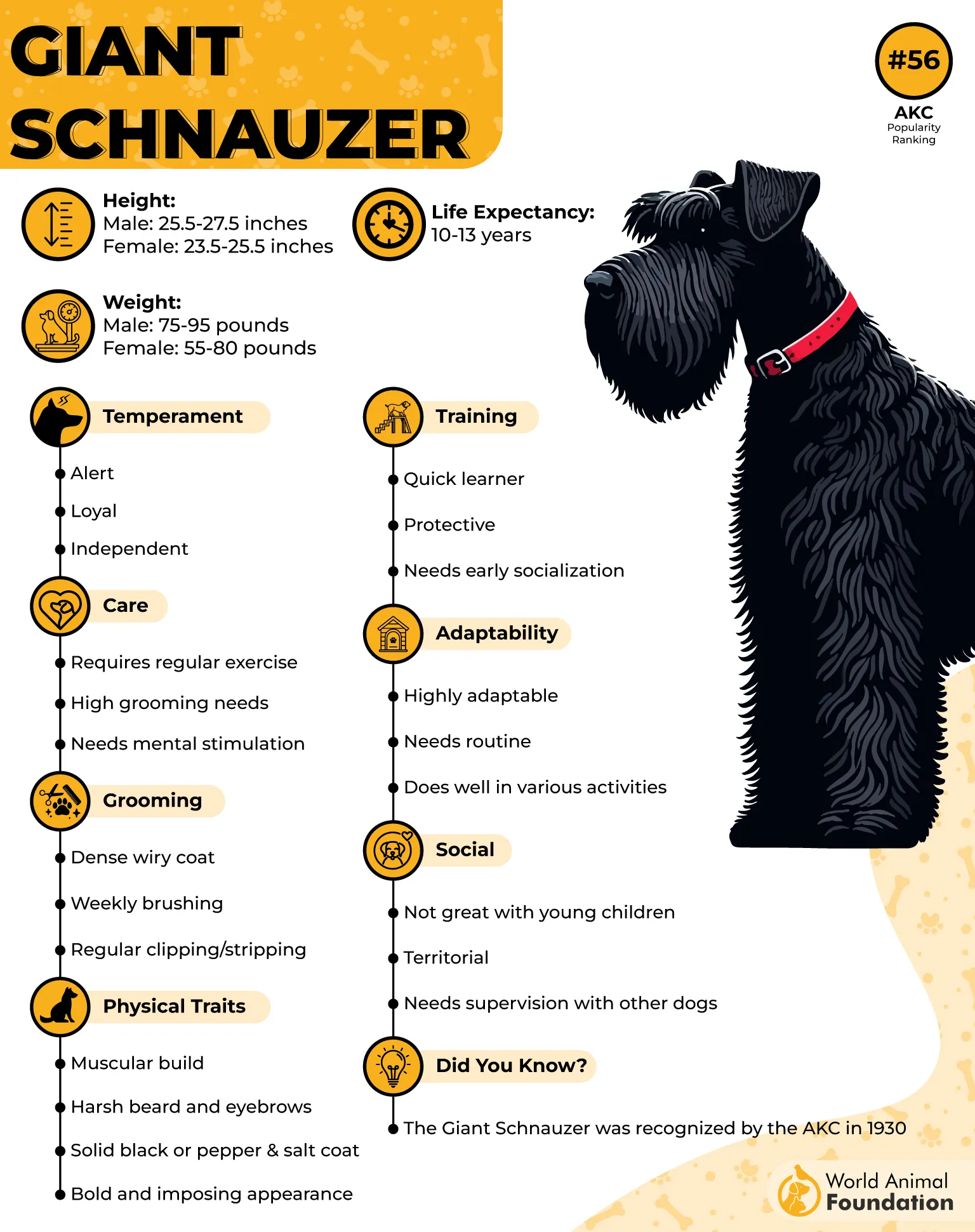
Giant Schnauzers are often intelligent, energetic, and protective of their families. They can be highly responsive when training is consistent and purposeful.
These extremely loyal dogs are usually better suited to owners who can provide substantial exercise and mental stimulation. Obedience, scent work, structured games, and controlled social experiences can help direct their energy while reinforcing appropriate behavior.
Their Wiry Coat Requires Regular Attention
The Giant Schnauzer’s double coat has a harsh outer texture that requires routine brushing and coat maintenance. Many owners use professional grooming or regular trimming to preserve its characteristic appearance and manageable length.
The beard can collect food and moisture, so keeping facial hair clean is useful. Regular dental care, nail trimming, ear checks, exercise, and veterinary examinations should also remain part of the dog’s routine.
Conclusion
German Shepherds, Doberman Pinschers, Cane Corsos, Rottweilers, Akitas, Boxers, and Giant Schnauzers can all offer a reassuring combination of loyalty, awareness, and physical presence for a single owner. Yet their protective abilities come with significant responsibilities.
A strong guardian should be manageable before it is intimidating. Training should focus on obedience, emotional stability, socialization, impulse control, and appropriate responses to unfamiliar situations rather than encouraging aggression. This is especially important for powerful breeds whose actions can have serious consequences if poorly managed.
For a person living alone, the most valuable quality may ultimately be a stable dog that can remain calm, responsive, and predictable. Proper training, secure housing, appropriate exercise, veterinary care, and early socialization can help transform a naturally watchful breed into a dependable companion rather than simply a formidable-looking one.
