




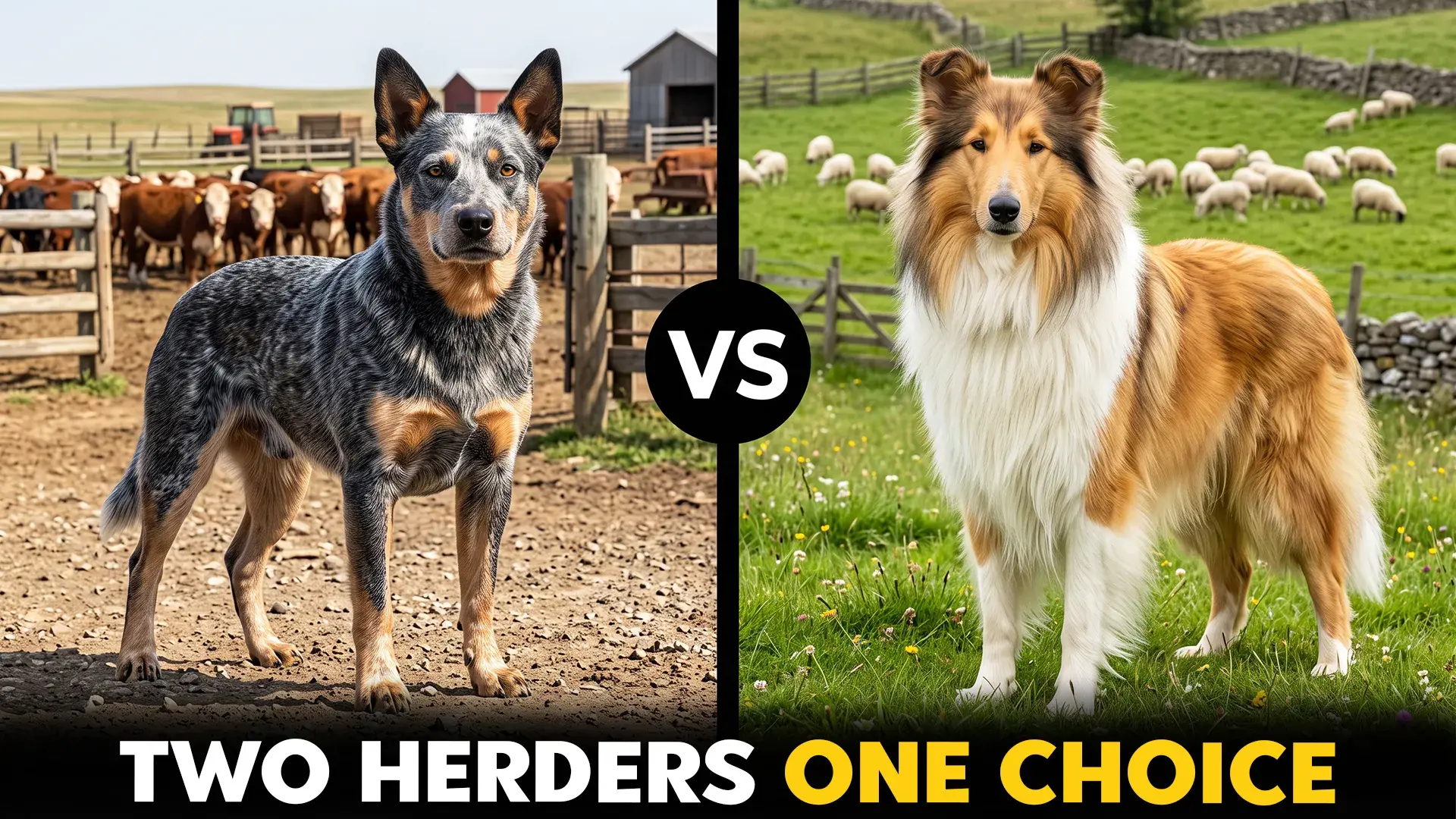
When comparing two different breeds, one question always comes to mind: which dog is right for you? And honestly, there’s no single correct answer, because each breed has its own temperament and working style. They excel in different ways, which is exactly what makes them unique.
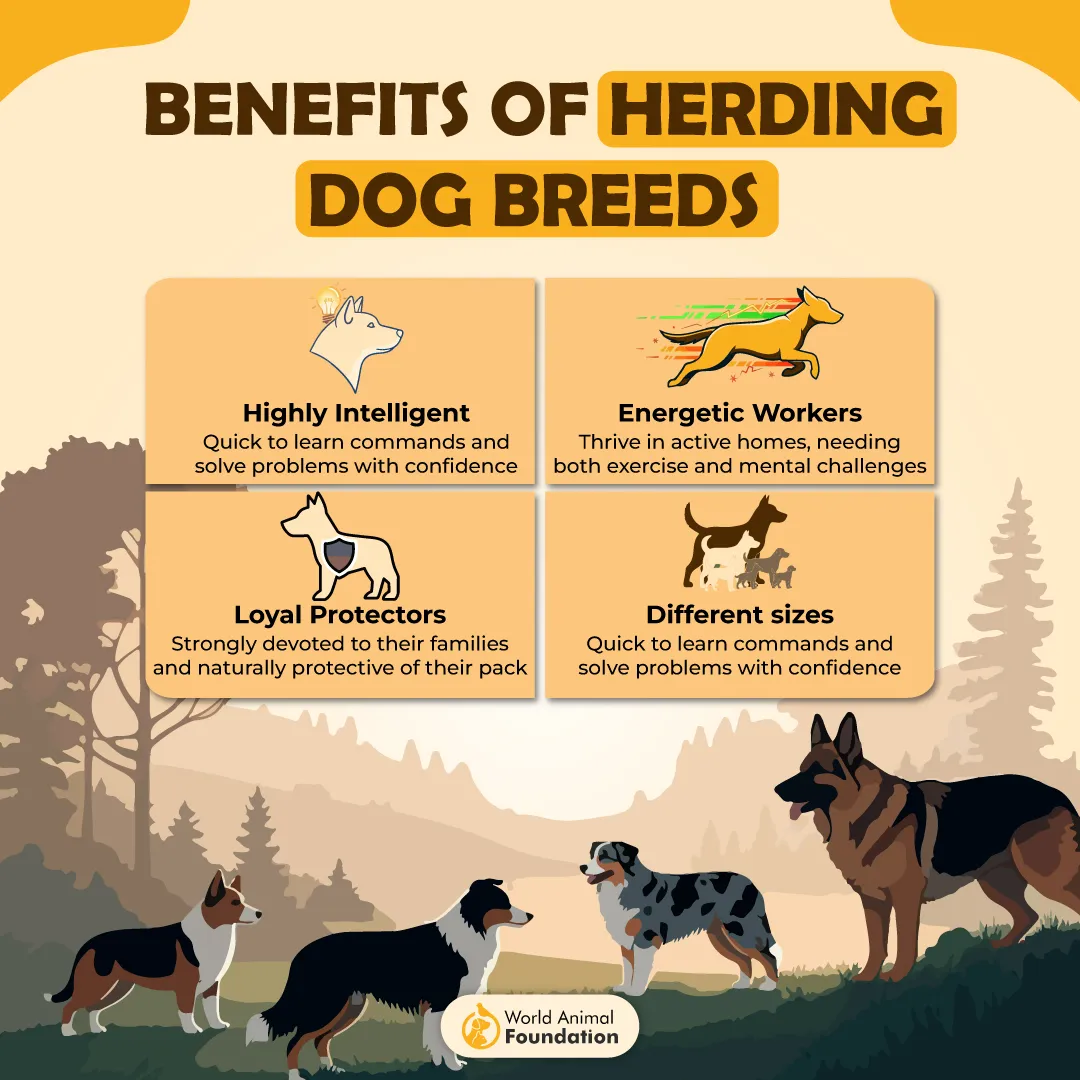
Take the Australian Cattle Dog and the Collie; both are globally recognized as intelligent, hardworking breeds. Both were originally bred as herding dogs, built to handle rugged terrain with resilience, strength, and stamina. Their moderate to high energy levels mean they need regular exercise and activities that keep them both physically and mentally engaged.
When it comes to companionship, if you’re looking for a deeply loyal and highly trainable breed, the Collie is a strong choice. If you’re more of an outdoor enthusiast who wants a fearless, devoted companion, the Australian Cattle Dog might be your match. But since they share quite a few similar qualities, it’s worth digging into their differences; that’s what will really help you decide.
Australian Cattle Dog vs. Collie: Key Differences You Should Know
While both the Australian Cattle Dog and the Collie share a strong herding heritage, they bring quite different personalities and energy levels to a home. Choosing between them really comes down to what suits your lifestyle: the intense, high-drive nature of the Cattle Dog, or the gentle, family-friendly temperament of the Collie.
Origins, Background & History
The Australian Cattle Dog was developed in 19th-century Australia to work cattle across harsh, unforgiving terrain. Also known as the Blue Heeler or Red Heeler, a nod to their distinctive herding style, this breed is resilient, sharp, and, according to the AKC, intelligent enough to occasionally outsmart its own owner.
Ranchers needed a dog that could cover long distances on foot while managing cattle through rugged conditions. To meet that need, they crossed native Dingoes with imported herding breeds, and the result was the sturdy, tireless Australian Cattle Dog we know today.
The Collie, on the other hand, built its reputation through centuries of hard work in the United Kingdom. Bred as a herding dog, the Collie was valued for its stamina, intelligence, and ability to manage large flocks across demanding terrain; driving sheep to market was all in a day’s work.
Shepherds prized early Collies for their endurance and natural instinct with livestock. The breed’s wider popularity took off in the 19th century when Queen Victoria took a liking to them, which gave the Collie a significant boost in public profile.
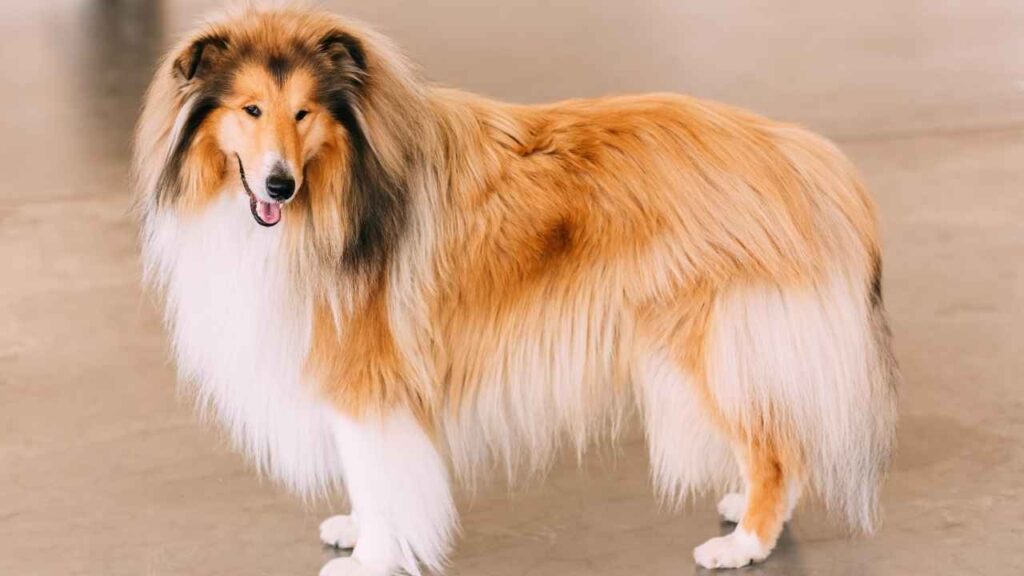
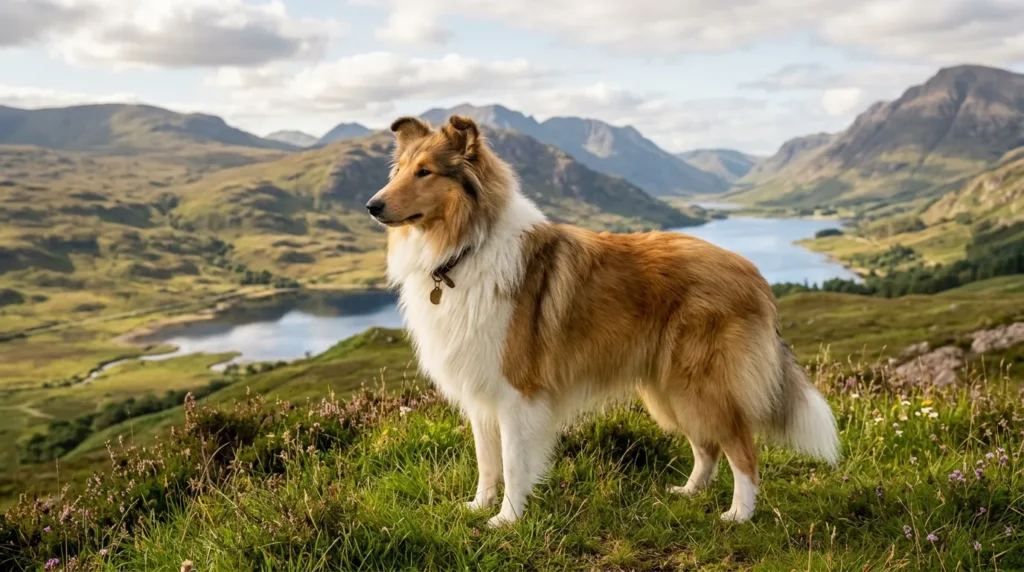
Over time, two varieties emerged: the Rough Collie with its flowing long coat, and the Smooth Collie with its shorter, tidier coat. Both were bred not just for herding, but also as family companions and participants in various canine sports.
Size & Physical Build Differences
Both are medium-sized dogs with plenty of energy, but there are some noticeable differences in their physical build that are worth understanding.
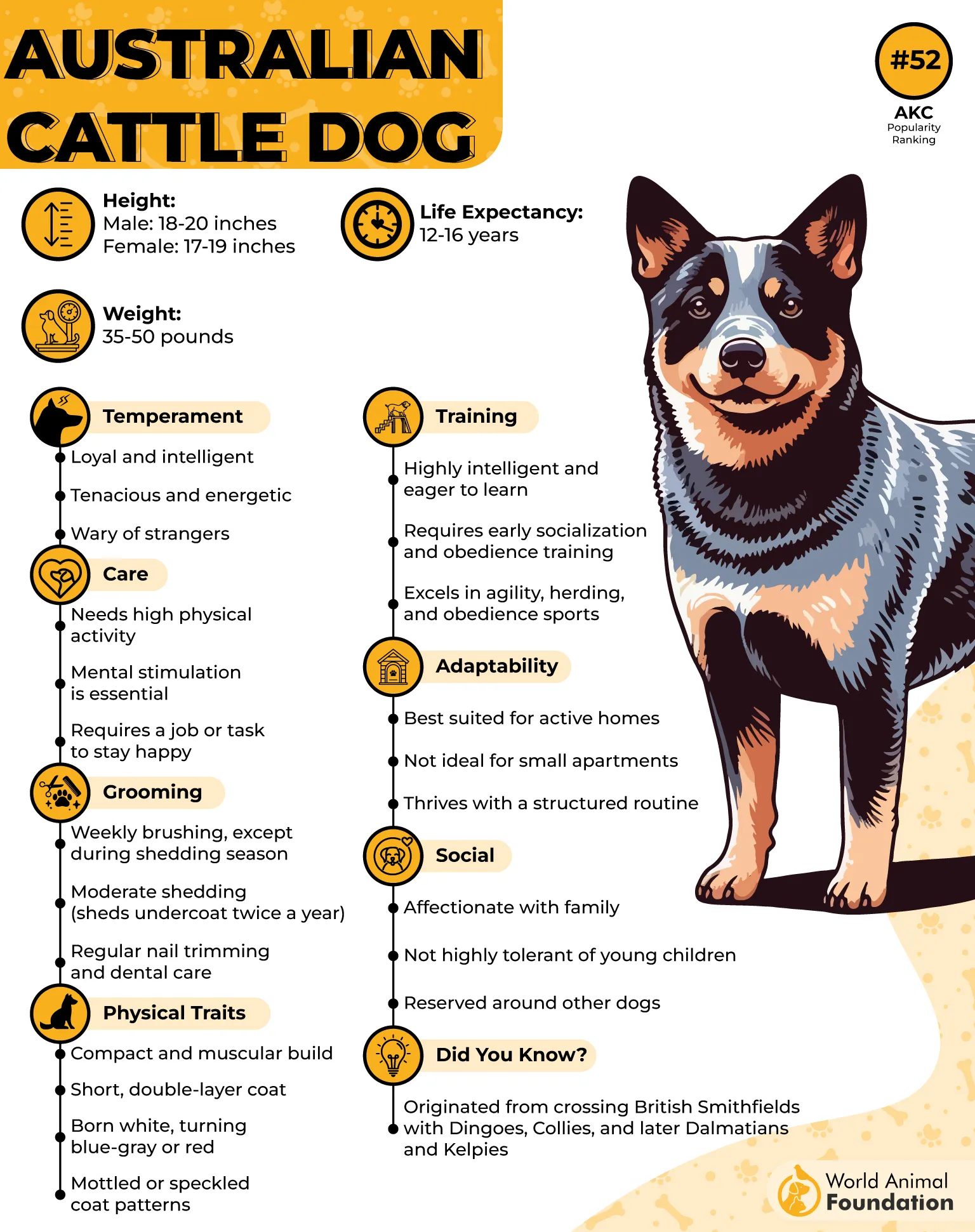
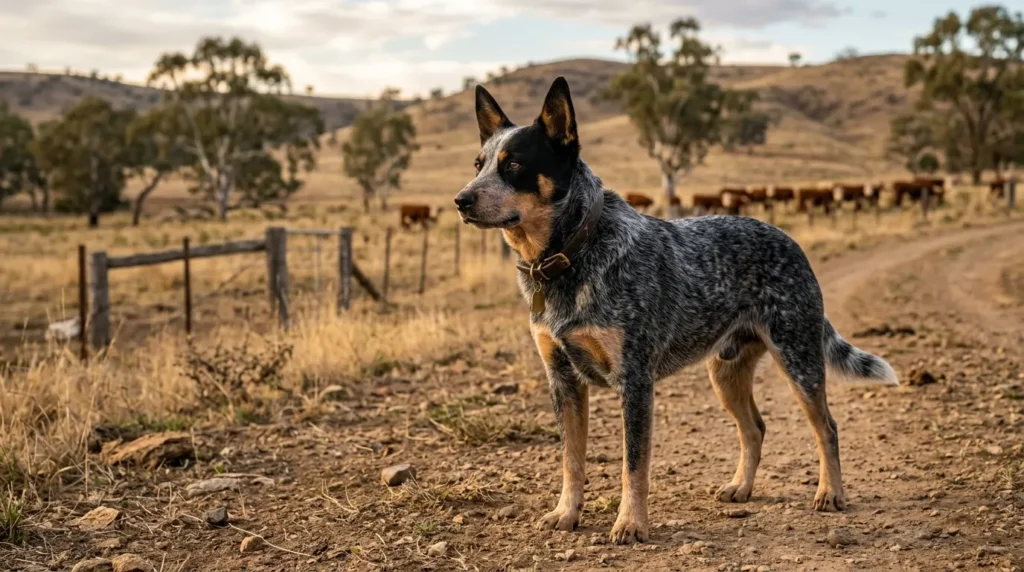
The Australian Cattle Dog is compact and muscular, standing 17–20 inches tall and weighing between 35–50 pounds. It’s slightly longer than it is tall, with a strong, agile frame, an alert expression, and characteristic pricked ears, built for endurance and quick movement.
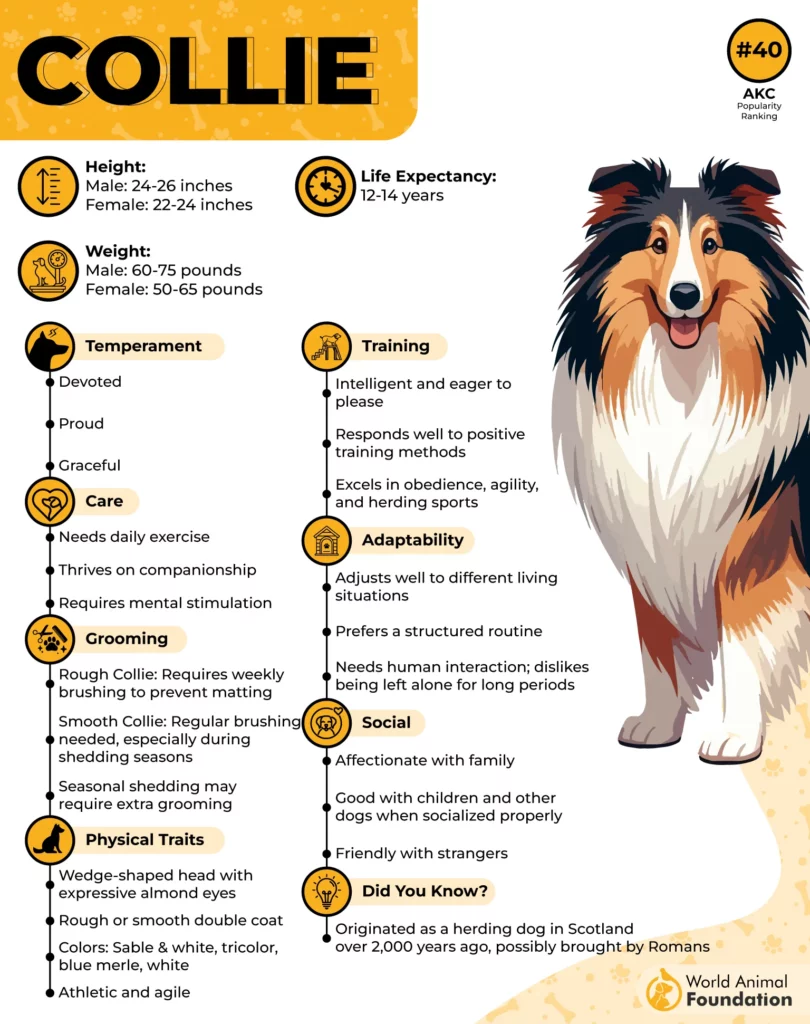
The Collie is a larger, more elegant dog, ranging from 22–26 inches in height and weighing between 50–80 pounds. Athletic and well-proportioned, it has good muscle tone, strong legs, and a distinctively wedge-shaped head that makes it easy to recognize. Like the Cattle Dog, it’s longer than it is tall, but carries a noticeably more refined, graceful build overall.
Coat Types & Overall Maintenance
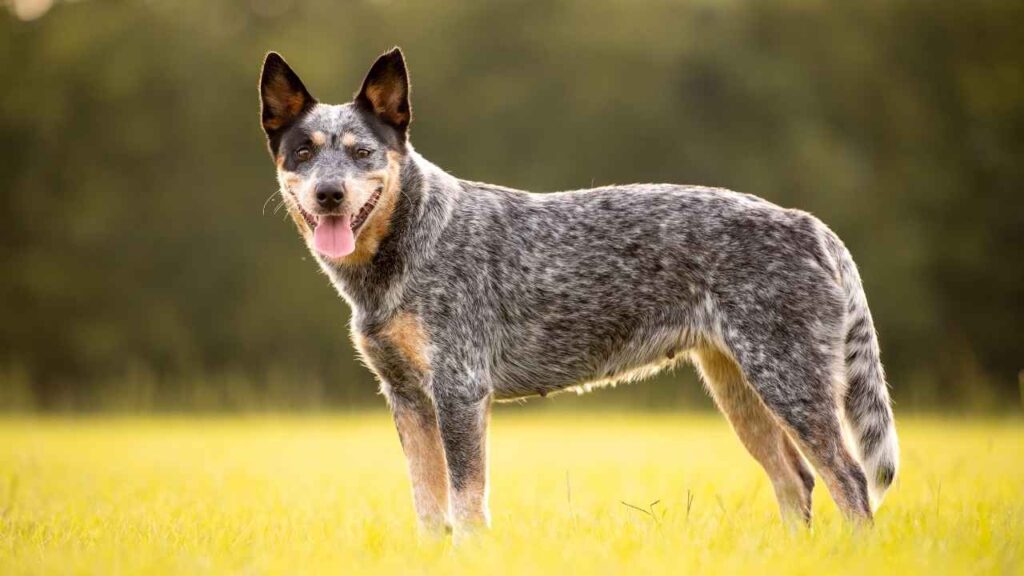
The Australian Cattle Dog has a short, weather-resistant double coat that’s relatively easy to maintain. It comes in two colours: red and blue, and while WebMD notes it sheds moderately and benefits from daily brushing, it’s still considered a low-maintenance breed overall. An occasional bath is all it needs to stay clean and tidy.
The Collie is a different story, depending on the variety. The Smooth Collie has a shorter coat with grooming needs fairly similar to the Australian Cattle Dog, manageable and straightforward.
The Rough Collie, however, is a serious grooming commitment. Its long, dense coat requires thorough, deep line-brushing multiple times a week to prevent painful mats and tangles. Skipping sessions can quickly lead to a coat that’s difficult and uncomfortable to manage.
Both breeds shed, but if you’re considering a Rough Collie, it’s worth going in with realistic expectations; keeping that iconic coat looking its best takes consistent time and effort.
Temperament & Personality Variation
The Australian Cattle Dog is obedient, energetic, courageous, and deeply loyal. Often described as a “Velcro” dog, it forms a strong bond with its main handler and tends to stick close.
It’s always alert and ready to work, which also makes it a natural watchdog; it won’t hesitate to let you know when a stranger is nearby. That said, its fierce intelligence and high energy mean it needs a purpose; without one, boredom can become an issue.
The Collie, by contrast, is affectionate, cheerful, and deeply in tune with the people around it. It thrives in active households and gets along well with kids and families. Collies are perceptive to human emotions and respond best to gentle, positive training; harsh discipline can make them anxious and withdrawn.
Chewy states that they’re also notably communicative; expect a vocal dog that will bark to greet visitors, signal boredom, or simply keep you updated on what’s happening in the yard.
Intelligence, Trainability & Responsiveness
The Australian Cattle Dog is highly trainable, quick to pick up new tricks, and perfectly capable of solving problems on its own, sometimes a little too capable. Their intelligence is impressive, but it also means they can outsmart an inexperienced owner if given the chance.
They respond well to positive reinforcement methods and structured, consistent training, though they can be stubborn and headstrong when they feel like it. Early socialisation and basic obedience training go a long way in shaping a well-mannered dog.
Collies are natural learners and genuinely enjoy the training process; for them, it’s also one of the best ways to bond with their owners. Their working dog instincts mean they actually want guidance and direction.
Like the Cattle Dog, they respond best to positive reinforcement, and they take well to activities like obedience, agility, and barn hunt. That said, their independent thinking and high drive mean consistency is key: let training slip, and they can become demanding and difficult to manage.
Energy Levels, Activity Needs & Work Force
Australian Cattle Dogs are playful and energetic family dogs, but their exercise needs are serious. Built for long days of hard work in tough conditions, they need plenty of physical activity: running, jogging, agility, and similar outlets, to stay healthy and burn off that natural drive.
A bored, under-exercised Cattle Dog will find its own ways to stay entertained, and you probably won’t enjoy the results.
Collies are equally energetic and need around one to two hours of aerobic exercise daily to stay happy and balanced. They enjoy long walks, running, and activities like flyball. As people-oriented dogs, they want to be close to their owners and need to stay busy, because a bored Collie is almost always a vocal one.
Health, Durability & Lifespan Differences
Both the Australian Cattle Dog and the Collie are generally healthy, long-lived breeds with a lifespan of around 12–16 years. Keeping them in good shape comes down to staying on top of exercise, diet, and routine vet care.
For the Australian Cattle Dog, the main health concerns to be aware of are eye problems, deafness, and hip dysplasia. Among medium-sized breeds, they’re known for their impressive longevity, but regular health checks are still important to catch anything early.
Collies are also a healthy breed overall, though genetic testing before breeding is recommended. Common health concerns include hip dysplasia, collie eye anomaly, and progressive retinal atrophy, all worth discussing with a vet, especially if you’re getting a puppy.
In both cases, a solid routine of preventive care goes a long way in keeping these dogs healthy well into their later years.
Herding Instincts & Social Behaviour
Australian Cattle Dogs are loyal and protective of their families, but they tend to be reserved around strangers, which is exactly why early socialisation matters. They form deep bonds with the people they know and can be stubborn at times, so a consistent, patient approach to training works best.
Their herding instincts are strong, and without proper training, they may chase smaller animals. That same drive, however, makes them excellent farm dogs, capable of helping with livestock and keeping an eye on property.
Collies, as PetMD notes, are affectionate people dogs that form strong bonds with their families and tend to do well with children and other animals. Once their exercise needs are met, they’re happy to settle down and relax; a calm, easygoing presence at home.
Their herding background may occasionally lead them to gently nudge children or other pets, but this is manageable with basic socialisation and training.
Lifestyle Suitability & Living Environments
The Australian Cattle Dog is best suited to active, determined owners who can match their energy and give them a sense of purpose. They love being outdoors and thrive when they have daily tasks or challenges to work through; physical and mental both. A home where they’re kept busy is a happy home for a Cattle Dog.
The Collie is a great fit for active families and does best with plenty of space to run, play, and stay engaged. Friendly and affectionate by nature, they need regular interactive play to keep their minds occupied. They can adapt to apartment living, but only if their exercise and mental stimulation needs are consistently met; without that, boredom sets in quickly.
Conclusion
By now, their key differences are fairly clear, but it’s worth noting where they overlap too. Both breeds are intelligent, loyal, and protective of their families. The main distinction in personality is that the Australian Cattle Dog tends to be cautious and reserved around strangers, while the Collie is more people-oriented and thrives on social interaction and companionship.
Whichever breed you choose, consistent training and early socialisation are essential; for both, it’s the foundation of a well-balanced, well-behaved dog.
