




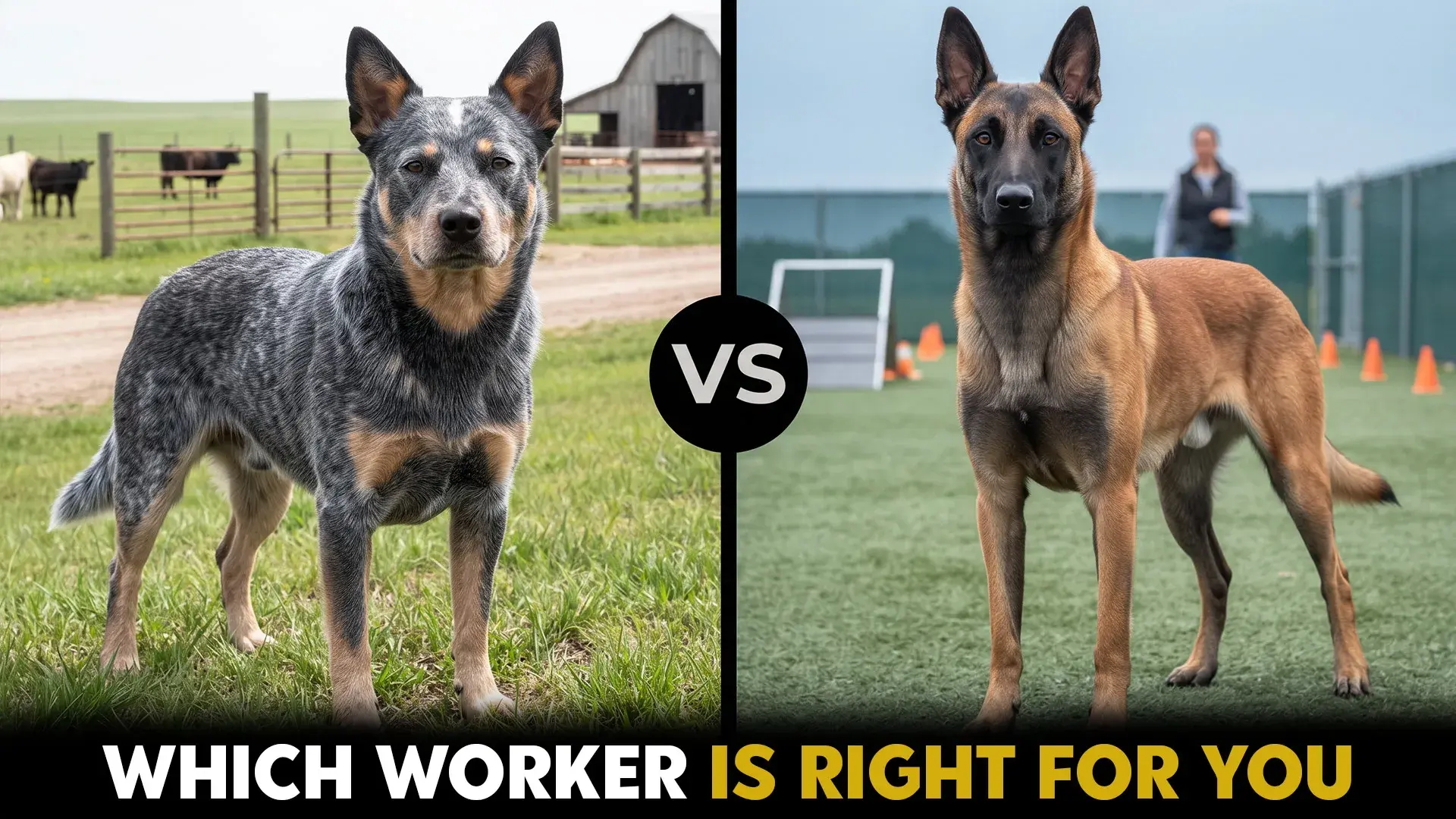
Choosing between an Australian Cattle Dog and a Belgian Malinois is not an easy decision. Both breeds are intelligent, athletic, loyal, and built for hard work, but their similarities can be misleading. While both thrive when they have a job to do, they bring very different personalities and needs into the home.
The Australian Cattle Dog is a tough, independent herding breed known for its endurance, alert nature, and strong bond with its family.
The Belgian Malinois, meanwhile, is a highly driven working dog recognized for its focus, trainability, and intense energy. Neither breed is likely to be satisfied with a slow-paced lifestyle, but the way they channel that energy can be quite different.
So, which one is the better match for you? Looking at their size, weight, temperament, exercise needs, trainability, grooming, and overall lifestyle requirements can make the choice much clearer.
Australian Cattle Dog vs. Belgian Malinois: What Owners Should Know
Origins, History & Purpose
Australian Cattle Dog
The Australian Cattle Dog was developed in 19th-century Australia to help cattle ranchers move herds across vast distances and harsh terrain.
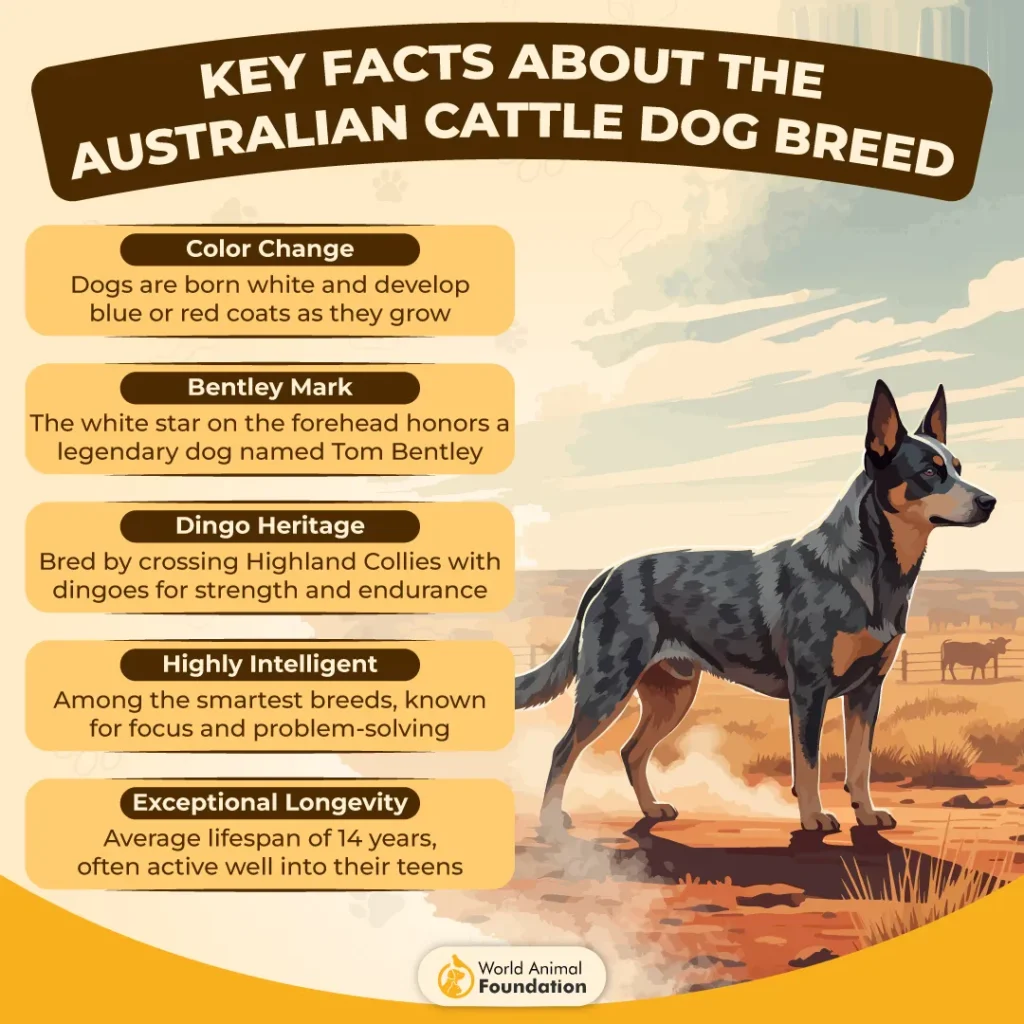
Early British herding dogs struggled with the country’s heat and rugged conditions, so breeders began crossing Blue Merle Highland Collies with Dingoes. The resulting dogs, known as Hall’s Heelers, were tough, agile, and capable of working cattle over long distances.
Further crosses with breeds such as the Bull Terrier, Dalmatian, and Black and Tan Kelpie helped shape the Australian Cattle Dog we know today.
Originally called the Australian Heeler, the breed was renamed the Australian Cattle Dog around 1897, according to Omlet.
Its purpose remained clear: to create a hardy, intelligent cattle worker capable of controlling livestock by nipping at their heels while handling Australia’s demanding environment.
Belgian Malinois
The Belgian Malinois originated in Belgium during the 1800s and takes its name from the city of Malines, now known as Mechelen. It was developed as a hardworking herding and farm dog, valued for its intelligence, endurance, alertness, and strong work ethic.
Along with the other Belgian Shepherd varieties, the Malinois was bred to help manage livestock while also serving as a dependable protector.
The breed arrived in the United States in the early 1900s and was officially recognized by the American Kennel Club in 1959. Although its popularity declined after World War II, interest returned in the 1960s.
Over time, the Belgian Malinois expanded far beyond herding, becoming highly valued for police, military, detection, and search-and-rescue work.
Size, Weight & Physical Build
Australian Cattle Dog
The Australian Cattle Dog is a medium-sized dog breed with a compact, muscular body built for endurance, speed, and agility.
Despite its moderate size, it has a powerful appearance and a balanced stride that reflect its history as a working cattle dog. Its alert expression and athletic build give it a ready-for-action look.
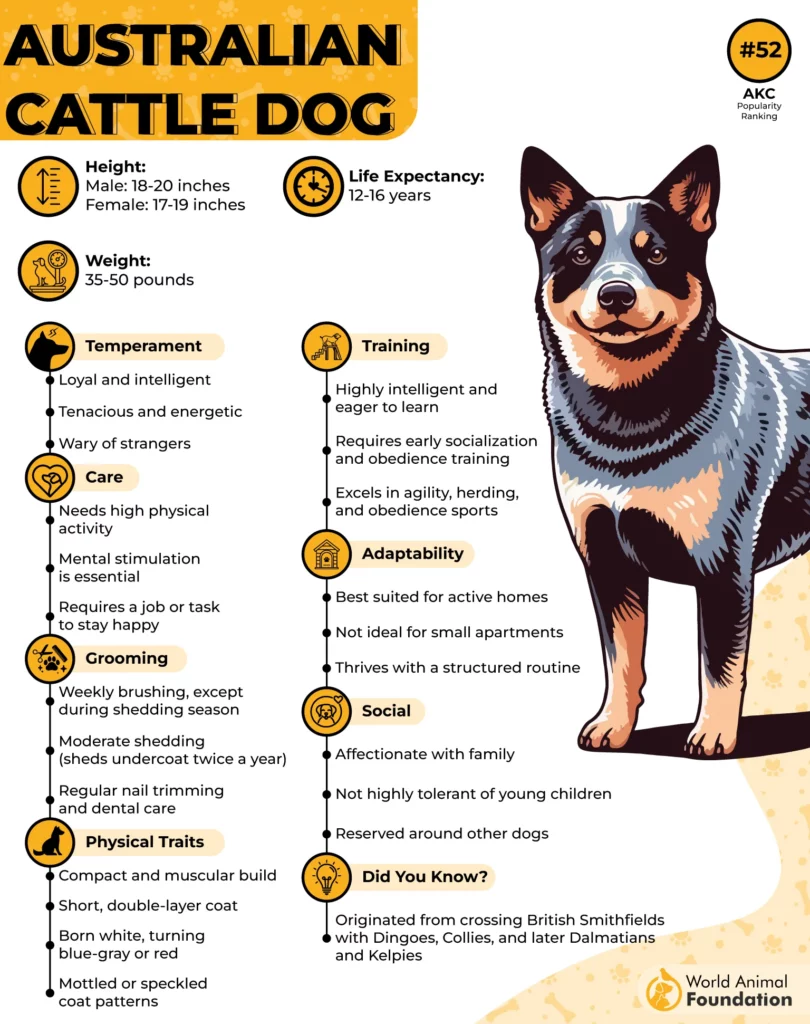
Height: 17–20 inches
Weight: 35–50 pounds
Build: Muscular, compact, and powerful
Belgian Malinois
The Belgian Malinois is taller and more lightly built than the Australian Cattle Dog, with a lean, solid frame designed for agility and demanding work.
It carries itself with confidence and has an alert expression that reflects its attentive nature. Its smooth, effortless stride and athletic build allow it to move quickly and efficiently.
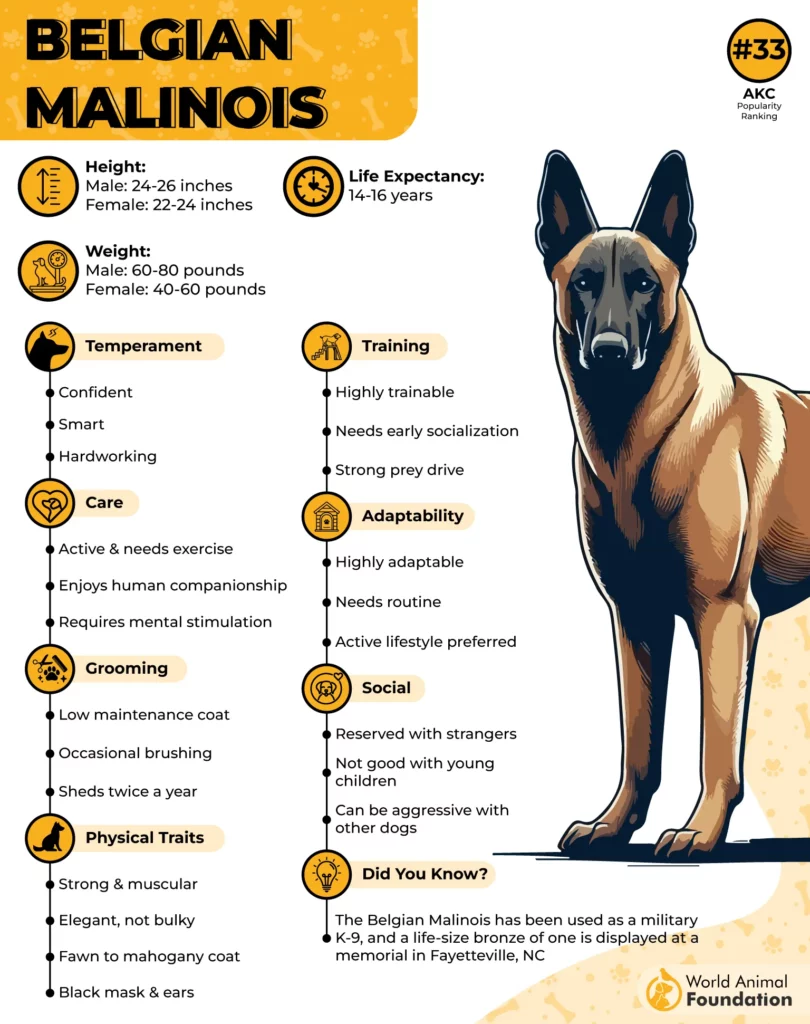
Height: 24–26 inches (male), 22–24 inches (female)
Weight: 60–80 pounds (male), 40–60 pounds (female)
Build: Lean, solid, and athletic
Coat Types, Grooming & Maintenance
Australian Cattle Dog
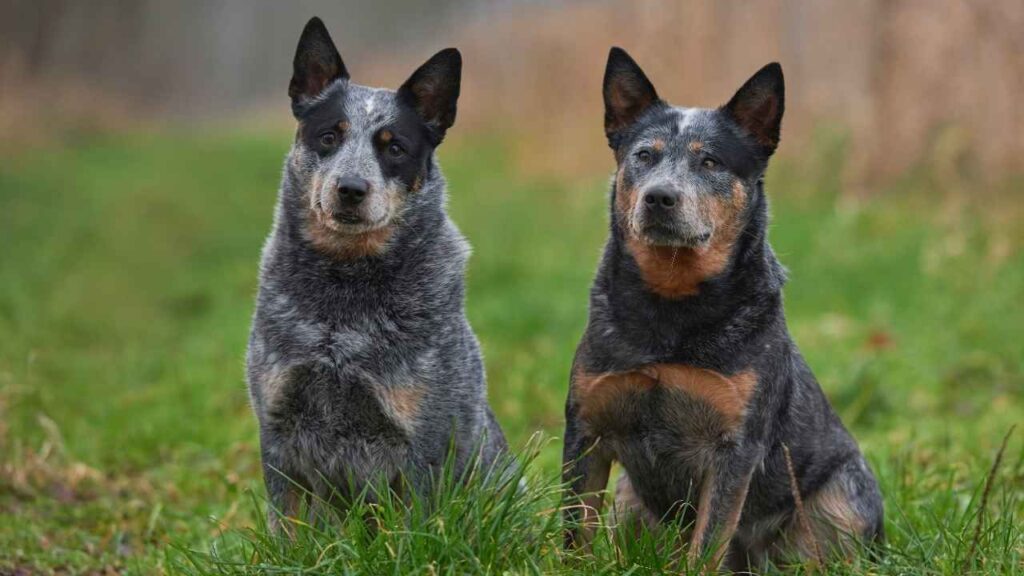
The Australian Cattle Dog has a short, dense double coat designed to protect it from Australia’s harsh outdoor conditions. Its straight, rain-resistant outer coat and thick undercoat provide insulation and protection from the elements.
The breed comes in two main coat colors: blue and red speckled. Interestingly, puppies are born with an all-white coat, with their distinctive coloring developing by around 4–6 weeks of age.
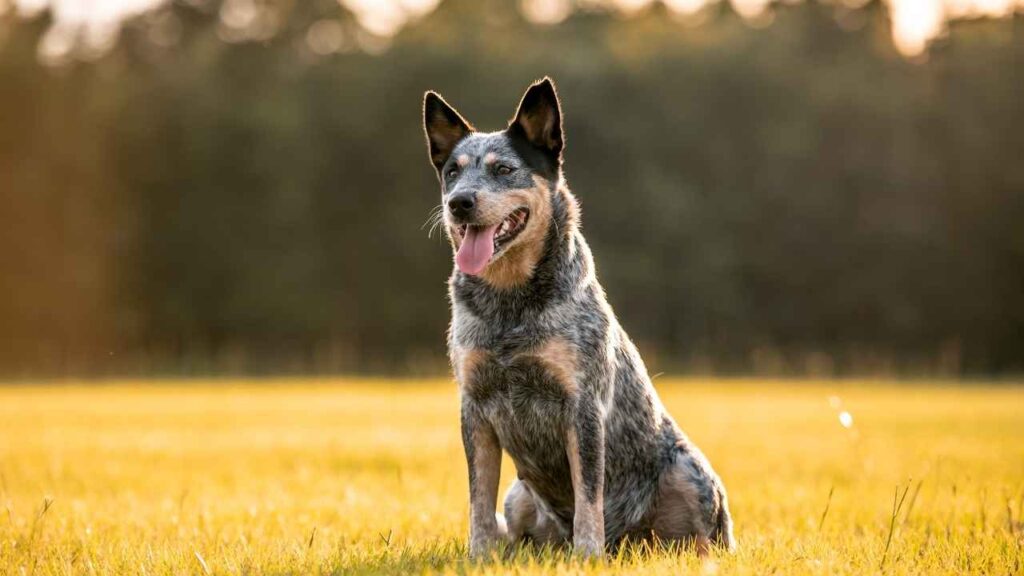
The breed is relatively easy to maintain but sheds moderately to heavily, especially during its seasonal coat blowouts. Regular brushing helps remove loose hair and keep the coat healthy.
Belgian Malinois
The Belgian Malinois also has a short, dense double coat, with a waterproof outer layer that provides protection during outdoor work. Unlike some other Belgian Shepherd varieties, its short coat requires relatively little grooming.
However, seasonal shedding can become noticeable when the dog sheds its undercoat in preparation for changing weather. PetMD says this “blowout” lasts for two to three weeks.
Routine brushing helps remove loose hair, distribute natural oils, and support healthy skin and coat. Baths can be given when needed, particularly after outdoor activities, using a shampoo formulated specifically for dogs.
Temperament, Personality & Behavior
Australian Cattle Dog
The Australian Cattle Dog is an intelligent, hardy, and independent breed with a strong protective instinct and a deep bond with its owner. They also make amazing family dogs.
Curious but naturally wary of strangers, it can be friendly and eager to please its family while becoming defensive if it feels threatened or cornered. Its independent nature means it does best with an owner who can provide clear boundaries, consistent training, and plenty of engagement.
Bred to work for long hours in demanding conditions, Australian Cattle Dogs have impressive stamina and do not thrive in sedentary homes. They need regular physical activity and mental stimulation, along with a job or activity that gives their energy a positive outlet.
They may also try to herd children and family members by nipping at their heels, so this behavior should be redirected through early training and socialization.
Belgian Malinois
The Belgian Malinois is an exceptionally intelligent, loyal, and energetic breed that forms a strong bond with its human family. It thrives on interaction and purposeful activity rather than being left alone or expected to entertain itself.
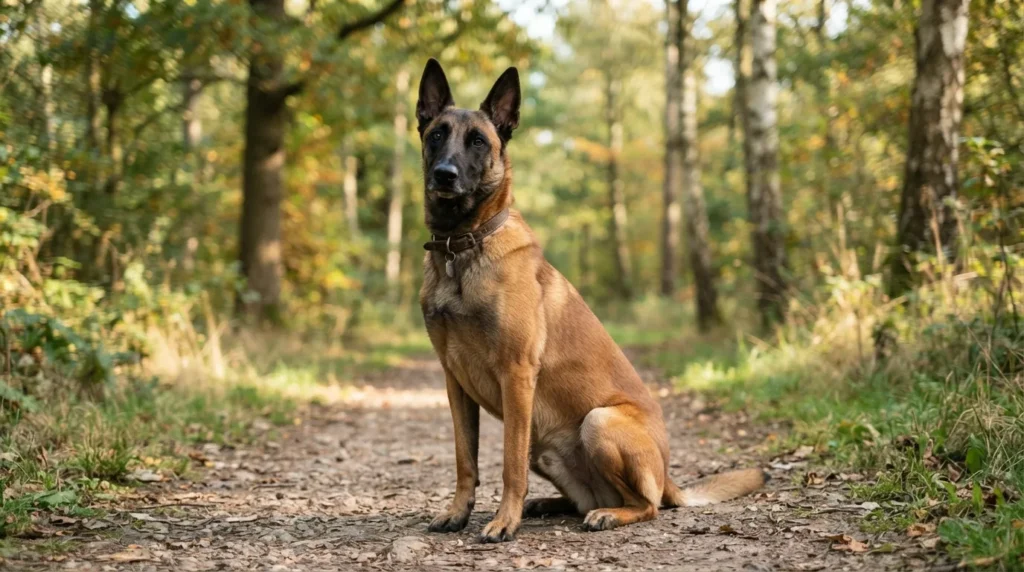
Highly responsive to its owner’s cues, the Malinois is eager to learn and excels in demanding activities such as agility, tracking, scent work, herding, and other working tasks.
Its intense energy and natural prey drive require experienced handling, early socialization, and consistent obedience training.
According to Chewy, a Malinois can live successfully with children and other pets, but interactions should be carefully supervised, particularly because sudden movements or small animals may trigger its instinct to chase.
Intelligence, Trainability & Handling
Australian Cattle Dog
The Australian Cattle Dog is highly intelligent and quick to learn, but its independent streak can sometimes make training challenging. It responds best to confident, patient handling and positive reinforcement, with praise, treats, and toys used to encourage desired behaviors.
Training should begin early, starting with basic cues such as sit, stay, recall, and polite leash walking. Consistent training and early socialization are especially important for this breed because of its strong herding instincts and tendency to be wary of unfamiliar people and dogs.
Puppy obedience classes can provide both structured learning and valuable socialization opportunities.
Once the basics are established, Australian Cattle Dogs often enjoy advanced training and activities such as agility, flyball, and dock diving, which provide both mental and physical challenges.
Belgian Malinois
The Belgian Malinois is exceptionally intelligent, highly trainable, and responsive to its handler. Its eagerness to work and ability to quickly understand commands make training highly rewarding, but the breed also needs an experienced and consistent approach.
Positive reinforcement works particularly well, as Malinois can be sensitive and respond strongly to praise, treats, and toys.
Early training and socialization are essential because of the breed’s strong herding and prey-drive instincts. Teaching reliable recall, leash manners, and basic obedience can help manage its tendency to chase moving people, animals, or objects.
As the dog progresses, advanced obedience, tracking, agility, scent work, and other purposeful activities can provide the mental challenge it needs.
Energy Levels, Activity Needs & Work Drive
Australian Cattle Dog
The Australian Cattle Dog is an extremely active, hardworking breed that needs much more than a short daily walk or quick game of fetch.
Bred to work cattle across demanding terrain, it has impressive stamina and enjoys activities that allow it to run, chase, explore, and use its natural abilities. Owners should be prepared to spend up to two hours a day providing meaningful physical activity.
Great options include hiking, running, long walks, energetic backyard games, and off-leash exercise in a secure area.
Australian Cattle Dogs are also naturally agile and can reach speeds of around 30 mph when sprinting. Physical exercise should be paired with mental challenges to prevent boredom and keep their intelligent minds engaged.
Around two hours of daily activity can help meet their needs
Benefit from tracking and nose-work activities
Need interactive toys and mentally stimulating games
Thrive when given a purposeful job or challenging activity
Belgian Malinois
The Belgian Malinois has an exceptionally high energy level and a powerful work drive. A relaxed stroll around the neighborhood is rarely enough to satisfy this athletic breed. It needs regular opportunities to run, work, learn, and engage with its owner.
At least two 30-minute sessions of vigorous exercise each day can provide a useful baseline, although individual dogs may require even more activity.
Mals excel when exercise combines physical effort with mental challenges. Running, biking, agility, tracking, flyball, and dock diving can all provide productive outlets for their energy.
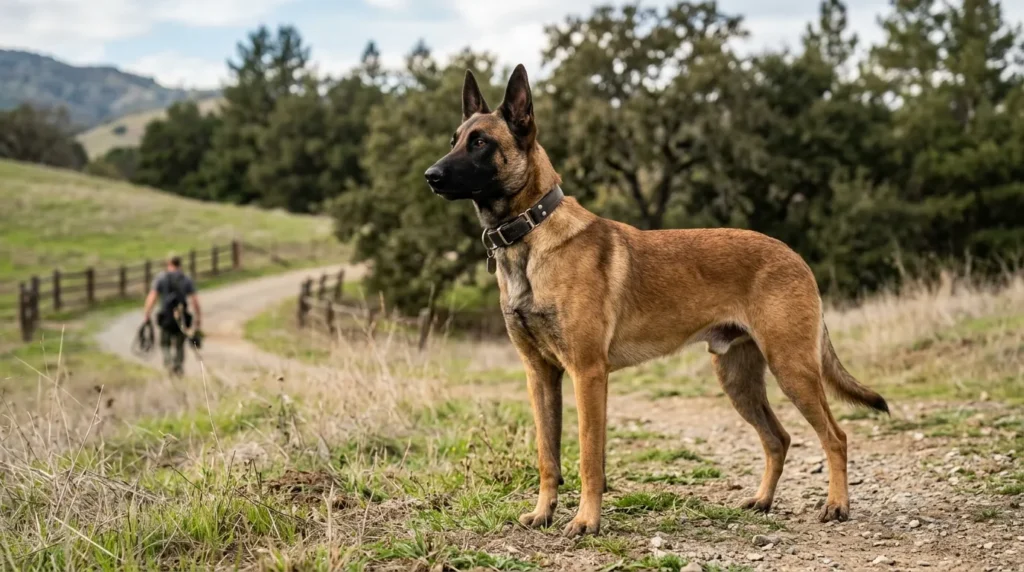
A secure yard or another safe area where they can move freely is also beneficial. Without enough exercise and stimulation, their unused energy can quickly turn into unwanted or destructive behavior.
Need at least two vigorous exercise sessions daily
Enjoy demanding activities such as flyball and dock diving
Need both physical exercise and mental stimulation
Do best when their strong work drive has a consistent outlet
Health Concerns, Durability & Lifespans
Australian Cattle Dog
The Australian Cattle Dog is generally considered a hardy and healthy breed with relatively few major health concerns. Their average lifespan is around 12 to 16 years.
However, responsible owners should still be aware of inherited conditions that may affect the eyes, hearing, heart, and joints. Regular veterinary checkups and appropriate screening can help identify potential problems early.
Progressive Retinal Atrophy (PRA)
Deafness
Hip Dysplasia
Heart Conditions
Eye Defects
Belgian Malinois
Belgian Malinois are also generally healthy and athletic dogs, particularly when responsibly bred and properly cared for. Their typical lifespan is around 10–14 years.
Despite their overall durability, they can be predisposed to certain inherited orthopedic and eye conditions, making health screening important when choosing a puppy.
Hip Dysplasia
Elbow Dysplasia
Cataracts
Progressive Retinal Atrophy (PRA)
Working Roles, Primal Instincts & Traits
Australian Cattle Dog
The Australian Cattle Dog was bred specifically for demanding livestock work, and many of its natural instincts are still strongly present today.
Its original role was to move cattle across vast distances and rough terrain, using its speed, stamina, intelligence, and controlled nipping to keep livestock moving in the right direction.
This strong herding instinct can also appear at home, where the dog may try to herd children or family members by nipping at their heels.
These dogs are naturally alert, protective, and watchful, with a strong bond with their owners. They can be wary of strangers and may become defensive when they feel threatened or cornered.
Belgian Malinois
The Belgian Malinois was originally developed as a herding and farm dog, but its intelligence, athleticism, attentiveness, and strong work ethic have allowed it to take on many demanding roles.
Today, these traits make the breed well-suited to police, military, search-and-rescue, detection, tracking, and other specialized working tasks.
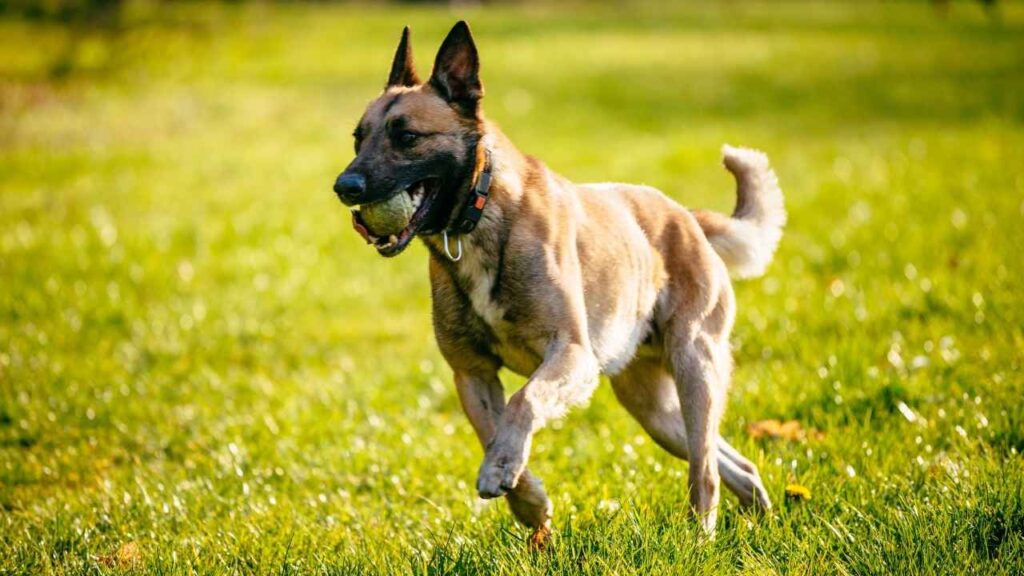
The Malinois has a strong instinct to chase and control moving objects, reflecting its herding background and natural prey drive. It is highly responsive to its handler and thrives when given a clear purpose.
Its loyalty and intense desire to work, combined with its physical strength and sharp intelligence, make it an exceptional working dog, but these same instincts require proper training, socialization, and consistent direction.
Lifestyle Suitability & Adaptability Factor
Australian Cattle Dog
The Australian Cattle Dog is best suited to an active household where exercise, training, and mental stimulation are part of everyday life. This breed does not adapt well to a sedentary routine or being left without a meaningful outlet for its energy.
Owners who enjoy hiking, running, outdoor adventures, tracking, or dog sports may find the breed a rewarding companion.
Its independent and protective nature means early socialization and consistent training are important, particularly in homes with children or other dogs.
Australian Cattle Dogs can be affectionate and deeply devoted to their families, but their instinct to herd and nip at heels needs to be managed.
Belgian Malinois
The Belgian Malinois is best suited to highly active owners who can provide substantial physical exercise, mental stimulation, training, and daily interaction.
A simple walk is rarely enough for this energetic working breed. It thrives when included in activities such as running, hiking, agility, tracking, scent work, and other structured tasks.
A Malinois can adapt to family life, including homes with children, when given early socialization, consistent training, and appropriate supervision. However, its intense energy, alertness, and strong prey drive can make it more demanding to manage than many companion breeds.
Conclusion
Choosing between an Australian Cattle Dog and a Belgian Malinois comes down to more than size or appearance. Both are intelligent, athletic, loyal working breeds with strong instincts, high energy levels, and a need for consistent training.
Their grooming and general health needs are manageable, but neither breed is suited to a sedentary lifestyle.
Before bringing either dog home, honestly consider your daily routine, experience, available time, and ability to provide physical and mental stimulation. The right choice is not simply the breed that looks impressive. It is the one whose natural traits and working needs fit your life.
When given the right environment and purpose, either breed can become a remarkably loyal and rewarding companion.
