




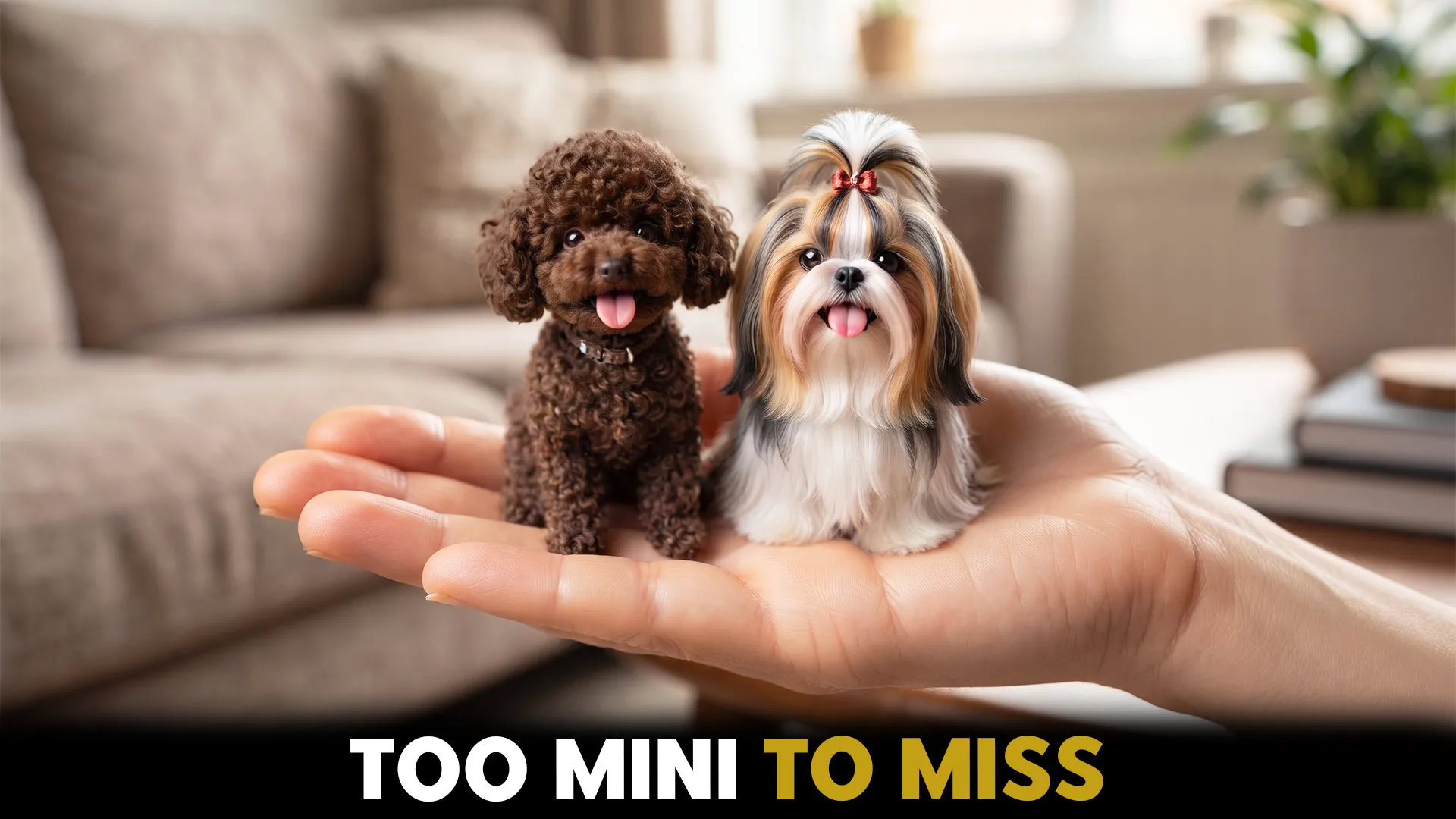
Some dogs seem to come with a permanent puppy setting. They may have tiny paws and compact bodies, but their personalities can be anything but small. If you love the idea of a little companion who can curl up beside you without taking over the sofa, these breeds are worth a closer look. The dogs on this list are naturally small as adults, though their exact size can vary by individual.
These dogs stay tiny forever, making them a great fit for apartments, cozy homes, and anyone who prefers a smaller companion. Their size can also make traveling, carrying, and everyday care a little easier.
Each brings a different mix of personality, grooming needs, energy, and charm. And honestly, there is something pretty special about a dog who can fit comfortably in your lap yet still act like they own the whole house.
Amazing Small Dog Breeds – They Stay Tiny!
1. Biewer Terrier
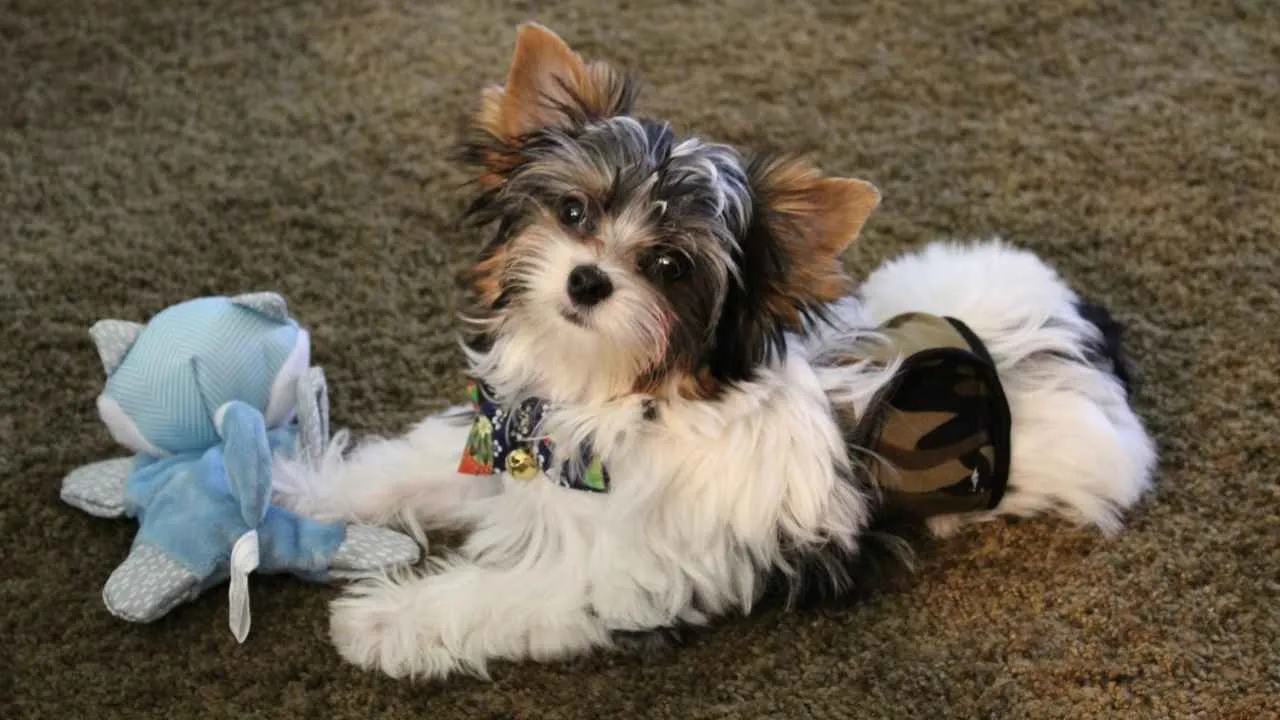
This relatively newer breed was originally bred in the late 20th century in Germany by crossing the Yorkshire Terrier, Werner, and the Gertrud Biewer. The breed arrived in America in 2003, according to Chewy.
This tiny dog breed carries its childlike attitude into adulthood. It carries an elevated and confident gait with its head held high. It is known to bounce, sway, and playfully dance when it hears catchy tunes. With its undocked, long, and high-set tail, it greets excitedly, wagging. The active dog has strong watchful instincts.
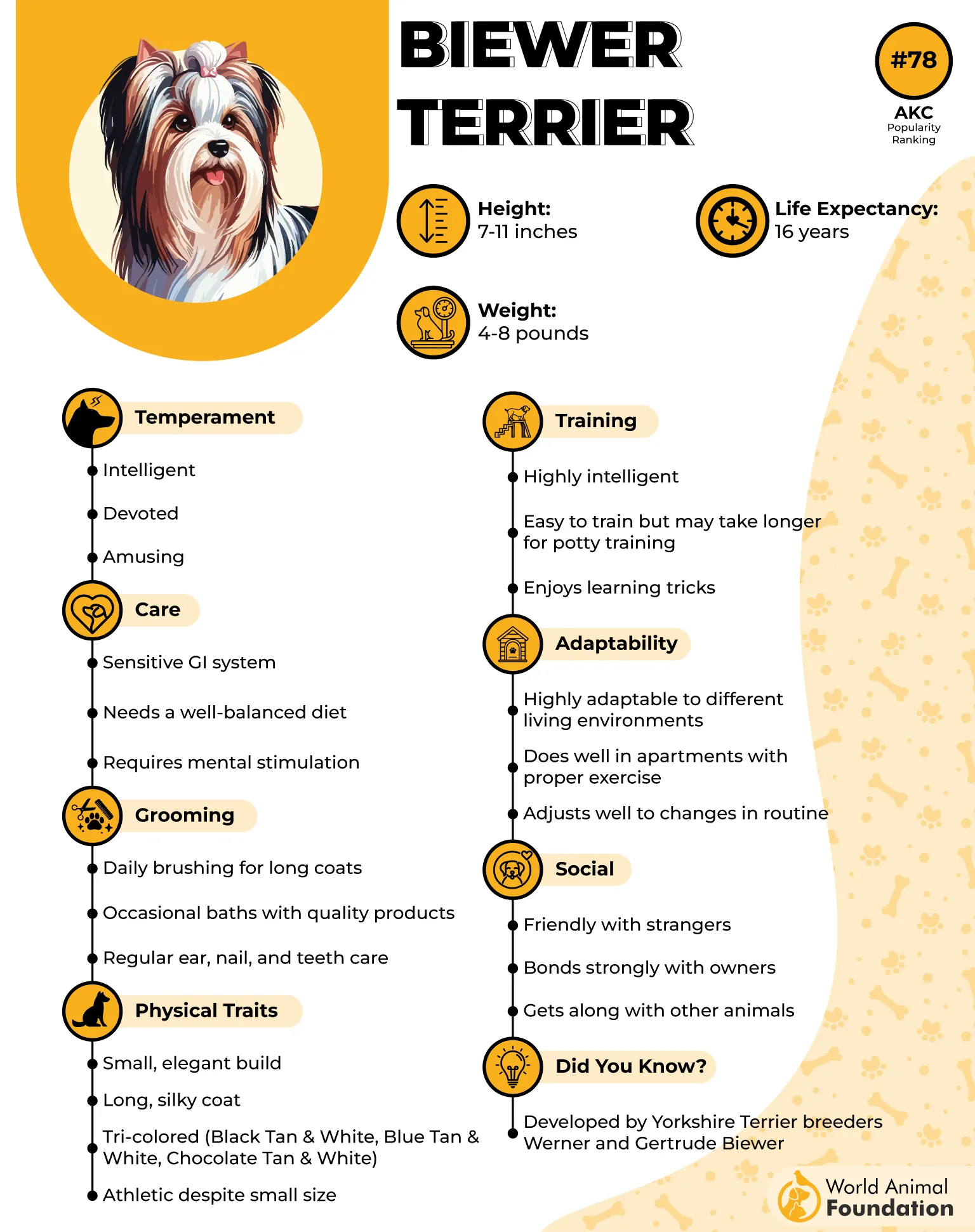
The family dog excels in outdoor activities, including puzzle toys, agility courses, and catching vermin in the garden. It exhibits highly intelligent facial expressions, mimicking human infants.
2. Cesky Terrier
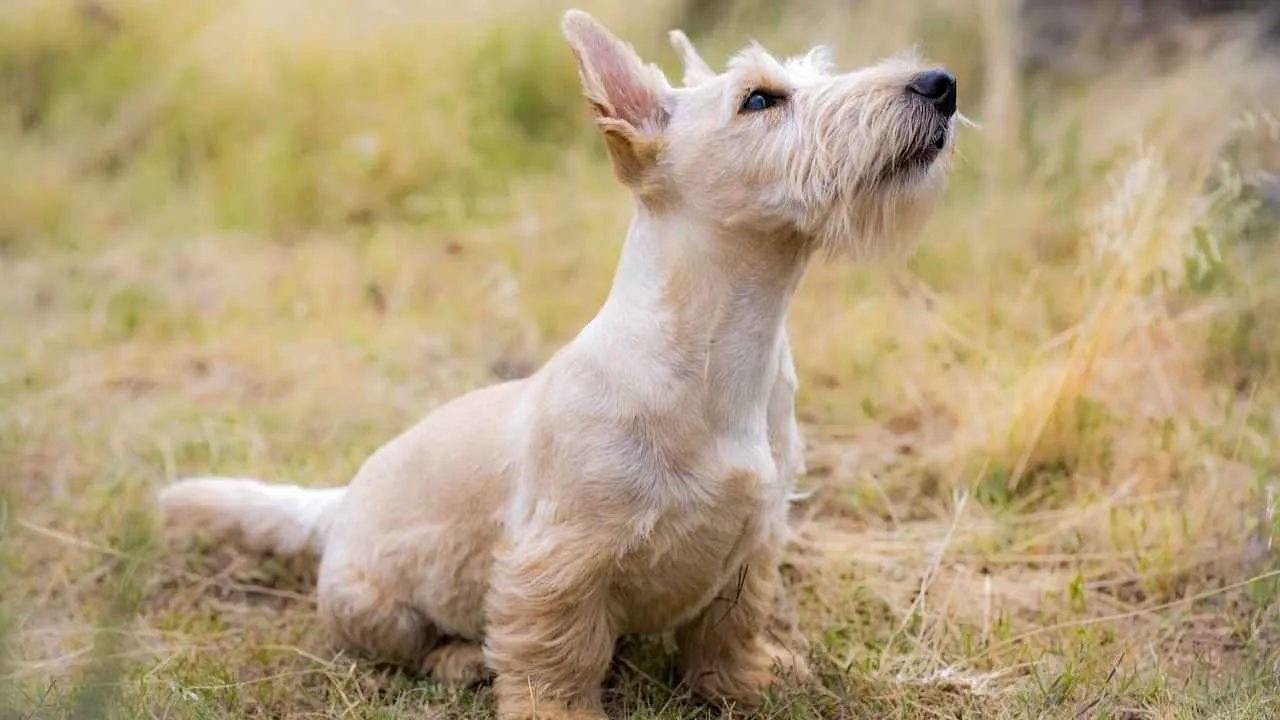
Horak developed this breed in the mid-19th century with the aim of strong genetics and hunting instincts. It is a cross of other Terrier dogs, such as the Scottish Terrier and the Sealyham. Its primary purpose was to hunt wild boars and foxes.
The breed loves being the centre of attention and has a natural tendency to run around and show off its antics, making it highly suitable for dog sports. Because of its strong hunting instincts, the dog has a keen sense of smell and thrives in hide-and-seek. The dog is highly emotionally sensitive and may freeze or simply resist when exposed to harsh training.
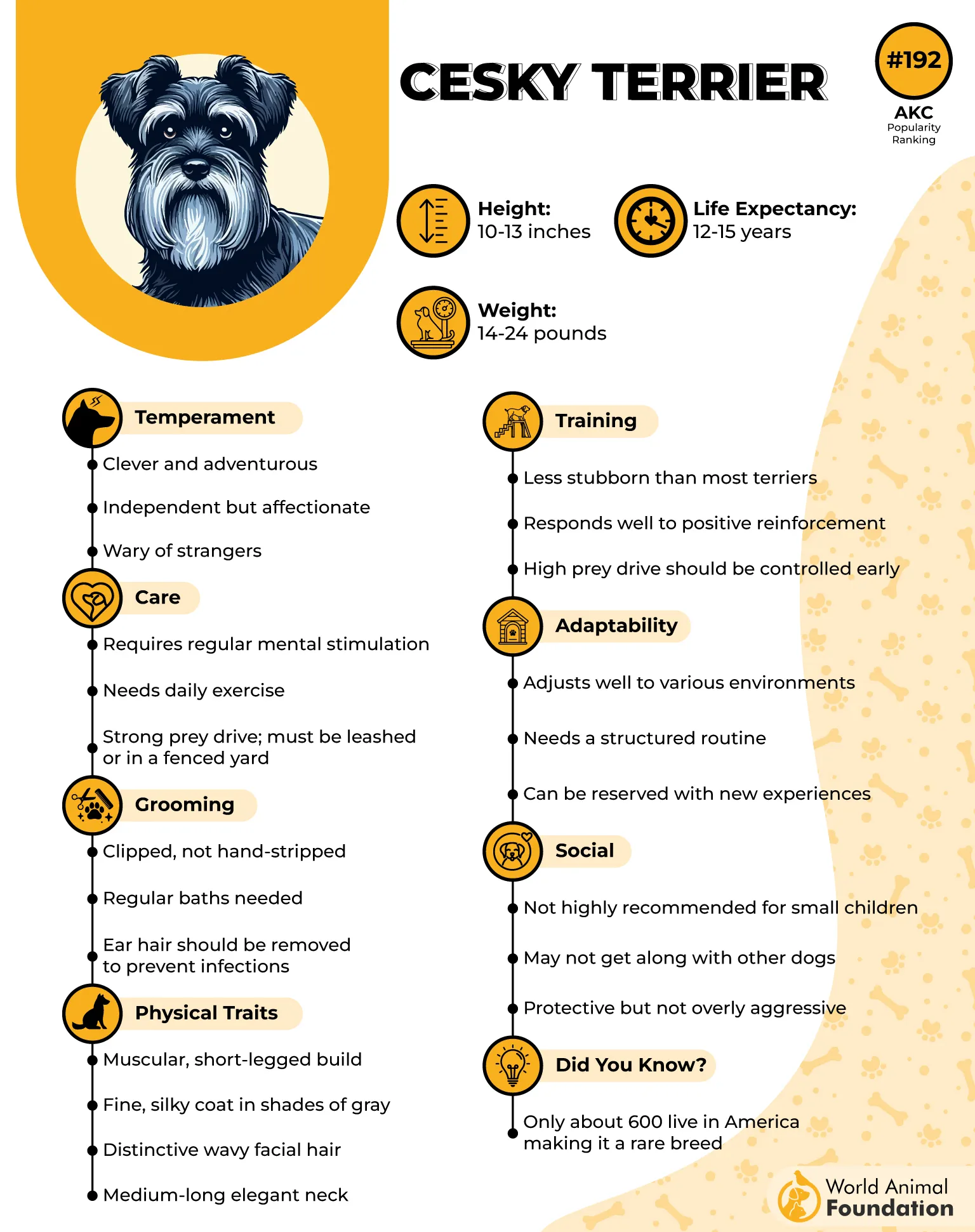
Born completely black or chocolate brown, this small dog changes its coat color to various colors during the first 3 years. It has a sweet and calm temperament and rarely shows aggression.
3. Yorkshire Terrier
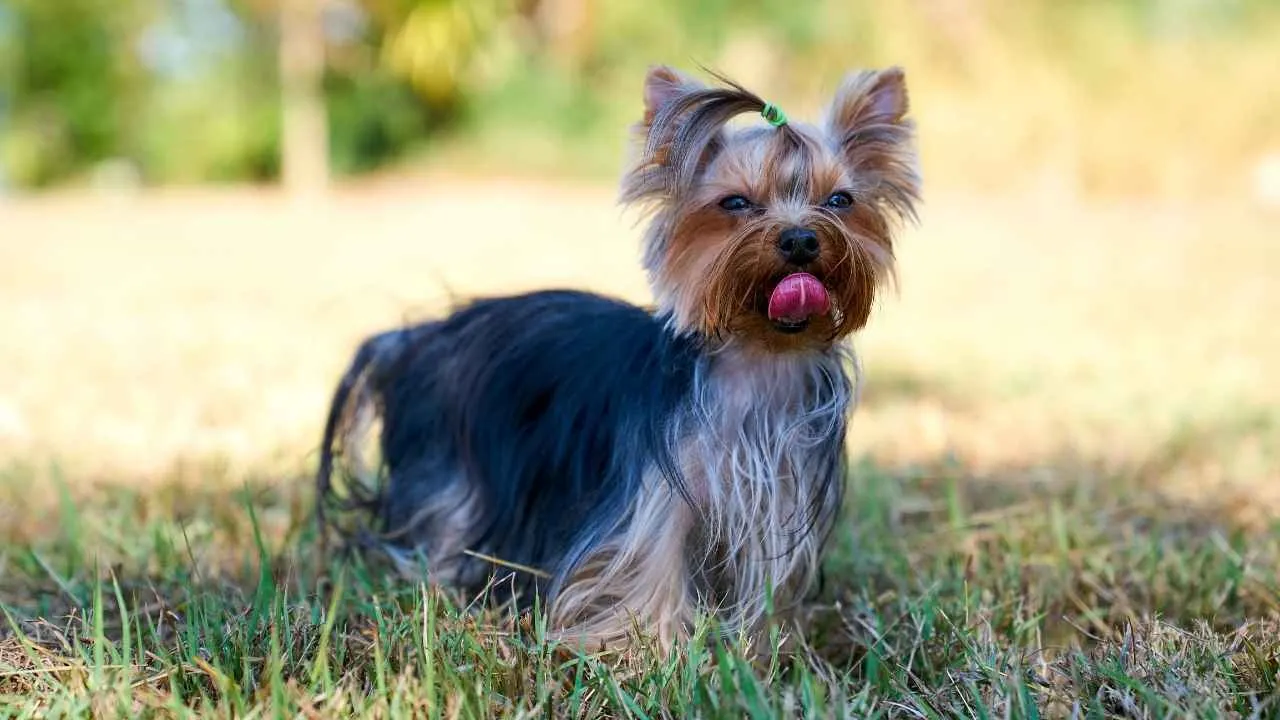
The history of this hunting breed dates back to the mid-19th century, when the Scottish weavers migrated to Yorkshire during the Industrial Revolution. They brought their small terriers and interbred them with local terriers to develop a ratting breed, the Yorkshire Terrier.

Since it lacks an undercoat, the breed is sensitive to cold temperatures and has the habit of burrowing to find a safe nesting spot. With its signature bouncing energy, the dog executes a tiny dance with quick trotting, high-speed bounces, and body wiggles. It has a strong drive to hide things (tissues and socks).
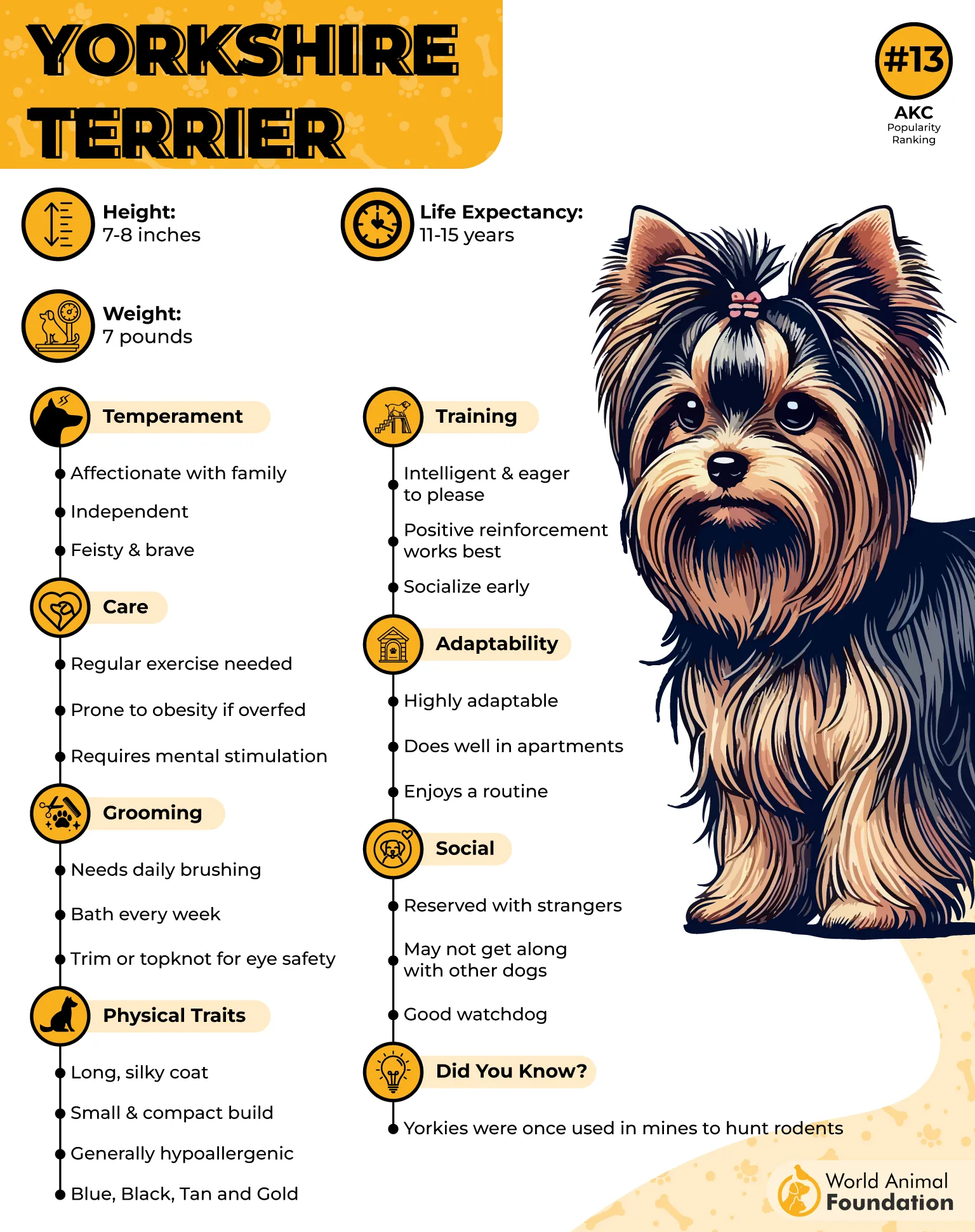
Not just an incredible watchdog, the Yorkie communicates through vocals, such as tiny grumbles, sighs, and whines. Because of its high prey drive, it is obsessed with squeaky toys, shaking them to stimulate catching vermin.
4. Toy Poodle
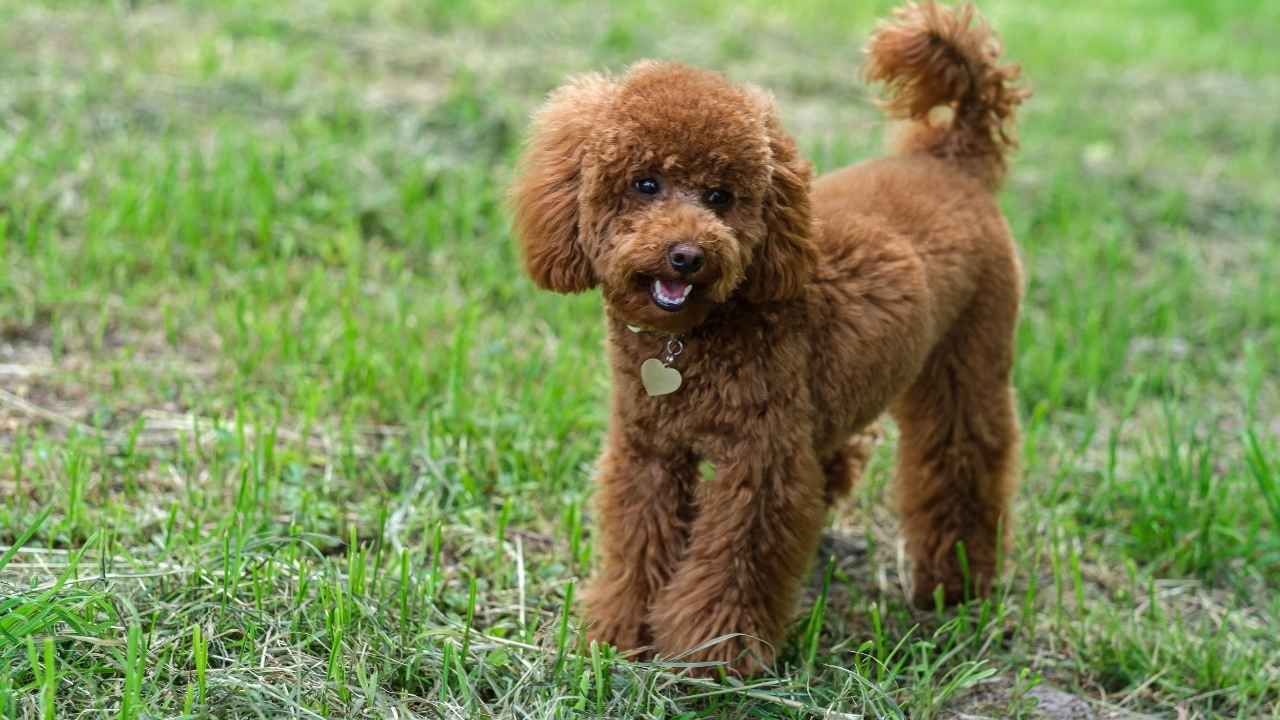
Descended from the Standard Poodle that was bred some 400 years ago, the Toy Poodle was specifically bred to perform in circuses and as a companion dog. However, the breed still carries its retrieving instincts, according to the Royal Kennel Club.
The great family dog has a fun-loving sense of humor and is known for its springy or proud humor. Ranked as the most intelligent Toy breed, it excels in reading human emotions and body language. It loves to show off its circus tricks to amuse the owners, such as dancing on its hind legs or just rolling over.
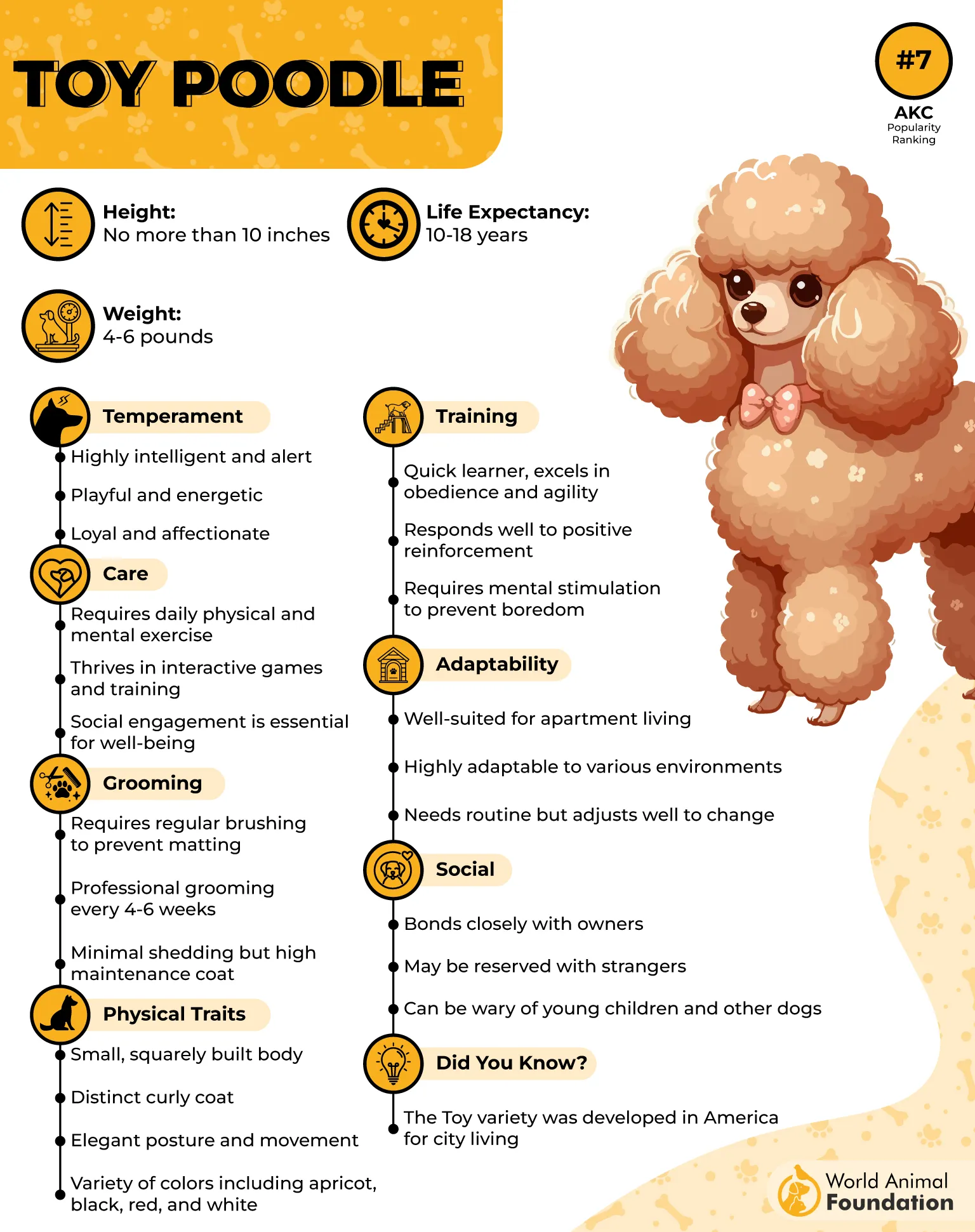
It has dark and oval-shaped eyes that look forward. This, combined with sharp alertness, gives the velcro dog emotive expressions. It has a single-layered, continuously growing, low-shedding coat.
5. Shih Tzu
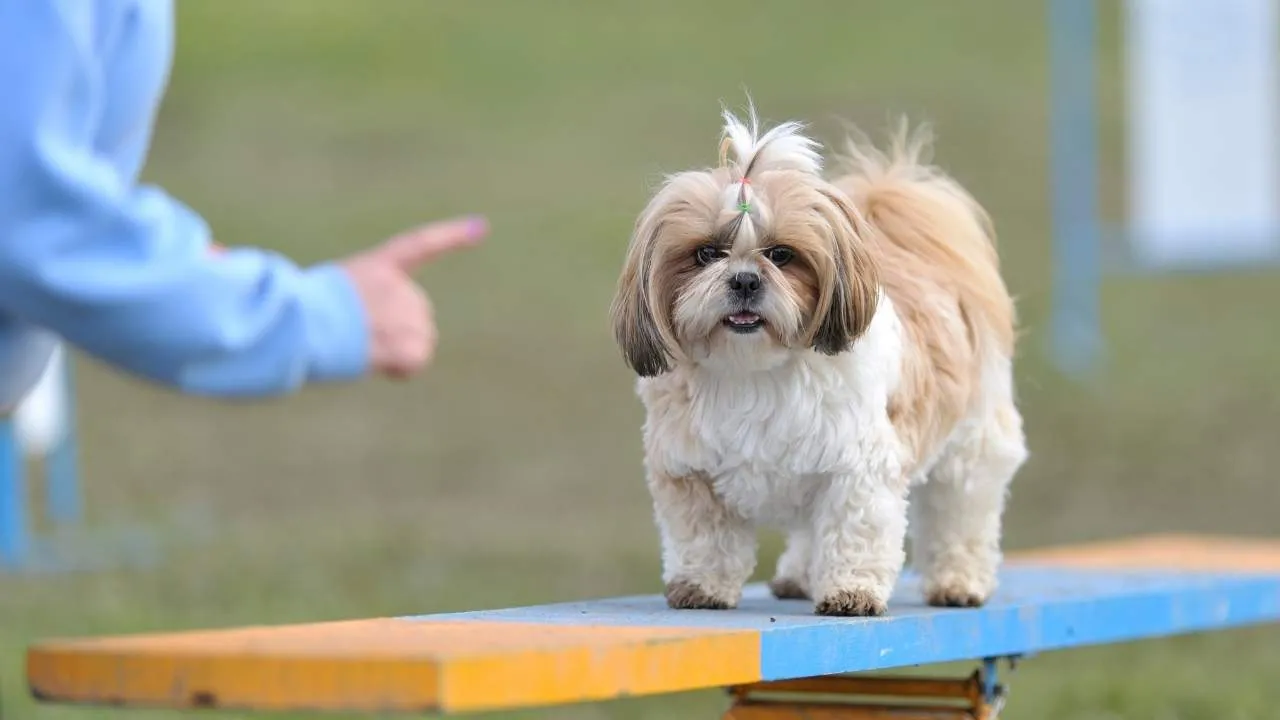
The history of this ancient breed dates back to 1,000 BCE, when the breed was developed in Tibet. This lap dog used to be gifted to the Chinese royalty. Later, it was interbred with the Pug and the Pekingese.
Since the breed is brachycephalic in nature, it can heat up easily. It has a common habit of lying flat on floors and stretching its hind legs out behind like a frog. Despite being a couch potato, the breed zooms around and spins in tight circles, followed by a prolonged resting phase.
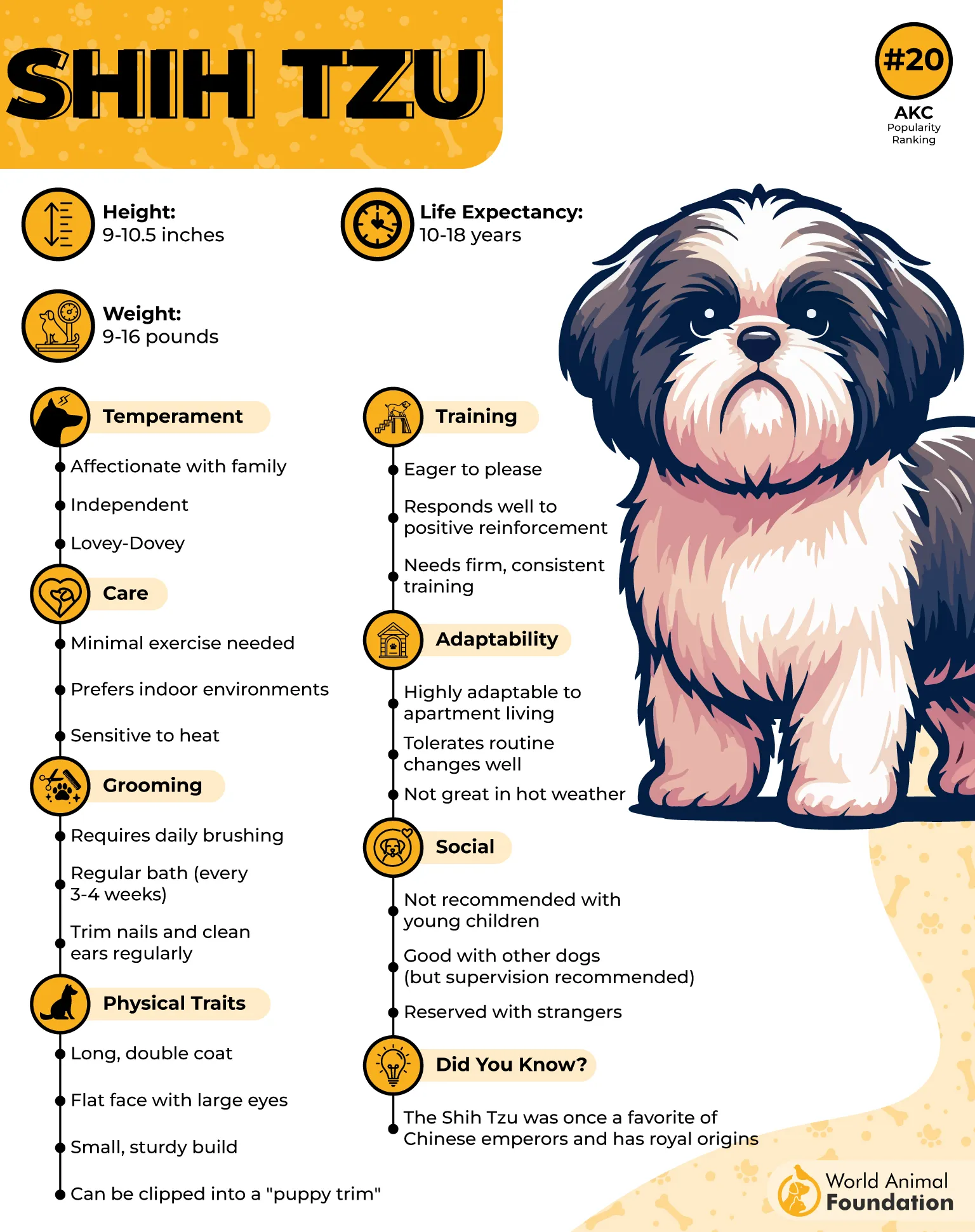
The Shih Tzu has wide-set, soulful eyes, a mode of communication with humans. It plants itself on the owner and stares to gain their attention. It exhibits slight head tilts to listen to what the owner is saying.
6. Maltese
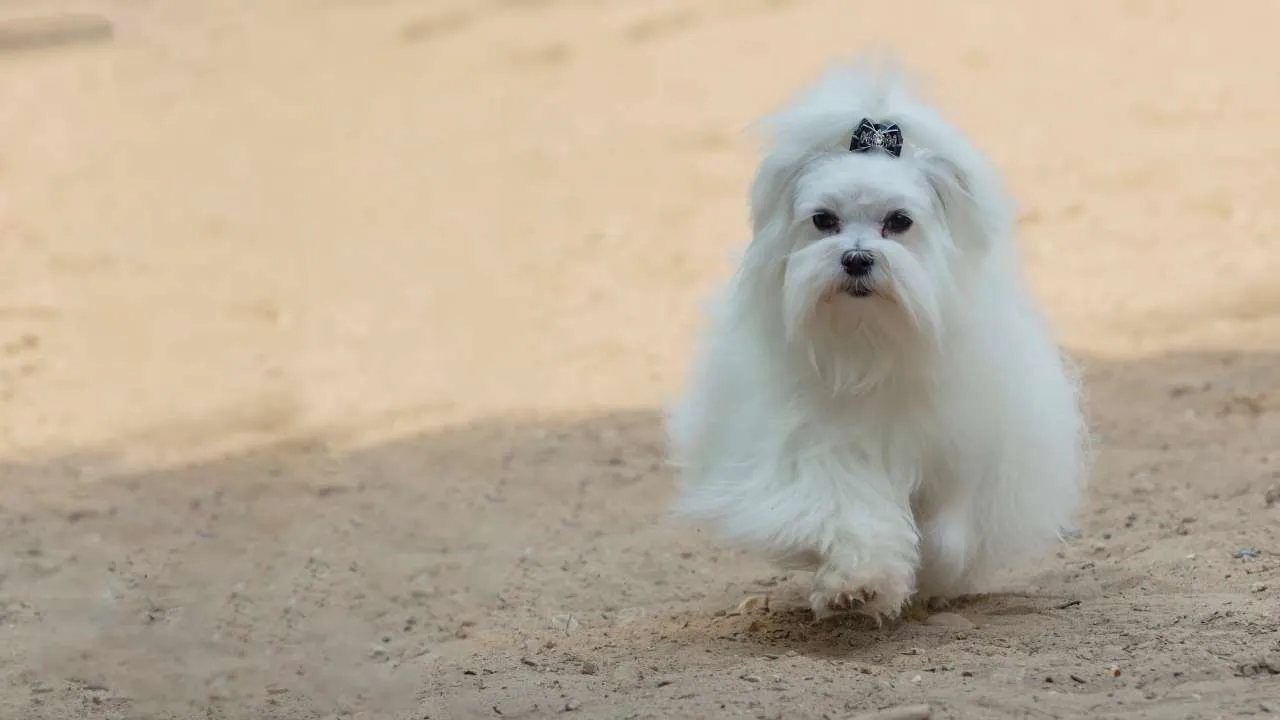
Originally bred in Malta, this white dog breed arrived in Central Europe through Asia. The history begins in the year 300 BCE, and it is thought to have roots with the Tibetan Terrier. The dog was highly favored by the royalty in the 14th century.
It has an affectionate nature and enjoys physical contact and comforting cuddles with the owner. It has a fluffy coat that gives it a plush toy appearance. Despite being small, it has an alert and brave personality, making it a great watchdog. It frequently turns its nose up at standard kibble since it is highly food motivated.
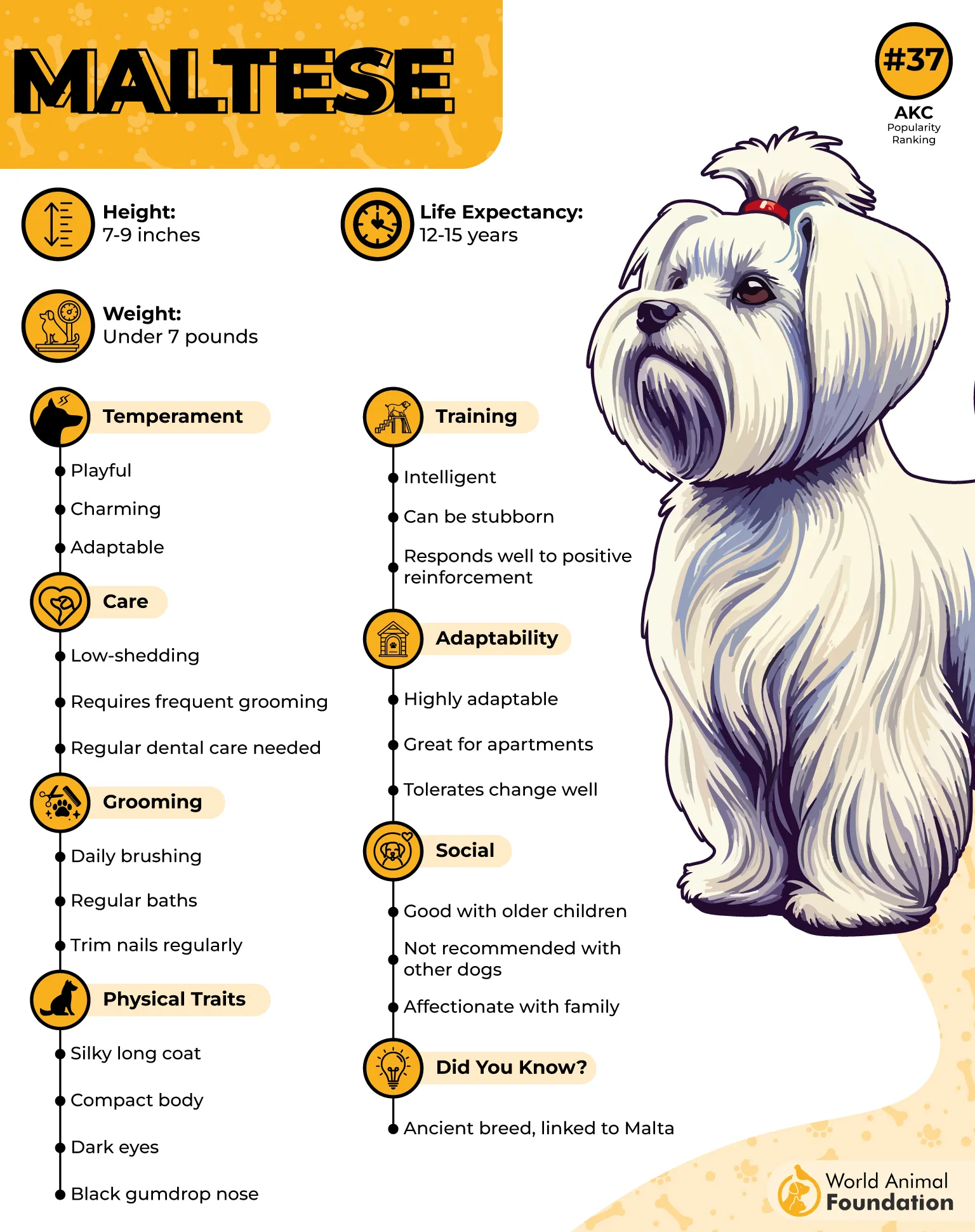
The dog exhibits a free-floating gait because of the heavy coat that hangs to the sides. It has short bursts of energy because of high metabolism. High intelligence makes it a quick learner.
7. Pomeranian
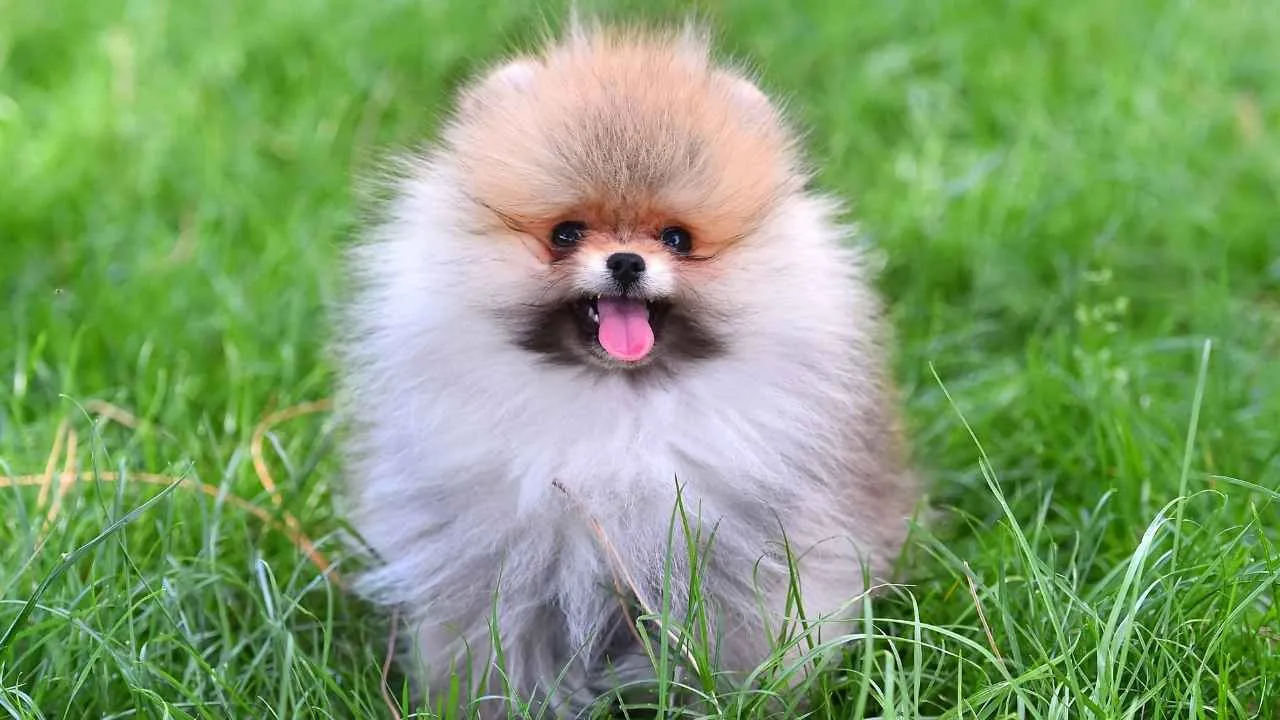
The breed was originally developed from the Spitz-type dog that was bred in Iceland. These dogs had wolf-like characteristics, such as a thick and fuzzy coat, a slight underbite, and pricked ears. These features are still present in the modern-day Pomeranian, says Petplan.
Famously known for its ‘pom spin,’ the breed twirls rapidly in circles on its hind legs to show excitement. It generates a variety of sounds to communicate, such as soft huffs, whines, and grumbles. It also sits flat on its rump with its back legs extended straight out, relaxing its joints.
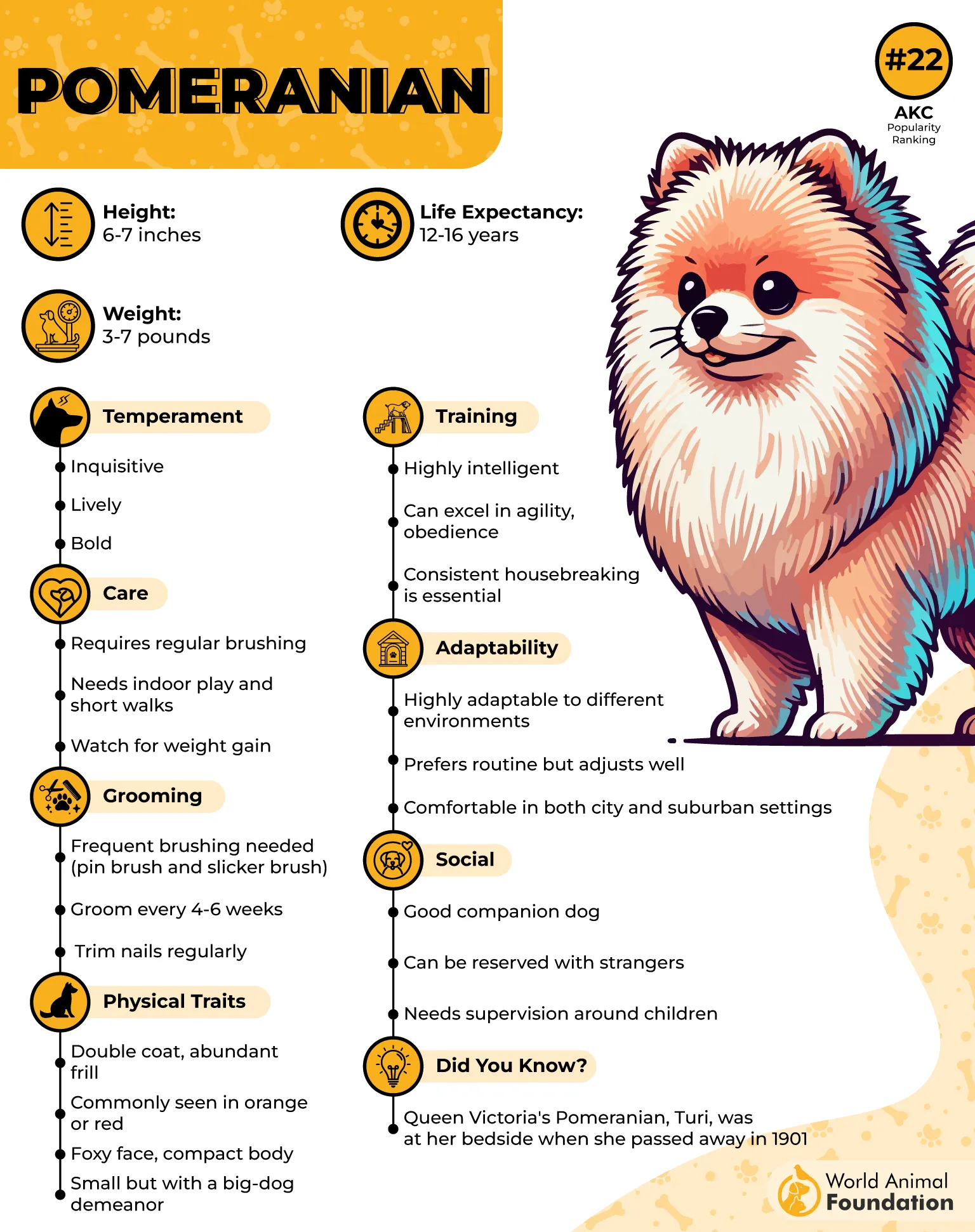
Since the breed has light territorial instincts, it tends to sneak away with small objects. It is a social butterfly and makes friends with everyone, even strangers. It has a smiling fox-like face because of the wedge-shaped head, a short muzzle, and almond-shaped eyes.
8. Chihuahua
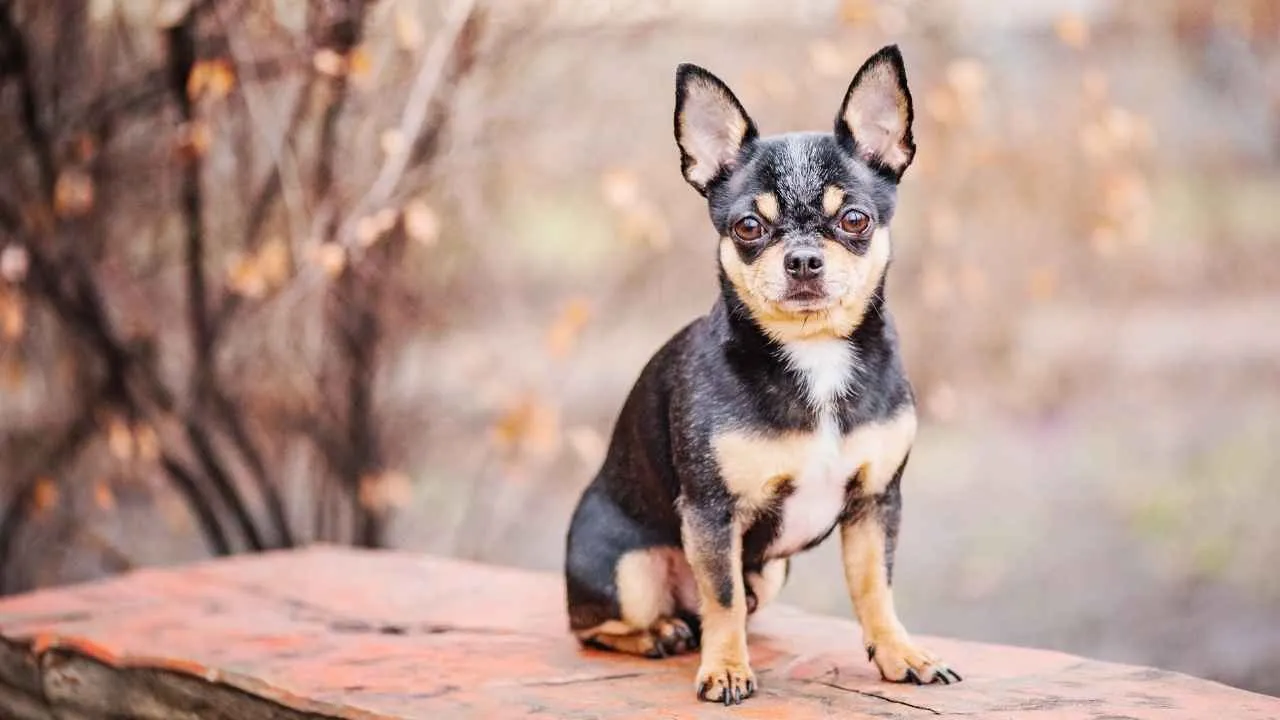
This Mexican toy breed is the smallest dog in the canine kingdom. The primary purpose was to be kept as a companion dog. The genetic evidence shows that the breed carries some pre-Columbian indigenous American breed roots.
It has a habit of burrowing deep under the blankets, pollies, and laps. It is prone to shivering, which can be because of cold weather or just a gesture of excitement or intense emotions. It has an independent streak and may show resistance towards harsh training.
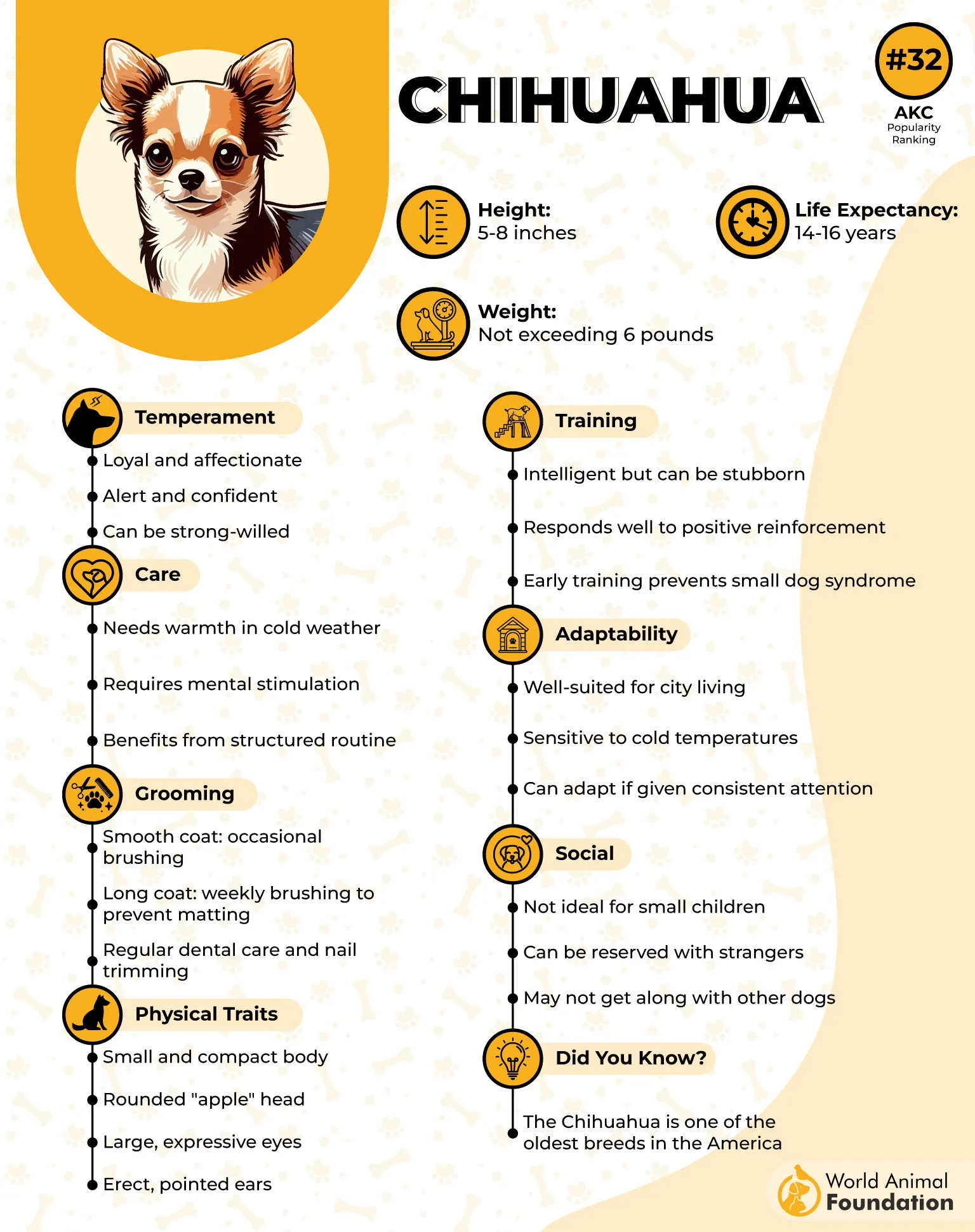
The breed has a molera, which is a soft spot on the skull, giving it a human infant appearance. The satellite ears can tilt and rotate to provide a comical and expressive visual when it detects something unusual.
9. Pekingese
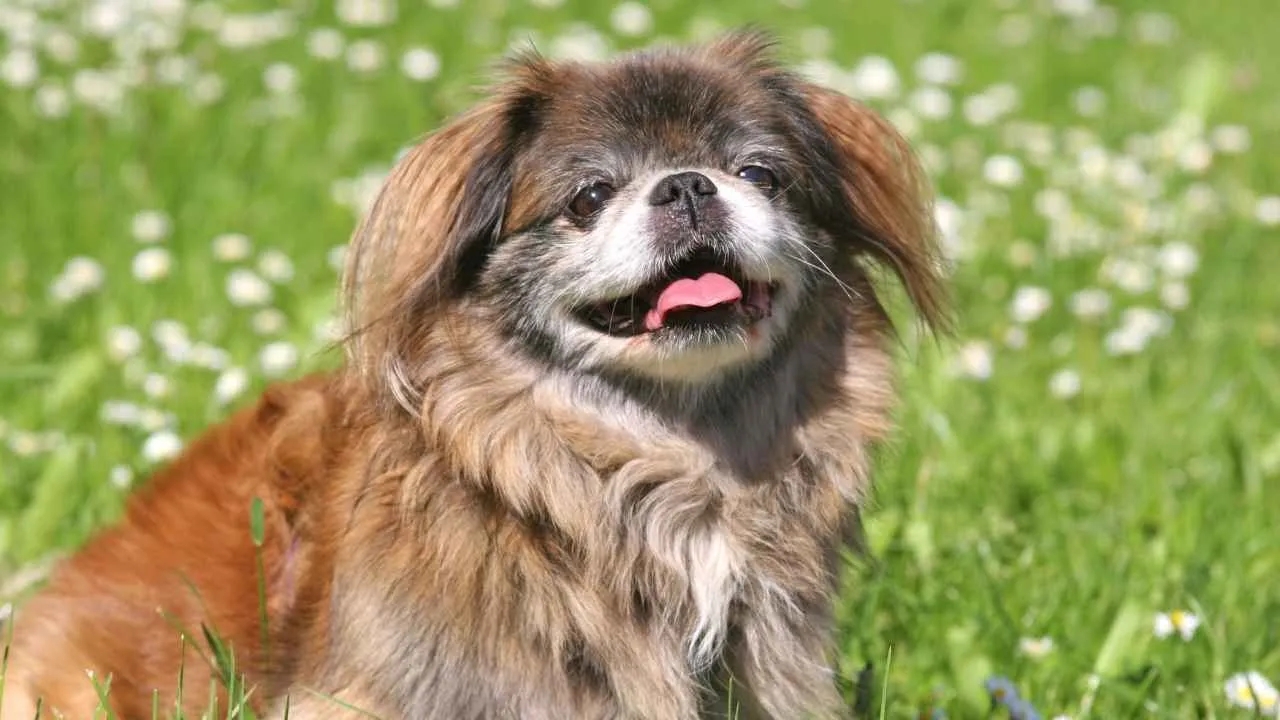
The toy dog breed was developed in China and was favored by the royalty as a companion dog. This breed is known for its spaniel-type coat, a flat face, large eyes, and a low-slung body.
Also known as the ‘sleeve dog,’ it used to be carried in the flowing sleeves of the Emperors. The small breed has sudden bursts of playful instincts, where it tends to spin, romp, and act like a clown around humans. The Pekingese loves to locate itself on a high vantage point to observe its surroundings.
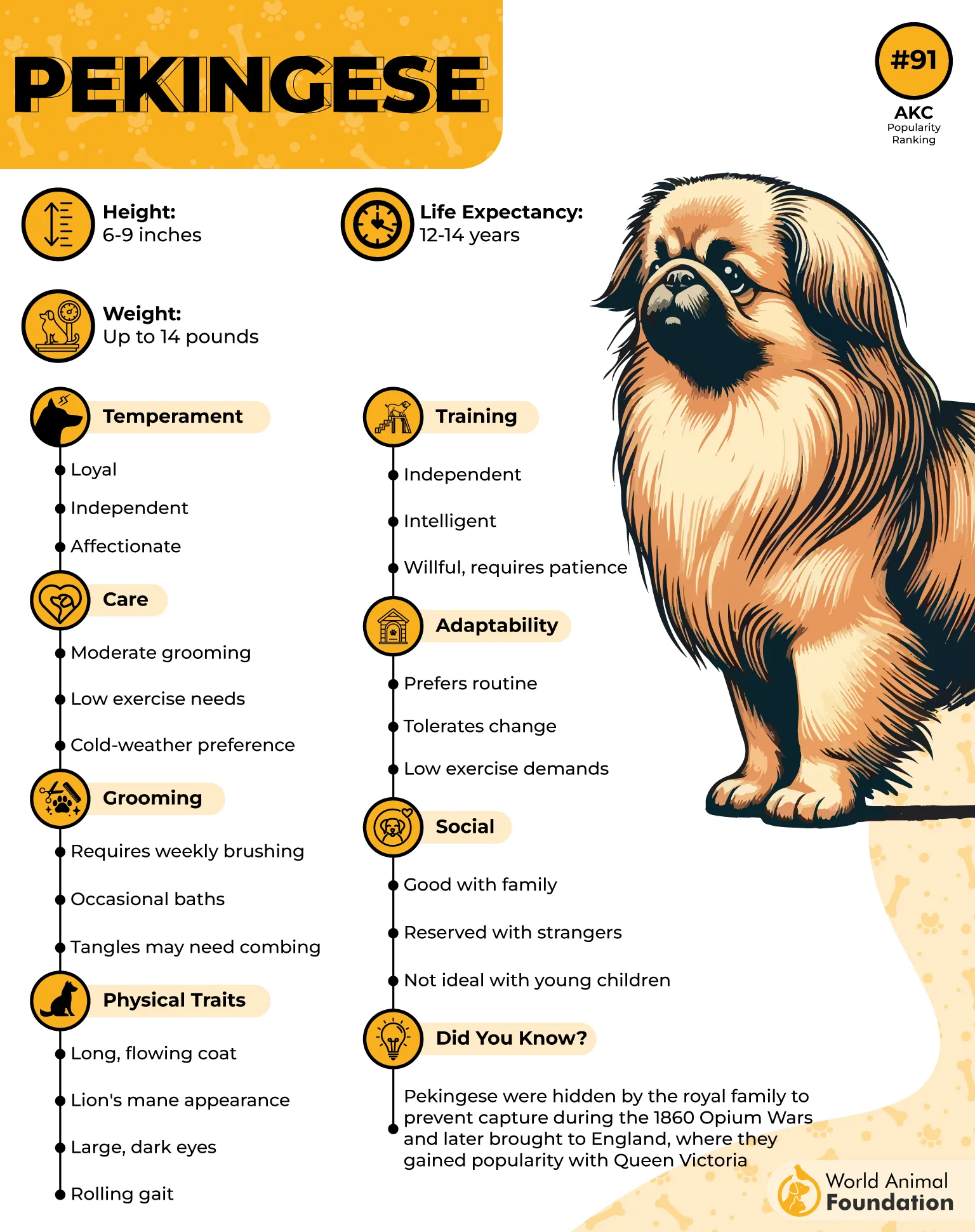
It has a distinct pear-shaped silhouette: a broad chest slung between front legs and narrows down to a lighter hindquarter. It generally has a low energy level, and 20 minutes of daily exercise is enough.
Conclusion
Tiny dogs can bring a surprisingly big presence into everyday life. A Chihuahua may follow you from room to room, a Pomeranian may supervise every household sound, and a Shih Tzu may happily claim the softest spot on the couch. That is part of the fun.
Still, small size should never be the only reason to choose a breed. Grooming demands, exercise needs, temperament, training, and health considerations all matter. Some tiny dogs are busy and curious, while others are happier with a slower routine.
The right match depends on your lifestyle as much as the dog’s appearance. If you want a companion that stays compact well beyond puppyhood, these breeds offer plenty of personality without requiring a giant home.
