




Run your hand through a dog’s coat sometime and really pay attention. Soft. Wiry. Curly. Corded. It’s wild how different one coat can feel from another, even within the same dog world.
Coat texture is not about looks either. It’s tied to how a breed was built, what job it had, what climate it came from, and how much grooming it’s going to need for the rest of its life.
Some dogs have a single coat: light, low-shedding, simple.
Others have a full double-coated situation going on, a soft undercoat plus a rougher topcoat working together to handle cold, heat, or rain.
And then there are the truly unique ones. Dogs with coats so distinctive, so specific to their breed, that you could probably identify them blindfolded, just by touch.
We are looking at seven amazing dog breeds and their distinctive coat textures. Some silky, some wiry, some downright unlike anything else in the pet world.
Amazing Dog Breeds and Their Distinctive Coat Textures
1. Puli
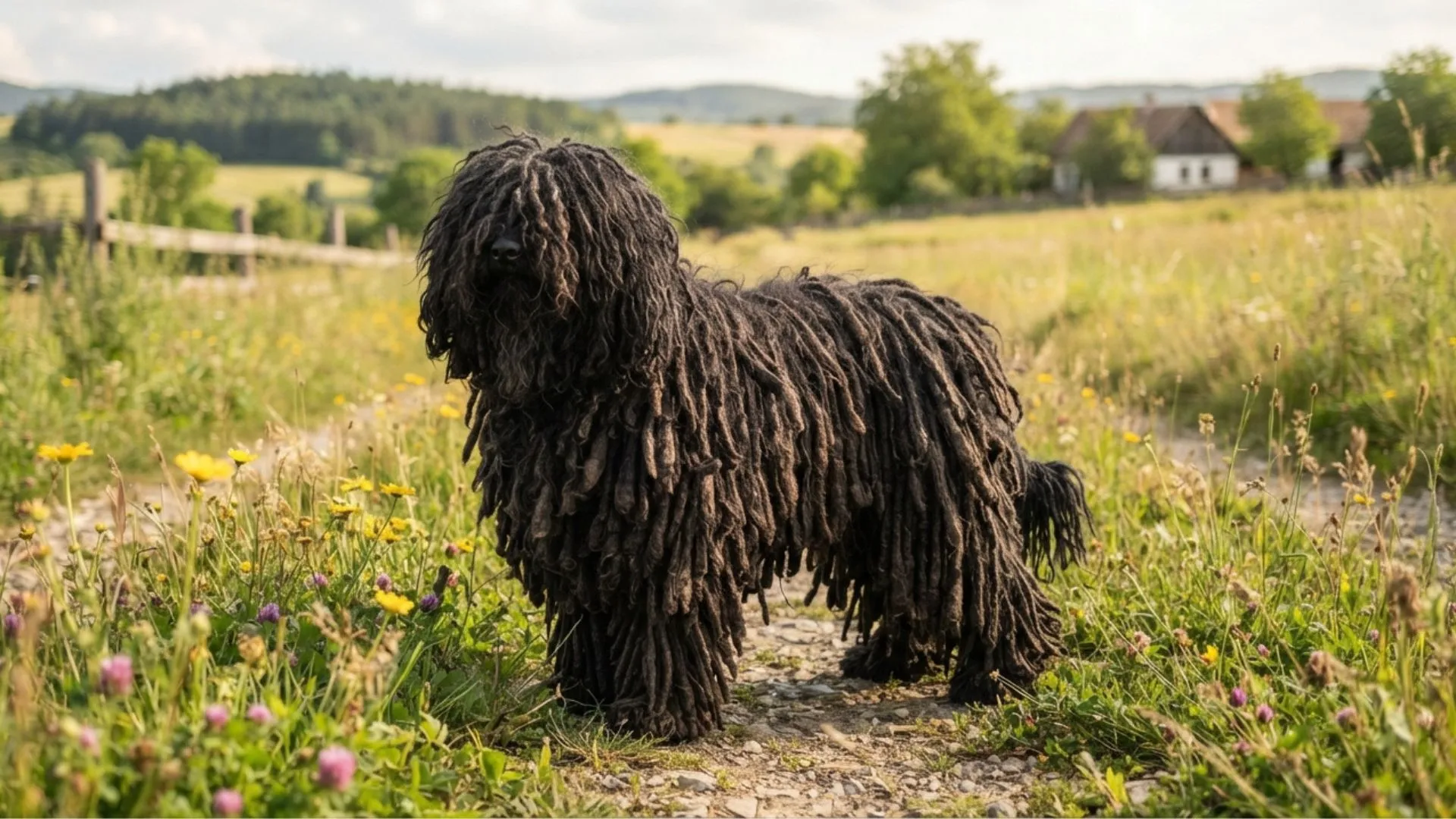
Let’s start with the obvious one. If any breed defines “distinctive coat texture,” it is this one.
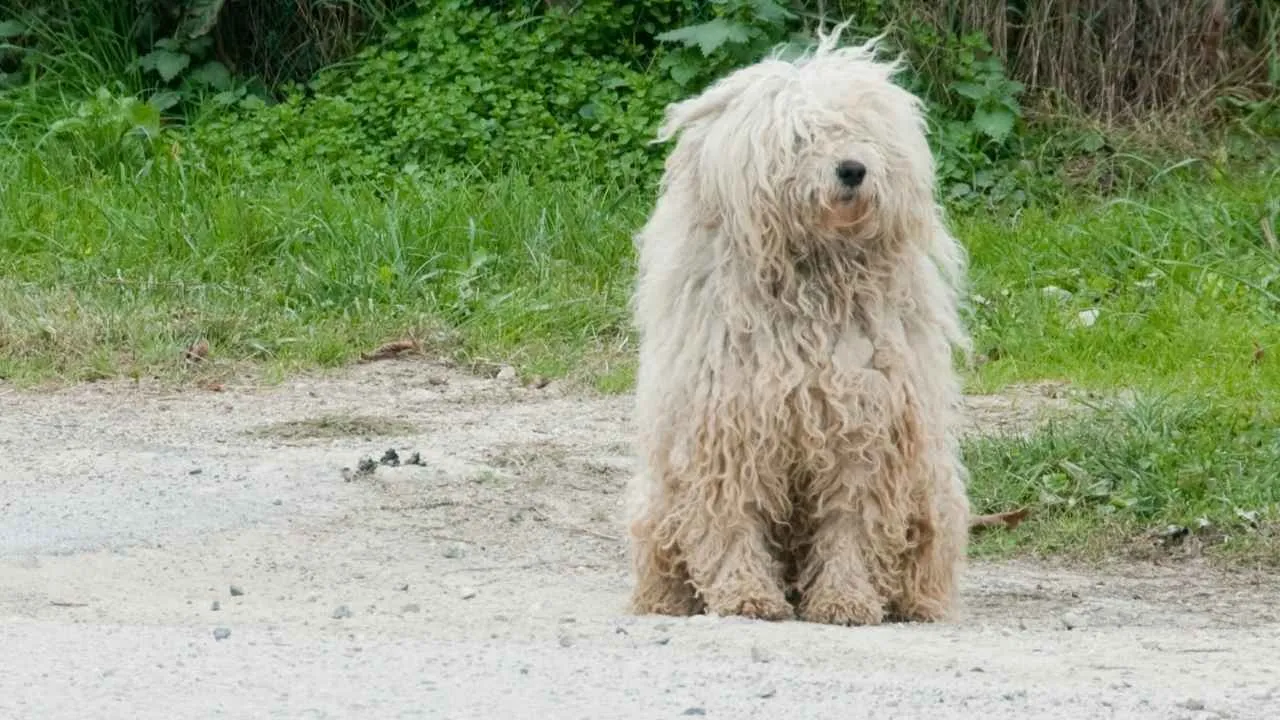
This Hungarian herding breed has a corded coat that forms naturally over time: dense ropes of hair that look like dreadlocks hanging from head to tail. It is one of those coats you instantly recognize. Once you see a Puli in person, you don’t forget it.
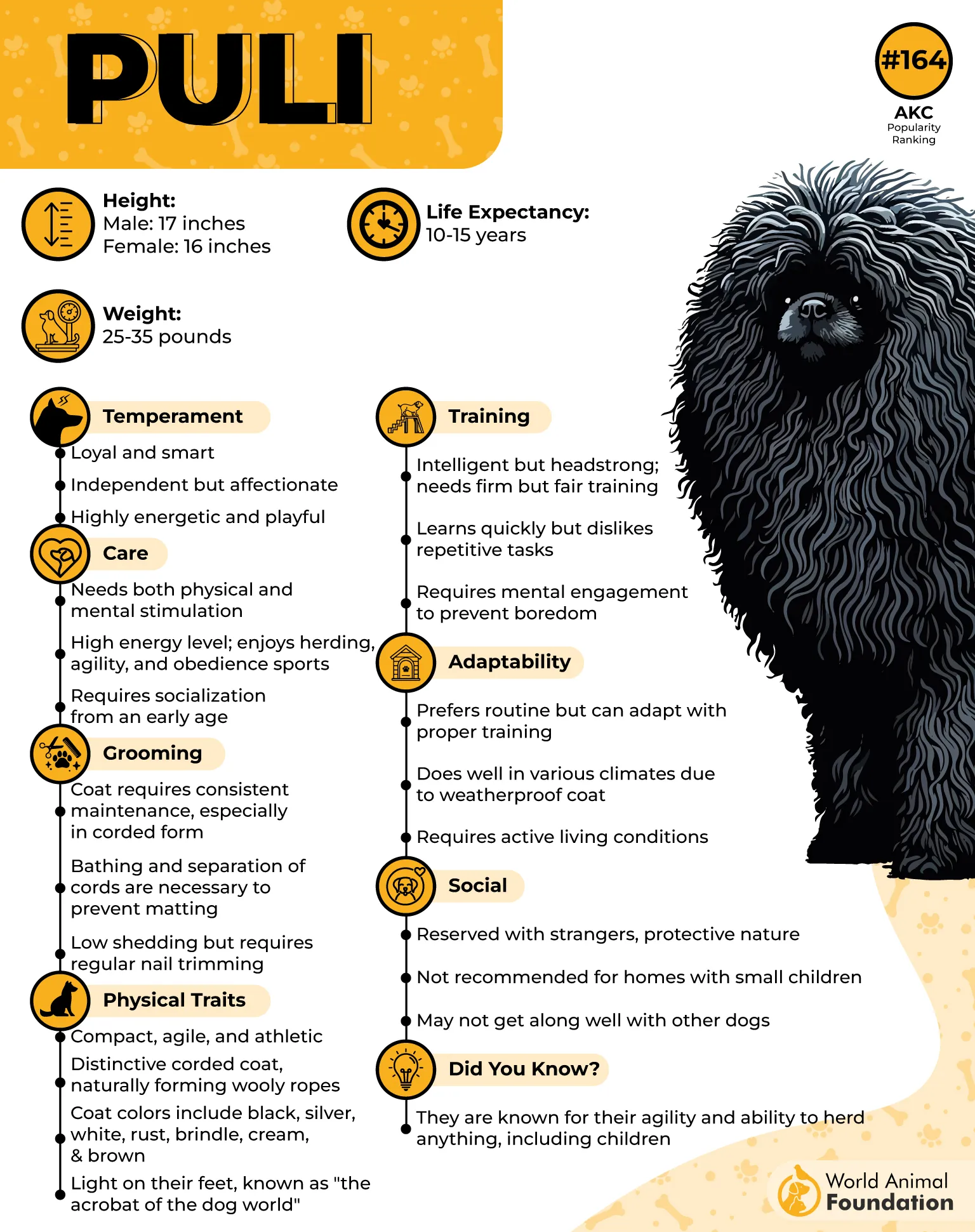
Caring for this coat is not simple, though. The cords need to be carefully maintained and separated by hand to prevent them from matting into a tangled mess, says Hill’s Pet.
Underneath all that corded hair, these herding dogs are smart and energetic with plenty of personality.
Interestingly, Pulis don’t start corded at all. Their puppy coats are soft and fluffy at first, and the cords only begin forming naturally as the dog matures. It is a slow transformation that takes patience.
2. Airedale Terrier
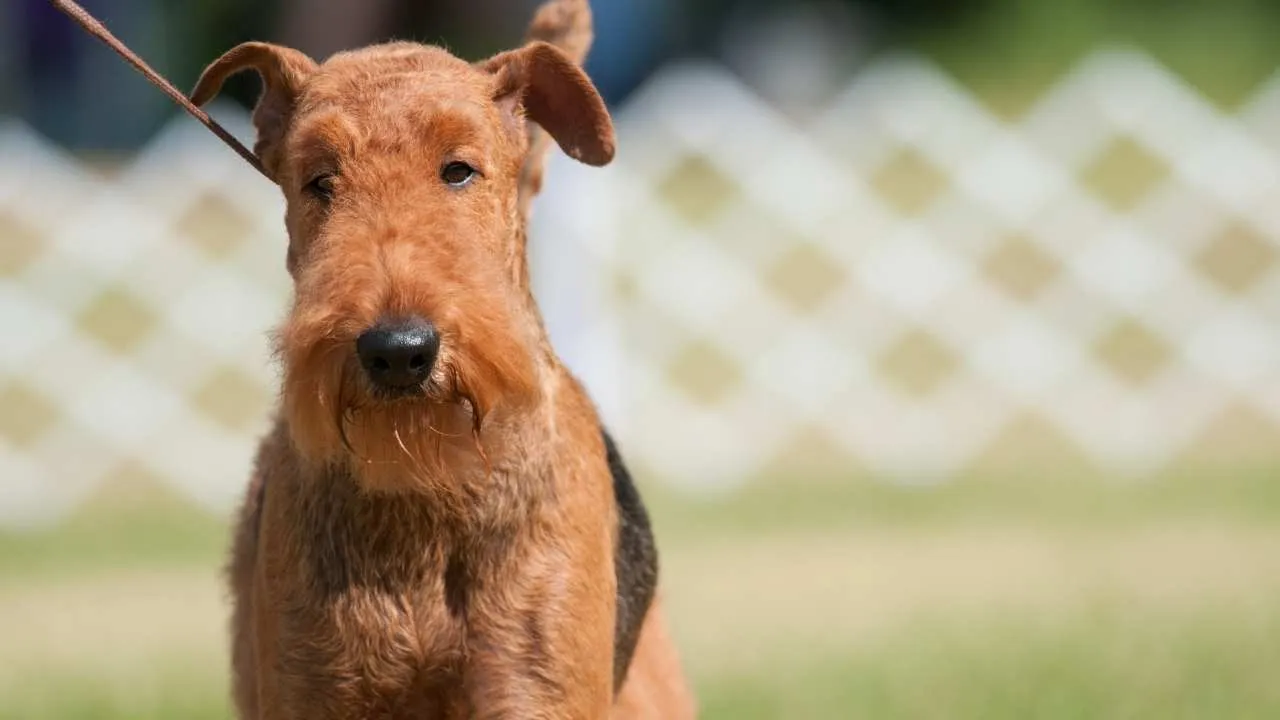
Known as the “King of Terriers,” the Airedale Terrier brings a rough, wiry texture that’s about as different from the Puli’s cords as you can get.
This bearded dog breed has a dense, wire-coated outer layer with a softer undercoat. That is a classic double-coated setup for durability rather than softness.
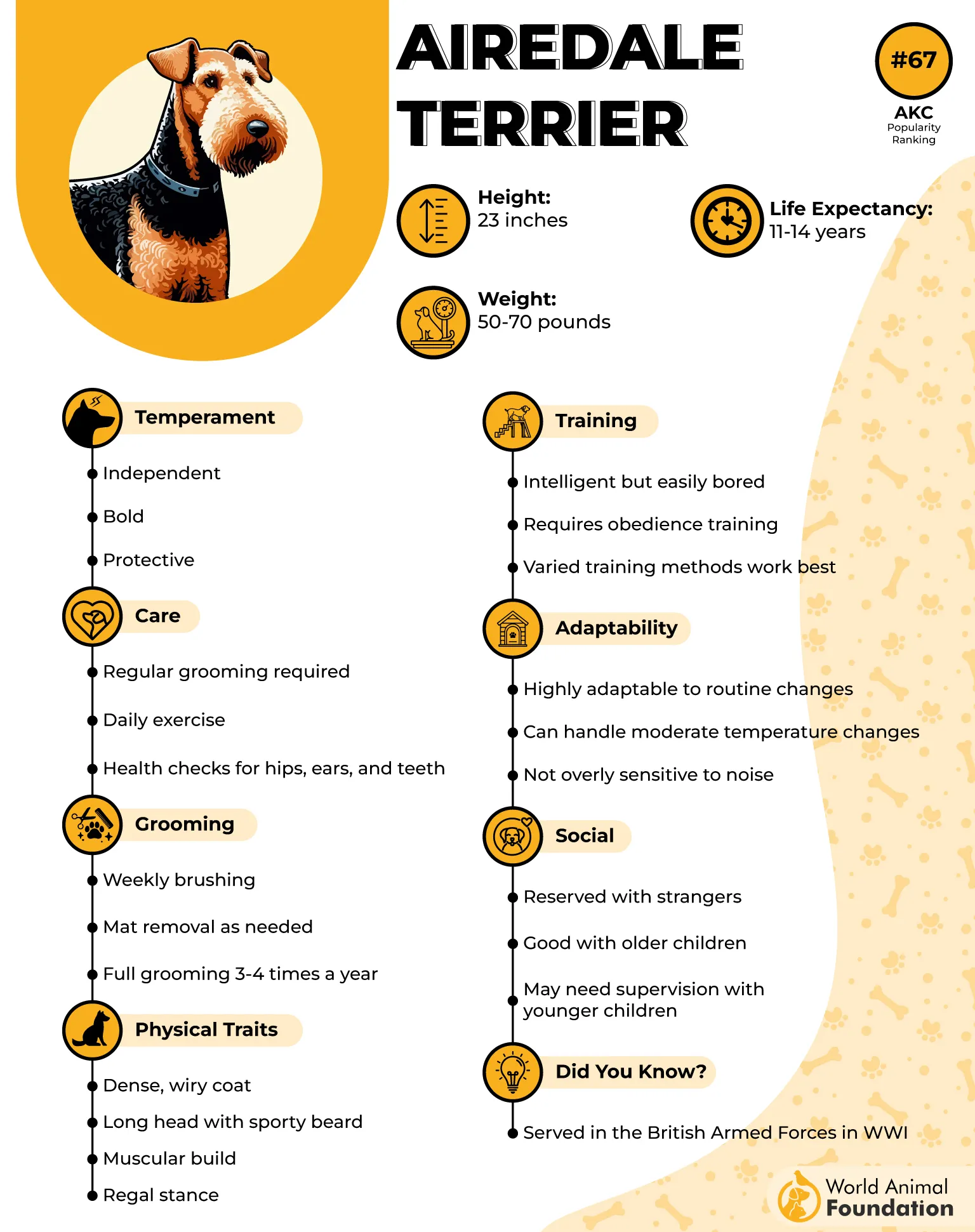
The coat feels rough and bristly to the touch, almost like a stiff brush, which helps protect the dog outside in rough weather or thick brush.
Airedale Terriers don’t shed much thanks to that wiry texture, according to Britannica. But they do need regular grooming, such as hand stripping, to keep the coat looking its best. Many owners rely on a dog groomer familiar with terrier coats to keep things proper.
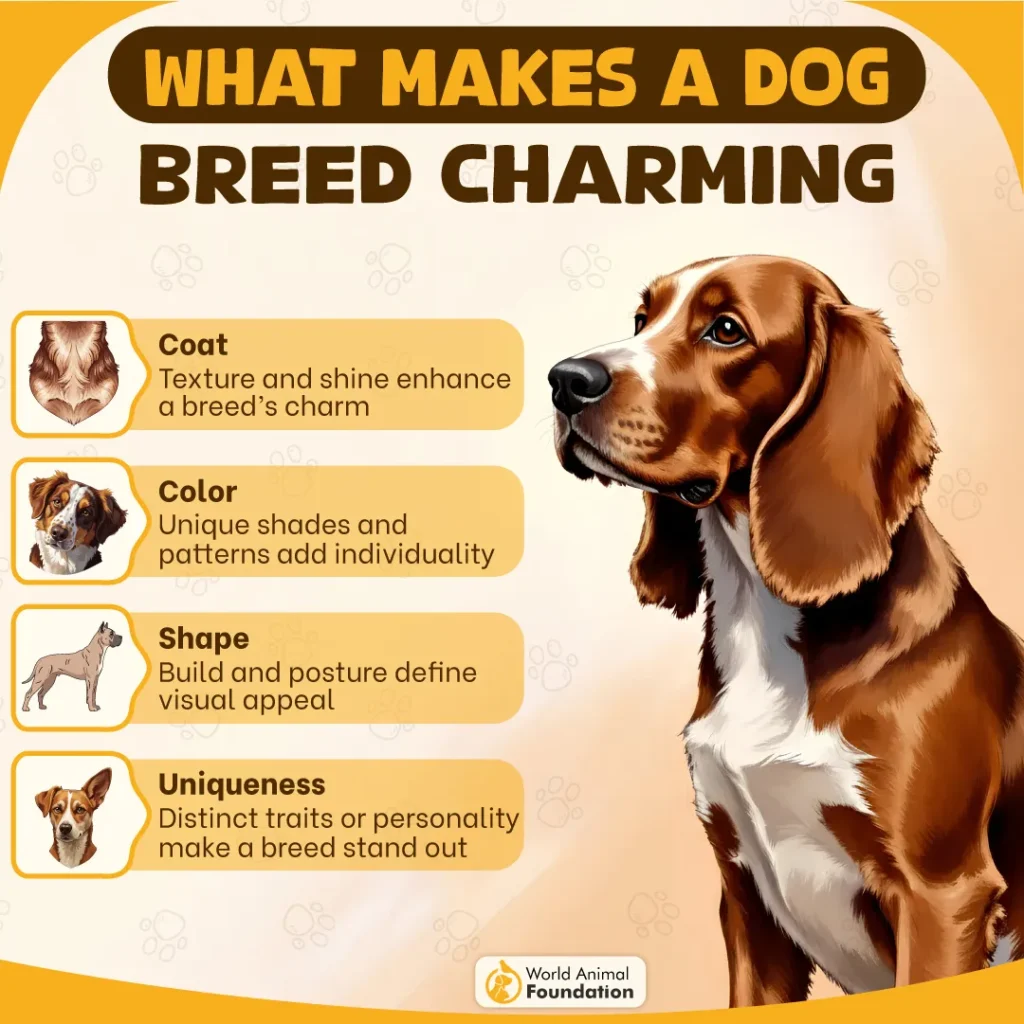
This breed’s coat, paired with that classic terrier beard, gives the Airedale an almost old-fashioned look that’s charming.
3. Afghan Hound
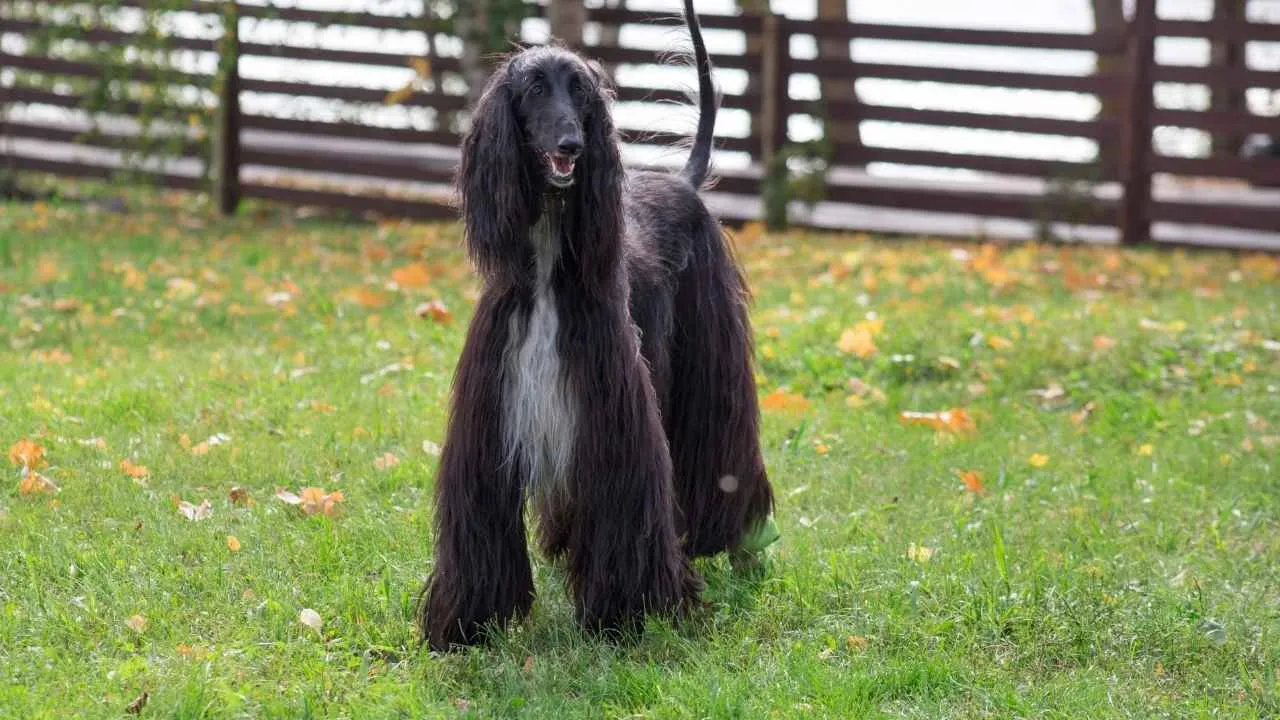
Afghan Hound is the total opposite of the Airedale. Long, stunning silky coat.
This Hound dog breed has one of the most luxurious coats of all dog coat types; flowing, fine, and almost human-hair-like in texture. Bred originally to survive cold mountain climates in Afghanistan, that thick, silky coat served a purpose long before it became a fashion statement.
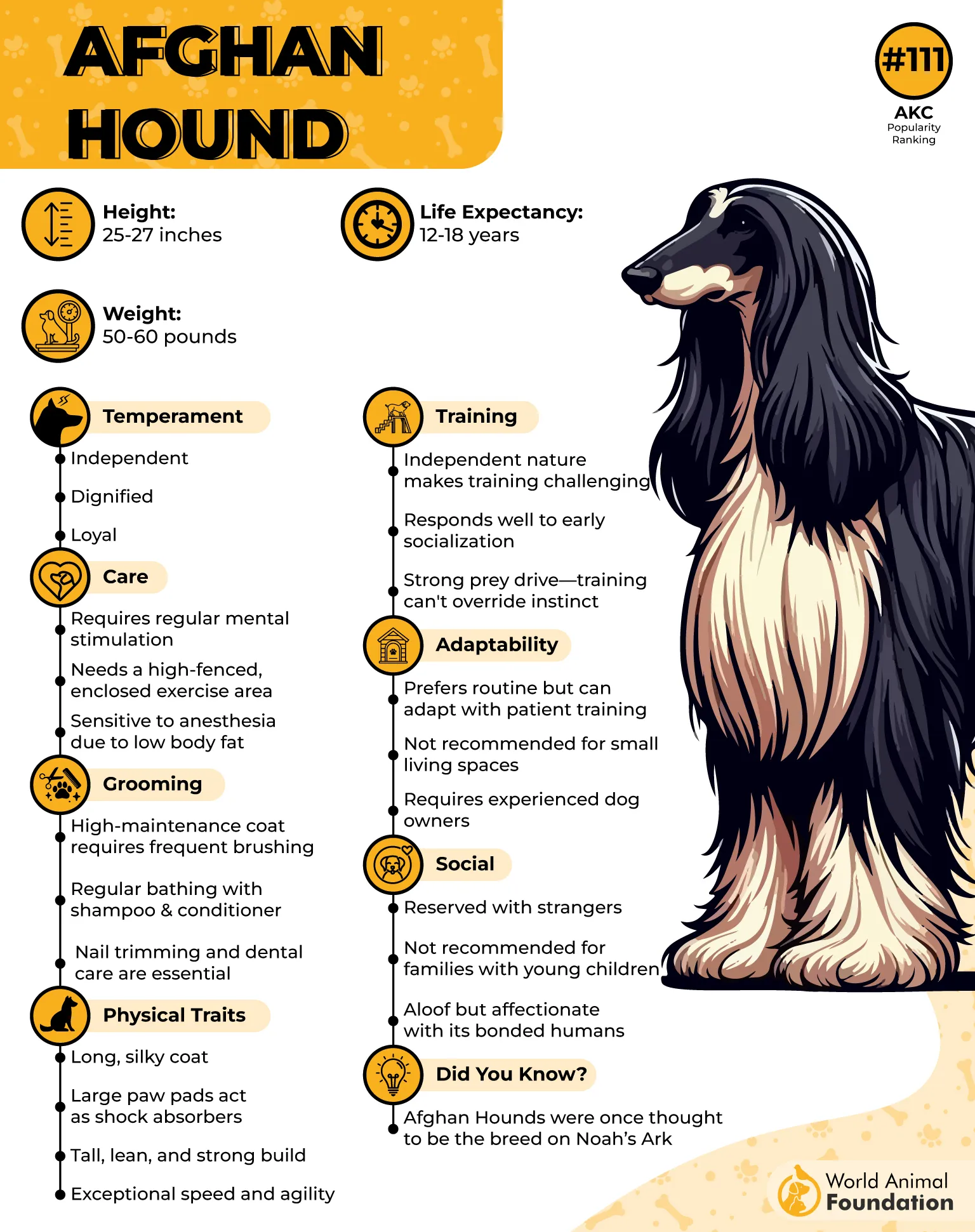
Keeping this coat looking good takes serious commitment. Daily brushing is basically non-negotiable. Tangling happens without it, and tricky tangles can turn into a nightmare if left too long. Regular moisturizing shampoos also help keep that coat from turning dry or lackluster over time.
Elegant, aloof, and undeniably beautiful, the Afghan Hound’s coat is a statement piece in the dog world.
4. Poodle
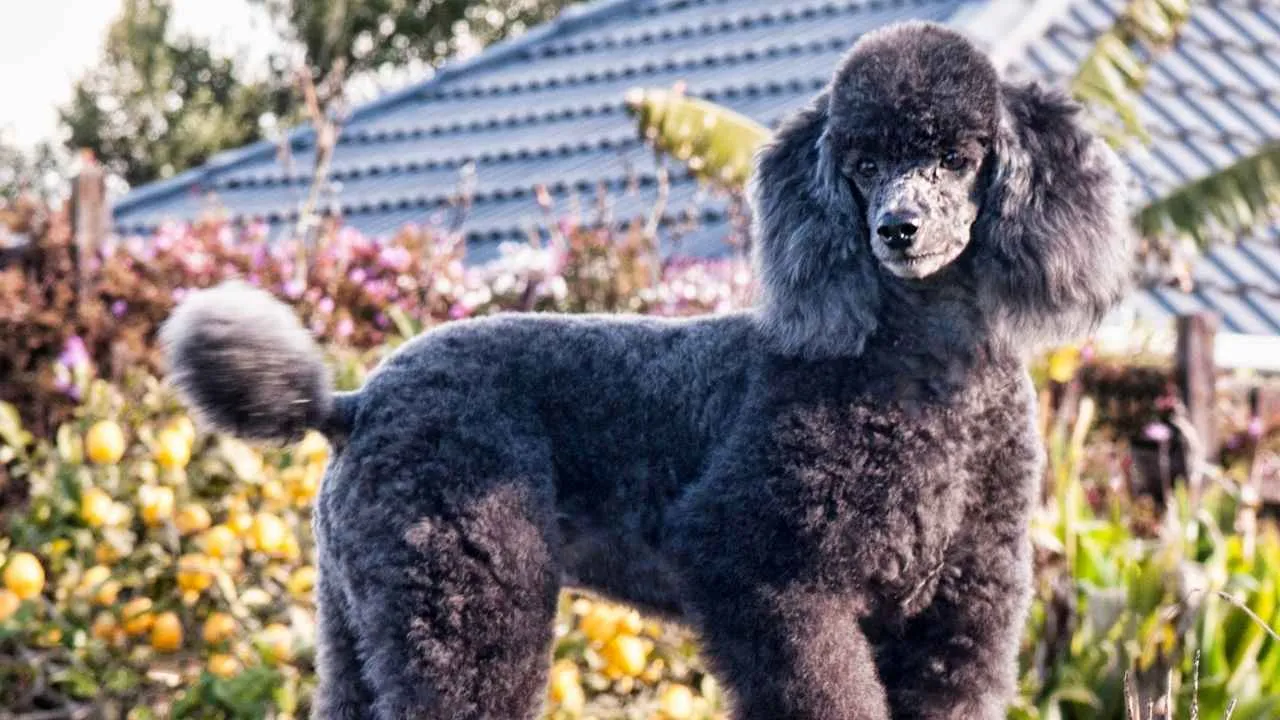
The Poodle’s very curly coat is so iconic. It’s become shorthand for “curly dog” in general conversation.
That dense, curly-coated texture is not merely for looks. It was originally functional, helping these water dogs retrieve waterfowl by staying warm and somewhat water-resistant. The tight curls also mean Poodles shed minimally. That is a big reason they are recommended for allergy-sensitive houses.
Their curls trap loose hair rather than releasing it, says Pets Juicy. So, regular grooming is important. Brushing several times a week prevents mats, and most owners bring their Poodle in for professional trims every month or so to keep the coat manageable.
Standard, Miniature, or Toy Poodle, that same curly texture shows up across the board. Proof that great coat really does come in all sizes.
5. Samoyed
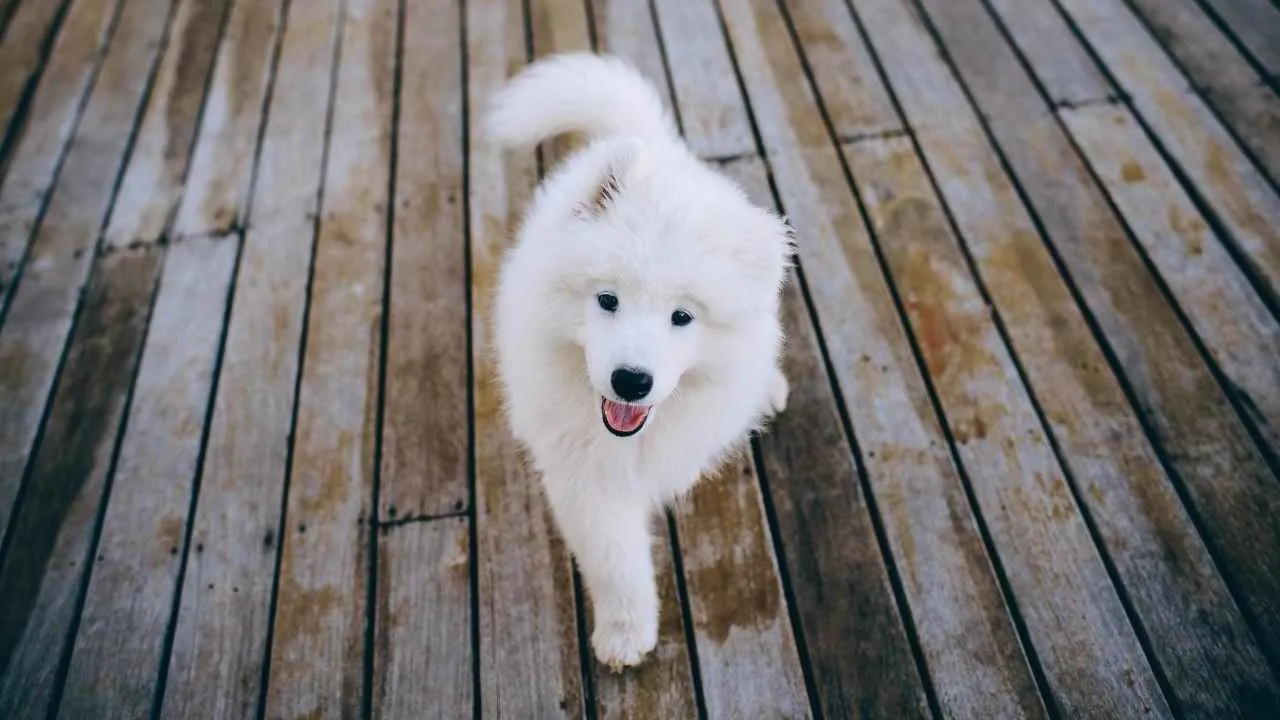
Fluffy doesn’t even begin to describe the Samoyed’s coat.
This breed has a thick, double-coated build with a soft, dense undercoat and a longer, slightly harsh outer layer that stands away from the body. These beautiful white dogs were bred for brutal Arctic conditions. Their coat was made to keep the dog warm outside in extreme cold.
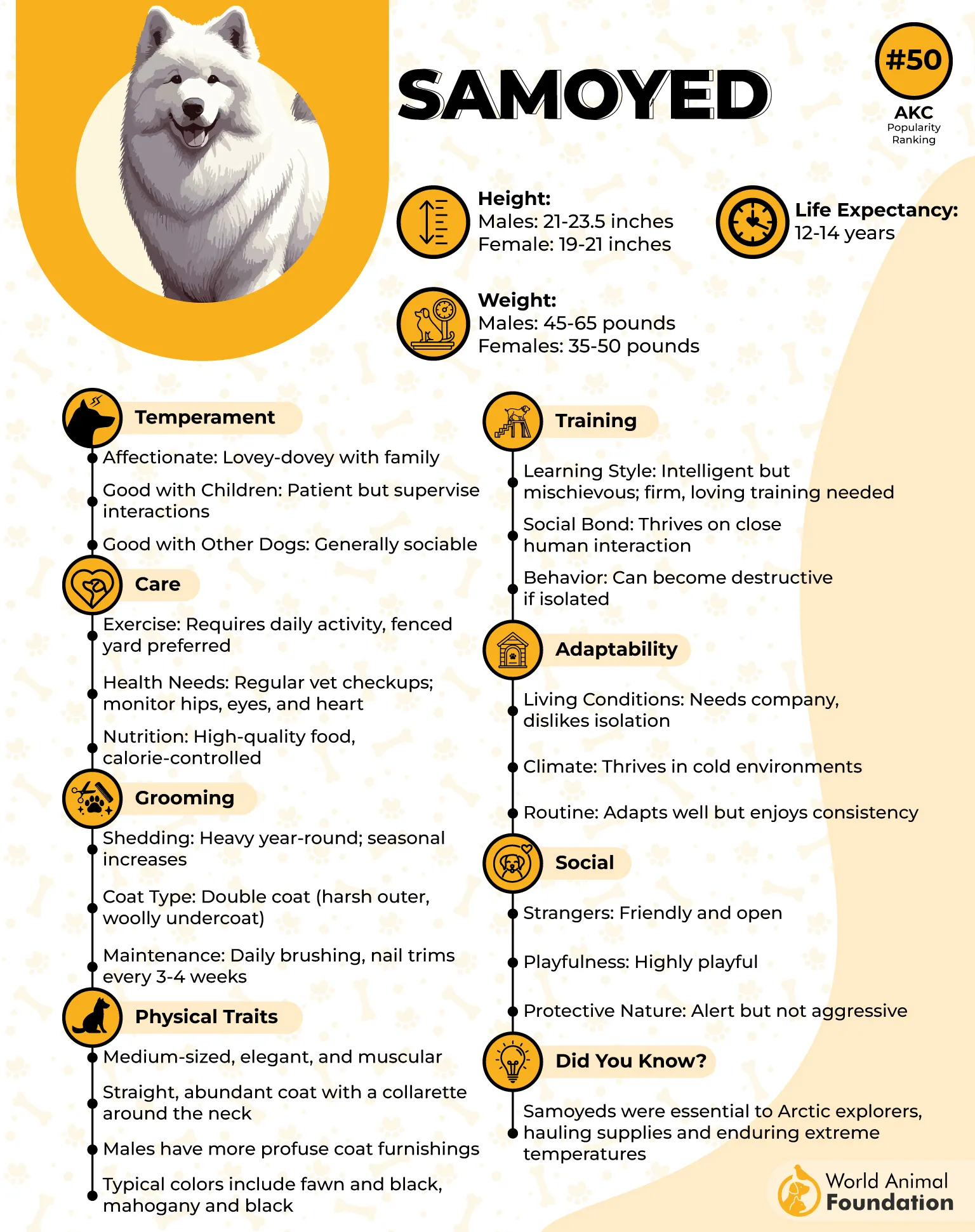
Samoyeds shed heavily during seasonal blowouts. Regular brushing is a must to manage loose fur around the house.
Despite heavy shedding, their coat resists dirt fairly well. It doesn’t tend to hold odor the way some other double-coated dogs do.
That bright white, woolly topcoat and the breed’s famous “Sammy smile” make for one of the most photogenic looks.
6. Chinese Crested
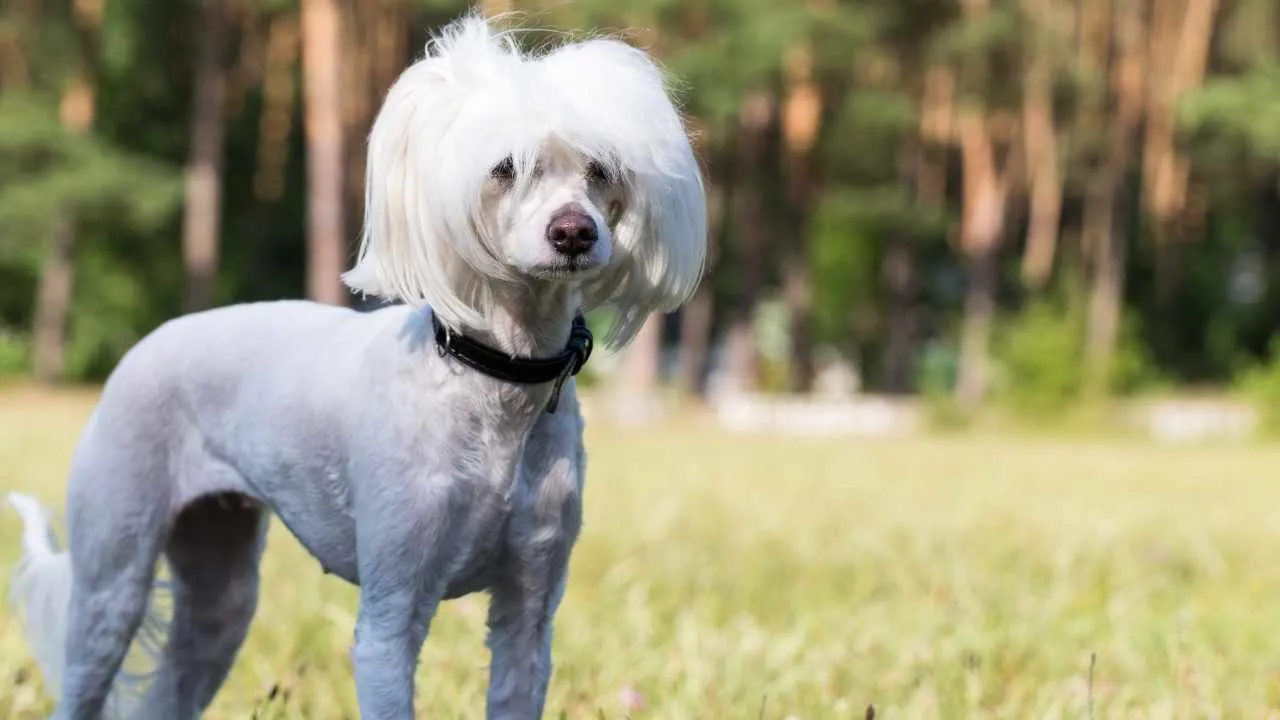
Things get unique here. The Chinese Crested comes in two different coat types within the same breed.
The hairless dog breed has smooth, soft skin with tufts of hair on the head, tail, and feet. ESSENTIALLY, it is not a traditional coat at all. The “Powderpuff” variety, on the other hand, has a soft, silky coat covering the entire body.
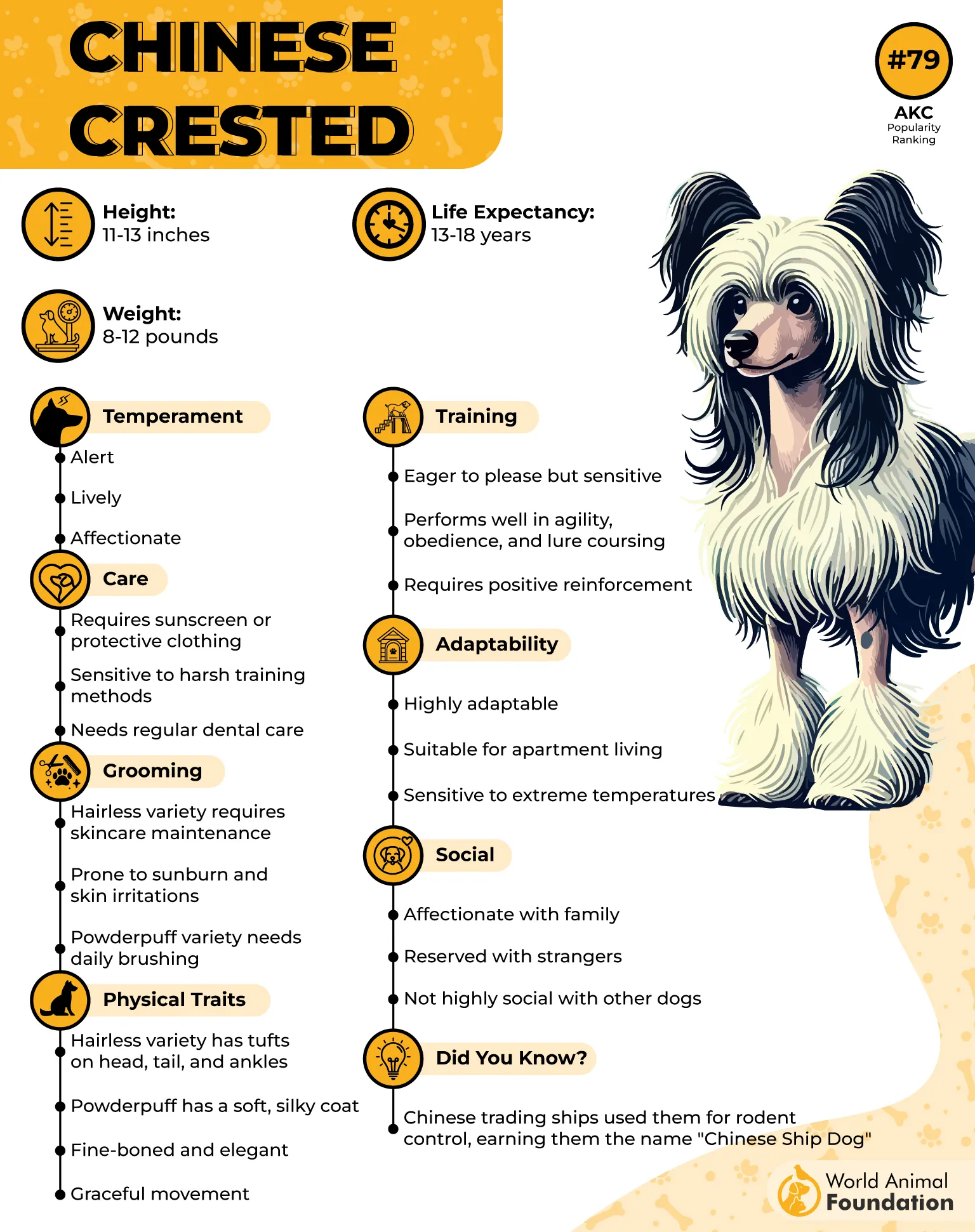
Same breed, two completely different looks.
The hairless type needs specific skin care rather than traditional grooming, according to Orvis. You should moisturize them regularly, apply sunscreen to protect against sunburn, and keep the skin healthy. There is no fur protection there, so take note.
The Powderpuff variety needs more standard coat care. Regular brushing to prevent tangling is a must.
It is honestly one of the more fascinating examples of how much coat texture can vary, even within a single breed.
7. Russian Tsvetnaya Bolonka
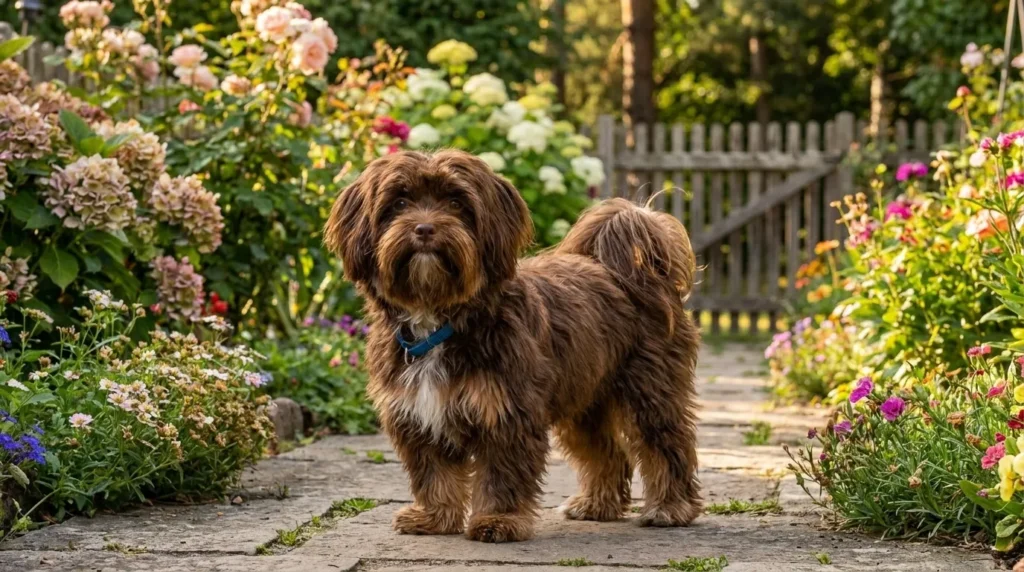
Wrapping up with a lesser-known breed, the Russian Tsvetnaya Bolonka has a soft, wavy-to-curly coat that feels different from most other small dog breeds.
This coat sits somewhere between a medium coat and a fuller curly-coated texture, soft, slightly wavy, and low-shedding overall.
It is a nice, manageable middle ground compared to some of the more demanding coats on this list.
Regular brushing keeps the coat healthy and prevents stray tangles from forming. It is nowhere near as intensive as caring for something like an Afghan Hound’s silky coat or a Puli’s cords.
These Russian dogs are fairly rare in the U.S. But their coat makes them an interesting, low-maintenance option worth knowing about.
Conclusion
Every coat texture tells a story: cold-weather protection, water resistance, low-shedding practicality, or sometimes just centuries of selective breeding. Whether a coat is corded, wire-coated, silky, curly, wavy, or barely there at all, each one comes with its own grooming needs and charm.
At the end of the day, choosing a breed based on coat texture comes down to how much time you can invest. There is daily brushing, occasional professional grooming, or something in between. But whichever coat catches your eye, you should know the dog world has NEVER been short on amazing, one-of-a-kind coats. And yes, they make the best pet breeds.
