




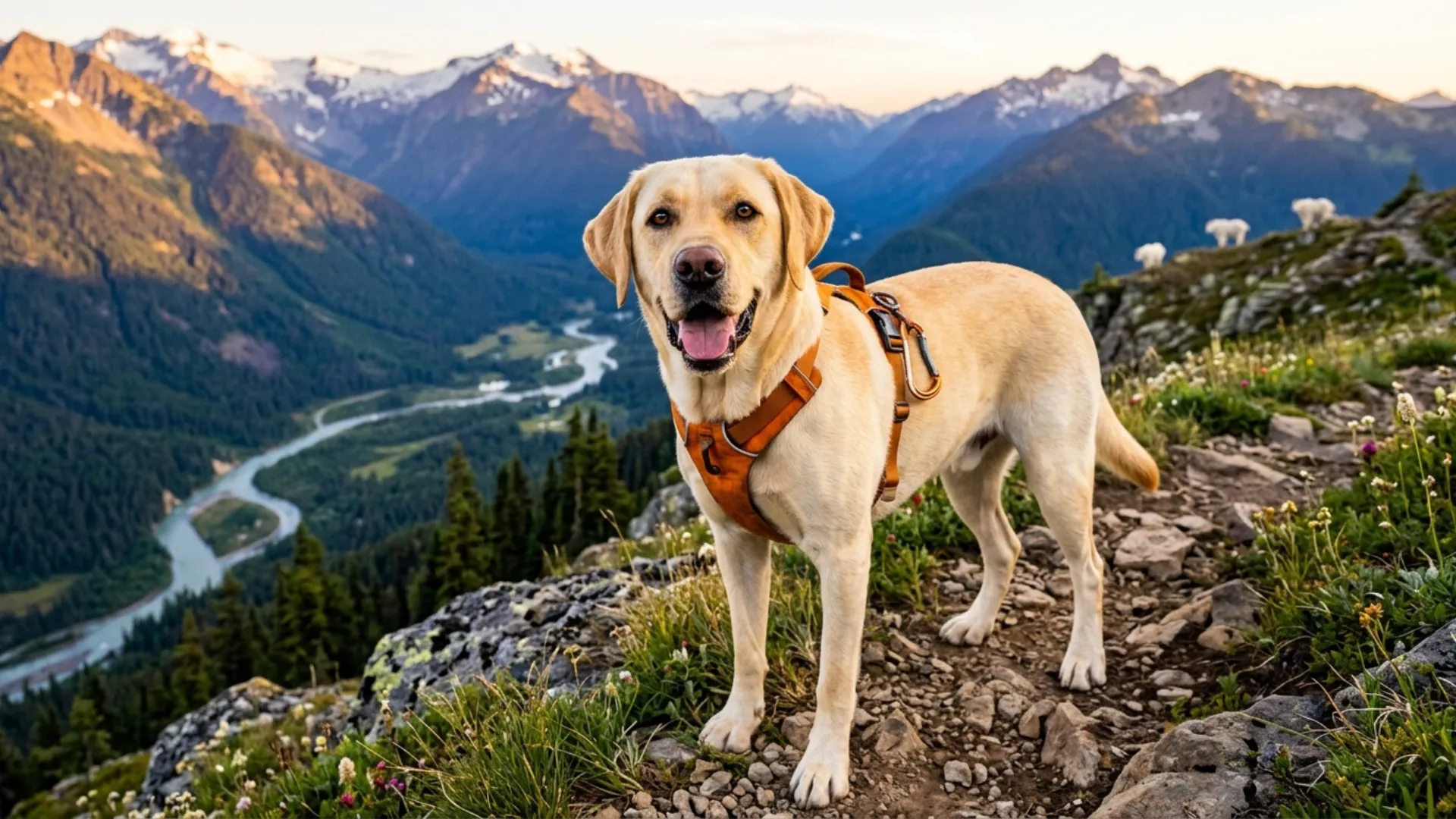
What if your dog could be more than a home companion and become your favorite adventure buddy? Whether you enjoy hiking, camping, road trips, swimming, or exploring new places, the right dog can make every outing even more exciting.
Great adventure dogs are usually energetic, curious, adaptable, and physically fit. They should also be responsive to commands and comfortable around new people, places, and situations.
Of course, every dog is different. Your ideal match depends on your lifestyle, favorite activities, climate, and the time you can dedicate to exercise and training. Find out some of the best dog breeds that are ready to make your next adventure unforgettable.
Key Takeaways
Meet the Alaskan Malamute, a powerhouse built for rugged adventures.
See why Siberian Huskies are born to run, explore, and roam.
Discover the drive and intelligence of Border Collies and Australian Shepherds.
Find the adventure-ready breed that best matches your active lifestyle.
Amazing Dog Breeds for a Life of Adventure
1. Alaskan Malamute
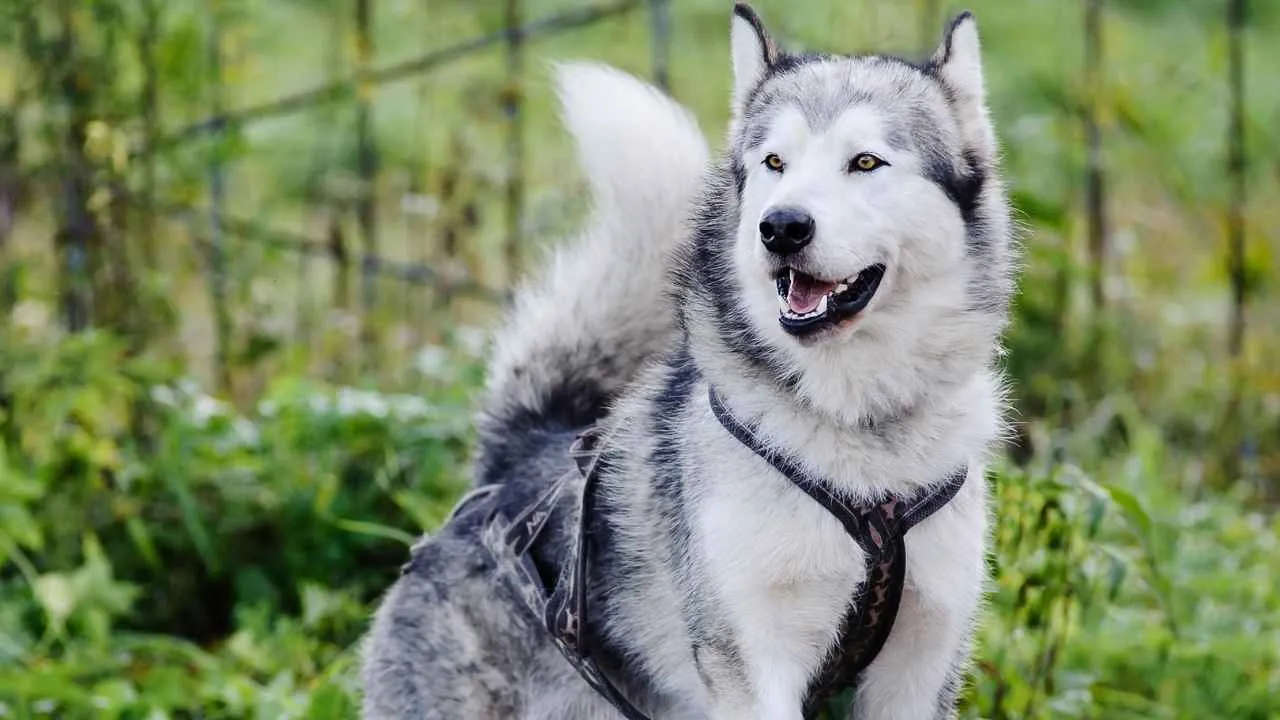
Alaskan Malamutes were built for demanding work and long journeys. Developed alongside the Mahlemut people of Alaska, they helped hunt seals, scare away polar bears, and pull heavy loads, according to PetMD.
Today, those same qualities make them a natural match for people who enjoy hiking, backpacking, jogging, biking, or exploring snowy trails.
Energy, Intelligence, and Personality
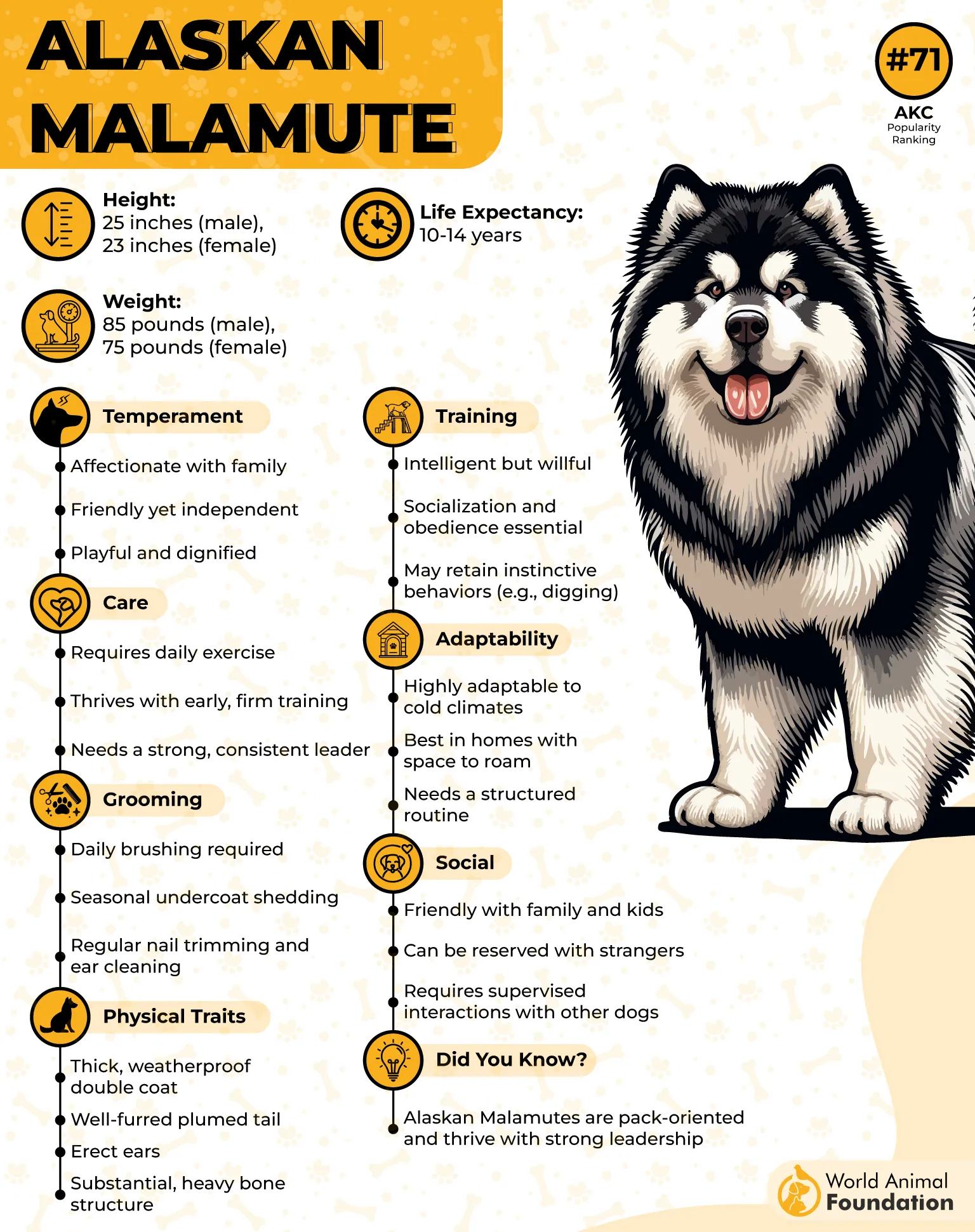
These energetic dogs need plenty of daily exercise and mental stimulation. They can enjoy activities such as sled pulling, skijoring, tracking, and dog sports. At home, puzzle games and trick training can keep their clever minds busy.
Malamutes are affectionate and social with their families, but their independent nature can make training challenging. Positive reinforcement and early socialization are important, especially because they may have a strong prey drive toward smaller animals.
Care for Active Malamutes
Their thick coats are designed for cold weather, so hot conditions can be difficult for them. Early-morning outings are a better choice during warmer months, while regular brushing helps manage heavy shedding and keeps their coats healthy.
Malamutes also need plenty of attention and should not be left alone for long periods. They can be vocal, playful, and loving family companions, although interactions with young children should be supervised.
2. Labrador Retriever
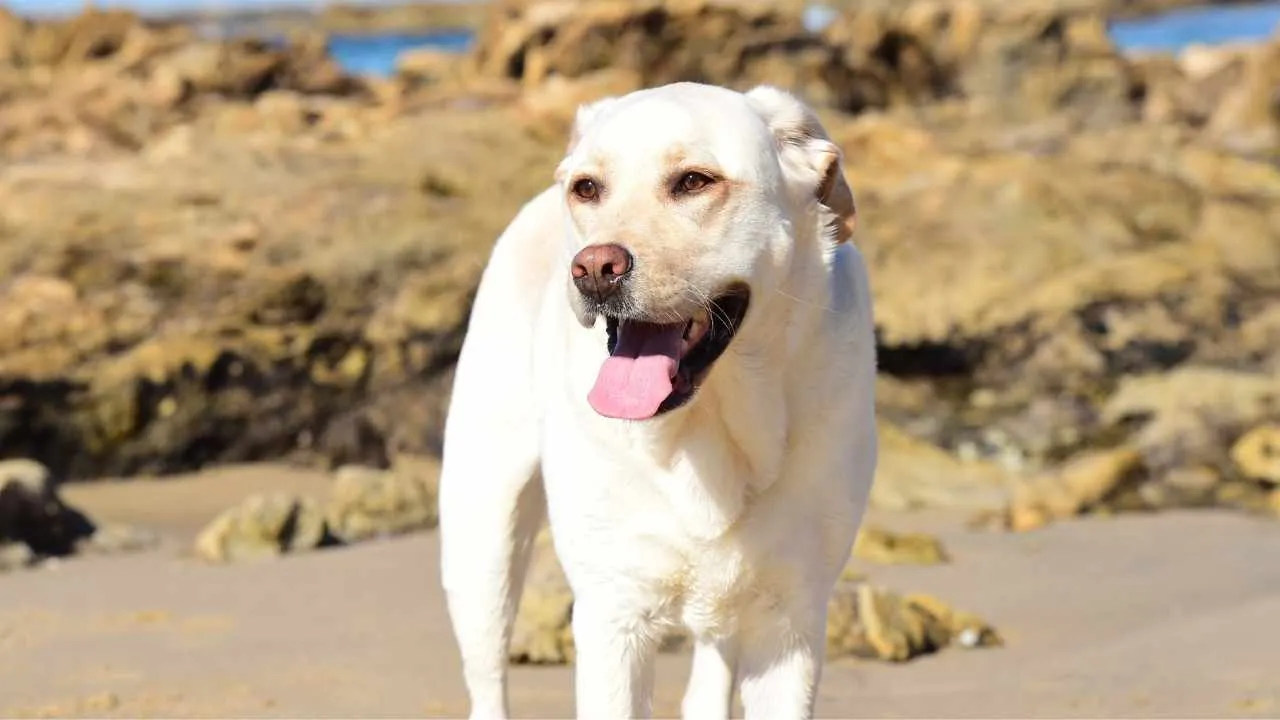
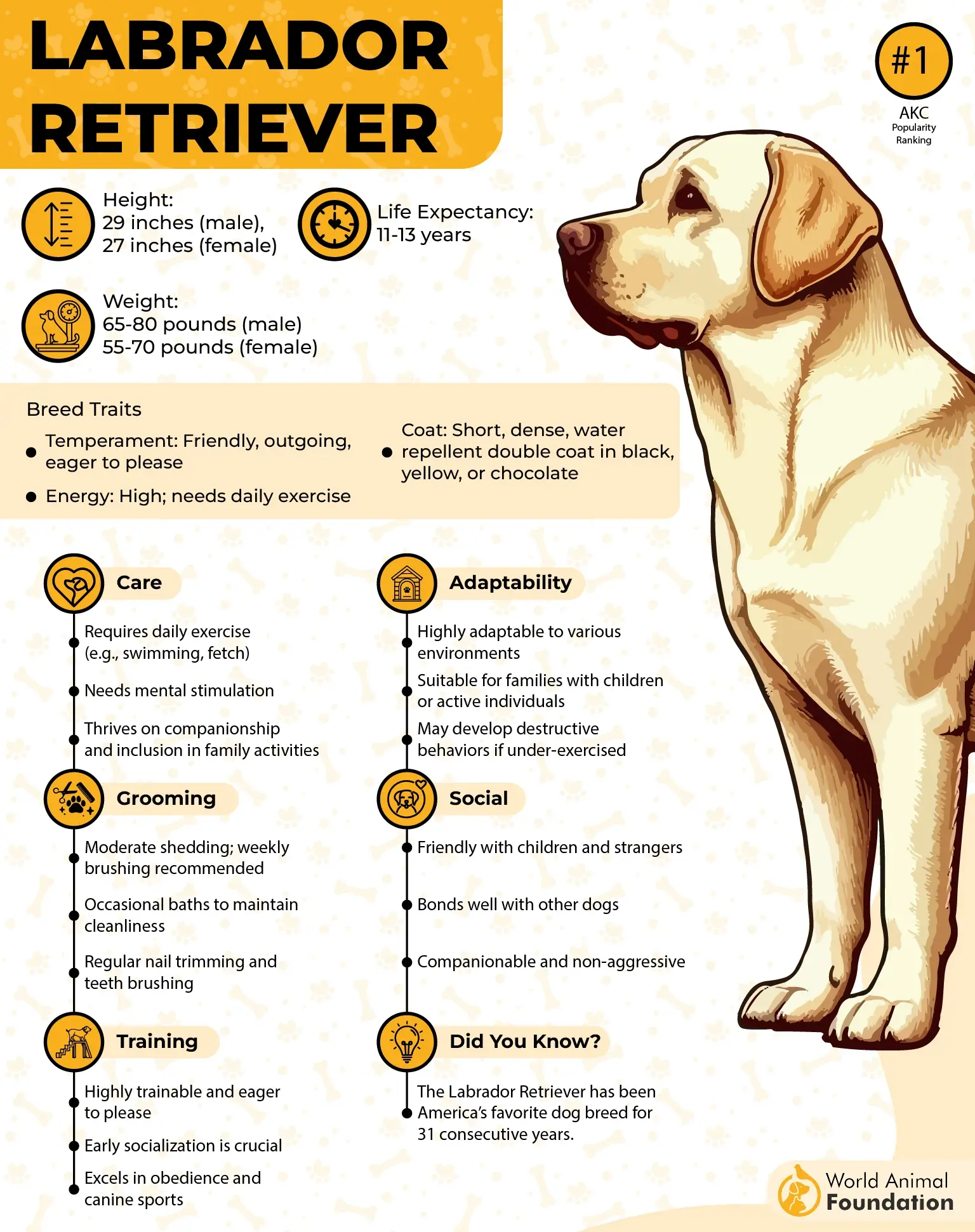
Labrador Retrievers seem to have adventure in their DNA. Originally bred to work alongside fishermen, these athletic dogs are excellent swimmers with water-repellent double coats, webbed feet, and their famous “otter” tails.
Their love of water makes them natural companions for swimming, hiking, camping, running, and other outdoor activities. They also enjoy having a job to do, especially retrieving.
Energetic, Friendly, and Eager to Explore
Labs are intelligent, outgoing, and eager to please. They usually get along well with children, other dogs, pets, and even strangers, making them great companions for family adventures.
Their high energy means they need plenty of daily exercise and attention. Hiking, swimming, dock diving, agility, tracking, scent work, fetch, and obedience training can keep them happily occupied.
Care for Active Labrador Retrievers
Labradors are relatively easy to groom, but their thick double coats shed heavily. Brushing two to three times a week can help manage loose hair, with more frequent grooming during heavy shedding periods. Their ears also need regular cleaning, especially after swimming, as they can be prone to ear infections.
Keeping them active is equally important, as Labs can gain excess weight when exercise and food portions are not managed.
3. Siberian Husky
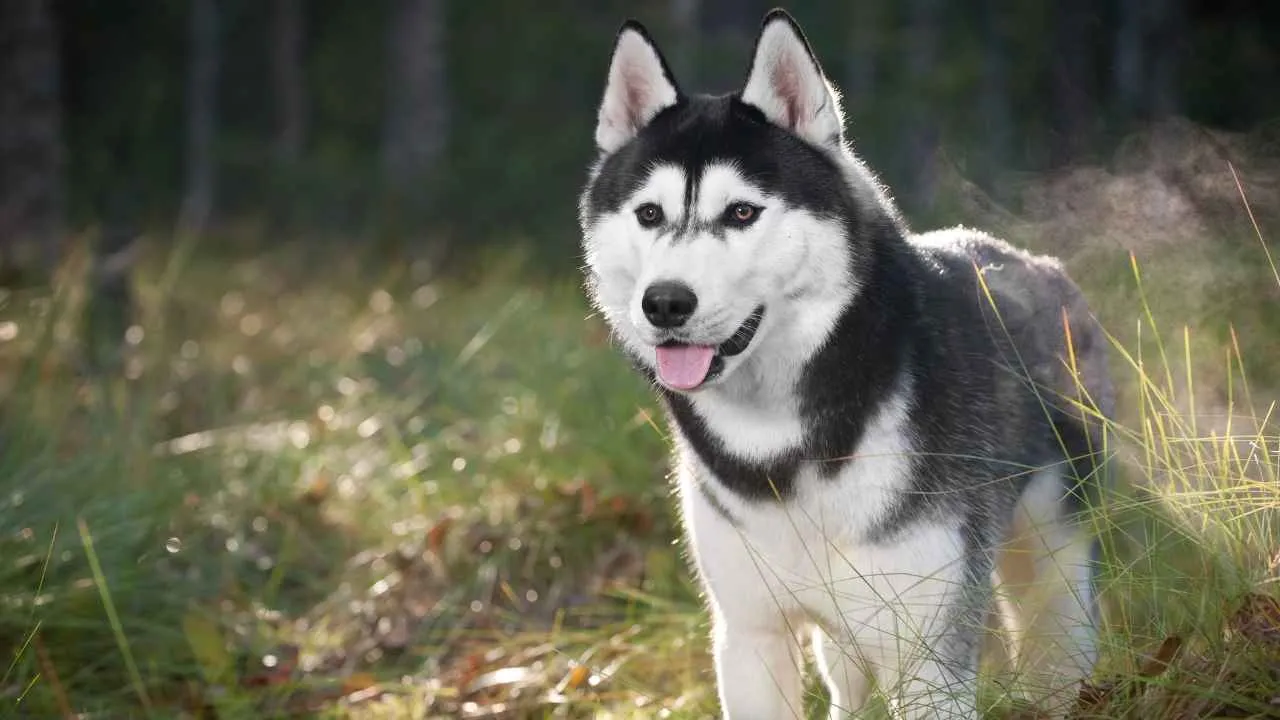
Siberian Huskies were originally bred by the Chukchi people to pull sleds across vast, frozen landscapes. Their athletic build, remarkable stamina, and dense double coat make them natural companions for active adventures.
They enjoy running, hiking, sledding, and other activities that allow them to use their energy and endurance.

Intelligent, Friendly, and Eager to Explore
Huskies are playful, social, intelligent, and independent dogs with plenty of personality. They usually get along well with people and other dogs, but their strong-willed nature can make training challenging.
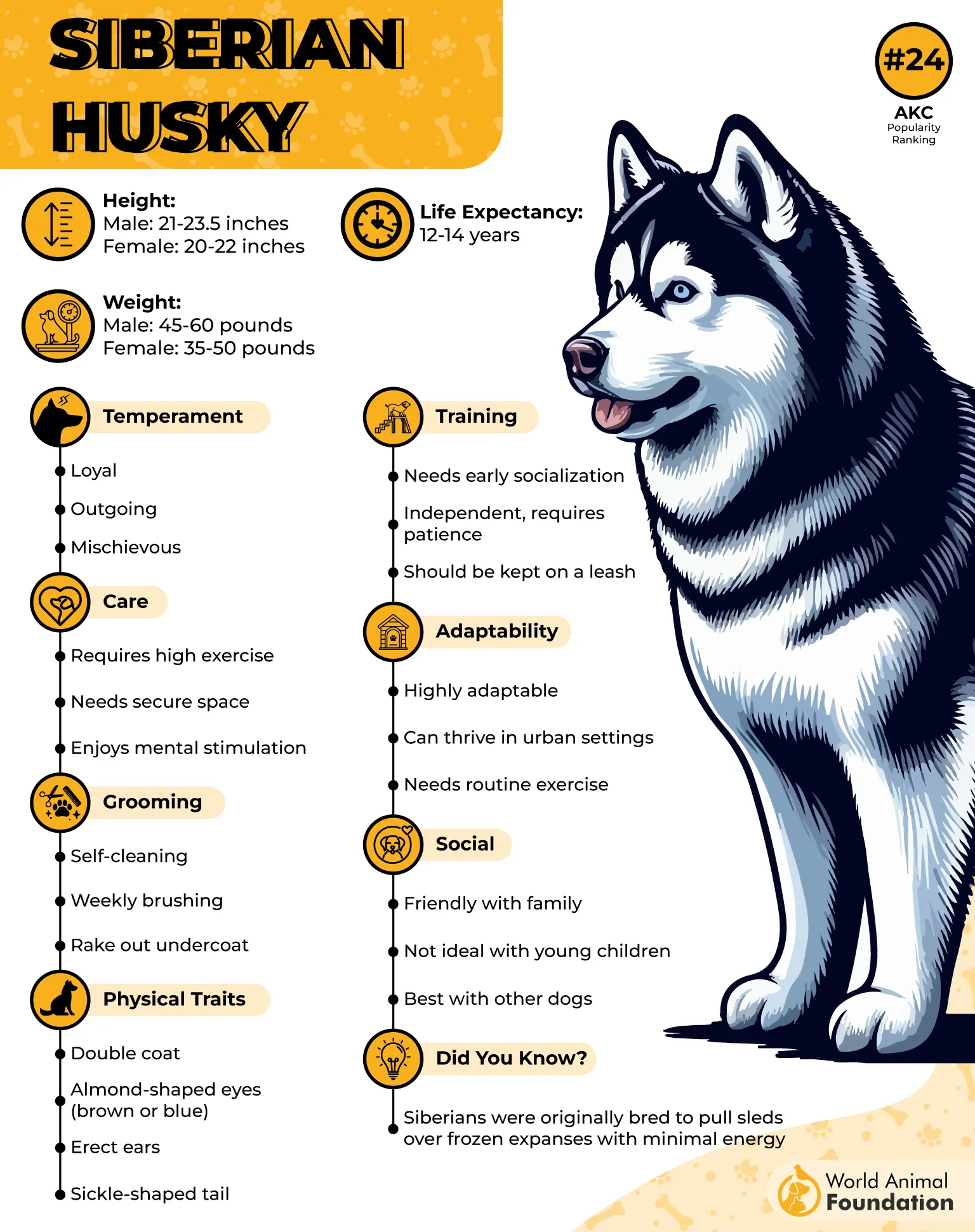
They need daily physical exercise and mental stimulation to stay happy. Without enough activity, they may dig, chew, howl, or attempt to escape. Early training, socialization, and secure fencing can help keep their adventurous instincts under control.
Care for Active Siberian Huskies
Their thick double coat needs weekly brushing, with more frequent grooming during heavy shedding seasons. Huskies are naturally clean and usually need only occasional baths, but regular dental, ear, and eye care are still important.
They also need a balanced diet, fresh water, and plenty of daily activity to maintain a healthy weight and lifestyle. Since they are built for cold climates, owners should take extra care to prevent overheating in hot weather.
4. German Shorthaired Pointer
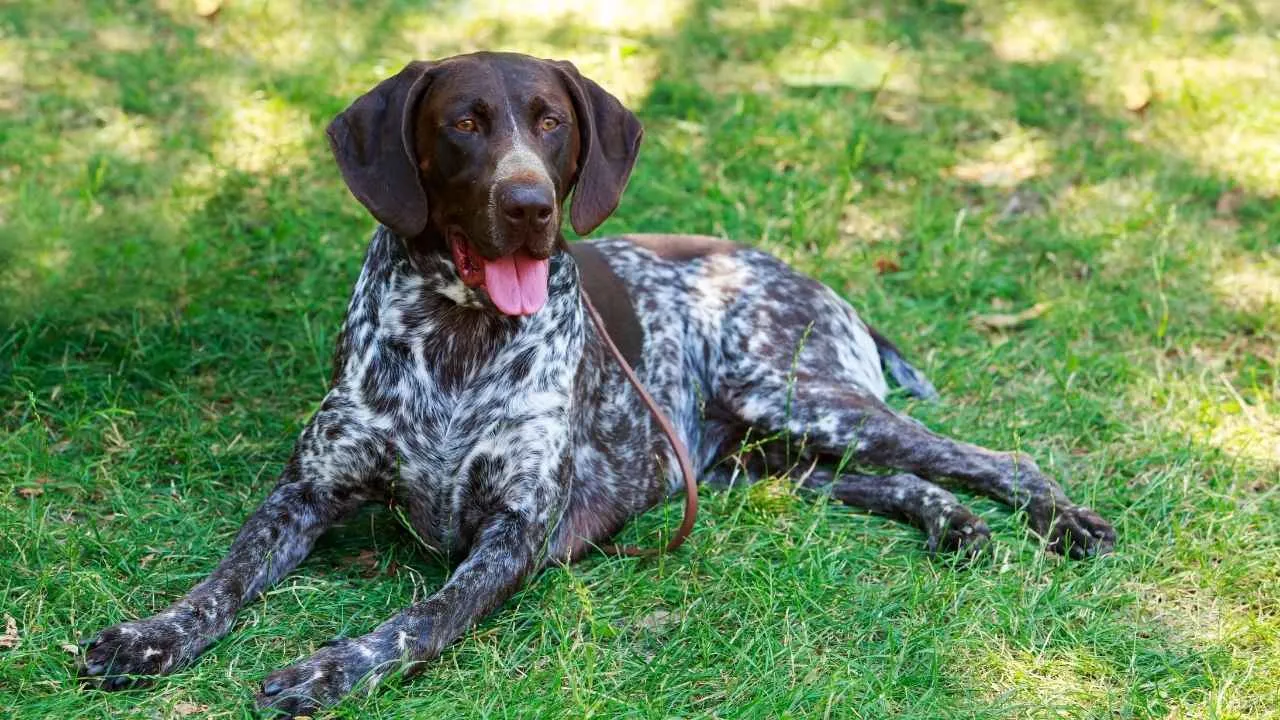
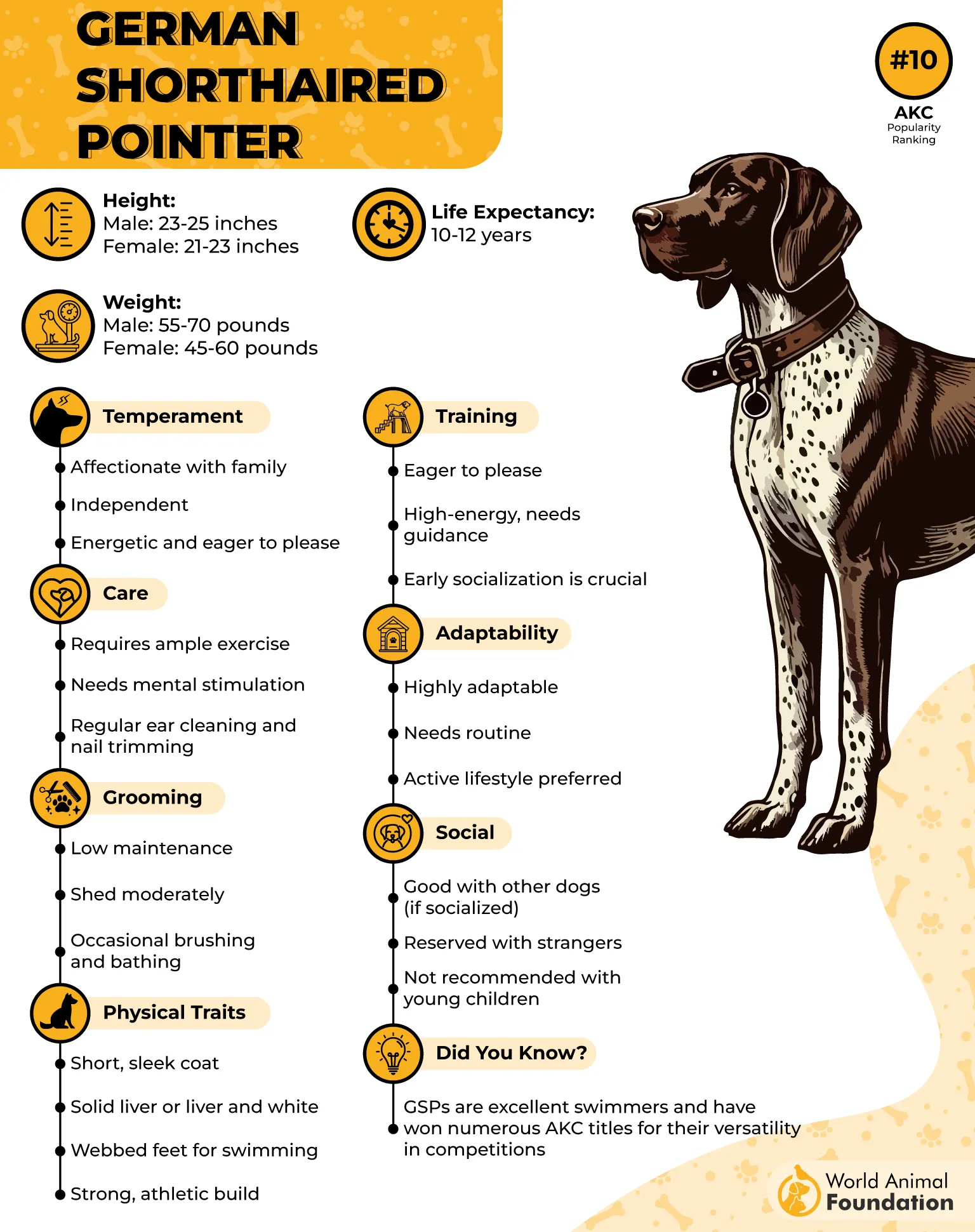
German Shorthaired Pointers are energetic sporting dogs built for speed, endurance, and active outdoor life. Originally developed as versatile hunting companions, they excel at pointing, tracking, and retrieving game.
Their intelligence and athletic build make them excellent partners for running, hiking, swimming, agility, fetch, and other activities.
Energetic, Intelligent, and Ready to Explore
GSPs are playful, loyal, intelligent, and eager to stay involved with their families. They generally get along well with children and other dogs, although their strong prey drive can make homes with smaller pets challenging.
Orvis says they need at least an hour of vigorous exercise and plenty of mental stimulation each day. Without enough activity, they may become bored, destructive, or tempted to follow interesting scents.
Care for Active German Shorthaired Pointers
German Shorthaired Pointers are relatively low-maintenance when it comes to grooming thanks to their short, smooth coats.
Weekly brushing can help remove loose hair, while occasional baths are usually enough to keep them clean. Their ears should be checked and cleaned regularly, particularly after swimming or bathing.
5. Border Collie
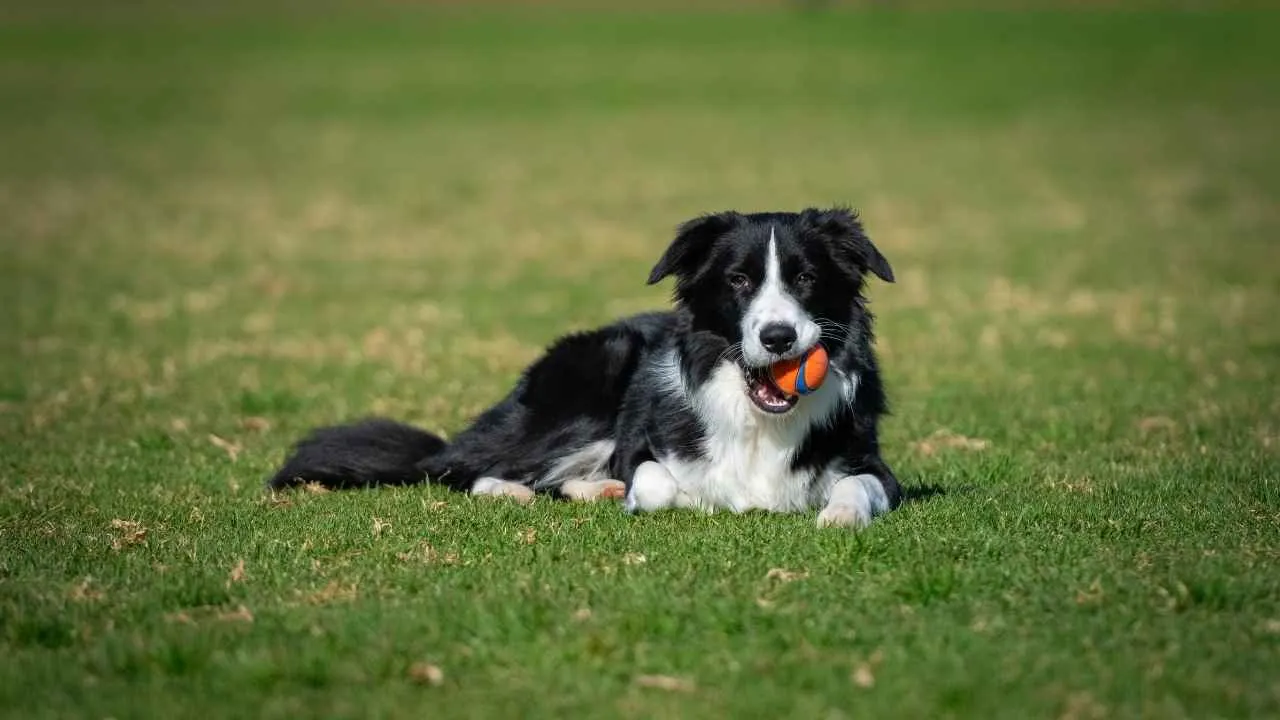
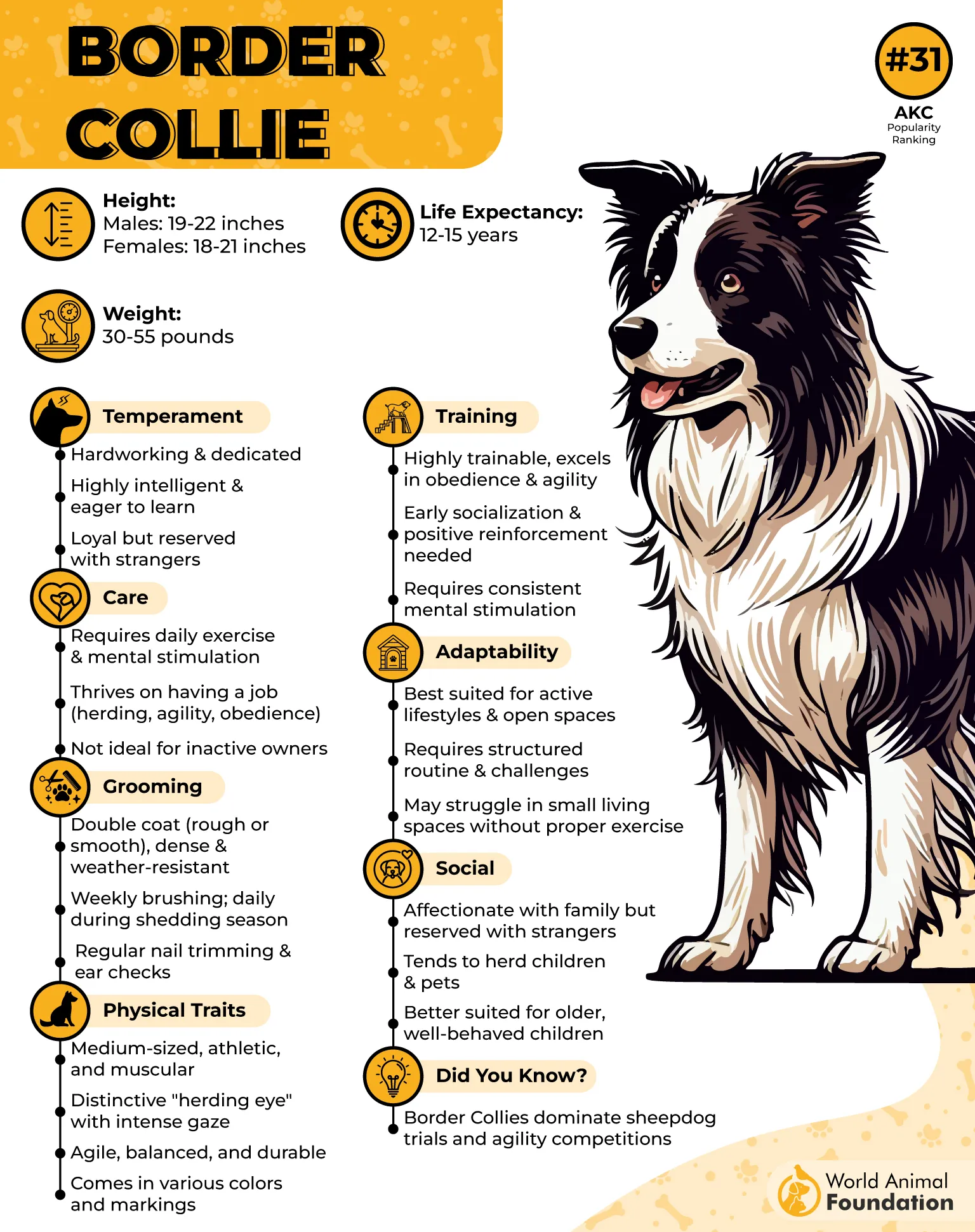
Border Collies are exceptionally intelligent, athletic herding dogs originally bred to work livestock across the British Isles. Their agility, endurance, and strong work ethic make them natural companions for hiking, running, frisbee, fetch, agility, herding, and other active pursuits.
They form close bonds with their families and can be affectionate pets when given enough activity and attention. Their strong herding instinct may also lead them to herd children or other pets.
Energetic, Intelligent, and Always Ready to Work
Border Collies are highly trainable, alert, playful, and driven, but their intelligence means they need just as much mental stimulation as physical exercise. They typically need around one to two hours of daily exercise, along with games, training, or activities that give them a purpose.
Without enough engagement, they may become bored and develop behaviors such as barking, digging, chewing, or chasing. Early socialization and positive, consistent training help channel their instincts in healthy ways.
Care for Active Border Collies
Border Collies have rough or smooth double coats that shed regularly and benefit from brushing once or twice a week, with extra attention during seasonal shedding. Their ears, nails, and teeth should also be checked and maintained regularly.
They generally live around 12–15 years and are best suited for active families with plenty of opportunities for exercise and companionship.
6. Australian Shepherd
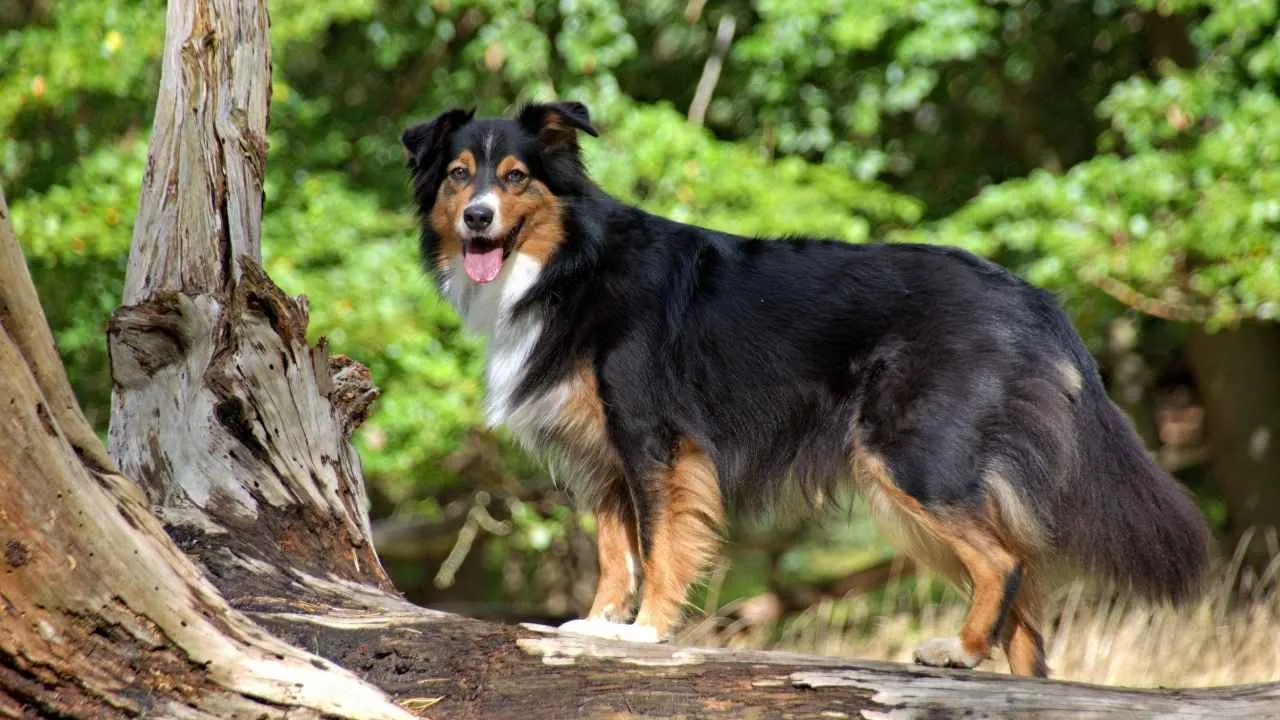
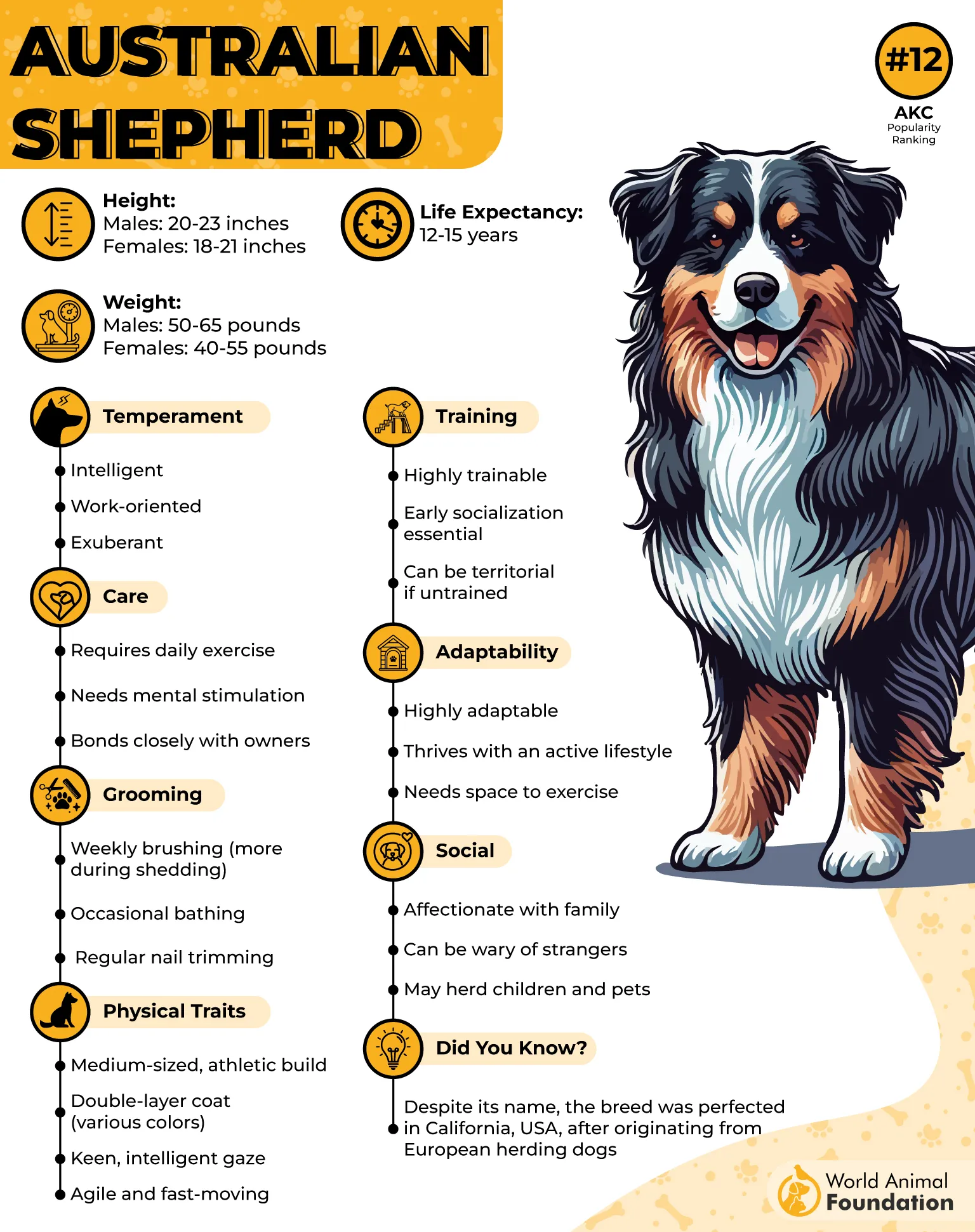
Australian Shepherds are highly intelligent, athletic herding dogs developed in the western United States to work alongside ranchers and handle livestock.
Their agility, stamina, and strong work drive make them natural companions for hiking, running, fetch, swimming, agility, herding, obedience, and other active pursuits.
They form close bonds with their families and can be loyal, affectionate pets when given enough exercise and attention. Their strong herding instinct may also lead them to herd children, cats, or other pets.
Energetic, Intelligent, and Always Ready to Work
Australian Shepherds are smart, alert, playful, responsive, and highly trainable, but their intelligence means they need plenty of mental stimulation alongside physical exercise.
Purina mentions that they typically need at least two hours of dog exercise each day, combined with training, games, or activities that give them a sense of purpose. Without enough engagement, they may become bored and develop destructive behaviors.
Care for Active Australian Shepherds
Australian Shepherds have medium-length, water-resistant double coats that shed throughout the year and more heavily during seasonal shedding. Weekly brushing helps keep their coat healthy, while more frequent brushing may be needed during shedding periods.
Their eyes, ears, nails, and teeth should also be checked and maintained regularly. They generally live around 12–15 years and are best suited to active households that can provide regular exercise, mental stimulation, training, and companionship.
7. Vizsla
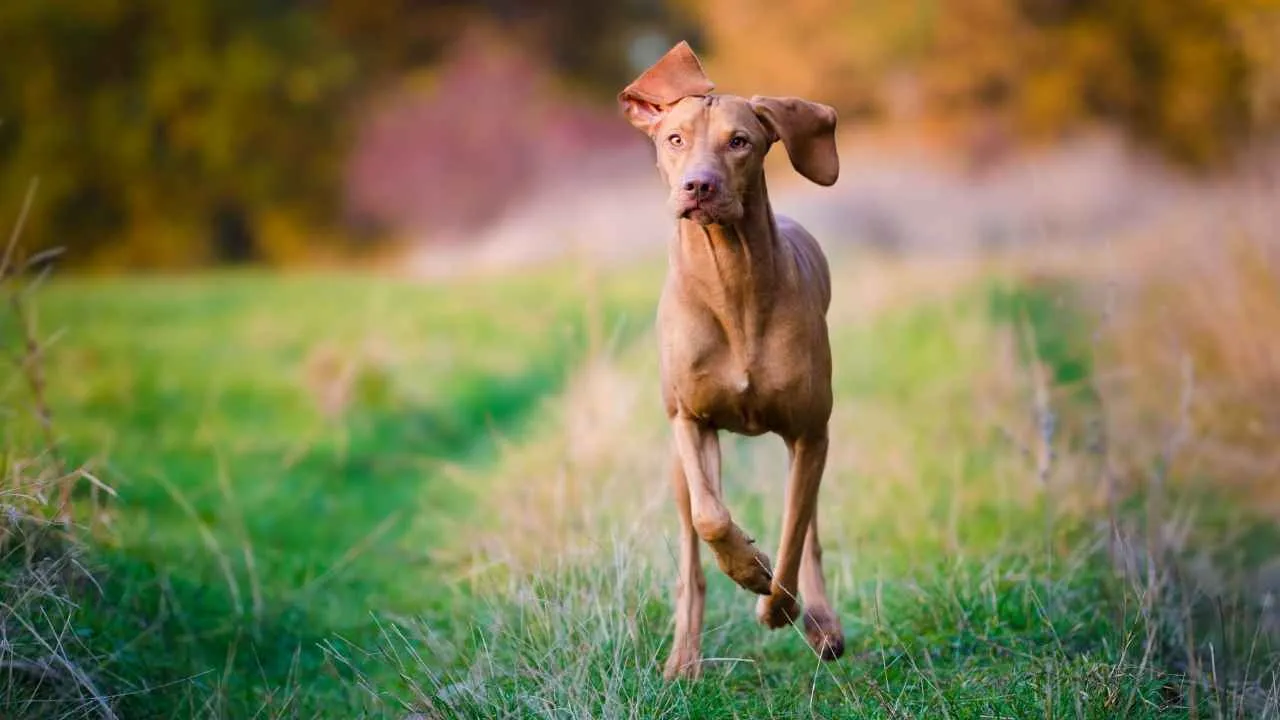
Vizslas are energetic hunting dogs originally developed in Hungary to point, retrieve, and work closely with hunters. Their athletic build, stamina, and natural eagerness make them excellent companions for running, hiking, swimming, hunting, agility, Frisbee, and other active pursuits.
They form exceptionally strong bonds with their families and are often called “Velcro dogs” because they love staying close to their owners.
Energetic, Affectionate, and Eager to Please
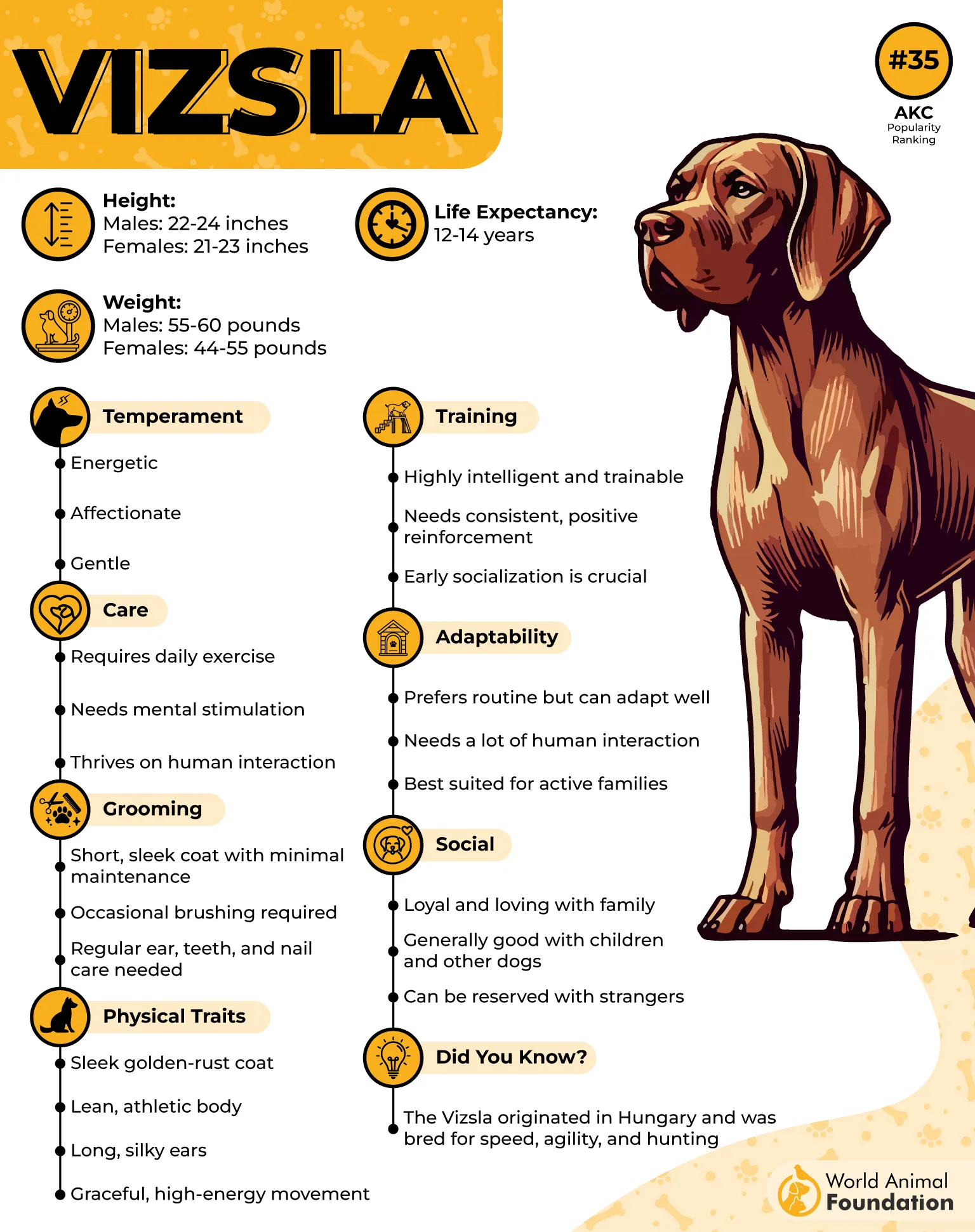
Vizslas are intelligent, sensitive, playful, and highly active, so they need plenty of daily exercise as well as mental stimulation. They generally need at least an hour of exercise each day, with activities such as long walks, jogging, hiking, swimming, fetch, or training.
Without enough activity and companionship, they may become bored and develop unwanted behaviors such as chewing, getting into things, or excessive vocalization. Early socialization and gentle, positive reinforcement training help bring out their best qualities.
Care for Active Vizslas
Vizslas have a short, sleek red-golden coat that is relatively easy to maintain and benefits from regular brushing to manage shedding and keep the skin healthy. Their ears, eyes, teeth, and nails should also be checked and cared for regularly, especially because their floppy ears can be prone to infections.
They generally live around 10–14 years and do best with active owners who can provide plenty of exercise, attention, and companionship.
Conclusion
Choosing the right dog breed means looking beyond appearance and considering temperament, exercise needs, grooming, training, health, and lifestyle compatibility.
Understanding what each dog needs can help you make a confident decision.
Before bringing a dog home, take time to consider your daily routine, living space, activity level, and ability to provide lifelong care. The best breed is not simply the most impressive one. It is the one whose needs, personality, and energy naturally fit into your life.
Looking for more dog breeds that are ideal companions for outdoor adventures? You can also check out the Golden Retriever, Jack Russell Terrier, Australian Cattle Dog, Belgian Malinois, German Shepherd, and Rhodesian Ridgeback.
