




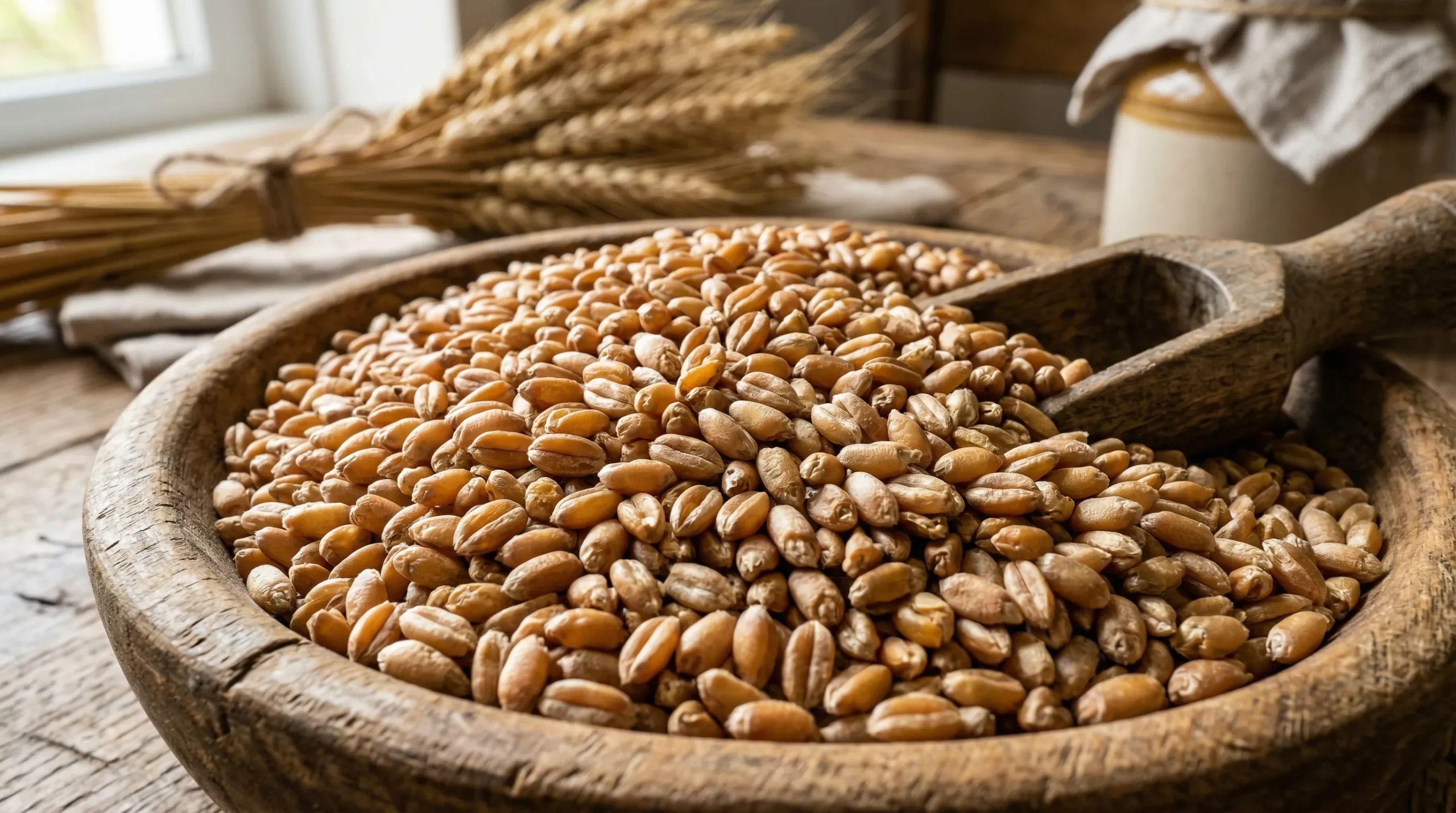
Wheat isn’t just about our diet. Wheat significantly impacts cultures and is an essential staple that connects people and communities. Although wheat sales rise and fall, it’s a go-to food for many. Wheat has saved millions of lives. However, wheat is an umbrella term and includes other grains exported worldwide from Russia to Canada.
Because of the war between the world’s biggest wheat producer, Russia, and Ukraine, the fourth largest producer, grain stores are in jeopardy. The USDA (Department of Agriculture) predicted that global wheat inventories are expected to reach a five-year high in the 2025/26 marketing year. This increase is mainly due to record wheat production in major exporting regions.
Did you know? Ancient Egyptians used moldy bread to treat infections. Flemming discovered penicillin when he isolated mold spores growing on bread.
Wheat Exports by Country
Wheat is the world’s 78th most traded product. Wheat generates a total trade of $57.3 billion, representing 0.25% of total world trade. U.S. wheat inventories are expected to reach 23.15 million tons in 2024/25, covering roughly 30% of total consumption. For the curious, finished vehicles are the #1 traded good.
India is the second-largest wheat producer of all countries in the world. It recently harvested records as farmers increased wheat planting due to favorable prices and good weather.
According to Reuters, this windfall could prompt India to lift its current ban on wheat export and impact high inflation prices in other countries.
Wheat Exporter
There is a substantial distinction between the most significant wheat growers and the largest wheat exporters in the world. For example, Russia, Canada, and Ukraine are traditional wheat exporters, but statistics show that there are new countries battling for world trade status.
Wheat is a cereal from the commonly cultivated grain family:
- Wheat
- Rice
- Rye
- Oats
- Barely
- Corn (Maize)
- Sorghum
Durum and meslin wheat are separate entities.
Largest Wheat Exporters
Wheat is a global commodity traded on the stock market. China is the largest wheat producer and has harvested 140.07 million metric tonnes in 2025-2026, accounting for 17% of total production. Russia exported $9.2 billion in 2024, making it the most prominent global exporter.
From a regional standpoint, European countries together accounted for more than half of global wheat exports in 2023. Meanwhile, Argentina recorded an export share valued at $2.1 billion in 2024.
Countries Generated the Highest Wheat Surpluses via Global Wheat Trade
Wheat is traditionally a cold-climate crop grown in the northern hemisphere. This makes countries like Russia, Ukraine, Canada, and China an ideal environment geographically.
However, innovative wheat farmers in southern hemisphere countries are looking elsewhere as food shortages continue, as climate change impacts crops around the world.
In 2024, these mega wheat producers saw significant export numbers of net wheat exports. Net wheat exports are calculated as a country’s total exports minus its imports. Countries operate on a continual import-export cycle, and the figures in the following table contain the surplus value of wheat exports against imports.
Russia leads with the highest surplus on the wheat trade in 2024, followed by Canada and Australia. (Figures from OEC World)
Countries Posting Greatest Trade Deficits From the Global Wheat Trade
Many countries are trying to offset their food resources and develop new sustainable wheat-growing methods. On the African Savannah, a new wheat strain created from ancient and modern grains is making headlines.
Below are the statistics of countries with negative net wheat exports during 2024. Net exports are the value of total wheat exports minus the value of total imports. The figures in the table below represent the deficit of wheat import purchases minus its exports.
Egypt, Indonesia, and China experienced the highest deficits in the international wheat market. Other countries can take advantage of this gap in the market and fill the supply chain.
NASA predicts that climate change can change how countries grow crops, and maize will see a decline of 24%, while wheat could attain a growth of 17 by 2030. While temperature for crop yields is a factor across the world, high carbon dioxide in the atmosphere impacts crop yields but devalues the nutritional content.
Largest Wheat Producers
In the US, the Futures market was already experiencing a rise. The low supply of wheat took a drastic turn when the war between Russia and Ukraine led to market insecurity.
The study shows that disruptions to grain exports from the Russia–Ukraine War led to an $859 million GDP loss for Ukraine, had only a small impact on Russia, and caused a global loss of $1.64 billion. About 25% of the wheat market and 60% of the sunflower market were affected.
Drought conditions in the Southern Plains forced the HRW to peak in 2022. Russia, Australia, and Ukraine added more pressure to pricing expectations with abundant exports.
According to the latest data, the European Union is the largest wheat producer, followed by China, India, Russia, the USA, Canada, and Australia, with other countries ranking behind them. However, China, India, and the EU are the largest wheat consumers.
Top 10 Wheat-Producing Countries 2024
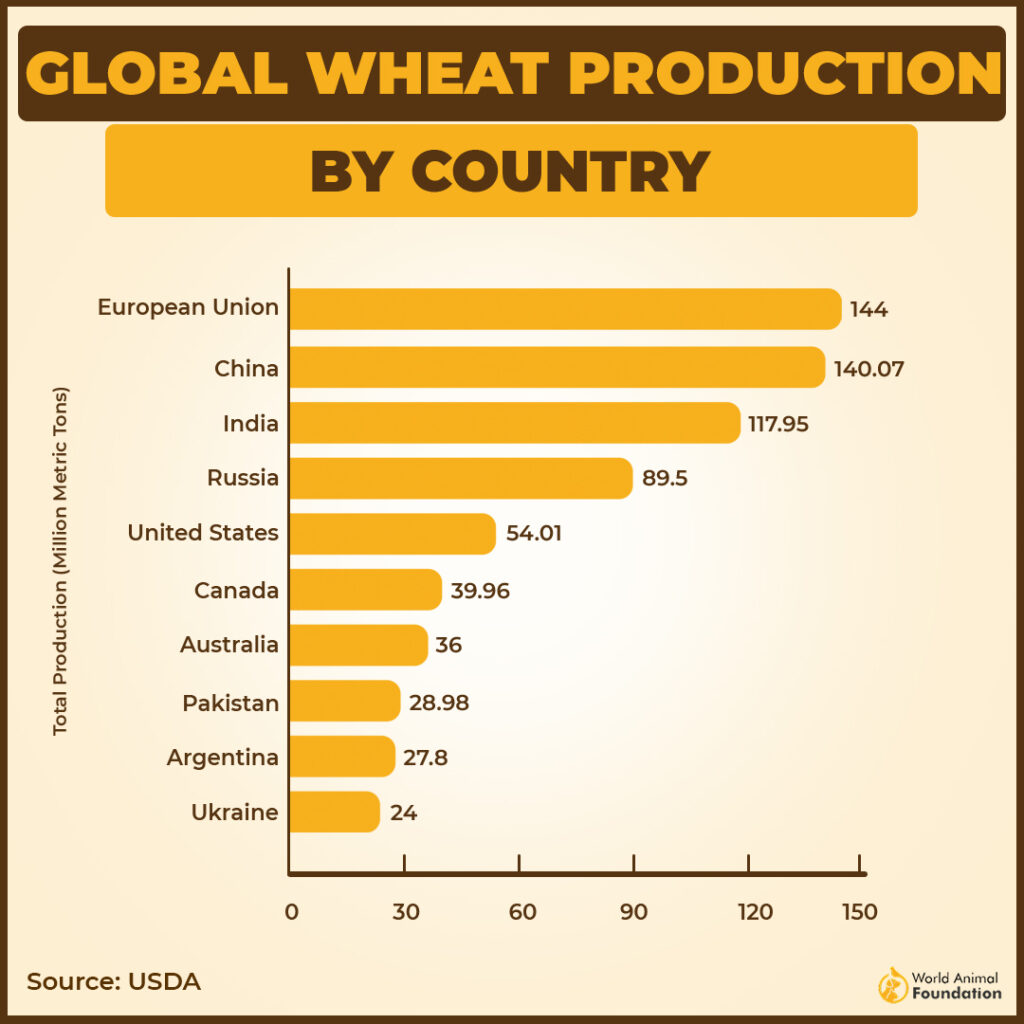
This list highlights the top 10 wheat-producing countries in 2024 and sheds light on their wheat production and export statistics.
European Union
The European Union consists of 27 countries, eight of which are in the top 15 wheat export countries, including Bulgaria, France, Germany, Hungary, the Czech Republic, Lithuania, Poland, and Romania.
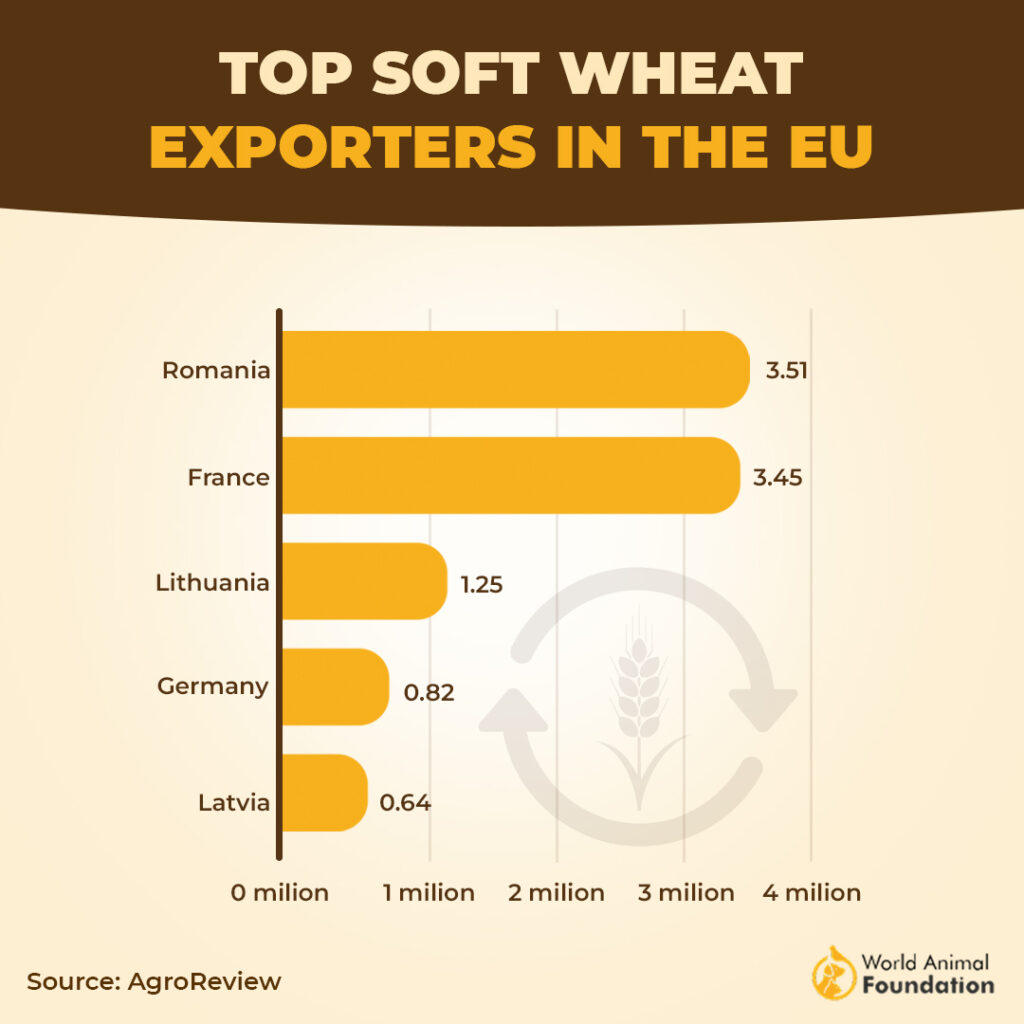
The European Union produces about 17% of the world’s wheat, totaling around 144 million metric tons.
Romania leads soft wheat exports this season with 3.51 million tons, followed by France.
Lithuania, Germany, and Latvia also make strong contributions.
China
China is the world’s second-largest wheat producer, growing over 140.07 million metric tons. It exported 312,000 tons in April (2022), a 97.4% increase over March. China also exported more grain and fertilizer, while other countries cut back or banned exports.
India
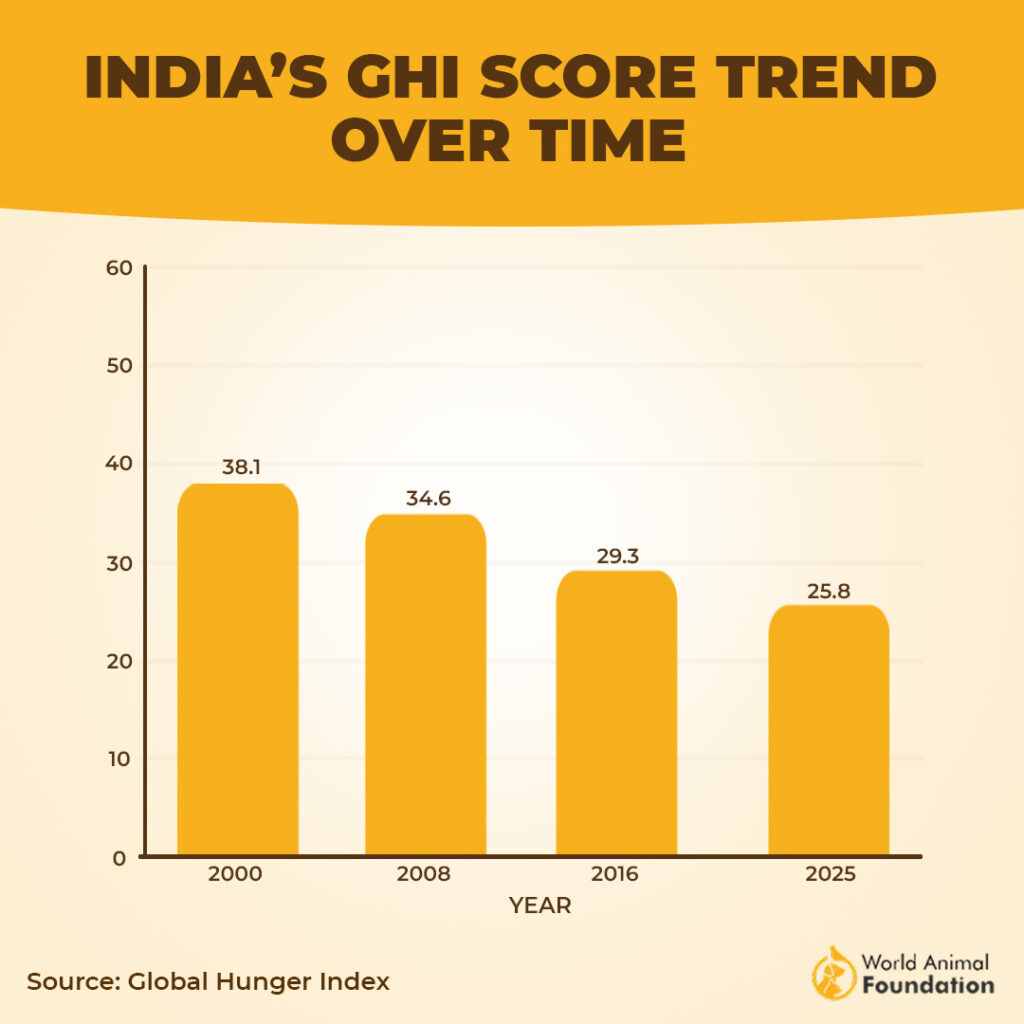
India is the world’s third-largest wheat producer in the world. Recently, India introduced a wheat export ban to encourage an increase in local stockpiles to boost state reserves and stabilize domestic prices. India has one of the world’s fastest-growing economies, but ranks 102 out of 123 on the Global Hunger Index report in 2025.
Russia
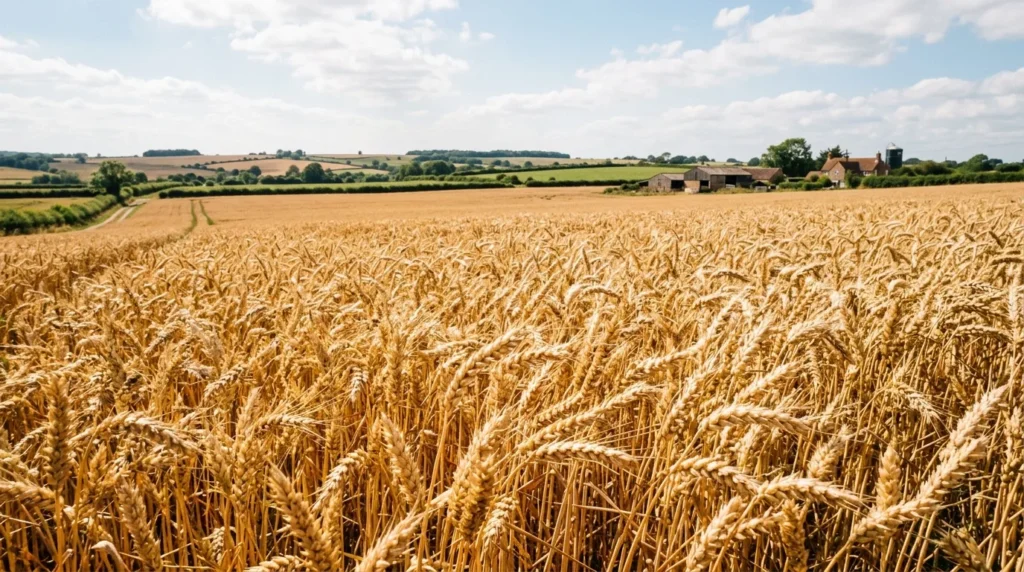
Oh, those Russians. Russia has the climate and the geography to be among the world’s top wheat producers. Russia, however, is number one regarding wheat exports; in 2024, it exported $89.5 billion. The country’s wheat exports reached 45 million metric tons in the 2024–25 marketing year.
Further, Russia has the world’s 11th-best economy based on GDP and is number 19 in total exports, but only in 73rd place for per capita GDP.
USA
The USA is all about being #1 in anything, including the economy. It ranks #2 in exports and #1 in imports. The export value of wheat for the American economy was $6.41 billion, and the total production reached 54.01 million metric tons in 2025/2026.
As of January 2023, the US experienced a 40-year export low due to a lack of demand. The United States accounted for 11.5% of global exports in 2024. The USA was once the leading wheat exporter in the world.
Australia
Australia’s economic rank increased to the #14 position in 2026. Although it has only a small percentage of the world’s population at 0.35%, it accounts for 1.58% of the global economy. In 2021, Australia produced as much wheat for export as Canada.
Its wheat export value was $5.96 billion, with wheat production at $36 million metric tons in 2025/2026.
Canada
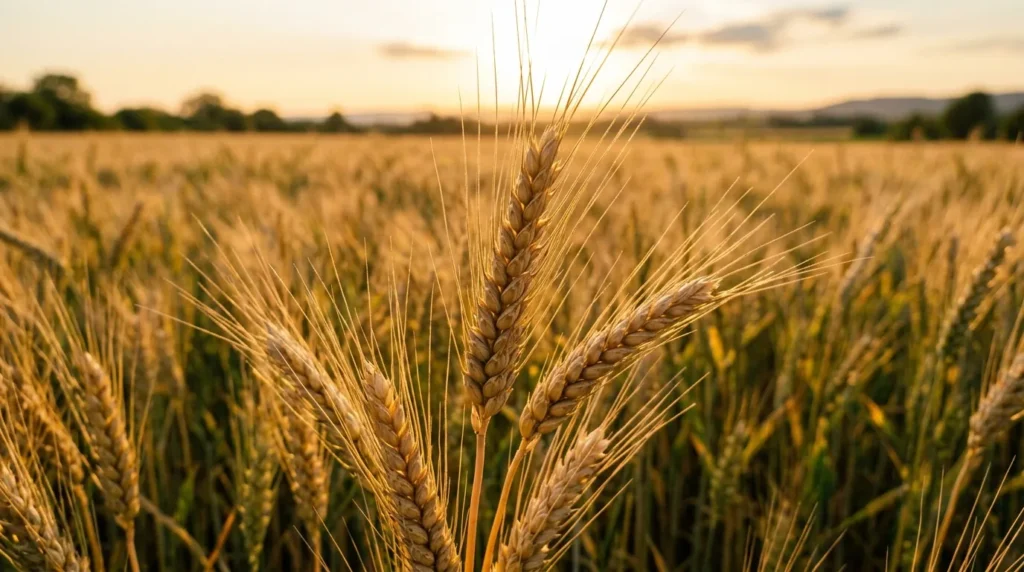
Canada is among the top exporters and wheat growers in the world, with over C$11.4 billion in export value and production at 39.96 million metric tons. Despite its small population, Canada was #10 in the world’s economy based on GDP.
Canada exports billions in goods, setting a new record with a 13.6% growth over 2024. Canada has a robust and cost-effective labor pool.
Pakistan
Pakistan ranks #43 in the world economy in terms of GDP and #164 in the economy in terms of GDP per capita. Recent flooding has affected wheat production and slowed exports.
Pakistan is importing wheat to build reserves and eliminate import duty on wheat. Wheat is Pakistan’s largest crop (based on area sown) and its main dietary staple, with production reaching 28.98 million metric tons, which is 72% of the caloric intake.
Argentina
Argentina produced about 27.92 million metric tons of wheat in 2025/2026. It has a GDP ranking of 26th in the world and a GDP per capita ranking of 78th.
Argentina is expected to achieve a potential record wheat crop in 2025/26, supported by increased planting areas and strong yields. Although output fell in 2023, the wheat sector has recovered significantly since then.
Ukraine
Not surprisingly, Ukraine’s economy decreased by one-third last year due to the fallout of the war with Russia. It is the largest fall since 1991, when Ukraine separated from the Soviet Union.
It ranks #45 for GDP economy and #5 for exports. Traditionally, Ukraine is one of the leading wheat-producing countries and generated $4.45 billion in exports and 24 million metric tons in production despite the conflict. Ukraine is synonymous with wheat and supplies many European countries.
Turkey
Turkey is the world’s largest bread consumer. Turkey’s average per capita bread consumption is 199.6 kg (440 lbs) per person. Turkey ranks #11 for world economy per GDP and #55 for GDP per capita. It is one of the biggest exporters of Wheat flour at $873.2 million. However, Turkey can’t grow enough wheat.
World Wheat Supply
As the world’s population grows and the demand for plant-based food and wheat increases, many countries can increase their economic growth through exports. Healthy and growing economies balance imports and exports as they impact the GDP, exchange rate, inflation rate, and interest rates.
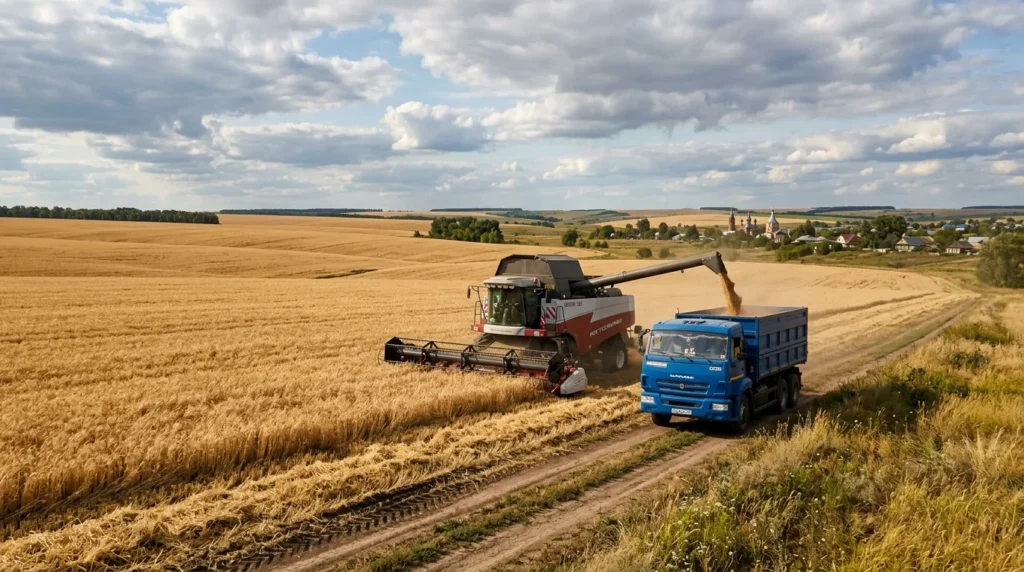
If a country imports more than it exports, it negatively affects the currency’s exchange rate. A devalued currency drives exports and raises import costs. It’s a cycle that no economy wants to get trapped in. Every country looks to develop a healthy balance.
In recent years, new top wheat exporters came to the forefront in 2023 to 2024:
- Australia up 10.4%
- Romania up 4.26%
- Argentia up 3.67%
On the downside, these countries had decreased export wheat sales:
- India down 0.054%
- Bulgaria down 0.65%
- Lithuania down 2.12%
- Russia down 8.05%
- Germany down 3.1%
- Kazakhstan down 1.98%
- Poland down 2.8%
Fastest-Growing Wheat Suppliers
Wheat has always been an important food crop for humanity, and we’ve been farming it for 8,000 years. Wheat remains the crop grown on more land mass than any other crop and is the essential grain grown across the world.
India
India led the way in being first in having the highest increase in wheat production, with substantial growth and export value. This Hindustān Republic is the second most prolific wheat-growing nation in the world.
- Export Value 2023 $1.51 billion
- Export Value 2024 $30.7 million
Australia
Australia is the number #1 fastest among wheat suppliers and had a productive season growing and exporting the world’s most essential food source, competing with Russia and Canada for trade rights.
- Export Value 2023 $9.3 billion
- Export Value 2024 $5.96 billion
Bulgaria
Bulgaria sits on the Balkan Peninsula, wedged between Romania and Greece. In 2022, Bulgaria saw a record yield of wheat crops, and it remains one of the largest wheat producers in Europe.
- Export Value 2023 $1.63 billion
- Export Value 2024 $1.4 billion
Romania
Romania is another one of Europe’s powerhouse wheat producers and saw a substantial decrease of up to 18% in 2022, but enough for a surplus.
- Export Value 2023 $2.16 billion
- Export Value 2024 $2.44 billion
Argentina
Grain farmers constantly battle the weather regardless of where they farm. In 2021-2022, Argentinian farmers set a record wheat harvest to supply the shortfall caused by the Russian and Ukrainian conflict. While wheat prices soar, so do fertilizer costs around the world.
- Export Value 2023 $999,213,198
- Export Value 2024 $2.1 billion
Wheat Imports by Country
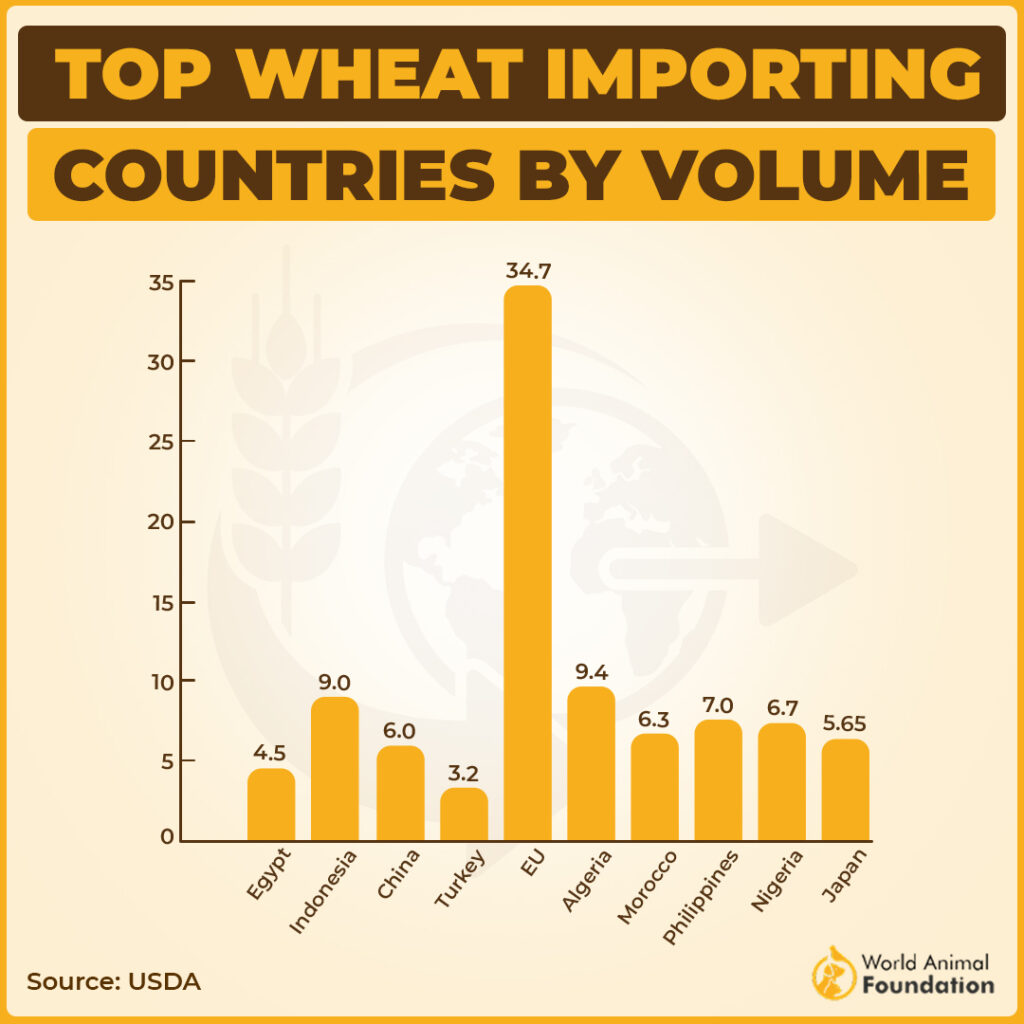
Let’s take a look at the top wheat-importing countries in the world and the factors that influence their wheat import patterns.
Egypt
The most significant goods import for Egypt is wheat at $5.2 billion in 2024, according to OEC World. Its most notable exports are refined petroleum, gold, and crude petroleum.
Indonesia
Indonesia had significant wheat imports of $3.27 billion in 2024, but only insignificant amounts of wheat imports for 2024.
China
China has the highest population in the world and needs massive resources to feed its people. In 2024, China, aside from being one of the biggest wheat producers, imported $1.14 billion. Wheat typically has a tariff (11.4 for 2024), and it rates as a 21/130 lower tariff in HS4 products.
Turkey
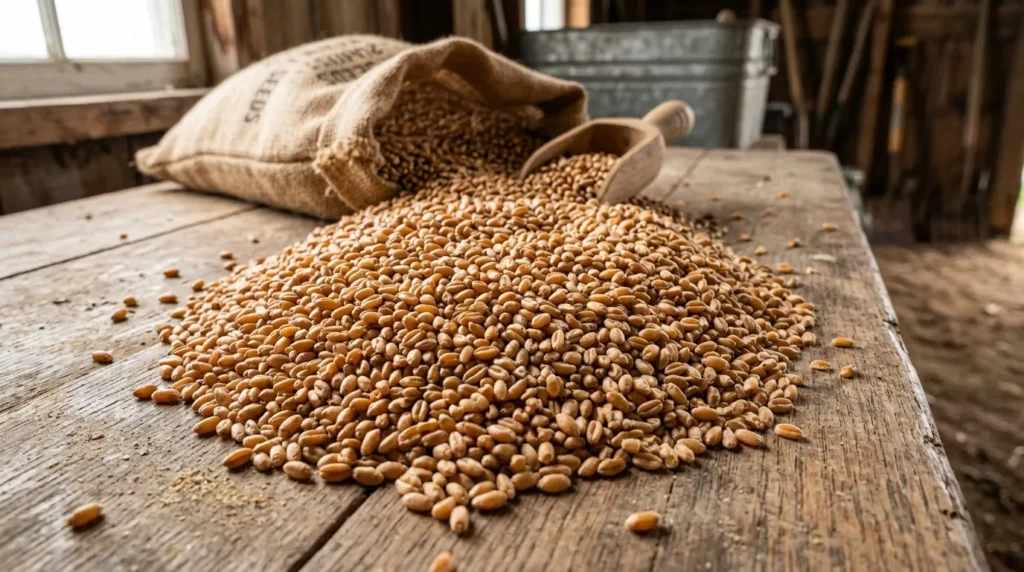
Turkey is the world’s largest wheat flour producer and exporter, and cannot rely on its own domestic production. Wheat is a crucial crop. Turkey’s grain supply was $1.29 billion in 2024, with 2.26% share in global imports.
European Union
Wheat imports are like a tug of war. The EU relies on wheat imports from its largest suppliers, Brazil and Ukraine. In 2025/2026, Wheat imports totaled 1,857,244 tons. This is a 53% decrease compared to last year and a 52% drop from the previous week.
The European Union imported wheat and meslin from Brazil worth US$1.46 thousand.
Overall, the EU imported 4.5 million tons, which is lower than in the previous two years.
It’s worth remembering that wheat encompasses other grain forms like sunflower and rapeseed.
Algeria
Algeria imports vast volumes of wheat and bought over 9.5 million tons from the world market in 2023-2024. The wheat pool supplied Algeria with $1.76 billion.
Morocco
Morocco imported $1.66 billion in wheat, primarily from France, Canada, Ukraine, and Argentina. It is the 10th largest importer of wheat.
Philippines
The Philippines doesn’t produce wheat, but flour products are essential in the diet of affluent people. The country imported $1.85 billion.
Nigeria
Russia is Nigeria’s biggest wheat supplier, and since the war started between Russia and Ukraine, prices soared on wheat products, including bread, which is a ready-meal in Nigerian homes. Nigeria imported $2.1 billion.
Japan
Japan imports most of its wheat from the USA, Canada, Australia, and France. Japan imports 90% of its grain from overseas.
In 2025, the main source of wheat imports for Japan was Canada, valued at ¥96.6 billion.
Japan’s total wheat imports reached ¥244 billion. It accounted for about 2.8% of global wheat imports.
Wheat Exporting Companies
Wheat is an invaluable commodity traded on the stock market. The value of commodities is in constant conflict with the value of stocks and bonds. For investors and traders, having wheat in a portfolio bolsters declines from other segments.
Wheat is so crucial that it can affect the rate of inflation. Therefore, wheat exporting and importing companies are vital to the grain trade.
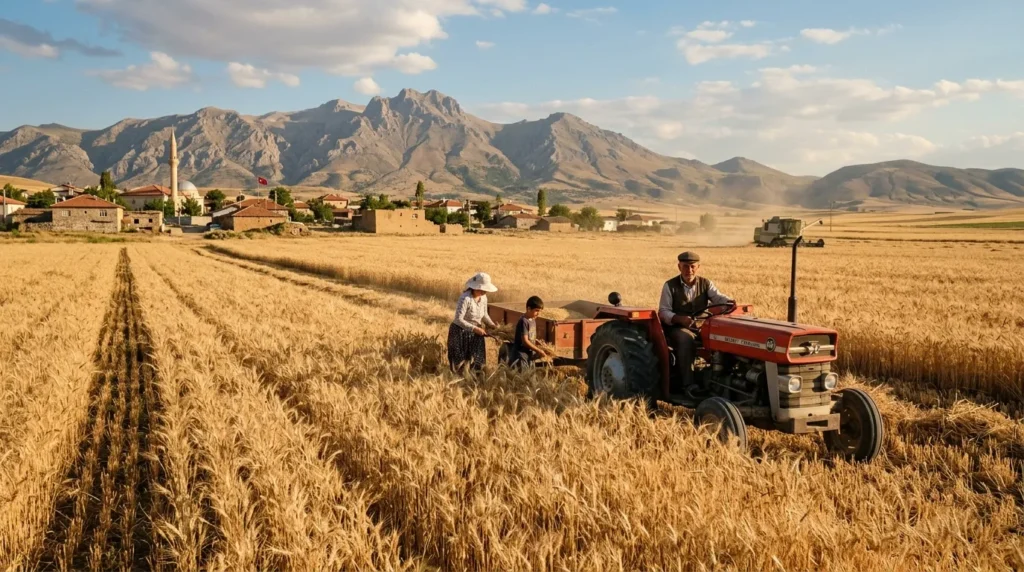
The list here contains the names of companies in the world market.
Top wheat-trading companies in the world and their country of origin.
- Cargill (United States)
- COFCO (China)
- Archer Daniels Midland (United States)
- Wilmar International (Singapore)
- Bunge (United States)
- Vitra (Netherlands)
- Louis Dreyfus (France)
- CHS New Valley (United States)
- Olam (Singapore)
- Japan Zen-NOH
FAQs
Most of us don’t think about where our daily bread comes from, and in North America, we have developed a love-hate relationship with cereal grains. There’s always a new diet that restricts or promotes eating healthy wheat grains.
How Would a Strong U.S. Dollar Impact the Trade of Grain Produced in the United States?
The US dollar is the most widely used currency and has been the world’s principal reserve currency since WWII. As the US dollar appreciates in value, USA wheat prices in world markets also rise. When this happens, the demand falls, and US wheat farmers export less. It might be an opportunity for other countries to become leading wheat exporters.
How Much Wheat Does the US Import From Russia?
The US is a significant wheat importer, #32 in the world. It buys most of its wheat from Canada, France, Argentina, the UK, and Italy. According to the USA trade agreements, the United States doesn’t import wheat from Russia.
Conclusion
The wheat exporters and importers affect the economy of the complex global market and are constantly evolving. The war between Russia and Ukraine, two key players in the wheat export business, has seriously impacted the economies of many countries. For some countries, it’s an opportunity.
Wheat is the most important food source for humans, and it’s also an untapped fuel source. It is the most significant commercial crop in the world and is exported and traded 24/7.
For wheat farmers, regardless of scale, it’s always a question of whether it was a good or bad wheat crop. Every wheat producer from Russia to Canada is making a difference.
Regardless of how hard farmers work, the weather has the final say on the wheat crop’s productivity.
