





Whether you have a phobia of bees or see them for the world-sustaining miracle that they are, it’s important that everyone understands the way they help our planet and the damage that will be done if we wipe them off the Earth completely.
As there are millions upon millions of bees out there, many people aren’t exactly worried about their numbers.
But single events like the spraying of pesticides or an extremely cold day, thanks to climate change, can wipe out thousands, if not millions, of bees in one go, which not only damages the bees’ population but also our vital food sources in the process.
10 Most Amusing Facts
- The Total Bee Population Is about 102 Million Managed Beehives Around the World
- There Are 20,000 Bee Species in the World, From Which 4000 Resides in the US
- From Jan to March 2025, the US Beekeepers Lost 267,260 Honey Bee Colonies
- The Second Biggest Honey Producer Is Europe
- In 2025, Honey Production in Canada improved by a Volume of 3.8%
- North Dakota has the Highest Honey Production of more than 36.2 Million Pounds
- In North America, Bees Pollinate over 100 Crops
- In Europe, over 100 Of All Bee Species Are Threatened
- Rusty Patched Bumble Bee Was Added to the U.S. Endangered Species List in 2017
- Recovery of the Bee Population Is Crucial For Spreading a Crop-Saving Organism
How Many Bees Are in the World
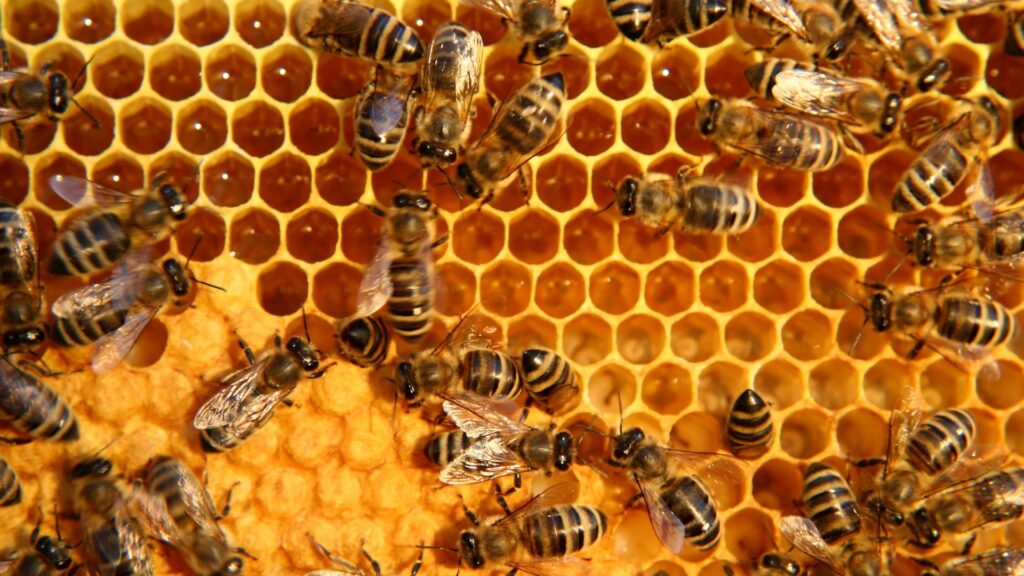
It’s hard to put an exact figure on the number of bees in the world; after all, a singular queen bee can lay between 2,000 and 3,000 eggs a day. The western honey bee, Apis mellifera, lives worldwide in approximately 102 million managed hives.
There are 101.7 million beehives worldwide as of 2024, with a single bee colony containing 10,000 to 60,000 bees, which makes a total bee population of around 2 trillion.
There Are 20,000 Bee Species in the World, of Which 4000 Reside in the US (USGS)
You’d actually be surprised to know that there are over 20,000 different bee species in the world, from the most common western honey bee to extremely rare species like the Pharohylaeus lactiferus, which is native to Australia, and Franklin’s bumblebee that hasn’t been sighted since 2006.
The US easily has the most bee species out of anywhere in the world, with over 4,000 different bees calling America home, according to USGS.
The Total Bee Population Is around 102 Million Managed Beehives Around the World (NCBI)
Not even a calculator will be able to easily figure out how many bees are on this Earth, as the NCBI estimates that there are approximately 102 million managed beehives globally.
From January to March 2025, the US Lost 267,260 Honey Bee Colonies but Added 592,170 (USDA)
The US has seen a huge decline in the number of honey bees and their colonies over the years. In total, the USDA estimates that from January to March 2025, about 267,260 bee colonies were lost, which equals 10% of the total colonies. During the same period, 592,170 new colonies were added by beekeepers.
From April to June 2025, around 292,630 colonies were lost, also 10% of the total, while 641,610 new colonies were added.
Earlier, between October and December 2024, beekeepers lost 403,270 colonies, or 14% of all colonies, making it the highest quarterly loss ever recorded.
From 2024 to 2025, the US Beekeepers Lost 55.6% of the Honey Bee Colonies (Apiary Inspectors of America)
It was a hard year for the bees and beekeepers of the United States. The reported loss of 55.6% of honey bee colonies from 2024 to 2025 is a deeply concerning trend for both beekeepers and the environment.
The NPR suggests that the reason for the devastating loss was due to the destruction of their habitat, poor beekeeping, infestations of the varroa mite, and a decrease in the crops available to the bees.
Between 2024 and 2025, US Beekeepers Lost 62% of Their Bee Colonies (Honey Bee Health Coalition)
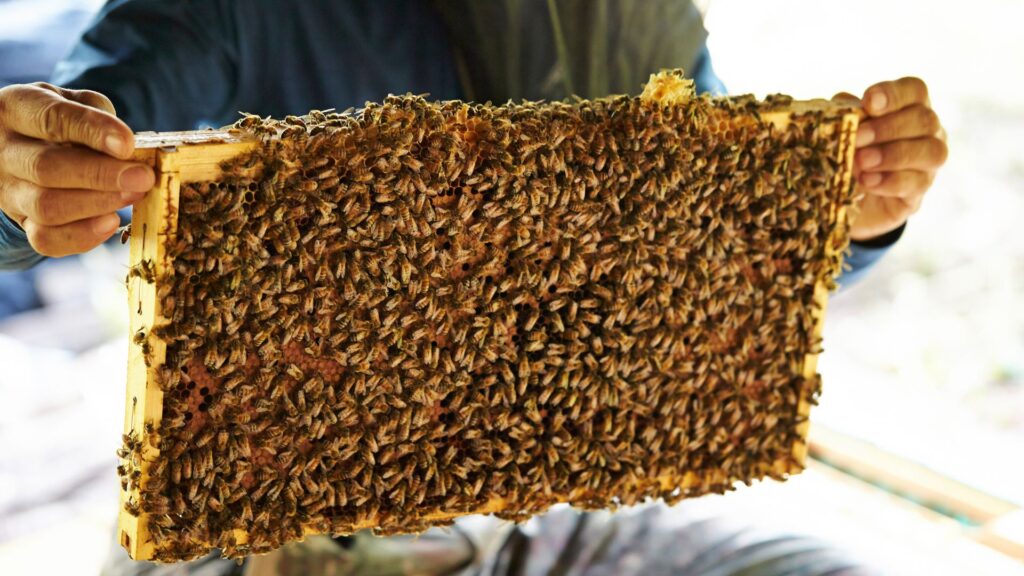
A nationwide survey of beekeepers found severe losses of honey bee colonies across the United States. Commercial beekeeping operations reported that they lost an average of 62% of their colonies between June 2024 and February 2025.
Honey bees play a vital role in our food system because they pollinate many of the crops we depend on. If bee losses continue at this rate, it will become difficult to maintain current levels of food production. To address this ongoing problem, the beekeeping industry needs to find solutions both within the industry and through broader environmental and agricultural efforts.
Bee Population Statistics Globally
The global statistics of bee populations can be shocking, interesting, and helpful, so below are four truly eye-opening stats.
The Second Biggest Honey Producer Is Europe (European Parliament)

The European Parliament lists Europe as being the second biggest honey producer on the planet, making over 235,000 tonnes of honey each and every year. EU honey production was 285 thousand tonnes in 2023 and 282 thousand tonnes in 2024, showing a small decrease compared to the previous year.
China, however, produces more than Europe does, as they harvest over 450,000 tonnes of honey from its native bees. Chinese honey production is set to reach 483,350 metric tons by 2026, with a 0.5% year-on-year CAGR.
Globally, There Are Almost 81 Million Western Honey Bee Hives (UN Environment Program)
The most common bee species is the western honey bee, so I’m sure it comes as no surprise that there are 81 million western honey bee hives dotted all over the world.
In 2025, Honey Production in Canada improved by a Volume of 3.8% (Statistics Canada)
In the 2024 season, the beekeeping industry continued working to maintain and increase honey bee hive numbers. This effort was mainly due to the higher-than-normal colony losses during the winters of 2022 and 2023.
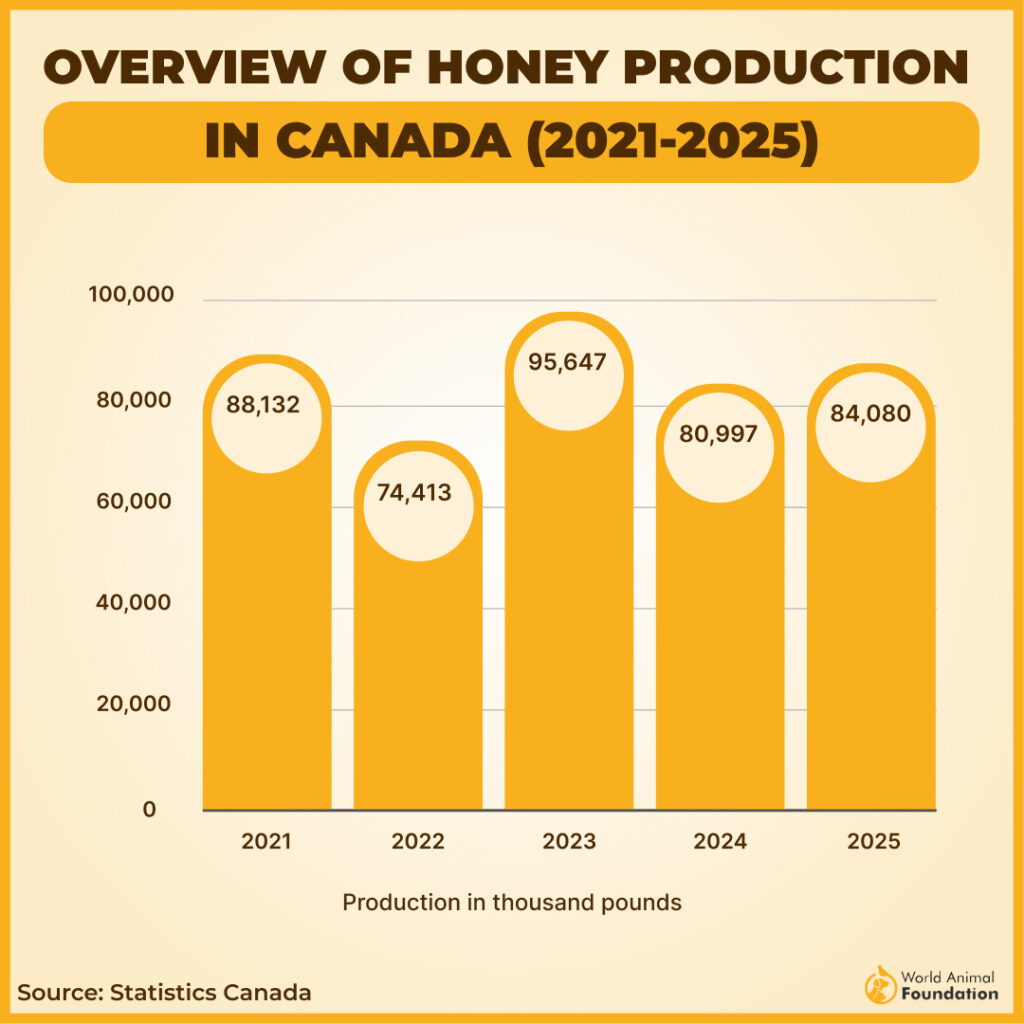
Honey production in Canada improved in 2025. Production reached 84,080 thousand pounds, compared to 80,997 thousand pounds in 2024. This means production increased by 3,083 thousand pounds, or about 3.8% year over year.
In 2025, Canada had 16,317 beekeepers managing 843,712 bee colonies, which is a 4.3% increase in the number of colonies.
The Concern About Honey Bee Population Started in the Winters of 2006–2007 (Environmental Protection Agency)
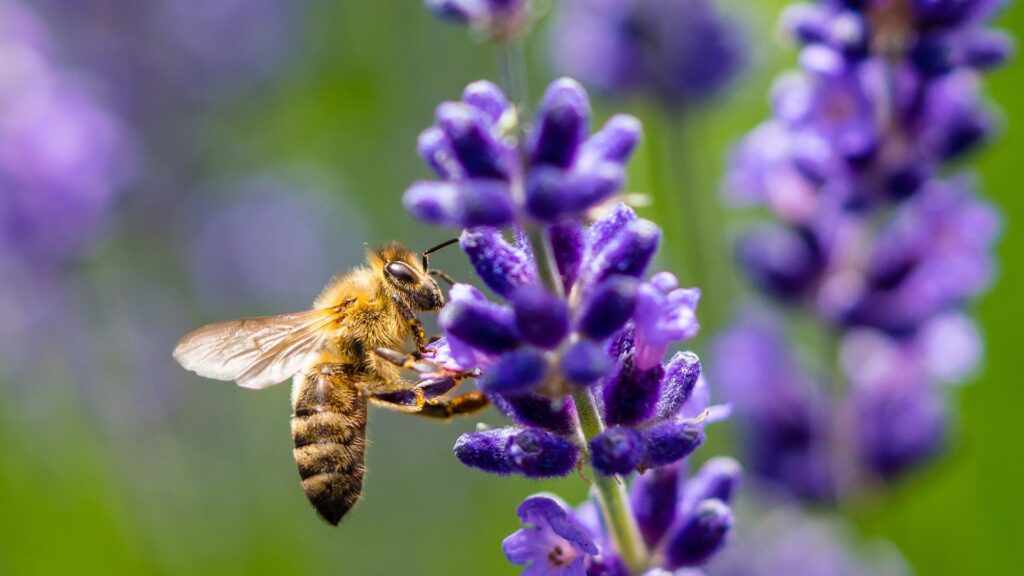
The winter losses of 2006 to 2007 were what initially caused concern for honey bee populations. Just the winter before, the honey bee loss percentage was 23.1%, according to the EPA. Fast forward a year, and that percentage rose by 5.6%, now making the average annual honey bee loss population at 28.7%
Bees Population Statistics in the US
By taking a look at bee statistics, we can accurately see the damage we humans, as well as pests and climate change, are doing to the populations. Below are some interesting U.S. bee population statistics.
Stats for 2025 show that for Operations Covering a Minimum of Five Colonies, There Was a Decline of 110% in Colony Collapse Disorder Symptoms (USDA)
Colony collapse disorder (CCD) is when a vast majority of a colony’s bees leave their hive, large amounts of stored food, and their queen. CCD, caused by things like pesticide poisoning, affects a bee’s ability to navigate. Therefore, when a bee heads out to collect pollen, it gets disoriented and can’t find its way back to the hive.
Over 5 years ago, we considered colony collapse disorder to be a huge threat to bee populations. The USDA’s stats from 2025 show that CCD is on the decline, as there was a 110% decrease in overall symptoms.
The Biggest Hurdle in Managing the Operations in 2018 Was Varroa Mites (USDA)
Varroa mites are the honey bees’ biggest and most serious pest, and in 2018, they caused the greatest hurdle in managing bee populations. As an incredibly invasive species, these parasitic mites have been wreaking havoc on bees all over the world ever since their discovery in 1904 on the Indonesian island of Java.
Between 2022 and 2023, Almost 48.3% Decline in the Bee Population Was Observed in the US (Bee Informed)
In just one year, from 2022 to 2023, Bee Informed noted that the United States saw a 48.3% decrease in its managed honey bee colonies, nearly matching the highest annual loss on record and well above the 12‑year average of 39.6%.
From 2022 to 2023, California Lost the Highest Number of Bee Populations (Beeinformed)
California produces over half of the nation’s fresh produce. From 2022 to 2023, the state saw its biggest decrease in the bee population, with a weighted average winter loss of 82.95%.
Stat Shows There Was a 30.4% Loss of Bee Colony in the Summer of 2023 (Apiary Inspectors of America)
Apiary Inspectors estimate that in 2023, the U.S. lost 30.4% of its bee colonies to pesticides and parasites. This loss rate was 7.6 percentage points higher than the 13‑year average summer loss of 22.8%, first tracked in 2010.
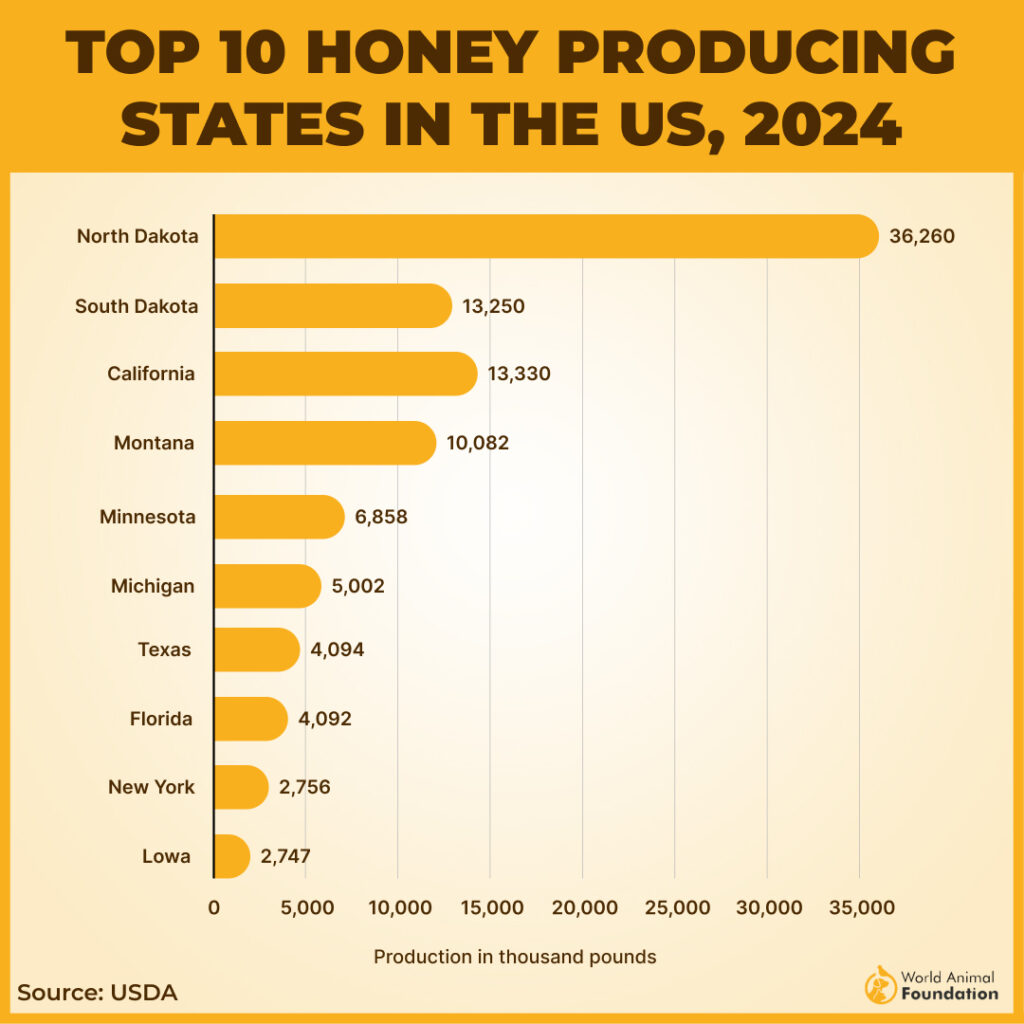
As per stats of 2024, The Highest Honey Production Is in North Dakota, With Above 36.2 Million Pounds (USDA)
We all know that the United States has 50 states, but would you be able to guess which one makes it to the top 10 for honey production? Well, according to the USDA, it’s North Dakota. In total, North Dakota produces $67,444,000 dollars of liquid gold a year, which equates to a whopping 36.2 million pounds of honey!
The top 10 states are as follows:
- North Dakota
- California
- South Dakota
- Montana
- Minnesota
- Michigan
- Texas
- Florida
- New York
- Iowa
In North America, Bees Pollinate over 100 Crops (Just Agriculture)
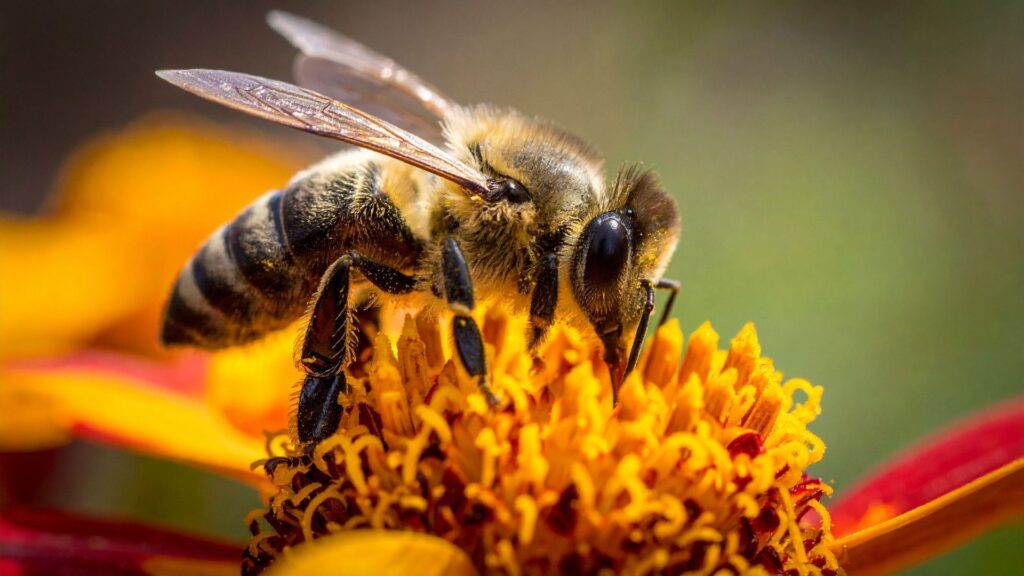
Just Agriculture approximates that over 100 commercially grown crops in North America and more than 75% of global crops survive, thrive, and reproduce, thanks to the hard work of pollinating bees. More than 100 U.S.-grown crops rely on pollinators. The added revenue to crop production from pollinators is valued at $18 billion.
If there were to be a significant bee population decline, many crops would no longer be able to grow, and our food supply would be extremely limited.
According to the Honey Bee Population, the Decrease in Honey Bee Population Started Since Decades (FAO)
Although we’re hearing more and more about the decrease in honey bee populations, the number of bees has been declining for decades. Since 1962, Greenpeace estimates that the number of bee colonies per hectare has reduced by 90%.
Bee Statistics of 2022 Are Crucial To Predict Using the Bee Breeding Program (FAO)
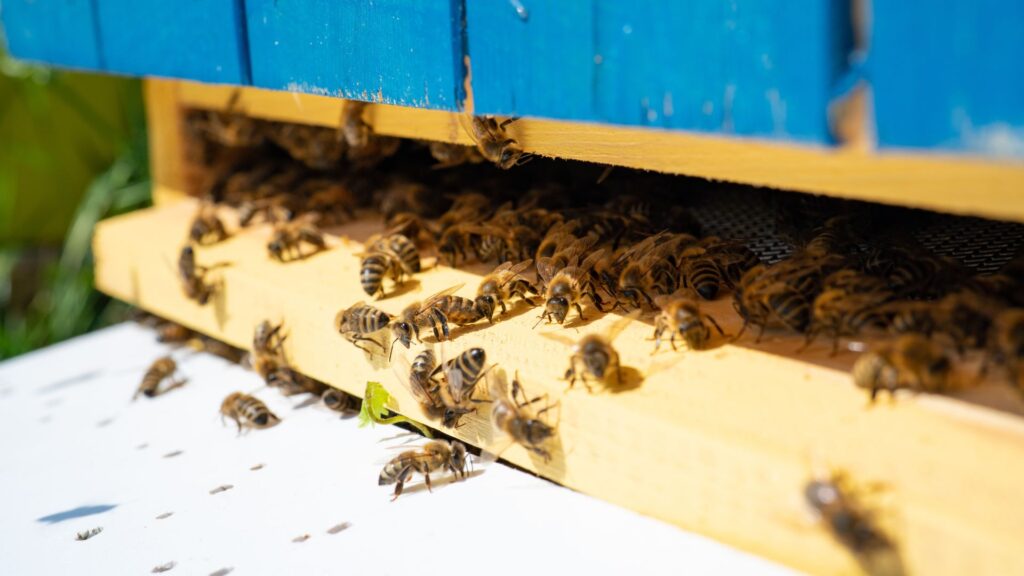
Breeding programs are in place for many species all over the world, and the FAO believes that the statistics of bees from 2022 will highlight whether a breeding program will be necessary to boost colony numbers.
If the bee population figures are still in decline, humans may need to step in and create controlled environments that help the bees reproduce and flourish.
Are Bees Endangered?
Our world is home to over 20,000 bee species, and due to a range of different factors, some species are now considered endangered. Globally, 156 bee species are vulnerable, 20 are endangered, and 11 are critically endangered; however, if things don’t change, more and more bee species will end up on the endangered list.
In Europe, 100 Bee Species Are Threatened (IUCN)
IUCN states that around 100 additional wild bee species in Europe have recently been classified as threatened. More than 20% of species in groups such as bumblebees and cellophane bees are now at risk of extinction.
Overall, about 10% of Europe’s wild bee species — 172 out of 1,928 assessed — are considered threatened. One example is the Critically Endangered mining bee Simpanurgus phyllopodus, a species found only in Europe that is now facing a serious risk of disappearing.
During the Pandemic, a Dramatic Decrease in the bee population was observed in New Zealand (Newshub)
The pandemic was a hard time for us all, and I know I struggled being locked up inside with very little human contact. But how did the bees in New Zealand hold up?
Well, during the COVID-19 pandemic, New Zealand saw a huge decrease in its bee populations because of restrictions stopping beekeepers from accessing their hives. Typically, in the wild, bees feed on nectar and pollen, but beekeepers also feed bees sugar to increase their honey stores.
70 of the 100 Global Food Crop Species Depend on Pollination (WWF)
Did you know that of the 100 crop species that provide 90% of the world’s food supply, bees pollinate 70 of them? Pollenity estimates that in the U.S. alone, bees pollinate $16 billion worth of crops, so it’s safe to say that without the bees, the human race would quickly go hungry.
From the 2019 to 2020 Bushfire Season, Honey Bee Population Decreased by 90% In Queensland, Australia (Ahbis)
With many friends living in Queensland, I know how truly devasting 2019 to 2020 Australian bushfire season was. Along with 300,000 ha worth of land that the fires destroyed, the world’s worst bushfires also wiped out 90% of Queensland’s honey bee population, with thousands of colonies lost and many more colonies affected.
Rusty Patched Bumble Bee Was Added to the U.S. Endangered Species List in 2017 (Mindat)
One of the United States’ native bees, the rusty patched bumble bee, made its way onto the U.S. list of endangered species in 2017 after an 87% decline in its historical habitat range, according to Mindat.
Seven Yellow-Faced Bee Species Have Been Added for Protection Under the Endangered Species Act (U.S. Fish and Wildlife Service)
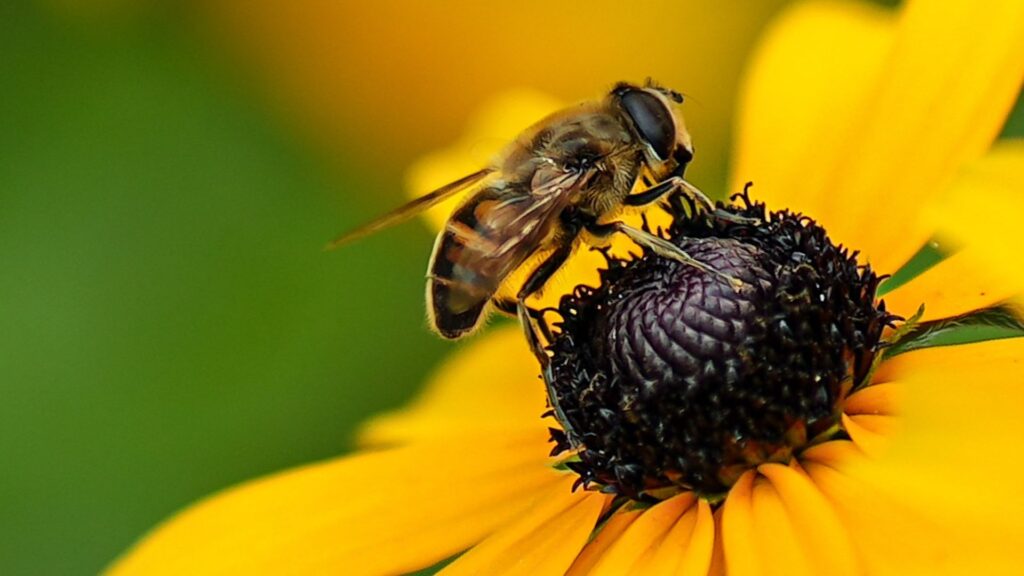
The U.S. Fish and Wildlife Service has listed seven species of Hawaiian yellow-faced bees need to be protected as they’re at high risk of becoming endangered.
Stats Reveal the Number of Wild Bumble Bees Is Declining at the Same Rate as that of Domestic Bees (Global Research)
A population decline of domestic bees is one thing, but now, stats show that wild bee numbers are decreasing at the same rapid rate.
A Few Bee Species in the UK Have Become Extinct (Bee Good)
Bee Good has made known that 13 species of solitary bees and Bumblebees have regionally become extinct in the UK. And sadly, it doesn’t end there. A further 35 bee species are at risk of extinction. Across Europe, nearly 1 in 10 wild bee species face extinction.
To Produce Almonds, California’s Almond Orchards Almost Require 1.6 Million Domesticated Bee Colonies to Pollinate the Flowering Trees (Inside Climate News)
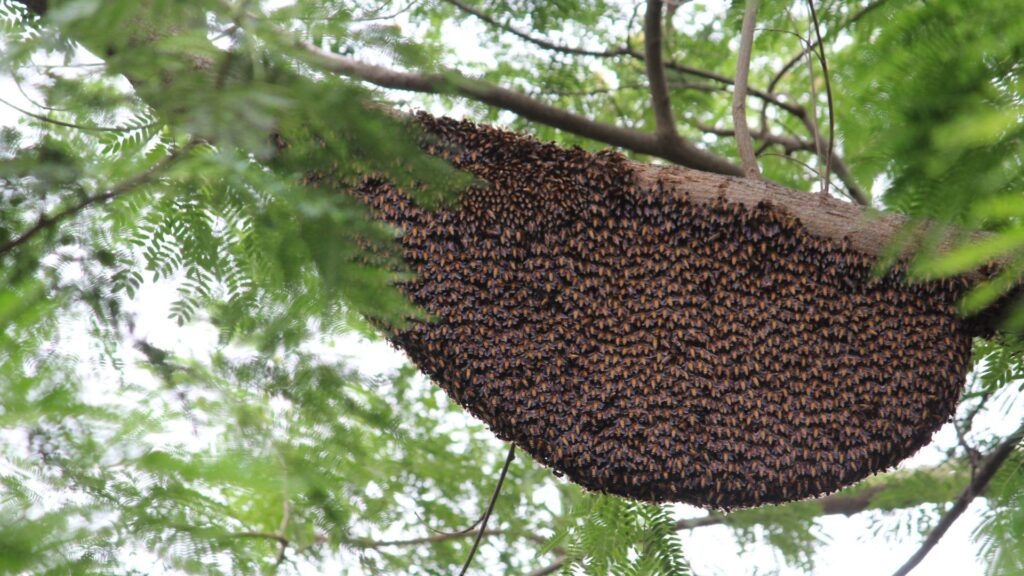
If you’re an almond lover like me, would you believe that California’s Almond Orchards hire 1.6 million domesticated bee colonies to come and pollinate their flowering trees? The next time you’re eating almonds, be sure to thank the bees!
Solutions to Declining Bee Population
Although bees are declining year after year, there are things we can do in order to boost bee populations and hopefully prevent more bee species from becoming extinct.
High-End Technology Such as Apisprotect, Could Be Employed to Monitor Bee Population Data and Health (Apisprotect)
Apis Protect has highlighted one way we can monitor the population and health of bees, and that is through high-end technology.
For example, a company called Apisprotect has an IoT-remote bee monitoring system that allows us to monitor colonies around the clock to evaluate the condition and possible problems of each colony.
Recovery of the Bee Population Is Crucial For Spreading a Crop-Saving Organism to Sunflower Crops (NBC News)
According to NBC News, the EPA approved an organic pesticide that will help limit the decline of bee populations and save sunflower crops at the same time. However, one crucial component of this plan is the bees themselves.
In order to deliver the pesticide to the sunflower crops, we need the help of the bees to carry the pesticide from flower to flower. If the bee population continues to dwindle, not enough pesticides will be delivered to the sunflowers, causing the crops to die.
Almost $10 Million Project Has Been Launched by New Zealand to Save the Bees (CBC)
In an effort to save the bees, New Zealand has launched a $10 million project to deal with the country’s varroa infestation problem.
In the Closed Greenhouses in the EU, Neonicotinoids Can Be Used (The Guardian)
According to The Guardian, the European Union banned neonicotinoid pesticides anywhere other than in enclosed greenhouses, as they are incredibly harmful to bee species and a huge factor in population decline.
20% Of Farmland in Bavaria Will Be Bee-Friendly to Assist in Increasing Their Population by 2025 (The Guardian)
The free state of Bavaria in Southeast Germany has agreed for 20% of its farmland to be transformed into a bee-friendly area in the hopes of increasing the wild bee populations.
The Decrease in Bee Population Inspired Low Carbon to Install 25 Beehives on Five of Its Solar Farms (Low Carbon)
In an article by Ethical Unicorn, renewable energy investment company Low Carbon has been inspired to increase the bee populations in Cornwall, Dorset, and Suffolk. The company, in an attempt to help honey bee colonies, took the initiative and installed 25 beehives throughout five of its solar farms.
The Most Active Bee-Friendly Country is India (FAO, Statista)
Out of all the countries in the world, India, with 12.2 million beehives, is the world’s most active bee-friendly country. With up to 10,000 bees living in a single hive, India could be home to 122 billion bees. That’s roughly 87 bees for every single person in the country!
Interesting Facts About Bees
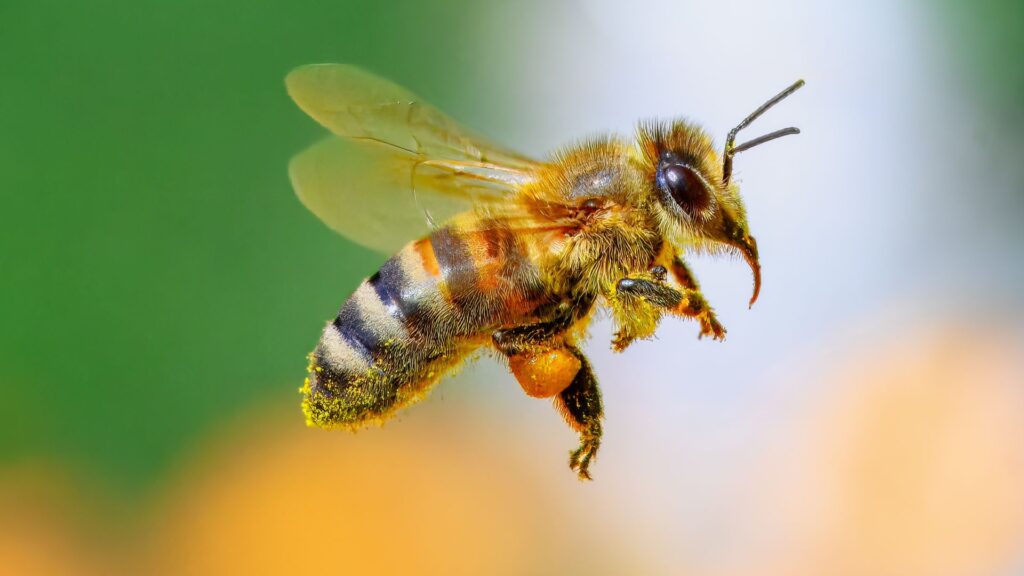
Photo Courtesy by Maciej Czyżewski/Wikipedia Commons
Bees are small but mighty, and below are five interesting bee facts that you may not have known.
- Sadly for male bees, after mating with a female, they will lose their reproductive organs and subsequently die. All in the name of love, I guess.
- Bees live all over the world, except for Earth’s coldest region, Antarctica.
- A single bee makes about 1/12 of a teaspoon (≈ 0.5 g) of honey in its lifetime; that’s equivalent to a United States nickel.
- A queen bee will lay an astonishing 800,000 eggs in her lifetime.
- Bees, on average, can fly up to 15 miles per hour.
FAQ’s
What Is the Bee Population’s Current State?
Although not every bee species’ numbers are increasing, the overall population of bees is slowly on the rise.
What’s the Reason Behind Bees Declining?
Several factors contribute to the decline in bee numbers. Climate change plays a big role! Pesticides used in agriculture can induce colony collapse disorder, causing bees to lose their way back to the hive.
Habitat loss due to human activities, reducing green spaces further diminishes bee habitats. Additionally, pests like varroa mites are a significant threat.
How Could a Dying Bee Be Saved?
If you ever see a bee that doesn’t look in the best shape, there is a really simple solution that will potentially save its life. Mix together two tablespoons of white granulated sugar and one tablespoon of water. Scoop the solution up on a spoon and place it close to the bee in question.
How Long Can Humans Survive Without Bees?
One of the greatest minds of all time, Albert Einstein, once said: “If the bee disappeared off the face of the Earth, man would only have four years left to live.” Pretty scary, right?
What Food Crop Will Be Affected the Most Without Bees?
Without bees, a lot of food crops would be affected, including almonds, pumpkins, tomatoes, avocados, and apples.
Will Humans Die Without Bees?
Without bees, our food sources would diminish, and many people would starve. So, all in all, yes, without bees, humans would die.
Do Bees Starve if We Take Their Honey?
If we were to take away all of the bees’ honey, especially late in the season when they aren’t able to replenish their stores, yes, bees would starve.
What Chemicals Are Harmful to Bees?
Neonicotinoid pesticides are extremely harmful to bees.
How Can I Help to Save Bees?
We can all do our part in trying to save the bees, and below are a few things you can do that will help boost the health, numbers, and happiness of the bees:
- Plant a bee garden
- Plant a tree
- Go chemical-free
- Make a bee bath
- Sponsor a beehive
- Eat sustainable honey
Conclusion
The saying “big things come in small packages” is incredibly fitting for all bee species, as without them, our world would be a very different place. Without even realizing it, every day, our lives are affected by bees, but not many people are actually grateful for all the hard work these little pollinators do.
If we don’t start doing our part in saving the bees, we could wipe out the bee species entirely, and with that, we’ll inevitably wipe out our own race too.
