




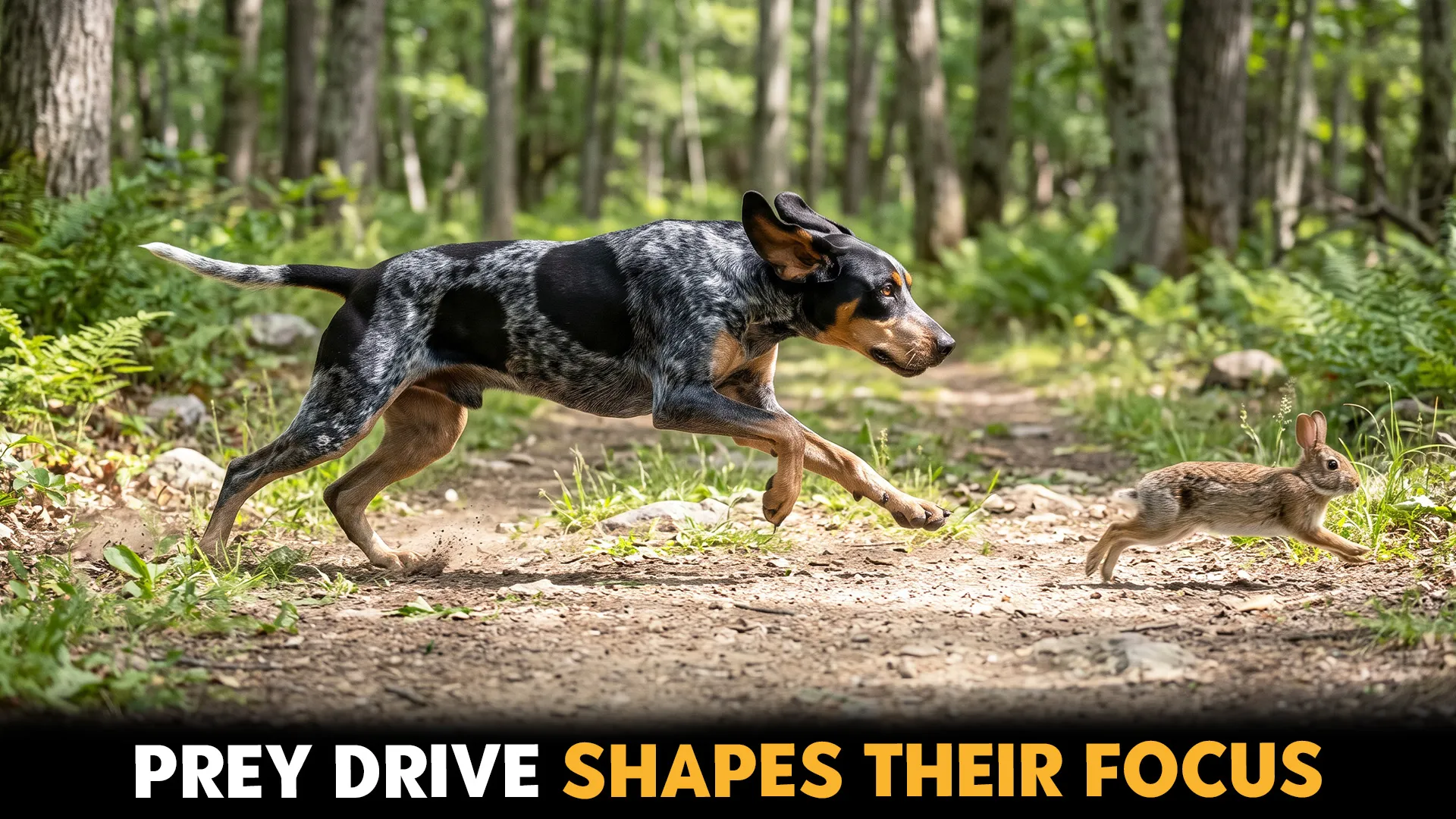
You are out for a walk with your dog. Then a squirrel runs across the path, and suddenly you are holding on to the leash with both hands.
That’s prey drive.
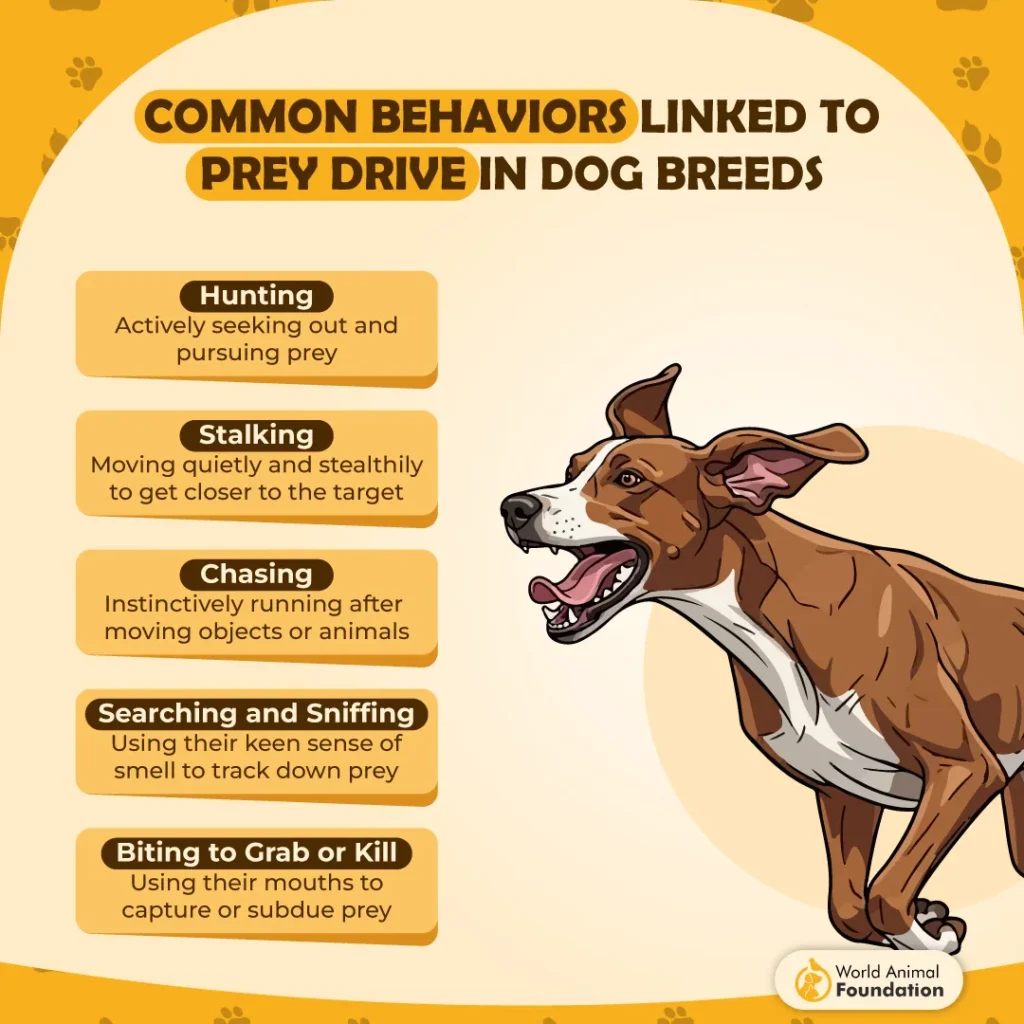
It isn’t bad behavior, we assure you, and your dog isn’t being stubborn. It’s an old instinct to chase, track, and catch moving things.
Some dogs were bred to hunt, some to herd, and others were made to follow a scent for miles. That wiring didn’t disappear because they now sleep on your couch.
We are talking about the dog breeds with notable prey drive traits. Most are hunting dog breeds, and a couple are herders with the same instincts. Every one is a canine companion with a strong prey drive and its own way of working.
Let’s get started.
Fun Fact!
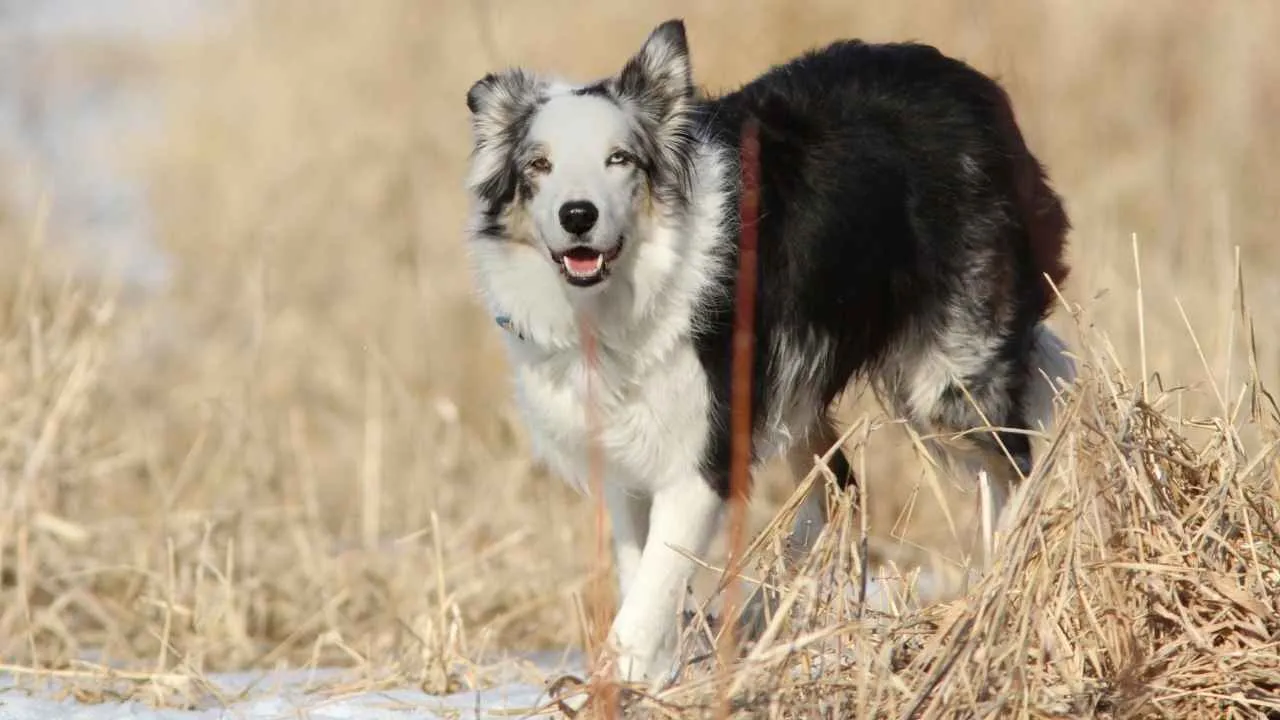
Did you know the Border Collie’s famous “stare” comes from hunting behavior? According to Pet Coach, dog researcher Raymond Coppinger described prey drive as a chain: eye, stalk, chase, grab, and bite. Over time, people bred herding dogs to keep the first parts of the chain and drop the last ones. So when a Border Collie stares down a flock of sheep, it’s using the first steps of a hunt. Even your gentle herding dog has a little hunter inside.
Top Dog Breeds with Notable Prey Drive Traits
1. Irish Setter
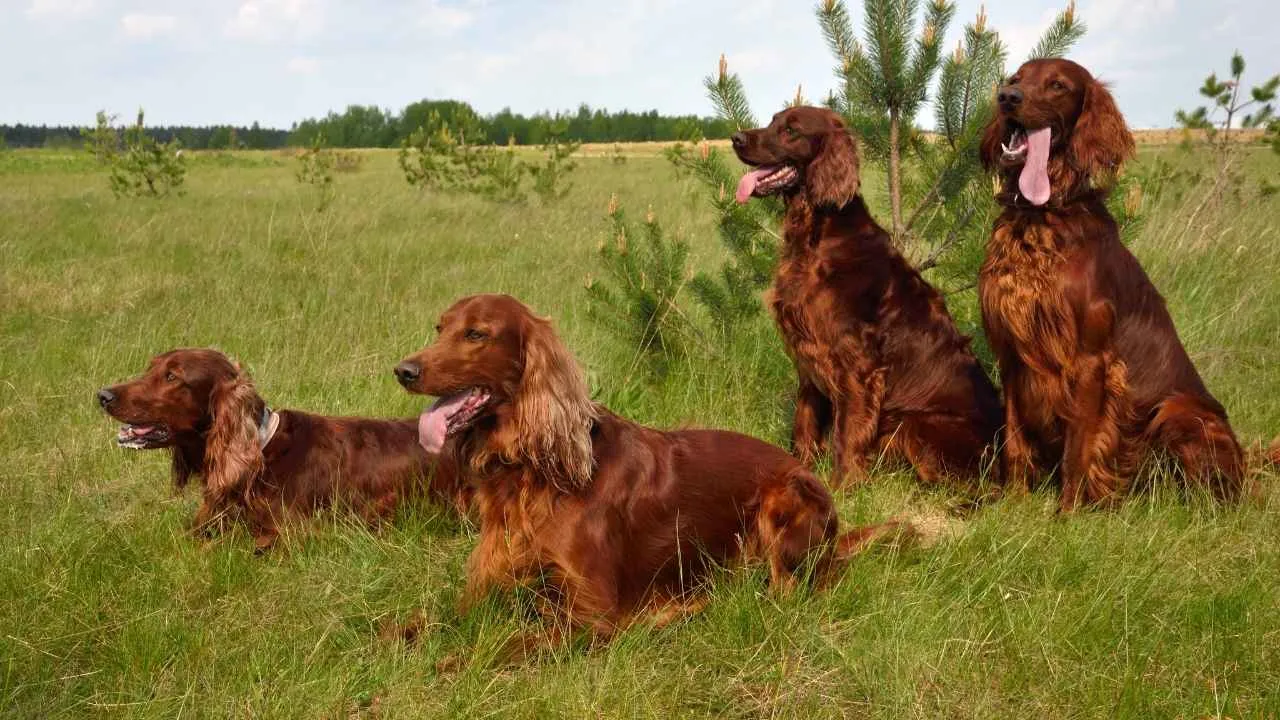
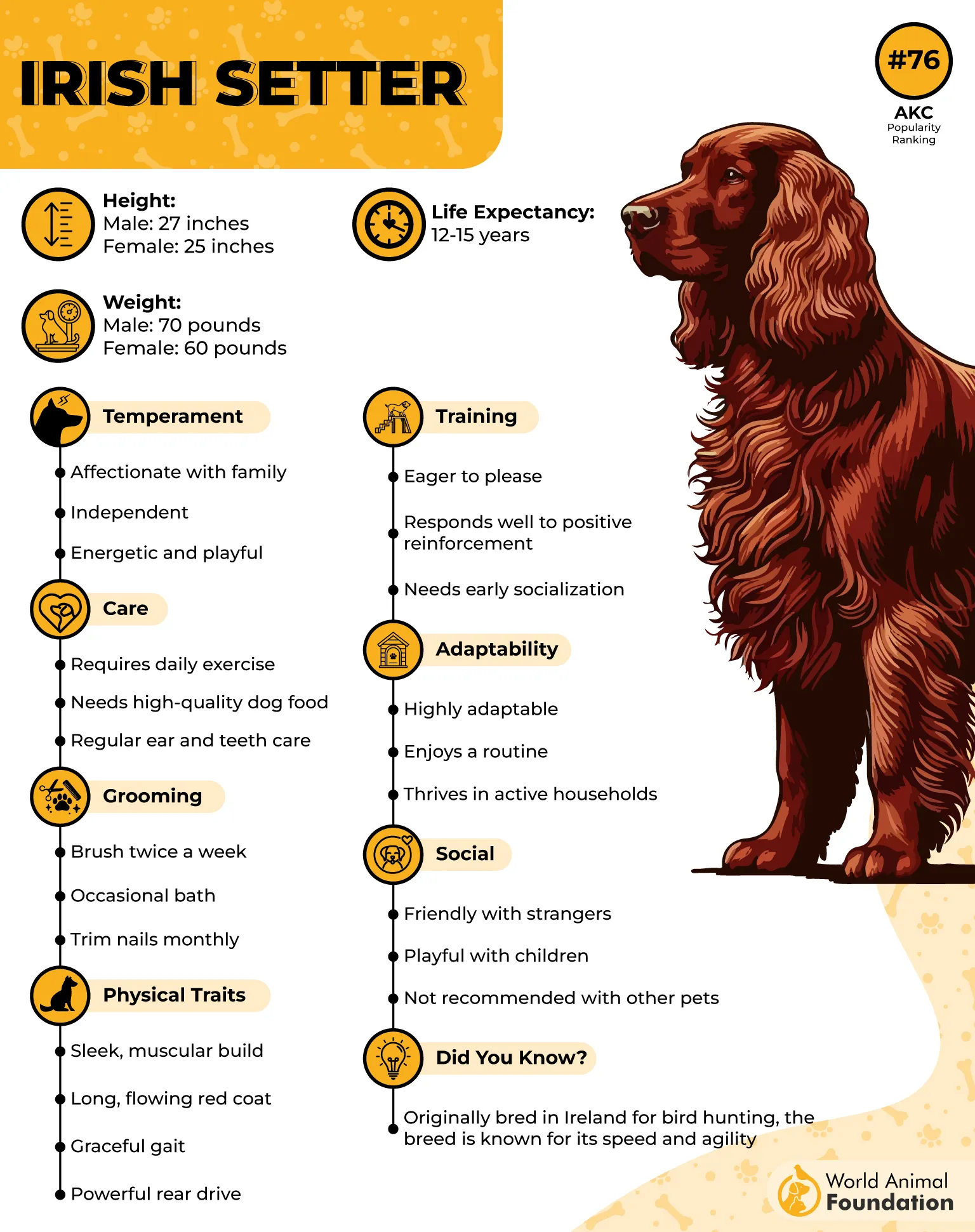
The Irish Setter is known for that glossy mahogany coat. These ravishing red dogs are graceful and bred for the hunting field. They were made for outdoor enthusiasts. Hunters in Ireland needed a partner who could find birds in thick brush and show them where the birds were hiding.
That’s the job of Setter breeds. They search wide, move fast, and use their noses to find game.
When an Irish Setter finds a bird, it freezes in place. The nose points toward the bird, the body stays low, and the tail is held straight out. That’s the pointing stance, and it tells the hunter the bird is RIGHT THERE!
At home, Irish Setters are friendly, good-natured, goofy, and very energetic, as noted by Hill’s Pet Nutrition. They need exercise, so a short walk won’t be enough. Long runs and games of fetch help them. They also stay puppy-like for years, so training takes patience. Keep sessions short and positive, and keep them in good physical shape.
2. Border Collie
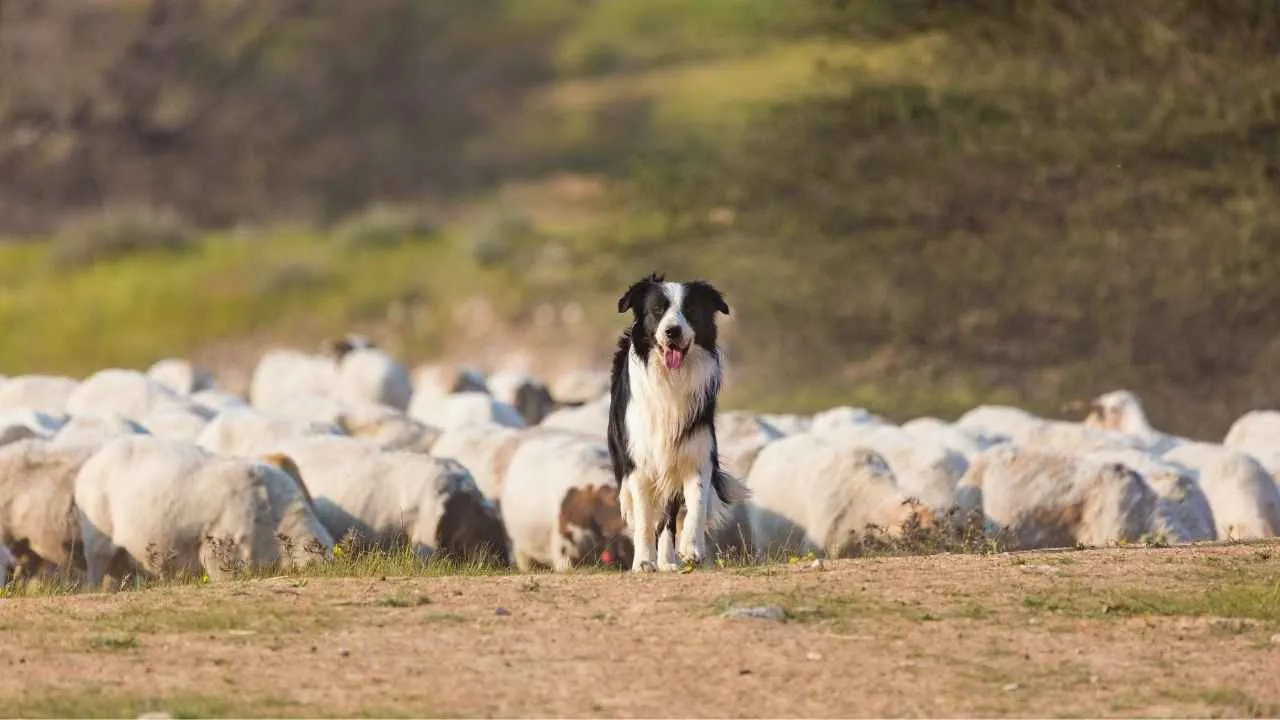
Border Collies are some of the best herding dogs in the world. Their herding comes straight from prey drive. Their ability to stalk, stare, and chase is what makes them so good with livestock.
Border Collies are medium-sized dogs, but they act as if they run the whole farm. They learn fast and want a job. If you don’t give them one, they will invent their own, like herding the kids or chasing cars. (Please don’t let them chase cars.
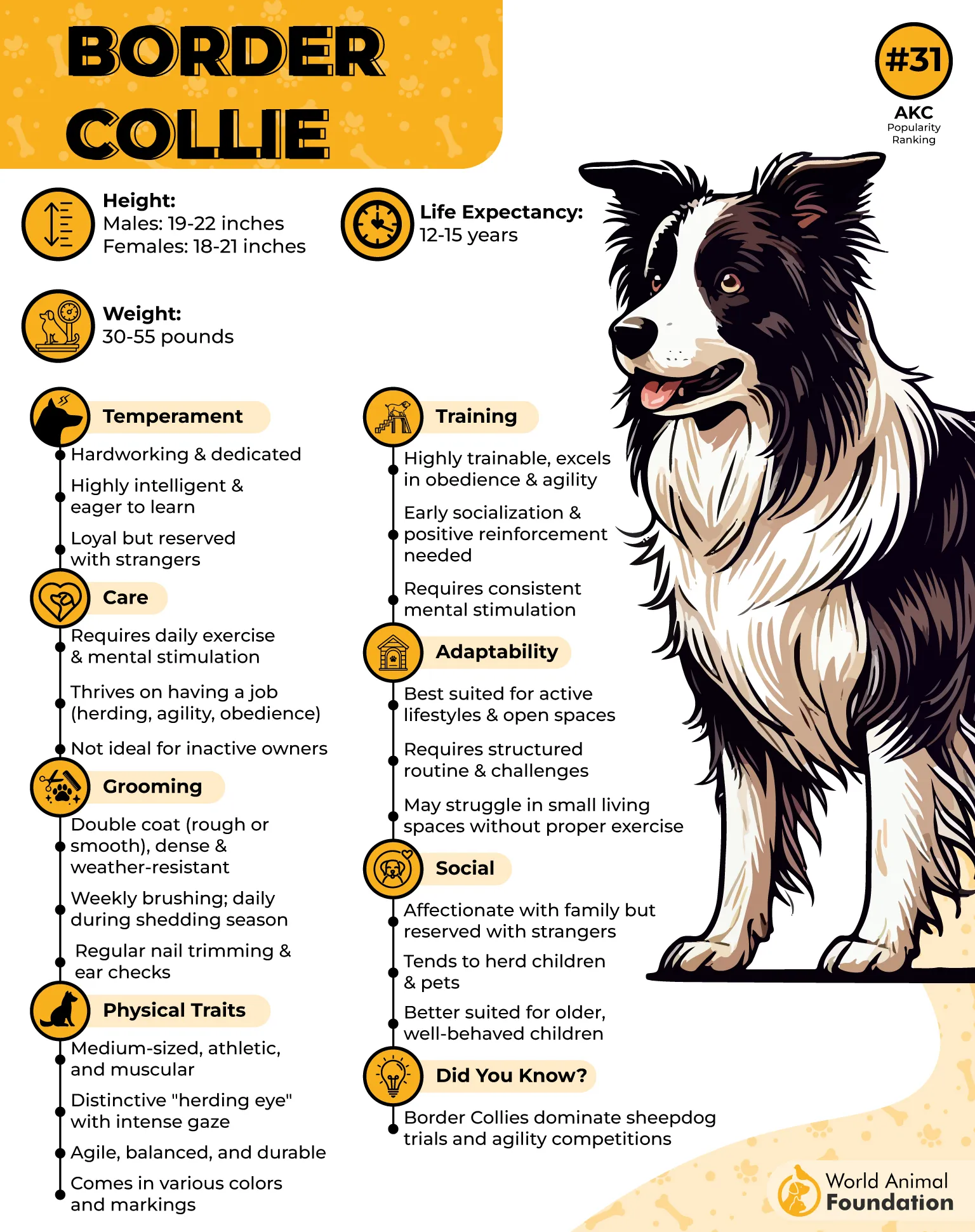
Their training needs are high. They thrive on obedience, agility, and puzzle toys. A good training approach is simple: keep their brains busy.
A bored Border Collie can get into trouble quickly.
3. Greyhound
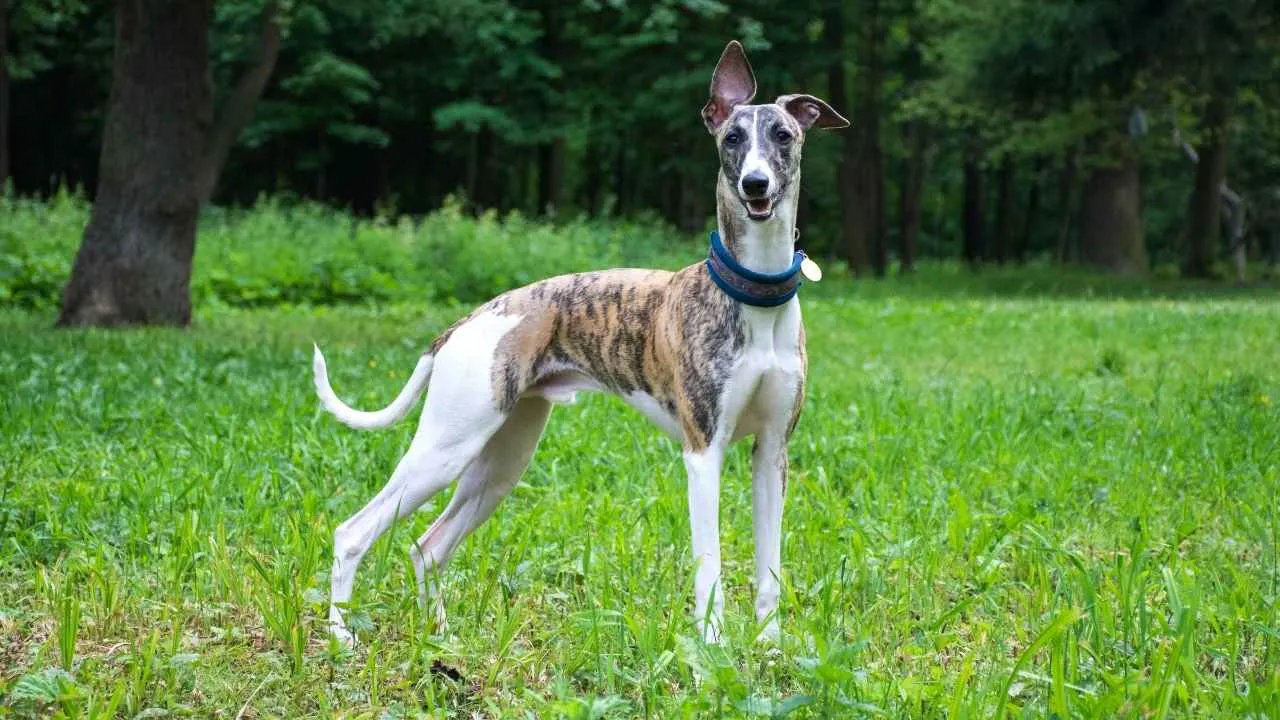
Fast, and we mean really fast.
At 45 mph, Greyhounds are among the fastest dog breeds on Earth. They are some of the ancient hunters of the dog world. People used them for centuries to chase hares and other small game by sight.
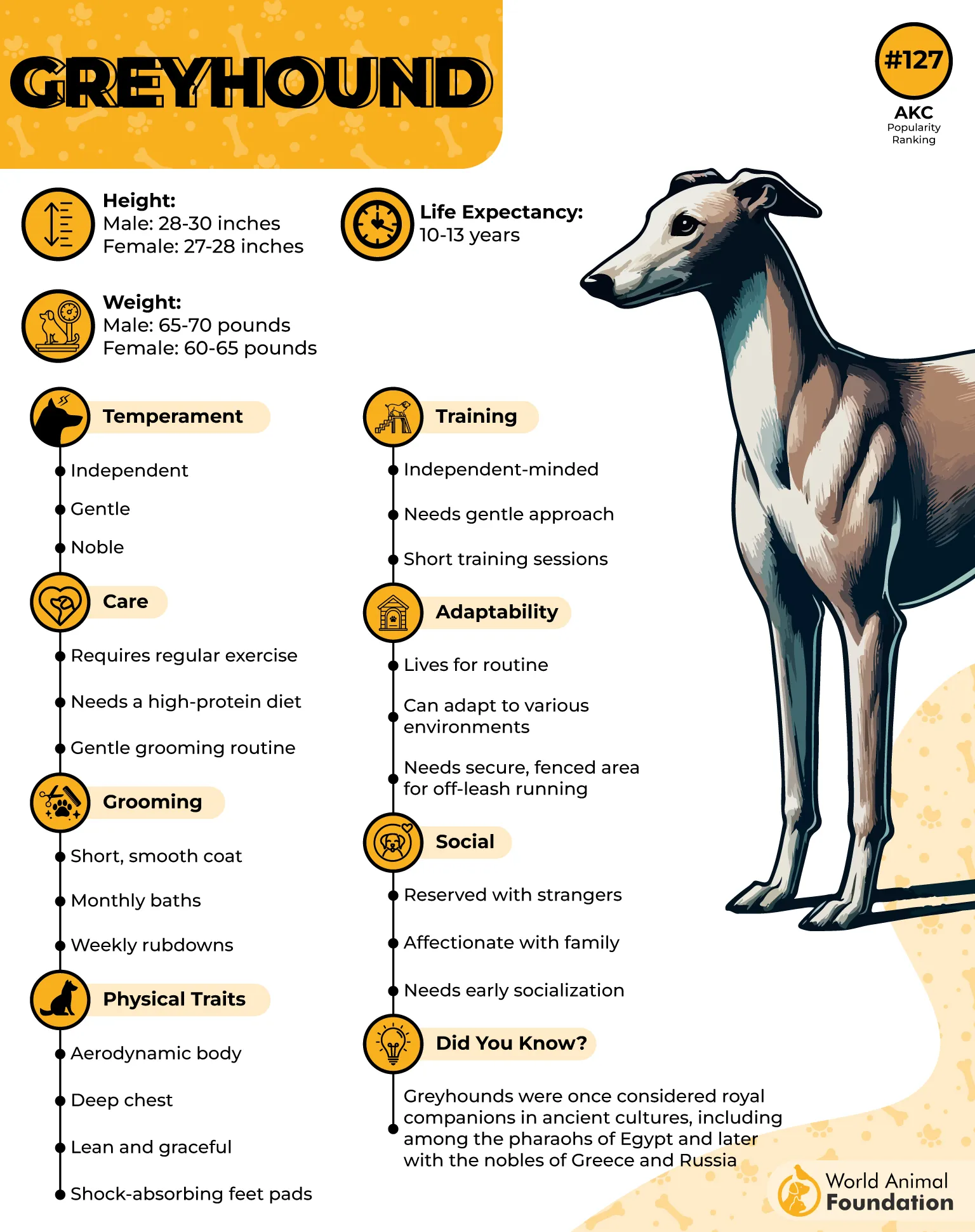
Greyhounds are sighthounds. They don’t track by scent. They spot movement and take off. If a squirrel or a cat runs by, their prey drive switches on in a second.
That’s why they need a fenced yard or a leash out in public. Even a well-trained Greyhound has a hard time ignoring a bunny.
Inside the house, though, they are total couch potatoes. A short sprint, a nap, a longer nap, and REPEAT!! Many owners call them “45-mph couch potatoes,” and that’s pretty fair.
4. Bluetick Coonhound
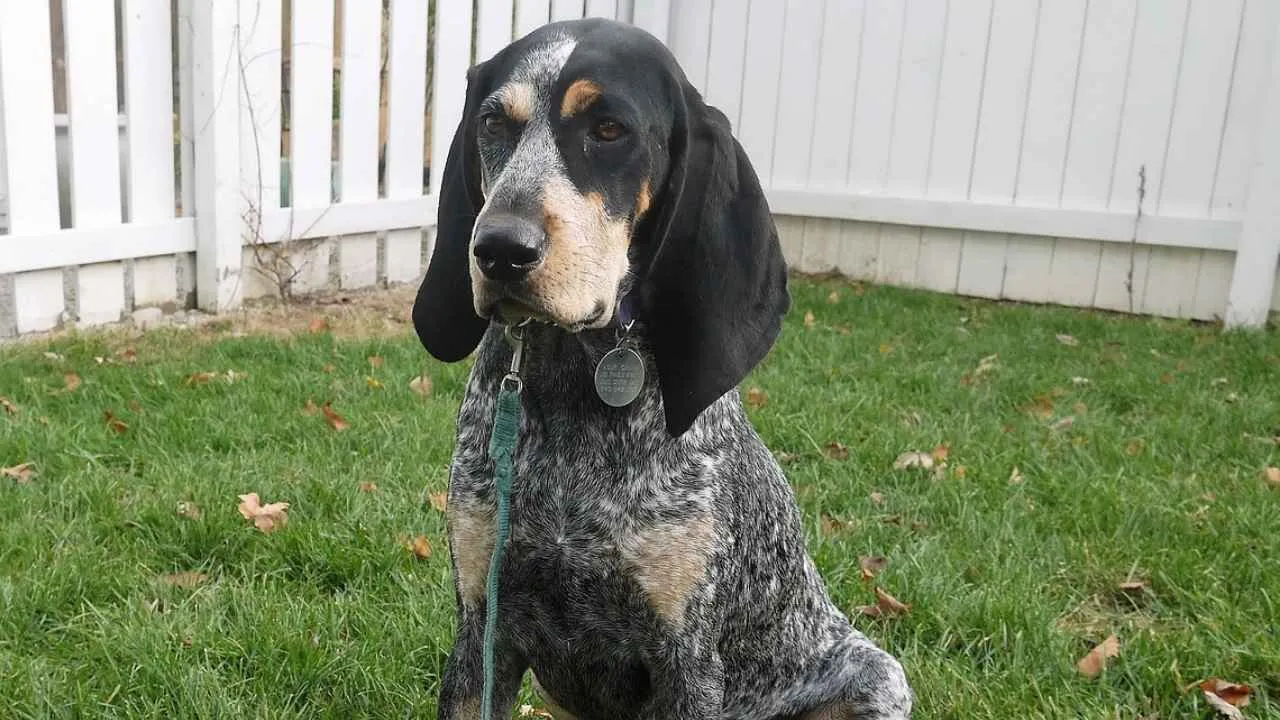
Big voice, big nose, and big tracking skills.
Coonhounds are part of the American hunting history in the South. The Bluetick gets its name from its blue-speckled coat. These dogs were bred to follow a trail and “tree” raccoons. That means chasing the animal up a tree, then letting the hunter know with a loud bay.
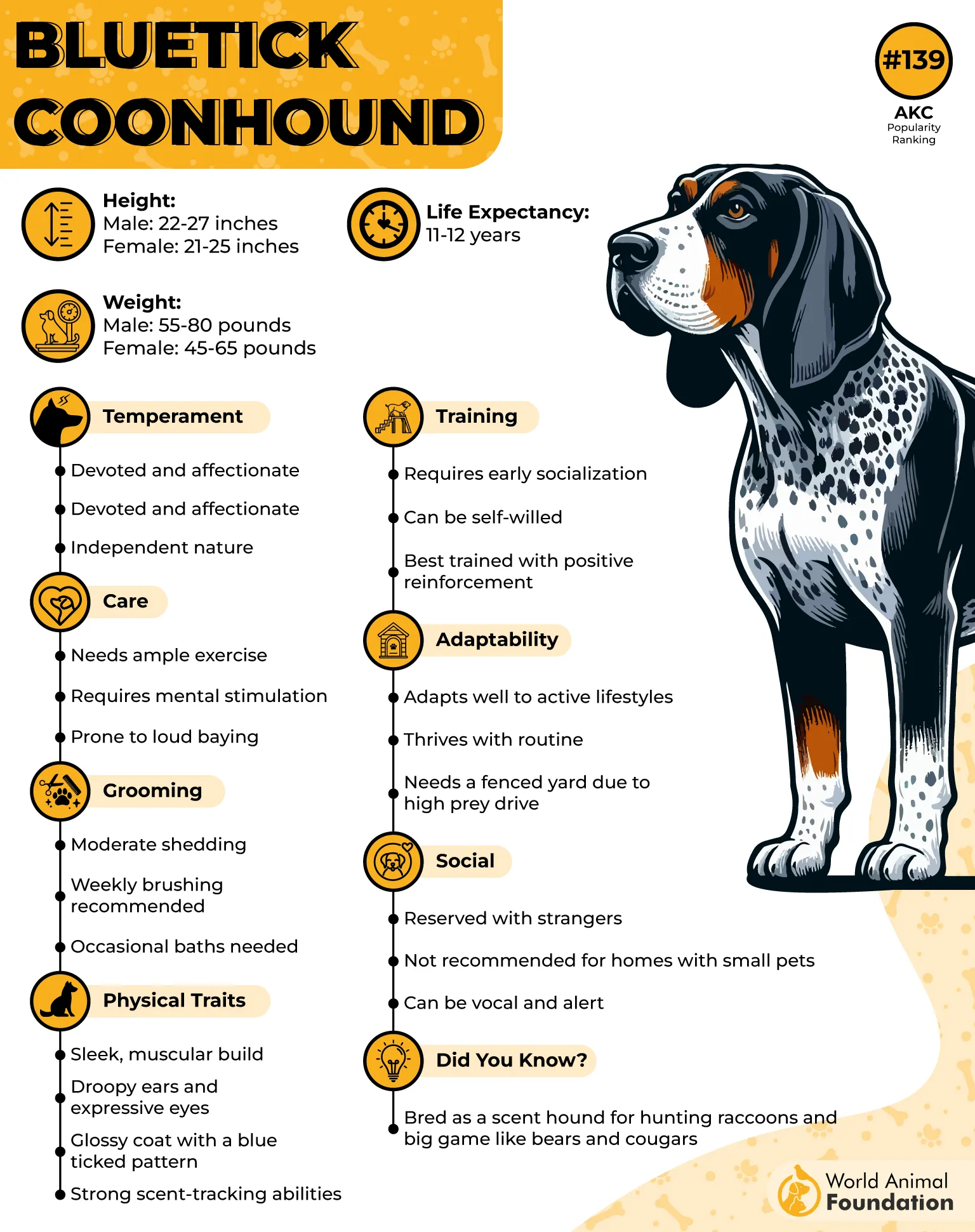
If you have never heard a Bluetick bay, picture a foghorn with feelings. It’s loud. Their tracking proficiency is impressive, too. Once their noses find a scent, they will follow it for miles.
As family pets, they are sweet and loyal dogs. But they need space, plenty of exercise, and firm, steady training. They get distracted by smells, so recall can be tough. Bring lots of treats, lots of patience, and a long leash.
5. Weimaraner
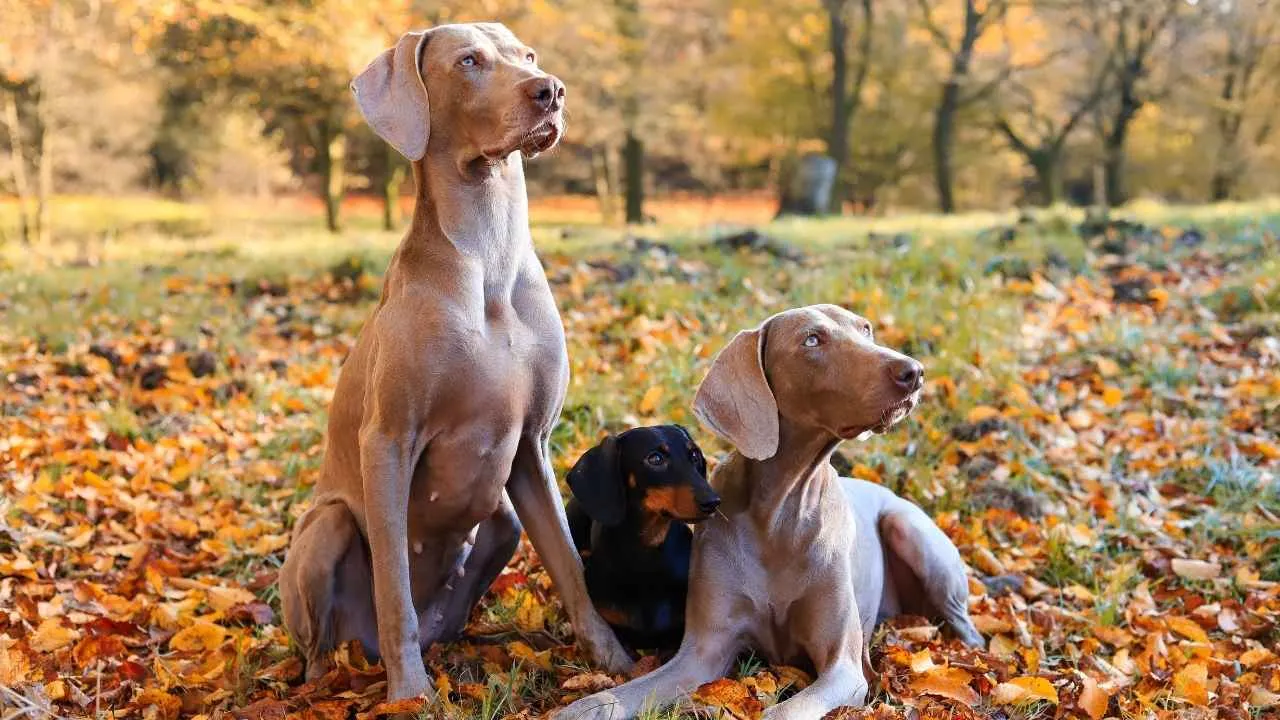
The “Gray Ghost” with a big heart.
With a silvery coat and light eyes, the Weimaraner is easy to spot. These dogs came from Germany, where nobles used them to hunt big game like deer and boar. Later on, they became versatile hunting dogs for birds, too.
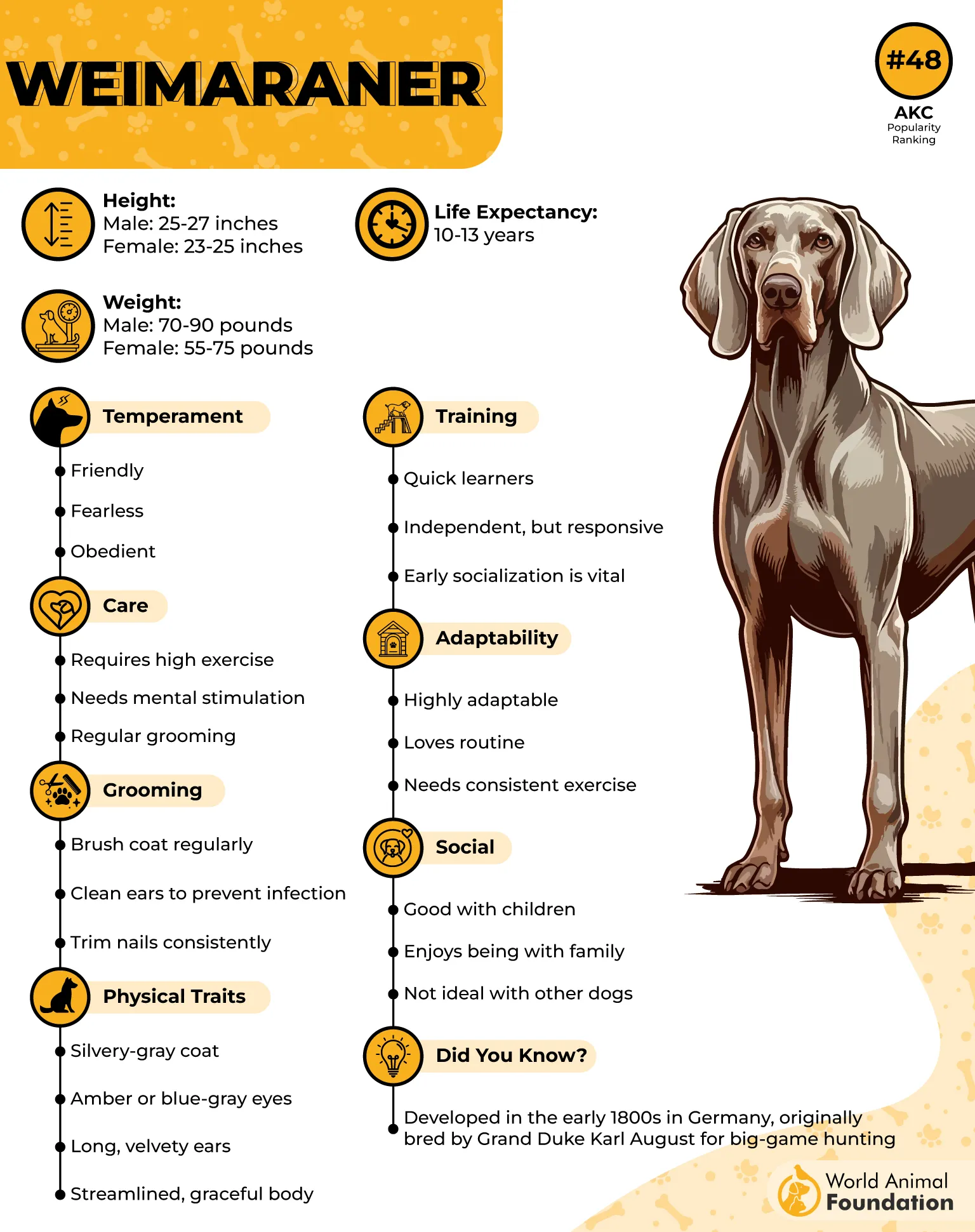
A Weimaraner is a powerful hunting pet. They are fast, smart, and strong. They can point, track, and retrieve, which makes them true all-around workers. Their stamina is great, so they need serious exercise every day.
They are also a classic Velcro dog. They want to be near you all the time. If you leave a Weimaraner alone too long, you might come home to a chewed-up sofa. Early training and daily activity make a big difference. With the right owner, they are loyal and a lot of fun.
6. Basenji
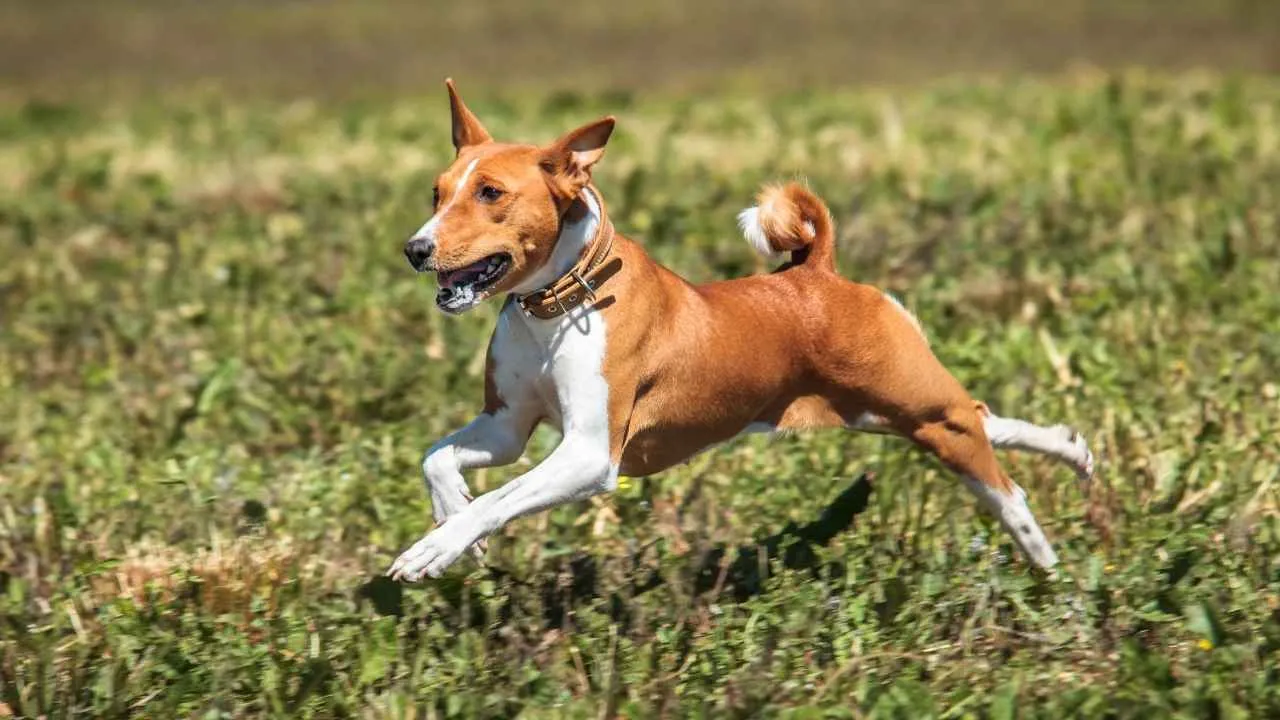
The barkless dog from Africa.
Basenjis are ancient hunters with roots going back thousands of years in Central Africa. Hunters used them to flush game into nets. Their ability to move quickly and quietly was a real strength.
The twist is… Basenjis don’t bark. They make a yodel-like sound, sometimes called a “baroo.” It’s honestly pretty cute.
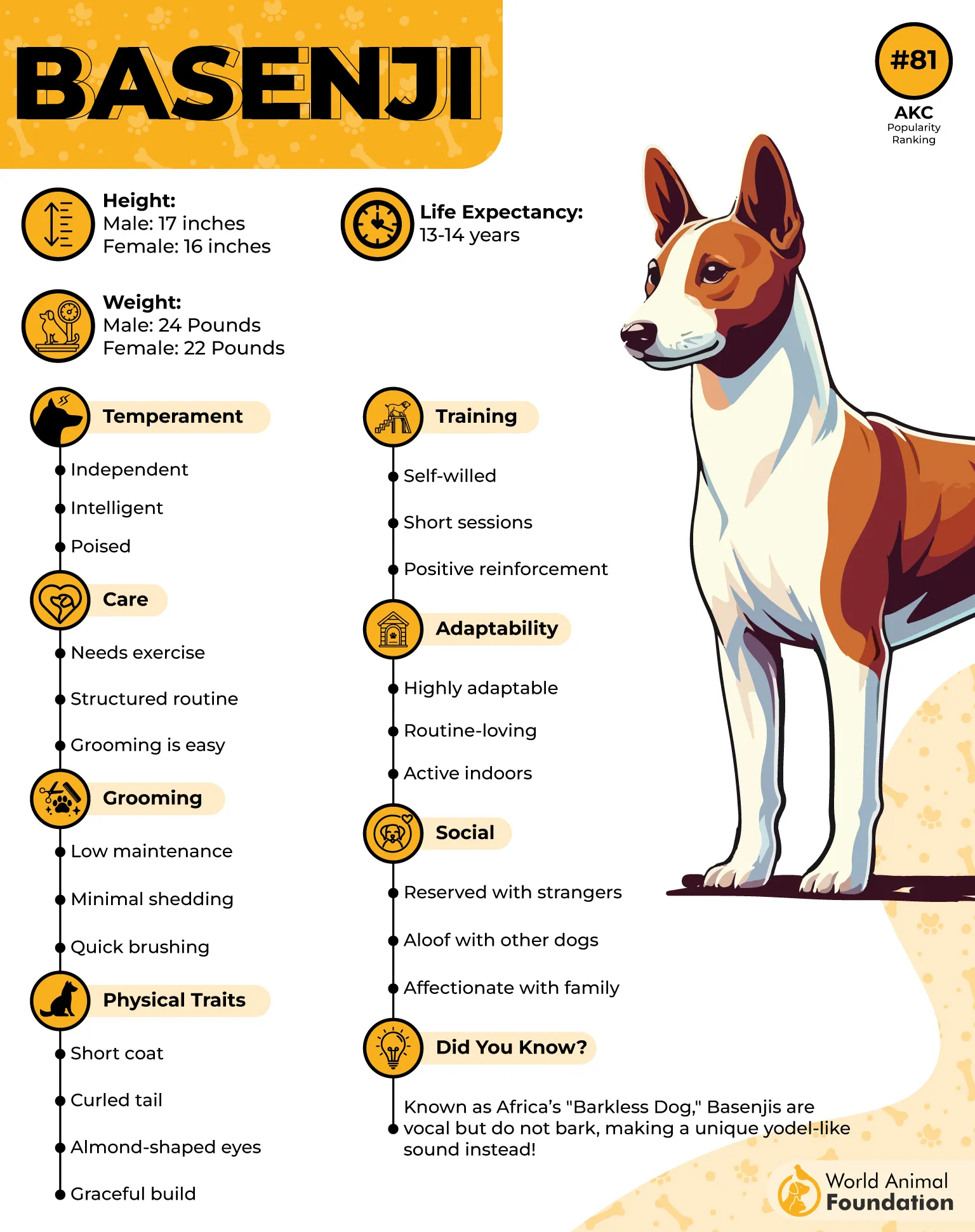
These exotic dogs are small, sleek, and independent. Some people say they act like a cat in a dog suit. They love to chase, climb, and escape, so a secure yard is a MUST. They also get bored fast, so keep training short, creative, and rewarding. They will test you, but owners say they are worth it.
7. Siberian Husky
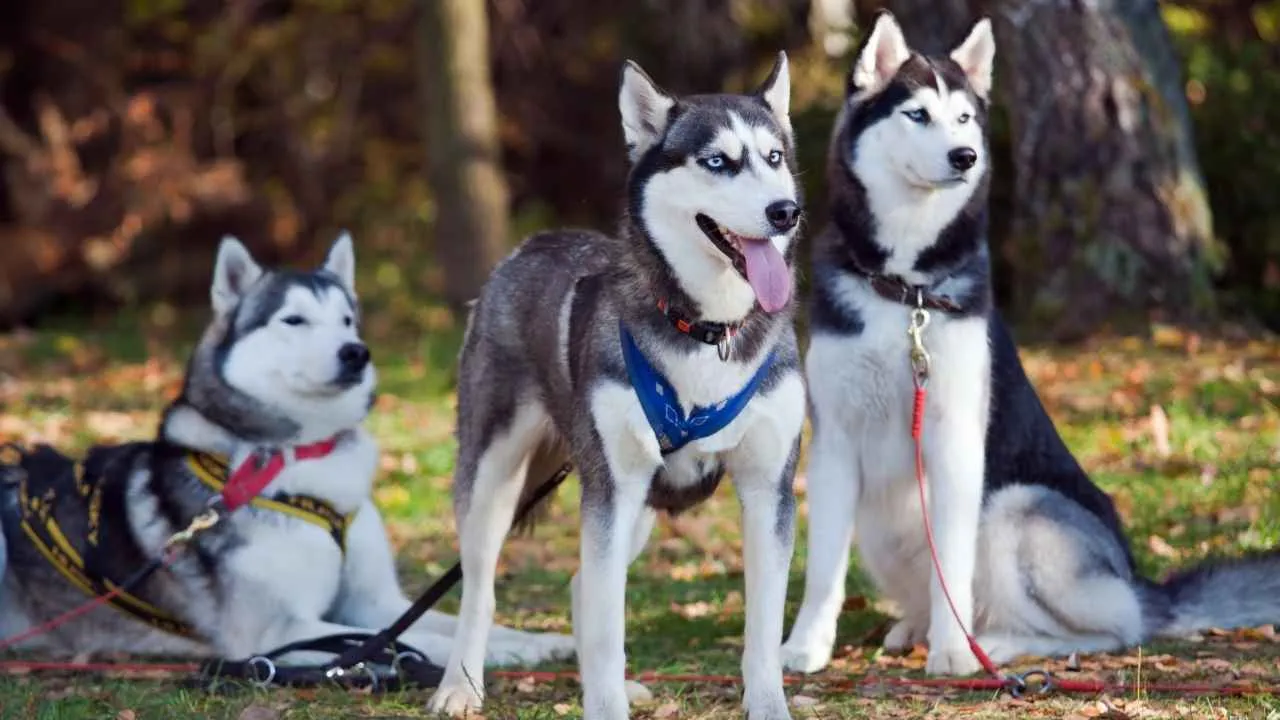
Sled dog, escape artist, and expert chaser.
Siberian Huskies were bred in Siberia to pull sleds across icy lands. They also had to find food and survive in harsh weather. That’s why their prey drive is so strong. To a Husky, a rabbit or a small pet can look like something to chase.
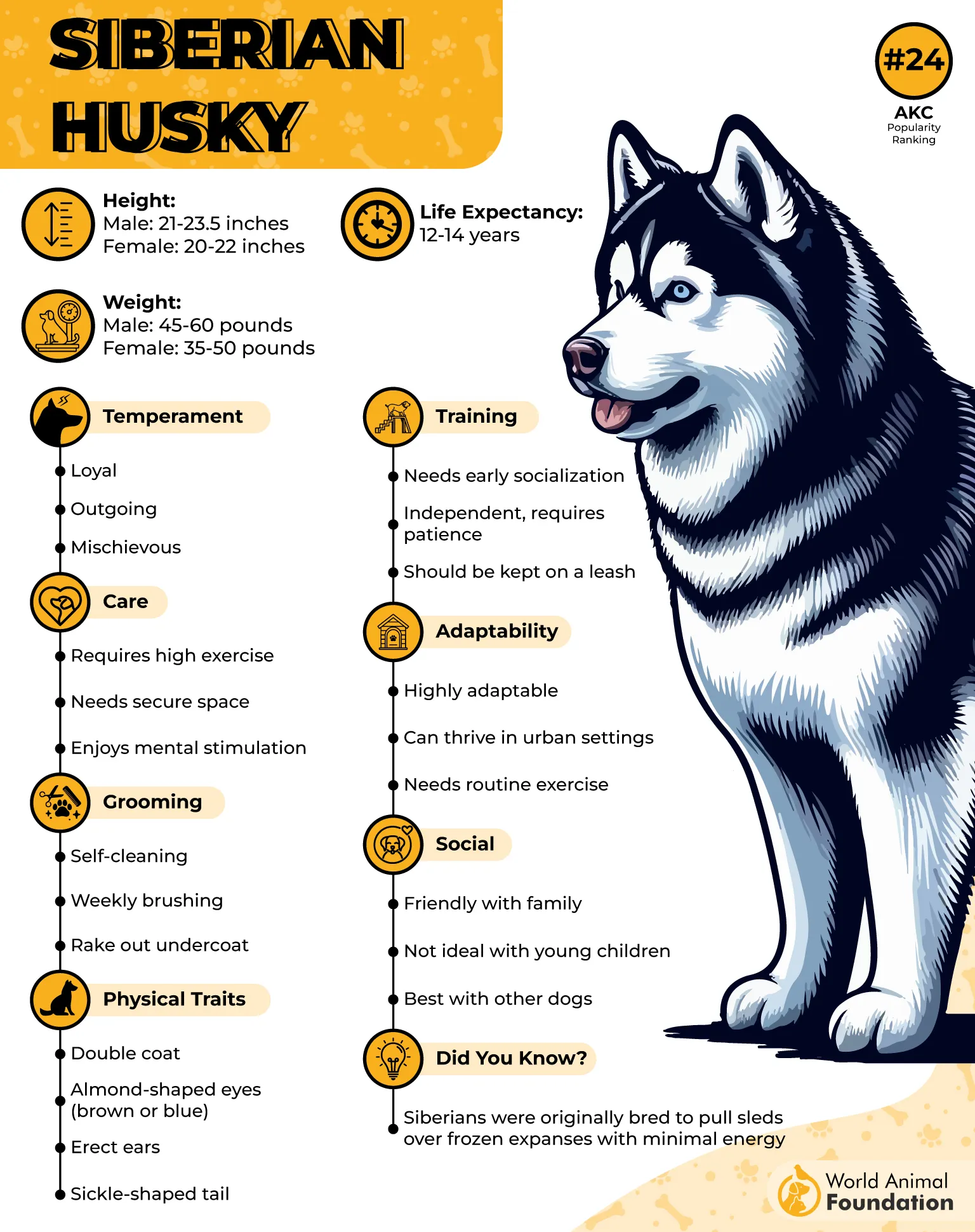
Huskies are friendly with people, but not always with smaller animals. Their instincts are too strong. They need a lot of exercise, and without it, they can get destructive. They are known to dig, howl, and slip out through open doors.
A calm, steady training approach works best. These Husky dogs are smart but independent, so you will need to make training worth their while. Treats help, and a tall fence helps even more. Don’t trust a Husky off-leash in an open area.
8. Beagle
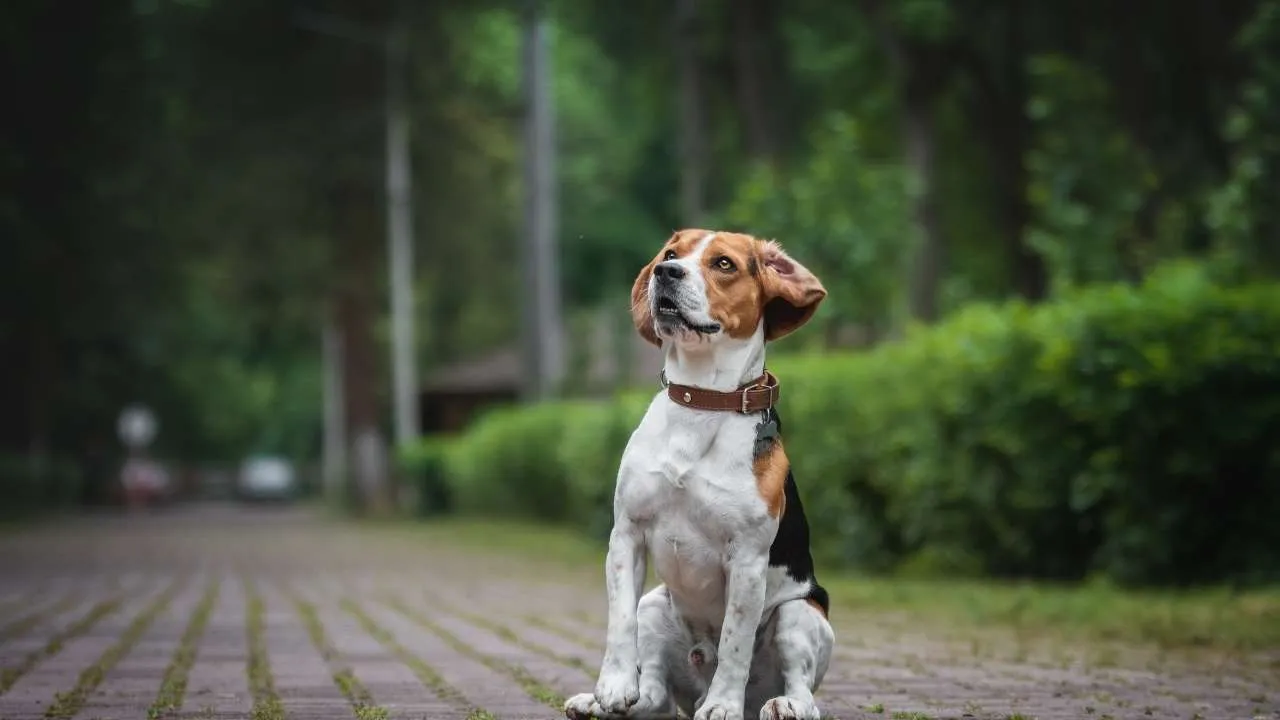
Nose first, questions later.
Beagles are among the most popular tracking dogs worldwide. They were bred in England to track rabbits and hares, and many still do it today. Their noses have an amazing scent-tracking ability.
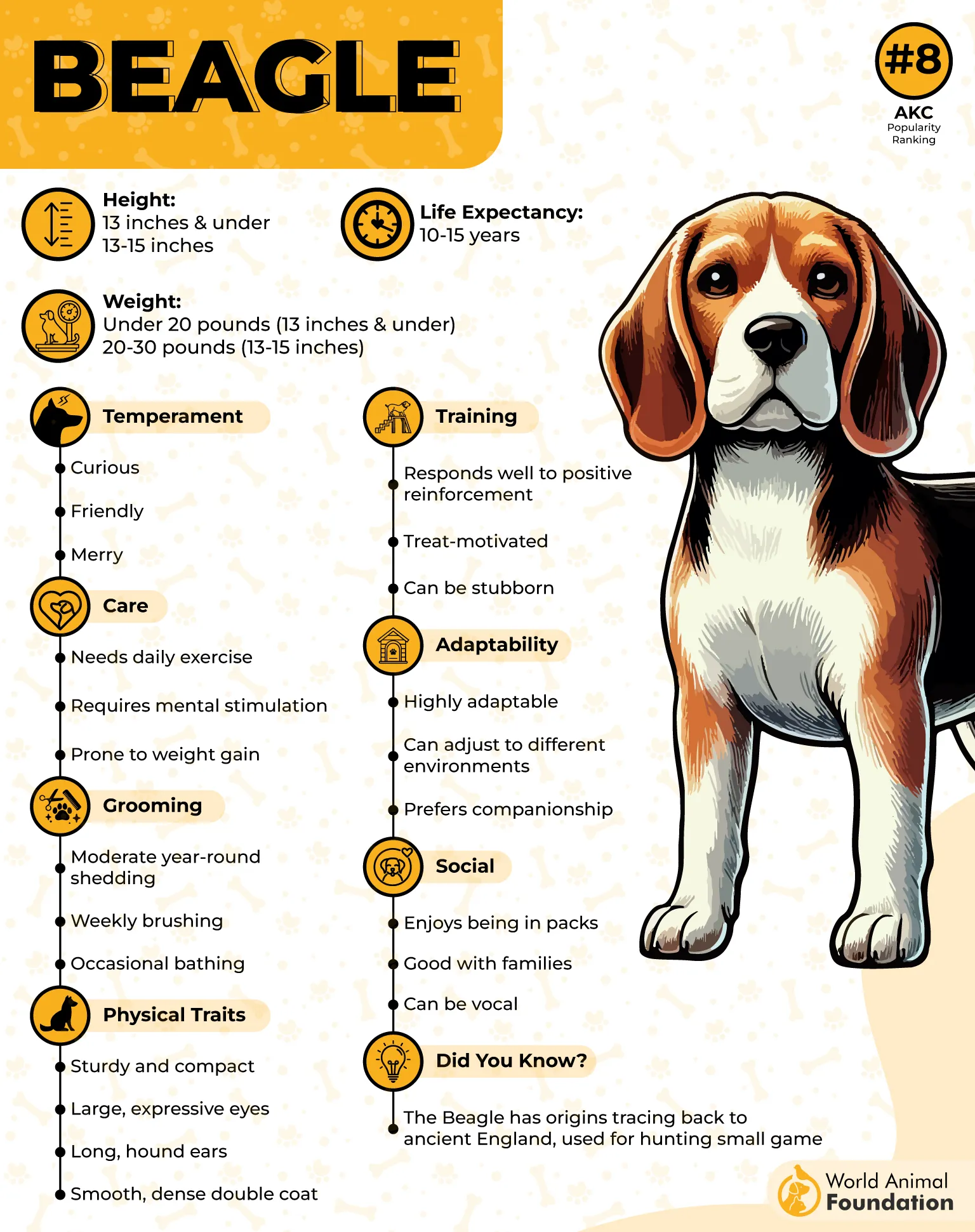
If you have a Beagle, you already know the routine. Food left on the counter disappears. An interesting smell in the yard, and they are gone. Their prey drive mixes scent tracking with a pack mindset, so they love having company.
Beagles are cheerful, curious, and great with families. They can also be stubborn. Training works best with food rewards and a lot of patience. And yes, they can be loud. Keep them in good physical shape, since they love to eat.
9. Australian Shepherd
Smart, athletic, and ready for anything.
Despite the name, Aussies were developed right here in the U.S. They worked as ranch dogs out West, and they bring a lot of that chase-and-control instinct with them. According to the American Kennel Club, they need plenty of activity and mental work.
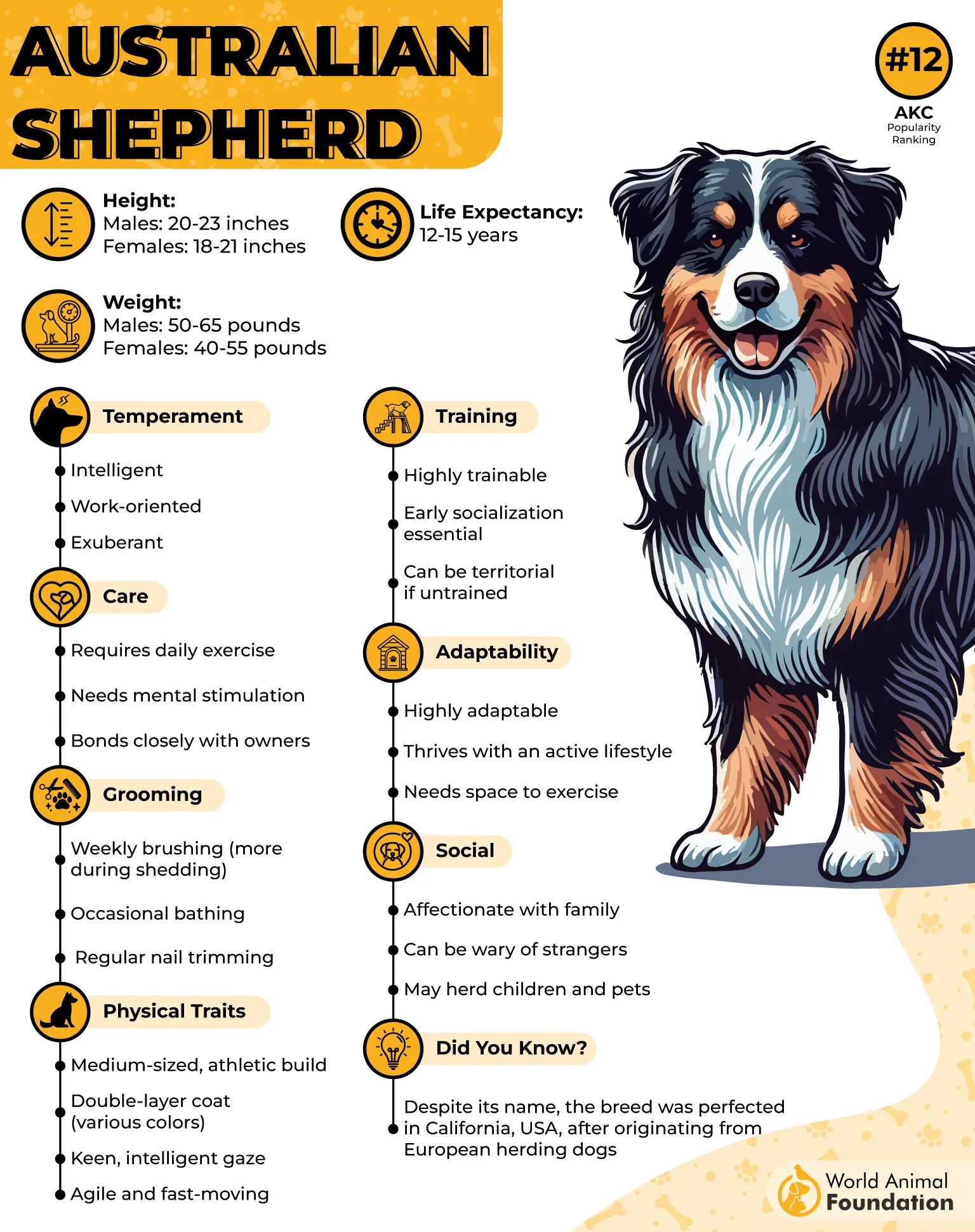
Australian Shepherds are medium-sized dogs with serious energy. Like Border Collies, they use stalking and chasing skills to herd. At home, they can show up as nipping at ankles or trying to round up the kids.
They are loyal, smart, and love to learn. Tricks, hunting tasks, running, and having a job make them happy. An Aussie without exercise is like a phone at 1% battery. NOT GREAT!
Conclusion
Specialized breeds with a strong prey drive are made for work. Each of these dog breeds has notable traits shaped by hundreds of years of hunting experience. These are different strengths, but they come from the same natural hunting instincts and outdoor pursuits.
If you are thinking about getting one, be honest with yourself. Do you have the time, space, and energy? Can you handle a dog that might chase a squirrel and ignore you for a few minutes? If so, you will have a loyal, smart partner.
Other Pointers and Setters, like English Pointers and English Springer Spaniels, are great at waterfowl hunting and upland bird hunting. Their retrieving and happy attitude make them good canine companions. Plus, their retrieving traits make them specialized hunting breeds.
Hunters looking for a powerful variety of hunting dogs: give them exercise, give them a job, and give them training that makes sense. Get training tips on various aspects from professionals, so your dog can perform quickly and efficiently.
And the next time your dog pulls you down the street after a leaf, just smile. That’s generations of instincts, living in your living room.
