





Grooming habits often become easier to manage when a dog’s coat suits the amount of time available at home. Medium-sized dogs with short hair are particularly appealing in this regard because their fur usually requires less detangling and styling than longer coats.
A weekly brushing session may be sufficient for some individuals, while others benefit from more frequent attention, especially during shedding seasons. The type of brush matters, too. Rubber grooming tools work well for loosening dead hair, whereas soft-bristle brushes help smooth the coat and remove surface debris.
Beyond appearance, these dogs differ considerably in body structure, natural activity levels, and temperament. A compact, athletic companion may have very different daily requirements from a heavier, more relaxed dog of similar size. Their grooming needs also depend on skin condition and coat density.
Ahead, you’ll find a closer look at medium-sized breeds whose short coats make regular brushing straightforward and everyday care more manageable.
Key Takeaways
How much time does a medium-sized dog with short hair actually need for regular grooming? The answer varies considerably between breeds and their coat types.
The Dalmatian needs fairly frequent brushing to manage loose hair, while the Carolina Dog generally requires more attention during seasonal shedding.
A weekly session with a soft grooming mitt can help maintain the naturally glossy coats of the Vizsla and American Staffordshire Terrier.
Keep reading to learn which grooming tools and everyday care habits work best for each of these seven short-haired dogs.
Medium‑Sized Dog Breeds with Brush‑Ready Short Hair
1. Dalmatian
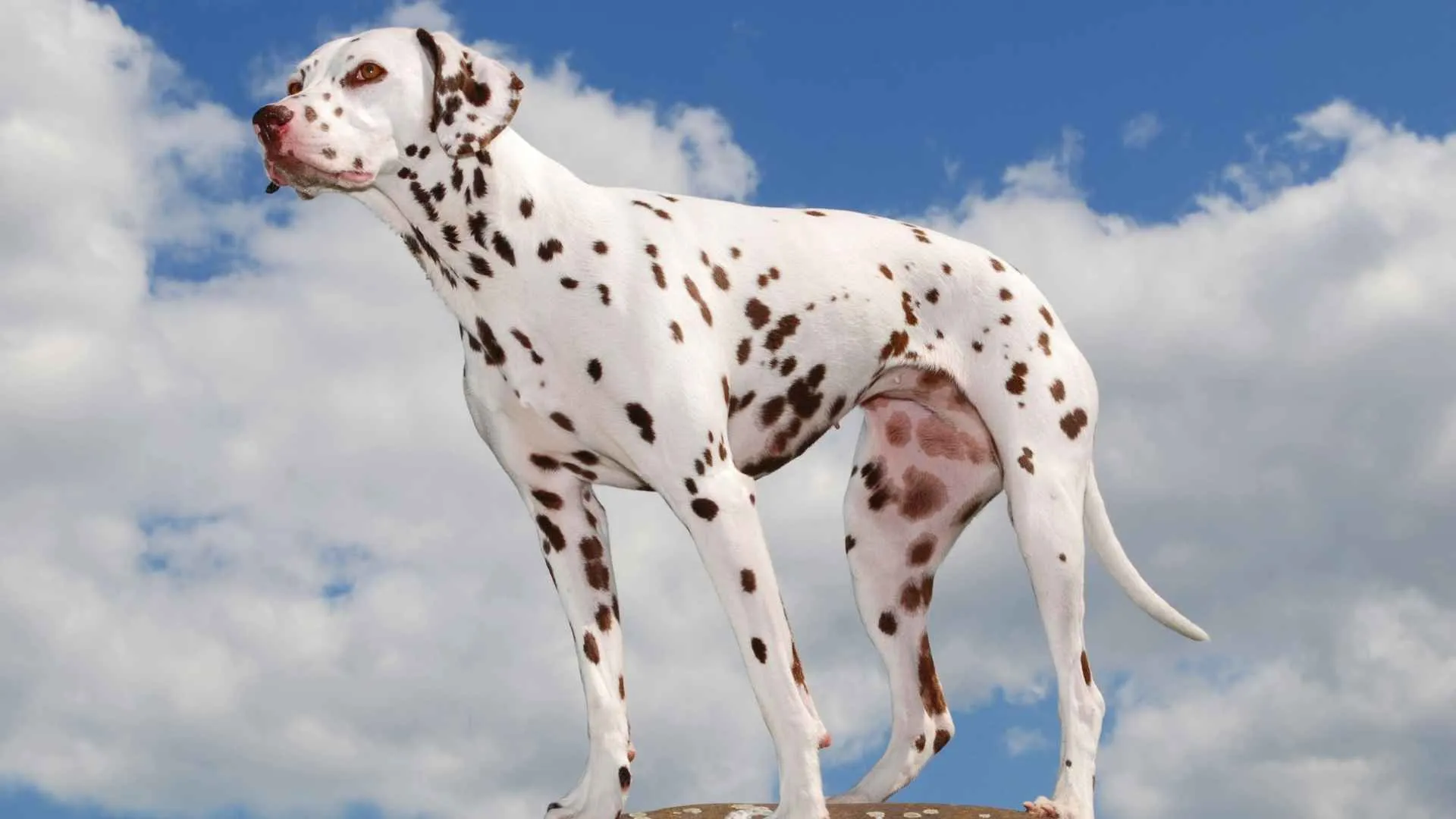
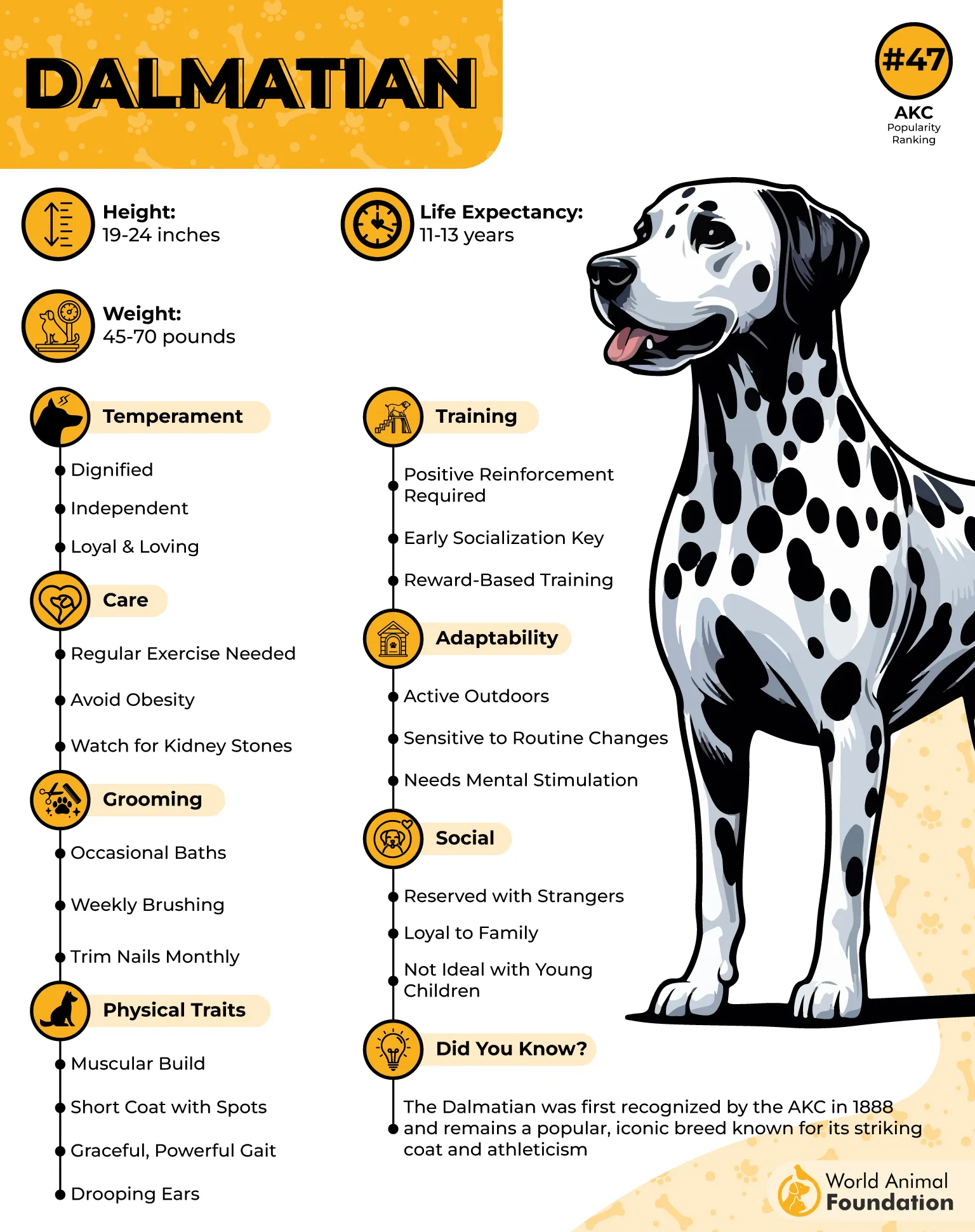
The Dalmatian’s famous spots have been recognized for centuries, although the breed’s exact origins remain uncertain. Over time, it worked as a ratter, retriever, sheepdog, and circus performer before becoming a coach dog in the mid-1800s, trotting beside horse-drawn carriages to guard the horses.
Short Fur, Regular Brushing
Beneath those distinctive spots, the Dalmatian has a sleek coat made up of short, densely packed hairs, as Orvis reports. Although tangles are rarely a concern, its tiny shed hairs can work their way into clothing, carpets, and furniture throughout the year.
These simple grooming habits help manage its coat:
Bathe about once a month, or after getting particularly muddy.
Use a rubber curry comb or grooming mitt.
Brush several times weekly, increasing to daily during spring and fall shedding.
Curious and Quick to Learn
This short-haired breed is an outgoing, playful dog with a naturally curious mind and an enthusiasm for learning new tricks and games. They enjoy plenty of praise and interactive play, and their friendly, sociable nature often makes meeting new people an enjoyable part of the day.
2. Australian Kelpie
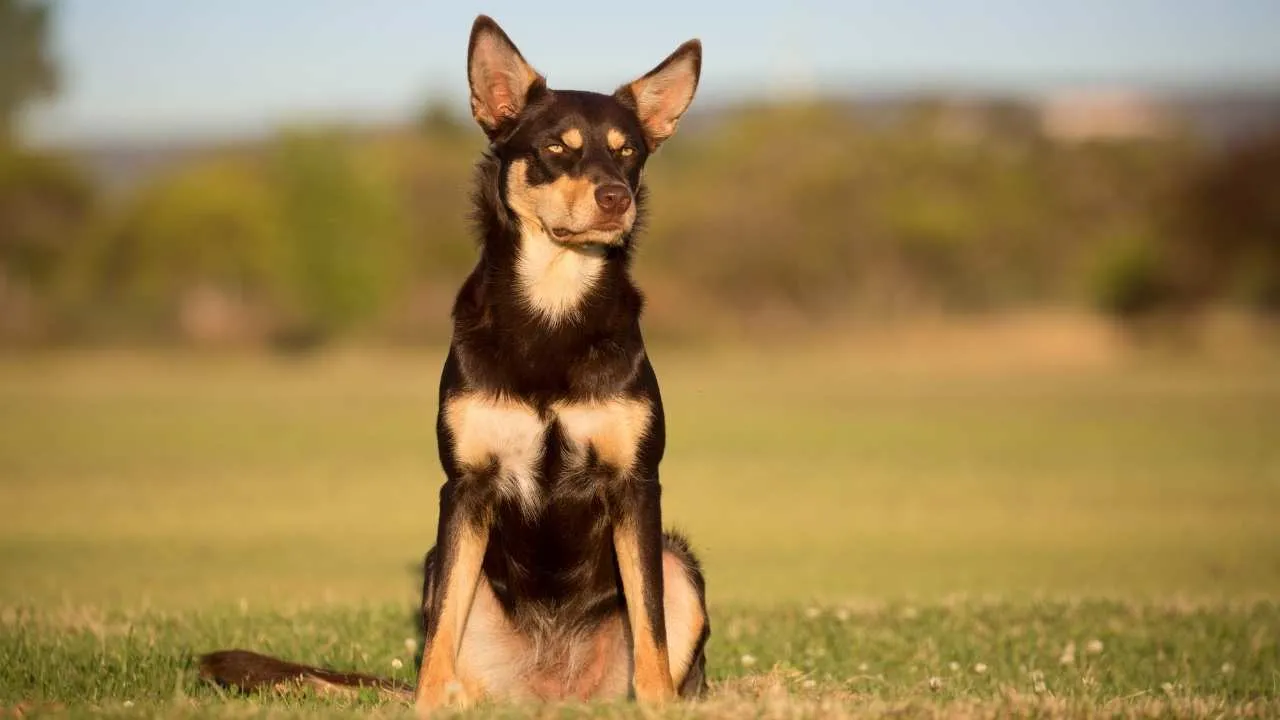
The Australian Kelpie emerged in the late 1800s, when expanding wool farms needed capable herding dogs for large properties and harsh conditions.
Its ancestry includes British herding breeds, while a popular story links its name to a puppy named Kelpie, inspired by a creek-side mist in Victoria.
A Short Coat With Two Layers
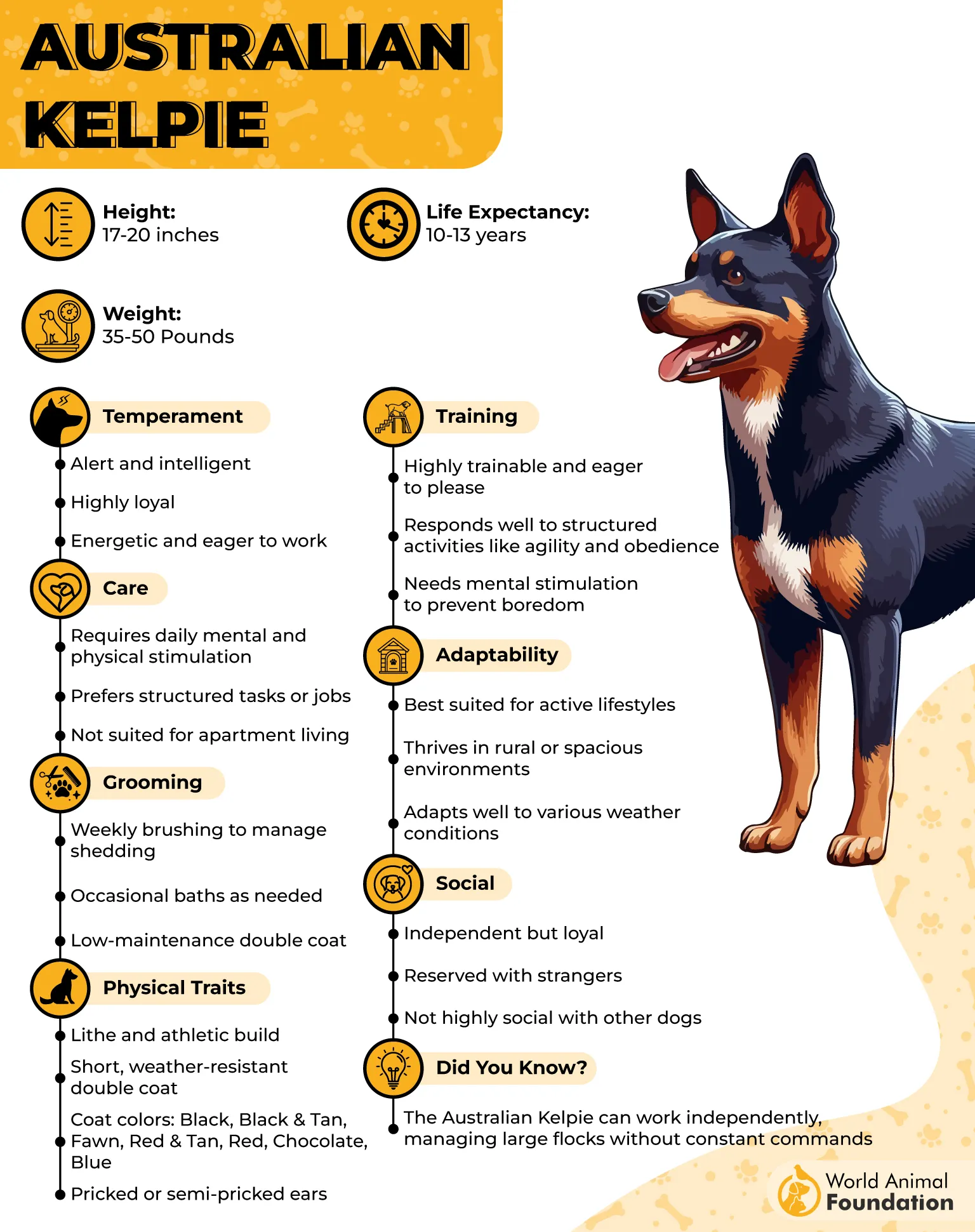
Beneath the Kelpie’s short, straight outer coat sits a soft, dense undercoat that helps protect it from changing weather. Its water-resistant double coat needs regular brushing, although the amount of loose hair increases during seasonal changes.
A simple routine helps manage its coat:
Brush weekly to remove loose hair.
Brush more often during spring and fall shedding.
Bathe when dirt or outdoor activity makes it necessary.
Clever, Cheeky, and Close to Home
An Australian Kelpie has a sharp mind and plenty of personality, often finding its own amusement when left without enough to do, as Purina claims.
These independent thinkers are also deeply attached to their people and may follow them from outdoor walks to quiet evenings on the sofa.
3. Carolina Dog

The Carolina Dog has a somewhat uncertain ancestry, with some theories linking it to ancient Asian dogs. Its more recent roots are associated with the remote swamps and densely wooded areas of South Carolina and Georgia, where the breed eventually became known as the American Dingo.
A Coat That Keeps Grooming Simple
The Carolina Dog has a short-to-medium coat with a dense, smooth texture and a slightly thicker undercoat during certain seasons. Its weather-resistant fur generally needs little attention, although shedding becomes heavier in spring and fall.
This routine covers its main grooming needs:
Brush once or twice weekly with a bristle or rubber curry brush.
Increase brushing during seasonal shedding.
Bathe every four to eight weeks, or when necessary.

Training Takes Patience
This intelligent breed needs consistent guidance, early socialization, and plenty of daily activity. It can get along with children and other dogs when properly socialized, although its hunting instincts may lead it to chase smaller animals. Training is often easier for people with previous experience handling independent dogs.
4. Vizsla
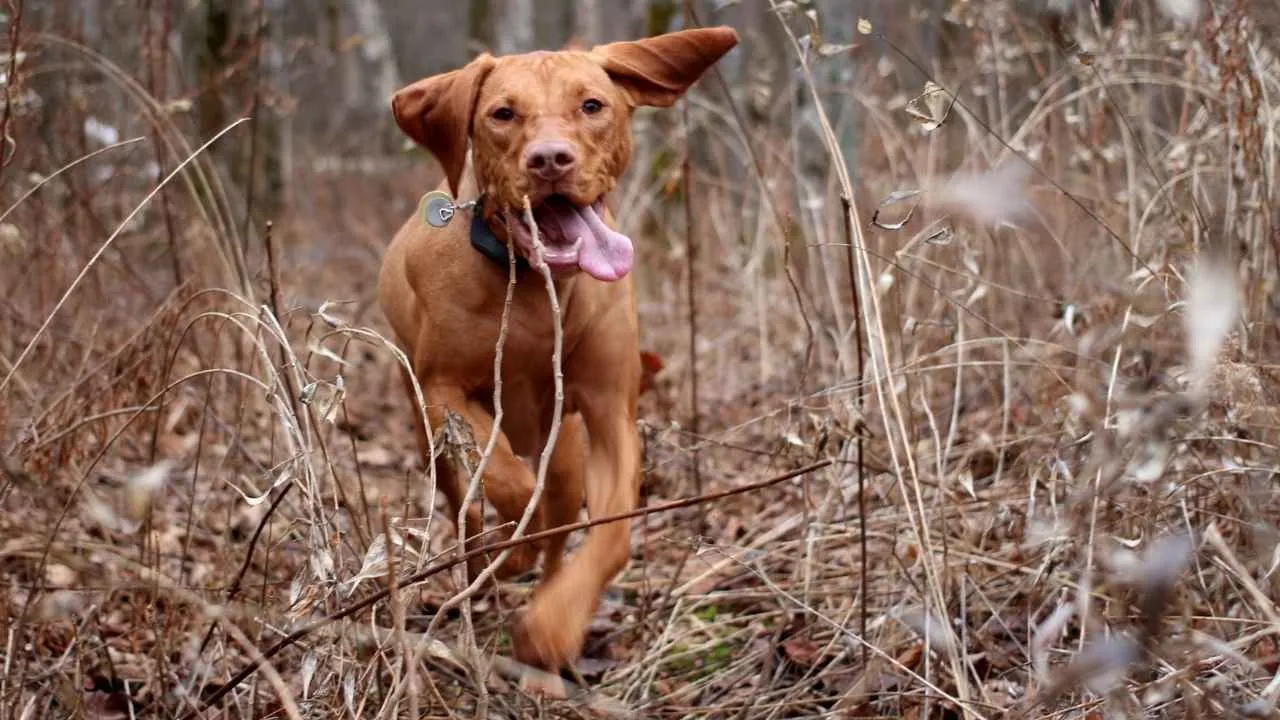
The Vizsla developed in Hungary, where it worked as a hunting companion with a natural ability to track, point, and retrieve game, as Omlet noted. Its smaller, agile frame helped it move through thick undergrowth, while its close working relationship with hunters made it useful in the field.
A Coat That Needs Little Fuss
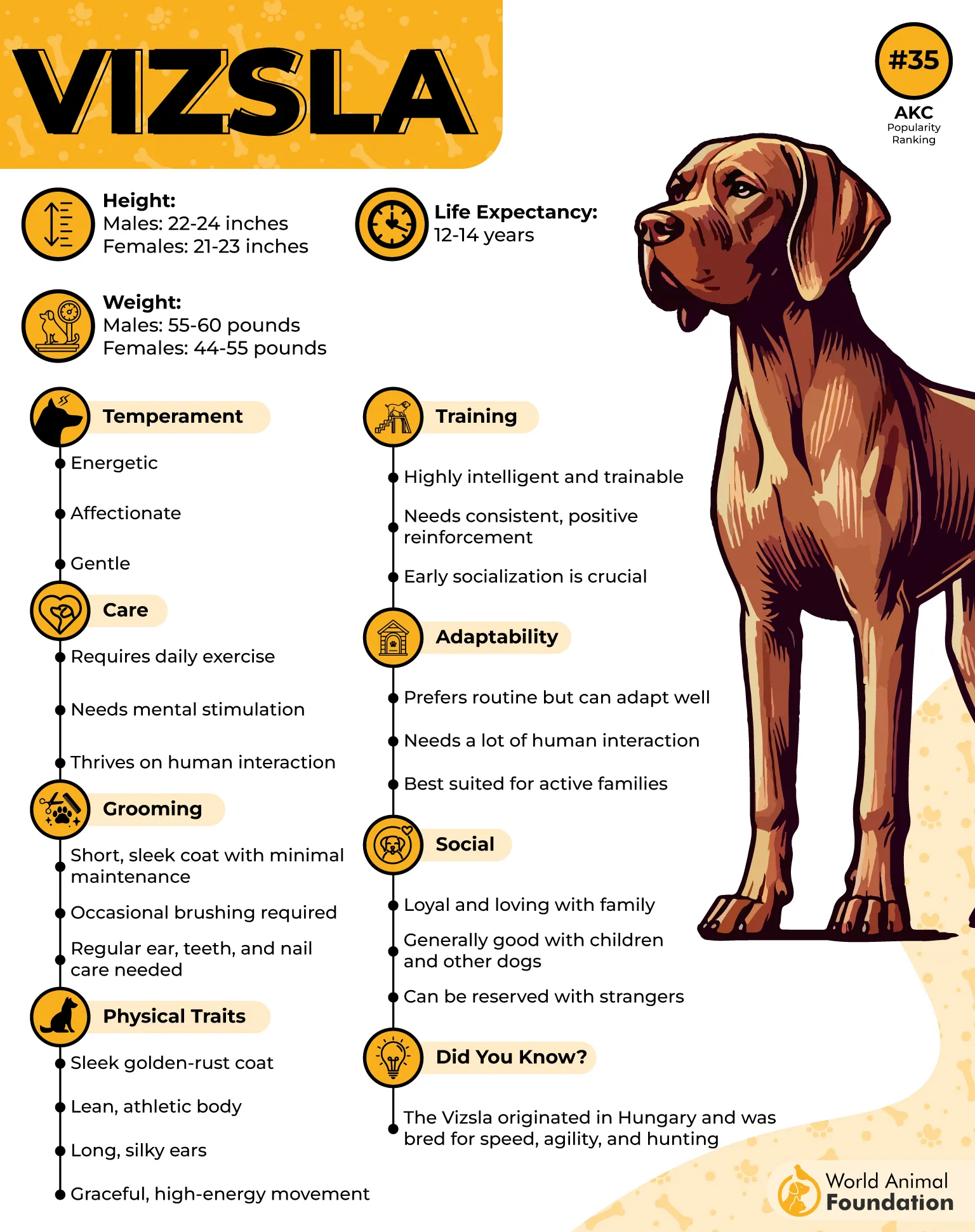
The Vizsla’s signature golden-rust coat consists of short, tightly packed hairs with no woolly undercoat beneath them. A soft grooming mitt can collect loose hairs and bring out the natural sheen without much time or effort.
Here are some basics of their simple routine:
Brush weekly with a curry brush.
Bathe about once a month when needed.
Check its coat after muddy outdoor adventures.
Always Ready for the Outdoors
This family pet has plenty of energy for running, hiking, and exploring new places. Water is another favorite, and its retrieving instincts make swimming an enjoyable activity. This athletic dog also loves staying close to its favorite person, often following them from one activity to the next.
5. Whippet
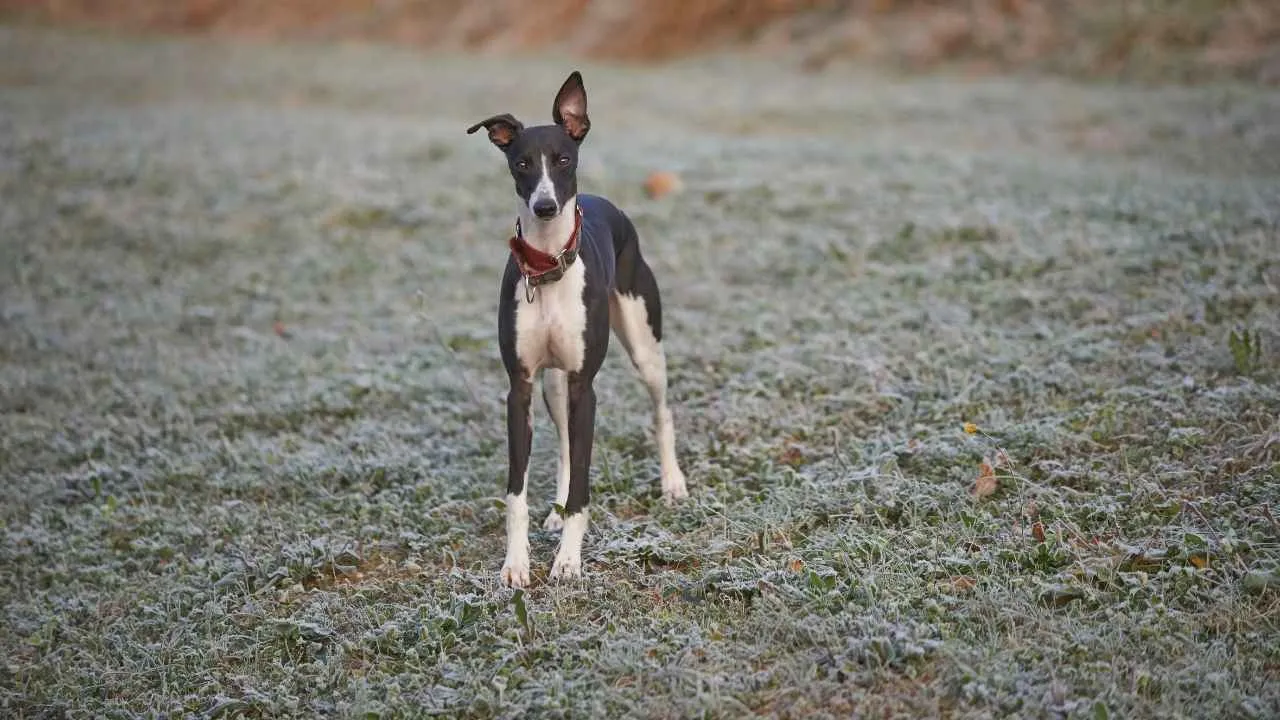
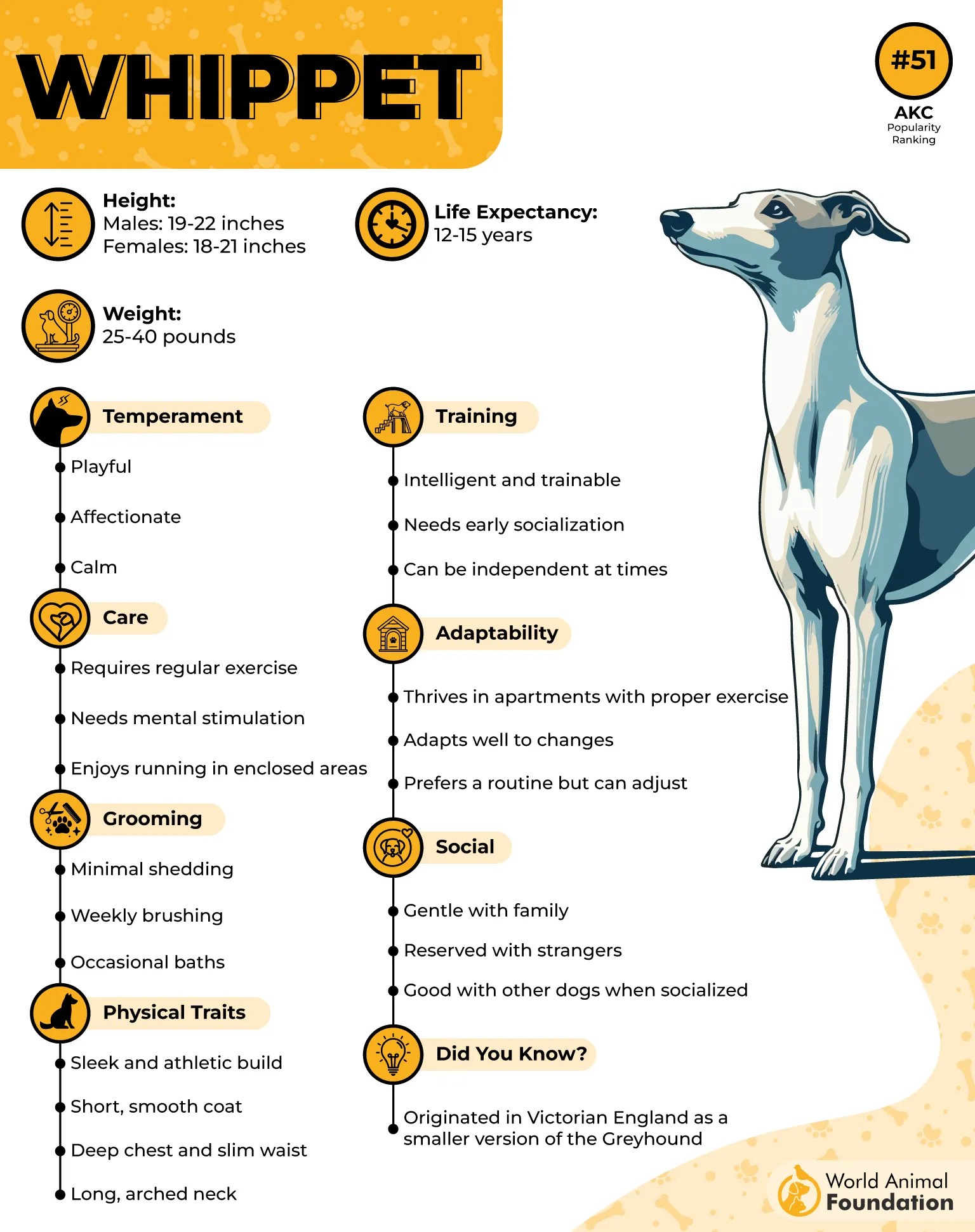
The Whippet comes from Greyhound stock, with smaller dogs bred to create a more compact sight hound for catching rabbits. During the 19th century, working-class communities turned its instinct to chase waving flags into a popular sport known as Whippet racing.
A Naturally Easy-Care Coat
The Whippet’s fine coat hugs its slender frame, feeling particularly soft around the head and slightly firmer along the back. With no long strands or feathering to untangle, owners can usually finish a grooming session in just a few minutes.
These basic steps are enough for its regular upkeep:
Bathe every four to six weeks.
Brush once a week with a bristle brush.
Use a grooming glove to keep the coat shiny.
Gentle, Social, and Sensitive
Whippets are generally quiet, gentle dogs with a friendly attitude towards new people. They are naturally bright and eager to learn, although their sensitive nature calls for calm, patient handling. Their strong attachment to human company can also make long periods spent alone particularly difficult.
6. American Staffordshire Terrier
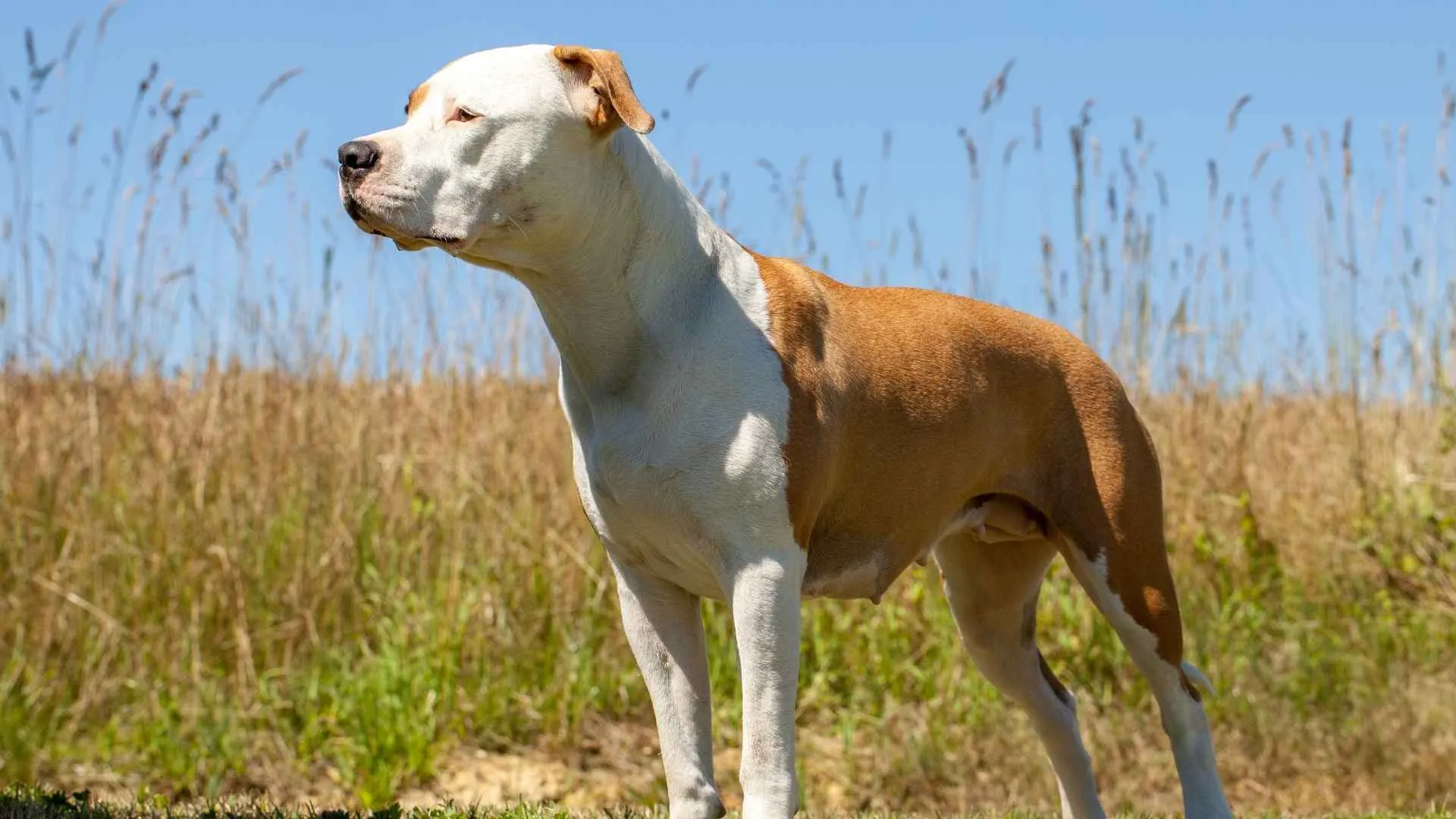
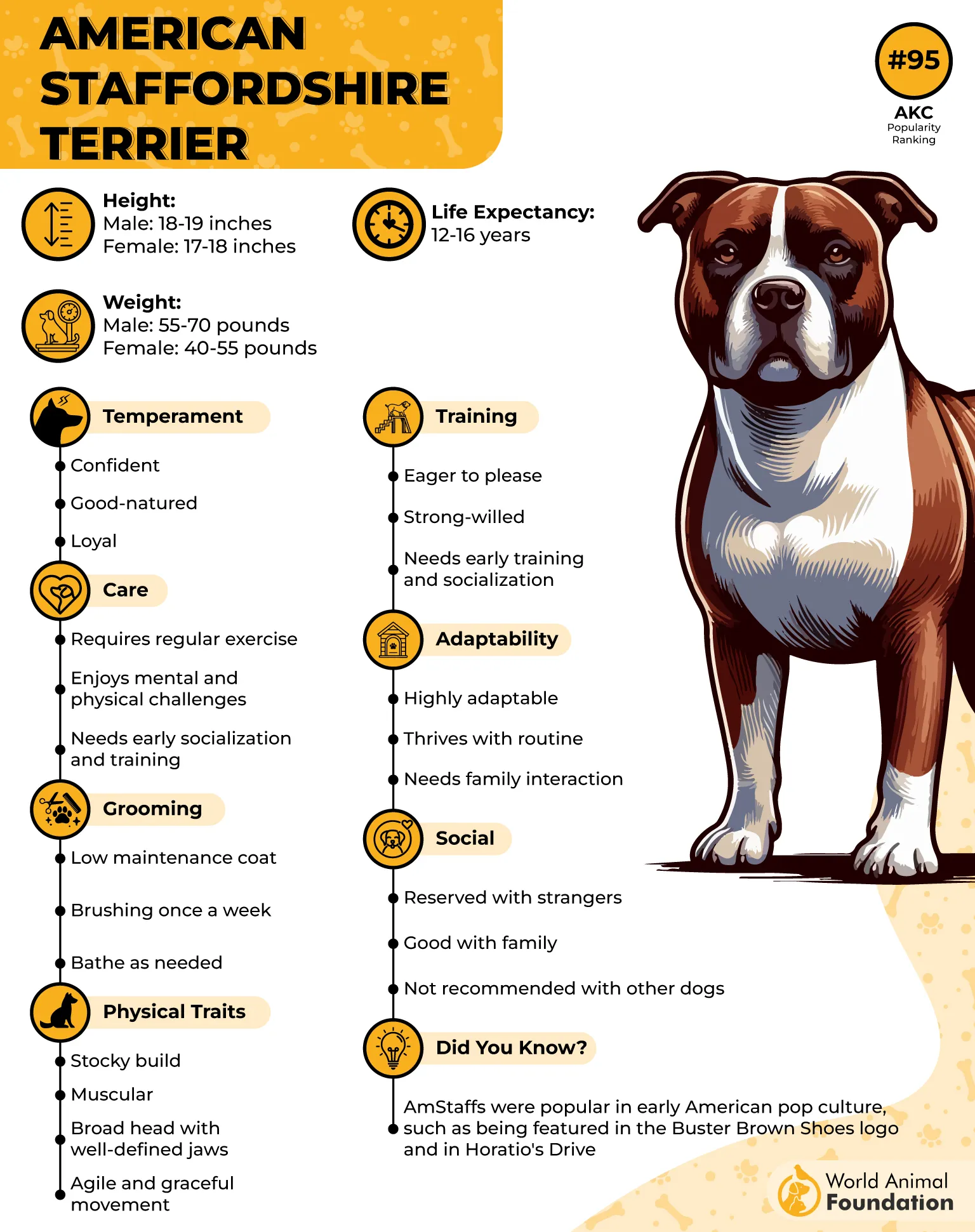
The American Staffordshire Terrier descends from Bulldogs and terrier-type dogs once used for hunting, ratting, and managing bulls. After blood sports were banned, these dogs increasingly became companions. The American variety later grew larger than its English counterpart and gained separate breed recognition.
A Short Coat With Simple Care Needs
The American Staffordshire Terrier’s glossy coat follows the contours of its broad shoulders and muscular frame. Its short, slightly stiff hairs rarely become tangled, and a quick once-over with a grooming mitt helps maintain their natural shine.
These grooming steps are usually enough for them:
Bathe every two to four weeks.
Expect some extra shedding in spring and fall.
Brush lightly once a week.
Bright Minds and Active Days
These intelligent dogs enjoy obedience lessons and activities such as hiking, scent work, and agility. Early socialization helps them feel comfortable around unfamiliar people, while introductions to other pets need individual attention, as some prefer being the only dog in the household.
7. Bull Terrier
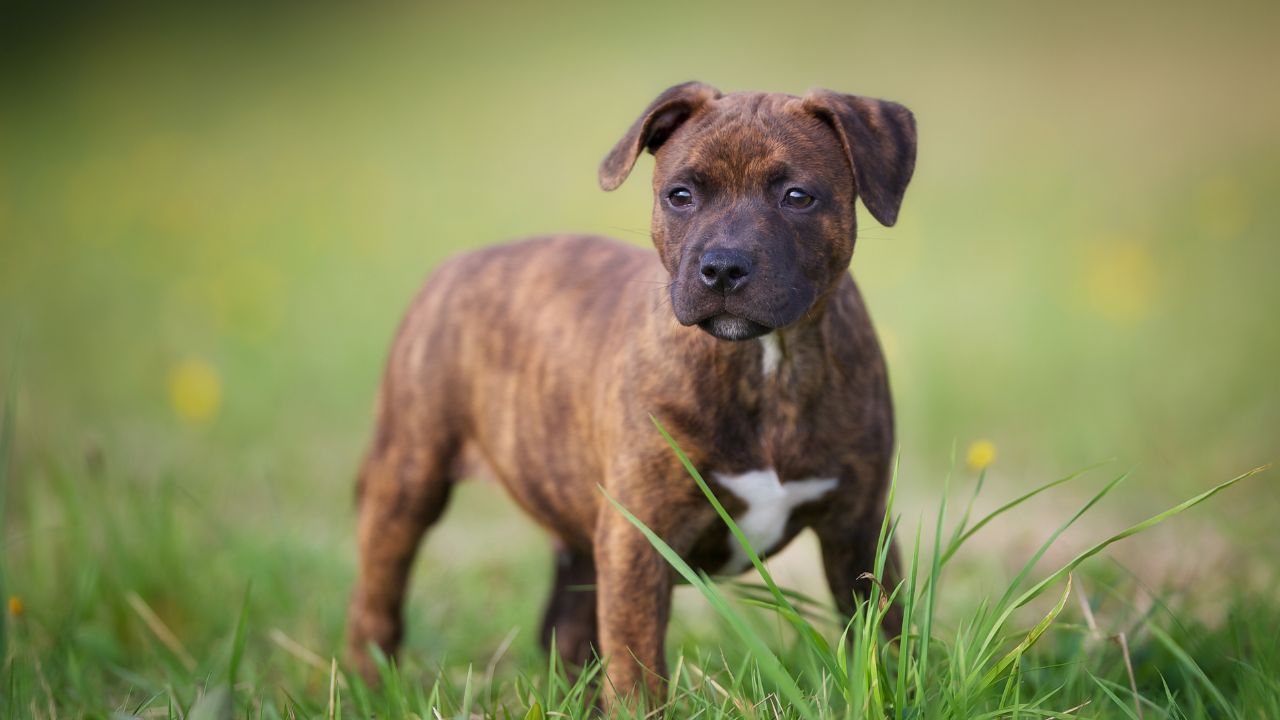
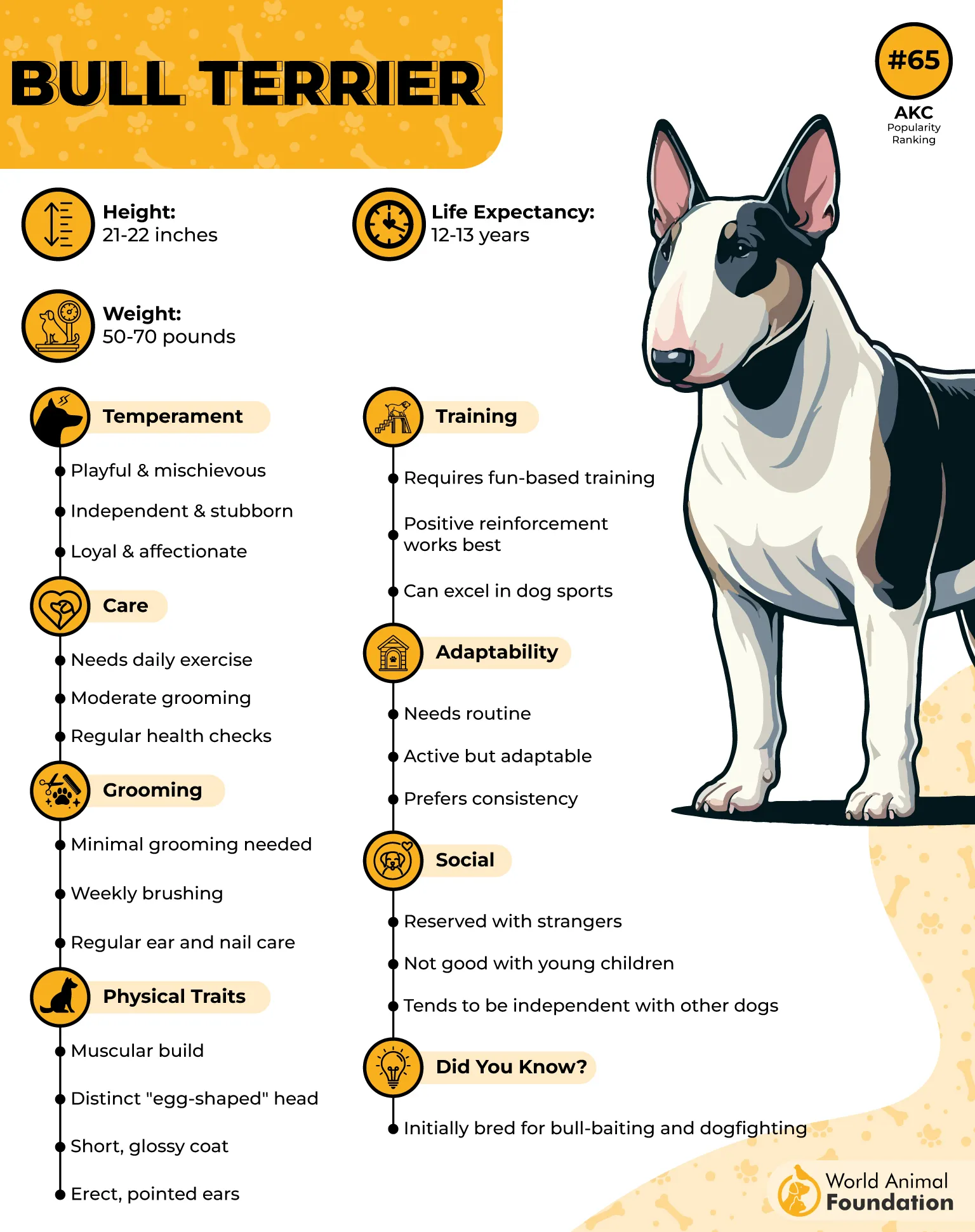
The Bull Terrier’s early ancestry is linked to bull-baiting and dog fighting in Britain. Crosses involving the Spanish Pointer, English Terrier, and Dalmatian helped shape its streamlined build and distinctive head. Early in the 1900s, Staffordshire Bull Terrier crosses reintroduced color into a breed once favored in all-white coats.
A Short Coat With Little Fuss
The Bull Terrier has a short, dense coat with a flat, glossy finish and a slightly rough feel. Its close-fitting hair is relatively easy to care for, making this breed a practical option for people who prefer a straightforward brushing routine.
These grooming habits help keep its coat in good condition:
Brush weekly with a soft-bristled brush or grooming mitt.
Bathe about once a month, or after muddy outings.
Increase brushing during spring and fall shedding seasons.
The Household Comedian
A Bull Terrier can turn an ordinary afternoon into a comedy routine, whether it’s chasing its tail, racing around the room, or suddenly climbing onto your lap for affection. Beneath all that silliness is a clever dog with plenty of personality and a fondness for attention.
Conclusion
Short-haired dogs can be easier to groom, but their care routines still require some attention. Regular brushing helps remove loose hair, while occasional baths keep the coat clean after outdoor activities. Some may shed more heavily during seasonal changes, making a grooming mitt or rubber brush particularly useful.
Their personalities and activity requirements also vary considerably. An energetic companion may need plenty of outdoor time, while a quieter dog may prefer relaxed afternoons at home. Think about these differences before making a decision. Coat length is useful to consider, but daily habits and temperament matter just as much when choosing a pet.
