




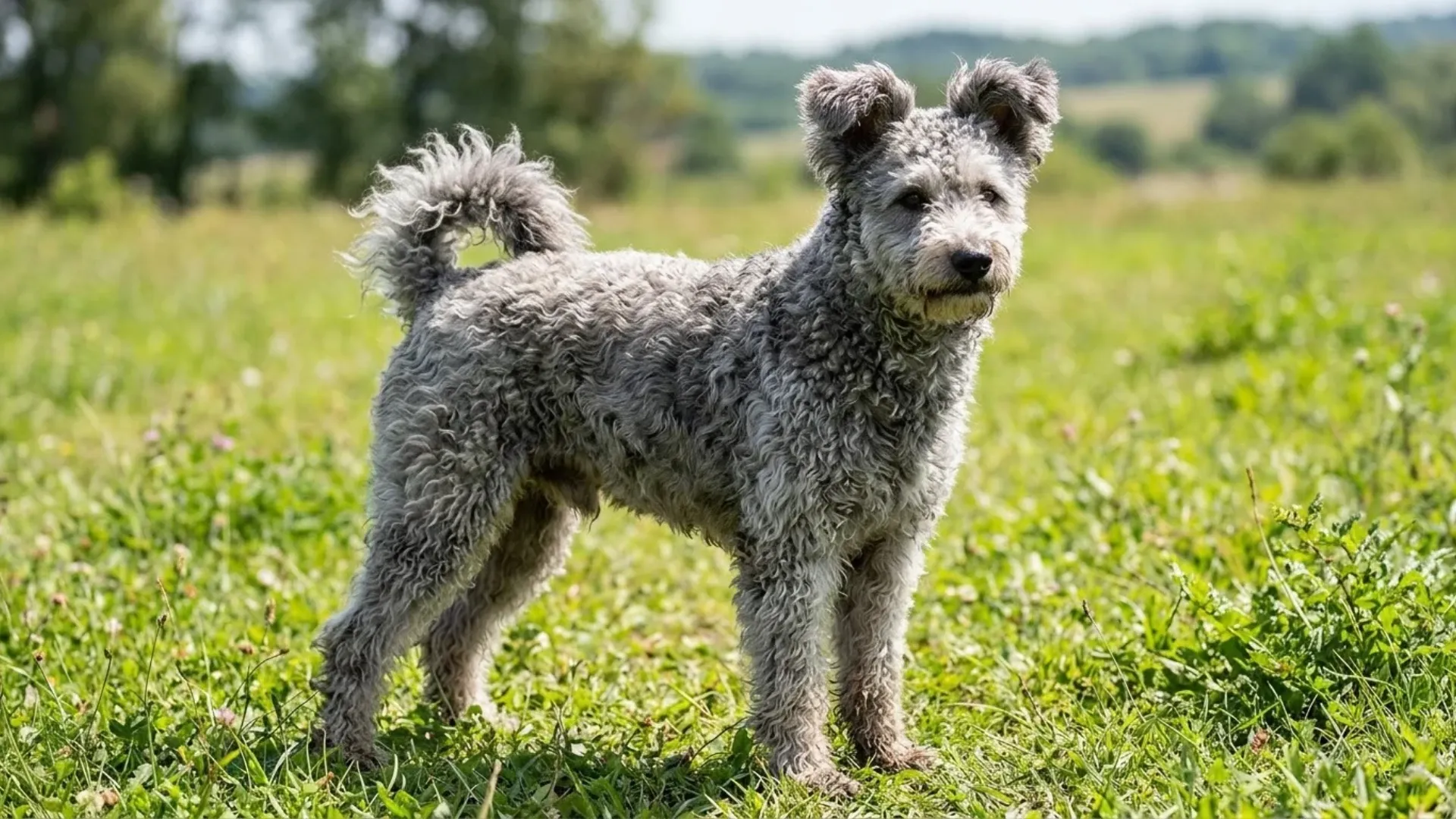
Some dogs simply look like they woke up with perfect hair. Their curls bounce, twist, and catch the light in a way that makes strangers smile on the sidewalk. But curly coats are more than a cute hairstyle. They can be soft, dense, water-resistant, or wiry, and each breed carries its own personality behind that fluffy exterior.
From the elegant Poodle to the hardworking Portuguese Water Dog, curly-coated dogs come in every size and temperament. Some were bred to retrieve birds from cold water. Others guarded homes, herded livestock, or simply became beloved family clowns.
If you have ever wanted a dog that looks like a walking cloud but acts like a loyal best friend, this list is for you. Let’s meet seven stunning breeds with curls worth admiring.
Stunning Dog Breeds Featuring Curly Coat Textures
1. Poodle
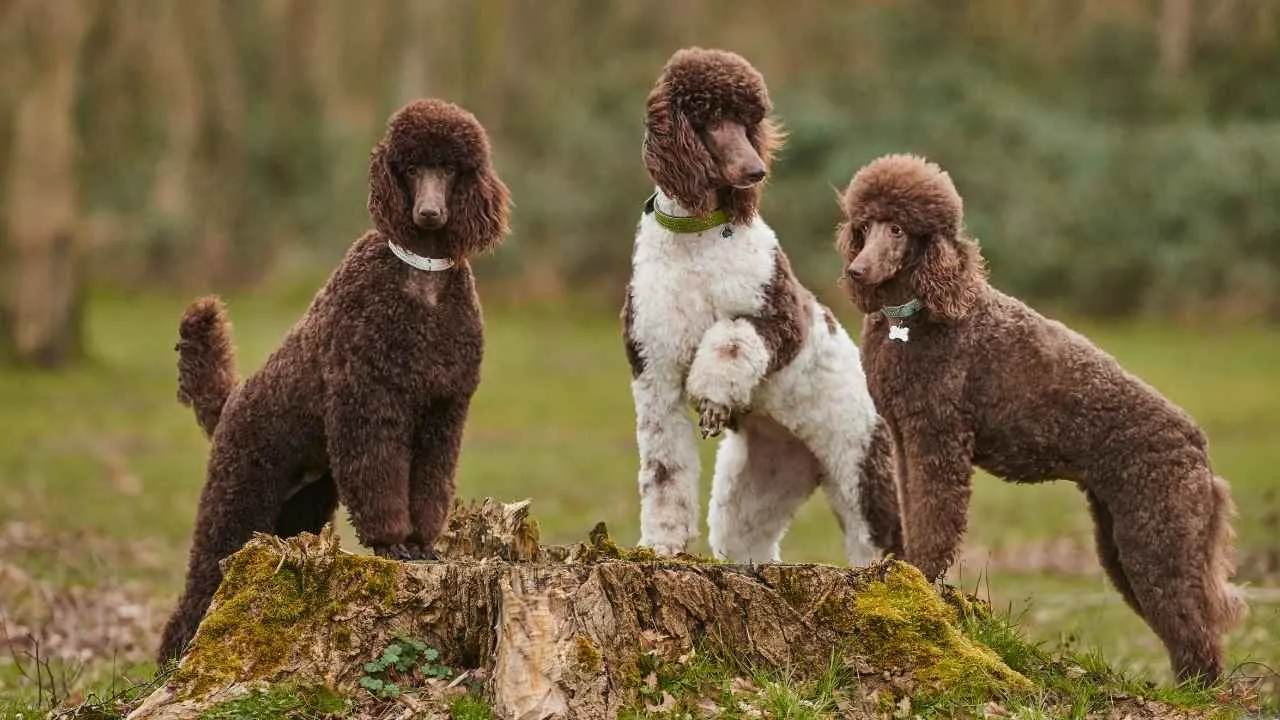
The history of the breed dates back to Germany, where a similar dog was used for water retrieval some 400 years ago. The name of the dog comes from a German word ‘pudelin,’ which means ‘to splash.’ The primary purpose of the breed’s development was duck hunting, as reported by Gundogmag.
It has a continuously growing single-layered coat. The hair does not fall on the ground, as it is trapped within a curly coat. Puppies are born with fluffy, soft, or wavy fur. By the age of 9-18 months, the dog transitions into a curly-coated dog breed that is more prone to matting and tangling.
The standard poodle has tighter and coarser curls, the miniature poodle has slightly finer and denser curls, while the toy poodle has softer and looser curls. The coat colors come in apricot, black, blue, café au lait, brown, cream, red, and silver.
2. Pumi
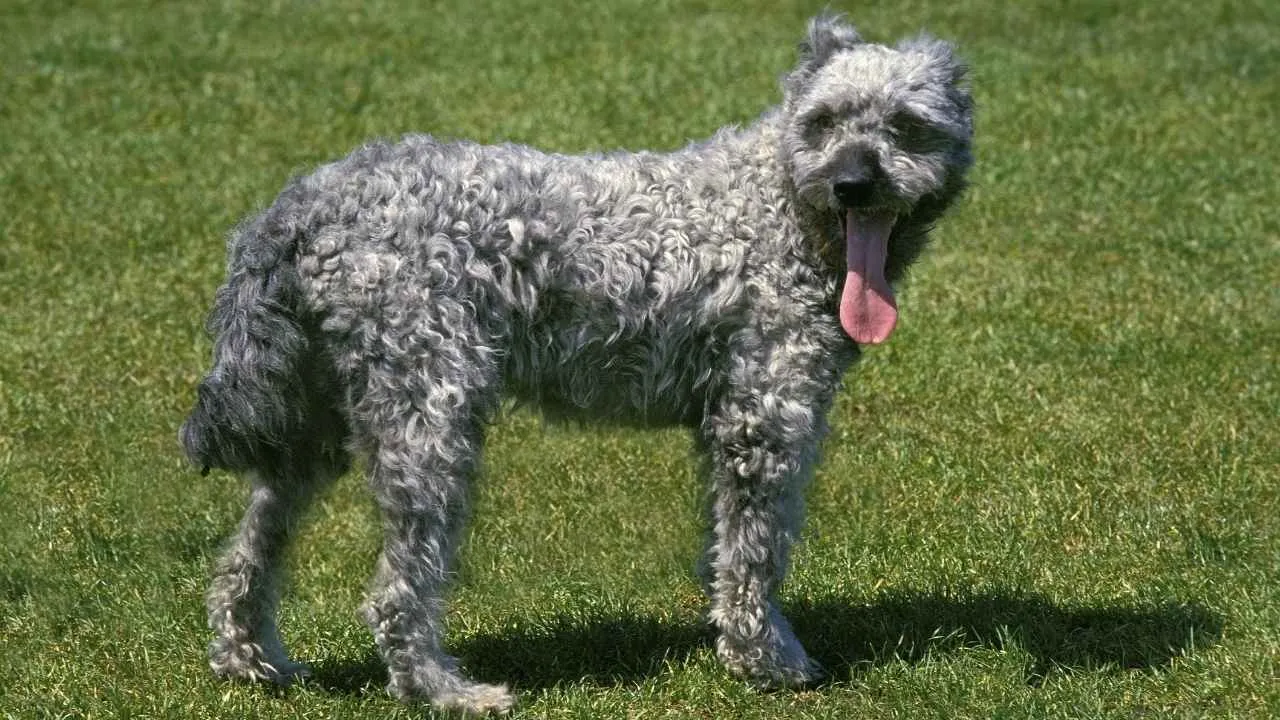
Known for its incredible herding skills, high intelligence, and agility, the Pumi was originally bred in Hungary by crossing the dog brought by migrating people with other German and French herding breeds. It was officially recognized by the American Kennel Club in 2016.
The double coat consists of a strong and harsh outer coat and a softer undercoat. The wavy and curly hair naturally combine to form shaggy tufts. Overly long, smooth, and corded coats are considered faulty. The average length of the coat is 1.5-3 inches. Wiry protective hair grows upwards on the upper third of the ears.
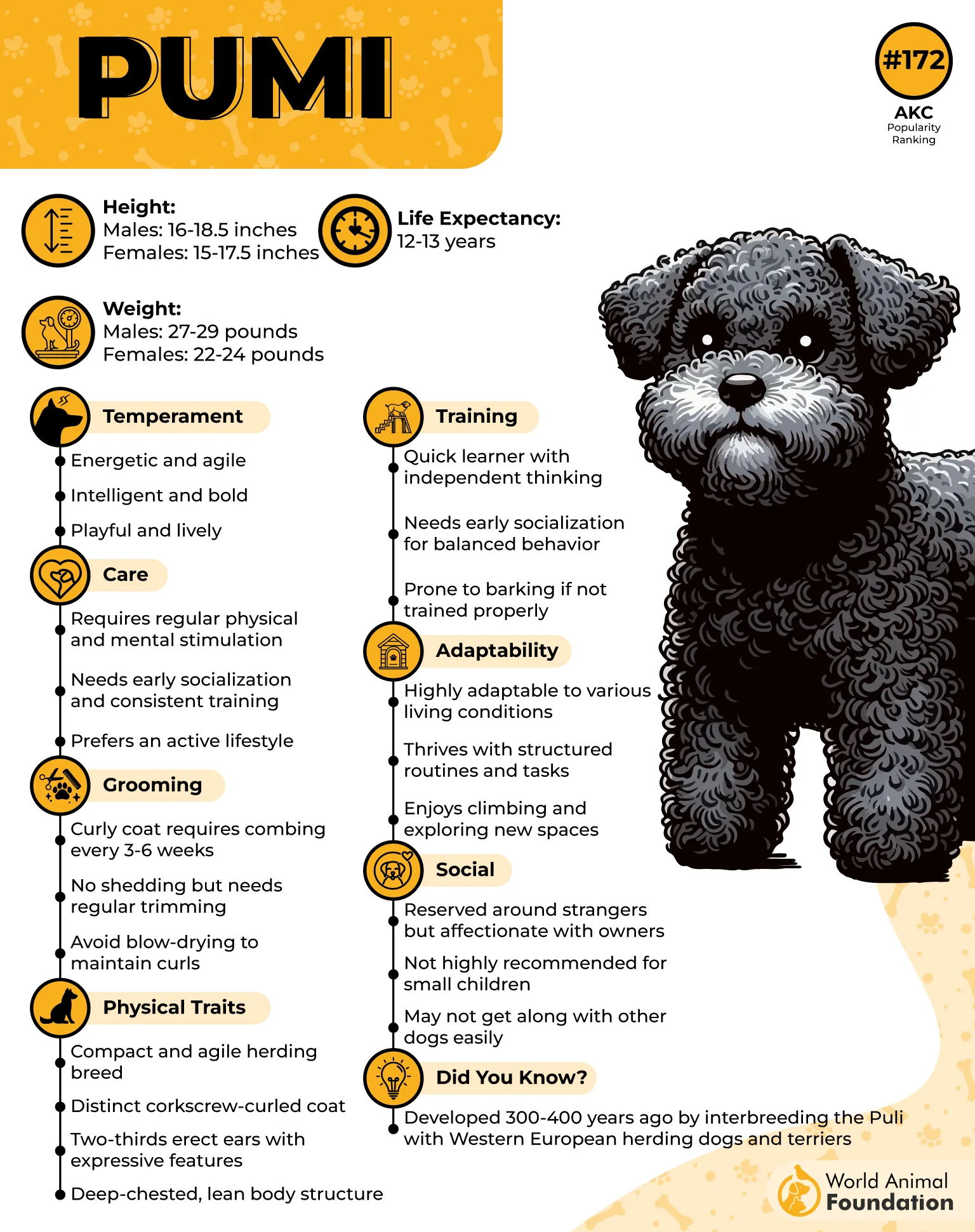
It is a low-shedding dog, and the coat comes in black, fawn, white, and grey colors. Small white spots are permissible on the chest or a thin white line on the toes.
3. Curly Coated Retriever

The curly-haired dog breed was originally developed in Britain in the 19th century by crossing the now-extinct water dog, including the Retrieving Setter and the English water spaniel, with the St. John’s water dog and the Irish Water Spaniel, according to Hill’s Pet.
It has a water-resistant, single coat that repels water, burns, and briars. The thick curls originate from the back of the skull and go down the neck, body, thighs, and the tail. There is short and smooth hair on the front of the forelegs, muzzle, forehead, and feet. The curls are tightly wound and possess natural oils.
The acceptable coat colors are solid black and solid liver. Frequent brushing may lead to frizziness, and the coat may lose its signature pattern. It typically sheds once a year; thus, finger combing is recommended when the coat is wet.
4. Bedlington Terrier

Originating in Northumberland, England, the hunting dog was developed to hunt weasels and flash rats from coal mines. Also known as the Rothbury’s Lamb, the dog was recognized by the American Kennel Club in 1886. It was also used for baiting in dog fights.
The coat is a dense blend of both soft and hard hair and lacks an undercoat. It is crisp to the touch and linty (never wiry). The hairs stand out from the skin and have a tendency to curl or twist, particularly on the head, nose, and topknot. The coat comes in blue, live, and sandy colors. Puppies are born with darker coats and become lighter in the 1st year of life.
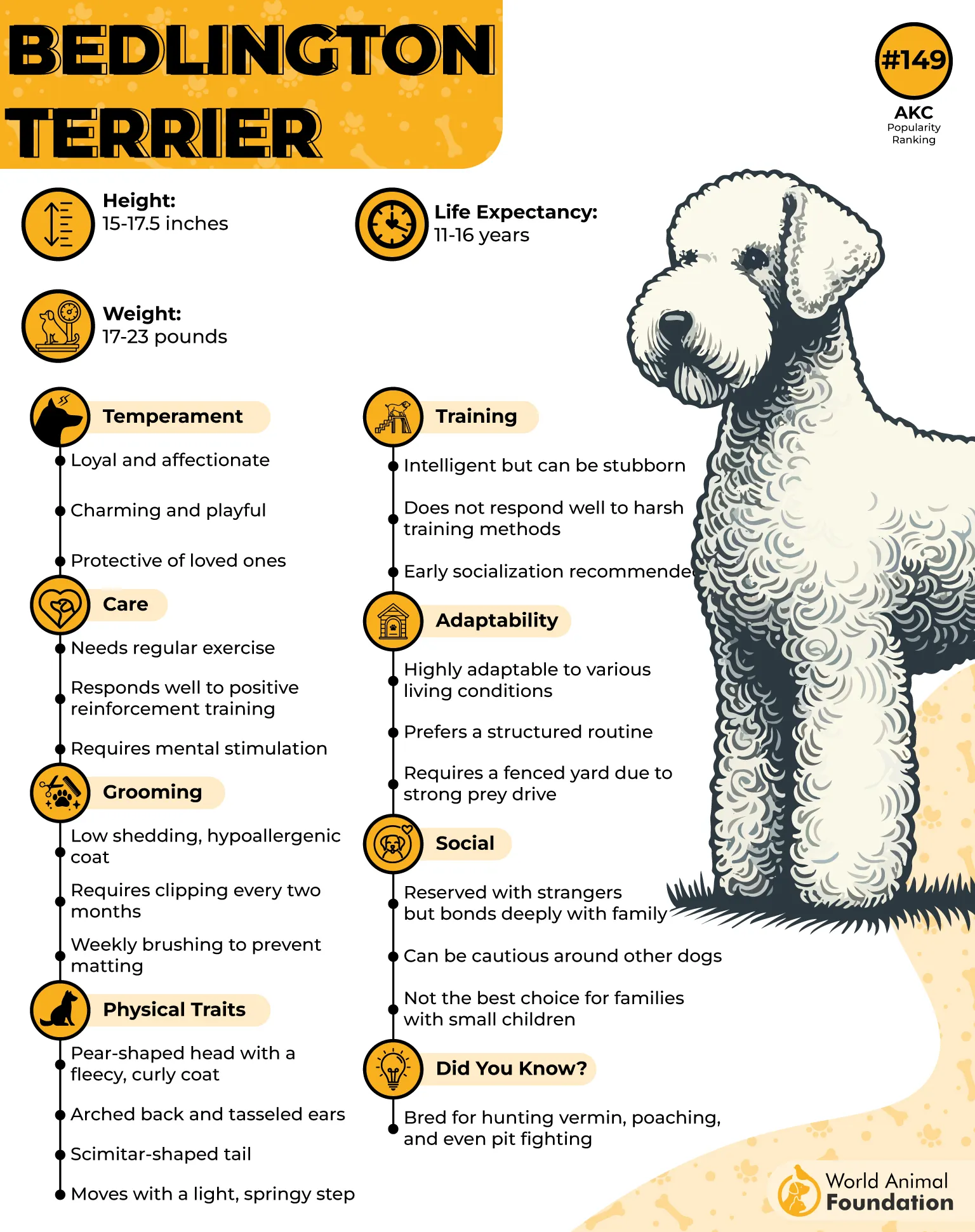
The dog’s coat has regular grooming needs: 2-3 times weekly brushing using a metal greyhound comb, bathing after 3-6 weeks using a texturizing shampoo, and clipping after 6-8 weeks.
5. Bichon Frise
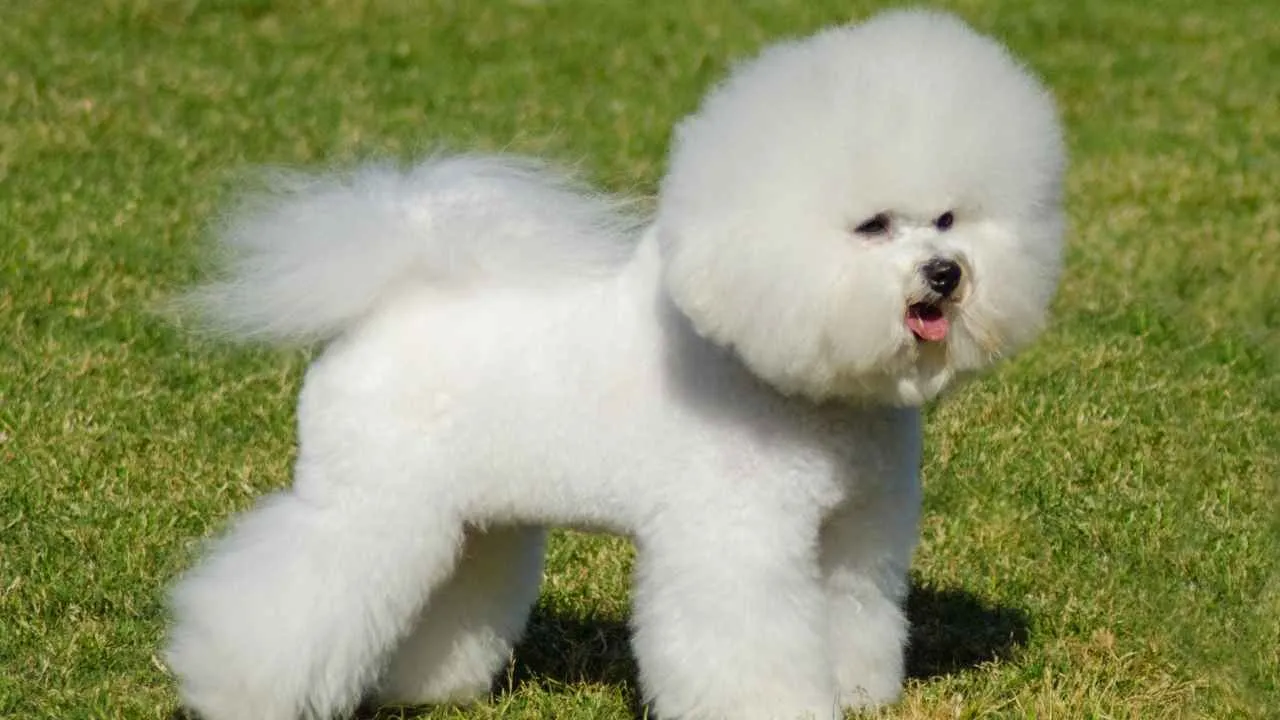
This small dog breed was bred in France as a non-sporting dog. The hypoallergenic breed, however, is prone to certain allergens in urine, saliva, and skin. The breed is closely related to other dogs, such as Havanese, Maltese, and Bolognese. It has consistent grooming requirements, says PetMD.
The double-coated breed consists of two layers: an outer coat with loose and spiral curls and an undercoat with softer and denser hair. There is pigmented skin beneath the white coat (black, blue, and beige spots). The outer coat is coarse and harsh, while the undercoat has a velvety texture.
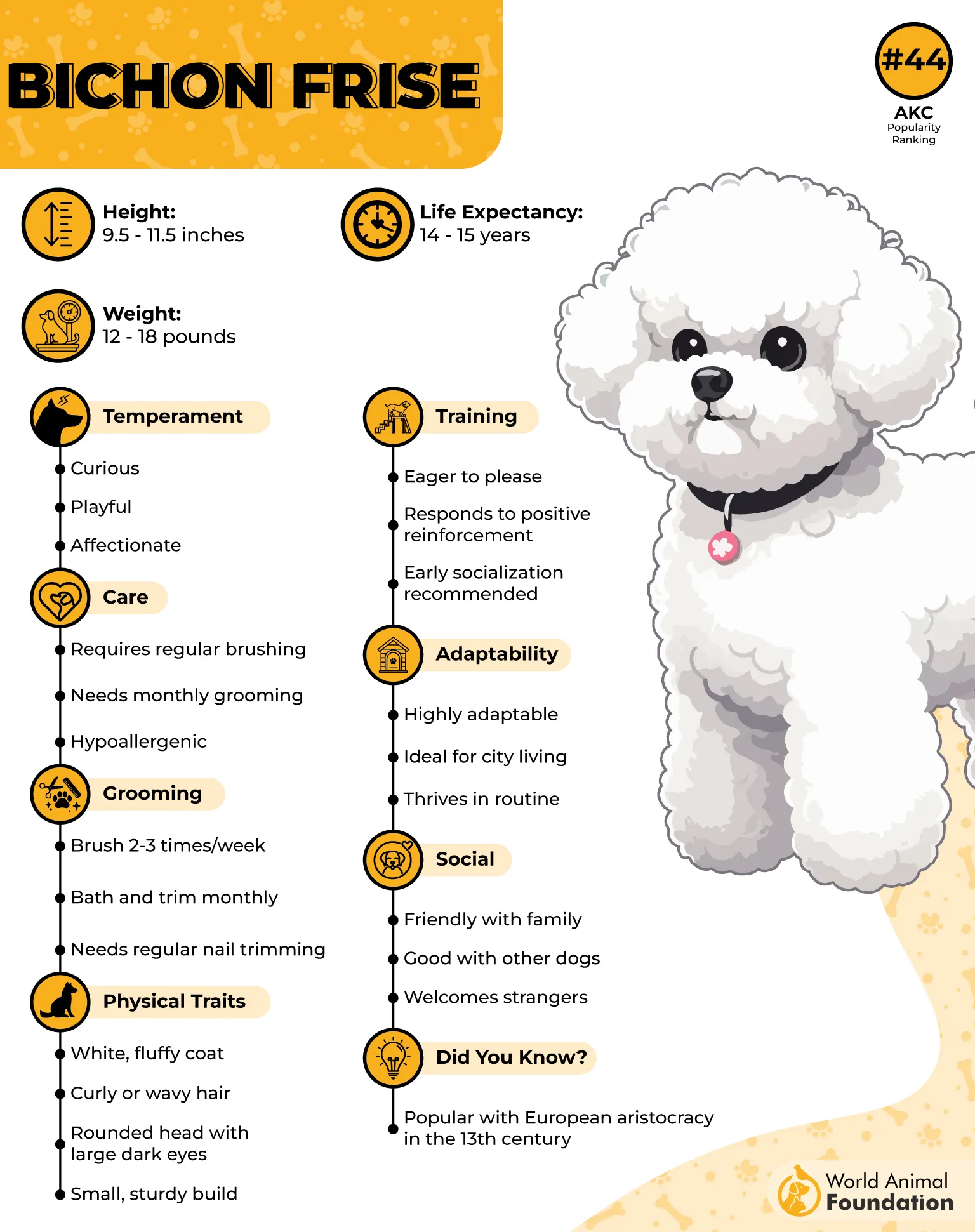
The healthy coat has bounce and elasticity. The cream or apricot markings disappear as soon as the puppy reaches the age of 18 months. The eye rims, nose, lips, and paw pads are solid black.
6. Portuguese Water Dog

The recorded evidence of the breed dates back to the late 13th century; however, it is believed to have existed earlier. It was used to work alongside fishermen to herd fish and retrieve nets. The breed almost went extinct in the mid-20th century, but was revived later. It was also owned by former President Obama.
The coat comes in two varieties: the curly coat (cylindrical curls with a tighter finish; it has a high risk of matting) and the wiry coat (flowing waves lying closer to the body and a slight natural sheen). The breed has human-like hair and has a waterproof coat. The black, white, or black-and-white coat has bluish skin underneath.
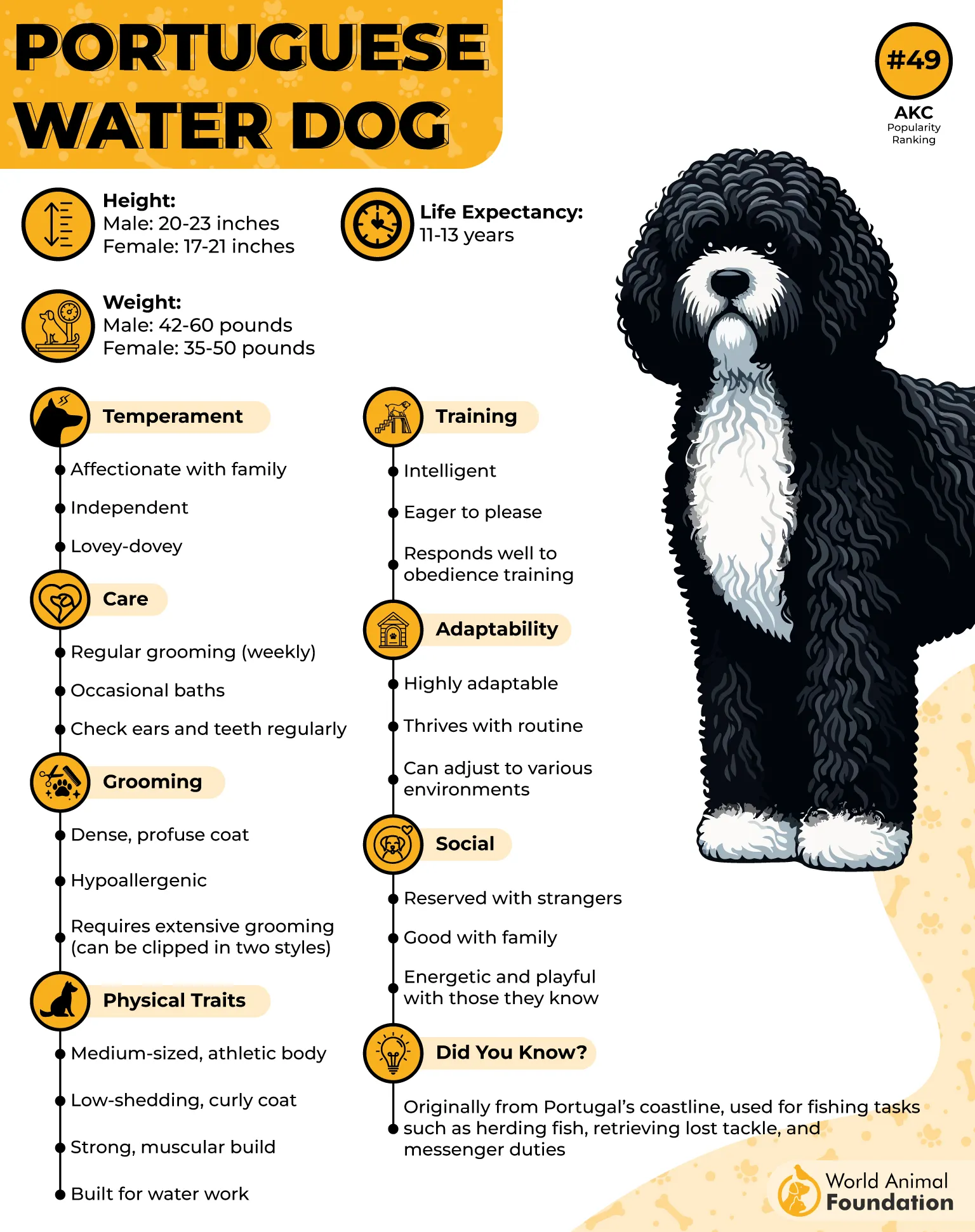
The distinctive coat needs frequent grooming: weekly brushing (3-4 times) to remove loose hair, bathing after 3-4 weeks, regular eye and ear cleaning, and professional grooming after 6-8 weeks.
7. Airedale Terrier
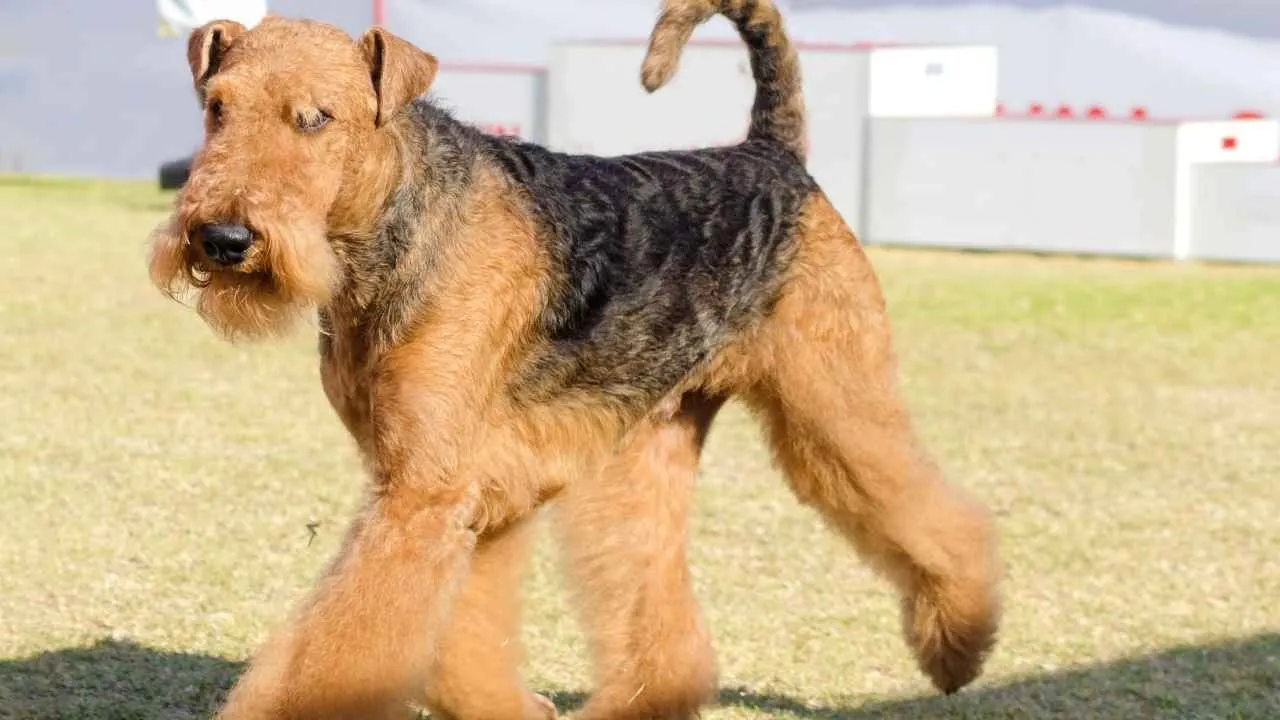
Airedale Terrier is the largest of all Terrier breeds and was developed in Yorkshire, North England. It is a breed developed by crossing the Black-and-Tan Terrier, Otterhound, Bedlington, and the Irish Terrier. Its primary purpose was to serve as a hunting breed for small vermin.
The double coat has tight, short hair on the muzzle and a thick, bushy beard and eyebrows. The thick hair on the legs gives it a cylindrical appearance. The outer coat has slight crinkles or gentle waves, and it never forms tight curls. There are two possible color combinations: grizzle-and-tan and black-and-tan.
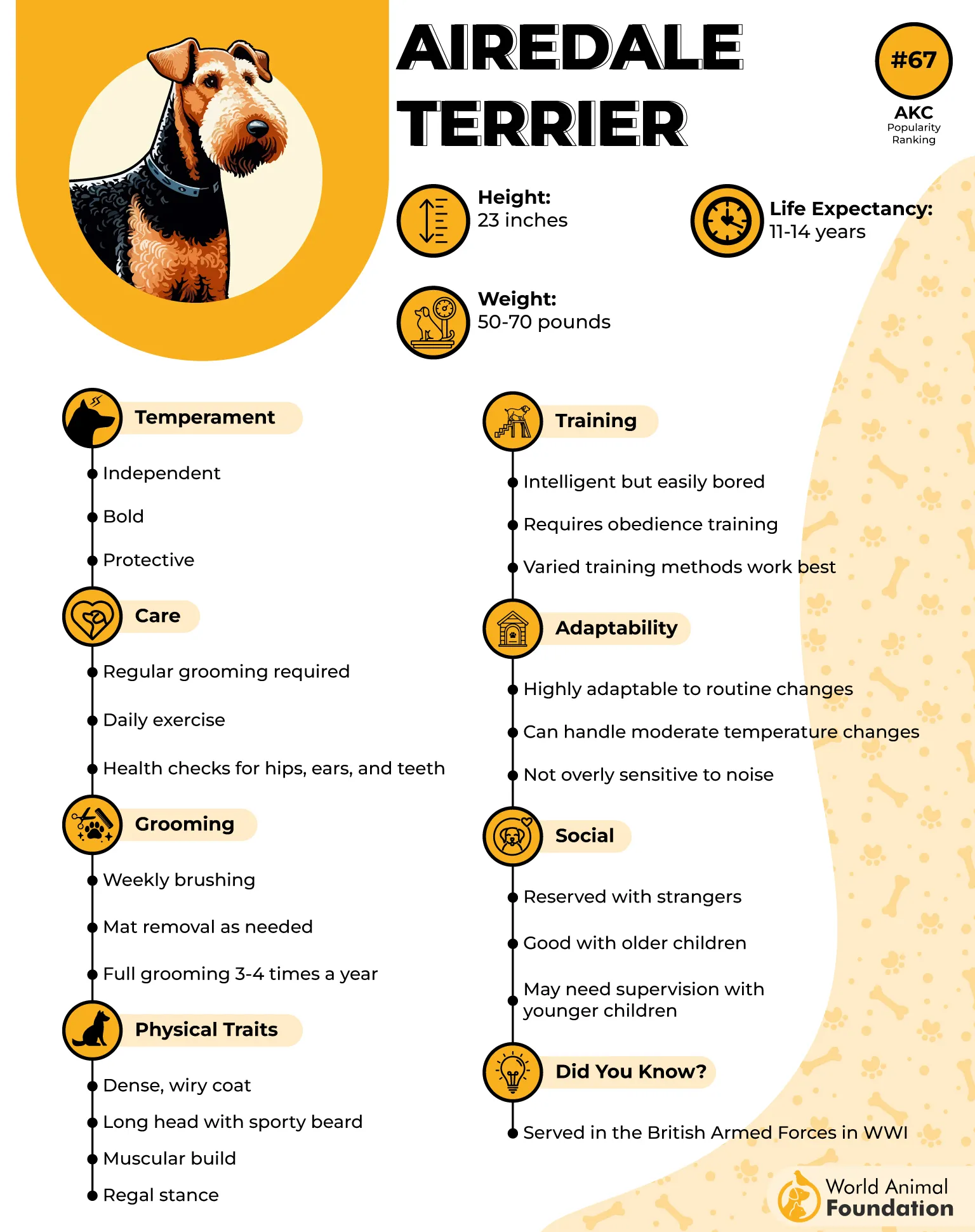
It is a low-maintenance breed and needs weekly brushing using a slicker brush and a metal Greyhound comb to remove loose hair and evenly distribute natural oils. Wipe and comb the muzzle beard after meals.
Conclusion
Curly-coated dogs prove that beauty and purpose can go hand in hand. A Poodle may turn heads at the park, while a Portuguese Water Dog is ready for a swim at a moment’s notice. The Pumi brings energy, the Curly-Coated Retriever brings devotion, and the Bedlington Terrier adds a little elegance to everyday life.
Before choosing one, think beyond the curls. These dogs need regular grooming, training, exercise, and plenty of time with their people. A curly coat can be a joy, but it is also a commitment. If you are ready for brushing sessions, muddy paws, and a furry shadow following you around the house, one of these breeds may be the perfect match.
The right curly-coated companion will not just look stunning; it will make your home feel warmer, louder, and much happier.
