




If you love dogs but hate finding fur on your black jeans, your car seats, and somehow inside your coffee mug, low-shedding breeds can feel like a small miracle. These dogs still shed a little; no dog is completely shed-free, but many leave far less hair behind than a typical double-coated breed.
The catch? Less fur on the couch often means more time with a brush. Many of these breeds have hair that keeps growing, so regular grooming keeps them comfortable and mat-free. The reward is a cleaner home, fewer lint-roller emergencies, and a companion who fits beautifully into family life.
From tiny lap dogs to athletic water workers, these breeds prove that “low-shedding” does not have to mean low personality. Here are seven fantastic options worth meeting.
Fantastic Dog Breeds That Shed Very Little
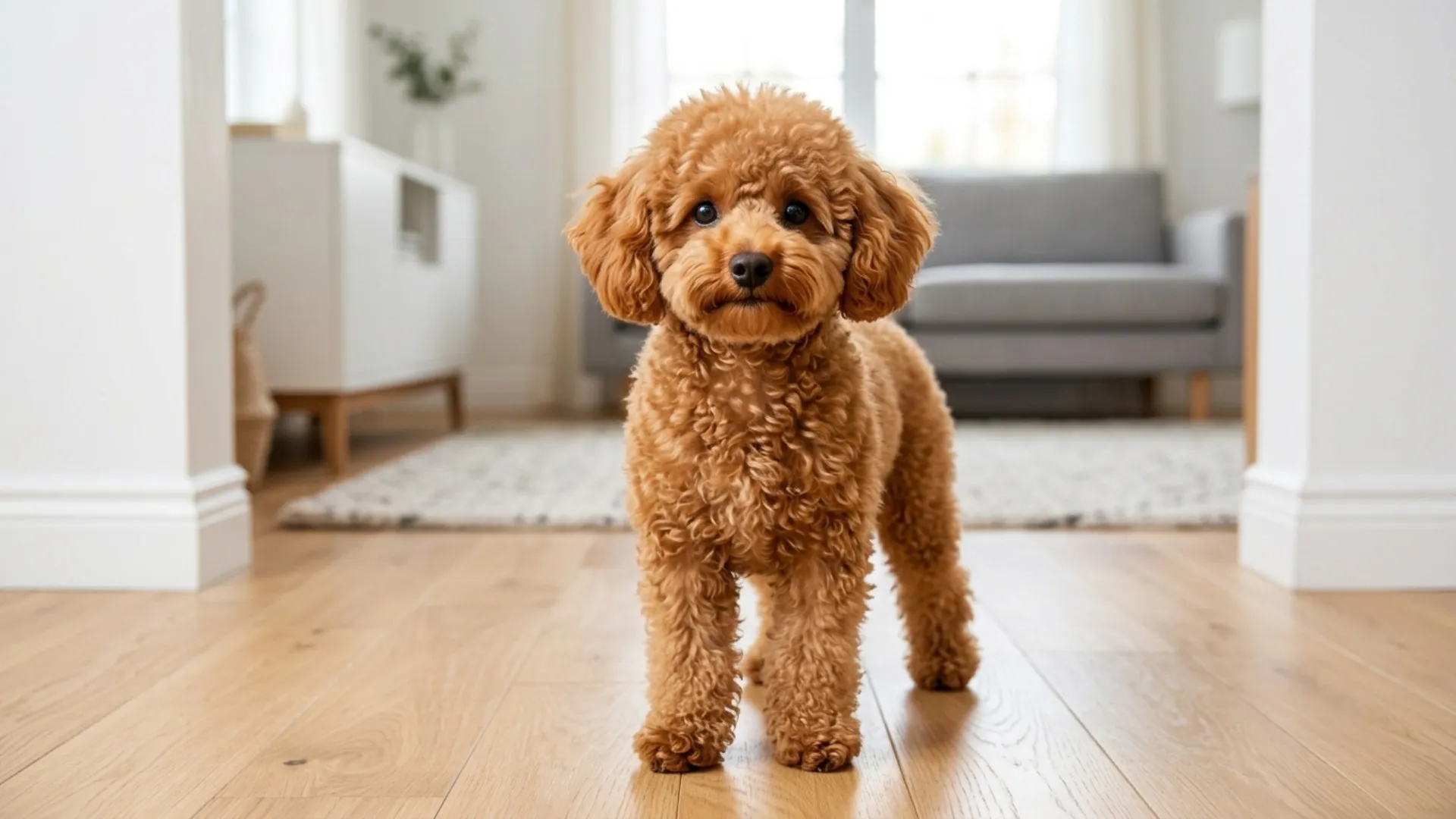
1. Toy Poodle
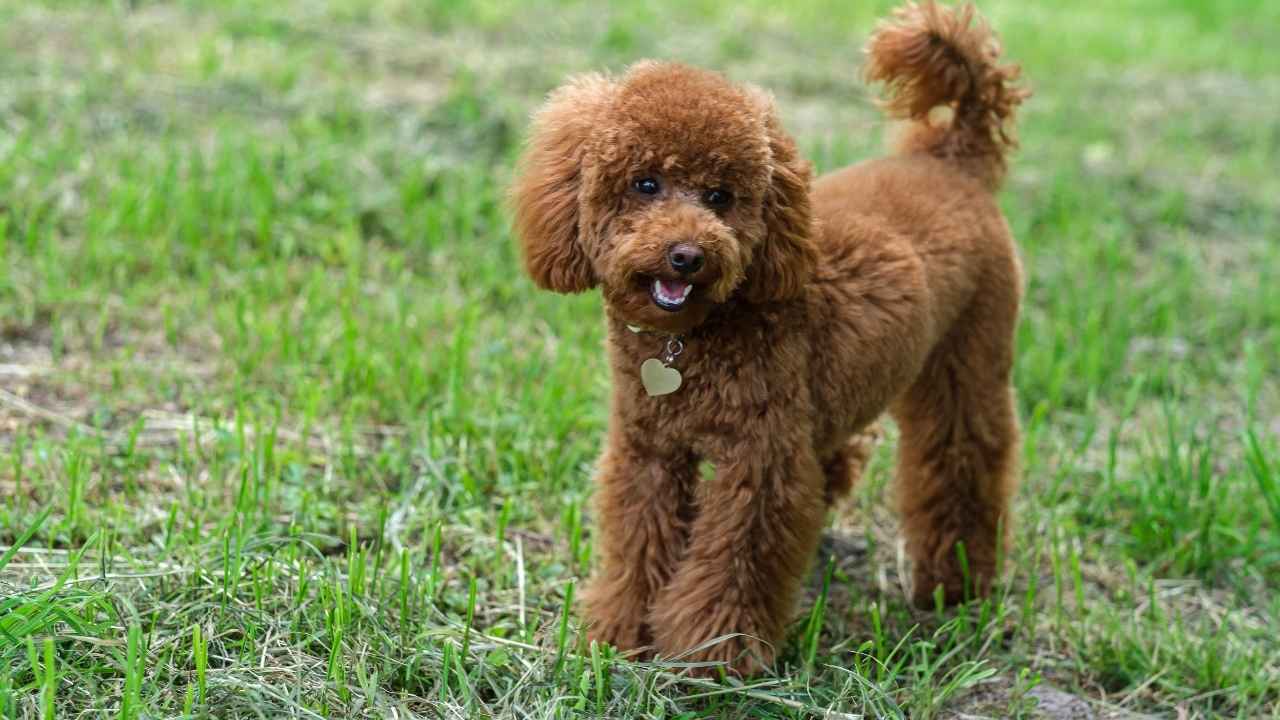
Though many people believe that the breed was developed in France, it was originally bred as a curly-coated breed in Asia and made its way to Europe through herders. The modern-day Toy Poodle was developed in Germany and was kept by noble women for centuries, according to Omlet.
The breed has two coat types: the curly coat (springy, tight, and compact ringlets) and corded coat (tight, rope-like hanging strands). The cords are longer on the mane, head, and back, and shorter on the legs. Both lack the undercoat and grow continuously rather than shedding off after reaching a certain length.
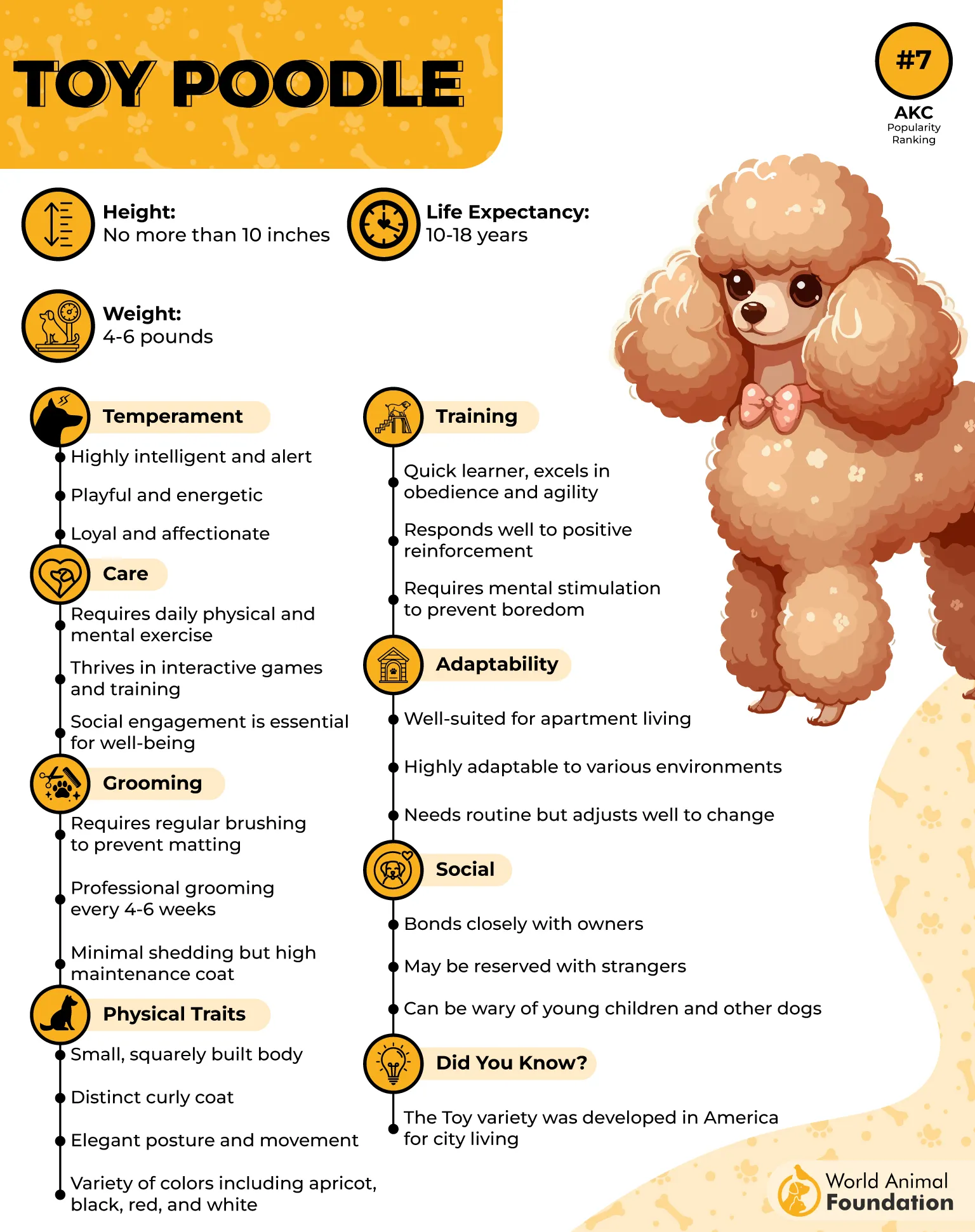
The low dander production makes it a hypoallergenic dog. Since the loose hairs do not fall off, they tangle up with the nearby living hair. Thus, use a slicker brush and a sturdy metal comb for weekly brushing (2-4 times)
2. Bichon Frise
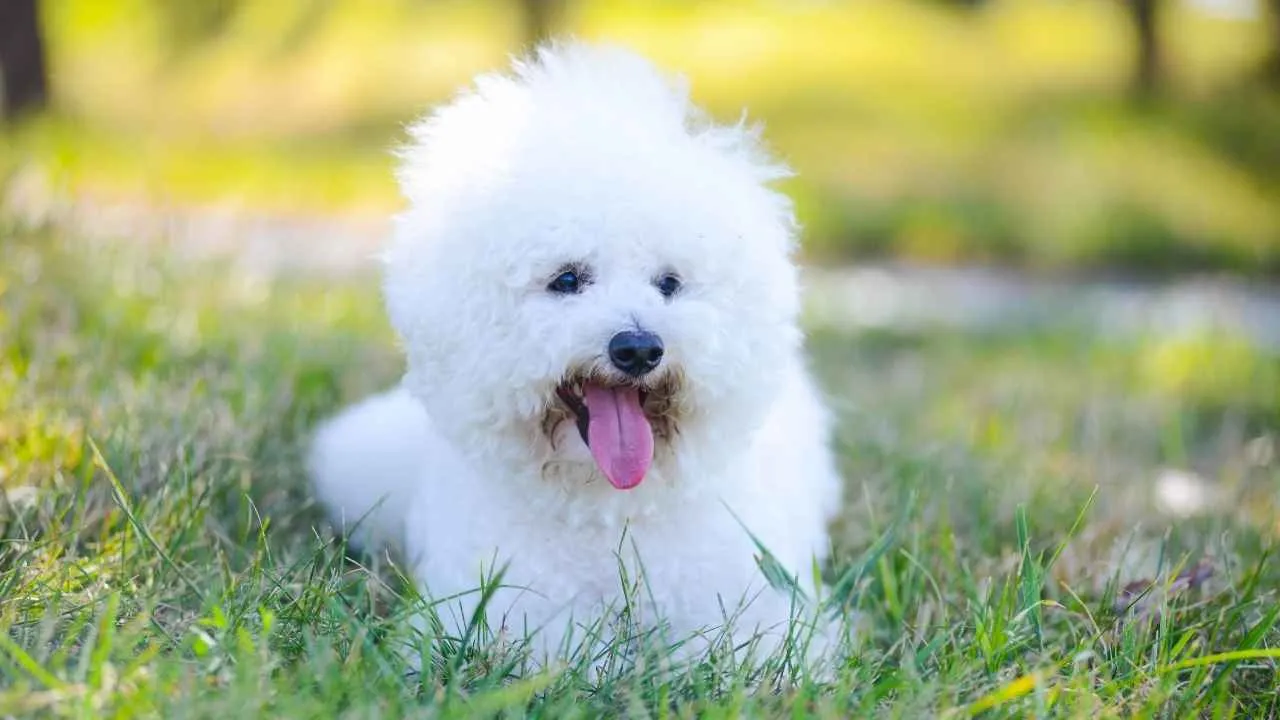
Also known as the Bichon à Poil Frisé, the small dog has ancestral roots in Spain. It was adopted by the European nobility in the 13th century. The white dog was introduced to the United States in 1955. Known for its ‘Bichon Blitz,’ the breed has short bursts of energy followed by a prolonged resting phase.
It has a continuously growing, profuse double coat. The coat has a velvety texture and stands off the body entirely. The hair on the head, beard, ears, and moustache is intentionally left longer. The tail is naturally plumed and arches over the spine. Though the coat comes in white, the skin can be pigmented.
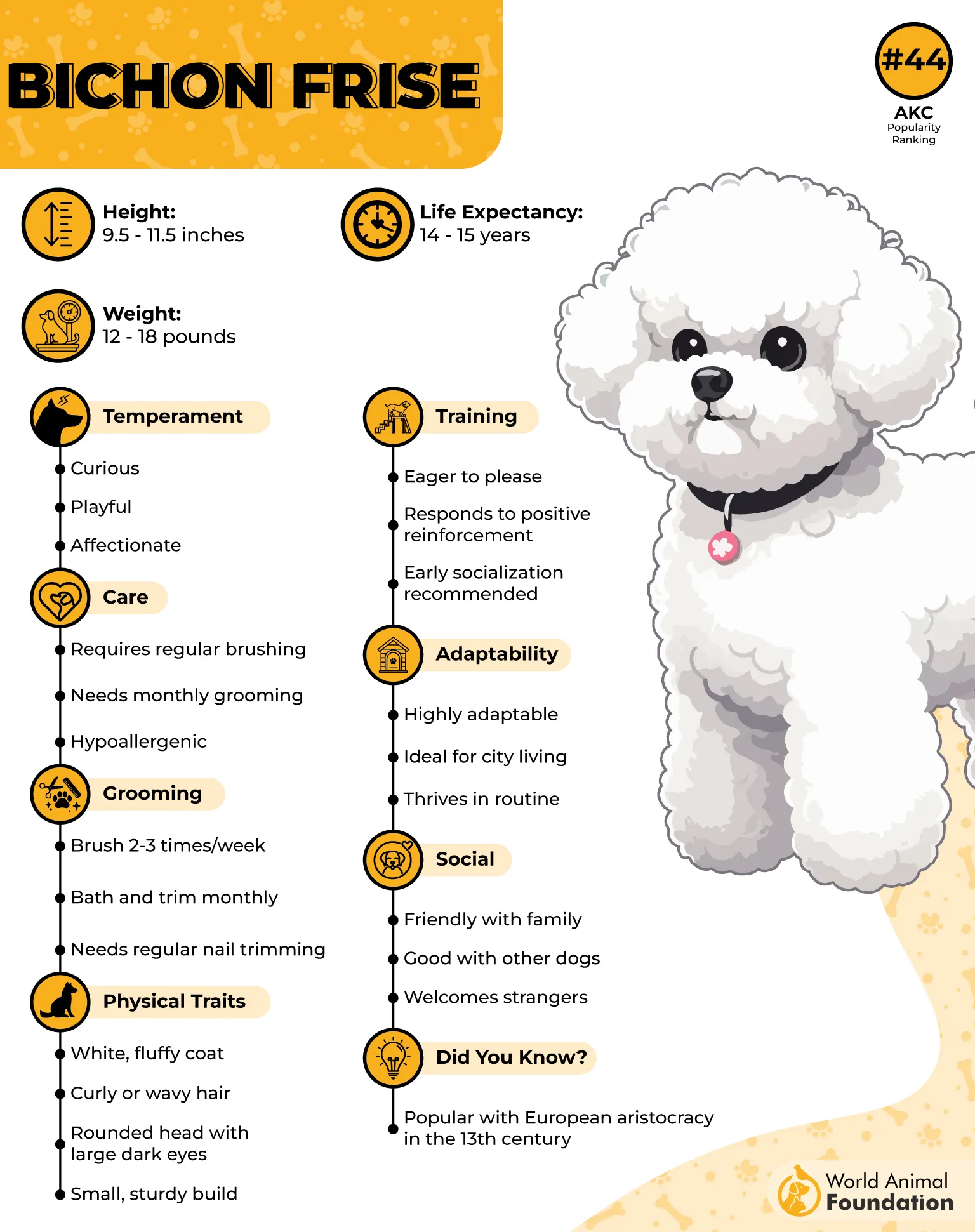
The breed does not shed much, but needs brushing 3- 4 times a week using a slicker brush and a metal Greyhound comb. Pay close attention to the friction-prone zones: back of the hind legs, behind the ears, and the armpits.
3. Maltese
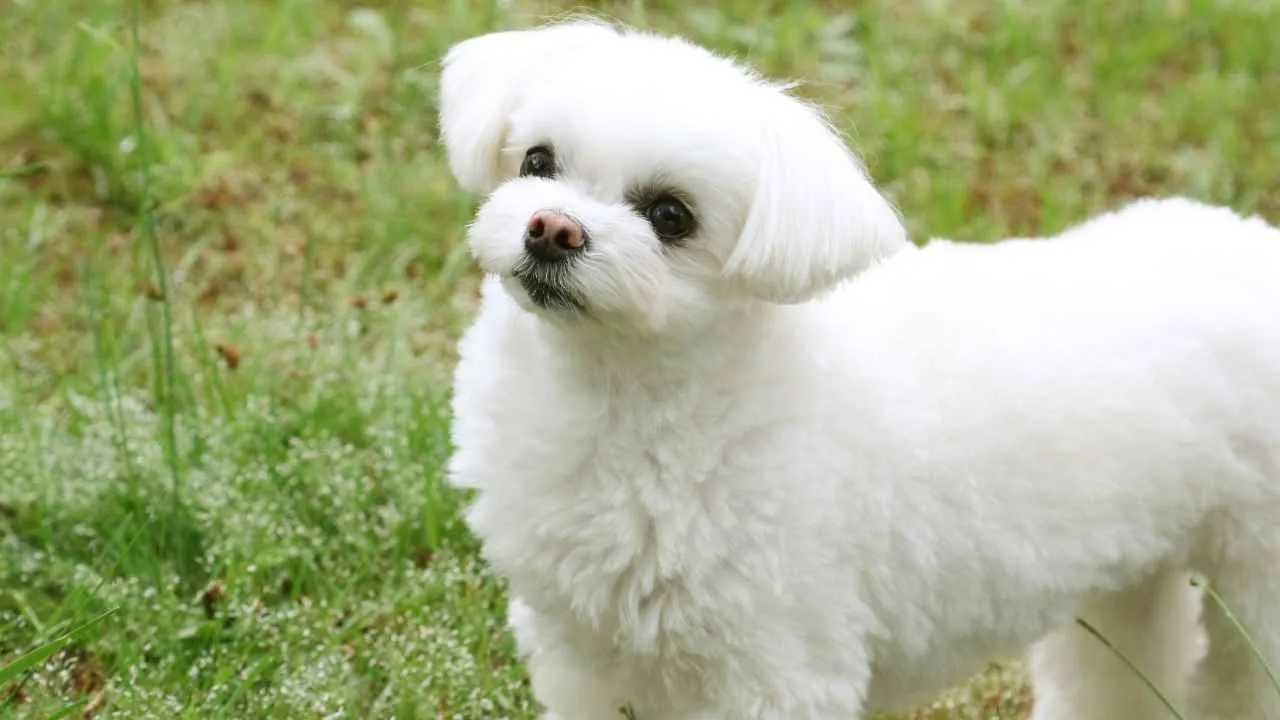
The hypoallergenic dog breed was originally developed in Malta centuries ago, and the earliest records date back to the 19th century as a lap dog for nobility. It first appeared in England as a show dog in 1959, as reported by Purina.
The medium-length coat has a silky texture and hangs heavily along the sides of the body. The puppies are born with a short and fluffy coat. As they reach adulthood, the coat turns into heavy and silky hair. The pure, snow-white coat may have light tan or lemon shading. However, there are jet-black points, including paw pads, nose, and eyes.
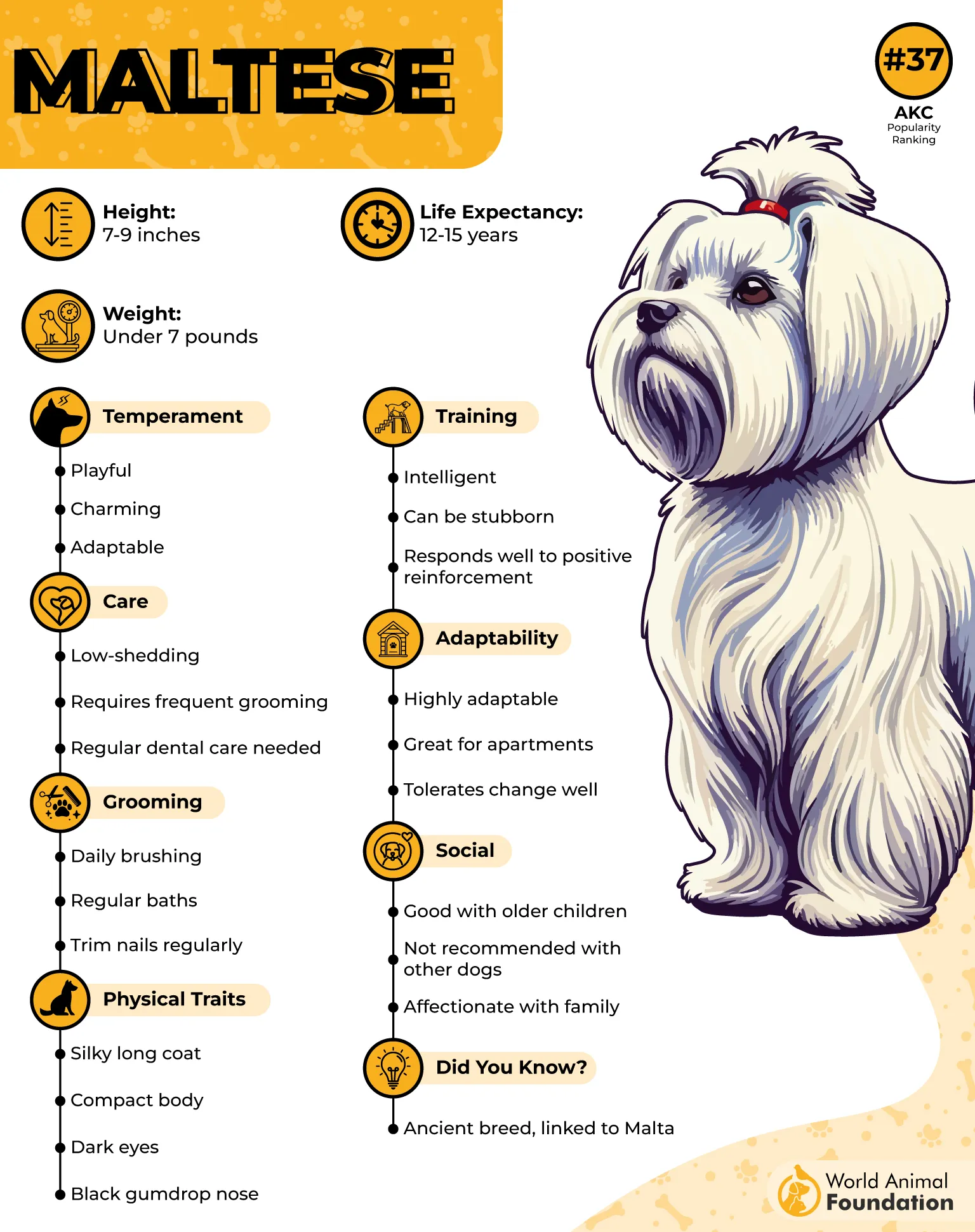
The long coat needs daily brushing, while the puppy-cut (1-2 inches) requires weekly brushing. Never brush the dry coat as it can lead to hair breakage. Always use a high-quality soft pin brush and a steel-tooth Greyhound comb.
4. Shih Tzu
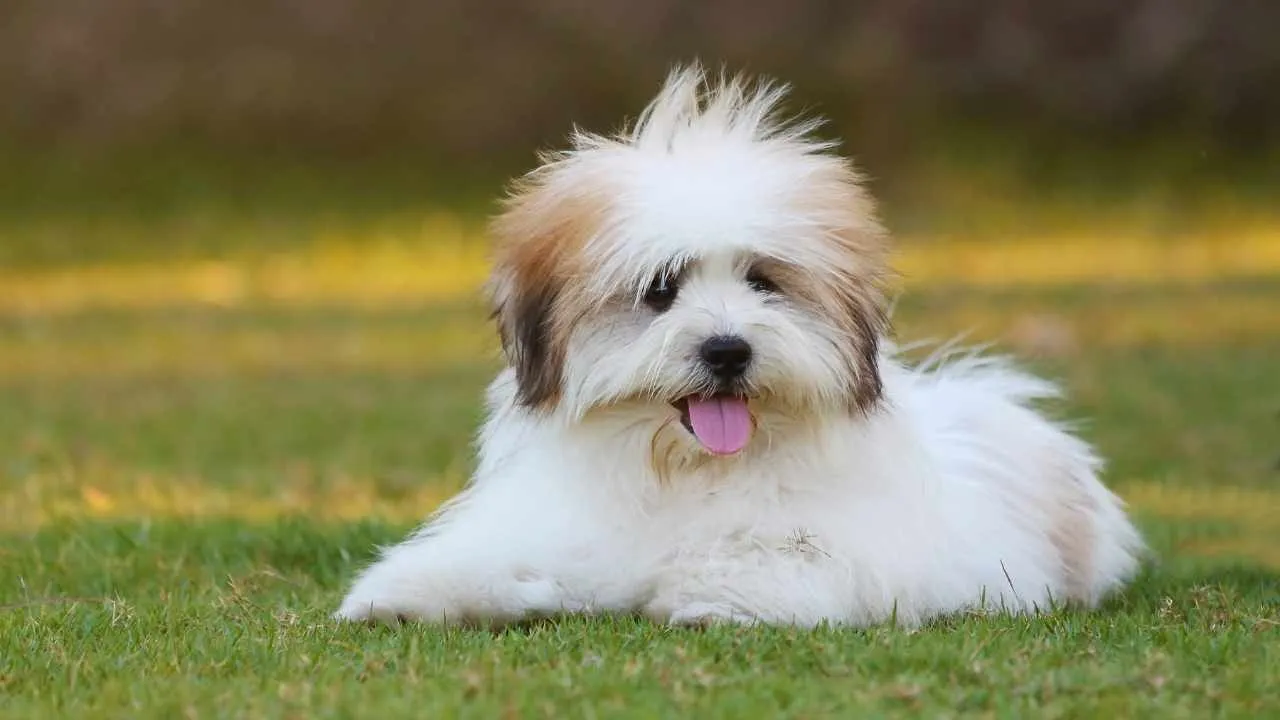
The history of this ancient breed dates back to the 7th century, when it was developed in Tibet as an interior watchdog. Also known as the Lhasa Lion Dog, the breed was developed by crossing the Pekingese and the Lhasa Apso. The breed made its way to England from China and then to America.
The coat comes in three types: the show coat (long, slightly straight/wavy, and has a smooth texture), the puppy-cut (short length, typically ⅜ to ½ inch all over), and the coat transition (soft and single-layered coat is transitioned to a double coat). It has heavy furnishing on head, ears, and legs.
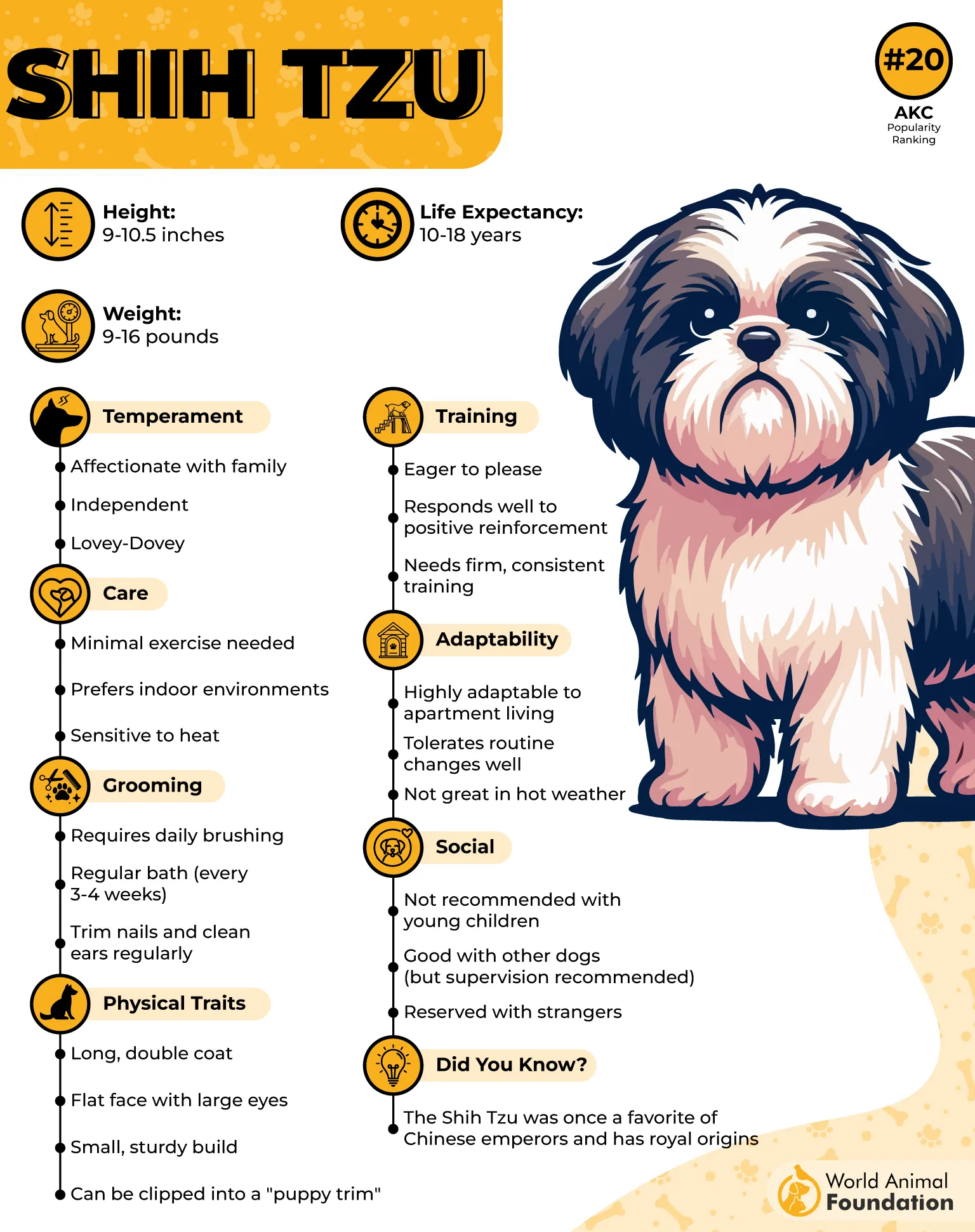
Use line brushing technique and mist spray for brushing every 2 days. Use a pin brush and a slicker brush to remove surface knots, followed by a metal grooming comb to catch hidden undercoat tangles.
5. Yorkshire Terrier
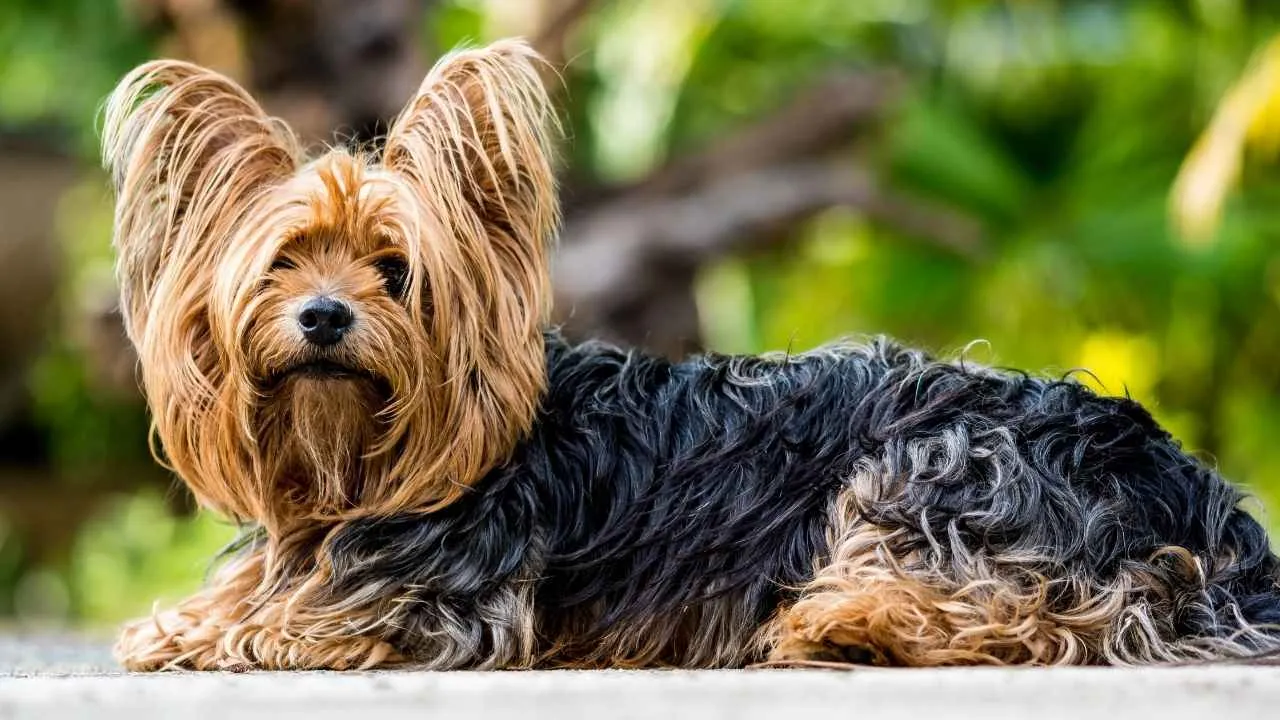
The breed is descended from the Waterside Terrier, which was developed by crossing the Black-and-Tan English Terrier, Clydesdale Terrier, and Paislay. The dog was brought to the city of Yorkshire from Scotland and was interbred with local dogs to create a ratting breed, the Yorkie, says Orvis.
The distinctive feature of the dog, the straight ‘part ‘, originates at the base of the skull and runs down to the spine. The hair grows at an exponential rate (full length within 18-24 months). A silky coat is the standard texture, while the cotton and woolly coats are considered a major fault.
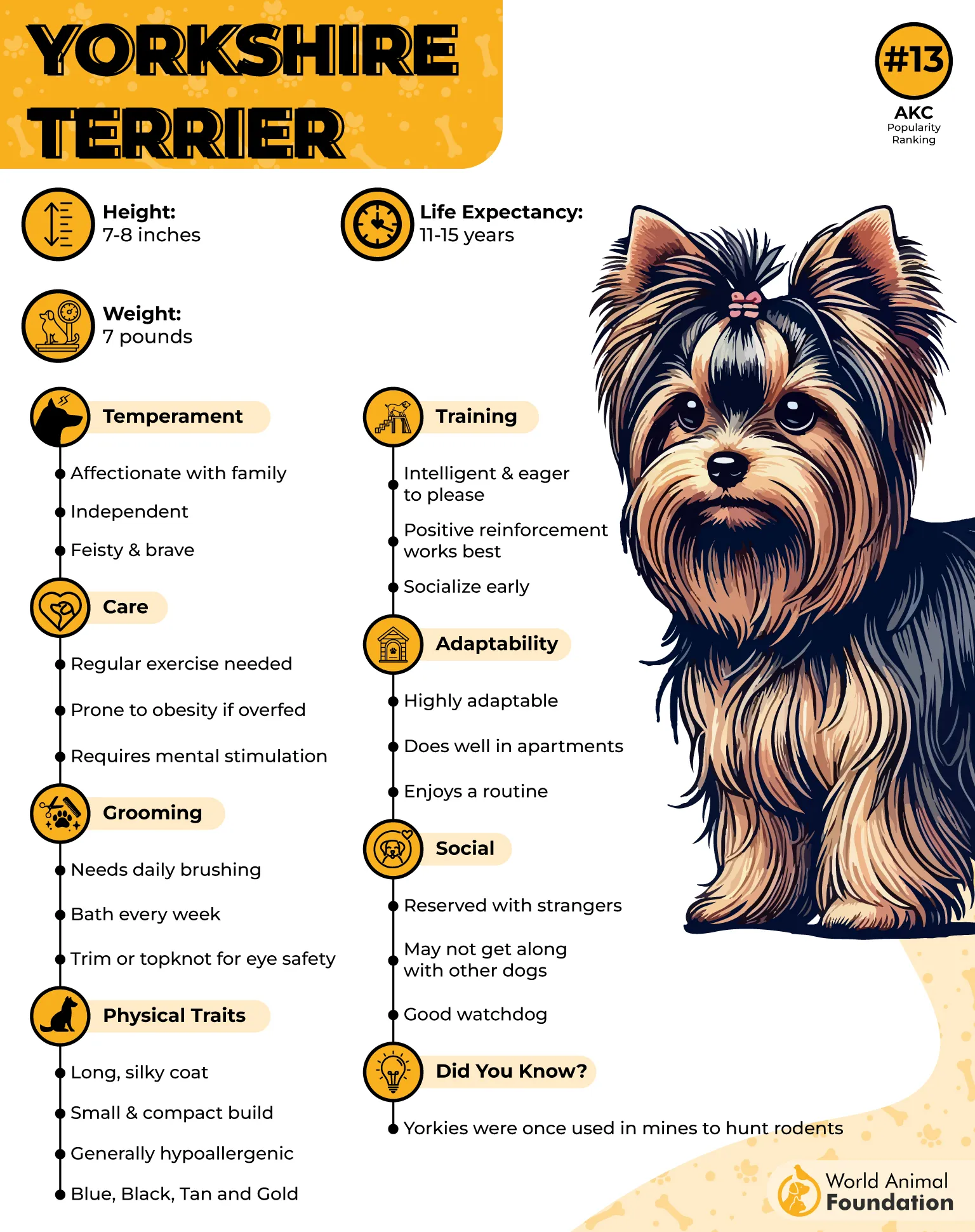
The breed does not need professional grooming since it lacks the undercoat and does not shed seasonally. Daily brushing is recommended for the long coat; the medium coat needs brushing every 2-3 days, while the puppy cut is okay with weekly brushing.
6. Portuguese Water Dog
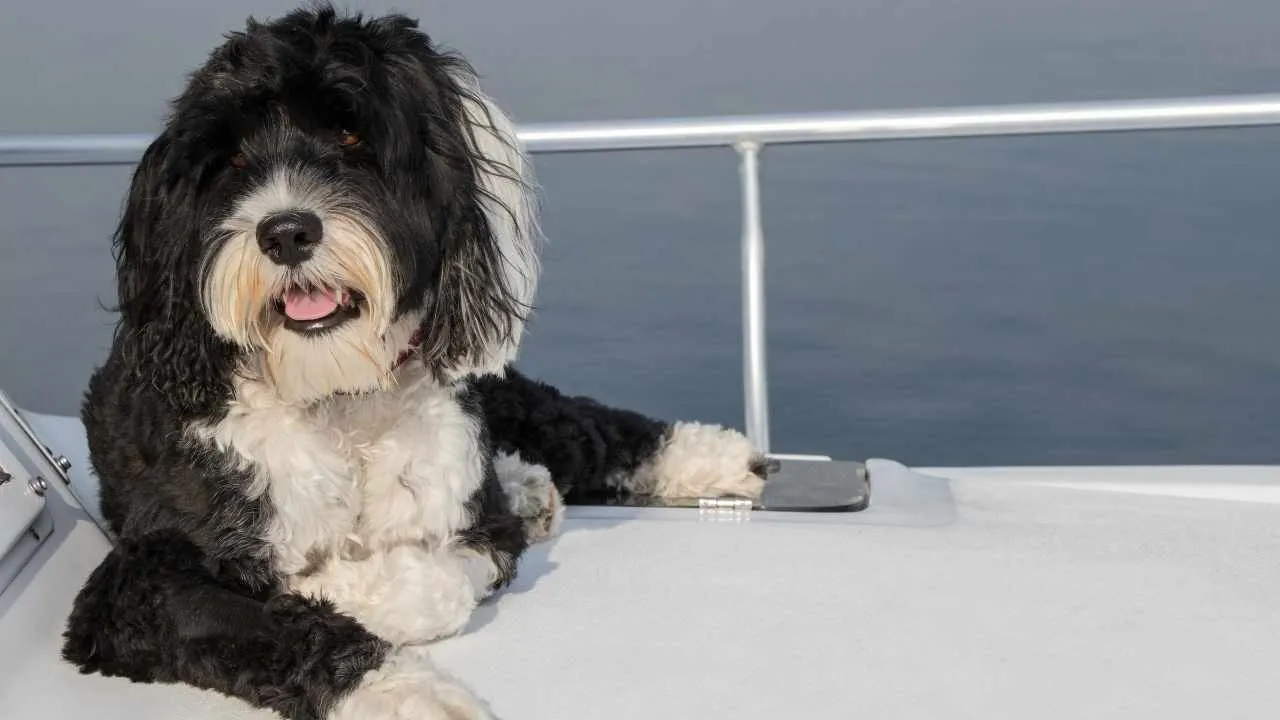
The history dates back to the late 13th century, when the breed was developed on the Iberian beaches. The primary purpose was to work alongside fishermen. It used to retrieve nets and fish. Today, it is widely kept as a family pet. The breed almost went extinct in the 20th century, but was revived.
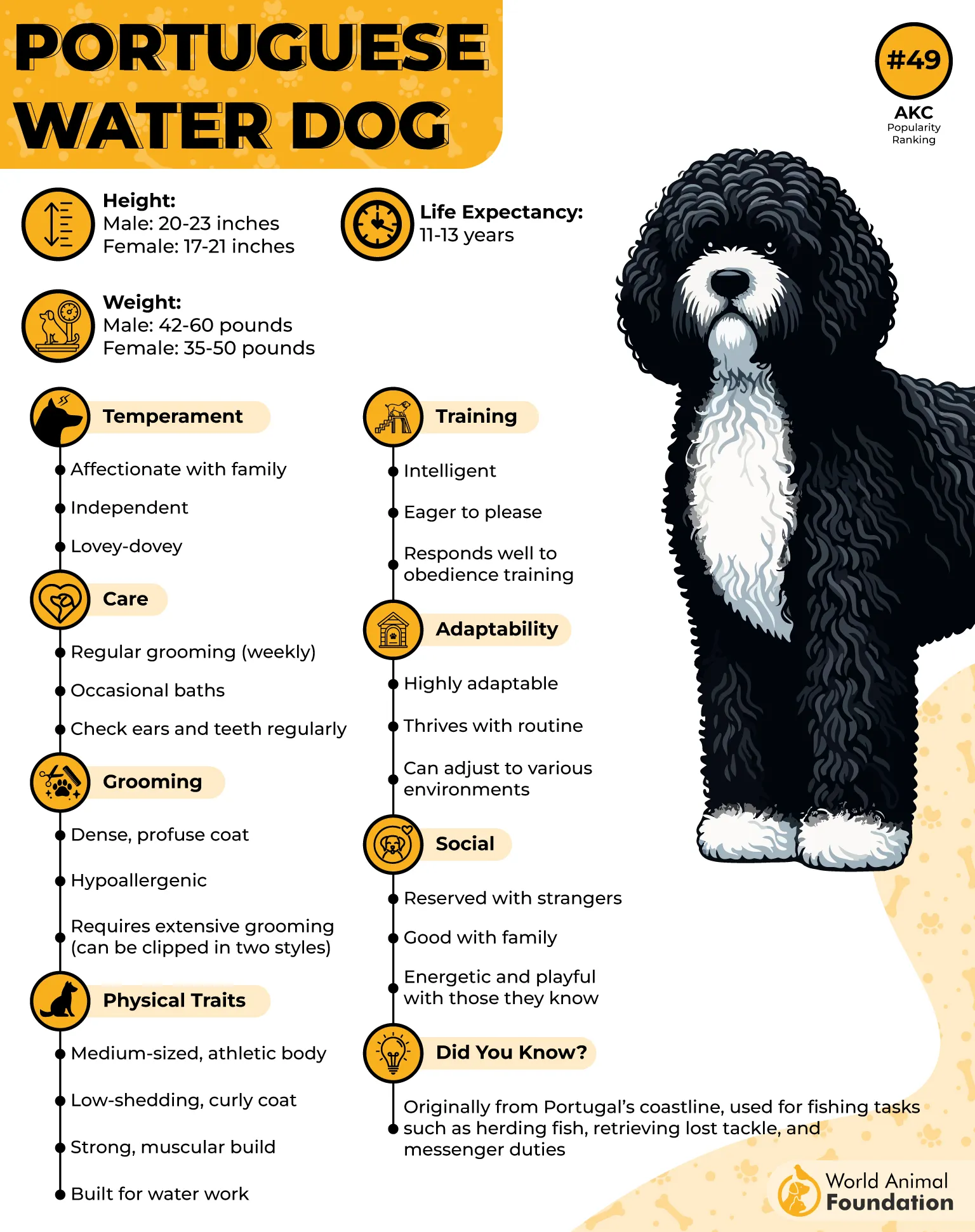
The coat comes in 2 different types: the curly coat, aka Crespo (dense, compact, cylindrical curls), and the wavy coat, aka Ondulado (long strands of hair, loose, rolling waves). It does not possess an undercoat and hence has no seasonal shedding. The coat produces an adequate amount of natural oils, making it waterproof.

Daily brushing is required for the longer coats using a curved slicker brush and the pin brush. The curly coat requires a wide-toothed comb to maintain the natural flow. The breed needs monthly baths.
7. Lagotto Romagnolo
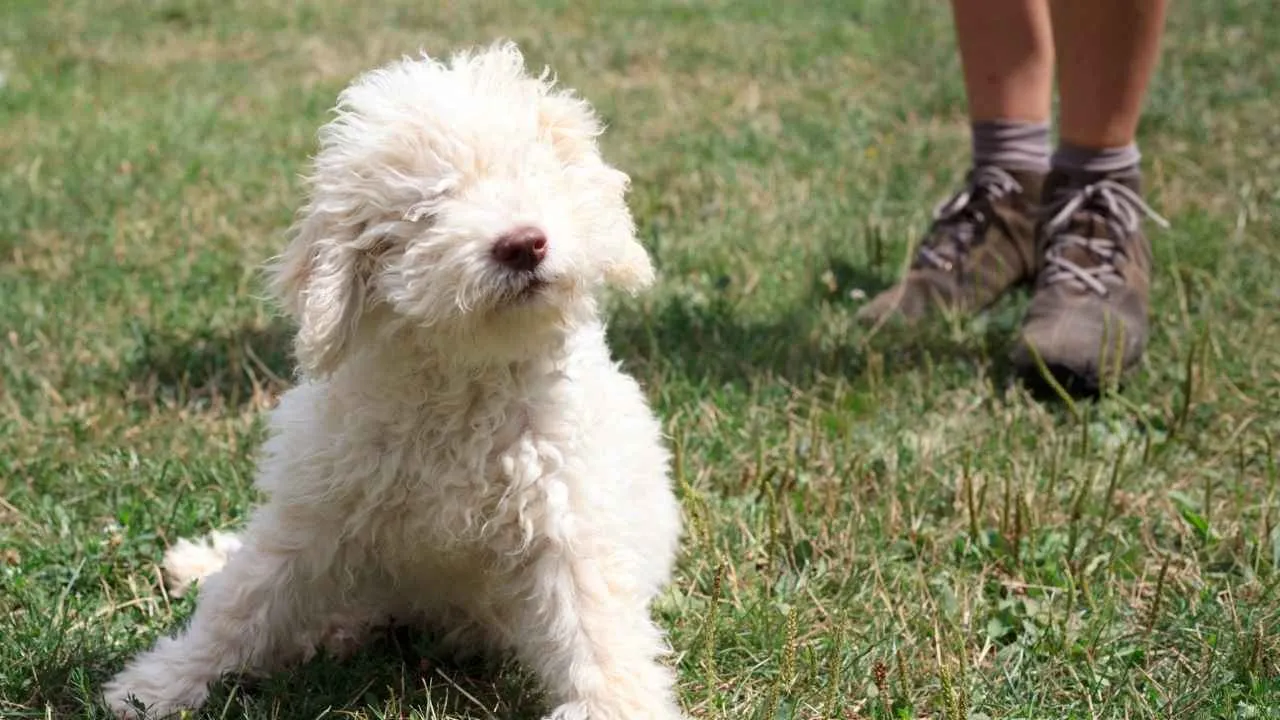
The Italian breed has been used as a gun dog for centuries, especially as a water retriever. Later, in the 19th and 20th centuries, the dog was adopted as a hunting dog for truffles. Today, it is widely kept as a companion dog.
The water-resistant double coat has a dense outer coat and a highly visible undercoat. Together, they trap air and natural oils inside, making an insulating layer against cold/damp environments. The torso and tail feature ring-shaped curls. The head has looser, open curls.
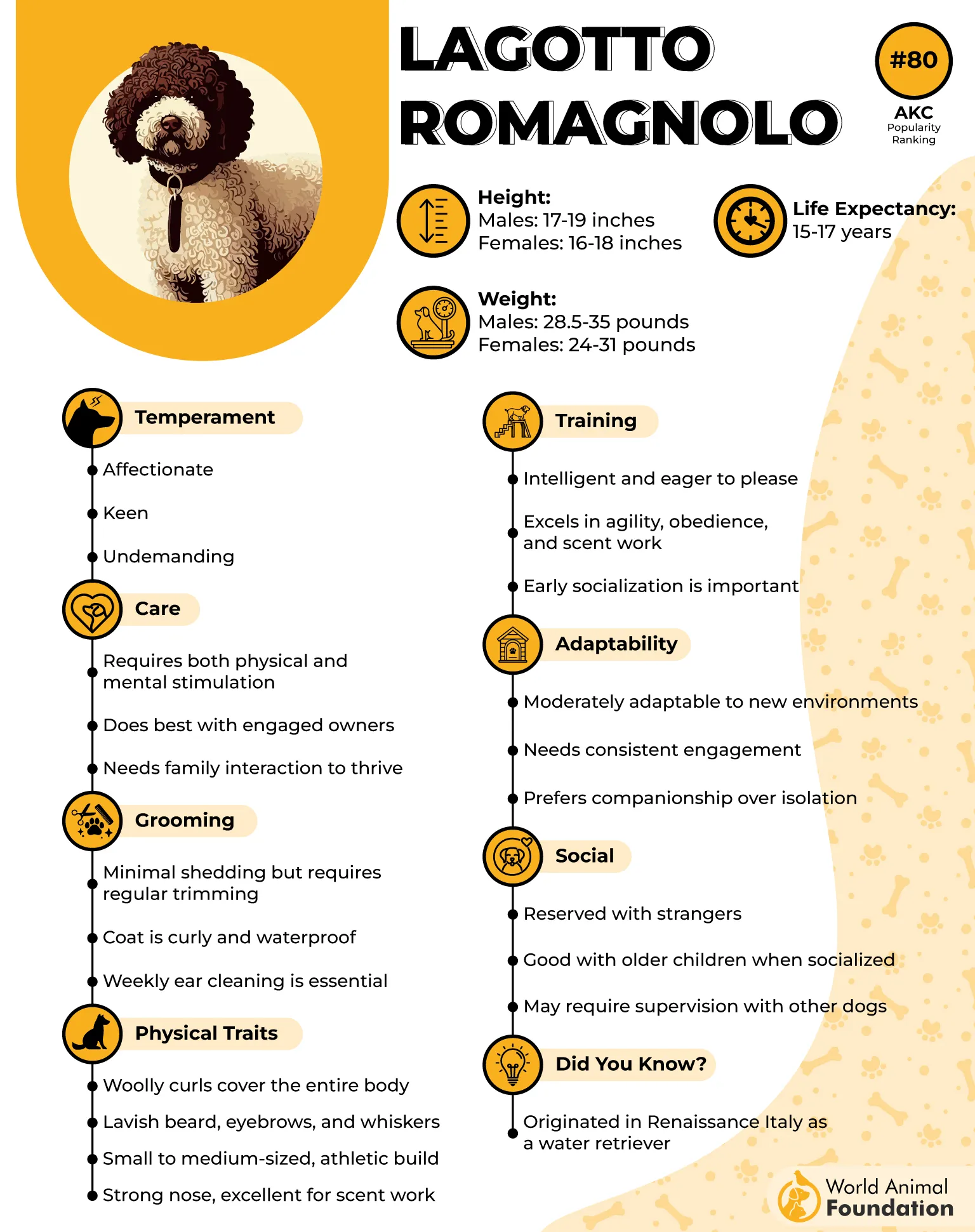
The puppy has a soft, single-layered coat that mats less; however, it transitions to a double-coated breed in 9-18 months of age. The adult dog needs weekly brushing and daily baths.
Conclusion
Choosing a low-shedding dog is not just about keeping your home spotless. It is about finding a companion whose energy, size, temperament, and care needs fit your real life. A Toy Poodle may suit a training-loving owner, while a Shih Tzu may be happier in a relaxed home. Active families often click with Portuguese Water Dogs or Lagotto Romagnolos.
“Low-shedding” never means “no grooming.” These breeds often need more brushing, bathing, and trimming than heavy shedders because their coats keep growing. Budget time and money for professional care, and your dog will stay comfortable, healthy, and looking its best.
