




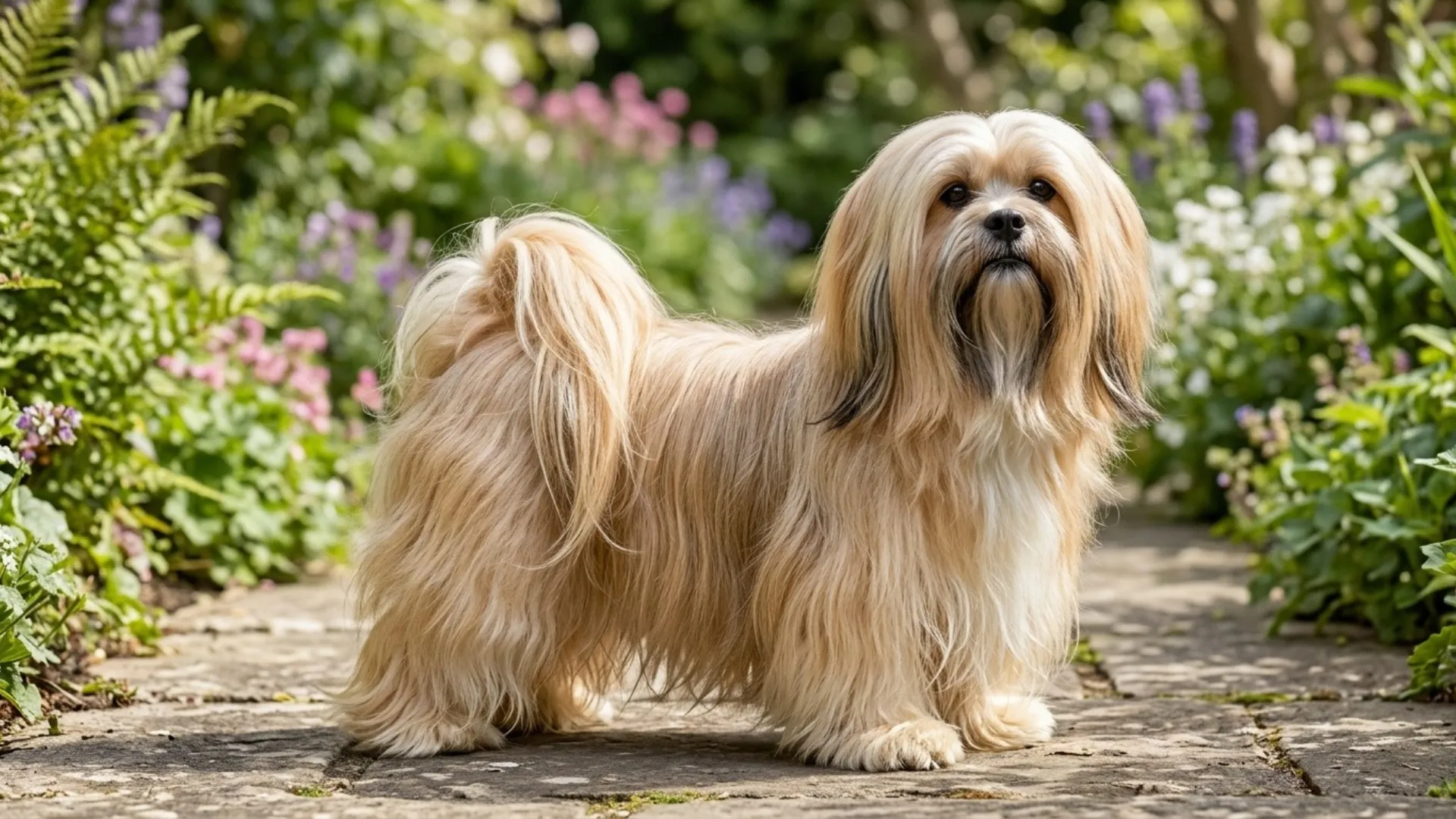
A dog’s coat can stop you in your tracks. One minute, you are walking past a park bench; the next, a fluffy Samoyed glides by looking like it has a personal stylist. Or a Yorkshire Terrier trots past with hair shinier than most people’s Sunday outfits. It is easy to fall for that first gorgeous impression.
But every coat tells a bigger story. Some dogs grew long hair to survive cold mountains. Others developed soft, flowing fur simply because they were bred to be close companions. Their coats can affect brushing routines, bathing schedules, shedding, and even how comfortable they feel in different weather.
This guide looks at nine stunning breeds and the coat types that make them unforgettable. You will meet silky charmers, tiny fluffballs, and one snow-white breed with a smile that could brighten any bad day.
Stunning Dog Breeds and Their Remarkable Coat Types
1. Afghan Hound
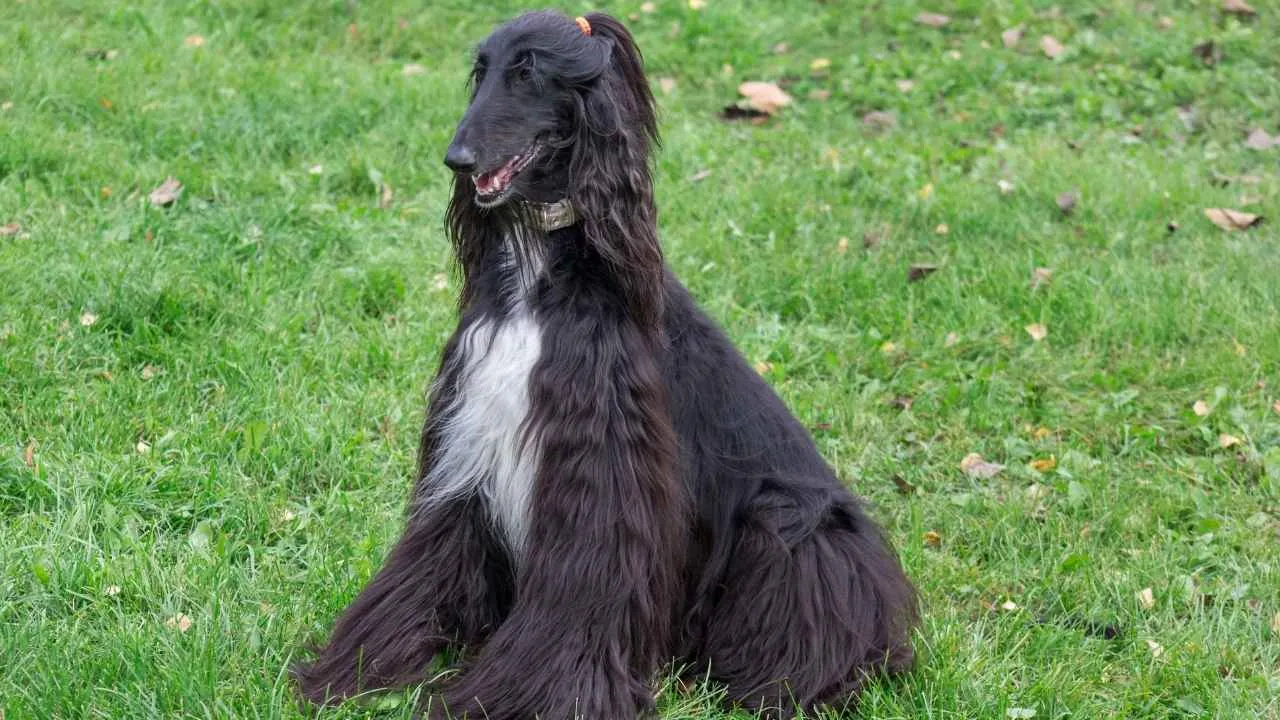
The Afghan Hound is thought to have descended from a Persian dog, the Saluki, brought to Afghanistan. This beautiful dog breed was developed with a long and distinctive coat to tackle a warm climate while hunting, says Purina.
The adult dog does not possess a uniform coat, but it has a unique ‘patterning.’ The main body (quarters, flanks, and ribs) has a fine and silky texture and has no undercoat. The hair on the back is naturally shorter and coarser. The crown of the head has a long and silky tuft of hair. The long ears are feathered with thick hair.
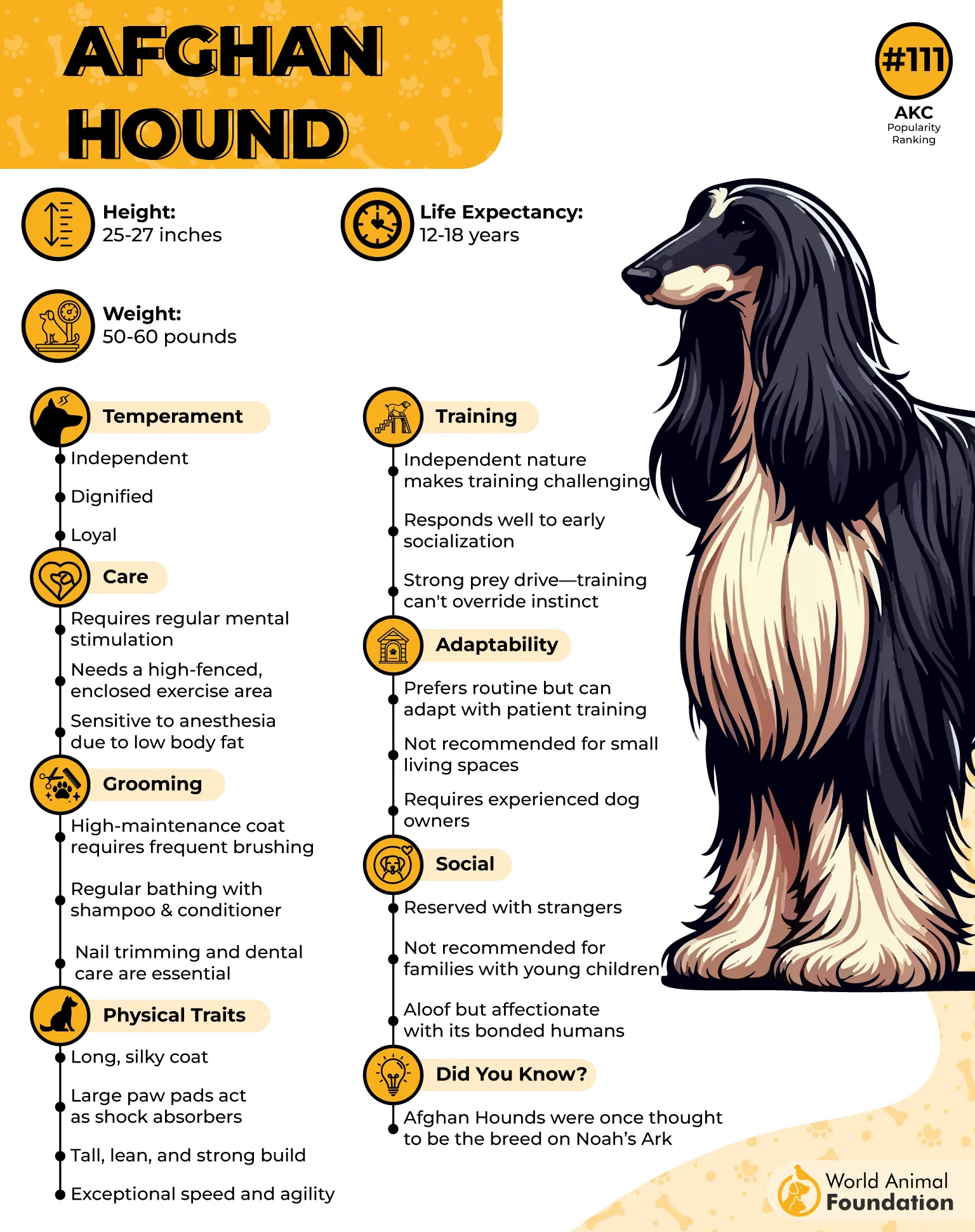
The tail must never be fringed or bushy. Use a flexible pin brush, metal comb, and a slicker brush to comb the breed 3-4 times a week. Monthly baths are recommended.
2. Havanese
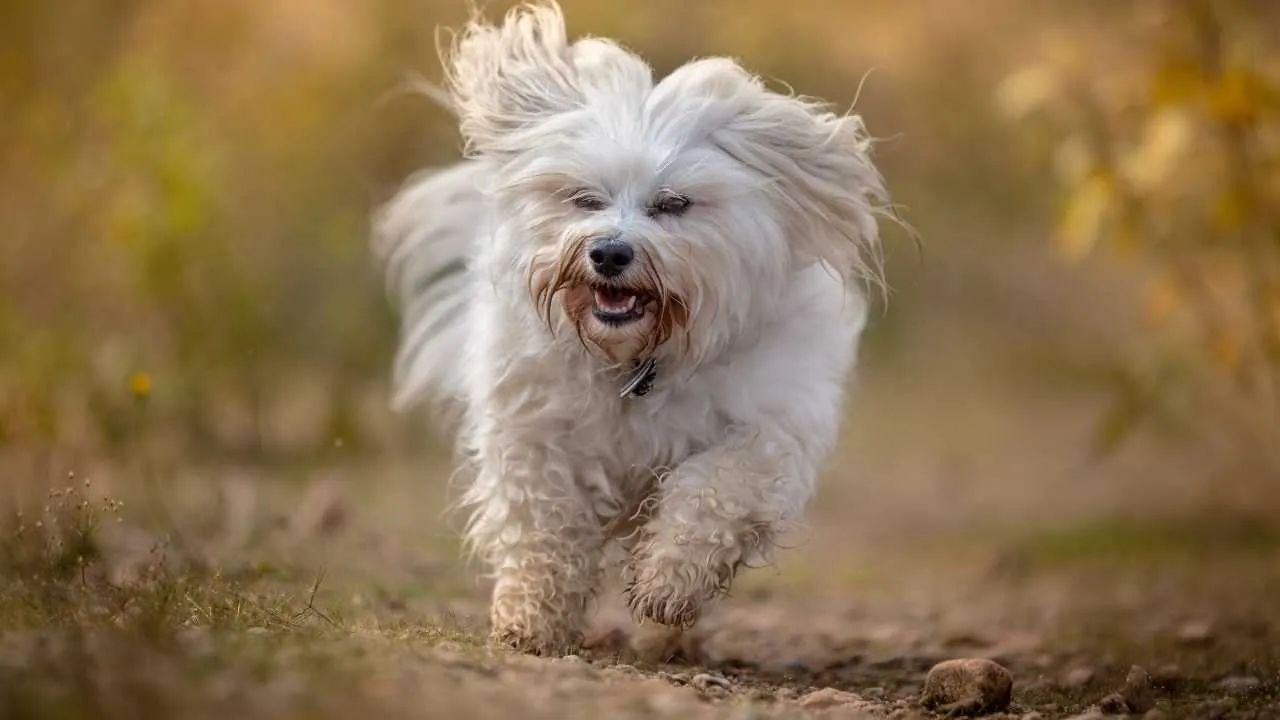
This ancient breed was originally bred in Spain and arrived in Cuba in the 16th century with farmers and noblemen. The small dog breed belongs to the Bichon family. The 11 dogs that came with the Cuban people to America led to the foundation of the modern-day Havanese.
The thick double coat is soft and light to the touch. It has a silky texture with a thin or completely absent undercoat. The coat comes in 4 varieties: the silky coat, the curly coat, the corded coat, and the short coat. The coat colors include: champagne, white, cream, blue, silver, red, and black.
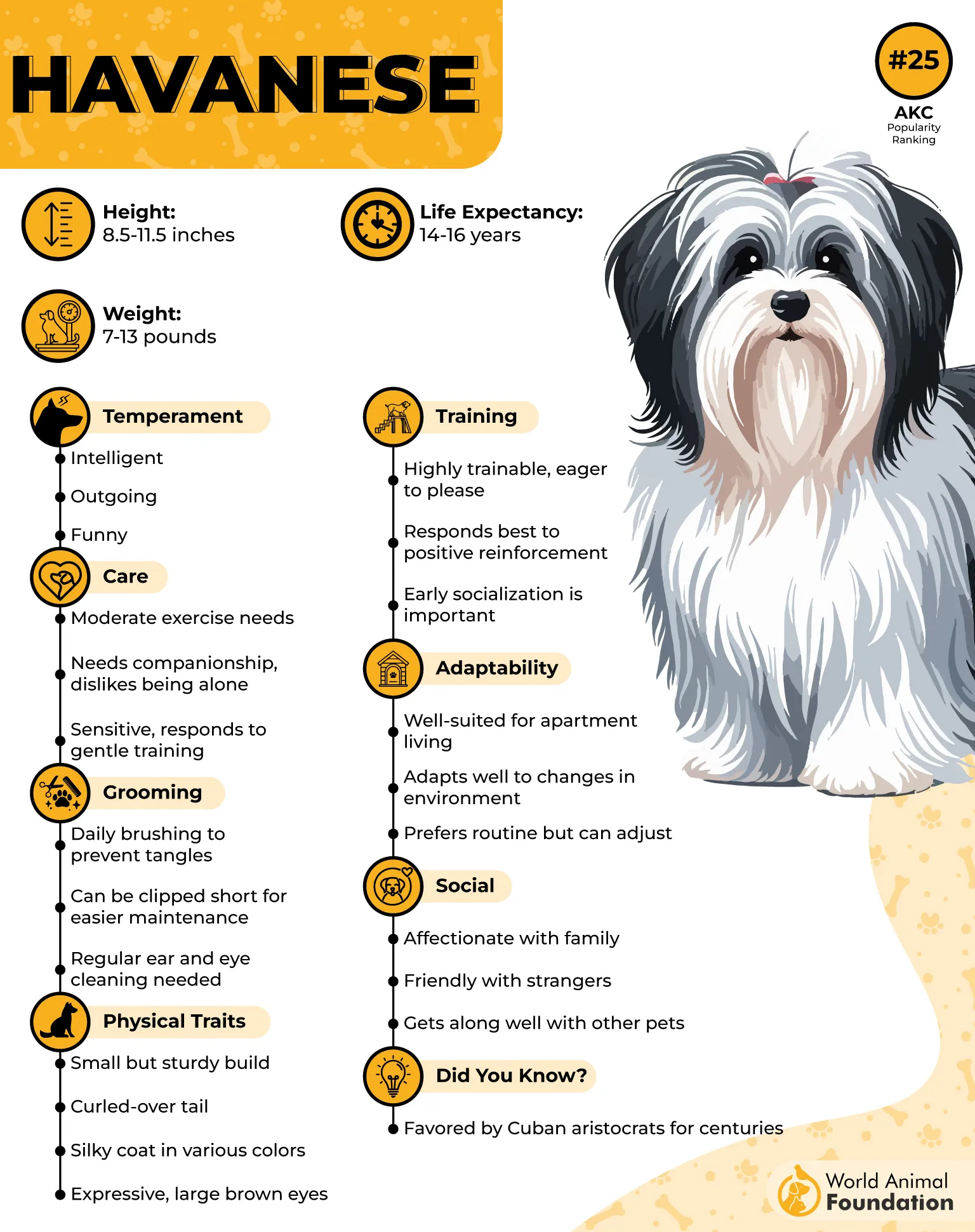
Line brushing is recommended on a weekly basis (2-3 times). Pay close attention to the friction-prone areas, such as the belly, chest, armpits, and under the ears. The most beautiful dog breed needs bathing every 2-3 weeks once the mats and tangles are removed.
3. Lhasa Apso
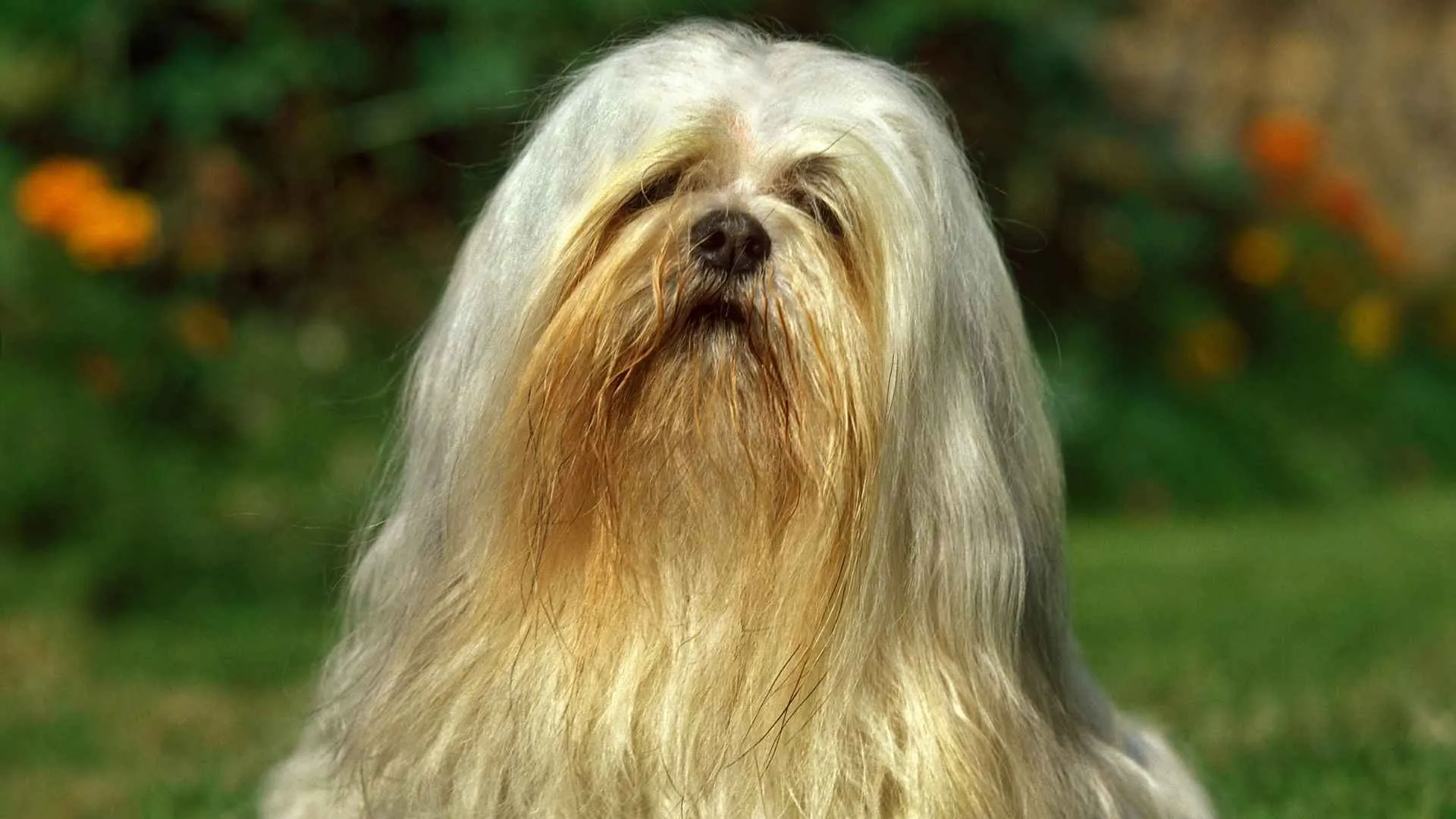
The Lhasa Apso was developed in Tibet by crossing the small Tibetan Terrier and similar herding-type dogs. It was established as a definitive breed in the 7th century and was referred to as the Lion Dog.
The straight and double coat protects the breed from extreme cold weather. The coat length reaches the floor if left untrimmed for weeks and months. The coat experiences 3 stages: the puppy coat (single-layered, short, and fluffy coat), the ‘blowing coat’ transition (between 9-14 months, rapid hair shedding, and intense matting), and the adult coat (weather-resistant, hard-textured coat)
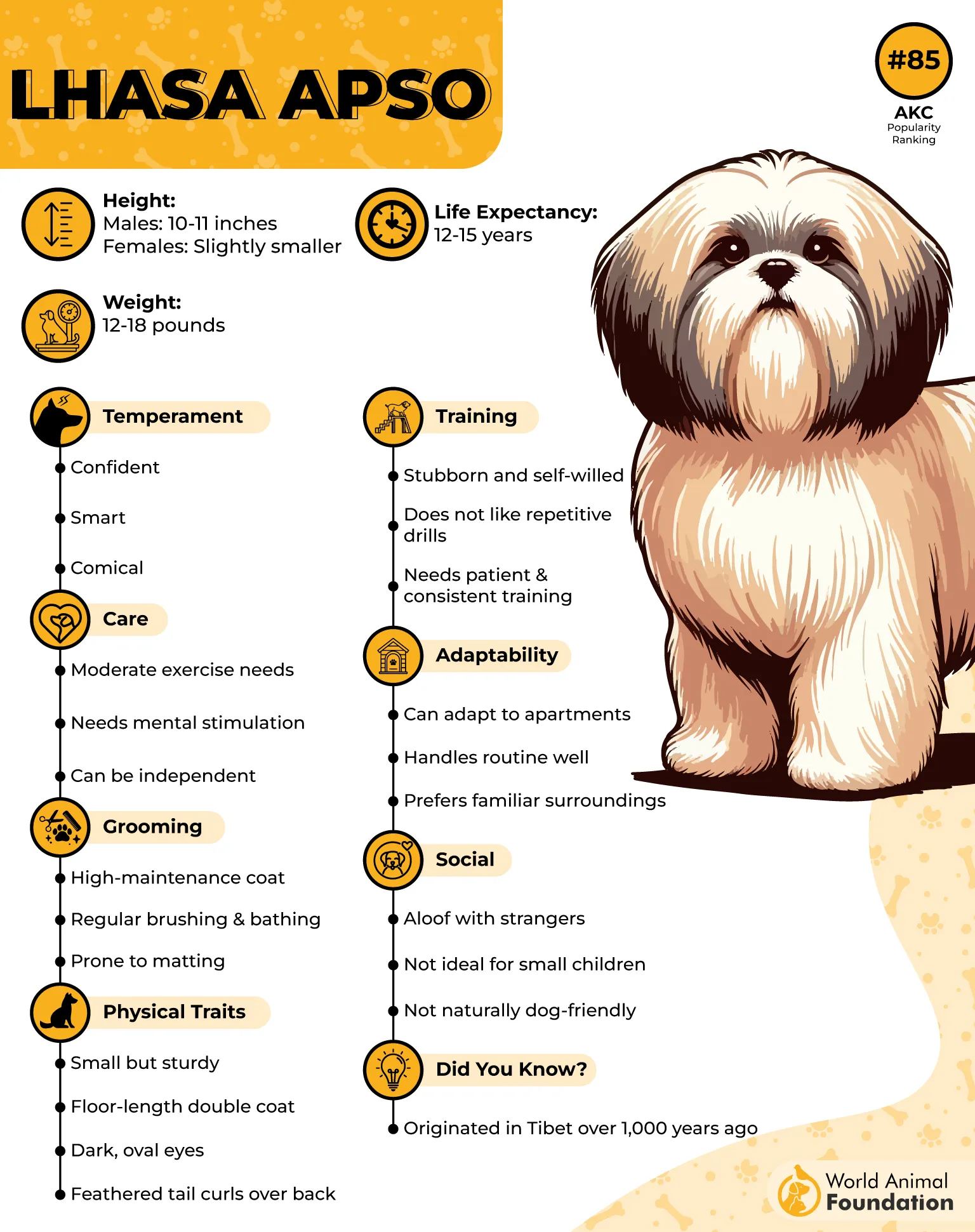
Bathe the breed every 2-4 weeks and go for line brushing beforehand to make it tangle-free. Air drying must be avoided as trapped moisture can cause skin infections. Focus on the friction-prone areas.
4. Yorkshire Terrier
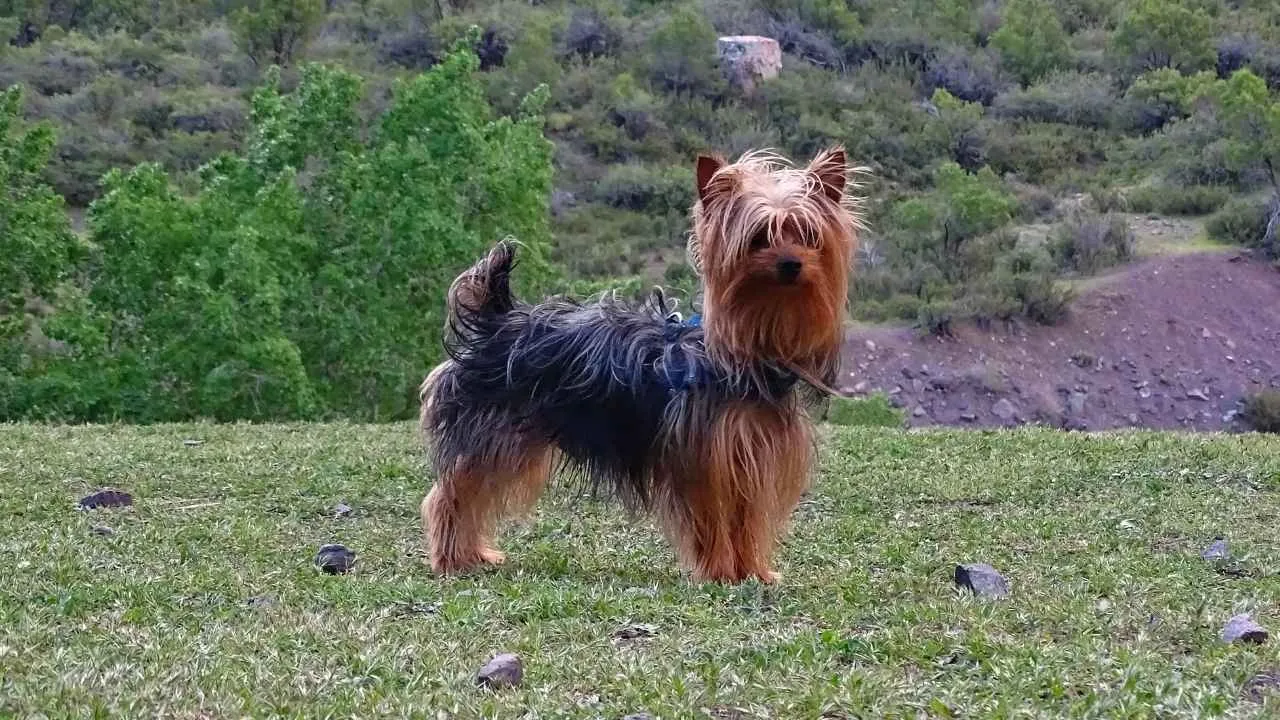
Developed in Britain, the toy dog is one of the smallest terriers and was bred with the intention of catching rats and rodents in the cotton and woollen mills. Today, it is widely kept as a companion breed, according to Wikipedia.
The tiny companion has an athletic body and has 4 coat types: the silky coat (lies flat, glossy texture), the cotton coat (plushy, hair grows outwards, mats and tangles heavily), the wavy coat (waves/curls, sheds much dander than a silky coat), and the wiry coat (short, harsh, deep black body hair, while the legs, face, and head remain red).
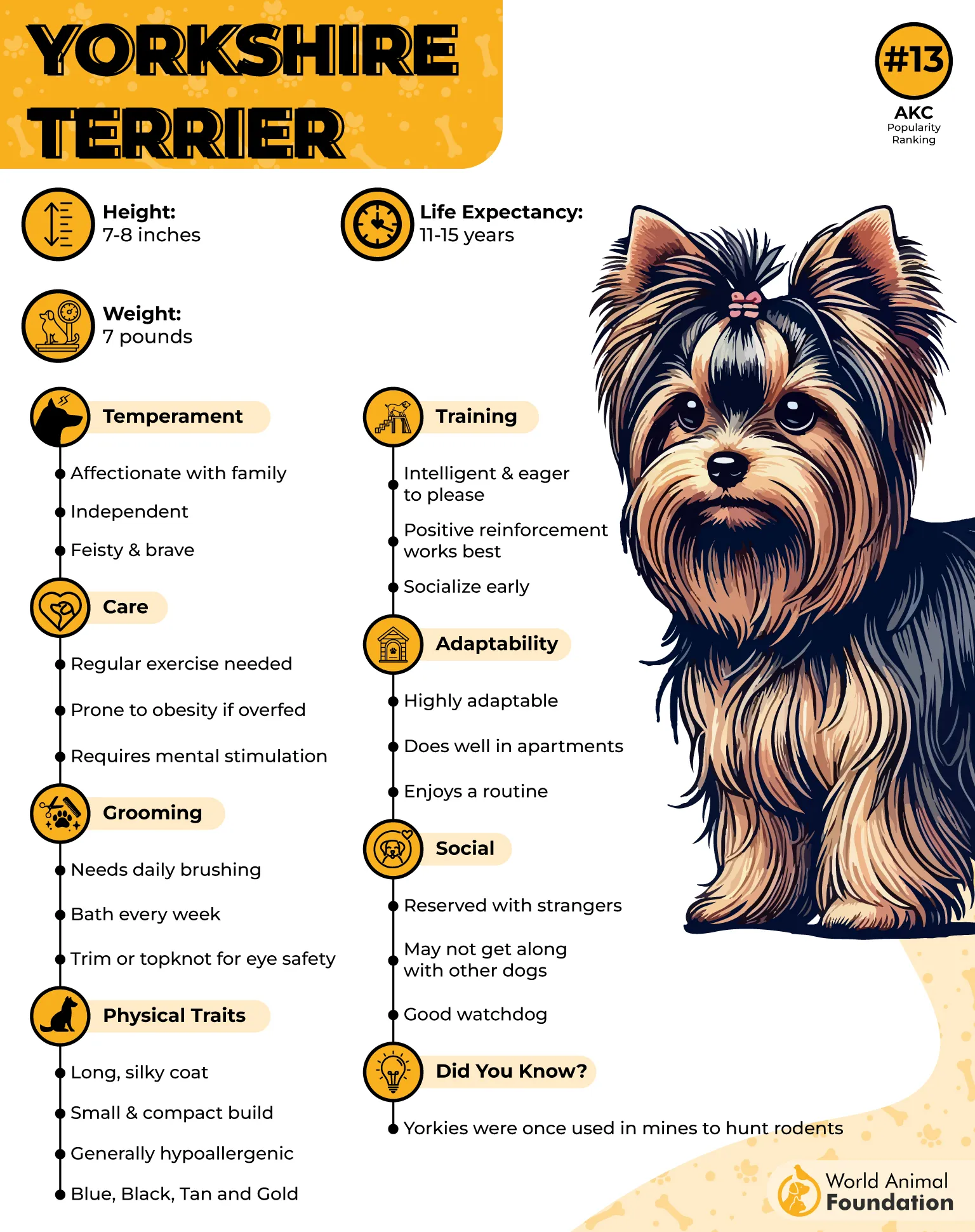
Each coat type has different grooming tips; however, daily brushing is ideal. After brushing, run a metal comb through the coat to check for mat formation near the skin line.
5. Maltese
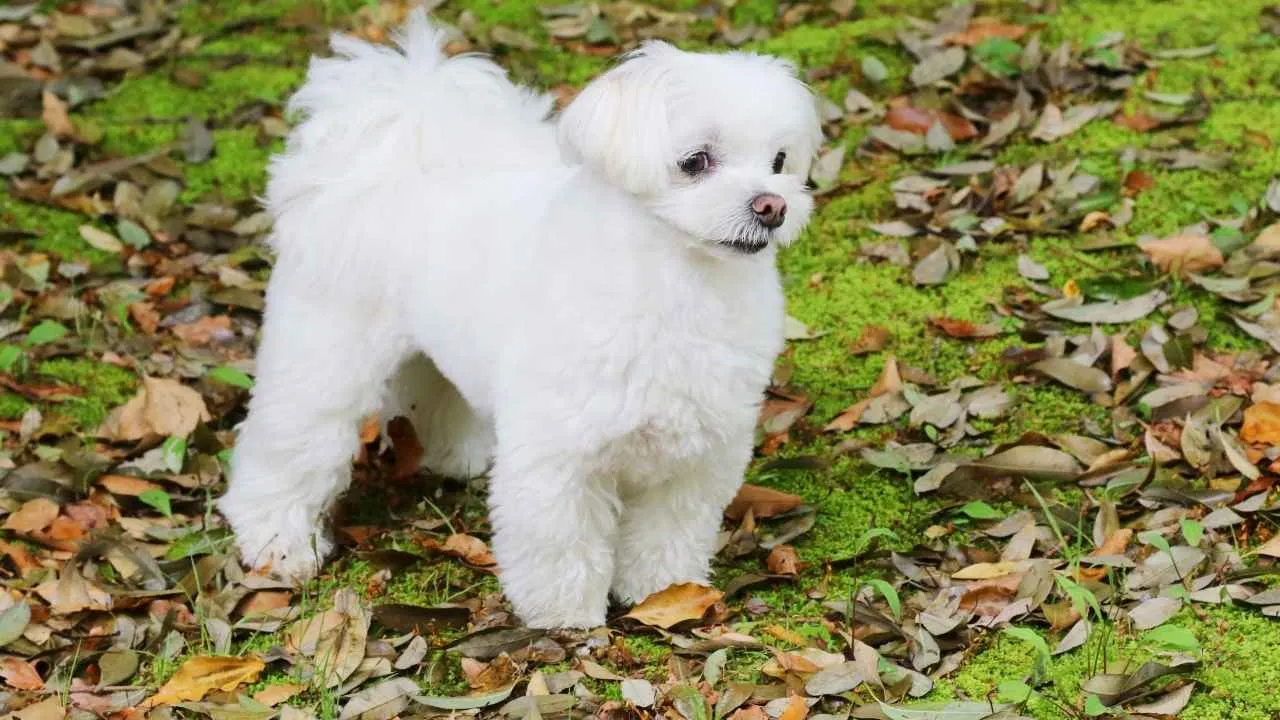
This white dog breed is believed to have descended from the Spaniel and Spitz type dogs, and its history dates back to 1,500 BCE in Malta. It was favored by many ancient civilizations, including the Greeks, Romans, and Egyptians.
This companion features a single, silky hair coat (pure white, flat, lemon tint, or light tanning is acceptable on ears), and there are non-standard textural anomalies too: the cottony coat (wavy/puffy) and the designer coat (coarser hair). It has a hypoallergenic coat, making it easier for allergy sufferers.
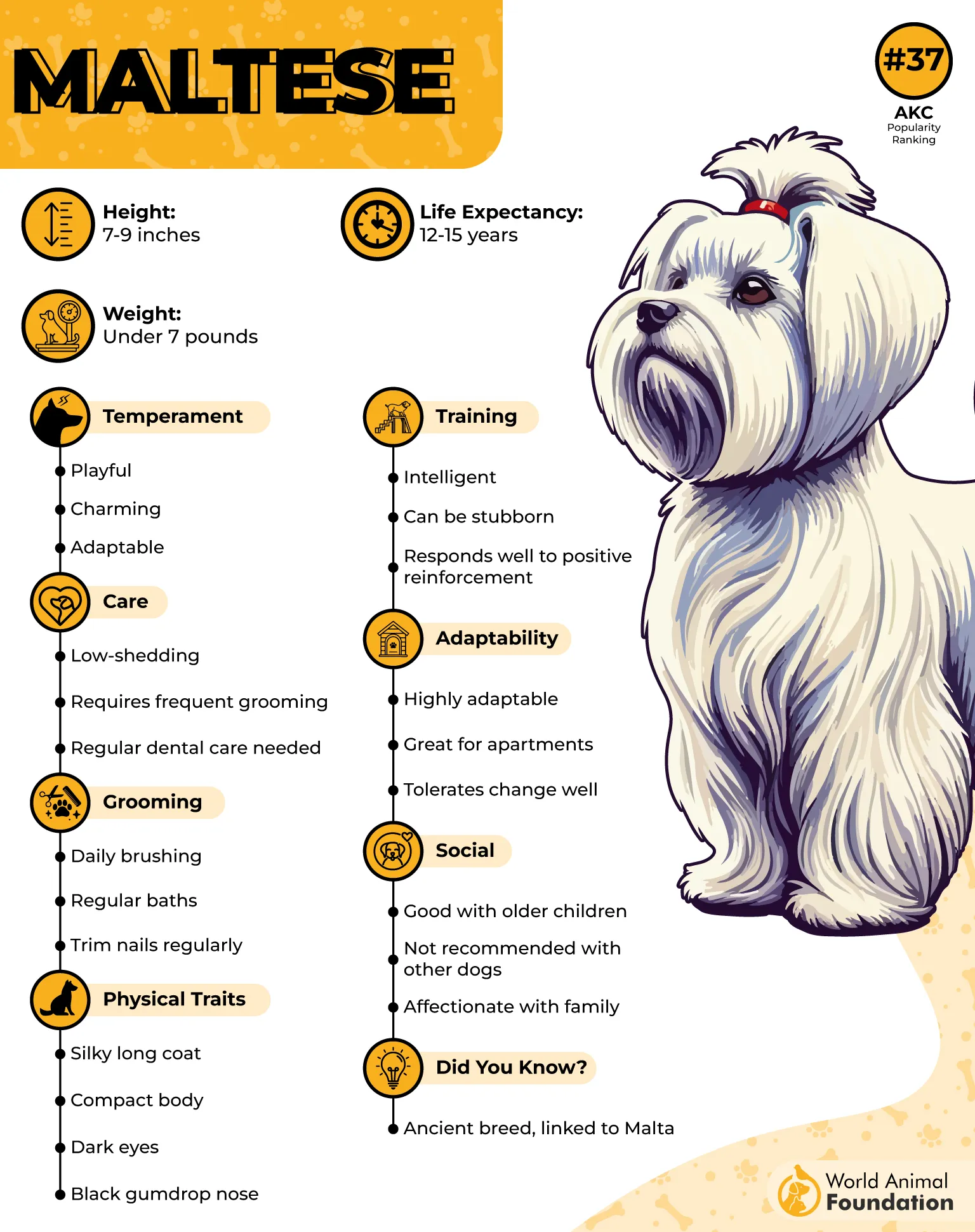
This breed needs daily brushing and requires close attention to the hot zones, including the armpits, the groin, and behind the ears. You can go for a show cut, the puppy cut, and the summer clip (under 1 inch).
6. Silky Terrier
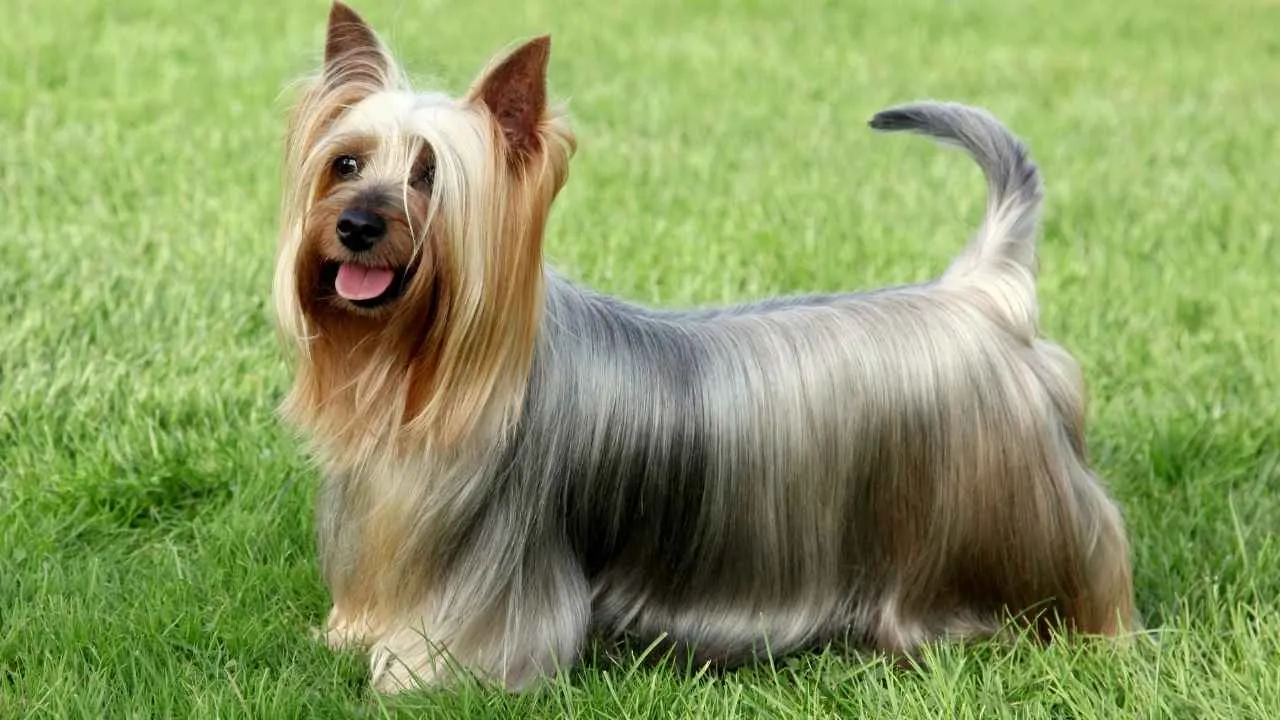
The small dog is descended from the small vermin-catching terriers from Europe and Australia. It was originally bred in Australia by crossing the Yorkshire Terrier and the Australian Terrier.
The single-layered coat has a silky texture and comes in blue (silver blue and pigeon blue) that runs continuously from the skull to the tip of the tail, and tan (deep, rich, and highly saturated hue) found around the base of the ears, muzzle, and side of the cheeks. The puppies are born almost black and tan.
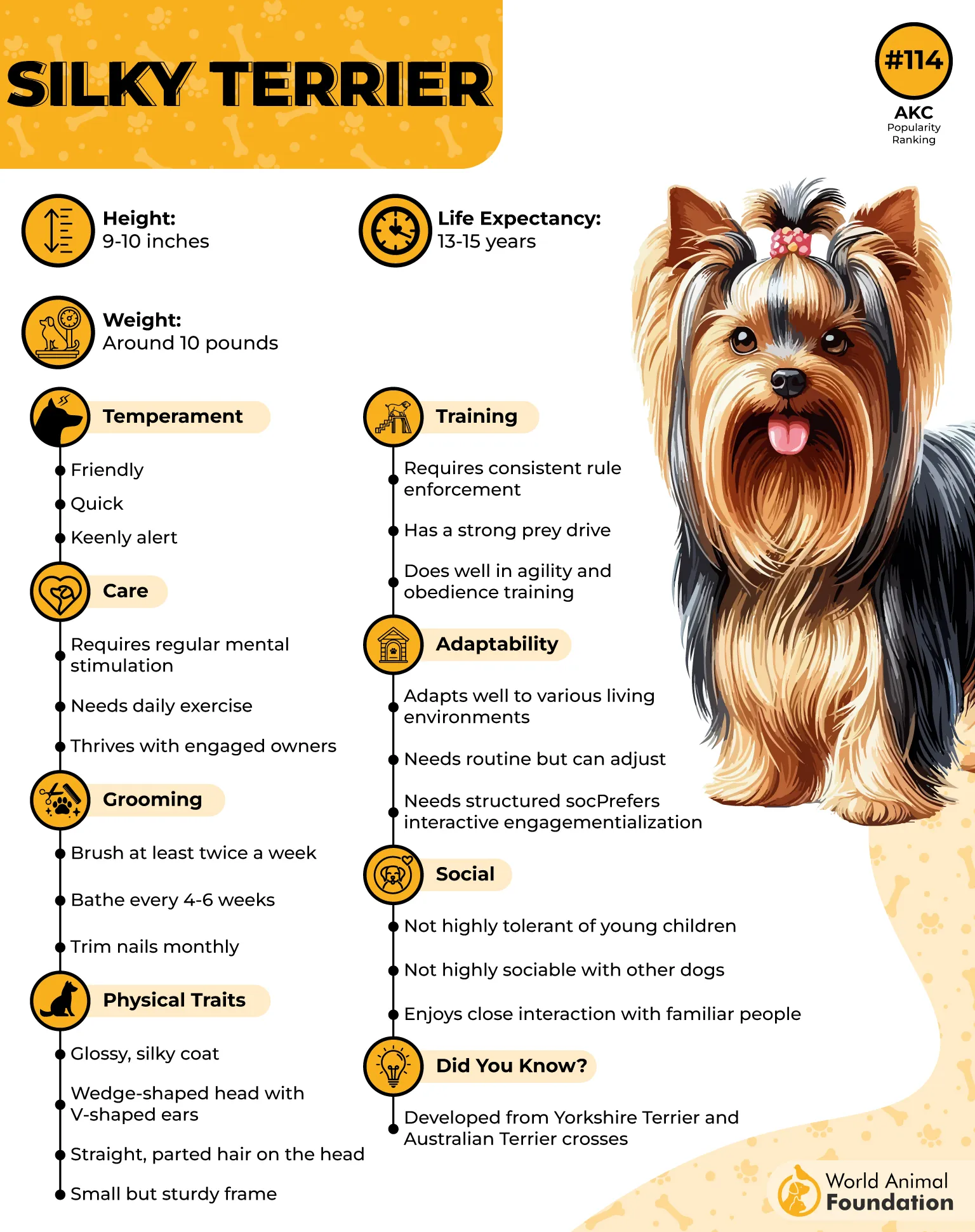
The coat needs weekly brushing (2-3 times) using a soft bristle brush and a long-toothed metal greyhound comb. Bathing after 4-6 weeks is recommended.
7. Pomeranian
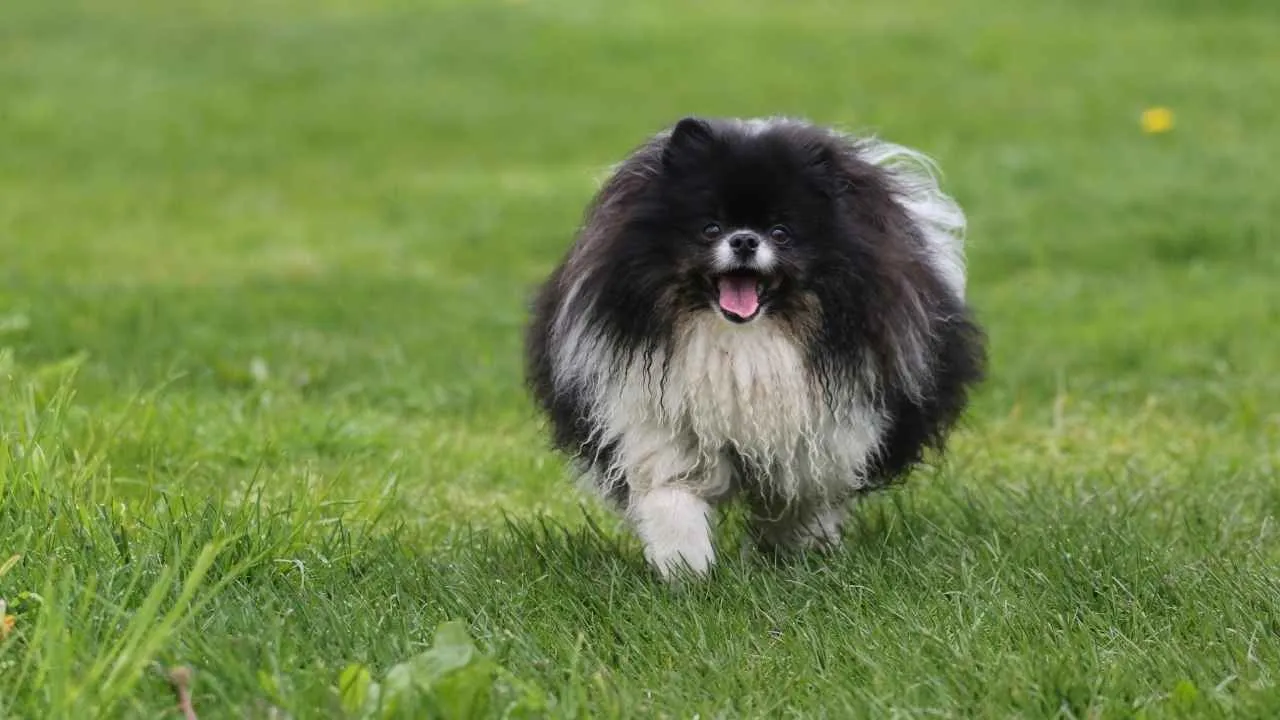
The Spitz-type dog was developed some 2.5 centuries ago in Northern Europe’s Pomerania region. The larger version was used to protect homes and herd cattle, as reported by the Showsight Magazine.
The anatomy of the standard coat comprises the thick ruff around the neck (framing the neck and extending over the shoulders), the skirt (heavy feathery fringe of hair around thighs and hind legs), and the plume (the tail covered profusely with long hair). The cotton and flat coats are considered a major fault.
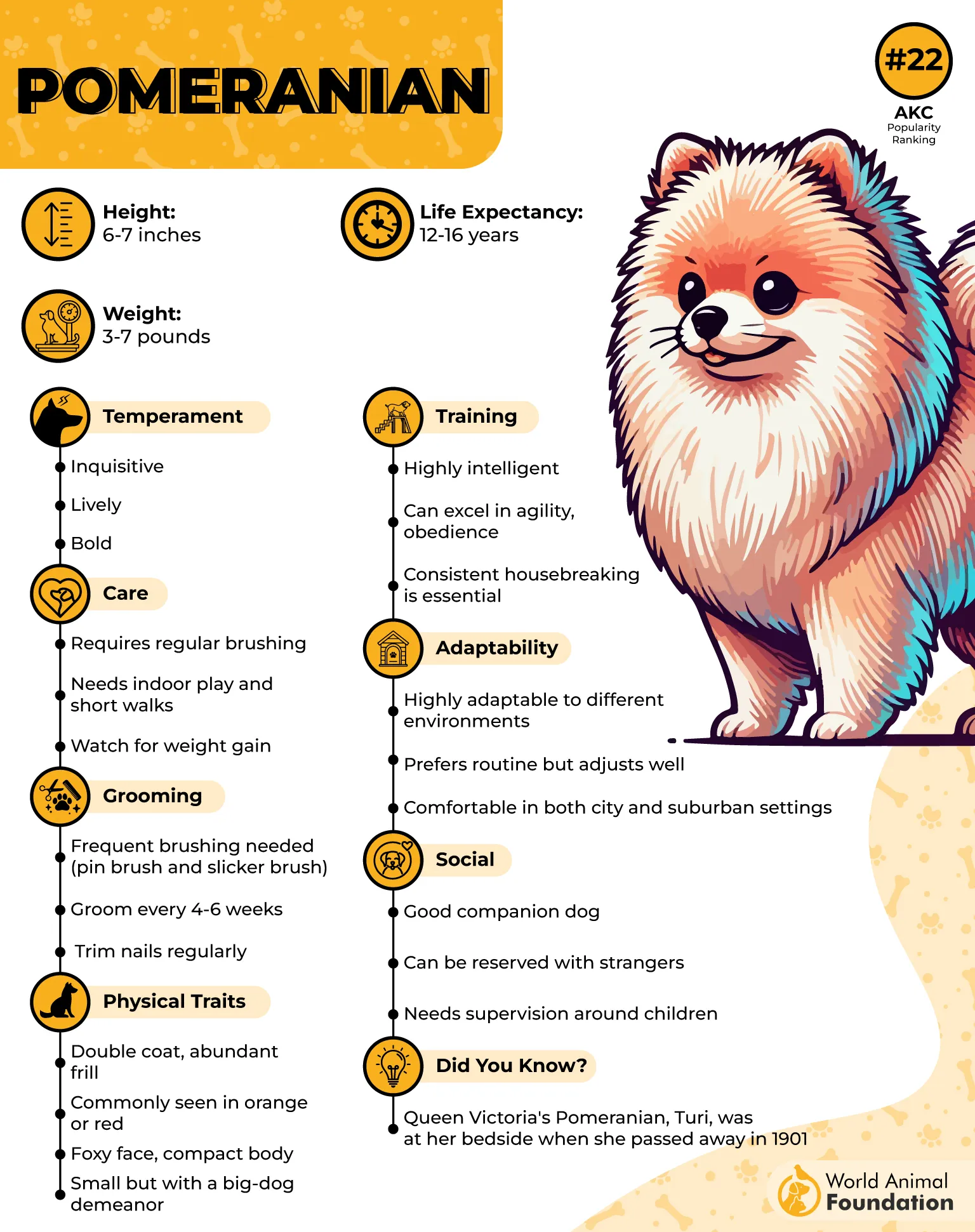
This breed has regular grooming needs (3-4 times a week) using a slicker brush and a metal greyhound comb. Shaving or clipping the coat entirely is strictly forbidden.
8. Shih Tzu
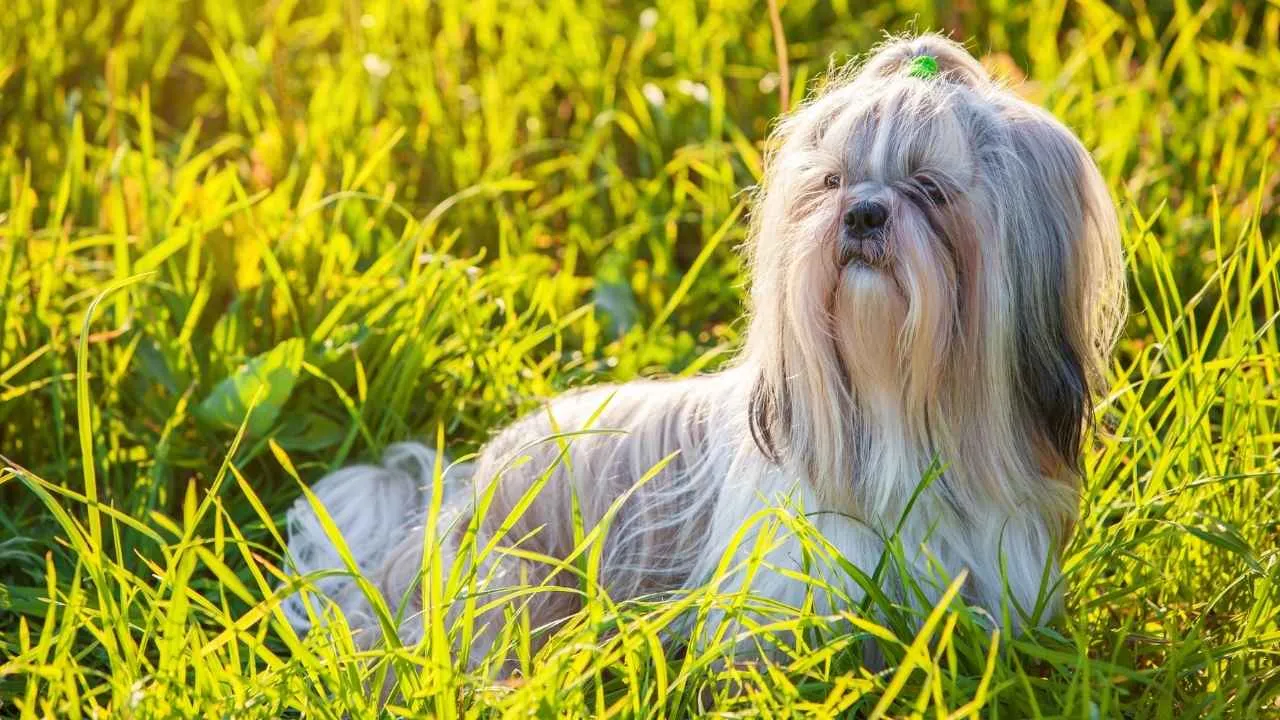
This interior watchdog was developed in Tibet in the 17th century by crossing the Lhasa Apso and the Pekingese. Also known as the Lhasa Lion Dog, the breed was introduced to the West in the 20th century.
The distinctive feature of the prettiest dog breed is the Chrysanthemum face: hair grows upward from the muzzle and fans out across the face like flower petals. The coat comes in a variety of colors, including solid black, red, gold, and silver. Coat patterns include sable, brindle, and parti colors.
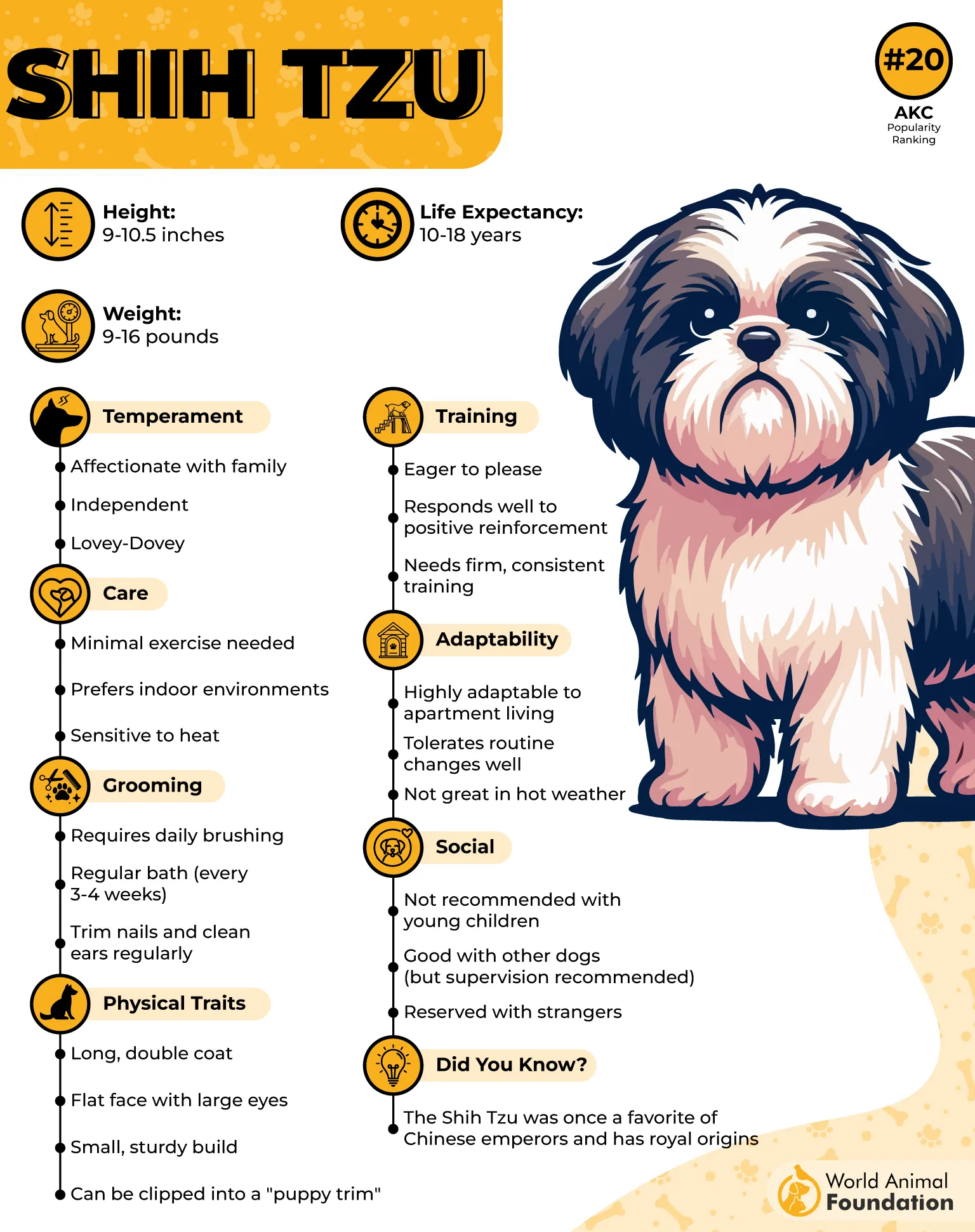
It features a blaze, which is a strip of white running between the eyes over the head, also known as the ‘star of Buddha.’ The coat varies from straight to wavy.
9. Samoyed
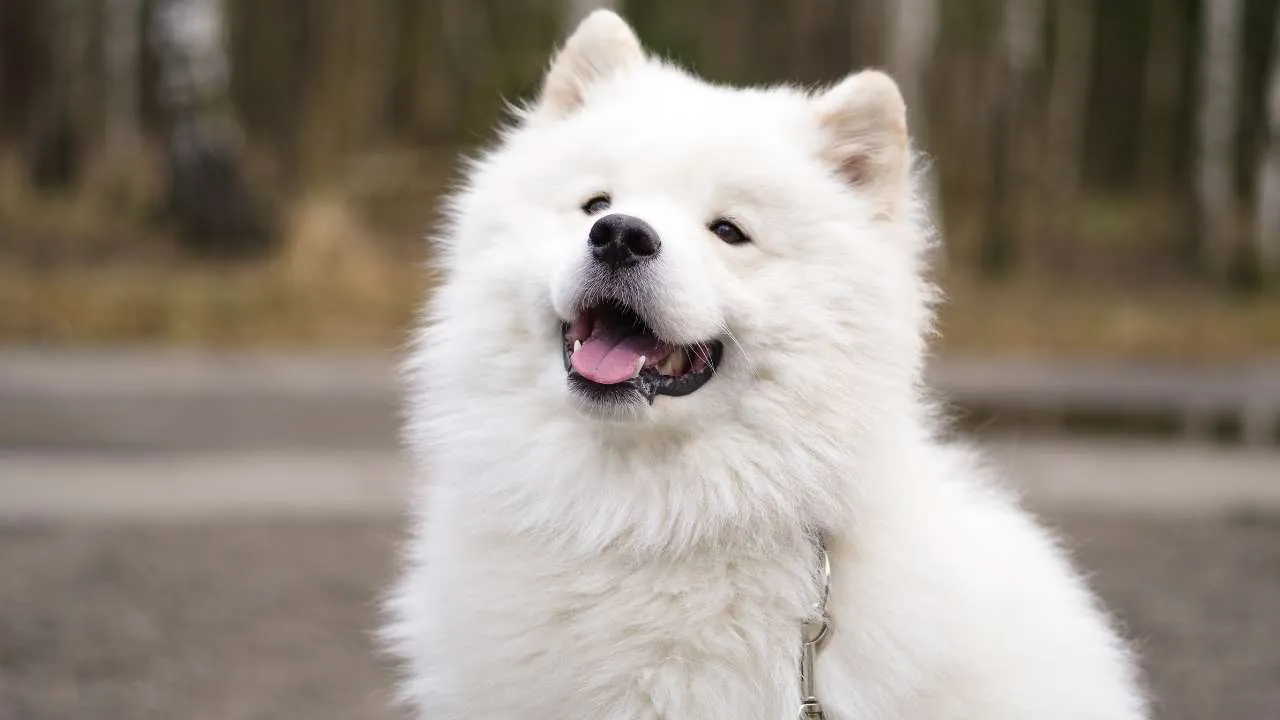
The Spitz-type breed was developed by the Samoyedic tribe as a herding dog. Today, the breed is widely kept as a protection, hunting, herding, and sled-pulling dog.
The characteristic feature of the large dog breed is the luminescent silver sheen coat. While both male and female coats have a thick double coat, the male Samoyed has a dramatic ruff around its neck. The coat comes in pure white, biscuit, cream, and white-and-biscuit colors.
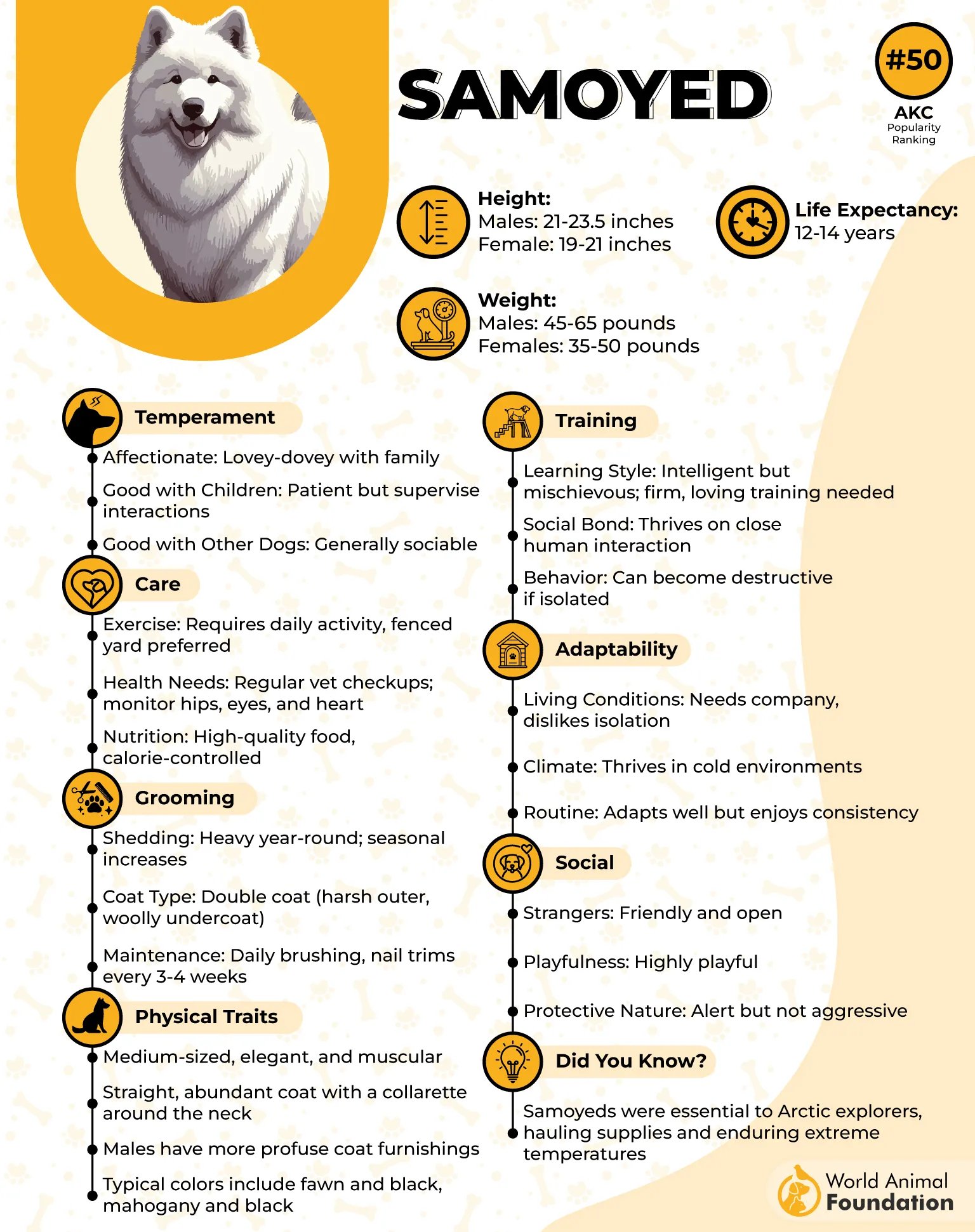
The smooth coat needs brushing 3- 4 times a week, each session for 30-45 minutes. The low odor coat needs a bath every 4-8 weeks. Use a high-velocity dryer and never let the coat air-dry.
Conclusion
Choosing a dog based on a beautiful coat is completely understandable; those fluffy faces and glossy locks are hard to resist. Still, the prettiest fur needs the right kind of care. Some breeds enjoy a quick weekly brush, while others turn grooming into a regular part of family life.
A dog’s coat may be what catches your eye, but its personality is what wins your heart. Whether you choose a dignified Afghan Hound, a playful Havanese, or a smiling Samoyed, the right match will bring warmth, laughter, and plenty of unforgettable moments into your home.
