




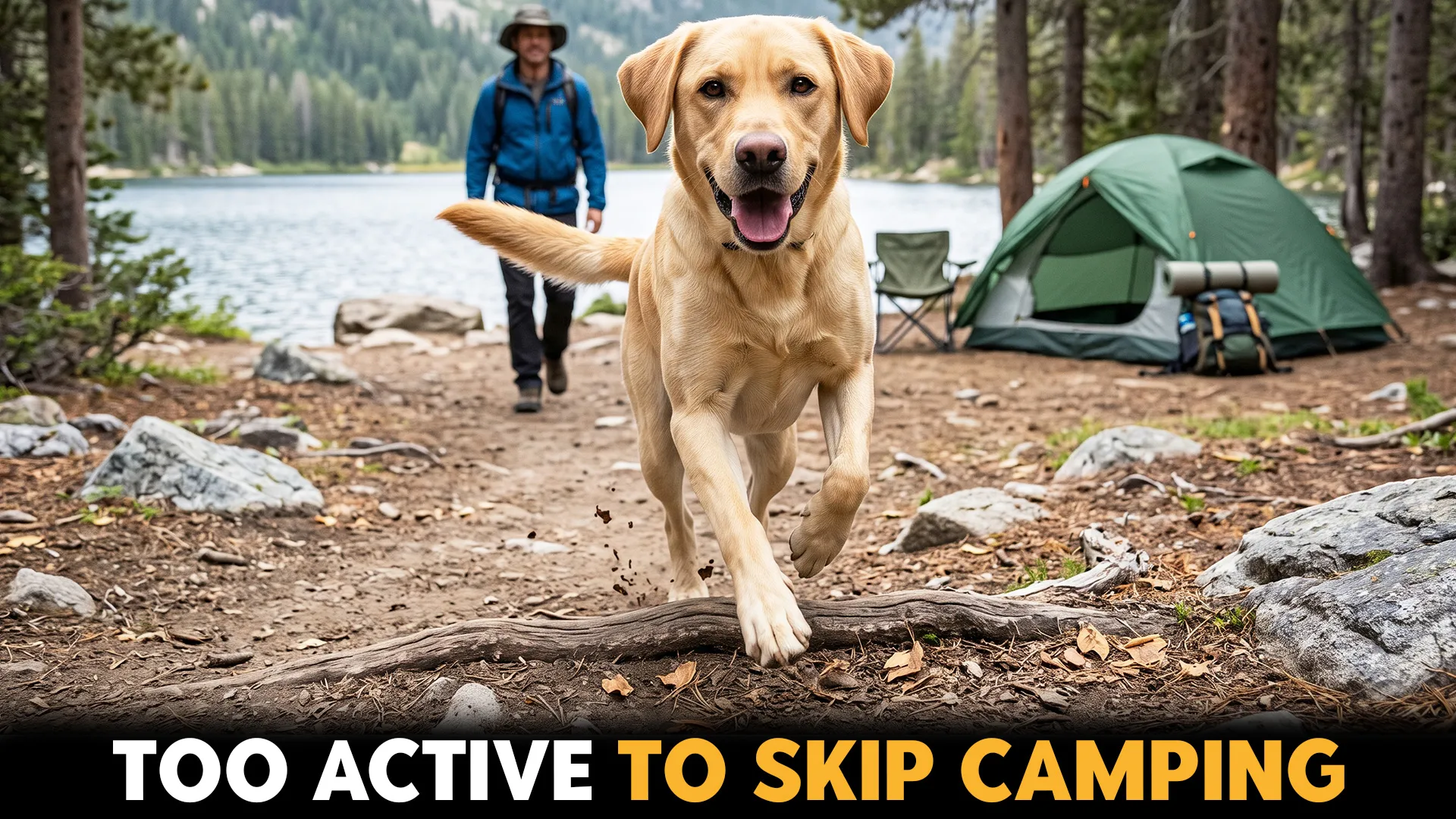
There’s a special kind of joy in waking up beside a tent, smelling pine in the air, and hearing your dog’s tail thump against the sleeping bag. If you love trails, lakes, campfires, and long weekends away, the right dog can turn an ordinary trip into a memory you’ll talk about for years.
But not every pup wants to be a trail buddy. Some dogs are happy with a short stroll and a sunny nap. Others seem born with an extra battery pack. These seven energetic breeds genuinely enjoy movement, exploration, and time with their people on outdoor adventures.
They can hike, swim, run, fetch, and keep up with a busy camping schedule, if you train them well and respect their limits.
Energetic Dog Breeds That Love Camping and Outdoor Trips
1. Australian Shepherd
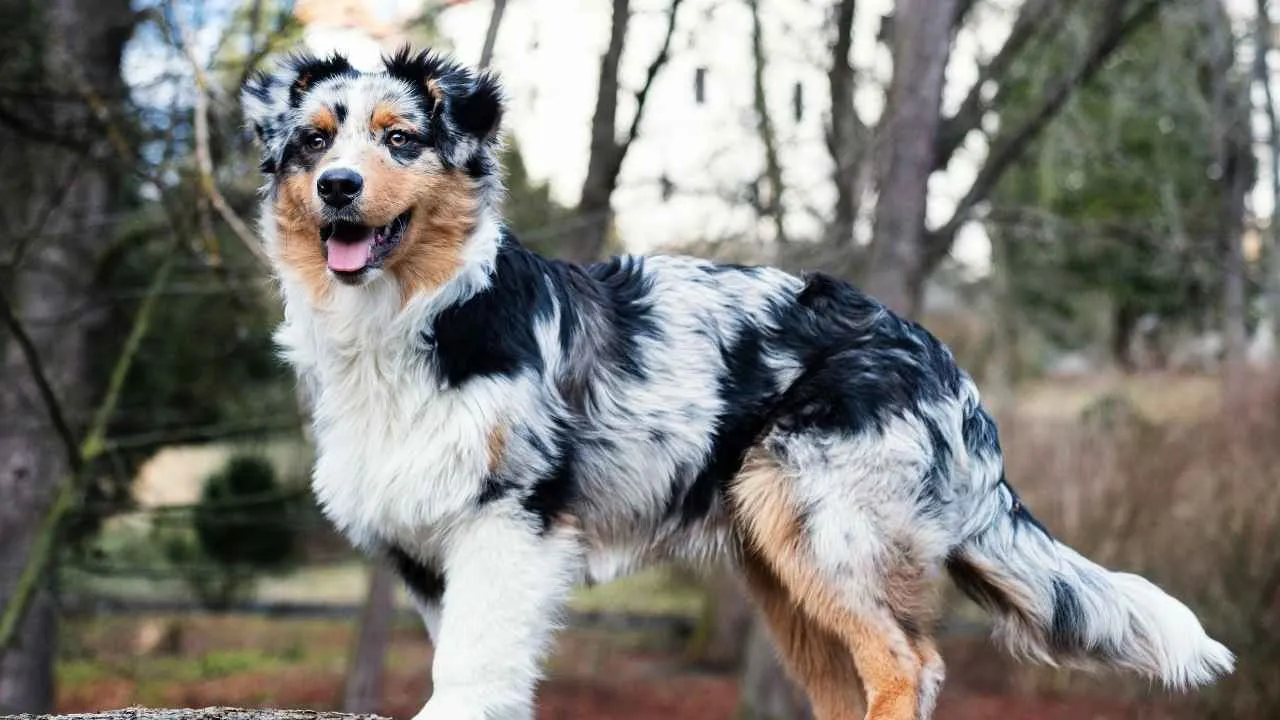
The large dog breed was originally bred in America; however, its ancestry dates back to the 19th and 20th centuries when the Australian ranchers brought their sheepdogs to America and interbred them with the local dogs. It was officially recognized by the AKC in 1991, according to Dogs Australia.
The breed has a weather-resistant double coat that repels water and dust, and provides thermoregulation. The natural bobtail significantly reduces burs, snagging, and tail injury risks. The dog has both fast-twitch and slow-twitch muscle fibres, required for 15+ mile multi-day backpacking trips.
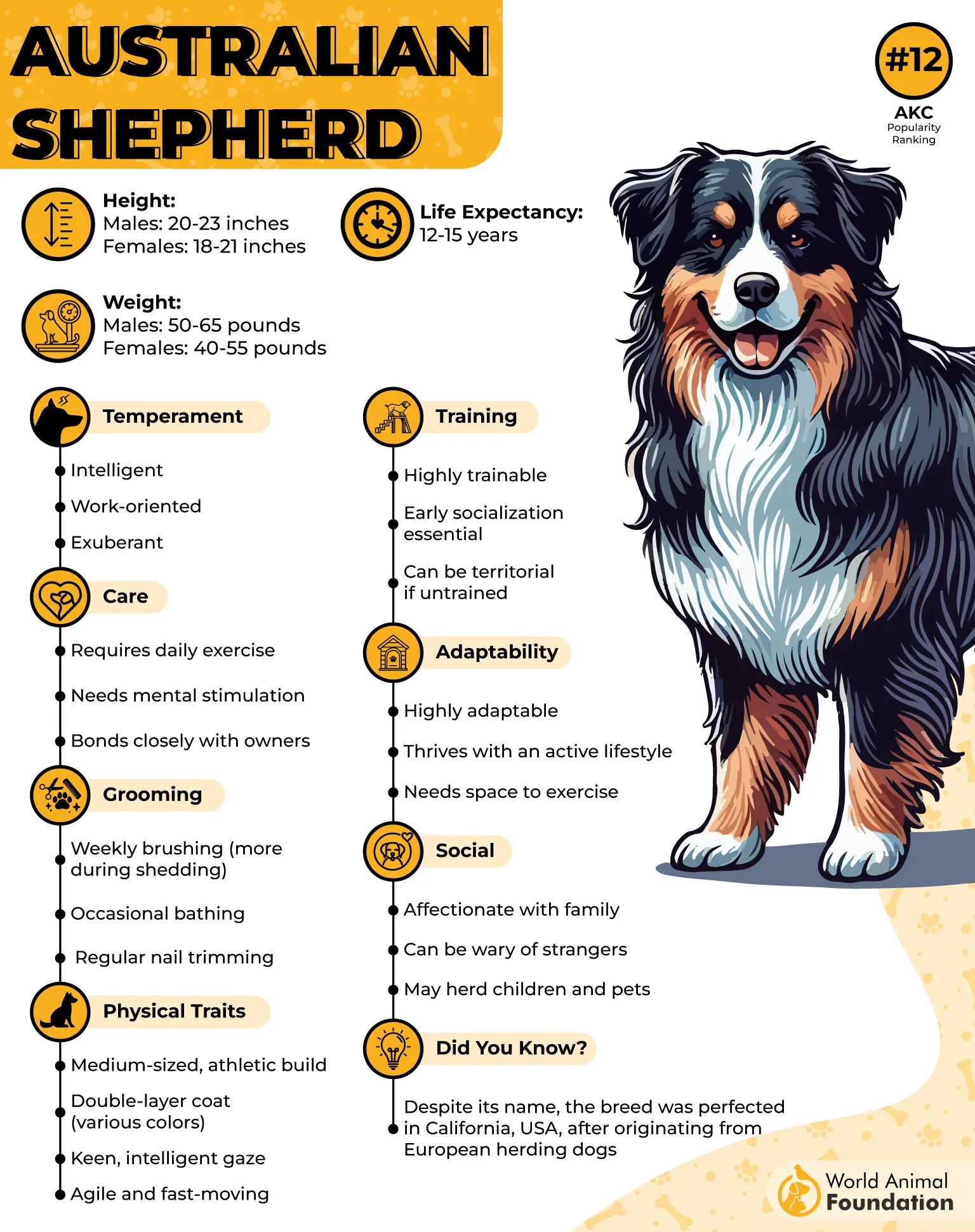
The outdoor dog is reserved around strangers and acts as a vigilant watchdog. The dog thrives in hiking, trail runs, disc games, water adventures, and dog sports.
2. Border Collie
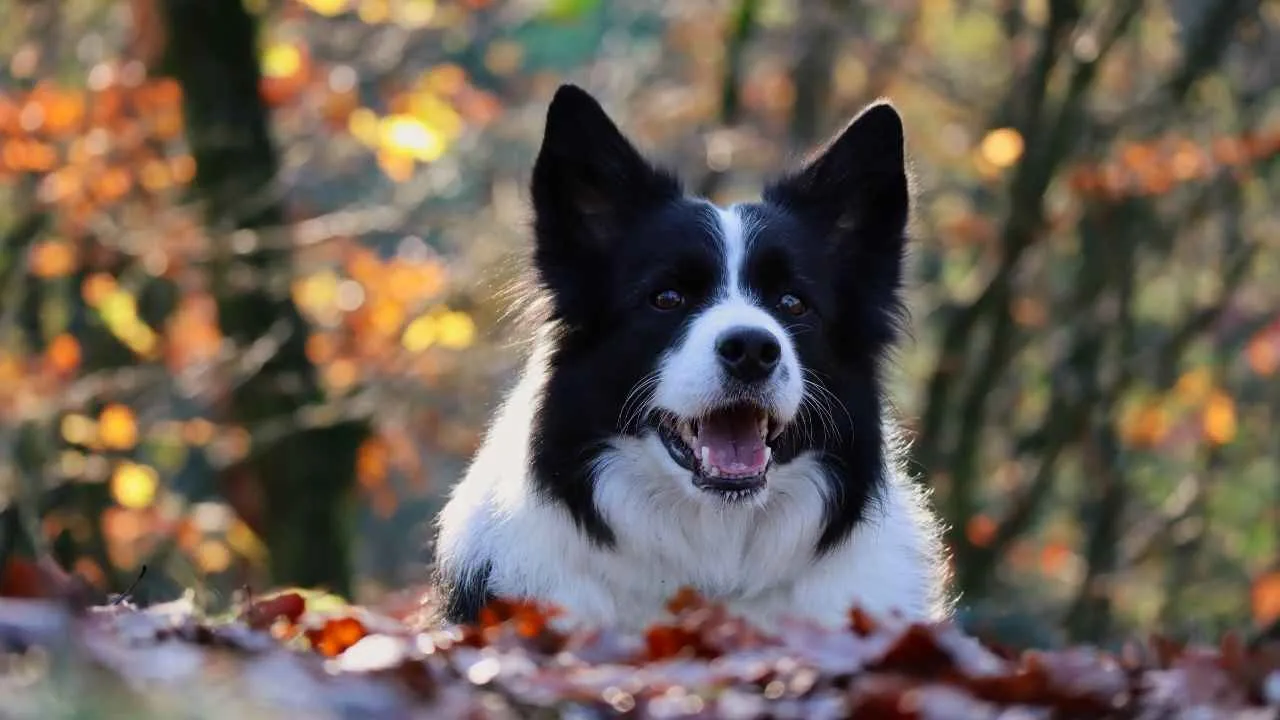
The smartest dog breed was developed in England and Scotland from sheepdogs as a herding breed. It was also favored by Queen Victoria in the mid-19th century. The breed was recognized by the American Kennel Club in 1995. The word ‘collie’ in the name refers to a ‘working dog’ in the canine world.
The energetic dog breeds that love camping and outdoor trips adopt a crouching posture for herding. This grants it incredible foot placement and easy navigation through rough terrain. The metabolic and muscular recovery windows are short, and a brief break fully recharges the breed. The strong sense of sight helps it monitor at least 100 sheep at once.
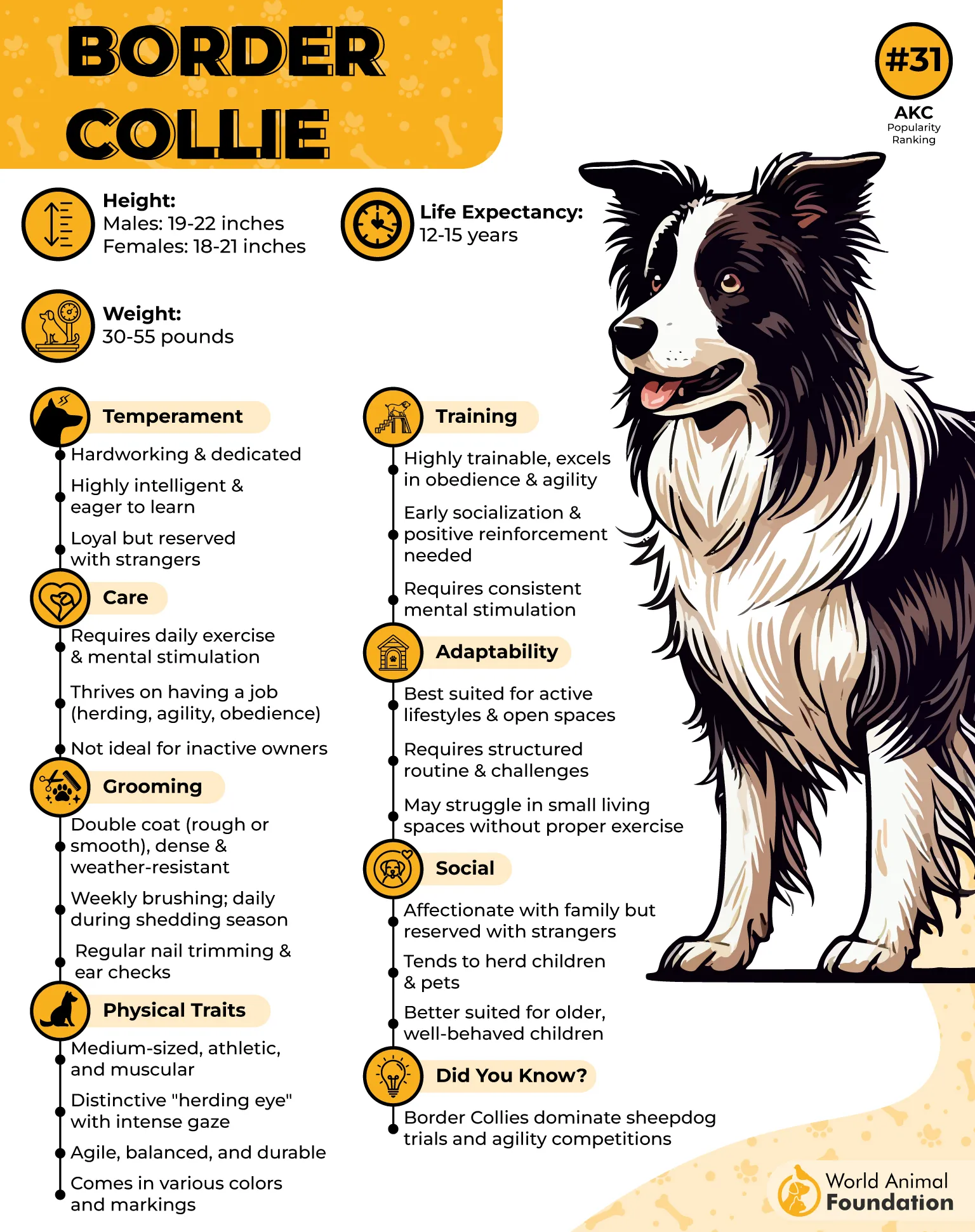
The herding breed needs a constant job and proper training to excel in public and avoid destructive behavior. It needs 1-2 hours of regular exercise and mental stimulation. The breed thrives in canine sports, swimming, canicross, bikejoring, scent work, and advanced trick training.
3. Labrador Retriever
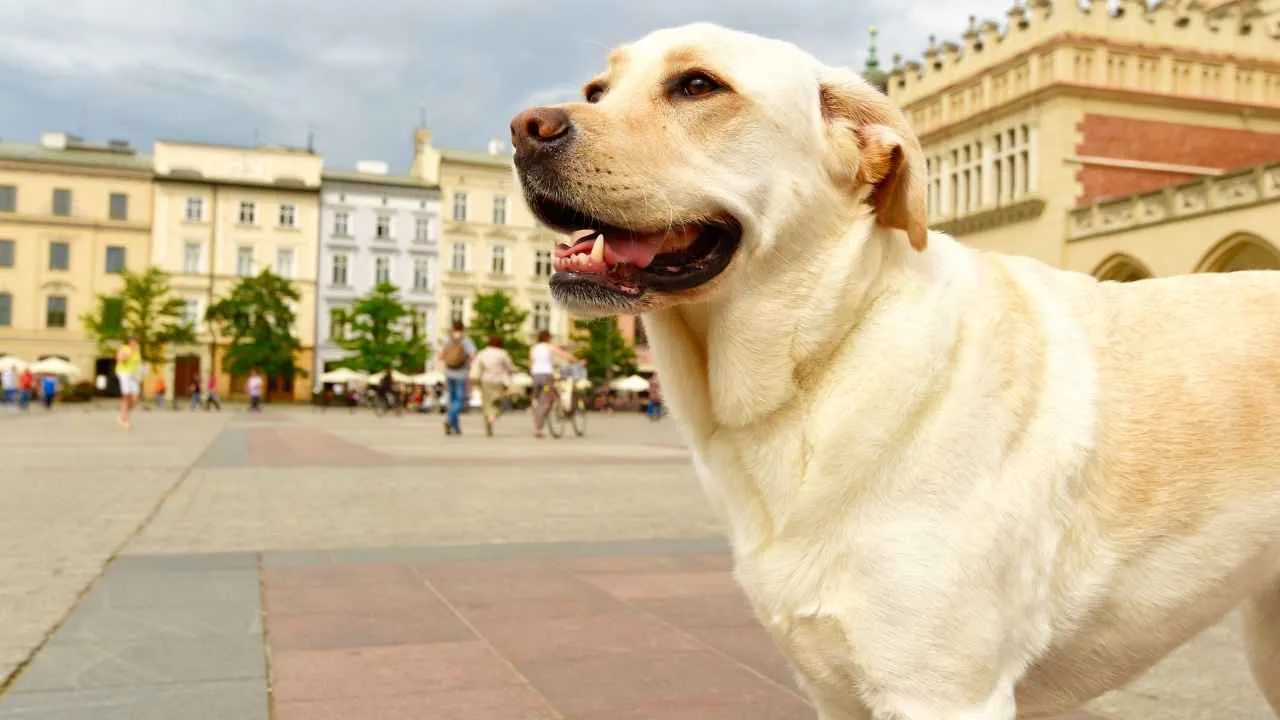
The multi-purpose water breed, the St John’s dog, was imported to England from Canada in the 9th century. From that breed, the Labrador Retriever was developed to haul nets and retrieve for the fishermen. Today, it is widely kept as a service dog, guide dog, and a family pet, says Hill’s Pet.
The delicate skin membrane between the toes (the webbed feet) enables it to travel effortlessly on camping trips and long hikes on rugged terrain. The otter tail stabilizes its body in active water currents. The keen sense of smell allows it to detect wildlife scent from afar and inform the owner beforehand.
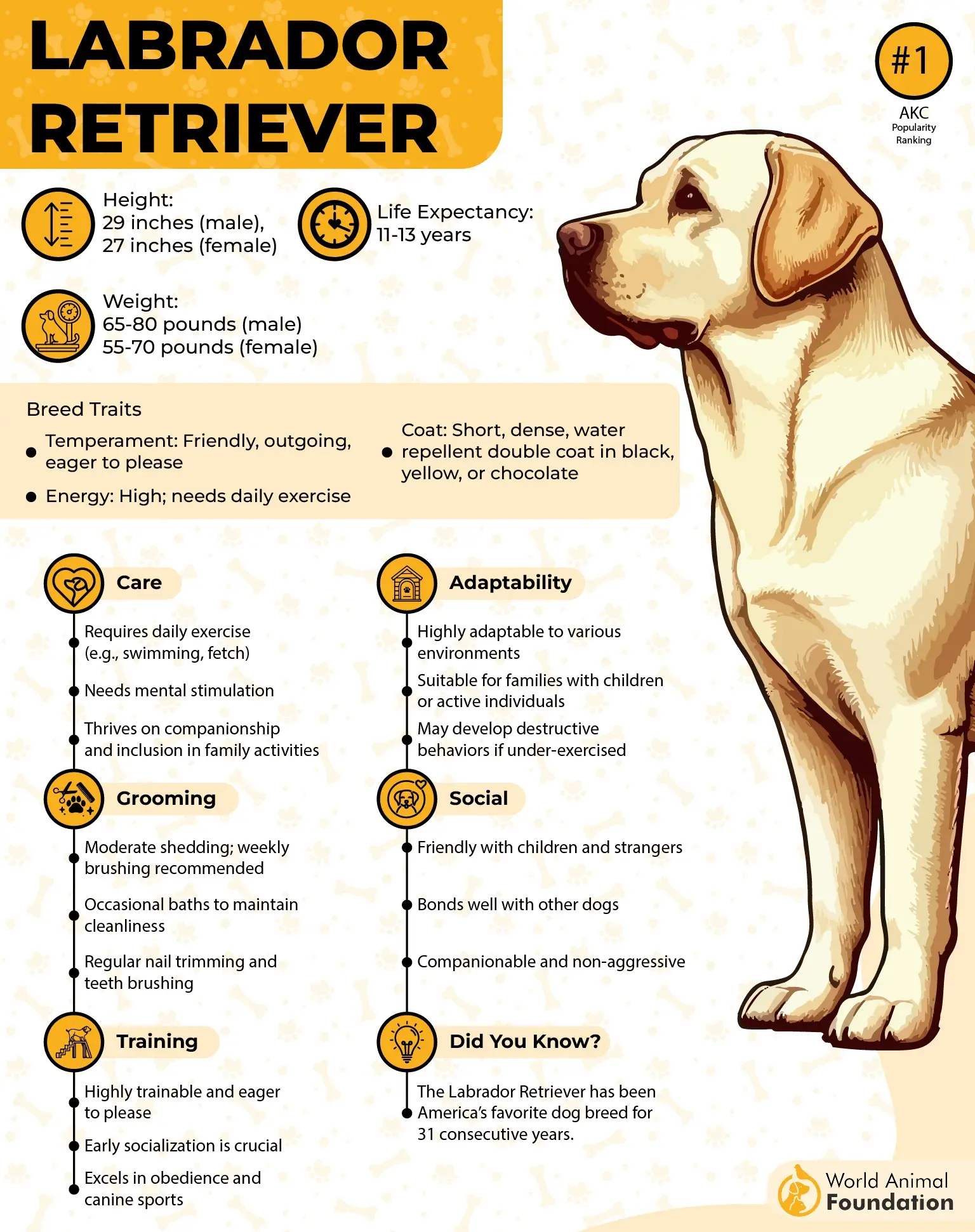
The eager-to-please temperament and soft mouth make the breed fetch objects in its mouth without physically damaging them. Since it has low territorial instincts, the big dog is well suited for shared hiking trails.
4. Siberian Husky
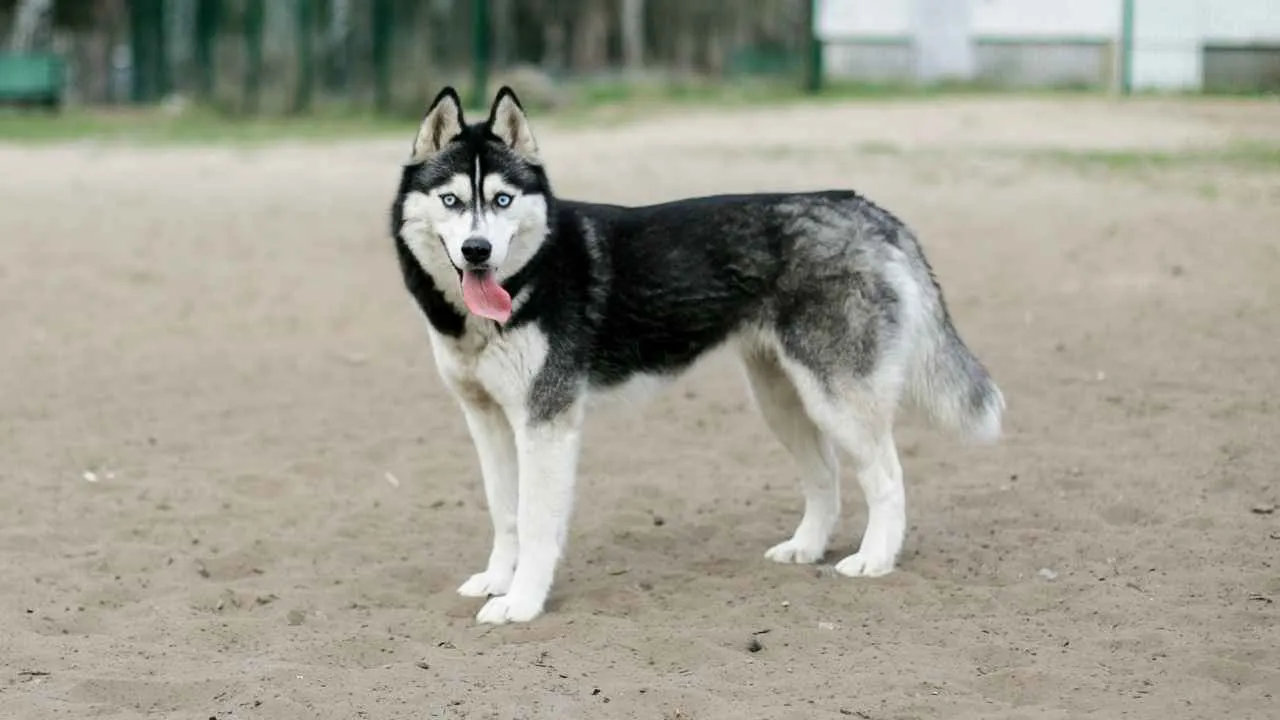
The ancient breed was developed by the Chukchi tribe of northeast Asia some 3,000 years ago. Descended from the Spitz-type dogs, the primary purpose of the breed was to pull sleds over long distances. It gained popularity when a team of Huskies traveled 340 miles to deliver medicine during the diphtheria outbreak.
The legs angle inward while trotting so the hind foot lands perfectly on the print left by the front foot (single-track gait). The high-energy dog tends to reserve energy with its advanced metabolic system and can run up to 100-120 miles a day. The concurrent heat exchange system in the paws enables active arterial blood flow, so it can work effectively on snow.
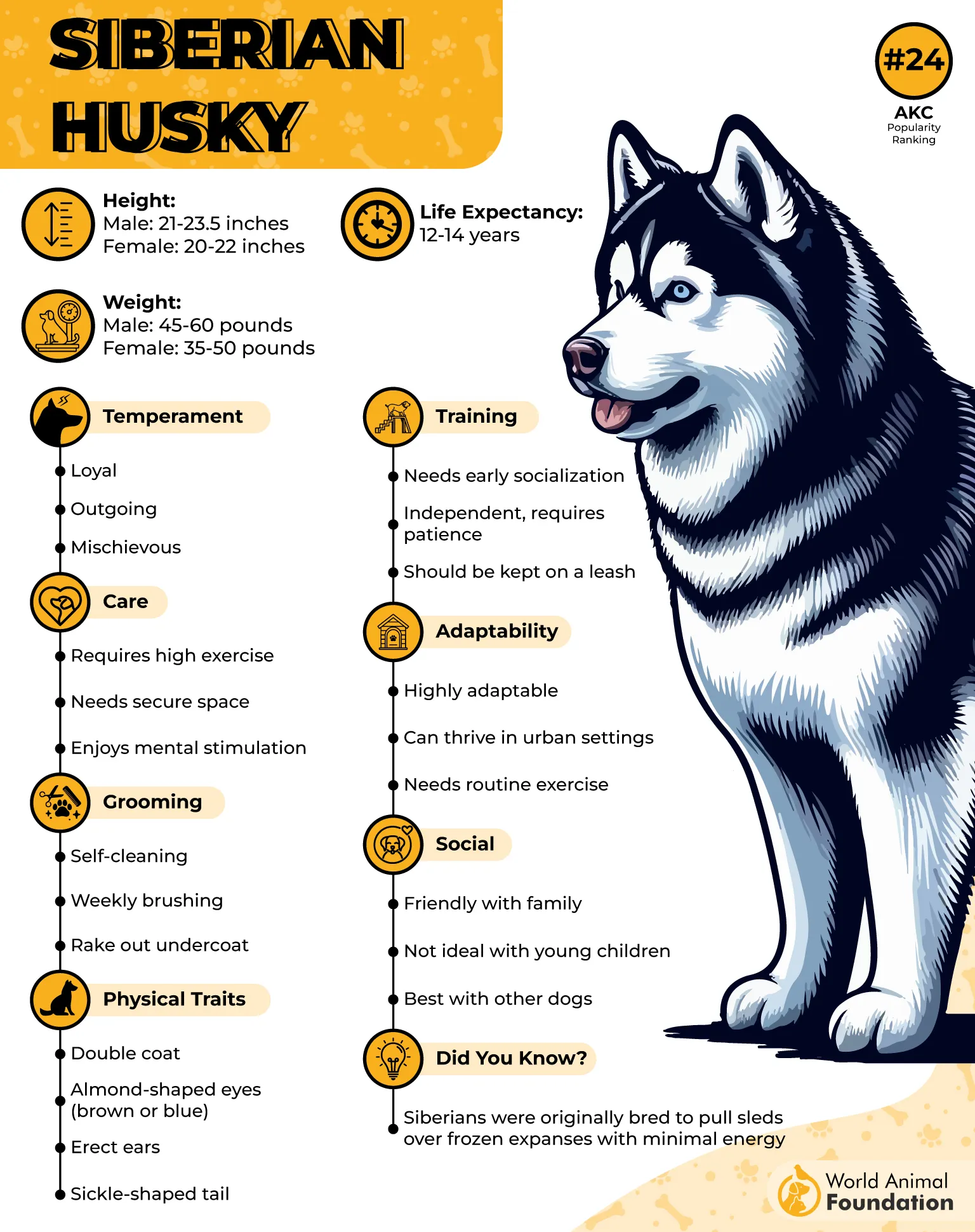
The excellent companion has a heavily furred, plume-like tail that covers the nose and face while sleeping outdoors. It has an independent nature and tends to make decisions without the handler’s instructions. The dog loves hiking, mushing, pulling sports, and bikejoring.
5. Australian Cattle Dog
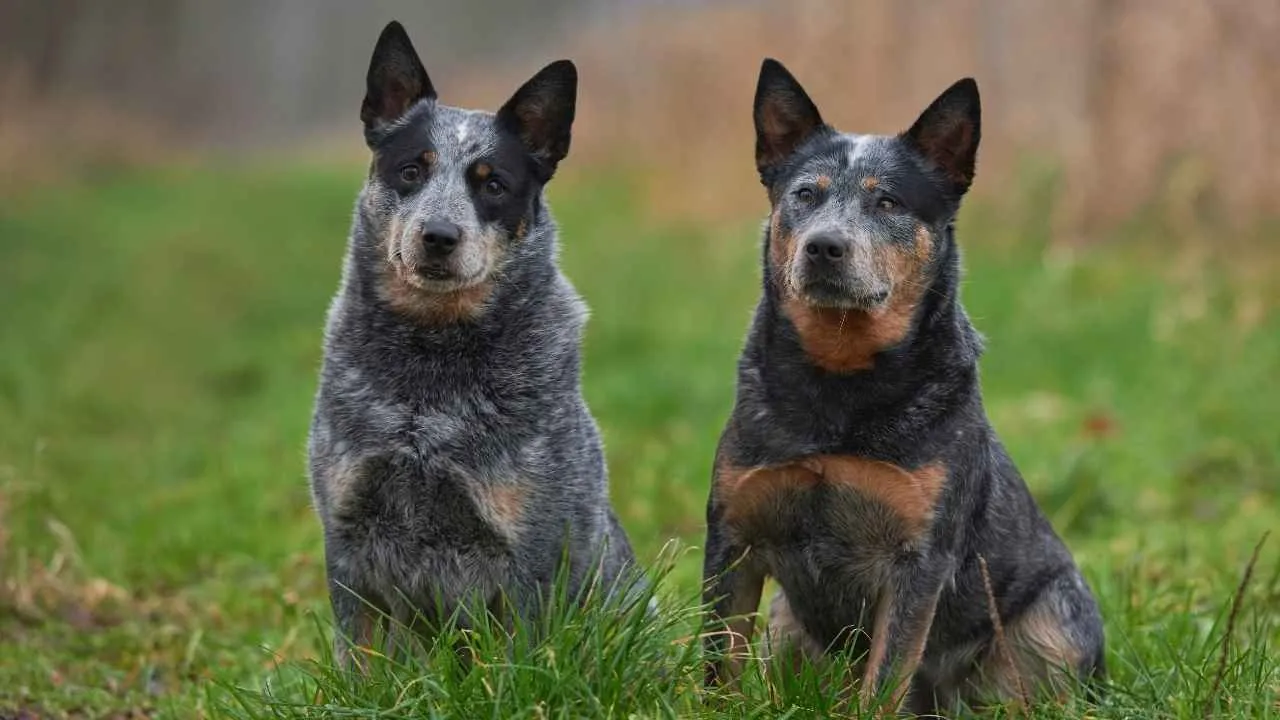
The great outdoor companion and a herding dog was developed in Australia to drive cattle over long distances. The intelligent dog responds well to positive reinforcement. It thrives on human interaction and is highly protective of its human family, as reported by Wikipedia.
Also known as the Blue/Red Heeler, the breed has a low-slung body coupled with hard-muscled forequarters and hindquarters, allowing explosive bursts on uneven hiking trails. Because of the genetic lineage with the Dingo, the dog regulates its body temperature and is adaptable to both hot and cold weather.
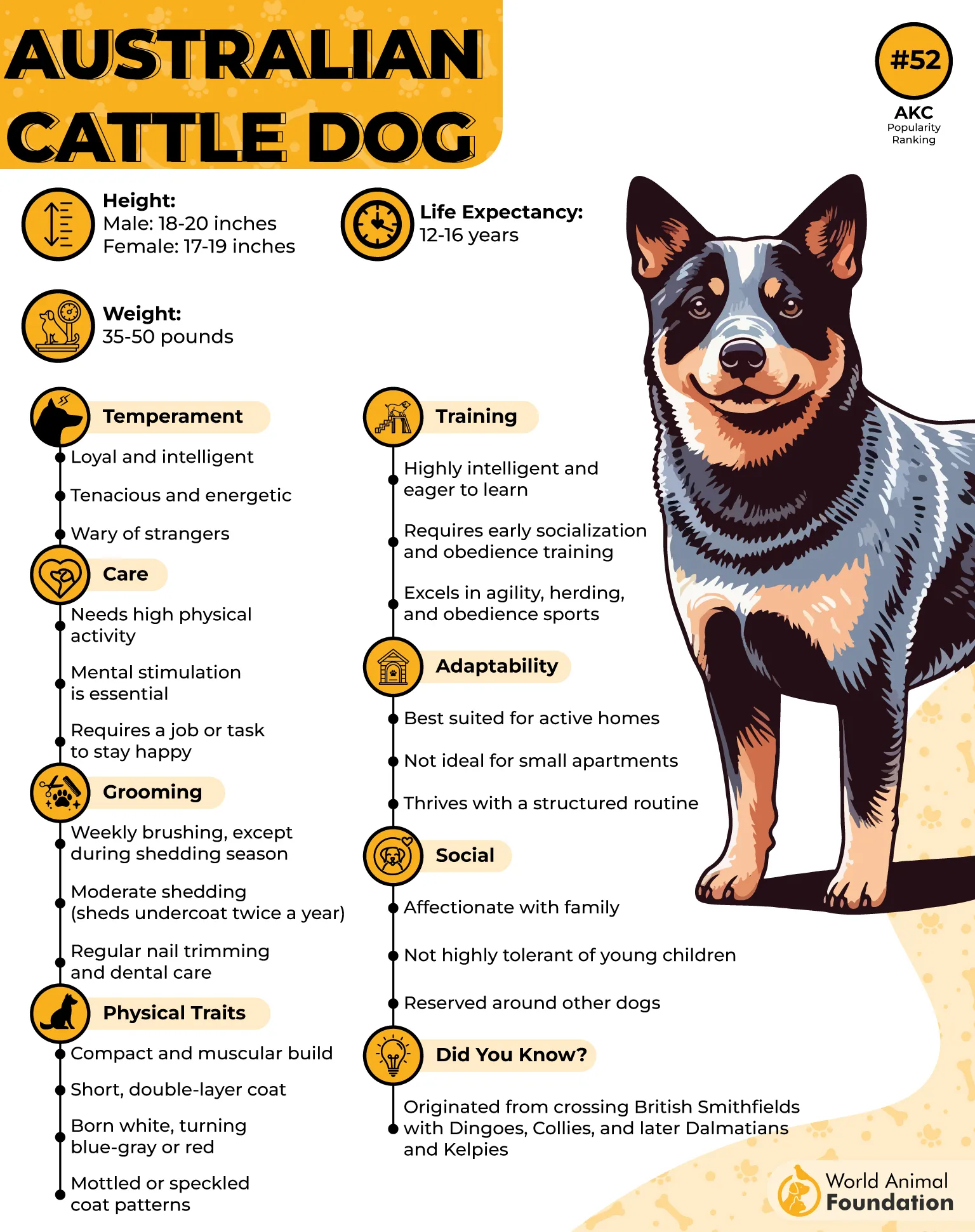
The breed has boundless energy and can drive stubborn livestock for straight 8-12 hours and excels in intense physical exercise: hiking (over 5-10 miles a day), jogging, canine cycling, and water sports.
6. German Shorthaired Pointer
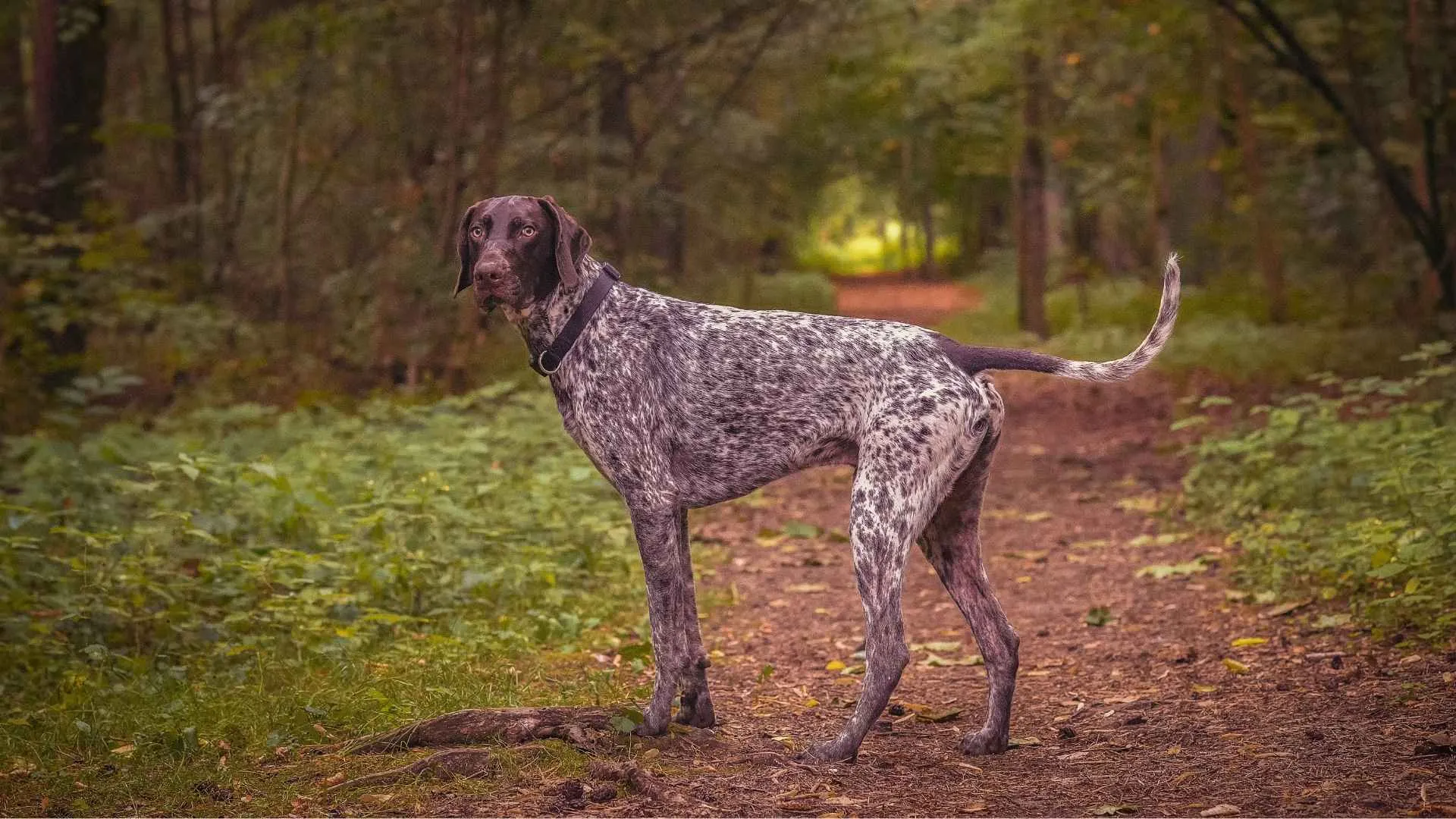
Closely related to the German bird dog, the pointer breed was developed in Germany in the 19th century. Old Spanish Pointer and other German hounds are believed to have contributed to the development of the GSP. The breed was officially recognized by the American Kennel Club in 1930.
The 45-degree layback of the shoulder blade facilitates a ground-covering stride without premature joint fatigue. It has a high muscle-to-fat ratio that processes calories rapidly for sustained energy. Without being aggressive or panicking in a stressful situation, the breed reacts accordingly and alerts the owner to the potential threat early.
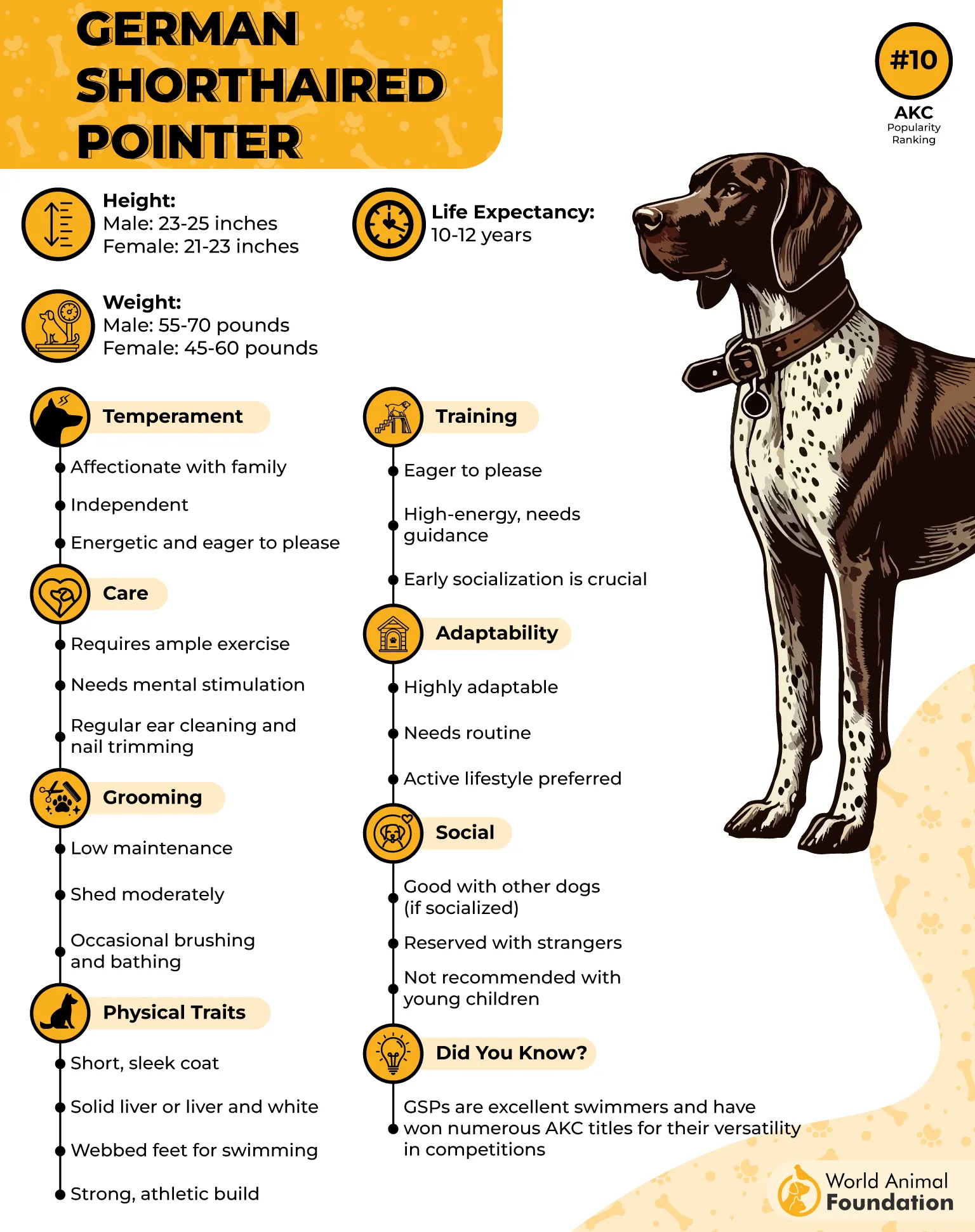
The energetic breed needs 1-2 hours of vigorous daily exercise: long walks, long hikes on rugged landscapes, dock diving, trail running, agility training, and swimming.
7. Vizsla
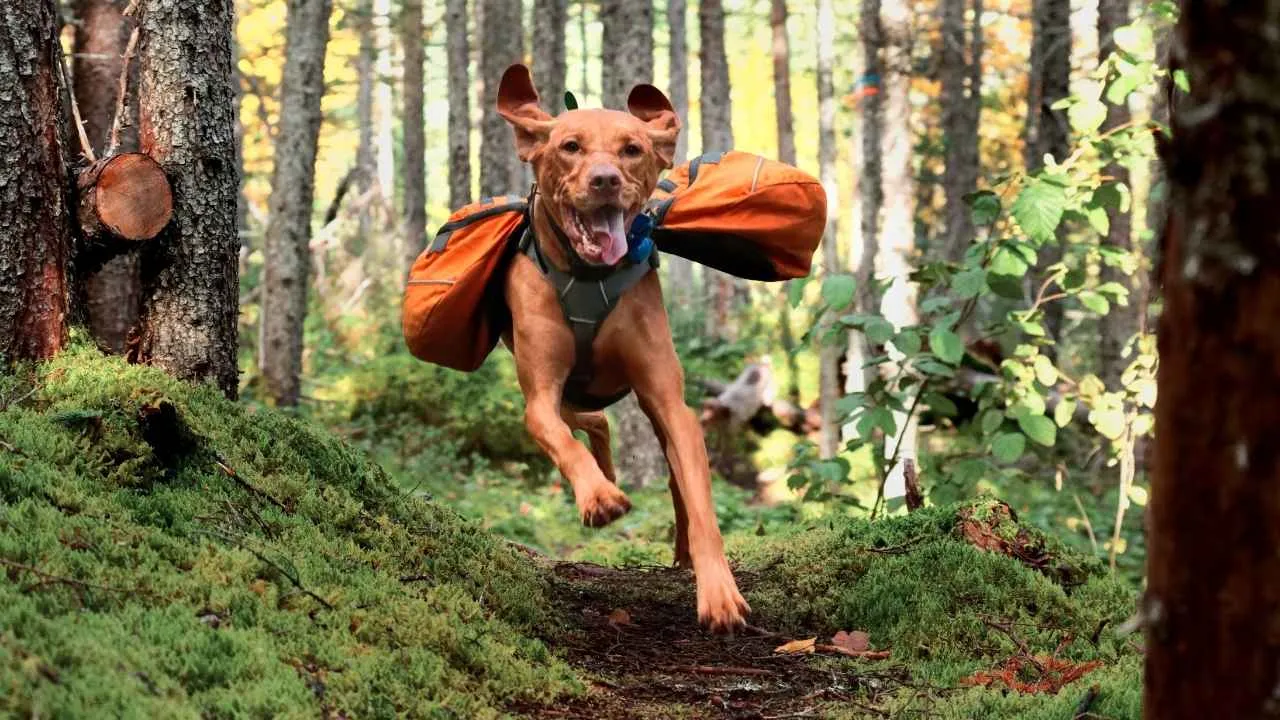
The best dog breeds with high energy levels was originally developed in Hungary as a hunting companion. The multi-purpose dog is excellent at tracking, pointing, and retrieving. It gained global recognition after WWII and became a great family dog.
The dog has cat-like feet with tight and arched toes. This prevents debris collection, provides superior grip, and reduces the risk of trail injuries. The tight eye rims protect the eyes from pine needles and airborne dust. One of the fastest dog breeds, the Vizsla can run at a high speed of 40 mph.
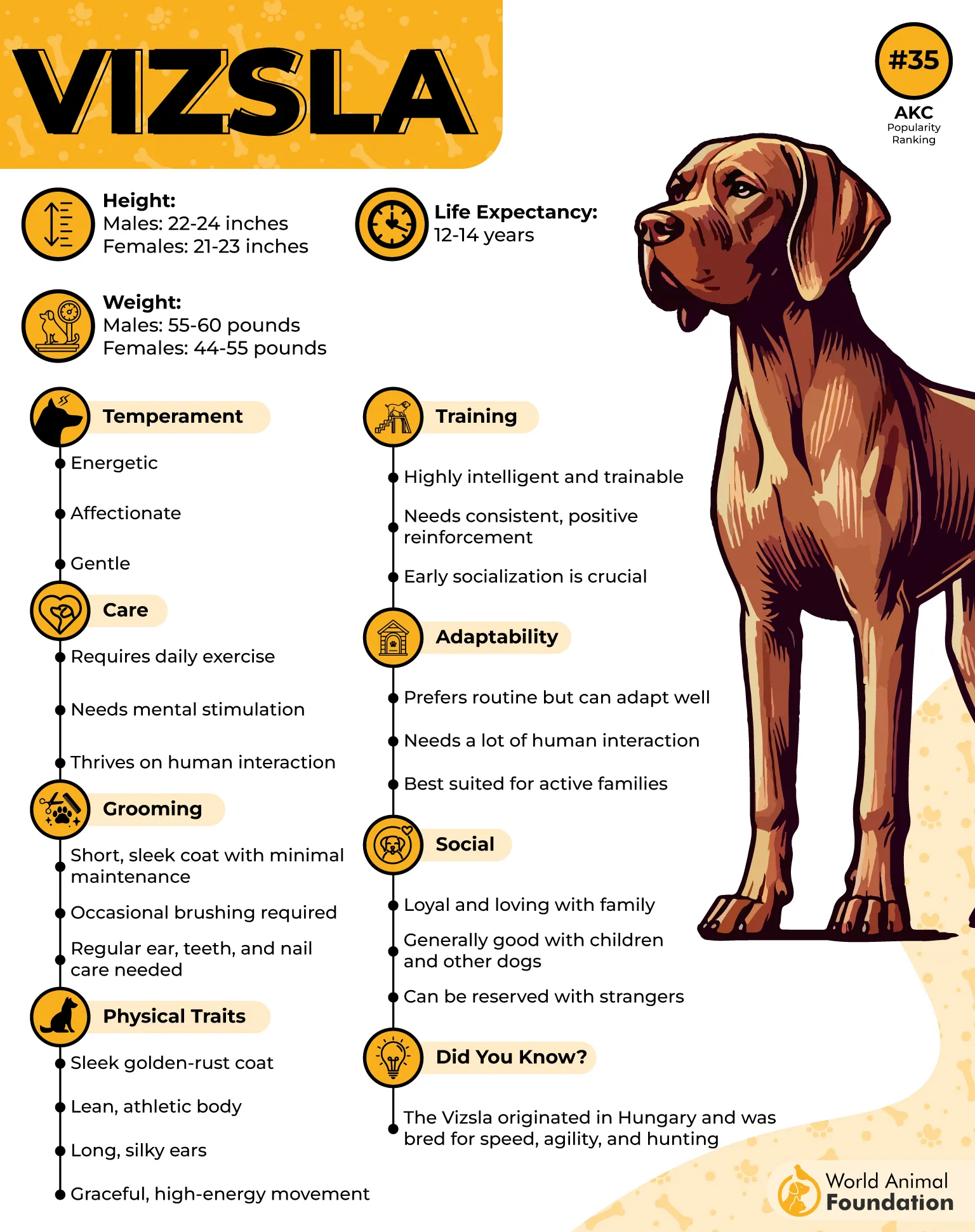
It tends to work in close proximity with the handler and continuously looks back to receive signals. It loves to work outdoors and excels in field trials, scent work, dock diving, canicross, and jogging.
Conclusion
Camping with a dog is not just about having company. It is about sharing mornings on the trail, quiet evenings under the stars, and those small moments when your dog looks back to make sure you are still there. The best adventure dog is not simply the fastest or most athletic one. It is the dog whose energy, temperament, and needs match your lifestyle.
Before choosing a breed, be honest about your time, fitness, climate, and training experience. Every dog on this list can thrive in outdoor activities, but each needs exercise, guidance, water, rest, and a safe setup. Start with shorter trips. Build your dog’s confidence. Pack for their comfort, not just your own.
