




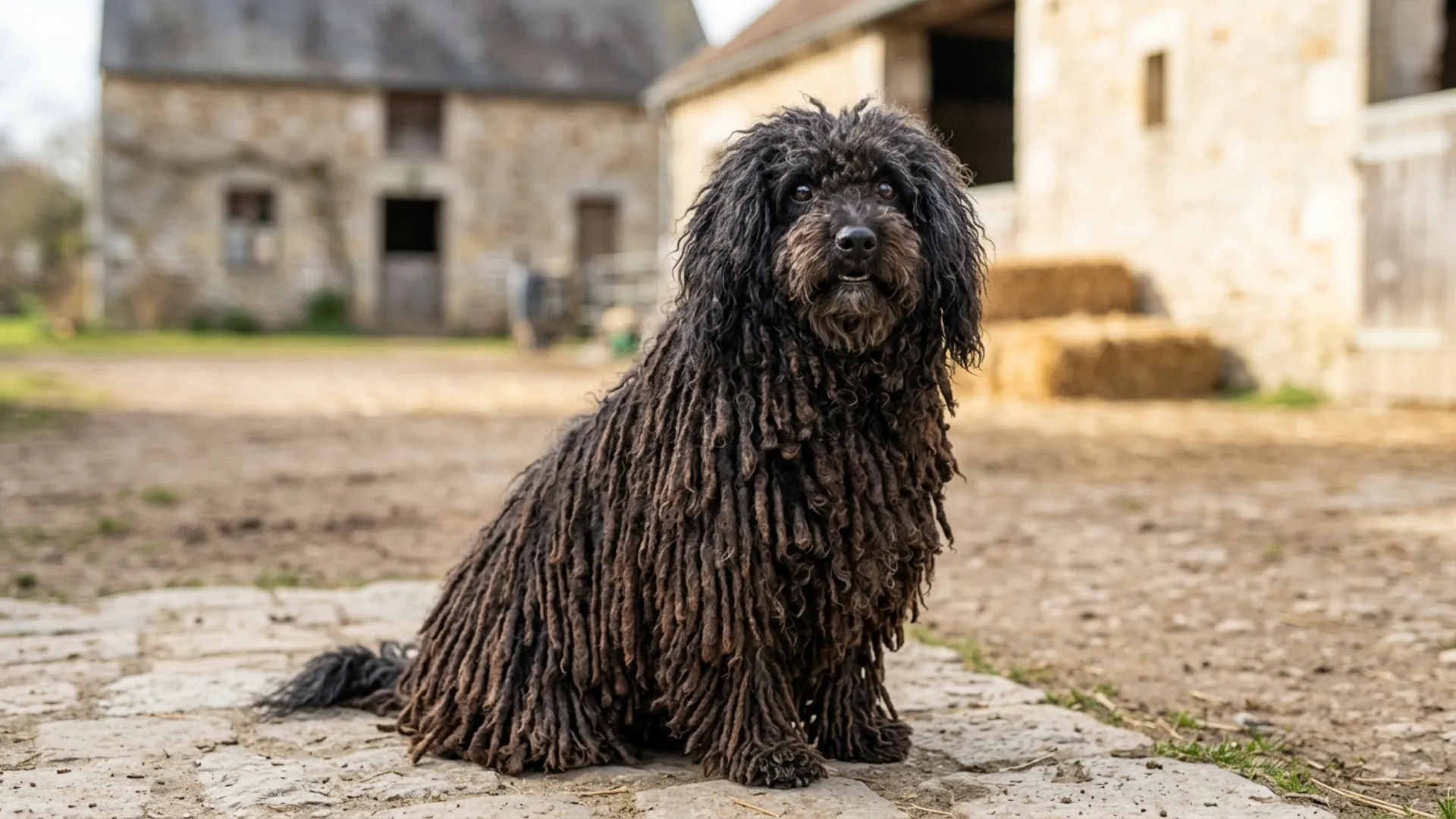
You’re at the dog park. Coffee in hand. Just people-watching (well, dog-watching).
There’s a Labrador Retriever chasing a ball. A couple of Golden Retrievers wrestling in the grass. A Border Collie herding absolutely nobody.
Normal stuff. Then something walks through the gate that looks like a mop with legs. You squint. You tilt your head. Is that… a dog? Yep. It is.
And honestly, that’s the fun part about dog breeds. Some of them you recognize by their size. Some by their ears or their face. But a few? You know exactly what they are the second you see their coat.
A dog’s coat is way more than just fur. It tells you where that breed came from, what job it was bred for, and what kind of weather it had to survive. Everything has a reason.
Today, we are covering remarkable dog breeds identified by their coat type. These are the dogs where the coat IS the personality. Some are corded, some are curly, and some are wiry. And a couple have barely any fur at all.
Let’s get into it.
Remarkable Dog Breeds Identified by Their Coat Type
1. Komondor
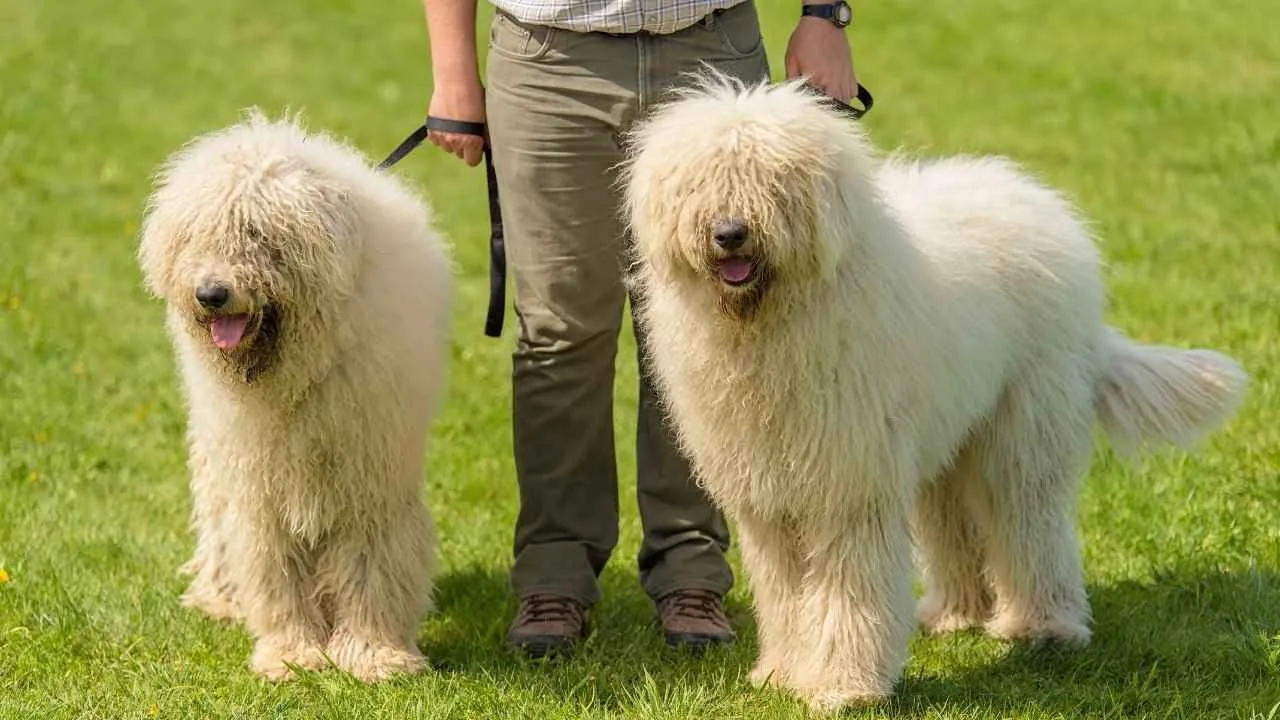
This Hungarian livestock guardian breed was originally bred to guard sheep, and its coat type played a huge part in that job.
Those long cords helped it blend right in with the flock. The cords also worked like armor, protecting the dog from bites and bad weather.
But what surprises people most is that Komondor puppies are NOT born with cords, according to PetMD. They start with soft, fluffy fur, and the cords form over time as the outer coat and undercoat naturally tangle together. Pet parents have to separate those clumps by hand, so they form proper cords instead of one giant mat.
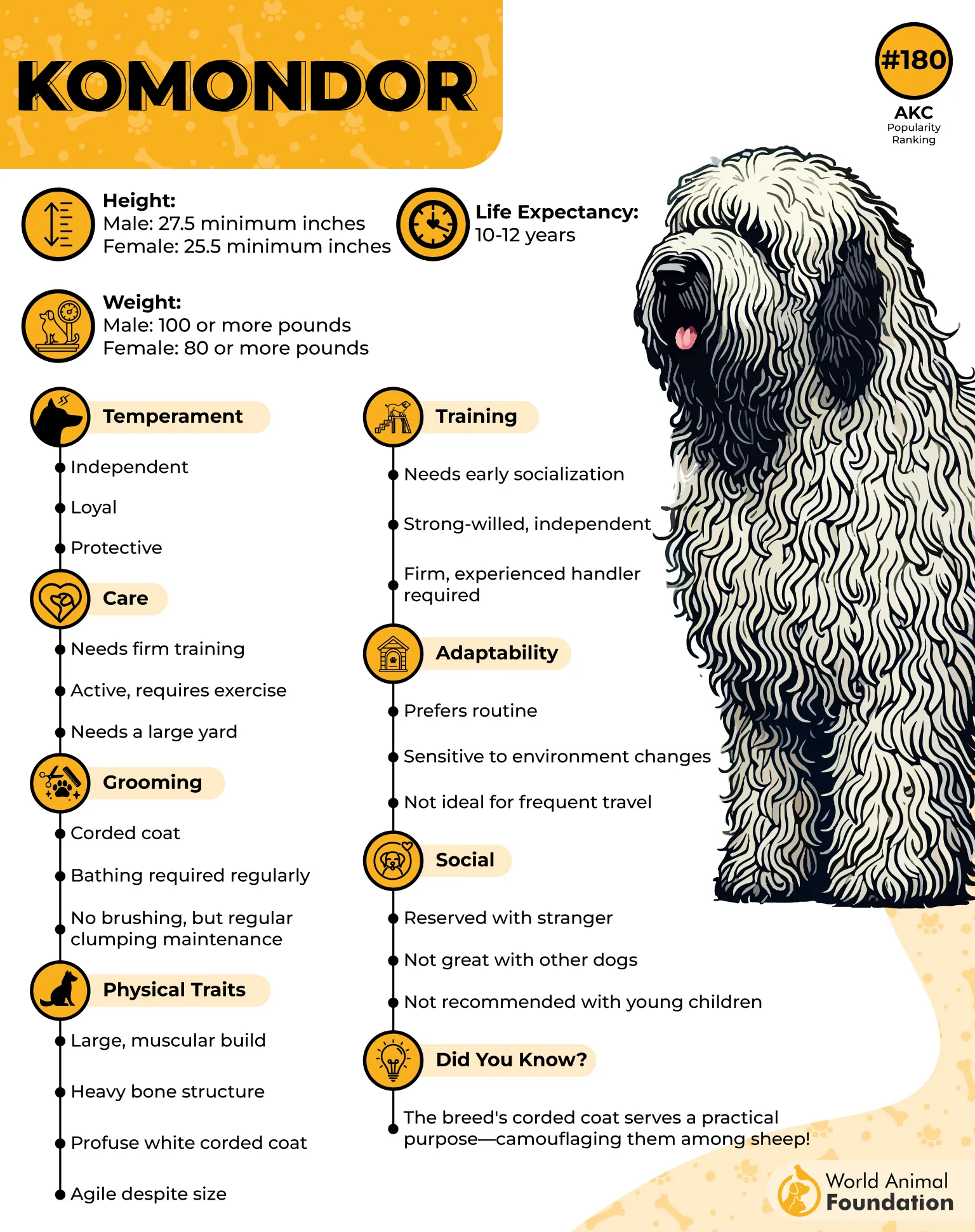
You don’t brush a Komondor at all.
Bath time is a whole event, too. Because the cords are so dense, it can take a day or more for the coat to fully dry. Skip that drying step, and you are asking for mildew and odor.
This is a coat for patient owners.
2. Puli

Also from Hungary, the Puli (pronounced “poo-lee”) was bred to herd sheep, and boy, can it move. Under all those cords is an agile, quick little dog that seems to have springs in its feet.
Most Pulik (yep, that’s the plural) are black, though you will sometimes see them in gray, white, or a cream-ish shade.
The Puli coat works a lot like the Komondor’s. It is a combination of a soft undercoat and a coarser coat that tangles and forms cords as the dog grows.
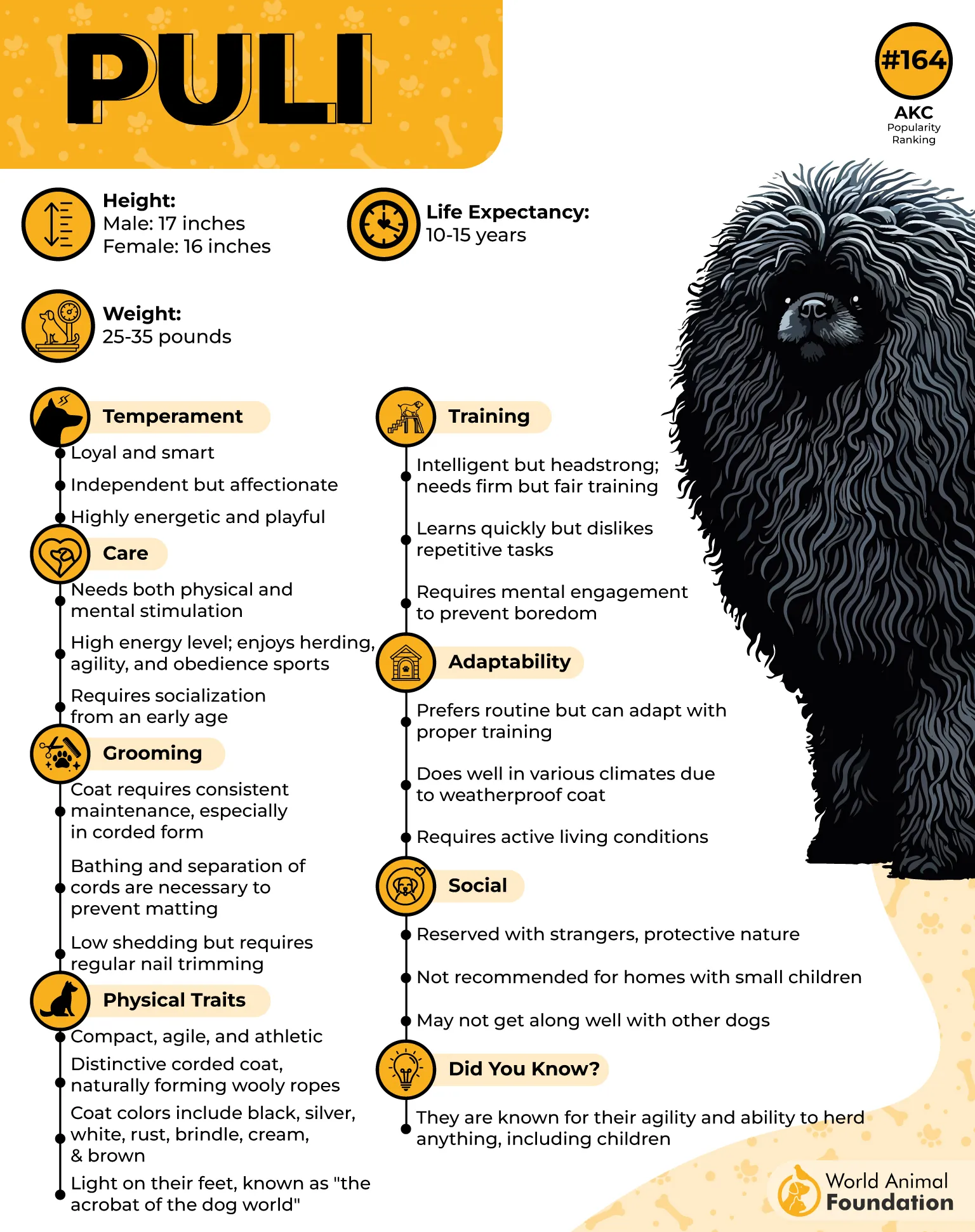
When a Puli runs, those cords bounce. Honestly, it’s one of the happiest things you will ever see.
These herding dog breeds are smart, loyal, and a little bossy. Herding dogs usually are. They need regular exercise and something to keep their brain busy.
Grooming-wise, the same rules apply. Separate cords by hand, bathe carefully, and dry thoroughly.
3. Bergamasco Sheepdog
If you thought cords were wild, wait until you meet the Bergamasco Sheepdog. This herding breed comes from the Italian Alps, and its coat is unlike anything in the dog world. It’s made of three different kinds of hair. There’s a soft, oily undercoat, plus a texture often described as “goat hair,” and a woolly layer.
According to the American Kennel Club, together, they form flat, felted mats called the “flocks.”
The flocks start forming around the time a Bergamasco is a year old, and it can take several years for the coat to develop fully.
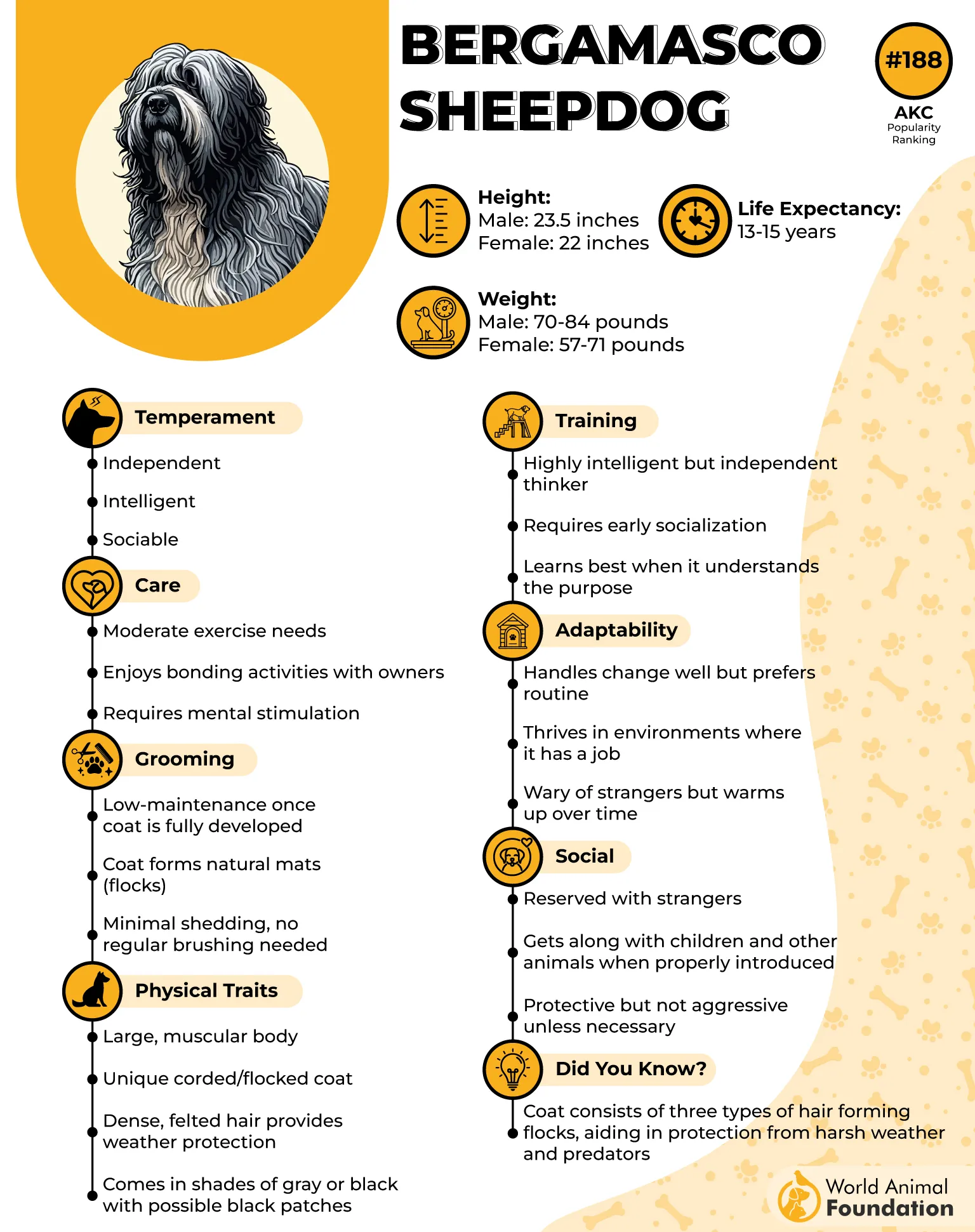
But listen to the twist!! Once those flocks are in place, the grooming routine is easy. These low-maintenance dogs won’t require regular brushing or shed all over your couch. You need to give them occasional baths and keep an eye on things.
That coat kept those dogs warm and dry while working sheep in the mountains. The natural oils in the coat help with weather resistance, too.
Bergamascos are calm, patient, and great with families. Just don’t expect them to look “normal” at the groomer.
4. Chinese Crested

Now let’s swing all the way to the other end of the coat spectrum.
The Chinese Crested is best known as a hairless dog, with silky hair only on its head (the crest), feet (the socks), and tail (the plume). The rest of the body is BARE SKIN!
But wanna hear a fun twist? There’s also a fully coated version called the “Powderpuff.” And both types can show up in the same litter!
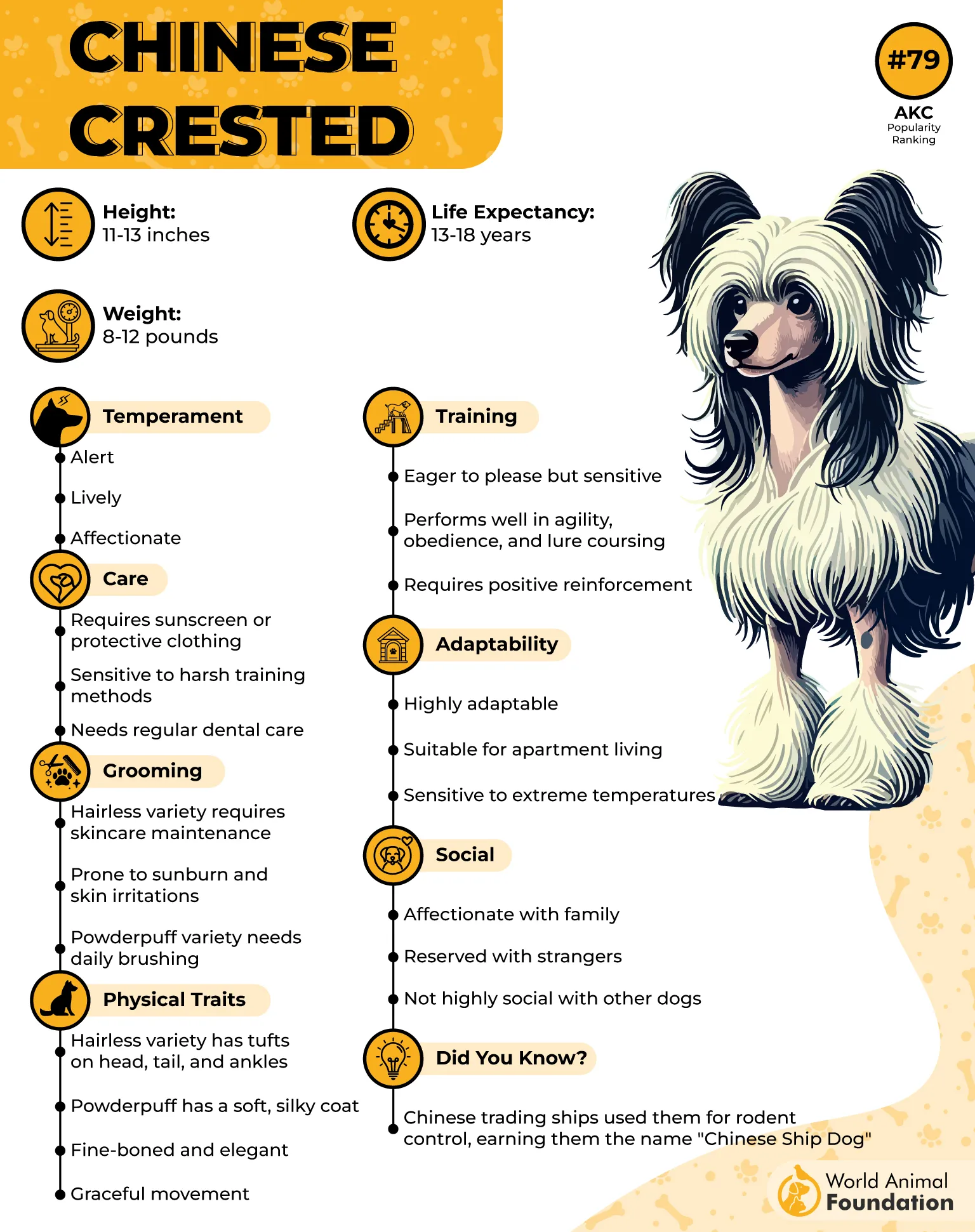
The hairless dog variety needs a different kind of care. No brushing, sure, but the skin needs attention. These dogs can get sunburned, so sunscreen on sunny days is a real thing. They can also deal with dry skin and acne, so gentle baths and moisturizer help keep their skin healthy.
Powderpuffs, on the other hand, have a soft, silky coat that needs regular brushing to prevent matting.
Either way, Chinese Crested are affectionate, playful little lap dogs. They LOVE their people.
And they look like no other dog on the planet.
5. Bedlington Terrier
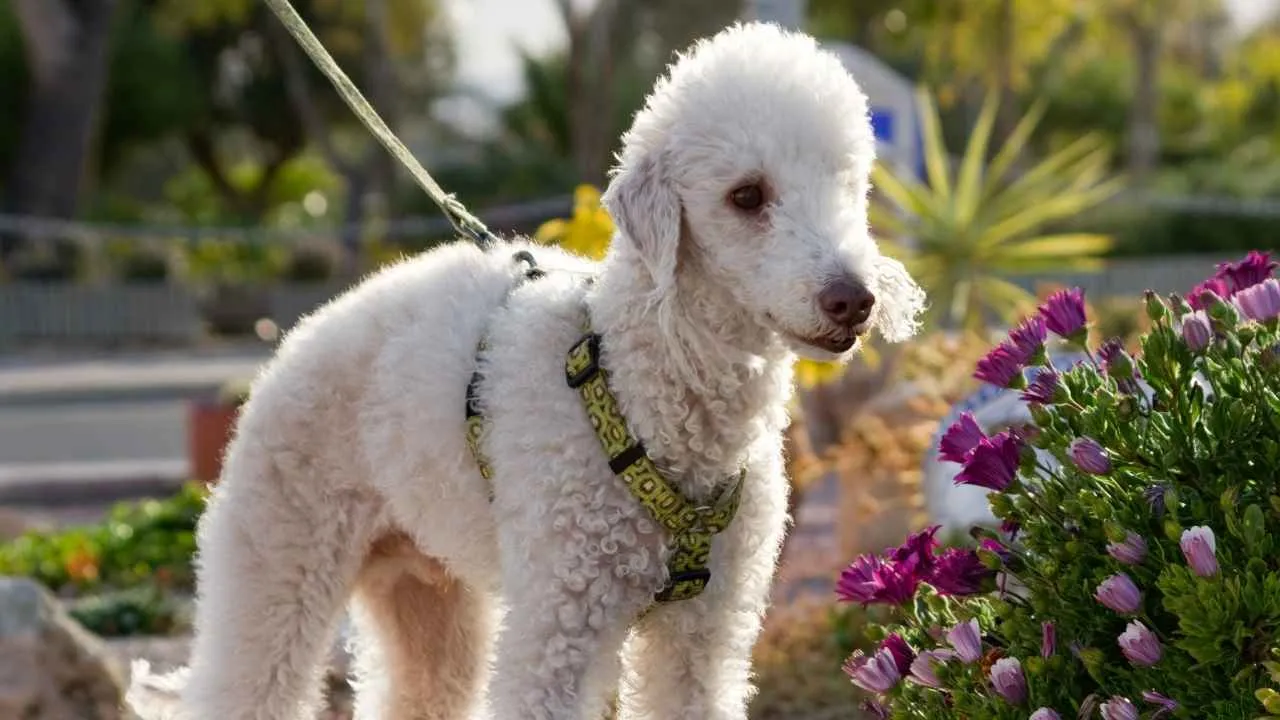
At first glance, a Bedlington Terrier looks like a little lamb.
Fluffy, curly coat. Pear-shaped head, with a soft topknot.
Do NOT be fooled.
This breed came from the mining town of Bedlington in northern England, where it was used to hunt rats, rabbits, and other vermin. Under all that fluff is a fast, gusty terrier.
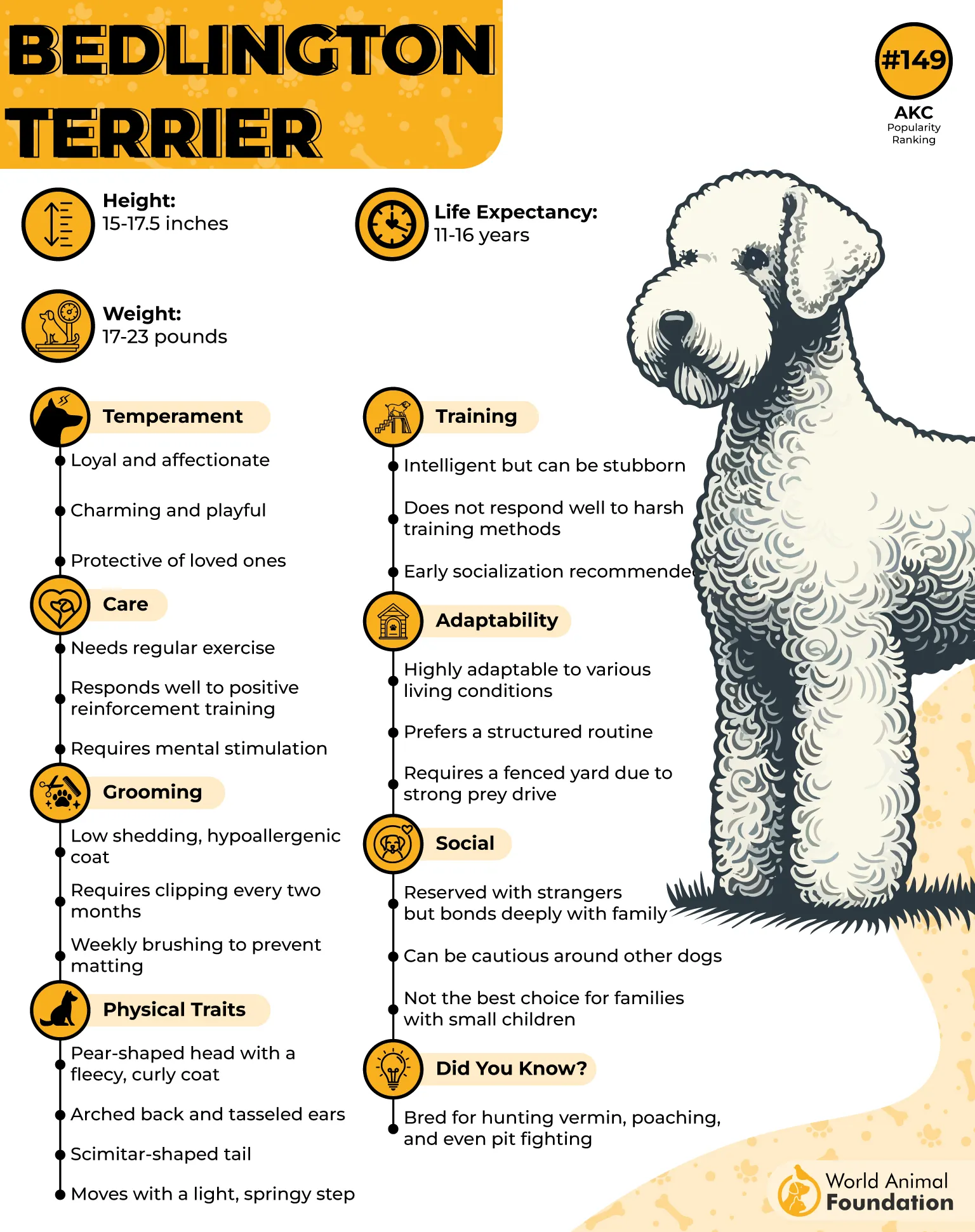
The Bedlington’s curly coat is a mix of hard and soft hair, and it doesn’t shed much. That’s great news for your floors. But it does need proper grooming. Most Bedlington Terriers get scissored coats to keep that classic lamb shape. Between trims, regular brushing helps move tangles before they become a problem.
Another cool detail is that Bedlington puppies are usually born dark, and their coat lightens as they grow, according to the National Kennel Club.
Personality-wise, these affectionate dogs are sweet and gentle at home but still have that terrier spark outside.
6. Xoloitzcuintli
Say it with us. Show-low-eats-QUEENT-lee.
Or just call it a “Xolo.” Everybody does.
The Xolo is one of the oldest dog breeds in the Americas, with a history in Mexico going back thousands of years. The Aztecs believed these dogs guided souls through the underworld. Huh?
If you have seen Pixar’s Coco, you have met one. Dante, the goofy sidekick, is a Xolo.
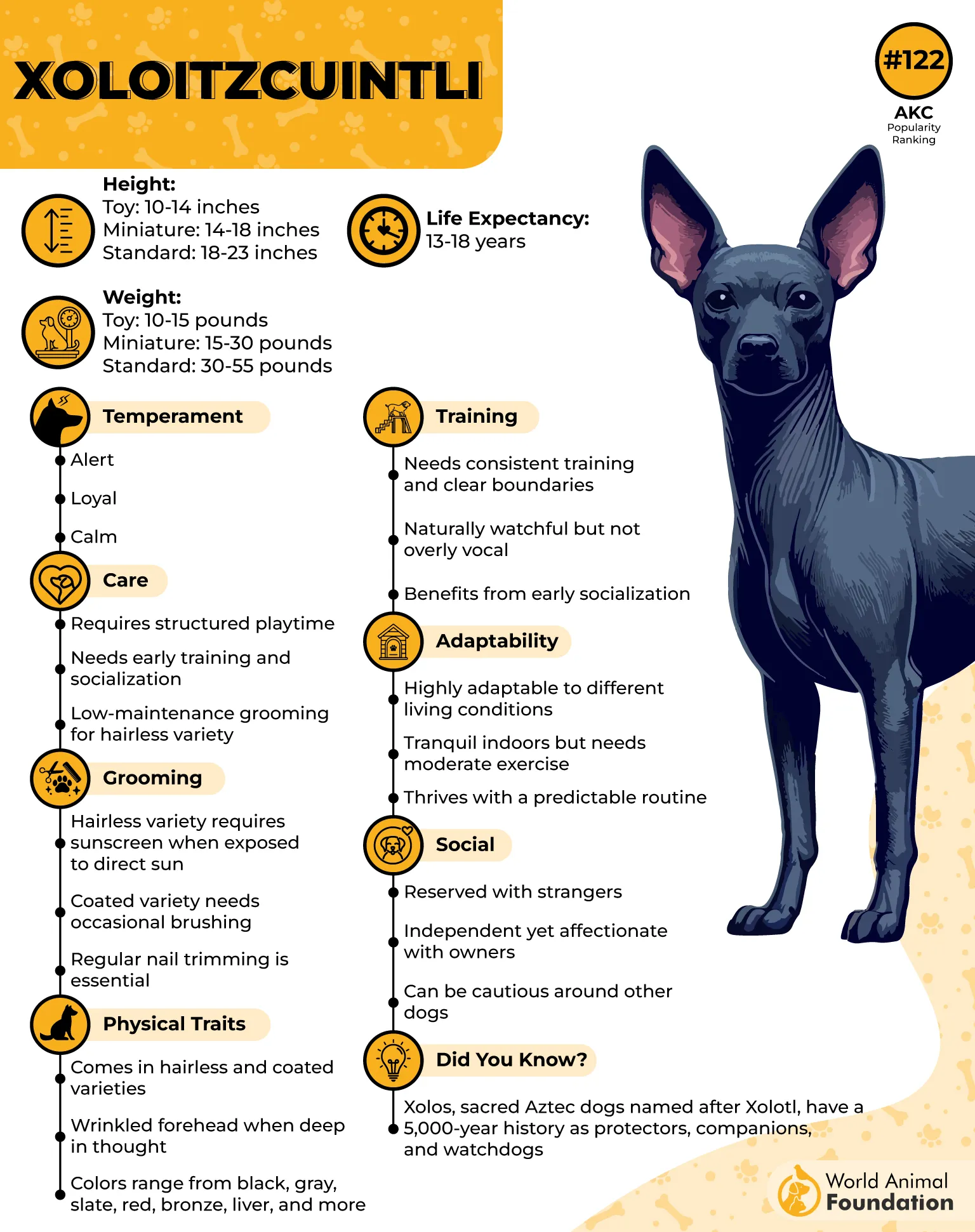
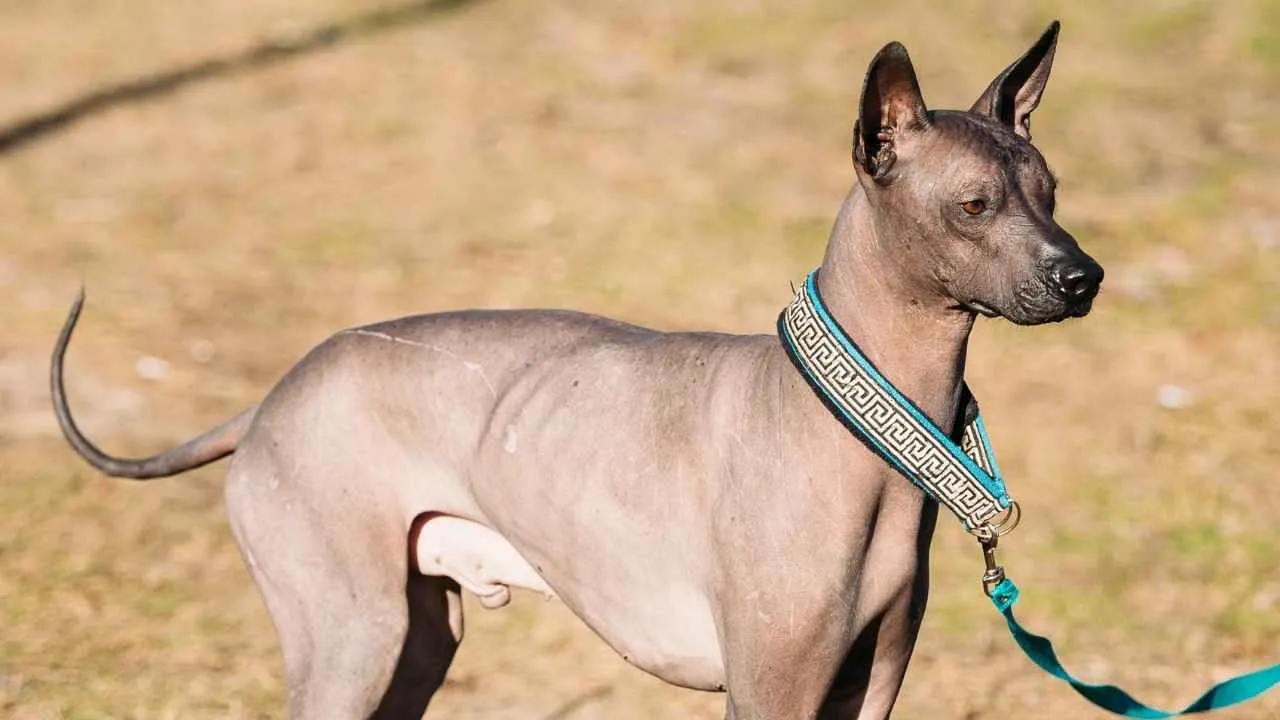
Xolo comes in hairless and coated varieties. The hairless type has a smooth coat and tough skin. The coated breed has short coats that are easy to manage.
Xolo also comes in three sizes: toy, miniature, and standard. So there’s a Xolo for just about every home.
Hairless Xolos need sun protection and proper care, but they are generally low-maintenance. They are calm, loyal, and pretty alert, which makes them great little watchdogs.
7. Wire Fox Terrier
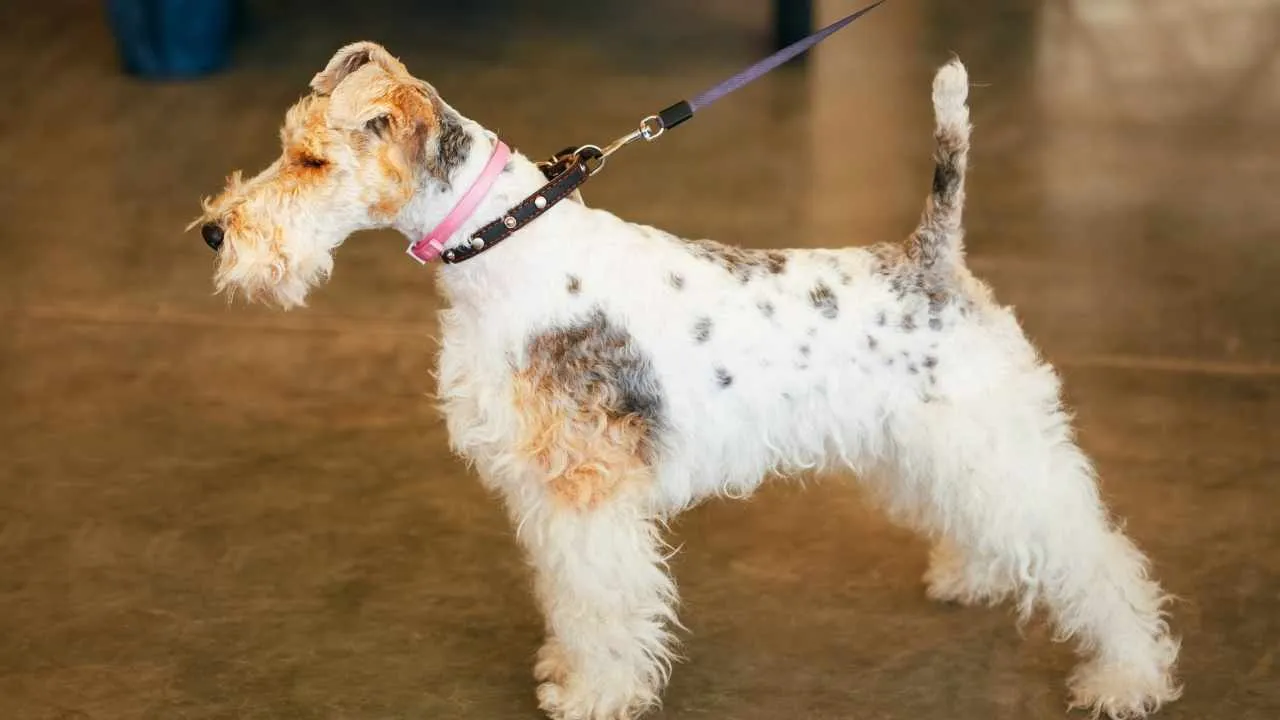
Last but definitely not least, the Wire Fox Terrier.
This hunting dog breed was developed in England to chase foxes out of their dens during hunts. That wiry coat protected it from thorns, brush, and bad weather.
This wire-coated dog’s coat is dense, crisp, and a little rough to the touch. It’s very different from the smooth coat of its cousin, the Smooth Fox Terrier.
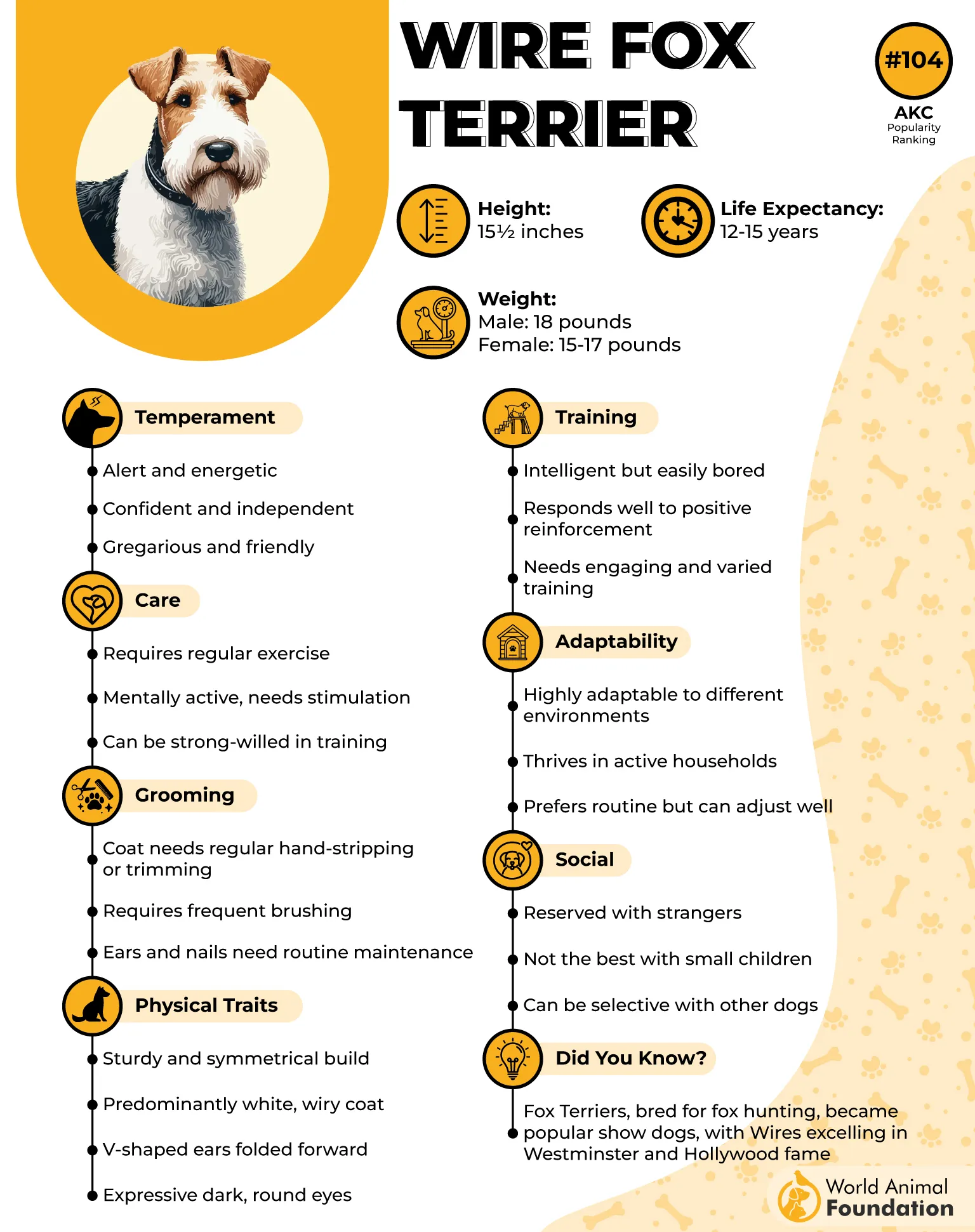
Keep that texture looking its best with a process called “stripping.” Instead of clipping, you can pull out the dead dog hair by hand so a new coat can grow in. Show dogs get this done regularly. Many pet parents just clip it, which is totally fine, though the coat gets softer over time.
Wire Fox Terriers are bold, energetic, and full of personality.
Conclusion
A dog’s coat type is NOT just about looks. It’s a history lesson.
Every cord, curl, and wiry whisker tells you something about where a breed came from and the job it was born to do. But a unique coat also comes with unique care.
Some thick double coats need daily brushing with a slicker brush to remove dead undercoat. Some need hand-stripping. Some need cords split by hand. And some need sunscreen, of all things. Some merle dogs have striking blue merle coats with white markings.
So if you are choosing your next dog, think about the distinctive coat. Be honest about how much grooming you can actually handle. It can be a smooth-coated dog with a flowing coat or a wire-coated dog with a rough coat or wire hair. Whatever your personal preference is, you should manage shedding and offer regular brushing to remove tangles and prevent mats.
Because a happy dog with a healthy coat is the perfect match.
Know your breed. Learn their coat.
And give it the care it deserves.
