




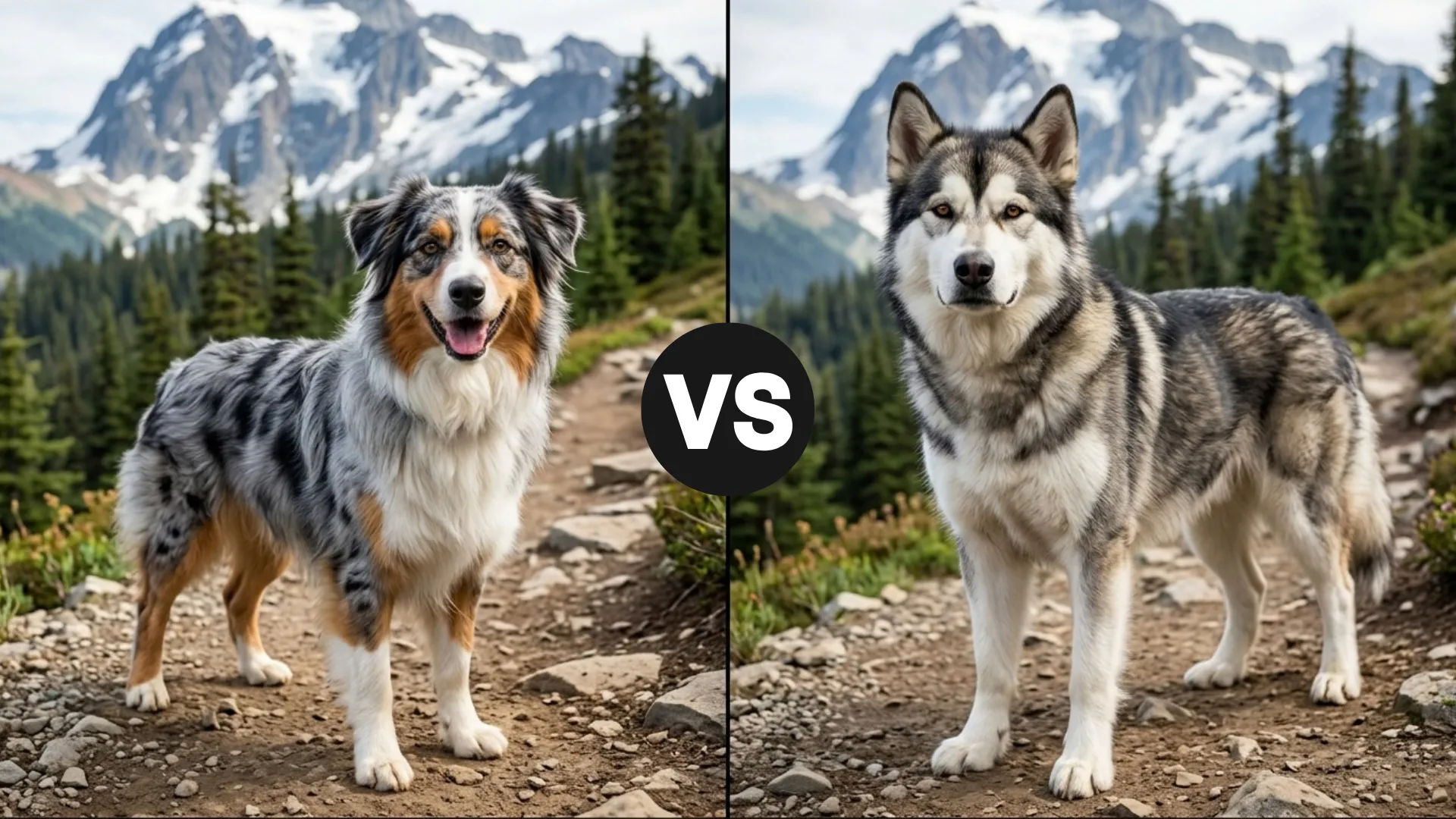
Two powerhouse breeds, two very different kinds of energy. The Australian Shepherd is a whip-smart herder built for agility, quick commands, and nonstop mental engagement — perfect for owners who love trail runs, agility courses, and training sessions. The Alaskan Malamute is raw Arctic muscle, bred to haul heavy loads across brutal terrain, offering steady endurance and wolfish charm rather than herding sharpness.
Both breeds demand serious daily exercise, but their ideal owners look different. Aussies want a job and a puzzle to solve; Malamutes want a strong leader and long, purposeful miles. Pick wrong, and you’ll end up with a bored, destructive dog no matter how much love you give.
So which one matches your lifestyle — a hyper-responsive workout partner or a powerful endurance companion? Here’s everything you need to know about their temperament, exercise needs, and ideal owner profile before you decide.
Australian Shepherd vs. Alaskan Malamute: Which Breed Fits Active Owners
Australian Shepherd vs. Alaskan Malamute compares two energetic working breeds with very different personalities, exercise needs, and training styles. For active owners, understanding these differences can make it much easier to choose the breed that best fits your lifestyle.
Origins & Purpose
From Basque Herding Dogs to Ranch Life
The Australian Shepherd’s name sends you in the wrong direction, since the breed took shape in the United States. Its European herding ancestors traveled with Basque people to Australia, where they were crossed with Border Collies and other dogs before reaching California.
California ranchers assumed these dogs were Australian natives and gave them the name Australian Shepherd. The breed was then refined for American ranch work and became closely tied to Western ranching and rodeo culture, with AKC recognition arriving in 1991.
An Arctic Worker Built for Heavy Loads
The Alaskan Malamute has roots reaching back more than 4,000 years, when wolf-like dogs traveled from Siberia to Alaska across the Bering Strait. The Mahlemut people valued these powerful sled dogs for hauling food, supplies, and people across severe Arctic terrain.
Their work went well beyond pulling loads, as they also helped hunt seals, guard livestock, and protect people from bears. Family life shaped their temperament too, with the dogs spending time around children and sleeping beside their people for warmth during freezing nights.
The breed faced serious pressure during the 1896 Klondike Gold Rush, when demand encouraged crossbreeding with other dogs. The isolated Mahlemut population preserved its own line, helping prevent the Malamute from disappearing, and the breed gained formal recognition in the 1930s, as highlighted by the Royal Kennel Club.
Size & Build
Compact Frame Built for Herding
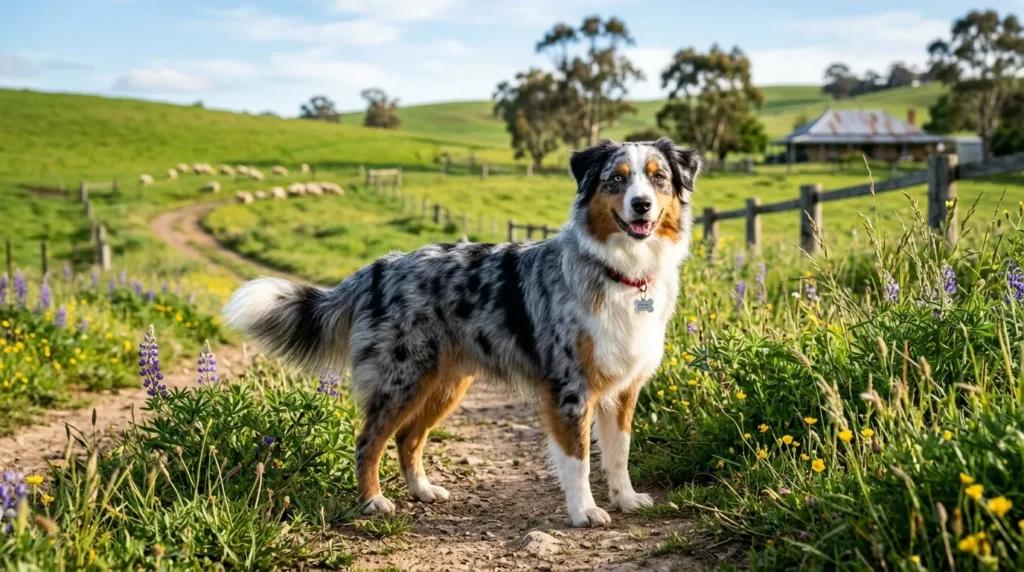
The Australian Shepherd stands 18–23 inches and weighs 40–60 pounds, with males generally larger and more robust than females. Its athletic, slightly longer-than-tall body is shaped for quick turns, agile movement, and sustained herding work, as noted by the ASCA.
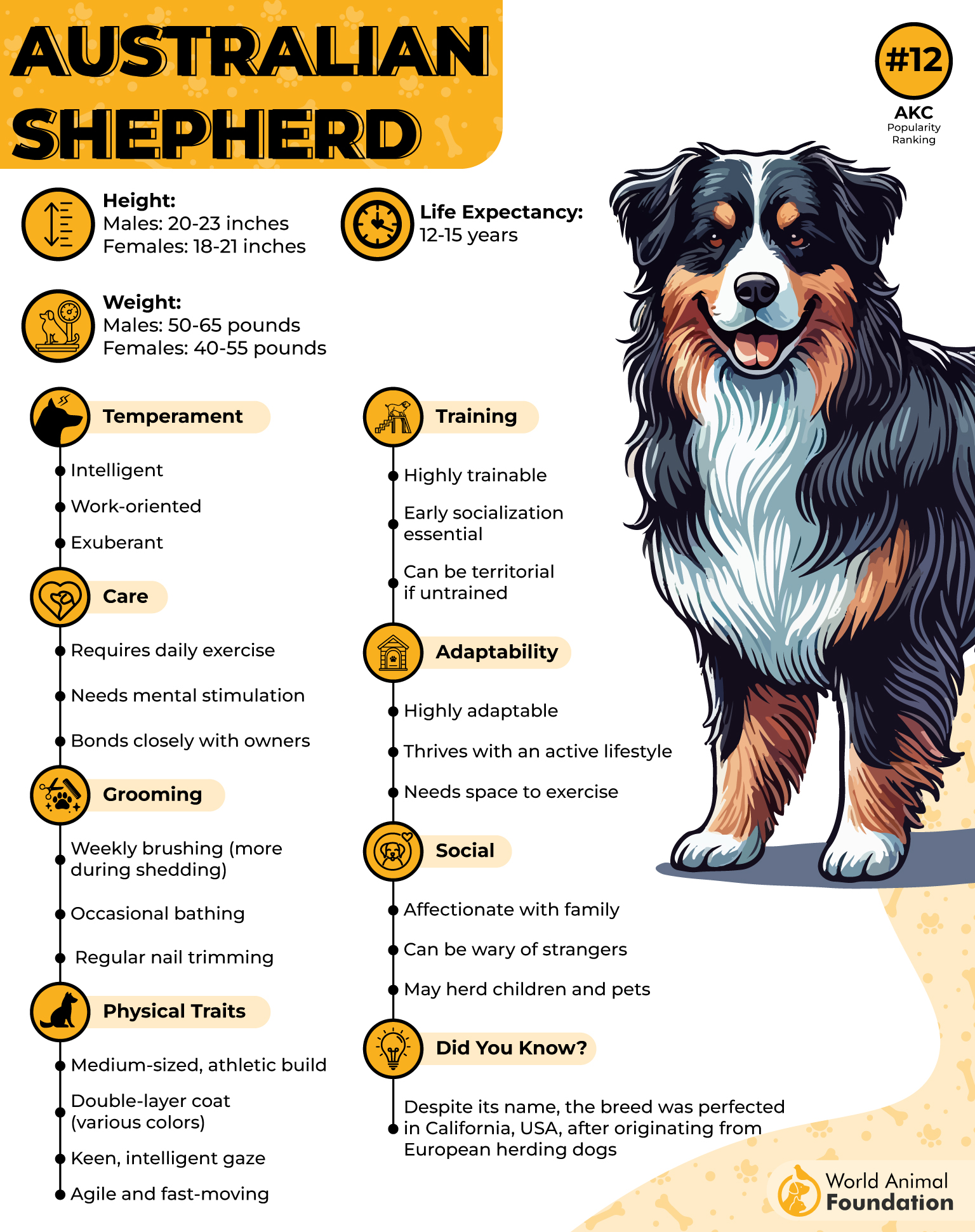
A wedge-shaped head, semi-erect or rose ears, and almond-shaped eyes give the breed a focused expression, while eye colors may range from brown to blue. A naturally bobbed tail is common, and merle Aussies can have striking blue or mismatched eyes.
Heavy Arctic Build for Endurance
The Alaskan Malamute reaches about 25 inches for males and 23 inches for females, with males around 85 pounds and females about 75 pounds. Its large, heavy-boned frame is built for strength and long-distance freighting, with substantial paws suited to snow and cold.
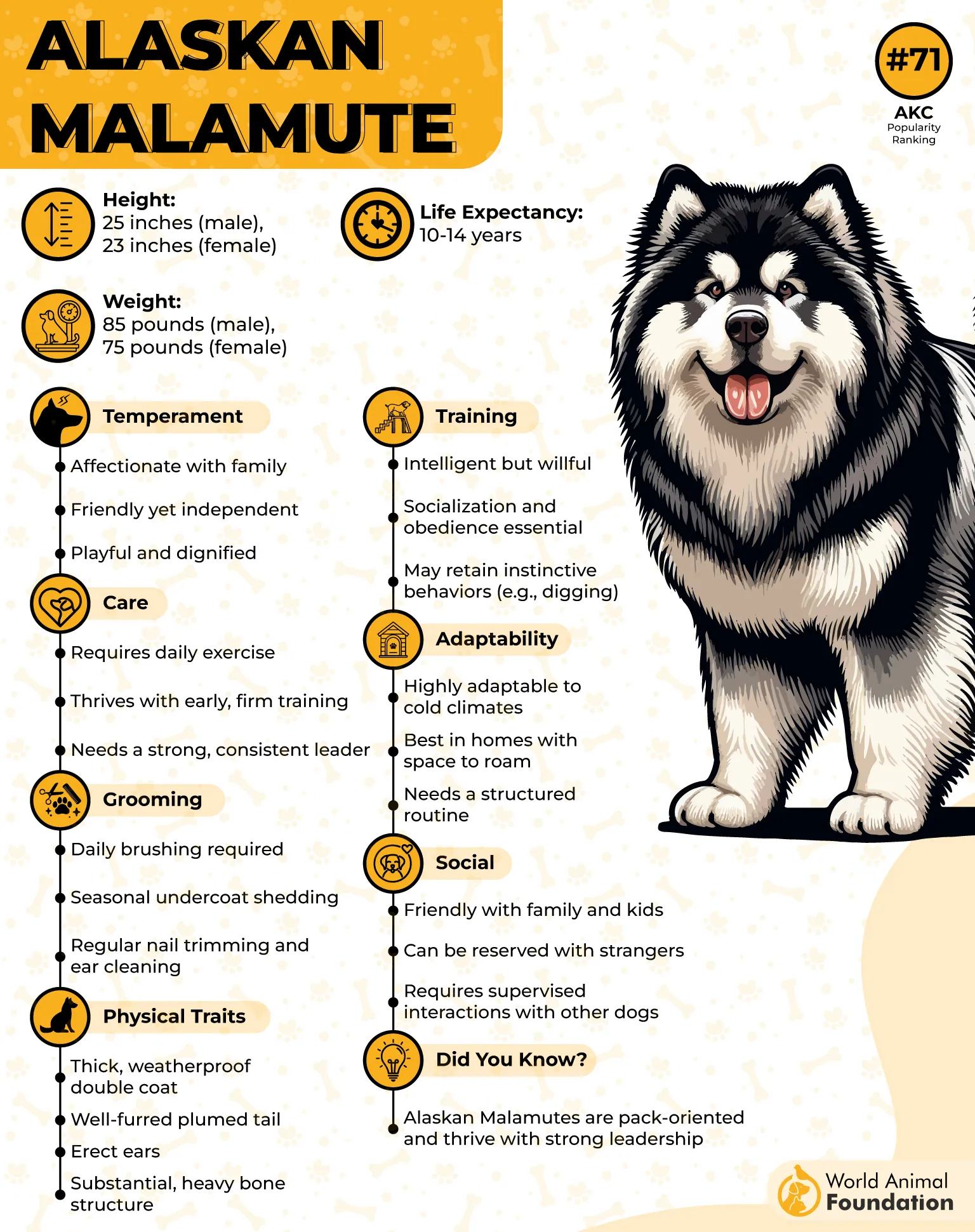
A broad head, wide-set triangular ears, thick neck, and plumed tail add to its powerful outline. Males usually have greater mass, heavier bone, and a broader muzzle, while females tend to have a slightly finer frame without losing the breed’s substantial working build.
Pricing & Availability
Australian Shepherd Price and Adoption Options
A purebred Australian Shepherd puppy generally costs around $600 to $2,000 or more, with breeder choice making a noticeable price difference. Adoption can be another route through Australian Shepherd rescue groups or local shelters where these dogs occasionally appear.
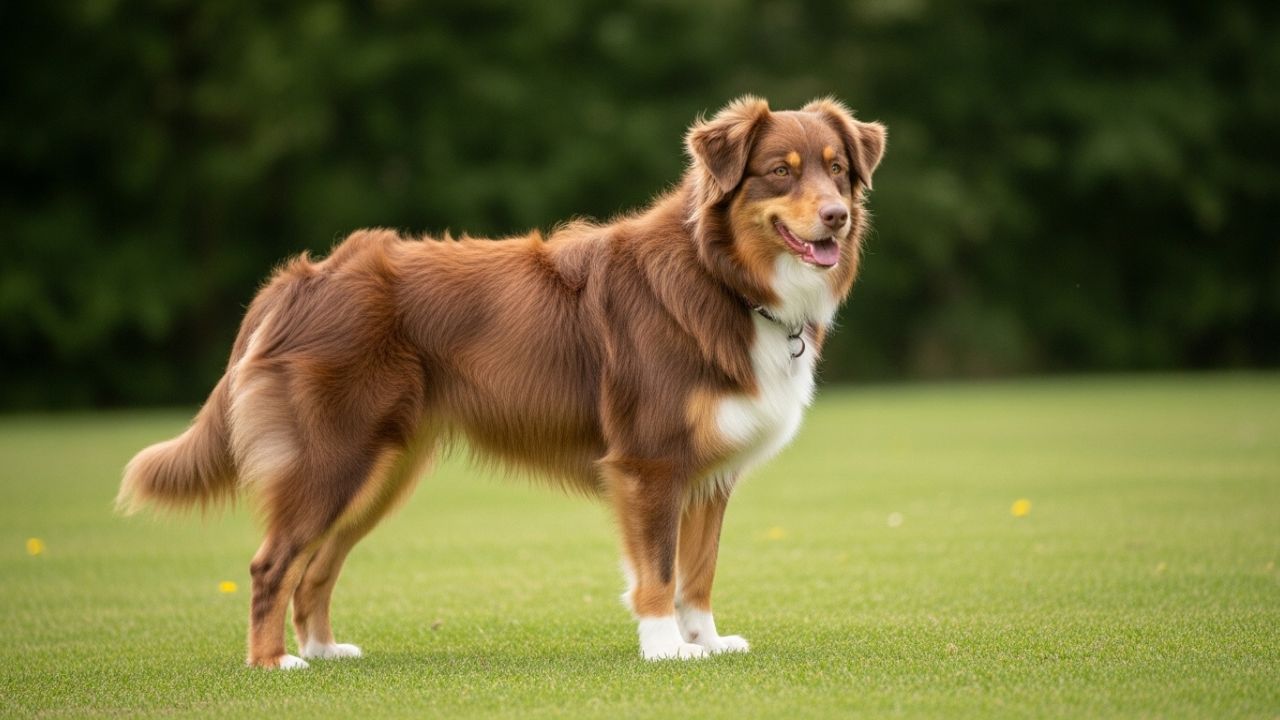
For a rescue search, the local shelters and their social media pages can also be worth checking when you are specifically looking for the breed.
Alaskan Malamute Cost and Finding One
An Alaskan Malamute puppy typically costs around $2,000, making it a considerably larger upfront purchase than the lower end of Australian Shepherd pricing. Choosing a responsible breeder matters either way, especially when buying a purebred puppy.
Adoption gives you another option, since Alaskan Malamutes do enter rescue and shelter systems. Breed-specific groups can help connect you with available dogs seeking permanent homes.
Temperament & Personality
A People-Focused Mind With Herding Instincts
Australian Shepherds are quick learners that genuinely enjoy working with their people, which makes tricks, skills, and positive-reinforcement training especially rewarding. Their strong desire to please creates an easy partnership, while their herding instinct keeps them protective of family and territory.
Their lively side comes out around both children and adults, yet they can be surprisingly placid once the excitement settles. They generally respond well to direction, though their intelligence means they can think through a command rather than simply follow it without question.
An Affectionate Personality With a Stubborn Streak
Alaskan Malamutes are devoted family dogs with an adventurous side that suits people who enjoy an active outdoor life. Give them enough daily activity, and they can settle comfortably at home, often entertaining the household with their distinctive “awoo” sounds rather than frequent barking.
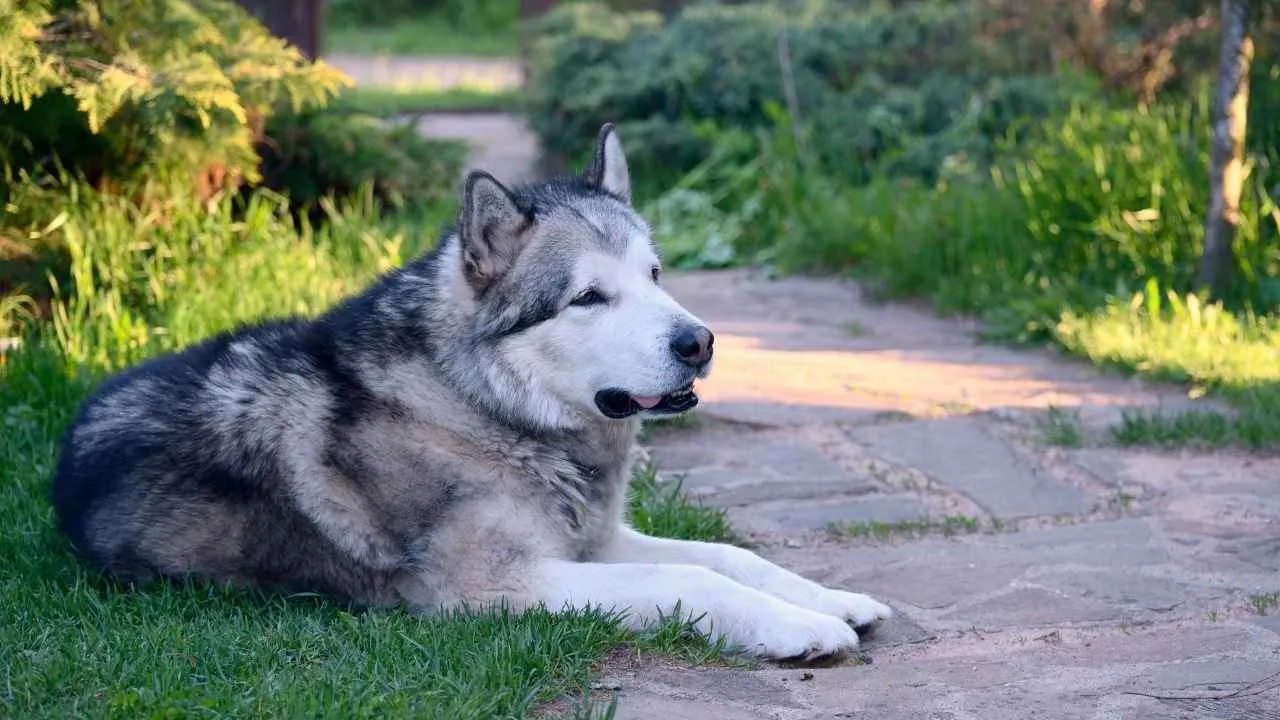
Their independence becomes obvious during training, since a Malamute may decide whether a task is worth doing before cooperating. As per Royal Canin, digging, destructive boredom, and distress when left alone can also appear when their need for activity and human company goes unmet, while their welcoming nature makes them poor watchdogs.
Exercise Needs & Energy Levels
Two Hours of Work for the Aussie
The Australian Shepherd needs at least two to three hours of physical and mental activity each day to stay settled and healthy. Agility, hiking, running, and fetch give its working mind and body something worthwhile to do.
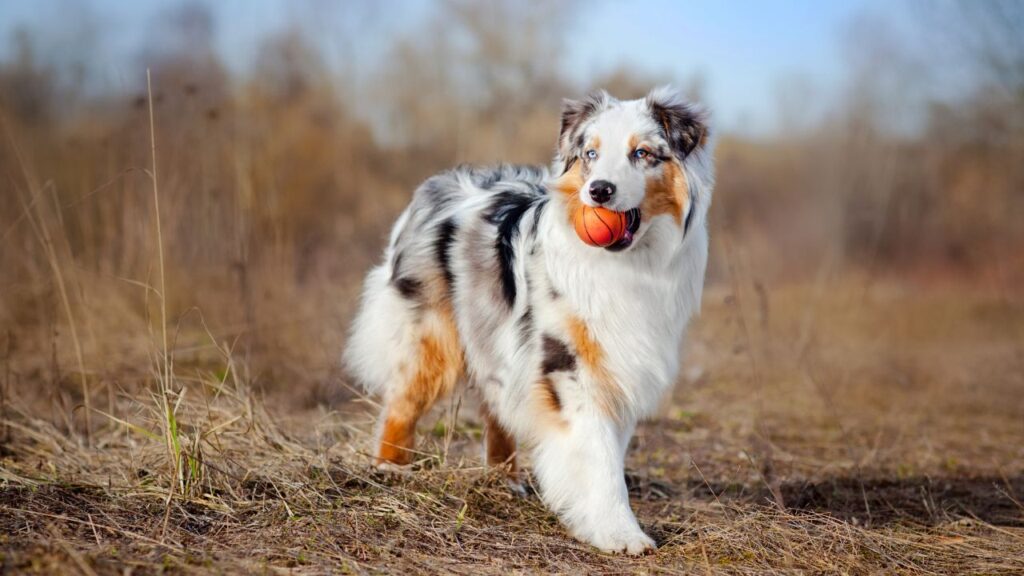
That energy comes with serious endurance, since this farm-bred worker can keep going long after a person is ready to stop. Too little activity can show up as high-strung behavior, destructive habits, or snappiness.
A Malamute Built for Long Hauls
The Alaskan Malamute needs more than an hour of vigorous exercise each day, with two 45-minute walks plus play or dog-sport training offering a useful routine. Its sled-dog stamina allows it to stay active for hours without tiring quickly.
Cold weather suits this thick-coated furry friend far better than intense heat. In warmer climates, early-morning or evening activity is safer, while the hottest part of the day is better spent indoors with air conditioning.
Training & Obedience
A Keen Mind That Needs Direction
The Australian Shepherd is highly trainable when its intelligence and energy have a clear outlet. Early socialization and obedience work are essential, especially because strong family loyalty can turn into territorial behavior or overprotectiveness without enough guidance.
That same devotion makes Aussies eager to work with their people, while too little companionship can leave them destructive. Consistent training gives their energy somewhere productive to go and helps prevent the boredom that can push some Aussies toward rescue situations.
An Independent Thinker With Opinions
The Alaskan Malamute learns quickly, but its independent streak can make training a test of patience and fairness. Early socialization helps prevent pushy behavior around children and pets, while consistent boundaries are important when dealing with adults the dog does not readily respect.
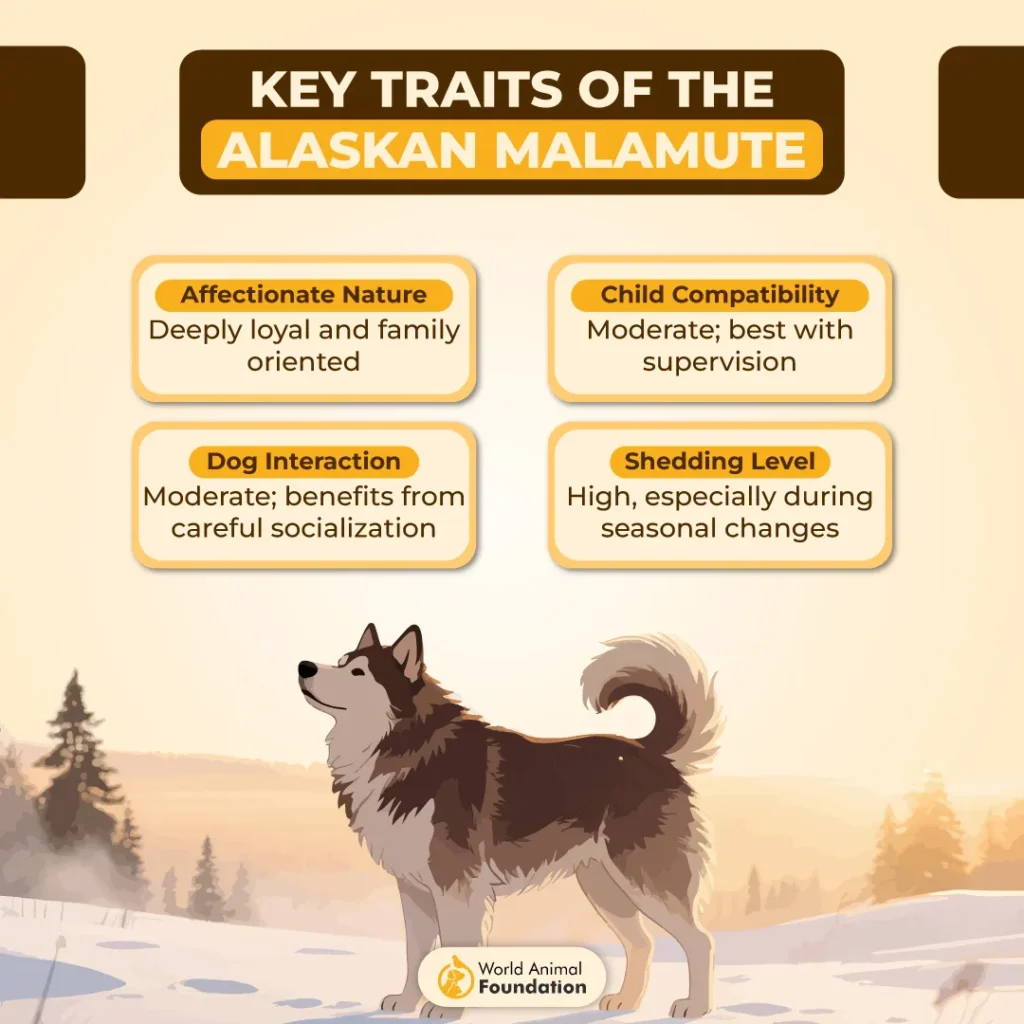
Some instincts are simply part of living with a Malamute, especially digging, so fencing may need to extend below ground. Their naturally friendly attitude toward people also makes them a poor choice when the goal is a serious guard dog.
Grooming Needs & Shedding
Australian Shepherd Coat Care
The Australian Shepherd’s waterproof double coat is fairly manageable with weekly brushing, though shedding season changes the workload. An undercoat rake every two or three days helps pull out the heavy dead undercoat before finishing with a wire brush.
Outdoor adventures can leave an Aussie covered in dirt, but frequent baths usually are not necessary. Unless the coat gets particularly messy, occasional bathing is enough to keep things under control.
Alaskan Malamute Grooming Routine
The Alaskan Malamute has a dense double coat built for Arctic conditions, so its grooming routine demands much more consistency. Daily brushing with a pin brush and metal comb helps catch mats and lets you check for irritated areas that could become infected.
Shedding seasons call for an undercoat rake twice a year to remove the extra loose undercoat. Pet Malamutes can usually go six to eight weeks between baths, while show dogs may be bathed weekly, with a little conditioner used when the coat feels dry.
Outdoor Adventure & Exploration
Australian Shepherd Made for Active Trails
Australian Shepherds suit outdoor plans that keep both their bodies and quick minds busy. Well-conditioned Aussies can handle 5 to 10 miles or more on trails, with forests, mountain loops, and open ridges offering plenty of terrain to explore.
Their agility makes natural obstacles useful too, from fallen logs and rocks to open meadows where you can practice jumps, directional cues, and fast recalls. Many also enjoy shallow rivers, lakes, and calm water outings on a paddleboard.
For a longer adventure, pet-friendly forest roads, backcountry tracks, and camping areas give an Aussie room to explore beside you. Designated dog beaches and open fields can also provide space for safe running and fetch.
Alaskan Malamute Built for Winter Miles
Alaskan Malamutes are better suited to cold-weather adventures, thanks to a dense double coat that holds warmth and sheds snow. Their broad, snowshoe-like paws also give them useful stability across ice and deep powder.
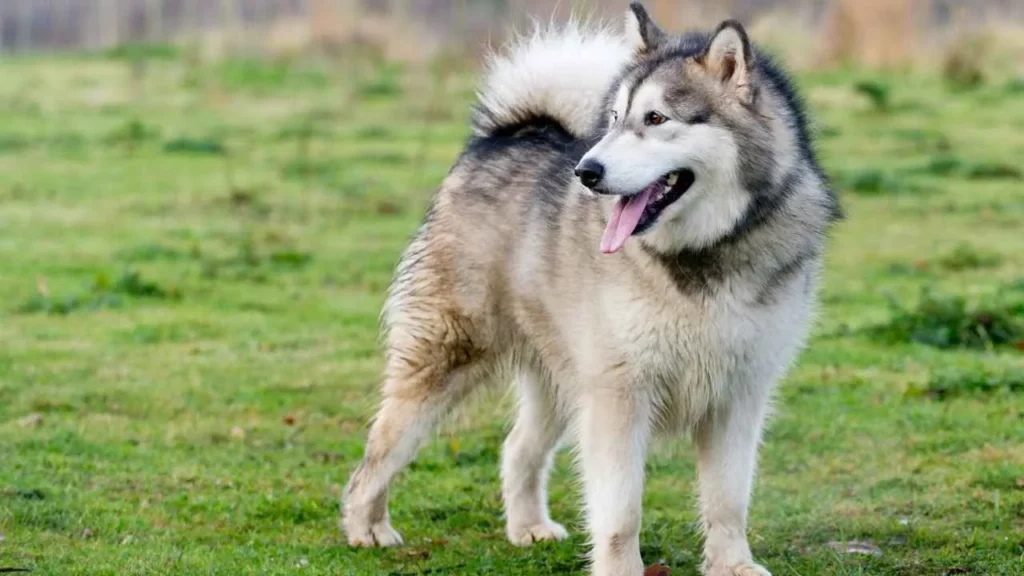
Long-distance trekking suits their strength and endurance better than fast-paced running. Winter backpacking, rugged mountain hikes, and other cool-weather outings let them use the stamina that once made heavy-load travel possible.
Snow sports bring out another side of the Malamute, especially sledding and skijoring. With proper conditioning and equipment, they can pull a sled or a skier across snowy terrain while staying comfortable in the cold.
Health & Lifespan
A Long Life With Routine Checks
Australian Shepherds typically live 12–15 years and are generally healthy dogs. Responsible breeding includes screening for hip dysplasia, epilepsy, cataracts, and certain cancers, while regular ear checks and tooth brushing help keep everyday care on track.
Arctic Strength With More Health Screening
Alaskan Malamutes generally live 10–14 years, with responsible breeders screening for several inherited conditions. These include hip and elbow dysplasia, thrombopathia, chondrodysplasia, hypothyroidism, inherited polyneuropathy, von Willebrand’s disease, and day blindness.
Australian Shepherd vs. Alaskan Malamute: Which Outdoor Companion Suits You Best?
The Australian Shepherd is a better pick if you want a dog that stays closely involved in whatever you are doing. Its herding background shows in the way it stays alert and responsive, so hikes, active games, and outings feel more rewarding when you want a dog that keeps pace with your plans.
The Alaskan Malamute makes more sense if you picture longer hikes, tougher trails, and plenty of time outdoors in cooler weather. Its history as an Arctic hauling dog gives it impressive strength and endurance, though its size means you need to feel comfortable handling a powerful dog.
For most active households wanting an involved and responsive companion, I would lean toward the Australian Shepherd. The Malamute is the more distinctive choice if you genuinely enjoy rugged outdoor adventures and want a substantial dog with serious working strength.
Conclusion
The better choice depends less on which dog looks more impressive and more on what your everyday life can support. A working companion may suit someone who enjoys training, games, hiking, and staying closely connected with their dog, making lifestyle compatibility especially important. A larger Arctic worker can appeal to people seeking rugged adventures, cooler weather, and greater physical strength.
Both require commitment, from regular exercise and grooming to early socialization and consistent training. Their working histories explain many of the differences you will notice at home. Consider your routine, environment, living space, and expectations carefully to find the perfect breed for the right owner, with lifestyle compatibility guiding the final decision.
