




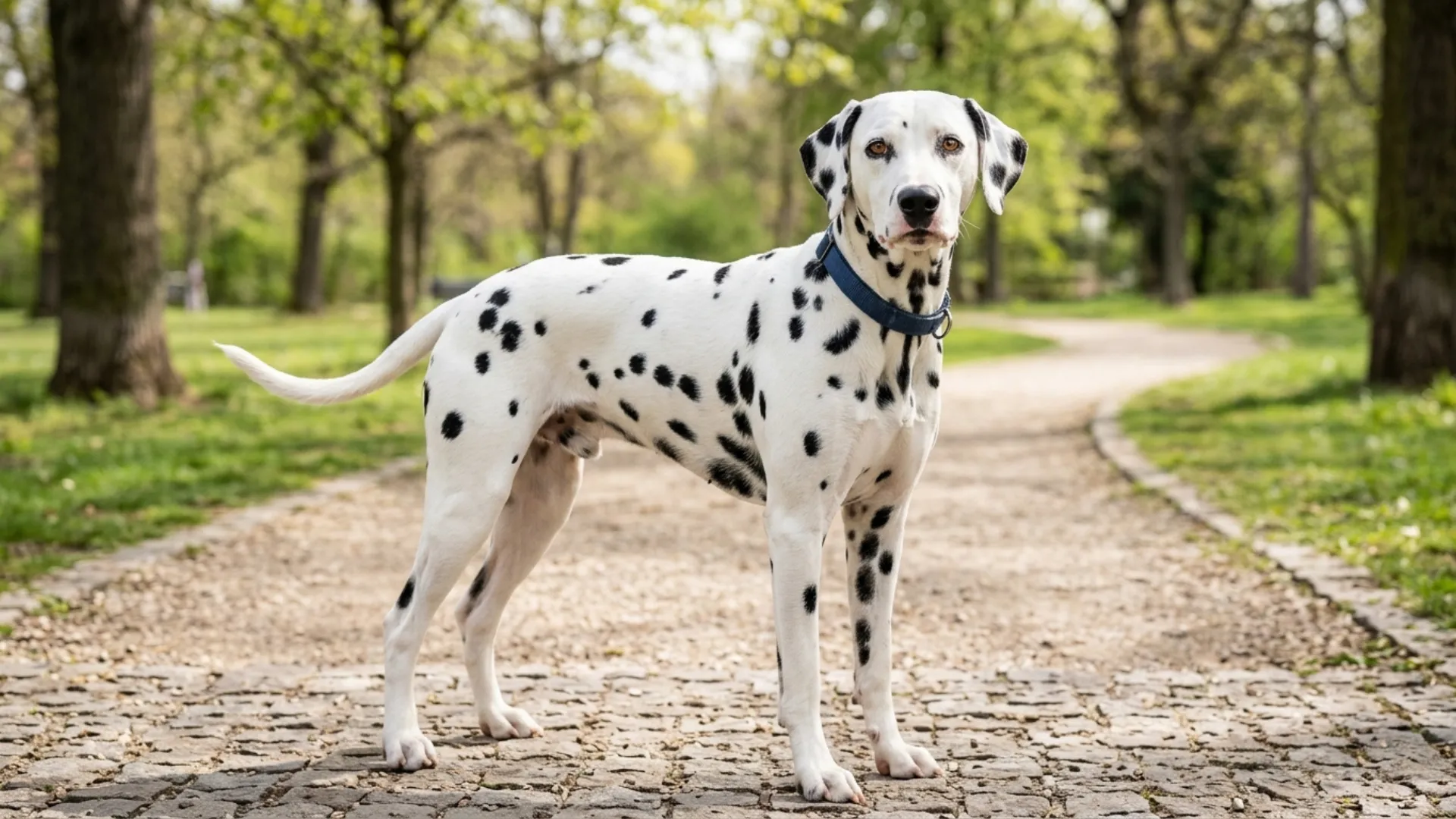
A short coat can give a dog a sleek, polished appearance while making everyday grooming relatively straightforward.
Breeds with close-fitting fur often need less brushing than their long-haired counterparts, although coat length alone does not determine how much care a dog requires. Shedding, skin health, bathing, exercise, and routine maintenance still deserve attention.
Short-haired dog breeds also come in remarkably different shapes and personalities. Some were bred to follow scent trails, others to point out game, and several developed as versatile working or companion dogs. Their coats may be simple, but their temperaments and activity requirements can vary dramatically.
The seven breeds below combine distinctive appearances with short fur that is generally uncomplicated to maintain. Whether you prefer striking markings, athletic proportions, or a muscular build, there is plenty of variety to explore.
Beautiful Dog Breeds With Simple, Short Fur Types
1. Dalmatian
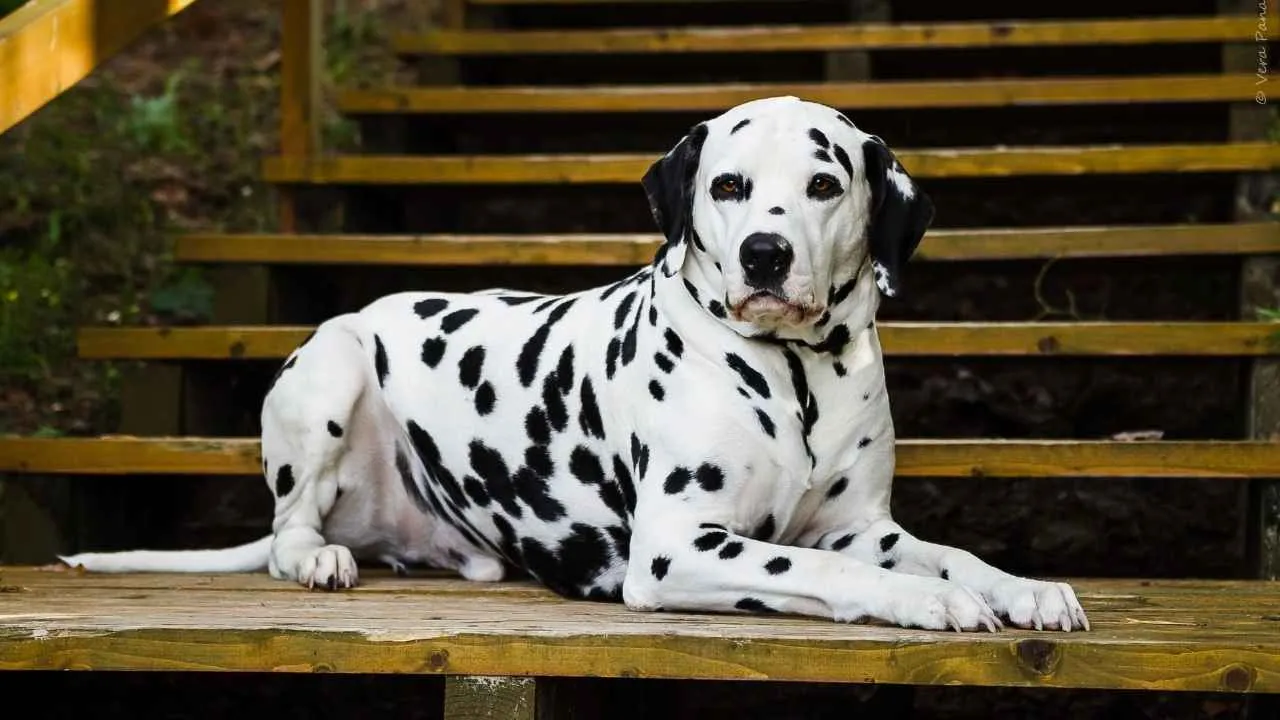
Dalmatians are instantly recognizable for their distinctive spots and athletic build. Their history is somewhat complex, but this small dog breed became particularly associated with carriage dogs and later developed a strong connection with firefighters and other working roles.
Their elegant appearance and endurance have helped make them one of the world’s most recognizable breeds. Beneath the famous spotted pattern is an energetic dog that often thrives when given plenty of activity and interaction.
Energetic, Alert, and Full of Personality
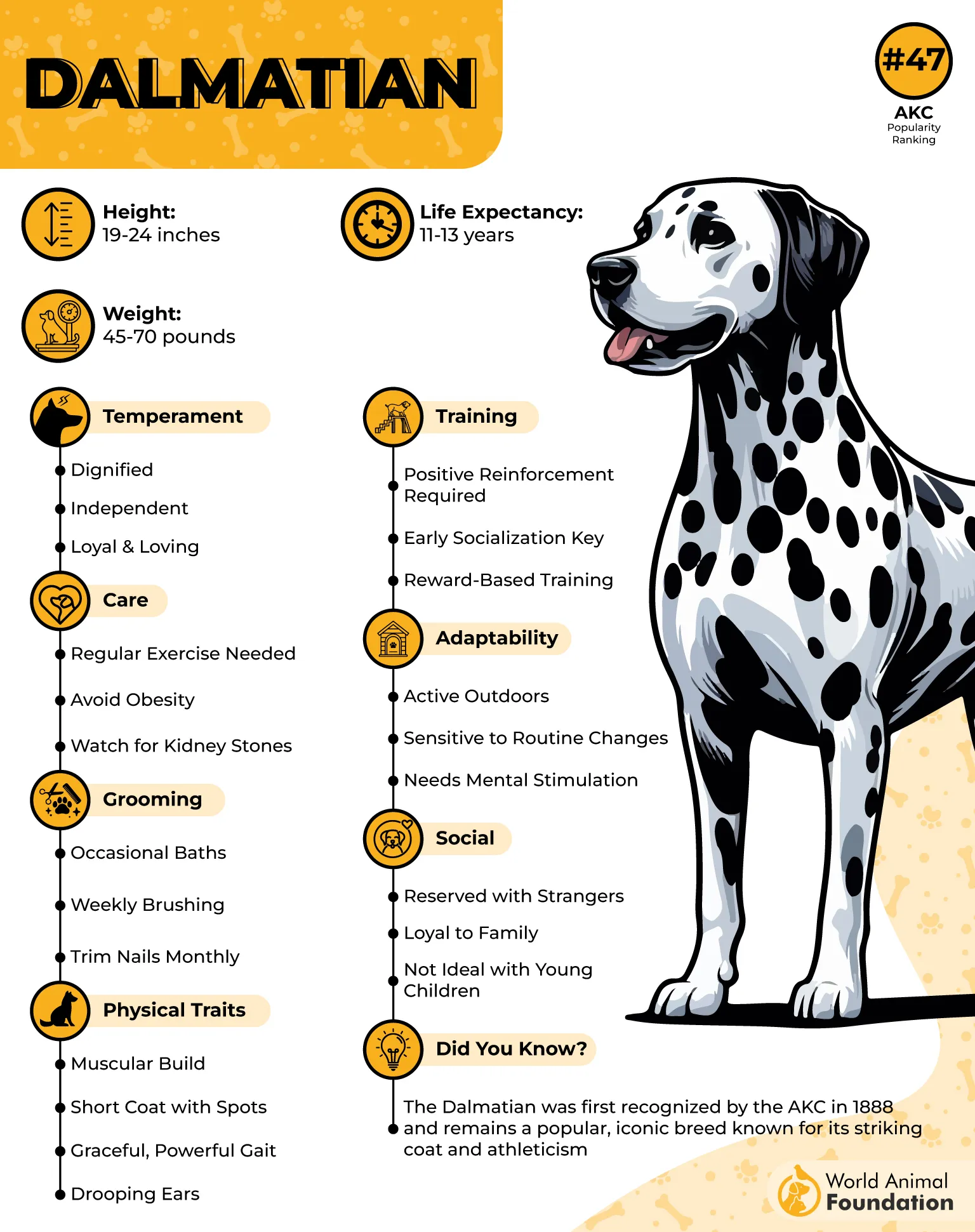
Dalmatians tend to be lively, intelligent, and highly active. They often enjoy participating in family activities and can develop strong bonds with their owners.
Their energy can become challenging without sufficient physical and mental stimulation. Early socialization and reward-based training can help them develop good manners while giving their busy minds constructive direction.
A Distinctive Coat With Minimal Styling
Their short, dense coat requires relatively little grooming compared with long-haired breeds. Regular brushing removes loose hairs and helps keep the coat looking sleek.
Dalmatians can shed more than their short fur might suggest, so occasional brushing around the home can be useful. Routine bathing, nail care, dental hygiene, and skin checks complete their basic grooming routine.
2. Beagle
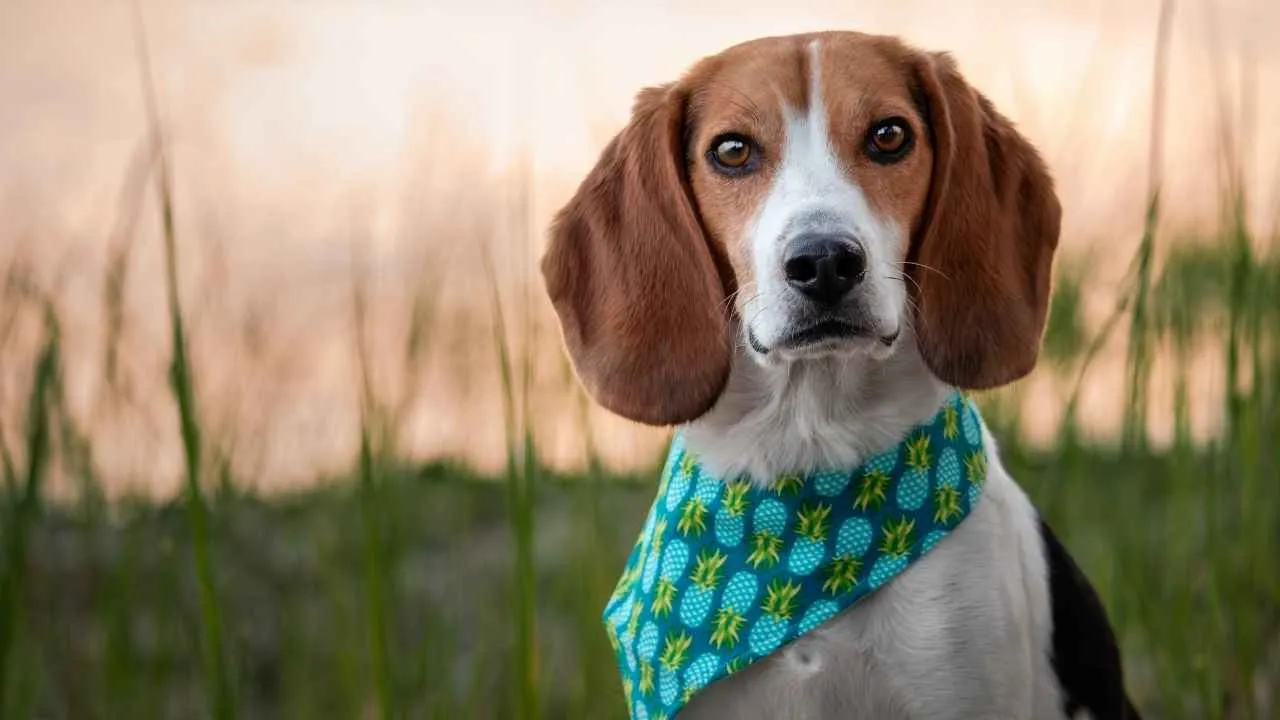
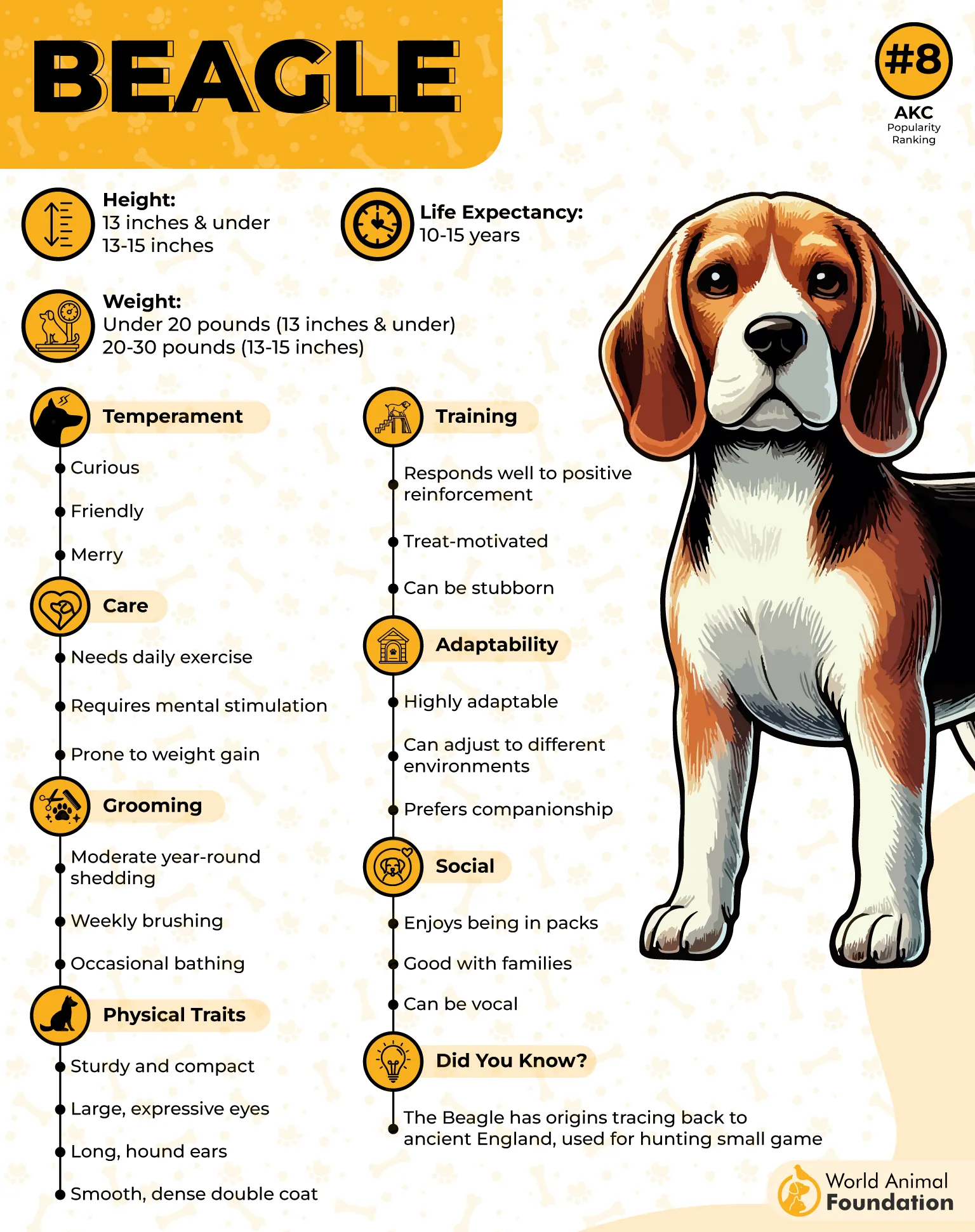
Beagles were developed in Britain as scent hounds used to pursue rabbits and other small game. Their compact bodies, exceptional noses, and persistent tracking ability made them useful hunting companions.
Today, Beagles are equally appreciated for their cheerful appearance and entertaining personalities. Their expressive faces and long ears contribute to their distinctive look, while their compact size makes them adaptable to many households.
Curious, Sociable, and Guided by Their Nose
Beagles are often cheerful, outgoing, and interested in investigating everything around them. Their powerful sense of smell can sometimes take priority over whatever the pet owner is asking them to do.
These small dogs generally benefit from patient training and plenty of opportunities to sniff and explore. Puzzle toys, scent games, and structured walks can help satisfy their natural curiosity without encouraging unwanted wandering.
Their Short Coat Keeps Grooming Straightforward
Beagles have a short, dense coat that typically needs only regular brushing to remove loose hair and distribute natural oils. Their grooming routine is relatively simple compared with breeds requiring extensive coat maintenance.
Their long, floppy ears deserve particular attention because limited airflow can contribute to ear problems. Routine ear checks, nail trimming, dental care, and occasional baths help keep them in good condition.
3. English Foxhound
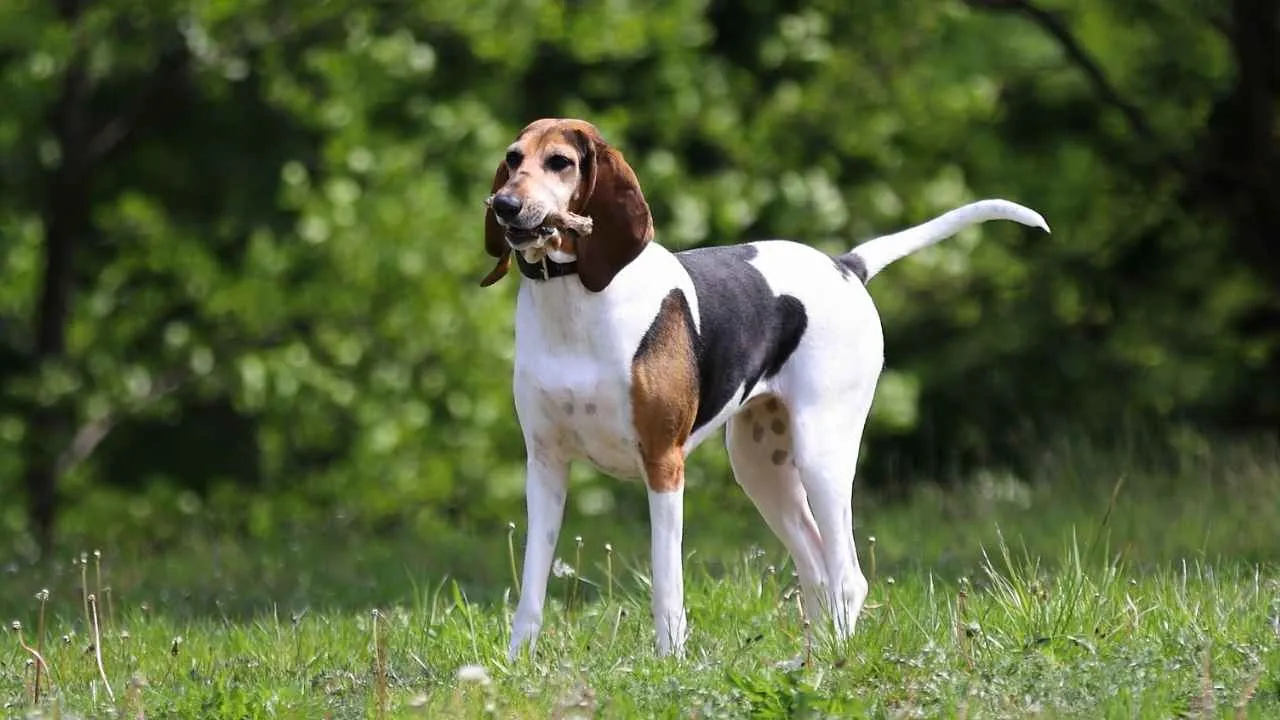
English Foxhounds were developed in Britain for traditional fox hunting and descend from generations of carefully selected scent hounds. Their athletic bodies allowed them to cover long distances while following a scent trail.
Their history produced a dog with considerable stamina and a strong instinct to work alongside other hounds. Although less common as household pets than some breeds, they remain an interesting example of classic British hunting-dog development.
Sociable, Enduring, and Naturally Pack-Oriented
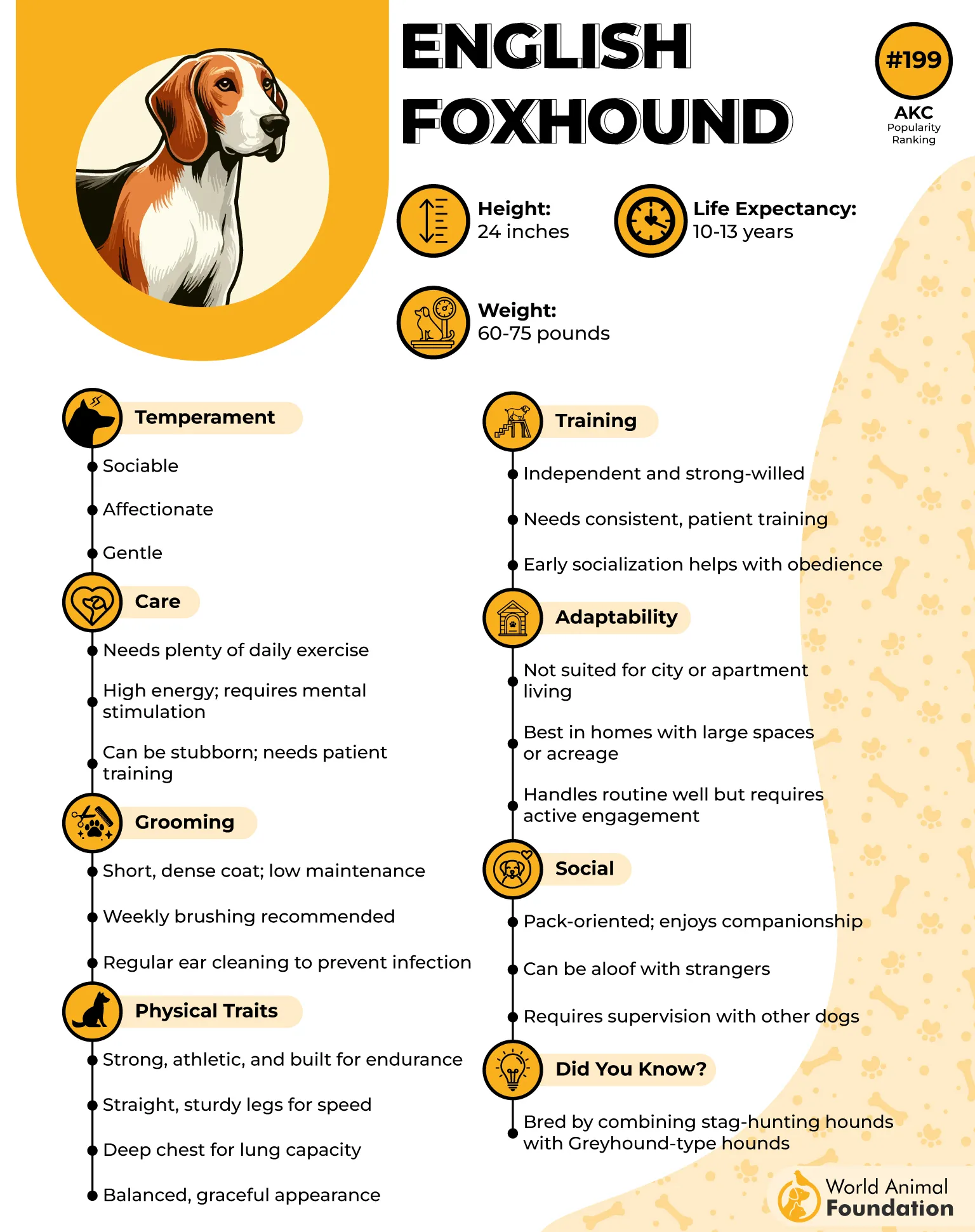
English Foxhounds are generally energetic dogs that enjoy companionship and activity. Their history of working in groups contributed to their social nature and ability to cooperate with other dogs.
They are not usually ideal for inactive households because they have substantial exercise needs. Secure outdoor areas and regular opportunities for movement can help prevent boredom and restlessness.
A Low-Fuss Coat for an Active Lifestyle
Their short, dense coat is relatively easy to maintain. Regular brushing can remove dead hairs and keep the skin and coat in good condition without requiring elaborate grooming sessions.
Because these dogs spend considerable time outdoors when properly exercised, pet parents should check their paws, ears, and skin after adventures. Basic hygiene, nail care, and occasional bathing are generally sufficient.
4. German Shorthaired Pointer
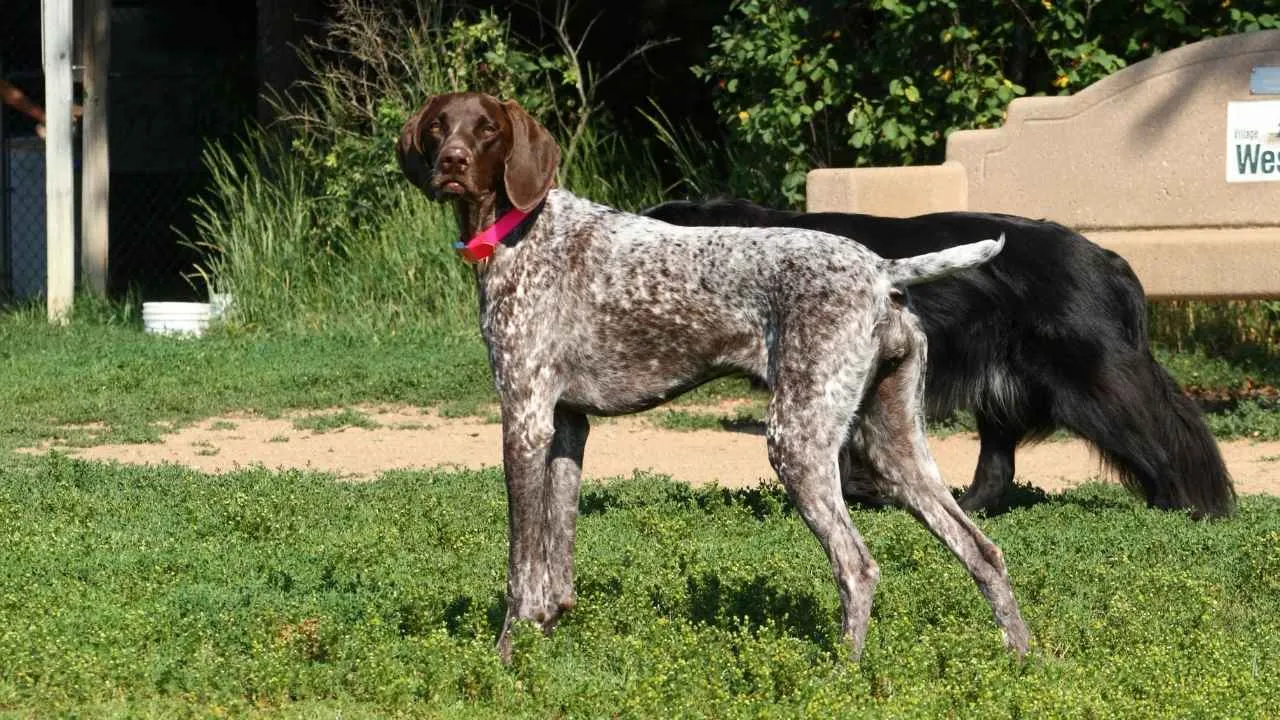
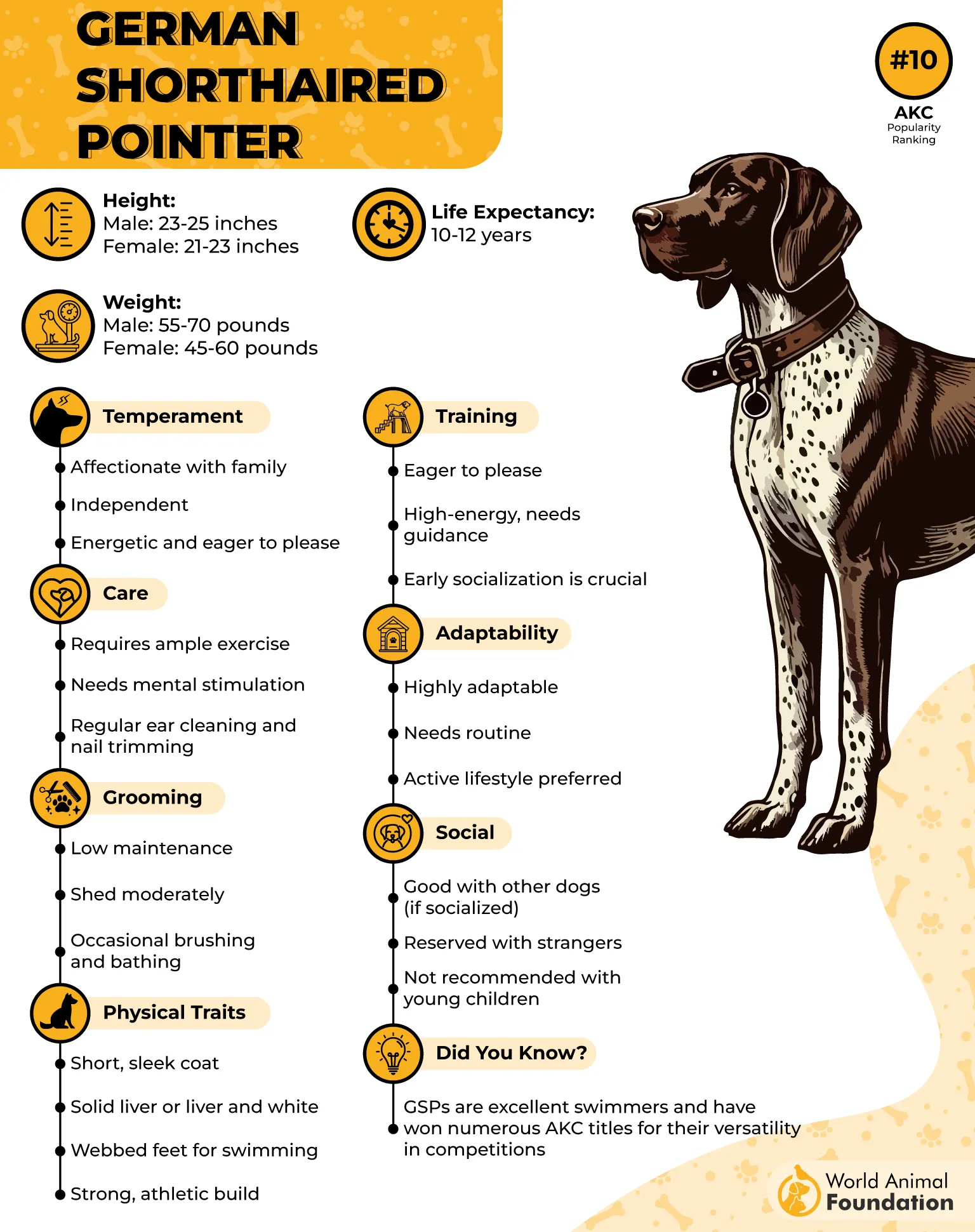
German Shorthaired Pointers were developed in Germany as versatile hunting dogs capable of pointing, retrieving, and working across different types of terrain, as per WebMD. Breeders emphasized athleticism, intelligence, endurance, and cooperation.
The result is an adaptable sporting breed with a distinctive liver-and-white or similarly patterned appearance. Its streamlined body reflects a history built around movement and sustained activity.
Intelligent Athletes That Crave Engagement
German Shorthaired Pointers are typically energetic, responsive, and eager to participate in activities with their owners. They often excel when their routine includes running, retrieving, swimming, hiking, or structured training.
Simply providing a short walk may not be enough for many individuals. Mental challenges are equally important, and training games or scent-based activities can help prevent unused energy from turning into destructive behavior.
Sleek Fur With Minimal Grooming Demands
Their short, coarse coat generally requires little maintenance. A regular brushing session can remove loose hairs and help keep the coat clean and glossy.
Their active lifestyle makes routine checks useful after outdoor excursions. Owners should inspect the paws, ears, and skin for debris or irritation while keeping up with bathing, nail trimming, and dental care.
5. Catahoula Leopard Dog
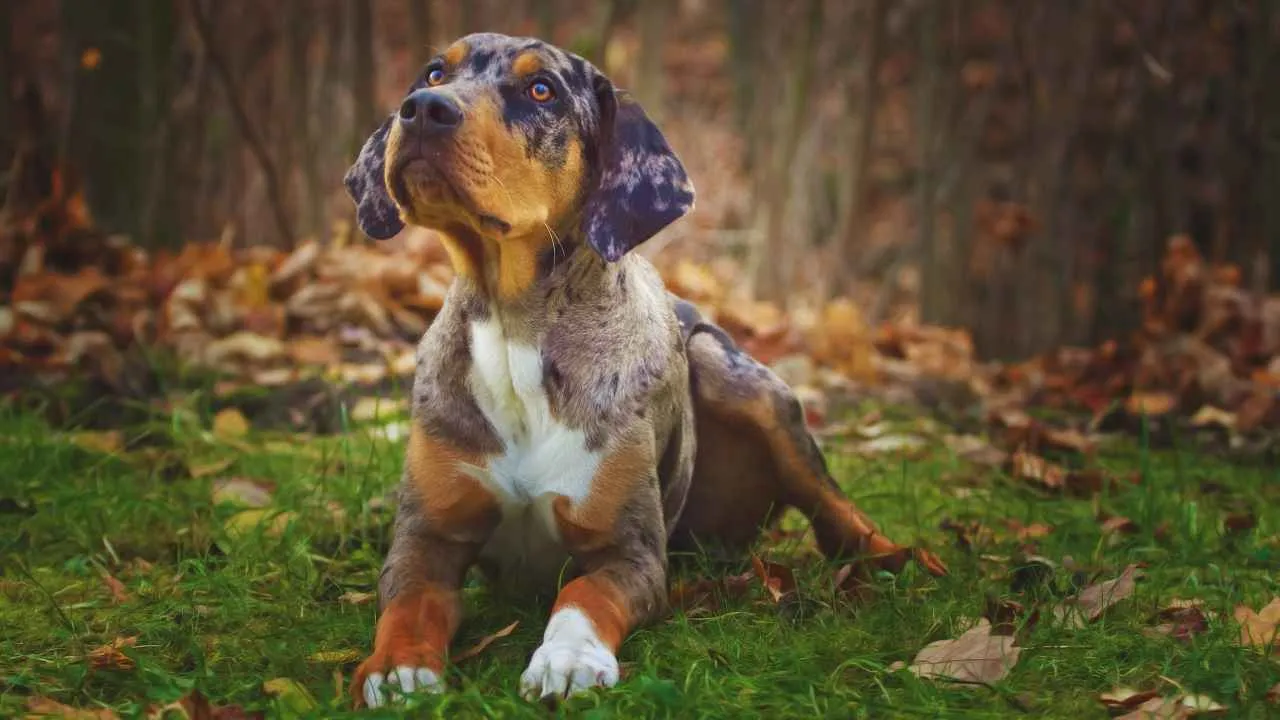
The Catahoula Leopard Dog developed in Louisiana and became associated with hunting, herding, and working on farms and ranches. Its striking coat patterns and sometimes vividly colored eyes make it especially distinctive.
The breed’s background required versatility and independence. It has been used for managing livestock and tracking or controlling game, making it a capable working dog rather than simply an ornamental breed.
Independent, Protective, and Ready for a Job
Catahoulas are often intelligent, confident, and highly alert. They can form strong relationships with their families but may be more reserved around unfamiliar people, as per Hill’s Pet.
Their working heritage means they generally benefit from having a purpose. Consistent training, socialization, and mentally stimulating activities can help direct their intelligence and independence toward constructive behavior.
A Colorful Coat That Needs Little Fuss
The Catahoula’s short coat is typically easy to care for. Occasional brushing can collect loose hair and remove surface dirt without the need for complicated grooming techniques.
Their ears, nails, teeth, and skin should still receive routine attention. Dogs that spend significant time working outdoors may also benefit from regular checks for small injuries, parasites, or debris.
6. Vizsla
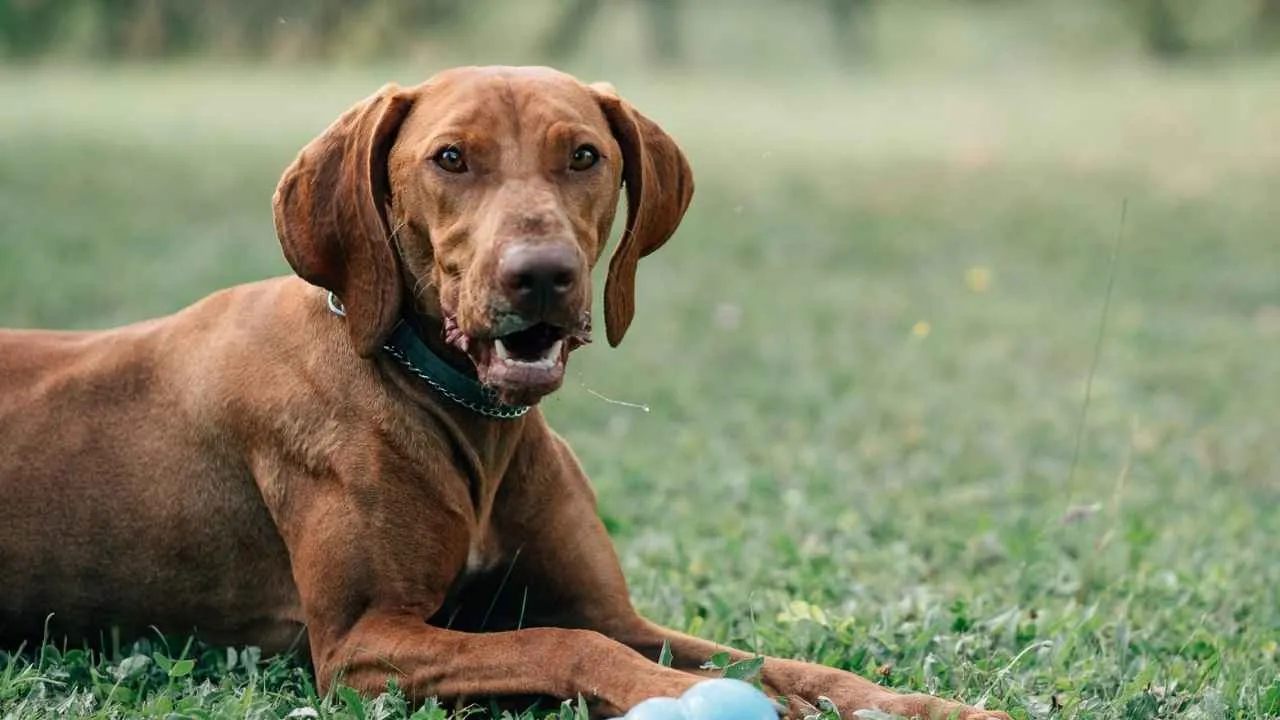
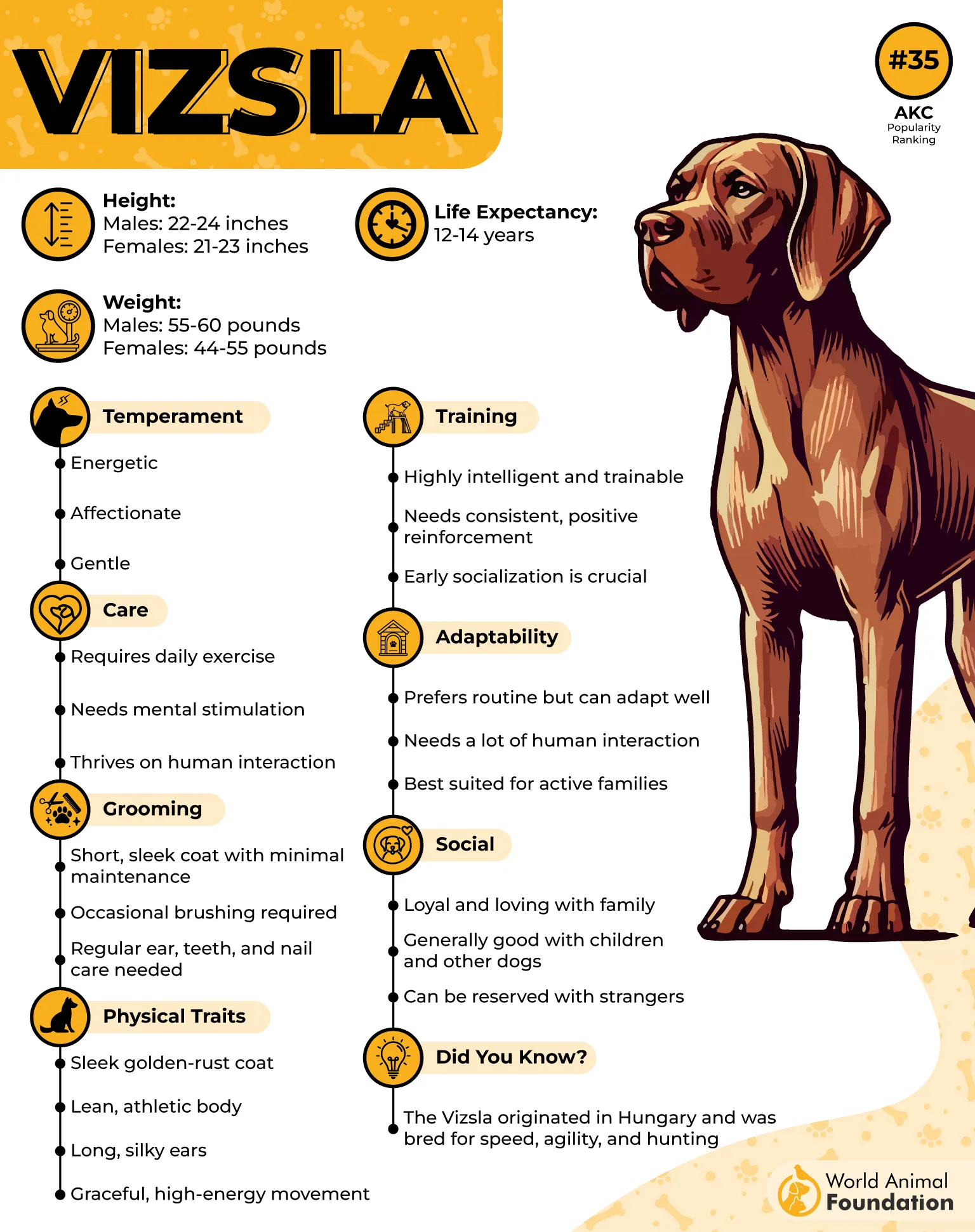
The Vizsla originated in Hungary and was developed as a versatile hunting companion capable of pointing and retrieving game, as per the AKC. Its sleek golden-rust coat, lean frame, and athletic movement reflect generations of sporting-dog development.
The breed became known for combining field ability with a close relationship with its handler. That people-oriented quality has helped Vizslas become popular with active families as well as hunting enthusiasts.
Affectionate, Sensitive, and Highly Active
Vizslas often thrive on close companionship and may become unhappy if left alone for extended periods. They are typically energetic, affectionate, and eager to participate in whatever their owners are doing.
Their sensitivity makes gentle, consistent training particularly useful. They can excel in activities such as running, hiking, retrieving, scent work, and obedience when given appropriate outlets.
A Sleek Coat That Rarely Needs Elaborate Grooming
The Vizsla’s short, smooth coat is one of its easiest physical-care features. Weekly brushing or occasional grooming can help remove loose hair and keep the coat looking polished.
Bathing is generally needed only when the dog becomes dirty. Routine nail care, dental hygiene, ear checks, and attention to the skin are still necessary for overall health.
7. Boxer
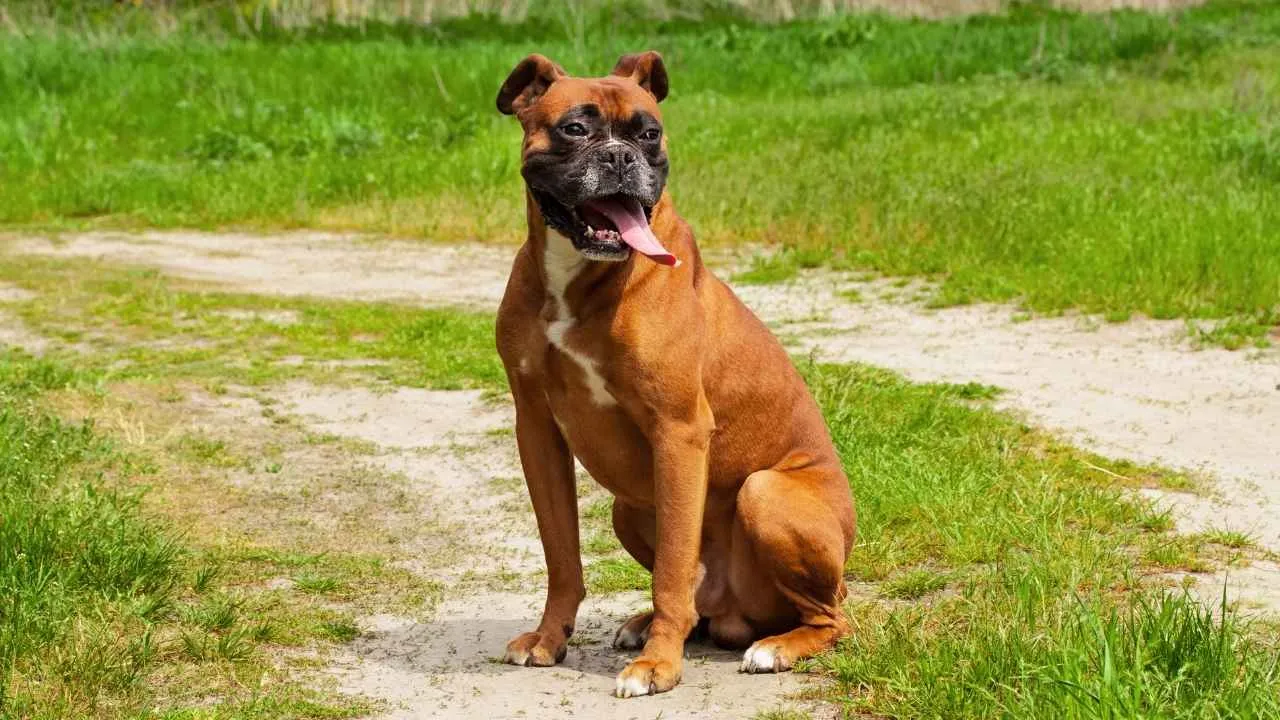
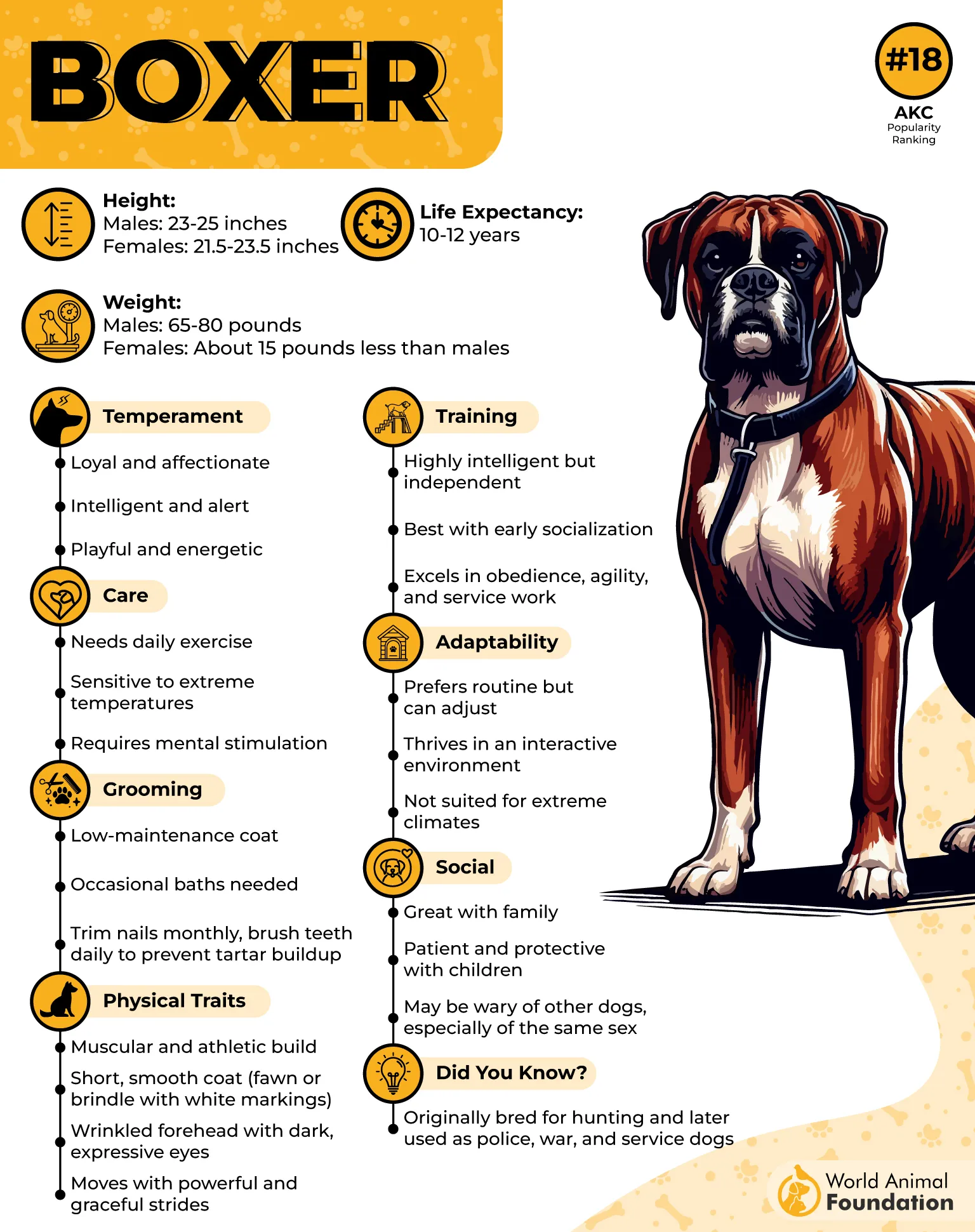
Boxers originated in Germany and descended from working dogs with roots in hunting and other demanding tasks, as per PDSA. Over time, selective breeding emphasized strength, athletic ability, courage, and companionship.
Their square build, expressive face, and muscular physique give Boxers a distinctive appearance. Despite their serious look, they are often playful and highly engaged with their families.
Playful, Loyal, and Naturally Alert
Boxers tend to be energetic dogs that enjoy games, exercise, and interaction with their owners. Many retain a youthful attitude well into adulthood and can be entertaining companions.
They can also be attentive guardians. Early socialization and obedience training can help them learn when energetic play is appropriate and when calm behavior is expected.
Their Close Coat Is Easy to Maintain
Boxers have a short, smooth coat that generally requires minimal grooming. Regular brushing removes loose hair and helps maintain healthy skin and a clean appearance.
Their grooming routine should also include nail trimming, dental care, ear inspection, and occasional bathing. Because the coat is not particularly insulating, owners should also be mindful of extreme temperatures during outdoor activities.
Conclusion
Dalmatians, Beagles, English Foxhounds, German Shorthaired Pointers, Catahoula Leopard Dogs, Vizslas, and Boxers demonstrate how much variety exists among short-coated breeds. Their fur may be relatively simple to maintain, but their personalities range from the scent-driven curiosity of the Beagle to the intense athleticism of the German Shorthaired Pointer.
A short coat should not be mistaken for a complete absence of grooming responsibilities. Regular brushing, bathing when necessary, nail care, dental hygiene, ear checks, and attention to skin condition remain important parts of responsible ownership.
The best short-haired breed for a household ultimately depends on lifestyle as much as appearance. An active owner may appreciate the athletic nature of a Vizsla or Pointer, while someone seeking a cheerful companion may be drawn to a Beagle or Boxer. Understanding each breed’s temperament, exercise needs, and working heritage can help ensure that its beauty is matched by a compatible home.
