




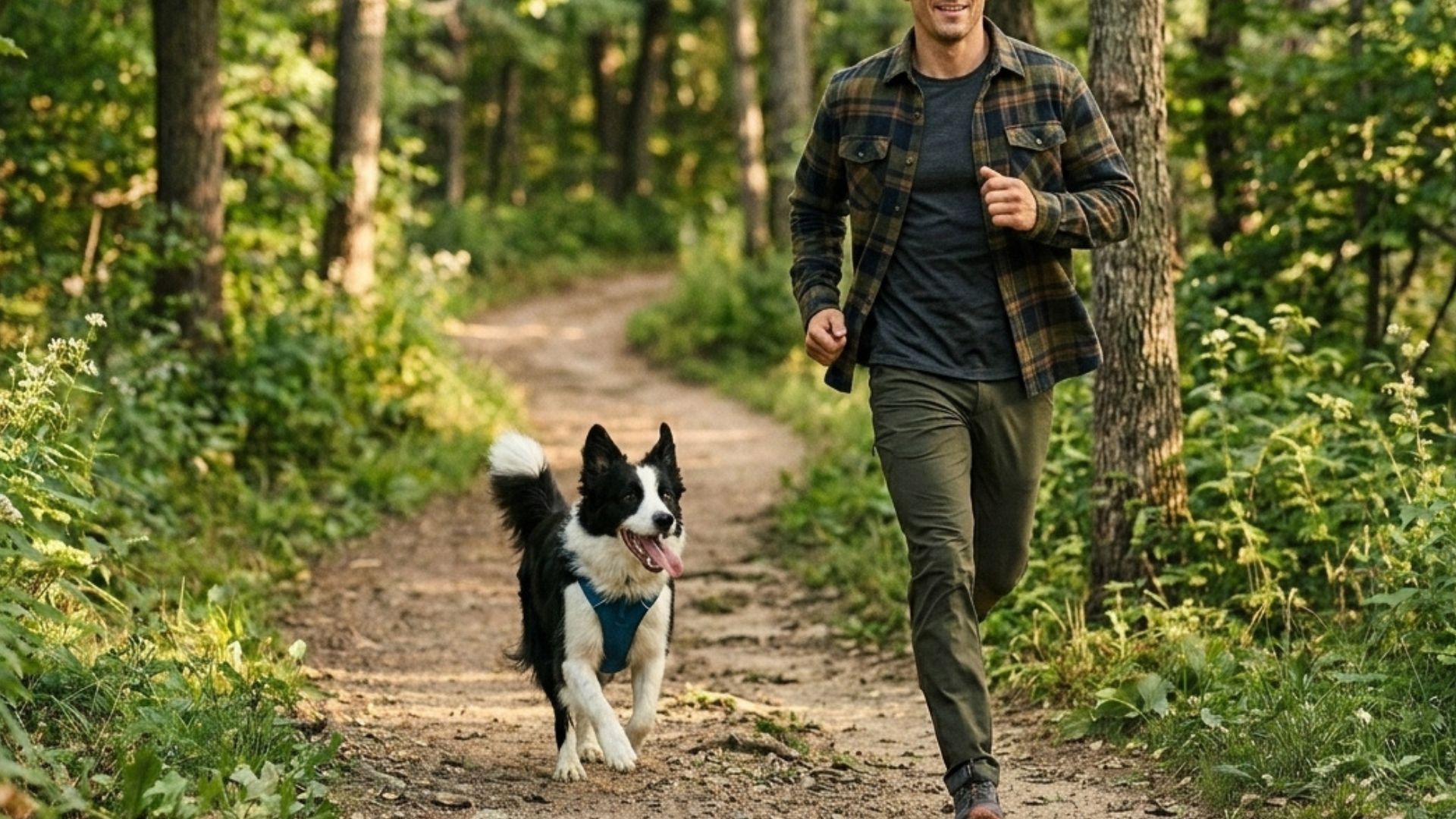
If your idea of a perfect day involves fresh air, winding trails, muddy paws, and a little adventure, why leave your four-legged friend behind?
The right dog can turn an ordinary walk into an exciting expedition and make everything from weekend hikes to camping trips even more enjoyable. For outdoor enthusiasts, having a canine companion who genuinely loves being outside can make every adventure better.
Of course, not every dog is built for an active outdoor lifestyle. Some breeds are naturally energetic, athletic, and eager to explore, while others are better suited to relaxing at home.
In this article, we’ve rounded up some of the most exciting breeds for outdoor enthusiasts, from energetic companions that thrive on activity to adventurous dogs that simply love having a job to do.
Exciting Dog Breeds Perfect for Outdoor Enthusiasts
1. Border Collie
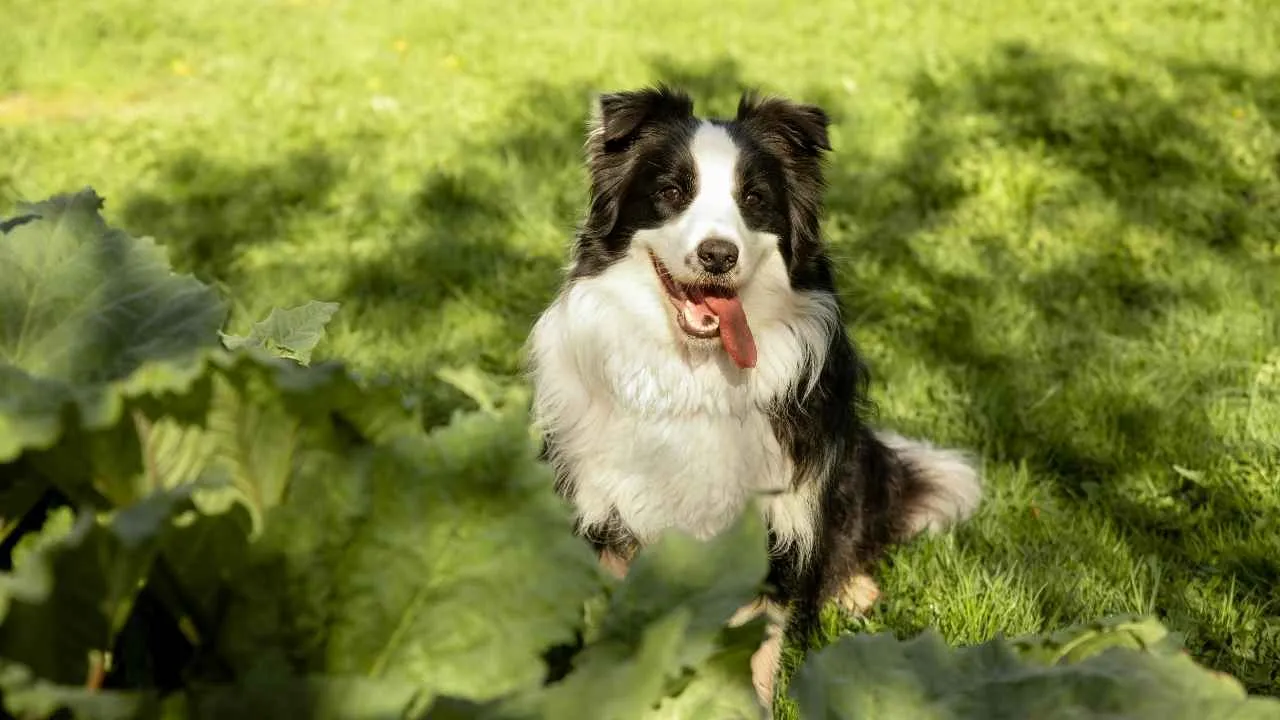
Border Collies are energetic working dogs originally bred to herd livestock along the England-Scotland border. Their agility, stamina, and sharp focus make them exciting companions for outdoor enthusiasts.
They enjoy hiking, camping, Frisbee, agility, and other active adventures. Their medium-length double coat can be wavy or short, with colors including black and white, red, lilac, blue, and all-black.
High Energy and Sharp Minds
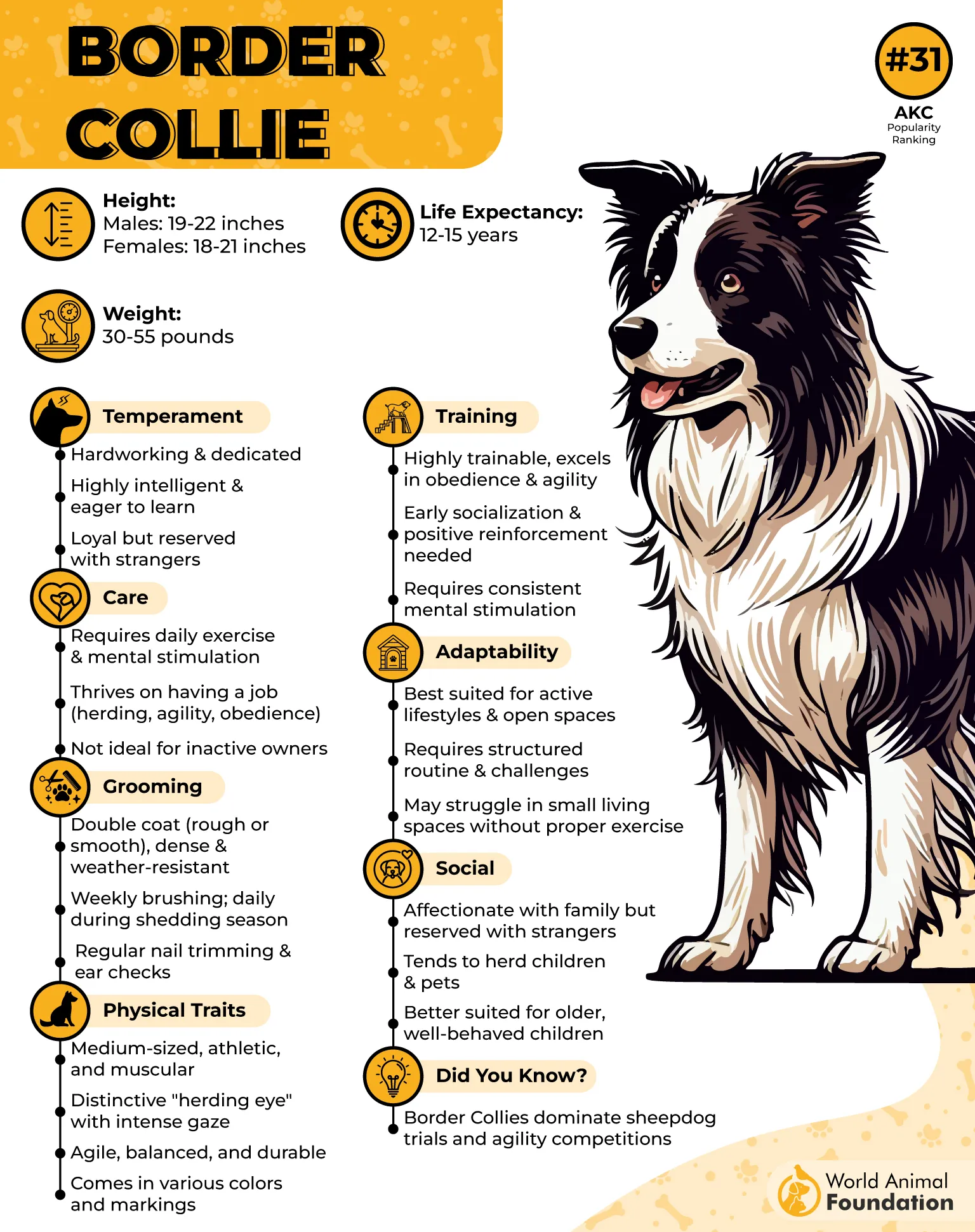
Border Collies are extremely intelligent, playful, and quick to learn. According to PetMD, young dogs often need one to two hours of exercise each day, along with plenty of mental stimulation.
Hiking, flyball, herding activities, and interactive games can keep them engaged. Without enough activity, they may become bored and start chewing, digging, barking, or herding children and other pets.
Best for Active Outdoor Lifestyles
Border Collies are loyal and often form strong bonds with their families, but they can be reserved around strangers. Early socialization and positive-reinforcement training are important.
They may also herd children, other pets, or anything that catches their attention. Their high energy can be challenging in less active homes, especially without enough space, exercise, and daily mental stimulation.
2. Australian Shepherd
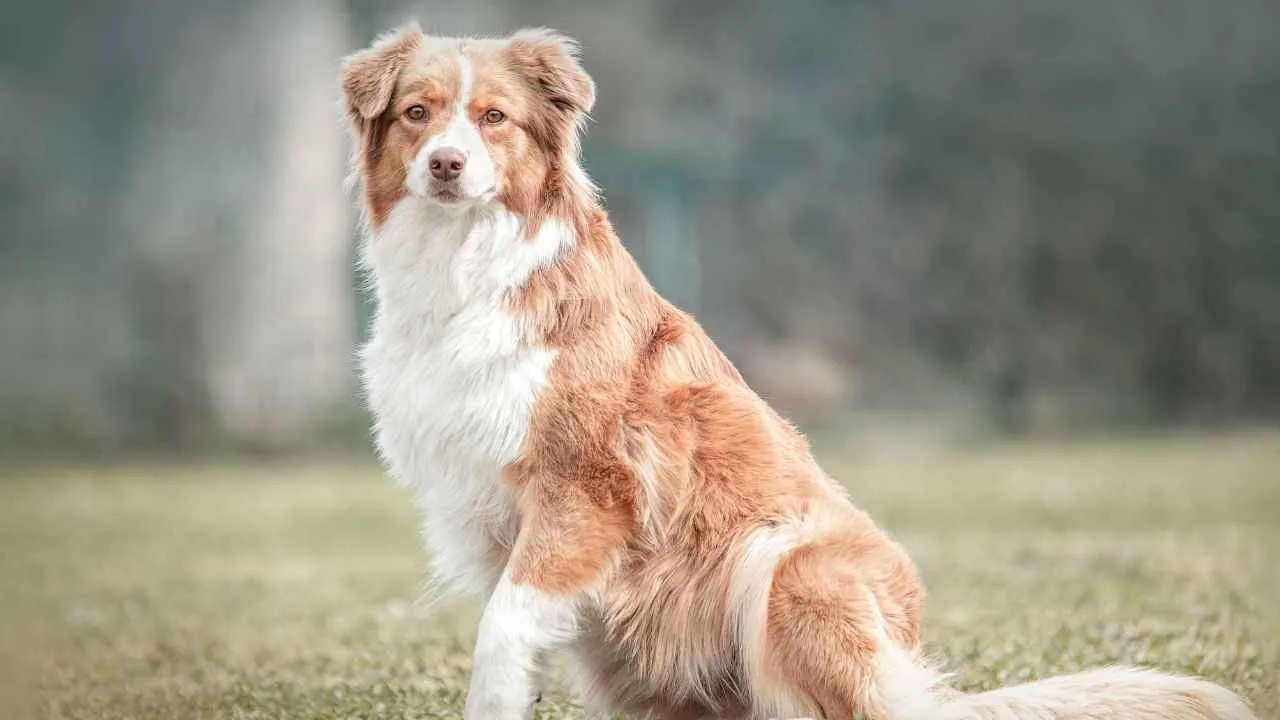
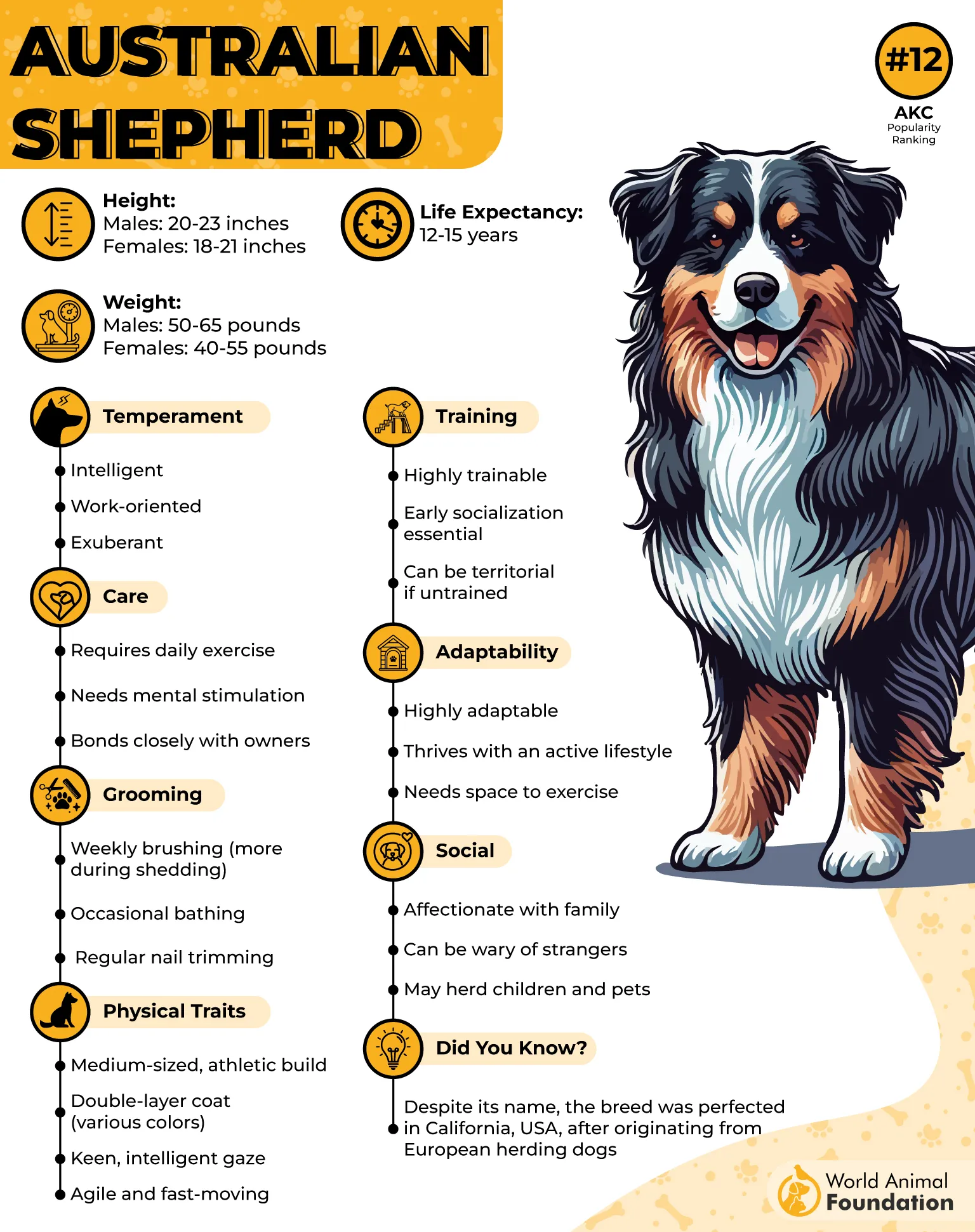
Australian Shepherds are intelligent, athletic dogs with strong herding instincts. Originally bred as working dogs, they still have a natural drive to stay busy and get jobs done. Their active nature makes them well suited to hiking, running, fetch, and other outdoor activities.
They are playful, responsive, and quick to learn, but their energy can be demanding for owners who cannot give them enough time and attention.
Active Minds and Strong Herding Instincts
Aussies need regular exercise and plenty of mental stimulation throughout their lives. They enjoy having a purpose and can become destructive, digging or chewing, when they do not have enough to do.
Their herding instincts may also make them chase children, cats, cars, bikes, or other moving objects. Early socialization and consistent training can help redirect these behaviors.
Loyal, Alert, and Athletic
Australian Shepherds are usually affectionate and devoted to their families, often following their people around the home. Some may be reserved with strangers or domineering around unfamiliar dogs. They are also alert watchdogs and can bark excessively.
Their athletic nature means proper recall training is important, as they can chase squirrels, cars, and other distractions. Without reliable recall, they should stay on a leash or in a secure, fenced area.
3. Labrador Retriever
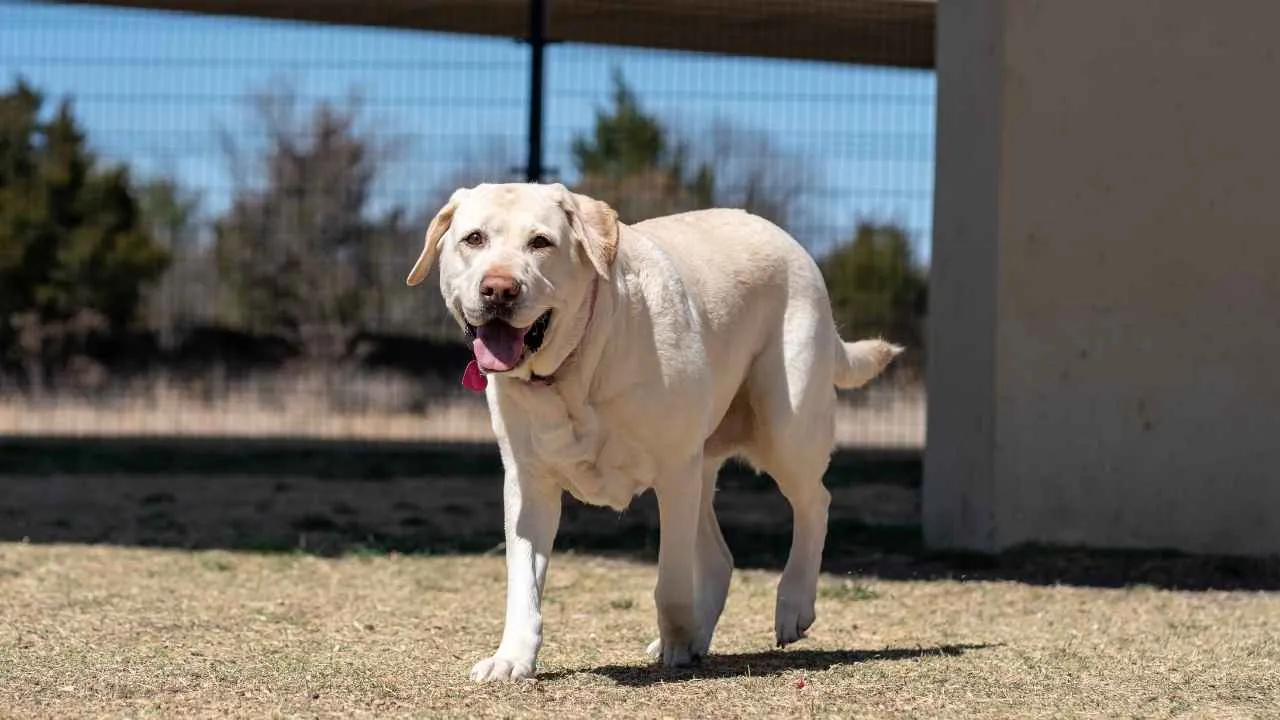
Labrador Retrievers were bred to work hard, retrieve game, and handle long days in cold water. Their working background shaped them into energetic, determined, and highly trainable dogs.
Today, their love of activity makes them excellent companions for swimming, hiking, hunting, and other outdoor adventures. They are also affectionate, friendly, and generally get along well with children, other dogs, and pets, as mentioned by Hill’s Pet.

Made for Active Adventures
Labs have a strong retrieving instinct and love having a job to do. They especially enjoy games of fetch and activities that let them use their natural skills.
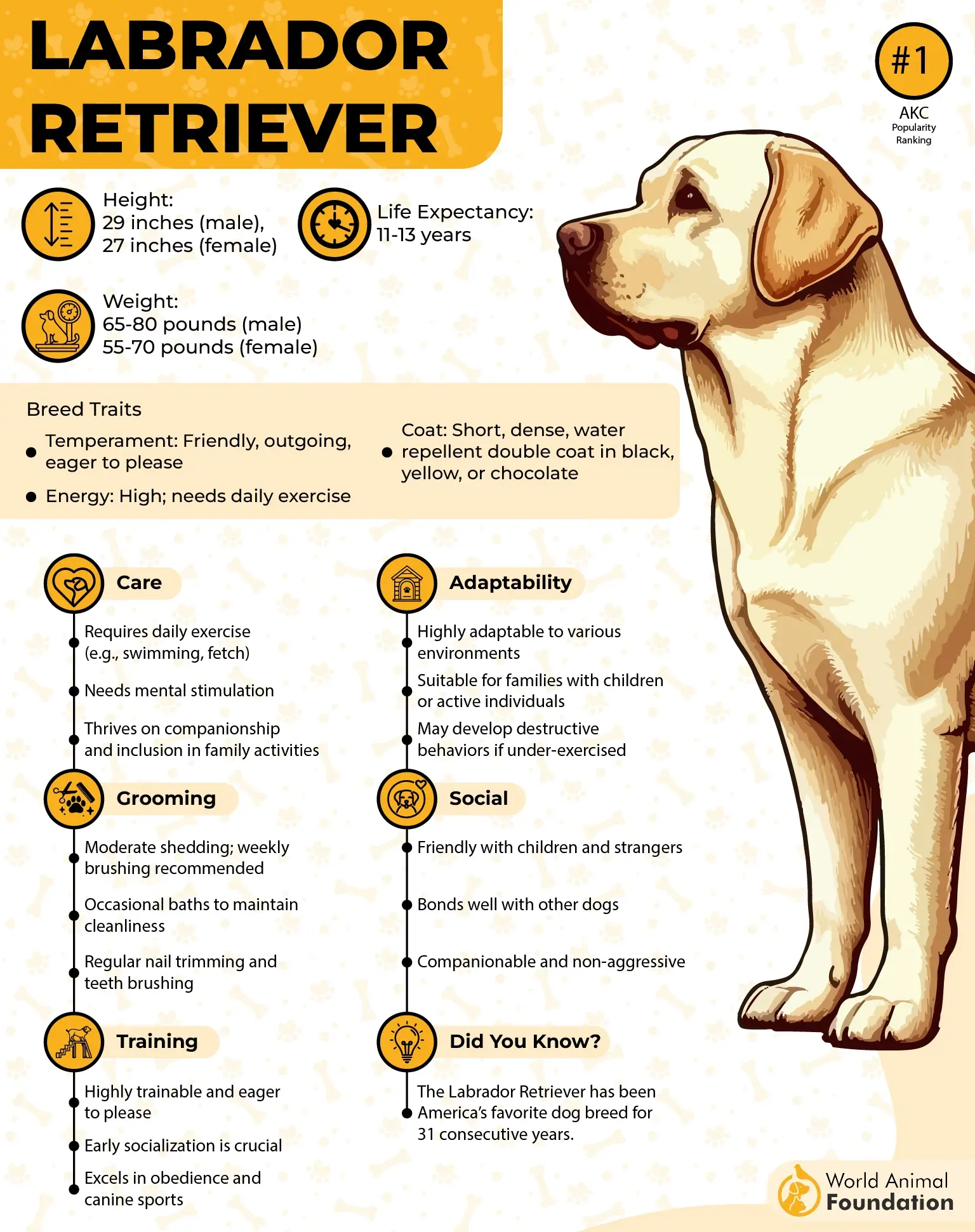
Their water-repellent double coat helps them handle wet conditions, although it also means they shed heavily and need regular brushing. Field-line Labs tend to be especially energetic, while some show-line dogs may have a calmer nature.
Training and Exercise Needs
Regular exercise and early obedience training are important for Labrador Retrievers. Their strength and natural enthusiasm can make young dogs difficult to manage without proper training. When they are bored or left alone for too long, they may chew, dig, or bark excessively.
Their strong urge to retrieve can also lead to chewing, so exercise, training, and sturdy chew toys can help. With their friendly nature and love of water, Labs can happily join their people on swims, hikes, hunting trips, and other active outings.
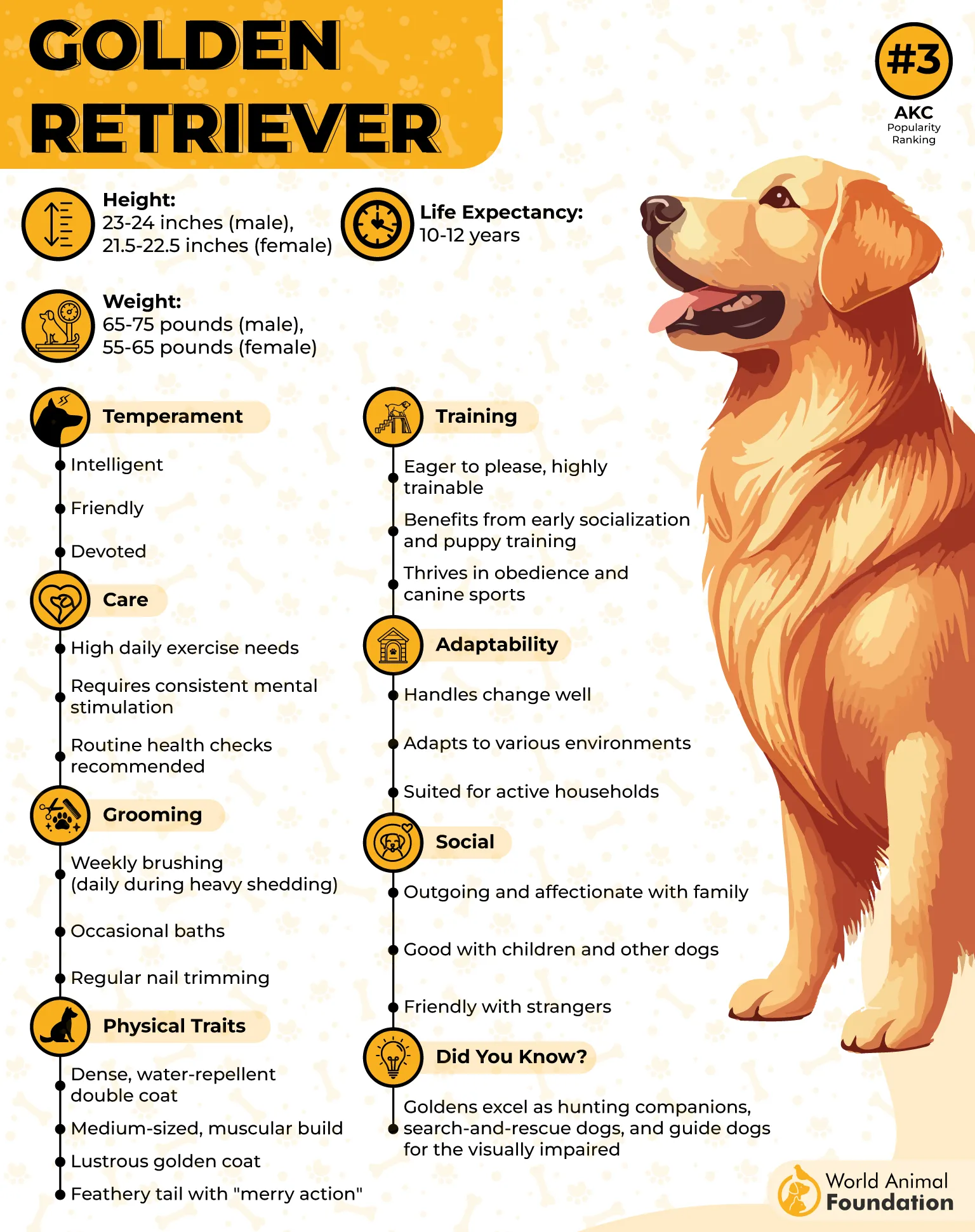
4. Golden Retriever
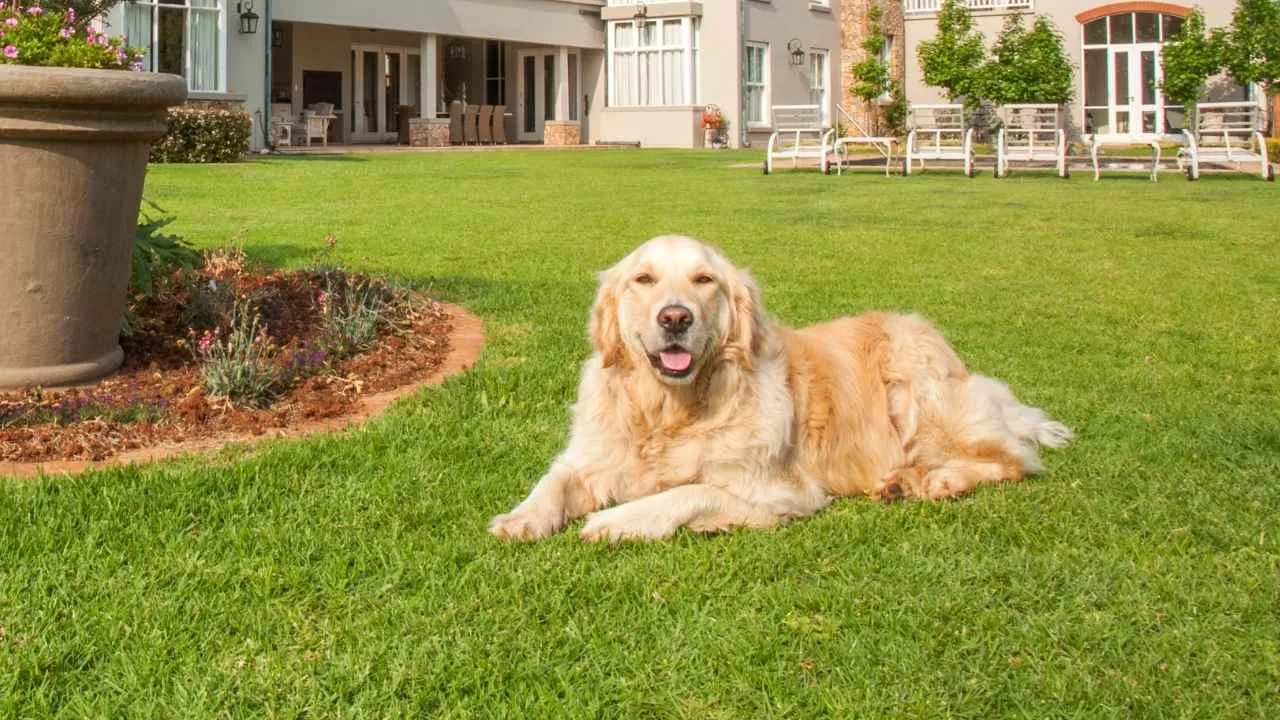
Golden Retrievers are intelligent, loyal, affectionate dogs that love being around people. Their history as retrieving dogs gives them a natural love for activity, especially when it involves working alongside their families.
They enjoy running, long walks, swimming, and retrieving games, making them easy companions for outdoor adventures. They are also playful and generally friendly with children, other dogs, and pets when properly socialized.
Built for Land and Water
Golden Retrievers have thick, water-repellent double coats that help them handle wet conditions. Their coats can range from pale cream to deeper red shades, but all require regular care.
They shed heavily and can develop mats, especially behind the ears and around the hind legs. Regular brushing helps keep their coats healthy and manageable.
Active Yet Easygoing
Goldens have a moderate energy level that can continue well into their senior years. They are eager to please and often excel in obedience, agility, and field activities. Early training is important, as young Goldens can become distracted and may pull on the leash when excited by new sights or smells.
With consistent training, they learn to follow commands even from a distance. They are energetic during play but can settle down when it is time to rest.
5. Siberian Husky
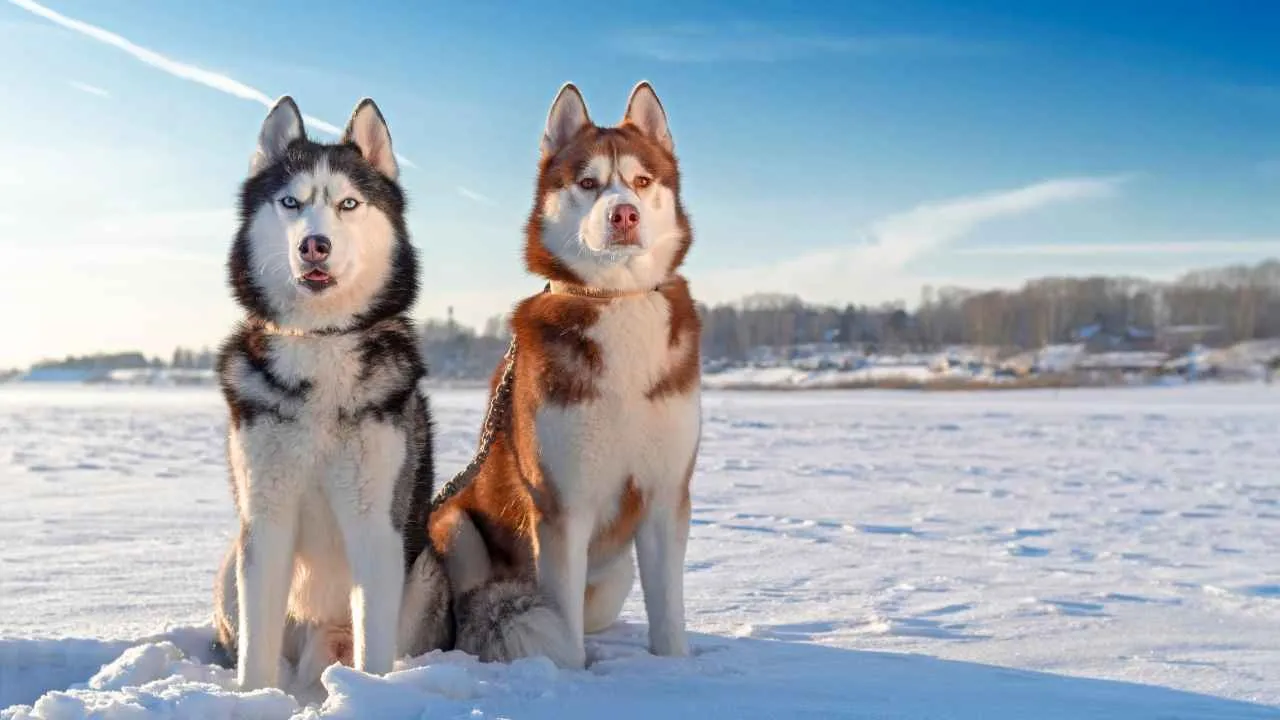
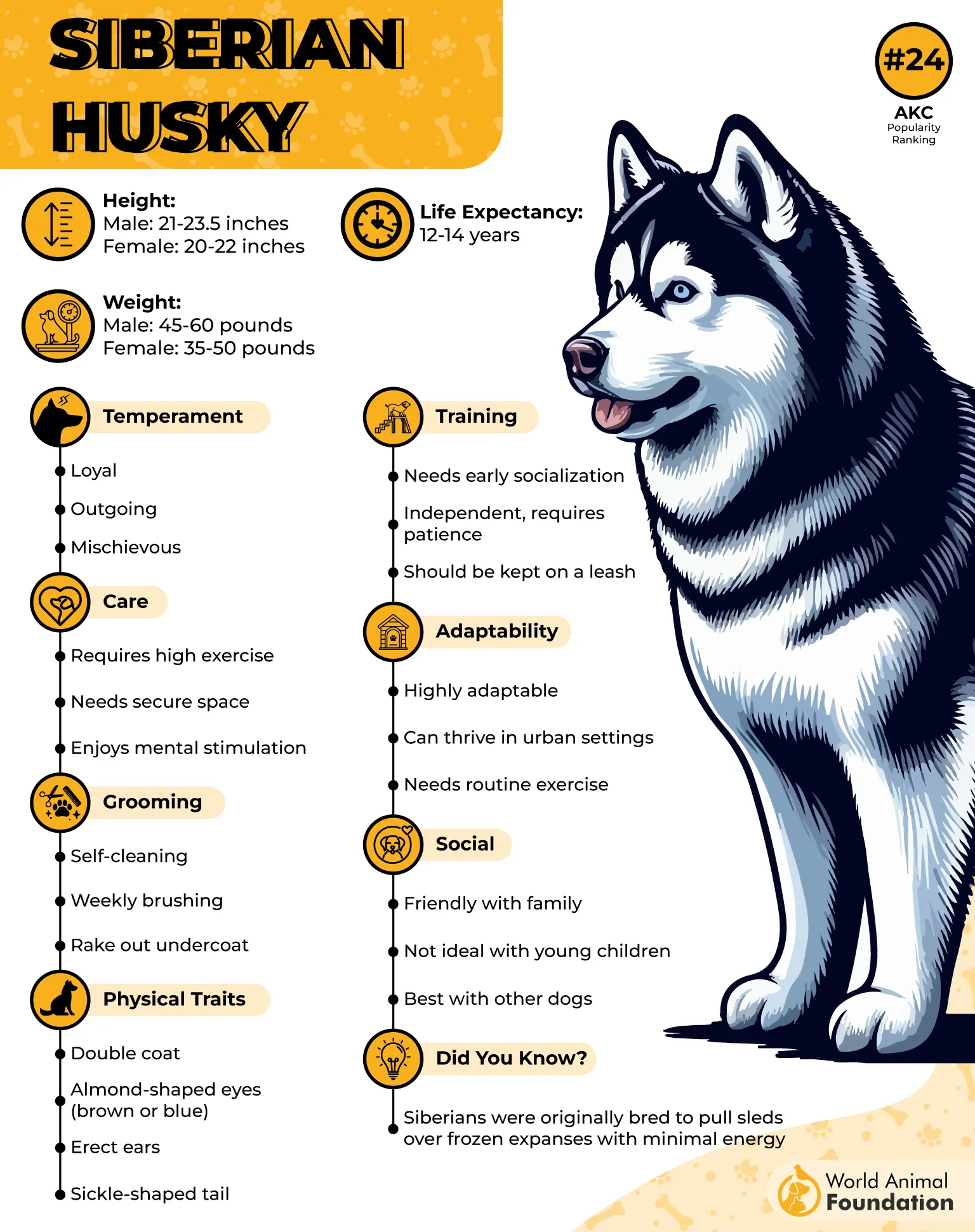
Siberian Huskies were originally bred in Northeast Asia as sled dogs and later became popular in Alaska and the United States. Their history gave them impressive endurance, a strong work drive, and a love for staying active.
Huskies are playful, independent, and full of energy, making them exciting companions for people who enjoy spending time outdoors.
High Energy and Independent Nature
Siberian Huskies need plenty of exercise, space to roam, and regular mental stimulation. They can become bored with a sedentary lifestyle, so active households are a better fit. They are friendly toward people and usually get along well with other dogs and pets.
However, their independent and strong-willed nature can make training challenging. Early, consistent training and socialization are important, especially around children and other animals.
Playful but Very Vocal
Huskies are known for being mischievous and surprisingly talkative. They may communicate through howls, “woos,” chirps, and other sounds rather than simply barking. This can make them difficult to manage in homes with close-by neighbors.
They are also friendly with strangers, so they are not reliable guard dogs. Their combination of endurance, playfulness, and independence means they need plenty of activity and attention to stay happy and well-behaved.
6. Vizsla
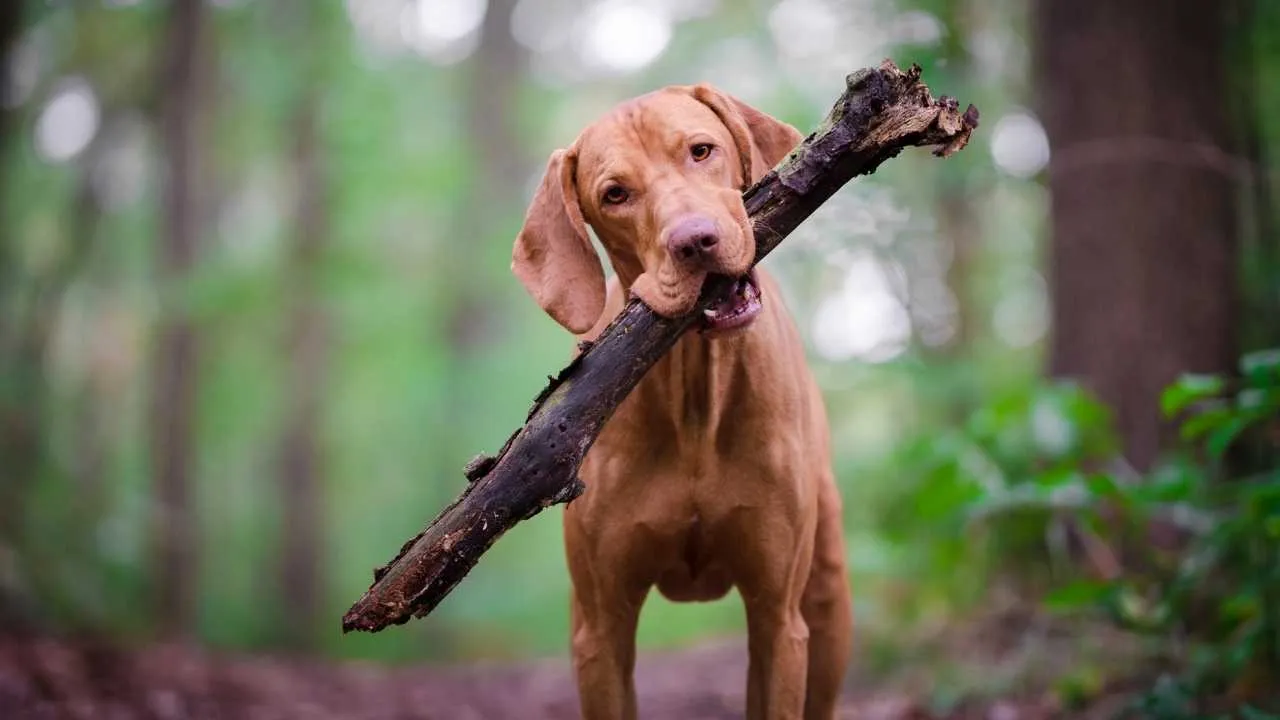
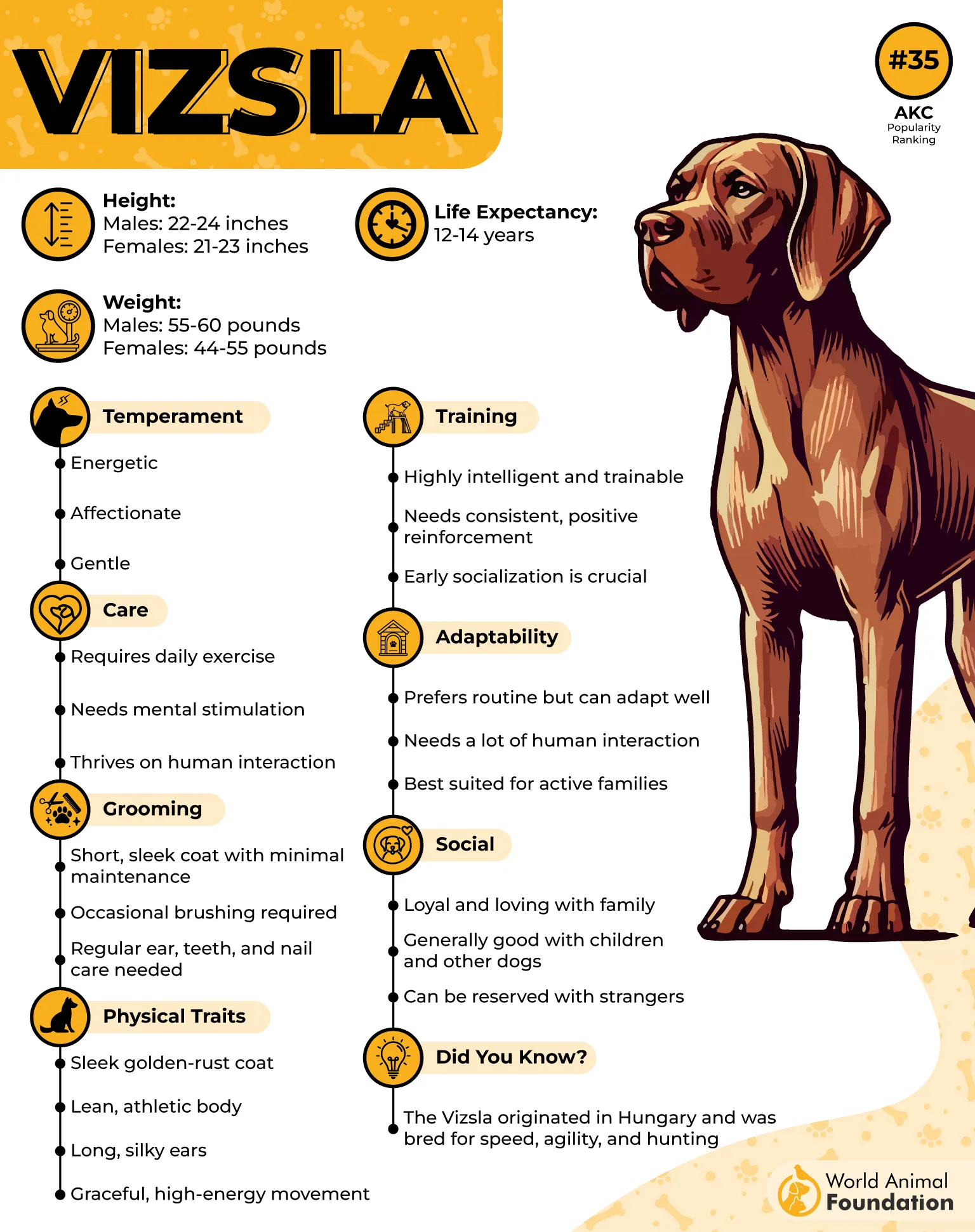
Hungarian Vizslas are lively hunting dogs that love being active and staying close to their people. Originally bred in Hungary as hunting companions, they are natural athletes with plenty of stamina.
They enjoy running, hiking, swimming, and learning new skills, making them well-suited to families who spend a lot of time outdoors. They are also gentle, affectionate, and known for forming very close bonds with their owners.
Active Bodies and Sensitive Minds
Vizslas need plenty of daily exercise and mental stimulation. A quick walk is rarely enough for this energetic breed. They enjoy jogging, swimming, agility, and free running in secure areas.
Good recall training is important because their hunting instincts may lead them to wander after interesting scents or game. They are sensitive dogs that respond best to kind, reward-based training. Harsh words can frighten them, while praise and affection help them learn quickly.
Affectionate and People-Focused
Often called “Velcro dogs,” Vizslas want to stay close to their favorite people and can struggle when left alone, according to Omlet. They are usually friendly with children, strangers, and other pets, although some may become overly excited when greeting visitors.
They can take several years to fully mature and may keep their puppy-like behavior into adulthood. Their short coat needs only regular brushing, while their strong energy levels mean they need plenty of space and activity to stay physically and mentally engaged.
7. Bernese Mountain Dog
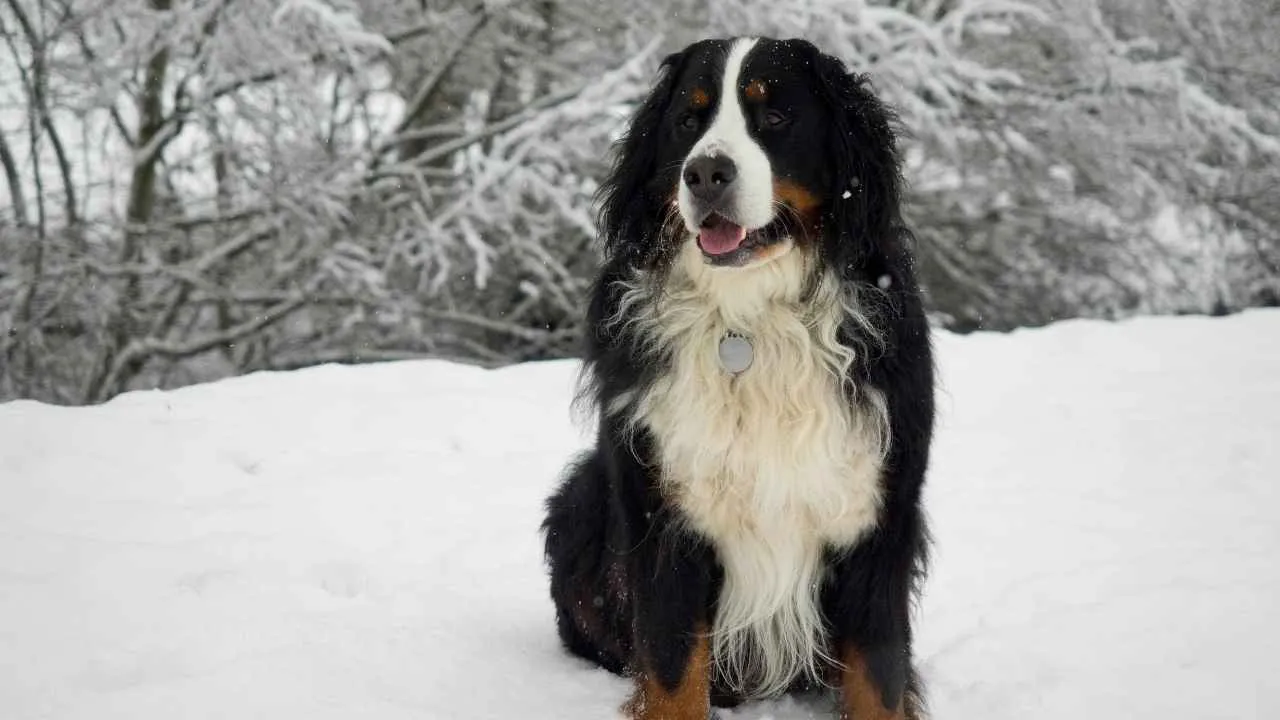
Bernese Mountain Dogs originated in Switzerland, where they worked as farm dogs. Today, these gentle giants are mostly beloved family companions.
Despite their impressive size, they are affectionate, patient, and easygoing. They enjoy being part of family activities and can be playful and energetic while still knowing how to settle down and relax.
Calm but Ready to Explore
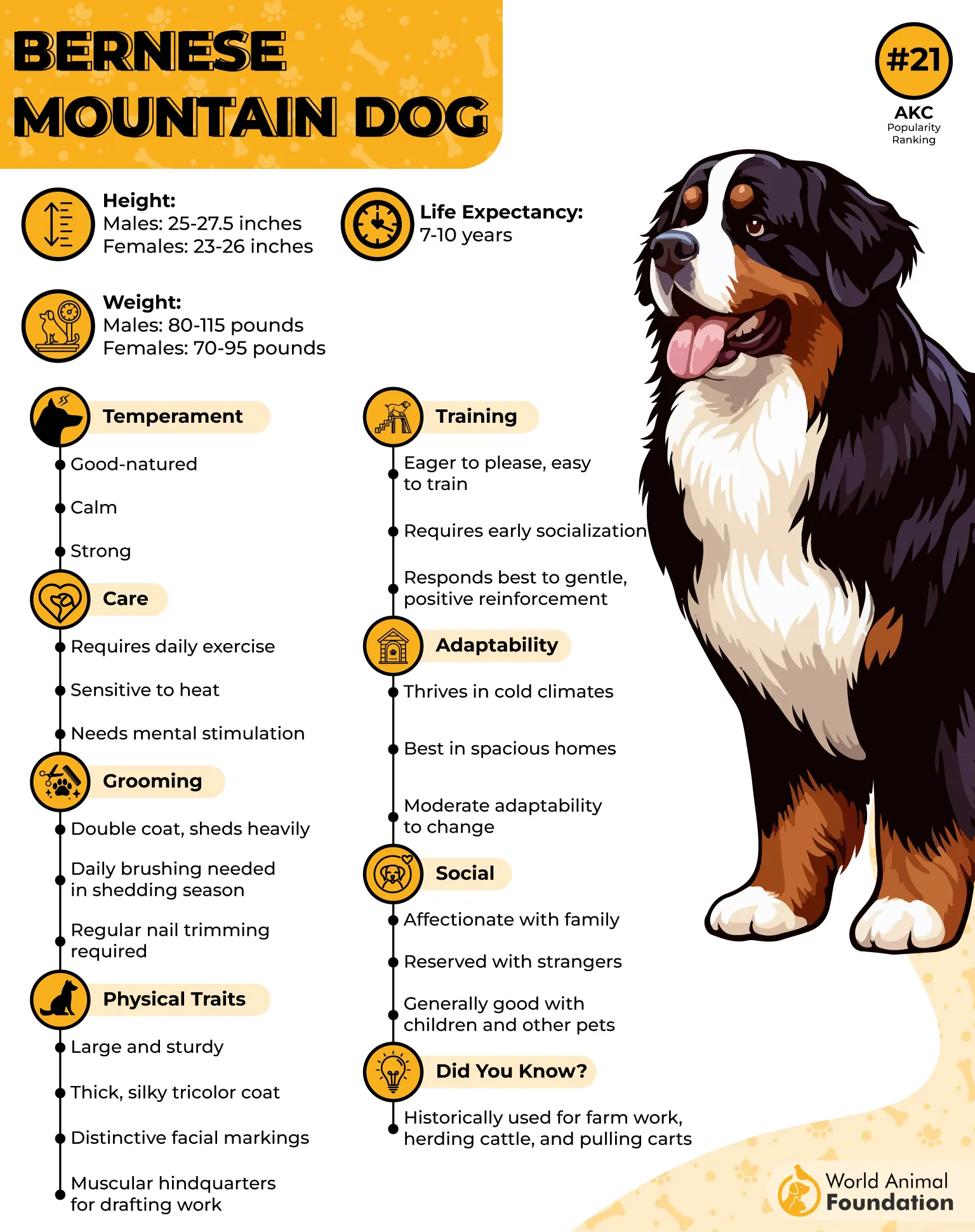
Bernese Mountain Dogs need regular exercise to stay healthy, although they are less energetic than many other active breeds. They enjoy running, playing, and spending time outdoors with their families. When properly exercised, they are often calm and quiet at home.
Their intelligence and eagerness to please also make them relatively easy to train. Positive reinforcement works best, as they can become upset with harsh correction.
Social, Affectionate, and Loyal
Berners thrive on companionship and do not enjoy being left alone for long periods. They are generally friendly toward strangers, children, other dogs, and pets. Their deep bark can make them effective watchdogs, although they are not especially suited to protection work.
Their thick double coat has a striking black, white, and tan pattern and sheds heavily throughout the year, so regular grooming is essential. Despite their agility, young Berners can be clumsy until they mature.
Conclusion
The best dog breeds are not simply the most energetic ones. They are adventure dog breeds that enjoy staying active, learning new things, exploring new places, and spending quality time with their people.
From long hikes and swims to camping trips and playful adventures, the right companion can make every outdoor experience more exciting.
Before choosing a family dog breed, think about your daily routine, activity level, space, and the time you can dedicate to training and exercise. Every dog has its own personality and needs, so choosing a companion that fits your lifestyle matters most.
With the right match, your next adventure could come with four paws, a wagging tail, and a much better story to tell.
