




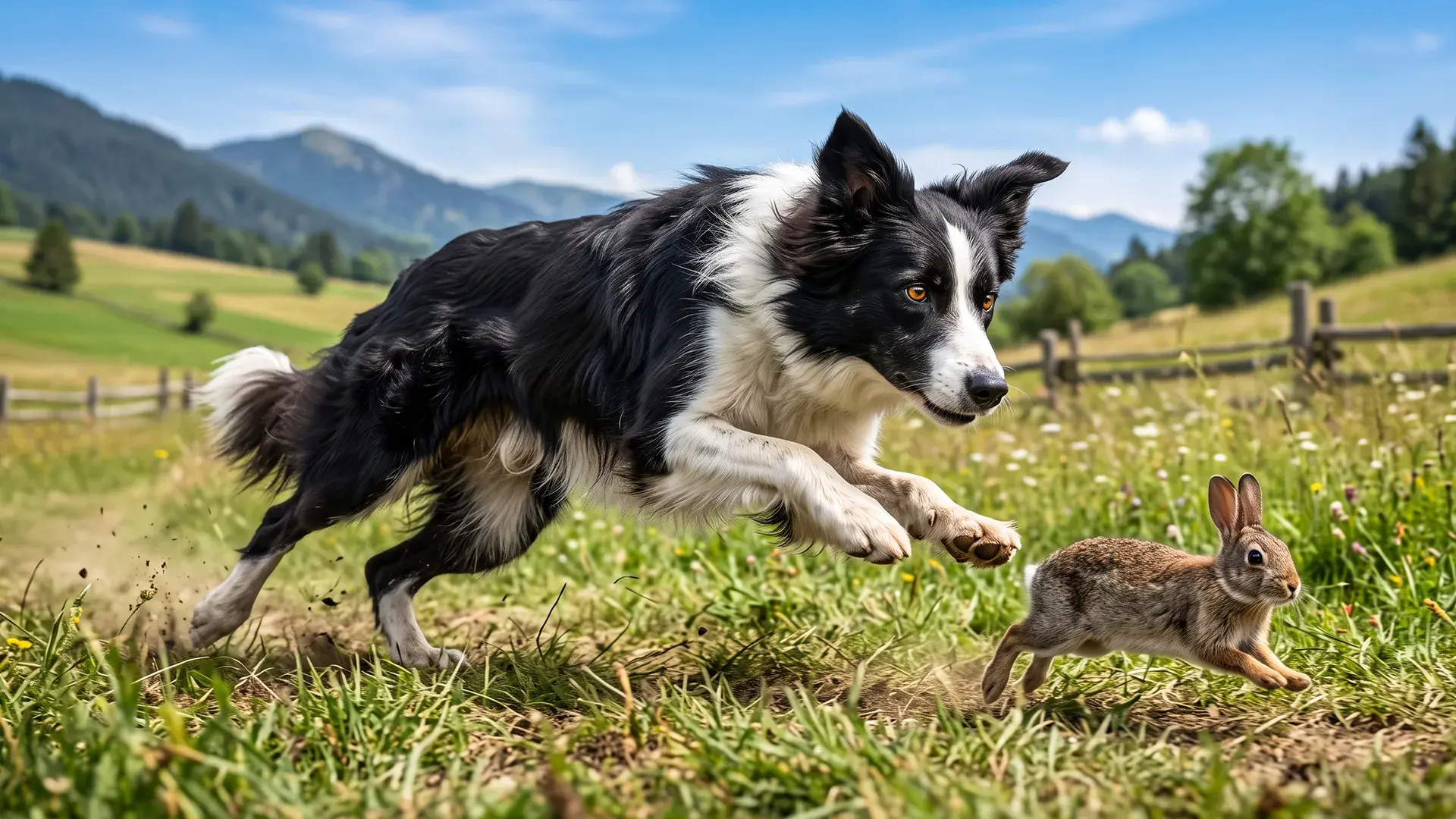
There is a moment every owner of a high-drive dog knows well.
A squirrel darts across the wall, a cat slips out of sight, a rabbit bolts through the glass, and suddenly the calm, well-behaved dog at your side takes off at full sprint, deaf to every command you shout.
That’s prey drive. It’s not bad behavior. It’s instinct, wired deep into certain breeds through centuries of hunting, herding, and chasing. Some dogs were built to spot movement and react before they even think.
Knowledge of breeds with a strong prey drive helps with training advice, daily management, and, honestly, just knowing certain aspects you are signing up for.
These are seven dog breeds in which the high prey-drive instinct runs deep.
Dog Breeds With a High Prey Drive: What to Know
1. Greyhound
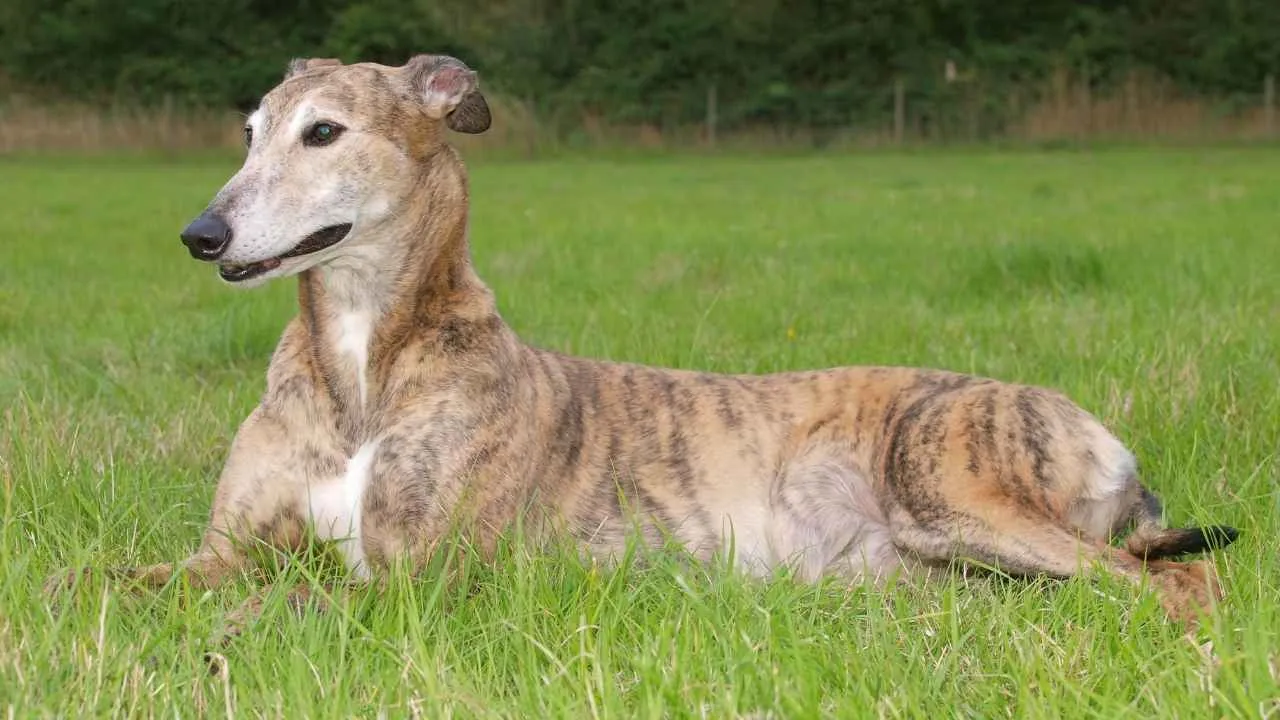
The Greyhound might look like it spends all day napping on the couch, and honestly, it does. Until something moves.
These are among the fastest dog breeds on the planet and have a history of being racing dogs.
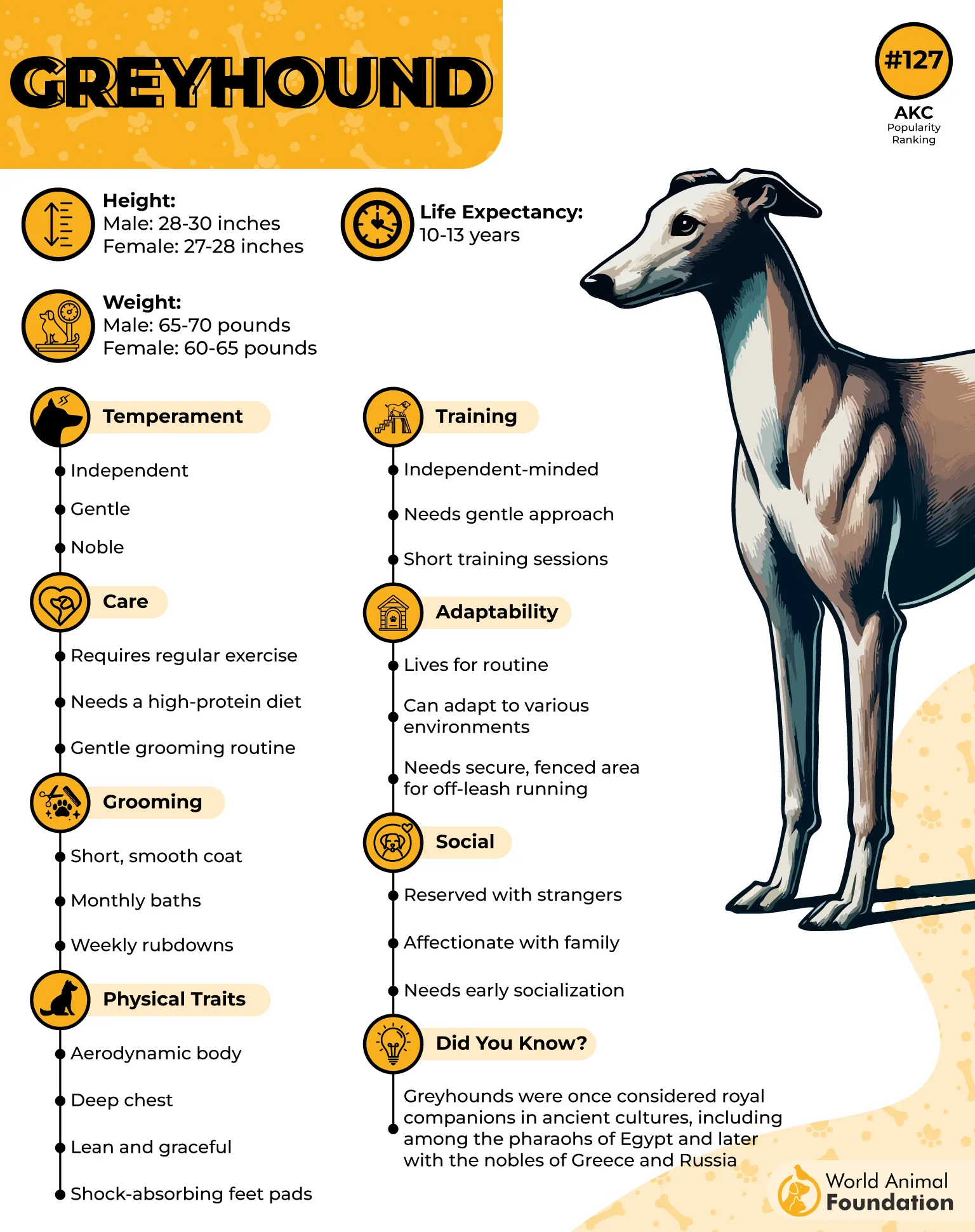
Greyhounds are sighthounds, meaning they hunt by tracking movement with their eyes rather than by scent, according to Britannica. Their prey drive is intense, built over centuries as one of the oldest hunting breeds.
Once a Greyhound locks onto something moving fast, it reacts in a split second.
At home, Greyhounds are famously calm dogs. They are people-friendly and need little exercise for such an athletic dog. But outdoors, a secure fenced area or a leash is non-negotiable.
A rabbit or a small pet darting past can trigger a full sprint before you even register what happened.
Early socialization helps, but this breed’s hunting and play drive rarely disappears completely.
2. Whippet
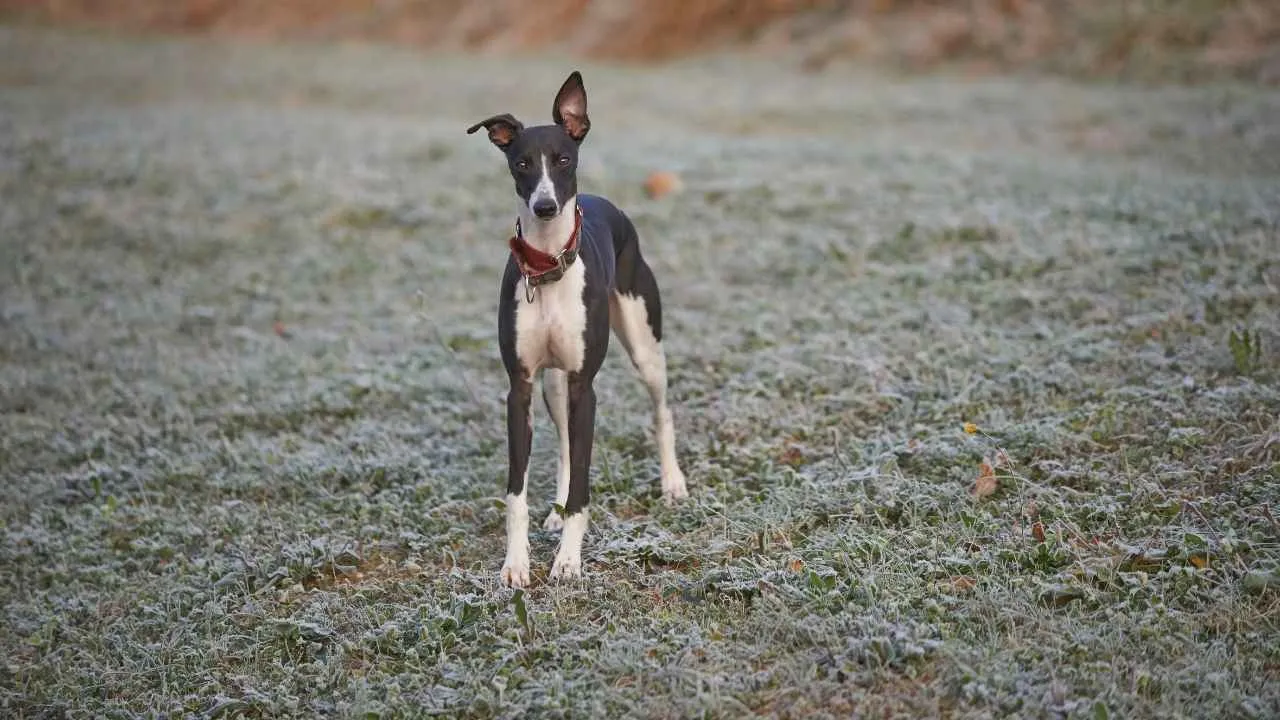
The Whippet is basically a smaller cousin of the Greyhound, and it carries just as much prey drive, excess energy, and natural instincts in that leaner frame.
Whippets were bred to chase small game, and that instinct and strong drive are still very much active today.
Sharp vision paired with speed means these muscular dogs can go from resting to full chase in seconds, mostly around small pets like rabbits, squirrels, or cats.
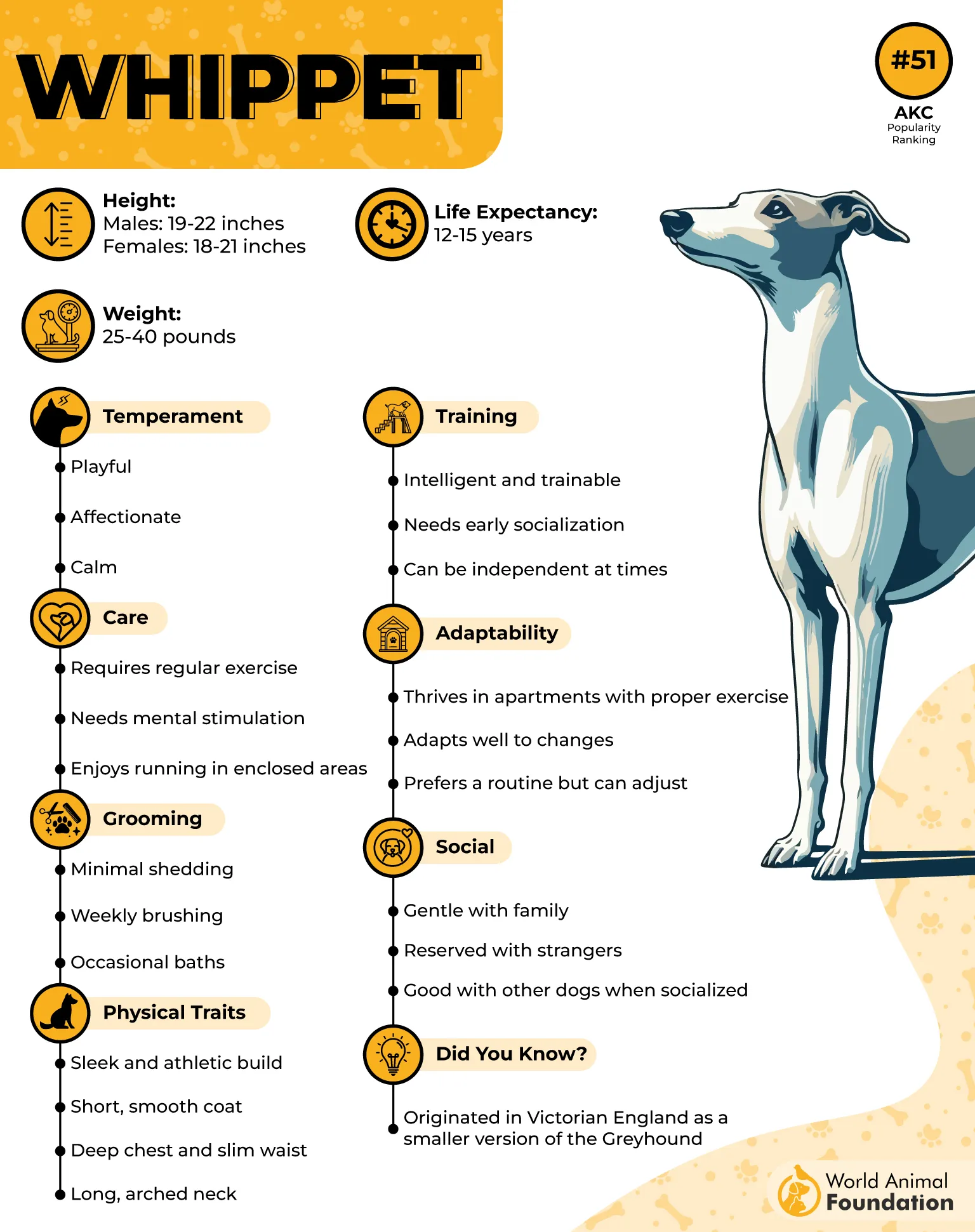
Despite that intensity outdoors, Whippets are gentle and relaxed indoors. They don’t need hours of exercise. All they need is consistent daily activity and a safe, enclosed space to run when that energy needs an outlet, according to the American Kennel Club.
Leash training is important here. Once a Whippet’s prey-drive instincts kick in, recall commands tend to get ignored.
3. Jack Russell Terrier

The Jack Russel Terrier packs a HUGE amount of energy into a small, energetic body.
Originally bred to hunt foxes and go to ground after prey, Jack Russells have some of the strongest hunting drives among smaller breeds.
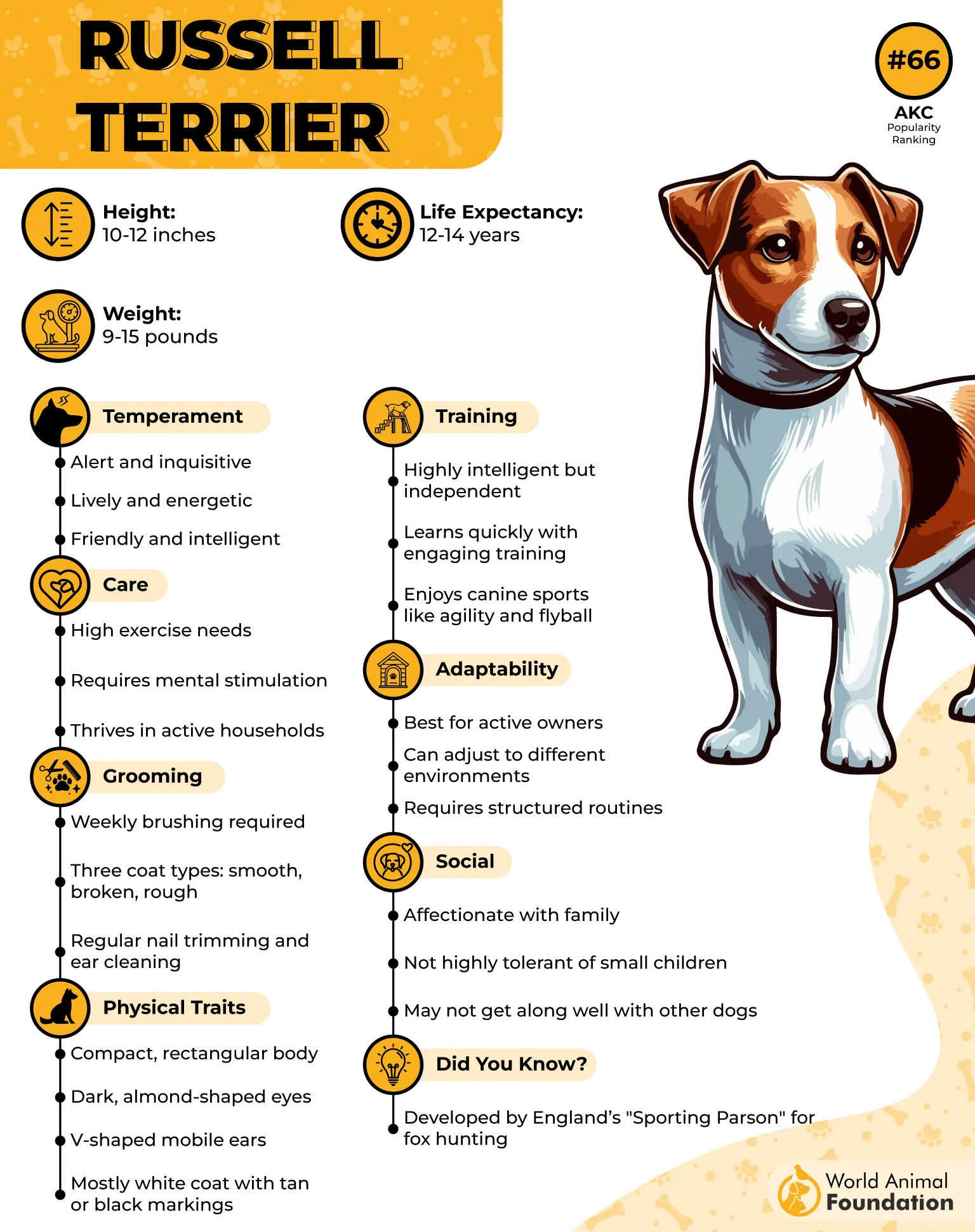
They are highly intelligent, quick, and endlessly curious. According to The Kennel Club, the inquisitiveness and high prey drive make them excellent at agility courses. But that also means they will chase almost anything that moves. Squirrels or smaller pets.
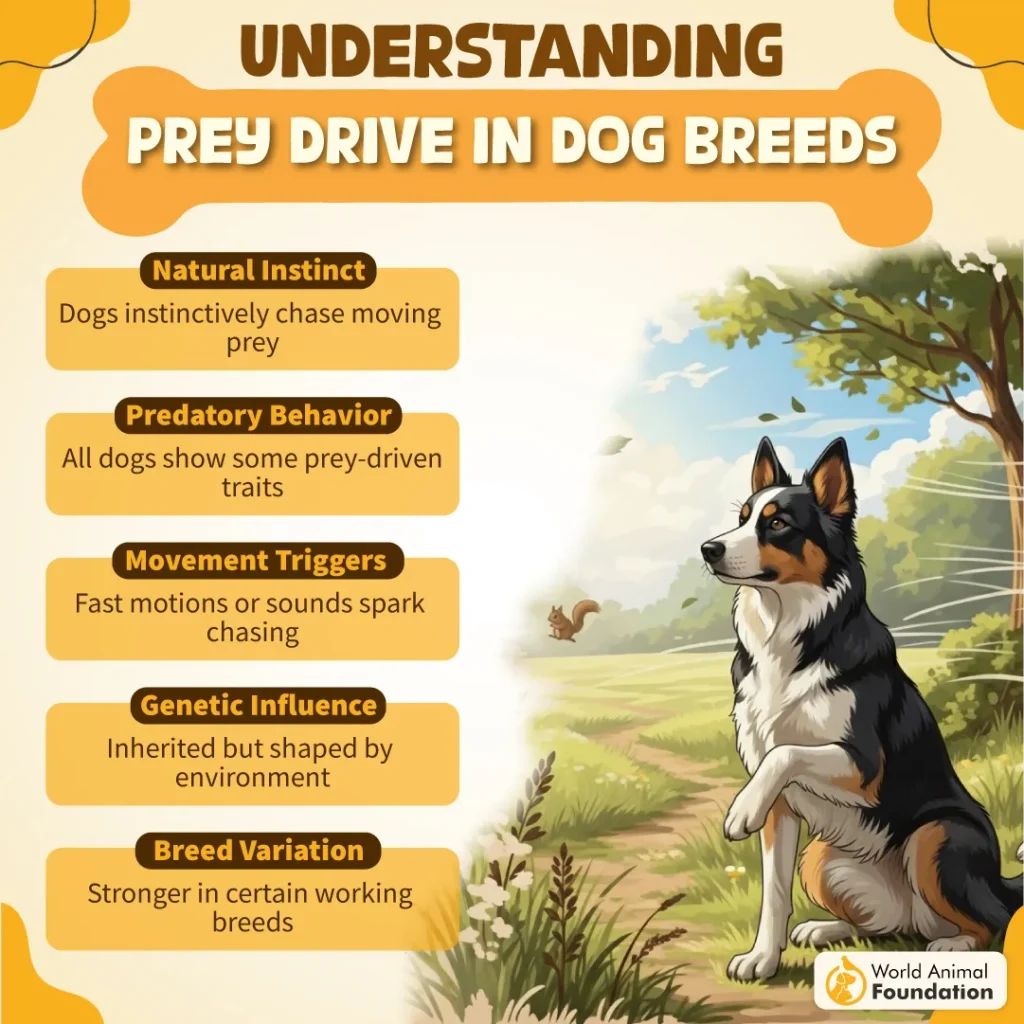
This breed needs consistent training and plenty of daily exercise to manage that excess energy. Interactive toys and mental stimulation help, too, since a bored Jack Russell seeks its own entertainment, which usually involves digging or chasing something.
Not the easiest breed for a first-time dog owner, but this hunting dog is a rewarding one for someone ready to pick up.
4. Australian Cattle Dog
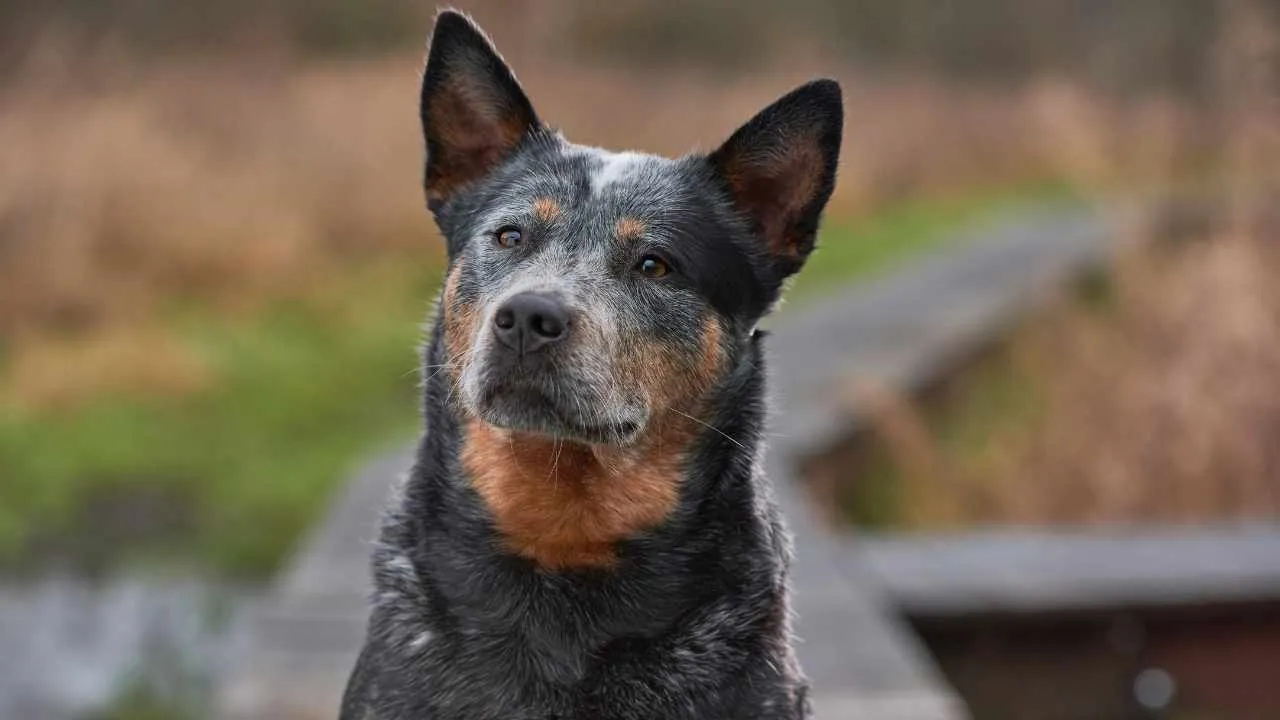
The Australian Cattle Dog was born for one job: controlling livestock that outweighed it by a lot. That kind of job demanded serious drive.
This breed’s prey drive manifests as a strong instinct to chase, nip, and herd anything that moves, says Greencross Vets. That ‘anything’ can be kids, bikes, and other pets.
Herding behavior and biting action at the heels were part of their original job description: working cattle.
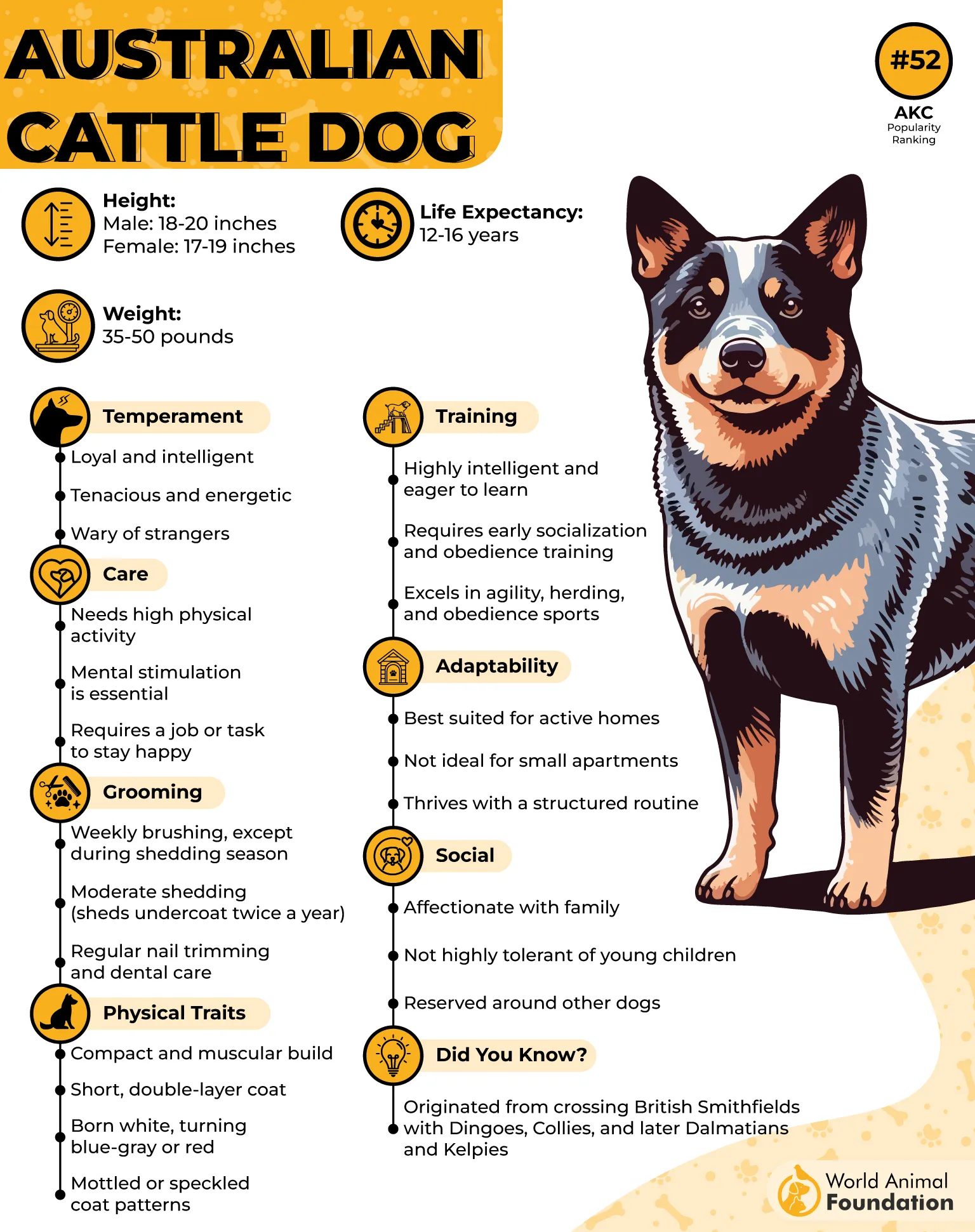
These herding dogs are highly intelligent and energetic, and they need a job to do. Without regular exercise and mental stimulation, that drive tends to redirect itself into less convenient activities around the house.
Training advice for this breed usually centers on structured outlets, such as herding trials, agility courses, or daily tasks that let them use their minds and bodies.
5. Border Collie
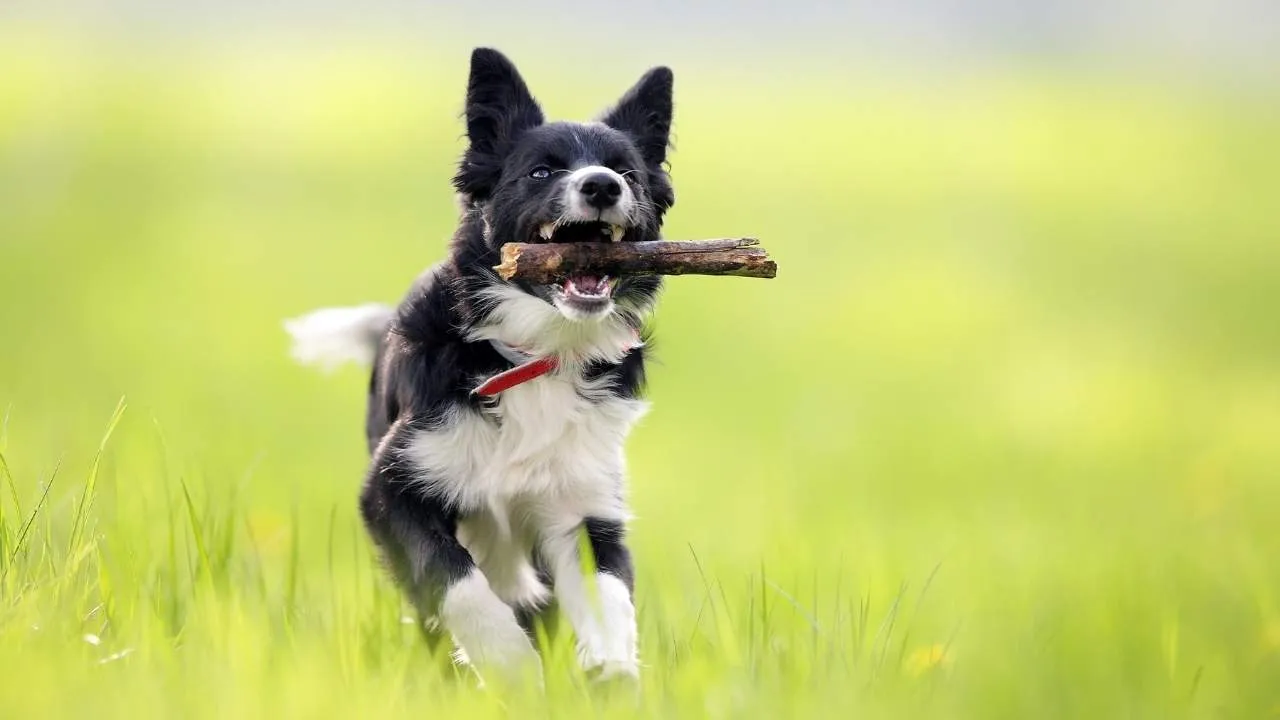
The Border Collie is famous as the most intelligent dog breed, and that intelligence is deeply tied to its herding drive.
Border Collies were bred to control the movement of livestock using an intense, focused stare known as “the eye.”
That same instinct that makes them incredible herders also gives them a strong prey drive. It gets triggered by anything fast-moving, from cars to smaller animals.
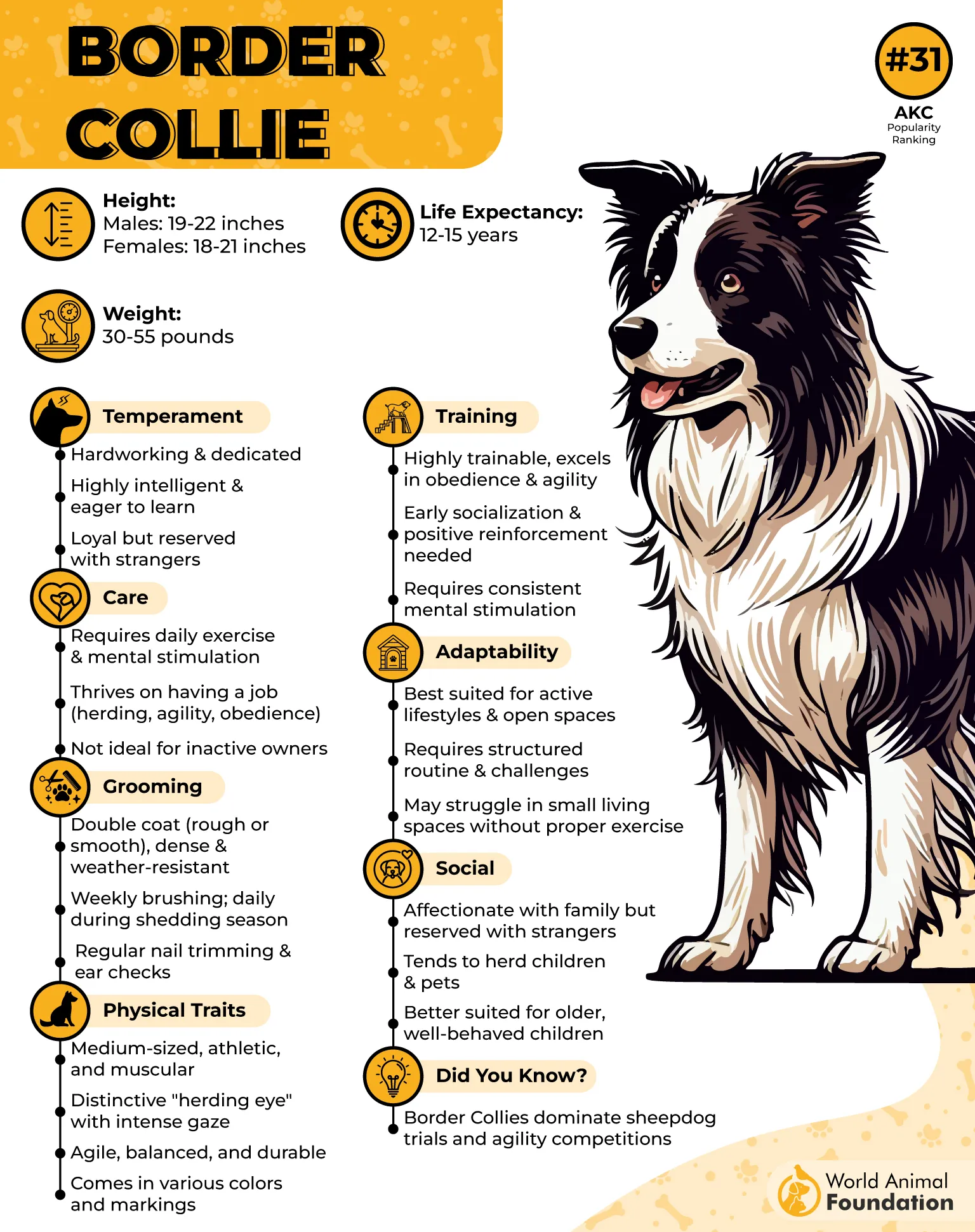
This breed needs serious daily exercise and mental stimulation.
A bored Border Collie gets restless and creative, says Purina. Agility courses, herding activities, and interactive toys go a long way.
With the right outlets, Border Collies are easier to manage than their drive might suggest.
6. Afghan Hound
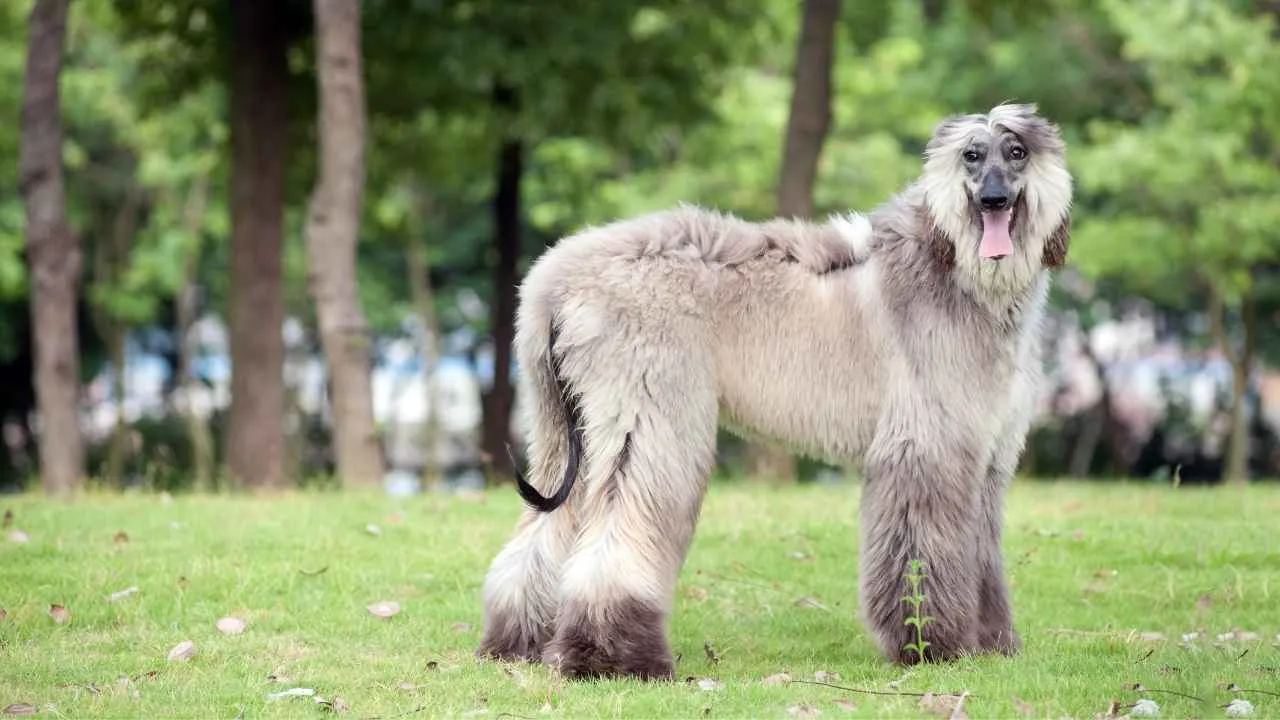
The Afghan Hound looks like elegance walking on four legs, but underneath all that flowing coat is a serious hunter.
Bred in the mountains of Afghanistan to hunt independently, with little human direction, this hound breed developed a strong, self-reliant prey drive that’s still very much intact. Out on the field, they serve as one of the predator species that will go in for biting to kill.
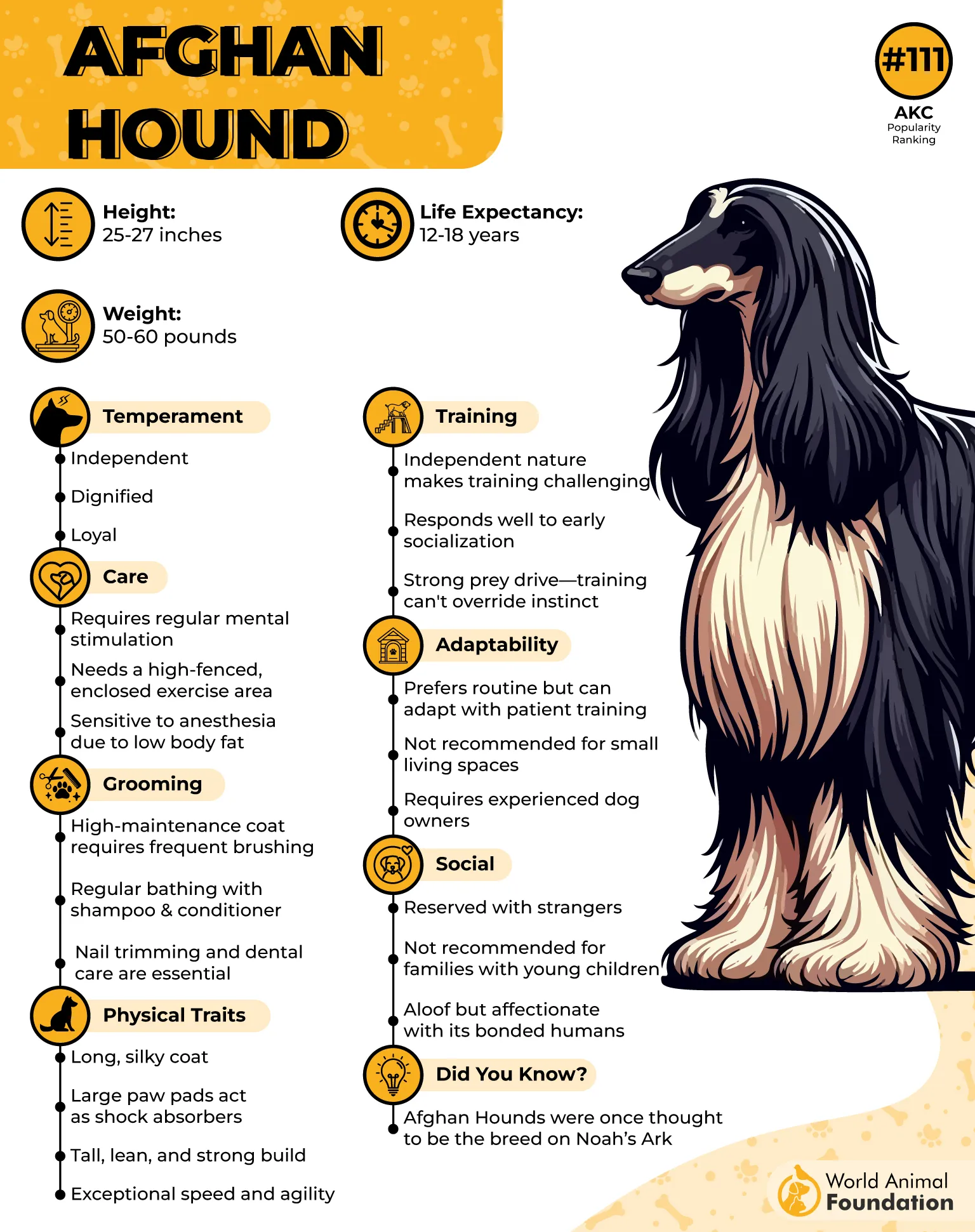
Afghan Hounds rely on sharp eyesight, and fast-moving small animals like rabbits or squirrels can trigger an immediate chase.
They are dignified, a little aloof, and need patient, consistent training given their independent streak.
Afghan Hounds are impressive jumpers, says PetMD, and a bored one may go looking for something to chase on its own terms.
Despite the intensity outdoors, this breed is affectionate and calm with its own family indoors.
7. Beagle

The Beagle might be the most deceptively driven breed on this list.
Friendly, food-motivated, and about as approachable as dogs get.
Beagles are scent hounds, which means their prey drive is triggered less by sight and more by smell.
Once a Beagle picks up an interesting smell, everything else (like your voice!) fades into the background.
That nose-driven focus was exactly what this breed was born for.
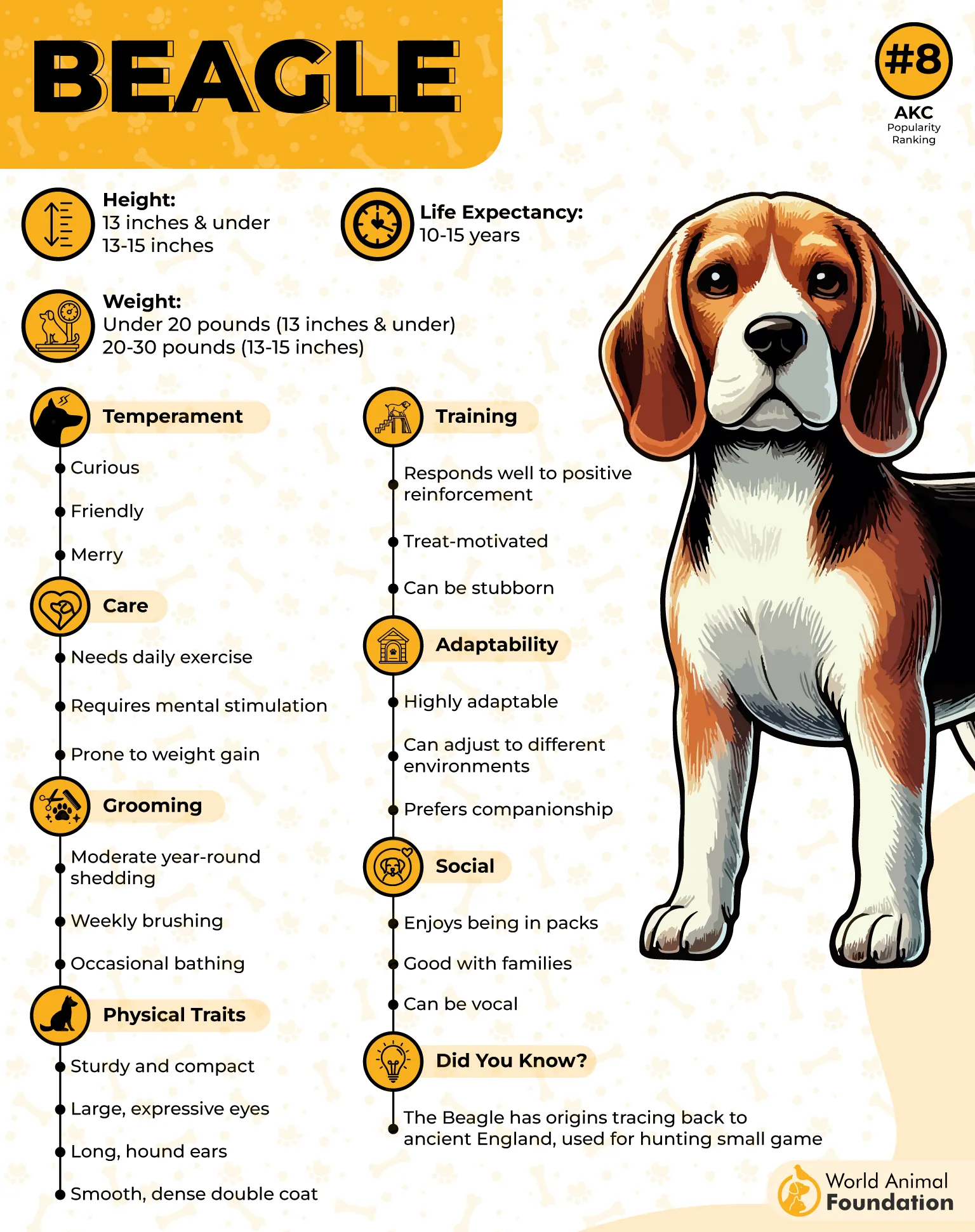
Because of this, secure fencing and leash training matter just as much for Beagles as they do for sight-driven hounds. Their hunting drive is less about speed than about persistence.
At home, beagles are affectionate, friendly, and great family dogs, as long as their exercise needs and their powerful nose are kept in mind.
Conclusion
A high prey drive is NOT a flaw.
It is simply what centuries of purposeful breeding have made these dogs do.
Secure fencing, training, daily exercise, and mental stimulation go a long way toward managing these instincts.
Talk to a veterinarian or experienced breeder if you are thinking of getting one of these dogs.
All they need is the right structure, and these high-prey dog breeds become loyal, engaging, and fascinating companions a person could ask for.
