




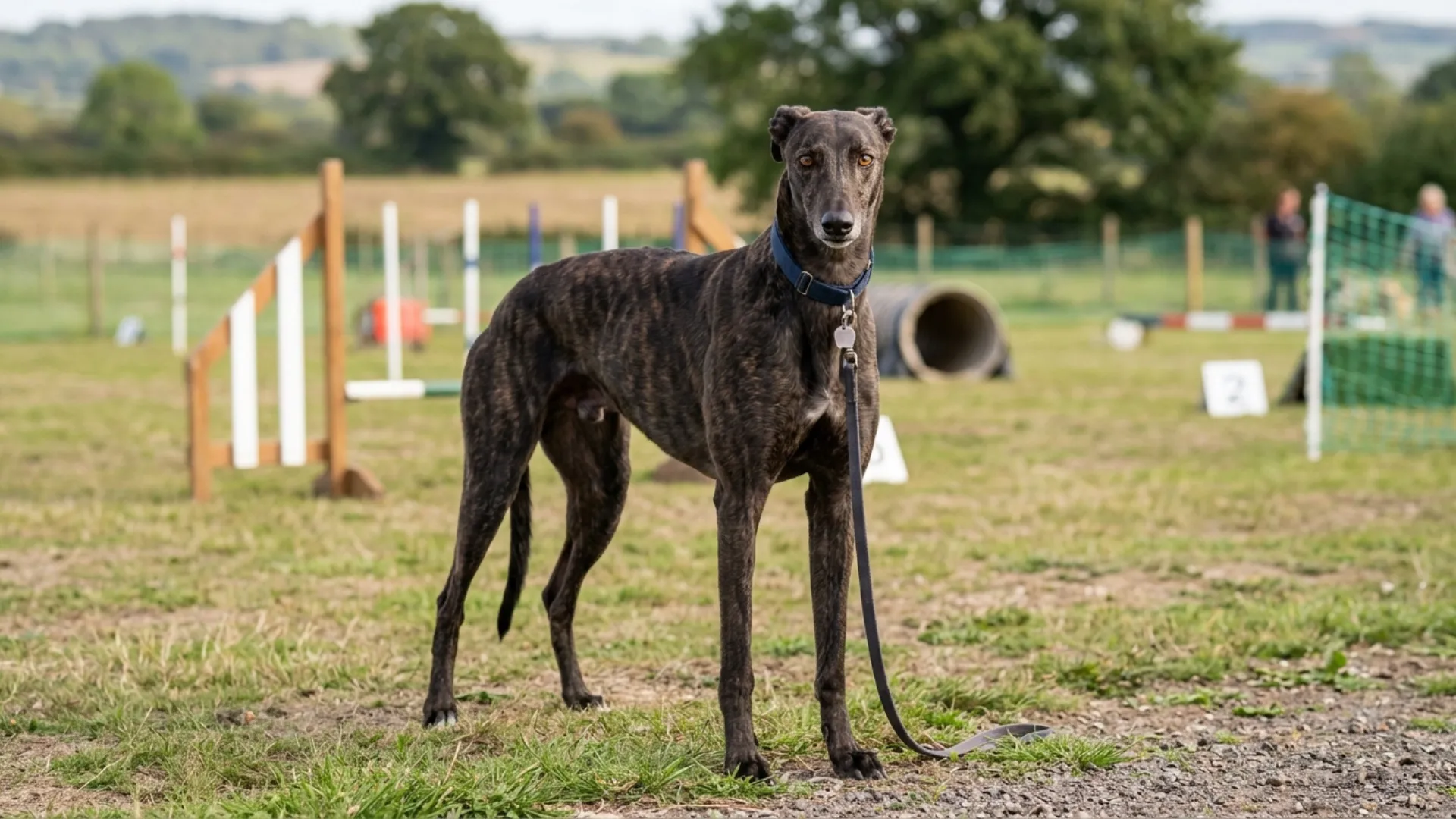
Prey drive in dogs is their innate instinct to chase, stalk, and catch; a behavior that historically helped them find food. While it might sound alarming, it’s a completely natural part of canine instinct. That said, many dogs only exhibit parts of this sequence rather than the full cycle.
While all dogs have some level of prey drive, certain breeds simply can’t resist the urge to chase, lunge, or bark at moving objects. This instinct can be triggered by small animals, passing vehicles, or even young children running around.
Sporting breeds, herding breeds, terriers, and hounds tend to have a higher prey drive than most. It’s something that affects everything from their behavior on walks to how they interact with kids, so it’s worth understanding before bringing one home. The good news is that prey drive can be managed through proper training, conditioning, and socialization.
Here are 7 dog breeds known for having a manageable prey drive.
Best Dog Breeds Choices for Controlling Prey Drive
1. Bluetick Coonhound
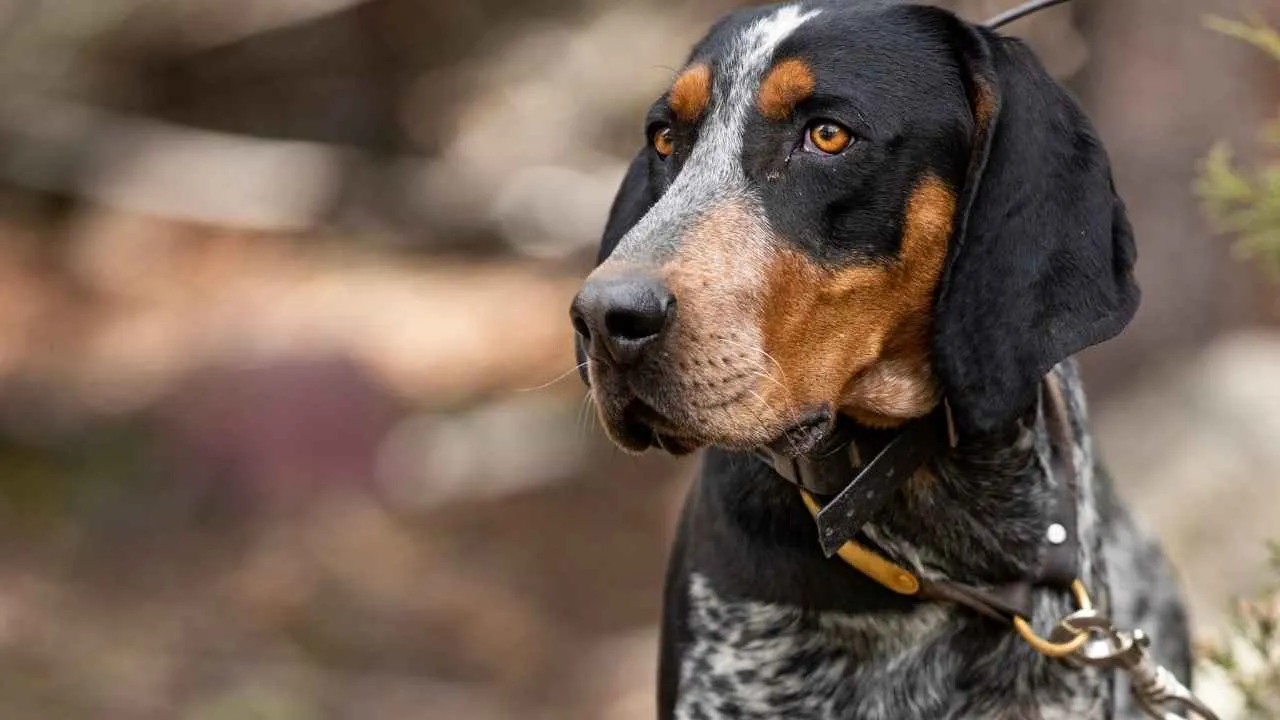
Smart, tenacious, and devoted, Bluetick Coonhounds are nocturnal hunters. These speedy, compact, and prey-driven dogs. Native to the United States, Blueticks have a keen sense of smell and sharp hunting instincts.
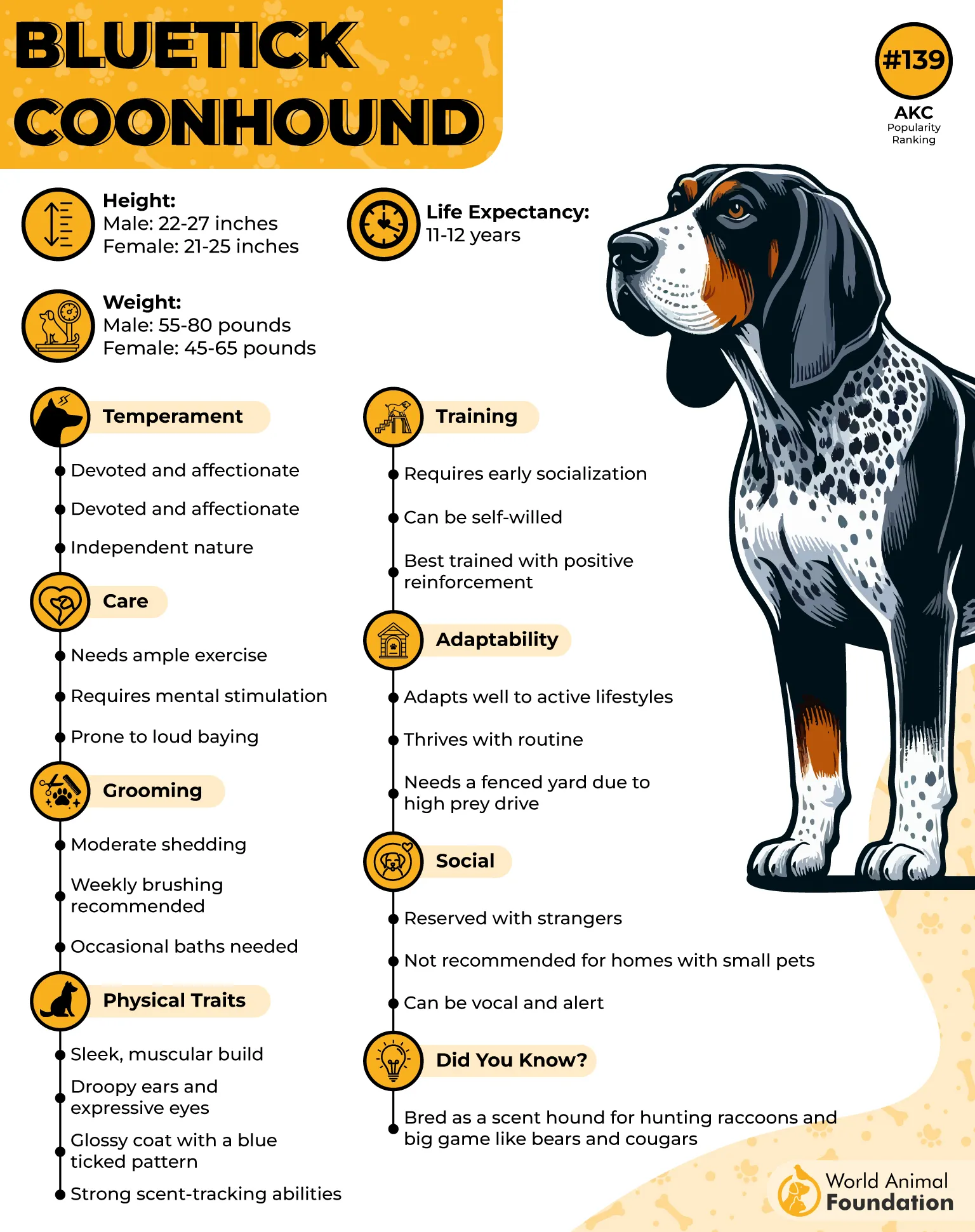
They sport a short and smooth coat with a ticked pattern. Blueticks are hard-working and energetic dogs who love having a job to do. They need plenty of daily exercise to channel their excess energy and satisfy their tremendous prey drive.
Blueticks were bred to capture prey using scent, so it is extremely difficult to stop them from following it. They are good escape artists. It is better to supervise them even if they are in a fenced area.
In addition to hunting and field trials, Bluetick Coonhounds excel at plenty of canine sports including agility and tracking. Early training and proper socialization is important to turn them into well-mannered and well-behaved family dogs.
2. Rhodesian Ridgeback
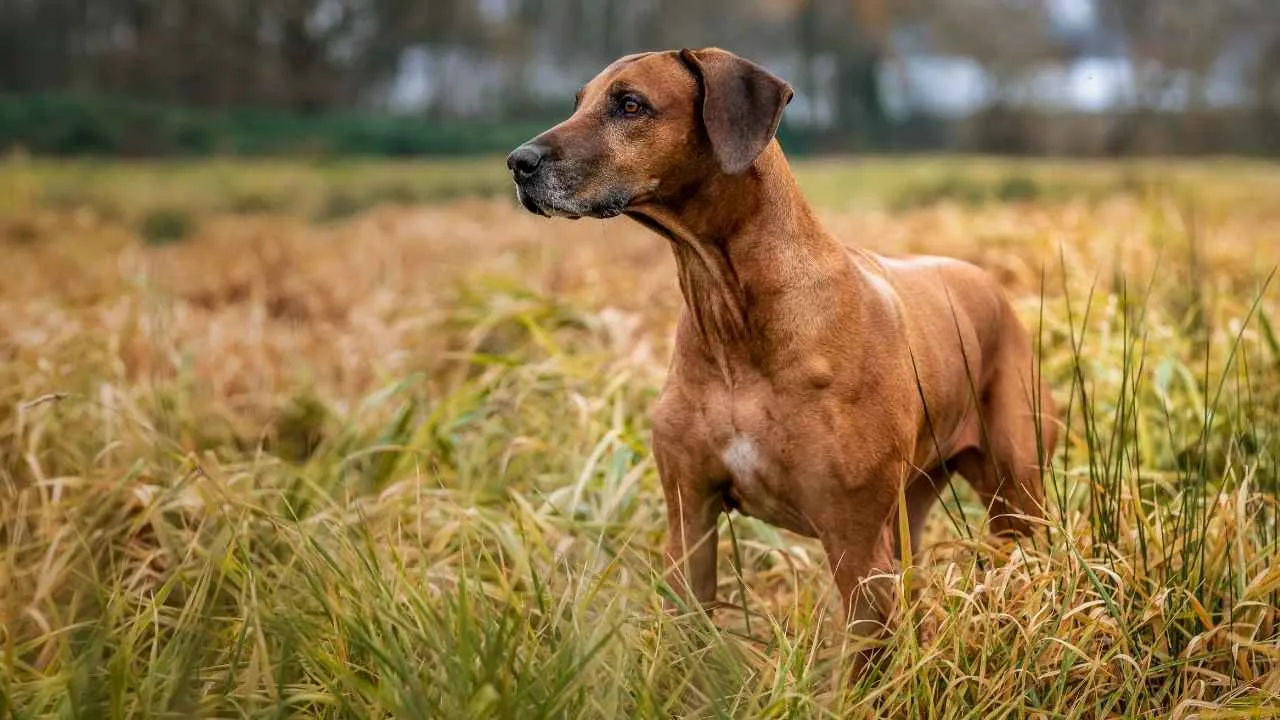
The hallmark of this breed is a ridge of backward-growing fur on their backs. Rhodesian Ridgebacks were originally bred in Africa as hunting dogs. They excel at tracking lions, but never kill them. Potential Ridgeback owners should prepare to deal with their independence and strong prey drive.
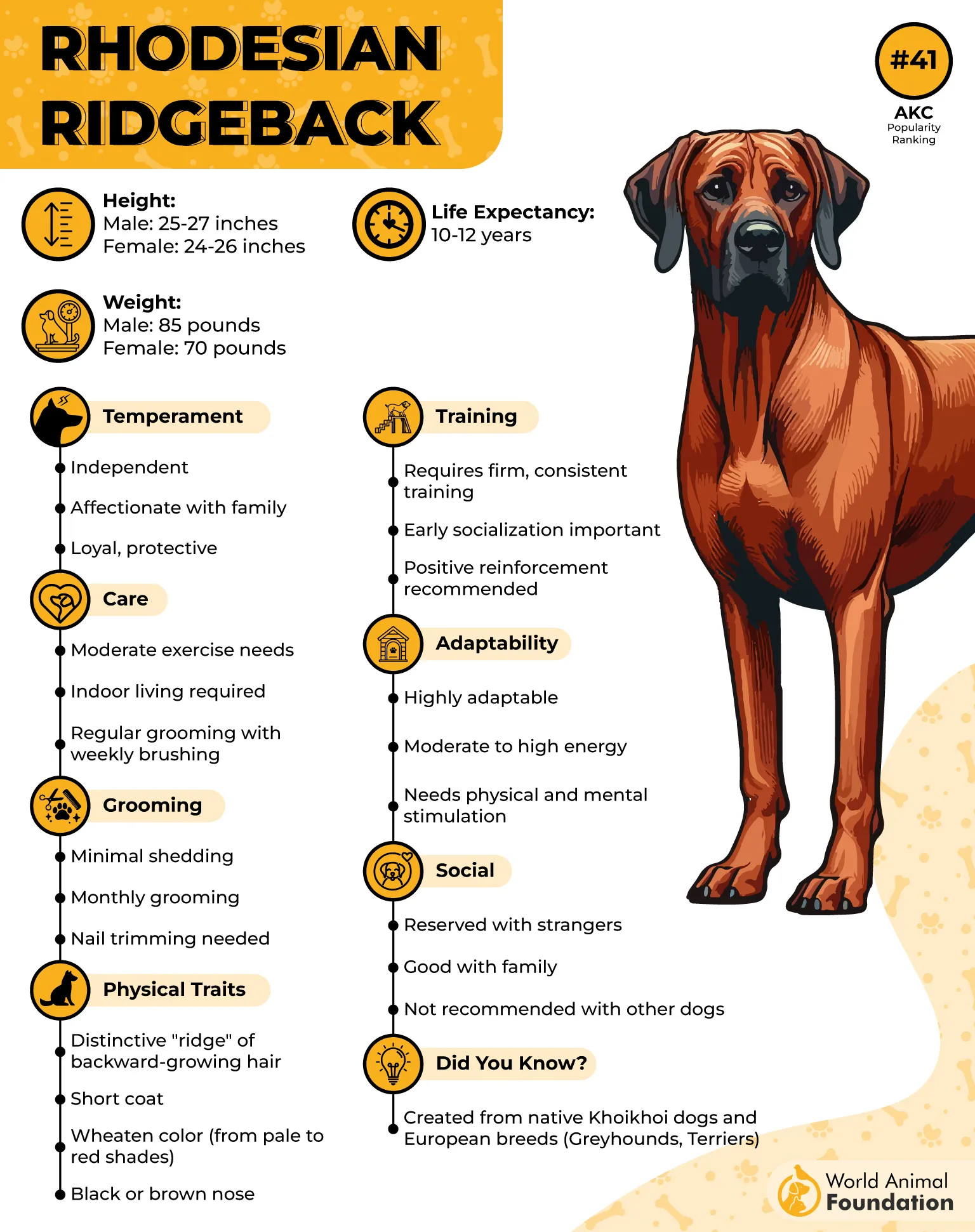
That is why they may not be suitable for homes with smaller pets like cats, explains PetMD. However, properly socialized Rhodesian Ridgebacks get along nicely with other dogs. Better suited for experienced owners, Ridgebacks need regular exercise and consistent training to behave well.
Ridgebacks are athletic dogs with moderate energy levels. In the absence of adequate exercise, they can exhibit destructive behaviors like excessive barking and chewing. They bond closely with their families and have a protective nature.
Ridgebacks are suspicious of strangers and should not be given guard dog training. Ridgebacks enjoy participating in dog sports like agility and tracking.
3. Weimaraner
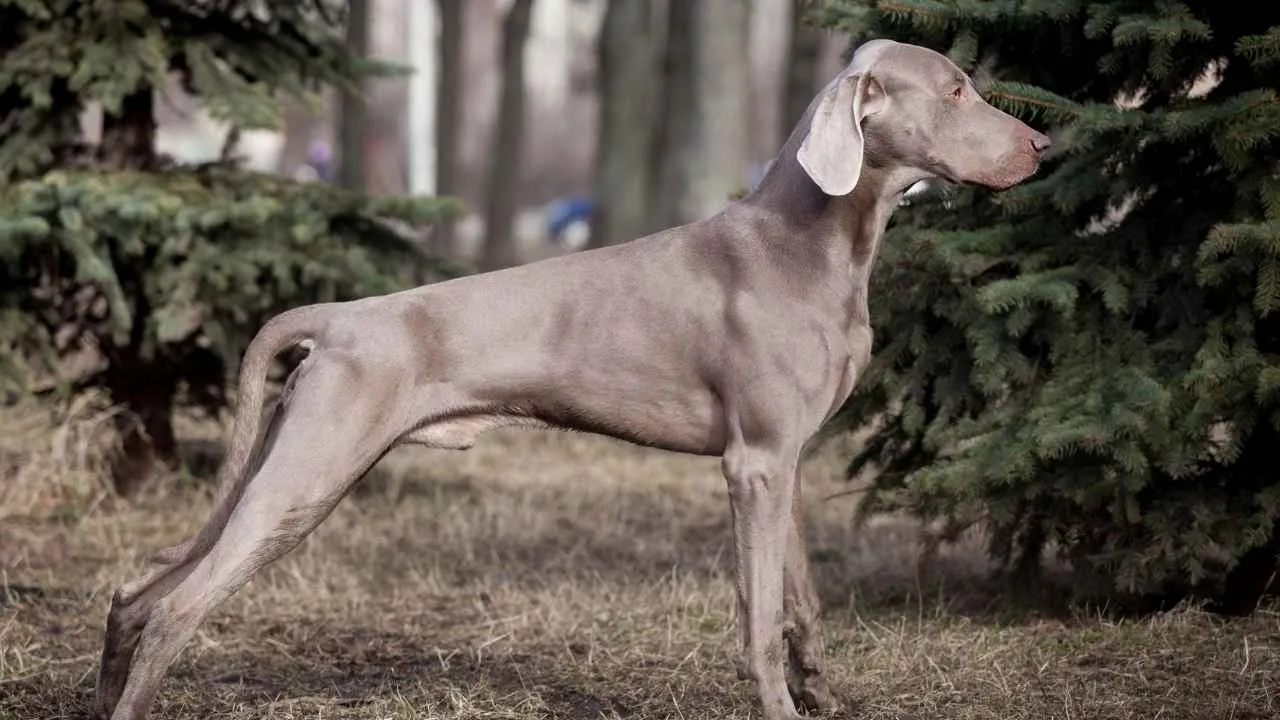
Weimaraners are athletic and high-energy dogs that were originally bred in Germany for hunting large game. Their rich hunting heritage means they have a high prey drive. They are likely to chase squirrels, cats, rodents, and other small animals.
It makes them unsuitable for multi-pet homes. Orvis explains that Weims need early socialization to avoid dominant or aggressive behaviors. Weimaraners are loyal, obedient, and inquisitive canines who make loving family pets.
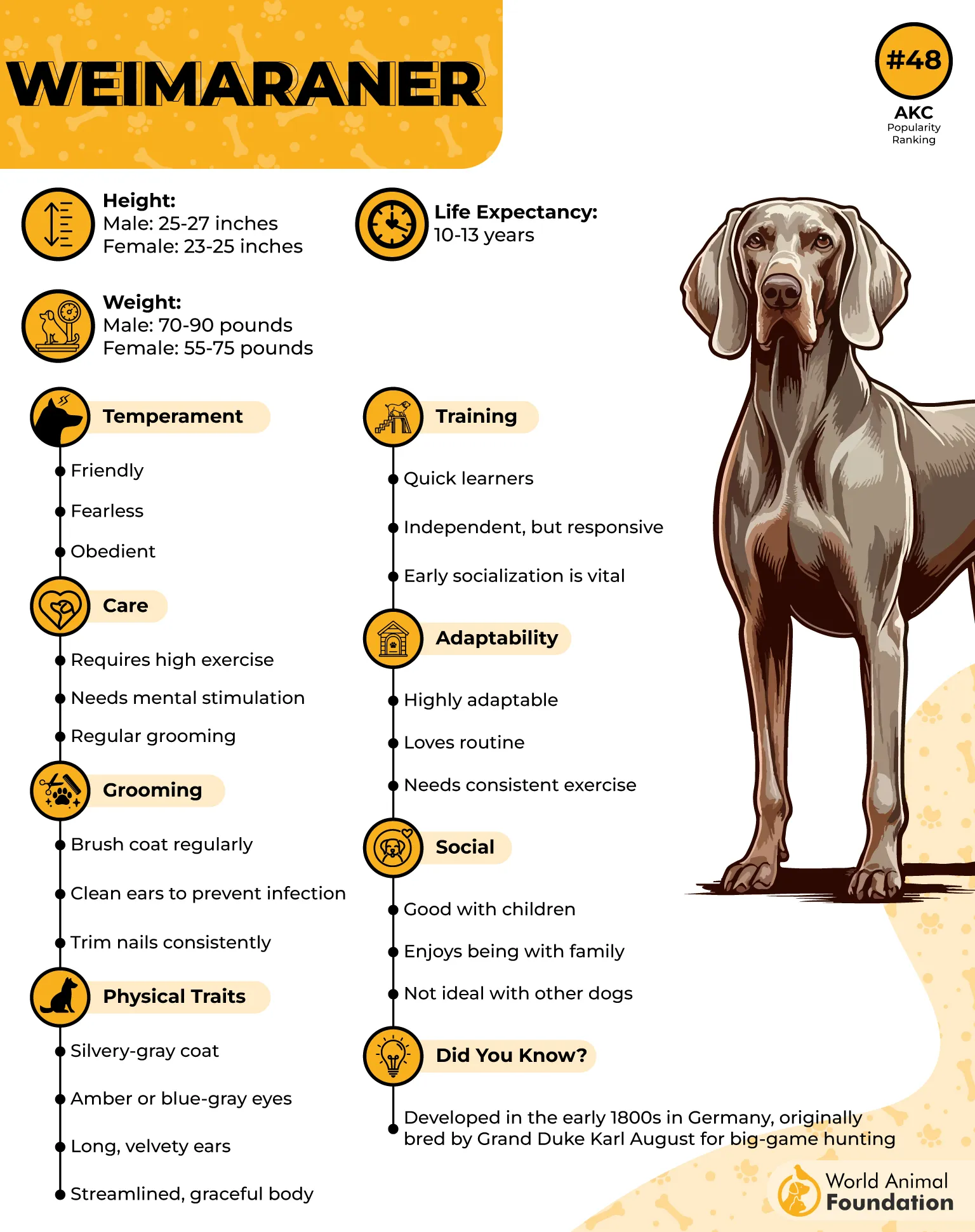
Do You Know? Weimaraners are very intelligent dogs. With their brainpower, they can learn to unlatch gates, turn faucets on, and much more. Potential owners should prepare to stay a step ahead of their Weims.
Weimaraners are loving dogs with a short and smooth coat that sheds moderately. They need minimal grooming to look dapper.
4. Irish Setter

Originally bred as hunting dogs, Irish Setters are loved for their flashy red coat. While they are not often seen in the field now, they have retained their hunting instincts. Irish Setters make friendly, sweet-tempered, and affectionate family dogs.
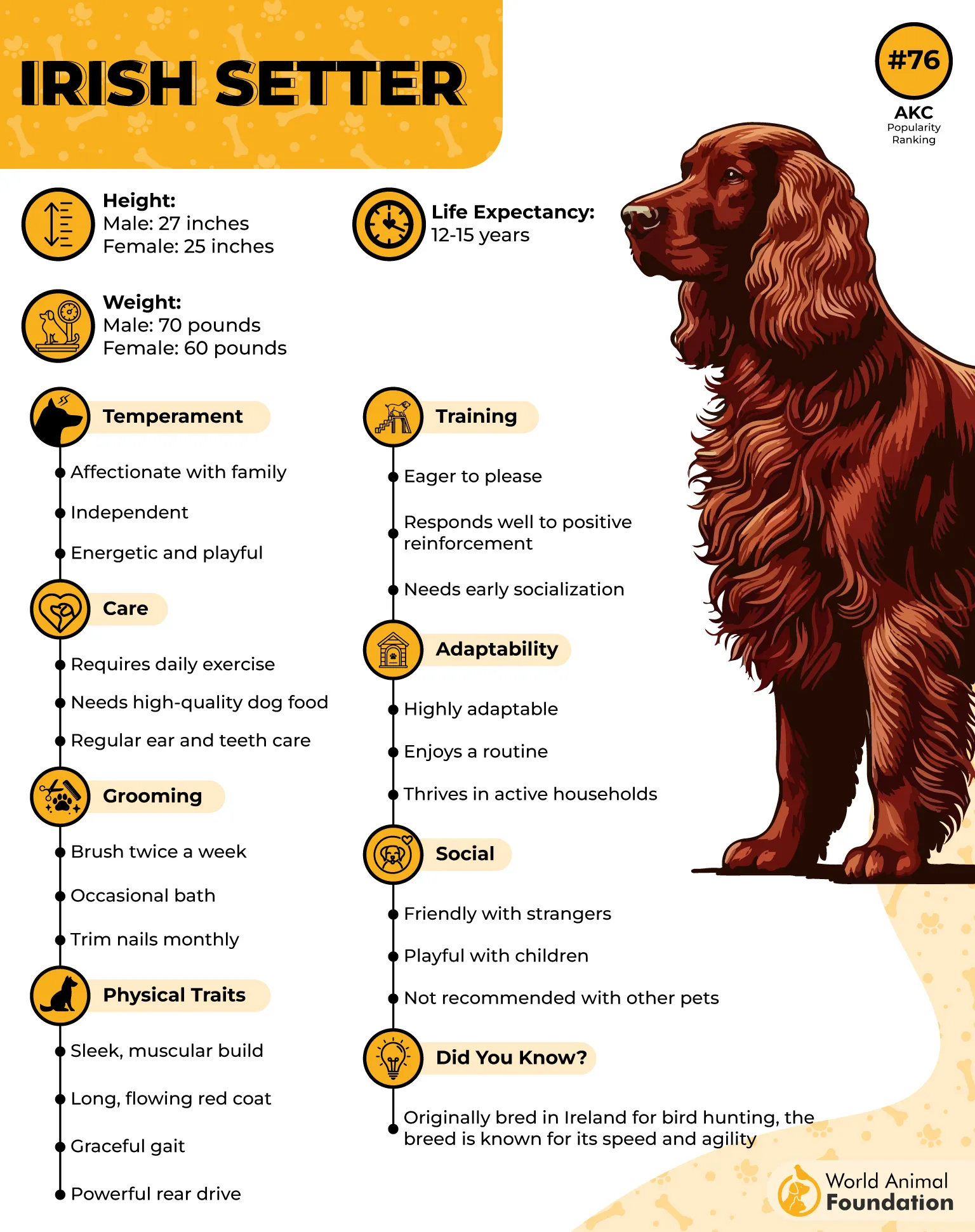
However, potential pet parents should prepare themselves for their wanderlust potential and strong prey drive. These rambunctious redheads love chasing small animals and may wander off while following a scent. It is better to keep your Irish Setter within a fenced-in area.
Irish Setters are high-energy dogs who make a better fit for active families, explains WebMD. They need at least two hours of daily exercise for physical and mental stimulation. Exercise may include running and playing with their humans.
Proper training and early socialization starting from an early age help control the dogs’ prey drive and channel their energy in a positive manner.
5. Border Collie
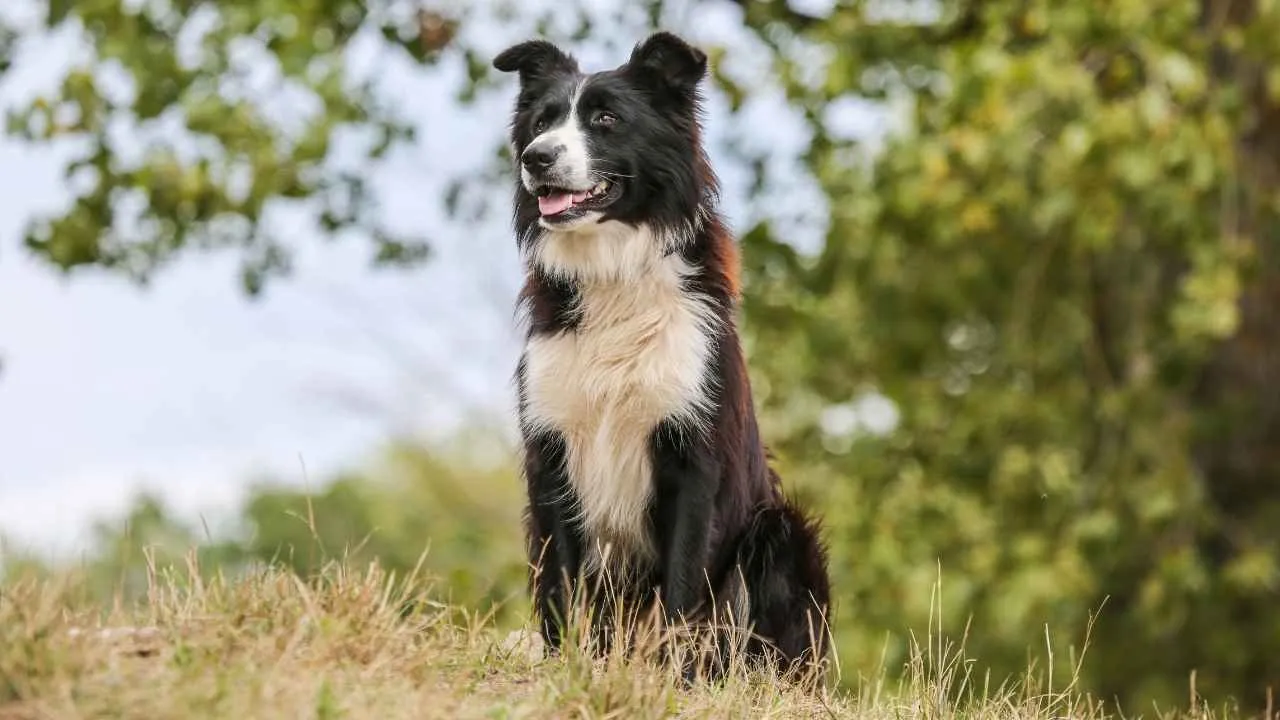
Smartest of all breeds in the canine world, Border Collies are known for their keen senses and agility. They were originally bred as herding dogs and tend to herd everyone and everything, including small animals and little children.
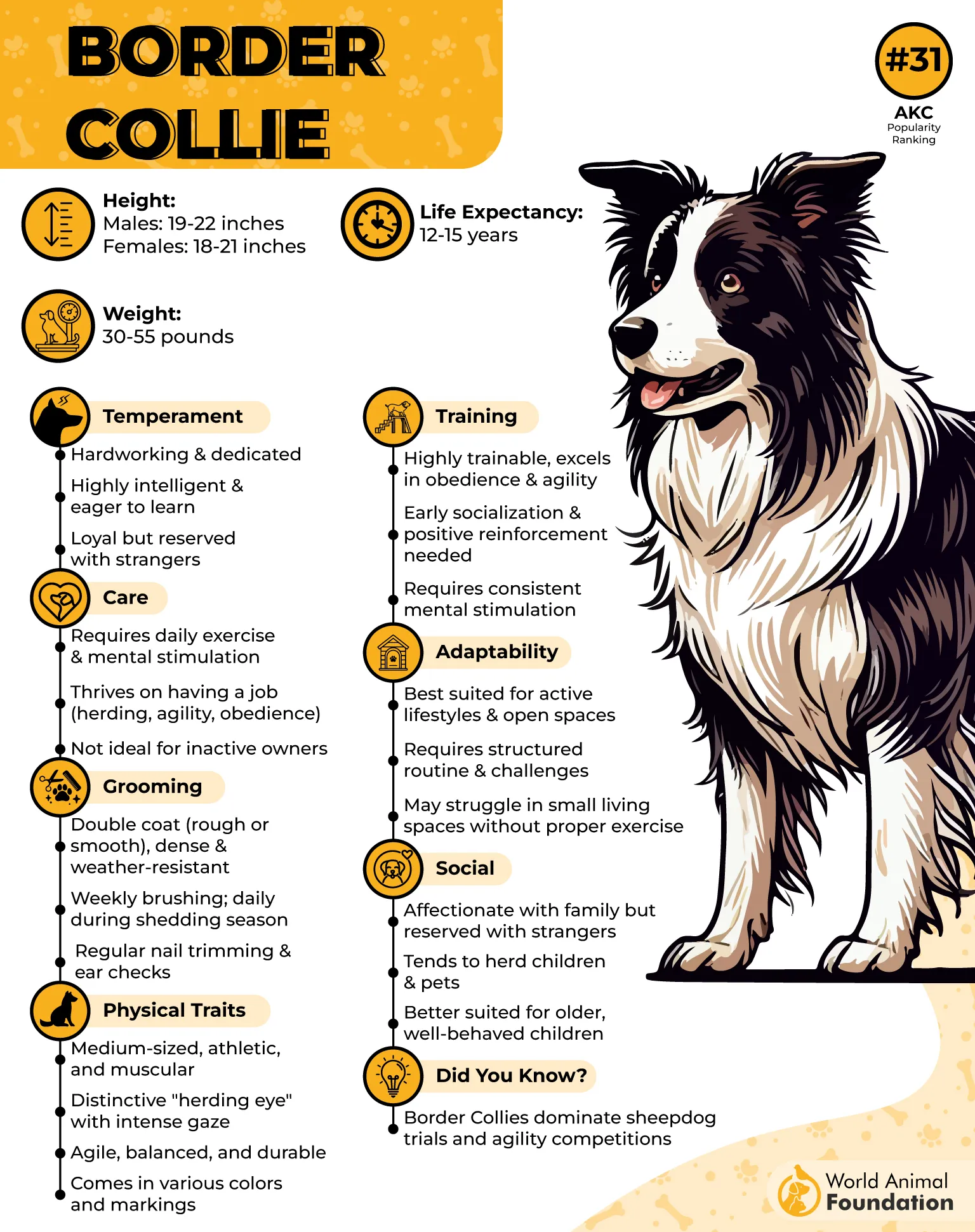
Their unique hunting style includes nipping at the heels of their flocks. Border Collies retain the same prey drive till today. Purina describes Border Collies as ‘high drive’ and ‘high energy dogs.’ They thrive on having a job to do.

Border Collies benefit from vigorous daily exercise and mental stimulation. They pick up on new commands quickly and excel at a variety of dog sports including agility, herding, tracking, and rally. They also enjoy flyball and flying disc.
If you do not provide them adequate activity, they will try to find out their own, whether it is incessant barking or searching for escape routes.
6. Greyhound
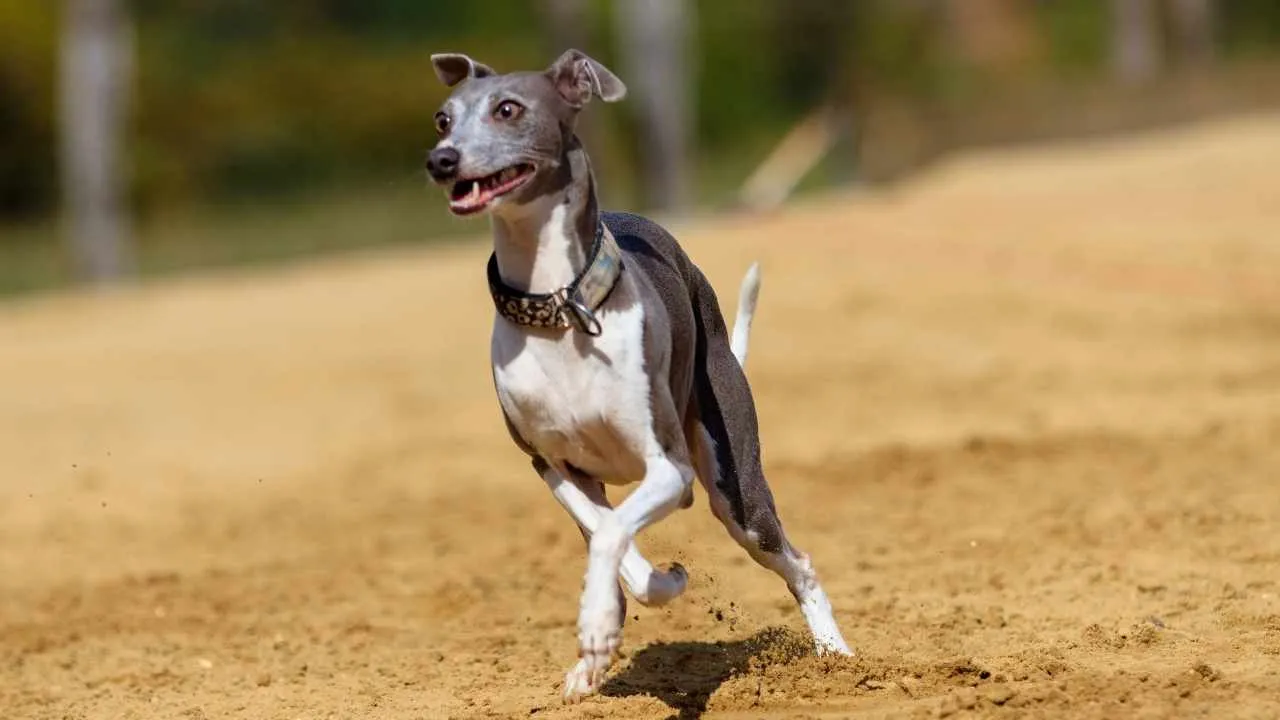
Sleek, well-muscled, and deep-chested, Greyhounds love nothing more than the thrill of the chase! Despite being champion sprinters of the dog world, they like to snooze at home for several hours. Greyhounds were developed to hunt using their speed and sense of sight.
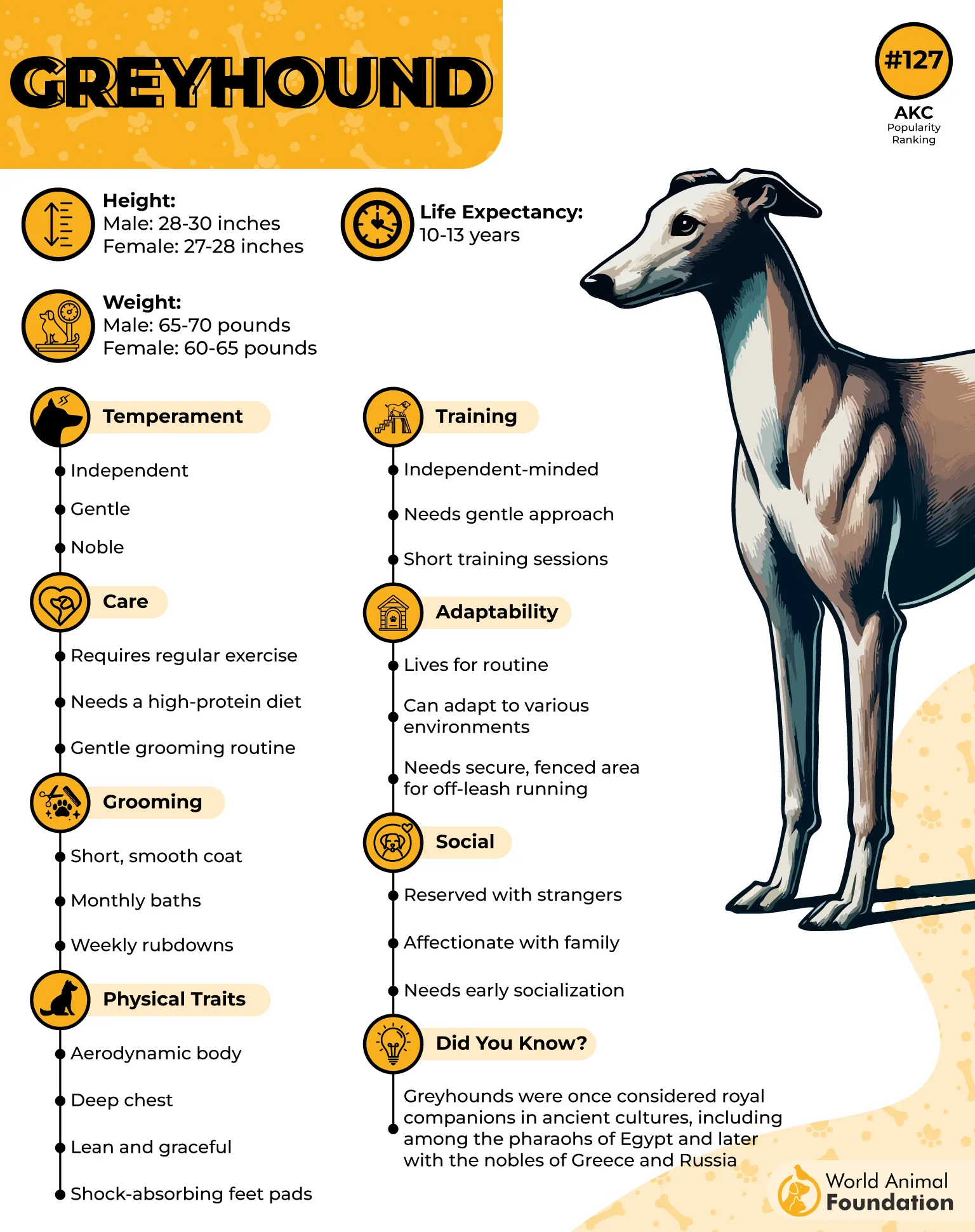
Having said that, these canines have a high energy level and intense prey drive. PetPlan mentions that Greyhounds don’t do well in homes with cats or other small animals that they see as their prey. These gentle dogs make great family pets as long as their exercise needs are being met.
Greyhounds are calm, intelligent, and athletic dogs. Some of them may be shy at first, but others warm up quickly and form strong bonds with their pet parents. Socialization can help control their natural behavior of following every moving object.
7. Basenji
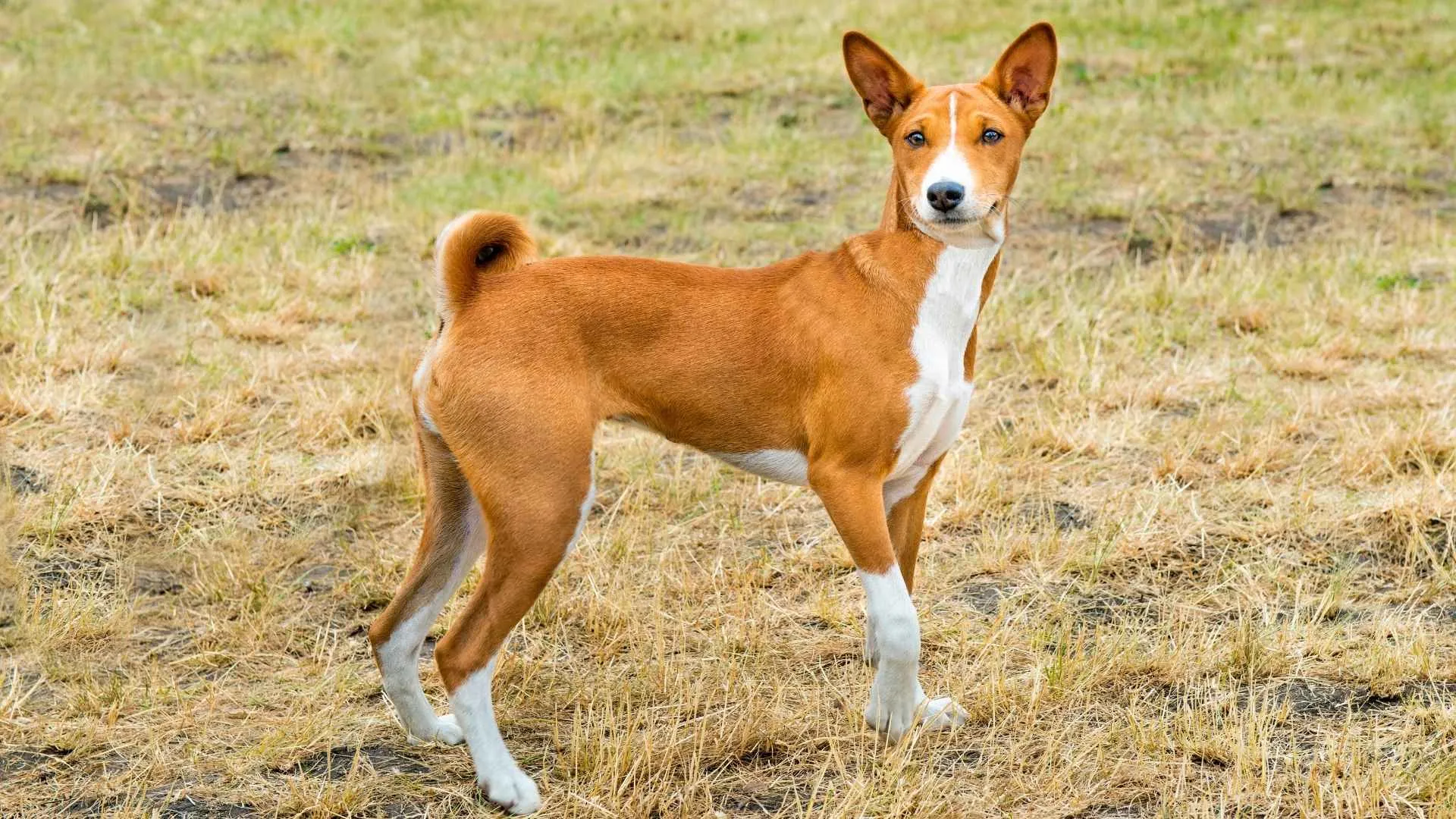
The famous ‘barkless dogs,’ Basenjis are known for their yodel-like sound and fastidious nature. They bond closely to their people, but may be aloof towards strangers. Basenjis tend to be calm indoors, but show their strong prey drive outdoors.
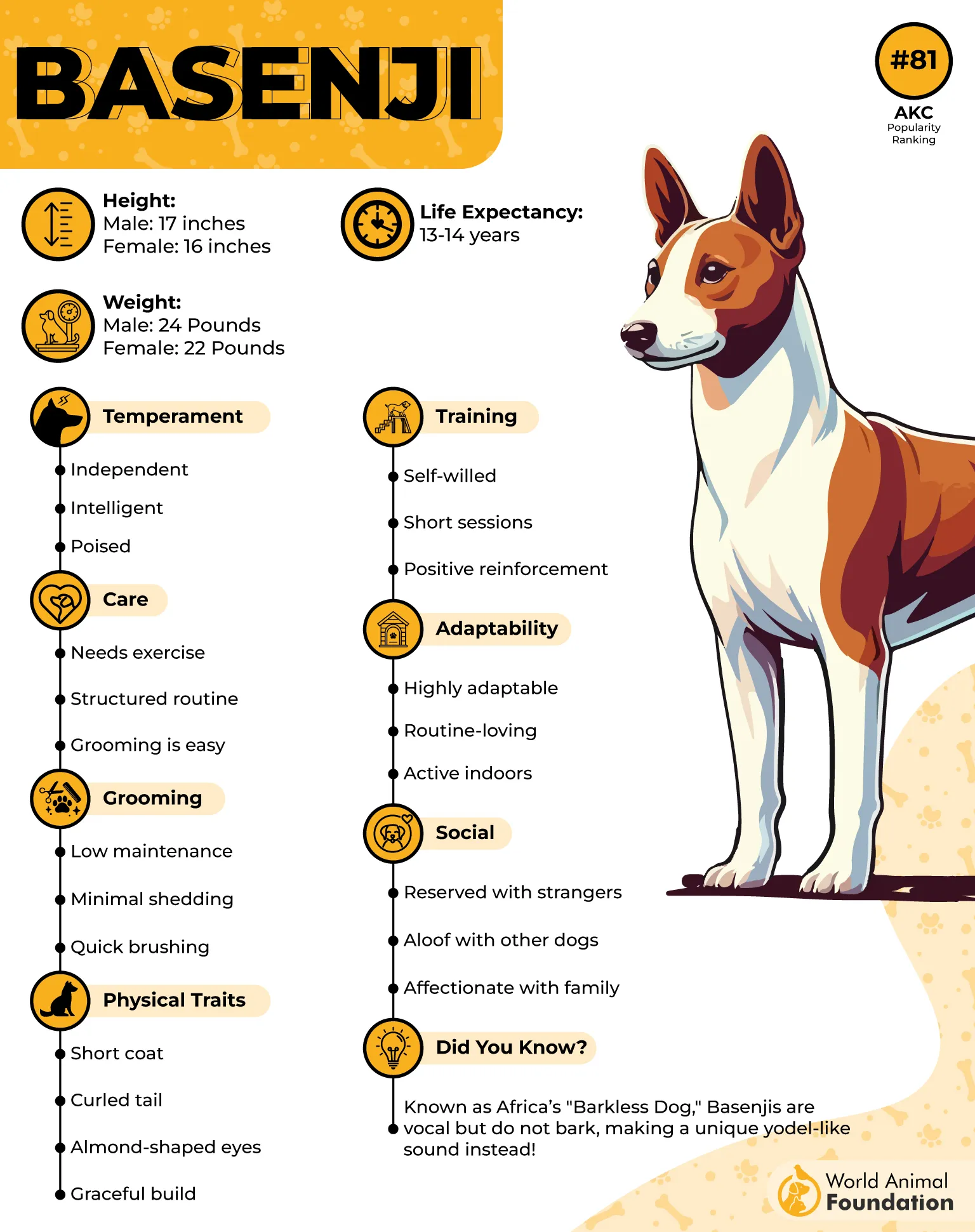
Basenjis are sight hounds at heart. They tend to follow every moving object due to their predatory behavior. High prey drive can be smartly managed by providing Basenjis proper outlets for their energy. Daily exercise is important for physical and mental stimulation.
Lack of adequate activity can lead to destructive behavior such as excessive chewing or barking. Basenjis are family-oriented dogs, but enjoy having their own time due to their independent nature. Well-trained Basenjis can be left alone for at least eight hours.
Conclusion
Dogs follow a natural predatory sequence to find food for themselves. Domesticated dogs often exhibit some parts of this predatory behavior, but still possess a strong prey drive. Prey drive in dogs is their natural instinct to chase, capture, and kill other animals.
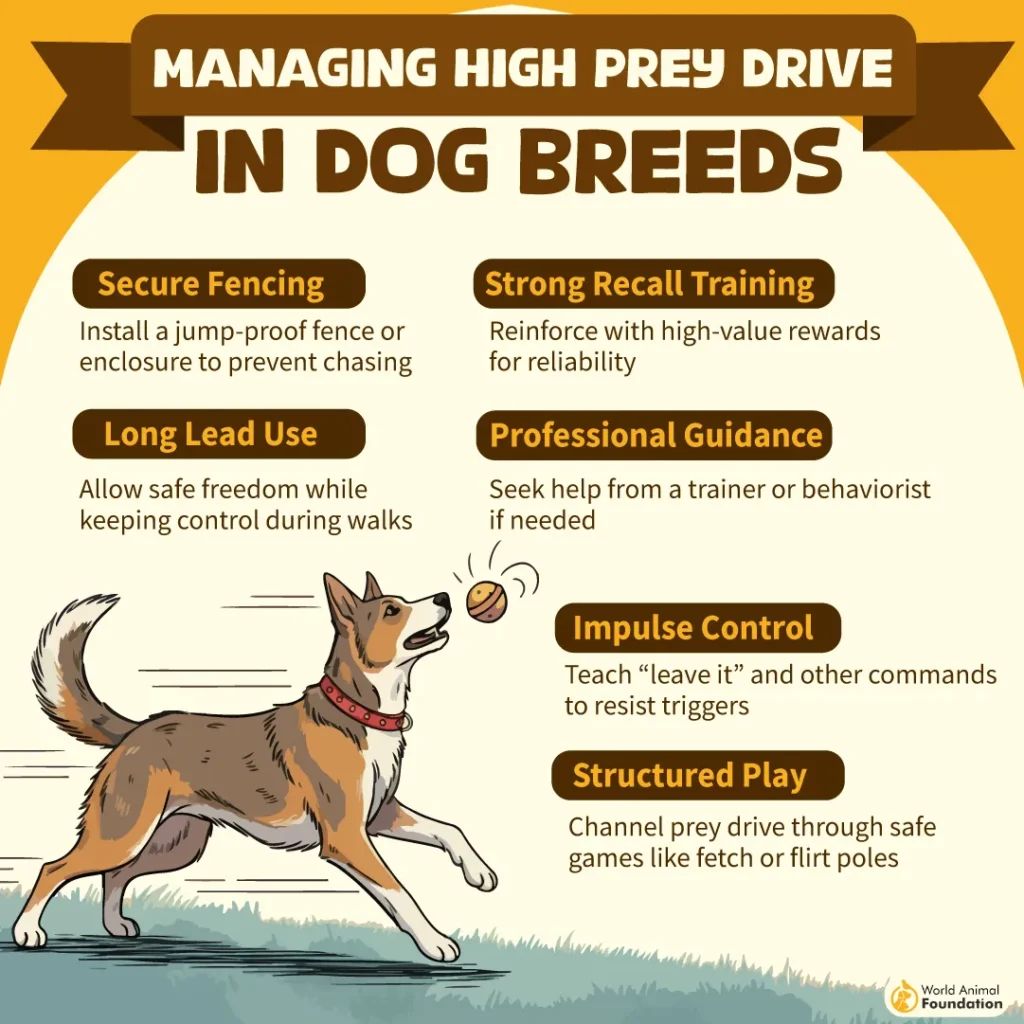
Scent hounds, sight hounds, herding breeds, and terriers usually have a high prey drive. You can manage it by providing lots of exercise and mental stimulation to your dog. Consider keeping your dog in a fenced yard or find other healthy ways to manage their drive.
