




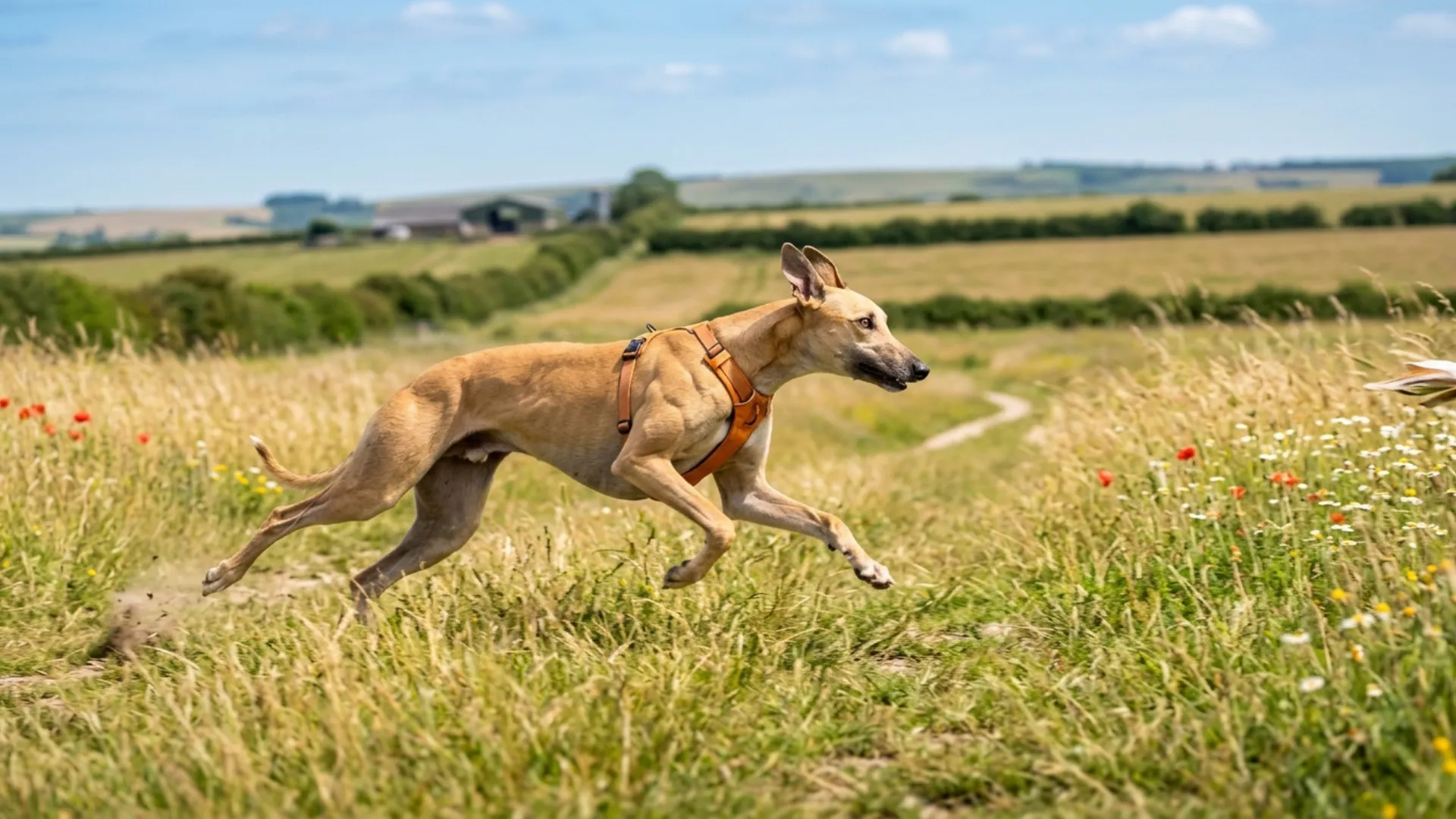
Some dogs spot a squirrel and immediately sit.
Others?
They have already mapped the route, calculated the distance, and gone full NASCAR before you even said, “Stay.” That, my friend, is prey drive, and it is one of the most fascinating, misunderstood forces in the dog world. It is not aggression or bad behavior.
It is raw, ancient instinct baked into a dog’s DNA over thousands of years of hunting, herding, and surviving in the wild. Certain breeds carry this fire much more brightly than others.
If you are thinking of owning one, buckle up, because life with a high-prey-drive dog is equal parts thrilling, exhausting, and genuinely unforgettable. Let us meet the heavy hitters. Let us dive in and find the perfect match for you.
Best Dog Breeds with a Notable Prey Drive
1. Afghan Hound
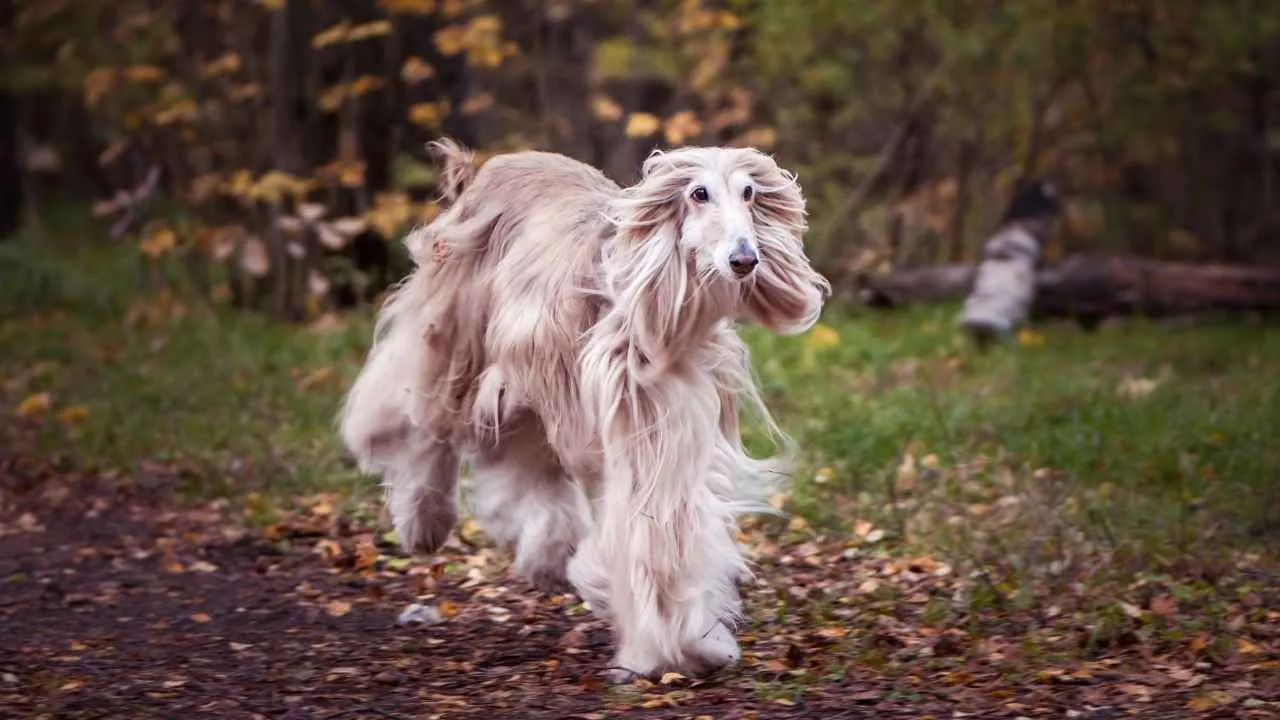
Originally bred in the cold mountains of Afghanistan, the Afghan Hound is thought to be the descendant of the Saluki dog, brought from Persia. The coat grew longer and developed cords because of the harsh weather of the region and to protect itself from the wild animals, such as wild boars and bears, says Purina.
It has a panoramic field of vision because of the elongated skull. Once it detects prey, the brain releases adrenaline and noradrenaline, dilating airways, increasing heart rate, and redirecting blood vessels to the legs for explosive speed (40 mph).
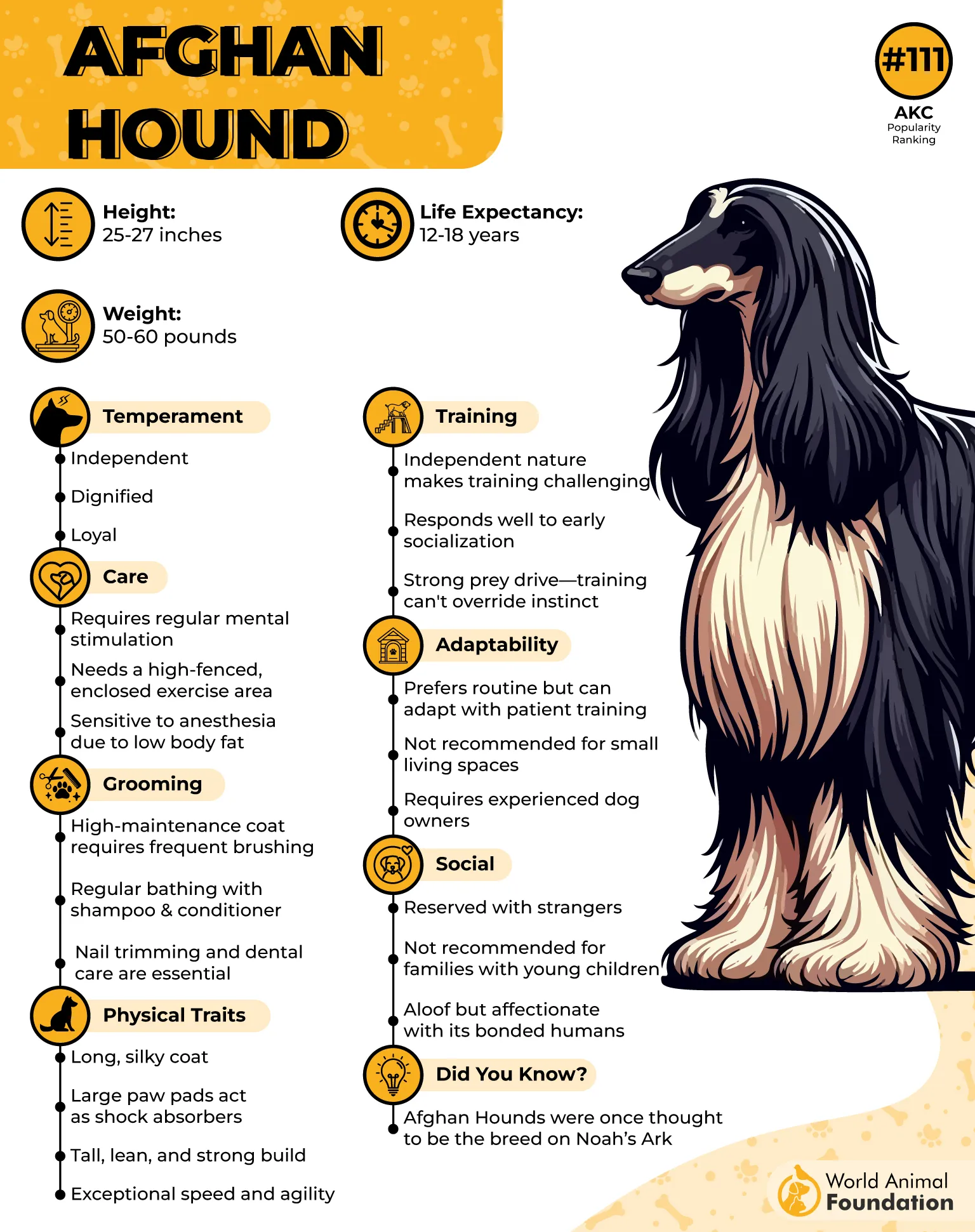
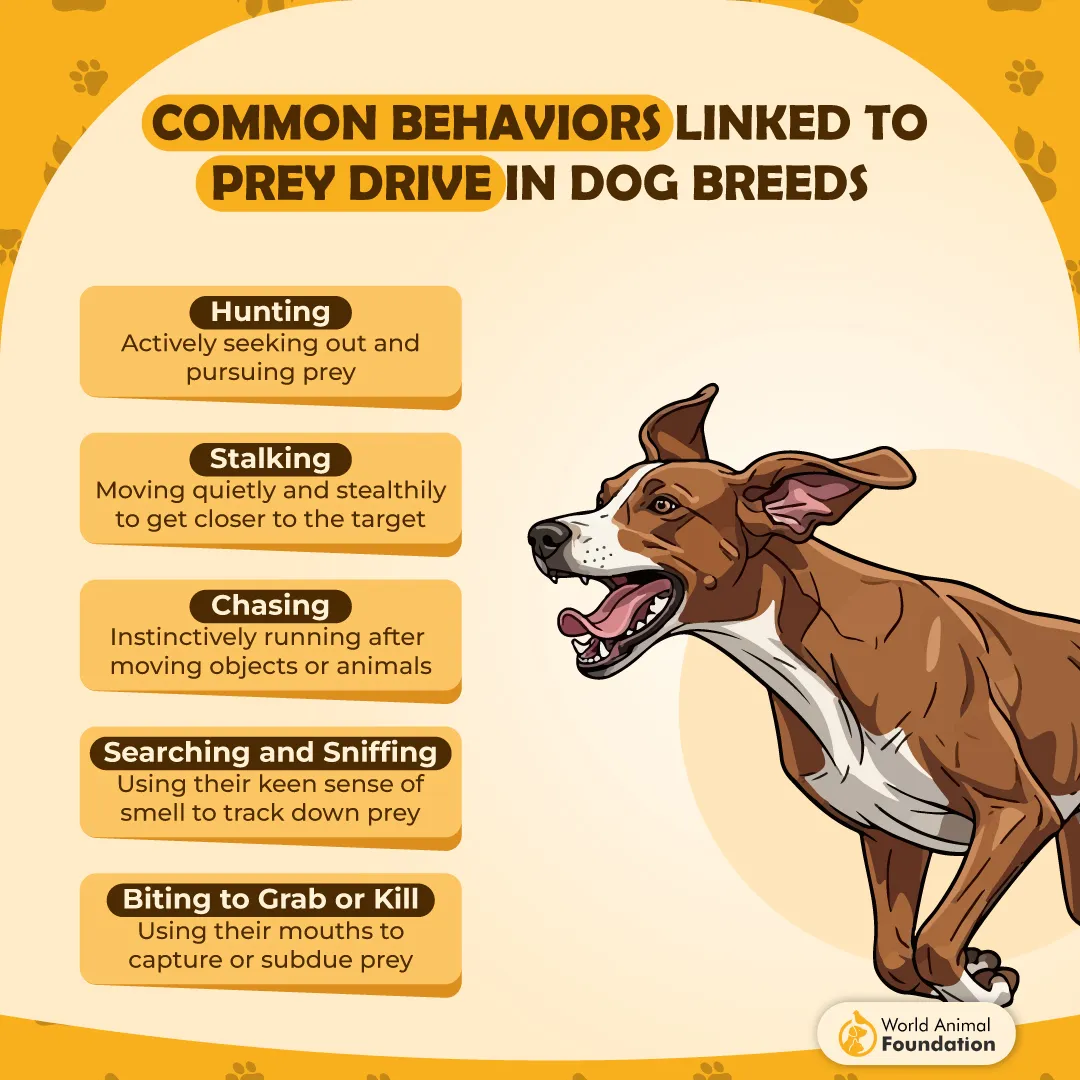
Any canine breed operates on an 8-part sequence: orient, eye, stalking, and chase (1st phase), and bite-to-grab, bite-to-kill, dismember, and consume (2nd phase). This high prey drive breed mostly lacks the second phase. The breed requires 1-2 hours of vigorous exercise daily.
2. Greyhound
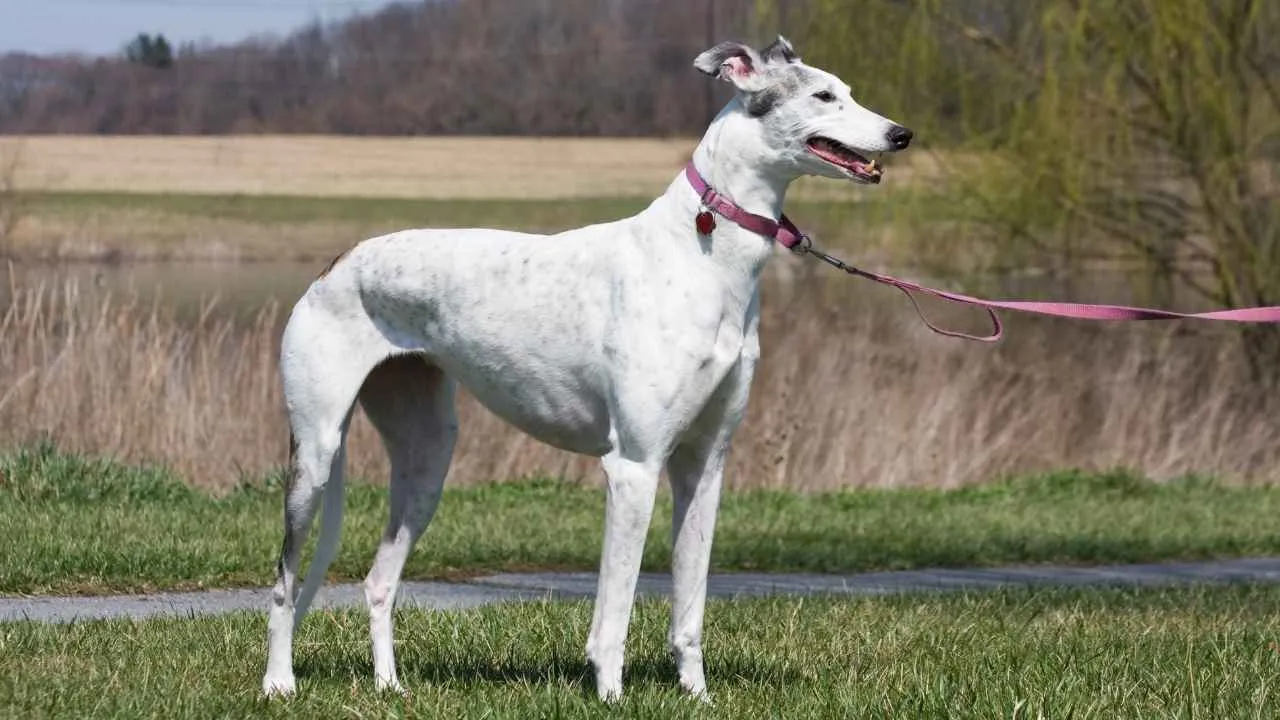
This is one of the ancient dog breeds, with a history dating back 6,000 years. It was originally used to chase antelope, bears, and boars. Only the royalty were allowed to own a Greyhound for hunting. As soon as the law was repealed, this fast-moving animal was used for racing, eventually becoming the fastest dog breed on Earth (40-45 mph).
Since it is a dolichocephalic, it has a wide field of vision that enables it to instantly detect fast-moving objects at a great distance. It operates on the first 5-part sequence for catching its prey. The neurological shift to chase the prey is manifested physically as: upright tail, dilated pupil, teeth chattering, salivation, and pricked ears.
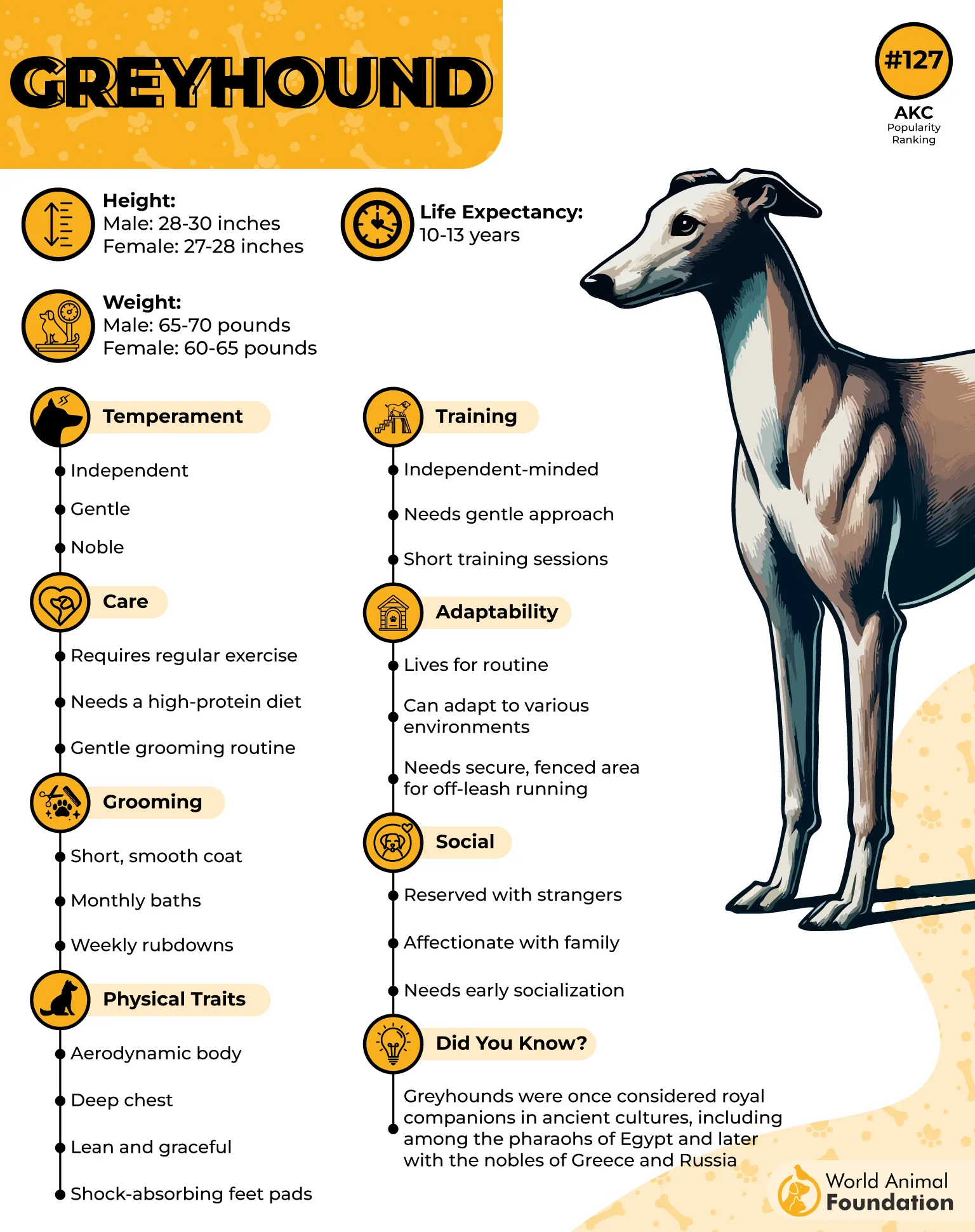
It mostly targets small animals, such as squirrels, cats, and rabbits. This dog has moderate exercise needs (30-45 minutes a day): on-leash outdoor games, brisk walks, and mental stimulation. Brush the breed twice a week using a hound glove or a soft-bristle brush.
3. Jack Russell Terrier
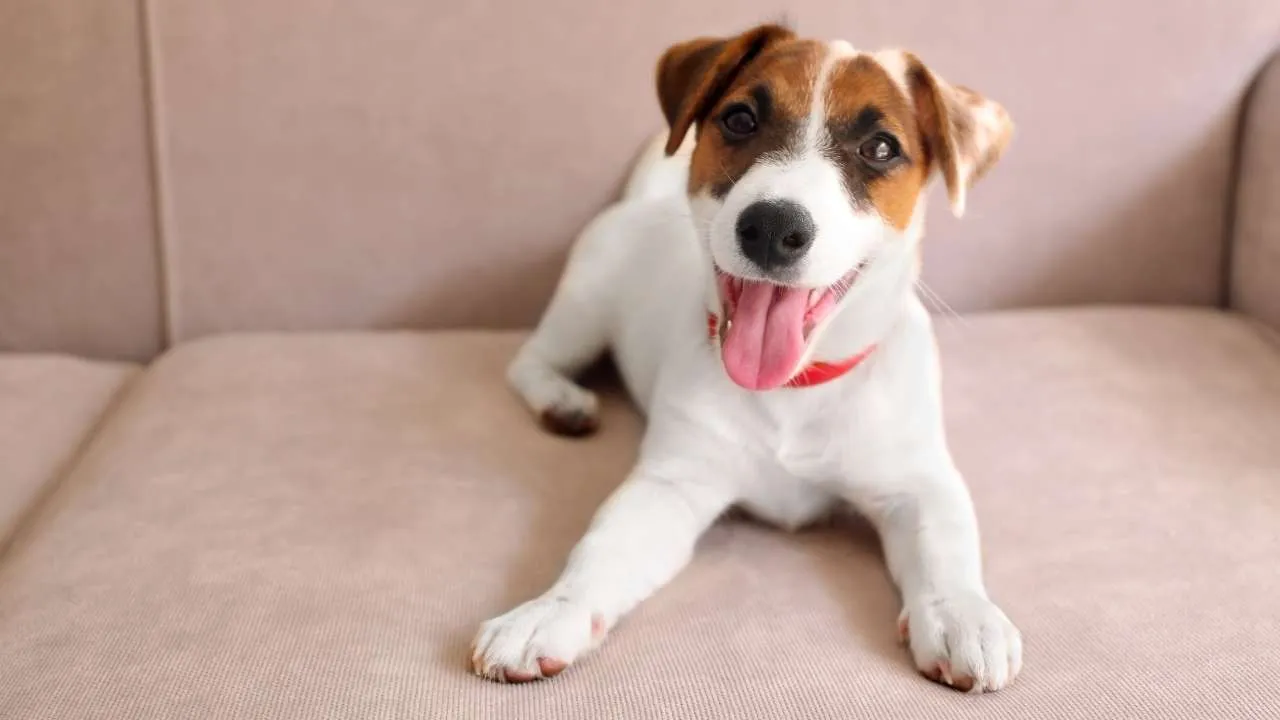
This breed is almost 200 years old and was first bred by Rev. John Russell. He aimed to create a terrier that could patrol, chase out a fox without killing it, and keep up with the horses. This versatile dog has been performing as a companion, watchdog, and farm dog.
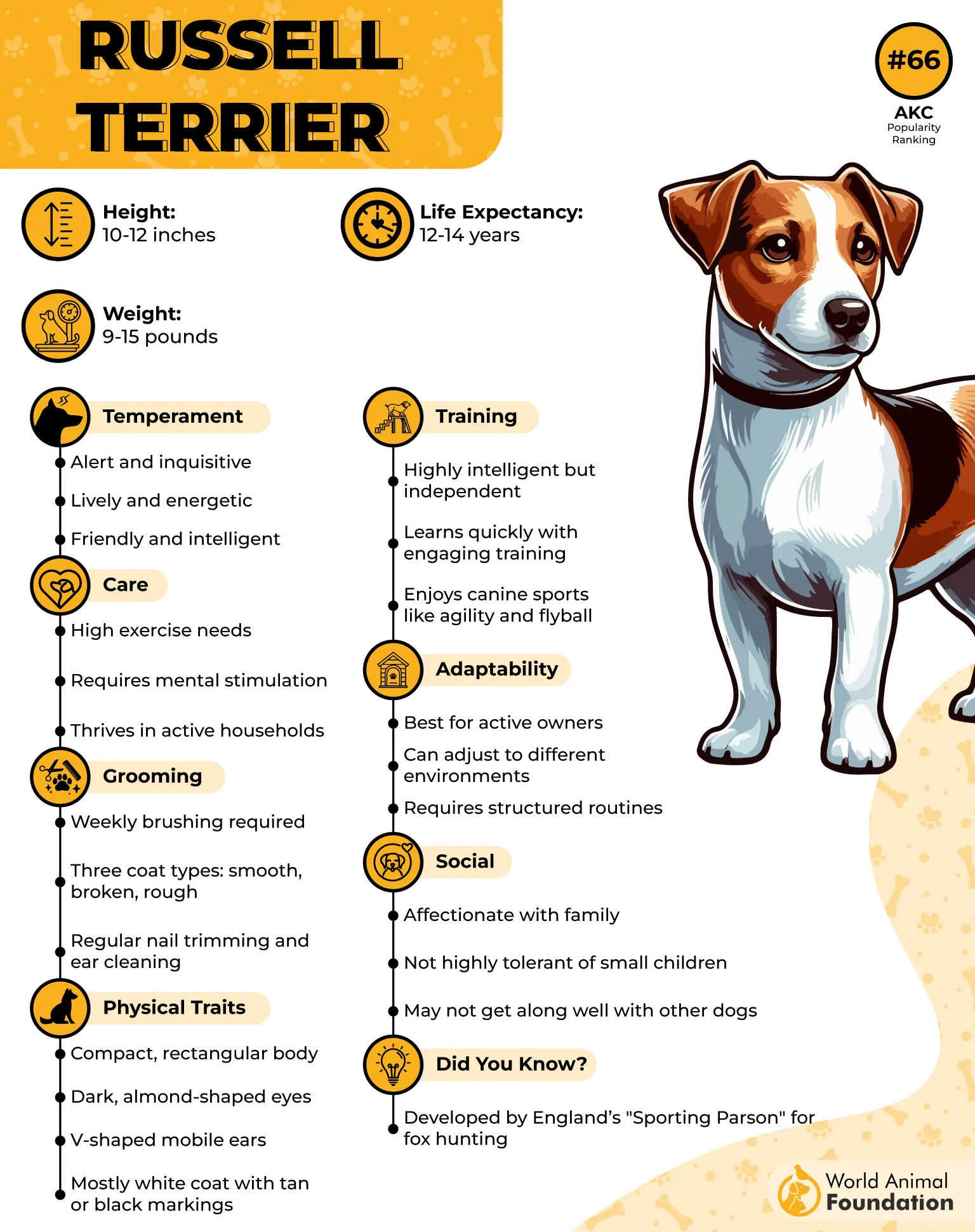
The breed stops and focuses its gaze on the target while crouching, creeps into an ambush position, chases game, bites, and shakes the prey till its neck breaks. High-frequency sounds and sudden movements trigger the prey drive in a dog. The JRT is widely used in farms to hunt pests and wild animals by patrolling and digging.
It needs 60-90 minutes of moderate-to-high exercise, including brisk walks, fetching, jogging, and puzzle toys. It is a low-shedding breed and requires weekly brushing. Regularly trim nails and clean ears to prevent infection.
4. Siberian Husky
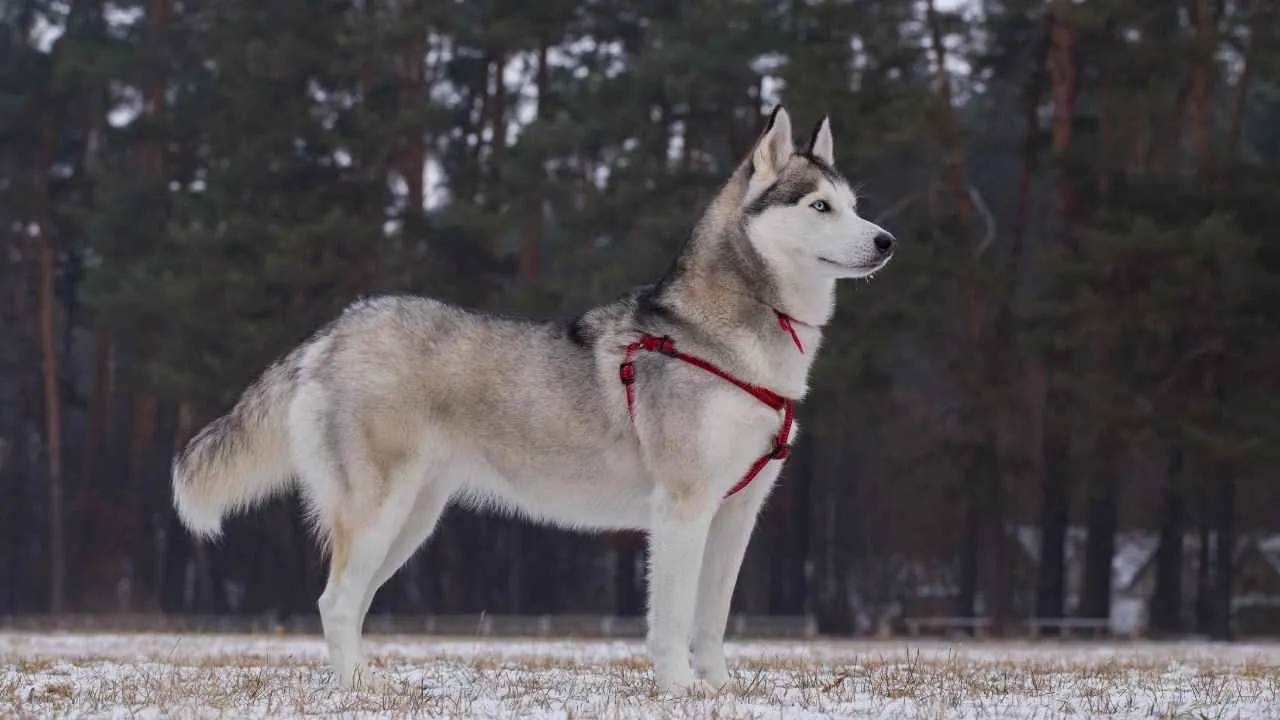
The breed was originally developed in Russia by the Chukchi people thousands of years ago as a sled dog. It used to pull heavy loads for long distances on icy terrain. Thanks to the webbed feet and the dense double coat, according to Wikipedia.
The dog freezes to locate the prey. It then locks its eye on the moving object. The respiratory system prepares for ‘loaded breathing’ (short, loud, and deep inhalation). A stiffened and curled tail signals extreme stimulation. Desensitization and obedience training are often recommended by the experts.
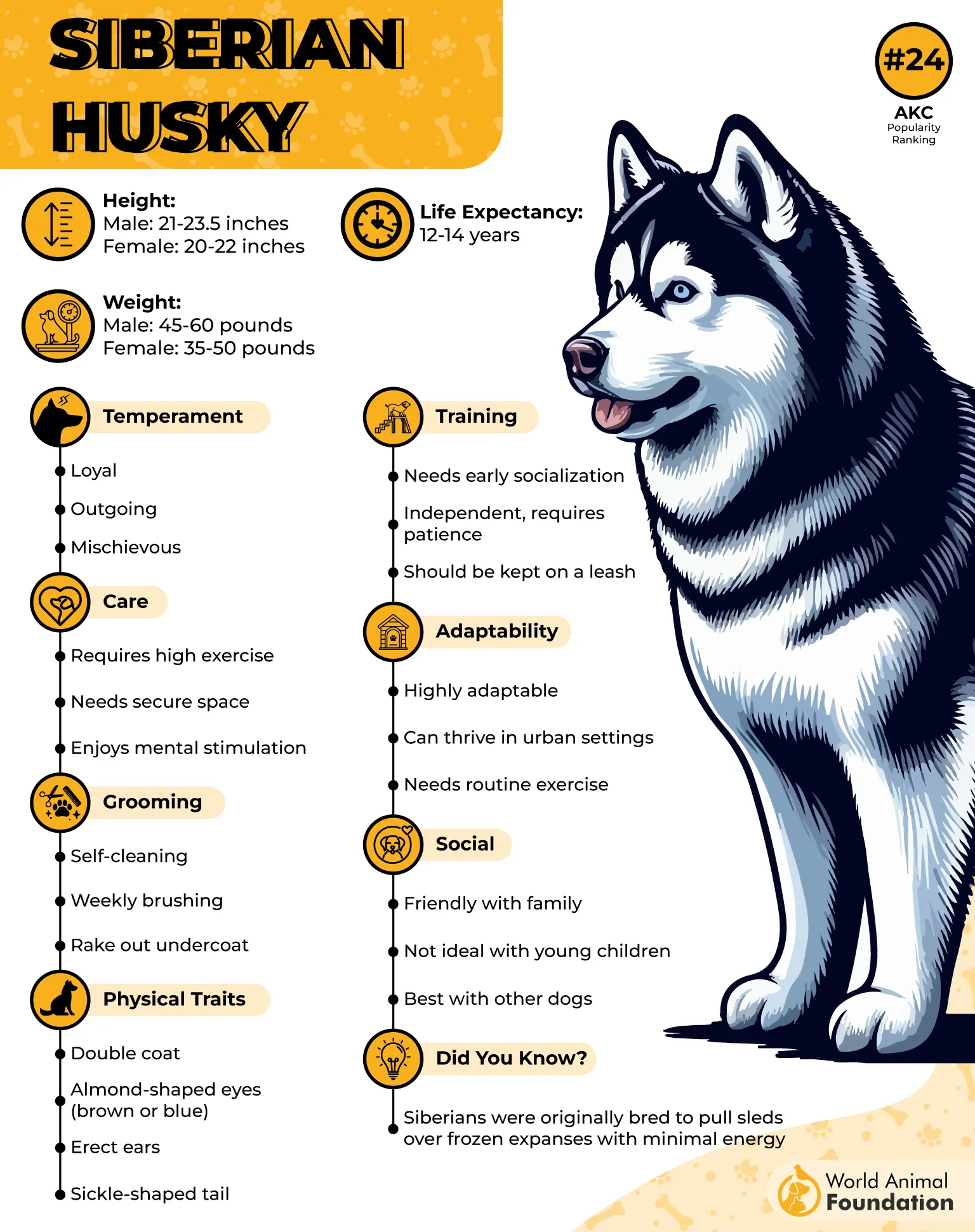
The prey drive is based on desire-based aggression rather than emotion-based aggression. Dog-powered sports such as canicross, bikejoring, or weight pull are the most suggested ways to teach the breed to hunt. It needs 1.5-2 hours of daily exercise.
5. Australian Cattle Dog
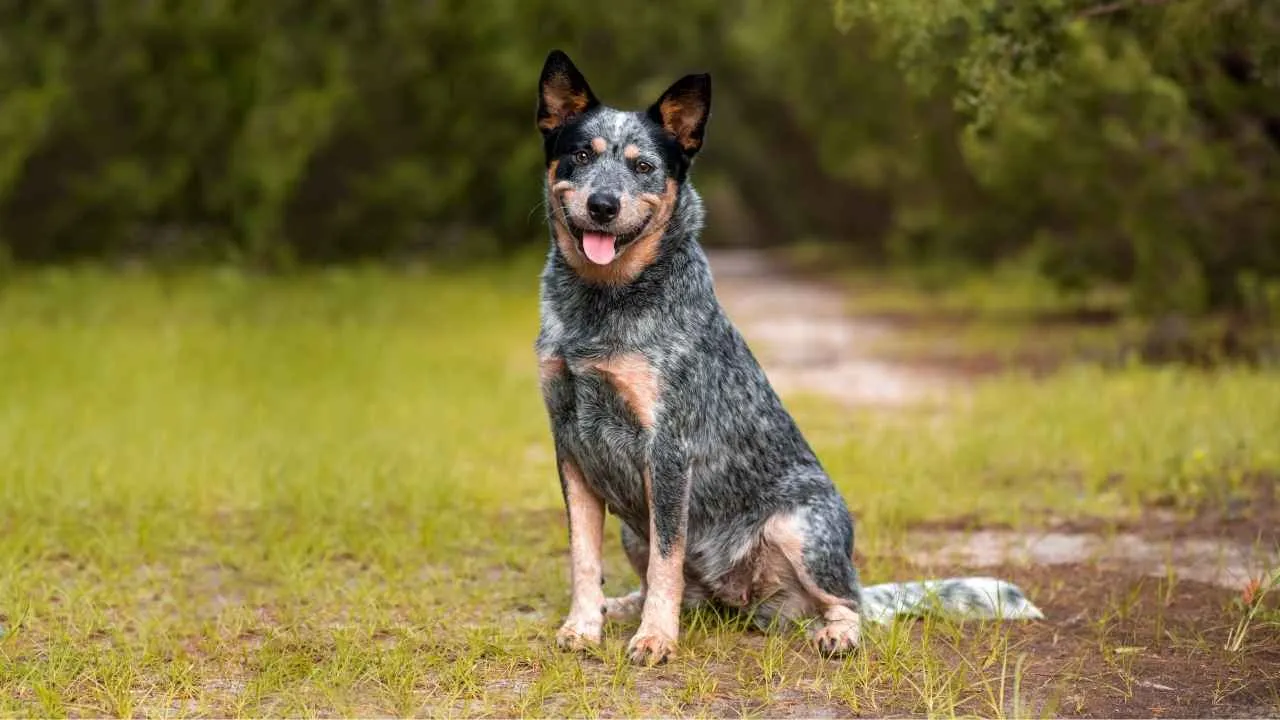
This great dog was bred in Australia as a herding breed to drive cattle over long distances. It herds by biting, and the breed exhibits the tendency to nip at the running children’s feet. The breed forms a strong bond with the owner and family and tends to protect them.
Once the ACD locks on the visual focus, the heart rate decreases. As soon as it grabs its prey, it just bites to deter the intruder and nips at the cattle’s feet to control them. When triggered, the breed has a physical ‘fight-to-flight’ response: rippling forehead skin, forward-facing ears, and a stiffened tail.
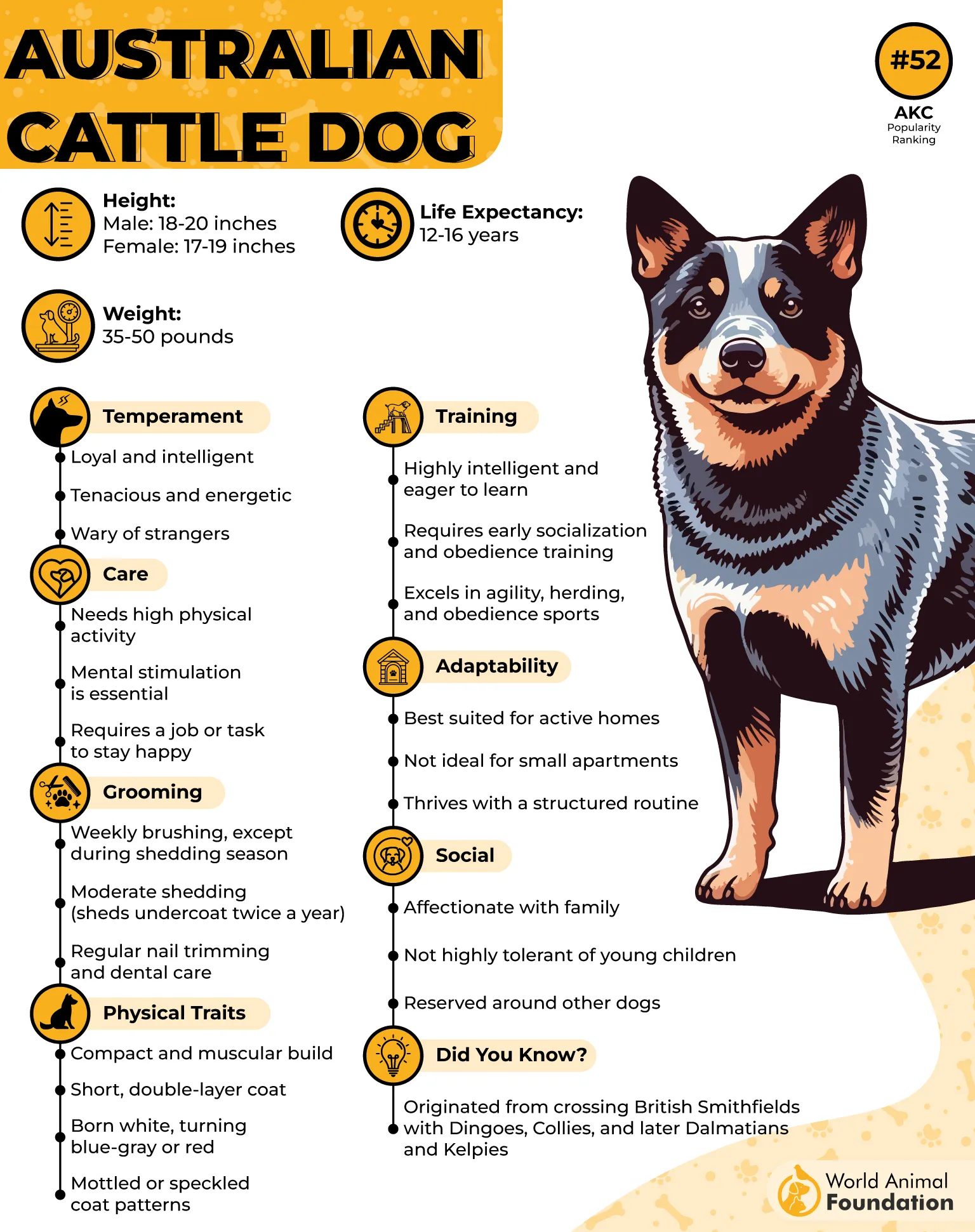
Since it is not an emotionally driven breed, it adopts a calculated strategy to catch the prey. The ‘nipping’ instinct can be controlled by early socialization and early training. Today, it is widely used in livestock work, scent work, barn hunt, flirt poles, and detection.
6. Belgian Malinois
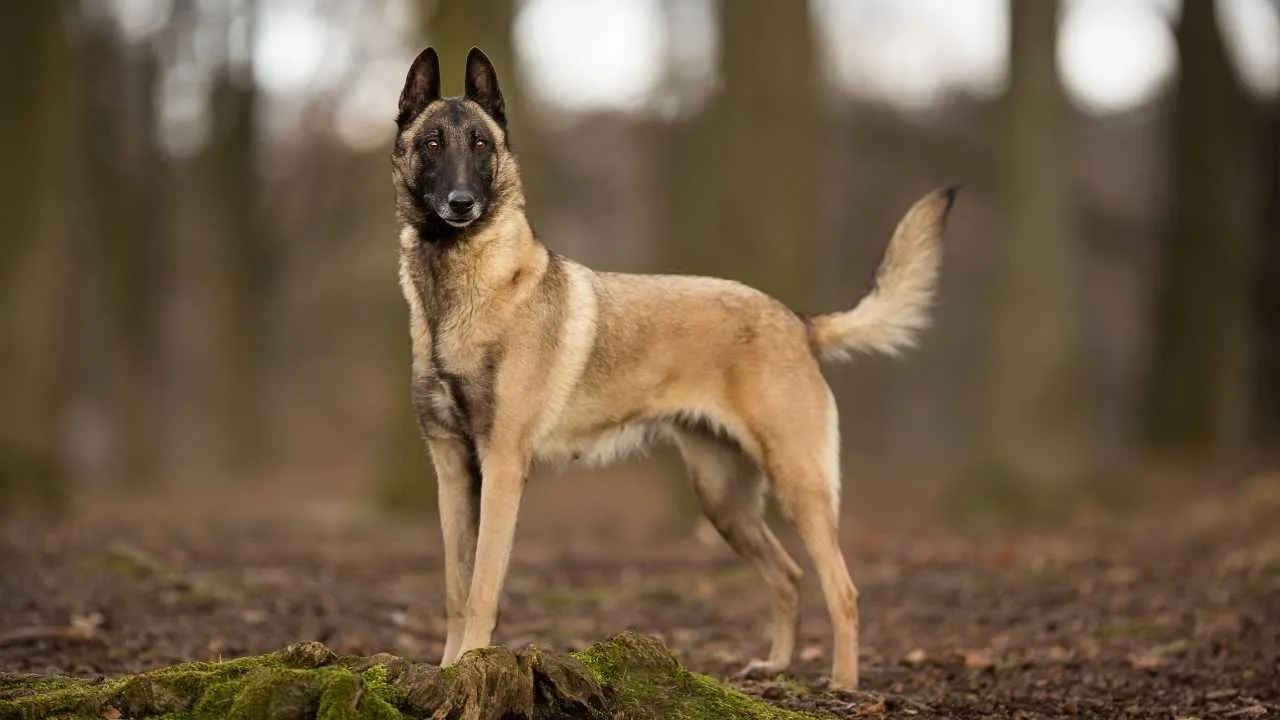
Also known as the Belgian Sheepdog, the Belgian Malinois is a medium-sized herding dog developed in Germany. Today, it is modestly kept as a detection, guard, guide, police, assistive, and rescue dog. The Belgian breed has four distinct varieties: Groenendael, Tervuren, Malinois, and Laekenois.
The first two are snappy and are not good companion dogs; the Laekenois is good with kids but is not good with other dogs. The Malinois is highly trainable and is frequently bred for security purposes. It tends to follow all 8-parts of the hunting sequence. It has a near-photographic memory, and the past movements instantly trigger the prey drive.
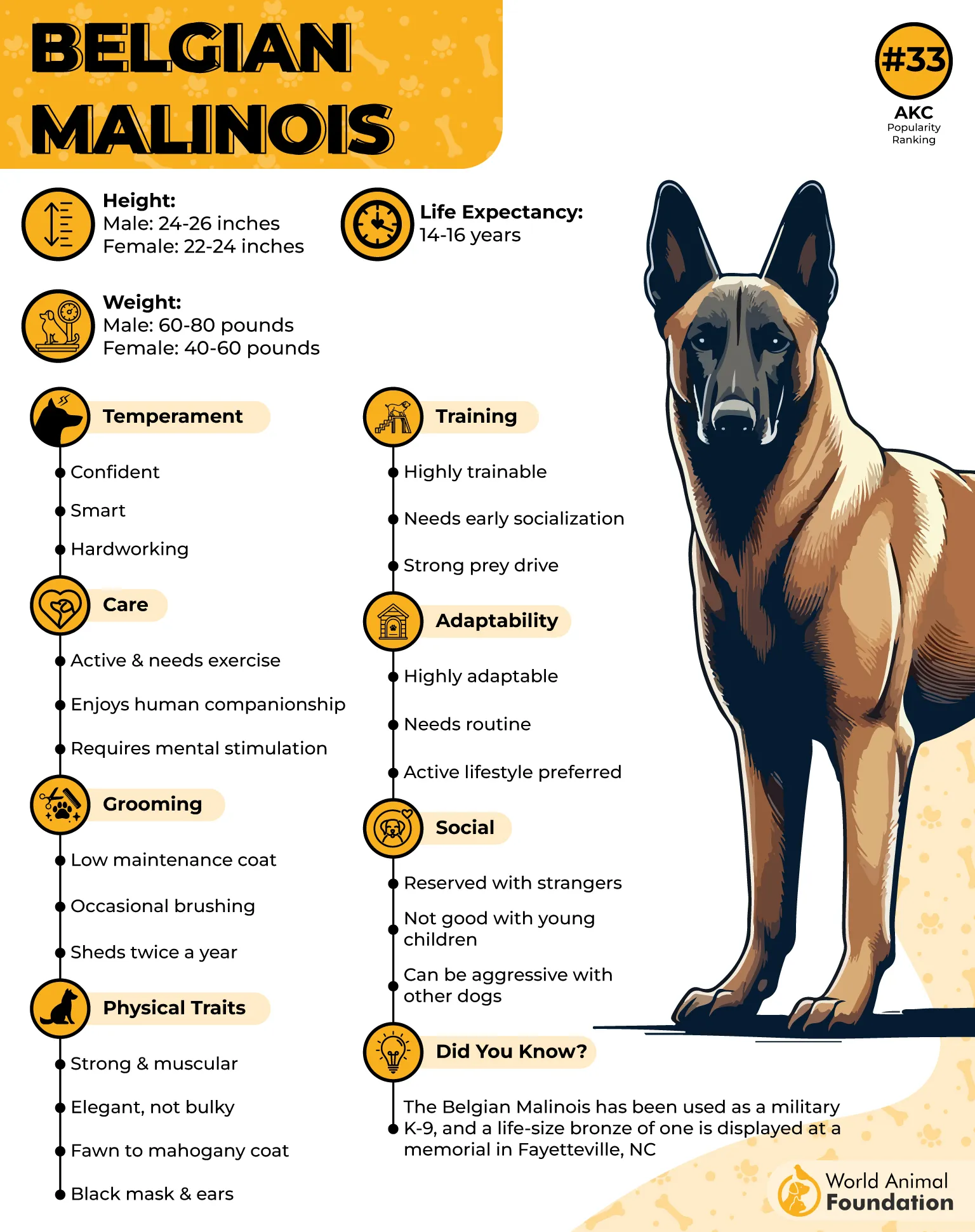
This dog needs high-impact exercise for 1.5-2 hours of daily exercise: running, fetching, frisbee, flyball, agility training, tracking, and puzzle toys are highly recommended. Use a rubber grooming mitt, a medium-bristle brush, and a hound glove for weekly brushing.
7. Saluki
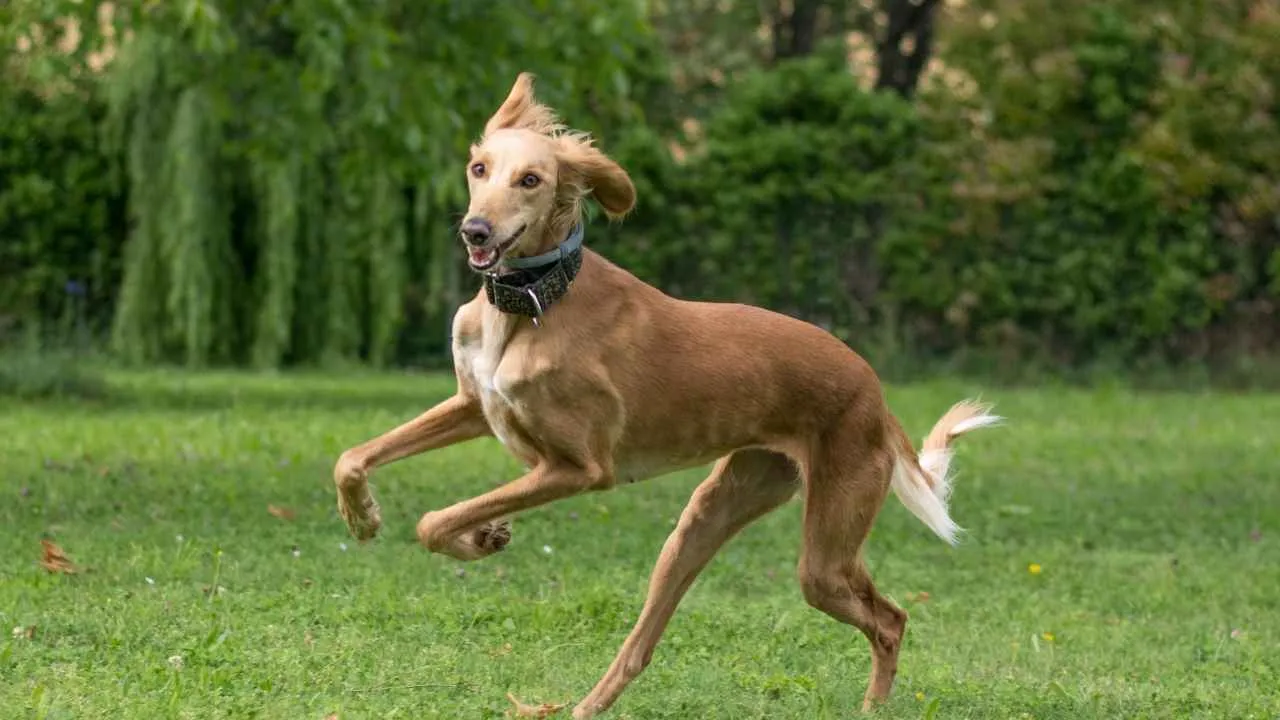
One of the oldest hunting dog breeds, the Saluki dates back to 329 BCE and was favored by royal figures, especially the Egyptians. The Pharaohs used to bury the breed alongside their mummies. It weighs around 40-65 pounds and stands 28 inches tall, as per PetMD.
It has a narrow head and wide-set eyes, providing a field vision of 270 degrees. The retina in the eyes has specialized cells that move horizontally to detect minute changes in the environment as accurately as half a mile away. It almost becomes deaf to the distractions as soon as it detects a stimulus.
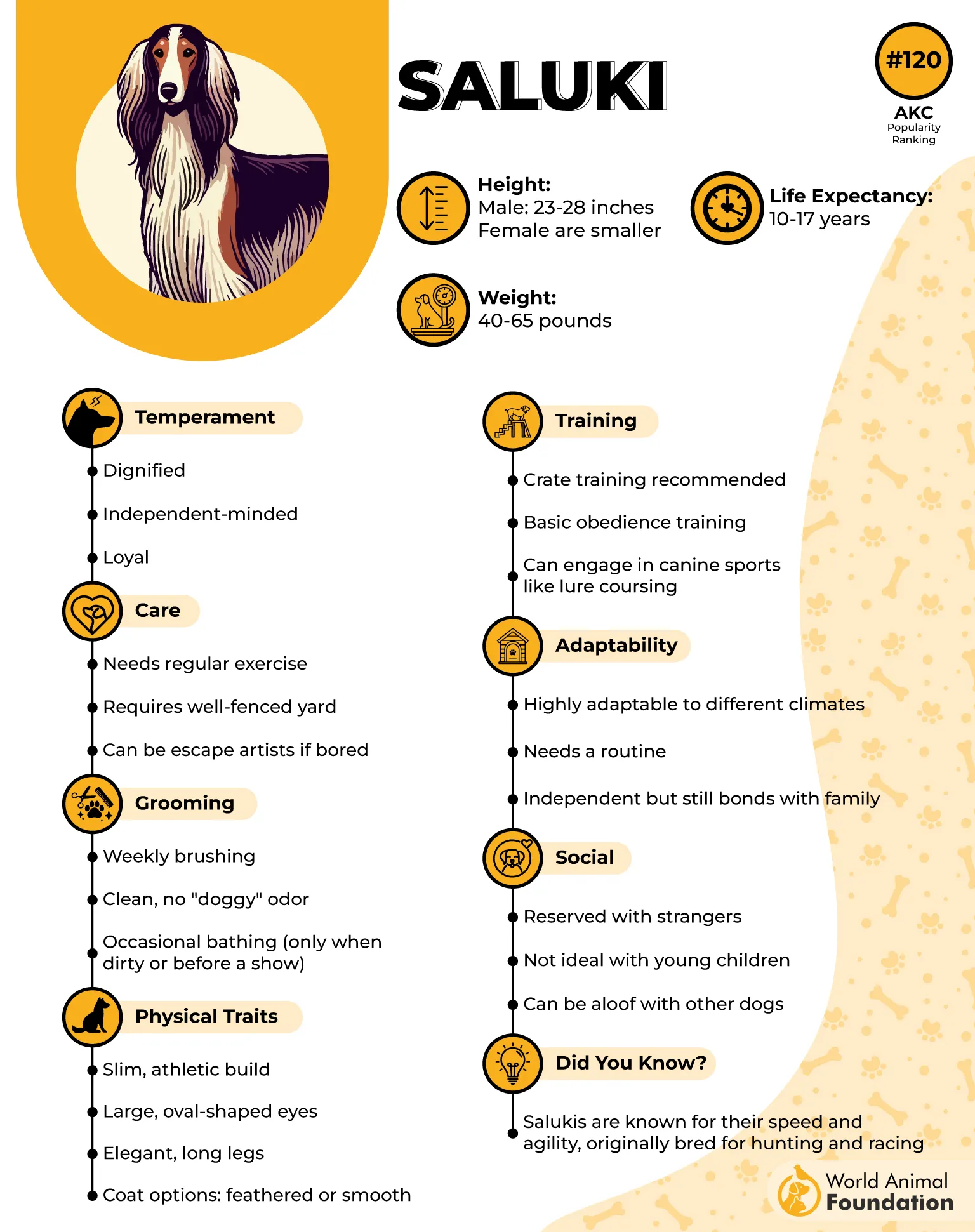
The breed runs at a speed of 35-40 mph because of its powerful hind legs, a deep chest, and a flexible cheetah-like spine. It instantly calculates the trajectory of the rapidly moving objects. It can jump as high as 5 ft. The breed needs 1-2 hours of daily exercise that includes secure off-leash sprints and leashed walks.
8. Border Collie
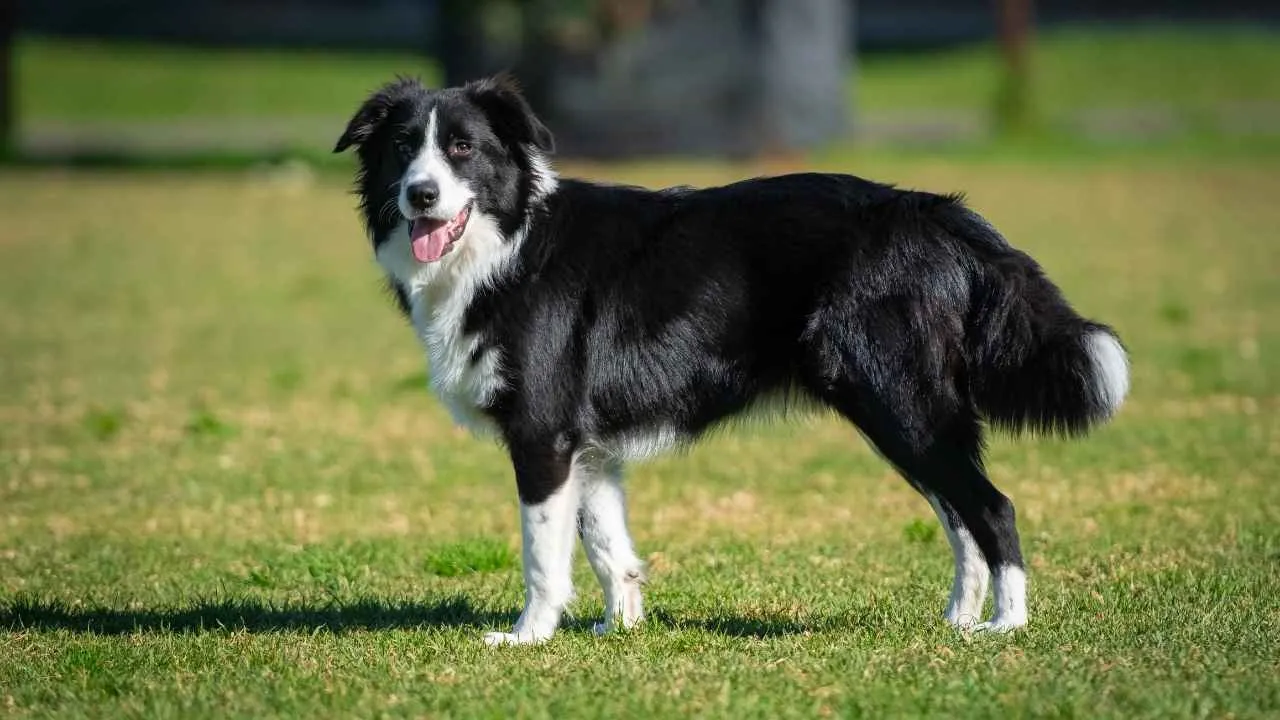
The British dog was developed as a herding dog at the Anglo-Scottish border, and is a descendant of the traditional sheepdog. ‘Collie’ in the name means ‘useful.’ It is claimed to be the most intelligent dog breed. Positive management strategies must be adopted to train the breed because of the independent streak.
There is a dopamine rush specifically during the eye and stalking phase. The pre-wired neural circuit enables it to have a smooth transition between the slow stalking and the high-speed sprint. It is highly motivated to control and redirect the movement of the herd, skipping the ‘consumption’ phase.
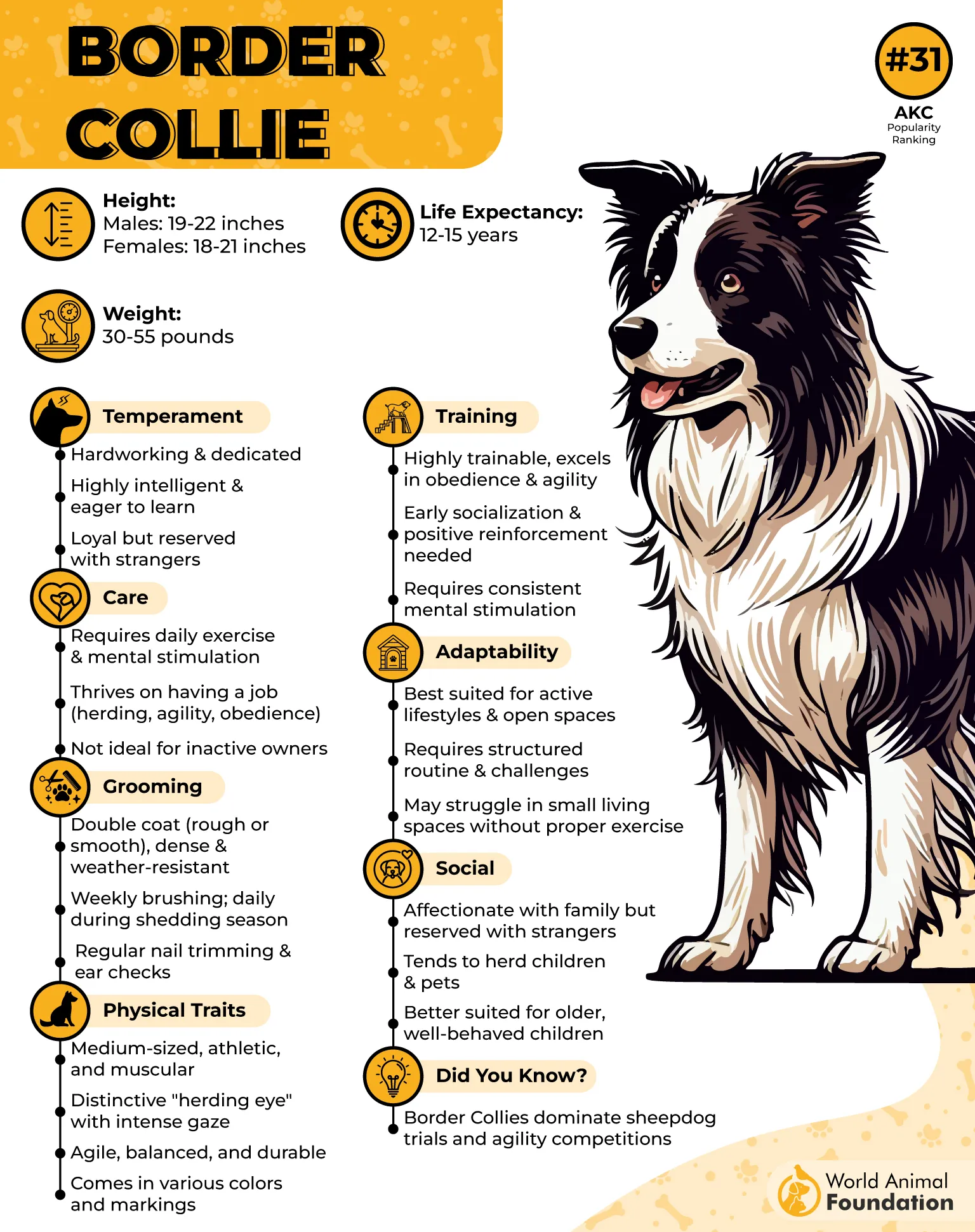
This high-energy dog is suitable for active families, and only highly intelligent herders can control it. It needs physical time to return to the homeostasis post-action. Constant engagement and structured training are essential to prevent destruction.
9. Pharaoh Hound
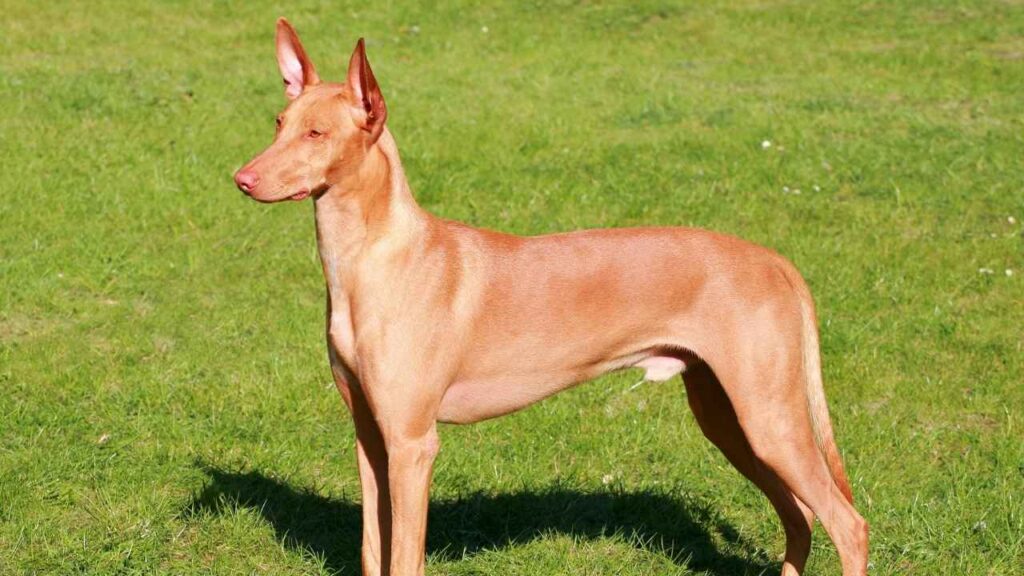
The ancient dog breed has its roots dating back to 4400 BCE in Egypt and is believed to have a resemblance to the Egyptian god Anubis. The modern-day breed was refined in Malta. The breed is hard-wired to react to small prey and fast-moving animals.
The breed has an elongated skull, allowing wide field vision, and the large, elongated ears rotate to pinpoint faint, high-frequency sounds. There is a visible pink ‘blush’ on the ears and nose in case of extreme excitement. The breed is known as the ‘rabbit dog ‘ in Malta.
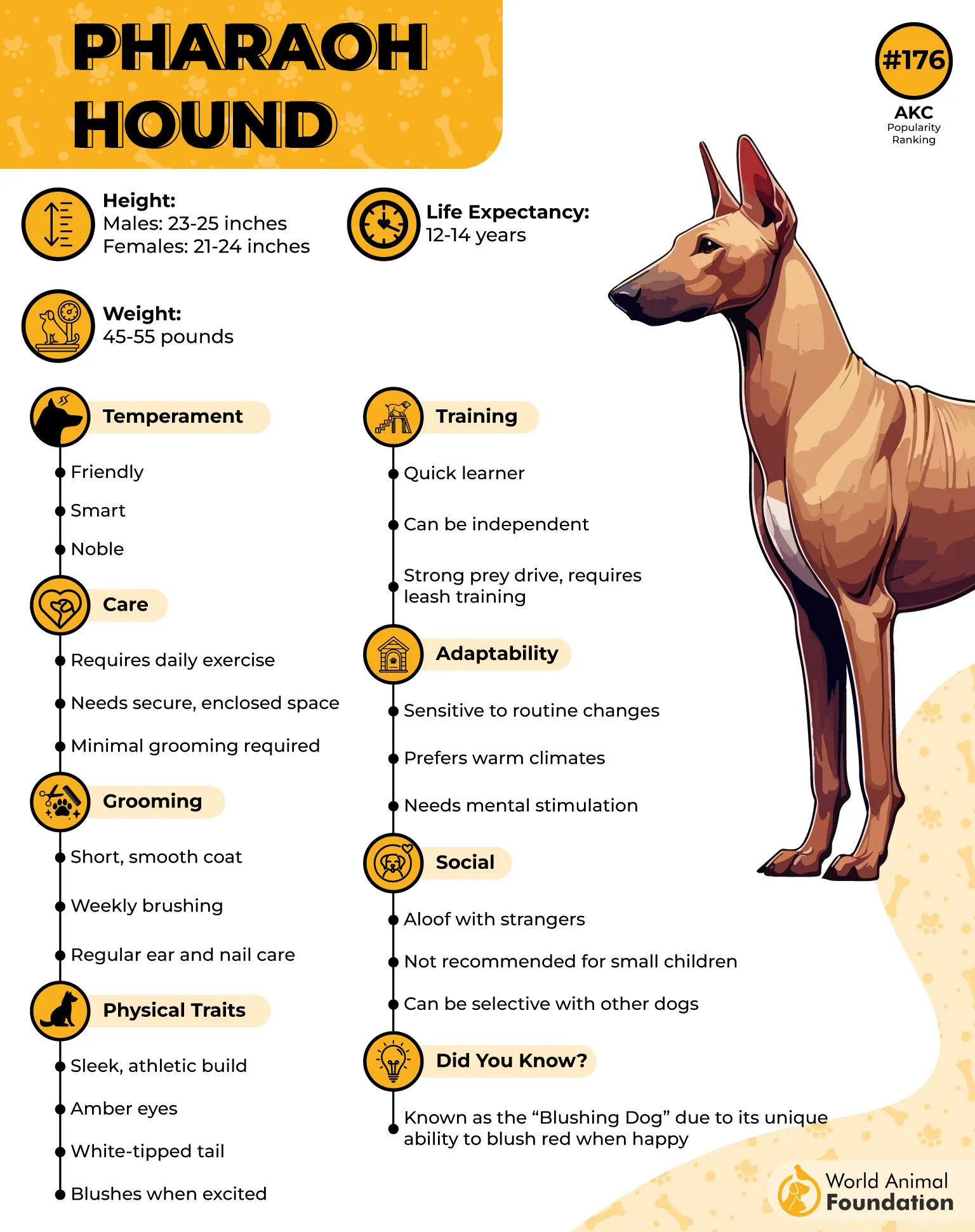
The breed requires 30-60 minutes of daily exertion, such as biking, jogging, and running. It has a high weather sensitivity because of the single-layered short coat. It needs occasional brushing to remove dirt. Always use a baby shampoo to wash off the coat
Conclusion
Prey drive is not a character flaw; it is a feature that most people just were not briefed on before signing the adoption papers. Every breed on this list was shaped by a purpose that demanded speed, relentless focus, and deep, unbreakable instinct. That purpose did not dissolve the moment they moved indoors with you.
The Afghan Hound’s elegance hides a mountain hunter. The Malinois’s loyalty conceals a high-level drive. The Jack Russell’s laugh-out-loud confidence lives in a ten-pound body.
In the right hands, with proper structure, adequate outlets, and an owner who genuinely respects their nature, these dogs form an extraordinary bond that few breeds can match.
