




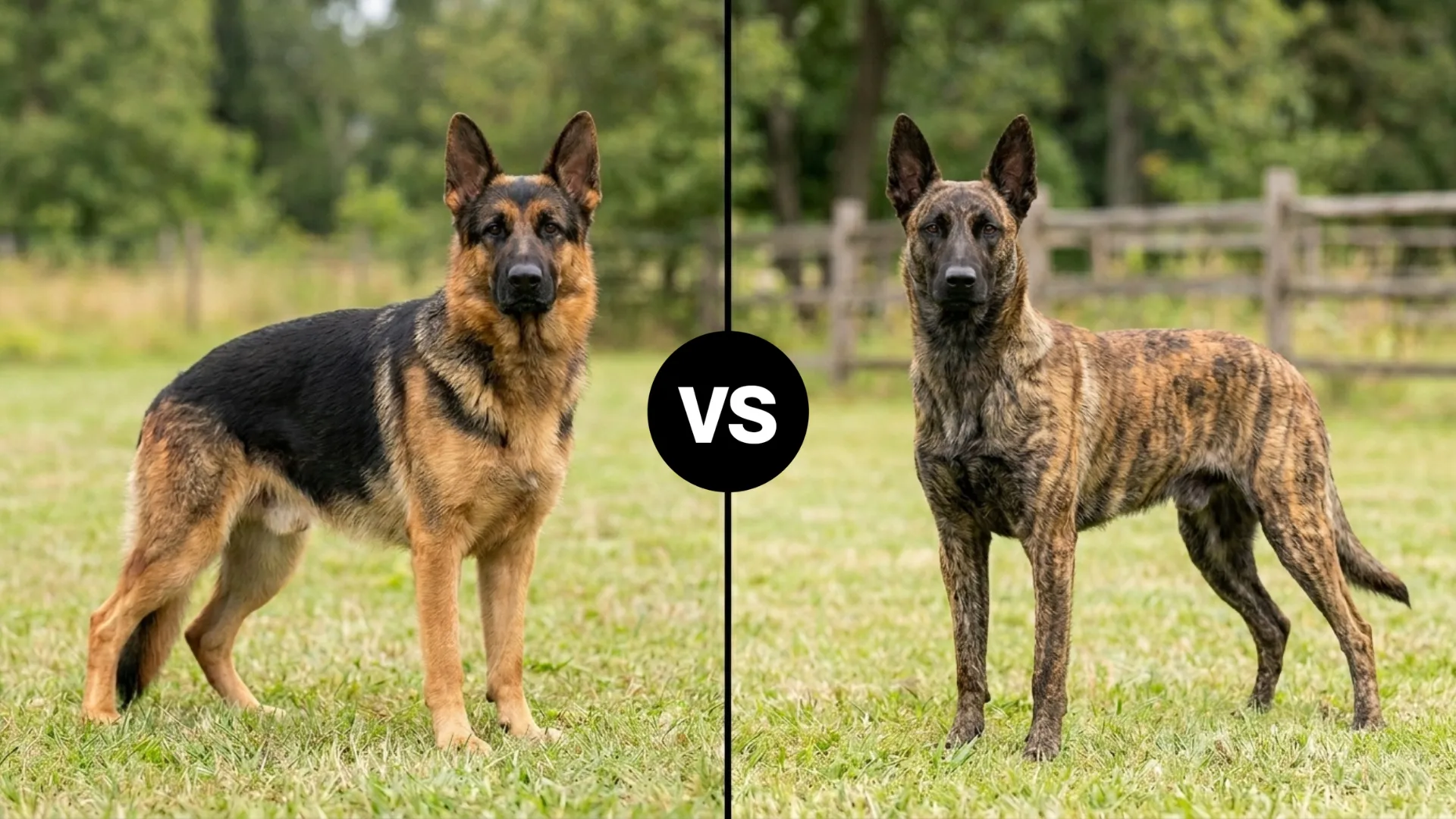
German Shepherds and Dutch Shepherds were both originally bred as working dogs, tasked with herding sheep and protecting flocks from predators. At first glance, they share a lot in common: their athletic build, strong herding instincts, and remarkable work ethic.
Both breeds are highly intelligent, fiercely loyal, and naturally alert, making them exceptional companions for active families and dedicated handlers. Yet, despite these similarities, there are notable differences that set German Shepherds and Dutch Shepherds apart.
These differences appear in their appearance, lifespan, popularity, and even their country of origin. While German Shepherds are among the most recognized and beloved breeds worldwide, Dutch Shepherds remain rare outside their native Netherlands.
Let’s explore the key distinctions between these two incredible working breeds: German Shepherd vs. Dutch Shepherd.
German Shepherd vs. Dutch Shepherd
While the German Shepherd is globally renowned for its intense focus and versatile protection work, the Dutch Shepherd matches that drive with an ultra-athletic brindle coat and an independent, tireless work ethic.
This head-to-head comparison breaks down the key differences in temperament, energy levels, and training needs to help you decide which of these elite herding breeds is right for you.
Origins, History & Purpose
While German Shepherds and Dutch Shepherds share a common origin as herding dogs, they come from different parts of the world and have unique historical backgrounds.
German Shepherds were developed in 1899 by Max Emil Friedrich von Stephanitz in Germany. For centuries, shepherd dogs were valued more for their working ability than their appearance. To this day, GSDs undergo temperament tests at dog shows to ensure stability and reliability.
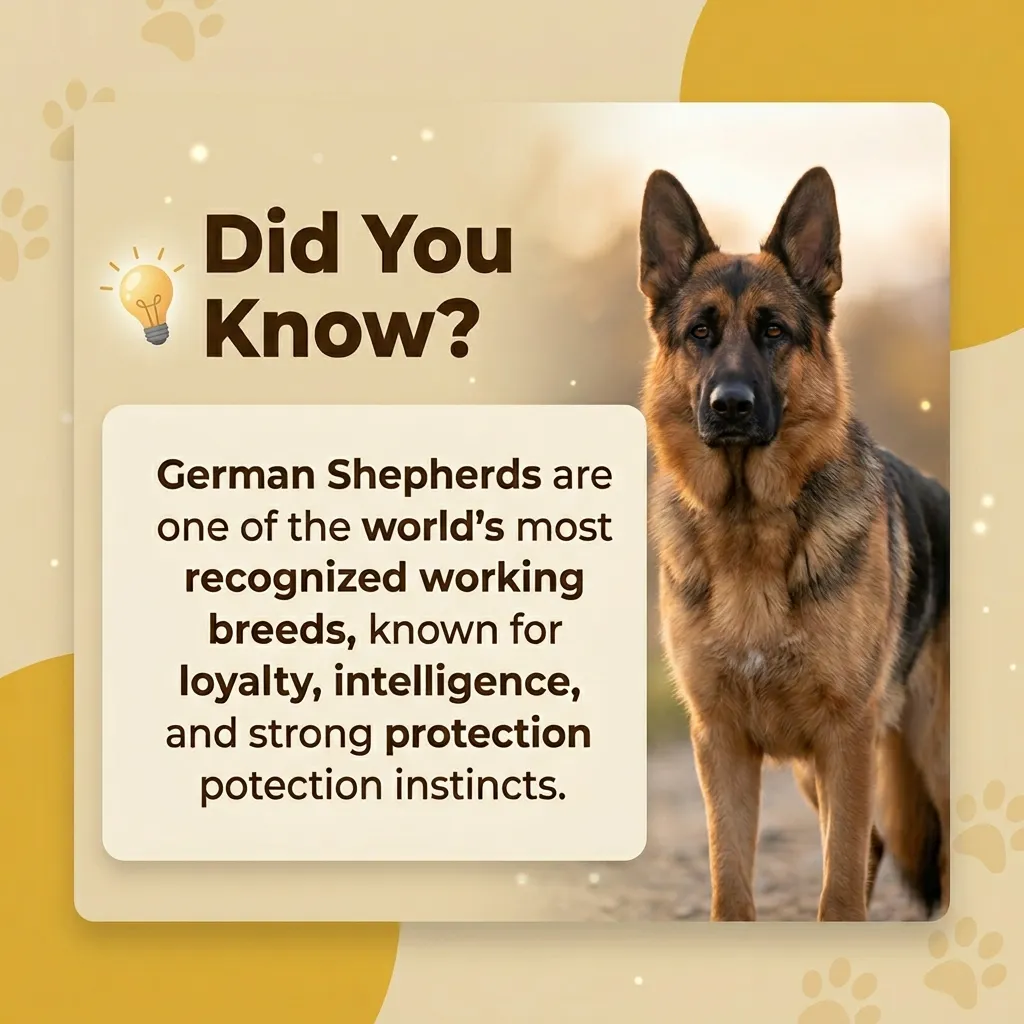
Von Stephanitz believed that a dog’s working ability was just as important as its appearance, and he combined these traits to create the ultimate German herder.
Dutch Shepherds, on the other hand, are versatile dogs that originated in the 18th century in rural Dutch regions (modern-day Netherlands). According to PetMD, they were invaluable to farmers, assisting with herding livestock, guarding property, and even pulling carts.
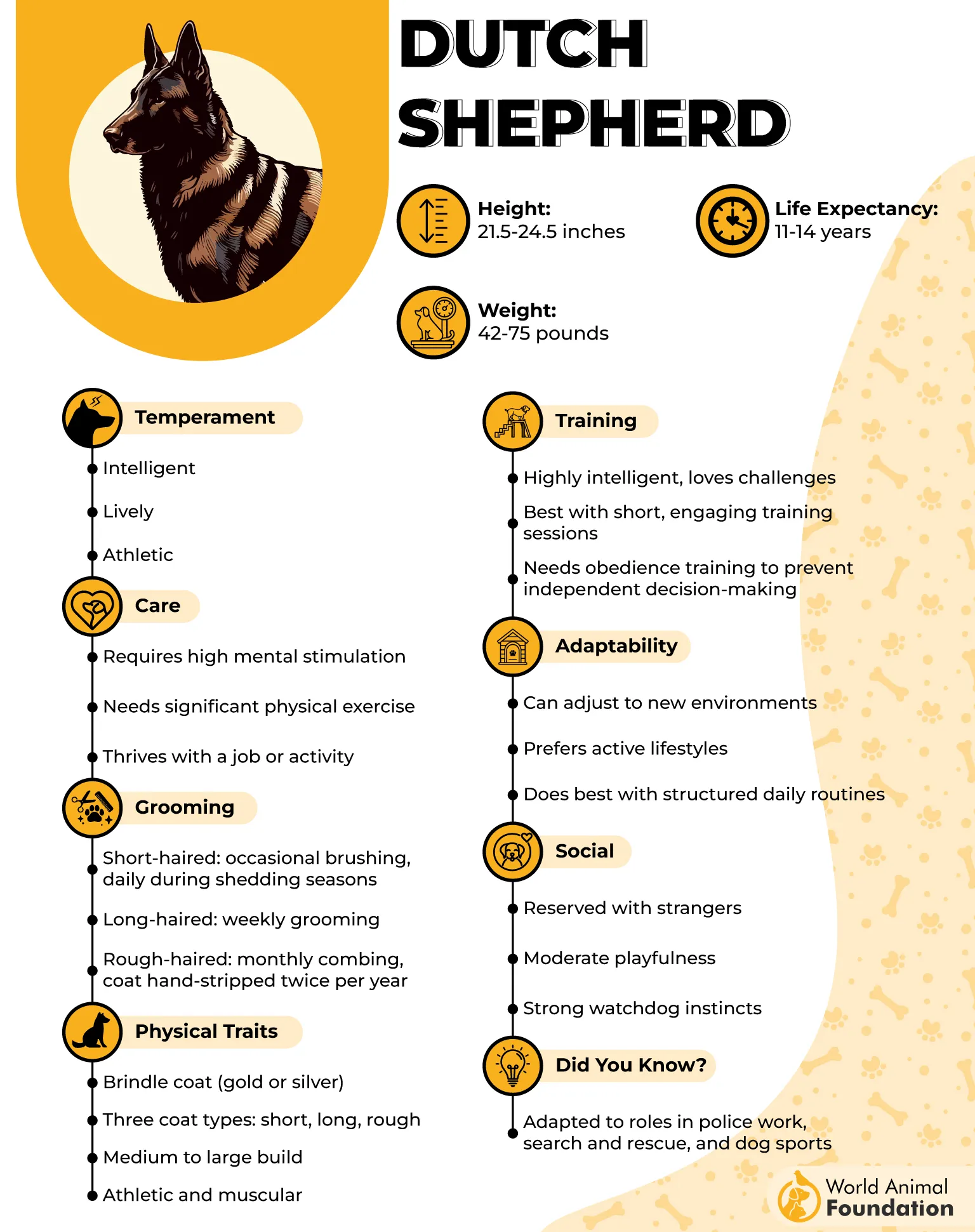
Sadly, Dutch Shepherds came close to extinction during World War II, but dedicated breeders helped preserve this remarkable breed.
Size, Body Structure & Physical Build
At first glance, German Shepherds and cs share a strikingly similar appearance. Both are athletic, agile, and muscular, built for stamina and endurance. They feature wedge-shaped heads, erect ears, almond-shaped eyes, and long tails with a gentle curve. Both breeds also have long muzzles and black noses, giving them that classic working-dog look.
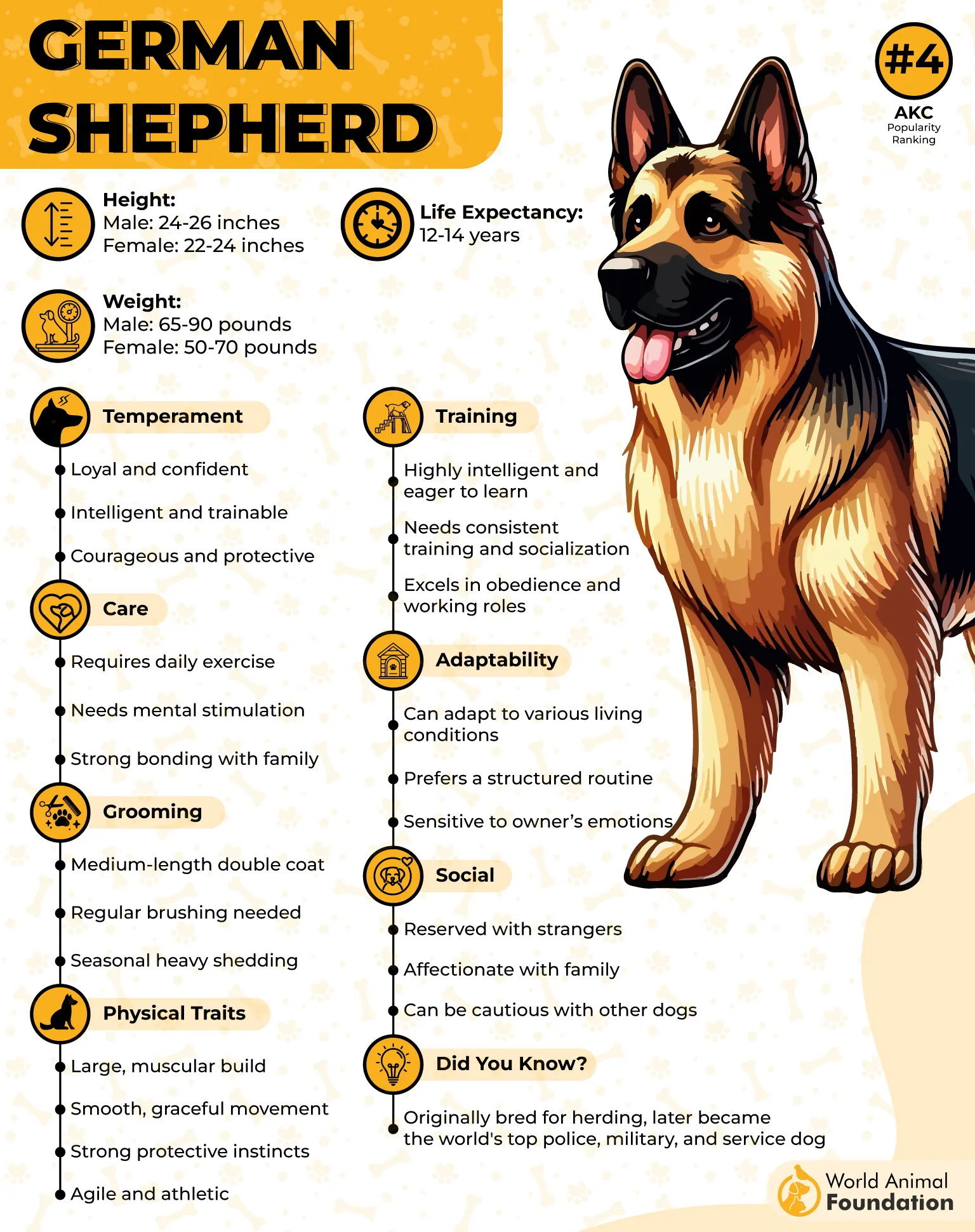
However, there are notable differences in their physical traits. German Shepherds are medium to large dogs with a noble, powerful presence. Males are generally larger than Dutch Shepherds, while females are closer in size. GSDs are also stockier and tend to have a stronger bite force.

Dutch Shepherds, in contrast, are medium-sized dogs with a leaner frame. Their relatively smaller build makes them slightly faster and more agile than German Shepherds, ideal for quick maneuvers in herding and working tasks.
Coat Types, Colors & Overall Appearance
Both German Shepherds and Dutch Shepherds sport thick, weather-resistant double coats, but they differ in color, texture, and grooming requirements.
German Shepherds have a medium-length coat with two layers: a dense, harsh outer coat and a softer undercoat. This coat is relatively easy to maintain with a few brushings per week to prevent mats and tangles. During shedding seasons, more frequent brushing is needed to manage loose hair.
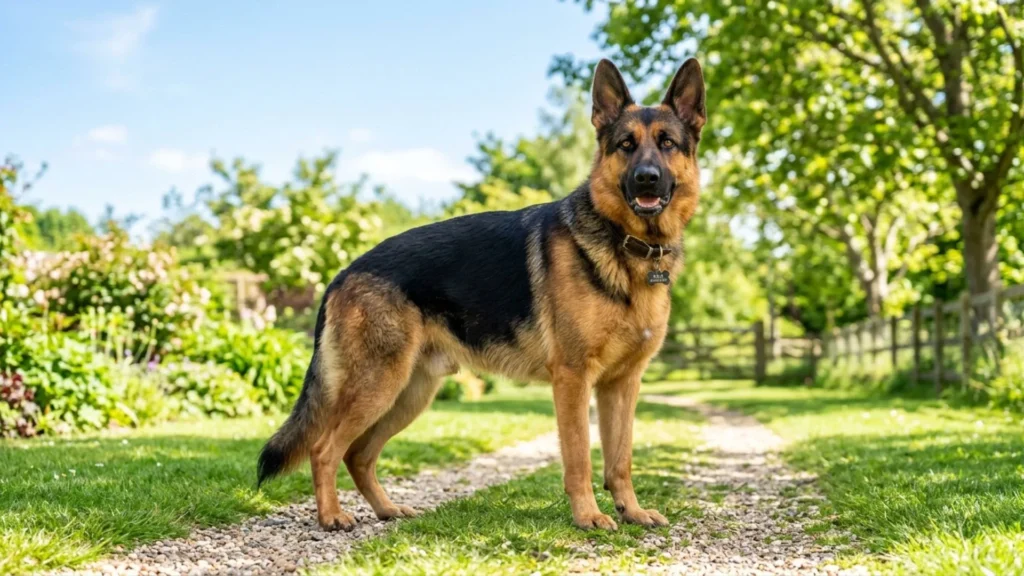
According to the American Kennel Club, German Shepherd coat colors include black, gray, white, liver, blue, and tan, as well as combinations like black and tan, black and silver, black and cream, black and red, sable, and bi-colored.
Dutch Shepherds, on the other hand, come in three coat types: short, long, or rough, each with its own grooming needs. Short-haired Dutch Shepherds require occasional brushing, but daily care is recommended during heavy shedding.
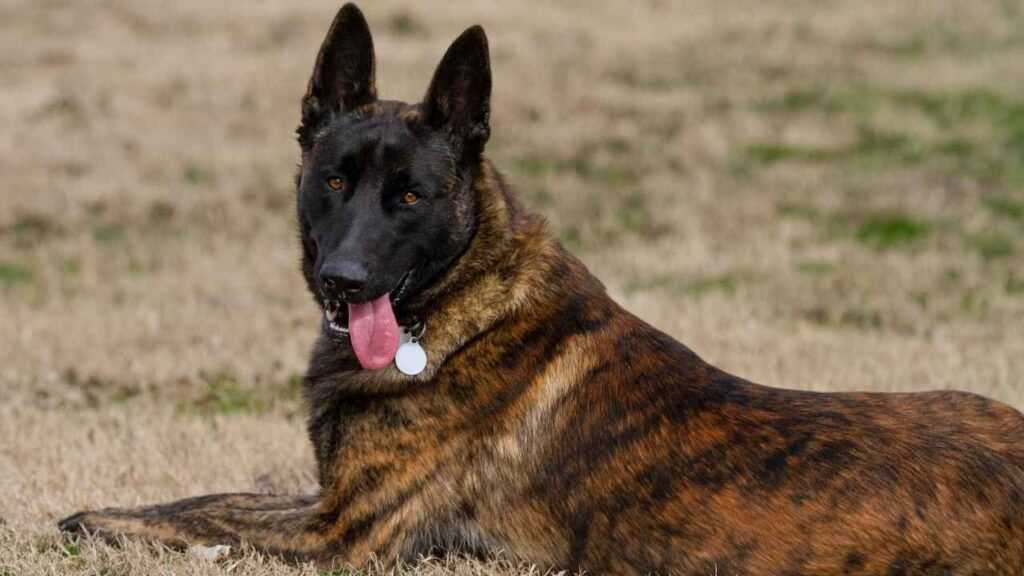
Long-haired dogs benefit from weekly grooming, while rough-coated dogs only need monthly combing and hand-stripping twice a year. Dutch Shepherds typically feature gold brindle or silver brindle coats, giving them a striking, tiger-like appearance.
Temperament, Personality & Protective Instincts
Both German Shepherds and Dutch Shepherds are celebrated for their loyalty, versatility, and protective instincts, but their personalities show some key differences.
German Shepherds form deep bonds with their humans and are fiercely loyal. Naturally protective and sometimes cautious around strangers, they have a strong territorial streak and will go to great lengths to safeguard their family.
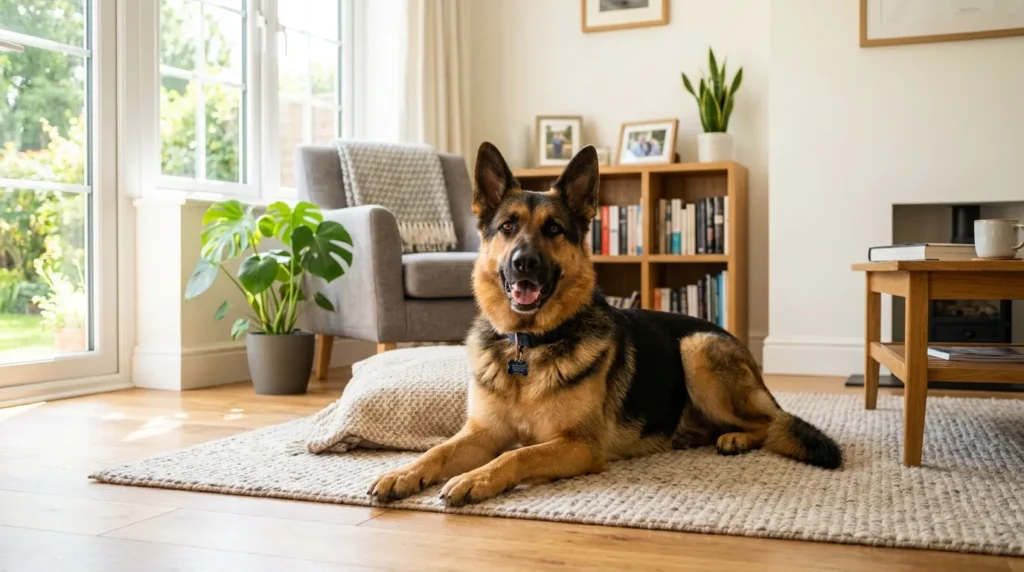
These devoted dogs love spending time with their humans, including kids, and thrive on companionship. However, extended periods alone can trigger separation anxiety. With proper training and socialization, German Shepherds make loving, dependable family pets.
Dutch Shepherds, like their German cousins, are highly alert and aware of their surroundings. They will bark to signal visitors, even a passing mail carrier, showing their guarding instincts. Despite their alert appearance, Dutch Shepherds are affectionate at heart and tend to be friendlier with children and other pets compared to German Shepherds.
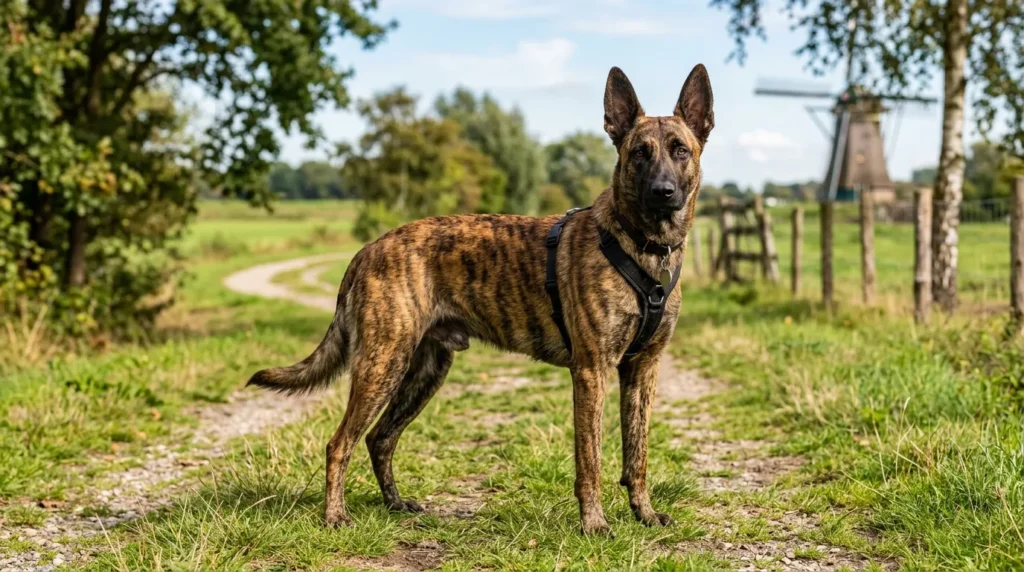
Their protective nature remains strong, allowing them to bravely defend their family when needed, all while maintaining a slightly softer, more approachable demeanor.
Intelligence, Trainability & Working Ability
Both German Shepherds and Dutch Shepherds are highly intelligent and versatile, making them quick learners with a natural eagerness to please. These traits give both breeds excellent trainability and strong working abilities.
German Shepherds take the lead when it comes to intelligence. Ranked third on the American Kennel Club’s list of the smartest dog breeds, GSDs excel in structured training, especially when it’s based on positive reinforcement and interactive, game-like exercises. Their sharp minds and problem-solving skills make them outstanding working dogs, whether for police, military, or family tasks.
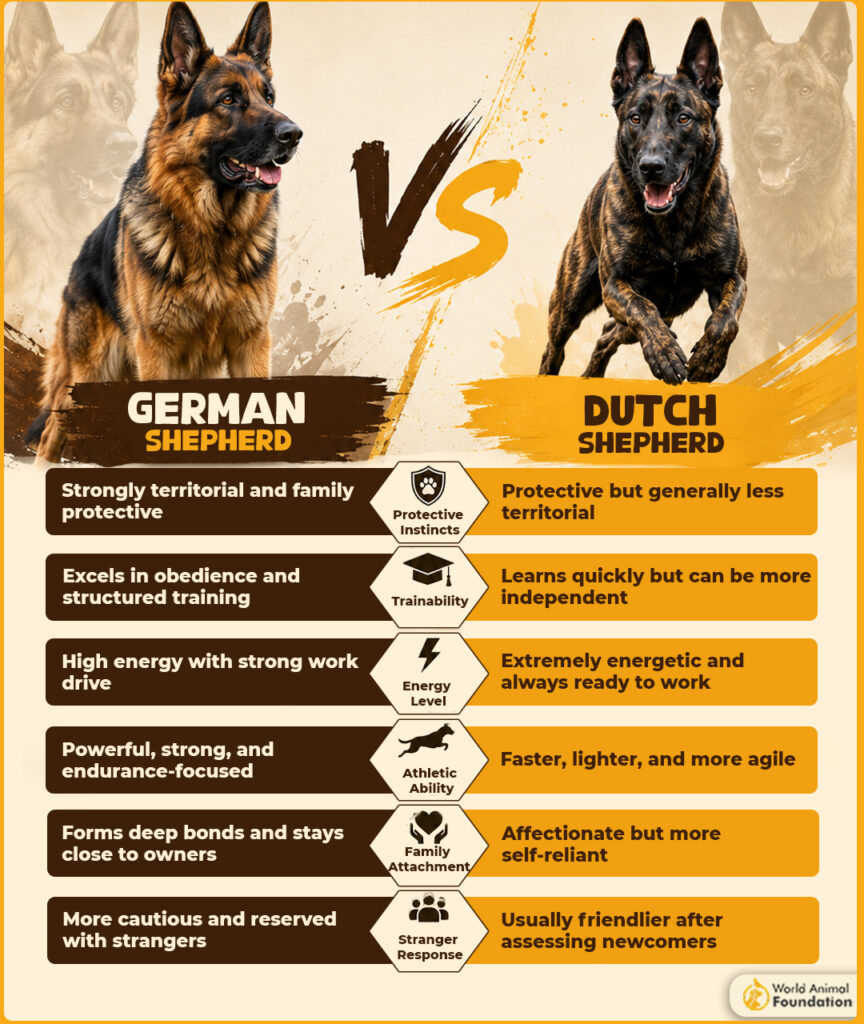
Dutch Shepherds are also quick learners and respond well to positive reinforcement, but they may take slightly longer to master obedience commands compared to GSDs. Patience is key: scolding or harsh corrections can hinder their progress. With consistent guidance, Dutch Shepherds become loyal, dependable, and highly capable companions, equally ready for work or play.
Energy Levels, Activity Needs & Mental Stimulation
German Shepherds are energetic, athletic dogs that need plenty of daily exercise to stay healthy and happy. Their high intelligence also demands mental stimulation, making them perfect candidates for dog sports like obedience, agility, tracking, and protection work, according to Britannica. Without enough activity, GSDs can become bored and restless, so keeping them busy is essential.
Dutch Shepherds match their German cousins in energy and drive. While they may not excel at obedience as quickly as GSDs, they thrive in activities like agility, nose work, tracking, and even dock diving. Their versatile nature makes them excellent working companions and adventurous exercise partners.
Both breeds make ideal running buddies, hiking companions, or partners for any outdoor adventure. To remain fit, happy, and balanced, plan for at least 1.5 to 2 hours of physical and mental activity each day.
Health Issues, Durability & Average Lifespan
German Shepherds are generally healthy dogs with a lifespan of 12 to 14 years. However, like many deep-chested breeds, they can be prone to certain health concerns. Common issues include gastric dilatation-volvulus (bloat), hip and elbow dysplasia, degenerative myelopathy, heart disease, allergies, and cancer. Regular veterinary check-ups, a balanced diet, and appropriate exercise can help reduce risks and keep GSDs thriving.
Dutch Shepherds typically live 11 to 14 years and are considered slightly more robust overall. While generally healthy, they can be prone to hip and elbow dysplasia, bloat, degenerative myelopathy, and progressive retinal atrophy (PRA). Their strong build and versatility often make them less prone to some of the chronic conditions seen in German Shepherds.
In short, both breeds can live long, active lives with proper care, though Dutch Shepherds are often regarded as slightly “hardier” in overall health.
Popularity, Availability & Cost
German Shepherds are one of the most recognizable and beloved dog breeds worldwide, known for their intelligence, loyalty, and versatility. A German Shepherd puppy from a reputable breeder typically costs $3,000 to $7,000, while highly trained working lines can reach up to $20,000.
Dutch Shepherds, on the other hand, are less common outside their native Netherlands. While highly valued for their versatility and work ethic, they are considered a rare breed globally. A Dutch Shepherd puppy usually ranges from $1,200 to $2,500, with working or show-quality lines costing more.
Tip: Adoption is always a great alternative! Adopting a GSD or Dutch Shepherd usually costs significantly less than buying from a breeder and gives a loving dog a second chance at a happy home.
Field Performance & Professional Working Roles
Both German Shepherds and Dutch Shepherds are renowned for their strong work ethic, loyalty, and protective instincts. With their keen senses and natural territorial awareness, they make exceptional guard dogs, ideal for personal protection and home security.
Thanks to their intense focus, high drive, and intelligence, these breeds are often employed as farm dogs, police K9s, and military working dogs. They also excel in search-and-rescue missions, using their sharp noses and determination to locate missing persons or assist in critical situations.
Conclusion
German Shepherds and Dutch Shepherds share many similarities, yet they also have distinct differences. German Shepherds are generally slightly larger and more widely recognized worldwide, while Dutch Shepherds are a rare breed from the Netherlands.
Both breeds were originally bred as versatile herding dogs and excel as working companions. German Shepherds are often considered more intelligent, ranking among the smartest dog breeds, but Dutch Shepherds are physically sturdier and generally healthier.
Both breeds are loyal, athletic, and versatile, thriving with plenty of daily exercise. With proper training and socialization, they make excellent family pets, capable of guarding, assisting in work, and forming strong bonds with their owners.
🐕 German Shepherd vs Dutch Shepherd: Can You Score 6/6? 🏆
Who developed the German Shepherd breed in 1899?
Which coat pattern is most commonly associated with Dutch Shepherds?
Which breed is ranked as the 3rd smartest dog breed by the AKC?
How much daily physical and mental activity do both breeds generally need?
Which breed nearly became extinct during World War II?
What is the typical price range for a German Shepherd puppy from a reputable breeder?
