




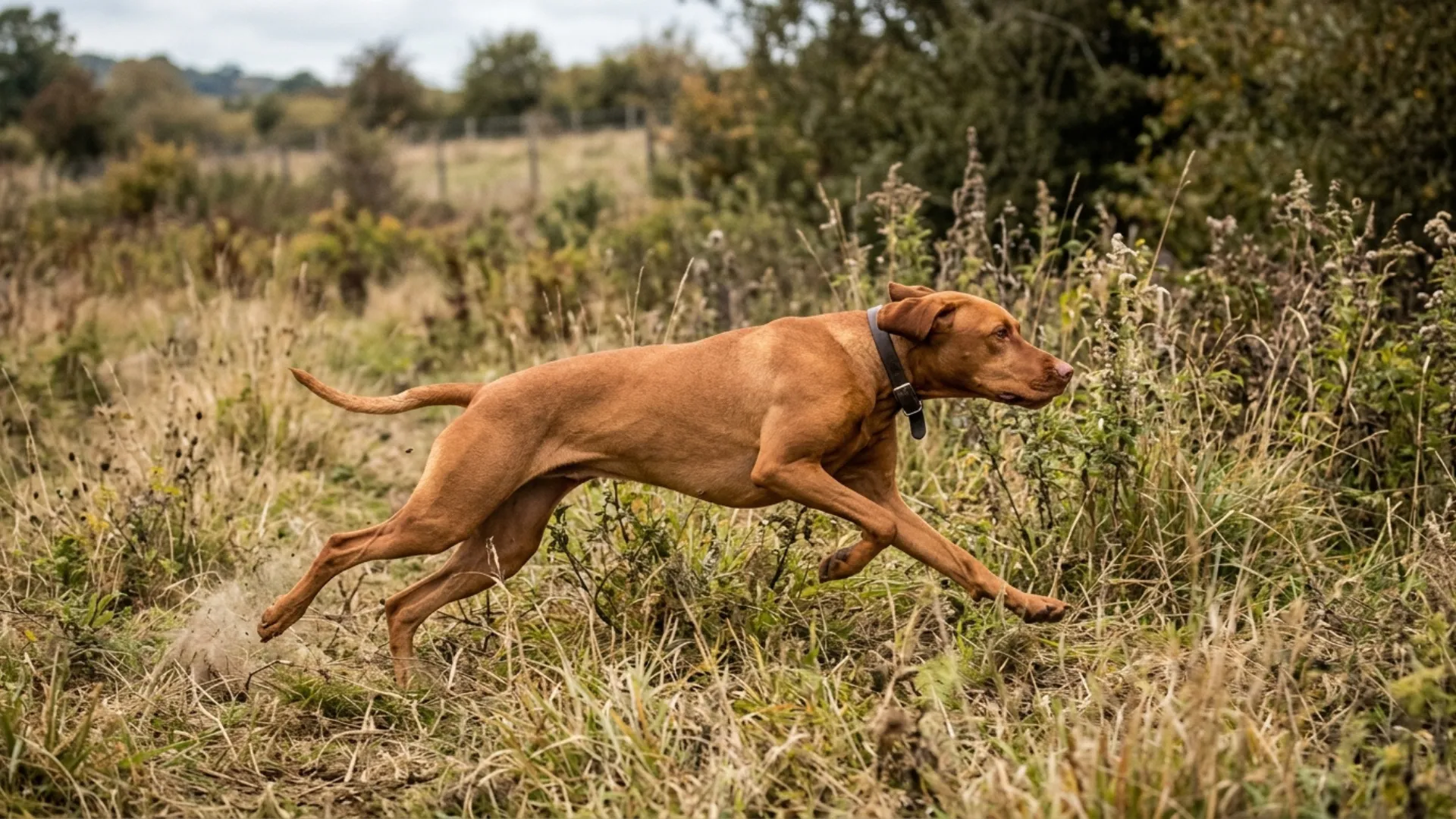
Ever notice your dog suddenly zero in on a squirrel, zoom past a jogger, or lock eyes with a fluttering leaf—and suddenly they’re gone, streaking across the yard? That’s prey drive in action: a natural, hardwired instinct that drives dogs to hunt, chase, and capture anything that sparks their attention.
It’s not just about playfulness—this instinct shaped dogs for centuries, helping them hunt, herd, or protect. Some dogs barely notice moving objects, while others can’t resist the urge to chase, lunge, or bark at anything that moves.
Understanding this instinct is key: it can make walks, playtime, and even interactions with other animals tricky—but with the right enrichment, it can also turn into one of the most rewarding aspects of your dog’s personality.
In this article, we’ll explore the top dog breeds exhibiting intense prey drive, what it really means, and how to channel it in fun and safe ways for both you and your pup.
Key Takeaways
Dogs with high prey drive are energetic, intelligent, and loyal, making them fascinating companions for active owners.
They need plenty of daily exercise and mental challenges to stay happy and well-behaved.
Early socialization and consistent, positive training are key to managing their instincts safely.
With proper care and attention, high-prey-drive dogs become loving, playful, and devoted family members.
Top Dog Breeds Exhibiting Intense Prey Drive
1. Afghan Hound
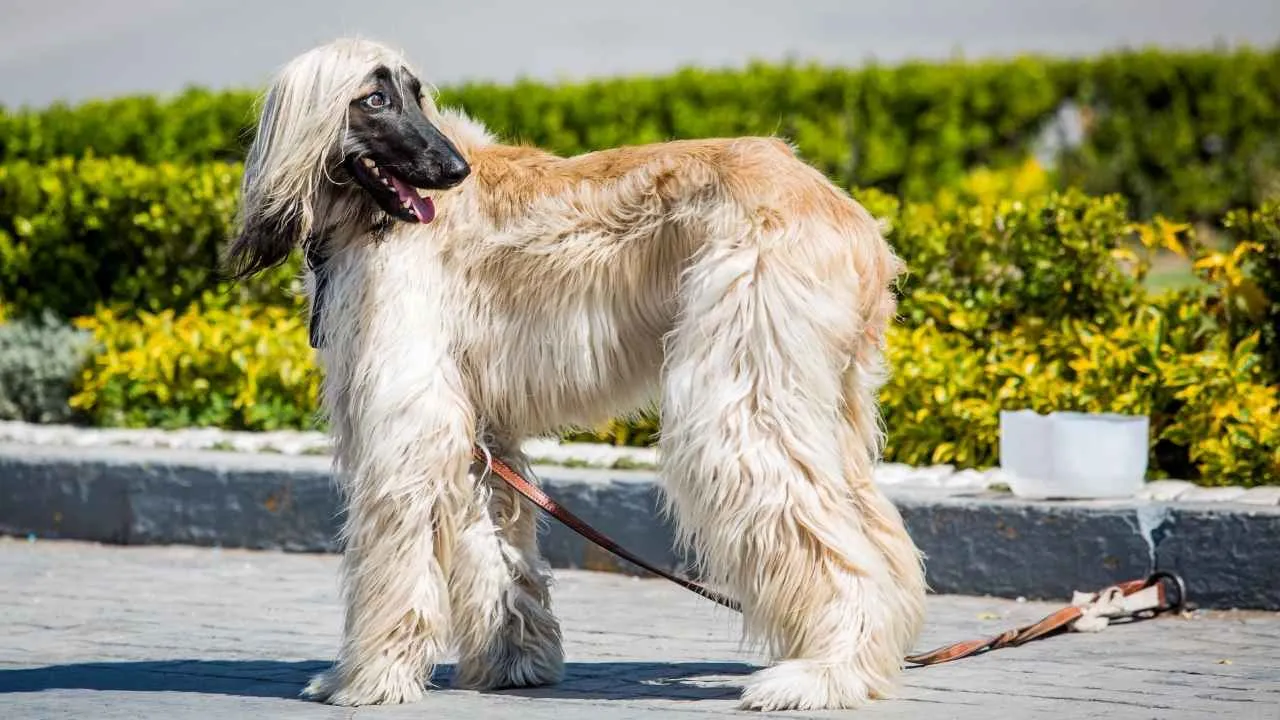
Among the most striking of dog breeds, Afghan Hounds are the picture of elegance and grace. Their long, silky coats aren’t just beautiful—they protect them from harsh mountain climates in their homeland.
Beneath that glamorous exterior lies a powerful, agile hunter with sharp eyesight and quick feet, bred for chasing prey.
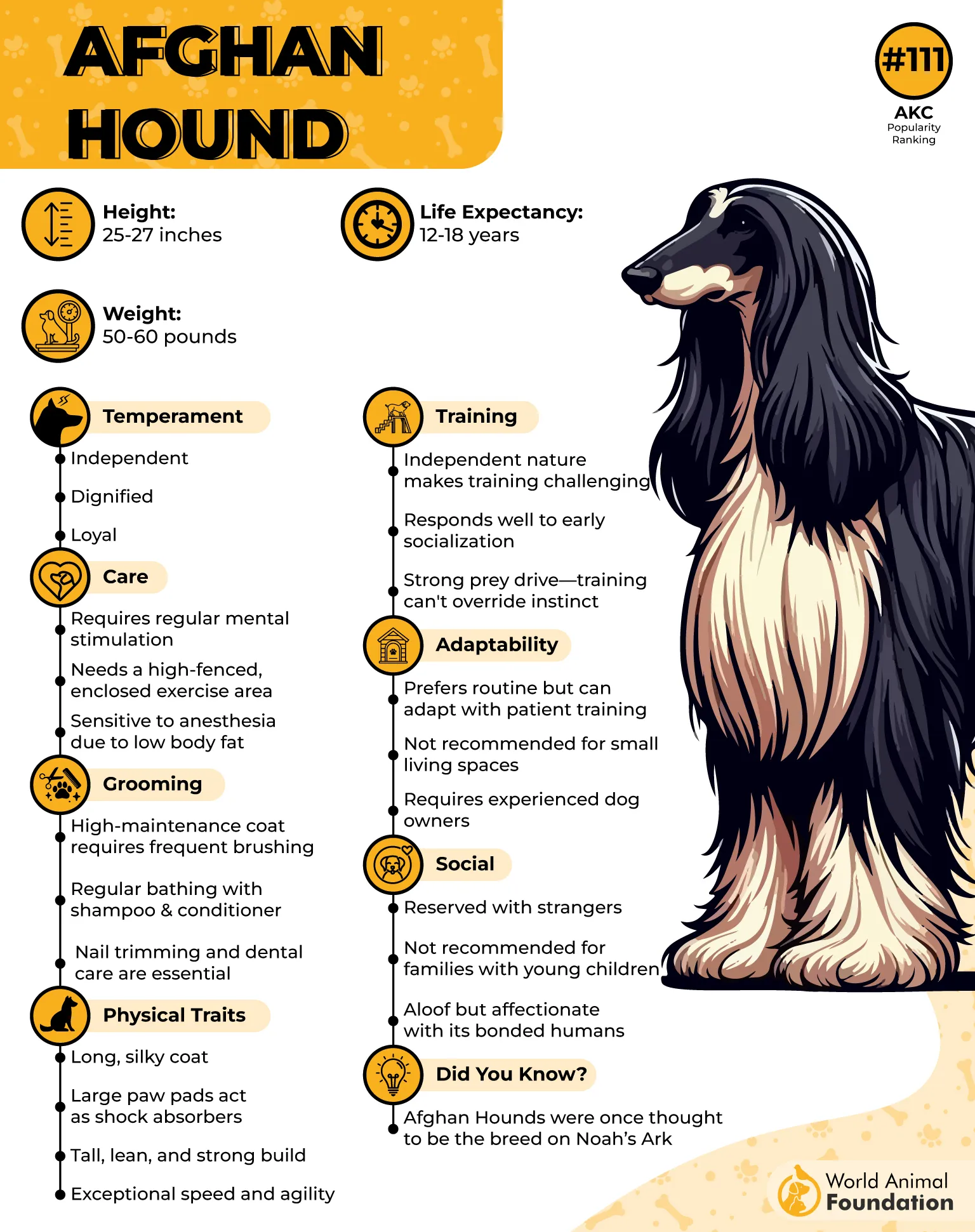
AKC says that Afghan Hounds are independent and aloof with strangers but form deep bonds with their families, showing loyalty and affection once trust is earned. Their playful and sometimes silly side makes them endearing companions for the right owners.
Personality and Temperament
Afghan Hounds are dignified, reserved, and independent. They often choose a favorite person, but can still be loving with the whole family. These sight hounds have a strong prey drive, which means they may chase smaller animals if off-leash.
Early socialization and consistent training help them adjust and behave well around children and other pets. Afghan Hounds are not overly vocal, preferring to observe before engaging. Positive reinforcement works best, and patience is essential since they are clever and independent thinkers.
Care, Exercise, and Grooming
Afghan Hounds need daily exercise to satisfy their athleticism and high prey drive. Long walks, jogs, or play in a secure, fenced area help them burn energy safely.
Their long, silky coat requires regular grooming, including brushing several times a week and occasional baths to keep it free of tangles and mats. Nails should be trimmed, and teeth brushed regularly.
While they are high-maintenance, Afghan Hounds reward dedicated owners with loyalty, charm, and stunning beauty, making them a truly unique companion for the right household.
2. Greyhound
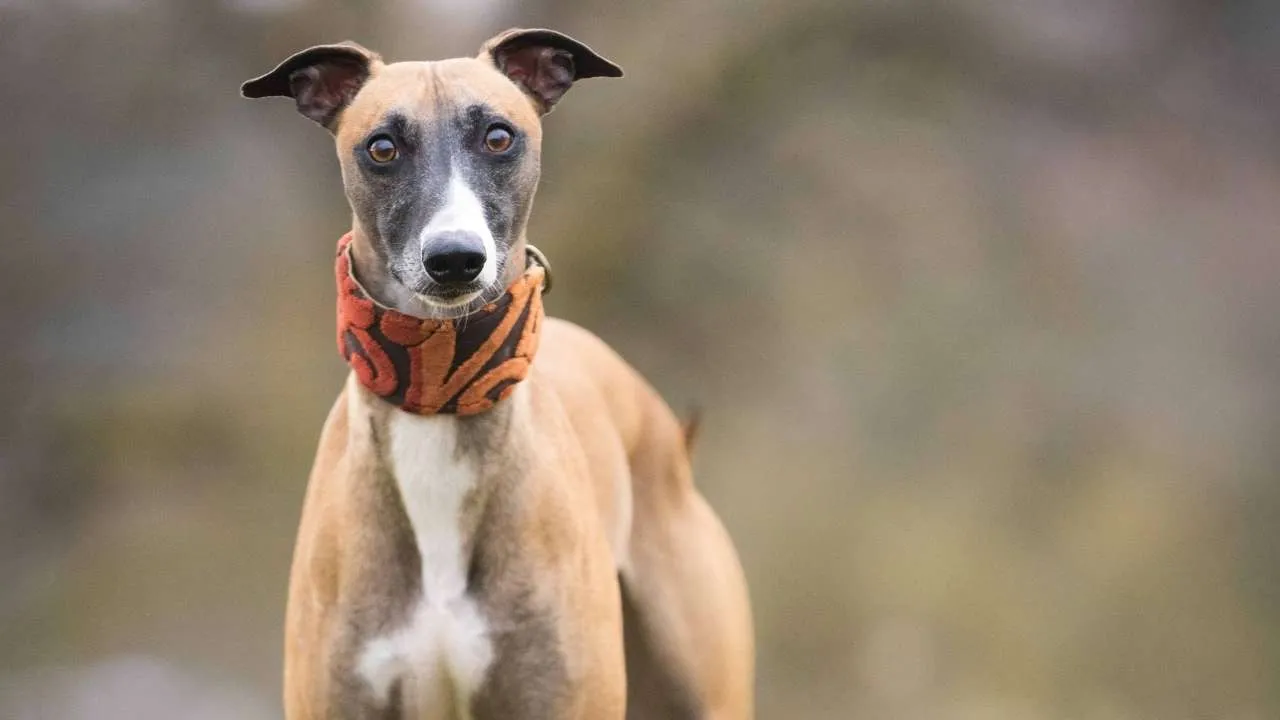
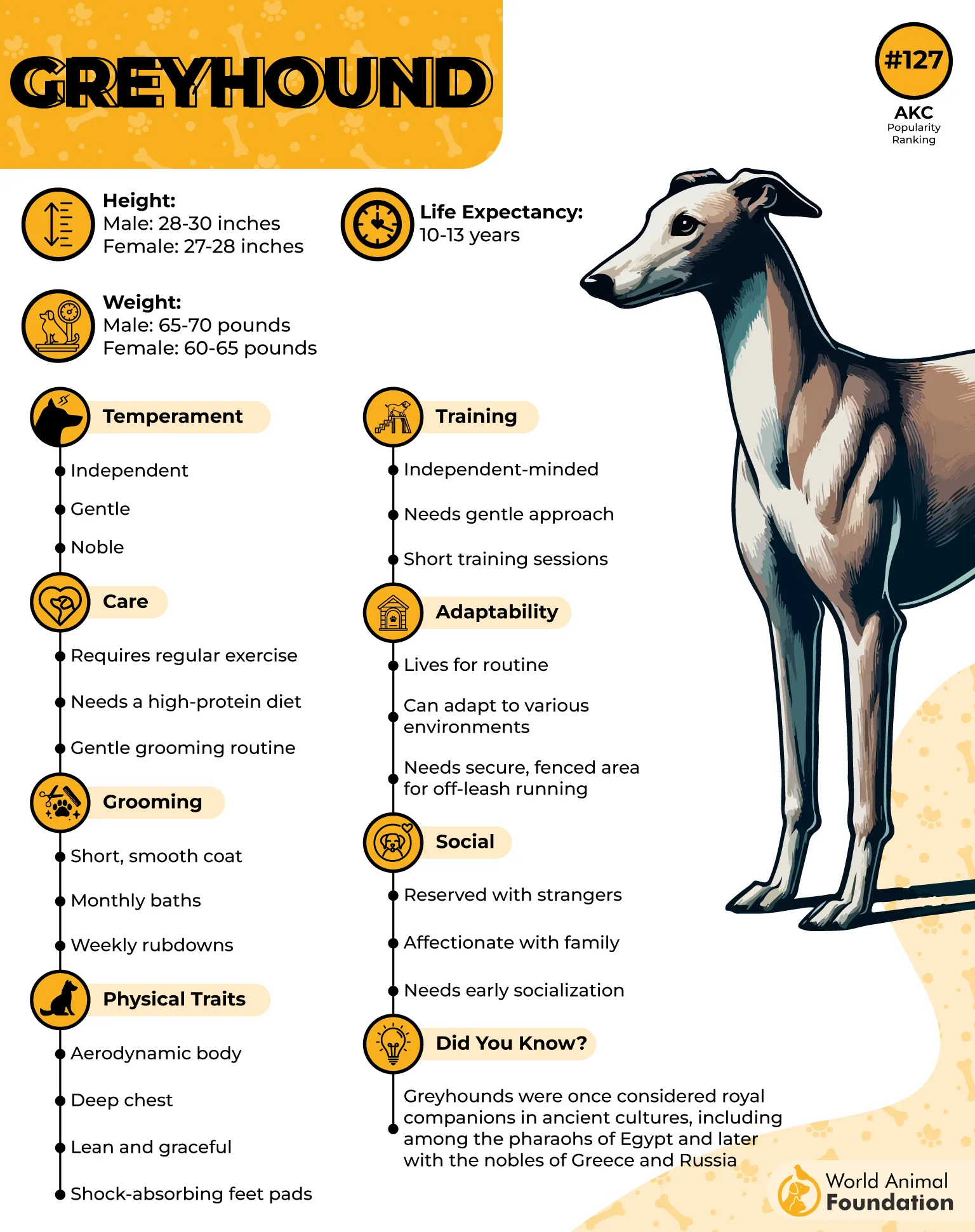
Greyhounds are gentle, loving dogs, but they come with instincts shaped by generations of sight-hunting and racing. Their prey drive makes them naturally alert to fast-moving animals, including small dogs, cats, or birds.
This is different from aggression—it’s an adrenaline-fuelled, instinctive behavior that gives the dog a chemical reward when chasing. Not all greyhounds display high prey drive, but it’s important for owners to understand that it can appear suddenly, especially around unfamiliar animals.
Recognizing and Managing Prey Drive
Signs of prey drive in greyhounds include staring intently with a stiff body, stalking, pouncing, or lunging, chasing or attempting to grab, and nose-bunting, pawing, or vocalising. Greyhounds that stay calm, show friendly interest, and are easily distracted by their handler are usually safe with small dogs.
Even dogs with moderate prey drive can thrive with proper management. Controlled introductions, leash supervision, and, when needed, a muzzle are key to safety. Understanding your greyhound’s triggers and reading their body language helps prevent incidents.
Training, Patience, and Socialization
Greyhounds can learn to live safely with small pets, though it takes time, patience, and consistency. Positive reinforcement, structured play, and calm exposure to new dogs gradually help them adjust.
Some greyhounds may never be fully safe around small animals, and that’s okay—management is part of responsible ownership. With proper care, early training, and supervision, greyhounds make affectionate, loyal, and calm companions while still enjoying their natural instincts in safe ways.
3. Weimaraner
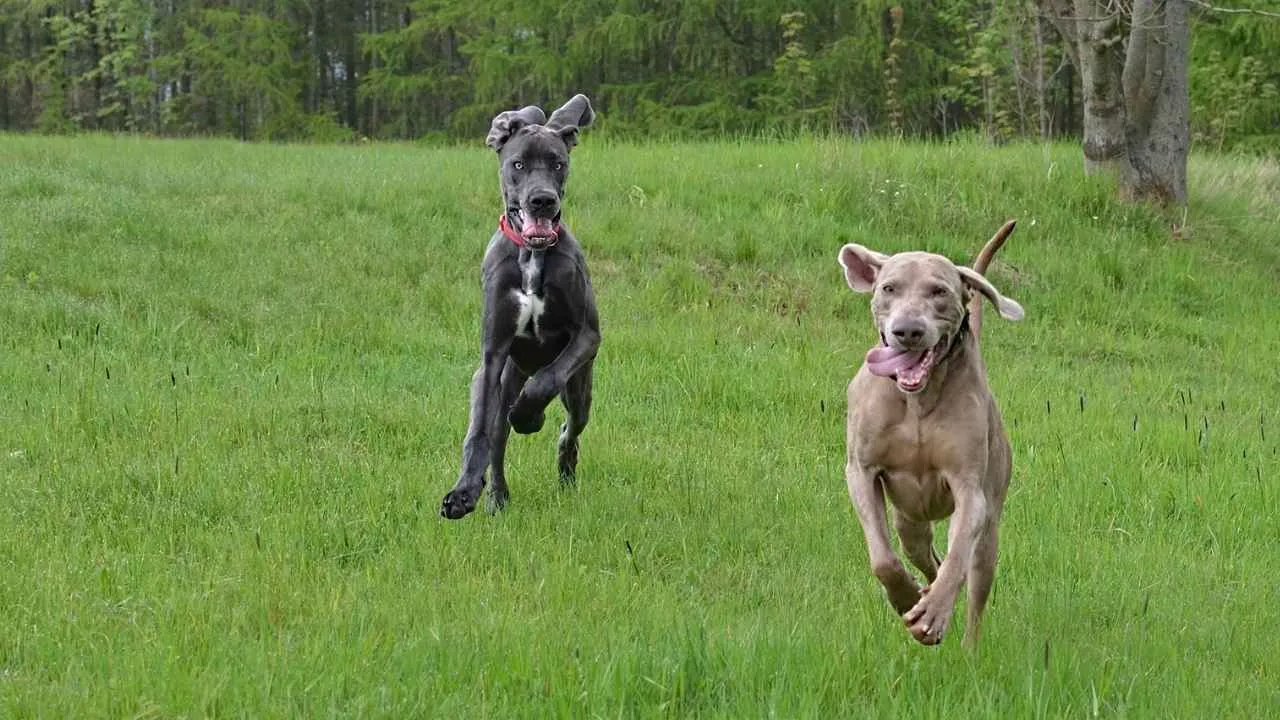
Weimaraners are friendly, loyal, and extremely people-oriented dogs. They love being with their owners and may follow them from room to room, even trying to join in on daily activities.
This breed thrives on companionship and cannot be left alone for long periods without risk of boredom, hyperactivity, or destructive behavior. Highly intelligent and observant, Weimaraners are curious and often figure out how to open doors, cabinets, or snatch treats, making supervision essential.
Exercise, Training, and Intelligence
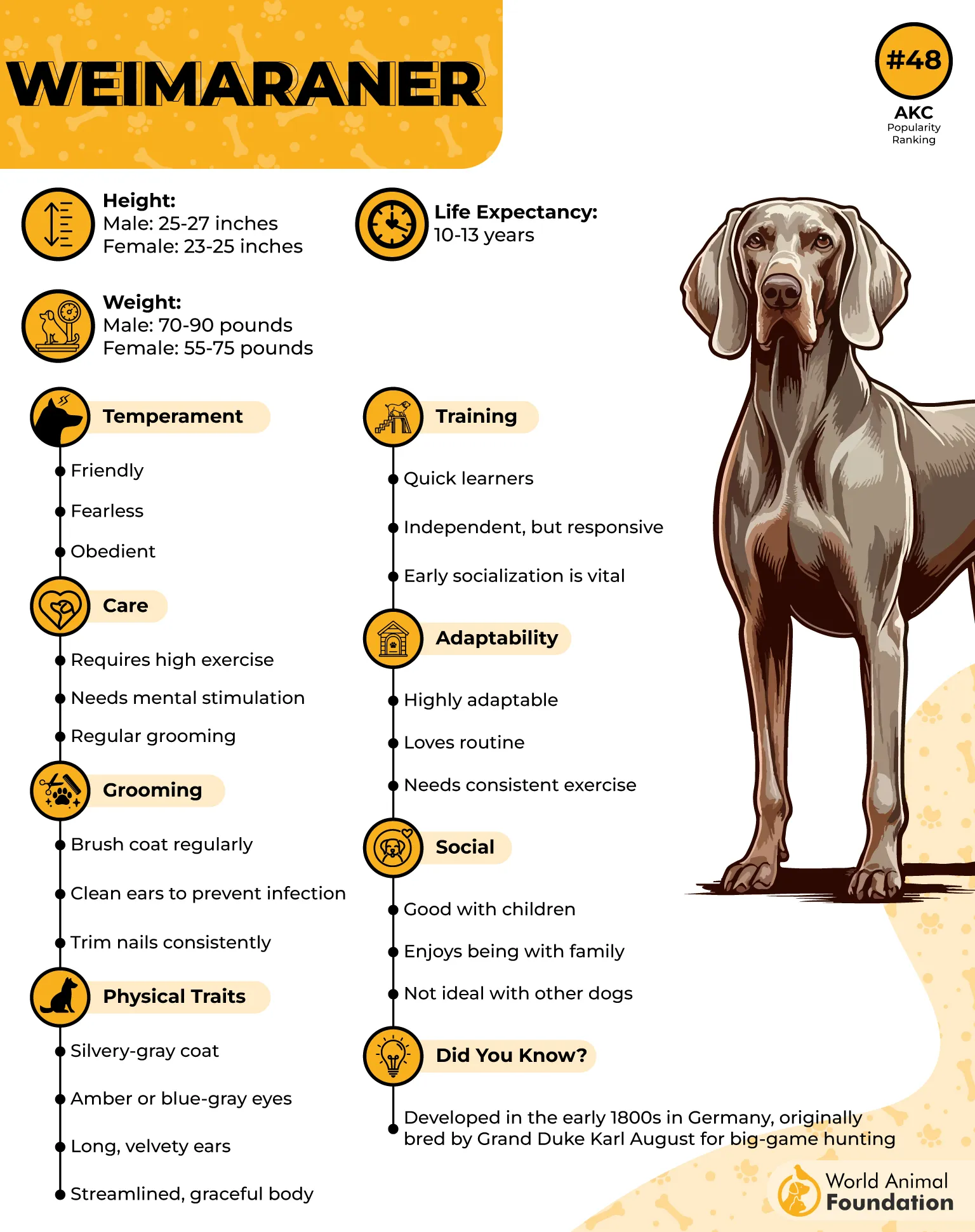
Weimaraners are built for activity and require at least two hours of daily rigorous exercise, as mentioned by PetMD. Running, hiking, biking, swimming, or playing fetch helps channel their energy. They are strong-willed, clever, and slow to mature, so training must be consistent, patient, and positive.
Harsh punishment breaks their trust, while praise and clear commands help them thrive. Weimaraners are also protective, alerting owners to strangers or intruders without being aggressive, and they enjoy engaging in mentally stimulating games like mantrailing or scent-based challenges.
Prey Drive and Hunting Instincts
Bred as all-around hunting dogs, Weimaraners have a strong prey drive that cannot be trained out—only managed. They may chase fast-moving animals, bikes, or even running children in rare cases. Activities like hiding toys, practicing “stay still” with birds, or canicross help satisfy their instincts safely.
Weimaraners excel in hunting, pointing, and retrieving games, and thrive when given structured tasks. Proper socialization ensures they can coexist with other dogs, but small pets should be avoided unless carefully monitored.
4. Vizsla
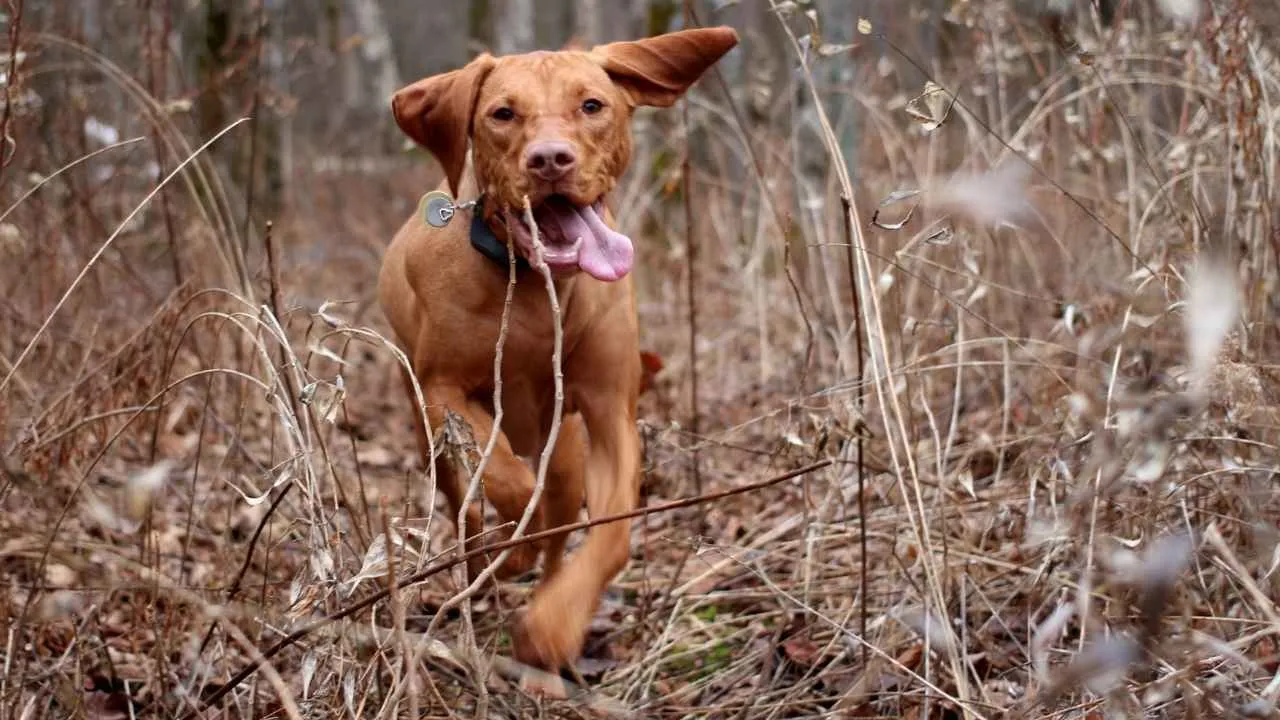
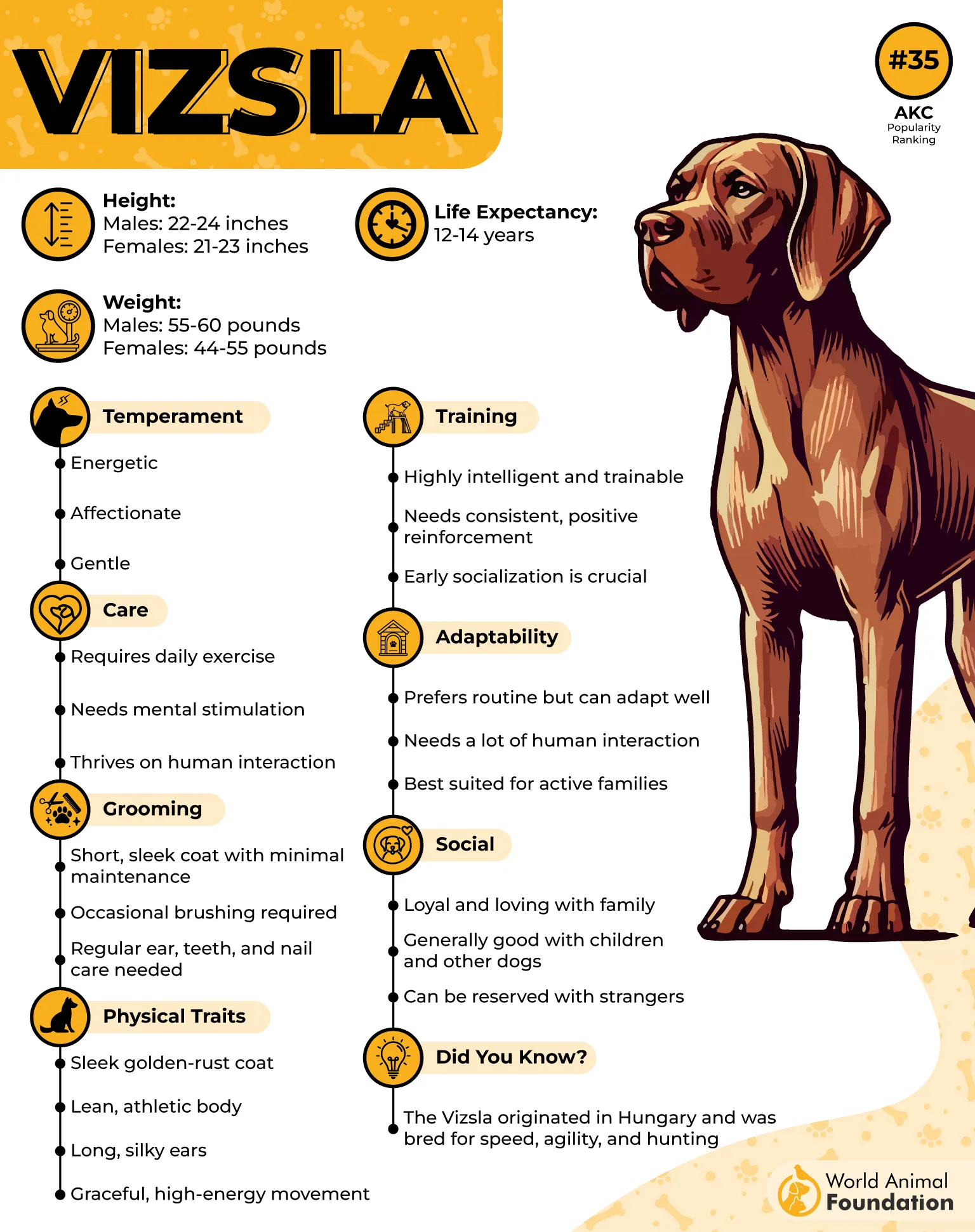
Wirehaired Vizslas are smart, loyal, and affectionate dogs that thrive on working closely with their owners. Developed in Hungary in the 1930s by crossing Vizslas with German Wirehaired Pointers, they were bred to be hardy hunting companions able to track, point, and retrieve in fields, forests, and water.
Medium-sized with a dense, wiry coat and expressive eyebrows, these dogs are built for stamina, agility, and using their noses to explore. They bond tightly with their families and love companionship, but their hunting instincts are always present.
Exercise, Training, and Intelligence
These dogs are highly energetic and require daily physical activity and mental stimulation to stay happy. Activities like long walks, jogging, hiking, swimming, scent work, tracking, and obedience training keep them challenged and fulfilled.
Wirehaired Vizslas are intelligent and eager to please, making positive reinforcement the best approach for training. Early socialization is essential, especially around other animals, to prevent chasing behavior. Bored or under-exercised dogs may become destructive, vocal, or anxious, so a structured routine is key.
Prey Drive and Hunting Instincts
Wirehaired Vizslas have a naturally high prey drive that cannot be trained out, only managed. They excel at scent-based activities and enjoy games that let them use their noses, such as tracking or hide-and-seek with toys.
Their hunting instincts may make them unsuitable for homes with small pets unless carefully supervised. Outdoor activity should always be on a leash or in a securely fenced area.
With enough exercise, mental stimulation, and attention, these dogs are loyal, affectionate, and energetic companions for active families who appreciate their intelligence and hunting heritage.
5. Border Collie
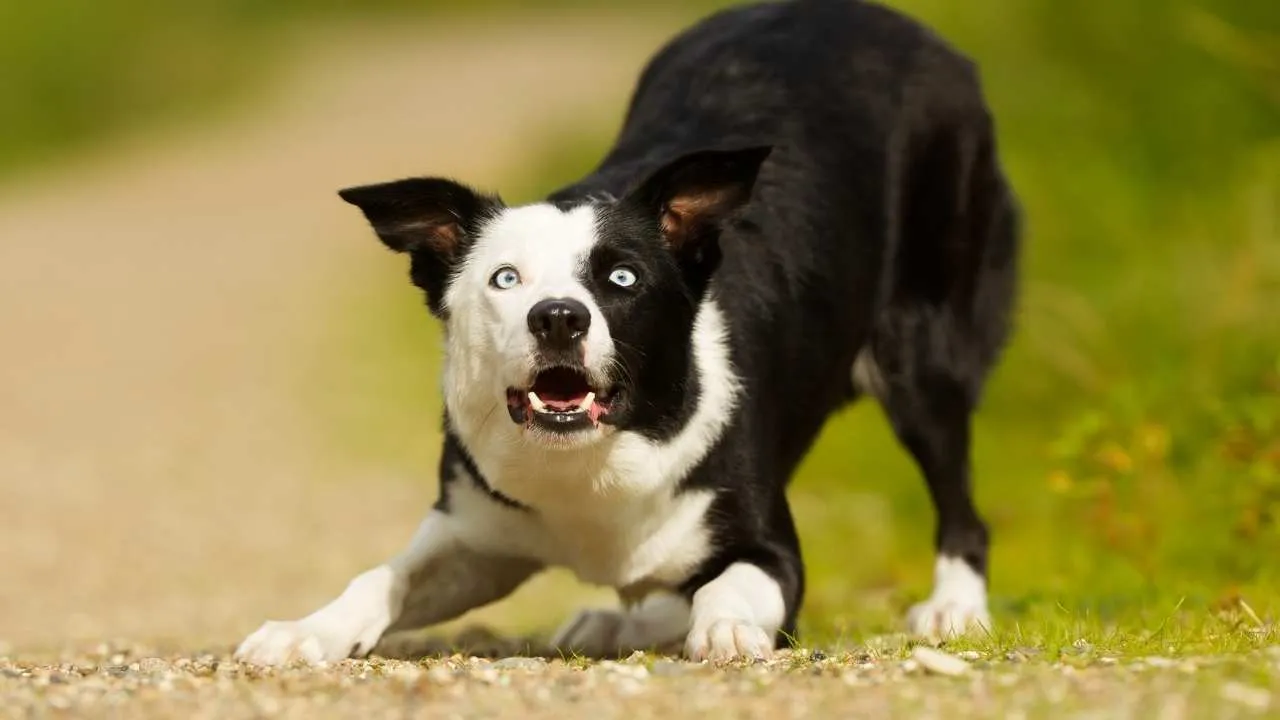
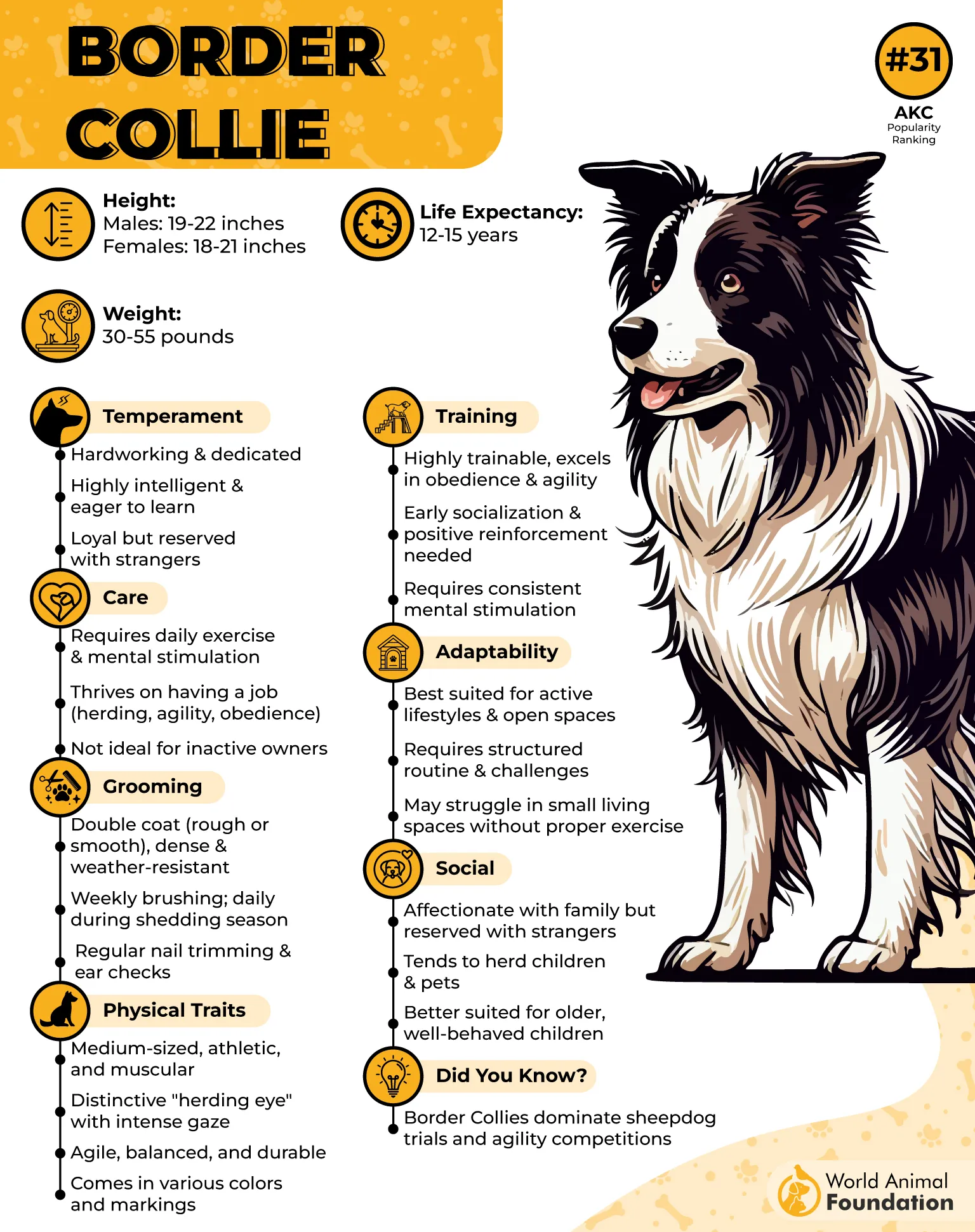
Border Collies are highly intelligent, energetic dogs bred to herd livestock in the countryside of Scotland and England. They are athletic, agile, and built for speed, with a sharp “herding eye” that reflects their intense focus.
These dogs bond closely with their families but can be reserved around strangers. Without a job or regular mental stimulation, they may develop destructive behaviors, such as chewing, digging, or trying to herd children and other pets.
Exercise, Training, and Mental Stimulation
Border Collies need at least one to two hours of daily exercise and mentally engaging activities. Simple walks aren’t enough—they thrive on running, hiking, agility, flyball, frisbee, obedience, and herding work.
Early socialization and consistent, positive reinforcement training are essential to channel their intelligence and high energy. Games that challenge them mentally, like puzzle toys or scent-based activities, also help prevent boredom and behavioral issues.
Prey Drive and Herding Instincts
As a herding breed, Border Collies have a strong prey drive and an instinct to chase moving objects, which can include small animals, vehicles, or children. This drive cannot be trained out, but it can be managed through proper supervision, structured activities, and safe outlets for exercise.
With enough attention, stimulation, and guidance, Border Collies make loyal, affectionate, and highly capable companions for active families who can meet their physical and mental needs.
6. Irish Setter
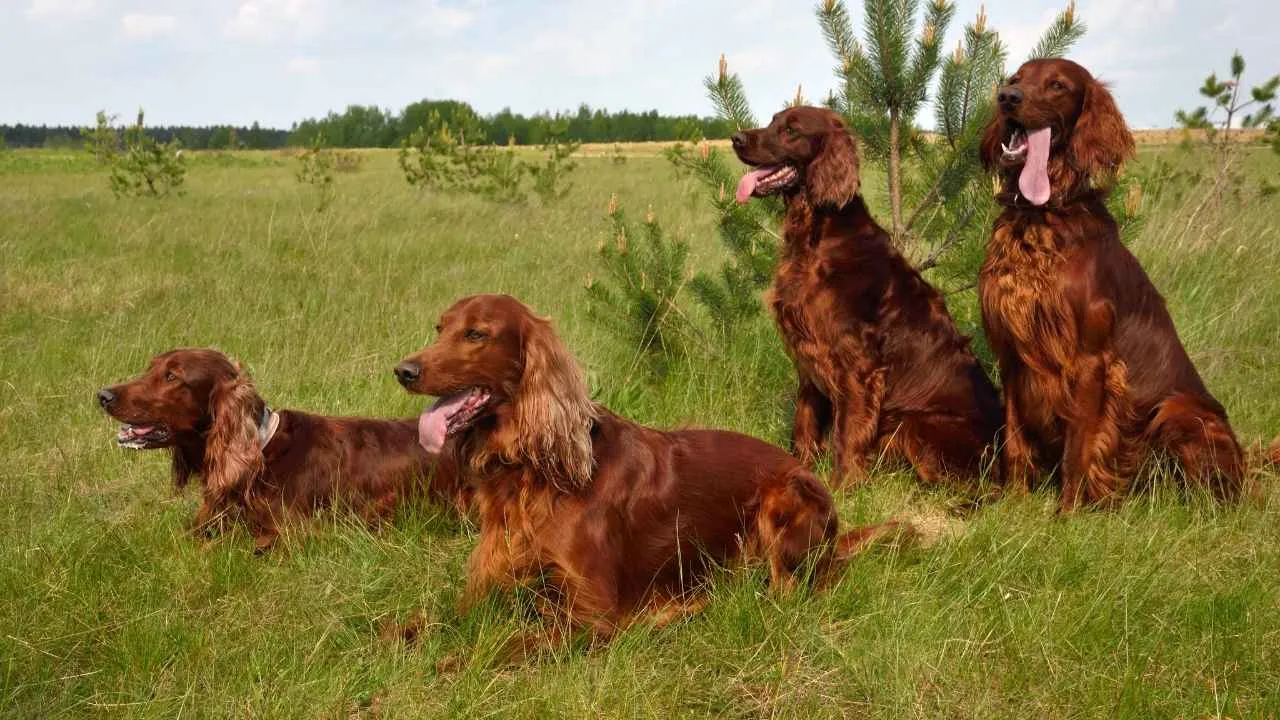
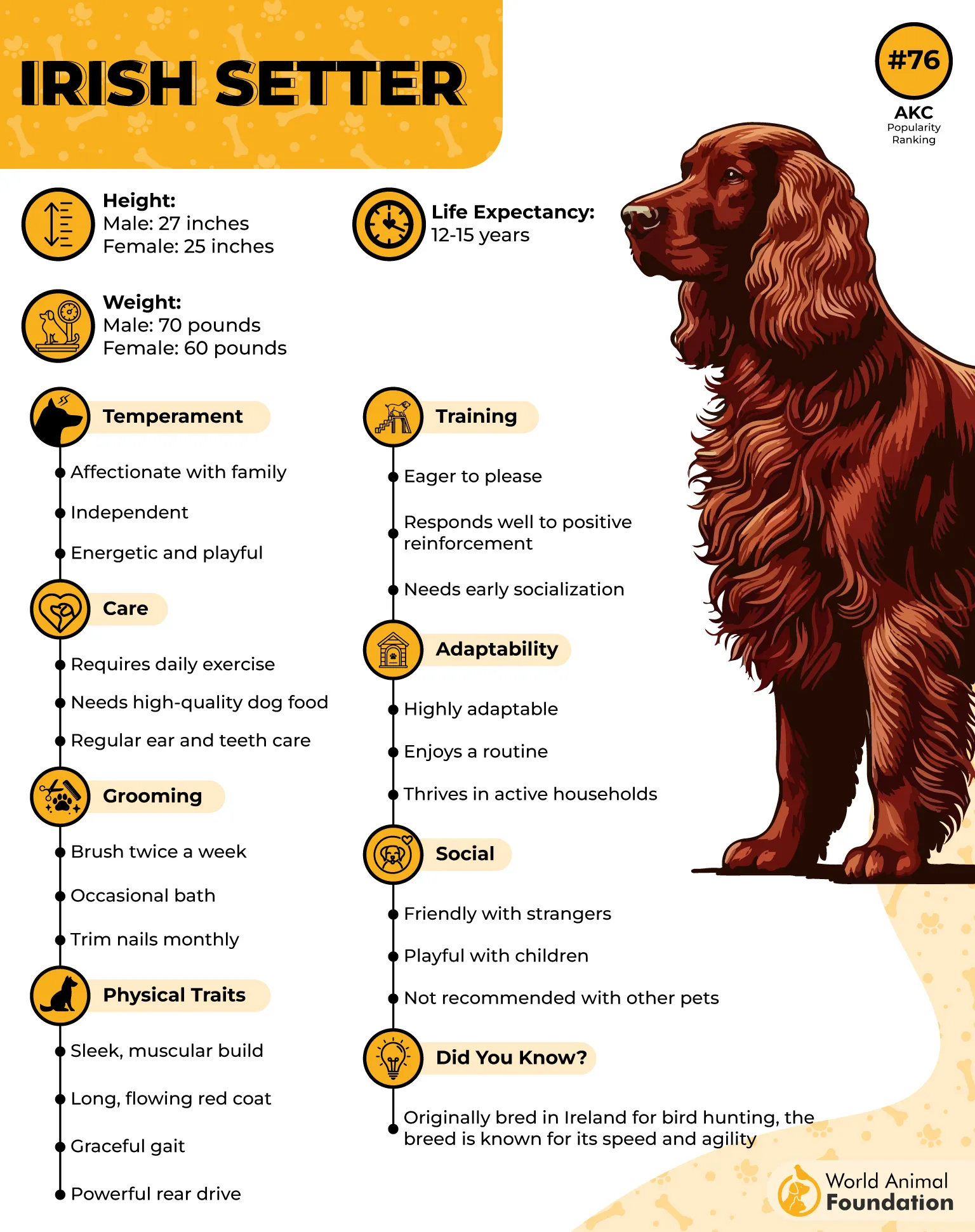
Irish Setters are friendly, affectionate, and full of energy, making them excellent family dogs for active households. Originally bred in Ireland to locate and retrieve birds, they have a strong prey drive that may lead them to chase smaller pets.
These dogs are highly social, love human companionship, and thrive on attention, but they can develop separation anxiety if left alone for long periods.
Exercise, Training, and Mental Stimulation
According to PDSA, Irish Setters require at least an hour of vigorous daily exercise and plenty of mental stimulation to stay happy and well-behaved. Activities like running, hiking, fetch, agility, flyball, and scent work satisfy their energy and intelligence.
Early socialization and consistent positive reinforcement training are essential, especially to manage their prey drive and prevent unwanted behaviors like chasing or destructive antics.
Prey Drive and Hunting Instincts
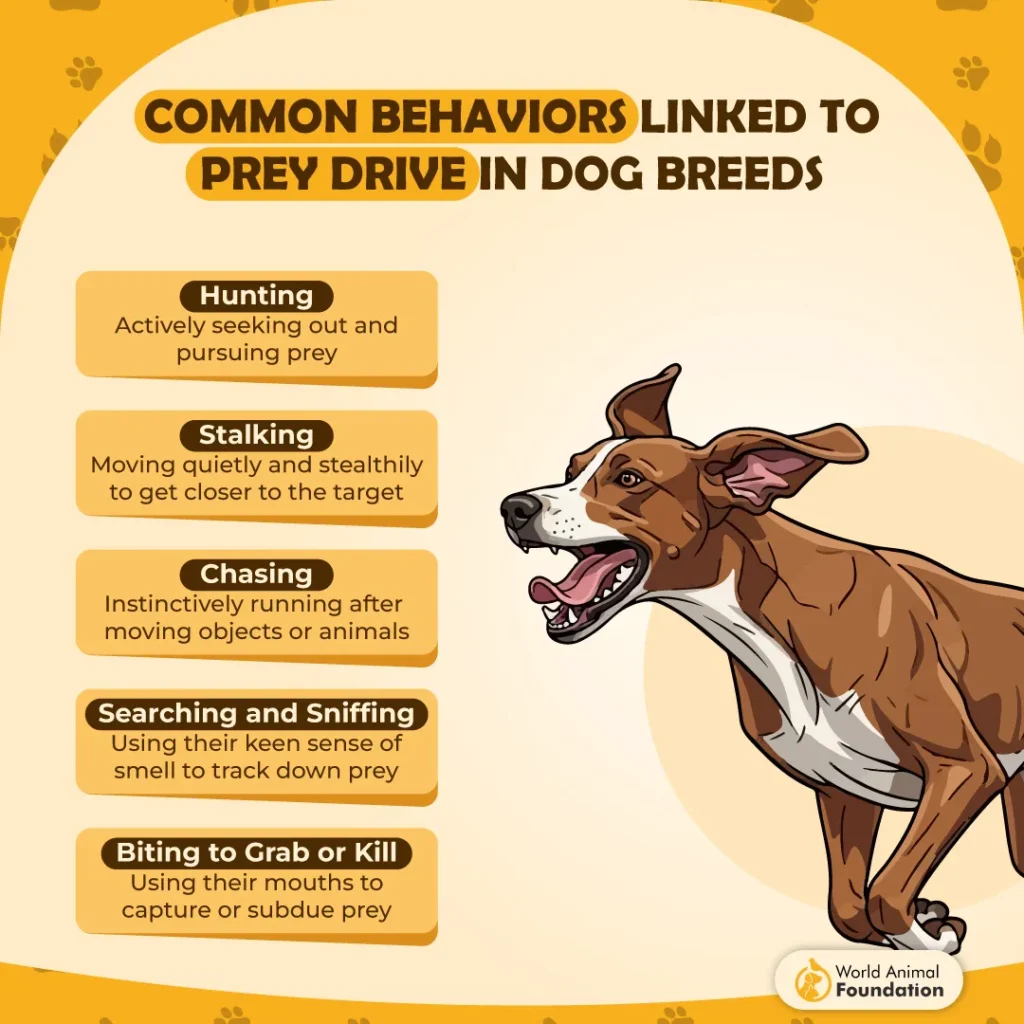
With a hunting heritage, Irish Setters have a natural drive to chase moving objects and follow scents. Their prey drive cannot be trained out, but it can be managed through structured activities, supervised play, and safe outlets for exercise.
These dogs excel when given purposeful tasks, whether in canine sports or interactive games at home. With proper guidance and attention, Irish Setters make loyal, affectionate, and playful companions for active families who can meet their physical and mental needs.
7. Beagle
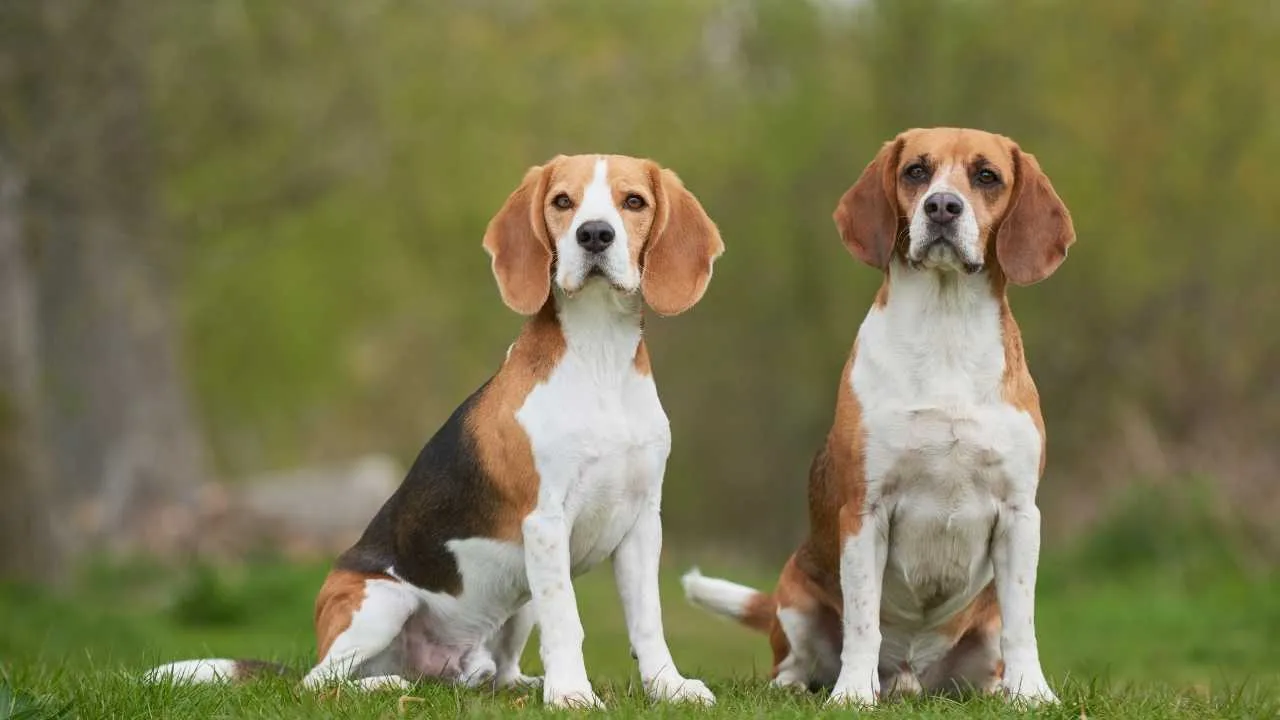
Beagles are friendly, energetic, and highly sociable dogs originally bred in England to hunt small game, particularly rabbits. Their incredible sense of smell and natural curiosity make them excellent scent hounds, but also drive a strong prey instinct.
This means they may chase smaller animals if unsupervised. Beagles bond closely with families, enjoy attention, and thrive on companionship, though they can develop separation anxiety if left alone for long periods.
Exercise, Training, and Mental Stimulation
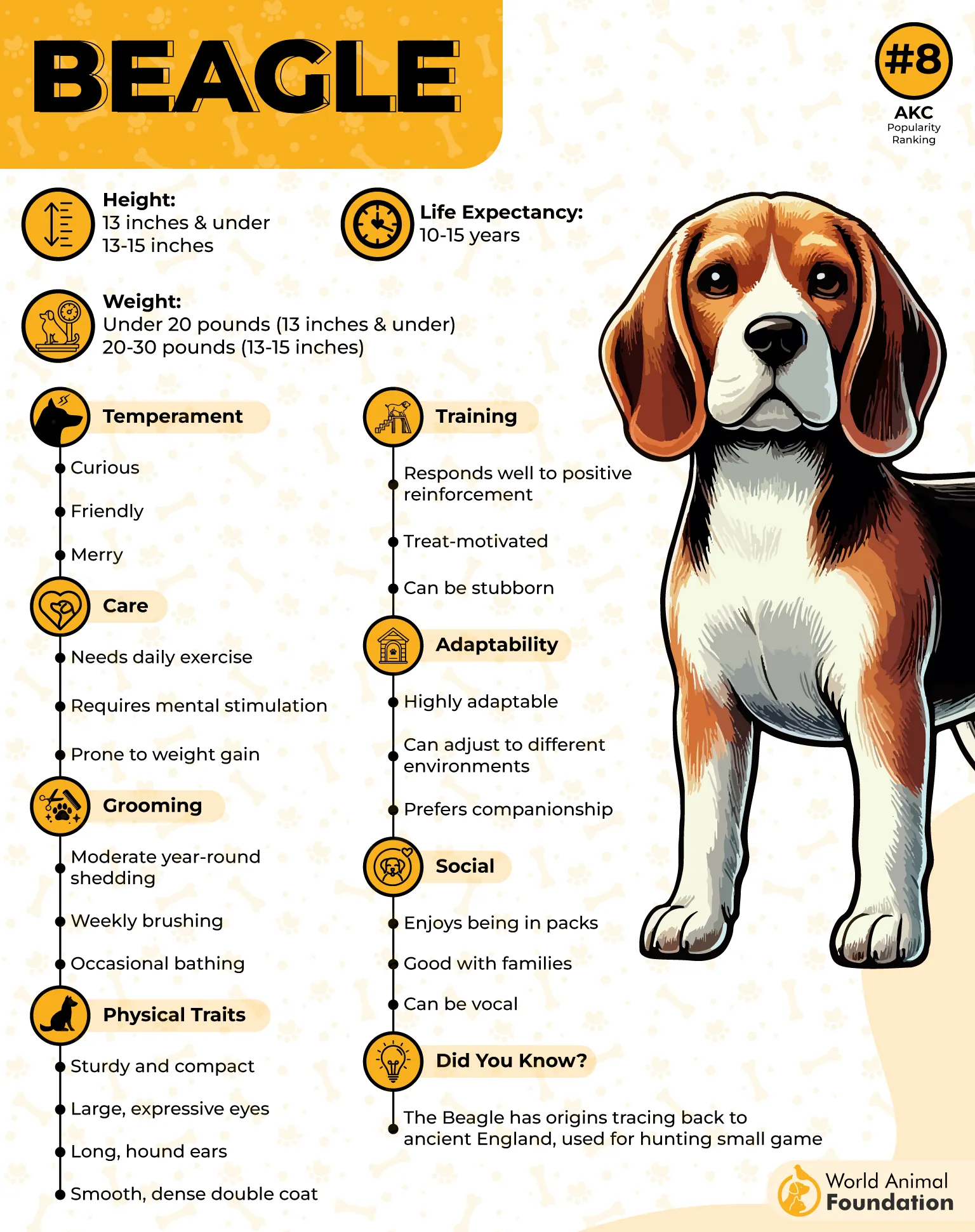
Beagles require at least two hours of daily exercise and plenty of mental stimulation to stay happy. Walks, interactive play, scent games, and dog sports like agility or flyball help meet their energy needs.
Early socialization and consistent, positive training are key, as Beagles are intelligent but can be stubborn and easily distracted by interesting scents. Activities that challenge their mind, like hide-and-seek with toys or puzzle feeders, prevent boredom and destructive behaviors.
Prey Drive and Hunting Instincts
As scent hounds, Beagles have a natural prey drive that cannot be trained out, only managed. They excel at following scents and enjoy games that let them use their noses, but they should always be leashed or in a secure area when outside.
Beagles get along well with other dogs and pets if properly socialized, but small animals may trigger their hunting instincts. With structure, supervision, and ample stimulation, Beagles make affectionate, playful, and loyal companions for active families.
Conclusion
High-prey-drive dogs are some of the most intelligent, energetic, and loyal companions you can have.
While their prey drive can pose challenges, it’s also what makes these dogs remarkable hunters, athletes, and playmates. With the right exercise, training, and attention, these breeds thrive in active, engaged homes where their energy and intelligence are respected and channelled.
If you’re considering adding one of these breeds to your family, take the time to understand their needs and personality. Commit to daily exercise, mental stimulation, and careful management of their instincts.
In return, you’ll gain a companion that’s not only full of life and fun, but also endlessly loyal and capable of surprising you with just how clever and devoted they can be. For these high-drive dogs, every day is an adventure—and sharing it with them can be truly rewarding.
