




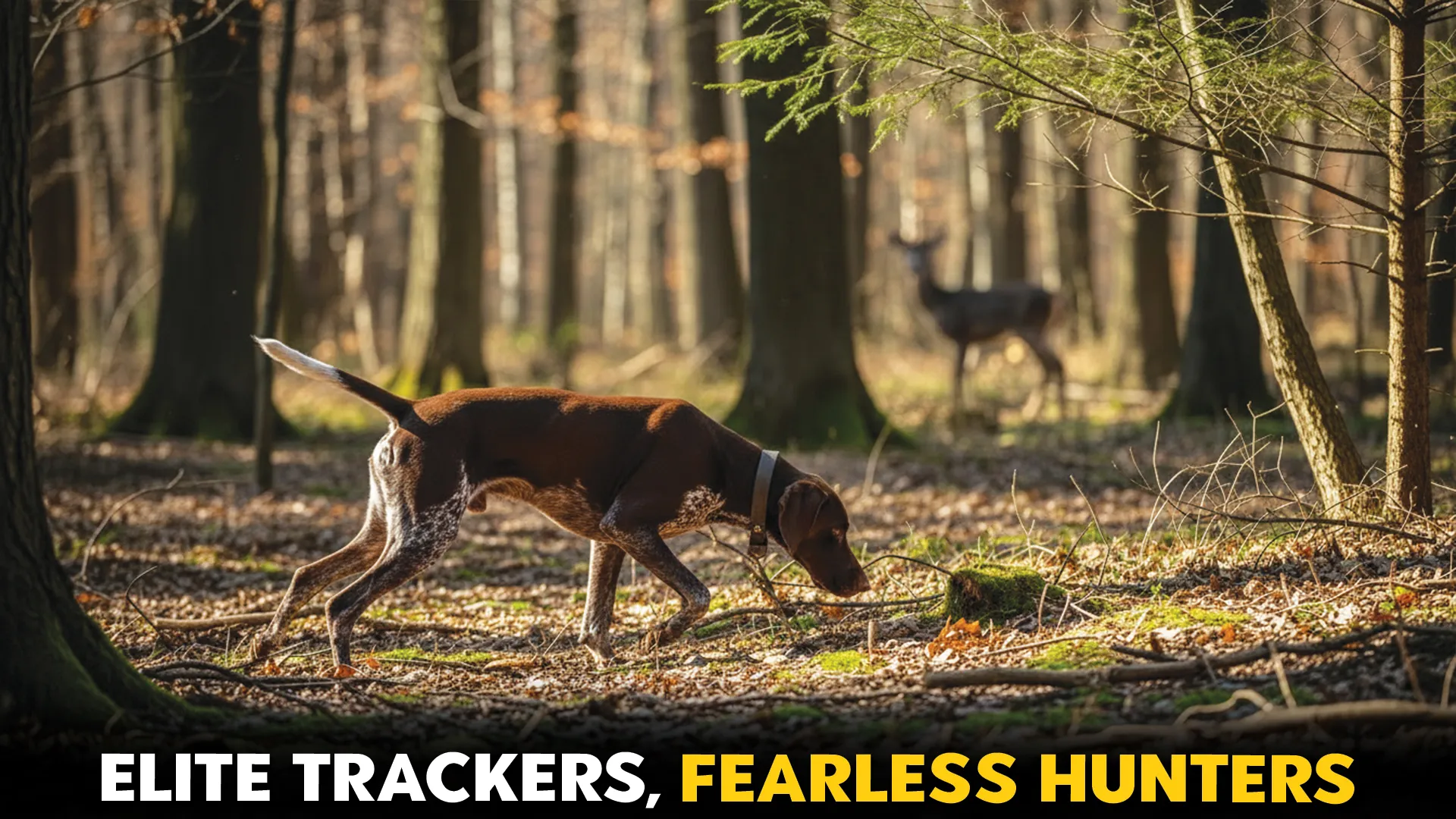
Deer hunting can be both exciting and challenging, especially when it comes to recovering wounded game. Even after a well-placed shot, a deer may travel a considerable distance before it can be located, making recovery difficult in dense woods or rough terrain.
This is where skilled tracking dogs become invaluable. With their powerful sense of smell and natural determination, these dogs can follow blood trails and scent paths that are nearly impossible for humans to detect. Their abilities help hunters locate wounded deer more efficiently and prevent game from being lost.
For generations, certain dog breeds have been prized for their exceptional tracking instincts, endurance, and trainability. These qualities make them reliable partners in the field and valuable companions during hunting trips.
In this article, we’ll explore seven outstanding dog breeds known for their deer tracking and hunting abilities, highlighting the traits that make them excellent tracking companions.
Outstanding Dog Breeds for Deer Tracking and Hunting
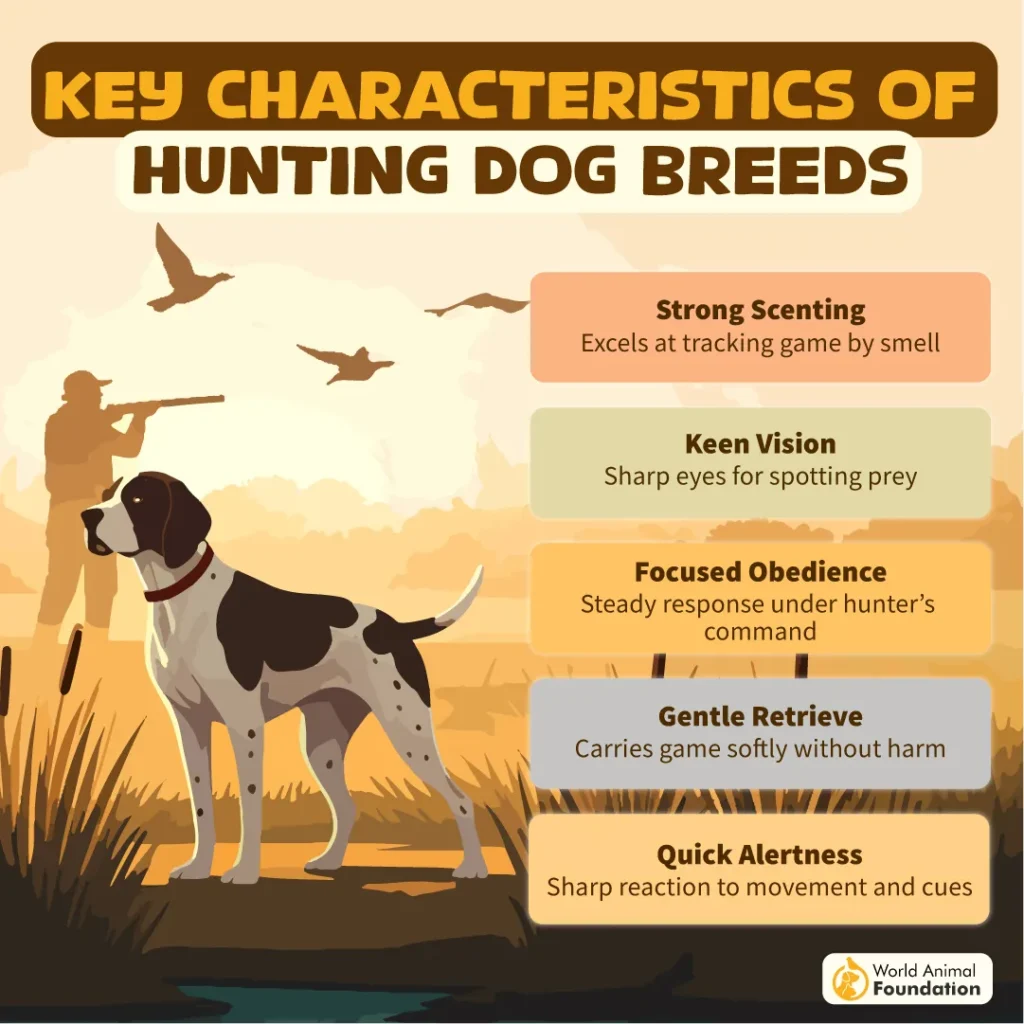
1. German Shorthaired Pointer
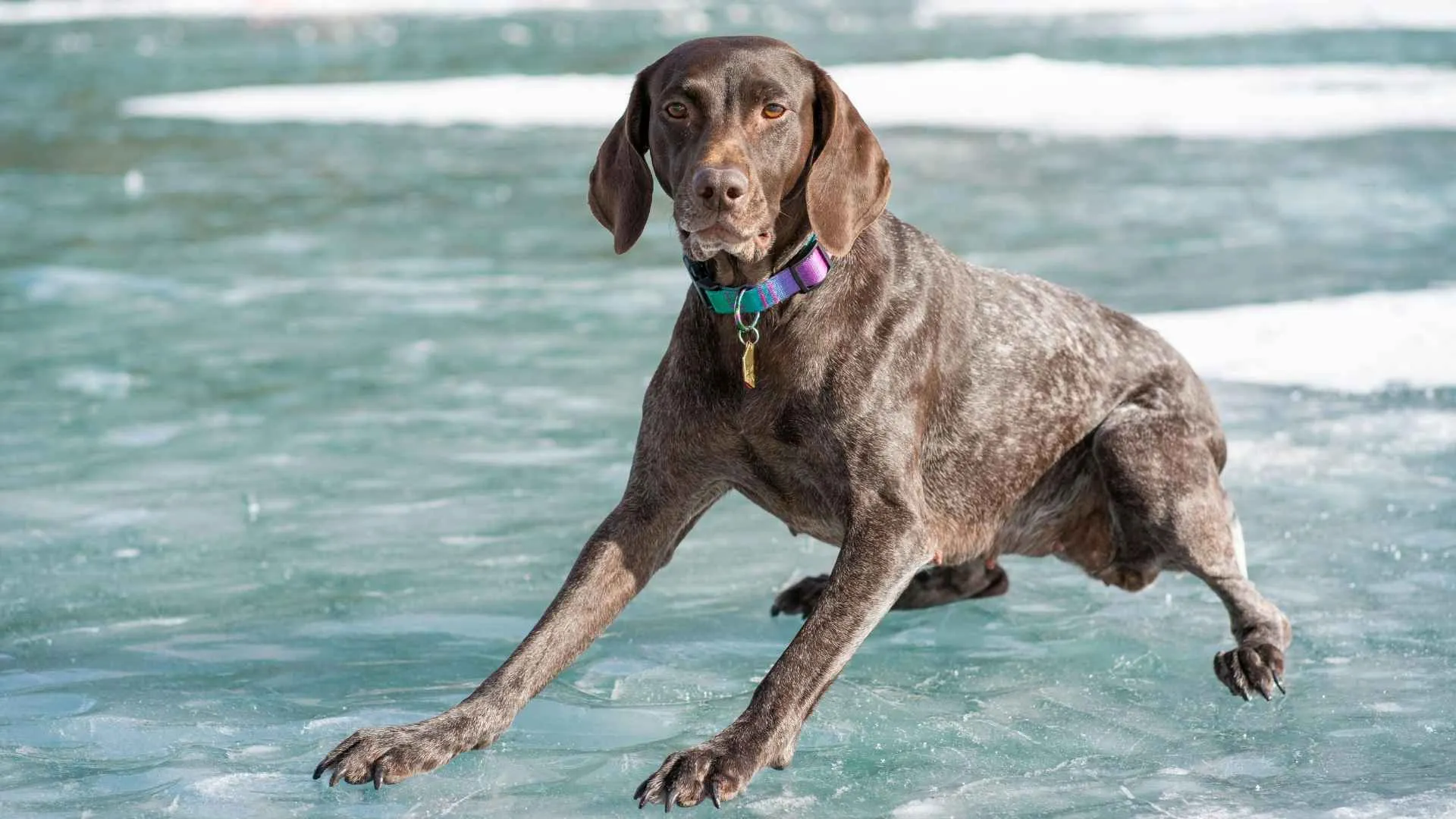
The German Shorthaired Pointer is a versatile hunting dog known for its high energy, intelligence, and affectionate nature. Originally developed in Germany, this breed is widely recognized as an excellent bird dog, capable of pointing, flushing, and retrieving game both on land and in water.
The word “pointer” refers to the breed’s natural behavior of freezing and pointing its nose toward game birds, helping hunters locate their target. Because of their versatility in the field, German Shorthaired Pointers are often called the “Swiss Army Knife” of hunting dogs.
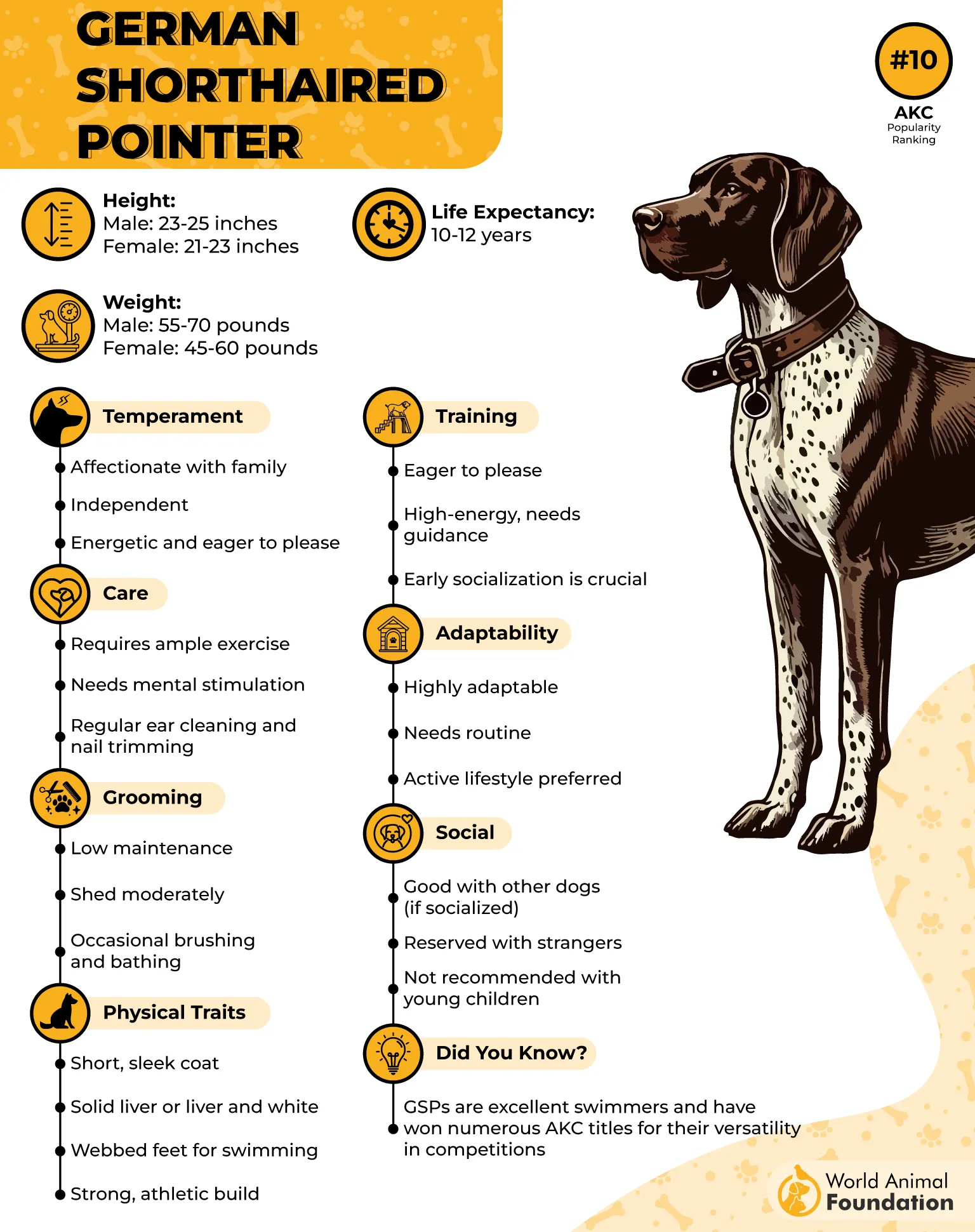
Although they are primarily used for bird hunting, their strong scenting ability and endurance can also make them useful for tracking wounded game with proper training.
German Shorthaired Pointers are intelligent and eager to learn, but their energetic and independent nature means they need consistent training, regular exercise, and plenty of mental stimulation. They typically require at least 1–2 hours of daily activity to stay healthy and happy.
Their short coat is easy to maintain and sheds moderately, requiring only occasional brushing to keep it in good condition.
2. Basset Hound
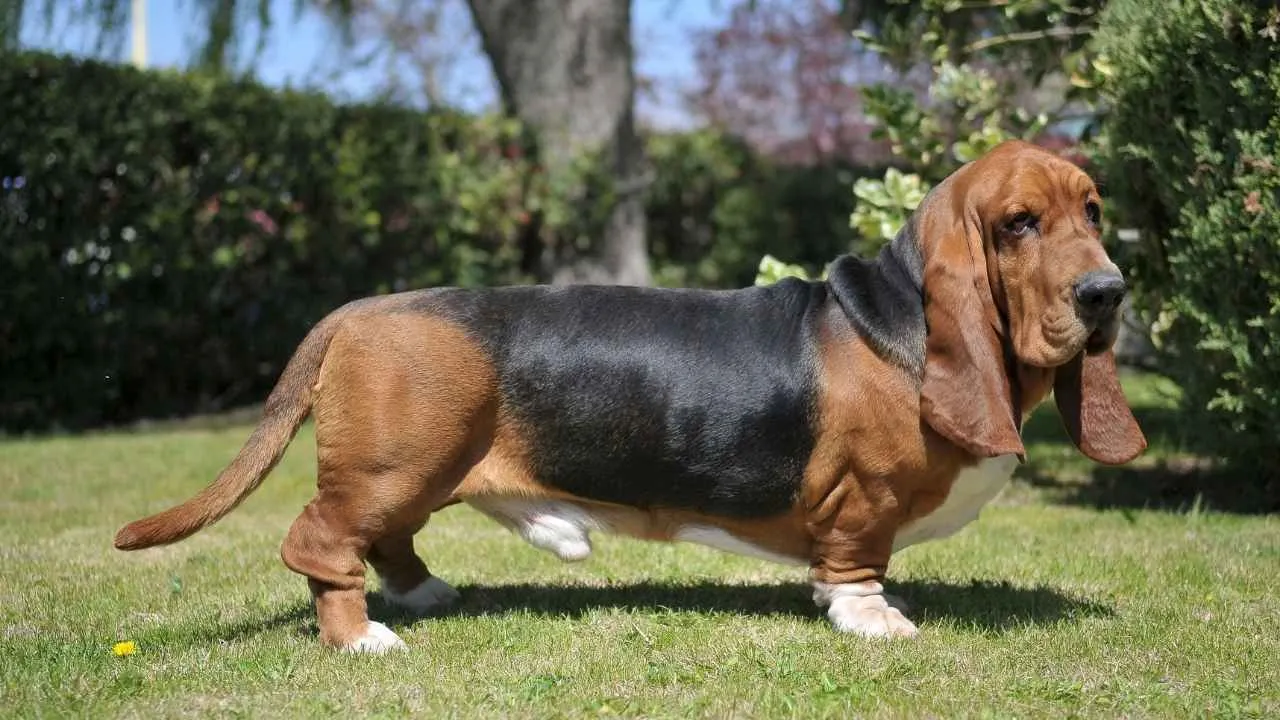
The Basset Hound is a calm, patient, and low-energy dog breed known for its short legs, long body, and distinctive velvety ears. Their droopy eyes and wrinkled brow often give them a sad expression, but they are typically friendly, gentle, and good-natured dogs.
Despite their relaxed appearance, Basset Hounds are excellent scent hounds with a strong ability to follow trails. They were originally bred for hunting small game such as rabbits and hares, and their powerful sense of smell allows them to track scents over long distances.
Basset Hounds are often considered among the best scent-tracking dogs, second only to the Bloodhound in scenting ability. Their persistence and focus make them good tracking dogs, though they are most commonly used for smaller game rather than large animals.
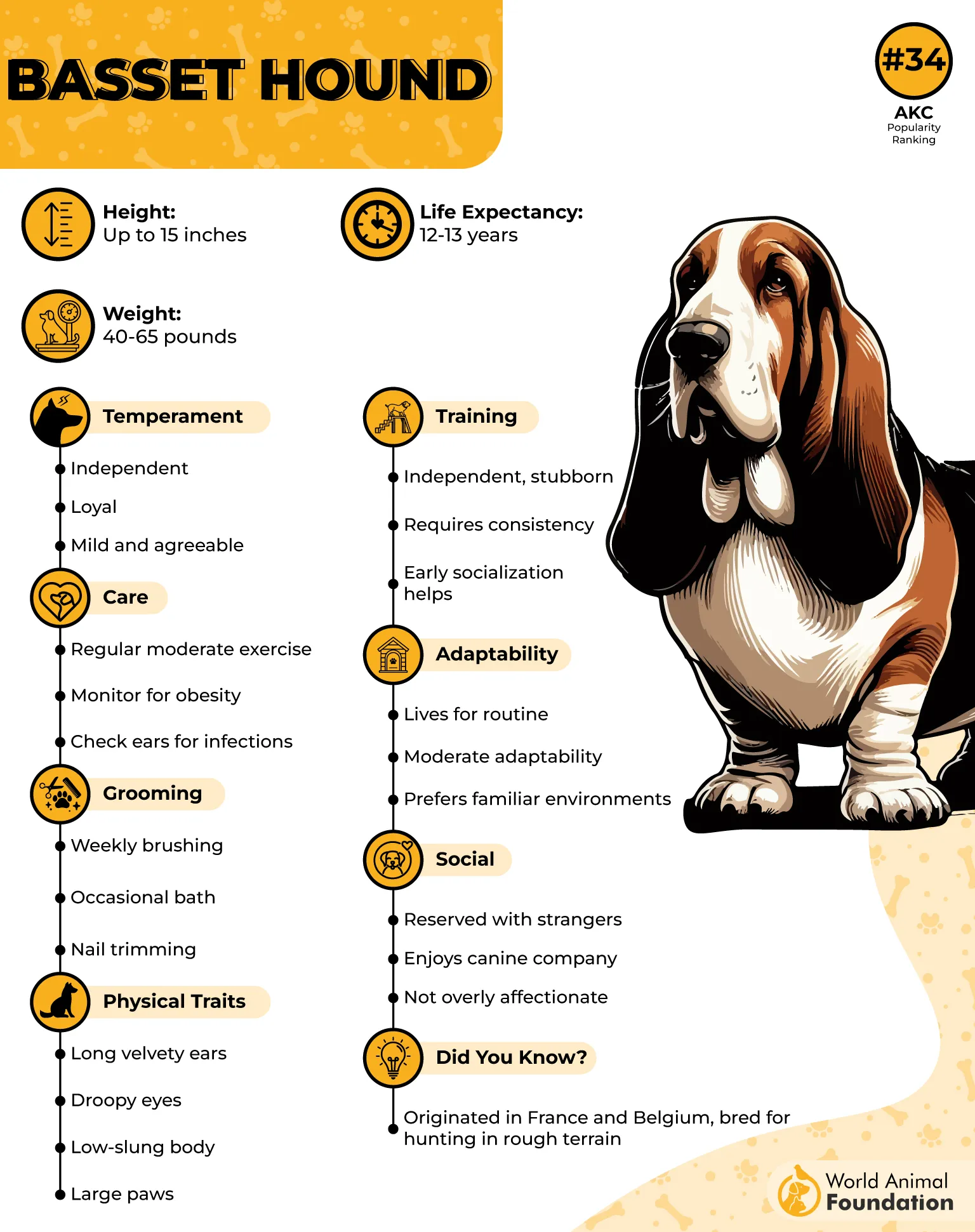
Like many scent hounds, Basset Hounds can be independent and sometimes stubborn, which means training requires patience and consistency. PetMD suggests that positive reinforcement works best, and treats can be an effective reward when used in moderation.
Because Basset Hounds can gain weight easily, treats should be limited and balanced with a healthy diet and regular exercise to maintain their overall health.
3. American Foxhound
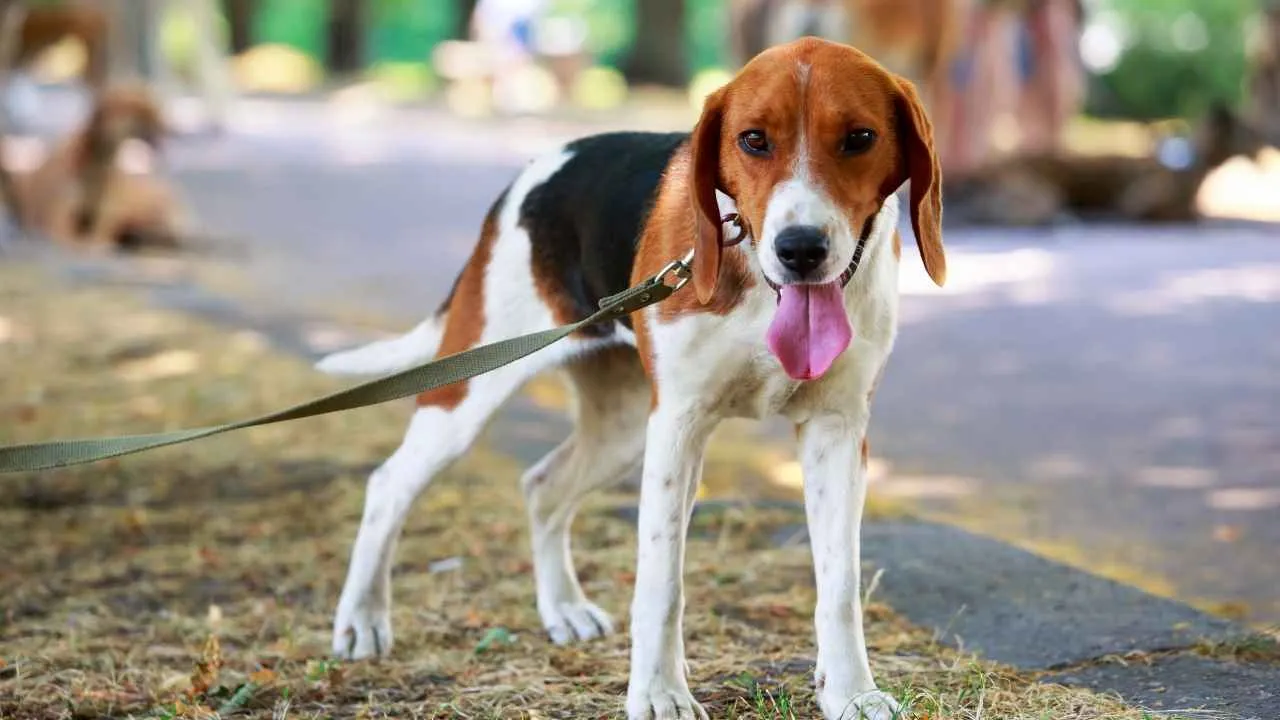
The American Foxhound is a muscular and athletic dog breed known for its sweet temperament and excellent scenting ability. Originally bred for fox hunting, these medium-to-large hounds are highly skilled at following scent trails over long distances.
American Foxhounds are also known for their distinctive musical bay, a loud, melodious sound they make when following a scent trail. Hunters often rely on this vocal trait to track the dog’s progress while it is working in the field.
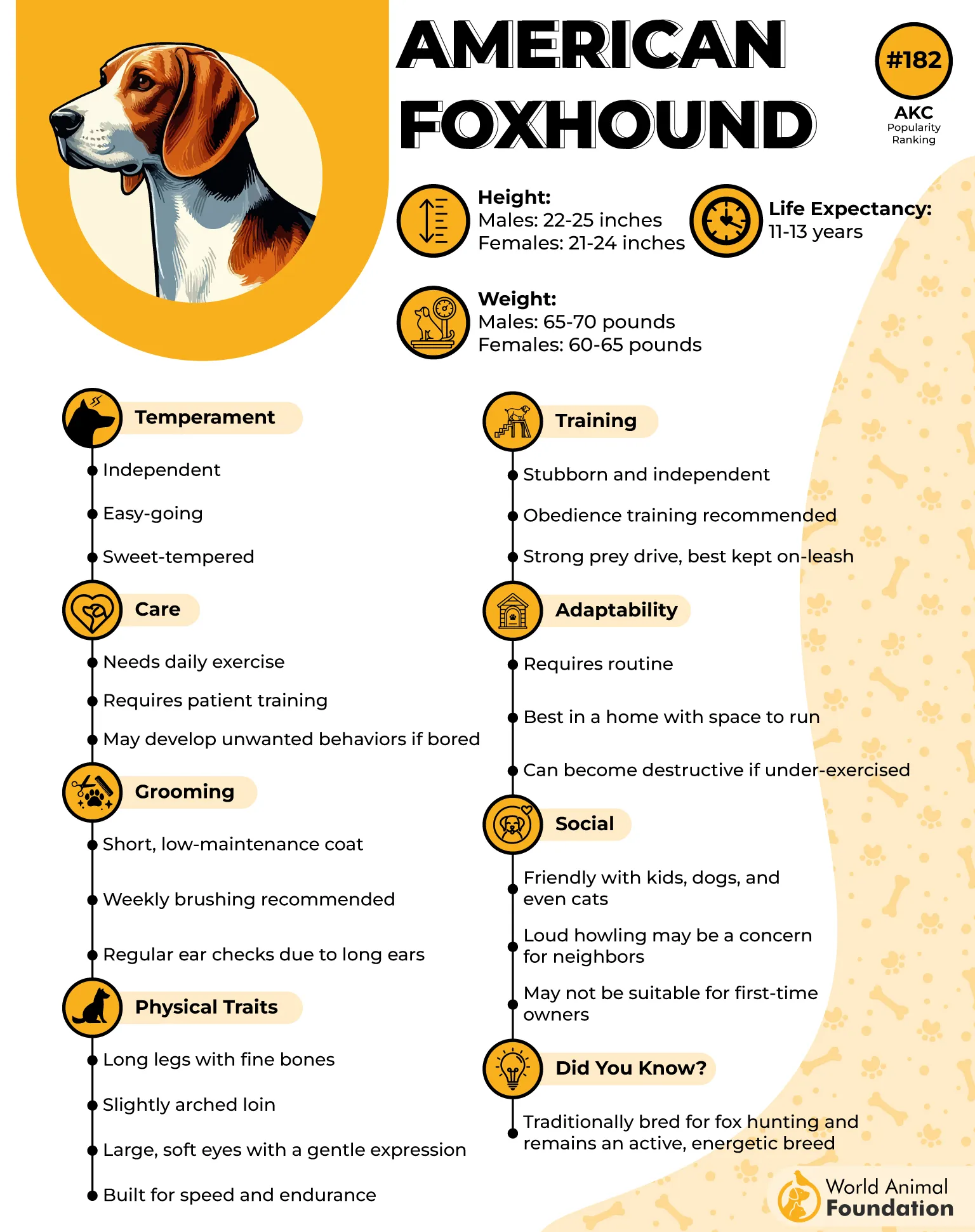
These dogs are energetic, determined, and highly driven when they pick up a scent. Because of their strong hunting instincts and high energy levels, they require plenty of daily exercise and space to explore.
While intelligent and generally friendly, American Foxhounds can be independent thinkers, which may make training a bit challenging. Consistent training and positive reinforcement help channel their energy and instincts in the right direction, making them loyal companions both in the field and at home.
4. Brittany Spaniel
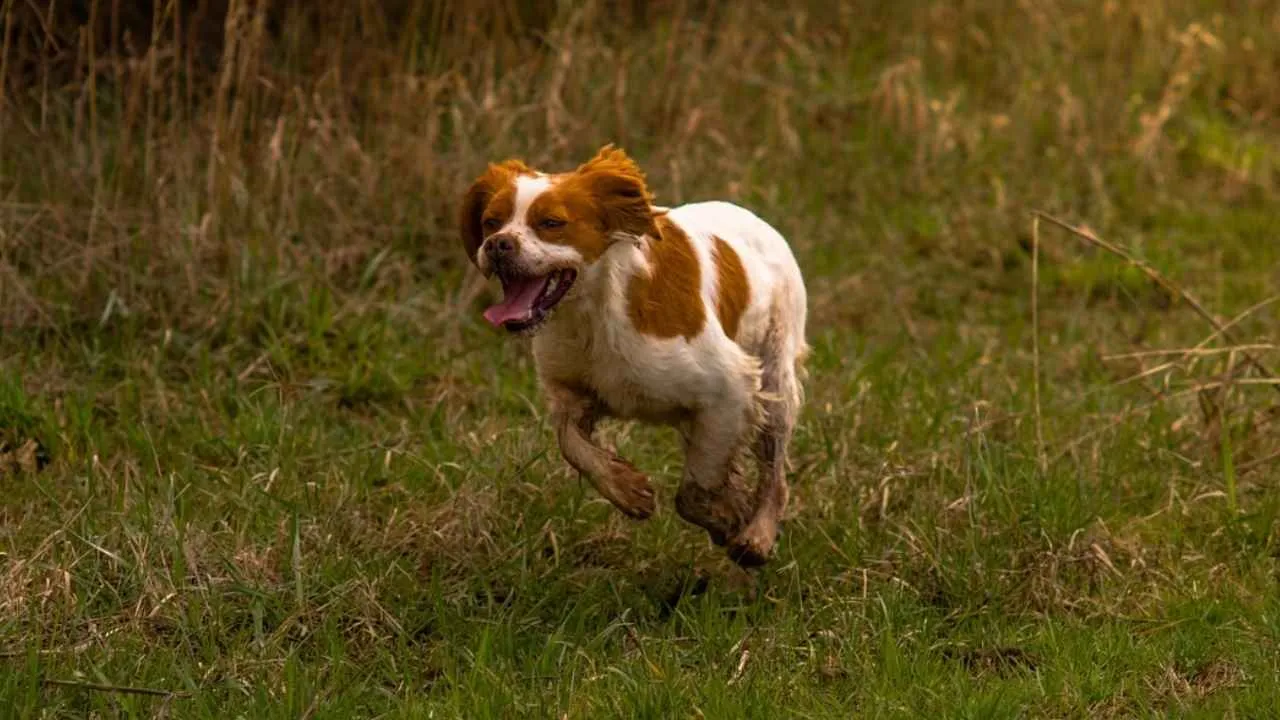
The Brittany is an energetic and cheerful hunting dog known for its intelligence and enthusiasm in the field. Originally developed in France during the 1800s, this breed was bred to point, flush, and retrieve upland birds such as pheasant, quail, and partridge.
Although sometimes referred to as a “pocket pointer” because of its relatively compact size, the Brittany is a powerful and agile sporting dog. When it detects a game, it naturally freezes and points toward the bird, helping hunters locate their target.
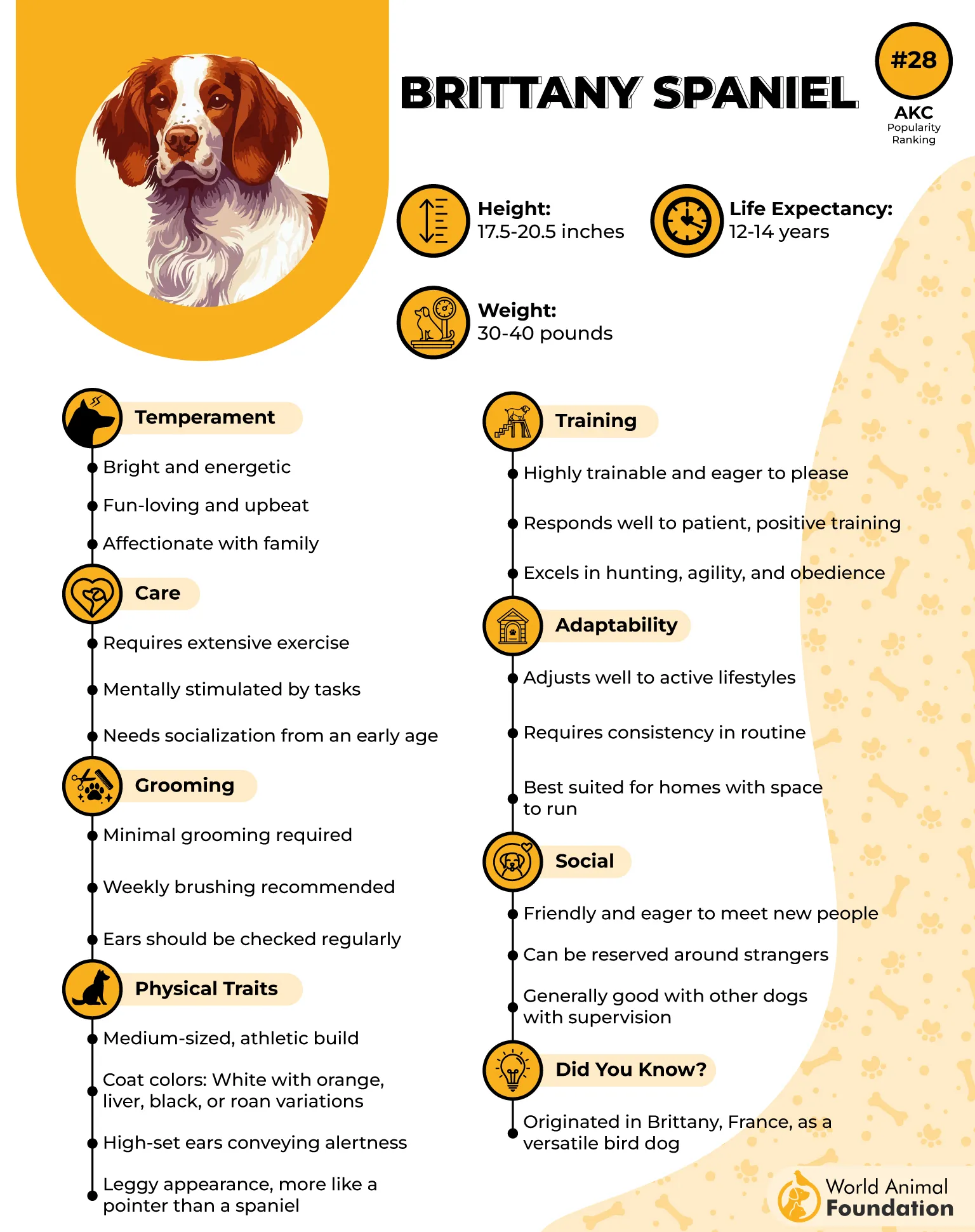
AKC states that while the breed is primarily used for upland bird hunting, its strong scenting ability and endurance can also allow it to follow scent trails with proper training.
Brittanys are highly trainable thanks to their eager-to-please personality and intelligence. However, they are very active dogs that require plenty of daily exercise and mental stimulation. Without enough activity, they may become restless, bark excessively, or try to roam.
5. Redbone Coonhound
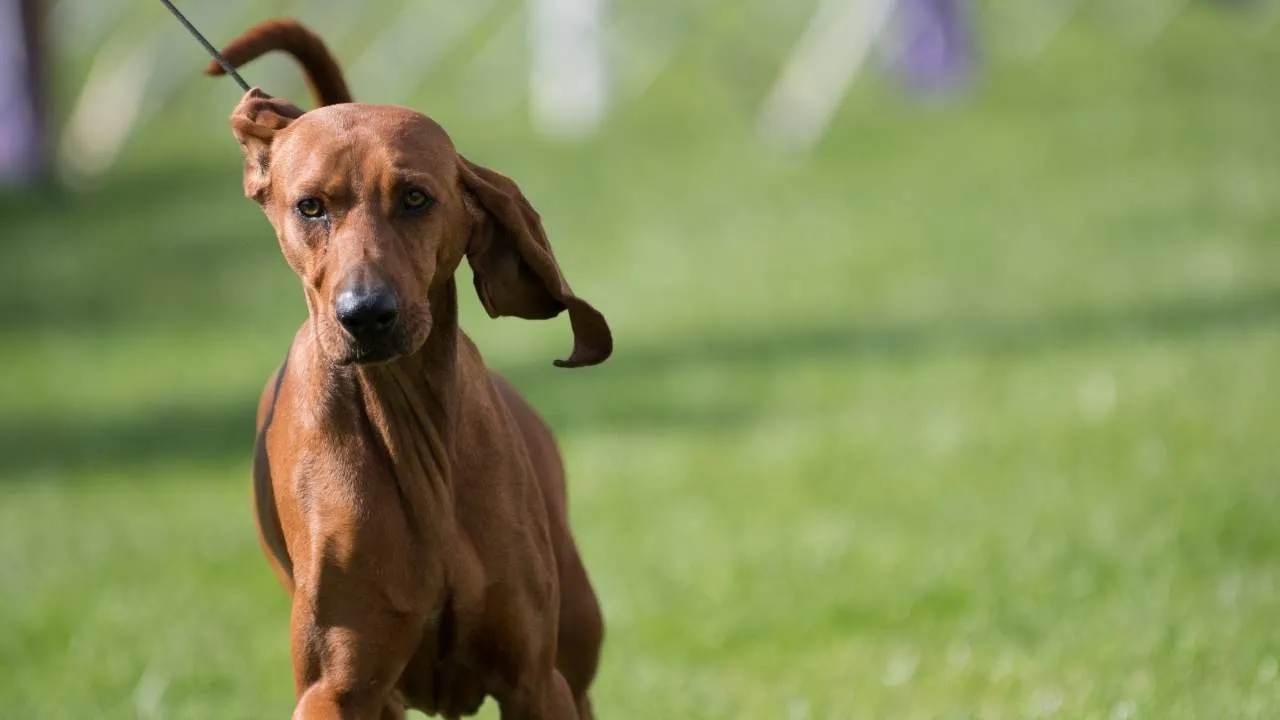
The Redbone Coonhound is a muscular and athletic scent hound originally bred in the United States for hunting raccoons and other game. Known for its determination and endurance, this breed later became valued for tracking larger game such as deer in some hunting situations.
Redbone Coonhounds have a strong sense of smell and excellent tracking ability, allowing them to follow scent trails over long distances. When they pick up a trail, they often use their distinctive baying voice to signal that they are actively tracking.
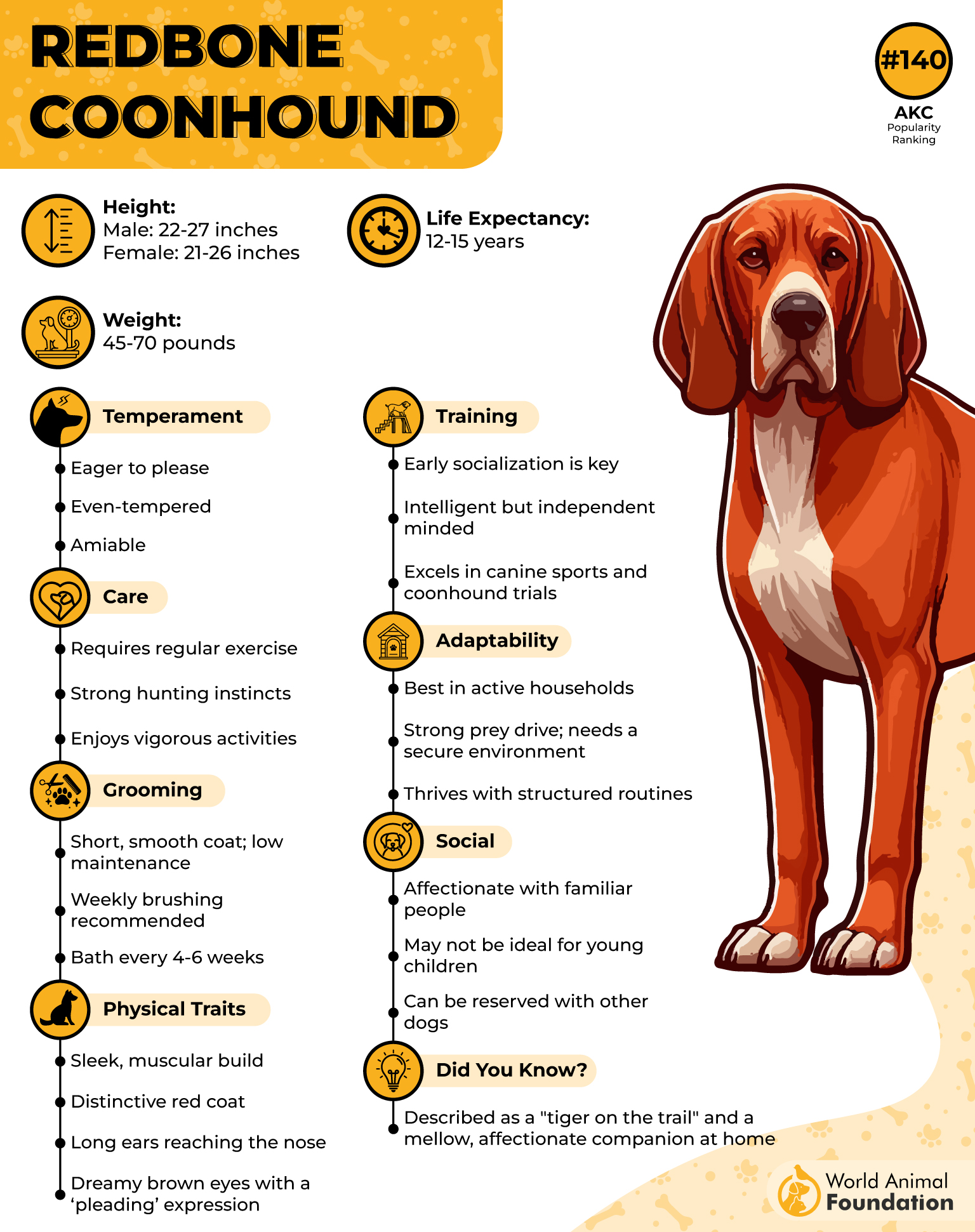
These dogs are loyal, friendly, and energetic, but their strong hunting instincts can make them somewhat independent. With consistent training and positive reinforcement, they can become reliable working dogs and devoted companions.
The Redbone Coonhound’s short coat is relatively easy to maintain and requires only occasional brushing. They do shed moderately throughout the year and benefit from regular exercise to keep them healthy and satisfied.
6. Bloodhound
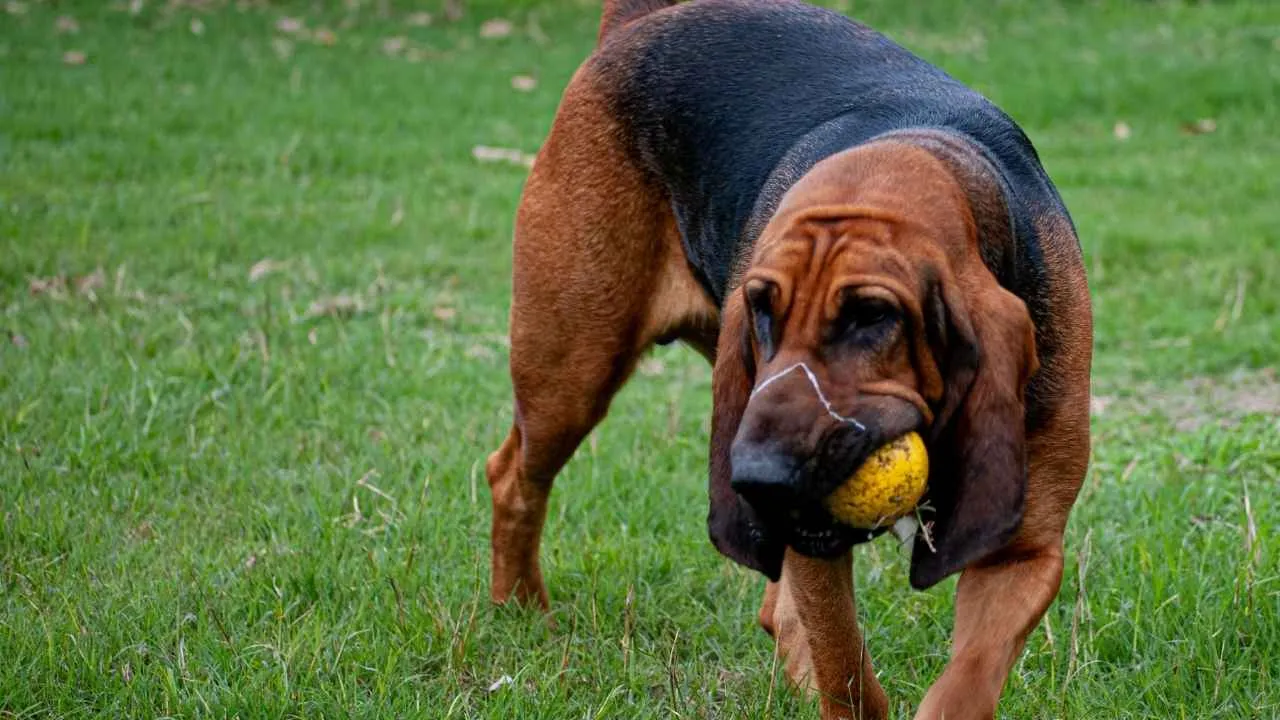
The Bloodhound is one of the most skilled scent-tracking dogs in the world, renowned for its exceptional nose and ability to follow cold trails over long distances. With approximately 220–300 million olfactory receptors, Bloodhounds can detect and follow human scent even days after it was left.
Britannica mentions that their calm, independent, and friendly nature makes them ideal for search and rescue work, including locating missing persons. Bloodhounds are not typically used for detecting drugs or other substances; their expertise lies in tracking human scent.
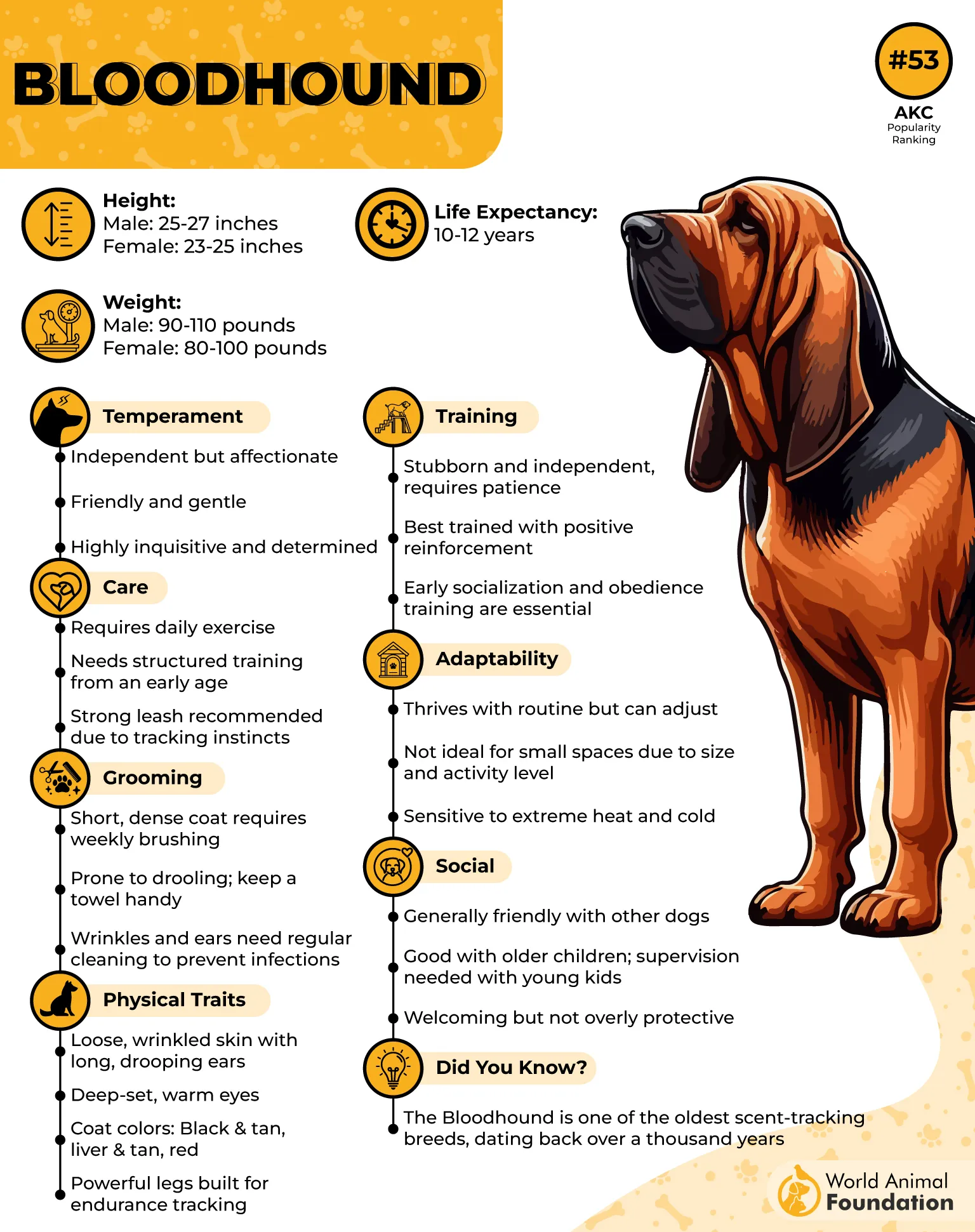
Training a Bloodhound requires patience, consistency, and positive reinforcement, as they can be stubborn and highly focused on following a trail. Regular exercise, including walks, hikes, and play, is essential to keep them healthy and prevent weight gain.
Bloodhounds have a short coat that sheds moderately and requires weekly brushing. Their long, droopy ears should be cleaned regularly to prevent infections.
7. Bluetick Coonhound
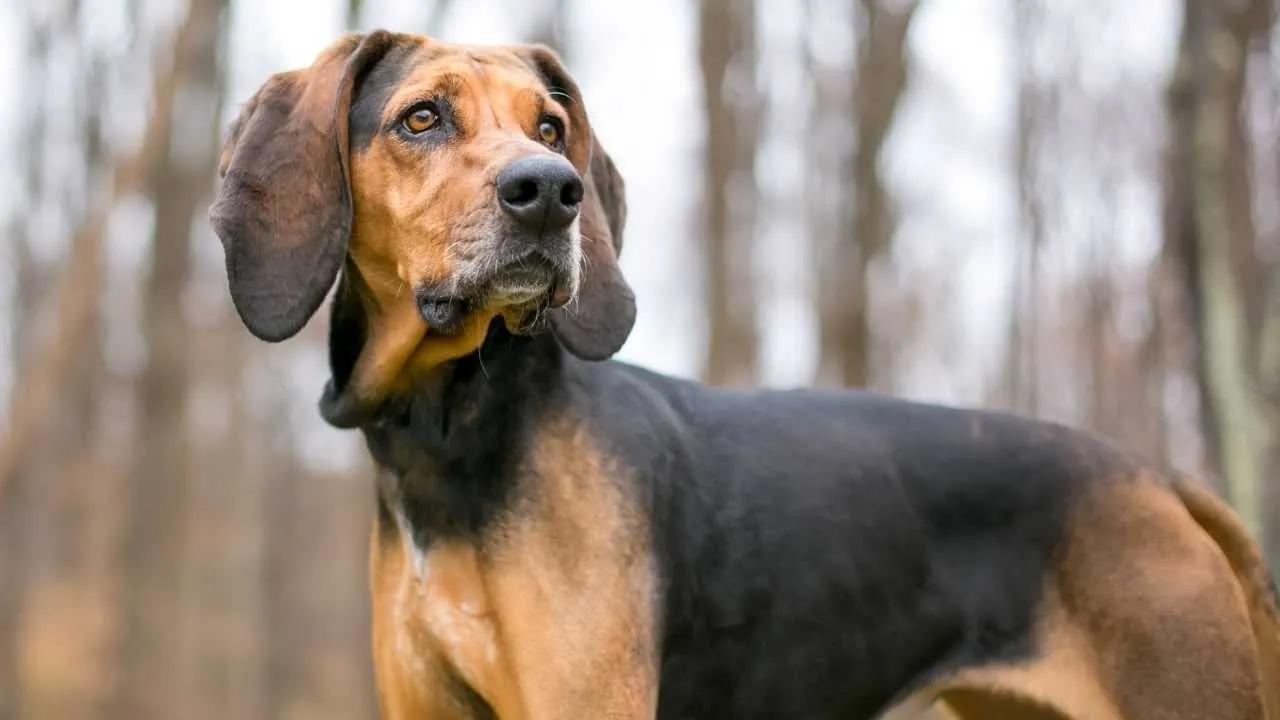
The Bluetick Coonhound is a large, athletic scent hound originally bred in the United States for hunting raccoons. Known for its strong nose and endurance, this breed is also capable of tracking deer and other game over long distances, though it is primarily used as a coonhound.
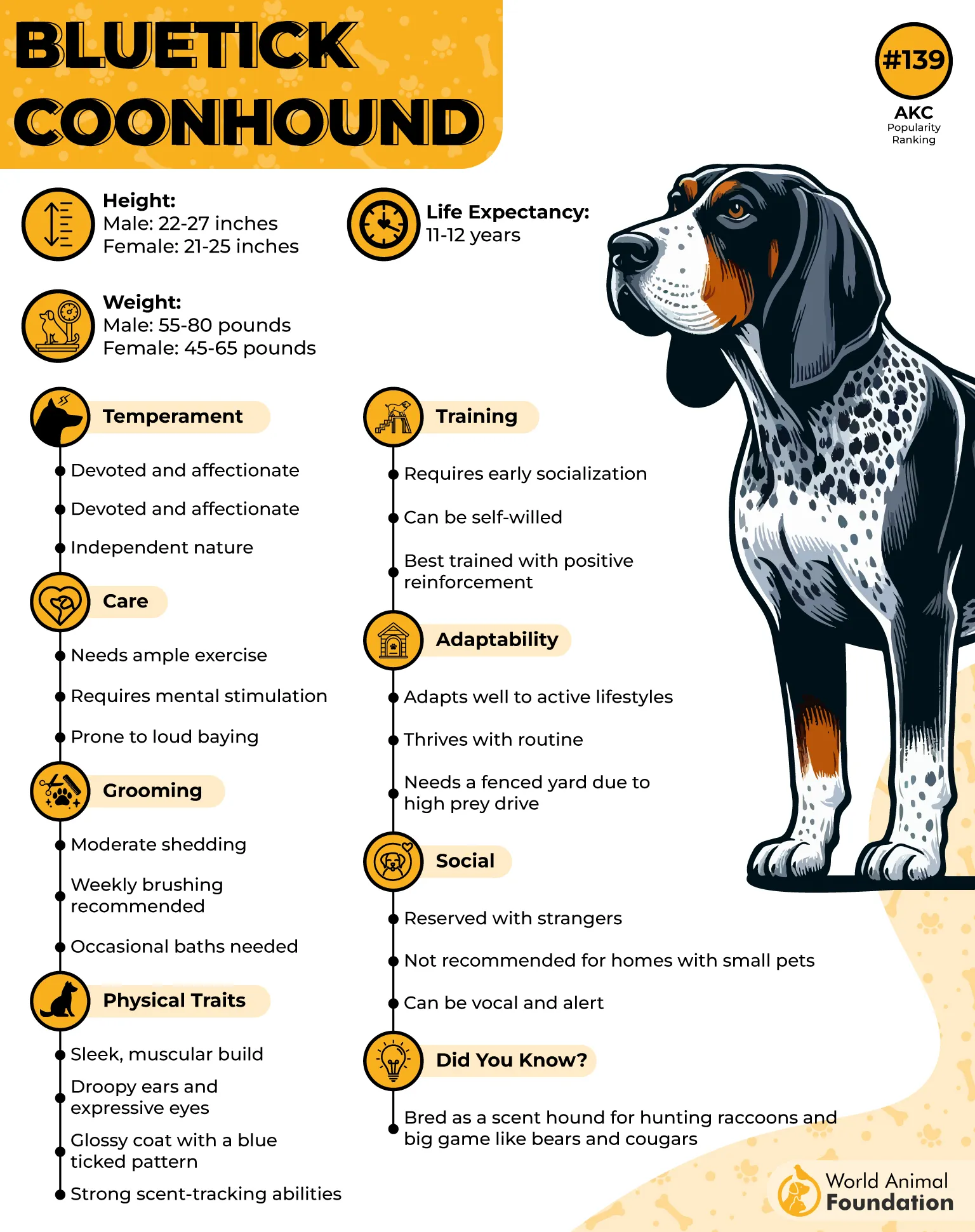
The breed gets its name from its distinctive blue-ticked coat, which appears bluish from a distance due to black and white fur patterns. Bluetick Coonhounds are highly energetic, strong, and resilient, with great stamina for long hunts. They are known for baying loudly to indicate a trail has been found, helping hunters follow the dog’s progress.
Blueticks are intelligent, loyal, and eager to please, which makes them responsive to consistent training with positive reinforcement. Their short coat is easy to maintain, requiring weekly brushing and occasional grooming to stay in good condition.
Conclusion
The above-mentioned dog breeds help you in hunting big game and recovering the upland game you shot and lost. The Basset Hound and the Bloodhound have the best scenting abilities to even detect minute trails. While others have the stamina and endurance to catch them in minutes.
They all require special training due to their stubborn and independent nature. The nose that helps hunters and law enforcement sometimes puts them in trouble, especially when at home.
However, all of these blood tracking dogs differ in temperament, groominga nd exercise needs, so search carefully to find a dog you resonate with.
