




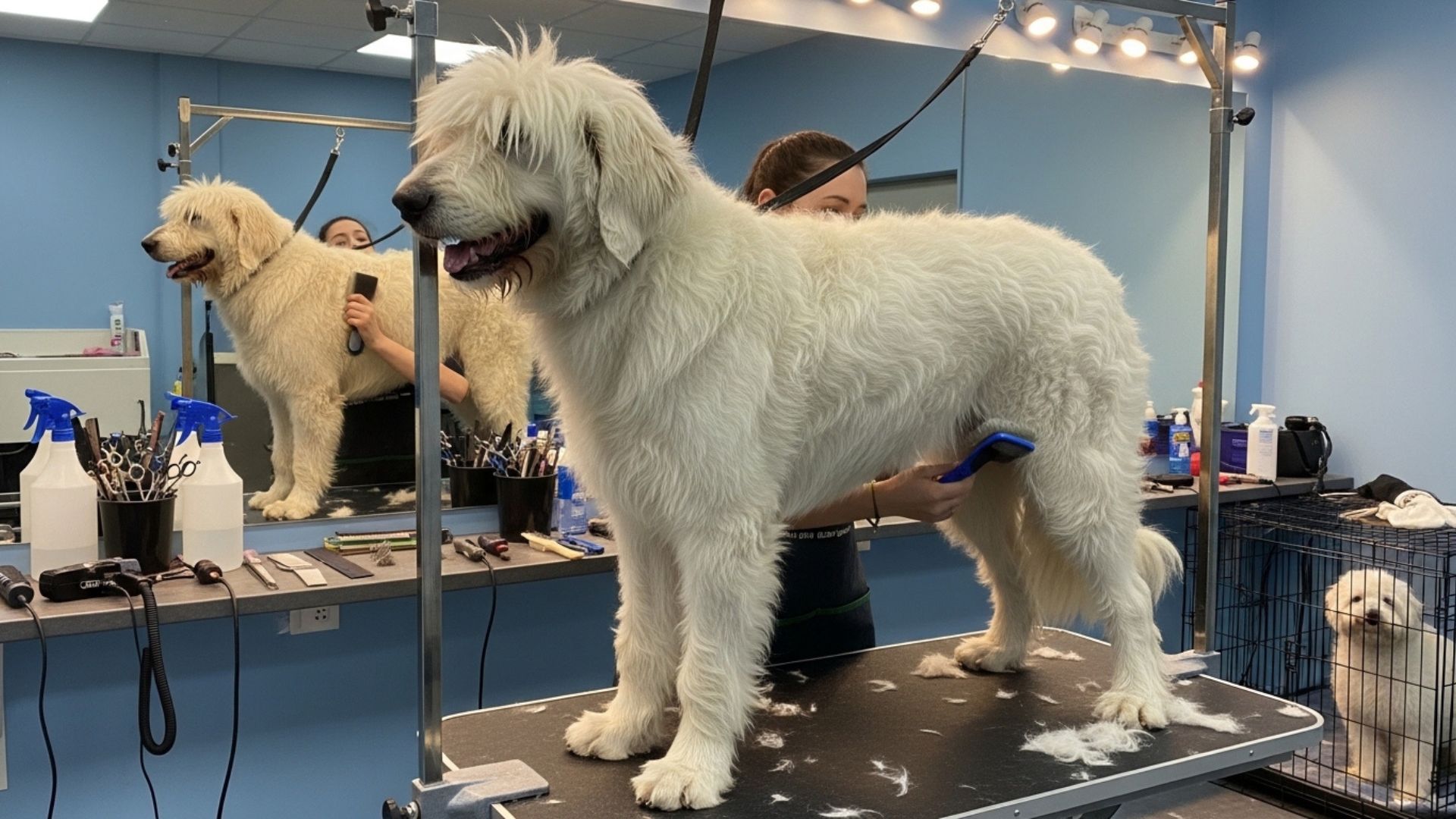
Some dogs you adopt. Some dogs you commission.
Because you think about certain dog breeds that require regular grooming, but NAH! They need regular brushing, a schedule, a budget line, a professional groomer on speed dial, and a genuine emotional attachment to a coat.
And nobody tells you this before you bring one dog home. You see the gorgeous flowing coat, the perfect curls, the impossible silky fur in the photos.
Then week #1 happens. And you learn.
Grooming needs are NOT optional for these breeds. It is not a nice-to-have.
For dogs on this list, proper coat care is directly related to overall health. Because matted fur causes skin irritations, trapped moisture breeds bacteria, and neglected coats become painful.
That gorgeous exterior demands a real commitment.
These are ten dog breeds with specialized grooming needs you should know.
Dog Breeds with Specialized Grooming Needs You Should Know
1. Afghan Hound
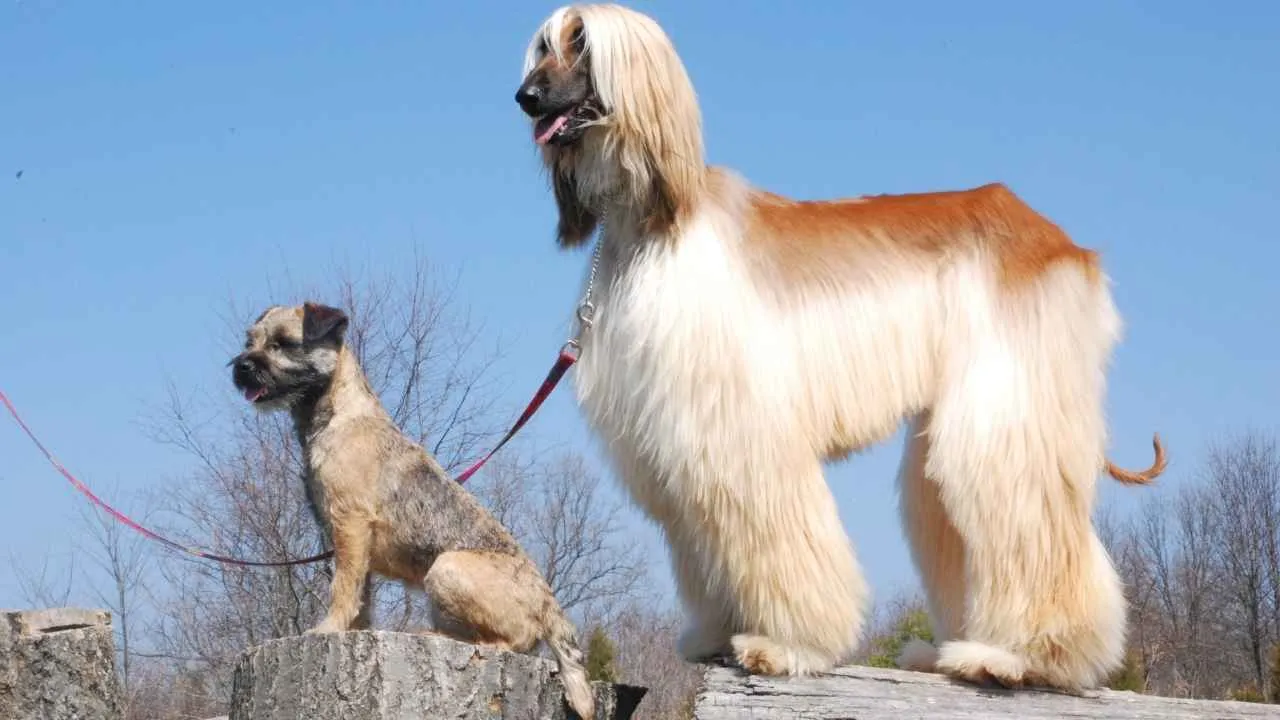
The Afghan Hound is not a dog but a grooming commitment that also happens to be a dog.
That long and silky coat, floor-length, flowing, impossibly glamorous. These hound dogs need more dedicated grooming services than most dogs will ever need in their life.
Daily brushing is non-negotiable.
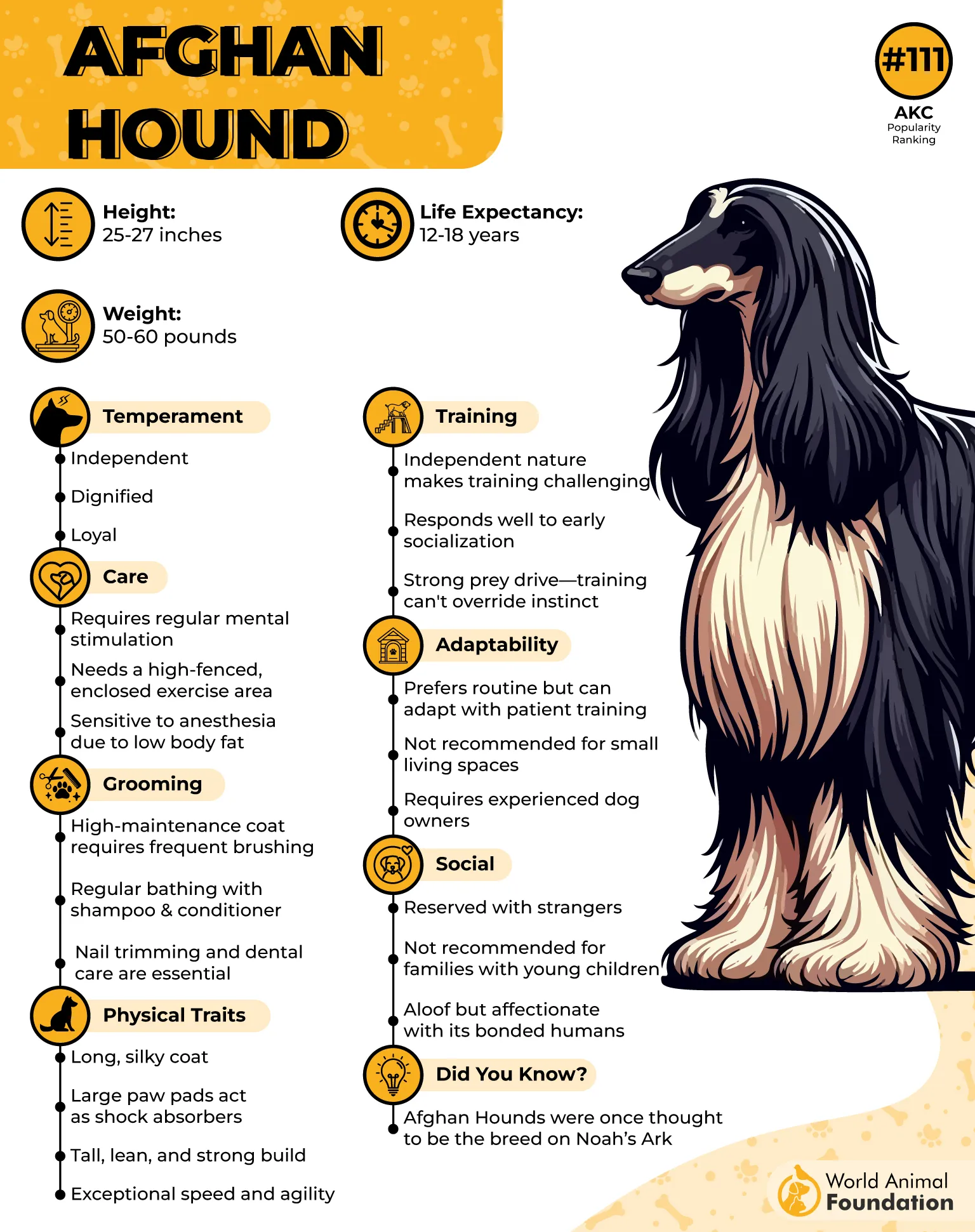
Skip two days, and you will find tangles forming in the fine coat that take a serious amount of time to work through. Skip a week, and the coat cleaning situation becomes a project.
The hair of Afghan Hounds continuously grows and needs regular bathing, every one to two weeks. It also needs conditioning treatments to keep natural oils distributed and the coat healthy.
A professional groomer familiar with this specific breed is not a luxury, but rather infrastructure. Slicker brushes, wide-tooth combs, and detangling sprays are the right tools and are not optional with this breed.
The payoff is one of the most breathtaking dogs alive. But the grooming requirements are real and non-negotiable.
Go in knowing that!!
2. Miniature Poodle
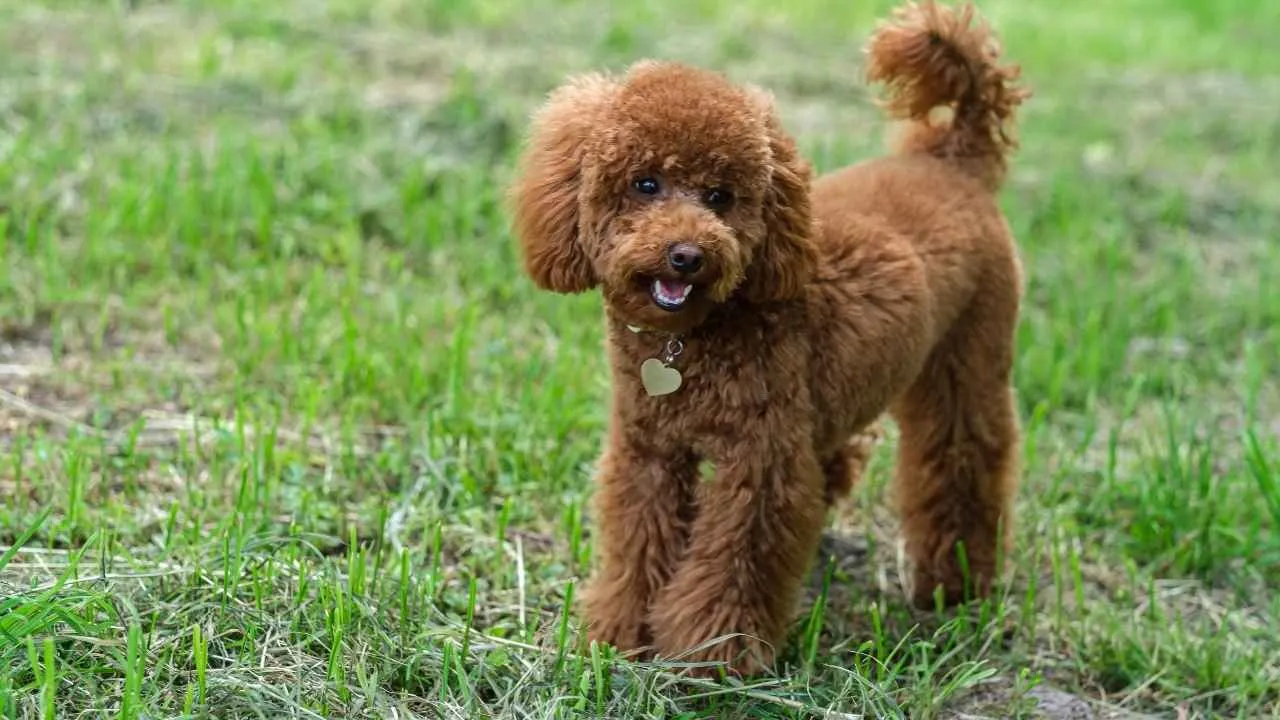
The Miniature Poodle’s coat type does something unusual. It does not shed, but just keeps growing.
Continuously growing hair that never falls out means it has nowhere to go except longer, denser an more tangled without intervention.
That curly coat of the Poodle breed traps everything: debris, loose hair, and moisture. And, it turns into matted fur fast without consistent grooming.
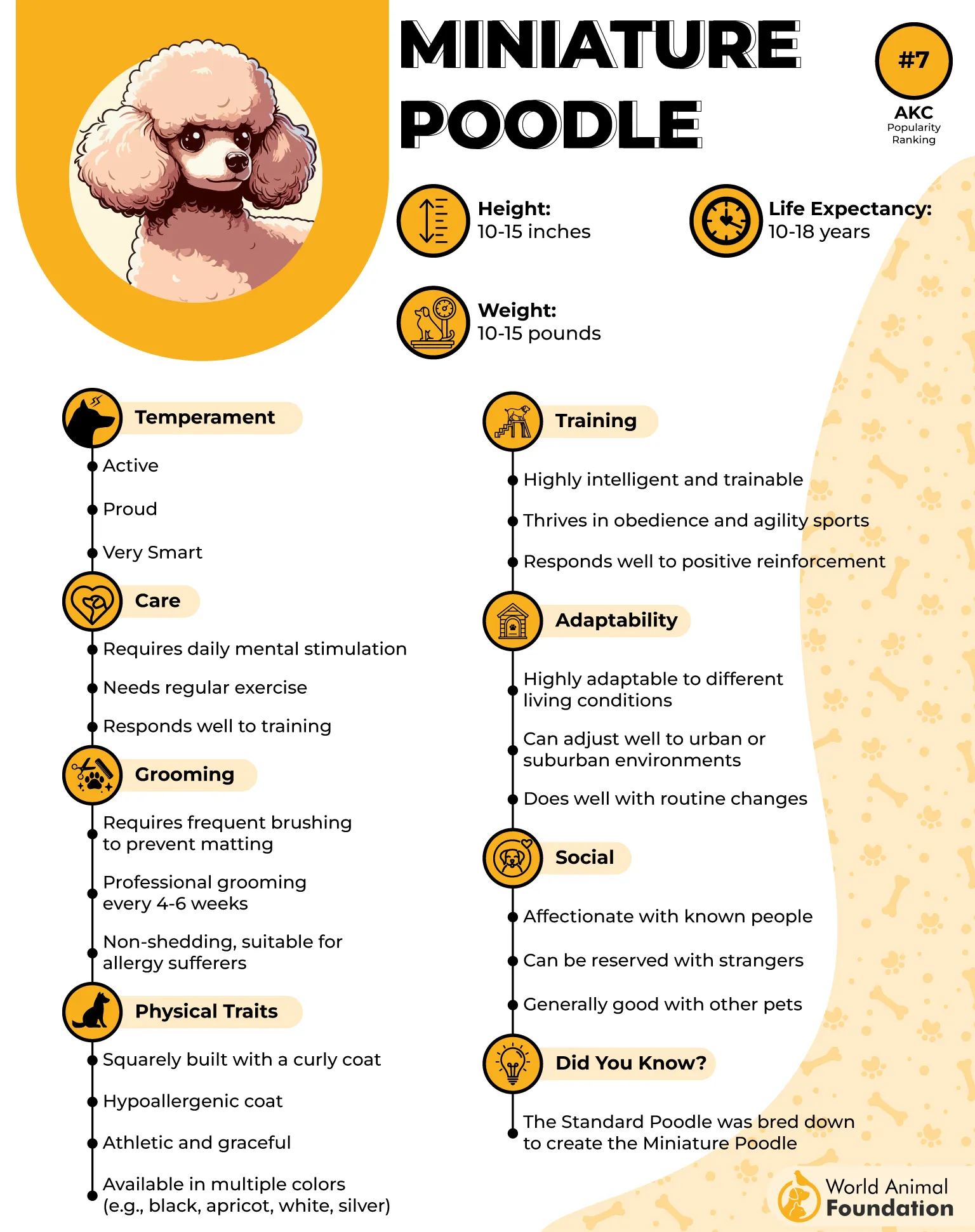
Miniature Poodles need professional grooming services every 4 to 6 weeks, minimum. Between appointments, weekly brushing at home prevents tangles from getting into mats and tangles that require professional intervention to fix.
The curly coat needs a specific grooming pattern, such as a clip style maintained regularly. The classic cut is not vanity, but coat management.
Ear cleaning is also important with this breed. Those curly and floppy ears trap moisture and debris against the ear canal. That makes ear maintenance a real part of the grooming routine.
The coat type is genuinely beautiful and low-shedding, but it costs you in grooming sessions.
3. Komondor
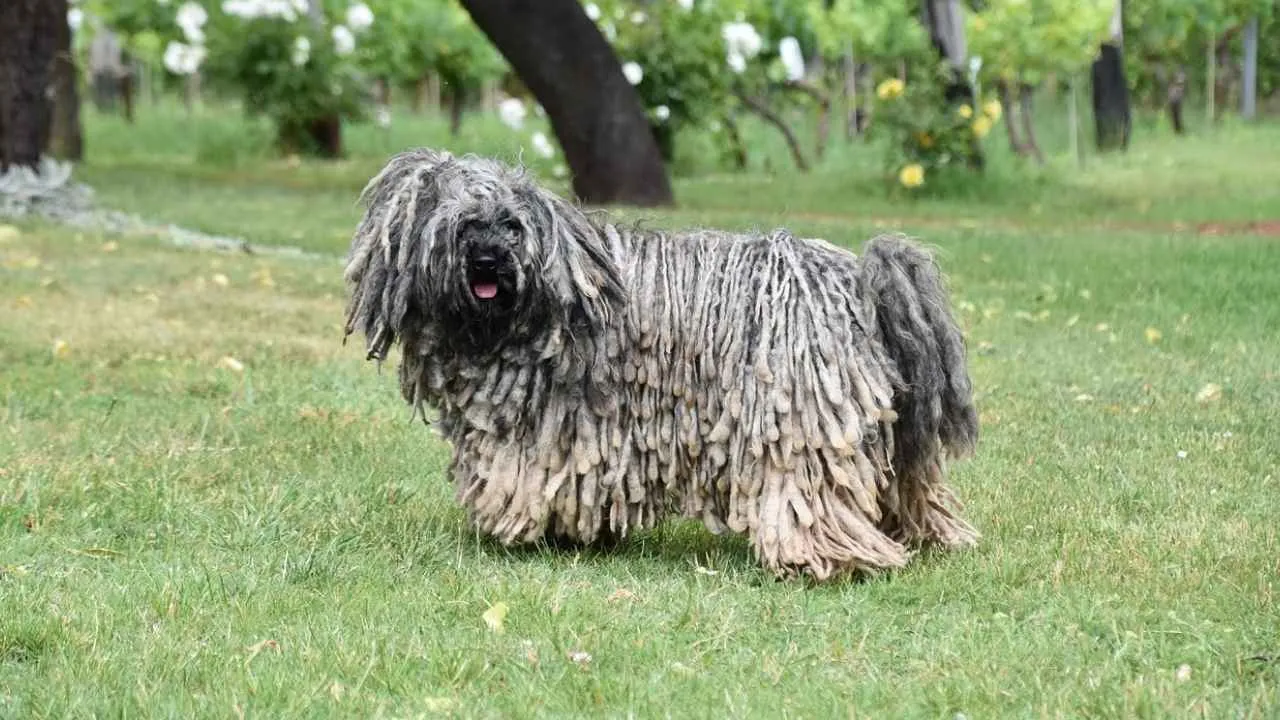
The Komondor does not get brushed.
The Komondor gets its cords separated.
That iconic corded coat, which looks like a walking mop and serves as historical armor against wolf bites, forms naturally as these herding dogs mature.
But “naturally” does not mean “without help”.
Each cord needs to be manually separated by hand regularly to prevent the whole coat from matting into one skin-damaging mass. You should never brush their corded hair, but try to bathe them if things get out of hand.
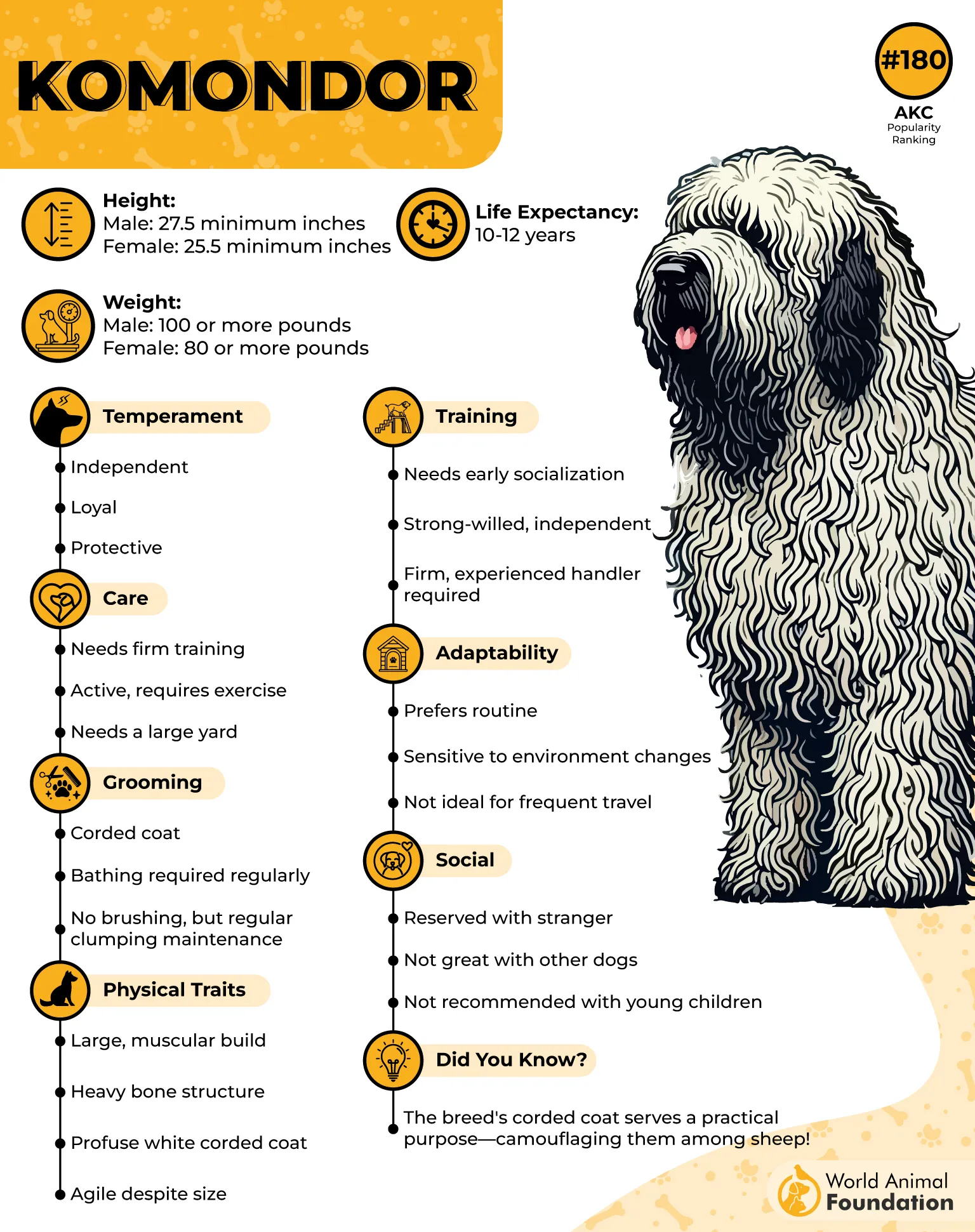
This is probably the most unique grooming situation in the entire dog world. No slicker brushes, no professional grooming sessions in the traditional sense.
You need to be patient and work on regular hand-separation of each cord from root to tip to keep their coat clean and healthy.
Bathing a Komondor is a full-day event. That coat takes hours to dry completely, and a damp coat left unattended breeds exactly the kind of skin irritations you are trying to avoid.
Specialized care does not begin to cover it.
4. Bichon Frise
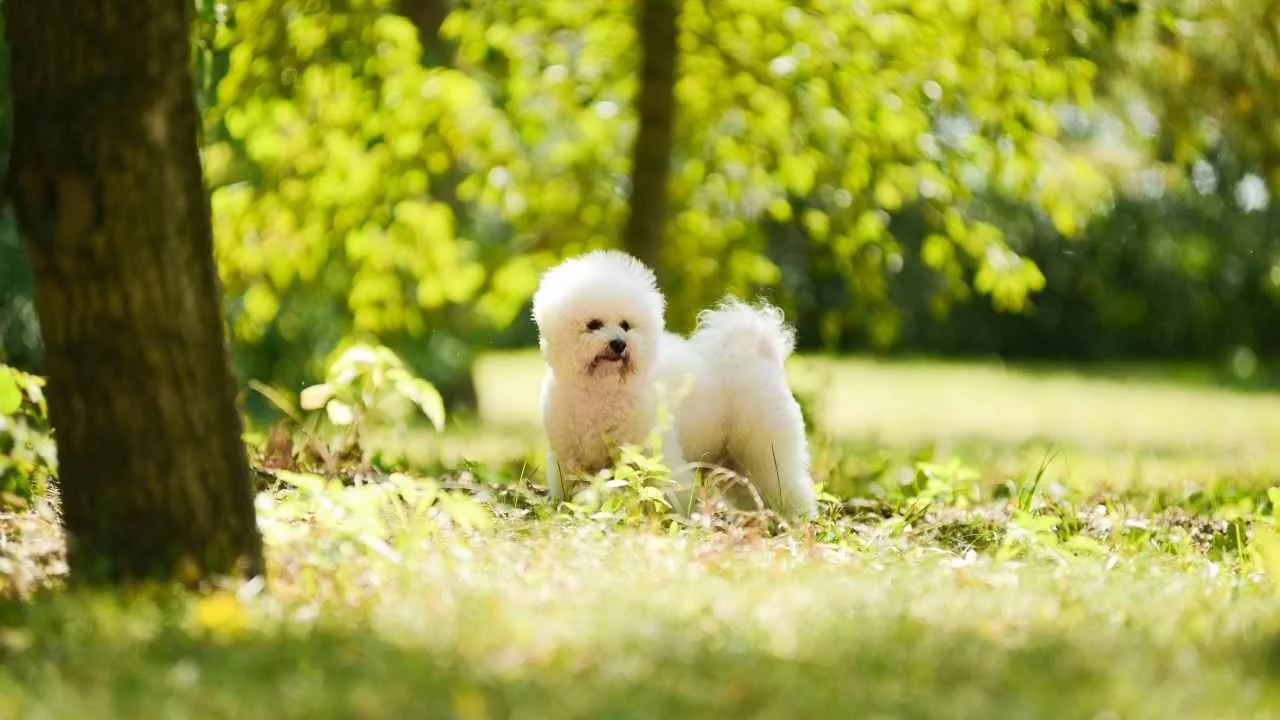
The Bichon Frise has a curly coat that looks effortless and is absolutely not.
That powder-puff perfection requires regular brushing to prevent matting and keep the curly fur clean at the roots. Matting is painful and difficult to remove once established.
The coat maintenance cycle with these beautiful white dogs with beautiful coats is constant.
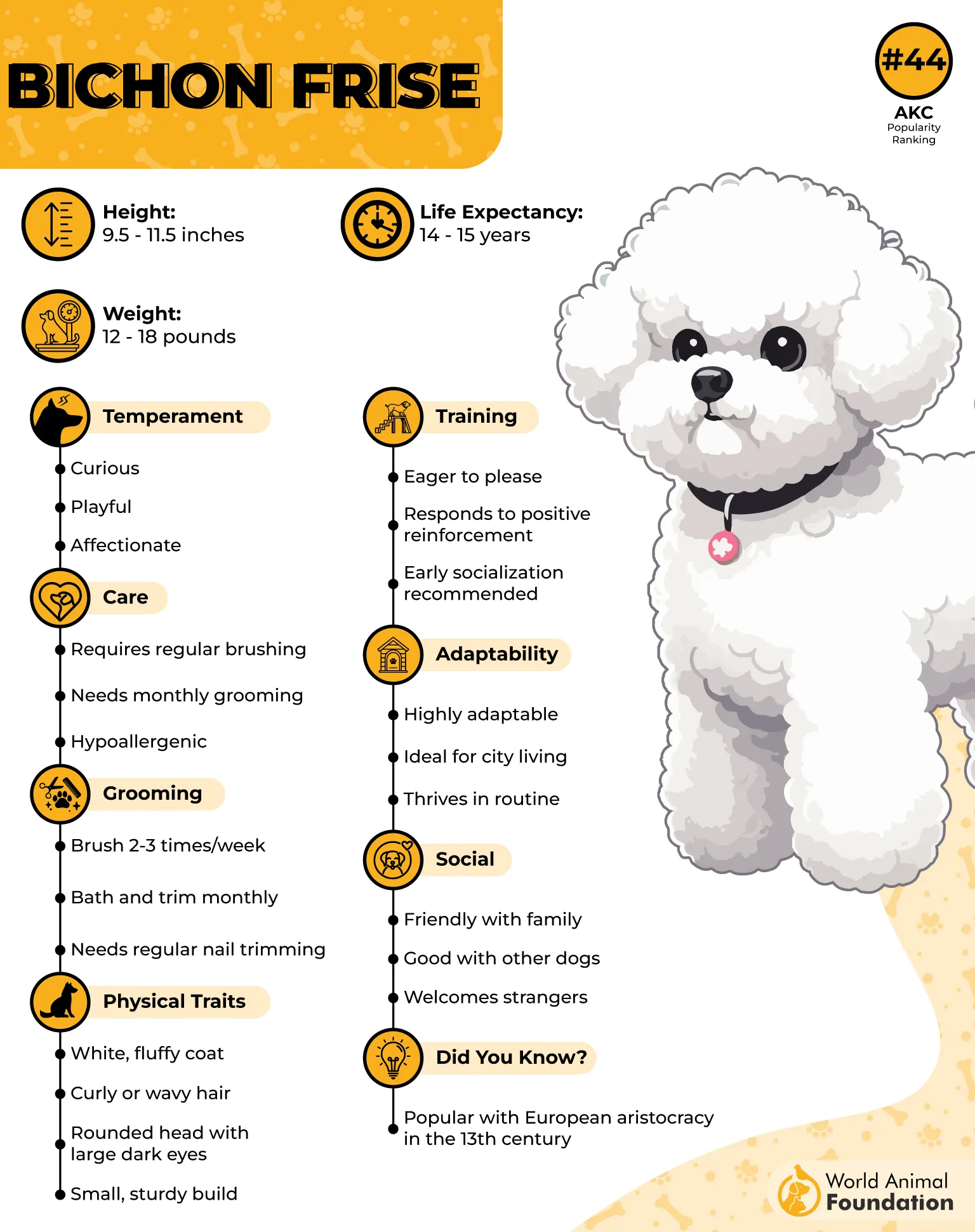
Professional grooming every 4 to 6 weeks keeps the Bichon coat type at its best and maintains the shape that makes this dog recognizable.
Between visits, daily brushing with proper slicker brushes is the difference between a fluffy companion and a grooming emergency.
Regular bathing, every two to four weeks, keeps the white coat bright and skin healthy.
The Bichon Frise is worth every minute of it. Just budget for it, honestly.
5. Portuguese Water Dog
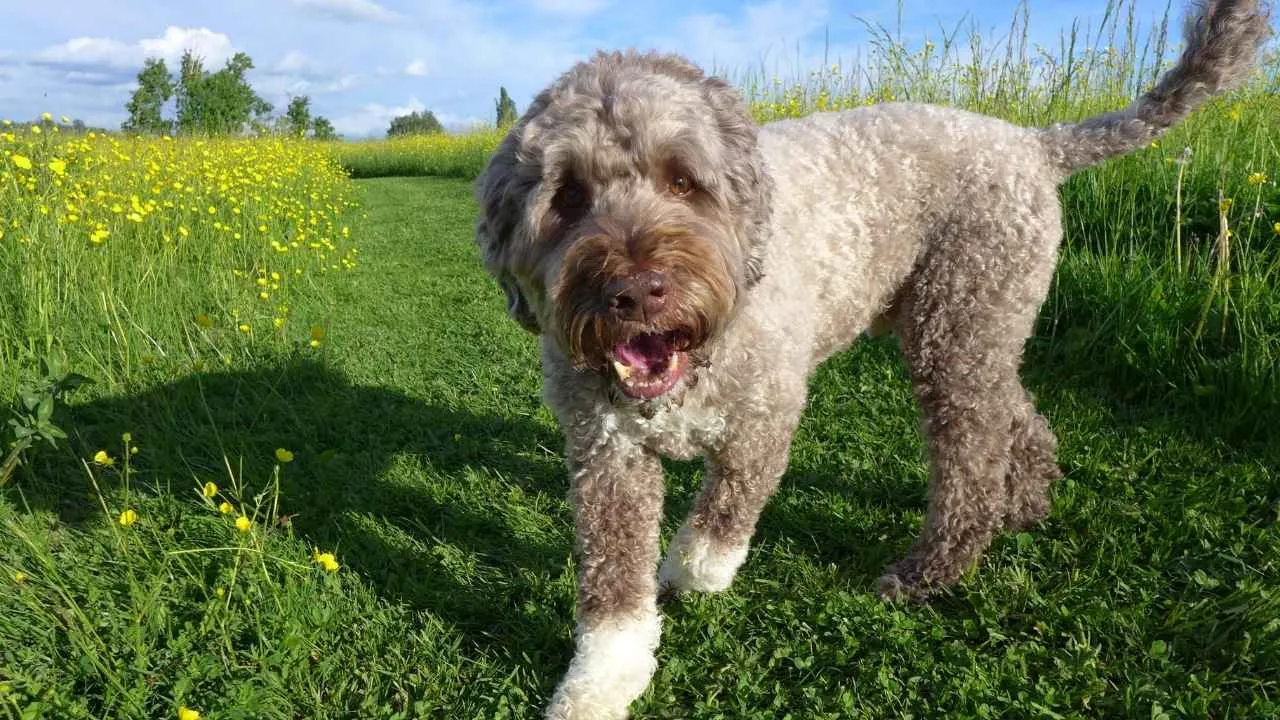
The Portuguese Water Dog has a coat that is made for water, and it means it’s built to hold everything water-related.
That dense coat was made to insulate against cold Atlantic waters when these dogs work alongside fishermen. Functionally, that is brilliant. Grooming-wise, demanding. As per PetMD, that curly coat has “voluminous curls and waves”. Plus, that curly fur traps debris, salt, and moisture against the skin in a way that requires frequent grooming to manage.
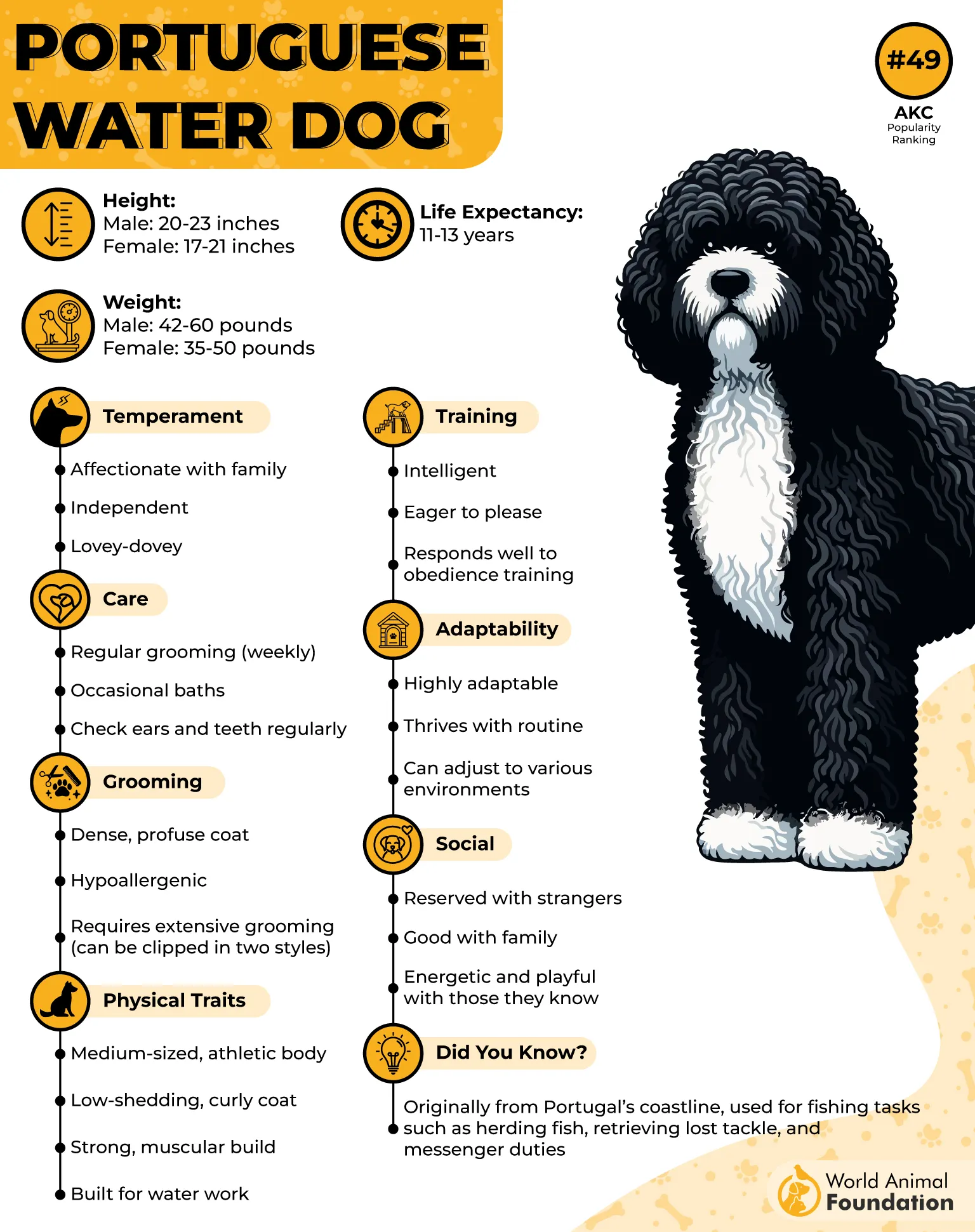
These water dogs need professional grooming every 6 to 8 weeks. And, you should go for weekly brushing at home to prevent tangles between sessions.
There are two traditional clips for this breed, the lion clip and retriever clip. You need a professional groomer who knows the breed-specific requirements.
Regular bathing keeps their coat clean and skin free from irritation and skin folds.
An underappreciated grooming need with this breed is nail trimming. Active water dogs wear nails differently from land breeds, and keeping them maintained is important for their well-being.
6. Puli
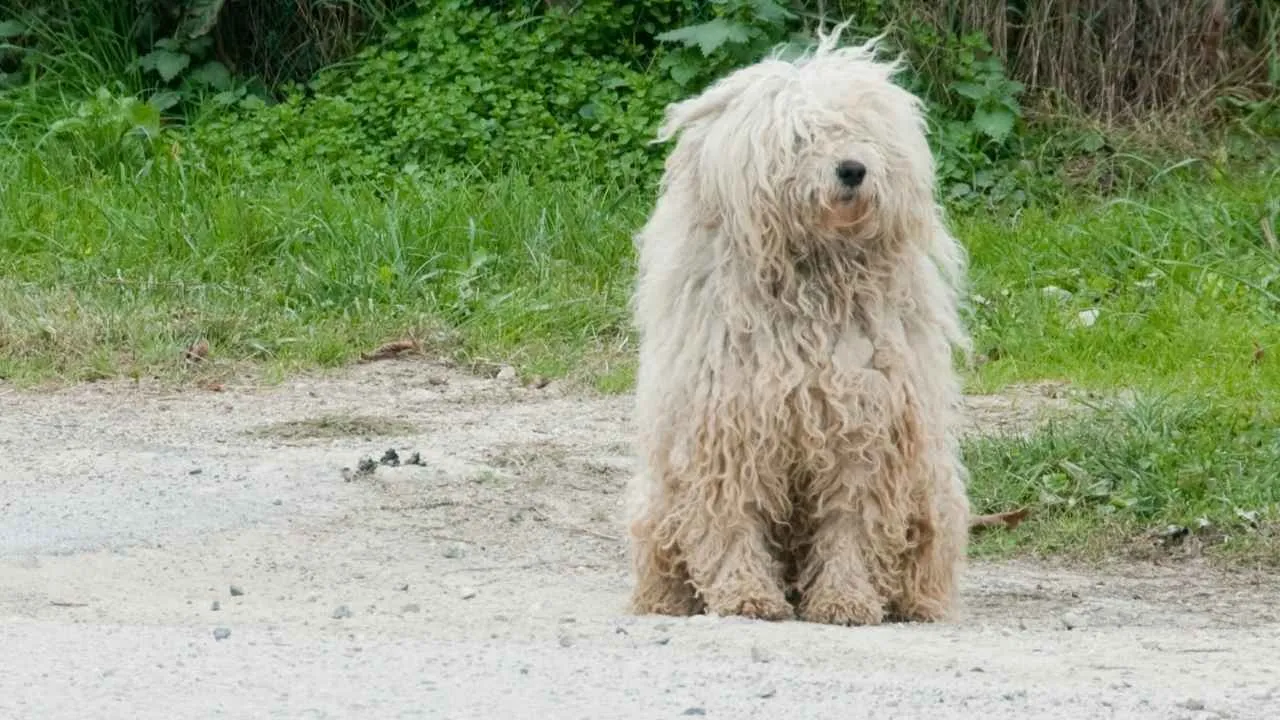
The Hungarian Puli and Komondor are both corded breeds, but the Puli’s cords are finer, more numerous, and form faster.
It somehow makes the whole situation even more involved.
A young Puli’s coat starts as wavy and progresses into cords naturally around age one, and keeps on growing and maturing around age three, as mentioned by Purina. That transition period needs the most attention.
Regular separation of forming cords prevents the coat from matting into clumps rather than strands.
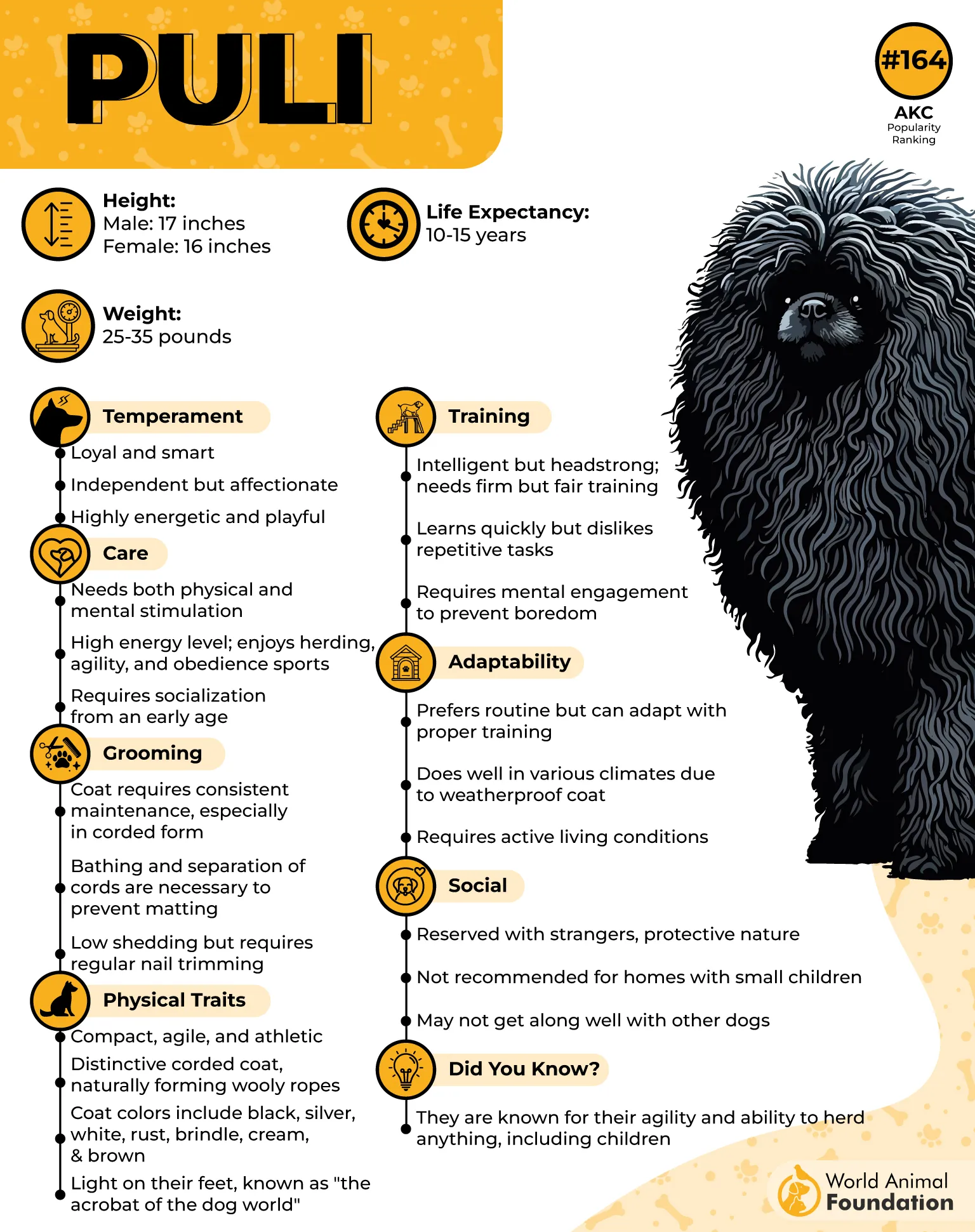
Like the Komondor, brushing is not part of the Puli routine. Cord maintenance is.
Keeping each cord separated, keeping that coat clean through careful bathing (and long drying periods!) and monitoring the skin for irritations… YES, that is the Puli routine.
These are the high-maintenance breeds that require the most literal grooming tools to keep their coat fresh and clean.
7. Maltese
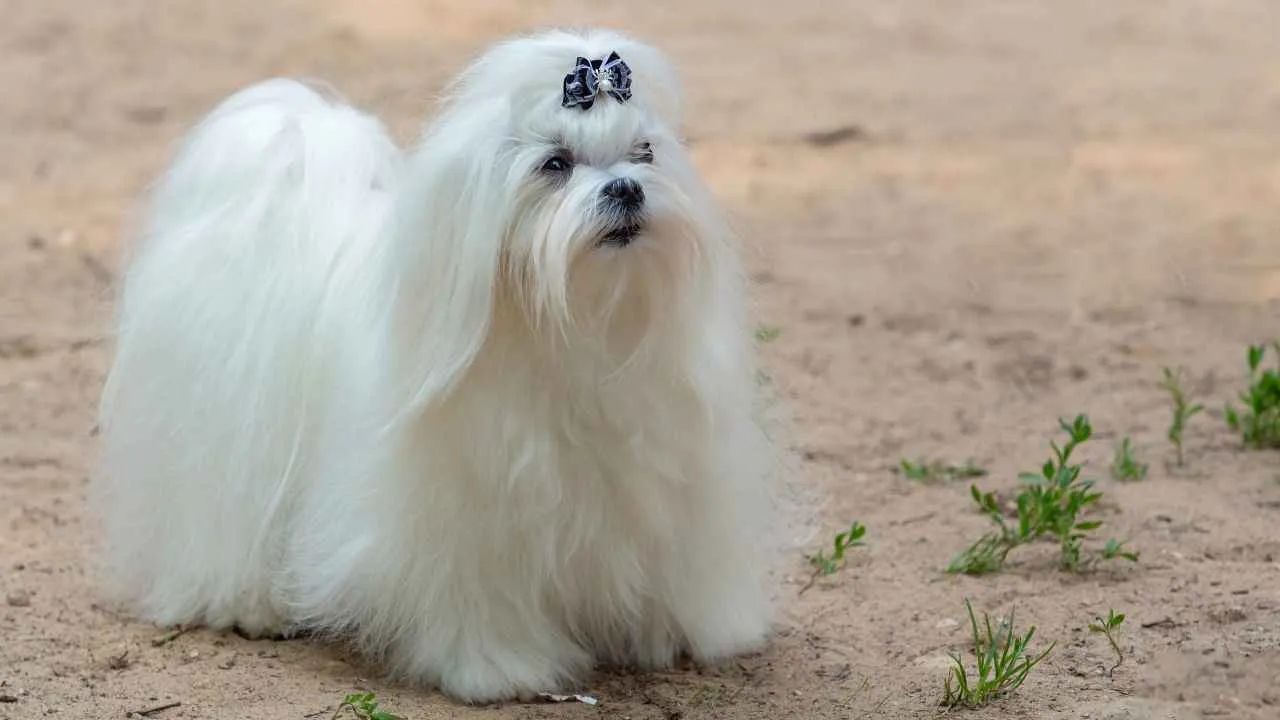
The Maltese carries one of the most deceptively demanding coats in the dog world.
One of the long-haired breeds, Maltese have a long coat, a silky one, pure-white, floor-length, impossibly white in images. This is a single coat with no undercoat, which sounds easy. It’s not.
Single coats tangle, collect debris, and need to be prevented from matting; double coat breeds simply don’t need to be prevented at the same frequency. As per the American Kennel Club, “daily gentle brushing” would do.
Not weekly. Daily.
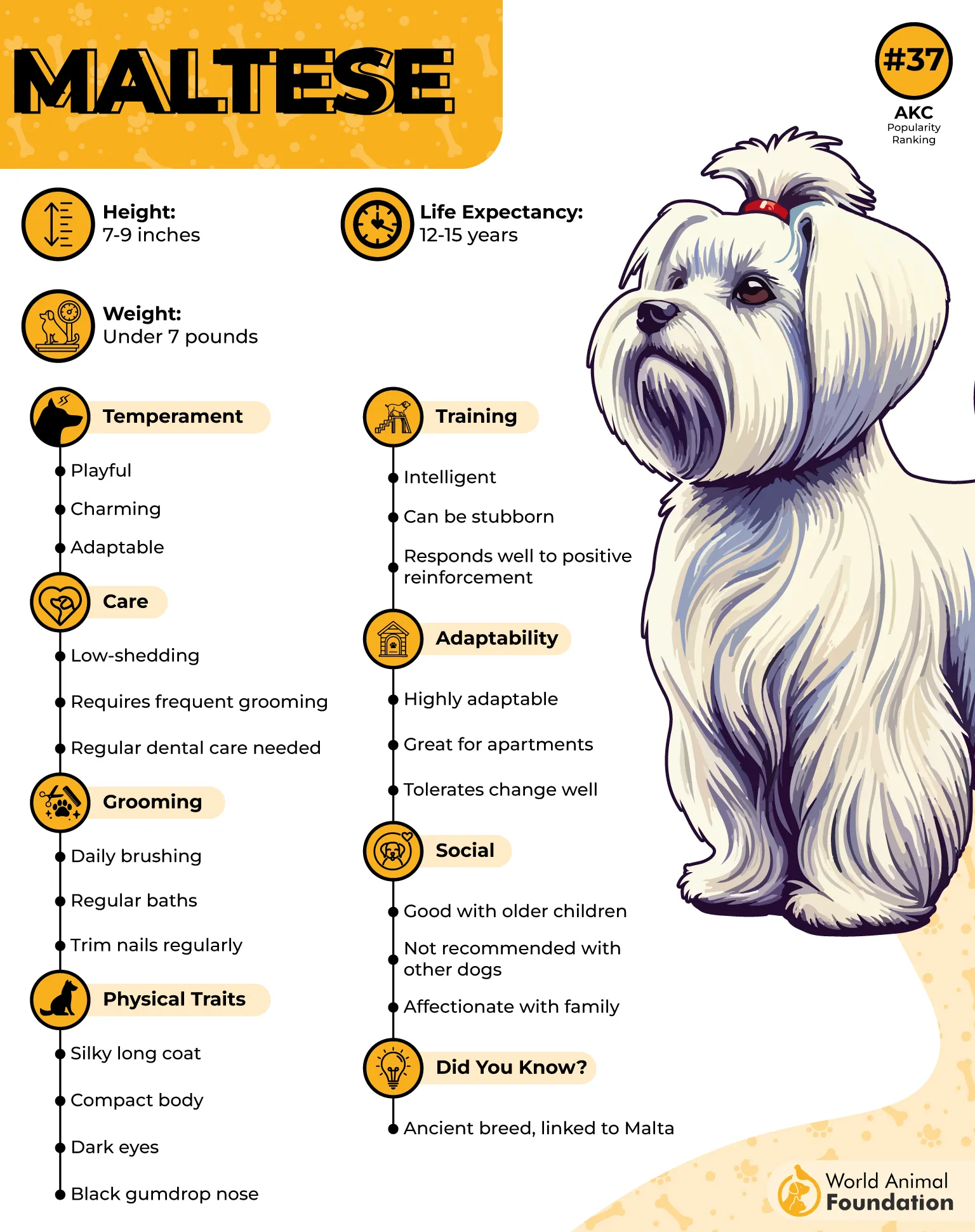
Using the right tools, a fine-tooth comb, and slicker brushes, working section by section will help prevent tangles at the roots that become painful mats.
Many owners and pet parents opt for a shorter trim that makes the coat manageable with less frequent brushing for these small white dogs.
Professional grooming sessions, every 6 to 8 weeks, ear cleaning, and regular bathing round out a grooming routine that this beautiful furry friend needs.
8. Shih Tzu
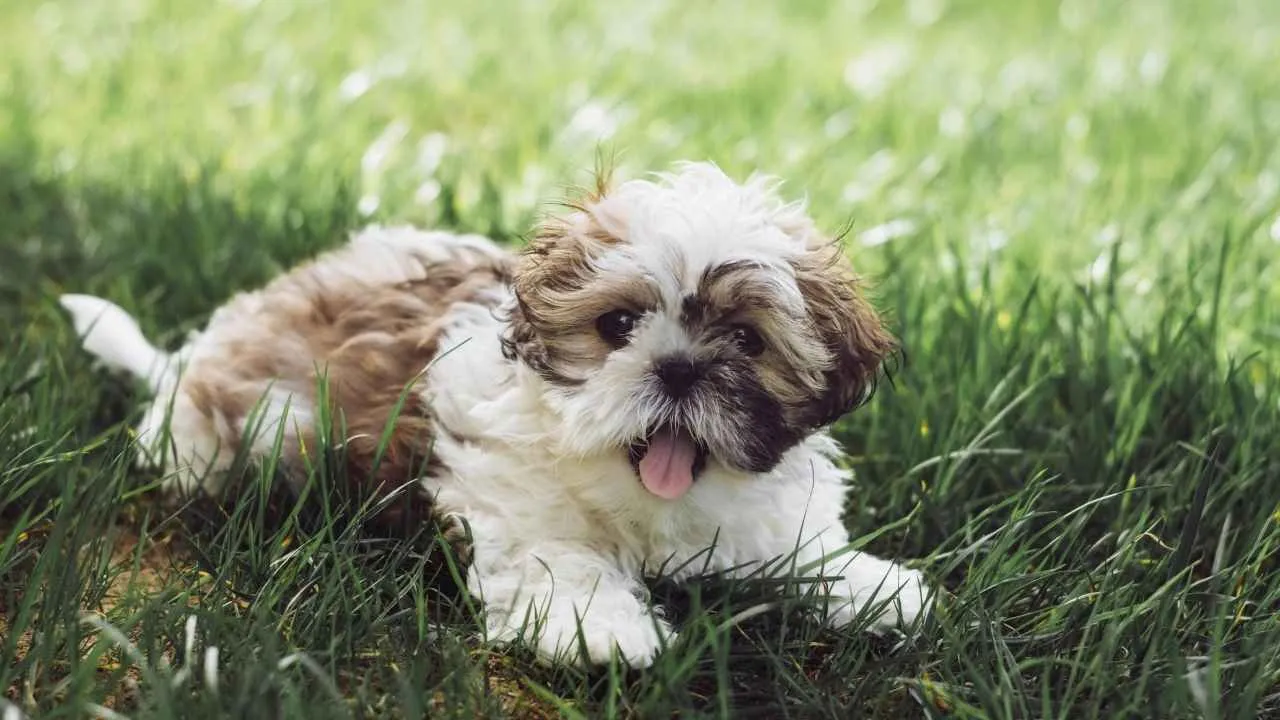
The Shih Tzu has a double coat, and this dog’s coat grows continuously, trapping shed hair inside rather than releasing it. It sounds like a shedding solution, but it is actually a grooming challenge for these Asian dogs.
That trapped hair becomes tangles. Tangles become mats. Mats become a professional grooming situation if you fall behind.
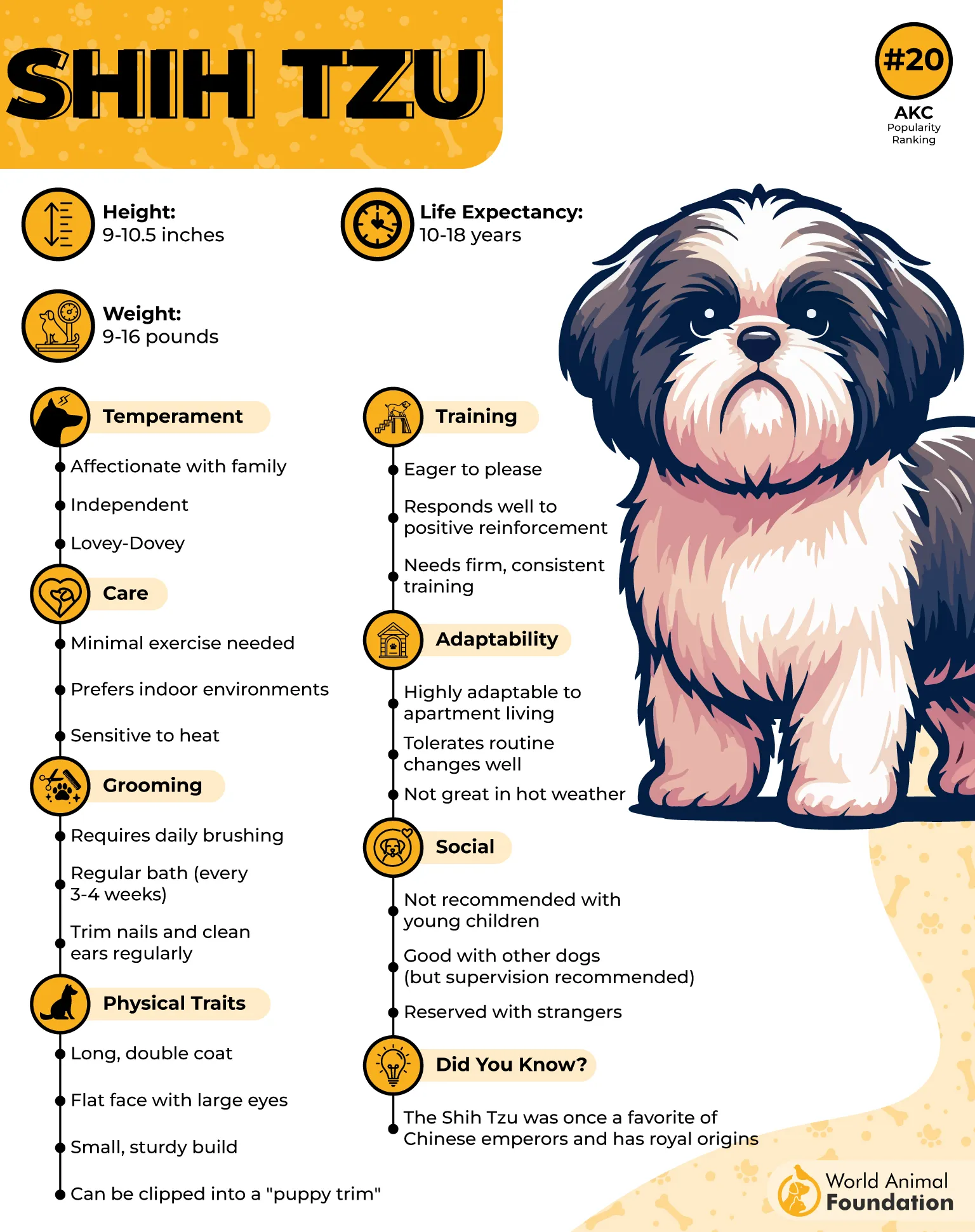
Shih Tzus in full coat need daily brushing. Every single day. It helps keep the inner coat clean of accumulated dead hair and prevents matting at the skin level.
The flowing coats on the show dogs deserve a daily time investment. For most pet parents, a puppy cut is the practical choice. A short tri, weekly brushing, and proper care.
Still a grooming commitment, just a manageable one.
9. Old English Sheepdog
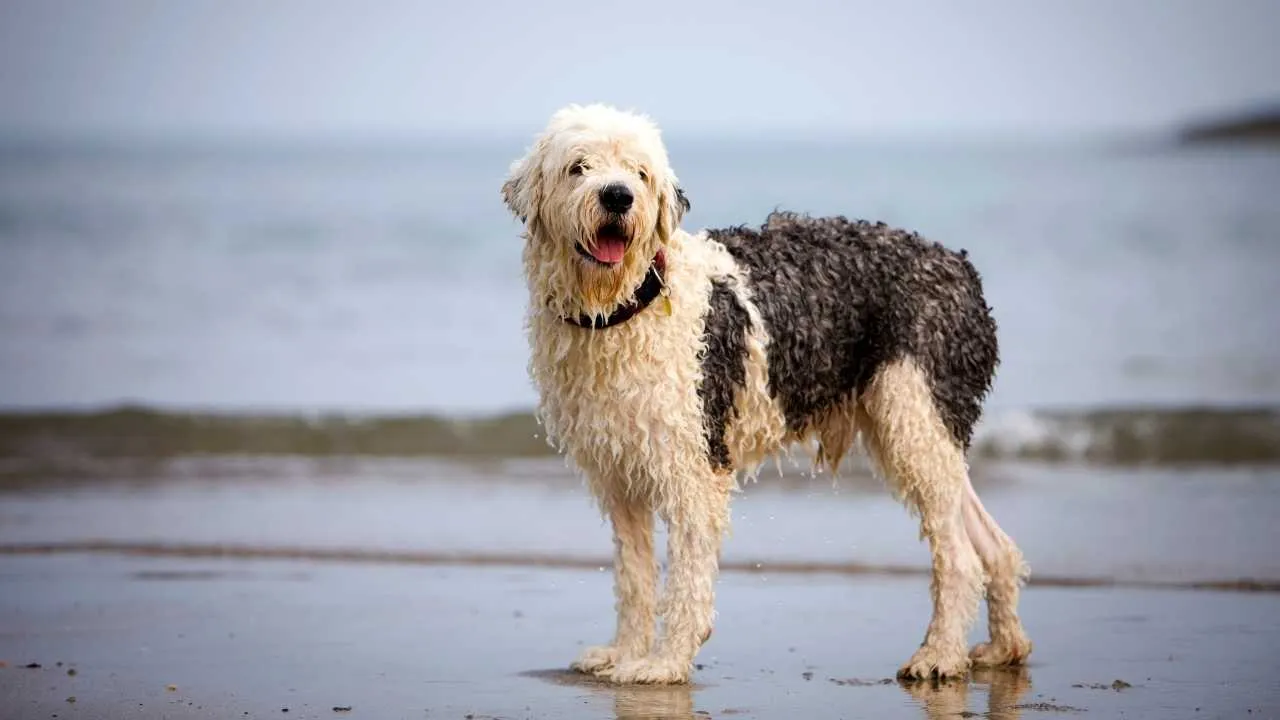
The Old English Sheepdog has a “profuse double coat” that could have its own zip code.
Dense, double, thick-layered, that shaggy exterior needs more volume of regular grooming than almost any dog breed alive. That is simply a lot of it.
Brushing an Old English Sheepdog in full coat takes time every single session. During shedding seasons, the dense undercoat blows out in qualities that make you reconsider your life or canine choices.
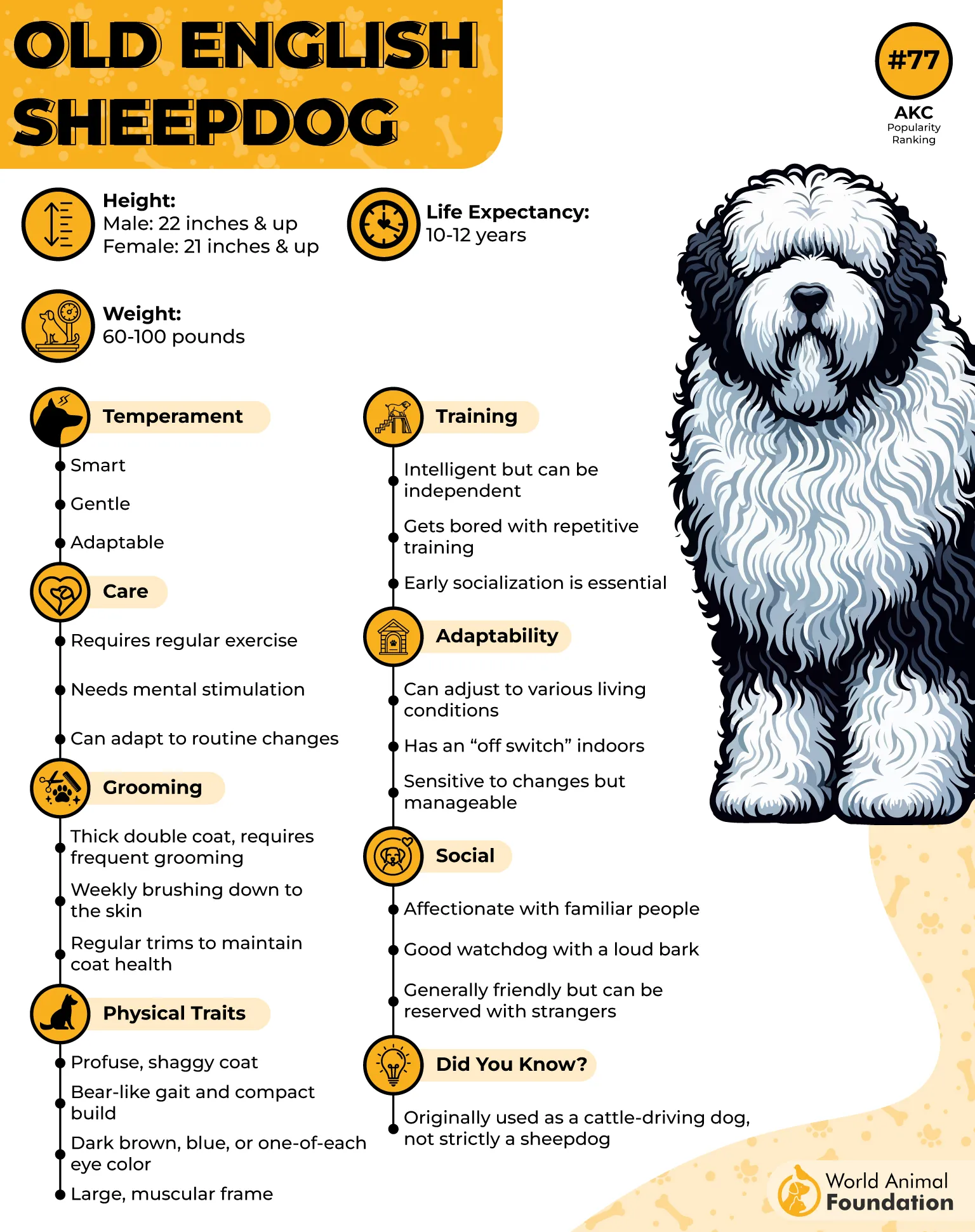
Daily brushing is recommended. Regular washing is even more recommended to prevent tangles, as per Britannica. The shaggy hair can obstruct the dog’s vision, so take care of that as well. Regular trimming can help here.
Professional sessions every 4-6 weeks keep the coat manageable and the dog comfortable.
Without consistent grooming, the Old English Sheepdog’s beautiful coat will become matted. To avoid tangles, never skip brushing and bathing.
The Old English Sheepdog needs grooming DEDICATION!!
10. Lhasa Apso
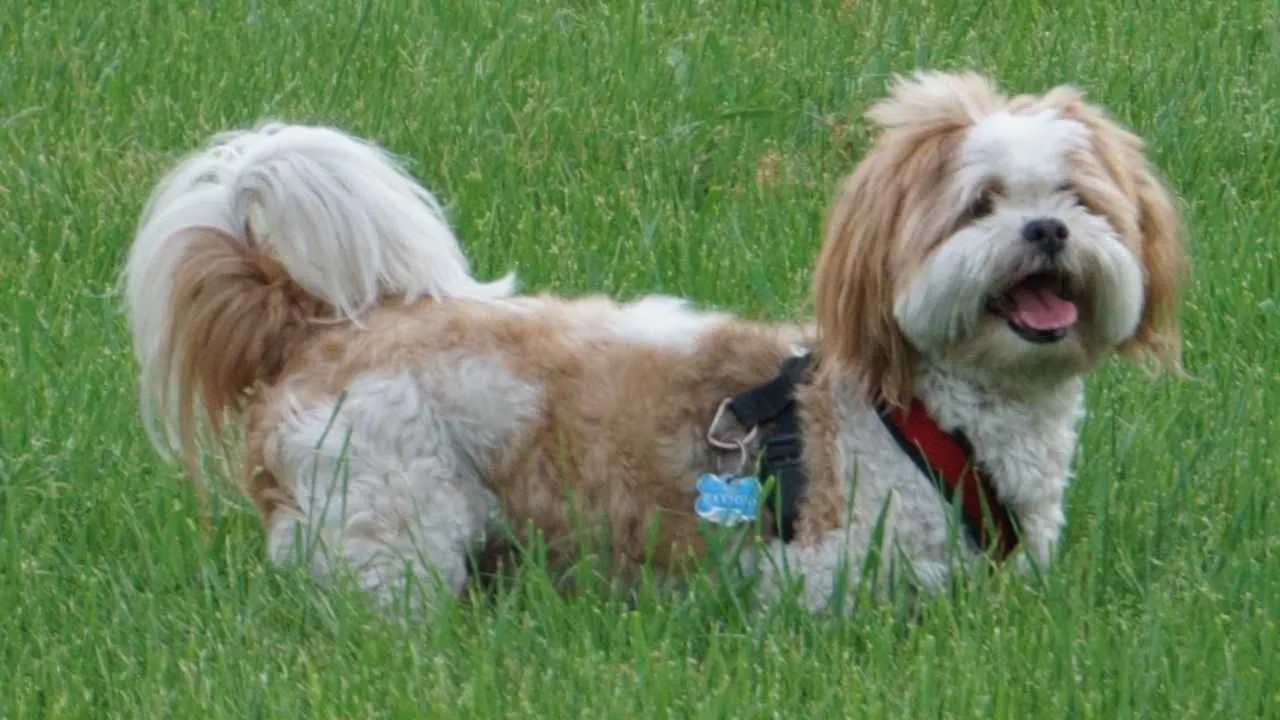
The Lhasa Apso was bred in Tibetan monasteries as a sentinel dog, and that history produced a coat for extreme conditions.
Long, dense, and hard-textured, the Lhasa Apso’s coat was built to protect against the Himalayan cold. And at home, this coat and these breeds require constant attention.
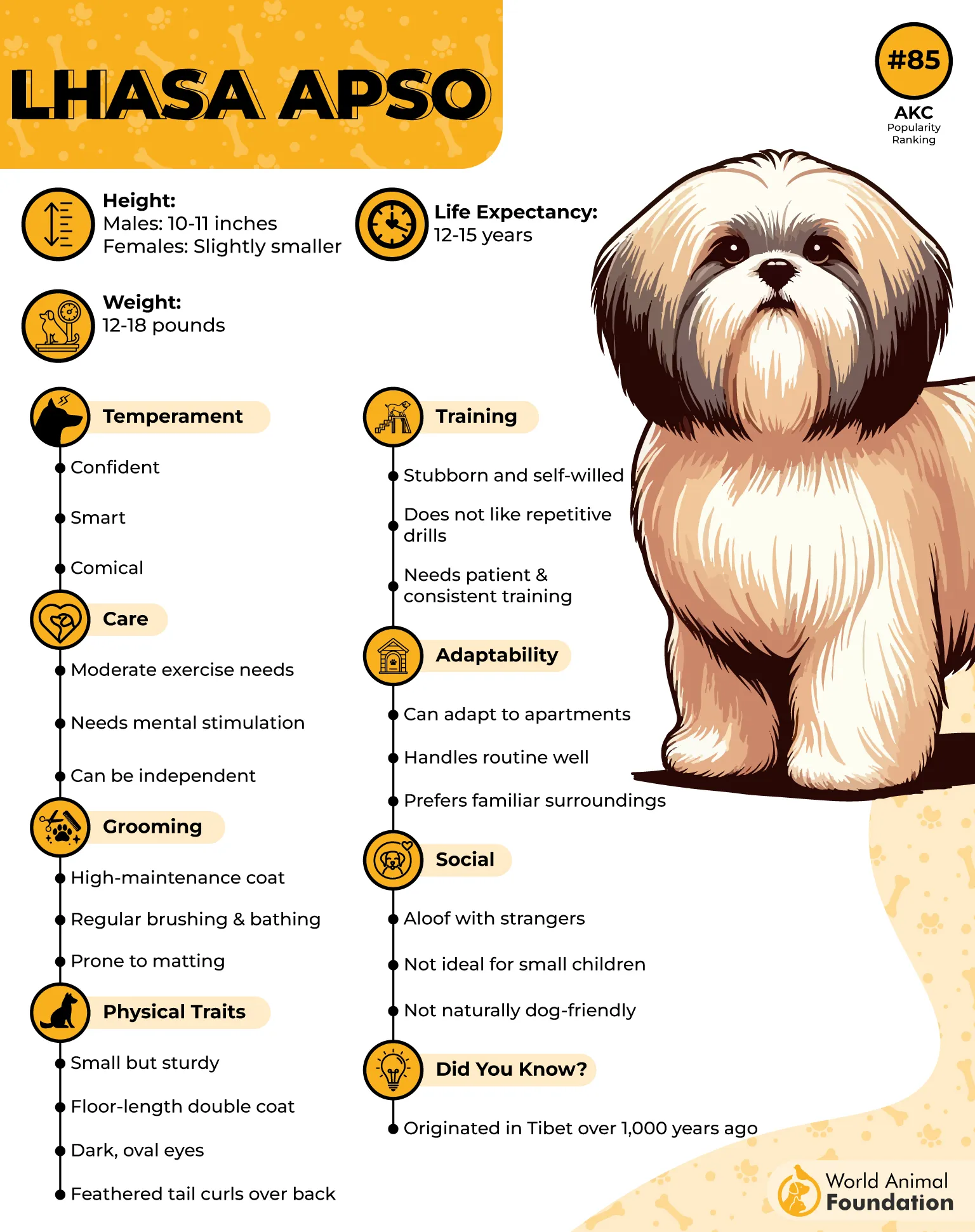
These bearded dogs have full coats that need daily brushing to prevent tangles in that dense, long coat. Regular bathing every 2-3 weeks keeps the coat clean and healthy.
Professional grooming sessions are also much-needed, every 6-8 weeks, to maintain the coat at a manageable length and remove buildup.
That distinctive Lhasa look, long, parted coat flowing to the floor, is stunning. But it is also high maintenance, like other breeds on this list.

Most pet parents keep them in a shorter trim. Practical, sensible, and kinder to your schedule.
These guard dogs won’t mind. They will still look MAGNIFICIENT!!
Conclusion
Gorgeous coats don’t maintain themselves.
These ten dog breeds that require special care are extraordinary animals. But they come with a grooming contract.
Regular grooming, daily brushing, bathing, washing, the right tools, and the time to use them. Basic care, yep!
Certain breeds like Cocker Spaniel, Siberian Husky, and Bernese Mountain dogs also need professional and extra grooming sessions. Probably, the long-haired dog breeds you haven’t thought much about.
Know what you are signing up for. Then, sign up anyway.
Because a well-groomed dog with a beautiful coat is WORTH every single brushstroke.
