




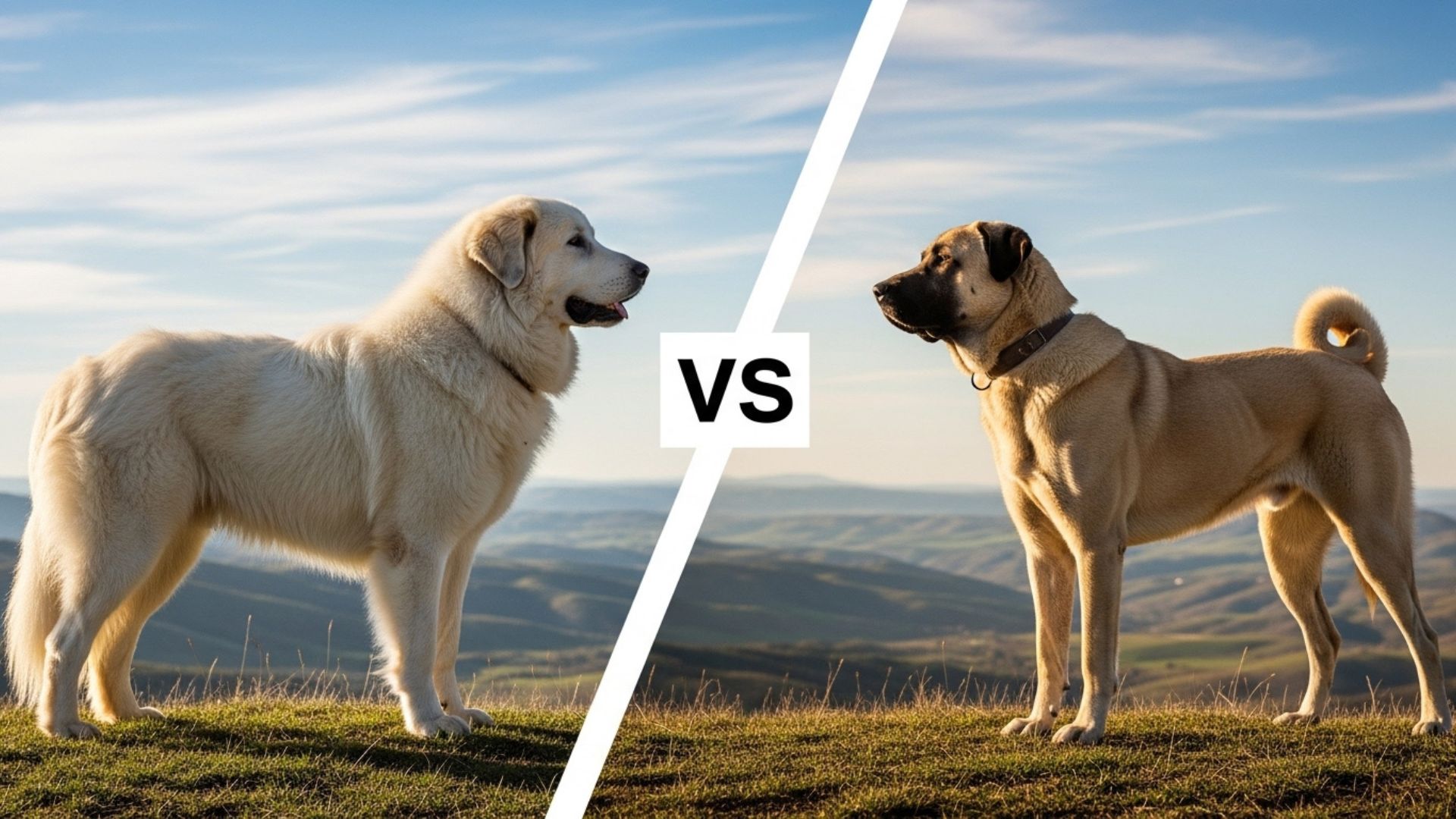
When it comes to legendary livestock guardians, few breeds command as much respect as the Great Pyrenees and the Anatolian Shepherd. Both are powerful, intelligent, and deeply loyal dogs with centuries of history protecting flocks in harsh environments.
The Great Pyrenees is often described as calm, gentle, and nurturing, especially with families and animals it considers part of its “flock.” In contrast, the Anatolian Shepherd is more independent, intensely protective, and highly alert, making decisions quickly and confidently without waiting for direction.
Choosing between these two breeds isn’t about which dog is better—it’s about which one fits your environment, experience level, and expectations. Both require space, commitment, and respect for their guardian instincts.
Here, we’ll take a closer look at Great Pyrenees vs. Anatolian Shepherd dog breeds, comparing temperament, training needs, guarding ability, and ideal living conditions to help you make an informed decision.
Great Pyrenees vs. Anatolian Shepherd Dog Breed: The Ultimate Showdown
Physical Features
Great Pyrenees
Imagine a snow-covered mountain, now make it fluffy, four-legged, and with a tail that could double as a small broom—voilà, the Great Pyrenees.
Size & Weight: 85–115 pounds
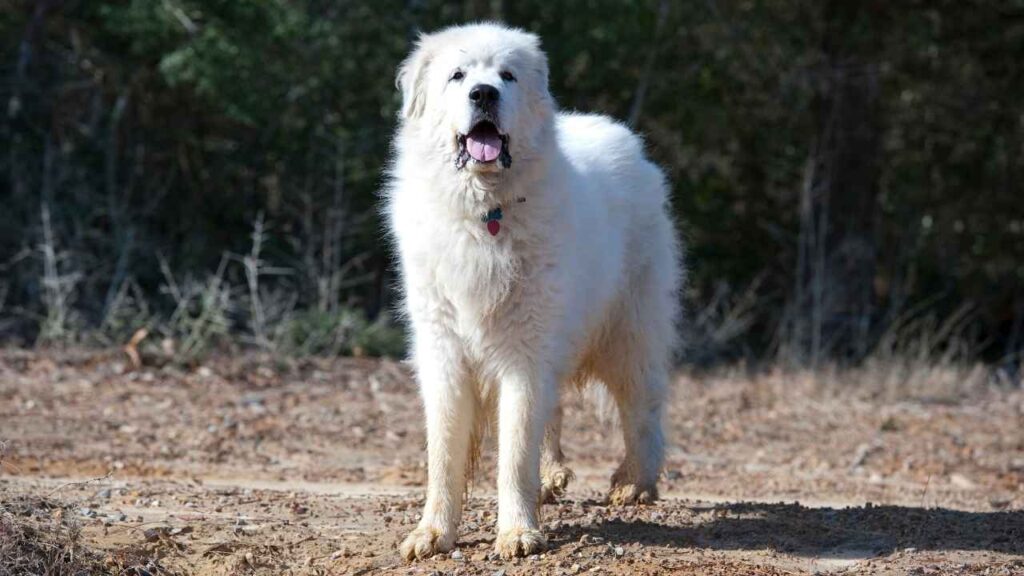
Their coat is thick, weatherproof, and usually snow-white, sometimes with patches of gray or tan—basically the canine equivalent of a cloud wearing armor. Their faces carry an expression of calm wisdom…until a squirrel crosses their path, and suddenly you’re in a full-scale fluffy fury.
Their ears are small and V-shaped, which keeps them cute but alert. Oh, and those big, soulful eyes? They make it impossible to say no when they look at you like you’ve personally betrayed them by leaving the room.
Anatolian Shepherd
Now meet the Anatolian Shepherd—the dog that looks like it walked off a medieval battlefield, ready to defend its flock (or your snacks) at all costs. These Turkish titans weigh in heavier than your average Great Pyrenees, with a build that’s muscular and imposing but still graceful.
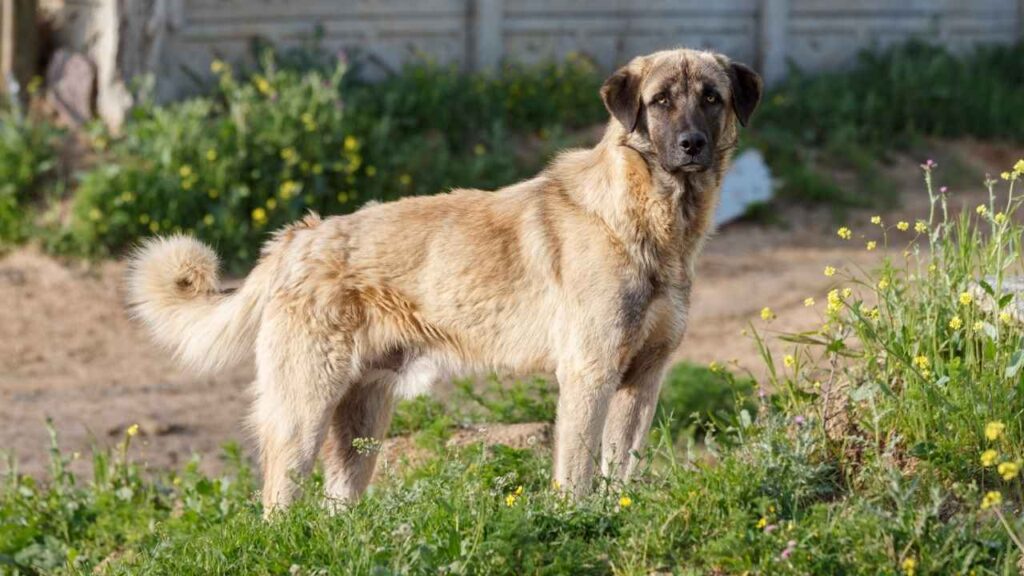
Size & Weight: 90–150 pounds
Their coat comes in fawn, brindle, or sometimes white with black masks—giving them that “I’m serious, don’t mess with me” vibe. Their ears are floppy yet strong, and their eyes have that piercing, calculating gaze, as if they’ve already strategized how to take over your backyard.
Anatolians are big, bold, and not just about brawn—they’ve got brains and independence, often thinking, “I’m in charge here, thanks.”
Speed & Strength
Great Pyrenees
Speed: Surprisingly nimble for their size, but mostly built for endurance, not sprinting. Think slow-motion mountain patrol rather than Olympic racing.
Strength: Strong enough to protect livestock from predators like coyotes or wolves; can easily knock over small furniture (or humans, if they’re overly enthusiastic).
Endurance: Incredible stamina—can wander and patrol rugged terrain all day without complaint.
Anatolian Shepherd
Speed: Faster than the Pyrenees when motivated; can cover ground quickly to defend flocks. They’re sprinters when danger approaches.
Strength: Extremely powerful, built like a tank; capable of fending off large predators with sheer muscle. According to the American Kennel Club (AKC), owners of Anatolian Shepherds need to be confident and capable leaders, able to manage a dog that is as assertive and challenging as he is gentle and affectionate.
Endurance: High stamina, used for long-range patrolling across vast pastures in Turkey.
Exercise & Energy Levels
Great Pyrenees
The Great Pyrenees is a laid-back mountain guardian at heart. They love to roam and patrol their “territory,” but don’t expect them to join you in a 5K race unless they’re feeling extra motivated. Think slow, purposeful power walks rather than nonstop zoomies.
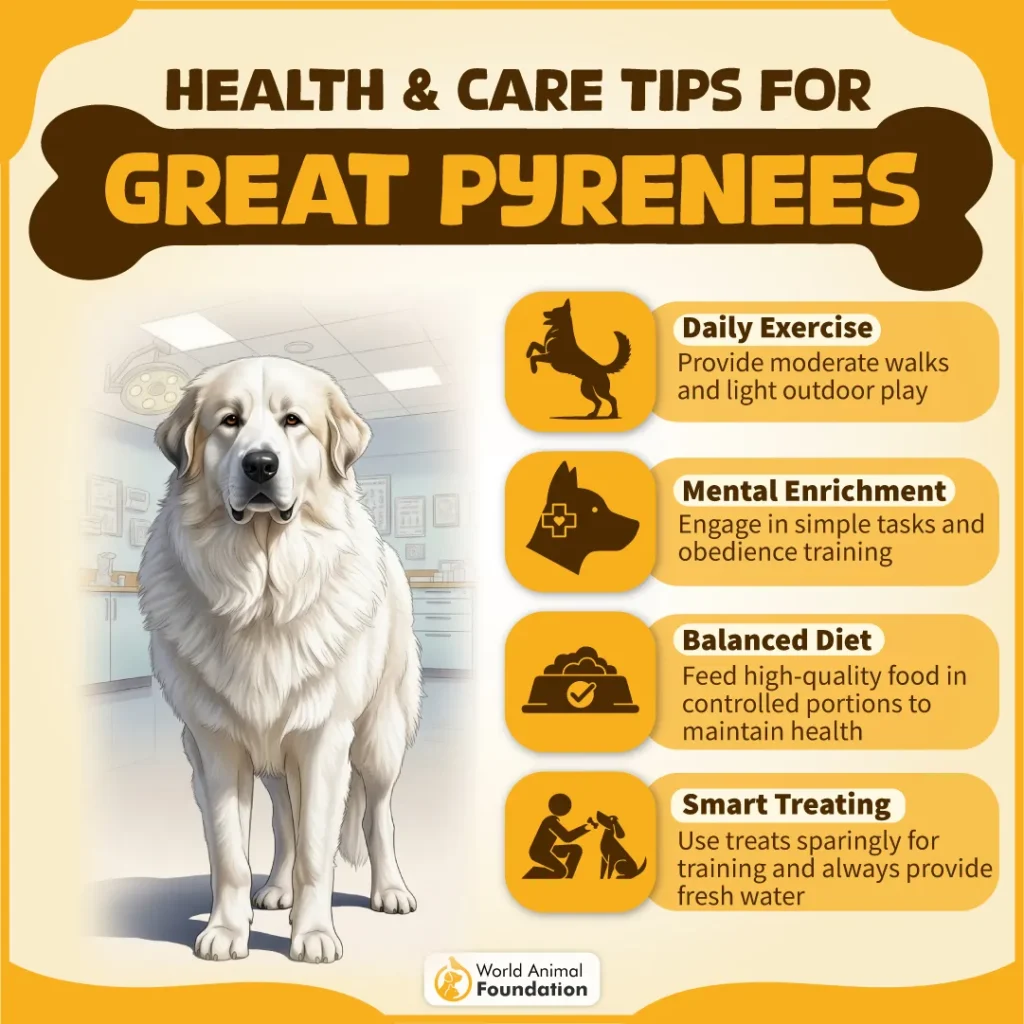
Daily Exercise Needs: Moderate; a couple of long walks or some backyard patrol is enough.
Energy Level: Calm and steady most of the time, with occasional bursts of “I must chase that squirrel!”
Favorite Activities: Wandering the yard, supervising family members, sunbathing like a fluffy royalty.
Anatolian Shepherd
Anatolians are the overachieving guardians. They’re independent thinkers, built for long days of patrolling open pastures, and they have more energy than a Pyrenees on espresso.
If they’re bored, they’ll invent their own workouts, which may include digging, climbing, or running circles around your house. If you’re looking for a laid-back companion to lounge on the couch, this breed might not be suitable, says WebMD.
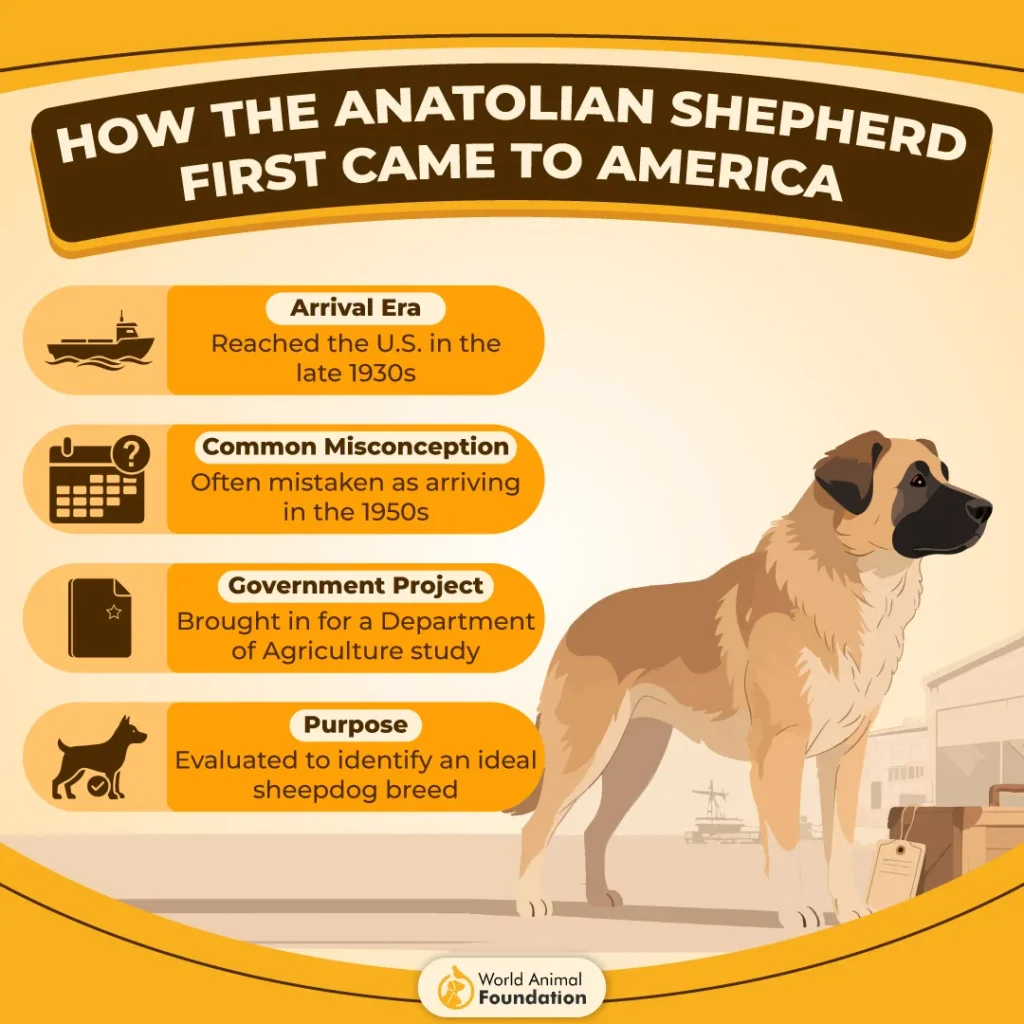
Daily Exercise Needs: High; lots of room to roam or structured walks/workouts.
Energy Level: Alert, energetic, and purposeful—more “mission mode” than “let’s nap.”
Favorite Activities: Patrolling, exploring, testing boundaries, and showing off their strength and speed.
Training & Intelligence
Great Pyrenees
The Great Pyrenees is smart, but in a very independent, “I’ll do it my way” kind of way. They were bred to guard flocks without constant human supervision, so they think for themselves—and sometimes that means ignoring commands they don’t find useful.
Patience is key; you’re not training a regular obedient dog here, you’re earning the respect of a snowy mountain sage.
Intelligence Level: High—problem solvers who can think independently.
Trainability: Moderate; responds best to gentle, consistent methods rather than harsh corrections.
Anatolian Shepherd
Anatolians are like the tactical geniuses of the dog world. They’re extremely intelligent but also highly independent—bred to make decisions on their own while guarding flocks. You can train them, but expect a dog that thinks critically about whether your request makes sense. Spoiler: They often decide it doesn’t, in the most polite-but-firm way possible.
Intelligence Level: Very high; natural problem solvers and strategic thinkers.
Trainability: Moderate to high with consistent, firm, positive training—but forget “obedience for the sake of obedience.”
Socialization & Living Environment
Great Pyrenees
The Great Pyrenees is the classic gentle giant—loving with family, protective of home, and patient with kids (as long as those kids aren’t stealing their favorite napping spots). They’re friendly, but a bit wary of strangers, which makes early socialization key.
PetMD noted that despite their strength and speed, Great Pyrenees are typically gentle and relaxed at home with their loved ones, making them wonderful family companions.
These fluffy mountain guardians prefer a spacious home with a yard, somewhere they can roam and “patrol” like the fluffy royalty they are. Apartment living is possible but tricky—they need room and routine walks to stay happy.
Anatolian Shepherd
Anatolians are independent, cautious, and always on alert—they take their guarding duties seriously. Socialization from a young age is crucial to prevent them from being overly suspicious of strangers or other animals.
They thrive in large spaces where they can roam freely, and a job or task is ideal for keeping their mind sharp. While loyal to family, Anatolians often have a “respect my space” attitude, making them a bit less cuddly than a Pyrenees.
Coat Grooming Needs
Great Pyrenees
Anatolians are a bit less fluffy but no less regal. They have a dense double coat, usually shorter than a Pyrenees, so they’re easier to maintain, but they still shed…a lot. Their grooming routine is simpler, but they do benefit from regular brushing to keep that protective coat healthy and shiny.
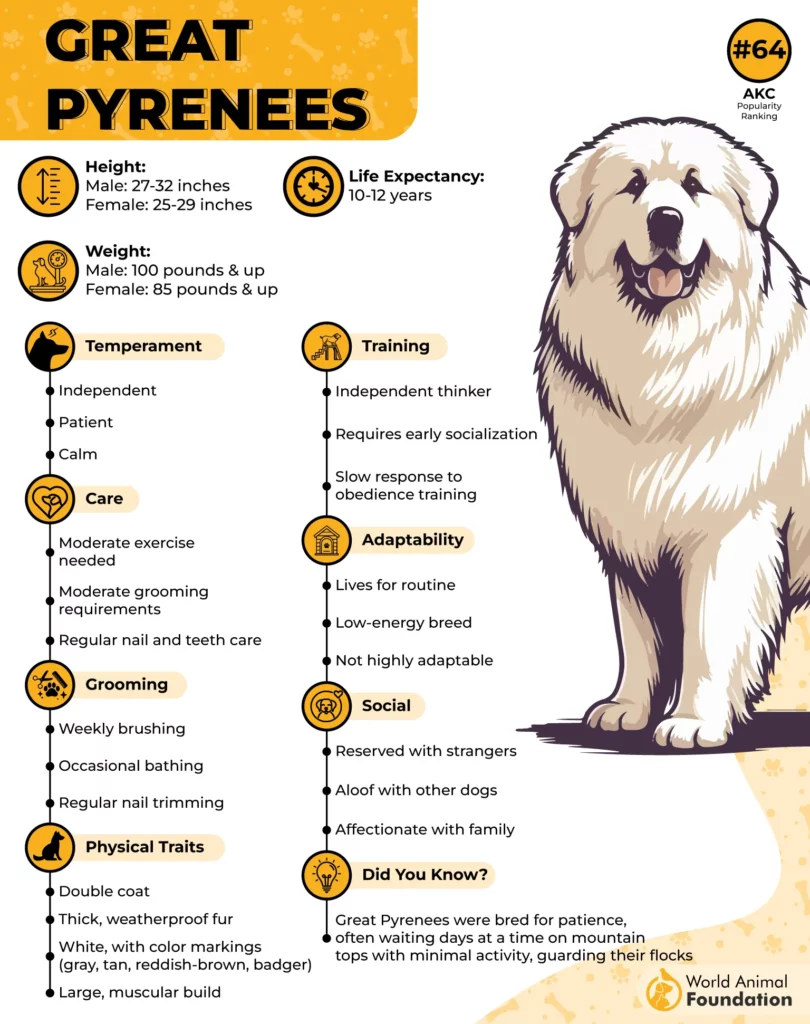
Brushing: Weekly is usually enough; more often during shedding season.
Bathing: Occasional, when dirty or smelly—no frequent spa days needed.
Shedding: Moderate to heavy, especially seasonally.
Special Considerations: Coat protects them from harsh weather, so avoid shaving—it reduces natural insulation.
Anatolian Shepherd
Anatolians are a bit less fluffy but no less regal. They have a dense double coat, usually shorter than a Pyrenees, so they’re easier to maintain, but they still shed…a lot. Their grooming routine is simpler, but they do benefit from regular brushing to keep that protective coat healthy and shiny.
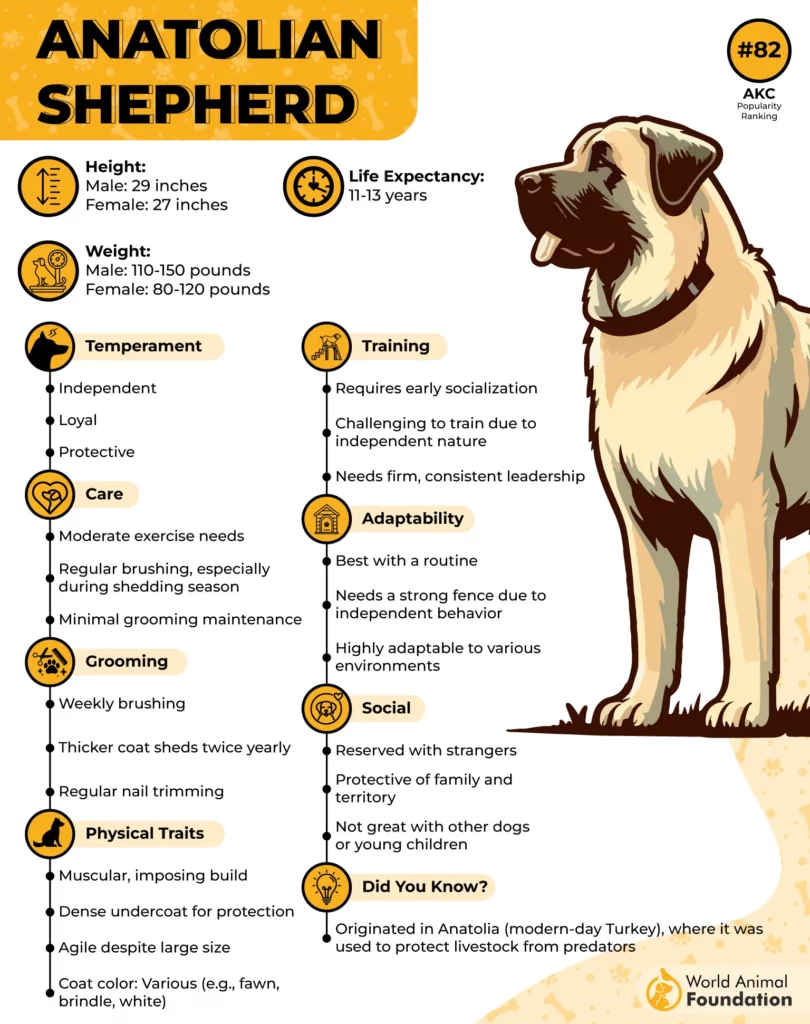
Brushing: Weekly is usually enough; more often during shedding season.
Bathing: Occasional, when dirty or smelly—no frequent spa days needed.
Shedding: Moderate to heavy, especially seasonally.
Special Considerations: Coat protects them from harsh weather, so avoid shaving—it reduces natural insulation.
Health & Lifespan
Great Pyrenees
Average Lifespan: 10–12 years
The Great Pyrenees is a generally healthy giant, but like many large breeds, it can be prone to certain issues such as:
Hip and elbow dysplasia
Bloat (gastric torsion)
Heart conditions
Minor skin or ear problems due to their thick coat
Maintain a healthy weight, provide moderate exercise, regular vet check-ups, and watch for joint problems as they age.
Anatolian Shepherd
Average Lifespan: 11–13 years
Anatolian Shepherds are built for endurance and resilience, reflecting their history as livestock guardians in rugged Turkish landscapes. They tend to be hardier than many other giant breeds, but proper care is still essential.
Common Health Issues
Hip and elbow dysplasia
Thyroid problems
Some eye conditions
Occasional joint issues due to size
Provide plenty of exercise, a balanced diet, and regular vet visits. Joint supplements can help as they age, especially for active dogs.
Suitability for Family Protection
Great Pyrenees
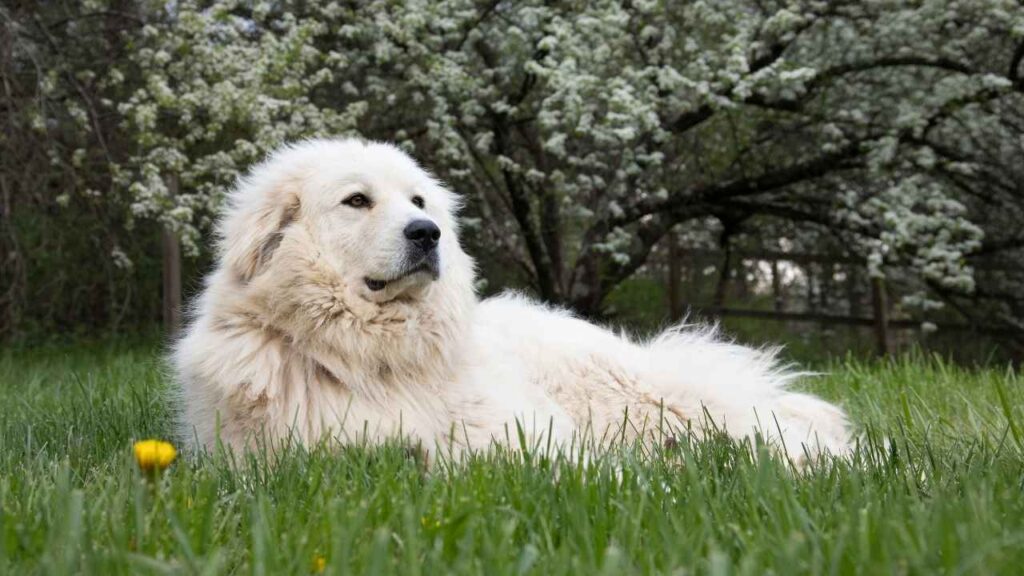
The Great Pyrenees is a natural guardian with a gentle, watchful presence. They are fiercely protective of their family, especially children, but their approach is usually calm and measured. Rather than charging in aggressively, a Pyrenees will often stand guard, bark to alert, and assess the situation before taking action.
This makes them ideal for families who want a loving, reliable protector that blends vigilance with a soft touch. Early socialization is important to ensure they can distinguish between normal visitors and real threats.
Anatolian Shepherd
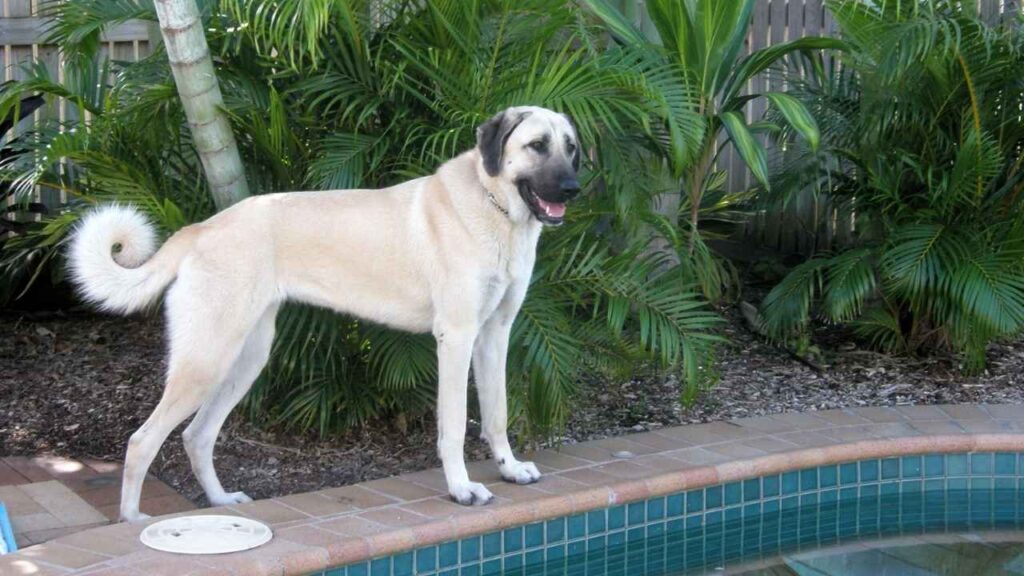
Anatolian Shepherds are bold, fearless, and assertive guardians. They take protection very seriously and have the physical strength, intelligence, and instinct to defend their family and property against serious threats.
Unlike the Pyrenees, they are more likely to take initiative if they sense danger, which makes them excellent for families who want a strong, proactive protector. Anatolians need confident owners who can provide consistent training and clear boundaries, as their independence and size can make them dominant if not guided properly.
Conclusion
Dog lovers comparing the Great Pyrenees and Anatolian Shepherd will find two of the most impressive working dog breeds. Both excel as livestock guardians with strong protective instincts, gentle demeanor, and impressive size.
They require regular exercise, mental stimulation, and thick coats that need grooming. The Great Pyrenees is known for its calm, affectionate nature and loyalty to family, while the Anatolian Shepherd is highly independent, strong-willed, and extremely alert.
Both breeds can live with other pets if properly socialized and are well-suited for active families or farms. Choosing the right breed depends on lifestyle, household needs, and the level of responsibility dog ownership demands, making this the ultimate showdown of giant dog breeds.
