




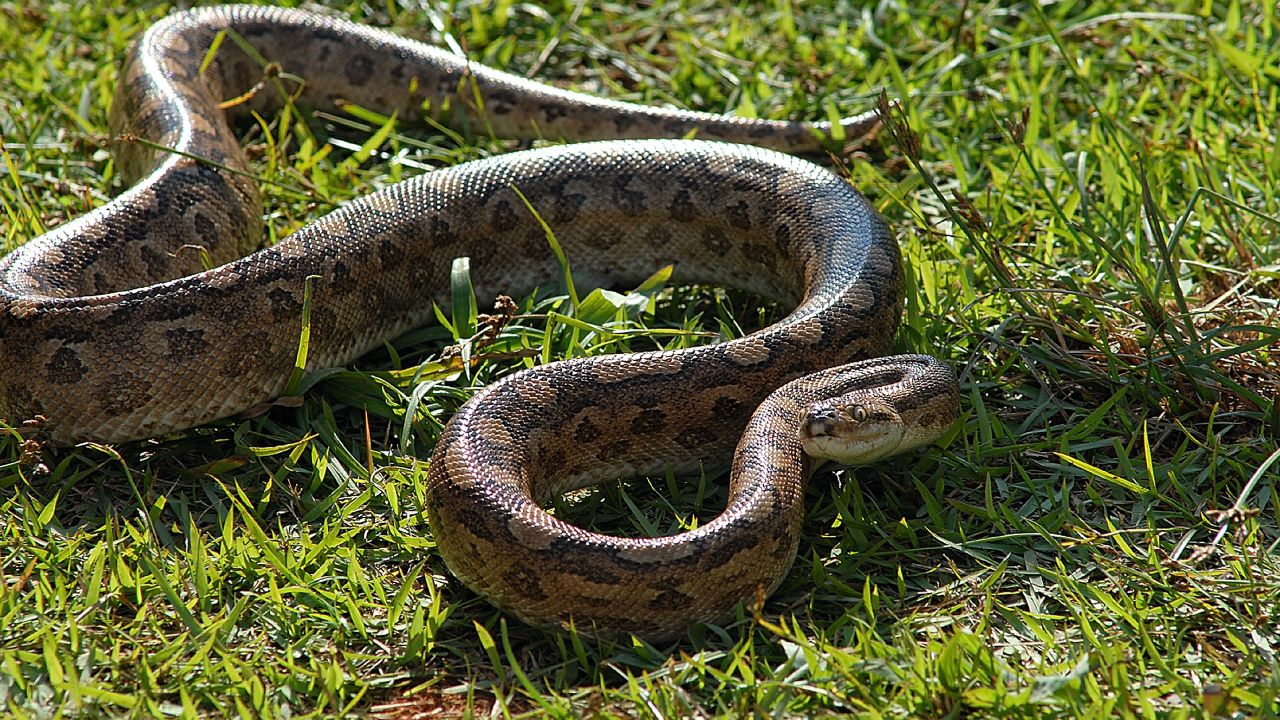
Snakes are masters of adaptation, thriving in environments that range from lush rainforests to arid deserts, from underground burrows to treetop canopies. Their habitats are as diverse and fascinating as the species themselves, reflecting millions of years of evolution and survival ingenuity.
Some snakes, like the green tree python, make their home in the branches of tropical forests, coiled silently among leaves as they wait to ambush prey.
Others, like desert-dwelling horned vipers, blend seamlessly into sand dunes, using the harsh environment as both camouflage and hunting ground. There are even aquatic snakes, such as sea snakes, that spend nearly their entire lives in water, patrolling coral reefs and coastal waters with effortless grace.
These habitats aren’t just places to live—they shape every aspect of a snake’s behavior, from hunting strategies to defensive tactics. Observing snakes in their natural environments reveals a remarkable blend of camouflage, agility, and resourcefulness.
Each habitat tells a story of survival, ingenuity, and the incredible versatility of these reptiles. For wildlife enthusiasts, exploring the habitats of snakes is a journey into some of the most unique, beautiful, and extreme corners of our planet.
Fact: Snakes live in some of the wildest places on Earth! From the tree-top emerald tree boa, and even underwater with sea snakes, they’ve adapted to almost every environment imaginable.
Snakes with the Most Interesting Habitats
1. Sidewinder Rattlesnake
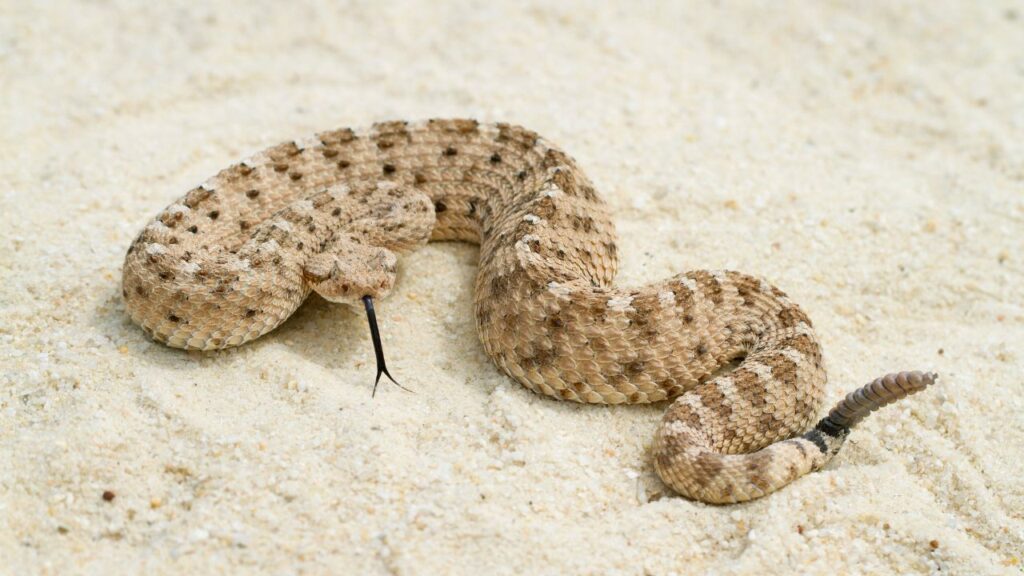
Meet the Sidewinder Rattlesnake, the ultimate desert acrobat. Found slithering across the sandy dunes of the American Southwest, this little rattler has a habitat that’s hotter than a summer barbecue—and it’s mastered moving across it without breaking a sweat.
Unlike your average snake that slithers in a straight line, the sidewinder has perfected a sideways shuffle, leaving behind signature “J”-shaped tracks that look like abstract art. Honestly, it’s like the desert itself is saying, “Check out my fancy footprints!”
The sidewinder’s habitat is as extreme as it gets: blistering heat by day, freezing nights, and shifting sands that would swallow lesser creatures whole. But this snake doesn’t just survive—it thrives. Its unique locomotion helps it glide over hot sand without overheating, almost like wearing invisible desert sneakers.
And if you’re thinking, “What’s it eating in all that barren sand?”—think small mammals, lizards, and insects. Basically, it’s the desert’s ultimate snack connoisseur.
The sidewinder’s camouflage is another desert hack. It blends seamlessly with the dunes, making it a ninja of the sand. If you blink, you might just miss it—though trust me, you’ll hear that famous rattling tail if you get too close.
So, next time you picture a desert, don’t just think of cacti and mirages. Imagine a little snake doing a sideways tango across golden dunes, proving that even in the harshest places, life can be stylish, clever, and slightly sassy.
2. Green Tree Python
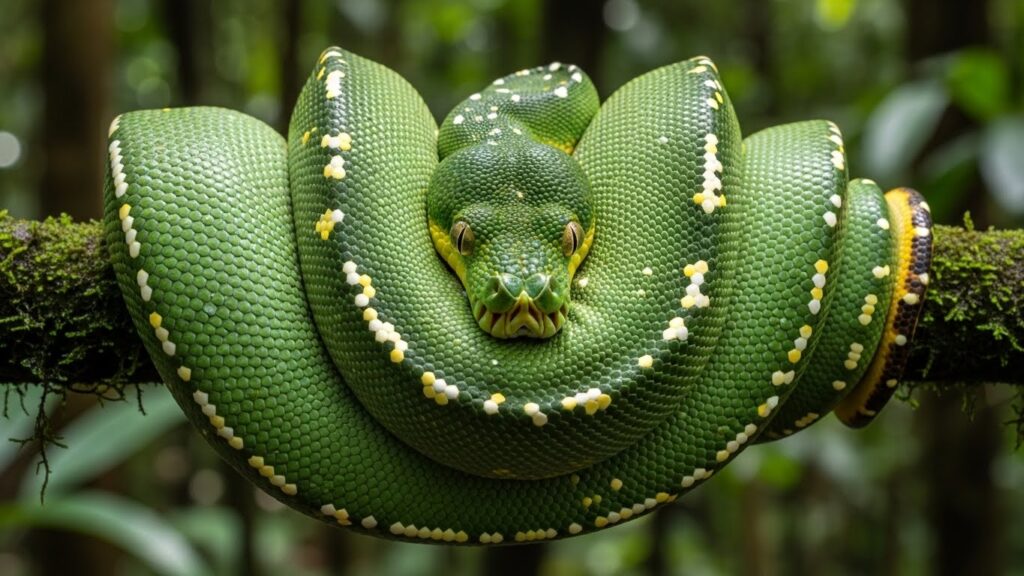
If the rainforest had a superstar, it would be the Green Tree Python. Sporting a diamond-shaped head, irregular scales, and a green coat so vibrant it makes emeralds jealous, this snake is basically a living ornament dangling from the trees.
And don’t let that lush green fool you—this snake is a master of disguise. Young green tree pythons are the ultimate shape-shifters of the snake world. Juveniles start off bright yellow, blending in with the sun-dappled edges of the rainforest.
Found in New Guinea, eastern Indonesia, and Australia’s Cape York Peninsula, these snakes live where the air is thick, humid, and buzzing with life. Their preferred spots are tropical rainforests full of dense foliage, though they’re not above venturing into secondary forests or even gardens if they feel like it. Mostly, they’re tree-dwellers, lounging like jungle royalty.
Their prehensile tails are pure genius: wrapped around branches for stability, they can also dangle them like a tempting snack to lure in curious prey. One wrong move by a bird or lizard, and snap—they’re dinner. Watching a green tree python strike is like seeing a tightrope artist suddenly turn into a ninja.
The green tree python is a rainforest acrobat, a master of disguise, and a tree-hanging showstopper all rolled into one. Hanging out with this snake is like getting a front-row seat to nature’s ultimate hide-and-seek game—minus the chance of being eaten.
3. Green Anaconda
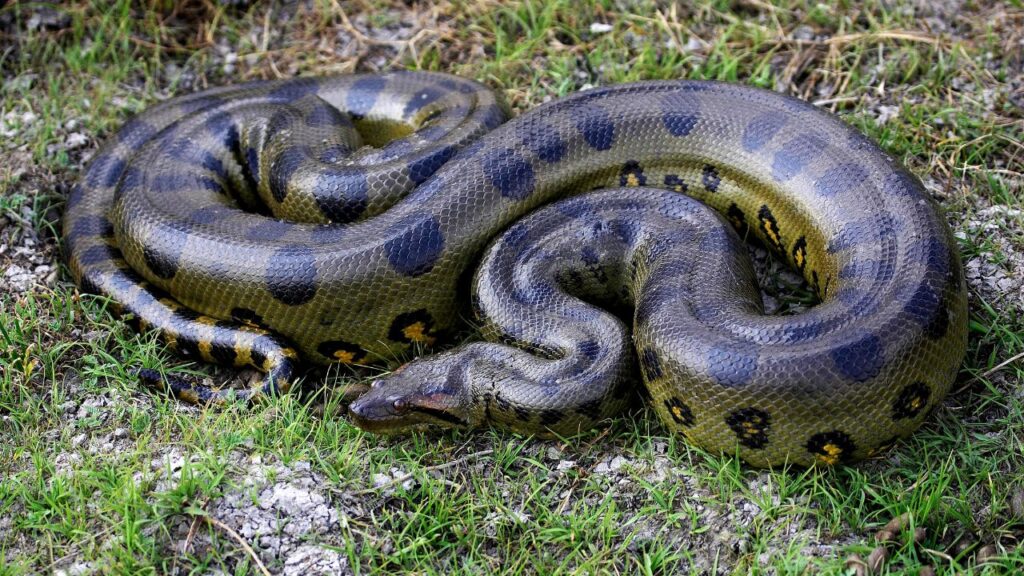
If the snake world had a heavyweight champion, it would be the Green Anaconda. This behemoth isn’t just long—it can reach a jaw-dropping 20 feet 9 inches, making it one of the longest and heaviest snakes on the planet, as per Wikipedia.
Basically, this is the snake that shows up to the party and immediately makes everyone else look like they forgot to hit the gym. Green anacondas are perfectly designed for life in the water. Their habitats include swamps, marshes, and slow-moving rivers across South America’s tropical wetlands.
Here, stealth is key: these snakes can lurk beneath the water with just their nostrils and eyes peeking out, like an overachieving spy in a green-scaled wetsuit.
One of the coolest—and slightly terrifying—features of the green anaconda is its jaw flexibility. Thanks to loosely connected jawbones and stretchable ligaments, it can open its mouth wide enough to swallow prey much larger than its head.
These giants are ambush predators, waiting patiently in the murky water before striking unsuspecting prey. Their diet? Anything from birds and fish to large mammals that wander too close to the water’s edge. And once they grab their meal, it’s a slow, powerful squeeze that leaves no chance of escape.
4. Mangrove Pit Viper
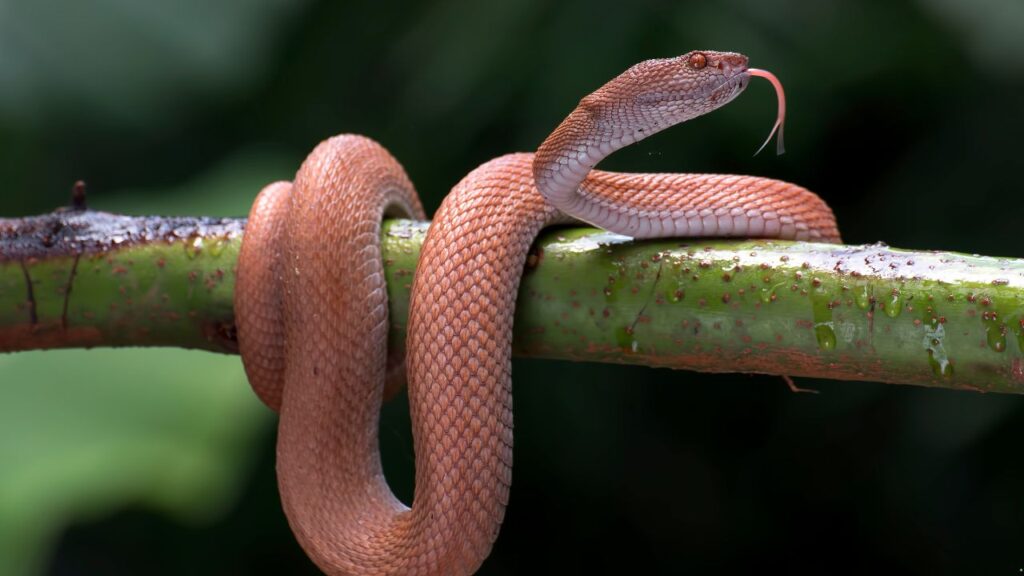
Meet the Mangrove Pit Viper, the ultimate master of mangrove forests and coastal swamps. If sneaky camouflage had a poster child, it would be this snake.
With its earthy green, brown, and sometimes yellow scales, it blends seamlessly into the tangled roots and murky waters, making it nearly invisible to both prey and curious humans. True to its name, this snake loves mangroves: wet, brackish habitats where water meets land in a maze of roots, branches, and mud.
These tricky environments keep other predators away, but the pit viper thrives here, perfectly adapted to life in the intertidal zones. It’s also an excellent climber, often hanging along branches and roots, ready to ambush frogs, birds, lizards, and small mammals that wander too close.
One of the coolest features of the mangrove pit viper is its heat-sensing pits, located on the face just below the eyes.
These biological infrared sensors allow the snake to “see” warm-blooded prey even in total darkness. It’s like having night vision goggles built into your face—pretty handy when you’re a stealthy predator in the shadows of a swamp.
Despite its intimidating reputation, this snake usually prefers to avoid humans. But if provoked, it can deliver a venomous snake bite strong enough to teach a lesson in respect.
5. Tentacled Snake
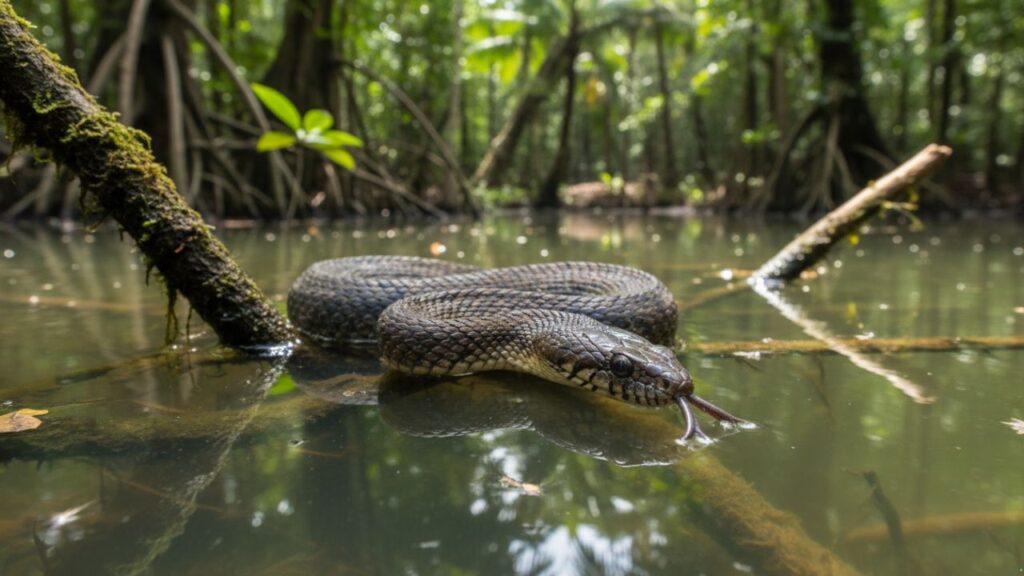
If you think snakes are all about slithering through grass or hanging from trees, meet the Tentacled Snake, the underwater illusionist of Southeast Asia.
This snake is a true master of ambush hunting—but with a twist. It doesn’t chase its prey; it makes the prey come to it. Yes, you read that right. With two tiny, mysterious tentacles on its snout, it manipulates water currents to lure unsuspecting fish into striking range. Think of it as a snake performing some underwater Jedi mind tricks.
According to the National Zoo, the tentacled snake is perfectly suited for life in murky water—ponds, rice paddies, and slow-moving streams—where it spends its entire life. It doesn’t really care if the water is fresh, brackish, or slightly salty; it’s the aquatic homebody of the snake world.
Its range covers Peninsular Southeast Asia, including Thailand, Cambodia, and southern Vietnam, with Tonle Sap Lake being a prime example of its ideal habitat. Among submerged vegetation, it can freeze into position, looking like nothing more than a stick. This snake could win any hide-and-seek competition, hands down.
When it comes to meals, the tentacled snake is a fish connoisseur. Young snakes stick to small fish, while adults may branch out to frogs and crabs.
Its venom is mild and specialized—perfectly designed for subduing slippery aquatic prey, but harmless to humans. Those tiny, far-back fangs aren’t meant for people anyway—they’re just the tools of a highly efficient underwater hunter.
6. Bushmaster
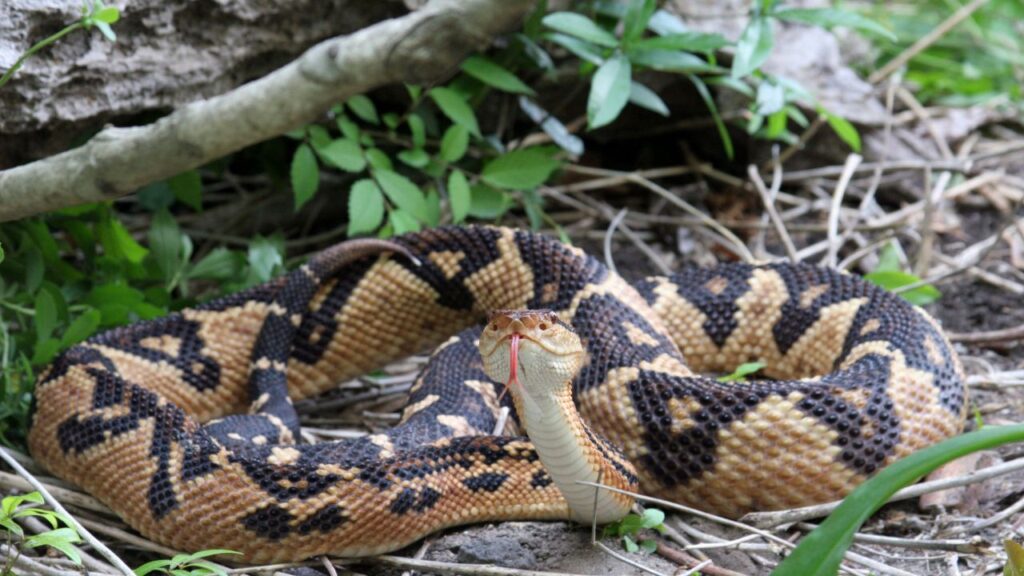
If snakes had supermodels, the Bushmaster would definitely be on the cover. With dark rhomboid blotches over lighter, beaded scales, it’s a feast for the eyes—but don’t let its looks fool you. This ground-dwelling giant is as deadly as it is stunning.
Though its venom isn’t the absolute strongest in the viper world, it makes up for it with volume and precision—those two-inch fangs can deliver a dramatic, multiple-strike warning that few creatures would dare ignore.
Bushmasters are native to Central America, northern South America, and Trinidad, preferring warm, moist, old-growth forests where thick foliage and easy access to water make the perfect home base. Unlike some snakes that like to climb or swim, the bushmaster mostly keeps its boots—or rather, its scales—on the forest floor.
This viper is an ambush expert. When it strikes, it can bite repeatedly at incredible speed, injecting venom that targets both the nervous and circulatory systems. Its bite symptoms—pain, swelling, nausea, sweating, and more—make it clear: the bushmaster is not to be trifled with.
In short, the bushmaster is a perfect blend of beauty and danger—a snake that commands respect, admiration, and a healthy dose of caution. It proves that sometimes, the forest’s most captivating creatures are also its most formidable.
7. Rosy Boa
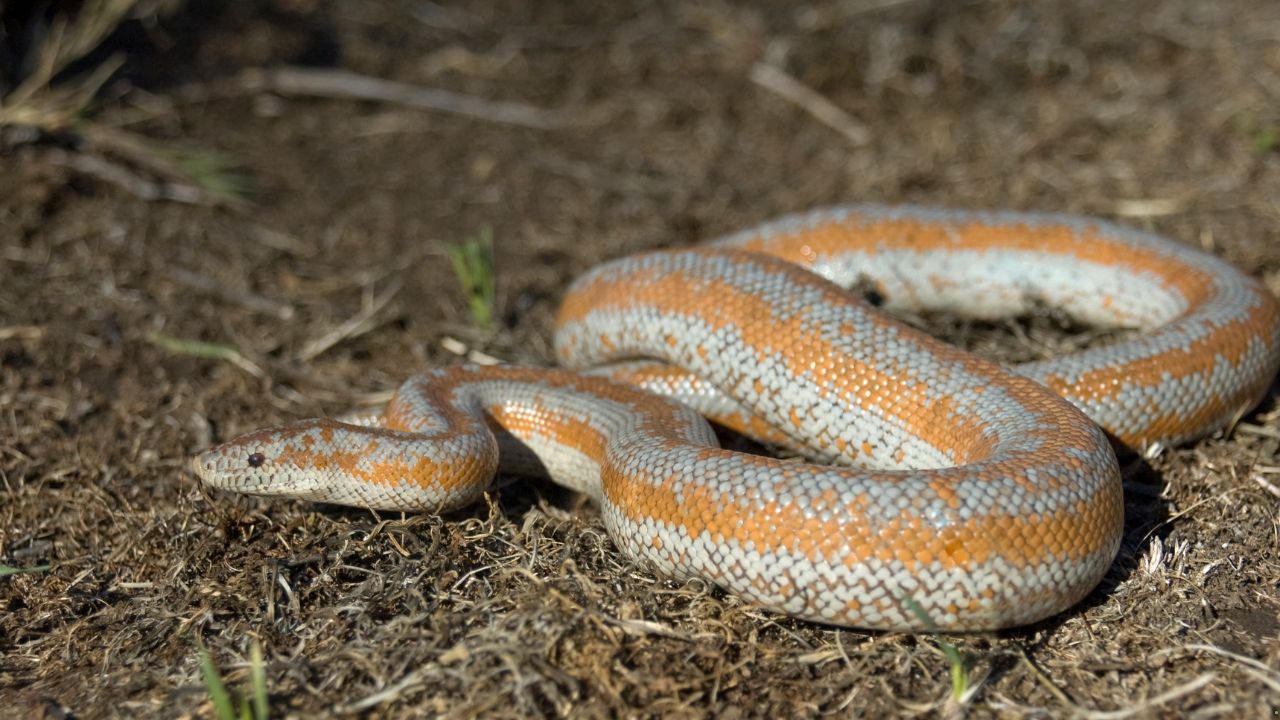
Say hello to the Rosy Boa, the petite powerhouse of Southern California’s rocky shrublands and deserts. With their signature pinkish bellies (hence the name), these snakes might look like soft, slithery desserts—but don’t underestimate them.
They’re skilled constrictors, quietly waiting in the rocks or under shrubs for their next small mammal meal, like nestling wood rats. Rosy boas are mostly night owls, coming alive when the desert cools down. And if you think climbing is just for squirrels, think again.
These snakes are excellent climbers, stretching from one rock or branch to the next with the grace of an acrobat. They inch forward, coil up, then push out again—basically the yoga masters of the snake world.
Though they thrive in the wild, rosy boas have also become beloved pets, and for good reason: they’re low-maintenance, calm, and happy to chow down on commercially available mice. Think of them as the desert’s understated charmers: quietly impressive, surprisingly strong, and always dressed in soft pink.
In short, the rosy boa proves that you don’t need to be giant or venomous to be fascinating. With their nocturnal habits, climbing skills, and rosy underbellies, they’re the perfect little desert adventurers.
Conclusion
Snakes with the most interesting habitats showcase the incredible ecological variety found across the animal kingdom. From arboreal tree snakes like the Paradise Flying Snake, Eyelash Viper, and Ophiophagus hannah (King Cobra), to wild snakes of the tall grass, grasslands, and protected areas, each species adapts uniquely to its snake habitat. Garter snakes, black rat snakes, and boa constrictors thrive near human habitation, hunting small rodents, ground squirrels, amphibians, and even foxes or skunks, while larger snakes such as Eunectes murinus navigate wetlands where their body temperature and heart level remain stable close to the earth.
In sub-Saharan Africa, many species of non-venomous and venomous snakes are commonly found in varied terrain, showing how many snakes and different species rely on habitats ranging from burrows in the ground to treetops. Whether laying eggs, flicking their tongue to search for prey, or moving from one place to the other end of their territory when threatened, these snakes illustrate the remarkable adaptability of snake populations.
