




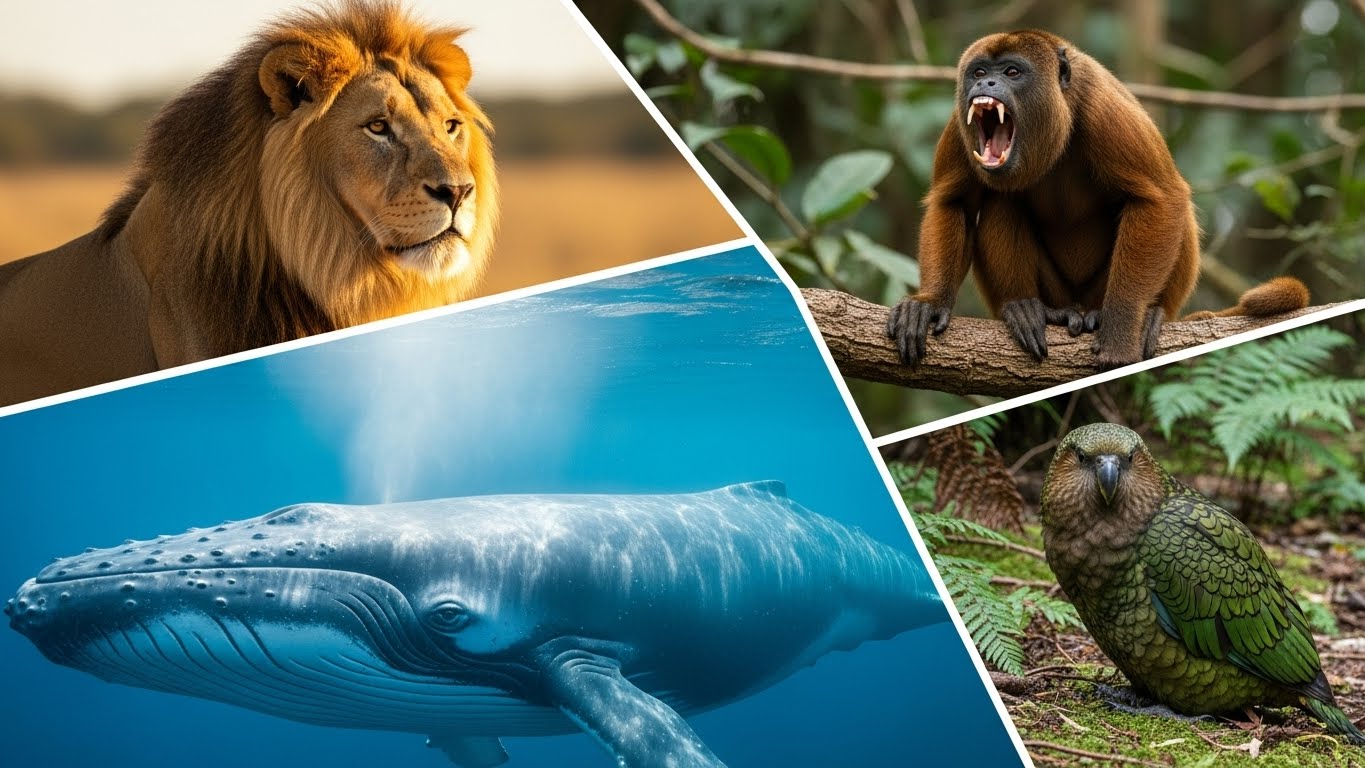
First thing in the morning, the loudest sounds in your home might come from a hungry cat meowing or a dog barking for breakfast. But step outside the house and into the natural world, and you’ll find that some animals can produce sounds so intense they make even your noisiest pet seem quiet.
Across the animal kingdom, researchers have recorded sound levels that are not only louder than a rock concert but also capable of pushing the limits of human hearing.
In fact, according to the National Institute on Deafness, long exposure to sounds above 85 decibels can cause permanent hearing loss in humans. Yet, many of the loudest animals on earth regularly exceed these noise levels without harm to themselves.
Some marine mammals are at the top of this list, with the blue whale and sperm whale known for producing exceptionally loud sounds that can travel for miles underwater. Others use loud vocalizations on land, whether it’s to defend territory, attract mates, or warn companions of danger.
From tiny creatures like the loudest sound-producing insects to giants whose calls rival the roar of a jet engine, these animals remind us how diverse and powerful sound can be in the natural world.
So, if you’ve ever thought your friend or neighbor was loud, wait until you hear about the real contenders for the title of the loudest animal on the planet.
Animals On the Planet Known For Their Loudness
1. Blue Whale
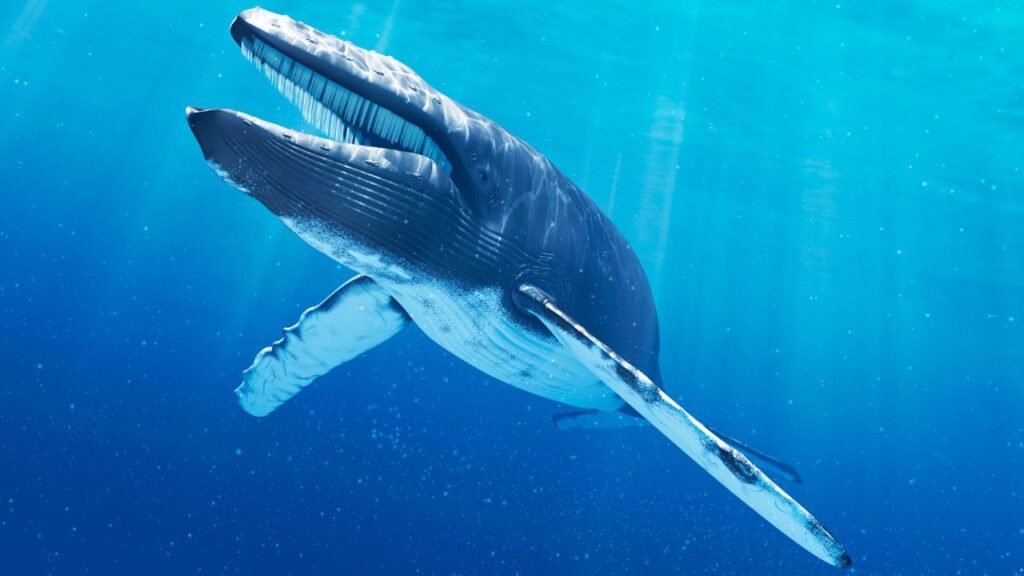
The blue whale holds the record for being the largest animal on Earth and also one of the loudest animals on Earth. Its calls can hit 188 decibels, which is louder than a jet engine. These deep rumbling sounds can travel as far as 1,000 miles across the ocean, making them one of the loudest sounds produced by any creature.
Unlike humans, blue whales have no vocal cords. Instead, they produce sounds using their larynx and nasal sacs. These calls include moans, pulses, and groans that are powerful enough to carry across the seas. Most of these are at frequencies below human hearing, which means we can’t hear them without special equipment.
Scientists have noticed changes in whale songs over time, with a decline in tonal calls. The exact reason is still a mystery, but one concern is noise pollution from ships and sonar. These disruptions overlap with whale calls, making it harder for them to feed, mate, and communicate.
Unique Blue Whale Facts
- They are mostly solitary, joining others mainly for migration or breeding.
- Their powerful songs have been described as whistles as well as deep rumbles.
- Even though they create exceptionally loud sounds, much of it goes unnoticed because it falls outside the human hearing range.
- Scientists call the blue whale the loudest member of the ocean giants.
2. Sperm Whale
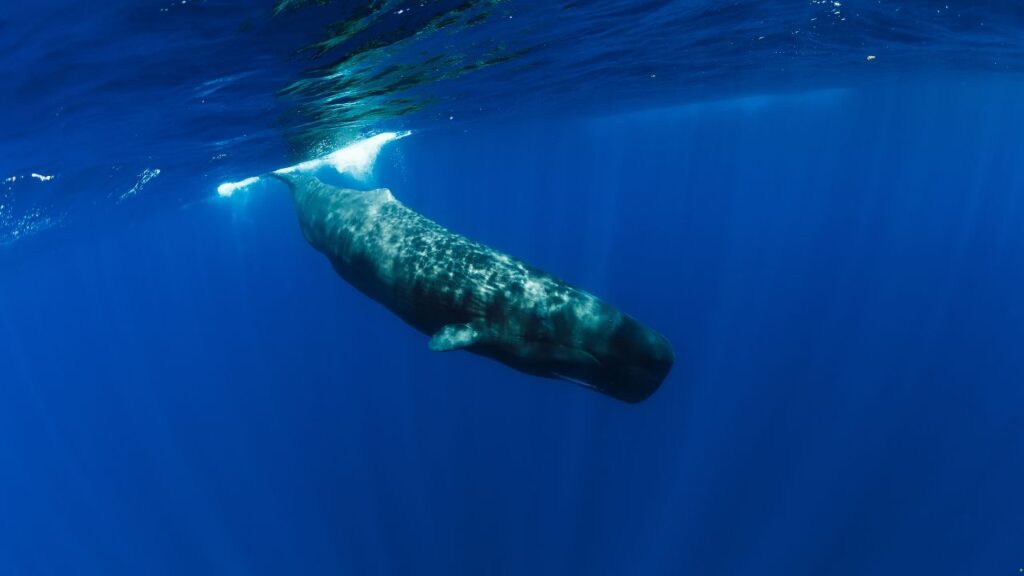
The sperm whale is the loudest species on the planet. These majestic creatures can produce sounds that reach an astonishing 230 decibels, as stated by Britannica. It creates clicking sounds that can go far beyond what the human ear can safely handle. These clicks are short but intense, carrying through the water like bursts of Morse code.
This marine mammal uses its clicks for echolocation, helping it hunt squid and other prey in deep, dark waters. The sound is made in the whale’s nose, where air passes through special sacs and bounces back to create a series of amplified sound waves. Scientists have even found that sperm whales use complex patterns, almost like a “phonetic alphabet,” to communicate.
Although these clicks are louder than a jet engine, they don’t last long. Underwater, the powerful noise is measured around 130 decibels, which is still deafening for the human ear but safe for the whale itself. Their calls can travel across thousands of miles, making them one of the most extraordinary communicators in the ocean.
Unique Sperm Whale Facts
- Holds the record as the largest toothed whale and has the biggest brain of any animal.
- Early whalers compared the sounds to a hammer striking metal inside the whale’s head.
- Produces at least three types of clicks—for hunting, long-range sonar, and socializing.
- Sound is amplified inside its massive head before leaving the body, creating unmatched intensity.
3. Greater Bulldog Bat
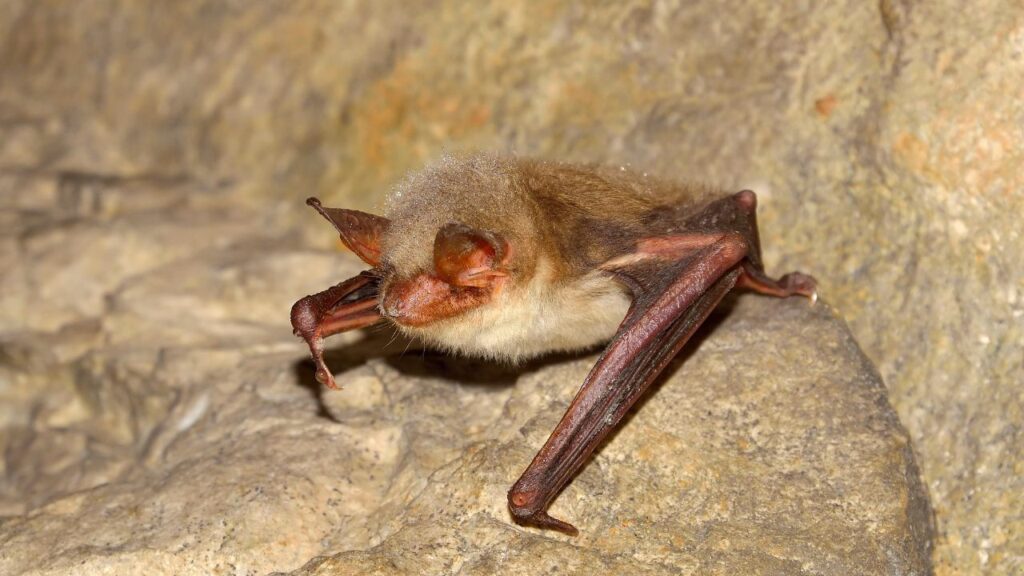
The greater bulldog bat is the loudest in the bat family, reaching sound levels of up to 140 decibels, as mentioned by Batcon. That’s louder than a smoke detector and even louder than a gunshot. These bats rely on echolocation, sending out loud calls that bounce off surfaces to help them hunt.
Unlike most bats, they don’t chase insects. Instead, they swoop down to catch fish from rivers and ponds. Their ultrasonic sound is powerful, but it is too high for the human eardrums to detect. This allows them to make intense calls without disturbing people nearby.
Found in Mexico, the Caribbean, and parts of South America, these bats are also called “fisherman bats.” Despite their size, just a few inches long, they rank among the top three noisiest animals in the natural world.
Unique Bulldog Bat Facts
- The lesser bulldog bat, a close relative, is smaller but not nearly as noisy.
- Their screeches are about 100 times louder than a rock concert.
- Each bat species has a unique frequency, helping them recognize one another.
- Scientists study their echolocation patterns to design better navigation systems for robots.
4. African Cicadas
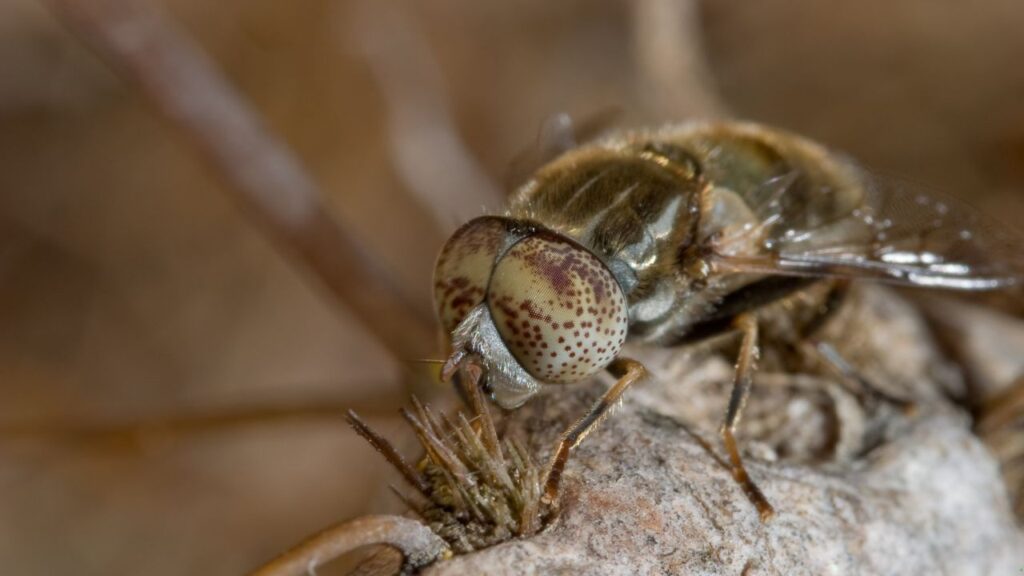
Cicadas are known as the loudest insects in the world. During mating season, male cicadas gather in large groups and produce sounds that can reach 107 to 120 decibels, as loud as a lawnmower or chainsaw. Agriculture mentions this. These sounds carry far across fields and forests.
The calls are made with special drum-like parts in their abdomen called tymbals. By rapidly contracting their muscles, males create sharp mating calls designed to attract females. Each cicada species has its own unique rhythm, so they don’t call the wrong partners.
Some species, like the Green Grocer and Yellow Monday cicadas, are among the loudest insects ever measured. Their songs can be heard from more than a mile away, filling the air with an almost constant buzz during mating season.
Unique Cicada Facts
- Only males make sounds; females stay silent while choosing mates.
- Over 3,600 cicada species exist worldwide, with new ones still being discovered.
- African cicadas may “warm up” their muscles before singing.
- Their powerful calls can travel up to 2.4 km (1.5 miles) away.
5. Lion
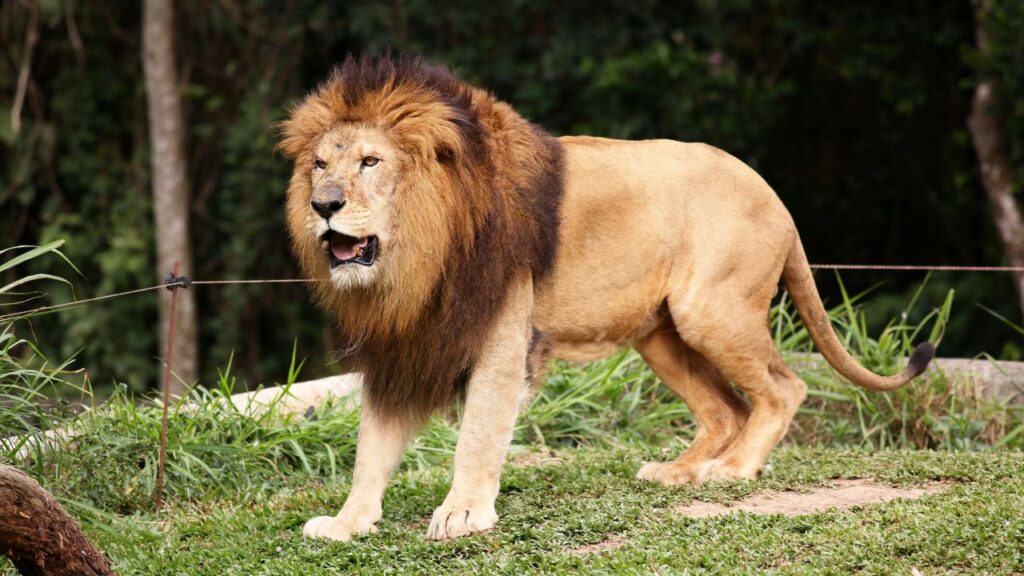
The lion’s roar is one of the most recognizable sounds in the animal kingdom. It can reach 114 decibels, as loud as a chainsaw. Lions use this roar for many reasons—warning intruders, calling pride members, showing dominance, or even signaling hunger.
Male lions are known to roar more often to defend their pride and land, while females use their voices to protect cubs or alert others to danger. During the breeding season, both sexes also rely on loud mating calls.
Their large, square-shaped vocal folds help air pass through easily, creating a powerful noise without putting too much strain on their lungs. This feature makes the lion the loudest of all big cats.
A lion’s roar is also influenced by its body size. Larger lions usually produce deeper, more resonant sounds that travel even farther. Studies have shown that each roar is unique, allowing scientists to identify individual lions with surprising accuracy.
Unique Lion Facts
- Lions are highly intelligent animals that live in cooperative social groups.
- A single roar can cover a territory of more than 260 square kilometers.
- Researchers in 2020 used pattern recognition software to identify lions by their roars with 91.5% accuracy.
- Their roar is not only practical but also cultural, often used as a global symbol of courage and power.
6. Howler Monkey
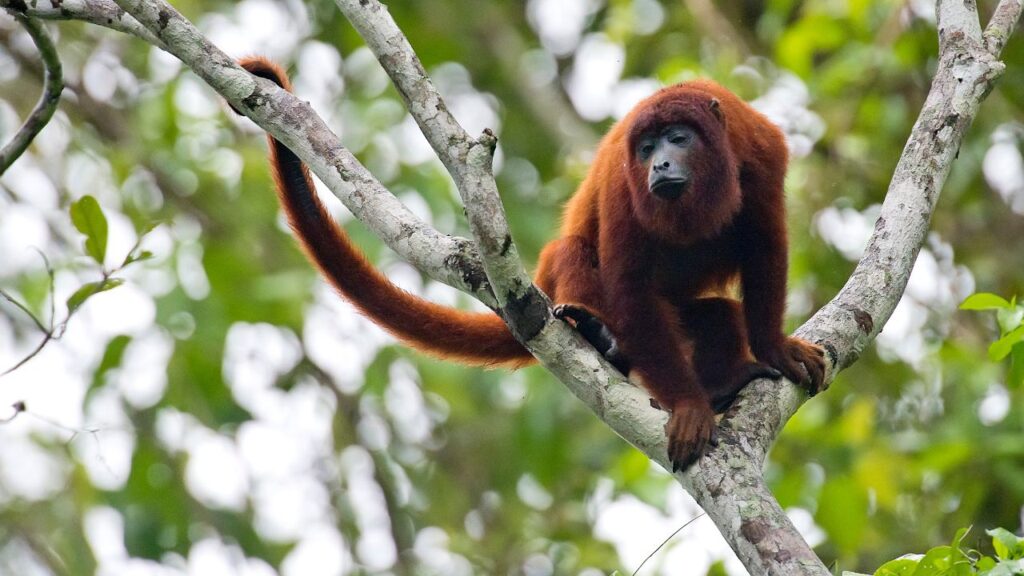
The howler monkey is the loudest primate in the world. Their piercing screams can reach up to 140 decibels, as loud as a jet engine, and travel for 3 miles through dense forests. Despite being the size of a small dog, they produce sounds that dominate the jungle.
Males roar to warn rivals, defend territory, and connect with their groups. The larger a male howler’s vocal organ and the deeper his roar, the smaller his testes tend to be, which means he produces less sperm. These calls are also influenced by the environment, competition, and the need to attract females.
The vocal folds of a howler monkey are three times longer than a human’s, yet their throats are smaller. This unique body design helps them create deep calls with high-frequency resonance. With fifteen recognized species spread across Central and South America, their voice is as iconic as it is ear-splitting.
Unique Howler Monkey Facts
- Some species rely almost entirely on roaring, while others mix howls with body displays.
- Their calls are sometimes described as sounding like a garbage disposal.
- Nine species of howler monkeys are listed as threatened or endangered.
- Social groups vary: some have one dominant male, while others include many competing males.
7. Kakapo
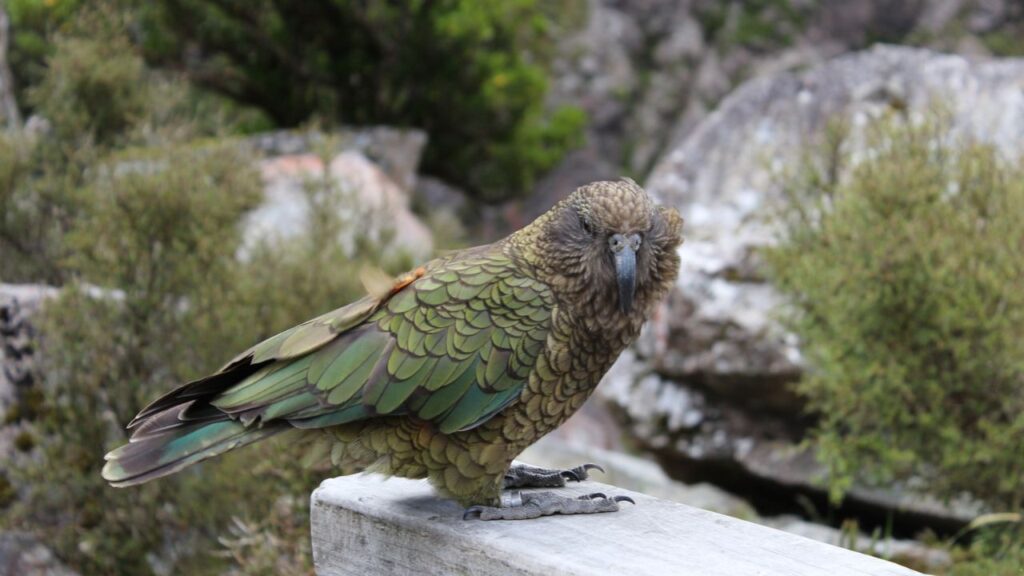
The kakapo, a large nocturnal bird from New Zealand, is part of the parrot family and is also the heaviest parrot in the world. The encyclopedia mentions that it is flightless and critically endangered, with fewer than 250 adults alive today.
Thanks to intense conservation efforts, including relocation to predator-free islands, its numbers have slowly increased.
This bird is famous for being the loudest wild bird. During the breeding season, males produce booming mating calls that can reach 132 to 137 decibels and travel up to 3 miles.
These booms, sometimes compared to a foghorn, help attract females to their lek sites—bowl-shaped areas that amplify sound. The calls can continue for hours each night.
After mating, males take no part in raising young. Females lay one to four eggs and must feed their chicks alone.
Gathering enough food is exhausting, and many females lose up to half their body weight while raising chicks for months. Kakapos also breed only every 4–5 years, making recovery slow and fragile.
Unique Kakapo Facts
- It can live up to 90 years, making it one of the longest-lived birds.
- Known to create 20–30 booms followed by a metallic “ching” sound.
- Each female must collect up to 16 rimu nuts per minute to feed her chicks.
- Once thought extinct, it was rediscovered thanks to the Kakapo Recovery Programme.
8. African Elephants
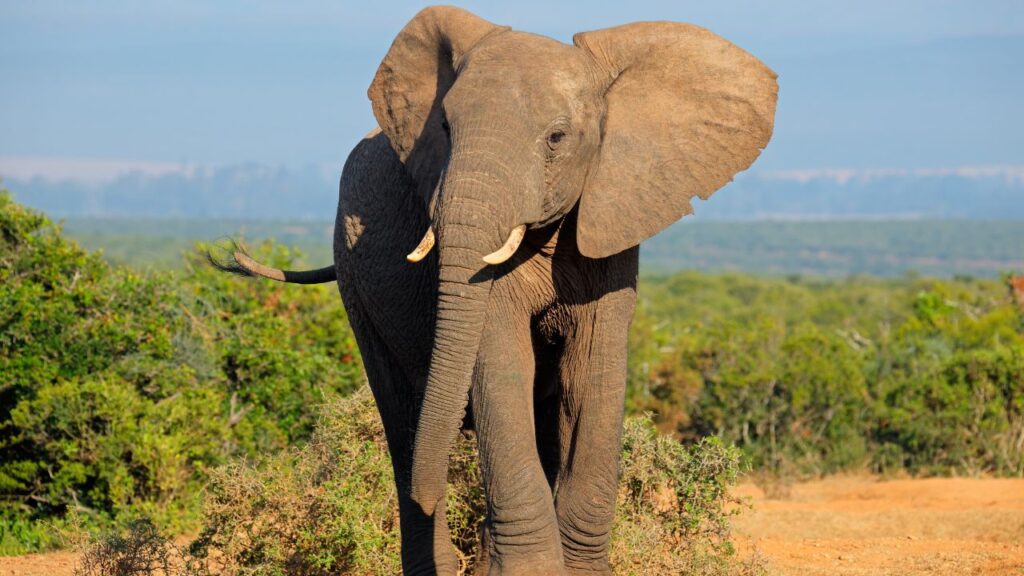
African elephants are the largest land mammals in the world. Their trunks, which can reach 7 feet long and weigh over 300 pounds, are used for breathing, eating, drinking, and even showing affection. This powerful organ is also their instrument for making trumpeting calls.
Audiology Online mentions that these trumpets can reach up to 110 decibels, about as loud as a rock concert. Elephants use them to warn intruders, signal danger, and communicate with the herd.
Scientists have also discovered that elephants produce low rumbles that reflect identity and emotional state. These deep sounds help them stay connected over long distances.
In addition to trumpets and rumbles, elephants can create infrasonic calls that travel nearly 6 miles under the right conditions. These calls are too low for humans to hear, but they are essential for elephant communication. Studies even show that elephants are capable of vocal learning, imitating new sounds with surprising creativity.
Unique Elephant Facts
- Their ears act like natural fans, helping them regulate body temperature.
- An elephant’s rumble can be strong enough to vibrate the ground.
- They have over 40,000 muscles in their trunks, more than the entire human body.
- Elephants can recognize and remember the voices of specific individuals, even after many years.
9. American Bullfrog
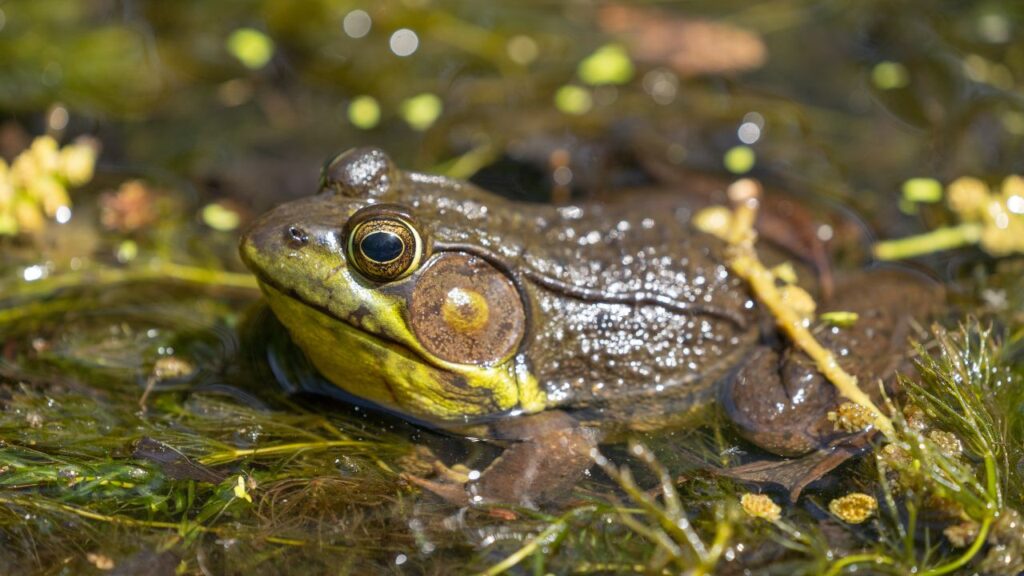
The North American bullfrog is one of the loudest amphibians in the world. Its calls can reach up to 119 decibels, with the loudest being an open-mouth scream made when the frog is distressed. At other times, it produces low growls or grinding sounds, especially when it is caught or struggling to escape.
Males are especially vocal during the breeding season. They make advertisement calls near water to attract mates and to defend their territories.
When another male intrudes, the resident male answers with a short, sharp call. Together, these sounds create a noisy chorus around ponds and rivers during warm nights.
National Geographic mentions that the bullfrog’s deep baritone call is so resonant that it sounds like the mooing of a cow, which is how the frog got its name.
Interestingly, even some older females may join in with advertisement calls. Beyond mating, bullfrogs use a wide range of sounds for communication, making them stand out among frogs.
Unique Bullfrog Facts
- Their deep calls can carry over long distances across still water.
- Native to North America, they are invasive in places like the U.K., threatening native frogs.
- They are powerful jumpers and often leap into water when startled.
- Each bullfrog has a unique call pattern that helps others recognize individuals.
Conclusion
From the booming calls of whales that travel for miles underwater to the ear-splitting roars and howls of land animals, the natural world is full of creatures that leave their mark through sound. These animals use their voices in extraordinary ways—whether it’s to protect territory, find food, warn of danger, or call for a mate. Their unique adaptations remind us just how powerful sound can be in the survival of different species.
But apart from these, there are other loud animals too—each with its own special way of being heard. These include the Tiger Pistol Shrimp (snapping shrimp), Northern Elephant Seal, Bowhead Whales, Coquí frogs, Salmon crested cockatoos, and male white bellbirds.
While some calls are fascinating and even beautiful, others reach volumes that could harm the human ear if heard up close. Still, every one of these sounds plays a vital role in nature’s balance. From oceans to forests, and even in our backyards, the loudest animals on earth prove that communication comes in many forms—sometimes louder than we could ever imagine.
