




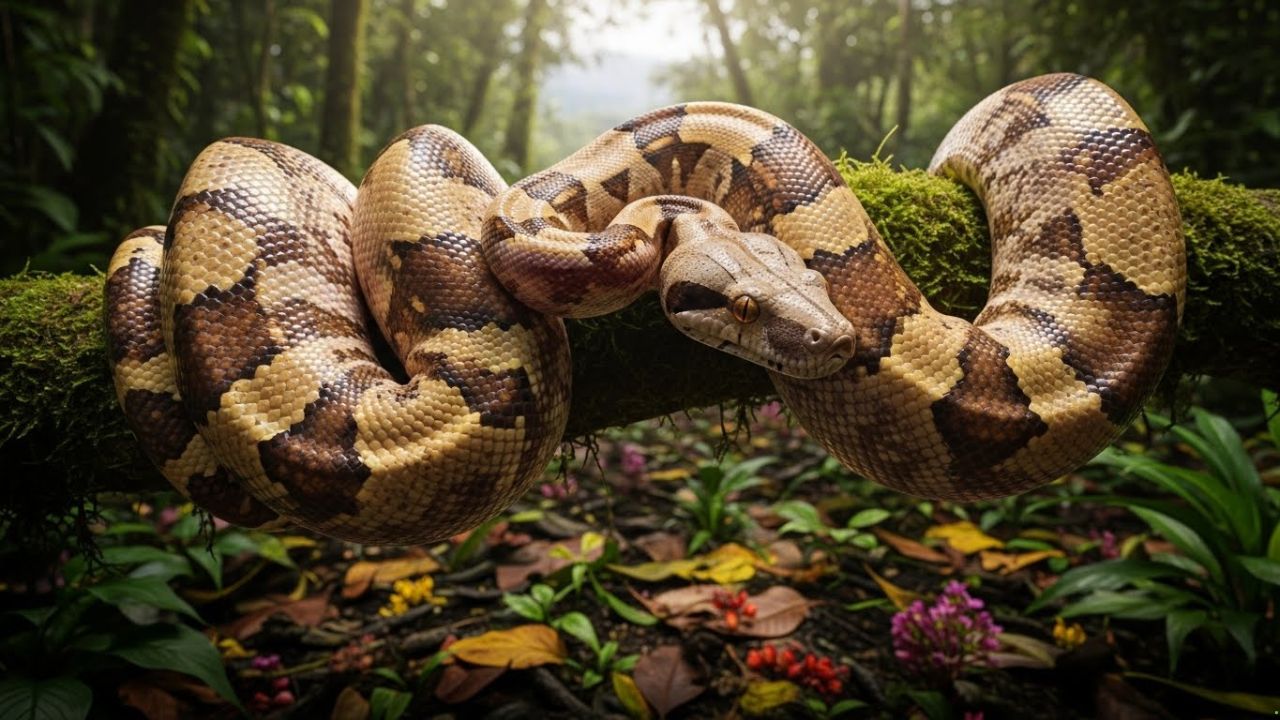
When most people think of snakes, they imagine slithering, elusive creatures—but few realize some species can live for decades in the wild. Snakes that live the longest are extraordinary examples of resilience, survival, and adaptability.
Their secret isn’t just luck—it’s a combination of biology, habitat, and behavior that allows them to thrive in sometimes harsh and unpredictable environments. Longevity in the wild requires more than avoiding predators.
Long-living snakes tend to have slower metabolisms, clever hunting strategies, and natural defenses that keep them safe from danger. From large constrictors to small but hardy species, these snakes demonstrate how evolution has crafted animals capable of surviving for decades without human care.
Today, we’ll explore the snakes with the longest lifespans in the wild, highlighting their unique traits, survival strategies, and habitats. You’ll learn how some snakes quietly thrive in rainforests, deserts, and wetlands, often far longer than most animals around them.
Get ready to meet the wild world’s most enduring serpents—creatures whose lifespans are as fascinating as their slithering, secretive lives.
Fact: While many animals age quickly in the wild, certain snakes defy the odds. The green anaconda and ball python can thrive for 20+ years, relying on camouflage, stealth, and a cautious lifestyle to outlast predators and competitors.
Snakes That Live the Longest in the Wild
1. Green Anaconda
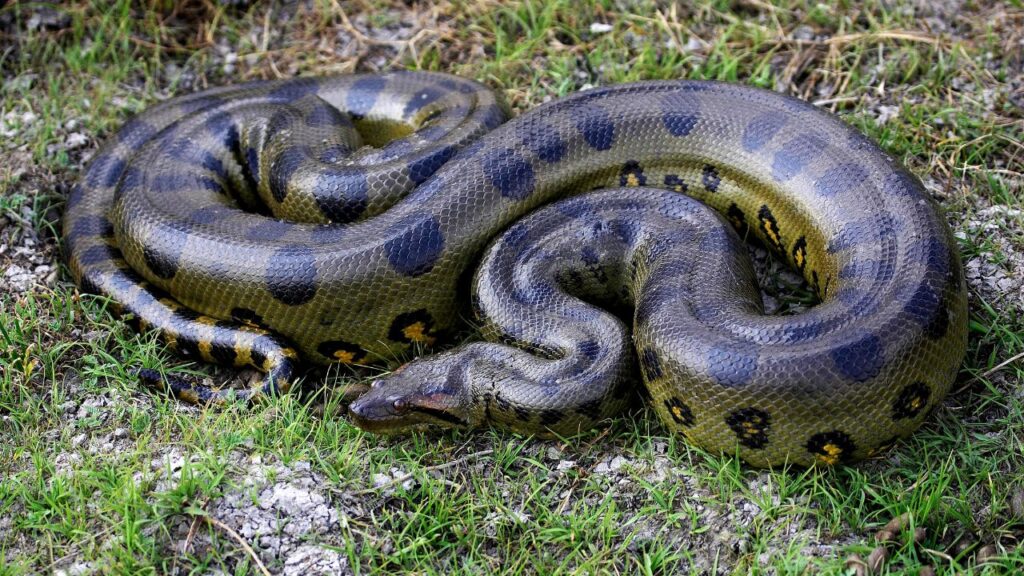
Known as the heaviest and biggest snake in the world (and one of the longest), the green anaconda is less of a snake and more of a living, breathing coil of muscle with trust issues.
Found deep in remote South American wetlands, these giants are so hard to locate that scientists sometimes feel like they’re playing an extreme version of hide-and-seek—except the prize can crush you.
With eyes and nostrils perched on top of their heads, they float just below the surface like scaly submarines. To unsuspecting prey, they look like nothing more than a floating log.
When prey wanders too close for a drink, the anaconda doesn’t chase or thrash—it simply strikes, coils, and squeezes. No dramatic swallowing mid-attack. No rush. Just pure, methodical constriction until dinner stops breathing. Efficient? Yes. Terrifying? Also yes.
In the wild, green anacondas typically live around 10 years, which is impressive considering their risky lifestyle and “eat first, ask questions never” approach. But put one in captivity with regular meals and no predators, and suddenly they unlock the cheat code to life—living 30 years or more.
As per Wikipedia, the 2023 Guinness Book of World Records crowned a green anaconda as the oldest living snake in captivity, clocking in at an astonishing 37 years and 317 days. That’s older than many houseplants, goldfish myths, and some internet trends combined.
The green anaconda isn’t just big—it’s patient, powerful, and surprisingly long-lived when conditions are right. It’s proof that sometimes the secret to longevity is simple: stay calm, float quietly, and don’t waste energy chasing things. Let dinner come to you.
2. King Cobra
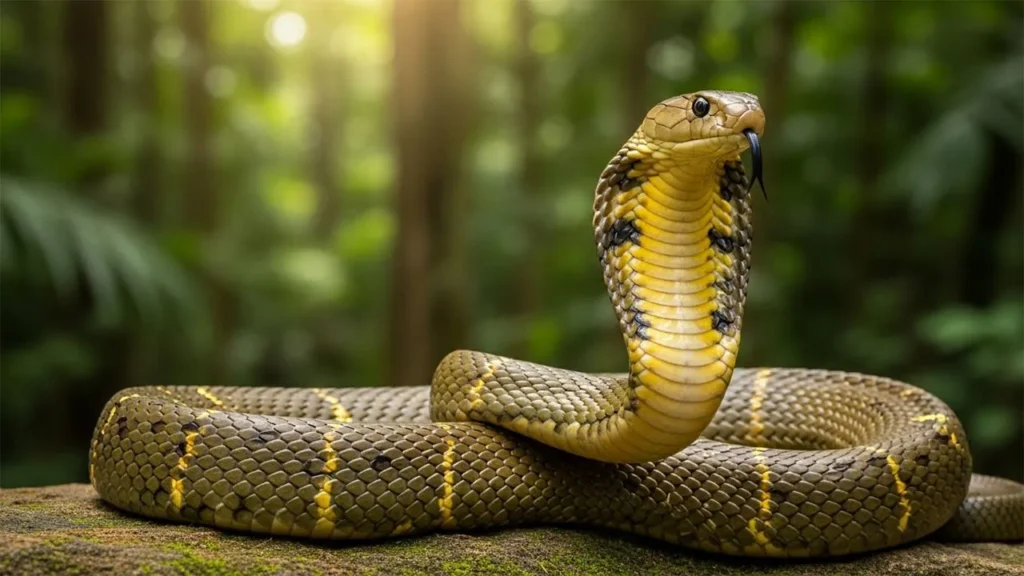
If the green anaconda is the heavyweight champ, the king cobra is the undisputed monarch of the snake world. Long, elegant, intelligent, and absolutely not here for nonsense—this is the longest venomous snake on Earth, and yes, it knows it.
Growing up to 18 feet (and sometimes more), the king cobra doesn’t just slither into a room—it arrives. Its iconic hood, intense stare, and upright posture make it look like it’s constantly asking, “Do you know who I am?”
Unlike most snakes that hunt rodents or birds, the king cobra has a very specific diet: other snakes. Venomous ones included. Basically, it’s the snake version of a snake-eating superhero—minus the cape, plus fangs.
When threatened, the king cobra rises nearly a third of its body off the ground, spreads its hood, and hisses loudly enough to make even brave humans rethink their life choices. This dramatic display isn’t just for show—it’s a clear warning.
Ignore it, and you’ll regret everything.
King cobras are considered among the most intelligent snakes. They can recognize their handlers, adapt their behavior, and—plot twist—build nests. Yes, actual nests. The female guards her eggs aggressively until they hatch, making her one of the few snakes with genuine parental instincts.
In the wild, king cobras typically live around 20 years, which is impressive for a venomous predator constantly navigating humans, habitat loss, and rival snakes that might fight back. In captivity, with fewer dangers and consistent care, they can live well into their 20s or even longer.
The king cobra isn’t just deadly—it’s strategic, intelligent, and surprisingly long-lived. It doesn’t rely on brute force alone; it uses presence, precision, and a little royal flair. Long live the king… preferably from a very safe distance.
3. Boa Constrictor
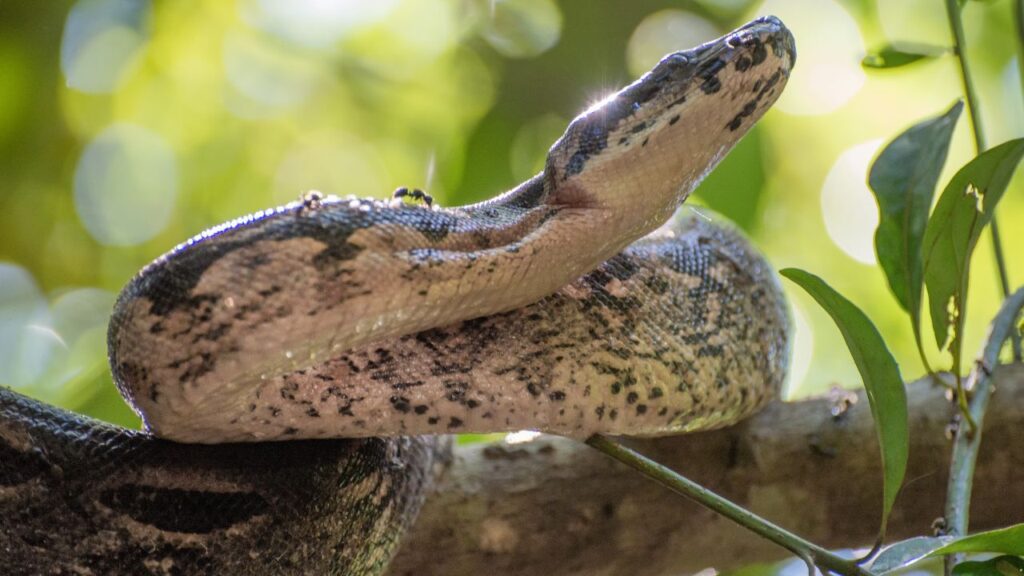
If snakes had personalities, the boa constrictor would be that calm, laid-back giant who looks intimidating but mostly just wants to hang out… and occasionally squeeze dinner as it owes them money.
Boa constrictors are large, muscular snakes found across Central and South America, and while they don’t hold the “longest” or “heaviest” crown, they absolutely dominate the category of steady, reliable powerhouse. Think less drama than a king cobra, less bulk than an anaconda—just pure, efficient snake engineering.
They hunt mostly at night and are excellent ambush predators, striking with surprising speed for animals that spend most of their time lounging in trees or on the forest floor.
One of the boa constrictor’s greatest strengths is adaptability. Rainforests, dry forests, savannas—boas can handle it. They’re strong swimmers, capable climbers, and surprisingly tolerant of different environments, which is a big reason they’ve survived (and thrived) for so long.
They’re also known for their calm demeanor, especially compared to other large snakes. This temperament is why boas are popular in captivity—though “popular” is relative when your pet can outweigh your dog.
In the wild, boa constrictors typically live 20 to 30 years, which puts them firmly in the “long-lived snake” hall of fame. In captivity, where meals are regular and predators are nonexistent, they can live 30 to 40 years or more.
4. Reticulated Python
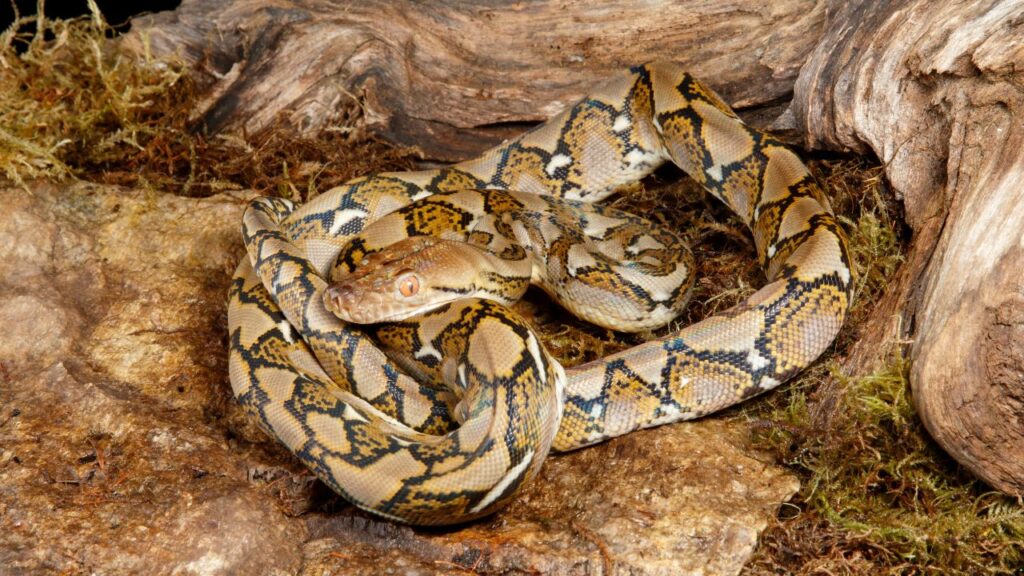
If size matters, the reticulated python is here to casually ruin everyone else’s bragging rights. This species holds the title of the longest snake in the world, and it wears that crown like a runway model—long, patterned, and impossible to ignore.
Native to Southeast Asia, reticulated pythons are famous for their stunning geometric patterns (called reticulation, hence the name) and their ability to grow to truly absurd lengths. Seeing one fully stretched out is less “snake sighting” and more “did the jungle just glitch?”
Like boas and anacondas, reticulated pythons are non-venomous constrictors. They rely on stealth, speed, and brute strength rather than venom. They wait—sometimes for days—until the perfect moment, then strike with shocking speed for something that looks like a living rug.
They’re excellent swimmers, too, which explains how they’ve managed to island-hop across Southeast Asia. When your body is basically a muscular rope, water isn’t much of an obstacle.
Reticulated pythons are considered among the most intelligent snakes. They learn routines, recognize patterns, and adapt quickly—traits that make them fascinating in the wild and… occasionally challenging in captivity. They’re not aggressive by default, but they are alert, curious, and always evaluating their surroundings.
In the wild, reticulated pythons typically live 20 to 25 years, provided they avoid humans, habitat loss, and poor life decisions (like trying to swallow something wider than their own body).
In captivity, where food is regular and risks are lower, they can live 30 years or more. That’s three decades of continuous growth, shedding, and silently judging everything around them.
5. Eastern Diamondback Rattlesnake
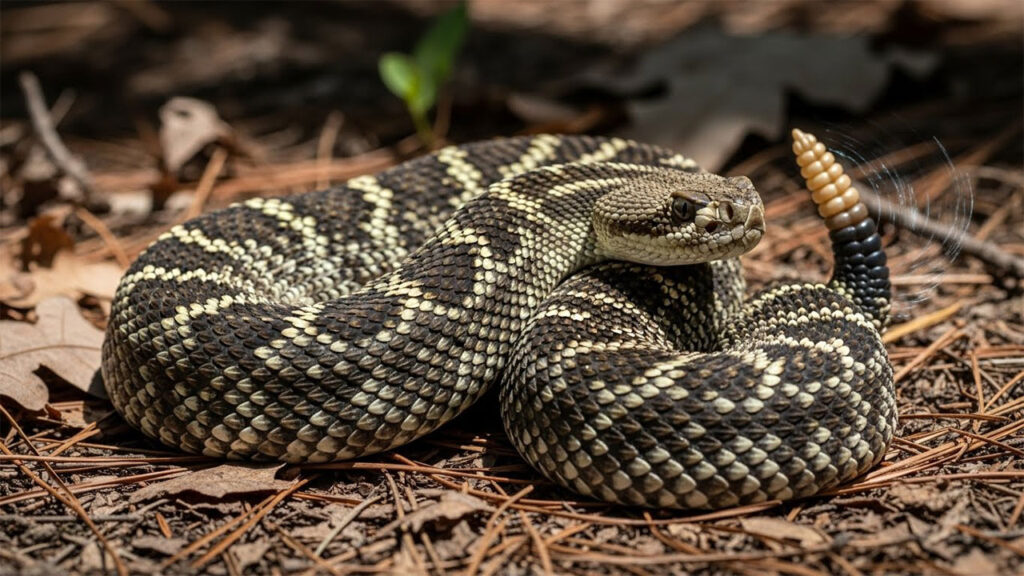
If snakes had warning labels, the Eastern diamondback rattlesnake would come with flashing lights, bold text, and a built-in sound effect. This is not a subtle snake—and it doesn’t need to be. As the largest venomous rattlesnake in the world, it relies on confidence, size, and that iconic rattle that basically says, “Back up. This is your final notice.”
Belonging to the Viperidae family, this heavyweight pit viper dominates the rattlesnake category. Other rattlers may try, but the eastern diamondback clearly skipped leg day because it never needed to run.
The eastern diamondback doesn’t just look intimidating—it looks well designed. Its thick body is covered in an average of 29 rows of dorsal scales, decorated with bold, dark diamond patterns. Base colors range from brown and brownish-yellow to grayish or olive, while the diamonds are dark brown to black with slightly lighter centers.
This rattlesnake is a true southern exclusive, found only in the southeastern United States. Its range stretches from southeastern North Carolina, all the way down to the Florida Keys, and west along the Gulf Coast through southern Alabama to southeastern Louisiana. It even makes occasional appearances in parts of the Caribbean.
Unlike snakes that rely on surprise, the eastern diamondback is polite—by snake standards. It gives fair warning before striking. That famous rattle isn’t just dramatic flair; it’s a safety feature for everyone involved.
According to the National Zoo, eastern diamondback rattlesnakes can live more than 20 years. In the wild, however, life isn’t easy—habitat loss, predators, and humans all take their toll, often shortening their lifespan.
The eastern diamondback rattlesnake is powerful, long-lived, and unapologetically bold. It doesn’t sneak, it doesn’t chase—it warns. Loudly. And that confidence has helped it survive for decades in some of the toughest environments the American South has to offer.
6. Black Rat Snake
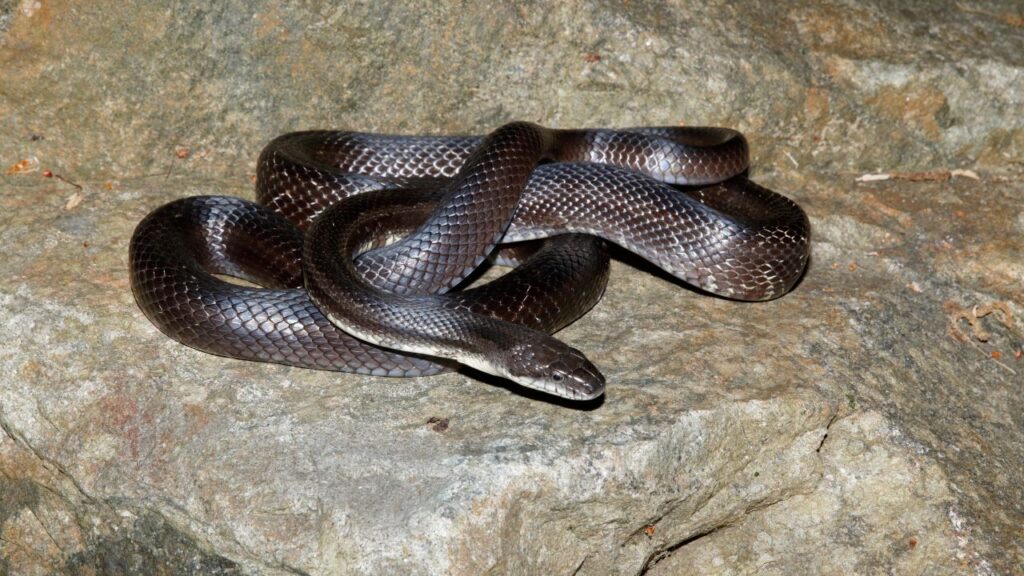
Not all legendary snakes are huge, venomous, or terrifying. Some are just quietly excellent at life. Enter the black rat snake—the calm, hardworking, and highly underrated MVP of North American snakes.
Often mistaken for something far scarier (thanks, glossy black scales), the black rat snake is non-venomous and belongs to the constrictor club. It’s one of those snakes that looks intimidating but is mostly thinking, “Please don’t scream, I’m just here to eat rodents.”
As the name suggests, black rat snakes specialize in eating rats, mice, and other small pests—making them accidental heroes of farms, barns, and rural homes. They constrict their prey efficiently, without venom or unnecessary theatrics.
They’re also excellent climbers, often found in trees, rafters, or barns, which leads to many surprise encounters and even more unnecessary panic.
Black rat snakes are native to eastern and central North America, thriving in forests, fields, farmlands, rocky hillsides, and even suburban areas. Adaptability is their superpower. If there’s food and a place to hide, they’re in.
Black rat snakes are surprisingly long-lived. In the wild, they commonly live 15 to 20 years, and in captivity, with steady food and safety from predators, they can reach 25 to even 30 years.
So the next time you see one, remember—you’re looking at a long-living professional pest controller with a flair for dramatic acting.
7. African Rock Python
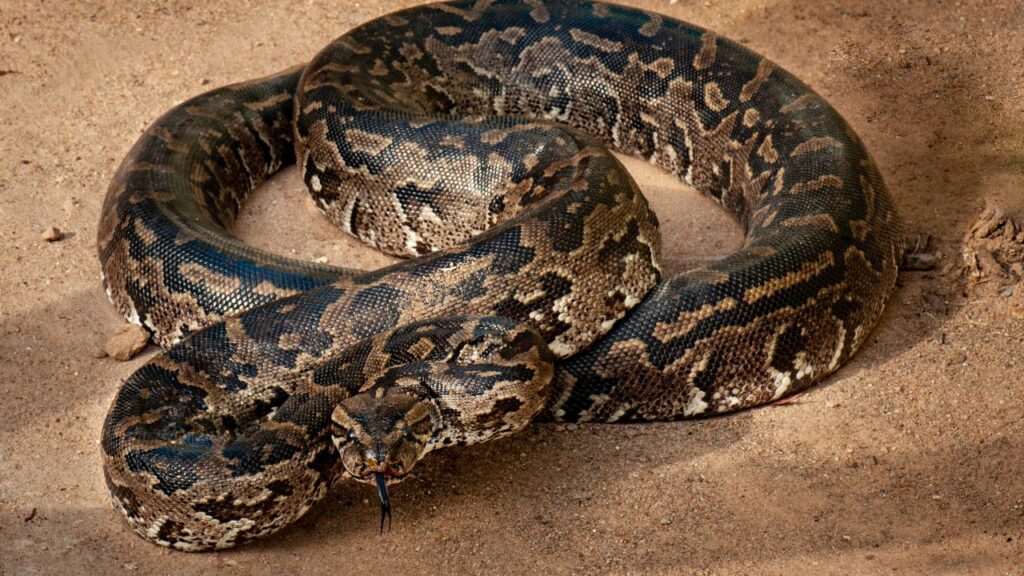
This is a huge, powerful, and famously aggressive snake—impressive to admire, but definitely not something you want freelancing around your living room. Especially if kids, pets, or breakable furniture exist.
Quick public service announcement: never release pet snakes into the wild. African rock pythons are apex predators, and introducing them to non-native environments can seriously harm local wildlife.
African rock pythons get their name honestly. Their dark, blotchy patterns resemble the rocky outcroppings where they like to live, giving them excellent camouflage. According to PetMD, their coloration tends to be dark green, olive, or tan with bold, dark splotches—less flashy than some snakes, but perfectly dressed for ambush.
While wild African rock pythons stick to their natural earth-tone aesthetic, breeders have developed a few rare morphs—variations with patterns and color combinations not found in nature.
Let’s be clear—African rock pythons are not suitable pets for most people. They’re strong, defensive, and capable of inflicting serious injury. Even experienced keepers treat them with respect, caution, and a very solid enclosure.
PetMD noted African rock pythons are built for the long haul. In captivity, they commonly live 20 to 30 years, which means owning one is less of a hobby and more of a multi-decade commitment.
The record holder lived at the San Diego Zoo, reaching an impressive 27 years and 4 months—not bad at all for such a massive powerhouse.
The African rock python is raw strength wrapped in stone-camouflage skin. Long-lived, formidable, and undeniably fascinating, it’s a snake best appreciated from a safe distance. Respect it, admire it, and leave it where it belongs—with experienced professionals or ruling its natural habitat like the ancient giant it is.
Conclusion
Snakes that live the longest in the wild are often giant snakes and supersized serpents such as the Burmese python (Python bivittatus), Indian python (Python molurus), African rock python (Python sebae), and the longest reticulated python (Malayopython reticulatus)—sometimes listed in the Guinness World Records for reaching lengths that define the world’s largest reptiles. Found across South America, Asia, and beyond, species like Eunectes murinus, Ophiophagus hannah, and even some sea snakes are highly adaptable, feeding on large prey including mammals, fish, lizards, and even crocodiles.
These snake species, documented in natural history museum collections and specimens, can survive over a decade in the wild despite pressures from climate change, habitat loss, and being labeled as invasive species in some regions. The natural history of these giant serpents highlights their resilience, diverse subspecies, and close relatives among modern reptiles—making their conservation increasingly important as some populations are killed or threatened across their native ranges.
