




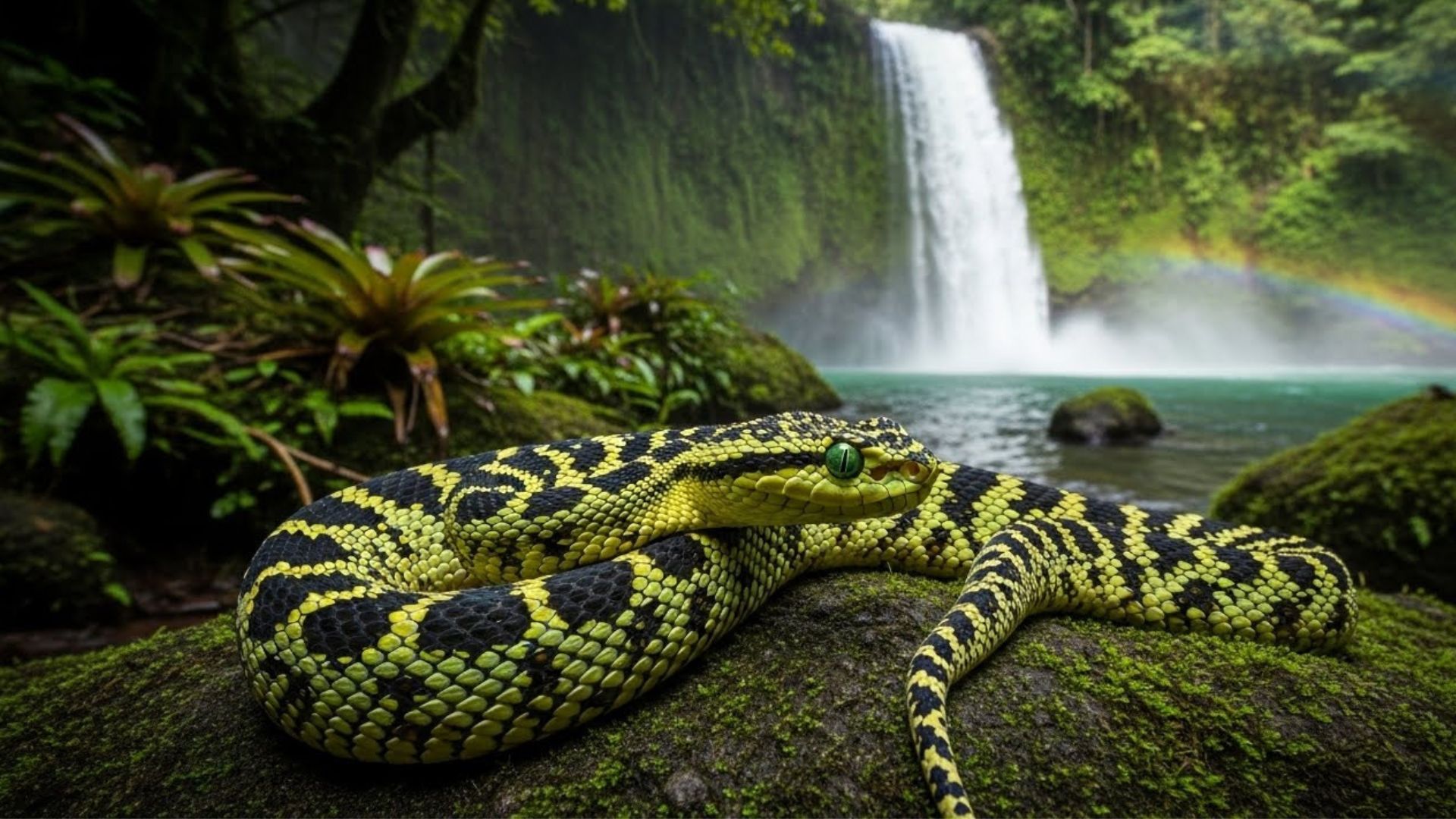
Some snakes live so far from human civilization that few people will ever encounter them. These species inhabit the most remote locations on Earth, from isolated islands and rugged mountain ranges to untouched rainforests and uninhabited deserts.
Their environments are harsh, unpredictable, and often unreachable—yet these snakes have adapted perfectly to survive there.
Remote habitats offer both protection and challenge. With fewer predators and little human interference, these snakes can thrive, but they must also cope with limited food sources, extreme climates, and isolation.
Evolution has shaped them into resilient survivors, capable of enduring conditions that would overwhelm most animals.
Here, we’ll explore snakes that live in the most remote locations, revealing where they’re found and how they manage to survive far from the modern world. These snakes remind us that vast parts of Earth remain wild and mysterious—and that some of nature’s most fascinating creatures are still living beyond our reach.
Quick Inisght: Some snakes inhabit places so remote they’re rarely encountered by humans. These snakes prove that isolation can be the ultimate survival strategy.
Snakes That Live in the Most Remote Locations
1. Bushmaster
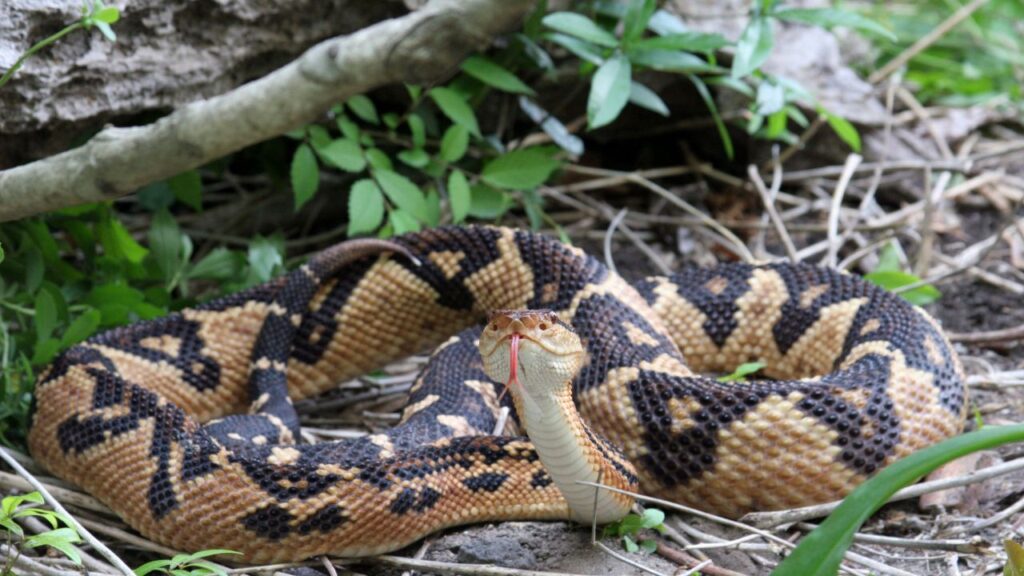
Meet the bushmaster, the rainforest’s elusive ninja. These snakes are the James Bonds of the snake world—long, venomous, and almost never spotted.
Native to the scrublands and lush rainforests of Central and South America, bushmasters are the giants of their ecosystem. In fact, they’re among the longest venomous snakes in the Americas—basically the giraffes of the serpent universe, if giraffes could strike with deadly precision.
Britannica noted Bushmasters are notoriously shy and prefer to keep their social calendar pretty empty. By day, they curl up in fallen logs, cozy among tree roots, or snuggle into leaf piles. By night, they transform into stealthy hunters, patrolling small mammal trails like tiny jungle detectives.
They’ll lie in wait, perfectly still, until the perfect snack wanders too close. Think of it as the ultimate game of hide-and-seek, but with a slightly higher stake than losing a sock under the couch.
Despite their fearsome reputation, encounters with humans are rare. If you ever do stumble across one, consider it a privilege—and maybe don’t try to pet it. Bushmasters are proof that sometimes, the most fascinating creatures are the ones who prefer a little solitude… and a lot of mystery.
2. Green Anaconda
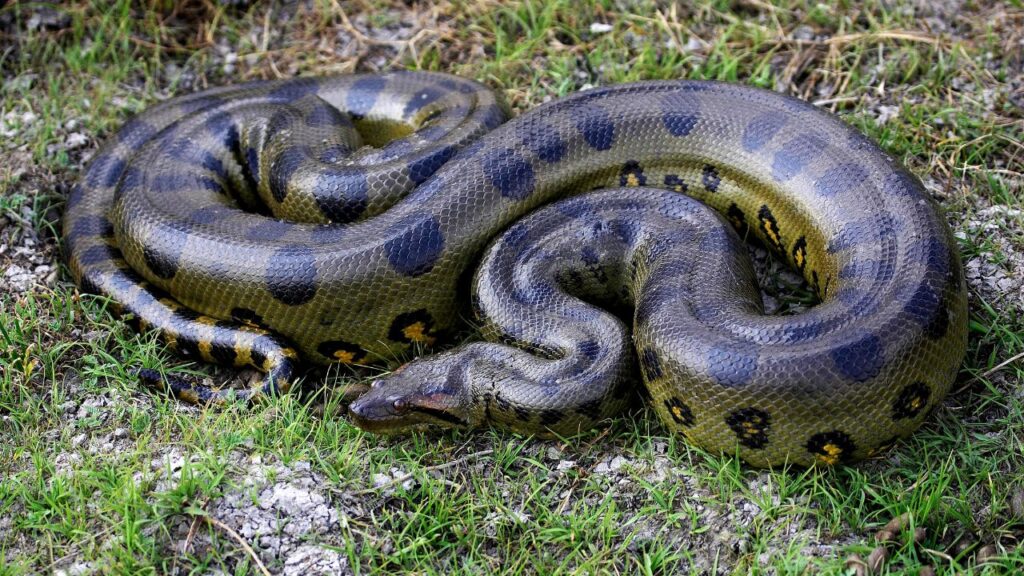
If snakes had celebrities, the green anaconda would be the Leonardo DiCaprio of the wetlands—massive, awe-inspiring, and impossible to ignore. These most venomous snakes inhabit the remote swamps, marshes, and slow-moving rivers of South America, particularly the Amazon Basin.
When it comes to size, green anacondas don’t just break records—they laugh at them. They’re among the heaviest and longest snakes on the planet, and yes, their hugs are definitely the “death grip” type.
Green anacondas are masters of aquatic hide-and-seek. Most of their bodies stay hidden underwater, leaving only their nostrils and eyes peeking out like a sneaky periscope. This makes them the ultimate ambush predators: unsuspecting prey swims by, and snap! dinner is served.
Their diet is impressively versatile, ranging from fish and birds to capybaras, caimans, and occasionally deer. Basically, if it can fit in their mouth, it’s on the menu.
Despite their intimidating size, green anacondas prefer the quiet life. They aren’t aggressive toward humans unless provoked—so if you’re paddling through their swampy domain, keep your distance and appreciate these slippery giants from afar.
They’re living proof that sometimes, the most impressive creatures in the wild are the ones who move slowly, lurk patiently, and make a splash only when absolutely necessary.
3. Gaboon Viper
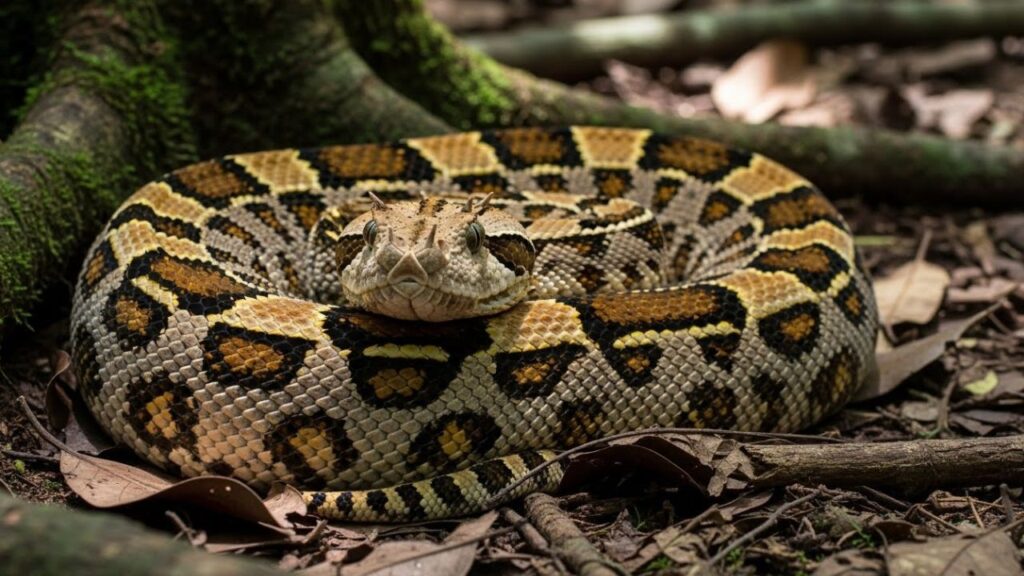
If snakes were superheroes, the Gaboon viper would be “The Tank”—a slow-moving, heavily armored, and surprisingly deadly force of nature.
Don’t let its laid-back, lounge-around-all-day attitude fool you. This African rainforest resident is one of the heaviest venomous snakes on the planet. Lengthwise, it usually maxes out around 7 feet, but in terms of sheer bulk? Think of a coiled python with a venomous punch.
According to the National Zoo, Gaboon vipers are the masters of patience. By day, they lounge among the fallen leaves of the forest floor, practically camouflaged into invisibility. Come nightfall, they activate their inner ninja.
With eyes gleaming under the moonlight, they wait for unsuspecting prey to wander by, then strike with lightning speed—fast enough to make even adrenaline junkies blink in surprise. Their venom is a potent cocktail, capable of taking down prey efficiently, so these vipers really don’t mess around.
Young Gaboon vipers aren’t completely untouchable—some brave (or perhaps foolish) secretary birds have been known to make a meal out of them—but adults? Untouchable. They dominate their ecosystem, proving that in the snake world, size and strategy matter.
Their ancestry is equally impressive: while fossils trace back to the lower Miocene, their family tree likely stretches all the way to the early Eocene, meaning they’ve been perfecting their forest-floor lounging—and deadly ambush skills—for tens of millions of years.
So, next time you’re imagining a night-time stroll through an African rainforest, picture this: the silent, patterned sentinel of the leaves, coiled and waiting, proving that sometimes the deadliest creatures are also the most patient.
4. Tibetan Pit Viper

High up in the misty, rugged mountains of Tibet, lives a snake that’s basically the ultimate introvert: the Tibetan pit viper. These snakes prefer remote, rocky terrain and are rarely seen by humans, which is probably just how they like it.
Think of them as the hermits of the snake world—keeping to themselves, enjoying the quiet, and only coming out when absolutely necessary. Tibetan pit vipers are relatively small compared to some of their venomous cousins, but don’t underestimate them.
They’re equipped with heat-sensing pits—like built-in infrared goggles—that help them detect warm-blooded prey even in the chilly mountain air. This makes them expert hunters, capable of striking with precision despite their stealthy, secretive nature.
During the day, they hide among rocks, crevices, or low vegetation, avoiding the harsh sunlight and potential predators. At night, they emerge, ready to ambush unsuspecting rodents or small mammals. Their venom isn’t just for show either—it’s perfectly suited to immobilize prey efficiently, allowing the viper to dine without much fuss.
What makes them truly fascinating is how perfectly adapted they are to life in such a remote, harsh environment. They’re survivors, specialists, and masters of subtlety.
If you ever find yourself trekking through the Tibetan highlands, remember: you’re sharing the mountains with a creature that’s quiet, deadly, and decidedly unbothered by humans.
5. Inland Taipan

Meet the inland taipan, also charmingly known as the “fierce snake.” Don’t let the nickname scare you too much—it’s fierce in venom, not attitude.
Native to the remote black soil plains along the borders of Queensland and South Australia, this snake prefers isolation so much that it makes a hermit look social, as per Wikipedia. Seriously, spotting an inland taipan in the wild is rarer than finding a Wi-Fi signal in the outback.
These snakes are masters of adaptation. They literally change color with the seasons! During summer, their scales lighten to reflect the sun’s heat, and in winter, they darken to soak up warmth. It’s like nature’s very own mood ring… but way more useful.
While the inland taipan isn’t aggressive and usually avoids humans, it packs one of the most potent venoms of any snake on the planet. Basically, it’s the shy kid in the corner who, if crossed, can quietly but efficiently take over the room.
They’re perfect examples of how evolution equips creatures to thrive in remote, harsh environments: elusive, perfectly camouflaged, and deadly if necessary—but mostly just keeping to themselves and enjoying the solitude.
6. African Rock Python
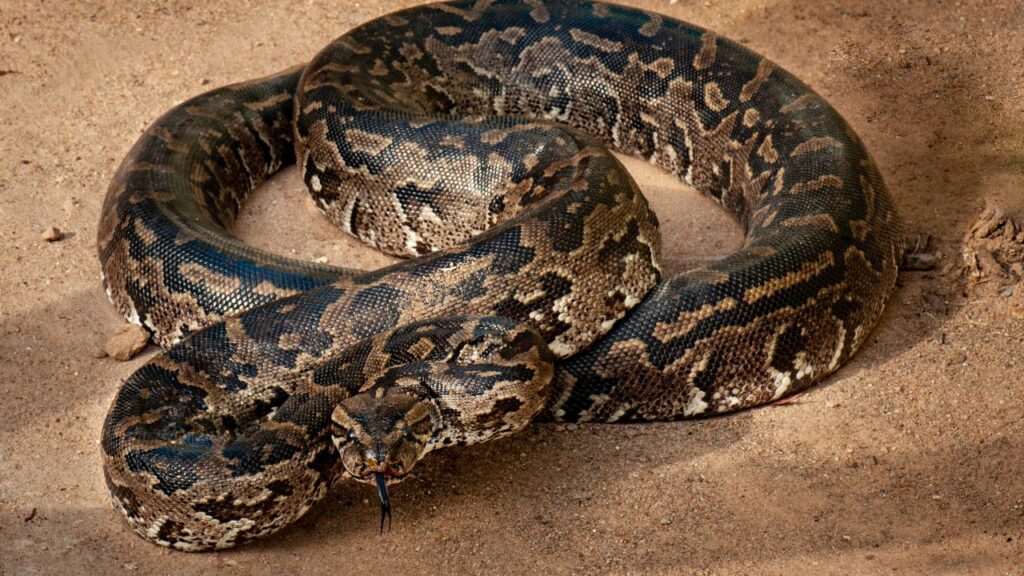
If snakes had a “king of the jungle” title, the African rock python would be a strong contender—massive, powerful, and impressively well-hidden. Found in remote savannas, forests, and riverbanks across sub-Saharan Africa, these giants are the true embodiment of stealthy strength.
Unlike some of the flashy rainforest snakes, African rock pythons prefer the slow-and-steady approach: hide, wait, and then strike with surprising force.
These snakes can reach lengths of over 20 feet, making them some of the largest snakes in the world. They’re constrictors, which means their hunting style is all about patience and power rather than venom.
One moment, it’s just a camouflaged coil among the rocks or tall grasses; the next, an unsuspecting antelope or warthog finds itself in a very tight embrace. Don’t worry—they’re not out to chase humans, but crossing paths in the wild? Best admired from a respectful distance.
African rock pythons are also surprisingly adaptable. From dense forests to open plains, they know how to make a home almost anywhere—though they still prefer remote, undisturbed areas where humans aren’t constantly poking around. They’re a perfect example of nature’s balance: enormous, powerful, and perfectly suited to life off the beaten path.
7. Island Pit Viper
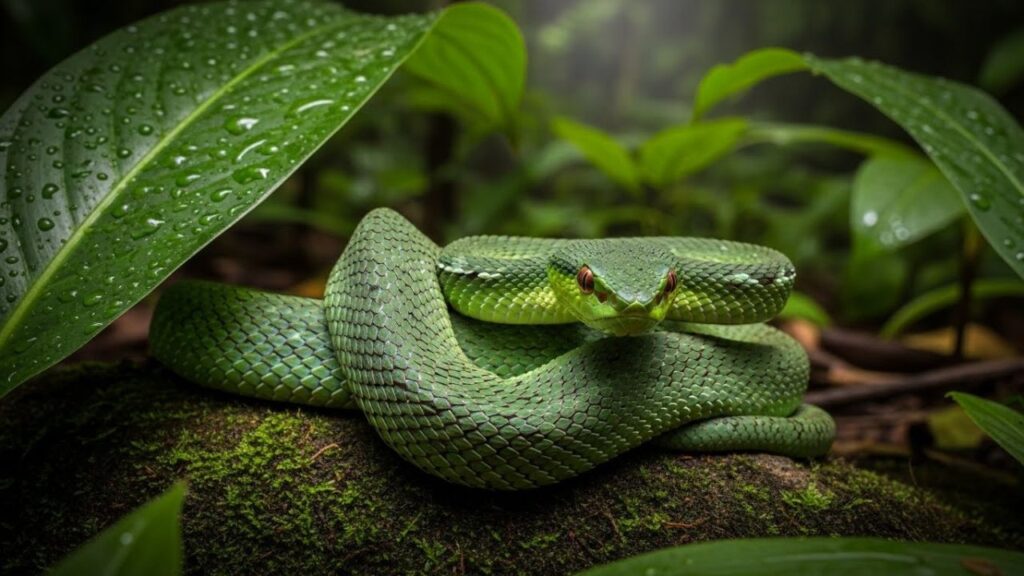
Picture a snake that lives on an island so remote, it basically has its own private resort—that’s the island pit viper.
Found on isolated islands in parts of Southeast Asia, these vipers have mastered the art of solitude. They’re the introverts of the snake world, perfectly content to hang out in dense forests or bamboo thickets, far away from humans and other curious creatures.
Island pit vipers aren’t huge, but they are perfectly equipped for survival. Their heat-sensing pits are like built-in night-vision goggles, allowing them to detect warm-blooded prey even in the dark, humid nights.
They’re ambush specialists: patiently waiting on a branch or nestled among leaves, then striking with precision when a meal wanders too close. It’s a bit like ordering room service, but with fangs.
These snakes are also masters of camouflage, blending seamlessly into their leafy or rocky surroundings. Predators? Not many dare try, especially adult vipers.
Their isolated island life means they face fewer threats and competition, making them one of the more “zen” snakes out there—quiet, lethal, and perfectly adapted to their tiny slice of paradise.
Conclusion
Snakes that live in the most remote locations are among the deadliest snakes and diverse snake species whose venom can paralyze muscles, destroy red blood cells, cause internal bleeding, or trigger acute kidney failure with a single bite. Species like the Coastal Taipan, Indian Cobra, Fer de Lance, and various rattlesnakes inhabit isolated areas where frogs, spiders, birds, and other prey abound, and their toxins play a crucial role in hunting and poisoning. These snakes are often dangerous, yet believed to pose minimal risk unless a person feels threatened or attempts to attack or jump near them.
Researchers have discovered their behavior, symptoms, and effective treatment with antivenom, enhancing science and understanding of reptiles in land and ground habitats across the country. While some species face extinction, their remote habitats help protect populations from human interference. These snakes lead solitary lives in remote locations, surviving on other snakes, birds, and small animals, demonstrating how isolation shapes the evolution, danger, and survival strategies of the planet’s most elusive serpents.
