




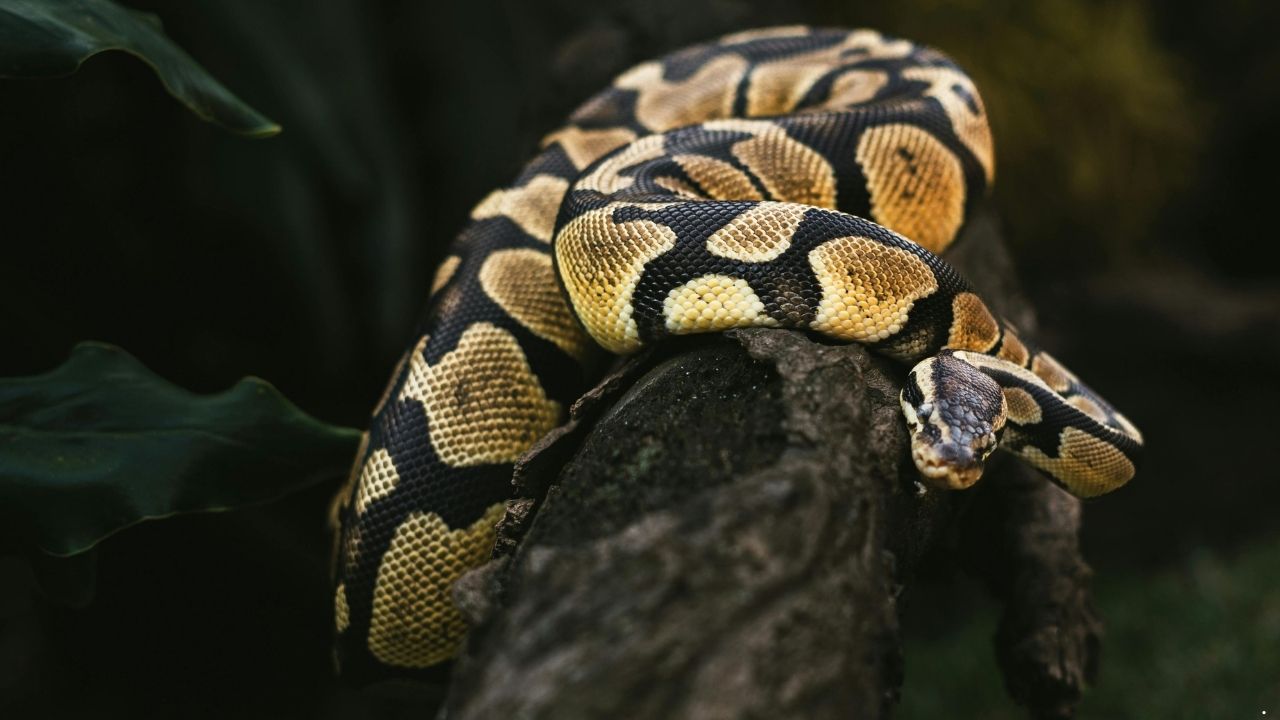
Imagine a place where sunlight has never touched the ground—deep caves, underground tunnels, or thick forest floors buried beneath layers of earth. In these shadowy worlds, vision is nearly useless, yet life persists.
Among the most fascinating residents of this darkness are snakes that have evolved to survive without relying on sight at all. These remarkable snakes navigate their environment using an impressive toolkit of alternative senses.
Heat-sensing pits allow some species to detect warm-blooded prey even in total darkness. Others rely heavily on smell, tongue-flicking to “taste” the air, or sensitivity to ground vibrations that signal nearby movement.
Fewer predators, stable temperatures, and less competition make underground and cave habitats surprisingly hospitable. As we explore these snakes of the shadows, you’ll discover how evolution has shaped creatures perfectly suited for life where darkness is not a limitation—but a strength.
Fact: Some snakes, like the blind cave snake, have adapted to life without light. They rely on heat-sensing pits, vibration detection, and chemical cues to hunt and navigate—proof that eyes aren’t always necessary for survival.
7 Snakes That Can Survive in Complete Darkness
1. Brahminy Blind Snake
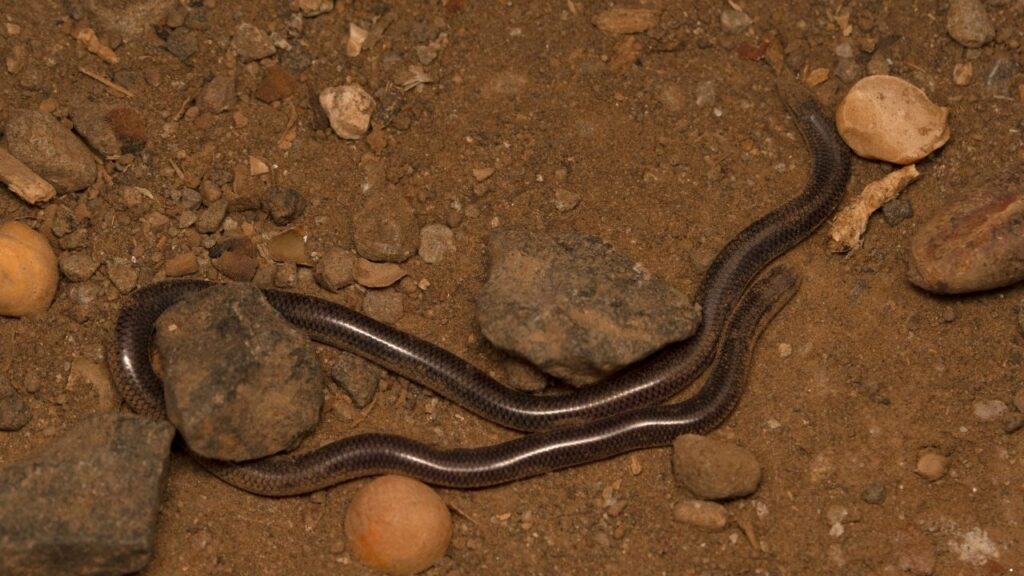
If you’ve ever looked at the ground and thought, “Is that an earthworm… or is it secretly a snake?”—congratulations, you’ve met the Brahminy blind snake.
This tiny, non-venomous snake is practically the ninja of the reptile world. Its eyes are so small and covered with translucent scales that calling them “eyes” is almost generous.
Wikipedia says they can’t form images, but they can tell whether it’s light or dark—which is plenty when you spend your life underground avoiding rent and sunlight. The Brahminy blind snake is a full-time underground resident. You’ll find it:
Hanging out in ant and termite nests (uninvited, but confident)
Sliding under logs, stones, and moist leaves
Crashing in city gardens, abandoned buildings, and urban soil like it owns the place
Its survival depends heavily on soil humidity and temperature, making it less of a thrill-seeker and more of a climate-controlled lifestyle enthusiast.
Instead of relying on sight, this snake uses:
Touch
Vibrations
Chemical cues (basically “smelling” the world)
It doesn’t hunt dramatically—it politely sneaks into insect colonies and snacks on larvae. Think of it as a very quiet, very smooth burglar with scales.
Bonus fun fact: this species is parthenogenetic, meaning it reproduces without males. That’s right—no dating, no drama, just cloning and moving on
2. Western Blind Snake
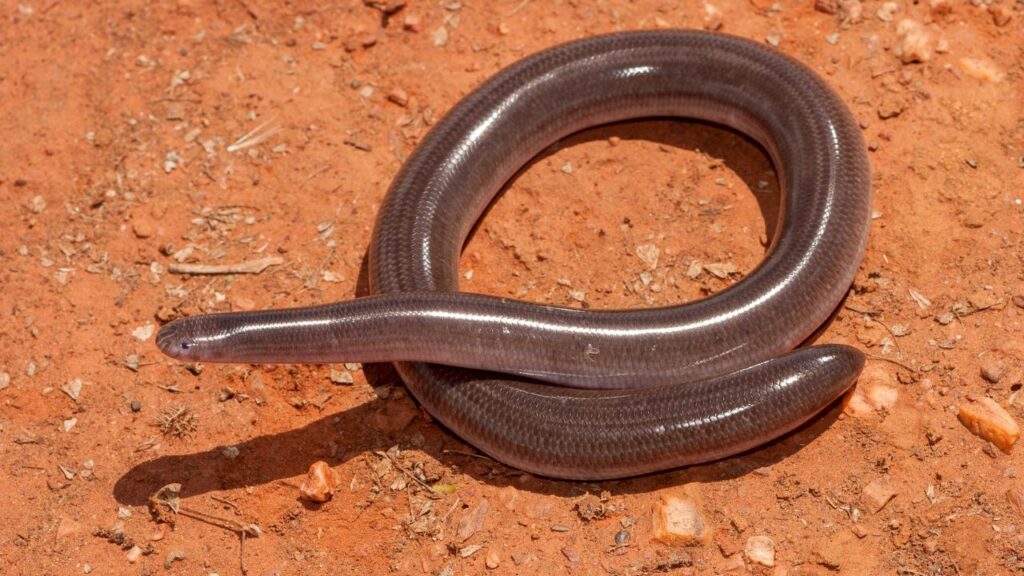
Meet the Western blind snake, a creature so discreet that even darkness barely notices it. Native to the southwestern United States and parts of Mexico, this tiny, non-venomous snake has perfected the art of living where the sun simply doesn’t matter.
At first glance, it looks less like a snake and more like a moving piece of spaghetti that escaped the kitchen. Smooth, shiny, and pinkish-tan, the Western blind snake could easily fool you into thinking it’s an earthworm—until it politely reminds you that worms don’t have scales or tiny snake attitudes.
Like its blind snake cousins, the Western blind snake has extremely reduced eyes hidden beneath translucent scales. These eyes can’t form images and are basically there to answer one question only:
“Is it bright or dark?” This snake is a professional burrower, spending nearly all its time underground. You’ll find it:
In loose soil and sand
Under rocks, logs, and leaf litter
Occasionally popping up after heavy rain like, “Oh wow, surface world—still loud, I see.”
Its diet consists mostly of ants, termites, and their larvae, making it a quiet but effective pest controller. No poison, no aggression—just a slow, steady clean-up crew with scales. The Western blind snake survives perfectly well without vision because it relies on:
Touch and body pressure
Vibrations in the soil
Chemical sensing (basically tasting the air like a professional)
Its blunt head and tail even look similar, which is nature’s way of confusing predators—and possibly itself, but we don’t judge.
In the world of snakes that thrive in complete darkness, the Western blind snake proves that you don’t need sharp eyesight to succeed—just good instincts, good soil, and a strong commitment to staying out of the spotlight.
3. Ball Python
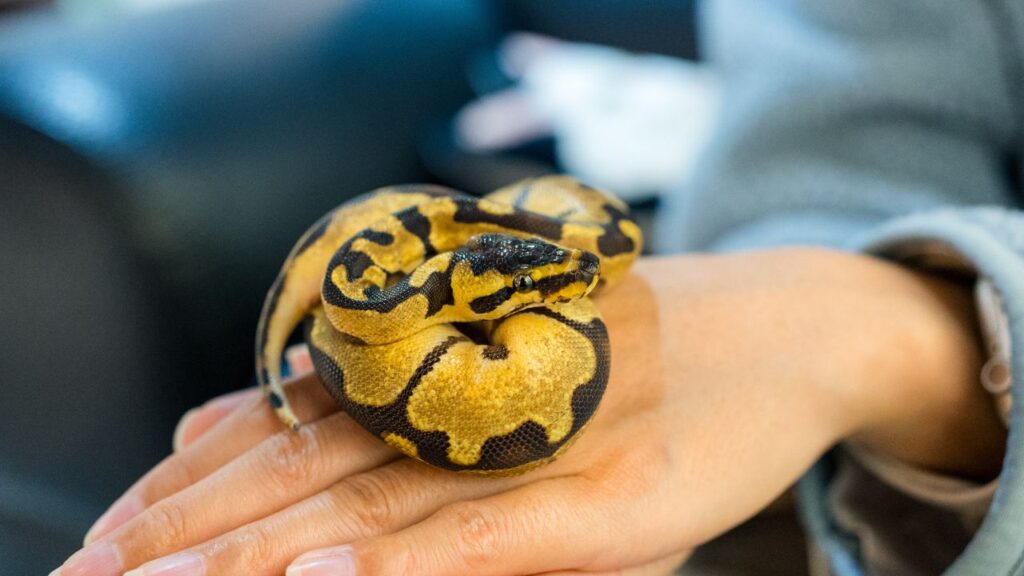
Named for their adorable (and very effective) defense move, ball pythons are one of the most popular pet snakes in the world—and for good reason. Ball pythons are nocturnal, meaning they’re most active after the lights go out.
Darkness doesn’t bother them at all—in fact, it’s their comfort zone. This makes feeding sessions at night ideal, when your snake is thinking, “Ah yes, dinner o’clock.”
While they aren’t blind like blind snakes, ball pythons rely heavily on heat-sensing pits along their lips. These specialized sensors allow them to detect warm-blooded prey even in near-total darkness.
When threatened or stressed, ball pythons curl themselves into a tight ball with their head tucked safely inside. It’s equal parts defensive strategy and emotional boundary-setting. Honestly, relatable.
Ball pythons are solitary creatures and prefer living alone. PetMD strongly advises against housing multiple ball pythons together, as it can lead to stress, aggression, and competition. In snake terms, that’s a hard no roommates policy.
Like any snake, a ball python may strike if it feels:
Ill
Stressed
Threatened
And occasionally, they may mistake a human hand for food. (In their defense, hands are warm, move suspiciously, and often smell like dinner.)
Ball pythons may not live underground or be blind, but their ability to function confidently in complete darkness—using heat detection instead of sight—earns them a rightful spot among darkness-adapted snakes.
4. Burmese Python
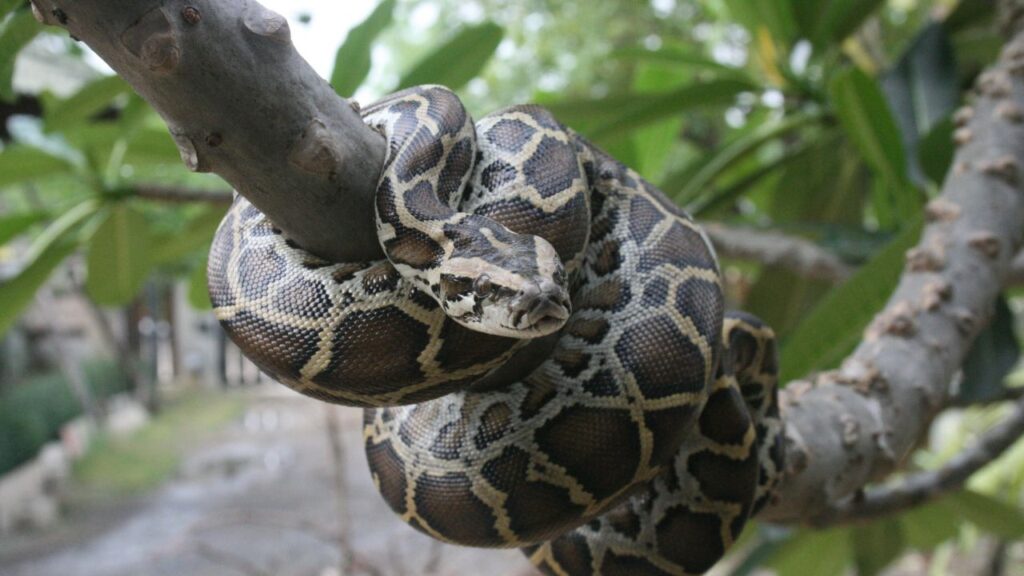
One of the largest snake species in the world, the Burmese python proves that you don’t need perfect eyesight to dominate the darkness—you just need size, patience, and excellent heat detection.
Burmese pythons are primarily nocturnal and crepuscular, meaning they’re most active at night and during twilight hours. Like other pythons, they rely heavily on heat-sensing pits along their jaws. These incredible sensors allow them to “see” warm-blooded prey even in near-total darkness.
Lights off? No problem. If something warm moves nearby, the Burmese python already knows. Burmese pythons are true giants:
Commonly grow 16–20 feet long
Can weigh over 200 pounds
Despite their intimidating size, they are often surprisingly calm in temperament, especially when accustomed to human presence. Rather than chasing prey, Burmese pythons prefer to:
Lie in wait
Detect heat and movement
Strike with impressive speed
Constrict patiently (no rush—this snake has all night)
This sit-and-wait strategy works perfectly in dark environments like forests, wetlands, and dense undergrowth. Like most snakes, Burmese pythons are solitary. They don’t form social bonds and don’t enjoy sharing space.
While Burmese pythons can appear calm, they are powerful animals that require experienced handling and specialized care in captivity. A relaxed Burmese python is still a very strong snake, and stress or fear can lead to defensive behavior.
Burmese pythons don’t survive darkness—they own it. Their heat-sensing abilities allow them to hunt effectively without relying on vision, making complete darkness just another working condition.
5. Boa Constrictor
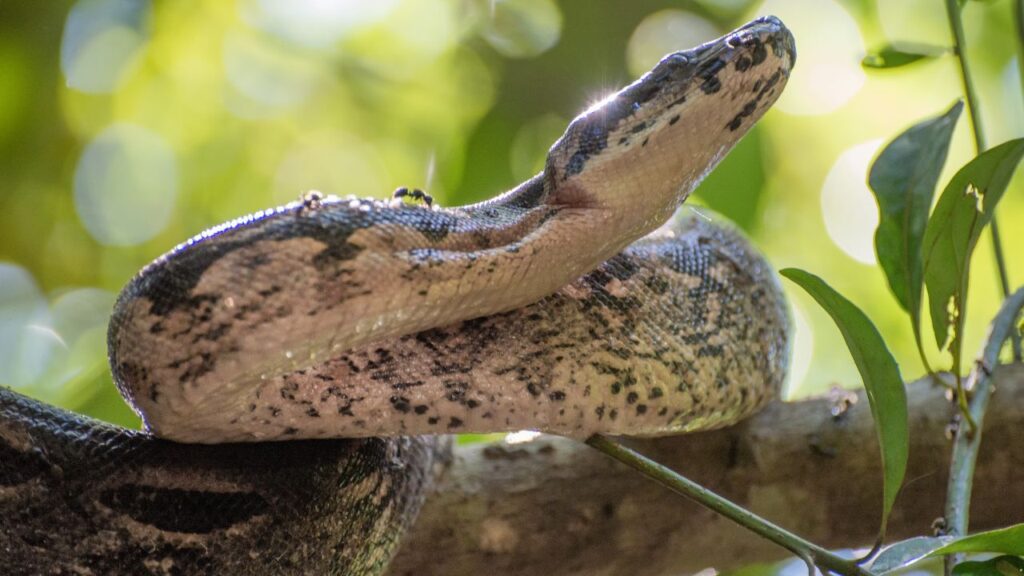
One of the most iconic snake species in the world, the boa constrictor is perfectly adapted to life in low light and total darkness, proving that good vision is optional when you have excellent heat detection and patience.
Boa constrictors are primarily nocturnal, meaning nighttime is when they shine… metaphorically, of course. Like pythons, boas have heat-sensing pits along their lips that allow them to detect warm-blooded prey even in complete darkness.
Lights off? The boa just switches to thermal mode. Boas are classic ambush predators. Instead of relying on sight, they:
Sense heat and movement
Wait silently (sometimes for hours)
Strike with precision
Constrict calmly and efficiently
This hunting style works beautifully in dark forests, dense vegetation, and nighttime environments where visibility is poor but body heat is not.
Boa constrictors are large, muscular snakes, often growing 8–13 feet long. Despite their size, they’re known for being calm and manageable when properly cared for, which is why they’re popular among experienced snake keepers.
That said, they are still solitary animals and prefer their space. No roommates, no playdates, no shared terrariums—just vibes. Boa constrictors are generally even-tempered, but like all snakes, they can strike if they feel:
Threatened
Stressed
Confused (especially around feeding time—hands are warm and suspicious)
Respect their boundaries, and they’re typically very tolerant. Boa constrictors don’t rely on sharp eyesight to survive. Their heat-sensing abilities, combined with their patient hunting strategy, allow them to function efficiently in complete darkness.
6. Green Anaconda
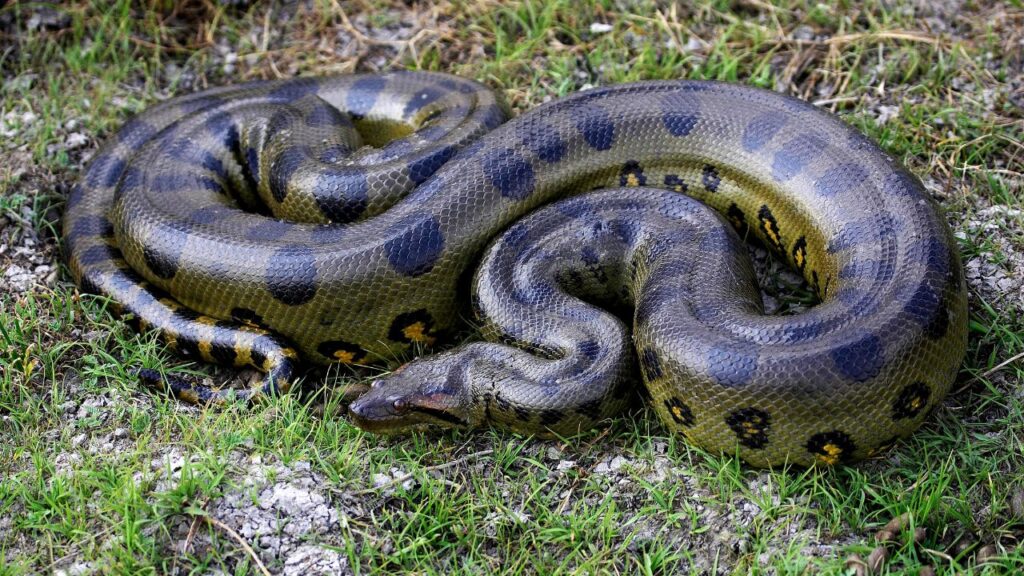
If darkness had a final boss, it would probably be the green anaconda. One of the largest and heaviest snakes on Earth, this nonvenomous, semi-aquatic boa doesn’t just survive in low light—it becomes nearly invisible in it.
Native to South America, green anacondas are perfectly designed for murky waters, dense vegetation, and shadowy wetlands where sunlight is more of a suggestion than a rule.
In dim water or complete darkness, this pattern turns the anaconda into a living optical illusion. Prey doesn’t see it coming—because there’s nothing to see.
Green anacondas spend most of their lives in slow-moving rivers, swamps, and flooded forests, where visibility is often close to zero. Like other boas, they rely on heat sensing, vibration detection, and movement, not sharp eyesight.
When dry seasons hit and water levels drop, these snakes simply:
Move to deeper water
Or burrow into mud like a massive, scaly submarine in sleep mode
Adaptability is their love language. Although water is their comfort zone, green anacondas are surprisingly versatile. They can be found:
On land in thick vegetation
Coiled in low trees
Lurking quietly at the water’s edge, pretending to be part of the scenery
Their ability to function across land and water—especially in low light—makes them masters of shadowy environments.
Green anacondas are ambush predators. They wait motionless, detect prey by movement and body heat, then strike with shocking speed. The darkness helps them stay hidden, and the water muffles sound—perfect conditions for a surprise nobody asked for.
Green anacondas thrive where light barely exists—murky waters, dense vegetation, nighttime hunting grounds. Vision plays a minor role; sensing the world through heat and movement is what keeps them at the top of the food chain.
7. Texas Blind Snake
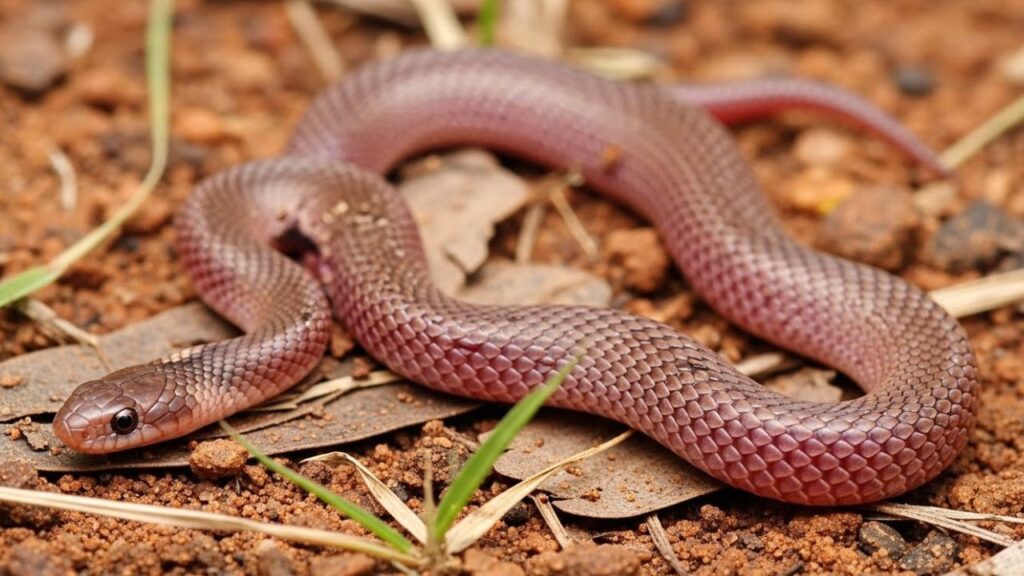
The Texas blind snake—also charmingly known as the Texas threadsnake—is proof that even in dry, dusty deserts, life can thrive without ever seeing the sun. Slender, shiny, and wormlike, this tiny snake is so low-key that most people who see one think they’ve discovered a very ambitious earthworm.
True to its name, the Texas blind snake has extremely reduced eyes covered by translucent scales. These eyes can’t form images and are mostly useful for detecting light versus dark—which is perfect, because this snake strongly prefers dark, thank you very much.
According to Britannica, the Texas blind snake is secretive and harmless, spending most of its life underground in loose sandy and gravelly soil. It thrives in:
Dry grasslands
Desert environments
Soil that’s easy to tunnel through
Its favorite hangout spots include ant and termite nests, where it feeds on larvae like a polite but persistent guest who never leaves the snack table.
This snake rarely comes above ground, but when it does, it chooses its moments carefully:
Evenings
After rainfall
Occasionally under stones in damp stream beds
Rain softens the soil, making travel easier—basically rush hour for blind snakes.
The Texas blind snake is a textbook example of a species that thrives without sight. Spending most of its life underground and emerging only in low-light conditions, it survives comfortably in environments where vision is optional and darkness is the norm.
Conclusion
In the snake world, many nocturnal snakes have evolved remarkable ways to survive and hunt in complete darkness, relying on more than just light. Across the eastern United States, southeastern United States, and even places like snake island, both nonvenomous snake species such as black rat snake, black snakes, garter snakes, and southern black racer, as well as venomous species like pit vipers with hemotoxic venom, exploit unique activity patterns and hunting schedules. These cold blooded reptiles regulate body temperature using external heat sources, infrared radiation, and specialized heat sensing organs, while their vomeronasal organ helps track prey species including rodents, small mammals, small fish, birds, and lizards.
Many different snake species remain hidden in underground burrows, climb trees, or display a secretive nature to avoid predators, reduce unwanted encounters, and manage potential threats during hot summer months. For snake enthusiasts, understanding how many nocturnal species and even some strictly diurnal snakes adapt to darkness highlights the diversity of native wildlife, the challenges of the pet trade, and why these many species continue typically growing, reaching lengths, and thriving in the wild.
