




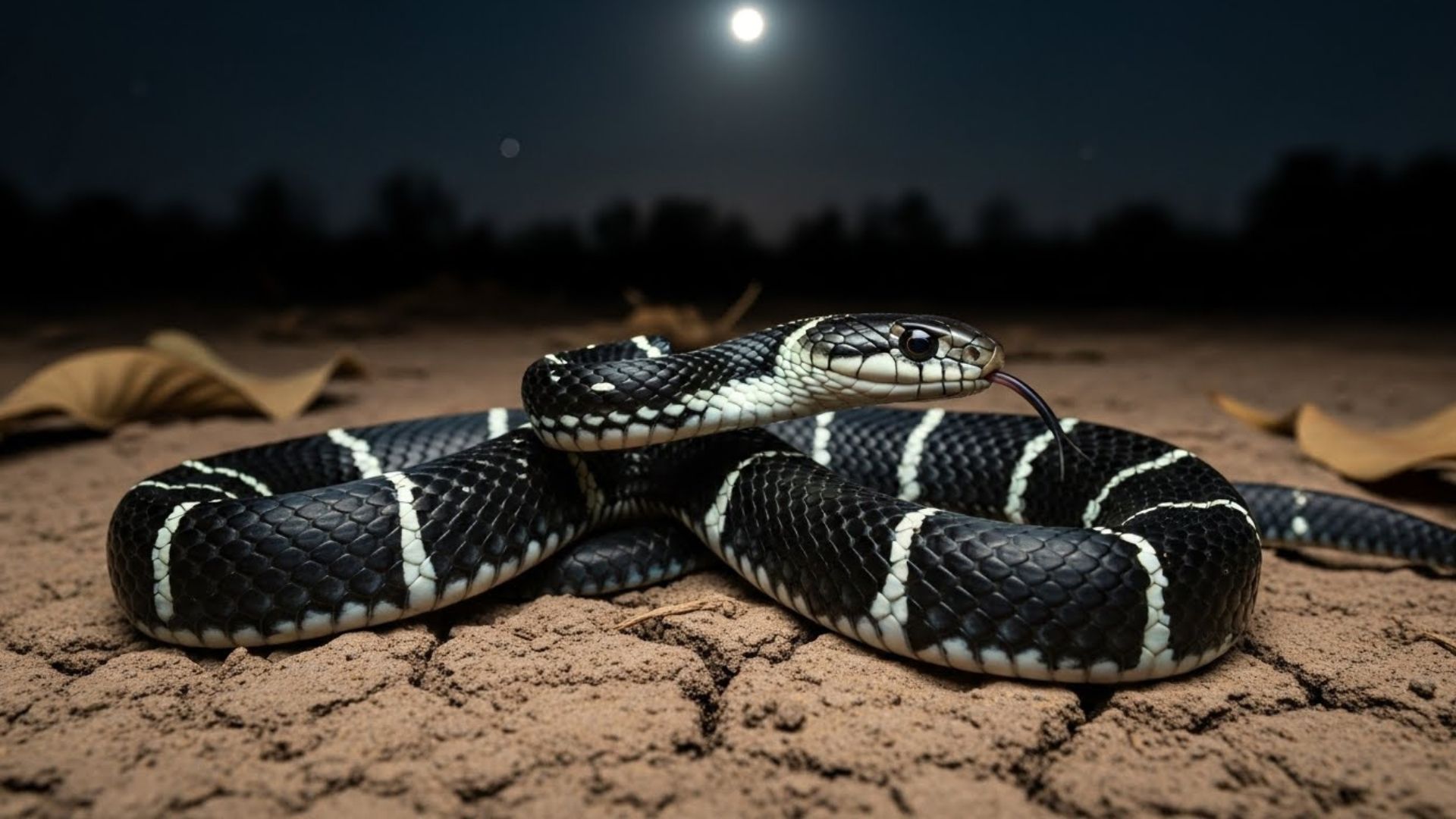
Among them are snakes that have evolved to thrive when most animals rest. These nocturnal hunters rely on stealth, acute senses, and patience, turning the night into an arena for survival and strategy.
Nocturnal snakes have fascinating adaptations: some detect heat from their prey with specialized pits, others use extraordinary night vision, while some rely on acute smell and vibration sensing to navigate in near-total darkness.
By avoiding daytime predators and extreme heat, they gain a unique advantage that allows them to thrive in environments that would be challenging for daytime reptiles.
Exploring these nighttime hunters offers a glimpse into a world most of us never see. Their behaviors are mysterious yet captivating, their adaptations a testament to evolution’s ingenuity.
Whether you’re intrigued by wildlife, fascinated by predator strategies, or simply love the thrill of the unseen, the secret life of snakes at night is a story of survival, stealth, and silent mastery.
Quick Insight: Many snakes are nocturnal hunters, using heat-sensing pits or keen eyesight to strike in the dark. The night is their playground—and the hunt is on!
Snakes That Are Most Active at Night
1. Common Krait

If snakes had a “club” for night owls, the Common Krait would be the president, secretary, and the DJ all rolled into one. By day, this sleek, blue-black serpent is practically a ghost—hiding under rocks, in crevices, or cozy little burrows. But when night falls, it slips out like a stealthy ninja, ready to hunt under the cover of darkness.
Why the night shift, you ask? Well, the Common Krait isn’t really a fan of daytime drama. It prefers cooler temperatures, less human interaction, and more “me-time” chasing its favorite prey—small mammals, frogs, and other snakes.
Think of it as the ultimate introvert: avoids crowds, comes alive at night, and has a seriously potent bite that can make anyone think twice before getting too close.
Here’s a fun fact to impress your friends: the Common Krait’s venom is highly neurotoxic, which means it works on the nervous system, shutting down muscles and making it a formidable hunter in its nocturnal escapades.
So, next time you’re out for a moonlit walk in South or Southeast Asia, remember: the Common Krait might be up and about, silently slipping past your flashlight beam. Admire from afar, maybe tell a ghost story about it, but don’t expect it to say “hi.” Nighttime is its kingdom, and you’re just a guest.
2. Reticulated Python
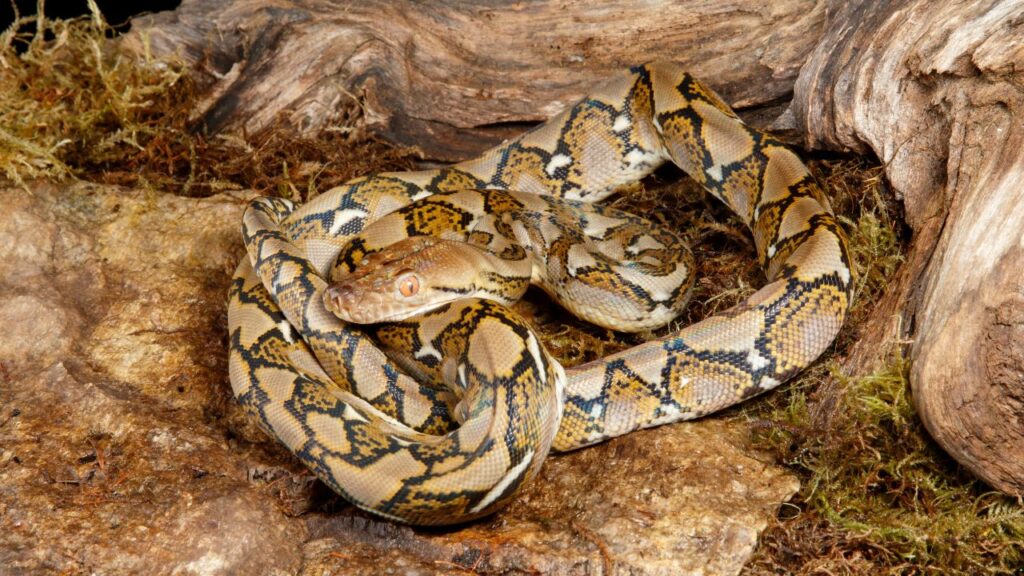
Meet the Reticulated Python, or as snake enthusiasts affectionately call it, the “retic” (or “tic” if you’re feeling casual). By night, this colossal serpent transforms into a stealthy, silent prowler, proving that size doesn’t always mean clumsiness—especially when the moonlight hits just right.
Retics are the rockstars of the snake world—giant, intelligent, and a little mysterious. They can stretch to jaw-dropping lengths, making them one of the longest snake species on the planet.
Despite their size, they’re surprisingly lightweight for their length, almost like a yoga master: big but flexible, and able to coil gracefully wherever they please.
What makes these nocturnal giants really fascinating is their brainpower. PetMD notes that reticulated pythons are among the smartest snakes out there. They can plan, strike with precision, and navigate complex environments like a reptilian chess master.
That said, their widespread distribution means every retic has its own personality quirks—some might be shy night wanderers, others bold explorers, and a few are probably thinking, “Who turned on that flashlight?” whenever humans show up.
So if you ever stumble across a retic under the moonlight, just admire from afar and appreciate the elegance of a snake that truly knows how to own the night.
3. Green Anaconda
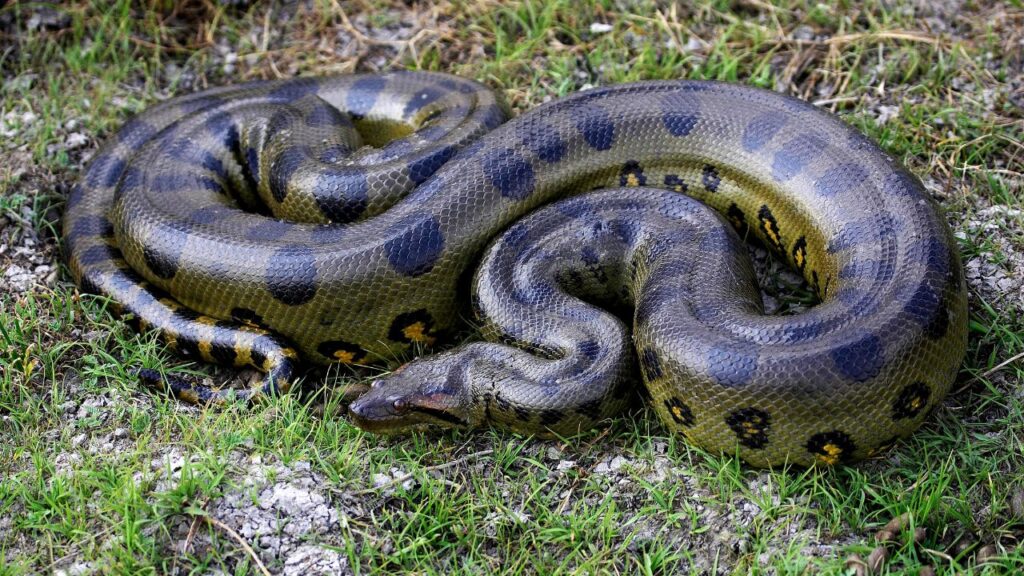
If the night had a water ninja, it would be the Green Anaconda. Mostly nocturnal and mostly aquatic, this massive serpent is the ultimate underwater ambush artist. Imagine a creature that floats like a log, watches like a hawk, and moves like a torpedo—yep, that’s the anaconda at night.
Thanks to the clever placement of its eyes and nostrils on the top of its head, the anaconda can stay nearly invisible while keeping a sharp lookout for dinner. It’s like having a built-in periscope, only far more deadly.
When an unsuspecting prey—maybe a capybara or a caiman—wanders too close, the anaconda doesn’t mess around. No polite dining etiquette here: it strikes, coils, and constricts, delivering a suffocating embrace worthy of a villain in a thriller movie.
Wikipedia says that despite its reputation as a massive beast, the Green Anaconda is surprisingly stealthy. Floating silently in the water, it’s basically the aquatic equivalent of a ninja in pajamas.
And while humans rarely cross paths with these water giants at night, the thought of one gliding just below the surface is enough to make any nighttime river walk feel like the start of an adventure—or a thriller scene!
Fun fact: these snakes don’t need to chase their prey far. Patience is their superpower. Why sprint when you can just lie in wait, silently plotting, and let dinner come to you?
4. Ball Python
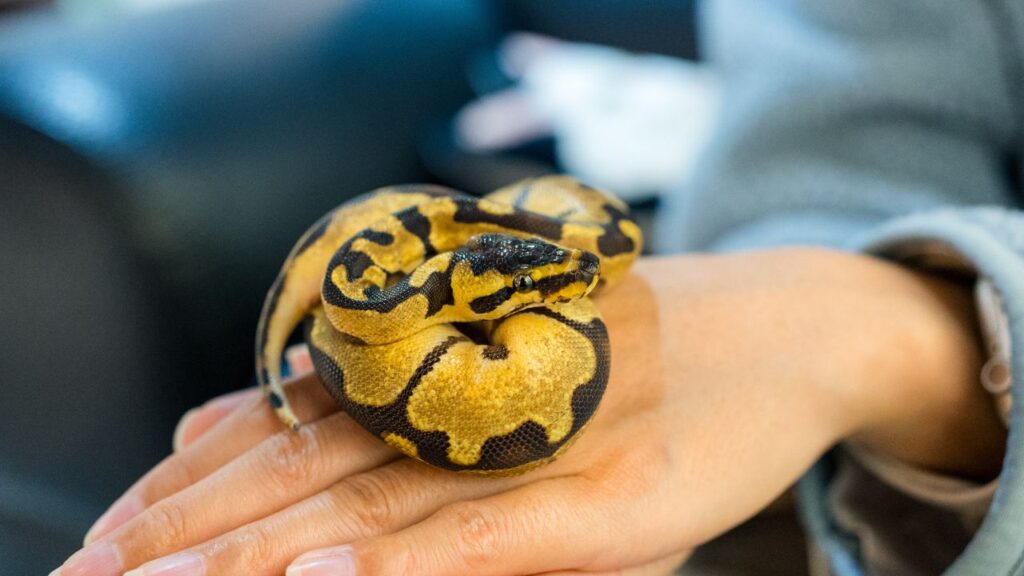
If snakes had a motto, the Ball Python would probably be: “Sleep all day, party all night… quietly.” True to its nocturnal nature, this shy little serpent spends most of the day curled up in a cozy hideout, only emerging under the cover of darkness to explore, hunt, or simply stretch its elegant coils.
One of the coolest things about ball pythons is their specialized night vision. These snakes are basically equipped with built-in night-vision goggles, allowing them to detect movement and navigate their surroundings like tiny, silent ninjas.
Unlike humans, they’re not dazzled by daylight—in fact, too much UV light is basically a migraine for them. Daytime is overrated anyway; the night is where the real action happens.
And just when you think their nighttime senses couldn’t get any cooler, ball pythons throw in a secret superpower: infrared heat detection. This allows them to literally “see” warm-blooded prey in complete darkness. Think of it as a built-in thermal camera—perfect for stalking unsuspecting rodents under the moonlight.
Native to Sub-Saharan Africa, these snakes are also a hit in the pet world because they’re low-maintenance and generally gentle. But even in captivity, they stick to their nocturnal routine.
So if your ball python seems grumpy or uninterested during the day, don’t take it personally—it’s just waiting for its favorite time of day: night.
5. Burmese Python
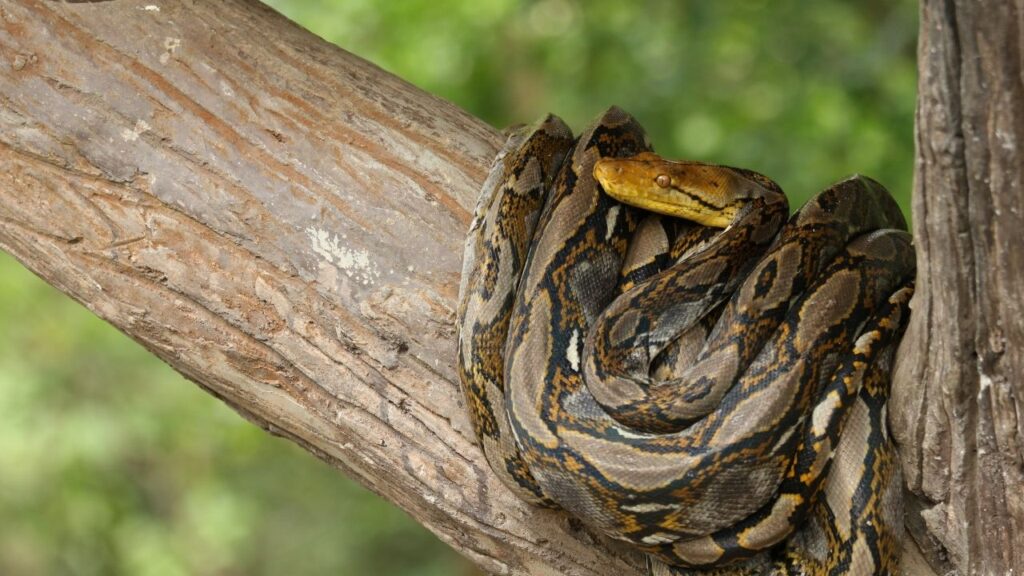
Meet the Burmese Python, the slightly larger, slightly more laid-back cousin of the ball python—but still a nocturnal superstar. While this massive snake might seem intimidating at first glance, it’s mostly a gentle giant that prefers to slither around under the cover of night, avoiding the harsh glare of daytime and any nosy humans.
Like many of its nocturnal relatives, the Burmese Python comes equipped with superior night vision and heat-sensing abilities, giving it the perfect toolkit for hunting after sunset.
Whether it’s stalking small mammals or simply exploring its territory, nightfall is prime time for this snake to do what it does best: glide silently, survey its surroundings, and strike with precision when the opportunity arises.
Native to Southeast Asia, Burmese Pythons are among the largest snake species in the world, capable of reaching mind-blowing lengths of 20 feet or more. Despite their size, they’re surprisingly stealthy at night, almost like a slow-moving ninja—except, of course, a ninja that could comfortably wrap around a small car.
And here’s a fun twist: while they’re nocturnal hunters in the wild, many Burmese Pythons adapt well to captivity and become calm, easygoing pets—still preferring to nap in the light and patrol at night, their internal clocks hardwired for a life after dark.
So if you ever spot a Burmese Python slipping silently through the shadows, just remember: it’s not trying to scare you—it’s just doing its nightly rounds, living its best nocturnal life.
6. Western Diamondback Rattlesnake
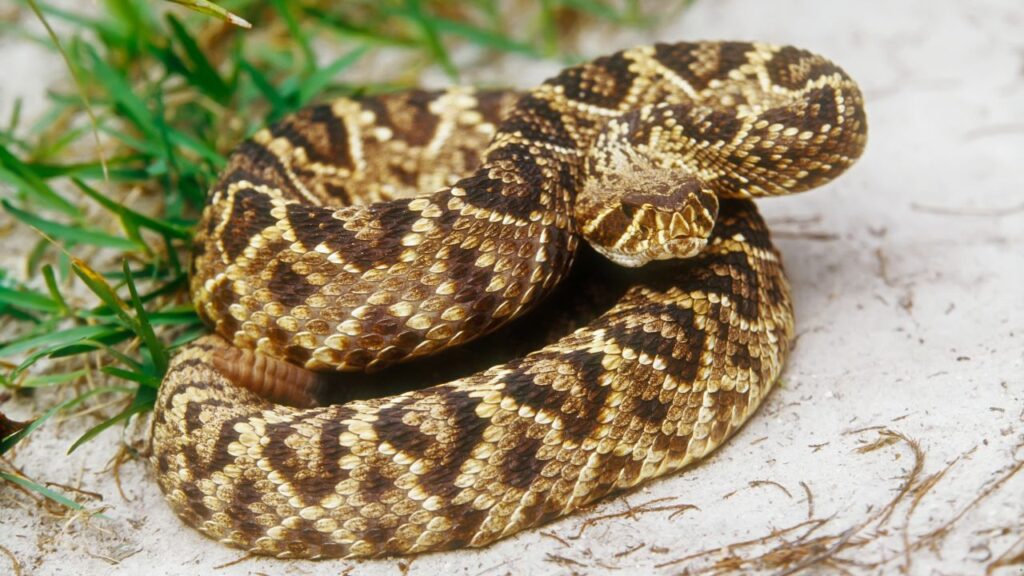
When the sun sets over the deserts of the American Southwest, the Western Diamondback Rattlesnake comes alive, and its signature rattle becomes the soundtrack of the night. This nocturnal predator is all about stealth, speed, and that unmistakable warning shake that says, “Back off, or you’ll regret it!”
Despite its fearsome reputation, the Western Diamondback isn’t just about theatrics. Its night activity is perfectly timed: cooler temperatures, less competition, and plenty of unsuspecting prey—like rodents and small birds—make nighttime the prime hunting window.
Equipped with heat-sensing pits on its face, this rattler can detect warm-blooded animals in total darkness, turning the desert night into its personal snake hunting ground.
Its name comes from the dazzling diamond-shaped patterns along its back, but don’t let that beauty fool you—this snake is serious business after sundown. And while daytime is for snoozing in the shade or under rocks, the night is when the Western Diamondback shows off its true skills: slithering silently, striking with precision, and rattling when diplomacy fails.
So, if you’re camping in rattlesnake territory and hear that rhythmic buzz of a rattle, it’s not a party invite—it’s a polite warning from one of the desert’s most iconic night hunters. Give it space, admire the pattern, and remember: this diamondback shines brightest under the stars.
7. Indian Cobra
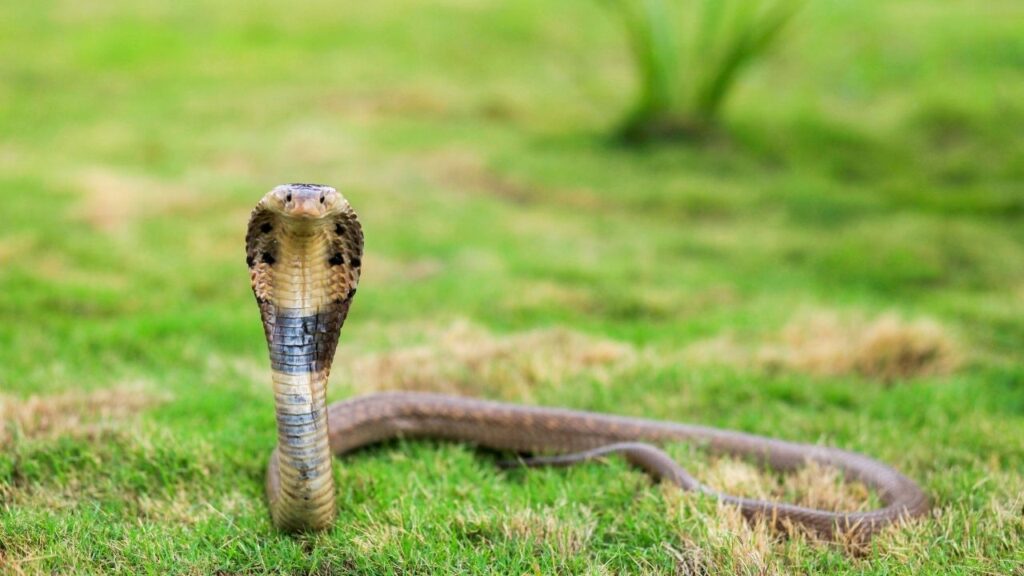
The Indian Cobra is one of the most iconic snakes of South Asia—and it truly earns its reputation as a nocturnal prowler.
By day, this elegant serpent prefers to stay hidden, curling up in cool, shaded spots. But as night falls, the Indian Cobra slithers out to hunt, exploring its surroundings with the grace of a dancer and the precision of a seasoned predator.
This cobra isn’t just about looks—it’s a clever night hunter. With excellent night vision and a keen sense of smell, it can track rodents, frogs, and other small animals in near-total darkness. And if threatened, it has that dramatic signature move: raising its hood and giving a warning hiss that’s as theatrical as it is effective.
Despite its potent venom, the Indian Cobra is generally shy and prefers to avoid humans. Nighttime is its time to shine (literally, under the moonlight), and it uses stealth, speed, and a bit of intimidation to navigate its nocturnal world.
So if you ever spot one gliding silently under the cover of darkness, just remember: the Indian Cobra is the ultimate night charmer—beautiful, deadly, and wise enough to keep a low profile until it decides to make an entrance.
Conclusion
Many snake species, including garter snakes, night snakes, rat snakes, hognose snakes, corn snakes, king snakes, ball pythons, and water snakes, are primarily nocturnal. These snake nocturnal species have adapted to hot climates and cold-blooded physiology by avoiding predators, seeking shelter in underground burrows, and absorbing warmth from daytime temperatures.
With adaptations like vertical pupils and the ability to sense vibrations or infrared radiation, these snakes efficiently hunt lizards and other prey at night. While most snakes are active during specific periods, different snake species tend to adjust their activity to nighttime for safety and survival, making nighttime their peak foraging and movement.
