




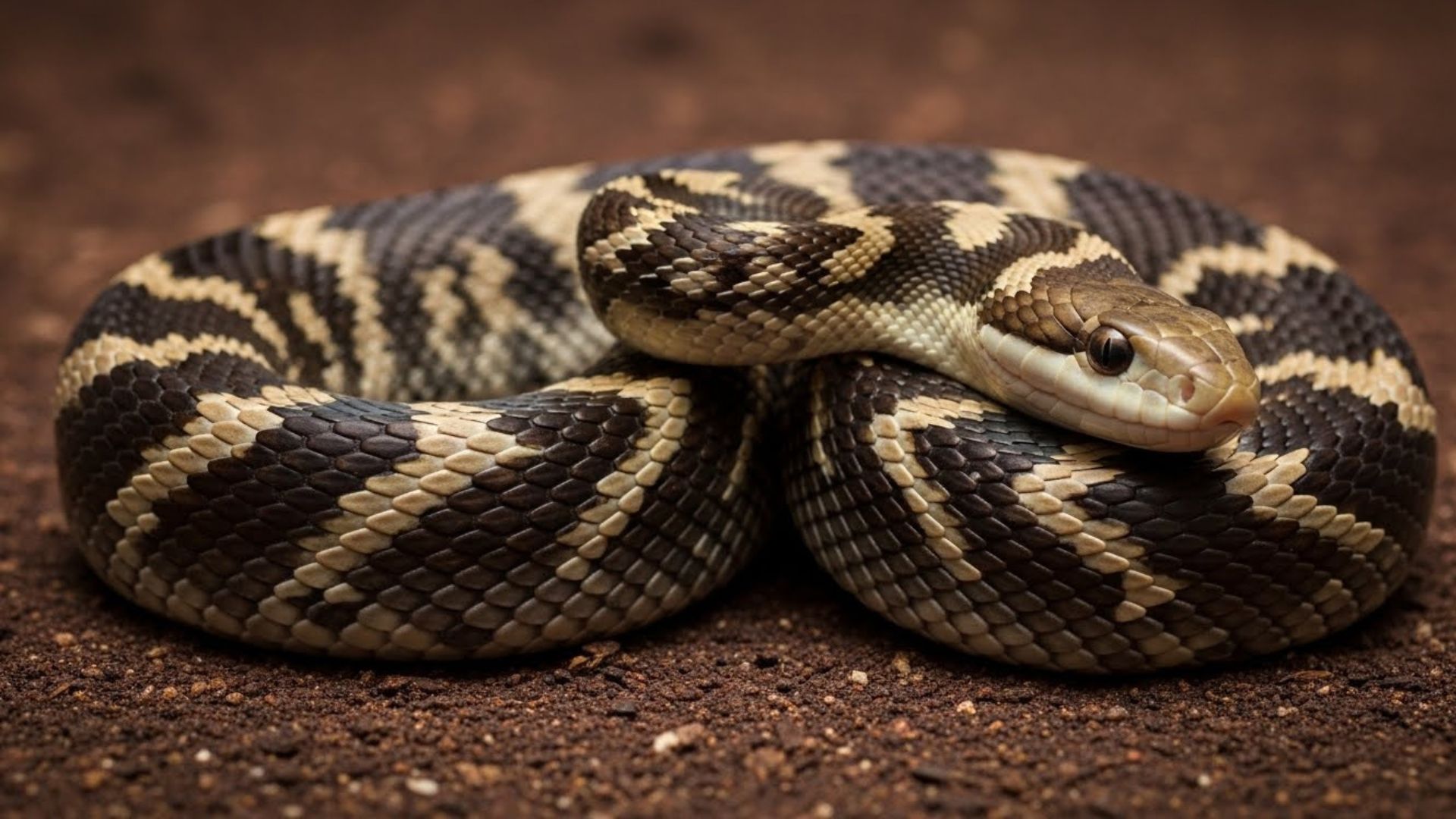
In the world of snakes, strength and precision often go hand in hand. Some species have evolved powerful constriction abilities, allowing them to subdue prey many times their own size.
These constrictor snakes rely on muscular bodies and expert technique, demonstrating that raw power combined with strategy can make them formidable hunters. Constriction is more than just squeezing—it’s a carefully coordinated act.
Snakes wrap their muscular bodies around prey and tighten with every breath the victim takes, effectively immobilizing and subduing it before consumption. This method allows them to safely hunt a wide variety of animals, from rodents and birds to larger mammals, depending on the snake’s size.
From giant pythons in tropical forests to massive boas in South America, constrictors showcase evolutionary ingenuity. Their strength is not only a hunting tool but also a survival mechanism, allowing them to thrive in diverse habitats.
We’ll explore 7 snakes known for their powerful constriction, highlighting their hunting techniques, adaptations, and why they command both respect and fascination in the natural world. These snakes prove that precision and power together create one of nature’s most effective predators.
Quick insight: Studies show that some large pythons can exert over 90 pounds of pressure per square inch, making them some of nature’s most formidable hunters.
Snakes Known for Their Powerful Constriction
1. Green Anaconda
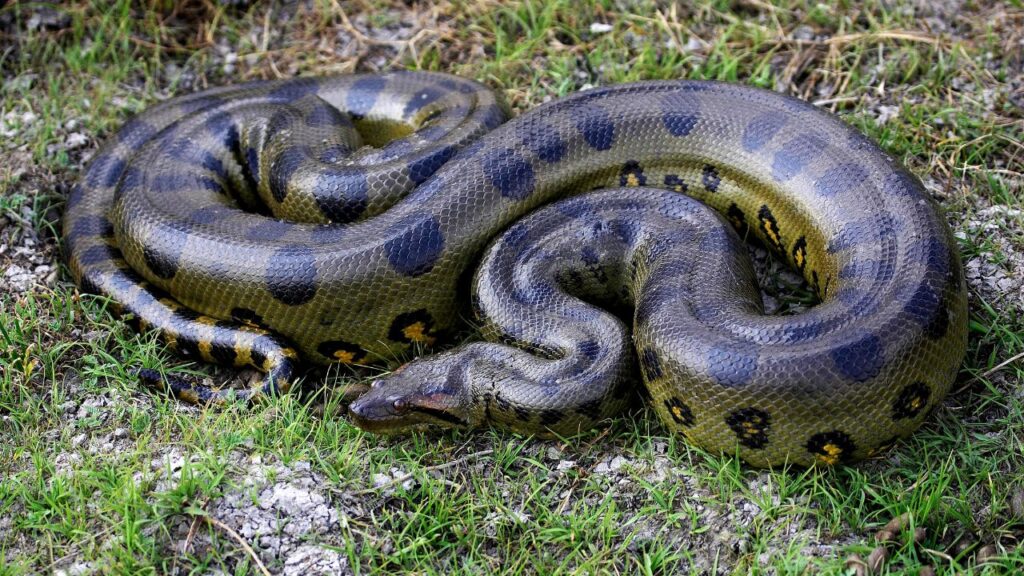
Meet the Green Anaconda, the heavyweight champion of snakes. Imagine a snake so big that a small car would look like a toy next to it.
The world’s longest snake can stretch 20 to 30 feet long and tip the scales at a whopping 550 pounds. And just when you thought that was impressive, there’s the legendary 33-foot, 850-pound anaconda that once startled a construction crew in Brazil. Talk about a morning surprise!
Green Anacondas are South America’s pride, not native to the U.S., and they’re draped in a stylish olive green coat sprinkled with black splotches. Perfect for blending in with the murky waters and swampy jungles they call home. Britannica points out that their physical traits aren’t just for show—they’re camouflage magic while hunting. Imagine sneaking up on dinner without even being noticed. Stealth mode: activated.
And here’s the kicker: while they’re capable of taking down some seriously big prey, these snakes have a gentle side too… if you’re not the prey. They’re like nature’s yoga instructors—flexible, powerful, and capable of some serious stretching.
Fun Fact: Despite their intimidating size, Green Anacondas are excellent swimmers and can stay underwater for up to 10 minutes. So, yes—they’re basically aquatic ninjas.
2. African Rock Python
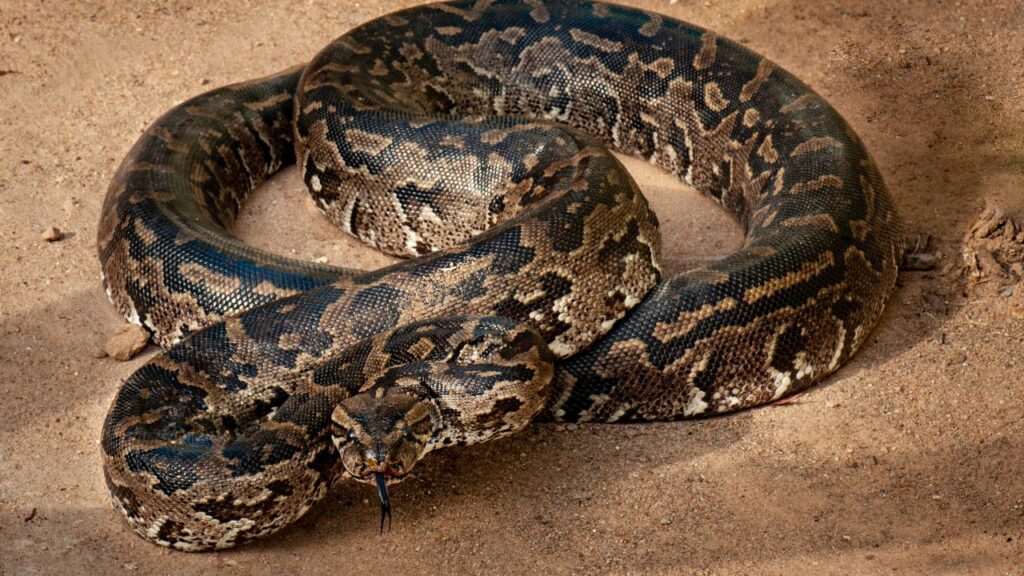
If you thought the Green Anaconda was impressive, meet its African cousin: the African Rock Python. This snake is no joke—it’s strong enough to capture and eat a 150-pound hyena.
Yes, you read that right. National Geographic actually caught this jaw-dropping feat on camera. Imagine being a wildlife documentarian, thinking it’s a regular day in the savanna… and then bam!—snake vs. hyena.
African Rock Pythons typically measure 10–16 feet long and weigh between 70–120 pounds, with some absolute giants tipping the scales at 200 pounds. Don’t let their length fool you—they’re muscular and lightning-fast when it comes to wrapping up dinner.
Their technique? Quick, precise, and deadly—like a cozy but lethal yoga wrap. Once dinner is in their coils, it’s squeezed with enough force that prey usually doesn’t get another chance. And hey, a meal this big lasts a long time—sometimes weeks before the python needs another snack. Talk about the ultimate leftovers!
Fun Fact: African Rock Pythons can open their mouths wide enough to swallow prey larger than their own head. Basically, they’re the snakes’ version of a stretchy burrito.
3. Burmese Python
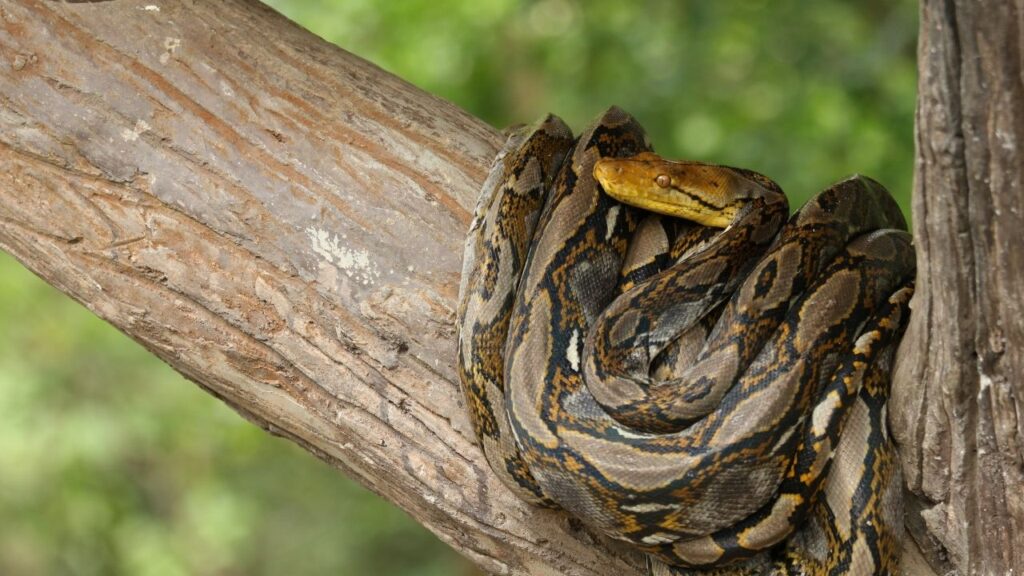
Meet the Burmese Python, a snake so big it could probably win a “who can hug the hardest” contest. Bigger than a boa, these snakes can weigh up to 200 pounds and stretch 18–20 feet long (with some even longer).
They’re thick-bodied powerhouses—basically the sumo wrestlers of the snake world. Native to Asia, India, China, and Vietnam, Burmese Pythons have also made themselves quite at home in the southern tip of Florida.
Unfortunately for the local wildlife, they didn’t just move in—they threw a full-blown “predator party,” wiping out rabbits, raccoons, opossums, and even bobcats. Yes, a full-grown bobcat, weighing up to 40 pounds, is fair game.
These snakes are not just strong—they’re practically nature’s vacuum cleaners, swallowing anything that moves.
Fun Fact: Burmese Pythons are excellent swimmers and climbers. So if you thought your cat was safe lounging near a tree or pond… think again. These snakes can literally “go anywhere” to get a snack.
4. Boa Constrictor
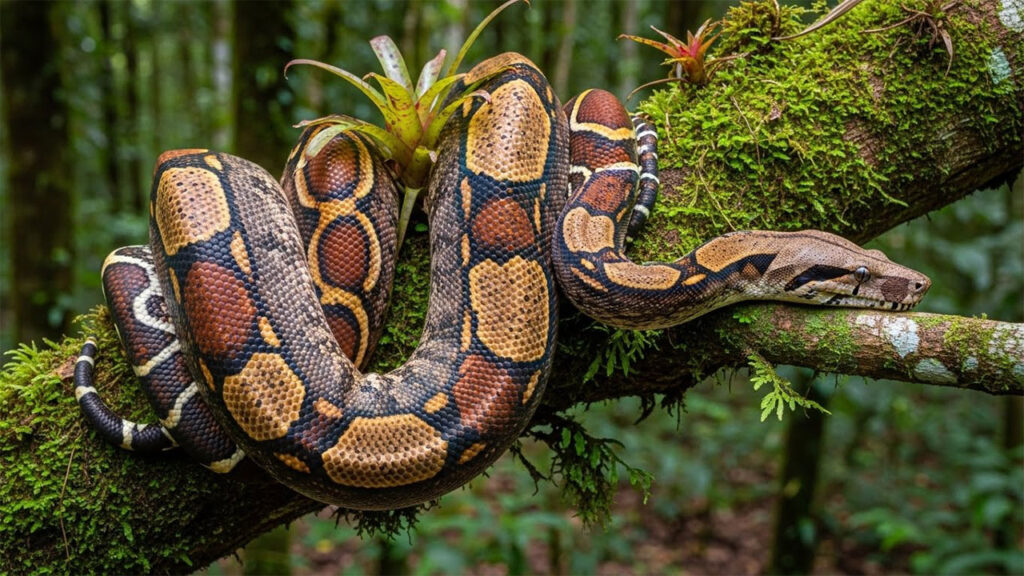
When a snake literally has “Constrictor” in its name, you know it’s not messing around. The Boa Constrictor is one of the strongest snakes in the world, and it’s definitely a heavyweight compared to its smaller, feistier cousins like kingsnakes.
Kingsnakes might be scrappy, but a full-grown boa? That’s a battle you don’t want to start. Boas are thick-bodied and can weigh anywhere from 20 to 30 pounds, though some absolute legends have tipped the scales at 100 pounds.
The record-holder for length? An 18-foot-long monster. They have a menu that includes small mammals like squirrels, opossums, and rabbits.
And don’t worry about them needing daily snacks—a single large rabbit can last the boa an entire month as it slowly digests its meal. Bones and fur? Out come the leftovers. Talk about a slow-food lifestyle!
Boas also have a defensive side. According to Wikipedia, they strike when they feel threatened. Their bite can hurt—like, ouch!—but it’s rarely dangerous to humans. Think of it as a warning jab rather than a full-on attack.
Fun Fact: Despite their reputation as stealthy ambush predators, boa constrictors can actually swim quite well. So if you’re near water, don’t assume they’ll stay on land—they might just make a splashy entrance.
5. California Kingsnake
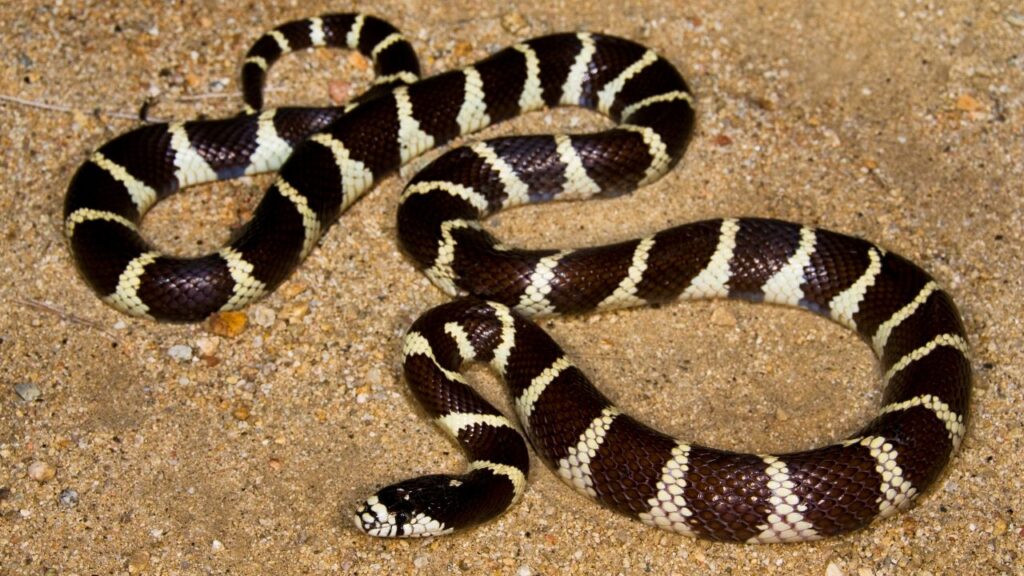
Meet the California Kingsnake, a striking black-and-white beauty that looks like it got dressed for a fancy masquerade ball.
These snakes are found along the West Coast, from California down into Mexico, thriving in deserts, forests, and grasslands. Most grow to about 3½ feet long, though some ambitious individuals can reach 5 feet or more.
Despite their smaller size compared to giant constrictors like boas or anacondas, Kingsnakes are fearless predators. They have a reputation as the “snake-eating snake,” happily taking on other snakes—including venomous ones—without flinching. Their diet also includes rodents, lizards, and even turtles.
Their strategy? Wrap it up, squeeze gently but firmly, and swallow it whole. Think of it as a masterclass in snake multitasking: dinner and a workout at the same time.
Fun Fact: California Kingsnakes are immune to the venom of many snakes, including rattlesnakes. So, basically, if venomous snakes were throwing a party, the Kingsnake would stroll in like it owned the place.
6. Speckled Kingsnake
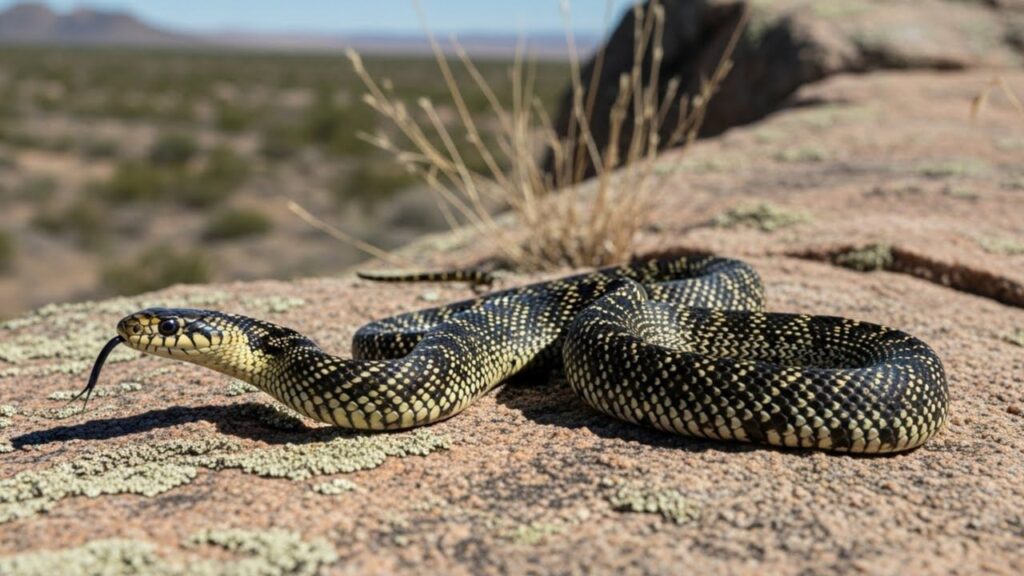
Say hello to the Speckled Kingsnake, a small but mighty member of the constrictor family. True to its name, this snake sports a striking black coat sprinkled with yellow to cream speckles and bars—nature’s own confetti pattern.
These snakes grow to about 4 feet long and weigh a modest 3–5 pounds, but don’t let their size fool you—they pack a powerful punch when it comes to hunting. Native to the Midwest (covering Iowa, Missouri, Mississippi, Alabama, Arkansas, Louisiana, and parts of Texas), Speckled Kingsnakes are primarily ground-dwellers.
Unlike their tree-climbing cousins, they prefer to stay on solid turf, which makes them skilled at stalking ground-based prey. Their menu is diverse: snakes (even venomous ones!), frogs, lizards, and rodents are all fair game. With a quick wrap, a firm squeeze, and a slow swallow, they turn mealtime into a masterclass of efficiency.
What’s especially fascinating is their immunity to the venom of many snakes, giving them a literal “get-out-of-jail-free card” in the dangerous world of snake-on-snake combat.
While other snakes might think twice before tangling with a venomous rival, the Speckled Kingsnake waltzes in confidently, proving that sometimes, size isn’t everything—skill and strategy matter just as much.
Fun Fact: Speckled Kingsnakes are not great climbers, but they are surprisingly fast on the ground. If a mouse or lizard thinks it’s safe hopping across the forest floor, the speckled dynamo might just have other plans.
7. Eastern Ratsnake
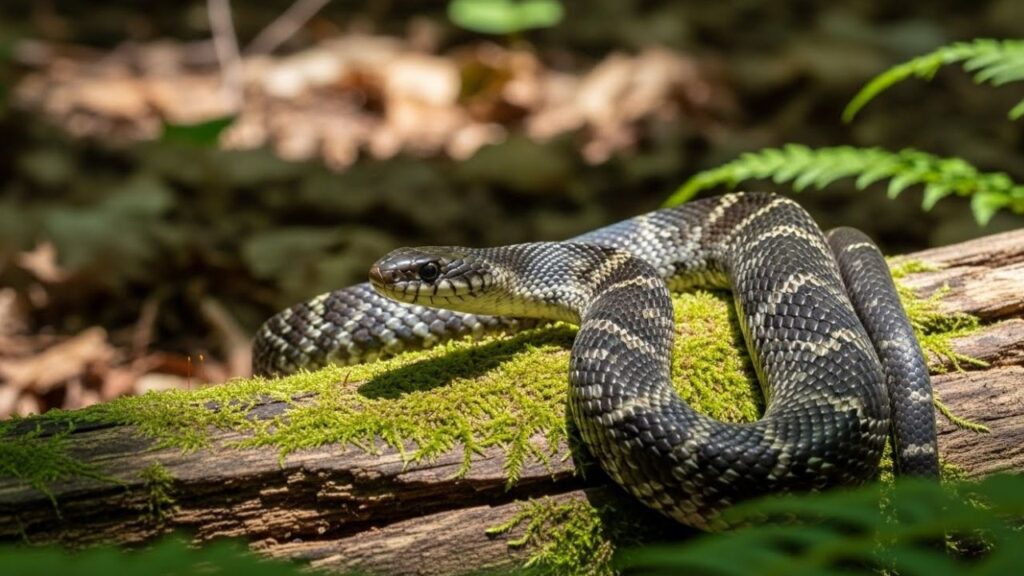
Meet the Eastern Ratsnake, a powerful constrictor that may not have the raw muscle of a kingsnake or boa, but still knows how to handle itself. These snakes can grow up to 7 feet long, making them taller than most kingsnakes, though interestingly enough, the smaller but feistier kingsnakes can and do prey on them.
A quick internet search will reveal some fascinating (and a little shocking) footage of just that in action—nature’s version of “David vs. Goliath,” snake edition. Sometimes affectionately called the “chicken snake,” Eastern Ratsnakes have a particular fondness for chicken eggs, which they can swallow whole.
Picture a snake slurping down breakfast like it’s a smoothie—it’s oddly impressive. Their coloration is dramatic: all black or dark gray on top, with creamy bellies that make them look like they’ve got a built-in tuxedo.
Found along the Eastern Coast of the United States, these snakes are excellent climbers and can often be seen scaling trees, barns, and even fences in search of eggs or small rodents.
Ratsnakes, as a group, are truly globetrotters: they exist all over the world—everywhere except Antarctica—making them one of the most widely distributed snake families.
Fun Fact: Eastern Ratsnakes are excellent climbers and acrobats, capable of sneaking into chicken coops or scaling tall trees to hunt. If you thought your eggs were safe on the top shelf… think again.
Conclusion
Snakes such as Reticulated pythons, Ball pythons, Red-tailed boas, Brown snakes, Constricting snakes, Viper species, Black mamba and Rainbow boas are renowned for their powerful constriction abilities, a behavior refined over ancient and modern snake evolution. From terrestrial snakes to sea snakes, many snake species—, including Australian species, Indian pythons, and Macrostomate snakes—use prey restraint behavior and prey constriction to kill or suffocate larger prey efficiently.
Their behavioral complexity and behavioral repertoires reflect adaptations in comparative biology, experimental biology, and herpetology, allowing them to handle prey with precision. Boas and pythons, along with related species, demonstrate constricting methods optimized through evolution, loops, and prey handling ability, making them exceptional among reptiles in the world for their constriction performance, both in wild and captivity.
